

Recognizing Biological Motion and Emotions from Point-Light Displays in Autism Spectrum Disorders
Open accessThe DOI matches its Crossref record; 53 of the 53 references it cites were found in a registry or an index.
Abstract
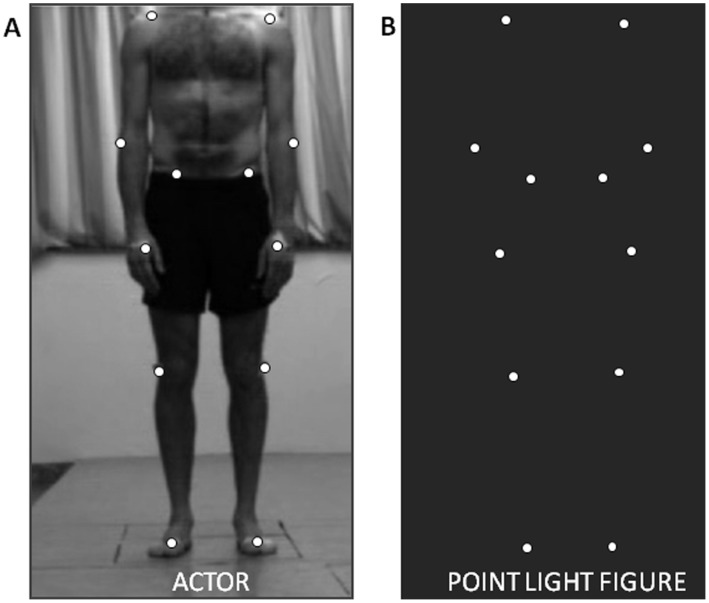
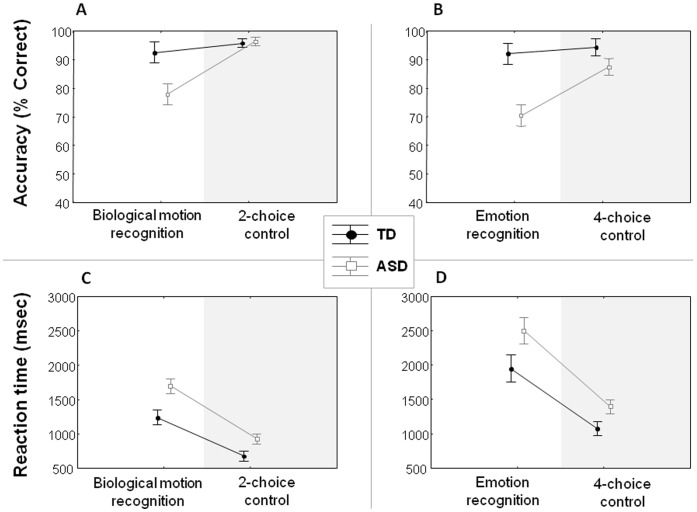
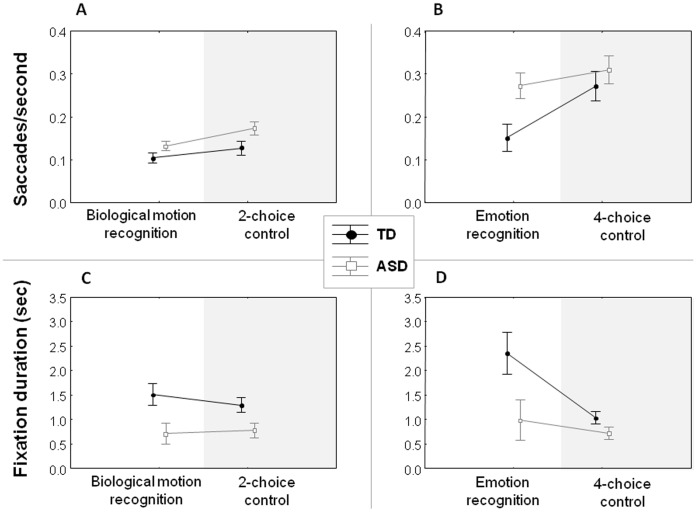
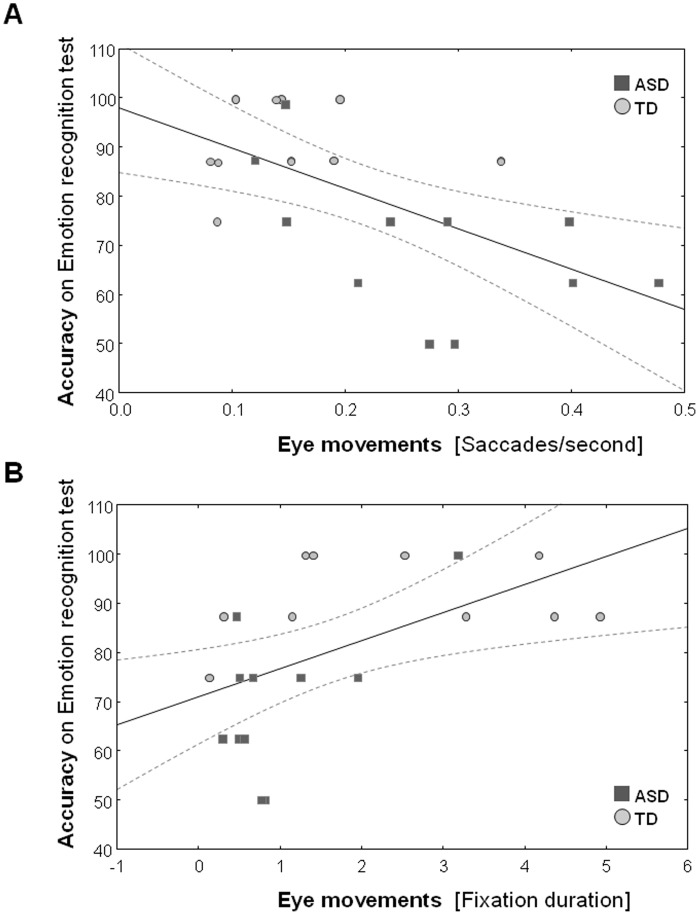
One of the main characteristics of Autism Spectrum Disorder (ASD) are problems with social interaction and communication. Here, we explored ASD-related alterations in 'reading' body language of other humans. Accuracy and reaction times were assessed from two observational tasks involving the recognition of 'biological motion' and 'emotions' from point-light displays (PLDs). Eye movements were recorded during the completion of the tests. Results indicated that typically developed-participants were more accurate than ASD-subjects in recognizing biological motion or emotions from PLDs. No accuracy differences were revealed on two control-tasks (involving the indication of color-changes in the moving point-lights). Group differences in reaction times existed on all tasks, but effect sizes were higher for the biological and emotion recognition tasks. Biological motion recognition abilities were related to a person's ability to recognize emotions from PLDs. However, ASD-related atypicalities in emotion recognition could not entirely be attributed to more basic deficits in biological motion recognition, suggesting an additional ASD-specific deficit in recognizing the emotional dimension of the point light displays. Eye movements were assessed during the completion of tasks and results indicated that ASD-participants generally produced more saccades and shorter fixation-durations compared to the control-group. However, especially for emotion recognition, these altered eye movements were associated with reductions in task-performance.
Overview
The claims and statistics of this paper haven’t been checked yet.
Free: it reads the open-access text and checks the first 5 claims that cite a source we can check. Create a free account to check every claim.
Integrity signals
Registry
Cites
Statistics
Figures
Verification
Claims the paper makes
The claims and statistics of this paper haven’t been checked yet.
Free: it reads the open-access text and checks the first 5 claims that cite a source we can check. Create a free account to check every claim.
Claims other papers make about this one
Each is checked against this paper’s own text: does it say what the citing paper says it does?
The source backs part of the claim, not all of it — or backs it for a different population, condition or comparison.
In the citing paper
“For example, Kemner and colleagues21 found that 8-12-year-old children with ASD made more saccades (reflecting shorter fixation durations) than children with typical development or ADHD when viewing static geometric shapes (see also Refs. 22, 23 - although findings on fixation durations in adults with ASD are not consistent24).”
From Shorter spontaneous fixation durations in infants with later emerging autism (2015) · cites this paper as [23]
Experimental — accuracy not yet measuredIn the citing paper
“Moreover, individuals with ASD have difficulty using information from biological motion to infer emotions (Nackaerts et al., 2012), recognize faces (O'Brien et al., 2014) and follow pointing (Swettenham et al., 2013).”
From The impact of atypical sensory processing on social impairments in autism spectrum disorder (2018) · cites this paper as Nackaerts et al., 2012
Self-check
Percentages, sums and reported differences re-computed from the paper’s own numbers.
The self-check needs the paper’s full text.
Citations
Cites
Diagnostic and Statistical Manual of Mental Disorders
Williams, J. B. W., & First, M. (2013) · Encyclopedia of Social Work · doi:10.1093/acrefore/9780199975839.013.104 · Cited by 109,519
Diagnostic and Statistical Manual of Mental Disorders
Siegel, L. J., & Fletcher‐Janzem, E. (2008) · Encyclopedia of Special Education · doi:10.1002/9780470373699.speced0655 · Cited by 8,477
Visual perception of biological motion and a model for its analysis
Johansson, G. (1973) · Perception & Psychophysics · doi:10.3758/bf03212378 · Cited by 4,462 · cited 2×
“he/she is engaged [4] and, even, the emotional state of the actor”
BackgroundThe weak coherence account: detail-focused cognitive style in autism spectrum disorders
Happé, F., & Frith, U. (2006) · Journal of Autism and Developmental Disorders · doi:10.1007/s10803-005-0039-0 · Cited by 2,884
Klin, A., Jones, W., Schultz, R., Volkmar, F., & Cohen, D. (2002) · Archives of General Psychiatry · doi:10.1001/archpsyc.59.9.809 · Cited by 2,120 · cited 1×
“, reduced preference for the eyes and increased preference for the mouth when looking at facial expressions [31–33]).”
BackgroundConstantino, J. N., Davis, S. A., Todd, R. D., Schindler, M. K., Gross, M. M., Brophy, S. L., Metzger, L. M., Shoushtari, C. S., Splinter, R., & Reich, W. (2003) · Journal of Autism and Developmental Disorders · doi:10.1023/a:1025014929212 · Cited by 1,611 · cited 13×
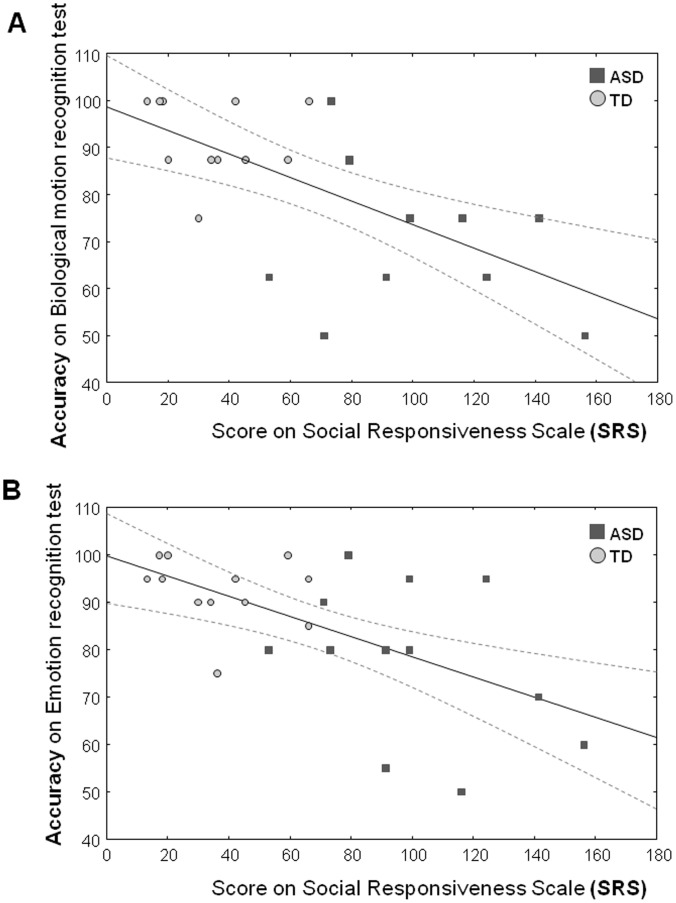
“Across participants, performance on the Biological motion and Emotion recognition test was related to scores on the social responsiveness scale (SRS) [22], indicating reduced performance”
BackgroundInfluentialAutism: beyond “theory of mind”
Frith, U., & Happé, F. (1994) · Cognition · doi:10.1016/0010-0277(94)90024-8 · Cited by 1,450
Visual scanning of faces in autism
Pelphrey, K. A., Sasson, N. J., Reznick, J. S., Paul, G., Goldman, B. D., & Piven, J. (2002) · Journal of Autism and Developmental Disorders · doi:10.1023/a:1016374617369 · Cited by 1,187 · cited 1×
“, reduced preference for the eyes and increased preference for the mouth when looking at facial expressions [31–33]).”
BackgroundRecognizing friends by their walk: Gait perception without familiarity cues
Cutting, J. E., & Kozlowski, L. T. (1977) · Bulletin of the Psychonomic Society · doi:10.3758/bf03337021 · Cited by 1,075 · cited 1×
“In TDsubjects, PLDs have been shown to provide sufficient information for recognizing the gender of an actor [5], the activity in which”
BackgroundHarms, M. B., Martin, A., & Wallace, G. L. (2010) · Neuropsychology Review · doi:10.1007/s11065-010-9138-6 · Cited by 1,028 · cited 1×
“recognition [3].”
Research works printed but not linked: 1
- [19]Wechsler D (1997) WAIS-III: Wechsler Adult Intelligence Scale-third edition administration and scoring manual. The Psychological Corporation, San Antonio.
Cited by
The cerebellum: adaptive prediction for movement and cognition
Sokolov, A. A., Miall, R. C., & Ivry, R. B. (2017) · Trends in Cognitive Sciences · doi:10.1016/j.tics.2017.02.005 · Cited by 691
The impact of atypical sensory processing on social impairments in autism spectrum disorder
Thye, M. D., Bednarz, H. M., Herringshaw, A. J., Sartin, E. B., & Kana, R. K. (2018) · Developmental Cognitive Neuroscience · doi:10.1016/j.dcn.2017.04.010 · Cited by 513
Atypical basic movement kinematics in autism spectrum conditions
Cook, J. L., Blakemore, S.-J., & Press, C. (2013) · Brain · doi:10.1093/brain/awt208 · Cited by 252
“…the age of 2 years (Klin et al ., 2009; Annaz et al ., 2012) through to adulthood (Blake et al ., 2003; Cook et al ., 2009; Kaiser et al ., 2010 a ; Nackaerts et al ., 2012); and the neural response to biological motion differs between individuals with autism and control participants (Herrington…”
Foxe, J. J., Molholm, S., Del Bene, V. A., Frey, H.-P., Russo, N. N., Blanco, D., Saint-Amour, D., & Ross, L. A. (2015) · Cerebral Cortex · doi:10.1093/cercor/bht213 · Cited by 263
“While there is some evidence for deficits in biological motion processing in ASD (Blake et al. 2003; Nackaerts et al. 2012), in our view, the weight of current evidence points to relatively intact basic abilities in this domain (Jones et al.”
BackgroundEdey, R., Cook, J., Brewer, R., Johnson, M. H., Bird, G., & Press, C. (2016) · Journal of Abnormal Psychology · doi:10.1037/abn0000199 · Cited by 215
“This finding raises the possibility that typical individuals experience difficulty interpreting the actions of individuals with autism, in the same way that those with autism have problems interpreting (e.g., Nackaerts et al., 2012) and predicting (von der Lühe et al., 2016) typical movements.”
BackgroundUnderconnectivity of the superior temporal sulcus predicts emotion recognition deficits in autism
Alaerts, K., Woolley, D. G., Steyaert, J., Di Martino, A., Swinnen, S. P., & Wenderoth, N. (2014) · Social Cognitive and Affective Neuroscience · doi:10.1093/scan/nst156 · Cited by 149
“Fifteen adults with ASD and 15 matched-controls underwent resting-state and task-based fMRI, during which participants discriminated emotional states from point light displays (PLDs).”
BackgroundMethodInfluentialSelf-citationThere is more to eye contact than meets the eye
Myllyneva, A., & Hietanen, J. K. (2014) · Cognition · doi:10.1016/j.cognition.2014.09.011 · Cited by 157
Biological motion perception in autism spectrum disorder: a meta-analysis
Todorova, G. K., Hatton, R. E. M., & Pollick, F. E. (2019) · Molecular Autism · doi:10.1186/s13229-019-0299-8 · Cited by 148
Shorter spontaneous fixation durations in infants with later emerging autism
Wass, S. V., Jones, E. J. H., Gliga, T., Smith, T. J., Charman, T., Johnson, M. H., BASIS team, Baron-Cohen, S., Bedford, R., Bolton, P., et al. (2015) · Scientific Reports · doi:10.1038/srep08284 · Cited by 134
Anomalous Perception of Biological Motion in Autism: A Conceptual Review and Meta-Analysis
Federici, A., Parma, V., Vicovaro, M., Radassao, L., Casartelli, L., & Ronconi, L. (2020) · Scientific Reports · doi:10.1038/s41598-020-61252-3 · Cited by 133
“For instance, in Nackaerts et al. (2012) the Cohen’s ds referring to the task categorized as direct processing and the task categorized as instrumental processing were pooled in the first general meta-analysis, but they were kept separate in the meta-analysis testing the effects of the level of BM…”
Sokolov, A. A., Erb, M., Grodd, W., & Pavlova, M. A. (2014) · Cerebral Cortex · doi:10.1093/cercor/bhs346 · Cited by 121
“Social impairment and alterations in biological motion perception are intertwined in patients with autistic spectrum disorders and schizophrenia (Blake et al. 2003; Kim et al. 2005; Klin et al. 2009; Koldewyn et al. 2010, 2011; Nackaerts et al. 2012; Pavlova 2012).”
BackgroundGhosh, S., Kanwar, P., & Jha, G. (2017) · Scientific Reports · doi:10.1038/srep41610 · Cited by 135
Visual Perception in Autism Spectrum Disorder: A Review of Neuroimaging Studies
Chung, S., & Son, J.-W. (2020) · Journal of korean Academy of Child and Adolescent Psychiatry · doi:10.5765/jkacap.200018 · Cited by 143
A Review of Embodiment in Autism Spectrum Disorders
Eigsti, I.-M. (2013) · Frontiers in Psychology · doi:10.3389/fpsyg.2013.00224 · Cited by 101
Global Motion Perception in Autism Spectrum Disorder: A Meta-Analysis
der Hallen, R. V., Manning, C., Evers, K., & Wagemans, J. P. (2019) · Journal of Autism and Developmental Disorders · doi:10.1007/s10803-019-04194-8 · Cited by 98
Self-citationAction Perception Is Intact in Autism Spectrum Disorder
Cusack, J. P., Williams, J. H. G., & Neri, P. (2015) · The Journal of Neuroscience · doi:10.1523/jneurosci.4133-13.2015 · Cited by 93
“…to detection of biological motion (BM) within pointlight displays but has yielded conflicting results (Blake et al., 2003; Hubert et al., 2007; Atkinson, 2009; Murphy et al., 2009; Koldewyn et al., 2010; Saygin et al., 2010; Jones et al., 2011; Nackaerts et al., 2012; Rutherford and Troje, 2012).”
BackgroundResultPavlova, M. A., & Krägeloh-Mann, I. (2013) · Brain · doi:10.1093/brain/aws334 · Cited by 80
Sex and gender affect the social brain: Beyond simplicity
Pavlova, M. A. (2016) · Journal of Neuroscience Research · doi:10.1002/jnr.23871 · Cited by 75
“Individuals with ASD have also been reported to be impaired on facial BM processing (O’Brien et al., 2014).”
BackgroundInfluentialFitzpatrick, P., Frazier, J. A., Cochran, D., Mitchell, T. V., Coleman, C., & Schmidt, R. C. (2018) · Frontiers in Psychology · doi:10.3389/fpsyg.2018.01337 · Cited by 76
“, 2012) and a link between social cognition and the perception of biological motion that may be dependent on the severity of ASD (Nackaerts et al., 2012; Miller and Saygin, 2013) has been proposed.”
Backgroundvan Boxtel, J. J. A., Dapretto, M., & Lu, H. (2016) · Autism Research · doi:10.1002/aur.1595 · Cited by 67
“It has been consistently reported that people with ASD are less capable of extracting emotional content from biological motion displays [Hubert et al., 2007; Moore, Hobson, & Lee, 1997; Nackaerts et al., 2012; Parron et al., 2008].”
Backgroundvan Boxtel, J. J. A., & Lu, H. (2013) · Frontiers in Psychology · doi:10.3389/fpsyg.2013.00209 · Cited by 59
“…reported that biological motion perception was impaired in ASD (e.g., Blake et al., 2003; Klin et al., 2009; Annaz et al., 2010; Nackaerts et al., 2012), in addition to having reported problems in describing/discriminating emotions (Hubert et al., 2007; Parron et al., 2008; Nackaerts et al., 2012).”
BackgroundVisual event-related potentials to biological motion stimuli in autism spectrum disorders
Kröger, A., Bletsch, A., Krick, C. M., Siniatchkin, M., Jarczok, T. A., Freitag, C. M., & Bender, S. (2013) · Social Cognitive and Affective Neuroscience · doi:10.1093/scan/nst103 · Cited by 66
“In other studies, especially with adult samples, impairments were less prominent (Murphy et al., 2009; Saygin et al., 2010; Jones et al., 2011; Rutherford and Troje, 2012; Nackaerts et al., 2012).”
BackgroundQuiñones‐Camacho, L. E., Fishburn, F. A., Belardi, K. M., Williams, D. L., Huppert, T. J., & Perlman, S. B. (2021) · Autism Research · doi:10.1002/aur.2513 · Cited by 62
“, 2017; Jones & Klin, 2009), perception of biological motion (Klin et al., 2009; Nackaerts et al., 2012), theory of mind (Baron-Cohen et al.”
BackgroundSocial Beliefs and Visual Attention: How the Social Relevance of a Cue Influences Spatial Orienting
Gobel, M. S., Tufft, M. R. A., & Richardson, D. C. (2017) · Cognitive Science · doi:10.1111/cogs.12529 · Cited by 64
Children with autism spectrum disorder are skilled at reading emotion body language
Peterson, C. C., Slaughter, V. P., & Brownell, C. A. (2015) · Journal of Experimental Child Psychology · doi:10.1016/j.jecp.2015.04.012 · Cited by 69
Differences in Action Style Recognition in Children with Autism Spectrum Disorders
Cesare, G. D., Sparaci, L., Pelosi, A., Mazzone, L., Giovagnoli, G., Menghini, D., Ruffaldi, E., & Vicari, S. (2017) · Frontiers in Psychology · doi:10.3389/fpsyg.2017.01456 · Cited by 60
Multi-Platform Metabolomic Analyses of Ergosterol-Induced Dynamic Changes in Nicotiana tabacum Cells
Tugizimana, F., Steenkamp, P. A., Piater, L. A., & Dubery, I. A. (2014) · PLoS ONE · doi:10.1371/journal.pone.0087846 · Cited by 56
Alaerts, K., Swinnen, S. P., & Wenderoth, N. (2017) · Scientific Reports · doi:10.1038/s41598-017-05786-z · Cited by 57
Self-citationSex Differences in the Neuromagnetic Cortical Response to Biological Motion
Pavlova, M. A., Sokolov, A. N., & Bidet-Ildei, C. (2014) · Cerebral Cortex · doi:10.1093/cercor/bhu175 · Cited by 57
“2013), in autism (e.g., Klin et al. 2009; Kröger et al. 2013; Nackaerts et al. 2012), in obsessive compulsive disorders”
BackgroundInfluentialPerceived Intensity of Emotional Point–Light Displays is Reduced in Subjects with ASD
Krüger, B., Kaletsch, M., Pilgramm, S., Schwippert, S.-S., Hennig, J., Stark, R. M., Lis, S., Gallhofer, B., Sammer, G., Zentgraf, K., et al. (2017) · Journal of Autism and Developmental Disorders · doi:10.1007/s10803-017-3286-y · Cited by 52
Bridging the gap between emotion and joint action
Bieńkiewicz, M. M. N., Smykovskyi, A., Olugbade, T., Janaqi, S., Camurri, A., Bianchi‐Berthouze, N., Björkman, M., & Bardy, B. G. (2021) · Neuroscience & Biobehavioral Reviews · doi:10.1016/j.neubiorev.2021.08.014 · Cited by 59
Actis-Grosso, R., Bossi, F., & Ricciardelli, P. (2015) · Frontiers in Psychology · doi:10.3389/fpsyg.2015.01570 · Cited by 54
“…there are also several studies reporting ASC impairments in identifying biological motion from PLDs (e.g., Blake et al., 2003; Atkinson, 2009; Annaz et al., 2010; Nackaerts et al., 2012), and a more general deficit in ASC in coherent motion processing (Spencer et al., 2000; Milne et al., 2002).”
BackgroundFunctional Organization of the Action Observation Network in Autism: A Graph Theory Approach
Alaerts, K., Geerlings, F., Herremans, L., Swinnen, S. P., Verhoeven, J. S., Sunaert, S. G., & Wenderoth, N. (2015) · PLoS ONE · doi:10.1371/journal.pone.0137020 · Cited by 50
“The emotional state of the blue-bordered PLD could either be indicated as happier, sadder, angrier, or not different (neutral) from the yellow-bordered PLD (Fig 1A).”
BackgroundMethodInfluentialSelf-citationEmotion through Locomotion: Gender Impact
Krüger, S., Sokolov, A. N., Enck, P., Krägeloh‐Mann, I., & Pavlova, M. A. (2013) · PLoS ONE · doi:10.1371/journal.pone.0081716 · Cited by 51
Lang, K., Dapelo, M. M., Khondoker, M. R., Morris, R. G., Surguladze, S., Treasure, J. L., & Tchanturia, K. (2015) · European Eating Disorders Review · doi:10.1002/erv.2358 · Cited by 45
Gas Chromatography–Mass Spectrometry of Biofluids and Extracts
Emwas, A.-H. M., Al‐Talla, Z. A., Yang, Y., & Kharbatia, N. M. (2015) · Methods in molecular biology · doi:10.1007/978-1-4939-2377-9_8 · Cited by 42
Kröger, A., Hof, K., Krick, C. M., Siniatchkin, M., Jarczok, T. A., Freitag, C. M., & Bender, S. (2014) · PLoS ONE · doi:10.1371/journal.pone.0088585 · Cited by 43
“A similar pattern was found in a sample of subjects with ASD [18].”
ResultIndividual differences in high-level biological motion tasks correlate with autistic traits
van Boxtel, J. J. A., Peng, Y., Su, J., & Lu, H. (2016) · Vision Research · doi:10.1016/j.visres.2016.11.005 · Cited by 46
“describing emotions portrayed with biological motion stimuli (Hubert et al., 2007; Nackaerts et al., 2012; Parron et al., 2008).”
BackgroundInfluentialCommunicative misalignment in Autism Spectrum Disorder
Wadge, H., Brewer, R., Bird, G., Toni, I., & Stolk, A. (2019) · Cortex · doi:10.1016/j.cortex.2019.01.003 · Cited by 50
“…biases in processing biological and multimodal linguistic cues used during face-to-face interactions (Constantino et al., 2017; Cook, Saygin, Swain, & Blakemore, 2009; Hobson, Ouston, & Lee, 1988; Hutchins & Brien, 2016; Nackaerts et al., 2012; Silverman, Bennetto, Campana, & Tanenhaus, 2010).”
Reduced beta band connectivity during number estimation in autism
Bangel, K. A., Batty, M., Ye, A. X., Meaux, E., Taylor, M. J., & Doesburg, S. M. (2014) · NeuroImage Clinical · doi:10.1016/j.nicl.2014.08.020 · Cited by 41
“Individuals with ASD typically show symptoms related to impaired sensory and perceptual processing (Dawson, 2002;Minshewet al., 1997, 2002), including impaired integration of stimuli during the perception of faces and emotions (Nackaerts et al., 2012).”
BackgroundI know you can see me: Social attention influences bodily self-awareness
Hazem, N., George, N., Baltazar, M., & Conty, L. (2017) · Biological Psychology · doi:10.1016/j.biopsycho.2017.01.007 · Cited by 41
Sotoodeh, M. S., Taheri, H., Sohrabi, M., & Ghoshuni, M. (2018) · Journal of Intellectual Disability Research · doi:10.1111/jir.12565 · Cited by 41
Bernaerts, S., Boets, B., Steyaert, J. G., Wenderoth, N., & Alaerts, K. (2020) · Translational Psychiatry · doi:10.1038/s41398-020-01069-w · Cited by 40
Self-citationBrain activity correlates with emotional perception induced by dynamic avatars
Goldberg, H., Christensen, A., Flash, T., Giese, M. A., & Malach, R. (2015) · NeuroImage · doi:10.1016/j.neuroimage.2015.07.056 · Cited by 39
“Indeed, previous studies have shown that human observers can successfully recognize expressed emotions even in extremely impoverished stimuli such as point-light displays (Alaerts et al., 2011; Atkinson et al., 2004; Clarke et al., 2005; Dittrich et al., 1996; Nackaerts et al., 2012).”
An anxiety-induced bias in the perception of a bistable point-light walker
de Cruys, S. V., Schouten, B. A. M., & Wagemans, J. P. (2013) · Acta Psychologica · doi:10.1016/j.actpsy.2013.09.010 · Cited by 36
Self-citationEmotion categorization of body expressions in narrative scenarios
Volkova, E. P., Mohler, B. J., Dodds, T. J., Tesch, J., & Bülthoff, H. (2014) · Frontiers in Psychology · doi:10.3389/fpsyg.2014.00623 · Cited by 35
“…differences in emotion recognition may be related to more basic differences in processing biological motion per se are supported by studies for typically developed adults (Alaerts et al., 2011) and for participants with Aspergers Syndrome Condition related atypicalities (Nackaerts et al., 2012).”
BackgroundResultOur own action kinematics predict the perceived affective states of others.
Edey, R., Yon, D., Cook, J. L., Dumontheil, I., & Press, C. (2017) · Journal of Experimental Psychology Human Perception & Performance · doi:10.1037/xhp0000423 · Cited by 36
A scoping review of the motor impairments in autism spectrum disorder
da Silva, S. H., Felippin, M. R., Medeiros, L. D. O., Hedin‐Pereira, C., & Nogueira‐Campos, A. A. (2025) · Neuroscience & Biobehavioral Reviews · doi:10.1016/j.neubiorev.2025.106002 · Cited by 38
Mazzoni, N., Landi, I., Ricciardelli, P., Actis-Grosso, R., & Venuti, P. (2020) · Frontiers in Psychology · doi:10.3389/fpsyg.2020.00478 · Cited by 34
A Trend on Autism Spectrum Disorder Research: Eye Tracking-EEG Correlative Analytics
Tan, G., Xu, K. J., Liu, J., & Liu, H. (2021) · IEEE Transactions on Cognitive and Developmental Systems · doi:10.1109/tcds.2021.3102646 · Cited by 34
“Paired visual preference paradigms with biological motion stimuli (point-light displays) [19] and audiovisual stimuli [11], [20] were com-”
BackgroundUnderstanding social engagement in autism: being different in perceiving and sharing affordances
Hellendoorn, A. (2014) · Frontiers in Psychology · doi:10.3389/fpsyg.2014.00850 · Cited by 37
Cole, E. J., Slocombe, K. E., & Barraclough, N. E. (2017) · Journal of Autism and Developmental Disorders · doi:10.1007/s10803-017-3425-5 · Cited by 35
Kaletsch, M., Krüger, B., Pilgramm, S., Stark, R. M., Lis, S., Gallhofer, B., Zentgraf, K., Munzert, J., & Sammer, G. (2014) · Frontiers in Psychology · doi:10.3389/fpsyg.2014.01262 · Cited by 32
“Nackaerts et al. (2012) showed a lower accuracy among persons with autism spectrum disorder whilst recognizing a person’s movements or emotional state and Kaletsch et al. (2014) discovered that patients with major depressive disorder rated emotional body movements more negatively and with higher…”
BackgroundImpaired Perception of Facial Motion in Autism Spectrum Disorder
O'Brien, J. M. D., Spencer, J. V., Girges, C., Johnston, A., & Hill, H. C. H. (2014) · PLoS ONE · doi:10.1371/journal.pone.0102173 · Cited by 34
“, [14], further suggesting that all elements of BM perception is weakened in ASD.”
BackgroundResultLee, H., & Kim, J. (2016) · Perception · doi:10.1177/0301006616681809 · Cited by 33
“’’ Related with uncovering neural underpinnings of the happiness superiority effect in visual perception in future studies, it would be also worth investigating how this effect is modulated in people with impaired social functioning, such as individuals with autism spectrum disorder and schizophrenia, who constantly e…”
Vettori, S., der Donck, S. V., Nys, J., Moors, P., Wesemael, T. V., Steyaert, J. G., Rossion, B., Dzhelyova, M. P., & Boets, B. (2020) · Molecular Autism · doi:10.1186/s13229-020-00396-5 · Cited by 35
PLAViMoP: How to standardize and simplify the use of point-light displays
Decatoire, A., Beauprez, S.-A., Pylouster, J., Lacouture, P., Blandin, Y., & Bidet-Ildei, C. (2018) · Behavior Research Methods · doi:10.3758/s13428-018-1112-x · Cited by 29
Sotoodeh, M. S., Taheri, H., Hadjikhani, N. K., & Lassalle, A. (2020) · Psychophysiology · doi:10.1111/psyp.13740 · Cited by 28
Mazzoni, N., Ricciardelli, P., Actis-Grosso, R., & Venuti, P. (2021) · Journal of Autism and Developmental Disorders · doi:10.1007/s10803-021-05015-7 · Cited by 28
Dopaminergic Modulation of Dynamic Emotion Perception
Schuster, B. A., Sowden, S., Rybicki, A. J., Fraser, D. S., Press, C., Holland, P. W. H., & Cook, J. L. (2022) · Journal of Neuroscience · doi:10.1523/jneurosci.2364-21.2022 · Cited by 31
Knight, E. J., Krakowski, A. I., Freedman, E. G., Butler, J. S., Molholm, S., & Foxe, J. J. (2022) · Molecular Autism · doi:10.1186/s13229-022-00512-7 · Cited by 25
“Although impaired recognition of biological motion has also been observed in adults with ASD [47], looking across studies, it appears that differences between ASD and NT participants decrease with age, as children with ASD show more substantial deficits than adolescents and adults [26], and the majority of studies of…”
BackgroundUntangling the Ties Between Social Cognition and Body Motion: Gender Impact
Isernia, S., Sokolov, A. N., Fallgatter, A. J., & Pavlova, M. A. (2020) · Frontiers in Psychology · doi:10.3389/fpsyg.2020.00128 · Cited by 27
“For ASD and TD individuals pooled together, both BM processing and emotion recognition are related to social responsiveness scores (Nackaerts et al., 2012).”
BackgroundAdaptation to the Speed of Biological Motion in Autism
Karaminis, T. N., Arrighi, R., Forth, G., Burr, D. C., & Pellicano, E. (2019) · Journal of Autism and Developmental Disorders · doi:10.1007/s10803-019-04241-4 · Cited by 25
Bernaerts, S., Berra, E., Wenderoth, N., & Alaerts, K. (2016) · Psychoneuroendocrinology · doi:10.1016/j.psyneuen.2016.07.002 · Cited by 26
“…earlier reports on difficulties of patients with utism spectrum disorders (ASD) with the processing of biological otion (Kaiser and Pelphrey, 2012; Nackaerts et al., 2012) and emoion recognition more general (for review see Harms et al., 2010), hese insights will be important to further evaluate…”
Self-citationWilson, R. P., Holton, M. D., Walker, J. S., Shepard, E. L. C., Scantlebury, D. M., Wilson, V. L., Wilson, G. I., Tysse, B., Gravenor, M. B., Ciancio, J. E., et al. (2016) · Movement Ecology · doi:10.1186/s40462-016-0088-3 · Cited by 25
Differences in the production and perception of communicative kinematics in autism
Trujillo, J. P., Özyürek, A., Kan, C. C., Simanova, I., & Bekkering, H. (2021) · Autism Research · doi:10.1002/aur.2611 · Cited by 25
Lindor, E., van Boxtel, J. J. A., Rinehart, N., & Fielding, J. (2019) · Journal of Clinical and Experimental Neuropsychology · doi:10.1080/13803395.2019.1634181 · Cited by 21
“styles of visual analysis that may actually impede their performance (Nackaerts et al., 2012).”
BackgroundInfluentialTemporal processing as a source of altered visual perception in high autistic tendency
Thompson, J., Peck, C. E., Georgette, K., Hartwell, C. A., Catherine, G., Brown, A., & Crewther, D. P. (2015) · Neuropsychologia · doi:10.1016/j.neuropsychologia.2015.01.046 · Cited by 22
“…et al., 2003; Cook et al., 2009; Freitag et al., 2008; Koldewyn et al., 2010, 2011; Kroger et al., 2014; Nackaerts et al., 2012; O'Brien et al., 2014; Pelphrey et al., 2007; Rutherford and Troje, 2012; Swettenham et al., 2013; van Boxtel and Lu, 2013)…”
Pavlova, M. A. (2017) · Frontiers in Psychology · doi:10.3389/fpsyg.2017.01211 · Cited by 20
“…Alaerts et al., 2011; Sokolov et al., 2011; Krüger et al., 2013; Actis-Grosso et al., 2015; de Gelder et al., 2015; for review, see Pavlova, 2017) and atypical development (e.g., Nackaerts et al., 2012; Strauss et al., 2015; Van den Stock et al., 2015; Vaskinn et al., 2016; Blain et al., 2017).”
BackgroundThe thorn in the dyad: A vision on parent-child relationship in autism spectrum disorder
Bianco, T. D., Öztürk, Y., Basadonne, I., Mazzoni, N., & Venuti, P. (2018) · Europe’s Journal of Psychology · doi:10.5964/ejop.v14i3.1453 · Cited by 23
“, 2007) and recognizing emotions (Nackaerts et al., 2012) The Thorn in the Dyad: Parent-Child Relationship in ASD 698”
BackgroundEddy, C. M., & Cook, J. L. (2018) · Progress in Neuro-Psychopharmacology and Biological Psychiatry · doi:10.1016/j.pnpbp.2018.05.021 · Cited by 19
Following Forrest Gump: Smooth pursuit related brain activation during free movie viewing
Agtzidis, I., Meyhöfer, I., Dörr, M., & Lencer, R. (2020) · NeuroImage · doi:10.1016/j.neuroimage.2019.116491 · Cited by 19
Anticipatory Smooth Eye Movements in Autism Spectrum Disorder
Aitkin, C. D., Santos, E. M., & Kowler, E. (2013) · PLoS ONE · doi:10.1371/journal.pone.0083230 · Cited by 21
“These trends, namely, larger and more frequent saccades during fixation in those with ASD, are consistent with prior reports about saccades in a variety of tasks [33,35,46,47], however, the sample of saccades was small enough, and individual variability large enough, that the differences between groups in either size…”
BackgroundResultDistinct Biological Motion Perception in Autism Spectrum Disorder: A Meta-Analysis
Foglia, V., Siddiqui, H., Khan, Z., Liang, S., & Rutherford, M. D. (2021) · Journal of Autism and Developmental Disorders · doi:10.1007/s10803-021-05352-7 · Cited by 19
Using a Kinect sensor to acquire biological motion: Toolbox and evaluation
Shi, Y., Ma, X., Ma, Z., Wang, J., Yao, N., Gu, Q., Wang, C., & Gao, Z. (2017) · Behavior Research Methods · doi:10.3758/s13428-017-0883-9 · Cited by 17
“…1978; Dittrich, 1993; Ikeda et al., 2005; Pavlova & Sokolov, 2000; Shipley, 2003; Sumi, 1984; Troje, 2003) Tranel, & Damasio, 2004; Hubert et al., 2007; Johnson, McKay, & Pollick, 2011; Karg et al., 2013; Nackaerts et al., 2012; Spencer, Sekuler, Bennett, Giese, & Pilz, 2010; Walk & Homan, 1984).”
Edey, R., Cook, J. L., Brewer, R., Bird, G., & Press, C. (2018) · Autism Research · doi:10.1002/aur.2052 · Cited by 16
“Interestingly, adults and children with autism have been shown to exhibit most consistent difficulties when ascribing affective or mental states to others (also referred to as “mentalizing”) on the basis of movement cues (Abell, Happé, & Frith, 2000; Atkinson, 2009; [Bowler & Thommen, 2000; Castelli, Frith, Happé, & F…”
Explaining Variance in Social Symptoms of Children with Autism Spectrum Disorder
Alkire, D. R., Warnell, K. R., Kirby, L., Moraczewski, D., & Redcay, E. (2020) · Journal of Autism and Developmental Disorders · doi:10.1007/s10803-020-04598-x · Cited by 20
Zhao, Z., Xing, J., Zhang, X., Qu, X., Hu, X., & Lu, J. (2021) · Journal of Autism and Developmental Disorders · doi:10.1007/s10803-021-05255-7 · Cited by 16
Yang, D., Svoboda, A. M., George, T. G., Mansfield, P. K., Wheelock, M. D., Schroeder, M. L., Rafferty, S. M., Sherafati, A., Tripathy, K., Burns‐Yocum, T. M., et al. (2024) · Molecular Autism · doi:10.1186/s13229-024-00614-4 · Cited by 15
“These �ndings align with recent studies showing that while non-autistic individuals depend on specialized perceptual mechanisms for BMP (70, 71), autistic individuals may lack these mechanisms, or if present, they might be less developed (29, 72).”
ResultVonck, S., Swinnen, S. P., Wenderoth, N., & Alaerts, K. (2015) · Frontiers in Human Neuroscience · doi:10.3389/fnhum.2015.00438 · Cited by 14
“Particularly tasks including an emotion processing component (e.g., reporting the emotional state of PLD figures) have shown highly consistent ASD-specific deficiencies (Hubert et al., 2007; Parron et al., 2008; Atkinson, 2009; Nackaerts et al., 2012; Alaerts et al., 2014).”
MethodSelf-citationThe Impact of Autistic Traits on Self-Recognition of Body Movements
Burling, J. M., Kadambi, A., Safari, T., & Lu, H. (2019) · Frontiers in Psychology · doi:10.3389/fpsyg.2018.02687 · Cited by 14
“, 2016), and impairments in some action detection and discrimination tasks (e.g., Blake et al., 2003; Koldewyn et al., 2009; Annaz et al., 2010; Nackaerts et al., 2012).”
BackgroundBody language reading of emotion and outcome in schizophrenia
Egeland, J., Holmen, T. L., Bang-Kittilsen, G., Bigseth, T. T., Vaskinn, A., & Engh, J. A. (2019) · Cognitive Neuropsychiatry · doi:10.1080/13546805.2019.1568234 · Cited by 11
“, a specific deficit in interpreting (emotional) biological motion, with less impairment in the interpretation of non-human objects (Hubert et al., 2007; Nackaerts et al., 2012).”
BackgroundResultTies between reading faces, bodies, eyes, and autistic traits
Pavlova, M. A., Romagnano, V., Kubon, J., Isernia, S., Fallgatter, A. J., & Sokolov, A. N. (2022) · Frontiers in Neuroscience · doi:10.3389/fnins.2022.997263 · Cited by 9
Using EEG movement tagging to isolate brain responses coupled to biological movements
Cracco, E., Oomen, D., Papeo, L., & Wiersema, J. R. (2022) · Neuropsychologia · doi:10.1016/j.neuropsychologia.2022.108395 · Cited by 10
Multisensory Processing Differences in Individuals with Autism Spectrum Disorder
Miller, S. H. B., & Wallace, M. T. (2019) · Springer handbook of auditory research · doi:10.1007/978-3-030-10461-0_12 · Cited by 9
Zihl, J., & Dutton, G. N. (2014) · Springer eBooks · doi:10.1007/978-3-7091-1815-3_4 · Cited by 8
Impaired Biological Motion Processing and Motor Skills in Adults with Autistic Traits
Jacob, P., & Alexander, G. M. (2022) · Journal of Autism and Developmental Disorders · doi:10.1007/s10803-022-05572-5 · Cited by 9
“In addition to less accuracy in extracting emotional information, autistic adults have been found to produce more saccades and shorter fixation durations for BioM stimuli (Nackaerts et al., 2012).”
BackgroundInfluentialSchröer, L., Çetin, D., Vacaru, S. V., Addabbo, M., van Schaik, J. E., & Hunnius, S. (2022) · Infant Behavior and Development · doi:10.1016/j.infbeh.2022.101751 · Cited by 8
Construction and validation of the Dalian emotional movement open-source set (DEMOS)
Zhang, M., Yu, L., Zhang, K., Du, B., Zhan, B., Jia, S., Chen, S., Han, F., Li, Y., Liu, S., et al. (2022) · Behavior Research Methods · doi:10.3758/s13428-022-01887-4 · Cited by 8
“Emotional biological motion stimuli, as depicted by PLDs, have been widely used in psychiatry (e.g., Jimenez et al., 2018; Nackaerts et al., 2012; Okruszek, 2018), developmental psychology (e.g., Ogren et al., 2019; Pavlova et al., 2001; Ross et al., 2012), psychophysics (e.g., Ye et al., 2019),…”
MethodSchuster, B. A., Sowden, S., Rybicki, A. J., Fraser, D. S., Press, C., Hickman, L., Holland, P. W. H., & Cook, J. L. (2024) · PLoS Biology · doi:10.1371/journal.pbio.3002652 · Cited by 9
“In line with the literature demonstrating that sadness is conveyed via slow, sluggish movements, anger with fast, jerky kinematics, and happiness intermediate to the two [48–51], sad PLWs exhibited the slowest mean speed, followed by happy, and then angry PLWs [52].”
Impairment in reading negative social cues extends beyond the face in autism
Lott-Sandkamp, L. L., Spengler, F. B., & Heinrichs, M. (2023) · Journal of Psychiatric Research · doi:10.1016/j.jpsychires.2023.06.032 · Cited by 7
Investigating Emotion in Malay, Australian and Iranian Individuals with and without Depression
Jobson, L., Mirabolfathi, V., Moshirpanahi, S., Parhoon, H., Gillard, J., Mukhtar, F., Moradi, A., & Mohan, S. N. (2019) · Scientific Reports · doi:10.1038/s41598-019-54775-x · Cited by 8
Foster, N. C., Bennett, S. J., Causer, J., Elliott, D., Bird, G., & Hayes, S. J. (2020) · Autism · doi:10.1177/1362361320908104 · Cited by 10
“, 2001), thereby confirming the sensorimotor processes responsible for processing biological motion during action-observation phase are operational in autism (Nackaerts et al., 2012; Saygin et al., 2010).”
BackgroundCommunicative Misalignment in Autism Spectrum DisorderPreprint
Wadge, H., Brewer, R., Bird, G., Toni, I., & Stolk, A. (2018) · PsyArXiv (OSF Preprints) · doi:10.31234/osf.io/7nbms · Cited by 6
Sotoodeh, M. S., Chien, S. H., & Hadjikhani, N. K. (2024) · European Journal of Neuroscience · doi:10.1111/ejn.16596 · Cited by 5
“…that neu-rotypical (NT) and autistic adults differed in the performance of BM identification or recognition (Hsiung et al., 2019; McKay et al., 2012; Nackaerts et al., 2012), while others did not find significant group differences (Hubert et al., 2007; Murphy et al., 2009; Saygin et al., 2010).”
Dissociation between facial and bodily expressions in emotion recognition: A case study
Leiva, S., Margulis, L., Micciulli, A., & Ferreres, A. (2017) · The Clinical Neuropsychologist · doi:10.1080/13854046.2017.1418024 · Cited by 5
Emotion recognition dysfunction after anesthesia and cardiac surgery
Zhang, D., Shen, Y., Chen, Z., Guo, Y., Gao, Z., Huang, J., & Lu, X. (2022) · Frontiers in Psychology · doi:10.3389/fpsyg.2022.1001493 · Cited by 6
“Body movements were also a source of emotionally relevant information (Nackaerts et al., 2012), while hardly used in the studies of patients after surgery.”
BackgroundSchwartz, C., Dratsch, T., Vogeley, K. T., & Bente, G. (2013) · Journal of Autism and Developmental Disorders · doi:10.1007/s10803-013-2021-6 · Cited by 6
“Possibly, deficits in processing of nonverbal information in autism appear more distinctly in tasks asking for emotion perception (Nackaerts et al. 2012) or asking for the participants’ emotional involvement (Schwartz et al. 2010).”
BackgroundMulti-level processing of emotions in life motion signals revealed through pupil responses
Yuan, T., Wang, L., & Jiang, Y. (2024) · eLife · doi:10.7554/elife.89873.3 · Cited by 8
Che, Y., & Zhou, H.-Y. (2025) · Review Journal of Autism and Developmental Disorders · doi:10.1007/s40489-025-00524-y · Cited by 5
Metadata
- Authors
- Nackaerts, E., Wagemans, J., Helsen, W., Swinnen, S. P., Wenderoth, N., & Alaerts, K.
- Affiliations
- KU Leuven (BE)
- ETH Zurich (CH)
- Corresponding author
- Alaerts, Kaat
- ORCID
- Venue
- PLoS ONE
- Publisher
- Public Library of Science (PLoS)
- Published
- 2012-09-06
- Volume
- 7
- Issue
- 9
- Pages
- e44473
- ISSN
- 1932-6203 (ISSN-L)
- PMC
- PMC3435310
- OpenAlex
- W2064949646
- Cited by
- 160
- References
- 53
- Citations by year
- 2026: 4 · 2025: 6 · 2024: 9 · 2023: 9 · 2022: 20 · 2021: 9 · 2020: 13 · 2019: 15 · 2018: 12 · 2017: 16 · 2016: 8 · 2015: 13 · 2014: 12 · 2013: 13 · 2012: 1
- FWCI
- 6.39
- Type
- journal article
- Language
- en
- Open access
- gold
- doi.org
- Locations
- PLoS ONE (publishedVersion, cc-by)
- Europe PMC (PubMed Central) (publishedVersion, cc-by)
- PubMed Central (publishedVersion, cc-by)
- PubMed (publishedVersion)
- Lirias (submittedVersion, other-oa)
- RePEc: Research Papers in Economics (submittedVersion)
- DOAJ (DOAJ: Directory of Open Access Journals) (submittedVersion)
- Figshare (submittedVersion, cc-by)
- Repository for Publications and Research Data (ETH Zurich) (submittedVersion, cc-by)
- ETH Zürich Research Collection (cc-by)
- Funders
- Australian Government
- Vrije Universiteit Amsterdam
- Fonds Wetenschappelijk Onderzoek (P6/29)
- Vlaamse regering (METH 08/02)
- Topics
- Life Sciences › Neuroscience › Cognitive Neuroscience › Autism Spectrum Disorder Research
- Social Sciences › Psychology › Social Psychology › Action Observation and Synchronization
- Life Sciences › Neuroscience › Cognitive Neuroscience › Face Recognition and Perception
- Keywords
- autism spectrum disorder, biological motion recognition, emotion recognition, point-light displays, body language, eye movements, saccades, fixation duration, social cognition, reaction time
- MeSH terms
- Adult, Child, Child Development Disorders, Pervasive, Emotions, Eye Movements, Female, Humans, Light, Male, Motion
About these checks
Registry, retraction, Cites and statistics results are computed, not judged, with one exception: a printed reference that no index lists is read once by a model before it counts as a citation error. Claims are extracted by a model and kept only when their quote appears verbatim in the text; each cited source is then checked, with a model’s help, for whether it says what the claim relies on. Those verdicts can be wrong — read the claim’s quote and the cited source before relying on one.
Statistics and arithmetic are recomputed, not judged.
Confidence bands are shown only for fields calibrated on our annotated test set. None is calibrated yet, so no band is shown.
What counts as a claim ›How we measure confidence ›How we check this ›
Are you an author, or do you see a problem with this page? Request a review
Data sources
Bibliographic data: Semantic Scholar, OpenAlex, Crossref.
Contains information from the Semantic Scholar Academic Graph Datasets, made available under the ODC Attribution License (ODC-BY 1.0).
Semantic Scholar’s data is described in: Kinney, R., et al. (2023). The Semantic Scholar Open Data Platform. arXiv:2301.10140.
