

The DOI matches its Crossref record; 45 of the 46 references it cites were found in a registry or an index.
Modulation of the Metabiome by Rifaximin in Patients with Cirrhosis and Minimal Hepatic Encephalopathy
Open accessAbstract
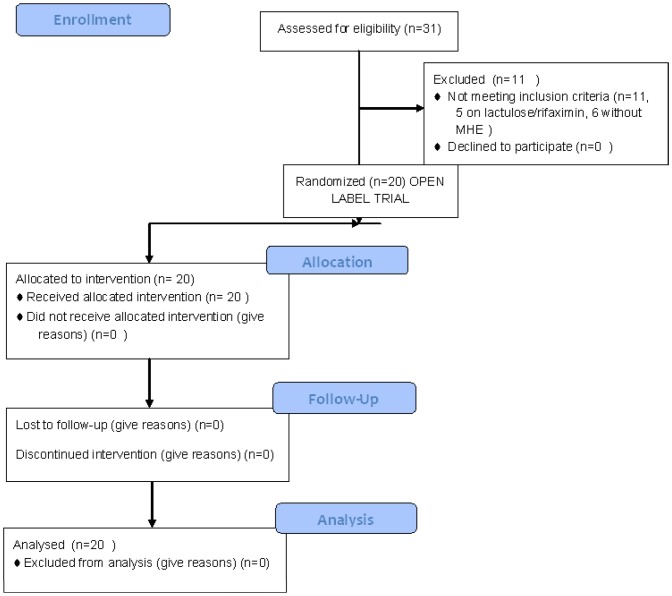
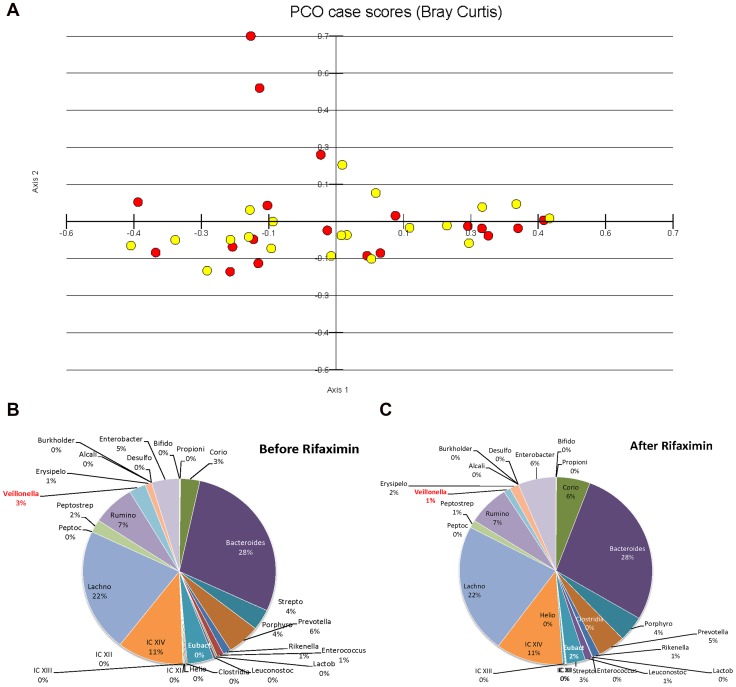
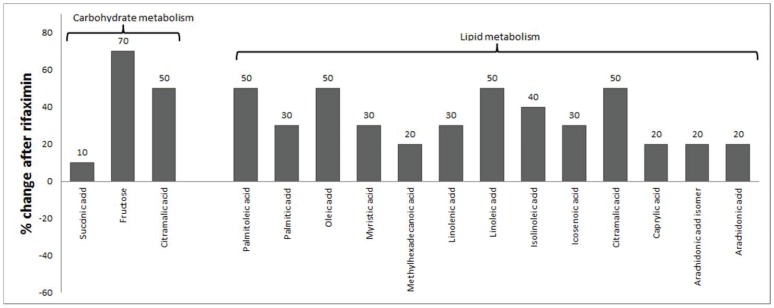
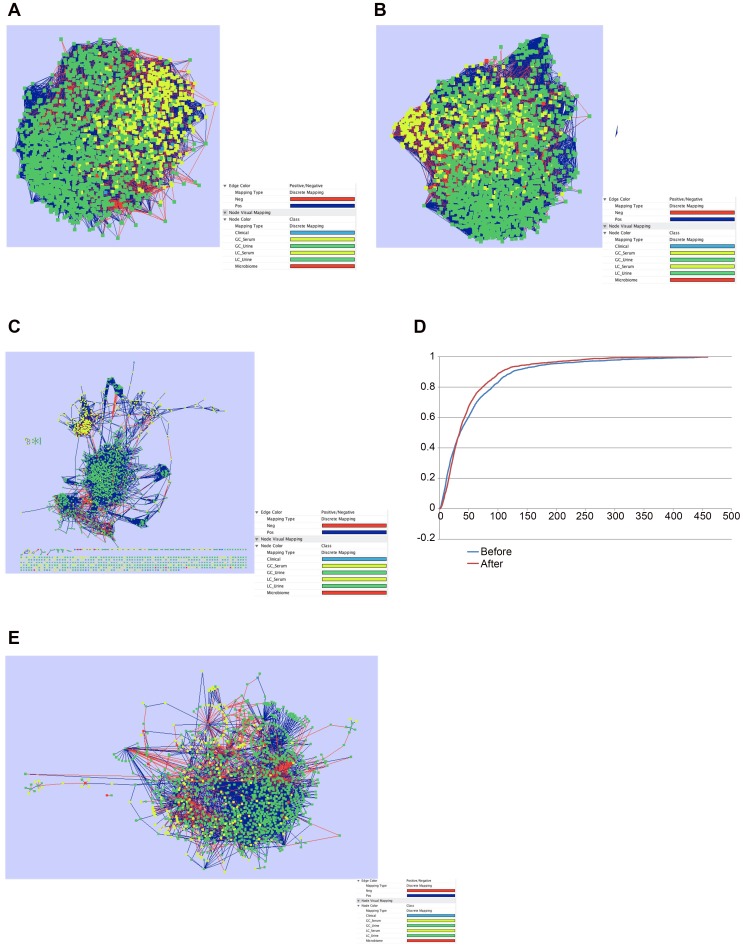
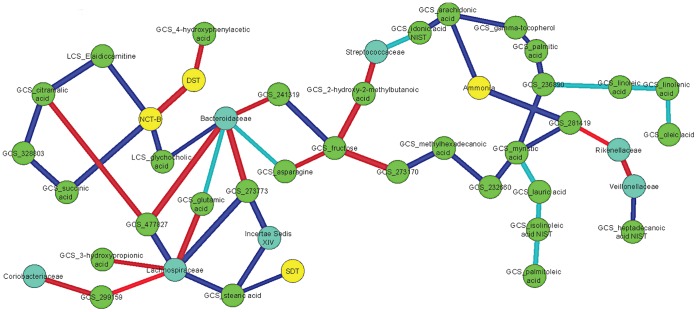
UNLABELLED: Hepatic encephalopathy (HE) represents a dysfunctional gut-liver-brain axis in cirrhosis which can negatively impact outcomes. This altered gut-brain relationship has been treated using gut-selective antibiotics such as rifaximin, that improve cognitive function in HE, especially its subclinical form, minimal HE (MHE). However, the precise mechanism of the action of rifaximin in MHE is unclear. We hypothesized that modulation of gut microbiota and their end-products by rifaximin would affect the gut-brain axis and improve cognitive performance in cirrhosis. Aim To perform a systems biology analysis of the microbiome, metabolome and cognitive change after rifaximin in MHE. METHODS: Twenty cirrhotics with MHE underwent cognitive testing, endotoxin analysis, urine/serum metabolomics (GC and LC-MS) and fecal microbiome assessment (multi-tagged pyrosequencing) at baseline and 8 weeks post-rifaximin 550 mg BID. Changes in cognition, endotoxin, serum/urine metabolites (and microbiome were analyzed using recommended systems biology techniques. Specifically, correlation networks between microbiota and metabolome were analyzed before and after rifaximin. RESULTS: There was a significant improvement in cognition(six of seven tests improved, p<0.01) and endotoxemia (0.55 to 0.48 Eu/ml, p = 0.02) after rifaximin. There was a significant increase in serum saturated (myristic, caprylic, palmitic, palmitoleic, oleic and eicosanoic) and unsaturated (linoleic, linolenic, gamma-linolenic and arachnidonic) fatty acids post-rifaximin. No significant microbial change apart from a modest decrease in Veillonellaceae and increase in Eubacteriaceae was observed. Rifaximin resulted in a significant reduction in network connectivity and clustering on the correlation networks. The networks centered on Enterobacteriaceae, Porphyromonadaceae and Bacteroidaceae indicated a shift from pathogenic to beneficial metabolite linkages and better cognition while those centered on autochthonous taxa remained similar. CONCLUSIONS: Rifaximin is associated with improved cognitive function and endotoxemia in MHE, which is accompanied by alteration of gut bacterial linkages with metabolites without significant change in microbial abundance. TRIAL REGISTRATION: ClinicalTrials.gov NCT01069133.
Overview
The claims and statistics of this paper haven’t been checked yet.
Run the check — free, no account needed. It reads the open-access text and checks the sources it cites.
Integrity signals
Registry
Cites
Statistics
Figures
Verification
Claims the paper makes
The claims and statistics of this paper haven’t been checked yet.
Run the check — free, no account needed. It reads the open-access text and checks the sources it cites.
Claims other papers make about this one
Each is checked against this paper’s own text: does it say what the citing paper says it does?
In the citing paper
“Administration of non-absorbable antibiotics in patients with hepatic encephalopathy and mild cognitive impairment improves cognitive performance, subcortical brain activity, fronto-parietal connectivity, and serum metabolomic profile (418, 419).”
From Signalling cognition: The gut microbiota and hypothalamic-pituitary-adrenal axis (2023) · cites this paper as [419]
Self-check
Percentages, sums and reported differences re-computed from the paper’s own numbers.
The self-check needs the paper’s full text.
Citations
Cites
Cytoscape: A software Environment for integrated models of biomolecular interaction networks
Shannon, P., Markiel, A., Ozier, O., Baliga, N. S., Wang, J. T., Ramage, D., Amin, N., Schwikowski, B., & Ideker, T. (2003) · Genome Research · doi:10.1101/gr.1239303 · Cited by 51,888
An obesity-associated gut microbiome with increased capacity for energy harvest
Turnbaugh, P. J., Ley, R. E., Mahowald, M. A., Magrini, V., Mardis, E. R., & Gordon, J. I. (2006) · Nature · doi:10.1038/nature05414 · Cited by 12,444
PLS-regression: a basic tool of chemometrics
Wold, S., Sjöström, M., & Eriksson, L. (2001) · Chemometrics and Intelligent Laboratory Systems · doi:10.1016/s0169-7439(01)00155-1 · Cited by 10,084
A core gut microbiome in obese and lean twins
Turnbaugh, P. J., Hamady, M., Yatsunenko, T., Cantarel, B. L., Duncan, A., Ley, R. E., Sogin, M. L., Jones, W. J., Roe, B. A., Affourtit, J. P., et al. (2009) · Nature · doi:10.1038/nature07540 · Cited by 7,823
Enterotypes of the human gut microbiome
MetaHIT Consortium (additional members), Arumugam, M., Raes, J., Pelletier, E., Le Paslier, D., Yamada, T., Mende, D. R., Fernandes, G. R., Tap, J., Bruls, T., et al. (2011) · Nature · doi:10.1038/nature09944 · Cited by 7,548
Ferenci, P., Lockwood, A. H., Mullen, K. D., Tarter, R. E., Weißenborn, K., & Blei, A. T. (2002) · Hepatology · doi:10.1053/jhep.2002.31250 · Cited by 2,035
Computing topological parameters of biological networks
Assenov, Y., Ramírez, F., Schelhorn, S.-E., Lengauer, T., & Albrecht, M. (2007) · Bioinformatics · doi:10.1093/bioinformatics/btm554 · Cited by 1,805
The interplay between the intestinal microbiota and the brain
Collins, S. M., Surette, M., & Bercik, P. (2012) · Nature Reviews Microbiology · doi:10.1038/nrmicro2876 · Cited by 1,611 · cited 1×
“We propose that one needs to take a systems biology approach to correlate the complex functional dynamic in the gut ecosystem as a modulator of the gut-brain axis in the human host [14].”
BackgroundRifaximin Treatment in Hepatic Encephalopathy
Bass, N. M., Mullen, K. D., Sanyal, A., Poordad, F., Neff, G., Leevy, C. B., Sigal, S., Sheikh, M. Y., Beavers, K., Frederick, T., et al. (2010) · New England Journal of Medicine · doi:10.1056/nejmoa0907893 · Cited by 1,300
pcaMethods—a bioconductor package providing PCA methods for incomplete data
Stacklies, W., Redestig, H., Scholz, M., Walther, D., & Selbig, J. (2007) · Bioinformatics · doi:10.1093/bioinformatics/btm069 · Cited by 1,156
Characterization of fecal microbial communities in patients with liver cirrhosis
Chen, Y., Yang, F., Lu, H., Wang, B., Chen, Y., Lei, D., Wang, Y., Zhu, B., & Li, L. (2011) · Hepatology · doi:10.1002/hep.24423 · Cited by 1,038
Gut microbiome, obesity, and metabolic dysfunction
Tilg, H., & Kaser, A. (2011) · Journal of Clinical Investigation · doi:10.1172/jci58109 · Cited by 860
Chylomicrons promote intestinal absorption of lipopolysaccharides
Ghoshal, S., Witta, J., Zhong, J., de Villiers, W., & Eckhardt, E. (2009) · Journal of Lipid Research · doi:10.1194/jlr.m800156-jlr200 · Cited by 662
The plasma lipidomic signature of nonalcoholic steatohepatitis
Puri, P., Wiest, M. M., Cheung, O., Mirshahi, F., Sargeant, C., Min, H., Contos, M. J., Sterling, R. K., Fuchs, M., Zhou, H., et al. (2009) · Hepatology · doi:10.1002/hep.23229 · Cited by 655
The gut microbiota modulates host energy and lipid metabolism in mice
Velagapudi, V. R., Hezaveh, R., Reigstad, C. S., Gopalacharyulu, P., Yetukuri, L., Islam, S., Felin, J., Perkins, R., Borén, J., Orešič, M., et al. (2010) · Journal of Lipid Research · doi:10.1194/jlr.m002774 · Cited by 589
Linkage of gut microbiome with cognition in hepatic encephalopathy
Bajaj, J. S., Ridlon, J. M., Hylemon, P. B., Thacker, L. R., Heuman, D. M., Smith, S., Sikaroodi, M., & Gillevet, P. M. (2012) · American Journal of Physiology-Gastrointestinal and Liver Physiology · doi:10.1152/ajpgi.00190.2011 · Cited by 547
Self-citationBajaj, J. S., Hylemon, P. B., Ridlon, J. M., Heuman, D. M., Daita, K., White, M. B., Monteith, P., Noble, N. A., Sikaroodi, M., & Gillevet, P. M. (2012) · American Journal of Physiology-Gastrointestinal and Liver Physiology · doi:10.1152/ajpgi.00152.2012 · Cited by 530
Essential fatty acids and the brain: possible health implications
Youdim, K. A., Martin, A., & Joseph, J. A. (2000) · International Journal of Developmental Neuroscience · doi:10.1016/s0736-5748(00)00013-7 · Cited by 517
Differential metabolic networks unravel the effects of silent plant phenotypes
Weckwerth, W., Loureiro, M., Wenzel, K., & Fiehn, O. (2004) · Proceedings of the National Academy of Sciences · doi:10.1073/pnas.0303415101 · Cited by 402
Pathogenetic mechanisms of hepatic encephalopathy
Häussinger, D., & Schliess, F. (2008) · Gut · doi:10.1136/gut.2007.122176 · Cited by 390
Spectrum of neurocognitive impairment in cirrhosis
Bajaj, J. S., Wade, J. B., & Sanyal, A. J. (2009) · Hepatology · doi:10.1002/hep.23216 · Cited by 341
Minimal hepatic encephalopathy: diagnosis, clinical significance and recommendations
Ortiz, M., Jacas, C., & Córdoba, J. (2004) · Journal of Hepatology · doi:10.1016/j.jhep.2004.11.028 · Cited by 273
Hooda, S., Boler, B. M. V., Serao, M. C. R., Brulc, J. M., Staeger, M. A., Boileau, T. W., Dowd, S. E., Fahey, G. C., & Swanson, K. S. (2012) · The Journal of Nutrition · doi:10.3945/jn.112.158766 · Cited by 272
Probiotic Yogurt for the Treatment of Minimal Hepatic Encephalopathy
Bajaj, J. S., Saeian, K., Christensen, K. M., Hafeezullah, M., Varma, R. R., Franco, J., Pleuss, J. A., Krakower, G. R., Hoffmann, R. G., & Binion, D. G. (2008) · The American Journal of Gastroenterology · doi:10.1111/j.1572-0241.2008.01861.x · Cited by 268
Bajaj, J. S., Heuman, D. M., Wade, J. B., Gibson, D. P., Saeian, K., Wegelin, J. A., Hafeezullah, M., Bell, D. E., Sterling, R. K., Stravitz, R. T., et al. (2010) · Gastroenterology · doi:10.1053/j.gastro.2010.08.061 · Cited by 245
Sidhu, S. S., Goyal, O., Mishra, B. P., Sood, A., Chhina, R. S., & Soni, R. K. (2010) · The American Journal of Gastroenterology · doi:10.1038/ajg.2010.455 · Cited by 244
Neuropsychological assessment of hepatic encephalopathy: ISHEN practice guidelines
RANDOLPH, C. C., Hilsabeck, R. C., Kato, A., Kharbanda, P. S., Li, Y., Mapelli, D., Ravdin, L., Romero‐Gómez, M., Stracciari, A., & Weißenborn, K. (2009) · Liver International · doi:10.1111/j.1478-3231.2009.02009.x · Cited by 235
Analysis of bacterial bowel communities of IBD patients: What has it revealed?
Sokol, H., Lay, C., Seksik, P., & Tannock, G. W. (2008) · Inflammatory Bowel Diseases · doi:10.1002/ibd.20392 · Cited by 229
Functional analysis of colonic bacterial metabolism: relevant to health?
Hamer, H. M., Preter, V. D., Windey, K., & Verbeke, K. (2011) · American Journal of Physiology-Gastrointestinal and Liver Physiology · doi:10.1152/ajpgi.00048.2011 · Cited by 221
Wall, R., Ross, R. P., Shanahan, F., O’Mahony, L., O’Mahony, C., Coakley, M., Hart, O. M., Lawlor, P. G., Quigley, E. M. M., Kiely, B., et al. (2009) · American Journal of Clinical Nutrition · doi:10.3945/ajcn.2008.27023 · Cited by 198
Maccaferri, S., Vitali, B., Klinder, A., Kolida, S., Ndagijimana, M., Laghi, L., Calanni, F., Brigidi, P., Gibson, G. R., & Costabile, A. (2010) · Journal of Antimicrobial Chemotherapy · doi:10.1093/jac/dkq345 · Cited by 186
van den Bogert, B., de Vos, W. M., Zoetendal, E. G., & Kleerebezem, M. (2011) · Applied and Environmental Microbiology · doi:10.1128/aem.02477-10 · Cited by 174
Rifaximin: In vitro and in vivo Antibacterial Activity – A Review
Jiang, Z., & DuPont, H. L. (2005) · Chemotherapy · doi:10.1159/000081991 · Cited by 158
Kesarwani, M., Hazan, R., He, J., Que, Y., Apidianakis, Y., Lesic, B., Xiao, G., Dekimpe, V., Milot, S. M., Déziel, É., et al. (2011) · PLoS Pathogens · doi:10.1371/journal.ppat.1002192 · Cited by 116
Wall, R., Marques, T. M., O’Sullivan, Ó., Ross, R. P., Shanahan, F., Quigley, E. M. M., Dinan, T. G., Kiely, B., Fitzgerald, G. F., Cotter, P. D., et al. (2012) · American Journal of Clinical Nutrition · doi:10.3945/ajcn.111.026435 · Cited by 112
Quantitative Assessment of the Human Gut Microbiome Using Multitag Pyrosequencing
Gillevet, P. M., Sikaroodi, M., Keshavarzian, A., & Mutlu, E. (2010) · Chemistry & Biodiversity · doi:10.1002/cbdv.200900322 · Cited by 105
Covert Hepatic Encephalopathy: Not as Minimal as You Might Think
Kappus, M. R., & Bajaj, J. S. (2012) · Clinical Gastroenterology and Hepatology · doi:10.1016/j.cgh.2012.05.026 · Cited by 102
Brown, E. L., Xue, Q., Jiang, Z., Xu, Y., & DuPont, H. L. (2009) · Antimicrobial Agents and Chemotherapy · doi:10.1128/aac.00691-09 · Cited by 96
Jiang, Z., Shi, K., & DuPont, H. L. (2010) · International Journal of Antimicrobial Agents · doi:10.1016/j.ijantimicag.2009.11.013 · Cited by 81
Extending Biochemical Databases by Metabolomic Surveys
Fiehn, O., Barupal, D. K., & Kind, T. (2011) · Journal of Biological Chemistry · doi:10.1074/jbc.r110.173617 · Cited by 73
Tarao, K., Ikeda, T., Hayashi, K., Sakurai, A., Okada, T., Ito, T., Karube, H., Nomoto, T., MIZUNO, T., & Shindo, K. (1990) · Gut · doi:10.1136/gut.31.6.702 · Cited by 73
Altered intestinal microbiota in irritable bowel syndrome: Microbiota in IBS
Lee, K. J., & Tack, J. (2010) · Neurogastroenterology & Motility · doi:10.1111/j.1365-2982.2010.01482.x · Cited by 69 · cited 1×
“Veillonella spp have also been over-represented in patients with irritable bowel syndrome, most often those with a mixed or constipation-predominant clinical picture [30].”
BackgroundKalambokis, G. N., & Tsianos, E. V. (2011) · Hepatology · doi:10.1002/hep.24751 · Cited by 61
Rosberg-Cody, E., Stanton, C., O’Mahony, L., Wall, R., Shanahan, F., Quigley, E. M. M., Fitzgerald, G. F., & Ross, R. P. (2010) · Microbiology · doi:10.1099/mic.0.043406-0 · Cited by 60
Rönnemaa, E., Zethelius, B., Vessby, B., Lannfelt, L., Byberg, L., & Kilander, L. (2012) · European Journal of Clinical Nutrition · doi:10.1038/ejcn.2012.63 · Cited by 48
Cited by
Sorted by citations
Cryan, J. F., O'Riordan, K. J., Cowan, C. S. M., Sandhu, K. V., Bastiaanssen, T. F. S., Boehme, M., Codagnone, M. G., Cussotto, S., Fulling, C., Golubeva, A. V., et al. (2019) · Physiological Reviews · doi:10.1152/physrev.00018.2018 · Cited by 5,286
Gut/brain axis and the microbiota
Mayer, E. A., Tillisch, K., & Gupta, A. (2015) · Journal of Clinical Investigation · doi:10.1172/jci76304 · Cited by 1,503
Altered profile of human gut microbiome is associated with cirrhosis and its complications
Bajaj, J. S., Heuman, D. M., Hylemon, P. B., Sanyal, A. J., White, M. B., Monteith, P., Noble, N. A., Unser, A. B., Daita, K., Fisher, A. R., et al. (2014) · Journal of Hepatology · doi:10.1016/j.jhep.2013.12.019 · Cited by 1,099
Gut microbes and the brain: paradigm shift in neuroscience
Mayer, E. A., Knight, R., Mazmanian, S. K., Cryan, J. F., & Tillisch, K. (2014) · The Journal of Neuroscience · doi:10.1523/jneurosci.3299-14.2014 · Cited by 1,033
Effects of environmental pollutants on gut microbiota
Jin, Y., Wu, S., Zeng, Z., & Fu, Z. (2017) · Environmental Pollution · doi:10.1016/j.envpol.2016.11.045 · Cited by 683
Metadata
- Authors
- Bajaj, J. S., Heuman, D. M., Sanyal, A. J., Hylemon, P. B., Sterling, R. K., Stravitz, R. T., Fuchs, M., Ridlon, J. M., Daita, K., Monteith, P., Noble, N. A., White, M. B., Fisher, A., Sikaroodi, M., Rangwala, H., & Gillevet, P. M.
- Affiliations
- Virginia Commonwealth University (US)
- George Mason University (US)
- Corresponding author
- Bajaj, Jasmohan S.
- ORCID
- Venue
- PLoS ONE
- Publisher
- Public Library of Science (PLoS)
- Published
- 2013-04-02
- Volume
- 8
- Issue
- 4
- Pages
- e60042
- ISSN
- 1932-6203 (ISSN-L)
- PMC
- PMC3615021
- OpenAlex
- W2138196119
- Cited by
- 430
- References
- 46
- Citations by year
- 2026: 19 · 2025: 27 · 2024: 34 · 2023: 34 · 2022: 25 · 2021: 40 · 2020: 31 · 2019: 37 · 2018: 45 · 2017: 27 · 2016: 31 · 2015: 43 · 2014: 25 · 2013: 9
- FWCI
- 22.45
- Type
- journal article
- Language
- en
- Open access
- gold
- doi.org
- Locations
- PLoS ONE (publishedVersion, cc-by)
- Europe PMC (PubMed Central) (publishedVersion, other-oa)
- PubMed Central (publishedVersion, cc-by)
- PubMed (publishedVersion)
- VCU Scholars Compass (Virginia Commonwealth University) (submittedVersion, cc-by)
- DOAJ (DOAJ: Directory of Open Access Journals) (submittedVersion)
- Figshare (submittedVersion, cc-by)
- Funders
- National Institutes of Health (UL1TR000058)
- University of California, Davis
- National Institute on Alcohol Abuse and Alcoholism (R01AA020203, RO1AA020203)
- National Institute of Diabetes and Digestive and Kidney Diseases (RO1AA020203, RO1DK087913, R01DK087913)
- National Center for Complementary and Alternative Medicine (RO1AA020203)
- National Center for Advancing Translational Sciences
- National Center for Complementary and Integrative Health (U01AT004428)
- Topics
- Health Sciences › Medicine › Hepatology › Liver Disease and Transplantation
- Life Sciences › Biochemistry, Genetics and Molecular Biology › Molecular Biology › Gut microbiota and health
- Health Sciences › Medicine › Gastroenterology › Gastrointestinal motility and disorders
- Keywords
- rifaximin, minimal hepatic encephalopathy, liver cirrhosis, gut microbiota, gut-brain axis, endotoxemia, cognitive function, serum metabolomics, urine metabolomics, fatty acids, Veillonellaceae, Enterobacteriaceae, Bacteroidaceae, Porphyromonadaceae
- MeSH terms
- Rifaximin, Cognition, Female, Hepatic Encephalopathy, Humans, Liver Cirrhosis, Male, Middle Aged, Rifamycins, Gastrointestinal Tract, Metagenome, Metabolomics, Metabolome
About these checks
Registry, retraction, Cites and statistics results are computed, not judged, with one exception: a printed reference that no index lists is read once by a model before it counts as a citation error. Claims are extracted by a model and kept only when their quote appears verbatim in the text; each cited source is then checked, with a model’s help, for whether it says what the claim relies on. Those verdicts can be wrong — read the claim’s quote and the cited source before relying on one.
Statistics and arithmetic are recomputed, not judged.
Confidence bands are shown only for fields calibrated on our annotated test set. None is calibrated yet, so no band is shown.
What counts as a claim ›How we measure confidence ›How we check this ›
Are you an author, or do you see a problem with this page? Request a review
