

Increased Iron Loading Induces Bmp6 Expression in the Non-Parenchymal Cells of the Liver Independent of the BMP-Signaling Pathway
Open accessThe DOI matches its Crossref record; 42 of the 42 references it cites were found in a registry or an index.
Abstract
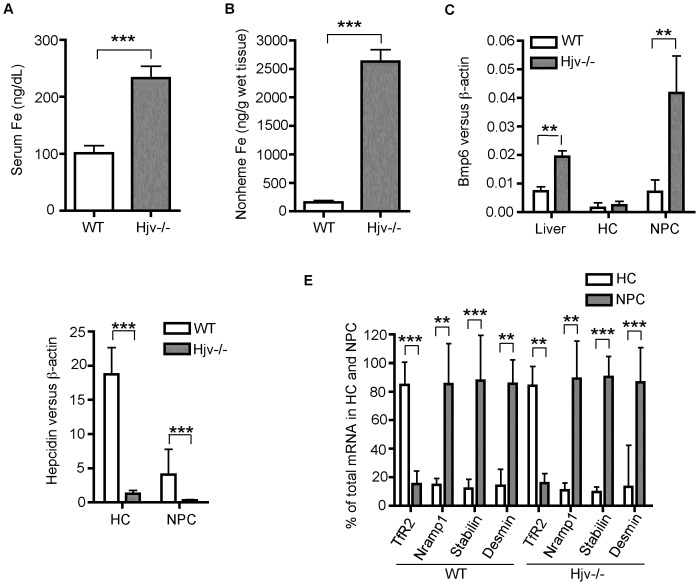
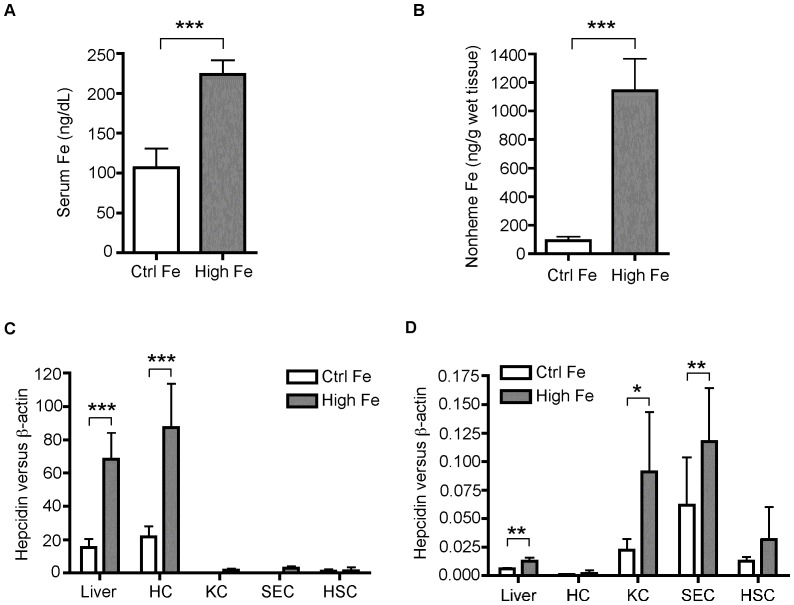
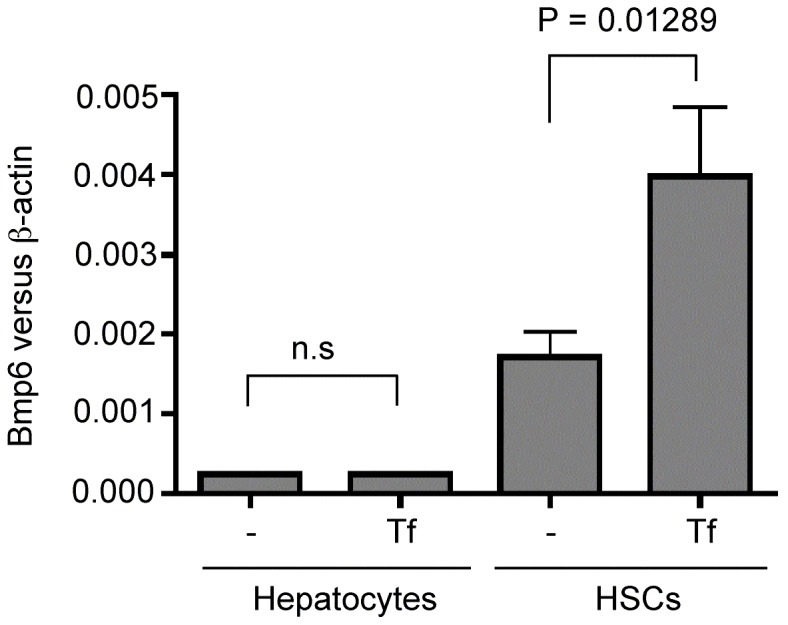
Bone morphogenetic protein 6 (BMP6) is an essential cytokine for the expression of hepcidin, an iron regulatory hormone secreted predominantly by hepatocytes. Bmp6 expression is upregulated by increased iron-levels in the liver. Both hepatocytes and non-parenchymal liver cells have detectable Bmp6 mRNA. Here we showed that induction of hepcidin expression in hepatocytes by dietary iron is associated with an elevation of Bmp6 mRNA in the non-parenchymal cells of the liver. Consistently, incubation with iron-saturated transferrin induces Bmp6 mRNA expression in isolated hepatic stellate cells, but not in hepatocytes. These observations suggest an important role of the non-parenchymal liver cells in regulating iron-homeostasis by acting as a source of Bmp6.
Overview
The claims and statistics of this paper haven’t been checked yet.
Free: it reads the open-access text and checks the first 5 claims that cite a source we can check. Create a free account to check every claim.
Integrity signals
Registry
Cites
Statistics
Figures
Verification
Claims the paper makes
The claims and statistics of this paper haven’t been checked yet.
Free: it reads the open-access text and checks the first 5 claims that cite a source we can check. Create a free account to check every claim.
Claims other papers make about this one
Each is checked against this paper’s own text: does it say what the citing paper says it does?
The cited source says what the claim attributes to it.
In the citing paper
“Notably, BMP6 is primarily produced by non-parenchymal liver cells and may act in a paracrine manner on adjacent hepatocytes [68].”
From Iron deficiency or anemia of inflammation?: Differential diagnosis and mechanisms of anemia of inflammation (2016) · cites this paper as [68]
Self-check
Percentages, sums and reported differences re-computed from the paper’s own numbers.
The self-check needs the paper’s full text.
Citations
Cites
Hepcidin, a urinary antimicrobial peptide synthesized in the liver
Park, C. H., Valore, E. V., Waring, A. J., & Ganz, T. (2001) · Journal of Biological Chemistry · doi:10.1074/jbc.m008922200 · Cited by 2,168 · cited 1×
“Bone morphogenetic protein (BMP6) is an essential cytokine for the expression of hepcidin in hepatocytes [8,9,10,11].”
BackgroundTwo to tango: Regulation of Mammalian iron metabolism
Hentze, M. W., Muckenthaler, M. U., Galy, B., & Camaschella, C. (2010) · Cell · doi:10.1016/j.cell.2010.06.028 · Cited by 2,120 · cited 1×
“In contrast, lack of hepcidin causes juvenile hemochromatosis [4], a particularly severe form of iron overload [2,5,6,7].”
BackgroundSPECIFICITY AND VERSATILITY IN TGF-β SIGNALING THROUGH SMADS
Feng, X.-H., & Derynck, R. (2005) · Annual Review of Cell and Developmental Biology · doi:10.1146/annurev.cellbio.21.022404.142018 · Cited by 1,869 · cited 1×
“The phosphorylated SMADs (pSMADs) form heteromeric complexes with SMAD4, which then translocate into the nucleus where they induce the transcription of target genes [12].”
BackgroundPigeon, C., Ilyin, G., Courselaud, B., Leroyer, P., Turlin, B., Brissot, P., & Loréal, O. (2001) · Journal of Biological Chemistry · doi:10.1074/jbc.m008923200 · Cited by 1,697 · cited 1×
“Bone morphogenetic protein (BMP6) is an essential cytokine for the expression of hepcidin in hepatocytes [8,9,10,11].”
BackgroundGanz, T., & Nemeth, E. (2012) · Biochimica et Biophysica Acta (BBA) - Molecular Cell Research · doi:10.1016/j.bbamcr.2012.01.014 · Cited by 1,282 · cited 2×
“An efficient induction of hepatic hepcidin expression by iron requires BMP6, HJV, neogenin, HFE, TfR2, BMP receptors (ALK2 and ALK3), and an intact BMP signaling pathway [31,32].”
BackgroundMutant antimicrobial peptide hepcidin is associated with severe juvenile hemochromatosis
Roetto, A., Papanikolaou, G., Politou, M., Alberti, F., Girelli, D., Christakis, J., Loukopoulos, D., & Camaschella, C. (2003) · Nature Genetics · doi:10.1038/ng1053 · Cited by 860 · cited 1×
“In contrast, lack of hepcidin causes juvenile hemochromatosis [4], a particularly severe form of iron overload [2,5,6,7].”
BackgroundBMP6 is a key endogenous regulator of hepcidin expression and iron metabolism
Andriopoulos Jr, B., Corradini, E., Xia, Y., Faasse, S. A., Chen, S., Grgurevic, L., Knutson, M. D., Pietrangelo, A., Vukicevic, S., Lin, H. Y., et al. (2009) · Nature Genetics · doi:10.1038/ng.335 · Cited by 769 · cited 5×
“Bmp6-/- mice display profound decreases in BMP signaling and hepcidin expression and a severe iron overload [8,9].”
BackgroundInfluentialWeinstein, D. A., Roy, C. N., Fleming, M. D., Loda, M. F., Wolfsdorf, J. I., & Andrews, N. C. (2002) · Blood · doi:10.1182/blood-2002-04-1260 · Cited by 632 · cited 1×
“Inappropriately high levels of hepcidin result in iron accumulation in macrophages and hepatocytes and a lack of iron export from the intestinal epithelial cells into the blood stream, which lead to iron deficiency anemia [3].”
BackgroundLack of the bone morphogenetic protein BMP6 induces massive iron overload
Meynard, D., Kautz, L., Darnaud, V., Canonne-Hergaux, F., Coppin, H., & Roth, M.-P. (2009) · Nature Genetics · doi:10.1038/ng.320 · Cited by 587 · cited 5×
“Bmp6-/- mice display profound decreases in BMP signaling and hepcidin expression and a severe iron overload [8,9].”
BackgroundInfluentialHepcidin and disorders of iron metabolism
Ganz, T., & Nemeth, E. (2011) · Annual Review of Medicine · doi:10.1146/annurev-med-050109-142444 · Cited by 466 · cited 1×
“Hepcidin negatively controls the efflux of iron out of the intestinal epithelial cells, macrophages and hepatocytes by binding to and inducing the down-regulation of ferroportin, the only known iron exporter [1,2].”
Background
Cited by
Regulation of the Iron Homeostatic Hormone Hepcidin
Sangkhae, V., & Nemeth, E. (2017) · Advances in Nutrition · doi:10.3945/an.116.013961 · Cited by 443
An overview of molecular basis of iron metabolism regulation and the associated pathologies
Silva, B., & Faustino, P. (2015) · Biochimica et Biophysica Acta (BBA) - Molecular Basis of Disease · doi:10.1016/j.bbadis.2015.03.011 · Cited by 300
“However, while hepcidin is synthesized by the hepatocytes, BMP6 expression in response to iron occurs preferentially at non-parenchymal liver cells, such as sinusoidal endothelial cells, hepatic stellate cells and Kupffer cells [80].”
BackgroundThe Regulation of Iron Absorption and Homeostasis.
Wallace, D. F. (2016) · PubMed Central · Cited by 368
A Short Review of Iron Metabolism and Pathophysiology of Iron Disorders
Yiannikourides, A., & Latunde-Dada, G. (2019) · Medicines · doi:10.3390/medicines6030085 · Cited by 253
“When body iron levels increase, BMP6 synthesis in the non-parenchymal hepatic cells increases [46].”
BackgroundJenkitkasemwong, S., Wang, C.-Y., Coffey, R., Zhang, W., Chan, A., Biel, T., Kim, J.-S., Hojyo, S., Fukada, T., & Knutson, M. D. (2015) · Cell Metabolism · doi:10.1016/j.cmet.2015.05.002 · Cited by 245
“Although the hepatic cell type that increases BMP6 expression in response to iron loading remains unresolved, studies of isolated liver cells suggest that nonparenchymal cells (Kupffer cells, stellate cells, and sinusoidal endothelial cells) are the main source (Enns et al., 2013; Feng et al., 2012).”
Hepcidin: regulation of the master iron regulator
Rishi, G., Wallace, D. F., & Subramaniam, V. N. (2015) · Bioscience Reports · doi:10.1042/bsr20150014 · Cited by 223
Endothelial cells produce bone morphogenetic protein 6 required for iron homeostasis in mice
Canali, S., Zumbrennen-Bullough, K. B., Core, A. B., Wang, C.-Y., Nairz, M., Bouley, R., Swirski, F. K., & Babitt, J. L. (2017) · Blood · doi:10.1182/blood-2016-06-721571 · Cited by 212
Iron homeostasis: An anthropocentric perspective
Coffey, R., & Ganz, T. (2017) · Journal of Biological Chemistry · doi:10.1074/jbc.r117.781823 · Cited by 188
The liver: conductor of systemic iron balance
Meynard, D., Babitt, J. L., & Lin, H. Y. (2014) · Blood · doi:10.1182/blood-2013-06-427757 · Cited by 177
“Interestingly, it was recently reported that although nonparenchymal cells and hepatocytes produce BMP6 mRNA under basal conditions, only nonparenchymal cells increase BMP6 mRNA expression in iron overload conditions, and this increase does not correlate with increased intracellular iron content of these nonparenchyma…”
BackgroundHepcidin-ferroportin axis in health and disease
Ginzburg, Y. Z. (2019) · Vitamins and hormones · doi:10.1016/bs.vh.2019.01.002 · Cited by 187
Ineffective erythropoiesis and regulation of iron status in iron loading anaemias
Camaschella, C., & Nai, A. (2016) · British Journal of Haematology · doi:10.1111/bjh.13820 · Cited by 172
“BMP6 expression in mice increases in parallel with liver iron increase (Kautz et al, 2008), especially reflecting iron content in non-parenchymal cells (Enns et al, 2013; Rausa et al, 2015), playing the role of the store regulator (Fig 2).”
BackgroundNairz, M., Theurl, I., Wolf, D., & Weiss, G. (2016) · Wiener Medizinische Wochenschrift · doi:10.1007/s10354-016-0505-7 · Cited by 152
“parenchymal liver cells and may act in a paracrine manner on adjacent hepatocytes [68].”
BackgroundHepcidin and the BMP-SMAD pathway: An unexpected liaison
Silvestri, L., Nai, A., Dulja, A., & Pagani, A. (2019) · Vitamins and Hormones · doi:10.1016/bs.vh.2019.01.004 · Cited by 124
Urrutia, P. J., Bórquez, D. A., & Núñez, M. T. (2021) · Antioxidants · doi:10.3390/antiox10010061 · Cited by 138
The Liver in Regulation of Iron Homeostasis
Rishi, G., & Subramaniam, V. N. (2017) · American Journal of Physiology-Gastrointestinal and Liver Physiology · doi:10.1152/ajpgi.00004.2017 · Cited by 124
“First, how is Bmp6 produced? How is the increase in iron levels relayed to the nucleus? Is the BMP6 produced in the hepatocytes or in the nonparenchymal cells, as has been suggested recently (15, 20)? Is it the increase in transferrin saturation or the hepatic iron levels that result in an increase in Bmp6 synthesis (…”
BackgroundIron and hepcidin: a story of recycling and balance
Camaschella, C. (2013) · Hematology · doi:10.1182/asheducation-2013.1.1 · Cited by 112
Hemojuvelin and bone morphogenetic protein (BMP) signaling in iron homeostasis
Core, A. B., Canali, S., & Babitt, J. L. (2014) · Frontiers in Pharmacology · doi:10.3389/fphar.2014.00104 · Cited by 106
“It appears that liver iron regulates BMP6 expression mainly in nonparenchymal cells (Enns et al., 2013), and that iron loading in specific liver cell types may important for this regulation (Daba et al., 2013).”
BackgroundBone Morphogenetic Proteins as Regulators of Iron Metabolism
Parrow, N. L., & Fleming, R. E. (2014) · Annual Review of Nutrition · doi:10.1146/annurev-nutr-071813-105646 · Cited by 100
“Bmp6 mRNA is induced in response to iron overload in nonparenchymal cells, but not hepatocytes, of livers obtained from Hjv−/− mice and wild-type mice fed a high-iron diet (23).”
BackgroundRegulators of hepcidin expression
Roth, M., Meynard, D., & Coppin, H. (2019) · Vitamins and hormones · doi:10.1016/bs.vh.2019.01.005 · Cited by 97
The role of hepatic transferrin receptor 2 in the regulation of iron homeostasis in the body
Worthen, C., & Enns, C. A. (2014) · Frontiers in Pharmacology · doi:10.3389/fphar.2014.00034 · Cited by 90
“Iron response elements (IRE’s) on the 3′ TfR1 mRNA account for the rapid turnover of TfR1 mRNA under high iron conditions, which functions to reduce iron import (Owen and Kuhn, 1987).”
BackgroundSelf-citationRausa, M., Pagani, A., Nai, A., Campanella, A., Gilberti, M. E., Apostoli, P., Camaschella, C., & Silvestri, L. (2015) · PLOS ONE · doi:10.1371/journal.pone.0122696 · Cited by 75
“This has been proposed to require a signal/cytokine to transmit information on the iron state from HCs to NPCs [27].”
BackgroundMethodResultInfluentialCell‐type‐specific insights into iron regulatory processes
Mleczko‐Sanecka, K., & Silvestri, L. (2020) · American Journal of Hematology · doi:10.1002/ajh.26001 · Cited by 69
“liver non-parenchymal cells (NPCs) as KC, stellate cells and liver sinusoidal endothelial cells (LSECs), were identified as the major producers of liver BMP6 which respond with Bmp6 induction upon high-iron feeding.(123,130) However, only mice with endothelial-specific Bmp6 deletion, but not with macrophage-specific a…”
BackgroundLow Intracellular Iron Increases the Stability of Matriptase-2
Zhao, N., Nizzi, C. P., Anderson, S. A., Wang, J., Ueno, A., Tsukamoto, H., Eisenstein, R. S., Enns, C. A., & Zhang, A.-S. (2015) · Journal of Biological Chemistry · doi:10.1074/jbc.m114.611913 · Cited by 51
“9-fold in the liver when comparedwith the animals fed the control diet (35).”
BackgroundMethodResultSelf-citationMitochondrial dysfunction in mouse livers depleted of iron chaperone PCBP1
Jadhav, S., Protchenko, O. V., Li, F., Baratz, E., Shakoury‐Elizeh, M., Maschek, J. A., Cox, J. E., & Philpott, C. C. (2021) · Free Radical Biology and Medicine · doi:10.1016/j.freeradbiomed.2021.08.232 · Cited by 51
Normal and dysregulated crosstalk between iron metabolism and erythropoiesis
Ginzburg, Y. Z., An, X., Rivella, S., & Goldfarb, A. N. (2023) · eLife · doi:10.7554/elife.90189 · Cited by 51
Advances in understanding iron metabolism and its crosstalk with erythropoiesis
Camaschella, C., & Pagani, A. (2018) · British Journal of Haematology · doi:10.1111/bjh.15403 · Cited by 49
Hepcidin and Iron Metabolism in Experimental Liver Injury
Bloomer, S. A., & Brown, K. E. (2021) · American Journal Of Pathology · doi:10.1016/j.ajpath.2021.04.005 · Cited by 41
Circulating iron levels influence the regulation of hepcidin following stimulated erythropoiesis
Mirciov, C. S. G., Wilkins, S. J., Hung, G. C. C., Helman, S. L., Anderson, G. J., & Frazer, D. M. (2018) · Haematologica · doi:10.3324/haematol.2017.187245 · Cited by 35
Mechanisms and Regulation of Intestinal Iron Transport
Collins, J. F., Flores, S. R., Wang, X., & Anderson, G. J. (2018) · Elsevier eBooks · doi:10.1016/b978-0-12-809954-4.00060-8 · Cited by 34
20 years of Hepcidin: How far we have come
Colucci, S., Marques, O., & Altamura, S. (2021) · Seminars in Hematology · doi:10.1053/j.seminhematol.2021.05.001 · Cited by 30
Chen, H., Choesang, T., Li, H., Sun, S., Pham, P., Bao, W., Feola, M., Westerman, M., Li, G., Follenzi, A., et al. (2016) · Haematologica · doi:10.3324/haematol.2015.127902 · Cited by 26
“We utilized whole liver samples for Bmp6 mRNA analysis, in the light of evidence that BMP6 induction by dietary iron occurs primarily in liver non-parenchymal cells, rather than hepatocytes.(34) In agreement with this, hepatocytes exposed in vitro to mouse serum exhibit unchanged Bmp6 expression (data not shown).”
MethodHepcidin mimetics in polycythemia vera: resolving the irony of iron deficiency and erythrocytosis
Handa, S., Ginzburg, Y. Z., Hoffman, R., & Kremyanskaya, M. (2022) · Current Opinion in Hematology · doi:10.1097/moh.0000000000000747 · Cited by 31
“When iron is abundant in the circulation, TfR2 expression exceeds that of TfR1 [24,25].”
BackgroundIron Nanoparticles Significantly Affect the In Vitro and In Vivo Expression of Id Genes
Zou, J., Wang, X., Zhang, L., & Wang, J. (2014) · Chemical Research in Toxicology · doi:10.1021/tx500333q · Cited by 29
Self-citationWang, Y., Protchenko, O. V., Huber, K. D., Shakoury‐Elizeh, M., Ghosh, M. C., & Philpott, C. C. (2023) · Blood · doi:10.1182/blood.2023020504 · Cited by 25
Signaling pathways regulating hepcidin
Rishi, G., & Subramaniam, V. N. (2019) · Vitamins and hormones · doi:10.1016/bs.vh.2019.01.003 · Cited by 24
McDonald, C. J., Wallace, D. F., Ostini, L., & Subramaniam, V. N. (2013) · American Journal of Physiology-Gastrointestinal and Liver Physiology · doi:10.1152/ajpgi.00256.2013 · Cited by 24
Hasebe, T., Tanaka, H., Sawada, K., Nakajima, S., Ohtake, T., Fujiya, M., & Kohgo, Y. (2016) · Journal of Gastroenterology · doi:10.1007/s00535-016-1237-6 · Cited by 23
“[29] reported that LSECs express the hepcidin regulator BMP6.”
BackgroundEnns, C. A., Weiskopf, T., Zhang, R. H., Wu, J. J., Jue, S. F., Kawaguchi, M., Kataoka, H., & Zhang, A. (2023) · Journal of Biological Chemistry · doi:10.1016/j.jbc.2023.105238 · Cited by 22
“Hepatocytes were isolated from 8-week-old Spint2;AlbCre and Spint2;Alb-Cre mice as previously described (51).”
BackgroundMethodInfluentialSelf-citationExpression of serum BMP6 and hepcidin in cancer-related anemia
Cheng, Z., Yan, M., Lu, Y., & Pan, X. (2020) · Hematology · doi:10.1080/16078454.2020.1738098 · Cited by 21
Hepcidin and its multiple partners: Complex regulation of iron metabolism in health and disease
Ginzburg, Y. Z. (2023) · Vitamins and hormones · doi:10.1016/bs.vh.2023.03.001 · Cited by 20
Radhakrishnan, K., Kim, Y., Jung, Y. S., Kim, J., Kim, D., Cho, S. J., Lee, I., Dooley, S., Lee, C., & Choi, H. (2020) · International Journal of Molecular Sciences · doi:10.3390/ijms21197148 · Cited by 17
“Hepatic BMP6 production was reported from NPCs in several reports [36,38,39].”
BackgroundLiver sinusoidal endothelial cells as iron sensors
Parrow, N. L., & Fleming, R. E. (2017) · Blood · doi:10.1182/blood-2016-12-754499 · Cited by 16
“However, the observation that nonparenchymal cells in the liver are the predominant sites of basal and iron-regulated BMP6 expression raised the possibility that other, perhaps multiple, liver cell types were relevant sources.(7,8) Canali et al demonstrate the limitations in interpreting observations from primary hepa…”
BackgroundIron‐triggered signaling via ETS1 and the p38/ JNK MAPK pathway regulates Bmp6 expression
Zurawska, G., Jończy, A., Niklewicz, M., Sas, Z., Rumieńczyk, I., Kulecka, M., Piwocka, K., Rygiel, T. P., Mikuła, M., & Mleczko‐Sanecka, K. (2024) · American Journal of Hematology · doi:10.1002/ajh.27223 · Cited by 15
Mao, P., Wortham, A. M., Enns, C. A., & Zhang, A. (2018) · Journal of Biological Chemistry · doi:10.1074/jbc.ra118.006468 · Cited by 15
Self-citationKim, D., Kim, Y., Jung, Y. S., Kim, K.-S., Jeong, J., Lee, Y.-S., Yuk, J., Oh, B., Choy, H. E., Dooley, S., et al. (2016) · Scientific Reports · doi:10.1038/srep34630 · Cited by 13
Vitamin E Induces Liver Iron Depletion and Alters Iron Regulation in Mice
Baratz, E., Protchenko, O. V., Jadhav, S., Zhang, D., Violet, P.-C., Grounds, S., Shakoury‐Elizeh, M., Levine, M., & Philpott, C. C. (2023) · Journal of Nutrition · doi:10.1016/j.tjnut.2023.04.018 · Cited by 13
Shanmugam, N. K. N., & Cherayil, B. J. (2013) · Biochemical and Biophysical Research Communications · doi:10.1016/j.bbrc.2013.10.065 · Cited by 14
Chung, H., Wu, D., Smith, D. E., Meydani, S. N., & Han, S. N. (2016) · Nutrition Research · doi:10.1016/j.nutres.2016.06.003 · Cited by 12
An Update on Iron Homeostasis: Make New Friends, but Keep the Old
Roy, C. N. (2013) · The American Journal of the Medical Sciences · doi:10.1097/maj.0000000000000190 · Cited by 11
Frýdlová, J., Rogalsky, D. W., Truksa, J., Nečas, E., Vokurka, M., & Krijt, J. (2019) · PLoS ONE · doi:10.1371/journal.pone.0215028 · Cited by 7
Decarli, M. C., Babilotte, J., Chen, W., Kappesz, J., ten Brink, T., Dechant, L., Kalogeropoulou, M., Tomasina, C., Custódio, C. A., Mano, J. F., et al. (2025) · ACS Applied Materials & Interfaces · doi:10.1021/acsami.5c08442 · Cited by 7
Ledesma-Colunga, M. G., Passin, V., Spasić, M. V., Hofbauer, L. C., Baschant, U., & Rauner, M. (2024) · Scientific Reports · doi:10.1038/s41598-024-55303-2 · Cited by 5
“Our study shows that dietary iron supplementation in both strains led to hepatic iron overload and increased Hamp mRNA expression, at levels seen in other experimental settings 31,32 .”
Bone Morphogenetic Protein-6 Mutations Take Their Place in Iron Overload Diseases
Kleven, M. D., Enns, C. A., & Zhang, A. (2016) · Gastroenterology · doi:10.1053/j.gastro.2016.01.016 · Cited by 4
Self-citationThe Central Role of the Liver in Iron Storage and Regulation of Systemic Iron Homeostasis
Rouault, T. A., Gordeuk, V. R., & Anderson, G. J. (2009) · Wiley eBooks · doi:10.1002/9780470747919.ch16 · Cited by 4
Enns, C. A., Jue, S. F., & Zhang, A.-S. (2026) · Journal of Biological Chemistry · doi:10.1016/j.jbc.2026.111142 · Cited by 3
“…form a tertiary complex in vitro (29), we speculate that they likely act together as a complex to set hepcidin expression to physiological levels and that iron regulation of hepcidin is achieved by the changes of hepatic Tfr2 levels and Bmp2/6 supply as previously indicated (7, 16, 17, 20, 62–64).”
Self-citationWoźniak, M., Borkowska, A., Jastrzębska, M., Sochal, M., Małecka-Wojciesko, E., & Talar‐Wojnarowska, R. (2023) · Metabolites · doi:10.3390/metabo13091006 · Cited by 3
“It is known that in conditions of elevated iron concentration in the serum, BMP-6 undergoes increased transcription only in the liver, in particular in the endothelial cells of the hepatic sinuses [16], while in other tissues it remains unchanged [26].”
BackgroundBMP6 participates in the molecular mechanisms involved in APAP hepatotoxicity
Marañón, P., Isaza, S. C., Rey, E., Rada, P., García‐García, Y., Dear, J. W., García‐Monzón, C., Valverde, Á. M., Egea, J., & González‐Rodríguez, Á. (2025) · Archives of Toxicology · doi:10.1007/s00204-024-03954-5 · Cited by 4
“Indeed, hepatic BMP6 production was classically attributed to non-parenchymal cells (NPCs), such as hepatic stellate cells, Kupffer cells and liver sinusoidal epithelial cells (Knittel et al. 1997; Enns et al. 2013).”
Leal, S., Denardo, A., Echten, A. V., Jungnickel, H., Nelson, C. B., Sandoval, D. R., Salvador, J.-M. A., Shin, J., Chung, A.-Y., Brush, M., et al. (2026) · Blood Advances · doi:10.1182/bloodadvances.2025017943 · Cited by 1
Protchenko, O. V., Tietgens, A. J., Messager, E., Jadhav, S., Kleiner, D. E., Grounds, S., Shakoury‐Elizeh, M., & Philpott, C. C. (2026) · Free Radical Biology and Medicine · doi:10.1016/j.freeradbiomed.2026.06.054 · Cited by 2
Hepcidin and the Hormonal Control of Iron Homeostasis
Frazer, D. M., & Anderson, G. J. (2016) · Elsevier eBooks · doi:10.1016/b978-0-12-802168-2.00015-4 · Cited by 3
Liver HFE protein content is posttranscriptionally decreased in iron-deficient mice and rats
Frýdlová, J., Rogalsky, D. W., Truksa, J., Traeger, L., Steinbicker, A. U., Vokurka, M., & Krijt, J. (2018) · American Journal of Physiology-Gastrointestinal and Liver Physiology · doi:10.1152/ajpgi.00070.2018 · Cited by 2
“According to current concepts, iron overload increases Hamp expression by upregulating the transcription of the Bmp6 gene (19) in liver nonparenchymal cells (6, 10, 46).”
The Central Role of the Liver in Iron Storage and Regulation of Systemic Iron Homeostasis
Rouault, T. A., Gordeuk, V. R., & Anderson, G. J. (2020) · Wiley eBooks · doi:10.1002/9781119436812.ch19 · Cited by 2
Tomosugi, N. (2016) · Nihon Naika Gakkai Zasshi · doi:10.2169/naika.105.2450 · Cited by 1
Yuyan, W., Shan, T., & Pan, X. (2022) · American Journal of Clinical and Experimental Medicine · doi:10.11648/j.ajcem.20221002.13 · Cited by 1
Reduced Plasma Bone Morphogenetic Protein 6 Levels in Sepsis and Septic Shock Patients
Schmidtner, N., Utrata, A., Mester, P., Schmid, S. A., Müller, M., Pavel, V., & Buechler, C. (2024) · Biomedicines · doi:10.3390/biomedicines12081682 · Cited by 1
“Dietary iron was found to induce BMP6 expression in non-parenchymal liver cells [19] and in epithelial cells of the small intestine [20].”
BackgroundIRON OVERLOAD: CAUSES, CONSEQUENCES, AND CONTROL
Bentley, D. P. (2014) · DOAJ (DOAJ: Directory of Open Access Journals)
A vasanyagcsere szabályozása, hepcidinexpresszió fiziológiás és pathológiás körülmények között
Egyed, M. (2021) · Hematológia–Transzfuziológia · doi:10.1556/2068.2021.54.1.6 · Cited by 1
Iron Uptake in Host Defense Against Pneumonia
Michels, K. R. (2017) · doi:10.18130/v3465h
Surcharges en fer rares d’origine génétique : caractérisation clinique, fonctionnelle, et biologique
Bardou‐Jacquet, E. (2013) · theses.fr (ABES) · doi:10.70675/99eb557fz5edcz4fdezbd26z84ca08eab5aa
Lefèbvre, T. (2016) · theses.fr (ABES) · doi:10.70675/e5dc07c0zc4ffz4428z98dbzfc451dd304d1
Metadata
- Authors
- Enns, C. A., Ahmed, R., Wang, J., Ueno, A., Worthen, C., Tsukamoto, H., & Zhang, A.-S.
- Affiliations
- Oregon Health & Science University (US)
- University of Southern California (US)
- Corresponding author
- Enns, Caroline A.
- Zhang, An-Sheng
- Venue
- PLoS ONE
- Publisher
- Public Library of Science (PLoS)
- Published
- 2013-04-02
- Volume
- 8
- Issue
- 4
- Pages
- e60534
- ISSN
- 1932-6203 (ISSN-L)
- PMC
- PMC3615098
- OpenAlex
- W2024047211
- Cited by
- 69
- References
- 42
- Citations by year
- 2026: 3 · 2025: 2 · 2024: 3 · 2023: 6 · 2022: 2 · 2021: 5 · 2020: 4 · 2019: 6 · 2018: 5 · 2017: 5 · 2016: 9 · 2015: 6 · 2014: 6 · 2013: 6
- FWCI
- 6.46
- Type
- journal article
- Language
- en
- Open access
- gold
- doi.org
- Locations
- PLoS ONE (publishedVersion, cc-by)
- Europe PMC (PubMed Central) (publishedVersion, other-oa)
- PubMed Central (publishedVersion, cc-by)
- PubMed (publishedVersion)
- DOAJ (DOAJ: Directory of Open Access Journals) (submittedVersion, cc-by-sa)
- Funders
- National Institutes of Health (P50AA11199, DK054488, DK080765)
- National Institute on Alcohol Abuse and Alcoholism (R24 AA12885, P50AA11199, R24AA012885)
- National Institute of Diabetes and Digestive and Kidney Diseases (DK 054488, R37DK054488, DK 080765, R01DK080765, R01DK072166, R01DK054488)
- Topics
- Health Sciences › Medicine › Hematology › Iron Metabolism and Disorders
- Health Sciences › Nursing › Nutrition and Dietetics › Trace Elements in Health
- Life Sciences › Agricultural and Biological Sciences › Plant Science › Plant Micronutrient Interactions and Effects
- Keywords
- BMP6, hepcidin, iron overload, iron homeostasis, non-parenchymal liver cells, hepatic stellate cells, hepatocytes, BMP signaling, transferrin, dietary iron
- MeSH terms
- Animals, Iron, Liver, Male, Signal Transduction, Mice, Knockout, Hepatocytes, Mice, Bone Morphogenetic Protein 6, Real-Time Polymerase Chain Reaction
About these checks
Registry, retraction, Cites and statistics results are computed, not judged, with one exception: a printed reference that no index lists is read once by a model before it counts as a citation error. Claims are extracted by a model and kept only when their quote appears verbatim in the text; each cited source is then checked, with a model’s help, for whether it says what the claim relies on. Those verdicts can be wrong — read the claim’s quote and the cited source before relying on one.
Statistics and arithmetic are recomputed, not judged.
Confidence bands are shown only for fields calibrated on our annotated test set. None is calibrated yet, so no band is shown.
What counts as a claim ›How we measure confidence ›How we check this ›
Are you an author, or do you see a problem with this page? Request a review
Data sources
Bibliographic data: Semantic Scholar, OpenAlex, Crossref.
Contains information from the Semantic Scholar Academic Graph Datasets, made available under the ODC Attribution License (ODC-BY 1.0).
Semantic Scholar’s data is described in: Kinney, R., et al. (2023). The Semantic Scholar Open Data Platform. arXiv:2301.10140.
