

Community Health Workers and Mobile Technology: A Systematic Review of the Literature
Open accessThe DOI matches its Crossref record; 25 of the 25 references it cites were found in a registry or an index.
Abstract
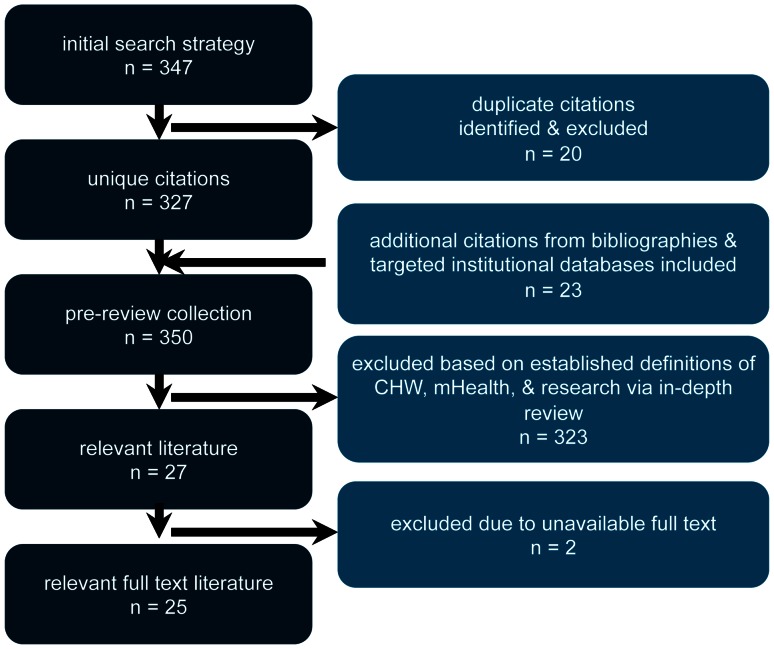
INTRODUCTION: In low-resource settings, community health workers are frontline providers who shoulder the health service delivery burden. Increasingly, mobile technologies are developed, tested, and deployed with community health workers to facilitate tasks and improve outcomes. We reviewed the evidence for the use of mobile technology by community health workers to identify opportunities and challenges for strengthening health systems in resource-constrained settings. METHODS: We conducted a systematic review of peer-reviewed literature from health, medical, social science, and engineering databases, using PRISMA guidelines. We identified a total of 25 unique full-text research articles on community health workers and their use of mobile technology for the delivery of health services. RESULTS: Community health workers have used mobile tools to advance a broad range of health aims throughout the globe, particularly maternal and child health, HIV/AIDS, and sexual and reproductive health. Most commonly, community health workers use mobile technology to collect field-based health data, receive alerts and reminders, facilitate health education sessions, and conduct person-to-person communication. Programmatic efforts to strengthen health service delivery focus on improving adherence to standards and guidelines, community education and training, and programmatic leadership and management practices. Those studies that evaluated program outcomes provided some evidence that mobile tools help community health workers to improve the quality of care provided, efficiency of services, and capacity for program monitoring. DISCUSSION: Evidence suggests mobile technology presents promising opportunities to improve the range and quality of services provided by community health workers. Small-scale efforts, pilot projects, and preliminary descriptive studies are increasing, and there is a trend toward using feasible and acceptable interventions that lead to positive program outcomes through operational improvements and rigorous study designs. Programmatic and scientific gaps will need to be addressed by global leaders as they advance the use and assessment of mobile technology tools for community health workers.
Overview
The claims and statistics of this paper haven’t been checked yet.
Free: it reads the open-access text and checks the first 5 claims that cite a source we can check. Create a free account to check every claim.
Integrity signals
Registry
Cites
Statistics
Figures
Verification
Claims the paper makes
The claims and statistics of this paper haven’t been checked yet.
Free: it reads the open-access text and checks the first 5 claims that cite a source we can check. Create a free account to check every claim.
Claims other papers make about this one
Each is checked against this paper’s own text: does it say what the citing paper says it does?
The source backs part of the claim, not all of it — or backs it for a different population, condition or comparison.
In the citing paper
“However, few studies have captured end-user experiences with a mobile-based app [18,19].”
From Operability, Usefulness, and Task-Technology Fit of an mHealth App for Delivering Primary Health Care Services by Community Health Workers in Underserved Areas of Pakistan and Afghanistan: Qualitative Study (2020) · cites this paper as [18]
Experimental — accuracy not yet measuredThe source backs part of the claim, not all of it — or backs it for a different population, condition or comparison.
In the citing paper
“In LMICs, the mobile technology has been used by CHWs to address a range of health issues related to maternal and child health, sexual and reproductive health, family planning, HIV/AIDS, general health, acute respiratory infections, infectious diseases and injury and trauma [22].”
From Using mobile phones to improve community health workers performance in low-and-middle-income countries (2020) · cites this paper as [22]
Experimental — accuracy not yet measured
Self-check
Percentages, sums and reported differences re-computed from the paper’s own numbers.
The self-check needs the paper’s full text.
Citations
Cites
Preferred Reporting Items for Systematic Reviews and Meta-Analyses: the PRISMA statement
Moher, D., Liberati, A., Tetzlaff, J., Altman, D. G., & for the PRISMA Group (2009) · BMJ · doi:10.1136/bmj.b2535 · Cited by 83,823
Preferred Reporting Items for Systematic Reviews and Meta-Analyses: The PRISMA Statement
Moher, D., Liberati, A., Tetzlaff, J., Altman, D. G., & The PRISMA Group (2009) · PLoS Medicine · doi:10.1371/journal.pmed.1000097 · Cited by 64,042
Preferred reporting items for systematic reviews and meta-analyses: The PRISMA statement
Moher, D., Liberati, A., Tetzlaff, J., Altman, D. G., & the PRISMA Group* (2009) · Annals of Internal Medicine · doi:10.7326/0003-4819-151-4-200908180-00135 · Cited by 37,554
Prentice, T. (2013) · Res Medica · doi:10.2218/resmedica.v21i1.510 · Cited by 1,707
Human resources for health: overcoming the crisis
Chen, L., Evans, T., Anand, S., Boufford, J. I., Brown, H., Chowdhury, M., Cueto, M., Dare, L., Dussault, G., Elzinga, G., et al. (2004) · The Lancet · doi:10.1016/s0140-6736(04)17482-5 · Cited by 1,552 · cited 2×
“Proponents argue engaging CHWs expands the pool of human resources for health, improves the productivity of health systems, and lowers the cost of providing services by shifting tasks from highly trained physicians and nurses to less specialized community members [2,3,5].”
BackgroundConway, M. E. (1967) · Cited by 812
How to bridge the gap in human resources for health
Hongoro, C., & McPake, B. (2004) · The Lancet · doi:10.1016/s0140-6736(04)17229-2 · Cited by 440 · cited 2×
“Proponents argue engaging CHWs expands the pool of human resources for health, improves the productivity of health systems, and lowers the cost of providing services by shifting tasks from highly trained physicians and nurses to less specialized community members [2,3,5].”
BackgroundZurovac, D., Sudoi, R. K., Akhwale, W. S., Ndiritu, M., Hamer, D. H., Rowe, A. K., & Snow, R. W. (2011) · The Lancet · doi:10.1016/s0140-6736(11)60783-6 · Cited by 403 · cited 1×
“These include a description of a clusterrandomized controlled trial with CHWs to evaluate effects of a health data collection and decision support system on health outcomes of mothers living with HIV [14], a cluster randomized controlled trial to evaluate effects of alerts and reminders on CHWs adherence to malaria tr…”
The use of mobile phones as a data collection tool: A report from a household survey in South Africa
Tomlinson, M., Solomon, W., Singh, Y., Doherty, T., Chopra, M., Ijumba, P., Tsai, A. C., & Jackson, D. (2009) · BMC Medical Informatics and Decision Making · doi:10.1186/1472-6947-9-51 · Cited by 340 · cited 2×
“Further, these mobile tools can enable real-time quality review and analysis for decision-making [11], as well as rapid response to cited health issues [20].”
BackgroundResultResponding to the global human resources crisis
Narasimhan, V., Brown, H., Pablos-Mendez, A., Adams, O., Dussault, G., Elzinga, G., Nordstrom, A., Habte, D., Jacobs, M., Solimano, G., et al. (2004) · The Lancet · doi:10.1016/s0140-6736(04)16108-4 · Cited by 284 · cited 1×
“Nearly all countries are challenged by shortages of health workers [1].”
Cited by
Items 101–200 of 524
Feasibility of Training Community Health Workers in the Detection of Oral Cancer
Thampi, V., Hariprasad, R., John, A., Nethan, S. T., Dhanasekaran, K., Kumar, V., Birur, P. N., Thakur, J. S., Lilford, R. J., Rajpoot, N., et al. (2022) · JAMA Network Open · doi:10.1001/jamanetworkopen.2021.44022 · Cited by 38
Kempton, J., Hill, A. M., Levi, J., Heath, K., & Pozniak, A. (2019) · Journal of Virus Eradication · doi:10.1016/s2055-6640(20)30058-3 · Cited by 43
“There are several strategies used in higher-prevalence settings that could potentially be applied in lower-prevalence ones, including healthcare system decentralisation [14], task shifting, arT distribution by community health workers and mobile technology [15,16], adherence clubs, support networks and adoption of WhO…”
Wise, P. H., & Darmstadt, G. L. (2015) · Paediatrics and International Child Health · doi:10.1179/2046905515y.0000000027 · Cited by 35
Mengesha, W., Steege, R., Kea, A. Z., Theobald, S., & Datiko, D. G. (2018) · Journal of Public Health · doi:10.1093/pubmed/fdy200 · Cited by 37
Technologies of Power in Digital Inclusion
Pandey, P., & Zheng, Y. (2023) · Journal of the Association for Information Systems · doi:10.17705/1jais.00822 · Cited by 46
Sanni, J. O., Ajiga, D., & Atima, M. E. (2020) · International Journal of Multidisciplinary Research and Growth Evaluation · doi:10.54660/.ijmrge.2020.1.5.661-673 · Cited by 50
Building quality mHealth for low resource settings
Ettinger, K. M., Pharaoh, H., Buckman, R. Y., Conradie, H., & Karlen, W. (2016) · Journal of Medical Engineering & Technology · doi:10.1080/03091902.2016.1213906 · Cited by 39
“[5] In South Africa, the work of CHCW includes providing basic health services, supported self-care for patients, health promotion and education.”
BackgroundStyle, S., Beard, J., Fry, H. A. H., Sengupta, A., Jha, S., Shrestha, B. P., Rai, A., Paudel, V., Thondoo, M., Pulkki‐Brännström, A., et al. (2017) · Global Health Action · doi:10.1080/16549716.2017.1330858 · Cited by 37
“Mobile devices facilitated monitoring and supervision of health workers [3] and were cheaper than using paper [2,3,6,12,17,19,22,30,31].”
BackgroundMethodArrossi, S., Paolino, M., Orellana, L., Thouyaret, L., Kohler, R. E., & Viswanath, K. (2019) · Trials · doi:10.1186/s13063-019-3229-3 · Cited by 41
Obi‐Jeff, C., Garcia, C., Onuoha, O., Adewumi, F., David, W., Bamiduro, T., Aliyu, A. B., Labrique, A. B., & Wonodi, C. B. (2021) · BMC Health Services Research · doi:10.1186/s12913-021-06728-2 · Cited by 38
Pérez, M. C., Chandra, D., Koné, G. K., Singh, R. M., Ridde, V., Sylvestre, M., Seth, A., & Johri, M. (2020) · Implementation Science Communications · doi:10.1186/s43058-020-00077-7 · Cited by 42
“The involvement and commitment of different stakeholders can enhance the success of this strategy and optimize the activities of health workers as mediators between the health system and community [69, 73].”
BackgroundMcBride, B., O’Neil, J., Trinh, H. T., Eni, R., Nguyen, V. C., & Nguyen, L. (2018) · Journal of Public Health · doi:10.1093/pubmed/fdy165 · Cited by 39
Boyce, S. P., Nyangara, F. M., & Kamunyori, J. (2019) · Journal of Global Health · doi:10.7189/jogh.09.010811 · Cited by 35
Jeffers, V. F., Humber, F., Nohasiarivelo, T., Botosoamananto, R. L., & Anderson, L. G. (2018) · Marine Policy · doi:10.1016/j.marpol.2018.10.040 · Cited by 35
Nimmagadda, S., Gopalakrishnan, L., Avula, R., Dhar, D., Diamond‐Smith, N., Fernald, L. C. H., Jain, A., Mani, S., Menon, P., Nguyen, P. H., et al. (2019) · BMJ Open · doi:10.1136/bmjopen-2018-025774 · Cited by 35
Zeleke, A. A., Naziyok, T. P., Fritz, F., Christianson, L., & Röhrig, R. (2020) · Journal of Medical Internet Research · doi:10.2196/21382 · Cited by 41
Joos, O., Silva, R., Amouzou, A., Moulton, L. H., Perin, J., Bryce, J., & Mullany, L. C. (2016) · PLoS ONE · doi:10.1371/journal.pone.0145238 · Cited by 39
Feinberg, L. J., Menon, J. C., Smith, R. W., Rajeev, J. G., Kumar, R., & Banerjee, A. (2016) · Indian Heart Journal · doi:10.1016/j.ihj.2016.11.004 · Cited by 35
Naidoo, N., Railton, J. P., Jobson, G. A., Matlakala, N., Marincowitz, G. J. O., McIntyre, J. A., Struthers, H. E., & Peters, R. P. H. (2018) · Southern African Journal of HIV Medicine · doi:10.4102/sajhivmed.v19i1.778 · Cited by 39
Venkataramanan, R., Subramanian, S. V., Alajlani, M., & Arvanitis, T. N. (2022) · Digital Health · doi:10.1177/20552076221143236 · Cited by 43
“As per Labrique et al., 12 uses of mHealth technology can be identi fi ed with the most effective being the ability to modify the behavior and to provide information to both supply and demand-side stakeholders.”
Plowright, A., Taylor, C., Davies, D., Sartori, J., Hundt, G. L., & Lilford, R. J. (2018) · PLoS ONE · doi:10.1371/journal.pone.0202817 · Cited by 35
Xeuatvongsa, A., Datta, S. S., Moturi, E., Wannemuehler, K. A., Philakong, P., Vongxay, V., Vilayvone, V., & Patel, M. K. (2016) · Vaccine · doi:10.1016/j.vaccine.2016.09.056 · Cited by 34
Examining e-Health literacy and the digital divide in an underserved population in Hawai'i.
Connolly, K. K., & Crosby, M. E. (2014) · Europe PMC (PubMed Central) · Cited by 34
Pal, J., Dasika, A., Hasan, A. F., Wolf, J., Reid, N., Kameswaran, V., Yardi, P., Mackay, A., Wagner, A. L., Mukherjee, B., et al. (2017) · International Conference on Information and Communication Technologies and Development (ICTD) · doi:10.1145/3136560.3136582 · Cited by 40
“There is a large body of literature examining the role of mobile devices in CHW programs [9].”
Backgroundder Merwe, M. V., Eccles, R., Swanepoel, D. W., Glascoe, F. P., & van der Linde, J. (2018) · Early Child Development and Care · doi:10.1080/03004430.2018.1480481 · Cited by 32
“Thematic analysis (deVos, Strydom, Fouche, & Delport, 2002) was employed to analyse qualitative data describing the perceptions of the CCWs, obtained from the questionnaire.”
BackgroundGuenther, T., Laínez, Y. B., Oliphant, N. P., Dale, M., Raharison, S., Miller, L. J., Namara, G., & Diaz, T. (2014) · Journal of Global Health · doi:10.7189/jogh.04.020301 · Cited by 31
Lucas, H. (2014) · Social Science & Medicine · doi:10.1016/j.socscimed.2014.11.008 · Cited by 35
Lunny, C., Taylor, D., Memetovic, J., Wärje, O., Lester, R. T., Wong, T., Ho, K., Gilbert, M., & Ogilvie, G. S. (2014) · Systematic Reviews · doi:10.1186/2046-4053-3-7 · Cited by 35
“Ten systematic reviews about mobile interventions for promoting sexual health were identified ([69-78]; Additional file 1).”
BackgroundInnovative Healthcare Applications of ICT for Developing Countries
Ariani, A., Koesoema, A. P., & Soegijoko, S. (2017) · Understanding complex systems · doi:10.1007/978-3-319-55774-8_2 · Cited by 42
“Challenges to m-health systems to improve the quality of healthcare are a lack of investment in infrastructure, an absence of long-term financial viability, and inadequate training in technological advances (Braun et al. 2013; Chib et al. 2008).”
BackgroundBonnell, S., Griggs, A., Avila, G., Mack, J., Bush, R. A., Vignato, J. A., & Connelly, C. D. (2017) · Health Promotion Practice · doi:10.1177/1524839917708795 · Cited by 33
Mwendwa, P. (2016) · Development in Practice · doi:10.1080/09614524.2016.1112769 · Cited by 30
“Mobile technologies for public health (mHealth) enable community health workers (CHWs) to provide health services far from the clinical setting and can therefore leverage the delivery of maternal and new-born services (Braun et al. 2013).”
BackgroundInfluentialDusabe-Richards, J., Tesfaye, H. T., Mekonnen, J., Kea, A. Z., Theobald, S., & Datiko, D. G. (2016) · Canadian Journal of Public Health · doi:10.17269/cjph.107.5569 · Cited by 31
Martin, D. W., Sloan, M. L., Gleason, B. L., de Wit, L., Vandi, M. A., Kargbo, D. K., Clemens, N., Kamara, A. S., Njuguna, C. K., Sesay, S., et al. (2020) · Health Security · doi:10.1089/hs.2019.0081 · Cited by 37
“Continuous user feedback and rapid integration of modifications can enhance overall system quality and user acceptance.”
Mc Kenna, P., Babughirana, G., Amponsah, M., Egoeh, S. G., Banura, E., Kanwagi, R., & Gray, B. (2019) · mHealth · doi:10.21037/mhealth.2019.09.03 · Cited by 29
“Broadly, the literature on the use of mobile technology for use by CHWs is growing and suggests that mobile tools help CHWs to improve the quality of care, efficiency of care, and monitoring (10).”
BackgroundResultImplementação de ferramenta digital para gestão populacional na atenção primária à saúde
Almeida, D. P. D. S., de Oliveira, P. L., dos Prazeres, G. A., Belotti, L., Domingues, J., Bonassi, N. M., Eshriqui, I., Martins, R. S., de Almeida, L. Y., & Bonfim, D. (2023) · Revista de Saúde Pública · doi:10.11606/s1518-8787.2023057005321 · Cited by 28
“…e perda de dados, além de facilitarem sua revisão e análise em tempo real para tomada de decisões, bem como resposta rápida aos problemas de saúde 14 . https://doi.org/10.11606/s1518-8787.2023057005321 Um outro desafio a ser superado é a incorporação do uso das informações do território na…”
InfluentialSharma, P., Rao, S. R., Kumar, P. K., Nair, A. R., Agrawal, D., Zadey, S., Surendran, G., Joseph, R. G., Dayma, G., Rafeekh, L., et al. (2024) · PLOS Digital Health · doi:10.1371/journal.pdig.0000398 · Cited by 34
Musoke, D., Atusingwize, E., Ndejjo, R., Ssemugabo, C., Siebert, P., & Gibson, L. (2021) · Global Health Science and Practice · doi:10.9745/ghsp-d-21-00260 · Cited by 32
Li, S., Yin, Z., Lesser, J., Li, C., Choi, B. Y., Parra-Medina, D. M., Flores, B., Dennis, B., & Wang, J. (2022) · JMIR Diabetes · doi:10.2196/37534 · Cited by 28
“However, community health workers face obstacles when working in rural communities, such as transportation, limited resources, and limited supervision and support, which affect their work productivity and service quality [23,24].”
BackgroundHailemariam, T., Atnafu, A., Gezie, L. D., Kaasbøll, J., Klein, J., & Tilahun, B. C. (2023) · BMC Health Services Research · doi:10.1186/s12913-023-09629-8 · Cited by 32
“Moreover, using digital health solutions has paramount benefits in improving CHWs performance [28, 29], reducing errors [30], increasing motivation [31], and creating learning opportunities [31].”
BackgroundInfluentialStokes, K., Oronti, I. B., Cappuccio, F. P., & Pecchia, L. (2022) · BMJ Open · doi:10.1136/bmjopen-2021-058840 · Cited by 29
Avula, R., Nguyen, P. H., Ashok, S., Bajaj, S., Kachwaha, S., Pant, A., Walia, M., Singh, A. P., Paul, A., Singh, A., et al. (2022) · PLoS ONE · doi:10.1371/journal.pone.0269674 · Cited by 28
Steege, R., Waldman, L., Datiko, D. G., Kea, A. Z., Taegtmeyer, M., & Theobald, S. (2018) · Journal of Public Health · doi:10.1093/pubmed/fdy199 · Cited by 26
Nigatu, T., Meressa, S., Debela, T. F., Enyew, D. B., Bedada, A. N., Kebebew, S. D., Weldeab, A. N., Daka, D. W., Willems, H., & Alemu, T. (2023) · Frontiers in Digital Health · doi:10.3389/fdgth.2023.1162239 · Cited by 30
“Other studies also showed that maintaining two recording systems has a negative effect on system utilization by increasing workload of CHWs (38, 44, 47, 49, 55, 57).”
BackgroundInfluentialCunningham, P. M., Cunningham, M., van Greunen, D., Veldsman, A., Kanjo, C., Kweyu, E., & Worku, A. G. (2016) · IEEE Global Humanitarian Technology Conference (GHTC) · doi:10.1109/ghtc.2016.7857350 · Cited by 25
“[8]; [9], [10]), and palliative care services (e.”
BackgroundA Cross-Sectional Analytic Study of Postpartum Health Care Service Utilization in the Philippines
Yamashita, T., Suplido, S. A., Llave, C., Tanaka, Y., Senba, N., & Matsuo, H. (2014) · PLoS ONE · doi:10.1371/journal.pone.0085627 · Cited by 25
“Therefore, it may be effective to utilize Barangay health workers (BHWs; community volunteers who provide services such as maternal, newborn, and child health care in Filipino neighborhoods) as health care providers [33–35].”
BackgroundIlozumba, O., Abejirinde, I. O., Dieleman, M. A., Bardají, A., Broerse, J. E. W., & Belle, S. V. (2018) · BMJ Open · doi:10.1136/bmjopen-2017-019345 · Cited by 25
Rassi, C., Gore‐Langton, G. R., Walimbwa, B. G., Strachan, C. E., King, R., Basharat, S., Christiansen-Jucht, C., Graham, K., & Gudoi, S. S. (2018) · PLoS ONE · doi:10.1371/journal.pone.0203554 · Cited by 26
“Despite these limitations, there is broad agreement that mHealth has the potential to improve service delivery and health outcomes in general [9,14–16] and to boost health worker performance more specifically [10,11,17,18].”
BackgroundO’Donovan, J., Thompson, A., Onyilofor, C. L., Hand, T., Rosseau, N. A., & O’Neil, E. (2018) · Global Public Health · doi:10.1080/17441692.2018.1536156 · Cited by 27
Zakus, D., Moussa, M., Ezechiel, M., Yimbesalu, J. P., Orkar, P., Damecour, C., Ghee, A. E., MacFarlane, M., & Nganga, G. (2019) · Journal of Global Health · doi:10.7189/jogh.09.010812 · Cited by 27
Meyers, D. J., Filkins, M., Harsha Bangura, A., Sharma, R., Baruwal, A., Pande, S., Halliday, S., Schwarz, D., Schwarz, R. K., & Maru, D. S. R. (2017) · BMJ Innovations · doi:10.1136/bmjinnov-2015-000102 · Cited by 24
Akhtar, S., Rabbani, F., Nafis, J., Siddiqui, A., & Merali, Z. (2025) · BMC Psychiatry · doi:10.1186/s12888-024-06459-8 · Cited by 24
“Few studies have documented end-user experiences, operability, usability, and interactions with mobile applications [33, 34].”
Wood, O. R., Schnall, R., Kay, E. S., Jia, H., Abua, J., Nichols, T., Olender, S., Mugavero, M. J., & Batey, D. S. (2023) · BMC Public Health · doi:10.1186/s12889-023-15616-9 · Cited by 26
“For instance, delivering care remotely enables CHW to assess, contact, and support numerous participants throughout the day, amplifying outreach efforts and reducing visit delays due to transportation and time costs [81].”
BackgroundBiemba, G., Chiluba, B., Yeboah‐Antwi, K., Silavwe, V., Lunze, K., Mwale, R. K., Hamer, D. H., & MacLeod, W. (2020) · Journal of Global Health · doi:10.7189/jogh.10.010425 · Cited by 28
Otu, A., Okuzu, O., Ebenso, B., Effa, E., Nihalani, N., Olayinka, A., & Yaya, S. (2021) · Frontiers in Sustainable Cities · doi:10.3389/frsc.2021.638278 · Cited by 32
RETRACTED: Practical research on college English vocabulary teaching with mobile technology
Zhai, C. (2021) · International Journal of Electrical Engineering Education · doi:10.1177/0020720920985057 · Cited by 23
RetractedYourkavitch, J., Zalisk, K., Prosnitz, D., Luhanga, M., & Nsona, H. (2016) · Health Policy and Planning · doi:10.1093/heapol/czw047 · Cited by 22
“This may prove to be a promising practice to improve iCCM data quality through automated data management (Strachan et al. 2012; Braun et al. 2013; K€allander et al. 2013; Mugeni et al. 2014; Smith et al. 2014), but more operational research is needed.”
BackgroundTran, B. X., Nguyen, N. K., Nguyen, L. P., Nguyen, C. T., Nong, V. M., & Nguyen, L. H. (2015) · BMC Complementary and Alternative Medicine · doi:10.1186/s12906-016-1010-7 · Cited by 22
“They serve as health extenders [25], natural healers who build rapport, trust, and understanding between the patients and the health care system [24], and important members of the health care workforce who enhance the quality of life for people in poor, marginalized, and underserved area [25].”
BackgroundLygidakis, C., Uwizihiwe, J. P., Kallestrup, P., Bia, M., Condo, J. U., & Vögele, C. (2019) · BMJ Open · doi:10.1136/bmjopen-2018-028427 · Cited by 23
Bagwell‐Gray, M. E., Loerzel, E., Dana-Sacco, G., Messing, J. T., Glass, N. E., Sabri, B., Jock, B., Arscott, J., Brockie, T., & Campbell, J. C. (2020) · Journal of Ethnic & Cultural Diversity in Social Work · doi:10.1080/15313204.2020.1770651 · Cited by 23
“This work is particularly relevant because internet- and mobile-based technologies can improve health and mental health outcomes for women in rural areas who face barriers to accessing resources (Braun et al., 2014).”
BackgroundApplication of mHealth to improve service delivery and health outcomes: Opportunities and challenges
Vesel, L., Hipgrave, D. B., Dowden, J., & Kariuki, W. (2015) · African Population Studies · doi:10.11564/29-1-718 · Cited by 26
“The potential for mHealth programs to improve quality of care may be compromised by a lack of investment in infrastructure, and the absence of sustainable financing and technological training (Braun et al., 2013; Chib et al., 2008).”
BackgroundResultInfluentialBarger, D., Owen, H., Pitt, C., Kerber, K. J., Sitrin, D., Mayora, C., Guenther, T., Daviaud, E., Lawn, J. E., & on behalf of the Coin Care Tool Group (2017) · Health Policy and Planning · doi:10.1093/heapol/czx038 · Cited by 23
“But funding dependency, unclear health systems responsibilities, unreliable infrastructure and a lack of evidence of their cost-effectiveness have been identified as weaknesses (Braun et al. 2013; Aranda-Jan et al. 2014).”
BackgroundKnoble, S. J., & Bhusal, M. R. (2015) · International Journal of Medical Informatics · doi:10.1016/j.ijmedinf.2015.01.011 · Cited by 22
“o t H diagnosis have not been studied [9].”
Shelley, D., Nguyen, L., Pham, H. M., VanDevanter, N., & Nguyen, N. T. (2014) · BMC Health Services Research · doi:10.1186/s12913-014-0606-1 · Cited by 22
“In LMICs, CHWs build bridges between the formal health system and communities increasing access to health services [14,15].”
BackgroundAmin, R. U., Inayat, I., Shahzad, B., Saleem, K., & Aijun, L. (2016) · Annals of Telecommunications · doi:10.1007/s12243-016-0553-4 · Cited by 23
“community health workers) for various purposes including fieldbased data collection, conducting person-to-person communication, issuing alerts and reminders, providing job aids and decision support, accessing health education material, and supervising other healthcare workers [30, 31].”
BackgroundTechnology-Enhanced Active Learning Classrooms: New Directions for Social Work Education
Lee, K., Dabelko‐Schoeny, H., Roush, B., Craighead, S., & Bronson, D. E. (2019) · Journal of Social Work Education · doi:10.1080/10437797.2018.1540322 · Cited by 21
“An increasing number of community health workers also use mobile technology when they conduct home visits, complete intakes, provide information on health and related services, and communicate with clients (Braun, Catalani, Wimbush, & Israelski, 2013).”
BackgroundWilson, E., Lee, L., Klas, R., & Nesbit, K. C. (2019) · Health & Social Care in the Community · doi:10.1111/hsc.12914 · Cited by 24
Aw, M. J., Ochieng, B. O., Attambo, D., Opot, D., Aw, J., Francis, S., & Hawkes, M. (2020) · Pathogens and Global Health · doi:10.1080/20477724.2020.1816286 · Cited by 22
Asi, Y., & Williams, C. (2020) · Journal of Social Issues · doi:10.1111/josi.12394 · Cited by 23
Piper, B., Oyanga, A., Mejía, J., & Pouezevara, S. L. (2017) · International journal of education and development using information and communication technology · Cited by 36
mHealth Apps and Services for Maternal Healthcare in Developing Countries
Iyawa, G. E., & Hamunyela, S. L. (2019) · IST-Africa Conference (IST-Africa) · doi:10.23919/istafrica.2019.8764878 · Cited by 24
South-Africa (Goodstart III) trial: community-based maternal and newborn care economic analysis
Daviaud, E., Nkonki, L. L., Ijumba, P., Doherty, T., Lawn, J. E., Owen, H., Jackson, D. J., & Tomlinson, M. (2017) · Health Policy and Planning · doi:10.1093/heapol/czw112 · Cited by 24
“There is limited and unclear evidence for the benefits of mHealth, especially for long-term results (Strachan et al. 2012; Braun et al. 2013; Aranda-Jan et al. 2014).”
BackgroundDesign Processes for User Engagement with Mobile Health: A Systematic Review
Ikwunne, T. A., Hederman, L., & Wall, P. J. (2022) · International Journal of Advanced Computer Science and Applications · doi:10.14569/ijacsa.2022.0130235 · Cited by 23
“Another reason for mHealth failure is the use of a top-down approach by implementers [35].”
BackgroundZerfu, T. A., Chanyalew, M. A., Begna, Z., Habtamu, T., Werkneh, N., Nigatu, T., Jisso, M., & Genta, A. (2024) · PLoS ONE · doi:10.1371/journal.pone.0314505 · Cited by 21
Ali, S. A., Ali, S. A., & Suhail, N. (2016) · DOAJ (DOAJ: Directory of Open Access Journals) · Cited by 20
Mambulu, F. N., Eyles, J. D., & Ditlopo, P. (2018) · Health & Social Care in the Community · doi:10.1111/hsc.12595 · Cited by 20
Hackett, K., Kazemi, M., Lafleur, C., Nyella, P., Godfrey, L., & Sellen, D. (2019) · Health Policy and Planning · doi:10.1093/heapol/czz036 · Cited by 19
Borst, R. A. J., Hoekstra, T., Muhangi, D., Jonker, I., & Kok, M. O. (2019) · Health Policy and Planning · doi:10.1093/heapol/czz091 · Cited by 19
“educational videos on digital tablets) as means of sexual and reproductive health education and sensitization (Braun et al., 2013).”
Rana, R. H., Alam, K., & Gow, J. (2019) · Information Technology for Development · doi:10.1080/02681102.2019.1678455 · Cited by 21
“Some recent country-speci fi c studies indicated that ICT improves the access and utilization of healthcare (Braun, Catalani, Wimbush, & Israelski, 2013; West, 2012) and patients often use ICTs to collect information regarding health and health care services (Krebs & Duncan, 2015).”
BackgroundChen, Y., Wu, Y., Dill, S., Guo, Y., Westgard, C. M., Medina, A., Weber, A. M., Darmstadt, G. L., Zhou, H., Rozelle, S., et al. (2023) · BMJ Open · doi:10.1136/bmjopen-2022-065403 · Cited by 23
Ravi, R. K., Baby, P., Pareek, B., Jisa George, T., Mohamed, M. G., & Ahmed, S. K. (2024) · SAGE Open Nursing · doi:10.1177/23779608241247431 · Cited by 21
“Health students of various health professions across the globe have also demonstrated similar levels of acceptance toward mHealth (Braun et al., 2013; Feinberg et al., 2017; Manyazewal et al., 2021; Payne et al., 2012; Smith et al., 2015).”
BackgroundNguyen, L. H., LeFevre, A. E., Jennings, L., Agarwal, S., Mehl, G., Labrique, A. B., & Chava, L. D. (2015) · BMJ Innovations · doi:10.1136/bmjinnov-2015-000063 · Cited by 19
Compatibility about the concept of energy hub: a strict and visual review
Hammad, M. A., Elgazzar, S. H., Obrecht, M., & Sternad, M. (2021) · International Journal of Energy Sector Management · doi:10.1108/ijesm-06-2020-0022 · Cited by 21
Turimumahoro, P., Tucker, A., Gupta, A. J., Tampi, R. P., Babirye, D., Ochom, E., Ggita, J. M., Ayakaka, I., Sohn, H., Katamba, A., et al. (2022) · PLoS ONE · doi:10.1371/journal.pone.0265033 · Cited by 19
Chanani, S., Wacksman, J., Deshmukh, D., Pantvaidya, S., Fernandez, A., & Jayaraman, A. (2016) · Food and Nutrition Bulletin · doi:10.1177/0379572116657241 · Cited by 21
“m-Health project designs are frequently designed with inadequate input from users.(24) The innovation was developed in response to a feedback from the FWs and their supervisors.”
BackgroundMobile Health Technology Evaluation: Innovativeness and Efficacy vs. Cost Effectiveness
Idrish, S., Rifat, A., Iqbal, M., & Nisha, N. (2017) · International Journal of Technology and Human Interaction · doi:10.4018/ijthi.2017040101 · Cited by 21
Valdes Angues, R., Suits, A., Palmer, V. S., Okot, C., Okot, R. A., Atonywalo, C., Gazda, S. K., Kitara, D. L., Lantum, M., & Spencer, P. S. (2018) · PLOS Neglected Tropical Diseases · doi:10.1371/journal.pntd.0006588 · Cited by 18
Social positioning matters: A socialized affordance perspective of mHealth in India
Pandey, P., & Zheng, Y. (2023) · Information Systems Journal · doi:10.1111/isj.12421 · Cited by 20
“Community health workers build bridges between the formal health system and the rural communities working mainly to improve the relevance, acceptability and accessibility of public health services (Agarwal et al., 2015; Braun et al., 2013; Scott et al., 2019).”
BackgroundInfluentialHazel, E., Amouzou, A., Park, L., Banda, B., Chimuna, T. J., Guenther, T., Nsona, H., Victora, C. G., & Bryce, J. (2015) · American Journal of Tropical Medicine and Hygiene · doi:10.4269/ajtmh.14-0396 · Cited by 18
“Although more evaluations of mHealth programs are being published, there is still a lack of effectiveness of large-scale mHealth programs.(17) Additional assessments will be needed as a basis for proposing that mHealth approaches be implemented at scale.”
BackgroundHCI and mHealth Wearable Tech: A Multidisciplinary Research Challenge
Williams, L., Hayes, G. R., Guo, Y., Rahmani, A. M., & Dutt, N. D. (2020) · CHI Conference Extended Abstracts on Human Factors in Computing Systems (CHI EA) · doi:10.1145/3334480.3375223 · Cited by 18
“Currently there is no real solution to accurately measure the various behavioral lifestyle changes during pregnancy [8].”
BackgroundKola, L., Abiona, D., Oladeji, B. D., Ayinde, O. O., Bello, T., & Gureje, O. (2021) · Social Psychiatry and Psychiatric Epidemiology · doi:10.1007/s00127-021-02198-3 · Cited by 19
“Also, the use of mobile phones to provide support and supervision to primary care providers is a sustainable route to improving efficiency and the quality of care delivered in a low-income setting [36].”
BackgroundOdendaal, W., Lewin, S. A., McKinstry, B., Tomlinson, M., Jordaan, E., Mazinu, M., Haig, P., Thorson, A. E., & Atkins, S. A. (2020) · Global Health Action · doi:10.1080/16549716.2020.1717410 · Cited by 19
Asiedu, A., Nelson, A. R., Gomez, P. P., Tappis, H., Effah, F., & Allen, C. (2019) · Gates Open Research · doi:10.12688/gatesopenres.12936.1 · Cited by 17
Smartphones for community health in rural Cambodia: A feasibility study
Ngor, P., White, L. J., Chalk, J., Lubell, Y., Favede, C., Cheah, P. Y., Nguon, C., Ly, P., Maude, R. J., Sovannaroth, S., et al. (2018) · Wellcome Open Research · doi:10.12688/wellcomeopenres.13751.1 · Cited by 18
“Worried about difficulties charging it, n (%) 0 (0) 1 (8) 1 (4)”
A usability design checklist for Mobile electronic data capturing forms: the validation process
Mugisha, A., Nankabirwa, V., Tylleskär, T., & Babić, A. (2019) · BMC Medical Informatics and Decision Making · doi:10.1186/s12911-018-0718-3 · Cited by 17
“Over the years, electronic data collection systems are increasingly being used in health care particularly for data collection and management in health surveys, surveillance and patient monitoring [1].”
BackgroundAbreu, F. D. L., Bissaco, M. A. S., da Silva, A. P., Boschi, S. R. M. D. S., Scardovelli, T. A., Santos, M. F., Rodrigues, C., & Martini, S. C. (2021) · Research on Biomedical Engineering · doi:10.1007/s42600-021-00154-3 · Cited by 19
Wulandari, H., Lazuardi, L., Majid, N., Yokota, F., Sanjaya, G. Y., Dewi, T. S., Meliala, A., Islam, R., & Nakashima, N. (2023) · Applied Sciences · doi:10.3390/app13031623 · Cited by 20
Vallières, F., McAuliffe, É., van Bavel, B., Wall, P. J., & Trye, A. (2017) · Annals of Global Health · doi:10.1016/j.aogh.2016.07.002 · Cited by 19
“Like any other health worker, the quality of health services delivered by CHWs is compromised by a lack of proper investment in supportive organizational policies and structures.(14,15) Inadequate supervision, lack of resources, poor working conditions, low engagement, insufficient community support, the absence of re…”
BackgroundAdeoye, O. O., Tom-Aba, D., Ameh, C. A., Ojo, O. E., Ilori, E. A., Gidado, S., Waziri, E. N., Nguku, P. M., Mall, S., Denecke, K., et al. (2017) · International Journal of TROPICAL DISEASE & Health · doi:10.9734/ijtdh/2017/31584 · Cited by 19
Policy, practice and regulatory issues in mobile technology treatment for forensic clients
Ross, S. (2018) · European Journal of Probation · doi:10.1177/2066220318761382 · Cited by 15
“…fundamental gaps in service provision, but can improve access to treatment by increasing service delivery efficiency, lowering the unit cost of providing services, and providing a means to reach clients in remote areas or from hard to reach communities (Braun et al., 2013; Hilty and Mucic, 2016).”
BackgroundComulada, W. S., Tang, W., Swendeman, D. T., Cooper, A., Wacksman, J., & Adolescent Medicine Trials Network (ATN) CARES Team (2018) · JMIR Research Protocols · doi:10.2196/10777 · Cited by 17
“Most mobile EDC systems utilized in the past did not have multiple functions [21].”
Background
Metadata
- Authors
- Braun, R., Catalani, C., Wimbush, J., & Israelski, D.
- Affiliations
- University of California, Berkeley (US)
- Stanford University (US)
- Corresponding author
- Braun, Rebecca
- Venue
- PLoS ONE
- Publisher
- Public Library of Science (PLoS)
- Published
- 2013-06-12
- Volume
- 8
- Issue
- 6
- Pages
- e65772
- ISSN
- 1932-6203 (ISSN-L)
- PMC
- PMC3680423
- OpenAlex
- W2025634432
- Cited by
- 493
- References
- 25
- Citations by year
- 2026: 22 · 2025: 25 · 2024: 36 · 2023: 39 · 2022: 45 · 2021: 52 · 2020: 54 · 2019: 50 · 2018: 41 · 2017: 45 · 2016: 33 · 2015: 25 · 2014: 23 · 2013: 3
- FWCI
- 3.36
- Type
- journal article
- Language
- en
- Open access
- gold
- doi.org
- Locations
- PLoS ONE (publishedVersion, cc-by)
- Europe PMC (PubMed Central) (publishedVersion, cc-by)
- PubMed Central (publishedVersion, cc-by)
- PubMed (publishedVersion)
- RePEc: Research Papers in Economics (acceptedVersion)
- DOAJ (DOAJ: Directory of Open Access Journals) (submittedVersion, cc-by-sa)
- eScholarship (California Digital Library) (submittedVersion)
- Funders
- United States Agency for International Development
- U.S. President’s Emergency Plan for AIDS Relief
- Centers for Disease Control and Prevention
- Topics
- Health Sciences › Health Professions › General Health Professions › Mobile Health and mHealth Applications
- Physical Sciences › Computer Science › Information Systems › ICT in Developing Communities
- Health Sciences › Medicine › Public Health, Environmental and Occupational Health › Global Health Workforce Issues
- Keywords
- community health workers, mobile technology, mobile health, health care delivery, resource-limited settings, maternal and child health, HIV/AIDS, sexual and reproductive health, health data collection, health education, quality of care, program monitoring, health system strengthening
- MeSH terms
- Community Health Workers, Data Collection, Delivery of Health Care, Humans, Public Health, Cell Phone, Mobile Applications
About these checks
Registry, retraction, Cites and statistics results are computed, not judged, with one exception: a printed reference that no index lists is read once by a model before it counts as a citation error. Claims are extracted by a model and kept only when their quote appears verbatim in the text; each cited source is then checked, with a model’s help, for whether it says what the claim relies on. Those verdicts can be wrong — read the claim’s quote and the cited source before relying on one.
Statistics and arithmetic are recomputed, not judged.
Confidence bands are shown only for fields calibrated on our annotated test set. None is calibrated yet, so no band is shown.
What counts as a claim ›How we measure confidence ›How we check this ›
Are you an author, or do you see a problem with this page? Request a review
Data sources
Bibliographic data: Semantic Scholar, OpenAlex, Crossref.
Contains information from the Semantic Scholar Academic Graph Datasets, made available under the ODC Attribution License (ODC-BY 1.0).
Semantic Scholar’s data is described in: Kinney, R., et al. (2023). The Semantic Scholar Open Data Platform. arXiv:2301.10140.
