

The DOI matches its Crossref record; 58 of the 58 references it cites were found in a registry or an index.
The Epidemiological Modelling of Major Depressive Disorder: Application for the Global Burden of Disease Study 2010
Open accessAbstract
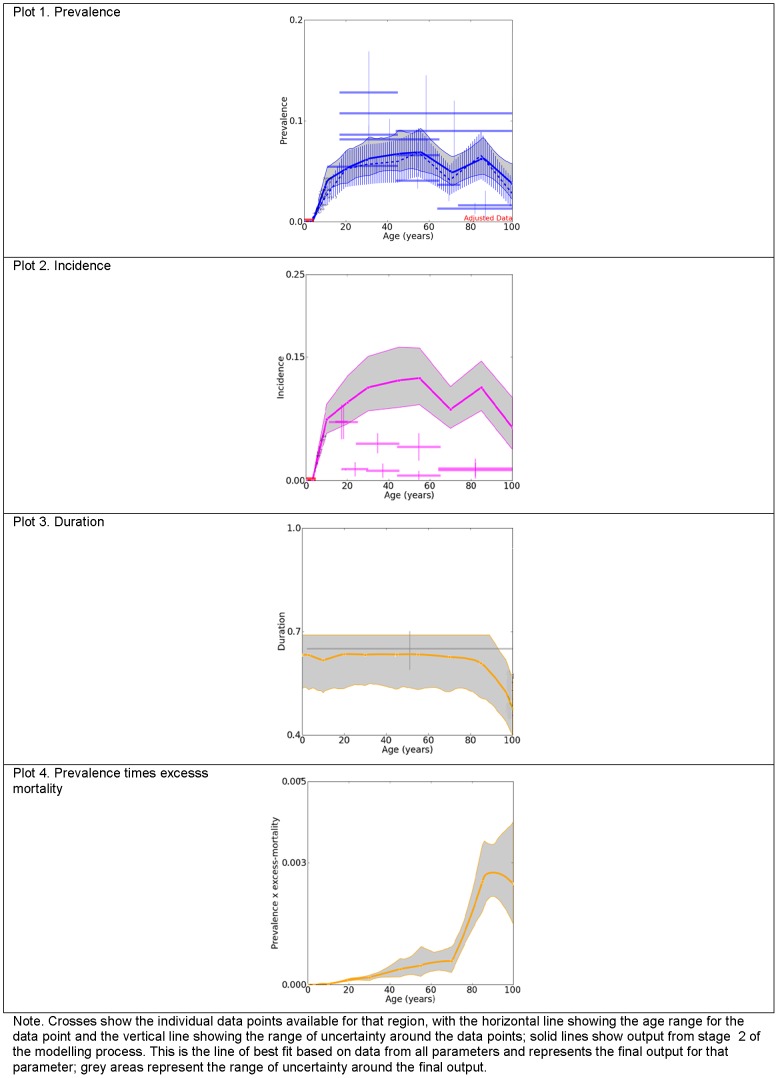
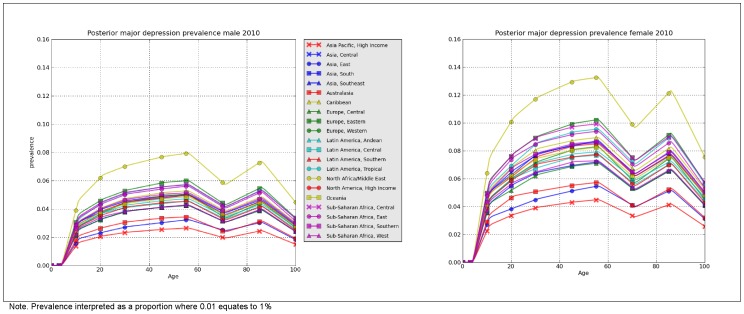
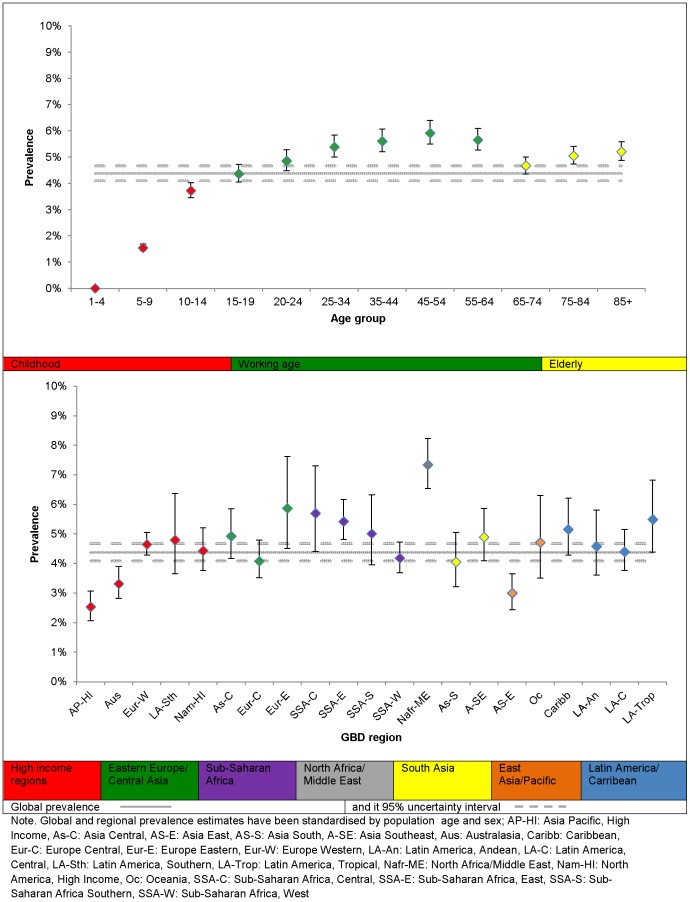
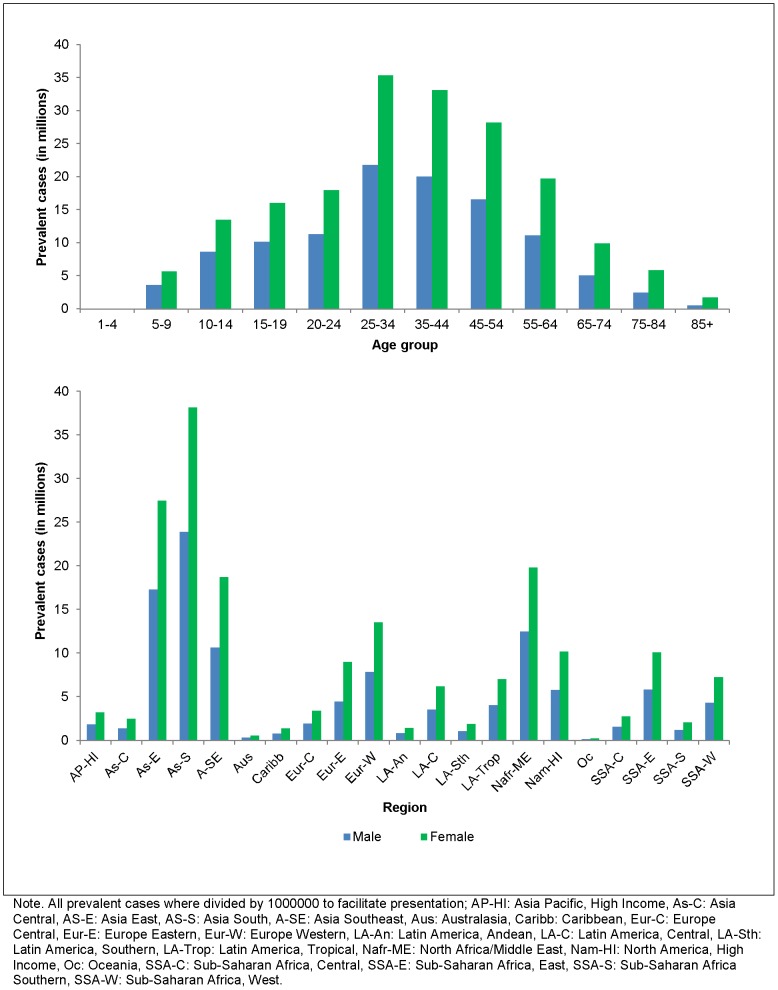
BACKGROUND: Although the detrimental impact of major depressive disorder (MDD) at the individual level has been described, its global epidemiology remains unclear given limitations in the data. Here we present the modelled epidemiological profile of MDD dealing with heterogeneity in the data, enforcing internal consistency between epidemiological parameters and making estimates for world regions with no empirical data. These estimates were used to quantify the burden of MDD for the Global Burden of Disease Study 2010 (GBD 2010). METHOD: Analyses drew on data from our existing literature review of the epidemiology of MDD. DisMod-MR, the latest version of the generic disease modelling system redesigned as a Bayesian meta-regression tool, derived prevalence by age, year and sex for 21 regions. Prior epidemiological knowledge, study- and country-level covariates adjusted sub-optimal raw data. RESULTS: There were over 298 million cases of MDD globally at any point in time in 2010, with the highest proportion of cases occurring between 25 and 34 years. Global point prevalence was very similar across time (4.4% (95% uncertainty: 4.2-4.7%) in 1990, 4.4% (4.1-4.7%) in 2005 and 2010), but higher in females (5.5% (5.0-6.0%) compared to males (3.2% (3.0-3.6%) in 2010. Regions in conflict had higher prevalence than those with no conflict. The annual incidence of an episode of MDD followed a similar age and regional pattern to prevalence but was about one and a half times higher, consistent with an average duration of 37.7 weeks. CONCLUSION: We were able to integrate available data, including those from high quality surveys and sub-optimal studies, into a model adjusting for known methodological sources of heterogeneity. We were also able to estimate the epidemiology of MDD in regions with no available data. This informed GBD 2010 and the public health field, with a clearer understanding of the global distribution of MDD.
Overview
The claims and statistics of this paper haven’t been checked yet.
Run the check — free, no account needed. It reads the open-access text and checks the sources it cites.
Integrity signals
Registry
Cites
Statistics
Figures
Verification
Claims the paper makes
The claims and statistics of this paper haven’t been checked yet.
Run the check — free, no account needed. It reads the open-access text and checks the sources it cites.
Claims other papers make about this one
Each is checked against this paper’s own text: does it say what the citing paper says it does?
In the citing paper
“This finding was driven by high prevalence estimates with 298 million MDD cases in 2010 [2] and 106 million cases of dysthymia [3].”
From Burden of depressive disorders by country, sex, age, and year: findings from the Global Burden of Disease Study 2010 (2013) · cites this paper as [2]
In the citing paper
“GBD 2010's capacity to generate country-level burden as well as regional estimates was especially relevant for MDD, which has been linked to risk factors such as conflict [2],[37], intimate partner violence, and child sexual abuse [15], the levels of which vary between countries.”
From Burden of depressive disorders by country, sex, age, and year: findings from the Global Burden of Disease Study 2010 (2013) · cites this paper as [2]
In the citing paper
“We found evidence for an elevated risk for mortality in those diagnosed with MDD [2],[25]; however, since a health outcome could only occur once in the GBD cause list, MDD related deaths from suicide and ischemic heart disease were captured under the headings of intentional injuries and cardiovascular disease in the GBD capstone papers [14],[18].”
From Burden of depressive disorders by country, sex, age, and year: findings from the Global Burden of Disease Study 2010 (2013) · cites this paper as [2]
In the citing paper
“GBD 2010's capacity to generate country-level burden as well as regional estimates was especially relevant for MDD, which has been linked to risk factors such as conflict [2],[37], intimate partner violence, and child sexual abuse [15], the levels of which vary between countries.”
From Burden of depressive disorders by country, sex, age, and year: findings from the Global Burden of Disease Study 2010 (2013) · cites this paper as [2]
Self-check
Percentages, sums and reported differences re-computed from the paper’s own numbers.
The self-check needs the paper’s full text.
Citations
Cites
Preferred Reporting Items for Systematic Reviews and Meta-Analyses: The PRISMA Statement
Moher, D., Liberati, A., Tetzlaff, J., Altman, D. G., & The PRISMA Group (2009) · PLoS Medicine · doi:10.1371/journal.pmed.1000097 · Cited by 64,042
Lozano, R., Naghavi, M., Foreman, K., Lim, S., Shibuya, K., Aboyans, V., Abraham, J., Adair, T., Aggarwal, R., Ahn, S. Y., et al. (2012) · The Lancet · doi:10.1016/s0140-6736(12)61728-0 · Cited by 14,070
Self-citationLim, S. S., Vos, T., Flaxman, A. D., Danaei, G., Shibuya, K., Adair-Rohani, H., AlMazroa, M. A., Amann, M., Anderson, H. R., Andrews, K. G., et al. (2012) · The Lancet · doi:10.1016/s0140-6736(12)61766-8 · Cited by 11,805
Self-citationMurray, C. J. L., Vos, T., Lozano, R., Naghavi, M., Flaxman, A. D., Michaud, C., Ezzati, M., Shibuya, K., Salomon, J. A., Abdalla, S., et al. (2012) · The Lancet · doi:10.1016/s0140-6736(12)61689-4 · Cited by 8,888
Self-citationVos, T., Flaxman, A. D., Naghavi, M., Lozano, R., Michaud, C., Ezzati, M., Shibuya, K., Salomon, J. A., Abdalla, S., Aboyans, V., et al. (2012) · The Lancet · doi:10.1016/s0140-6736(12)61729-2 · Cited by 8,291
Self-citationHow should meta‐regression analyses be undertaken and interpreted?
Thompson, S. G., & Higgins, J. P. T. (2002) · Statistics in Medicine · doi:10.1002/sim.1187 · Cited by 3,026 · cited 1×
“regression can be understood as an extension of a meta-analysis whereby data from different studies are pooled into a weighted average, adjusting for sources of variability between studies [51].”
BackgroundCross-national epidemiology of major depression and bipolar disorder
Weissman, M. M. (1996) · JAMA: The Journal of the American Medical Association · doi:10.1001/jama.1996.03540040037030 · Cited by 2,302 · cited 2×
“8% [18] or between 2.”
BackgroundSteel, Z., Chey, T., Silove, D., Marnane, C., Bryant, R. A., & van Ommeren, M. (2009) · JAMA · doi:10.1001/jama.2009.1132 · Cited by 2,246 · cited 1×
“As described in previous work [57–60], conflict status is associated with an increase in the incidence (and therefore prevalence) of MDD.”
BackgroundCross-national epidemiology of DSM-IV major depressive episode
Bromet, E., Andrade, L. H., Hwang, I., Sampson, N. A., Alonso, J., de Girolamo, G., de Graaf, R., Demyttenaere, K., Hu, C., Iwata, N., et al. (2011) · BMC Medicine · doi:10.1186/1741-7015-9-90 · Cited by 2,221
Global burden of depressive disorders in the year 2000
Üstün, T. B., Ayuso-Mateos, J. L., Chatterji, S., Mathers, C., & Murray, C. J. L. (2004) · British Journal of Psychiatry · doi:10.1192/bjp.184.5.386 · Cited by 1,735 · cited 1×
“In 2000, they were the 3 leading cause of burden as well as the leading cause of disability [6].”
Background
Research works printed but not linked: 4
- Kessler RC, Ustun TB, editors(2008) The WHO World Mental Health Surveys: global perspectives on the epidemiology of mental disorders. New York: Cambridge University Press.
- Flaxman AD, Vos T, Murray CJL, editors(2013) An integrative metaregression framework for descriptive epidemiology. Washington: University of Washington Press, In press.
- 2007, World Population Prospects: The 2006 Revision, Highlights. Working Paper No. ESA/P/WP.202, Department of Economic and Social Affairs, Population Division
- J Angst, 2002, Gender differences in depression. Epidemiological findings from the European DEPRES I and II studies, Eur Arch Psychiatry Clin Neurosci, 252, 201
Cited by
Sorted by citations
Items 101–200 of 331
Direct Discrepancy Dynamic Fit Index Cutoffs for Arbitrary Covariance Structure Models
McNeish, D., & Wolf, M. G. (2024) · Structural Equation Modeling A Multidisciplinary Journal · doi:10.1080/10705511.2024.2308005 · Cited by 52
“The factor structure of the BDI-II has been extensively studied in high-income, English-Speaking countries (Ferrari et al., 2013, Kirmayer, 2001) but measurement and conceptualization of depression may not be the same in Spanish-speaking, low-or middle-income countries (Patel, 2017).”
Vasconcelos, A. S., Oliveira, I. C. M., Vidal, L. M. T., Rodrigues, G. C., Gutierrez, S. J. C., Barbosa‐Filho, J. M., Vasconcelos, S. M. M., Fonteles, M. M. D. F., Gaspar, D. M., & de Sousa, F. C. F. (2015) · Fundamental and Clinical Pharmacology · doi:10.1111/fcp.12120 · Cited by 36
Lokman, S., Leone, S. S., Sommers‐Spijkerman, M., van der Poel, A., Smit, F., & Boon, B. J. F. (2017) · Journal of Medical Internet Research · doi:10.2196/jmir.6581 · Cited by 39
Depression and Its Comorbid Conditions More Serious in Women than in Men in the United States
Kim, W. K., Shin, D., & Song, W. O. (2015) · Journal of Women s Health · doi:10.1089/jwh.2014.4919 · Cited by 39
“According to 2010 Global Burden of Disease study, 298 million persons globally had depression.(3) The global prevalence of depression in all population in 2010 was 4.”
InfluentialThiruchselvam, T., Dozois, D. J. A., Bagby, R. M., Lobo, D. S. S., Ravindran, L. N., & Quilty, L. C. (2019) · Journal of Affective Disorders · doi:10.1016/j.jad.2019.01.046 · Cited by 35
“Depression remains the most common mental disorder, with nearly 298 million cases of major depressive disorder (MDD) reported worldwide in 2010 (Ferrari et al., 2013).”
BackgroundA New Player in Depression: MiRNAs as Modulators of Altered Synaptic Plasticity
Gao, Y., Yong-qian, Z., Wang, H., Deng, Y., & Li, N. (2022) · International Journal of Molecular Sciences · doi:10.3390/ijms23094555 · Cited by 40
“Depression (Major Depressive Disorder, MDD) is one of the most prevalent psychiatric disorders, which has a multifactorial origin including genetic and environmental factors [1,2].”
BackgroundPain management in people with severe mental illness: an agenda for progress
Onwumere, J., Stubbs, B., Stirling, M., Shiers, D., Gaughran, F., Rice, A. S. C., C de C Williams, A., & Scott, W. (2022) · Pain · doi:10.1097/j.pain.0000000000002633 · Cited by 35
Scharf, J., Angerer, P., Müting, G., & Loerbroks, A. (2020) · International Journal of Environmental Research and Public Health · doi:10.3390/ijerph17186635 · Cited by 34
Mizoue, T., Kochi, T., Akter, S., Eguchi, M., Kurotani, K., Tsuruoka, H., Kuwahara, K., Ito, R., Kabe, I., & Nanri, A. (2015) · Journal of Nutrition · doi:10.3945/jn.114.204115 · Cited by 34
Watts, S. E., & Andrews, G. (2014) · Asian Journal of Psychiatry · doi:10.1016/j.ajp.2014.06.007 · Cited by 32
“For example, in 2010 there were almost 300 million cases of major depressive disorder (MDD) at any point in time (Ferrari et al., 2013).”
BackgroundEffects of repeated attachment security priming in outpatients with primary depressive disorders
Carnelley, K. B., Bejinaru, M.-M., Otway, L. J., Baldwin, D. S., & Rowe, A. C. (2018) · Journal of Affective Disorders · doi:10.1016/j.jad.2018.02.040 · Cited by 36
Martínez, V., Rojas, G., Martínez, P., Gaete, J., Pedro Zitko, M., Vöhringer, P. A., & Araya, R. (2019) · Frontiers in Psychiatry · doi:10.3389/fpsyt.2019.00552 · Cited by 32
“Adolescent Depression: A Global Health Concern The pooled prevalence of major depressive disorders (MDD) among adolescents is estimated at 4% to 5% (1), with higher rates found in vulnerable populations (2).”
BackgroundDong, R., Haque, A., Wu, H. E., Placide, J., Yu, L., & Zhang, X. (2021) · Journal of Affective Disorders · doi:10.1016/j.jad.2021.05.110 · Cited by 31
Li, Z., Yu, C., & Chen, H. (2025) · BMC Oral Health · doi:10.1186/s12903-025-06086-z · Cited by 36
“Furthermore, the reliance on secondary data estimated by DisMod-MR introduces uncertainty, particularly in data-scarce countries where estimates may be borrowed from others [51].”
Saymah, D., Tait, L., & Michail, M. (2015) · International Journal of Mental Health Systems · doi:10.1186/1752-4458-9-4 · Cited by 31
Unveiling the Structure of Cognitive Vulnerability for Depression: Specificity and Overlap
Marchetti, I., Loeys, T., Alloy, L. B., & Koster, E. H. W. (2016) · PLoS ONE · doi:10.1371/journal.pone.0168612 · Cited by 31
Corpus callosum macro and microstructure in late-life depression
Emsell, L., Adamson, C. L., Winter, F. D., Billiet, T., Christiaens, D., Bouckaert, F., Adamczuk, K., Vandenberghe, R. R., Seal, M. L., Sienaert, P. A., et al. (2017) · Journal of Affective Disorders · doi:10.1016/j.jad.2017.06.063 · Cited by 31
“Late-life depression (LLD)1 is a common, debilitating, and increasingly important disorder in the context of global ageing (Ferrari et al., 2013; Garcia-Pena et al., 2013).”
BackgroundPorru, F., Burdorf, A., & Robroek, S. J. (2018) · European Journal of Public Health · doi:10.1093/eurpub/cky136 · Cited by 31
Levomilnacipran: a newly approved drug for treatment of major depressive disorder
Mago, R., Mahajan, R., & Thase, M. E. (2014) · Expert Review of Clinical Pharmacology · doi:10.1586/17512433.2014.889563 · Cited by 29
Serna, M. C., Real, J., Cruz, I., Galván, L., & Martin, E. (2015) · BMC Public Health · doi:10.1186/s12889-015-2493-8 · Cited by 28
McNeish, D. (2023) · Multivariate Behavioral Research · doi:10.1080/00273171.2022.2163477 · Cited by 36
Liang, J., Li, J., Wu, R.-K., Li, J., Qian, S., Jia, R., Ying-quan, W., Qian, Y., & Xu, Y. (2020) · European Child & Adolescent Psychiatry · doi:10.1007/s00787-020-01492-w · Cited by 32
Ching, T. H. W., Finkelstein‐Fox, L., Lee, S. Y., & Watson, R. J. (2022) · Cultural Diversity & Ethnic Minority Psychology · doi:10.1037/cdp0000562 · Cited by 27
Genomic perspectives on the circadian clock hypothesis of psychiatric disorders
von Schantz, M., Leocádio-Miguel, M. A., McCarthy, M. J., Papiol, S., & Landgraf, D. (2020) · Advances in genetics · doi:10.1016/bs.adgen.2020.11.005 · Cited by 25
Evsiukova, V. S., Базовкина, Д. В., Bazhenova, E., Kulikova, E. A., & Kulikov, A. V. (2021) · International Journal of Molecular Sciences · doi:10.3390/ijms222312851 · Cited by 29
Hu, Q., Zhang, S., Liu, F., Zhang, X. J., Cui, G., Yu, E. Y., Xu, X., Li, P., Xiao, J., Wei, D., et al. (2014) · Journal of Affective Disorders · doi:10.1016/j.jad.2014.09.039 · Cited by 26
Åhlin, J., Westerlund, H., Griep, Y., & Hanson, L. L. M. (2017) · International Archives of Occupational and Environmental Health · doi:10.1007/s00420-017-1277-0 · Cited by 30
Wang, Q., Zhao, G., Yang, Z., Liu, X., & Xie, P. (2017) · International Journal of Molecular Medicine · doi:10.3892/ijmm.2017.3235 · Cited by 26
Effects of Urban Forest Therapy Program on Depression Patients
Yeon, P., Kim, I.-O., Kang, S.-N., Lee, N.-E., Kim, G.-Y., Min, G.-M., Chung, C.-Y., Lee, J.-S., Kim, J.-G., & Shin, W.-S. (2022) · International Journal of Environmental Research and Public Health · doi:10.3390/ijerph20010507 · Cited by 27
The Role of Levomilnacipran in the Management of Major Depressive Disorder: A Comprehensive Review
Bruno, A., Morabito, P., Spina, E., & Muscatello, M. R. A. (2015) · Current Neuropharmacology · doi:10.2174/1570159x14666151117122458 · Cited by 25
Santos, I. S., Tavares, B. F., Munhoz, T. N., Manzolli, P., de Ávila, G. B., Jannke, E., & Matijasevich, A. (2017) · BMC Research Notes · doi:10.1186/s13104-016-2364-0 · Cited by 25
Improving Mental Health on College Campuses: Perspectives of Indian College Students
Wasil, A. R., Malhotra, T., Nandakumar, N., Tuteja, N., DeRubeis, R. J., Stewart, R. E., & Bhatia, A. (2021) · Behavior Therapy · doi:10.1016/j.beth.2021.09.004 · Cited by 30
Should Antidepressants be Avoided in Pregnancy?
Besag, F., & Vasey, M. J. (2022) · Drug Safety · doi:10.1007/s40264-022-01257-1 · Cited by 27
Zemplényi, A., Józwiak-Hagymásy, J., Kovács, S., Erdősi, D., Boncz, I., Tényi, T., Osváth, P., & Voros, V. (2022) · BMC Psychiatry · doi:10.1186/s12888-022-04078-9 · Cited by 23
Qi, K., Li, R., Cai, L., Wu, S., & Li, C. (2019) · Brain Research Bulletin · doi:10.1016/j.brainresbull.2019.01.022 · Cited by 24
Xu, F., Yang, H. J., Chen, J., Wu, Q., Gong, W., Zhang, J., Shao, W., Mu, J., Yang, D., Yang, Y., et al. (2015) · BMC Bioinformatics · doi:10.1186/s12859-015-0543-y · Cited by 23
Ciesielski, T. H., & Williams, S. M. (2020) · Scientific Reports · doi:10.1038/s41598-020-76552-x · Cited by 24
Nuñez, J.-J., Nguyen, T. T., Zhou, Y., Cao, B., Ng, R. T., Chen, J., Frey, B. N., Milev, R. V., Müller, D. J., Rotzinger, S., et al. (2021) · PLoS ONE · doi:10.1371/journal.pone.0253023 · Cited by 26
“Depression affects all aspects of life, from impairing social relationships [1], interfering with work functioning [2], and reducing quality of life, to increasing mortality from other medical conditions [3].”
BackgroundZhang, G., Xu, S., Zhang, Z., Zhang, Y., Wu, Y., An, J., Lin, J., Yuan, Z., Shen, L., & Si, T. (2020) · Frontiers in Psychiatry · doi:10.3389/fpsyt.2020.00192 · Cited by 25
Purinergic P2X7 receptor as a potential therapeutic target in depression
Wang, Q., Jin, X., & Guan, W. (2023) · Biochemical Pharmacology · doi:10.1016/j.bcp.2023.115959 · Cited by 22
Engler-Chiurazzi, E. B. (2024) · Frontiers in Cellular Neuroscience · doi:10.3389/fncel.2024.1360242 · Cited by 27
Zeng, H., Gan, H., Liu, Y., & Sun, B. (2024) · Journal of Global Health · doi:10.7189/jogh.14.04162 · Cited by 22
“Age-stan-dardised death rates and age-standardised DALY rates were reported as mean values with their corresponding 95% UIs, defined as the 2.5th and 97.5th percentiles of the posterior distribution, consistent with previous studies [16,17].”
MethodBitter, I., Szekeres, G., Cai, Q., Fehér, L., Gimesi-Országh, J., Kunovszki, P., Khoury, A. C. E., Döme, P., & Rihmer, Z. (2024) · European Psychiatry · doi:10.1192/j.eurpsy.2024.1771 · Cited by 25
Association between NR3C1 rs41423247 polymorphism and depression
Peng, Q., Yan, H., Wen, Y., Lai, C., & Shi, L. (2018) · Medicine · doi:10.1097/md.0000000000012541 · Cited by 24
Flores‐Ramirez, F. J., Garcia-Carachure, I., Sánchez, D. O. M., Gonzalez, C., Castillo, S. A., Arenivar, M. A., Themann, A., Lira, O., Rodriguez, M., Preciado-Piña, J., et al. (2018) · Journal of Psychopharmacology · doi:10.1177/0269881118805488 · Cited by 24
“Major depressive disorder (MDD) is a severe and debilitating illness that affects millions of people across the globe (Ferrari et al., 2013).”
Anxiety comorbidities in patients with major depressive disorder: the role of attachment
Huang, Y.-C., Lee, Y., Lin, P., Hung, C.-F., Lee, C.-Y., & Wang, L.-J. (2019) · International journal of psychiatry in clinical practice · doi:10.1080/13651501.2019.1638941 · Cited by 18
“Major depressive disorder (MDD) is a serious public health problem that causes detrimental impact and significant medical costs (Ferrari et al., 2013).”
BackgroundPhD studies hurt mental health, but less than previously feared
Keloharju, M., Knüpfer, S., Müller, D., & Tå̊g, J. (2024) · Research Policy · doi:10.1016/j.respol.2024.105078 · Cited by 21
“First, depression prevalence more than doubles during the seven years the subjects are followed, likely reflecting the effect of age on health (Baxter et al., 2014; Ferrari et al., 2013) and treatment behavior (Alonso et al., 2004; Forslund et al., 2020; Moitra et al., 2022).”
BackgroundSex-specific inflammatory markers of risk and presence of depression in adolescents
Zajkowska, Z., Nikkheslat, N., Manfro, P. H., Souza, L., Rohrsetzer, F., Viduani, A. C., Pereira, R. B., Piccin, J., Zonca, V., Walsh, A. E. L., et al. (2023) · Journal of Affective Disorders · doi:10.1016/j.jad.2023.07.055 · Cited by 21
Quelle définition pour la dépression résistante ?
Holtzmann, J., Richieri, R. M., Saba, G., Allaïli, N., Bation, R., Molière, F., Nieto, I., Bellivier, F., Bennabi, D., Bubrovszky, M., et al. (2016) · La Presse Médicale · doi:10.1016/j.lpm.2016.02.002 · Cited by 21
Santos, I. S., Tavares, B. F., Munhoz, T. N., Manzolli, P., de Ávila, G. B., Jannke, E., & Matijasevich, A. (2016) · BMC Research Notes · doi:10.1186/s13104-016-2259-0 · Cited by 21
Riya, S., Sultana, S., Daria, S., Proma, M. A., Bhuiyan, M. A., Haque, M. A., & Islam, M. R. (2020) · Cureus · doi:10.7759/cureus.12388 · Cited by 20
Estrogen, the Peripheral Immune System and Major Depression – A Reproductive Lifespan Perspective
Engler-Chiurazzi, E. B., Chastain, W. H., Citron, K. K., Lambert, L. E., Kikkeri, D. N., & Shrestha, S. S. (2022) · Frontiers in Behavioral Neuroscience · doi:10.3389/fnbeh.2022.850623 · Cited by 21
“Frontiers in Behavioral Neuroscience | www.frontiersin.org 1 April 2022 | Volume 16 | Article 850623 Americans experience a major depressive episode with severe impairment each year (Kessler et al., 2005; Ferrari et al., 2013b; Brody et al., 2018).”
BackgroundInfluentialMurtada, K., de Andrés, F., Zougagh, M., & Ríos, Á. (2019) · Microchemical Journal · doi:10.1016/j.microc.2019.104193 · Cited by 22
Cai, M., Zhu, Y., Shanley, M. R., Morel, C., Ku, S. M., Zhang, H., Shen, Y., Friedman, A. K., & Han, M.-H. (2023) · Neurobiology of Stress · doi:10.1016/j.ynstr.2023.100565 · Cited by 18
Bromberg, D. J., Paltiel, A. D., Busch, S. H., & Pachankis, J. E. (2020) · Social Psychiatry and Psychiatric Epidemiology · doi:10.1007/s00127-020-01938-1 · Cited by 20
Luo, M., Li, L., Liu, Z., & Li, A. (2021) · Aging & Mental Health · doi:10.1080/13607863.2021.2010182 · Cited by 19
“empirical results do not uniformly support one single hypothesis (Andersson, 2016; Beckett, 2000; Cullati, 2015; Ferrari et al., 2013; Ferraro & Farmer, 1996b; Herd, 2006; House et al., 1994; Lynch, 2003; Schaan, 2014).”
BackgroundResultLuo, J., Tang, L., Kong, X., & Li, Y. (2024) · Asian Journal of Psychiatry · doi:10.1016/j.ajp.2023.103905 · Cited by 23
Ssebunnya, J., Medhin, G., Kangere, S., Kigozi, F. N., Nakku, J. E. M., & Lund, C. (2019) · Cambridge Prisms Global Mental Health · doi:10.1017/gmh.2019.25 · Cited by 20
“The 2010 global burden of disease study identified depressive disorders as the second leading cause of disability globally; emphasizing the importance of including depressive disorders as a public health priority and implementing interventions to reduce its burden (Ferrari et al. 2010).”
BackgroundGlycogen Synthase Kinase-3: A Focal Point for Advancing Pathogenic Inflammation in Depression
McCallum, R. T., & Perreault, M. L. (2021) · Cells · doi:10.3390/cells10092270 · Cited by 19
Liskola, K., Raaska, H. K., Lapinleimu, H., & Elovainio, M. J. (2018) · European Child & Adolescent Psychiatry · doi:10.1007/s00787-018-1154-8 · Cited by 20
Association of non-HDL-C and depression: a cross-sectional analysis of the NHANES data
Zhu, X., Zhao, Y., Li, L., Liu, J., Huang, Q., Wang, S., & Shu, Y. (2023) · Frontiers in Psychiatry · doi:10.3389/fpsyt.2023.1274648 · Cited by 16
Jager, J. E. D., Boesjes, R., Roelandt, G. H. J., Koliaki, I., Sommer, I. E., Schoevers, R. A., & Nuninga, J. O. (2024) · Neuroscience & Biobehavioral Reviews · doi:10.1016/j.neubiorev.2024.105796 · Cited by 18
Li, X., Li, J., Huang, Y., Gong, Q., Fu, Y., Xu, Y., Huang, J., You, H., Zhang, D., Zhang, D., et al. (2021) · European Journal of Medicinal Chemistry · doi:10.1016/j.ejmech.2021.114045 · Cited by 16
Bloch, Y., Belmaker, R. H., Shvartzman, P., Romem, P., Bolotin, A., Bersudsky, Y., & Azab, A. N. (2021) · Scientific Reports · doi:10.1038/s41598-021-98245-9 · Cited by 17
Juárez‐Rojop, I. E., Nolasco-Rosales, G. A., Pérez-Mandujano, A., González‐Castro, T. B., Tovilla‐Zárate, C. A., López‐Narváez, M. L., Núñez, É. H., Villar-Soto, M., & Fresán, A. (2019) · JCR Journal of Clinical Rheumatology · doi:10.1097/rhu.0000000000001063 · Cited by 18
Chen, Y., Guo, M., Xu, H., Liu, Z., Barry, L. C., & Wu, C. (2021) · Journal of Affective Disorders · doi:10.1016/j.jad.2021.05.067 · Cited by 16
Styczeń, K., Siwek, M., Sowa-Kućma, M., Dudek, D., Reczyński, W., Szewczyk, B., Misztak, P., Topór‐Mądry, R., Opoka, W., & Nowak, G. (2015) · Psychiatria Polska · doi:10.12740/pp/onlinefirst/44137 · Cited by 16
Riecher‐Rössler, A. (2020) · Mental health and illness worldwide · doi:10.1007/978-981-10-2369-9_9 · Cited by 19
Logan, J., & Karter, J. M. (2022) · Frontiers in Sociology · doi:10.3389/fsoc.2022.784390 · Cited by 17
Misra, P., Liu, S., & Meng, X. (2019) · Journal of Affective Disorders · doi:10.1016/j.jad.2019.04.049 · Cited by 15
“Major depression contributes most to the burden of mental illness, followed by anxiety disorders (Ferrari et al., 2013; Whiteford et al., 2013).”
BackgroundChen, Y., Deng, X., Shi, G., Guo, L., & Zhu, C.-A. (2019) · Noise and Health · doi:10.4103/nah.nah_16_18 · Cited by 15
Ceresa, A., Esposito, C. M., Surace, T., Legnani, F., Cirella, L., Cetti, D., Paolo, M. D., Nosari, G., Quarantini, F. Z., Serati, M., et al. (2022) · Psychiatry Research · doi:10.1016/j.psychres.2022.114476 · Cited by 16
Wang, H., Zhang, M., Xie, Q., Yu, J. M., Yan, Q., & Yue, Q. (2019) · PeerJ · doi:10.7717/peerj.7171 · Cited by 15
“INTRODUCTION The prevalence and incidence of major depressive disorder (MDD), which is ranked as the leading cause of the global disease burden and death by suicide (Ferrari et al., 2013; Hasin et al., 2018), are continuously increasing.”
BackgroundComparison of disease burden of major depressive disorder in China and globally from 1991 to 2021
Wang, L., Li, L., Zhang, R., Zhao, J., Wei, M., & Nie, Z. (2025) · Journal of Affective Disorders · doi:10.1016/j.jad.2025.119816 · Cited by 14
Telomere length and childhood trauma in Colombians with depressive symptoms
Jiménez, K. M., Pereira‐Morales, A. J., Adán, A., & Forero, D. A. (2018) · Brazilian Journal of Psychiatry · doi:10.1590/1516-4446-2018-0027 · Cited by 13
Huang, Y., Lin, P., Lee, Y., Lee, C., Lo, Y., Hung, C., & Chen, C. (2021) · The World Journal of Biological Psychiatry · doi:10.1080/15622975.2021.2013091 · Cited by 15
Chen, S. W., Li, X., Lang, X., Li, J., & Zhang, X. (2022) · European Archives of Psychiatry and Clinical Neuroscience · doi:10.1007/s00406-022-01490-w · Cited by 14
Gotoh, L., Yamada, M., Hattori, K., Sasayama, D., Noda, T., Yoshida, S., Kunugi, H., & Yamada, M. (2019) · Heliyon · doi:10.1016/j.heliyon.2019.e01699 · Cited by 14
Dobson, K. G., Schmidt, L. A., Saigal, S., Boyle, M. H., & Lieshout, R. J. V. (2016) · Journal of Developmental Origins of Health and Disease · doi:10.1017/s2040174416000374 · Cited by 14
Jiménez, K. M., Pereira‐Morales, A. J., & Forero, D. A. (2018) · Psychiatry Investigation · doi:10.30773/pi.2017.10.16.1 · Cited by 13
Almeida, F. B., Fonseca, A. R., Heidrich, N., Nin, M. S., & Barros, H. M. T. (2018) · Physiology & Behavior · doi:10.1016/j.physbeh.2018.06.014 · Cited by 13
Molecular, Cellular, and Circuit Basis of Depression Susceptibility and Resilience
Han, M., Russo, S. J., & Nestler, E. J. (2019) · Elsevier eBooks · doi:10.1016/b978-0-12-813333-0.00012-3 · Cited by 13
Study of Adherence Pattern of Antidepressants in Patients with Depression.
Manandhar, J. S., Shrestha, R., Basnet, N., Silwal, P., Shrestha, H., Risal, A., & Kunwar, D. (2017) · PubMed · Cited by 13
Exercise therapy improves aerobic capacity of inpatients with major depressive disorder
Kerling, A., von Bohlen, A., Kück, M., Tegtbur, U., Grams, L., Haufe, S., Guetzlaff, E., & Kahl, K. G. (2016) · Brain and Behavior · doi:10.1002/brb3.469 · Cited by 15
“It is assumed that unipolar depression will represent the second most common disease after cardiovascular diseases in the year 2030, which is still more common than tumor diseases (Spaner et al. 1994; Mathers and Loncar 2006; Ferrari et al. 2013) .”
Cenik, B., Palka, J. M., Thompson, B. M., McDonald, J. G., Tamminga, C. A., Cenik, C., & Brown, E. S. (2022) · Translational Psychiatry · doi:10.1038/s41398-022-01903-3 · Cited by 12
Gan, H., Cheng, L., Zhai, Y., Wang, Y., Hu, H., Zhu, Z., & Sun, B. (2022) · Frontiers in Environmental Science · doi:10.3389/fenvs.2022.945870 · Cited by 13
“The uncertainty intervals (UIs) were defined as the 2.5th and 97.5th values of the posterior distributions as previously descripted (Barendregt et al., 2003; Ferrari et al., 2013).”
MethodZhu, Y., Huang, T., Li, R., Yang, Q., Zhao, C., Yang, M. W. O., Lin, B., & Li, X. (2023) · Frontiers in Neuroscience · doi:10.3389/fnins.2023.1308551 · Cited by 12
Militao, E. M. A., Uthman, O. A., Salvador, E. M., Vinberg, S., & Macassa, G. (2024) · BMC Public Health · doi:10.1186/s12889-024-20153-0 · Cited by 17
“Over 300 million people worldwide (4.4% of the global population) are estimated to suffer from major depression [5], and the same figure applies to anxiety [6].”
BackgroundInfluentialHoughton, S. J., Marais, I., Kyron, M. J., Lawrence, D. M., Page, A. C., Gunasekera, S., Glasgow, K., & Macqueen, L. (2022) · Journal of Affective Disorders · doi:10.1016/j.jad.2022.05.088 · Cited by 17
Gibbons, M. B. C., Mack, R. A., Lee, J. S., Gallop, R., Thompson, D., Burock, D., & Crits-Christoph, P. F. (2014) · BMC Psychology · doi:10.1186/s40359-014-0047-y · Cited by 14
Malki, K., Tosto, M. G., Mouriño‐Talín, H., Rodríguez‐Lorenzo, S., Pain, O., Jumhaboy, I., Liu, T., Parpas, P., Newman, S., Сергеевич, М. А., et al. (2016) · American Journal of Medical Genetics Part B Neuropsychiatric Genetics · doi:10.1002/ajmg.b.32494 · Cited by 13
“Epidemiological studies have shown links between MDD and increased levels of mortality, due to either suicide or resulting diseases [Ferrari et al., 2013; Mullins et al., 2014].”
Oliveira, I. C. M., Mallmann, A. S. V., Rodrigues, F. A. P., Vidal, L. M. T., Lopes, I. S., Rodrigues, G. C., de Oliveira, N. F., Chaves, R. D. C., Capibaribe, V. C. C., de Carvalho, A. M. R., et al. (2021) · Neuropsychobiology · doi:10.1159/000515929 · Cited by 12
He, H., Wang, W., Lyu, J., Zheng, J., Guo, L., An, X., Fan, Y., & Ma, X. (2017) · Journal of Psychiatric Research · doi:10.1016/j.jpsychires.2017.10.018 · Cited by 12
“(Ferrari et al., 2013).”
Epidemiology of major depressive disorder in South Africa (1997–2015): a systematic review protocol
Nglazi, M. D., Joubert, J., Stein, D. J., Lund, C., Wiysonge, C. S., Vos, T., Wyk, V. P., Roomaney, R. A., Muhwava, L. S., & Bradshaw, D. (2016) · BMJ Open · doi:10.1136/bmjopen-2016-011749 · Cited by 11
Self-citationPolysubstance Use, Mood Disorders, and Chronic Conditions With Anxiety in Opioid Patients
Liu, S. Z., Nwabueze, C., Pan, Y., Walter, S. M., Su, B., Xu, C. D., Winstanley, E. L., & Wang, K. (2021) · Western Journal of Nursing Research · doi:10.1177/01939459211031988 · Cited by 11
Vanderkruik, R. C., Raffi, E. R., Freeman, M. P., Wales, R. A., & Cohen, L. S. (2021) · PLoS ONE · doi:10.1371/journal.pone.0257065 · Cited by 12
Mavroeides, G., Basta, M., Vgontzas, A. N., Karademas, E. C., Simos, P. G., & Koutra, K. (2023) · Current Psychology · doi:10.1007/s12144-023-04682-2 · Cited by 12
“Major depressive disorder (MDD) is a common mental disorder affecting more than 290 million people worldwide (Ferrari et al., 2013).”
The Delayed Diagnosis of Thyroid Storm in Patients with Psychosis
Ishihara, Y., Sugawa, T., Kaneko, H., Hiroshima-Hamanaka, K., Amano, A., Umakoshi, H., Tsuiki, M., Kusakabe, T., Satoh‐Asahara, N., Shimatsu, A., et al. (2019) · Internal Medicine · doi:10.2169/internalmedicine.2681-19 · Cited by 12
“4% (10), and patients may present with loss of interest, suppressed thinking, anxiety, fretfulness, sleep disorder, eating disorder, and suicidal ideation.”
BackgroundHu, Y., Ali, T., Mou, S., Gong, Q., Gao, R., Luo, Y., Li, S., Li, L., & Hao, L. (2025) · Journal of Neuroimmune Pharmacology · doi:10.1007/s11481-025-10180-y · Cited by 10
Levomilnacipran Extended Release: First Global Approval
Hair, P. I., Cameron, F., & Garnock-Jones, K. P. (2013) · Drugs · doi:10.1007/s40265-013-0116-1 · Cited by 10
Metadata
- Authors
- Ferrari, A. J., Charlson, F. J., Norman, R. E., Flaxman, A. D., Patten, S. B., Vos, T., & Whiteford, H. A.
- Affiliations
- The University of Queensland (AU)
- University of Washington (US)
- University of Calgary (CA)
- Corresponding author
- Ferrari, Alize J.
- ORCID
- Venue
- PLoS ONE
- Publisher
- Public Library of Science (PLoS)
- Published
- 2013-07-29
- Volume
- 8
- Issue
- 7
- Pages
- e69637
- ISSN
- 1932-6203 (ISSN-L)
- PMC
- PMC3726670
- OpenAlex
- W1504574652
- Cited by
- 330
- References
- 58
- Citations by year
- 2026: 12 · 2025: 25 · 2024: 27 · 2023: 20 · 2022: 38 · 2021: 32 · 2020: 25 · 2019: 30 · 2018: 25 · 2017: 28 · 2016: 24 · 2015: 20 · 2014: 19 · 2013: 5
- FWCI
- 33.92
- Type
- journal article
- Language
- en
- Open access
- gold
- doi.org
- Locations
- PLoS ONE (publishedVersion, cc-by)
- Europe PMC (PubMed Central) (publishedVersion, cc-by)
- PubMed Central (publishedVersion, cc-by)
- PubMed (publishedVersion)
- QUT ePrints (Queensland University of Technology) (submittedVersion, cc-by)
- RePEc: Research Papers in Economics (submittedVersion)
- DOAJ (DOAJ: Directory of Open Access Journals) (submittedVersion)
- Figshare (submittedVersion, cc-by)
- Faculty of Health; Institute of Health and Biomedical Innovation
- Funders
- Bill and Melinda Gates Foundation
- Topics
- Health Sciences › Medicine › Psychiatry and Mental health › Mental Health Treatment and Access
- Health Sciences › Medicine › Pharmacology (medical) › Treatment of Major Depression
- Social Sciences › Economics, Econometrics and Finance › Economics and Econometrics › Health Systems, Economic Evaluations, Quality of Life
- Keywords
- major depressive disorder, global burden of disease, disease prevalence, incidence, depression duration, sex differences, conflict zones, age distribution, Bayesian meta-regression, global epidemiology
- MeSH terms
- Adolescent, Adult, Aged, Aged, 80 and over, Child, Child, Preschool, Major Depressive Disorder, Female, Humans, Infant, Infant, Newborn, Male, Middle Aged, Models, Theoretical, Young Adult
About these checks
Registry, retraction, Cites and statistics results are computed, not judged, with one exception: a printed reference that no index lists is read once by a model before it counts as a citation error. Claims are extracted by a model and kept only when their quote appears verbatim in the text; each cited source is then checked, with a model’s help, for whether it says what the claim relies on. Those verdicts can be wrong — read the claim’s quote and the cited source before relying on one.
Statistics and arithmetic are recomputed, not judged.
Confidence bands are shown only for fields calibrated on our annotated test set. None is calibrated yet, so no band is shown.
What counts as a claim ›How we measure confidence ›How we check this ›
Are you an author, or do you see a problem with this page? Request a review
