

The DOI matches its Crossref record; 58 of the 58 references it cites were found in a registry or an index.
The Epidemiological Modelling of Major Depressive Disorder: Application for the Global Burden of Disease Study 2010
Open accessAbstract
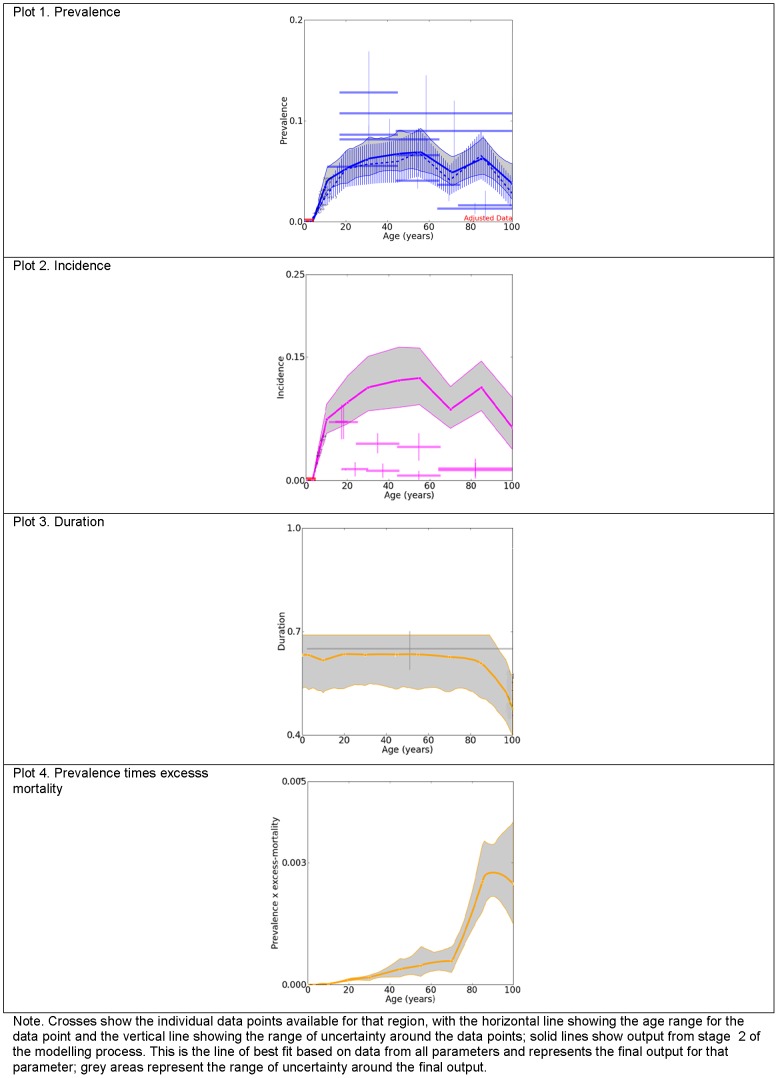
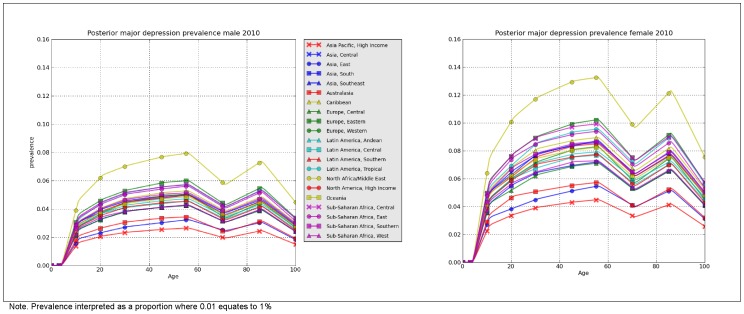
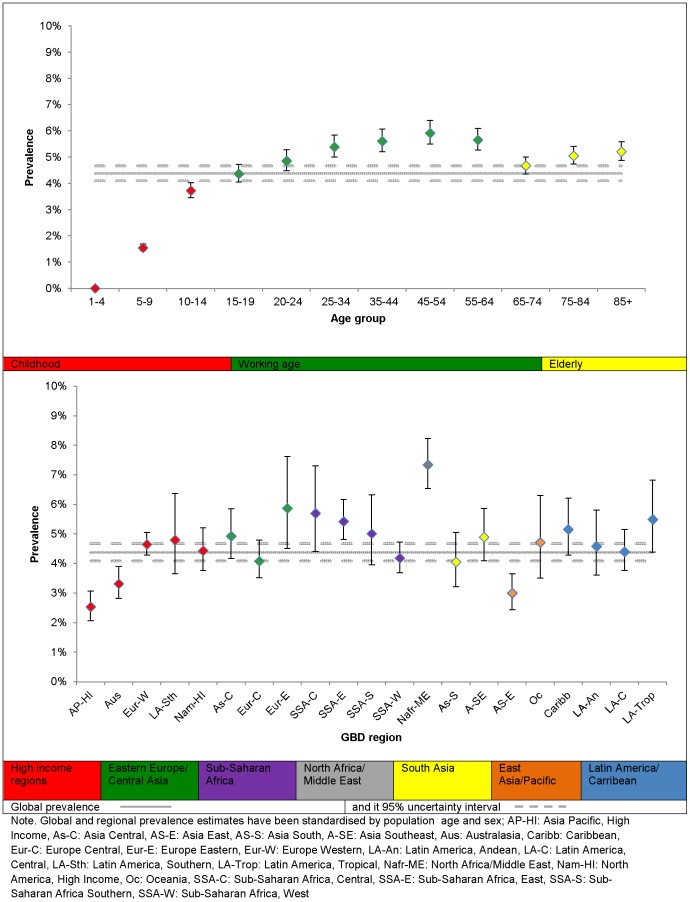
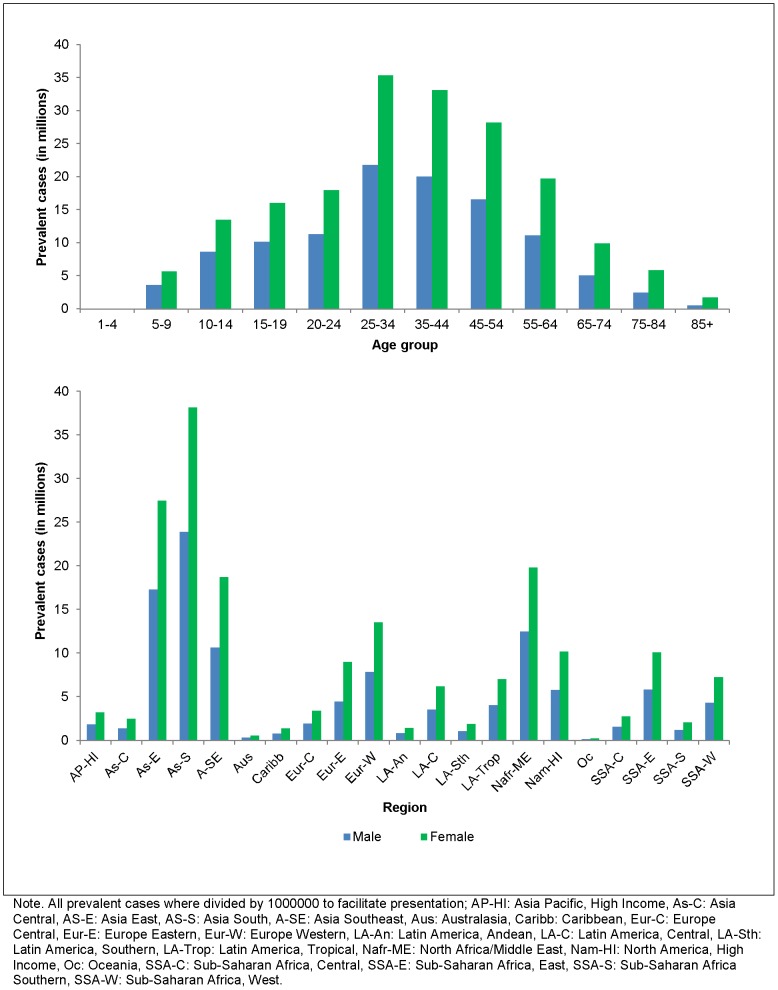
BACKGROUND: Although the detrimental impact of major depressive disorder (MDD) at the individual level has been described, its global epidemiology remains unclear given limitations in the data. Here we present the modelled epidemiological profile of MDD dealing with heterogeneity in the data, enforcing internal consistency between epidemiological parameters and making estimates for world regions with no empirical data. These estimates were used to quantify the burden of MDD for the Global Burden of Disease Study 2010 (GBD 2010). METHOD: Analyses drew on data from our existing literature review of the epidemiology of MDD. DisMod-MR, the latest version of the generic disease modelling system redesigned as a Bayesian meta-regression tool, derived prevalence by age, year and sex for 21 regions. Prior epidemiological knowledge, study- and country-level covariates adjusted sub-optimal raw data. RESULTS: There were over 298 million cases of MDD globally at any point in time in 2010, with the highest proportion of cases occurring between 25 and 34 years. Global point prevalence was very similar across time (4.4% (95% uncertainty: 4.2-4.7%) in 1990, 4.4% (4.1-4.7%) in 2005 and 2010), but higher in females (5.5% (5.0-6.0%) compared to males (3.2% (3.0-3.6%) in 2010. Regions in conflict had higher prevalence than those with no conflict. The annual incidence of an episode of MDD followed a similar age and regional pattern to prevalence but was about one and a half times higher, consistent with an average duration of 37.7 weeks. CONCLUSION: We were able to integrate available data, including those from high quality surveys and sub-optimal studies, into a model adjusting for known methodological sources of heterogeneity. We were also able to estimate the epidemiology of MDD in regions with no available data. This informed GBD 2010 and the public health field, with a clearer understanding of the global distribution of MDD.
Overview
The claims and statistics of this paper haven’t been checked yet.
Run the check — free, no account needed. It reads the open-access text and checks the sources it cites.
Integrity signals
Registry
Cites
Statistics
Figures
Verification
Claims the paper makes
The claims and statistics of this paper haven’t been checked yet.
Run the check — free, no account needed. It reads the open-access text and checks the sources it cites.
Claims other papers make about this one
Each is checked against this paper’s own text: does it say what the citing paper says it does?
The cited source says what the claim attributes to it.
In the citing paper
“GBD 2010's capacity to generate country-level burden as well as regional estimates was especially relevant for MDD, which has been linked to risk factors such as conflict [2],[37], intimate partner violence, and child sexual abuse [15], the levels of which vary between countries.”
From Burden of depressive disorders by country, sex, age, and year: findings from the Global Burden of Disease Study 2010 (2013) · cites this paper as [2]
In the citing paper
“This finding was driven by high prevalence estimates with 298 million MDD cases in 2010 [2] and 106 million cases of dysthymia [3].”
From Burden of depressive disorders by country, sex, age, and year: findings from the Global Burden of Disease Study 2010 (2013) · cites this paper as [2]
In the citing paper
“We found evidence for an elevated risk for mortality in those diagnosed with MDD [2],[25]; however, since a health outcome could only occur once in the GBD cause list, MDD related deaths from suicide and ischemic heart disease were captured under the headings of intentional injuries and cardiovascular disease in the GBD capstone papers [14],[18].”
From Burden of depressive disorders by country, sex, age, and year: findings from the Global Burden of Disease Study 2010 (2013) · cites this paper as [2]
In the citing paper
“GBD 2010's capacity to generate country-level burden as well as regional estimates was especially relevant for MDD, which has been linked to risk factors such as conflict [2],[37], intimate partner violence, and child sexual abuse [15], the levels of which vary between countries.”
From Burden of depressive disorders by country, sex, age, and year: findings from the Global Burden of Disease Study 2010 (2013) · cites this paper as [2]
Self-check
Percentages, sums and reported differences re-computed from the paper’s own numbers.
The self-check needs the paper’s full text.
Citations
Cites
Preferred Reporting Items for Systematic Reviews and Meta-Analyses: The PRISMA Statement
Moher, D., Liberati, A., Tetzlaff, J., Altman, D. G., & The PRISMA Group (2009) · PLoS Medicine · doi:10.1371/journal.pmed.1000097 · Cited by 64,042
Lozano, R., Naghavi, M., Foreman, K., Lim, S., Shibuya, K., Aboyans, V., Abraham, J., Adair, T., Aggarwal, R., Ahn, S. Y., et al. (2012) · The Lancet · doi:10.1016/s0140-6736(12)61728-0 · Cited by 14,070
Self-citationLim, S. S., Vos, T., Flaxman, A. D., Danaei, G., Shibuya, K., Adair-Rohani, H., AlMazroa, M. A., Amann, M., Anderson, H. R., Andrews, K. G., et al. (2012) · The Lancet · doi:10.1016/s0140-6736(12)61766-8 · Cited by 11,805
Self-citationMurray, C. J. L., Vos, T., Lozano, R., Naghavi, M., Flaxman, A. D., Michaud, C., Ezzati, M., Shibuya, K., Salomon, J. A., Abdalla, S., et al. (2012) · The Lancet · doi:10.1016/s0140-6736(12)61689-4 · Cited by 8,888
Self-citationVos, T., Flaxman, A. D., Naghavi, M., Lozano, R., Michaud, C., Ezzati, M., Shibuya, K., Salomon, J. A., Abdalla, S., Aboyans, V., et al. (2012) · The Lancet · doi:10.1016/s0140-6736(12)61729-2 · Cited by 8,291
Self-citationHow should meta‐regression analyses be undertaken and interpreted?
Thompson, S. G., & Higgins, J. P. T. (2002) · Statistics in Medicine · doi:10.1002/sim.1187 · Cited by 3,026 · cited 1×
“regression can be understood as an extension of a meta-analysis whereby data from different studies are pooled into a weighted average, adjusting for sources of variability between studies [51].”
BackgroundCross-national epidemiology of major depression and bipolar disorder
Weissman, M. M. (1996) · JAMA: The Journal of the American Medical Association · doi:10.1001/jama.1996.03540040037030 · Cited by 2,302 · cited 2×
“8% [18] or between 2.”
BackgroundSteel, Z., Chey, T., Silove, D., Marnane, C., Bryant, R. A., & van Ommeren, M. (2009) · JAMA · doi:10.1001/jama.2009.1132 · Cited by 2,246 · cited 1×
“As described in previous work [57–60], conflict status is associated with an increase in the incidence (and therefore prevalence) of MDD.”
BackgroundCross-national epidemiology of DSM-IV major depressive episode
Bromet, E., Andrade, L. H., Hwang, I., Sampson, N. A., Alonso, J., de Girolamo, G., de Graaf, R., Demyttenaere, K., Hu, C., Iwata, N., et al. (2011) · BMC Medicine · doi:10.1186/1741-7015-9-90 · Cited by 2,221
Global burden of depressive disorders in the year 2000
Üstün, T. B., Ayuso-Mateos, J. L., Chatterji, S., Mathers, C., & Murray, C. J. L. (2004) · British Journal of Psychiatry · doi:10.1192/bjp.184.5.386 · Cited by 1,735 · cited 1×
“In 2000, they were the 3 leading cause of burden as well as the leading cause of disability [6].”
Background
Research works printed but not linked: 4
- Kessler RC, Ustun TB, editors(2008) The WHO World Mental Health Surveys: global perspectives on the epidemiology of mental disorders. New York: Cambridge University Press.
- Flaxman AD, Vos T, Murray CJL, editors(2013) An integrative metaregression framework for descriptive epidemiology. Washington: University of Washington Press, In press.
- 2007, World Population Prospects: The 2006 Revision, Highlights. Working Paper No. ESA/P/WP.202, Department of Economic and Social Affairs, Population Division
- J Angst, 2002, Gender differences in depression. Epidemiological findings from the European DEPRES I and II studies, Eur Arch Psychiatry Clin Neurosci, 252, 201
Cited by
Sorted by citations
Whiteford, H. A., Degenhardt, L., Rehm, J., Baxter, A. J., Ferrari, A. J., Erskine, H. E., Charlson, F. J., Norman, R. E., Flaxman, A. D., Johns, N., et al. (2013) · The Lancet · doi:10.1016/s0140-6736(13)61611-6 · Cited by 6,006
Self-citationFerrari, A. J., Charlson, F. J., Norman, R. E., Patten, S. B., Freedman, G., Murray, C. J. L., Vos, T., & Whiteford, H. A. (2013) · PLoS Medicine · doi:10.1371/journal.pmed.1001547 · Cited by 3,115
Self-citationWhy is depression more common among women than among men?
Kuehner, C. (2017) · The Lancet Psychiatry · doi:10.1016/s2215-0366(16)30263-2 · Cited by 1,752
A systematic review and meta-regression of the prevalence and incidence of perinatal depression
Woody, C. A., Ferrari, A. J., Siskind, D. J., Whiteford, H. A., & Harris, M. G. (2017) · Journal of Affective Disorders · doi:10.1016/j.jad.2017.05.003 · Cited by 1,577
“As the distribution of prevalence estimates in the original dataset was positively skewed, all estimates were transformed using a natural log for the meta-regression in order to meet the parametric assumption of normality (Ferrari et al., 2013c; Tabachnick and Fidell, 2007).”
BackgroundMethodInfluentialSelf-citationShorey, S., Ng, E. D., & Wong, C. H. J. (2022) · British Journal of Clinical Psychology · doi:10.1111/bjc.12333 · Cited by 1,511
Whiteford, H. A., Ferrari, A. J., Degenhardt, L., Feigin, V., & Vos, T. (2015) · PLOS ONE · doi:10.1371/journal.pone.0116820 · Cited by 1,175
Self-citationDepression in sleep disturbance: A review on a bidirectional relationship, mechanisms and treatment
Fang, H., Tu, S., Sheng, J., & Shao, A. (2019) · Journal of Cellular and Molecular Medicine · doi:10.1111/jcmm.14170 · Cited by 1,225
Shorey, S., Chee, C. Y. I., Ng, E. D., Chan, Y. H., Tam, W. W. S., & Chong, Y. S. (2018) · Journal of Psychiatric Research · doi:10.1016/j.jpsychires.2018.08.001 · Cited by 1,055
Erskine, H. E., Moffitt, T. E., Copeland, W. E., Costello, E. J., Ferrari, A. J., Patton, G., Degenhardt, L., Vos, T., Whiteford, H. A., & Scott, J. G. (2015) · Psychological Medicine · doi:10.1017/s0033291714002888 · Cited by 688
“…et al. 2013), for ‘childhood’ mental disorders such as conduct disorder and ADHD (Erskine et al. 2013), and for LMICs (Degenhardt et al. 2011; Ferrari et al. 2011, 2013b; Baxter et al. 2013; Charlson et al. 2013; Erskine et al. 2013) which often have the largest proportions of individuals…”
BackgroundMethodSelf-citationPhillips, C. (2017) · Neural Plasticity · doi:10.1155/2017/7260130 · Cited by 480
Baxter, A. J., Scott, K. M., Ferrari, A. J., Norman, R. E., Vos, T., & Whiteford, H. A. (2014) · Depression and Anxiety · doi:10.1002/da.22230 · Cited by 403
Self-citationEvans-Lacko, S., & Knapp, M. (2016) · Social Psychiatry and Psychiatric Epidemiology · doi:10.1007/s00127-016-1278-4 · Cited by 390
Social Participation and Depression in Old Age: A Fixed-Effects Analysis in 10 European Countries
Croezen, S., Avendano, M., Burdorf, A., & van Lenthe, F. J. (2015) · American Journal of Epidemiology · doi:10.1093/aje/kwv015 · Cited by 305
Interventions to improve return to work in depressed people
Nieuwenhuijsen, K., Faber, B., Verbeek, J. H. A. M., Neumeyer‐Gromen, A., Hees, H. L., Verhoeven, A. C., Feltz-Cornelis, C. M. V. D., & Bültmann, U. (2014) · Cochrane Database of Systematic Reviews · doi:10.1002/14651858.cd006237.pub3 · Cited by 326
Social Defeat as an Animal Model for Depression
Hollis, F., & Kabbaj, M. (2014) · ILAR Journal · doi:10.1093/ilar/ilu002 · Cited by 290
Interventions to improve return to work in depressed people
Nieuwenhuijsen, K., Verbeek, J. H. A. M., Neumeyer‐Gromen, A., Verhoeven, A. C., Bültmann, U., & Faber, B. (2020) · Cochrane Database of Systematic Reviews · doi:10.1002/14651858.cd006237.pub4 · Cited by 234
Neural Substrates of Depression and Resilience
Han, M., & Nestler, E. J. (2017) · Neurotherapeutics · doi:10.1007/s13311-017-0527-x · Cited by 185
Arvind, B. A., Gururaj, G., Loganathan, S., Amudhan, S., Varghese, M., Benegal, V., Rao, G. N., Kokane, A. M., Chavan, B. S., Dalal, P., et al. (2019) · BMJ Open · doi:10.1136/bmjopen-2018-027250 · Cited by 188
Schlittler, M., Goiny, M., Agudelo, L. Z., Venckūnas, T., Brazaitis, M., Skurvydas, A., Kamandulis, S., Ruas, J. L., Erhardt, S., Westerblad, H., et al. (2016) · American Journal of Physiology-Cell Physiology · doi:10.1152/ajpcell.00053.2016 · Cited by 178
Mushavi, R. C., Burns, B. F. O., Kakuhikire, B., Owembabazi, M., Vořechovská, D., McDonough, A. Q., Cooper-Vince, C. E., Baguma, C., Rasmussen, J. D., Bangsberg, D. R., et al. (2020) · Social Science & Medicine · doi:10.1016/j.socscimed.2019.112561 · Cited by 164
Serra, M. (2016) · World Journal of Psychiatry · doi:10.5498/wjp.v6.i1.84 · Cited by 166
Chodavadia, P. A., Teo, I., Poremski, D., Fung, D. S. S., & Finkelstein, E. A. (2023) · BMC Psychiatry · doi:10.1186/s12888-023-04581-7 · Cited by 160
Mechanistic Insights into the Link between Gut Dysbiosis and Major Depression: An Extensive Review
Sonali, S., Ray, B., Hediyal, T. A., Rathipriya, A. G., Sunanda, T., Mahalakshmi, A. M., Rungratanawanich, W., Essa, M. M., Qoronfleh, M. W., Chidambaram, S. B., et al. (2022) · Cells · doi:10.3390/cells11081362 · Cited by 166
“Depression, especially major depressive disorder (MDD), is the second leading cause of disability and the most commonly affective disorder diagnosed in millions of adolescents and adults worldwide within the age bracket of 15–44 years old [1].”
Backgroundon behalf of the CAN-BIND Investigator Team, Lam, R. W. M., Milev, R. V., Rotzinger, S., Andreazza, A. C., Blier, P., Brenner, C. A., Daskalakis, Z. J., Dharsee, M., Downar, J. H., et al. (2016) · BMC Psychiatry · doi:10.1186/s12888-016-0785-x · Cited by 152
Neuronal correlates of depression
Chaudhury, D., Liu, H., & Han, M. (2015) · Cellular and Molecular Life Sciences · doi:10.1007/s00018-015-2044-6 · Cited by 150
Zhong, Q., Gelaye, B., Rondon, M., E. Sánchez, S., J. García, P., Sánchez, E., V. Barrios, Y., E. Simon, G., C. Henderson, D., May Cripe, S., et al. (2014) · Journal of Affective Disorders · doi:10.1016/j.jad.2014.03.028 · Cited by 140
Charlson, F., Moran, A. E., Freedman, G., Norman, R. E., Stapelberg, N. J. C., Baxter, A. J., Vos, T., & Whiteford, H. (2013) · BMC Medicine · doi:10.1186/1741-7015-11-250 · Cited by 149
Self-citationDiet quality in persons with and without depressive and anxiety disorders
Gibson-Smith, D., Bot, M., Brouwer, I. A., Visser, M., & Penninx, B. W. J. H. (2018) · Journal of Psychiatric Research · doi:10.1016/j.jpsychires.2018.09.006 · Cited by 146
Whiteford, H., Ferrari, A. J., Degenhardt, L. J., Feigin, V. L., & Vos, T. (2016) · World Bank, Washington, DC eBooks · doi:10.1596/978-1-4648-0426-7_ch2 · Cited by 142
Self-citationP2X7 Receptor Signaling in Stress and Depression
Ribeiro, D. E., Roncalho, A. L., Glaser, T., Ulrich, H., Wegener, G., & Joca, S. (2019) · International Journal of Molecular Sciences · doi:10.3390/ijms20112778 · Cited by 129
Unfolding the Role of BDNF as a Biomarker for Treatment of Depression
Rana, T., Behl, T., Sehgal, A., Srivastava, P., & BUNGAU, S. G. (2020) · Journal of Molecular Neuroscience · doi:10.1007/s12031-020-01754-x · Cited by 136
Amagasa, S., Fukushima, N., Kikuchi, H., Oka, K., Takamiya, T., Odagiri, Y., & Inoue, S. (2017) · PLoS ONE · doi:10.1371/journal.pone.0175392 · Cited by 118
Liao, D., Lv, C., Cao, L., Yao, D., Wu, Y. P., Long, M., Liu, N., & Jiang, P. (2020) · Oxidative Medicine and Cellular Longevity · doi:10.1155/2020/9268083 · Cited by 112
“According to the WHO’s prediction, depression is expected to become the world’s second leading cause of disability by 2020 [2], leading to a huge social and economic burden on the modern society [3].”
Markkula, N., Suvisaari, J., Saarni, S. I., Pirkola, S. P., Peña, S., Saarni, S. E., Ahola, K., Mattila, A. K., Viertiö, S., Strehle, J., et al. (2014) · Journal of Affective Disorders · doi:10.1016/j.jad.2014.10.015 · Cited by 134
“The global point prevalence of major depressive disorder was recently estimated at 4.7% and of dysthymia at 1.6% (Ferrari et al., 2013c; Charlson et al., 2013).”
InfluentialAntidépresseurs et tolérance : déterminants et prise en charge des principaux effets indésirables
David, D. J., & Gourion, D. (2016) · L'Encéphale · doi:10.1016/j.encep.2016.05.006 · Cited by 105
Anti-TNF-α Compounds as a Treatment for Depression
Uzzan, S., & Azab, A. N. (2021) · Molecules · doi:10.3390/molecules26082368 · Cited by 112
“These estimations likely depict only a fraction of the true numbers, suggesting that there are presumably myriads of concealed and undiagnosed cases, and acknowledges that there is societal and cultural variance in recognition and interpretation of psychiatric symptoms [1,10].”
BackgroundShorey, S., Ng, E. D., & Chee, C. Y. I. (2021) · Scandinavian Journal of Public Health · doi:10.1177/14034948211011793 · Cited by 114
Exercise and Depressive Symptoms in Adolescents
Toseeb, U., Brage, S., Corder, K. L., Dunn, V. J., Jones, P. B., Owens, M., Clair, M. S., van Sluijs, E. M. F., & Goodyer, I. M. (2014) · Archives of Pediatrics and Adolescent Medicine · doi:10.1001/jamapediatrics.2014.1794 · Cited by 107
Lam, R., Lamy, F.-X., Danchenko, N., Yarlas, A., White, M. K., Rive, B., & Saragoussi, D. (2018) · Neuropsychiatric Disease and Treatment · doi:10.2147/ndt.s175188 · Cited by 101
Efficacy of Vortioxetine on Cognitive Functioning in Working Patients With Major Depressive Disorder
McIntyre, R. S., Florea, I., Tonnoir, B., Loft, H., Lam, R. W., & Christensen, M. C. (2017) · The Journal of Clinical Psychiatry · doi:10.4088/jcp.16m10744 · Cited by 100
Richardson, R., Keyes, K. M., Medina, J. T., & Calvo, E. (2020) · The Lancet Psychiatry · doi:10.1016/s2215-0366(20)30151-6 · Cited by 100
Makara‐Studzińska, M., Tyburski, E. M., Załuski, M., Adamczyk, K., Mesterhazy, J., & Mesterhazy, A. (2022) · Frontiers in Psychiatry · doi:10.3389/fpsyt.2021.770532 · Cited by 100
Cao, F., Li, D., Wu, G., He, Y.-S., Liu, Y., Hou, J., Ni, Q.-Y., Tao, L., Jiang, Z., & Pan, H.-F. (2023) · Annals of the Rheumatic Diseases · doi:10.1136/ard-2023-224530 · Cited by 98
Zhong, Q., Gelaye, B., Rondón, M. B., Sánchez, S. E., Simon, G. E., Henderson, D. C., Barrios, Y. V., Sánchez, P. M., & Williams, M. A. (2014) · Archives of Women s Mental Health · doi:10.1007/s00737-014-0481-0 · Cited by 101
Culture-sensitive psychotraumatology
Schnyder, U., Bryant, R. A., Ehlers, A., Foa, E. B., Hasan, A., Mwiti, G. K., Kristensen, C. H., Neuner, F., Oe, M., & Yule, W. (2016) · European Journal of Psychotraumatology · doi:10.3402/ejpt.v7.31179 · Cited by 111
“The significant majority of the global burden of disease arising from mental health conditions occurs in low and middle income countries (LMICs) (Ferrari et al., 2013).”
BackgroundLi, H.-Y., Luo, X.-N., Ke, X.-Y., Dai, Q., Zheng, W., Zhang, C., Cassidy, R., Soares, J., Zhang, X.-Y., & Ning, Y.-P. (2017) · PLoS ONE · doi:10.1371/journal.pone.0186143 · Cited by 85
Recourt, K., de Boer, P., Zuiker, R. G. J. A., Luthringer, R., KENT, J. M., van der Ark, P. D., Hove, I. V., van Gerven, J., Jacobs, G. E., Nueten, L. V., et al. (2019) · Translational Psychiatry · doi:10.1038/s41398-019-0553-z · Cited by 89
Circuit-based frameworks of depressive behaviors: The role of reward circuitry and beyond
Knowland, D., & Lim, B. K. (2018) · Pharmacology Biochemistry and Behavior · doi:10.1016/j.pbb.2017.12.010 · Cited by 89
“Introduction Major depressive disorder (MDD) affects about 10% of adults in the United States and twice as many suffer at least one depressive episode during their lifetime (Andrade et al., 2003; Ferrari et al., 2013).”
Shortened telomere length in patients with depression: A meta-analytic study
Lin, P., Huang, Y., & Hung, C. (2016) · Journal of Psychiatric Research · doi:10.1016/j.jpsychires.2016.01.015 · Cited by 90
“MDD has worldwide high point and lifetime prevalence of 4.4% and nearly 16.2% respectively (Ferrari et al., 2013; Kessler et al., 2007).”
InfluentialCharlson, F., Flaxman, A. D., Ferrari, A. J., Vos, T., Steel, Z., & Whiteford, H. (2016) · Cambridge Prisms Global Mental Health · doi:10.1017/gmh.2015.26 · Cited by 80
“At stage one, we followed previously established GBD methodology for summarising and predicting epidemiological data while adjusting for heterogeneity between studies (Charlson et al. 2013; Ferrari et al. 2013).”
BackgroundMethodSelf-citationNanoneurotherapeutics approach intended for direct nose to brain delivery
Md, S., Mustafa, G., Baboota, S., & Ali, J. (2015) · Drug Development and Industrial Pharmacy · doi:10.3109/03639045.2015.1052081 · Cited by 78
Depression in patients with peripheral arterial disease: A systematic review
Brostow, D. P., Petrik, M. L., Starosta, A. J., & Waldo, S. W. (2017) · European Journal of Cardiovascular Nursing · doi:10.1177/1474515116687222 · Cited by 81
Ogawa, S., Koga, N., Hattori, K., Matsuo, J., Ota, M., Hori, H., Sasayama, D., Teraishi, T., Ishida, I., Yoshida, F., et al. (2017) · Journal of Psychiatric Research · doi:10.1016/j.jpsychires.2017.09.014 · Cited by 76
Saiz‐Rodríguez, M., Belmonte, C., Román, M. C., Ochoa, D., Koller, D., Talegón, M., Ovejero-Benito, M. C., López‐Rodríguez, R., Cabaleiro, T., & Abad‐Santos, F. (2017) · Basic & Clinical Pharmacology & Toxicology · doi:10.1111/bcpt.12938 · Cited by 74
(2019) · Europe PMC (PubMed Central) · Cited by 79
Lin, J., Jiang, M., Kan, Z., & Chu, Y. (2014) · Journal of Affective Disorders · doi:10.1016/j.jad.2014.06.012 · Cited by 72
Bi, Y.-H., Pei, J.-J., Hao, C., Yao, W., & Wang, H. (2021) · Journal of Affective Disorders · doi:10.1016/j.jad.2021.04.032 · Cited by 74
Shin, D., Kim, H., Lee, S., Cho, Y., & Jung, W. (2024) · Journal of Medical Internet Research · doi:10.2196/54617 · Cited by 79
“Depressive disorders are globally prevalent mental health conditions that significantly impact social and occupational functioning [1-3].”
Encore: Behavioural animal models of stress, depression and mood disorders
Petković, A., & Chaudhury, D. (2022) · Frontiers in Behavioral Neuroscience · doi:10.3389/fnbeh.2022.931964 · Cited by 74
“In the United States, this would amount to a projected lifetime incidence of 20– 25%, with the risk of MDD increasing with decreasing age, indicating the significance of the generational factor (Ferrari et al., 2013).”
BackgroundOrientin improves depression‐like behavior and BDNF in chronic stressed mice
Liu, Y., Lan, N., Ren, J., Wu, Y., Wang, S., Huang, X., & Yu, Y. (2015) · Molecular Nutrition & Food Research · doi:10.1002/mnfr.201400753 · Cited by 69
“Depression is the most prevalent psychiatric disorder worldwide and imposes a major social and health burden on individuals and society [1].”
BackgroundBrunes, A., & Heir, T. (2020) · World Journal of Psychiatry · doi:10.5498/wjp.v10.i6.139 · Cited by 69
Use of Antidepressants among Patients Diagnosed with Depression: A Scoping Review
Marasine, N. R., Sankhi, S., Lamichhane, R., Marasini, N. R., & Dangi, N. B. (2021) · BioMed Research International · doi:10.1155/2021/6699028 · Cited by 66
“Introduction Depression is a common mental disorder and a major cause of functional disability [1, 2].”
BackgroundBidirectional relations between depression symptoms and chronic kidney disease
Liu, M., Zhang, Y., Yang, S., Wu, Q., Ye, Z., Zhou, C., He, P., Zhang, Y., Hou, F. F., & Qin, X. (2022) · Journal of Affective Disorders · doi:10.1016/j.jad.2022.05.104 · Cited by 65
Rahe, C., Baune, B. T., Unrath, M., Arolt, V., Wellmann, J., Wersching, H., & Berger, K. (2015) · BMC Psychiatry · doi:10.1186/s12888-015-0426-9 · Cited by 69
Prevalence, trends, correlates and treatment of depression in Chile in 2003 to 2010
Markkula, N., Pedro Zitko, M., Peña, S., Margozzini, P., & Pedro Retamal, C. (2017) · Social Psychiatry and Psychiatric Epidemiology · doi:10.1007/s00127-017-1346-4 · Cited by 69
Depressive disorders in Brazil: results from the Global Burden of Disease Study 2017
Bonadiman, C. S. C., Malta, D. C., Passos, V. M. D. A., Naghavi, M., & Melo, A. P. S. (2020) · Population Health Metrics · doi:10.1186/s12963-020-00204-5 · Cited by 70
Ferrario, A., Sedlakova, J., & Trachsel, M. (2024) · JMIR Mental Health · doi:10.2196/56569 · Cited by 61
“First, depression affects over 300 million people and the World Health Organization identifies it as the largest single contributor to global disability [20].”
BackgroundInterplay between the key proteins of serotonin system in SSRI antidepressants efficacy
Kulikov, A. V., Gainetdinov, R. R., Ponimaskin, E. G., Kalueff, A. V., Naumenko, V. S., & Popova, N. K. (2018) · Expert Opinion on Therapeutic Targets · doi:10.1080/14728222.2018.1452912 · Cited by 63
Bohman, H., Låftman, S. B., Päären, A., & Jonsson, U. (2017) · BMC Psychiatry · doi:10.1186/s12888-017-1252-z · Cited by 58
Liu, Y., Chen, Y., Liang, X., Li, D., Zheng, Y., Zhang, H., Cui, Y., Chen, J., Liu, J., & Qiu, S. (2020) · Frontiers in Neurology · doi:10.3389/fneur.2020.00272 · Cited by 58
“Exclusion criteria included (1) a history of any significant illness, (2) alcohol abuse [a total score ≥ 8 on the Alcohol Use Disorders Identification Test (33)], and (3) contraindications to MRI scans.”
BackgroundMethodMacQueen, G. M., Hassel, S., Arnott, S. R., Addington, J., Bowie, C. R., Bray, S. L., Davis, A. D., Downar, J., Foster, J. A., Frey, B. N., et al. (2019) · Journal of Psychiatry and Neuroscience · doi:10.1503/jpn.180036 · Cited by 57
“(1) Anomaly: investigation led to protocol adjustments.”
Zhao, T., Tesch, F., Markevych, I., Baumbach, C., Janßen, C., Schmitt, J. M., Romanos, M., Nowak, D., & Heinrich, J. (2020) · International Journal of Hygiene and Environmental Health · doi:10.1016/j.ijheh.2020.113562 · Cited by 58
Transcriptome-wide association study identifies new susceptibility genes and pathways for depression
Li, X., Su, X., Liu, J., Li, H., Li, M., Li, W., & Luo, X. (2021) · Translational Psychiatry · doi:10.1038/s41398-021-01411-w · Cited by 56
Luo, Y., Li, Y., Xie, J., Duan, Y., Gan, G., Zhou, Y., Luo, X., Wang, J., Chen, Z., Zhang, Q., et al. (2022) · Journal of Affective Disorders · doi:10.1016/j.jad.2022.04.102 · Cited by 59
Obstructive sleep apnea (OSA) and clinical depression—prevalence in a sleep center
Acker, J. G., Richter, K., Piehl, A., Herold, J., Ficker, J. H., & Niklewski, G. (2016) · Sleep And Breathing · doi:10.1007/s11325-016-1411-3 · Cited by 56
“In the general population, global point prevalence of depression is higher in females [62].”
BackgroundKnott, C. S., Panter, J., Foley, L. S., & Ogilvie, D. (2018) · Preventive Medicine · doi:10.1016/j.ypmed.2018.03.018 · Cited by 50
Fu, T., Wang, C., Jin, Y., Zeng, Q., & Ma, C. (2023) · Journal of Affective Disorders · doi:10.1016/j.jad.2023.01.125 · Cited by 53
Reduced cerebrospinal fluid ethanolamine concentration in major depressive disorder
Ogawa, S., Hattori, K., Sasayama, D., Yokota, Y., Matsumura, R., Matsuo, J., Ota, M., Hori, H., Teraishi, T., Yoshida, S., et al. (2015) · Scientific Reports · doi:10.1038/srep07796 · Cited by 48
Andersen, B. L., Valentine, T. R., Lo, S. B., Carbone, D. P., Presley, C. J., & Shields, P. G. (2019) · Lung Cancer · doi:10.1016/j.lungcan.2019.11.015 · Cited by 50
Molecular insights into the therapeutic promise of targeting HMGB1 in depression
Rana, T., Behl, T., Mehta, V., Uddin, M. S., & BUNGAU, S. G. (2020) · Pharmacological Reports · doi:10.1007/s43440-020-00163-6 · Cited by 49
Ogawa, S., & Kunugi, H. (2015) · Current Neuropharmacology · doi:10.2174/1570159x13666150612225212 · Cited by 48
Albrakati, A., Alsharif, K. F., omairi, N. E. A., Alsanie, W. F., Almalki, A. S. A., Elmageed, Z. Y. A., Elshopakey, G. E., Lokman, M. S., Bauomy, A. A., Moneim, A. E. A., et al. (2021) · International Journal of Nanomedicine · doi:10.2147/ijn.s323436 · Cited by 48
“illnesses, affecting approximately 300 million people of all ages worldwide(1) and representing a vast economic and social burden.(2) Although the causative factors underlying”
BackgroundShen, Y., Wei, Y., Yang, X., Zhang, G., Du, X., Jia, Q., Zhu, X., Ma, Y., Lang, X., Luo, X., et al. (2020) · Depression and Anxiety · doi:10.1002/da.23026 · Cited by 46
Ribeiro, D. E., Müller, H. K., Elfving, B., Eskelund, A., Joca, S. R., & Wegener, G. (2019) · Journal of Psychopharmacology · doi:10.1177/0269881119872173 · Cited by 45
Silibinin exerts antidepressant effects by improving neurogenesis through BDNF/TrkB pathway
Li, Y., Li, Y., Yang, L., Zhang, K., Zheng, K.-Y., Wei, X.-M., Yang, Q., Niu, W.-M., Zhao, M., & Wu, Y. (2018) · Behavioural Brain Research · doi:10.1016/j.bbr.2018.04.025 · Cited by 45
“second most prevalent cause of illness-induced disability worldwide [1].”
Earley, W. R., Guo, H., Németh, G., Harsányi, J., & Thase, M. E. (2025) · Psychopharmacology Bulletin · doi:10.64719/pb.4578 · Cited by 45
Zhou, Y., Li, Z., Wang, Y., Huang, H., Chen, W.-C., Dong, L., Wu, J., Chen, J., Miao, Y., Qi, L., et al. (2019) · Journal of Affective Disorders · doi:10.1016/j.jad.2019.10.051 · Cited by 46
Peripheral arterial disease, gender, and depression in the Heart and Soul Study
Grenon, S. M., Cohen, B. E., Smolderen, K. G. E., Vittinghoff, E., Whooley, M. A., & Hiramoto, J. S. (2014) · Journal of Vascular Surgery · doi:10.1016/j.jvs.2014.02.013 · Cited by 44
The epidemiological modelling of dysthymia: Application for the Global Burden of Disease Study 2010
Charlson, F. J., Ferrari, A. J., Flaxman, A. D., & Whiteford, H. A. (2013) · Journal of Affective Disorders · doi:10.1016/j.jad.2013.05.060 · Cited by 44
Self-citationA Pilot Study Investigating the Effect of Music-Based Intervention on Depression and Anhedonia
Janzen, T. B., Shirawi, M. I. A., Rotzinger, S., Kennedy, S. H., & Bartel, L. (2019) · Frontiers in Psychology · doi:10.3389/fpsyg.2019.01038 · Cited by 47
Steensma, C., Loukine, L., Orpana, H., Vachon, J., Mo, F., Boileau-Falardeau, M., Reid, C., & Choi, B. C. K. (2016) · Health Promotion and Chronic Disease Prevention in Canada · doi:10.24095/hpcdp.36.10.01 · Cited by 45
The global collaboration on traumatic stress
Schnyder, U., Schäfer, I., Aakvaag, H. F., Ajduković, D., Bakker, A., Bisson, J. I., Brewer, D., Cloître, M., Dyb, G. A., Frewen, P., et al. (2017) · European Journal of Psychotraumatology · doi:10.1080/20008198.2017.1403257 · Cited by 43
Are Dietary Patterns Associated with Depression in U.S. Adults?
Kim, W. K., Shin, D., & Song, W. O. (2016) · Journal of Medicinal Food · doi:10.1089/jmf.2016.0043 · Cited by 43
“23,24 In addition, dietary practices are known to differ by gender along with various psychosocial, physiological, hormonal, and environmental reasons.”
Jiang, H., Long, X., Wang, Y., Zhang, X., Chen, L., Yang, X., Zhao, B., Zhang, Y., Chai, Y., & Bao, T. (2023) · Molecular Neurobiology · doi:10.1007/s12035-023-03737-6 · Cited by 45
“Depression, one of the most prevalent psychiatric disorders, is characterized by low mood, loss of interest, guilty feelings or low self-esteem, sleep and appetite disorders, anxiety, and anhedonia [1], even exposed to increased risk of suicide [2].”
BackgroundBDNF pro-peptide: physiological mechanisms and implications for depression
Kojima, M., Matsui, K., & Mizui, T. (2019) · Cell and Tissue Research · doi:10.1007/s00441-019-03034-6 · Cited by 45
Jarczok, M. N., Aguilar‐Raab, C., Koenig, J., Kaess, M., Borniger, J. C., Nelson, R. J., Hall, M. H., Ditzen, B., Thayer, J. F., & Fischer, J. E. (2018) · Chronobiology International · doi:10.1080/07420528.2018.1439499 · Cited by 42
Cerebrospinal fluid BDNF pro-peptide levels in major depressive disorder and schizophrenia
Mizui, T., Hattori, K., Ishiwata, S., Hidese, S., Yoshida, S., Kunugi, H., & Kojima, M. (2019) · Journal of Psychiatric Research · doi:10.1016/j.jpsychires.2019.03.024 · Cited by 41
Giollabhui, N. M., Slaney, C., Hemani, G., Foley, É. M., van der Most, P. J., Nolte, I. M., Snieder, H., Smith, G. D., Khandaker, G. M., & Hartman, C. A. (2025) · Translational Psychiatry · doi:10.1038/s41398-025-03372-w · Cited by 51
Longitudinal predictors of depression, anxiety, and alcohol use following COVID‐19‐related stress
Venanzi, L., Dickey, L., Green, H. E., Pegg, S. L., Benningfield, M. M., Bettis, A. H., Blackford, J. U., & Kujawa, A. (2022) · Stress and Health · doi:10.1002/smi.3125 · Cited by 45
Lopes, I. S., Oliveira, I. C. M., Capibaribe, V. C. C., Valentim, J. T., da Silva, D. M. A., de Souza, A. G., de Araújo, M. A., Chaves, R. D. C., Gutierrez, S. J. C., Barbosa‐Filho, J. M., et al. (2018) · Neurochemistry International · doi:10.1016/j.neuint.2018.07.007 · Cited by 40
Metadata
- Authors
- Ferrari, A. J., Charlson, F. J., Norman, R. E., Flaxman, A. D., Patten, S. B., Vos, T., & Whiteford, H. A.
- Affiliations
- The University of Queensland (AU)
- University of Washington (US)
- University of Calgary (CA)
- Corresponding author
- Ferrari, Alize J.
- ORCID
- Venue
- PLoS ONE
- Publisher
- Public Library of Science (PLoS)
- Published
- 2013-07-29
- Volume
- 8
- Issue
- 7
- Pages
- e69637
- ISSN
- 1932-6203 (ISSN-L)
- PMC
- PMC3726670
- OpenAlex
- W1504574652
- Cited by
- 330
- References
- 58
- Citations by year
- 2026: 12 · 2025: 25 · 2024: 27 · 2023: 20 · 2022: 38 · 2021: 32 · 2020: 25 · 2019: 30 · 2018: 25 · 2017: 28 · 2016: 24 · 2015: 20 · 2014: 19 · 2013: 5
- FWCI
- 33.92
- Type
- journal article
- Language
- en
- Open access
- gold
- doi.org
- Locations
- PLoS ONE (publishedVersion, cc-by)
- Europe PMC (PubMed Central) (publishedVersion, cc-by)
- PubMed Central (publishedVersion, cc-by)
- PubMed (publishedVersion)
- QUT ePrints (Queensland University of Technology) (submittedVersion, cc-by)
- RePEc: Research Papers in Economics (submittedVersion)
- DOAJ (DOAJ: Directory of Open Access Journals) (submittedVersion)
- Figshare (submittedVersion, cc-by)
- Faculty of Health; Institute of Health and Biomedical Innovation
- Funders
- Bill and Melinda Gates Foundation
- Topics
- Health Sciences › Medicine › Psychiatry and Mental health › Mental Health Treatment and Access
- Health Sciences › Medicine › Pharmacology (medical) › Treatment of Major Depression
- Social Sciences › Economics, Econometrics and Finance › Economics and Econometrics › Health Systems, Economic Evaluations, Quality of Life
- Keywords
- major depressive disorder, global burden of disease, disease prevalence, incidence, depression duration, sex differences, conflict zones, age distribution, Bayesian meta-regression, global epidemiology
- MeSH terms
- Adolescent, Adult, Aged, Aged, 80 and over, Child, Child, Preschool, Major Depressive Disorder, Female, Humans, Infant, Infant, Newborn, Male, Middle Aged, Models, Theoretical, Young Adult
About these checks
Registry, retraction, Cites and statistics results are computed, not judged, with one exception: a printed reference that no index lists is read once by a model before it counts as a citation error. Claims are extracted by a model and kept only when their quote appears verbatim in the text; each cited source is then checked, with a model’s help, for whether it says what the claim relies on. Those verdicts can be wrong — read the claim’s quote and the cited source before relying on one.
Statistics and arithmetic are recomputed, not judged.
Confidence bands are shown only for fields calibrated on our annotated test set. None is calibrated yet, so no band is shown.
What counts as a claim ›How we measure confidence ›How we check this ›
Are you an author, or do you see a problem with this page? Request a review
