

The DOI matches its Crossref record; 6 of the 6 references it cites were found in a registry or an index.
Chronic Alcohol-Induced microRNA-155 Contributes to Neuroinflammation in a TLR4-Dependent Manner in Mice
Overview
The claims and statistics of this paper haven’t been checked yet.
Run the check — free, no account needed. It reads the open-access text and checks the sources it cites.
Integrity signals
Registry
Cites
Statistics
Figures
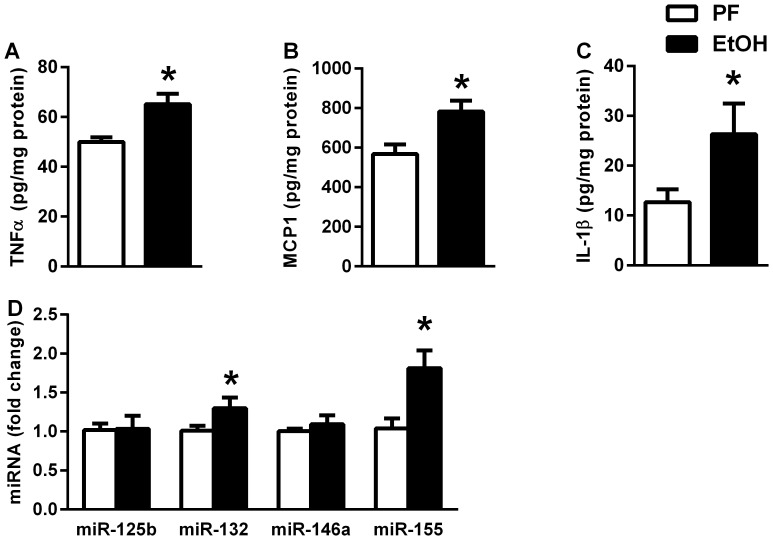
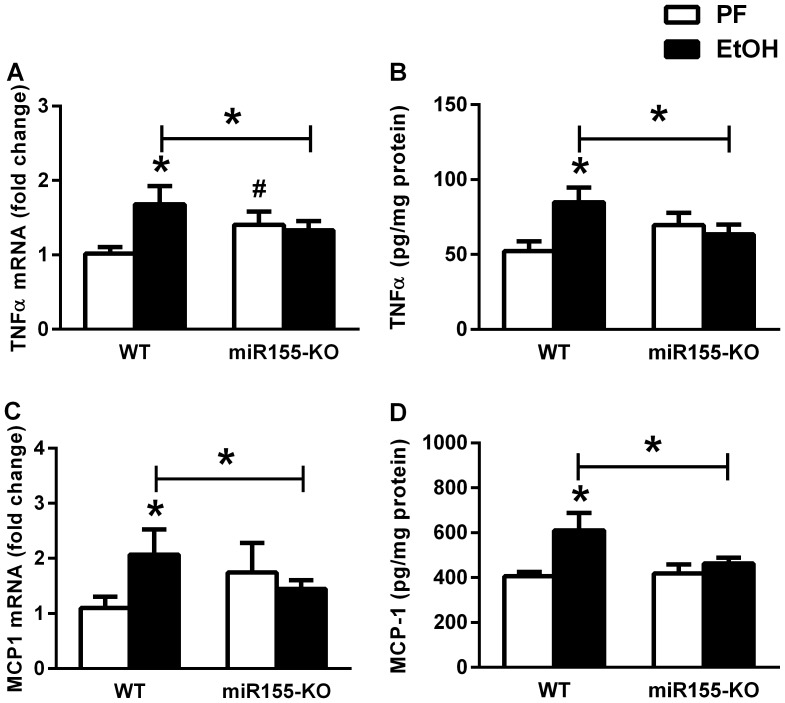
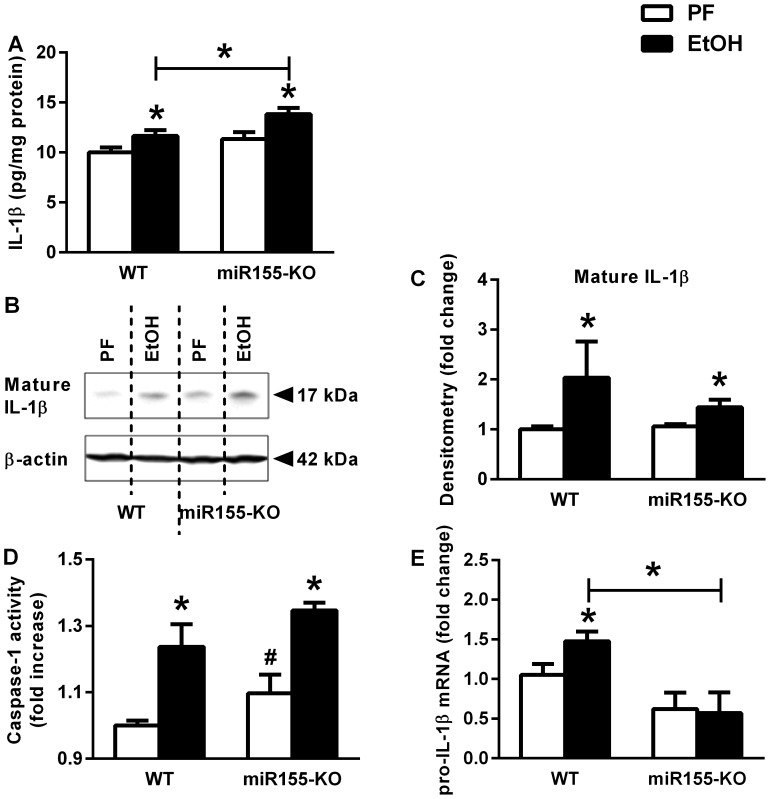
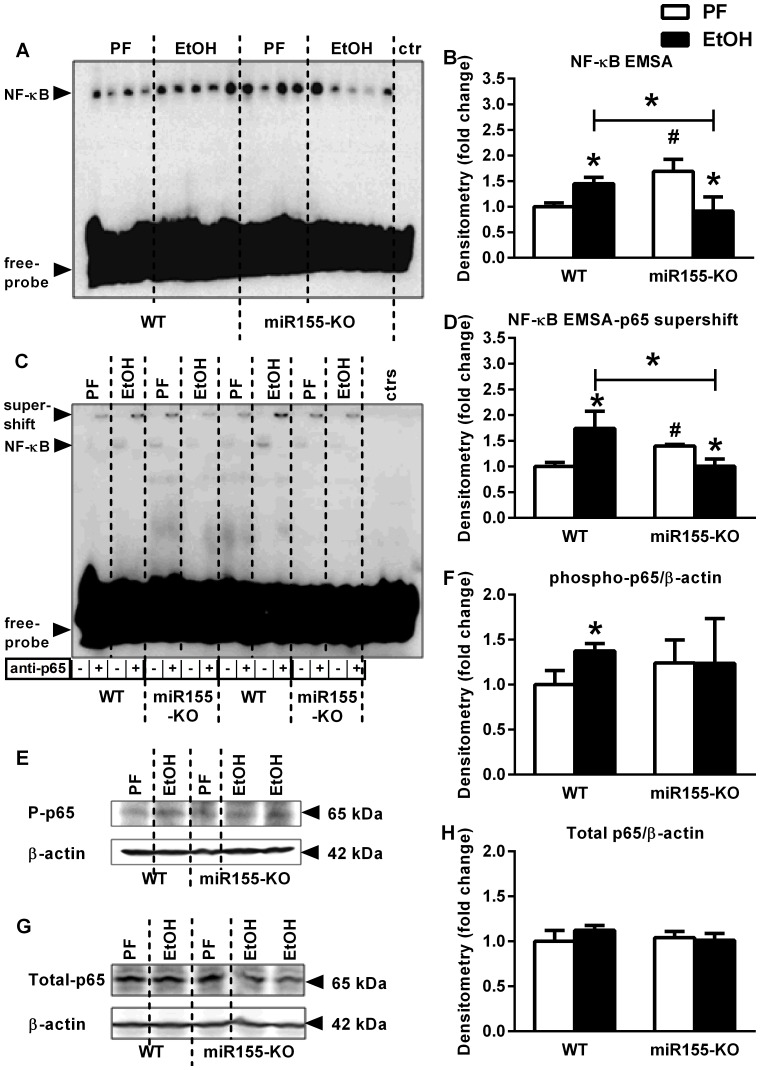
Verification
Claims the paper makes
The claims and statistics of this paper haven’t been checked yet.
Run the check — free, no account needed. It reads the open-access text and checks the sources it cites.
Claims other papers make about this one
Each is checked against this paper’s own text: does it say what the citing paper says it does?
The source backs part of the claim, not all of it — or backs it for a different population, condition or comparison.
In the citing paper
“MiR-155 was induced in macrophages and microglia and promoted the inflammatory process by suppressing nuclear factor-kappa-light-chain-enhancer of activated B cells (NF-κβ)-dependent toll-like receptor (TLR) signaling pathways (Lippai et al. 2013).”
From MiR-124 and MiR-155 as Therapeutic Targets in Microglia-Mediated Inflammation in Multiple Sclerosis (2025) · cites this paper as Lippai et al. 2013
Experimental — accuracy not yet measuredIn the citing paper
“However, some miRNAs such as miR-155 as pro-inflammatory agents, induced in microglia, promote the inflammatory process (Lippai et al. 2013; Jablonski et al. 2016).”
From MiR-124 and MiR-155 as Therapeutic Targets in Microglia-Mediated Inflammation in Multiple Sclerosis (2025) · cites this paper as Lippai et al. 2013
Self-check
Percentages, sums and reported differences re-computed from the paper’s own numbers.
The self-check needs the paper’s full text.
Citations
Cites
Taganov, K. D., Boldin, M. P., Chang, K.-J., & Baltimore, D. (2006) · Proceedings of the National Academy of Sciences · doi:10.1073/pnas.0605298103 · Cited by 4,317
Control of translation and mRNA degradation by miRNAs and siRNAs: Table 1.
Valencia-Sanchez, M. A., Liu, J., Hannon, G. J., & Parker, R. (2006) · Genes & Development · doi:10.1101/gad.1399806 · Cited by 2,060
Requirement of bic/microRNA-155 for Normal Immune Function
Rodriguez, A., Vigorito, E., Clare, S., Warren, M. V., Couttet, P., Soond, D. R., van Dongen, S., Grocock, R. J., Das, P. P., Miska, E. A., et al. (2007) · Science · doi:10.1126/science.1139253 · Cited by 1,833
Pivotal role of TLR4 receptors in alcohol-induced neuroinflammation and brain damage
Alfonso-Loeches, S., Pascual-Lucas, M., Blanco, A. M., Sanchez-Vera, I., & Guerri, C. (2010) · Journal of Neuroscience · doi:10.1523/jneurosci.0976-10.2010 · Cited by 579
Cardoso, A. L., Guedes, J. R., Pereira de Almeida, L., & Pedroso de Lima, M. C. (2012) · Immunology · doi:10.1111/j.1365-2567.2011.03514.x · Cited by 336
Silencing MicroRNA-155 Ameliorates Experimental Autoimmune Encephalomyelitis
Murugaiyan, G., Beynon, V., Mittal, A., Joller, N., & Weiner, H. L. (2011) · The Journal of Immunology · doi:10.4049/jimmunol.1003952 · Cited by 289
Research works printed but not linked: 29
- L Qin, 2012, NADPH oxidase and reactive oxygen species contribute to alcohol-induced microglial activation and neurodegeneration, J Neuroinflammation, 9, 5, 10.1186/1742-2094-9-5 · DOI · Paper page
- N Schonrock, 2012, Decoding the non-coding RNAs in alzheimer’s disease, Cell Mol Life Sci, 69, 3543, 10.1007/s00018-012-1125-z · DOI
- MC Thounaojam, 2013, MicroRNAs in the brain: It’s regulatory role in neuroinflammation, Mol Neurobiol, 47, 1034, 10.1007/s12035-013-8400-3 · DOI
- S Bala, 2011, Up-regulation of microRNA-155 in macrophages contributes to increased tumor necrosis factor {alpha} (TNF{alpha}) production via increased mRNA half-life in alcoholic liver disease, J Biol Chem, 286, 1436, 10.1074/jbc.M110.145870 · DOI · Paper page
- E Tili, 2009, miR-155: On the crosstalk between inflammation and cancer, Int Rev Immunol, 28, 264, 10.1080/08830180903093796 · DOI
- JG Hunsberger, 2012, Post-insult valproic acid-regulated microRNAs: Potential targets for cerebral ischemia, Am J Transl Res, 4, 316
- LN Schulte, 2013, Differential activation and functional specialization of miR-146 and miR-155 in innate immune sensing, Nucleic Acids Res, 41, 542, 10.1093/nar/gks1030 · DOI
- M Ceppi, 2009, MicroRNA-155 modulates the interleukin-1 signaling pathway in activated human monocyte-derived dendritic cells, Proc Natl Acad Sci U S A, 106, 2735, 10.1073/pnas.0811073106 · DOI · Paper page
- LA O’Neill, 2011, MicroRNAs: The fine-tuners of toll-like receptor signalling, Nat Rev Immunol, 11, 163, 10.1038/nri2957 · DOI
- L Verstrepen, 2008, TLR-4, IL-1R and TNF-R signaling to NF-kappaB: Variations on a common theme, Cell Mol Life Sci, 65, 2964, 10.1007/s00018-008-8064-8 · DOI
- F Yang, 2003, IKK beta plays an essential role in the phosphorylation of RelA/p65 on serine 536 induced by lipopolysaccharide, J Immunol, 170, 5630, 10.4049/jimmunol.170.11.5630 · DOI
- G Zhang, 2001, Toll-like receptor-mediated NF-kappaB activation: A phylogenetically conserved paradigm in innate immunity, J Clin Invest, 107, 13, 10.1172/JCI11837 · DOI
- WL Thompson, 2009, Inflammatory cytokines stimulate the chemokines CCL2/MCP-1 and CCL7/MCP-3 through NFkB and MAPK dependent pathways in rat astrocytes [corrected, Brain Res, 1287, 47, 10.1016/j.brainres.2009.06.081 · DOI
- D Lippai, 2013, Alcohol-induced IL-1beta in the brain is mediated by NLRP3/ASC inflammasome activation that amplifies neuroinflammation, J Leukoc, Biol94, 171, 10.1189/jlb.1212659 · DOI
- AK Mankan, 2012, Immunology in clinic review series; focus on autoinflammatory diseases: Inflammasomes: Mechanisms of activation, Clin Exp Immunol, 167, 369, 10.1111/j.1365-2249.2011.04534.x · DOI
- I Hritz, 2008, The critical role of toll-like receptor (TLR) 4 in alcoholic liver disease is independent of the common TLR adapter MyD88, Hepatology, 48, 1224, 10.1002/hep.22470 · DOI · Paper page
- MG Frank, 2006, Rapid isolation of highly enriched and quiescent microglia from adult rat hippocampus: Immunophenotypic and functional characteristics, J Neurosci Methods, 151, 121, 10.1016/j.jneumeth.2005.06.026 · DOI
- S Zhou, 2008, Lymphocytic choriomeningitis virus (LCMV) infection of CNS glial cells results in TLR2-MyD88/mal-dependent inflammatory responses, J Neuroimmunol, 194, 70, 10.1016/j.jneuroim.2007.11.018 · DOI
- S Oak, 2006, TLR2- and TLR4-mediated signals determine attenuation or augmentation of inflammation by acute alcohol in monocytes, J Immunol, 176, 7628, 10.4049/jimmunol.176.12.7628 · DOI
- P Mandrekar, 2002, Inhibition of NF-kappa B binding correlates with increased nuclear glucocorticoid receptor levels in acute alcohol-treated human monocytes, Alcohol Clin Exp Res, 26, 1872
- G Liu, 2013, MicroRNAs in immune response and macrophage polarization, Arterioscler Thromb Vasc Biol, 33, 170, 10.1161/ATVBAHA.112.300068 · DOI
- I Pedersen, 2008, MicroRNAs in the immune response, Cytokine, 43, 391, 10.1016/j.cyto.2008.07.016 · DOI
- P Menu, 2011, The NLRP3 inflammasome in health and disease: The good, the bad and the ugly, Clin Exp Immunol, 166, 1, 10.1111/j.1365-2249.2011.04440.x · DOI
- LE Fitzpatrick, 2012, Characterization of cerebellar ataxia in chronic alcoholics using the international cooperative ataxia rating scale (ICARS), Alcohol Clin Exp Res, 36, 1942, 10.1111/j.1530-0277.2012.01821.x · DOI
- E Tili, 2007, Modulation of miR-155 and miR-125b levels following lipopolysaccharide/TNF-alpha stimulation and their possible roles in regulating the response to endotoxin shock, J Immunol, 179, 5082, 10.4049/jimmunol.179.8.5082 · DOI · Paper page
- S Clare, 2013, Enhanced susceptibility to citrobacter rodentium infection in microRNA-155-deficient mice, Infect Immun, 81, 723, 10.1128/IAI.00969-12 · DOI
- M Kurowska-Stolarska, 2011, MicroRNA-155 as a proinflammatory regulator in clinical and experimental arthritis, Proc Natl Acad Sci U S A, 108, 11193, 10.1073/pnas.1019536108 · DOI
- Y He, 2013, TLR agonists stimulate Nlrp3-dependent IL-1beta production independently of the purinergic P2X7 receptor in dendritic cells and in vivo, J Immunol, 190, 334, 10.4049/jimmunol.1202737 · DOI
- FT Crews, 2009, Mechanisms of neurodegeneration and regeneration in alcoholism, Alcohol Alcohol, 44, 115, 10.1093/alcalc/agn079 · DOI
Cited by
Sorted by citations
Seitz, H. K., Bataller, R., Cortez-Pinto, H., Gao, B., Gual, A., Lackner, C., Mathurin, P., Mueller, S., Szabo, G., & Tsukamoto, H. (2018) · Nature Reviews Disease Primers · doi:10.1038/s41572-018-0014-7 · Cited by 1,271
The role of neuroimmune signaling in alcoholism
Crews, F. T., Lawrimore, C. J., Walter, T. J., & Coleman, L. G. (2017) · Neuropharmacology · doi:10.1016/j.neuropharm.2017.01.031 · Cited by 321
Alfonso-Loeches, S., Ureña-Peralta, J. R., Morillo-Bargues, M. J., Oliver-De La Cruz, J., & Guerri, C. (2014) · Frontiers in Cellular Neuroscience · doi:10.3389/fncel.2014.00216 · Cited by 265
MiR-155: An Important Regulator of Neuroinflammation
Zingale, V. D., Gugliandolo, A., & Mazzon, E. (2021) · International Journal of Molecular Sciences · doi:10.3390/ijms23010090 · Cited by 163
Namba, M. D., Leyrer-Jackson, J. M., Nagy, E. K., Olive, M. F., & Neisewander, J. L. (2021) · Frontiers in Neuroscience · doi:10.3389/fnins.2021.650785 · Cited by 76
Metadata
- Authors
- Lippai, D., Bala, S., Csak, T., Kurt-Jones, E. A., & Szabo, G.
- Venue
- PLoS ONE
- Publisher
- Public Library of Science (PLoS)
- Published
- 2013-08-09
- Volume
- 8
- Issue
- 8
- Pages
- e70945
- ISSN
- 1932-6203
- PMC
- PMC3739772
- Cited by
- 129
- References
- 6
- Language
- en
About these checks
Registry, retraction, Cites and statistics results are computed, not judged, with one exception: a printed reference that no index lists is read once by a model before it counts as a citation error. Claims are extracted by a model and kept only when their quote appears verbatim in the text; each cited source is then checked, with a model’s help, for whether it says what the claim relies on. Those verdicts can be wrong — read the claim’s quote and the cited source before relying on one.
Statistics and arithmetic are recomputed, not judged.
Confidence bands are shown only for fields calibrated on our annotated test set. None is calibrated yet, so no band is shown.
What counts as a claim ›How we measure confidence ›How we check this ›
Are you an author, or do you see a problem with this page? Request a review
