

Cisplatin Induces a Mitochondrial-ROS Response That Contributes to Cytotoxicity Depending on Mitochondrial Redox Status and Bioenergetic Functions
Open accessThe DOI matches its Crossref record; 67 of the 67 references it cites were found in a registry or an index.
Abstract
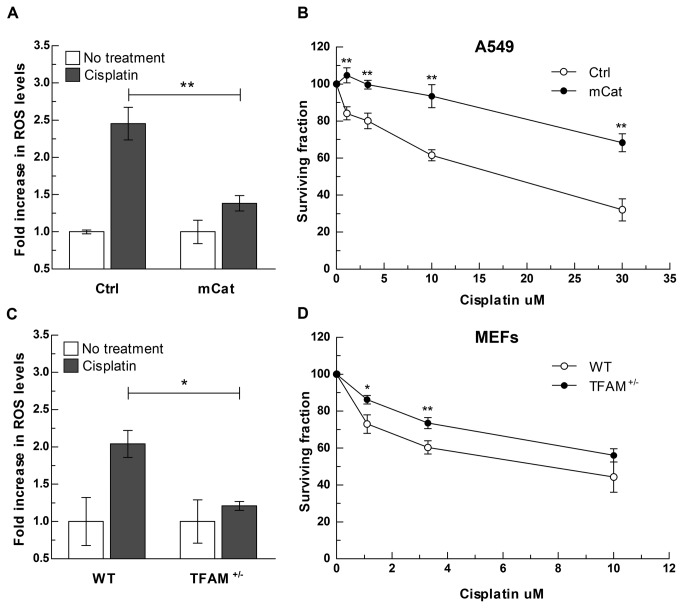
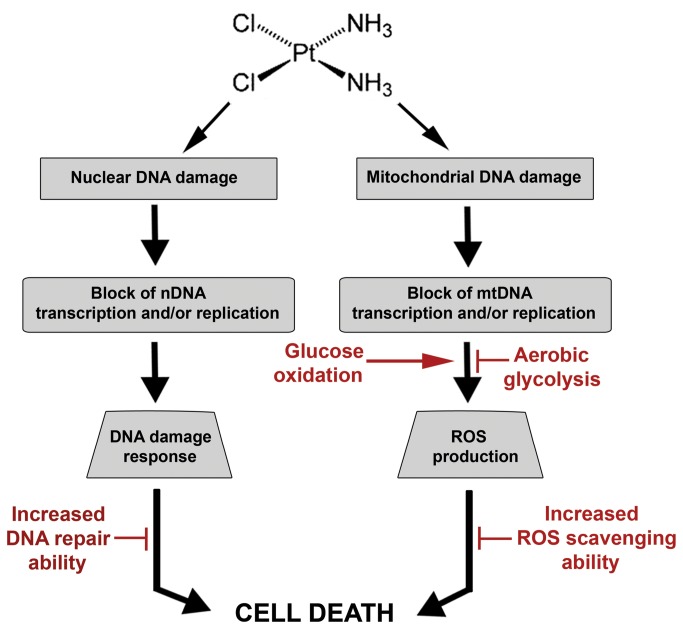
Cisplatin is one of the most effective and widely used anticancer agents for the treatment of several types of tumors. The cytotoxic effect of cisplatin is thought to be mediated primarily by the generation of nuclear DNA adducts, which, if not repaired, cause cell death as a consequence of DNA replication and transcription blockage. However, the ability of cisplatin to induce nuclear DNA (nDNA) damage per se is not sufficient to explain its high degree of effectiveness nor the toxic effects exerted on normal, post-mitotic tissues. Oxidative damage has been observed in vivo following exposure to cisplatin in several tissues, suggesting a role for oxidative stress in the pathogenesis of cisplatin-induced dose-limiting toxicities. However, the mechanism of cisplatin-induced generation of ROS and their contribution to cisplatin cytotoxicity in normal and cancer cells is still poorly understood. By employing a panel of normal and cancer cell lines and the budding yeast Saccharomyces cerevisiae as model system, we show that exposure to cisplatin induces a mitochondrial-dependent ROS response that significantly enhances the cytotoxic effect caused by nDNA damage. ROS generation is independent of the amount of cisplatin-induced nDNA damage and occurs in mitochondria as a consequence of protein synthesis impairment. The contribution of cisplatin-induced mitochondrial dysfunction in determining its cytotoxic effect varies among cells and depends on mitochondrial redox status, mitochondrial DNA integrity and bioenergetic function. Thus, by manipulating these cellular parameters, we were able to enhance cisplatin cytotoxicity in cancer cells. This study provides a new mechanistic insight into cisplatin-induced cell killing and may lead to the design of novel therapeutic strategies to improve anticancer drug efficacy.
Overview
The claims and statistics of this paper haven’t been checked yet.
Free: it reads the open-access text and checks the first 5 claims that cite a source we can check. Create a free account to check every claim.
Integrity signals
Registry
Cites
Statistics
Figures
Verification
Claims the paper makes
The claims and statistics of this paper haven’t been checked yet.
Free: it reads the open-access text and checks the first 5 claims that cite a source we can check. Create a free account to check every claim.
Claims other papers make about this one
Each is checked against this paper’s own text: does it say what the citing paper says it does?
In the citing paper
“For example, cisplatin, which is one of the most effective and widely used chemotherapeutic agents for various cancers, induces mitochondria‐dependent ROS that contributes to cell death via the formation of nuclear DNA damage.”
From Reactive Oxygen Species in Cancer: Current Findings and Future Directions (2021) · cites this paper as [55]
Self-check
Percentages, sums and reported differences re-computed from the paper’s own numbers.
The self-check needs the paper’s full text.
Citations
Cites
Analysis of Relative Gene Expression Data Using Real-Time Quantitative PCR and the 2−ΔΔCT Method
Livak, K. J., & Schmittgen, T. D. (2001) · Methods · doi:10.1006/meth.2001.1262 · Cited by 180,860
Understanding the Warburg Effect: The Metabolic Requirements of Cell Proliferation
Vander Heiden, M. G., Cantley, L. C., & Thompson, C. B. (2009) · Science · doi:10.1126/science.1160809 · Cited by 16,197
Mutation of the mouse klotho gene leads to a syndrome resembling ageing
Kuro-o, M., Matsumura, Y., Aizawa, H., Kawaguchi, H., Suga, T., Utsugi, T., Ohyama, Y., Kurabayashi, M., Kaname, T., Kume, E., et al. (1997) · Nature · doi:10.1038/36285 · Cited by 3,837
Bonnet, S., Archer, S. L., Allalunis-Turner, J., Haromy, A., Beaulieu, C., Thompson, R., Lee, C. T., Lopaschuk, G. D., Puttagunta, L., Bonnet, S., et al. (2007) · Cancer Cell · doi:10.1016/j.ccr.2006.10.020 · Cited by 1,530 · cited 3×
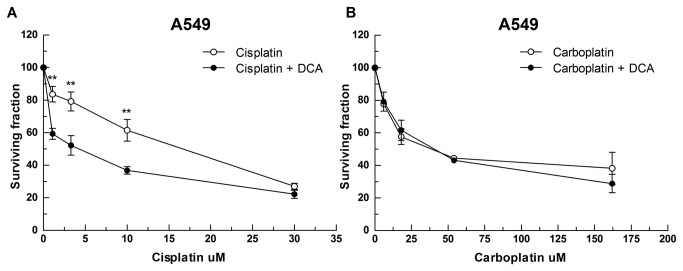
“To validate our prediction we used the pyruvate dehydrogenase kinase inhibitor dichloroacetate (DCA) to switch the metabolism of cancer cells from glycolysis to glucose oxidation [44].”
BackgroundMethodInfluentialFichtinger-Schepman, A. M. J., Van der Veer, J. L., Den Hartog, J. H. J., Lohman, P. H. M., & Reedijk, J. (1985) · Biochemistry · doi:10.1021/bi00324a025 · Cited by 1,024
Azzoli, C. G., Baker, S., Temin, S., Pao, W., Aliff, T., Brahmer, J., Johnson, D. H., Laskin, J. L., Masters, G., Milton, D., et al. (2009) · Journal of Clinical Oncology · doi:10.1200/jco.2009.23.5622 · Cited by 915 · cited 1×
“We used the non-small cell lung cancer cell line A549, as cisplatin-based chemotherapy is a standard of care for this type of tumor [37].”
MethodReview of the Comparative Pharmacology and Clinical Activity of Cisplatin and Carboplatin
Go, R. S., & Adjei, A. A. (1999) · Journal of Clinical Oncology · doi:10.1200/jco.1999.17.1.409 · Cited by 697 · cited 1×
“To confirm the essential role of mitochondrial protein synthesis impairment in enhancing cisplatin cytotoxicity, we evaluated the effects of another platinum-based drug, carboplatin, which forms similar types of nDNA lesions, but is substantially less toxic than cisplatin [40].”
BackgroundShen, H.-M., & Liu, Z.-G. (2006) · Free Radical Biology and Medicine · doi:10.1016/j.freeradbiomed.2005.10.056 · Cited by 629 · cited 2×
“have been shown to be activated by ROS and induce cell death [55–57].”
BackgroundMarroquin, L. D., Hynes, J., Dykens, J. A., Jamieson, J. D., & Will, Y. (2007) · Toxicological Sciences · doi:10.1093/toxsci/kfm052 · Cited by 628 · cited 1×
“Such a metabolic adaptation results in lower susceptibility toward the effects of mitochondrial toxicants on cell viability and growth [64]; therefore, the contribution of cisplatin-induced mitochondrial impairment to its cytotoxic effect may have been underestimated in our study as well as in those performed by other…”
ResultMitochondria as a Target of Environmental Toxicants
Meyer, J. N., Leung, M. C. K., Rooney, J. P., Sendoel, A., Hengartner, M. O., Kisby, G. E., & Bess, A. S. (2013) · Toxicological Sciences · doi:10.1093/toxsci/kft102 · Cited by 562
Cited by
Items 401–500 of 796
Bhaduri, R., Mukherjee, S., Mitra, I., Ghosh, S., Chatterji, U., Dodda, S. R., & Moi, S. C. (2021) · Spectrochimica Acta Part A Molecular and Biomolecular Spectroscopy · doi:10.1016/j.saa.2021.120096 · Cited by 16
A nano based approach to alleviate cisplatin induced nephrotoxicity
Anees, L. M., Abdel‐Hamid, G. R., & Elkady, A. A. (2021) · International Journal of Immunopathology and Pharmacology · doi:10.1177/20587384211066441 · Cited by 16
Wang, X., Zhu, H., Hu, J., Li, H., Guo, S., Chen, B., Liu, C., Wang, G., & Zhou, F. (2022) · International Journal of Molecular Sciences · doi:10.3390/ijms232113093 · Cited by 17
Trujillo, J., Molina‐Jijón, E., Medina‐Campos, O. N., Rodríguez‐Muñoz, R., Reyes, J. L., Barrera, D., & Pedraza‐Chaverrí, J. (2014) · Journal of Biochemical and Molecular Toxicology · doi:10.1002/jbt.21679 · Cited by 16
“[31] showed that CP-induced intracellular ROS levels, as a consequence of its direct effect on mitochondrial DNA that leads to decreased synthesis of electron transport chain proteins and impairment of mitochondrial redox status, DNA integrity and bioenergetic functionality [31].”
BackgroundMukherjee, S., Mitra, I., B., V. P. R., Das, P., Misini, B., Linert, W., & Moi, S. C. (2018) · ChemistrySelect · doi:10.1002/slct.201800211 · Cited by 16
Idei, U., Ohta, T., Yamatani, H., Seino, M., & Nagase, S. (2023) · International Journal of Molecular Sciences · doi:10.3390/ijms241411781 · Cited by 15
Tripathi, V., Jaiswal, P., Verma, R., Sahu, K., Majumder, S. K., Chakraborty, S., Jha, H. C., & Parmar, H. S. (2023) · Advances in Cancer Biology - Metastasis · doi:10.1016/j.adcanc.2023.100110 · Cited by 16
Wang, H., Nie, C., Luo, M., Bai, Q., Yao, Z., Lv, H., Chen, B., Wang, J., Xu, W., Wang, S., et al. (2023) · Bioorganic Chemistry · doi:10.1016/j.bioorg.2023.107056 · Cited by 15
Rana, J. N., Mumtaz, S., Han, I., & Choi, E. H. (2024) · Free Radical Biology and Medicine · doi:10.1016/j.freeradbiomed.2024.09.054 · Cited by 15
Advancements of ROS-based biomaterials for sensorineural hearing loss therapy
Xu, B., Huang, Y., Yu, D., & Chen, Y. (2024) · Biomaterials · doi:10.1016/j.biomaterials.2024.123026 · Cited by 16
Gold, M., Mujahid, Y., Ahmed, K., Kostrhunová, H., Kašpárková, J., Brabec, V., Biersack, B., & Schobert, R. (2019) · JBIC Journal of Biological Inorganic Chemistry · doi:10.1007/s00775-019-01677-y · Cited by 15
A Potential Role for HUWE1 in Modulating Cisplatin Sensitivity
Wenmaekers, S., Viergever, B. J., Kumar, G., Kranenburg, O., Black, P. C., Daugaard, M., & Meijer, R. P. (2021) · Cells · doi:10.3390/cells10051262 · Cited by 16
“platins mediate cytotoxicity via other mechanisms including the elevation of intracellular reactive oxygen species [11].”
BackgroundHerrera-Calderón, O., Calero-Armijos, L. L., Cardona‐Galeano, W., Herrera-R, A., Moreno, G., Algarni, M. A., Alqarni, M. A., & Batiha, G. E. (2021) · Plants · doi:10.3390/plants10102197 · Cited by 19
“[30] determined that exposure to cisplatin (a commercial antitumoral drug) induces a mitochondrial-dependent reactive oxygen species (ROS) response that enhances the cytotoxic effect of nuclear DNA damage in tumor cells.”
BackgroundBehrouzi, A., Xia, H., Thompson, E. L., Kelley, M. R., & Fehrenbacher, J. C. (2022) · International Journal of Molecular Sciences · doi:10.3390/ijms23031909 · Cited by 15
Alfonso Pompella, C., Corti, A., & Visvikis, A. (2022) · Frontiers in Oncology · doi:10.3389/fonc.2022.920316 · Cited by 15
“In addition to its well-established genotoxic effects, the cytotoxicity of CDDP has been in fact variably attributed to production of reactive oxygen species following activation of NADPH oxidase (11) or mitochondrial dysfunction (12, 13).”
BackgroundHung, G., Wu, C.-L., Motoyama, C., Horng, J., & Lin, L. (2022) · Comparative Biochemistry and Physiology Part C Toxicology & Pharmacology · doi:10.1016/j.cbpc.2022.109395 · Cited by 20
The transcription factor c-Jun inhibits RBM39 to reprogram pre-mRNA splicing during genotoxic stress
Lemaitre, F., Chakrama, F. Z., O’Grady, T. M., Peulen, O., Rademaker, G., Deward, A., Chabot, B., Piette, J. G., Colige, A., Lambert, C. A., et al. (2022) · Nucleic Acids Research · doi:10.1093/nar/gkac1130 · Cited by 16
“However, our findings are fully consistent with several recent publications suggesting that the cytotoxic effects of cisplatin are mediated by its ability to promote mitochondrial fusion and induce an oxidative stress response (22,57,81).”
BackgroundResultCiccarone, F., Falco, P. D., & Ciriolo, M. R. (2020) · Biochemical Pharmacology · doi:10.1016/j.bcp.2020.114202 · Cited by 16
Immune cell senescence drives responsiveness to immunotherapy in melanoma
Pantelis, P., Tremoulis, D. C., Evangelou, K., Bakouros, P., Magkouta, S., Ntintas, O. A., Veroutis, D., Theocharous, G., Kostopoulos, I. V., Thanos, D.-F., et al. (2025) · Molecular Cancer · doi:10.1186/s12943-025-02517-1 · Cited by 15
“T-cells were subsequently isolated using the Mojo-Sort™ Human CD3 T-Cell Isolation Kit (Biolegend) and then they were treated with vehicle (PBS for non-senes-cent control cells) or cisplatin (100 μM) for 48 h to induce ROS-mediated senescence [26, 27] (senescent T-cells).”
Park, H., Brown, S. R., Jansen, J., Dunn, T., Scott, M., Mnatsakanyan, N., Jonas, E. A., & Kim, Y. (2022) · Biochemical and Biophysical Research Communications · doi:10.1016/j.bbrc.2022.09.084 · Cited by 14
Imam, F., Kothiyal, P., Alshehri, S., Afzal, M., Iqbal, M., Khan, M. R., Alanazi, A. A. H., & Anwer, M. K. (2023) · Biomedicines · doi:10.3390/biomedicines11030804 · Cited by 15
The Role of Mitochondria in Phytochemically Mediated Disease Amelioration
Koh, Y., Ho, C., & Pan, M. (2023) · Journal of Agricultural and Food Chemistry · doi:10.1021/acs.jafc.2c08921 · Cited by 15
Li, X., Yang, C., Wu, H., Chen, H., Gao, X., Zhou, S., Zhang, T., & Ma, W. (2024) · DNA repair · doi:10.1016/j.dnarep.2024.103730 · Cited by 17
Griffin, D., Carson, R., Moss, D., Sessler, T., Lavin, D. P., Tiwari, V. K., Karelia, S., Kennedy, R. D., Savage, K. I., McDade, S. S., et al. (2024) · Molecular Cancer Research · doi:10.1158/1541-7786.mcr-24-0151 · Cited by 15
“ROS are well recognized as mediators of DNA damage (43).”
Chlorella sorokiniana Extract Prevents Cisplatin-Induced Myelotoxicity In Vitro and In Vivo
Lin, S., Li, M., Chuang, K., Lin, N., Chang, C.-H., Wu, H.-C., Chao, Y., Lin, C., Pan, I.-H., Perng, M., et al. (2020) · Oxidative Medicine and Cellular Longevity · doi:10.1155/2020/7353618 · Cited by 14
“Oxidative stress plays a role in the pathogenesis of cisplatin-induced dose-limiting toxicities, and mitochondrial-dependent ROS response enhances the cytotoxic effect caused by nuclear DNA damage [51].”
BackgroundMiyata, Y., Mukae, Y., Harada, J., Matsuda, T., Mitsunari, K., Matsuo, T., Ohba, K., & Sakai, H. (2020) · Molecules · doi:10.3390/molecules25225252 · Cited by 17
“Antimycin A Leukemia TRAIL [69] Melanoma TRAIL [66] Biguanides Malignant lymphocytes HIF-1α [82] Cisplatin Melanoma [49] Prostate cancer [49] Ovarian cancer [43] Docetaxel Colon cancer [32] FCCP Leukemia TRAIL [69] Melanoma TRAIL [66] Gemcitabine Gallbladder cancer UCP2, NF-κB [60] LGH00168 Lung cancer NF-κB [83] PAM…”
BackgroundResultInfluentialLin, C., Liu, S., Wu, Z.-S., Wang, Y., & Huang, S. (2021) · Life · doi:10.3390/life11020160 · Cited by 16
“Cisplatin induces ROS that trigger cell death [27].”
BackgroundHao, Y., Langford, T. F., Moon, S. J., Eller, K. A., & Sikes, H. D. (2021) · Cell chemical biology · doi:10.1016/j.chembiol.2021.09.003 · Cited by 16
Protective effects of low-temperature plasma on cisplatin-induced nephrotoxicity
Guo, P., Zhang, N., Li, J., Liu, Y., Li, Y., Wang, X., Wang, J., Wang, Y., & Wang, A. (2021) · Life Sciences · doi:10.1016/j.lfs.2021.120230 · Cited by 14
Sulaiman, A. A. A., Sobeai, H. M. A., Aldawood, E., Abogosh, A., Alhazzani, K., Alotaibi, M. R., Ahmad, S., Alhoshani, A., & Isab, A. A. (2022) · Metallomics · doi:10.1093/mtomcs/mfac054 · Cited by 14
Škurlová, M., Holubová, K., Kletečková, L., Kozák, T., Kubová, H., Horáček, J., & Valeš, K. (2023) · Medicinal Research Reviews · doi:10.1002/med.21977 · Cited by 14
Competition between p53 and YY1 determines PHGDH expression and malignancy in bladder cancer
Shi, T., Yuan, Z., He, Y., Zhang, D., Chen, S., Wang, X., Yao, L., Shao, J., & Wang, X. (2023) · Cellular Oncology · doi:10.1007/s13402-023-00823-8 · Cited by 14
“Cisplatin (Pt) is one of the commonly used chemotherapy drugs in tumors that induce a mitochondrial-ROS response [25, 26].”
BackgroundCombinatorial Implications of Nrf2 Inhibitors with FN3K Inhibitor: In vitro Breast Cancer Study
Beeraka, N. M., Zhang, J., Zhao, D., Liu, J., Chinnappa, A. U., Hemanth Vikram, P. R., Shivaprakash, P., Bannimath, N., Manogaran, P., Sinelnikov, M. Y., et al. (2023) · Current Pharmaceutical Design · doi:10.2174/0113816128261466231011114600 · Cited by 14
Biological properties of a new mixed lanthanide(III) complex incorporating a dypiridinium ylide
Tăbăcaru, A., Botezatu, A. V. D., Dinică, R. M., Cârâc, G., Başliu, V., Campello, M. P. C., Silva, F., Pinto, C. I. G., Guerreiro, J. F., Martins, M., et al. (2020) · Inorganica Chimica Acta · doi:10.1016/j.ica.2020.119517 · Cited by 14
Shahsavani, M. B., Heidari, M., Yousefi, R., & Moosavi‐Movahedi, A. A. (2025) · Chemical Biology & Drug Design · doi:10.1111/cbdd.70208 · Cited by 16
“This mitochondrial stress triggers reactive oxygen species (ROS) accumulation, amplifying cell death (Dilruba and Kalayda 2016; Sriramkumar et al. 2022; Marullo et al. 2013; Wisnovsky et al. 2013; Kleih et al. 2019).”
Chen, X., Kuang, S.-F., He, Y., Li, H., Yi, C., Li, Y., Wang, C., Chen, G., Chen, S., & Yu, D. (2022) · Metabolites · doi:10.3390/metabo12050389 · Cited by 13
Mendes, C., Lemos, I., Hipólito, A., Abreu, B., Freitas-Dias, C., Martins, F., Pires, R. F., Barros, H. L., Bonifácio, V. D. B., Gonçalves, L. G., et al. (2024) · Bioscience Reports · doi:10.1042/bsr20240752 · Cited by 14
MitoTam induces ferroptosis and increases radiosensitivity in head and neck cancer cells
Reinema, F. V., Hudson, N., Adema, G. J., Peeters, W. J. M., Neužil, J., Štursa, J., Werner, L., Sweep, F. C. G. J., Bussink, J., & Span, P. N. (2024) · Radiotherapy and Oncology · doi:10.1016/j.radonc.2024.110503 · Cited by 14
Lee, D. S., Schrader, A. D., Zou, J., Ang, W. H., Warchol, M. E., & Sheets, L. (2024) · iScience · doi:10.1016/j.isci.2024.110975 · Cited by 13
Ginsenoside Rh1 Alleviates HK‐2 Apoptosis by Inhibiting ROS and the JNK/p53 Pathways
Yang, Q., Lin, Q., & Zhang, S. (2020) · Evidence-based Complementary and Alternative Medicine · doi:10.1155/2020/3401067 · Cited by 13
“JNK and p53 are important molecules involved in cisplatin-induced nephrotoxicity via the induction of cellular DNA damage, cell cycle arrest, and ultimately apoptosis [22].”
BackgroundMendoza, M. S., Romero‐Garcia, S., Lemini, C., & Prado-García, H. (2021) · Journal of Immunology Research · doi:10.1155/2021/6668573 · Cited by 14
“Therefore, cisplatin-resistant cells become more reliant on mitochondria oxidative metabolism mediated by the production of reactive oxygen species (ROS) instead of glucose metabolism [163, 164].”
BackgroundNecroptosis modulation by cisplatin and sunitinib in hepatocellular carcinoma cell line
El-Demiry, S. M., Elyamany, M. F., El‐Gendy, S. M., Salem, H. A., & Saber, M. M. (2022) · Life Sciences · doi:10.1016/j.lfs.2022.120594 · Cited by 13
Han, J. S., Song, H.-Y., Kim, K., Park, W. Y., Park, S., Byun, E., & Byun, E. (2022) · Molecular Medicine Reports · doi:10.3892/mmr.2022.12903 · Cited by 13
“CP also induces direct damage to the mitochondrial DNA, resulting in oxidative stress by increasing the intracellular ROS level (26).”
Mauro, C., Capone, V., Cocchia, R., Cademartiri, F., Riccardi, F., Arcopinto, M., Alshahid, M., Anwar, K., Carafa, M., Carbone, A., et al. (2023) · Journal of Clinical Medicine · doi:10.3390/jcm12041612 · Cited by 13
“, testicular, lung, cervical, and ovarian cancers), may result either from direct toxic action on cardiac myocytes or from ROS production, followed by the induction of oxidative stress and the switch to a prothrombotic condition [12].”
BackgroundCancer Chemotherapy and Chemiluminescence Detection of Reactive Oxygen Species in Human Semen
Takeshima, T., Kuroda, S., & Yumura, Y. (2019) · Antioxidants · doi:10.3390/antiox8100449 · Cited by 13
Zaidieh, T., McGeehan, R. E., Smith, J. R., Ball, K., & An, Q. (2021) · BMC Cancer · doi:10.1186/s12885-021-08155-2 · Cited by 15
“cisplatin (CDDP) that has been reported to cause excessive accumulation of ROS resulting in cytotoxic effect in various types of cancer such as ovarian cancer [29], breast cancer [30] and prostate cancer [31, 32].”
BackgroundKoubková, L., Vyzula, R., Karban, J., Pinkas, J., Ondroušková, E., Vojtěšek, B., & Hrstka, R. (2015) · Investigational New Drugs · doi:10.1007/s10637-015-0274-y · Cited by 13
A pH-responsive injectable hydrogel for enhanced chemo-chemodynamic synergistic therapy
Zhang, Y., Zhang, X., Zhang, L., Yao, J., Wang, S., Zhao, J., Sun, H.-X., & Li, Z. (2024) · Colloids and Surfaces A Physicochemical and Engineering Aspects · doi:10.1016/j.colsurfa.2024.133748 · Cited by 12
Cisplatin induces kidney damage through the down-regulation of Prx I by autophagic degradation
Park, J. Y., Sim, J., Yi, H. J., Rhee, S. G., & Woo, H. A. (2024) · Free Radical Biology and Medicine · doi:10.1016/j.freeradbiomed.2024.09.049 · Cited by 15
Woytash, J., Kumar, R., Chaudhary, A. K., Donnelly, C., Wojtulski, A., Bethu, M. S., Wang, J., Spernyak, J. A., Bross, P., Yadav, N., et al. (2024) · Oncogene · doi:10.1038/s41388-024-03261-4 · Cited by 14
Reactive Oxygen Species in Cancer
Ogidi, O. I., Erho, S. A., & Omu, O. (2025) · Advances in medical diagnosis, treatment, and care (AMDTC) book series · doi:10.4018/979-8-3693-7919-6.ch010 · Cited by 14
Bcl2 inhibition of mitochondrial DNA repair
Xie, M., Doetsch, P. W., & Deng, X. (2015) · BMC Cancer · doi:10.1186/s12885-015-1594-1 · Cited by 13
“To rule out the possibility of mtDNA pseudogenes amplified by the mitochondrial primers used, QPCR experiments using the same primers were performed in DU145 cells and the mtDNA deficient DU145ρ cells [43].”
Self-citationGuo, Y., Jia, Y., Wang, S., Liu, N., Gao, D., Zhang, L., Lin, Z., Wang, S., Kong, F., Peng, C., et al. (2019) · Oncology Reports · doi:10.3892/or.2019.7347 · Cited by 14
“Accumulating evidence has suggested that CDDP-induced nuclear DNA damage alone is not enough to illustrate its high-level of effectiveness or cytotoxicity (6,7).”
BackgroundSheraton, V. M., Chiew, G. G. Y., Melnikov, V. R., Tan, E. Y., Luo, K. Q., Verma, N., & Sloot, P. M. A. (2020) · BMC Cancer · doi:10.1186/s12885-020-07677-5 · Cited by 13
Amador‐Martínez, I., Cruz, E. Y. H., Jiménez‐Uribe, A. P., Sánchez‐Lozada, L. G., Aparicio‐Trejo, O. E., Tapia, E., Barrera‐Chimal, J., & Pedraza‐Chaverrí, J. (2021) · Future Pharmacology · doi:10.3390/futurepharmacol1010002 · Cited by 13
“This interaction produces nDNA adducts, which are essential modifications mediating the cytotoxic effect of cisplatin and leading to the G2 arrest of the cell cycle and apoptosis in the cancer cells [45,46].”
BackgroundFarshori, N. N., Siddiqui, M. A., Al-Oqail, M. M., Al-Sheddi, E. S., Al-Massarani, S. M., Saquib, Q., Ahmad, J., & Al-Khedhairy, A. A. (2022) · Biologia · doi:10.1007/s11756-022-01124-5 · Cited by 12
“A number of other chemopreventive molecules such as doxorubicin, bleomycin, and platinum complexes are known to induce cellular ROS generation (Marullo et al. 2013).”
BackgrounddGTP-Templated Luminescent Gold Nanocluster-Based Composite Nanoparticles for Cancer Theranostics
Chatterjee, B., Ghoshal, A., Chattopadhyay, A., & Ghosh, S. S. (2018) · ACS Biomaterials Science & Engineering · doi:10.1021/acsbiomaterials.7b00980 · Cited by 12
Moquin, A., Sturn, J., Zhang, I., Ji, J. X., von Celsing, R., Vali, H., Maysinger, D., & Kakkar, A. K. (2019) · ACS Applied Bio Materials · doi:10.1021/acsabm.9b00643 · Cited by 12
Nanocarrier‐delivered small interfering RNA for chemoresistant ovarian cancer therapy
Zou, M., Du, Y., Liu, R., Zheng, Z., & Xu, J. (2021) · Wiley Interdisciplinary Reviews - RNA · doi:10.1002/wrna.1648 · Cited by 12
“Another mechanism by which cisplatin exerts cytotoxicity is through the induction of reactive oxygen species, which interact with macromolecular lipids, proteins, and DNA to further cause cell death (Marullo et al., 2013).”
BackgroundMitra, I., Mukherjee, S., B., V. P. R., Chatterjee, S. K., Mukherjee, S., Ghosh, S., Chatterji, U., & Moi, S. C. (2017) · Journal of Molecular Liquids · doi:10.1016/j.molliq.2017.10.100 · Cited by 13
Khademi, E., Mahabadi, V. P., Ahmadvand, H., Akbari, E., & Khalatbary, A. R. (2020) · PubMed Central · doi:10.22038/ijbms.2019.40095.9504 · Cited by 12
“It also emphasized the role of oxidative stress in CDDP activated mitochondrial apoptotic pathway (7).”
BackgroundPark, C. H., Lee, A. Y., Kim, J. H., Seong, S. H., Cho, E. J., Choi, J. S., Kim, M. J., Yang, S., Yokozawa, T., & Shin, Y. S. (2019) · The American Journal of Chinese Medicine · doi:10.1142/s0192415x19500186 · Cited by 12
Arab, A., Kashani, B., Córdova‐Delgado, M., Scott, E. N., Alemi, K., Trueman, J. N., Groeneweg, G. S. S., Chang, W., Loucks, C. M., Ross, C. J., et al. (2024) · Computers in Biology and Medicine · doi:10.1016/j.compbiomed.2024.109324 · Cited by 12
Wijaya, L. S., Kunnen, S. J., Trairatphisan, P., Fisher, C., Crosby, M. E., Schaefer, K., Bodié, K., Vaughan, E. E., Breidenbach, L., Reich, T., et al. (2025) · Cell Biology and Toxicology · doi:10.1007/s10565-025-10003-z · Cited by 15
“…were repressed, the activity of sugar transport and metabolism increased at high doses, suggesting metabolic switch from mitochondrial metabolism to enhanced glycolysis as a result of direct mitochondrial damage (Marullo et al. 2013) and alternatively due to initiation of a regeneration program.”
Bustamante-Barrientos, F. A., Lara-Barba, E., Herrera-Luna, Y., García-Guerrero, C., Silva-Pavez, E., Morales-Reyes, J., Araya, M. J., Yantén-Fuentes, L., Luque‐Campos, N., Altamirano, C., et al. (2025) · Frontiers in Cell and Developmental Biology · doi:10.3389/fcell.2025.1555153 · Cited by 11
Gstm1/Gstt1 is essential for reducing cisplatin ototoxicity in CBA/CaJ mice
Li, P., Liu, Z., Wang, J., Bi, X., Xiao, Y., Qiao, R., Zhou, X., Guo, S., Wan, P., Chang, M., et al. (2022) · The FASEB Journal · doi:10.1096/fj.202200324r · Cited by 13
PRDX3 promotes resistance to cisplatin in gastric cancer cells
Yan, H., Cai, X., Fu, S., Zhang, X., & Zhang, J. (2022) · Journal of Cancer Research and Therapeutics · doi:10.4103/jcrt.jcrt_970_22 · Cited by 11
Unraveling the role of deubiquitinating enzymes on cisplatin resistance in several cancers
Jin, S.-K., & Baek, K. (2025) · Biochimica et Biophysica Acta (BBA) - Reviews on Cancer · doi:10.1016/j.bbcan.2025.189297 · Cited by 13
Cytogenotoxic and oxidative status evaluation of Morinda citrifolia
de Moraes, G. P., de Alencar, M. V. O. B., Islam, M. T., Araújo, L. D. S., Sobral, A. L. P., Machado, K. D. C., de Aguiar, R. P. S., Júnior, A. L. G., Corrêa, D. S., Paz, M. F. C. J., et al. (2016) · International Archives of Medicine · doi:10.3823/1967 · Cited by 11
“Cisplatin (CDDP) induces renal cell death that have been fully ascribed to its ability to generate unrepairable DNA lesions, hence inducing cellular senescence or apoptosis by mitochondrial pathway [6].”
BackgroundHussan, F., Ridzuan, N. A., Teoh, S., Rashid, N. A., Othman, F., & Baharum, S. N. (2019) · Asian Pacific Journal of Tropical Biomedicine · doi:10.4103/2221-1691.258999 · Cited by 11
“The ROS such as superoxide and hydrogen peroxide are broken down by innate antioxidant enzymes, SOD and CAT, respectively.”
InfluentialNovel Platinum(II) Complex‐based Luminescent Probe for Detection of Hypochlorite in Cancer Cells
Tang, J., Huang, D., Meng, F., Li, P., Peng, F., & Huang, J. (2020) · Photochemistry and Photobiology · doi:10.1111/php.13344 · Cited by 11
Kim, K., OH, I. K., Yoon, K., Ha, J., Kang, I., & Choe, W. (2012) · Molecular Medicine Reports · doi:10.3892/mmr.2015.3392 · Cited by 11
Silva‐Hirschberg, C., Hartman, H., Stack, S., Swenson, S. D., Minea, R. O., Davitz, M. A., Chen, T. C., & Schönthal, A. H. (2019) · Therapeutic Advances in Medical Oncology · doi:10.1177/1758835919891567 · Cited by 11
Zhang, N., Xie, H., Lu, W., Li, F., Li, J., & Guo, Z. R. (2017) · PubMed Central · Cited by 11
Chen, J.-Z., Wang, L., Luo, X., & Tang, Y. (2023) · Frontiers in Oncology · doi:10.3389/fonc.2023.1178686 · Cited by 11
“The underlying mechanism of resistance relates to the robust production of detoxification molecules, including NAD(P)H quinone dehydrogenase 1 (NQO1), glutathione-S-transferase (GST), and glutathione (GSH), which conjugate chemo agents like cisplatin and then excreted (54, 55).”
BackgroundMoar, K., Brahma, M., Pant, A., Maruthi, M., & Maurya, P. K. (2024) · International Journal of Clinical and Experimental Pathology · doi:10.62347/rysq1416 · Cited by 11
Innovative nanoparticle strategies for treating oral cancers
Irannejadrankouhi, S., Mivehchi, H., Eskandari-Yaghbastlo, A., Nejati, S. T., Emrahoglu, S., Nazarian, M., Zahedi, F., Madani, S., & Nabi‐Afjadi, M. (2025) · Medical Oncology · doi:10.1007/s12032-025-02728-y · Cited by 12
Golbashirzadeh, M., Heidari, H. R., & Khosroushahi, A. Y. (2022) · Gene Reports · doi:10.1016/j.genrep.2022.101614 · Cited by 12
Majd, N. E., Shahraki, R., Tabandeh, M. R., & Hosseinifar, S. (2022) · PubMed Central · doi:10.30466/vrf.2020.119876.2835 · Cited by 15
Jeon, H., Song, I. S., Park, J.-G., Lee, H., Han, E., Park, S., Lee, Y., Song, C., Hur, W., Lee, I., et al. (2023) · Aquatic Toxicology · doi:10.1016/j.aquatox.2023.106573 · Cited by 10
Ferraro, G., Sanfilippo, V., Chiaverini, L., Satriano, C., Marzo, T., Merlino, A., & Mendola, D. L. (2023) · Dalton Transactions · doi:10.1039/d3dt01517c · Cited by 10
Wei, Y.-S., Chen, Y., Li, W.-Y., Yang, Y.-Y., Lin, S., Wu, C., Yang, J.-I., Wang, T., Yu, J., & Tsai, P. (2023) · International Journal of Nanomedicine · doi:10.2147/ijn.s408623 · Cited by 10
“Earlier studies, including ours, showed that cisplatin bound not only to the nuclear DNA but also to the mitochondria DNA (mtDNA).(13,44,45,47) The formation of DNA adducts arrested the cell cycle and disrupted the mitochondria electron transport chain and mitochondrial antioxidant enzyme synthesis/activity.”
BackgroundMizrahi, A. G., Gugenheim, A., Hamad, H., Hamed, R., Tetro, N., Maimon, O., Khutsurauli, S., Nechushtan, H., Nisman, B., Duran, D., et al. (2023) · Frontiers in Cell and Developmental Biology · doi:10.3389/fcell.2023.1217149 · Cited by 12
Hamala, V., Ondrášková, K., Šťastná, L. Č., Krčil, A., Müllerová, M., Kurfiřt, M., Hiršová, K., Holčáková, J., Gyepes, R., Císařová, I., et al. (2024) · Applied Organometallic Chemistry · doi:10.1002/aoc.7399 · Cited by 10
Hasanvand, A., Pirzadroozbahani, N., Ahmadizar, F., Kharazmkia, A., Mir, S., Baharvand, P. A., Goudarzi, M., & Khorramabadi, R. M. (2018) · Journal of Renal Injury Prevention · doi:10.15171/jrip.2018.54 · Cited by 10
“Consequently, oxidative phosphorylation has a defect that ultimately stimulates ROS production (24).”
BackgroundBNIP3 as a Regulator of Cisplatin-Induced Apoptosis
Gorbunova, A. S., Denisenko, T. V., Yapryntseva, M. A., Pivnyuk, A. D., Prikazchikova, T. A., Gogvadze, V. G., & Zhivotovsky, B. (2020) · Biochemistry (Moscow) · doi:10.1134/s0006297920100120 · Cited by 11
Mittal, D., Biswas, L., & Verma, A. K. (2021) · Nanomedicine · doi:10.2217/nnm-2020-0400 · Cited by 12
(2021) · Biointerface Research in Applied Chemistry · doi:10.33263/briac115.1345313464 · Cited by 11
Pala, E. E., Pala, H. G., Ekmekçi, S., & Erbaş, O. (2022) · Revista da Associação Médica Brasileira · doi:10.1590/1806-9282.20220032 · Cited by 11
Machado, T. R., Faro, L. V., Mello, A. L. D. N., Silva, D. D. O., Abrahim-Vieira, B. D. A., Rodrigues, C. R., Silva, R. H. S., Junior, C. S. V., Sola‐Penna, M., Boechat, F. D. C. S., et al. (2022) · Journal of Molecular Structure · doi:10.1016/j.molstruc.2022.134542 · Cited by 10
Activation of Piezo1 increases the sensitivity of breast cancer to hyperthermia therapy
Wang, S., Zhang, X., Qing, T.-L., Geng, B.-J., Li, L., Yan, L., Ren, L.-J., Zhang, J.-Q.-Z., Dai, X., Li, J.-F., et al. (2024) · Open Medicine · doi:10.1515/med-2024-0898 · Cited by 10
“Currently, considerable methods have been developed to improve the level of ROS to induce cancer cell death, and some chemical compounds have been approved as anticancer drugs [44].”
Cisplatin Exposure Dysregulates Insulin Secretion in Male and Female Mice
Basu, L., Grieco-St-Pierre, L., Ching, M. E. A., Stead, J. D. H., Hanson, A. A., Palaniyandi, J., Vanzyl, E. J., Hoyeck, M. P., McKay, K. S., van Allen, K. A., et al. (2025) · Diabetes · doi:10.2337/db24-0419 · Cited by 12
Zhou, Y., Luo, Q., Gu, L., Tian, X., Zhao, Y., Zhang, Y., & Wang, F. (2025) · Pharmaceuticals · doi:10.3390/ph18040563 · Cited by 13
“In addition, cisplatin has been shown to be a reactive oxygen species (ROS) producer, contributing partially to cisplatin cytotoxicity [10].”
Mitochondrial homeostasis and their impact on gastric carcinoma
Arjunan, A., Venkatraman, G., Joseph, L. D., & Perumalsamy, L. R. (2025) · The International Journal of Biochemistry & Cell Biology · doi:10.1016/j.biocel.2025.106827 · Cited by 10
Activity profile of the cisplatin analogue PN149 in different tumor cell lines
Schoch, S., Sen', V. D., Gajewski, S., Golubev, V., Strauch, B. M., Hartwig, A., & Köberle, B. (2018) · Biochemical Pharmacology · doi:10.1016/j.bcp.2018.08.025 · Cited by 10
Gong, W., Zhou, T., Xu, J., Huang, Y., Xiang, L., Zeng, F., Han, Y. K., Lv, Y., Zhang, Y., & Wu, S. (2021) · Medical Oncology · doi:10.1007/s12032-021-01511-z · Cited by 9
“So far, more and more studies showed that mitochondria was an important target of cisplatin for apoptosis, and cisplatin could induce apoptosis via mitochondrial apoptosis pathways [16].”
BackgroundChen, J., Tsai, C.-L., Tseng, C.-Y., Yu, P.-R., Chang, Y., Wong, Y., Lin, H., & Chen, J. (2022) · Plants · doi:10.3390/plants11233357 · Cited by 9
Lim, Y. J., Kim, H. S., Bae, S., So, K. A., Kim, T. J., & Lee, J. H. (2024) · Molecules · doi:10.3390/molecules29010274 · Cited by 9
Halder, S., Afrose, S., Shill, M. C., Sharmin, N., Mollick, P. P., Shuma, M. L., Muhit, M. A., & Rahman, S. M. A. (2024) · Drug Delivery · doi:10.1080/10717544.2024.2337423 · Cited by 9
“…of ROs, and induces inflammation, calcium overload, and phospholipase activation, which results in mitochondrial dysfunction and DNa damage (Marullo et al., 2013; soni et al., 2018). tQM can operate against nephropathy, has positive antioxidant and anti-apoptotic properties, and is…”
BackgroundNg, N. S., Wu, M. J., Myers, S. J., & Aldrich-Wright, J. R. (2017) · Journal of Inorganic Biochemistry · doi:10.1016/j.jinorgbio.2017.11.021 · Cited by 9
Metadata
- Authors
- Marullo, R., Werner, E., Degtyareva, N., Moore, B., Altavilla, G., Ramalingam, S. S., & Doetsch, P. W.
- Affiliations
- University of Messina (IT)
- Emory University (US)
- Geisinger Medical Center (US)
- Corresponding author
- Doetsch, Paul W.
- ORCID
- Venue
- PLoS ONE
- Publisher
- Public Library of Science (PLoS)
- Published
- 2013-11-19
- Volume
- 8
- Issue
- 11
- Pages
- e81162
- ISSN
- 1932-6203 (ISSN-L)
- PMC
- PMC3834214
- OpenAlex
- W1987702513
- Cited by
- 777
- References
- 67
- Citations by year
- 2026: 44 · 2025: 61 · 2024: 63 · 2023: 64 · 2022: 102 · 2021: 81 · 2020: 86 · 2019: 82 · 2018: 57 · 2017: 50 · 2016: 37 · 2015: 33 · 2014: 15
- FWCI
- 12.70
- Type
- journal article
- Language
- en
- Open access
- gold
- doi.org
- Licence
- Locations
- PLoS ONE (publishedVersion, cc-by)
- Europe PMC (PubMed Central) (publishedVersion, cc-by)
- PubMed Central (publishedVersion, cc-by)
- PubMed (publishedVersion)
- RePEc: Research Papers in Economics (submittedVersion)
- DOAJ (DOAJ: Directory of Open Access Journals) (submittedVersion, cc-by-sa)
- Figshare (submittedVersion, cc-by)
- Funders
- National Institute of Environmental Health Sciences (P01ES011163, ES011163)
- Topics
- Life Sciences › Biochemistry, Genetics and Molecular Biology › Molecular Biology › Mitochondrial Function and Pathology
- Health Sciences › Medicine › Oncology › Metal complexes synthesis and properties
- Life Sciences › Biochemistry, Genetics and Molecular Biology › Molecular Biology › Cell death mechanisms and regulation
- Keywords
- cisplatin, reactive oxygen species, mitochondrial dysfunction, oxidative stress, cisplatin cytotoxicity, mitochondrial redox status, mitochondrial DNA integrity, mitochondrial bioenergetics, DNA damage, anticancer drug toxicity, Saccharomyces cerevisiae
- MeSH terms
- Animals, Antineoplastic Agents, Cell Nucleus, Cisplatin, DNA, DNA Damage, DNA Repair, Humans, Mitochondria, Oxidation-Reduction, Saccharomyces cerevisiae, Apoptosis, Reactive Oxygen Species, DNA Adducts, Cell Line, Tumor, Mice
About these checks
Registry, retraction, Cites and statistics results are computed, not judged, with one exception: a printed reference that no index lists is read once by a model before it counts as a citation error. Claims are extracted by a model and kept only when their quote appears verbatim in the text; each cited source is then checked, with a model’s help, for whether it says what the claim relies on. Those verdicts can be wrong — read the claim’s quote and the cited source before relying on one.
Statistics and arithmetic are recomputed, not judged.
Confidence bands are shown only for fields calibrated on our annotated test set. None is calibrated yet, so no band is shown.
What counts as a claim ›How we measure confidence ›How we check this ›
Are you an author, or do you see a problem with this page? Request a review
Data sources
Bibliographic data: Semantic Scholar, OpenAlex, Crossref.
Contains information from the Semantic Scholar Academic Graph Datasets, made available under the ODC Attribution License (ODC-BY 1.0).
Semantic Scholar’s data is described in: Kinney, R., et al. (2023). The Semantic Scholar Open Data Platform. arXiv:2301.10140.
