

Cisplatin Induces a Mitochondrial-ROS Response That Contributes to Cytotoxicity Depending on Mitochondrial Redox Status and Bioenergetic Functions
Open accessThe DOI matches its Crossref record; 67 of the 67 references it cites were found in a registry or an index.
Abstract
Cisplatin is one of the most effective and widely used anticancer agents for the treatment of several types of tumors. The cytotoxic effect of cisplatin is thought to be mediated primarily by the generation of nuclear DNA adducts, which, if not repaired, cause cell death as a consequence of DNA replication and transcription blockage. However, the ability of cisplatin to induce nuclear DNA (nDNA) damage per se is not sufficient to explain its high degree of effectiveness nor the toxic effects exerted on normal, post-mitotic tissues. Oxidative damage has been observed in vivo following exposure to cisplatin in several tissues, suggesting a role for oxidative stress in the pathogenesis of cisplatin-induced dose-limiting toxicities. However, the mechanism of cisplatin-induced generation of ROS and their contribution to cisplatin cytotoxicity in normal and cancer cells is still poorly understood. By employing a panel of normal and cancer cell lines and the budding yeast Saccharomyces cerevisiae as model system, we show that exposure to cisplatin induces a mitochondrial-dependent ROS response that significantly enhances the cytotoxic effect caused by nDNA damage. ROS generation is independent of the amount of cisplatin-induced nDNA damage and occurs in mitochondria as a consequence of protein synthesis impairment. The contribution of cisplatin-induced mitochondrial dysfunction in determining its cytotoxic effect varies among cells and depends on mitochondrial redox status, mitochondrial DNA integrity and bioenergetic function. Thus, by manipulating these cellular parameters, we were able to enhance cisplatin cytotoxicity in cancer cells. This study provides a new mechanistic insight into cisplatin-induced cell killing and may lead to the design of novel therapeutic strategies to improve anticancer drug efficacy.
Overview
The claims and statistics of this paper haven’t been checked yet.
Free: it reads the open-access text and checks the first 5 claims that cite a source we can check. Create a free account to check every claim.
Integrity signals
Registry
Cites
Statistics
Figures
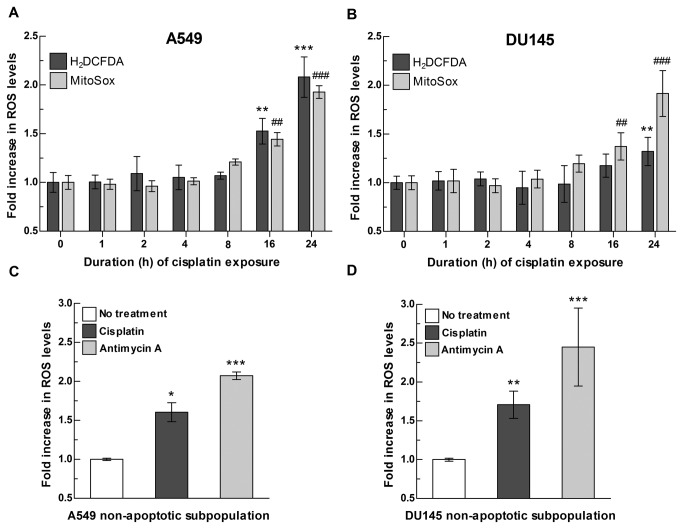
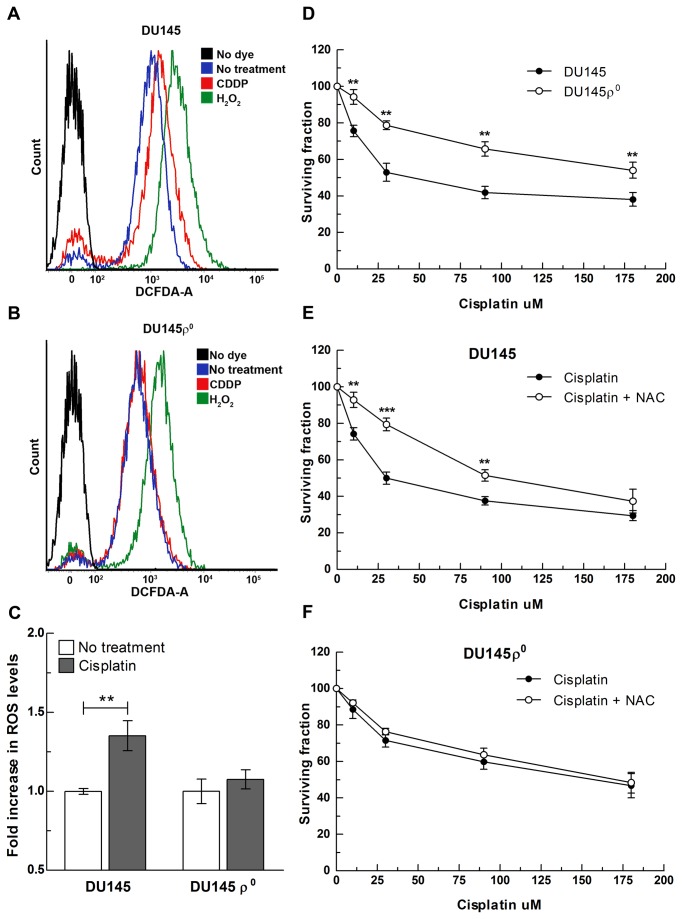
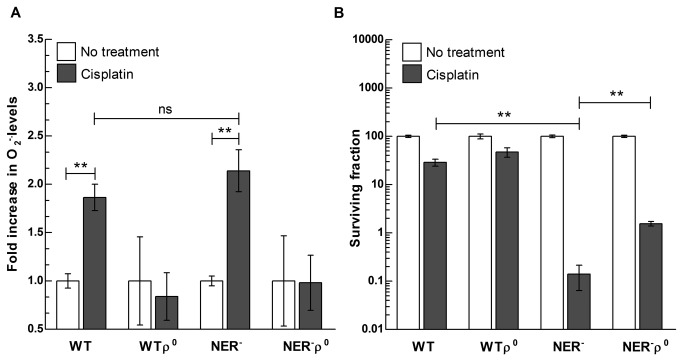
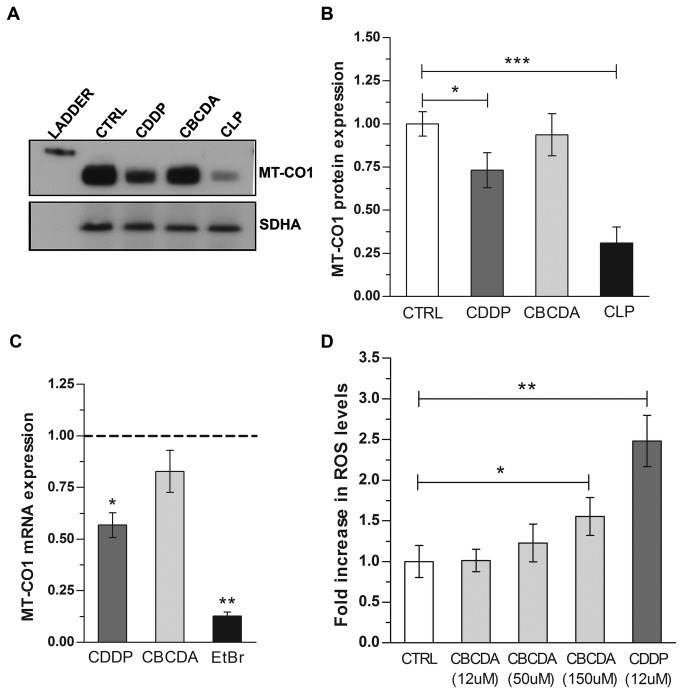
Verification
Claims the paper makes
The claims and statistics of this paper haven’t been checked yet.
Free: it reads the open-access text and checks the first 5 claims that cite a source we can check. Create a free account to check every claim.
Claims other papers make about this one
Each is checked against this paper’s own text: does it say what the citing paper says it does?
In the citing paper
“For example, cisplatin, which is one of the most effective and widely used chemotherapeutic agents for various cancers, induces mitochondria‐dependent ROS that contributes to cell death via the formation of nuclear DNA damage.”
From Reactive Oxygen Species in Cancer: Current Findings and Future Directions (2021) · cites this paper as [55]
Self-check
Percentages, sums and reported differences re-computed from the paper’s own numbers.
The self-check needs the paper’s full text.
Citations
Cites
Analysis of Relative Gene Expression Data Using Real-Time Quantitative PCR and the 2−ΔΔCT Method
Livak, K. J., & Schmittgen, T. D. (2001) · Methods · doi:10.1006/meth.2001.1262 · Cited by 180,860
Understanding the Warburg Effect: The Metabolic Requirements of Cell Proliferation
Vander Heiden, M. G., Cantley, L. C., & Thompson, C. B. (2009) · Science · doi:10.1126/science.1160809 · Cited by 16,197
Mutation of the mouse klotho gene leads to a syndrome resembling ageing
Kuro-o, M., Matsumura, Y., Aizawa, H., Kawaguchi, H., Suga, T., Utsugi, T., Ohyama, Y., Kurabayashi, M., Kaname, T., Kume, E., et al. (1997) · Nature · doi:10.1038/36285 · Cited by 3,837
Bonnet, S., Archer, S. L., Allalunis-Turner, J., Haromy, A., Beaulieu, C., Thompson, R., Lee, C. T., Lopaschuk, G. D., Puttagunta, L., Bonnet, S., et al. (2007) · Cancer Cell · doi:10.1016/j.ccr.2006.10.020 · Cited by 1,530 · cited 3×
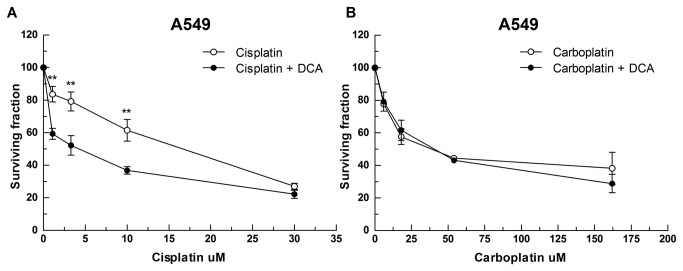
“To validate our prediction we used the pyruvate dehydrogenase kinase inhibitor dichloroacetate (DCA) to switch the metabolism of cancer cells from glycolysis to glucose oxidation [44].”
BackgroundMethodInfluentialFichtinger-Schepman, A. M. J., Van der Veer, J. L., Den Hartog, J. H. J., Lohman, P. H. M., & Reedijk, J. (1985) · Biochemistry · doi:10.1021/bi00324a025 · Cited by 1,024
Azzoli, C. G., Baker, S., Temin, S., Pao, W., Aliff, T., Brahmer, J., Johnson, D. H., Laskin, J. L., Masters, G., Milton, D., et al. (2009) · Journal of Clinical Oncology · doi:10.1200/jco.2009.23.5622 · Cited by 915 · cited 1×
“We used the non-small cell lung cancer cell line A549, as cisplatin-based chemotherapy is a standard of care for this type of tumor [37].”
MethodReview of the Comparative Pharmacology and Clinical Activity of Cisplatin and Carboplatin
Go, R. S., & Adjei, A. A. (1999) · Journal of Clinical Oncology · doi:10.1200/jco.1999.17.1.409 · Cited by 697 · cited 1×
“To confirm the essential role of mitochondrial protein synthesis impairment in enhancing cisplatin cytotoxicity, we evaluated the effects of another platinum-based drug, carboplatin, which forms similar types of nDNA lesions, but is substantially less toxic than cisplatin [40].”
BackgroundShen, H.-M., & Liu, Z.-G. (2006) · Free Radical Biology and Medicine · doi:10.1016/j.freeradbiomed.2005.10.056 · Cited by 629 · cited 2×
“have been shown to be activated by ROS and induce cell death [55–57].”
BackgroundMarroquin, L. D., Hynes, J., Dykens, J. A., Jamieson, J. D., & Will, Y. (2007) · Toxicological Sciences · doi:10.1093/toxsci/kfm052 · Cited by 628 · cited 1×
“Such a metabolic adaptation results in lower susceptibility toward the effects of mitochondrial toxicants on cell viability and growth [64]; therefore, the contribution of cisplatin-induced mitochondrial impairment to its cytotoxic effect may have been underestimated in our study as well as in those performed by other…”
ResultMitochondria as a Target of Environmental Toxicants
Meyer, J. N., Leung, M. C. K., Rooney, J. P., Sendoel, A., Hengartner, M. O., Kisby, G. E., & Bess, A. S. (2013) · Toxicological Sciences · doi:10.1093/toxsci/kft102 · Cited by 562
Cited by
Items 701–796 of 796
Consequences of Directed Mitochondrial DNA Damage in Primary Neurons
Geden, M. J. (2017) · Carolina Digital Repository (University of North Carolina at Chapel Hill) · doi:10.17615/qbvf-hg05
“Priming” as a novel strategy to enhance chemotherapeutic efficacy
Mould, R. R. (2019) · WestminsterResearch (University of Westminster) · doi:10.34737/qx75q
Khalik, D. A., & El-kammar, H. (2017) · Egyptian Dental Journal /Egyptian Dental Journal · doi:10.21608/edj.2017.74553
Johnston, A. M. (2020) · TopSCHOLAR (Western Kentucky University)
Koh, L. (2019) · DR-NTU (Nanyang Technological University) · doi:10.32657/10356/138683
Highlighting the Journey So Far with Cancer and Chemotherapy
Yusuf, K. A., & Kim, K. (2020) · ACTA SCIENTIFIC MICROBIOLOGY · doi:10.31080/asmi.2020.03.0618
Pre-clinical evaluation of targeting autophagy for the treatment of Oral Squamous Cell Carcinoma
Magnano, S. (2021) · Arrow@dit (Dublin Institute of Technology)
das Neves, W., Rivelli, T. G., Simão, E. F., Kulcsar, M. A. V., & de Castro, G. (2021) · Research Square · doi:10.21203/rs.3.rs-447761/v1
Brunet, M. Y. (2021) · Open Access Institutional Repository at Robert Gordon University (Robert Gordon University) · doi:10.48526/rgu-wt-1446968
Association of Oxidative Stress and Mitochondrial Dysfunction to Gynecological Malignancies
Ghosh, D., Chatterjee, P., Mitra, T., & Roy, S. S. (2021) · Springer eBooks · doi:10.1007/978-981-15-4501-6_15-1
Targeting Redox Signaling and ROS Metabolism in Cancer Treatment
Ali, E. S., Barua, D., Saha, S. K., Ahmed, M. U., Mishra, S. K., & Mubarak, M. S. (2021) · Springer eBooks · doi:10.1007/978-981-15-4501-6_119-1
Petrović, S. Ž., & Leskovac, A. R. (2021) · Springer eBooks · doi:10.1007/978-981-15-4501-6_130-1
Association of Oxidative Stress and Mitochondrial Dysfunction to Gynecological Malignancies
Ghosh, D., Chatterjee, P., Mitra, T., & Roy, S. S. (2022) · Springer eBooks · doi:10.1007/978-981-15-9411-3_15
Role of ROS in Combined Radiation Effect in Cancer Therapy
Gautam, A., & Goyal, L. (2022) · Handbook of Oxidative Stress in Cancer: Therapeutic Aspects · doi:10.1007/978-981-16-1247-3_65-1
Potential Natural Product Derived Compounds for Lung Cancer Therapy
Chanvorachote, P., Hutamekalin, P., Chunhacha, P., & Zin, Z. (2022) · Handbook of Oxidative Stress in Cancer: Therapeutic Aspects · doi:10.1007/978-981-16-1247-3_16-1
Prakash, A., & Sharma, N. (2018) · Faculty Opinions – Post-Publication Peer Review of the Biomedical Literature · doi:10.3410/f.732819873.793544831
Placentra, V. C., Limpose, K. L., Corbett, A. H., & Doetsch, P. W. (2020) · Wiley eBooks · doi:10.1002/9780470015902.a0000557.pub4
Self-citationHan, X., Hu, Z. Q., Chen, H., Wang, K., Gao, X. J., Li, F., & Wang, J. (2022) · Research Square · doi:10.21203/rs.3.rs-1686932/v1
de Almeida, L. F., Gervásio, S. V., Trindade, M. G. P., dos Santos, L. E., Panteleão, A. C. A., de Oliveira, J. B.-H., Vieira, I. M. C., & Batitucci, M. D. C. P. (2022) · Editora Pascal LTDA eBooks · doi:10.29327/566872.1-2
Machado, A. J. C. J., Costalonga, S. A., Canuto, I. M., Gervásio, S. V., & Batitucci, M. D. C. P. (2022) · Editora Pascal LTDA eBooks · doi:10.29327/566872.1-1
MUTAGENICIDADE DE Tithonia diversifolia (Hemsl.) A. Gray DE DUAS LOCALIDADES DO ESPÍRITO SANTO
Crist, F. M., Pretti, I. R., Batitucci, M. D. C. P., Dutra, J. C. V., dos Santos, V. S., & Zatta, A. C. C. (2022) · Editora Pascal LTDA eBooks · doi:10.29327/566872.1-3
(2022) · International Journal of Clinical and Medical Education Research · doi:10.33140/ijcmer.01.05.01
(2022) · International Journal of Clinical and Medical Education Research · doi:10.33140/ijcmer.01.04.01
Targeting Reactive Oxygen Species (ROS) for Cancer Therapy
Mohan, H., Vandna, V., Soni, S., & Syed, S. M. (2022) · Handbook of Oxidative Stress in Cancer: Therapeutic Aspects · doi:10.1007/978-981-16-5422-0_273 · Cited by 2
Potential Natural Product–Derived Compounds for Lung Cancer Therapy
Chanvorachote, P., Hutamekalin, P., Chunhacha, P., & Zin, Z. (2022) · Handbook of Oxidative Stress in Cancer: Therapeutic Aspects · doi:10.1007/978-981-16-5422-0_16
Azamy, K., & Utami, W. (2022) · Pharmacon Jurnal Farmasi Indonesia · doi:10.23917/pharmacon.v19i2.18802
Data from Targeting NEDDylation is a Novel Strategy to Attenuate Cisplatin-induced Nephrotoxicity
Jones, T. M., Espitia, C. M., Chipollini, J. J., Lee, B. R., Wertheim, J. A., Carew, J. S., & Nawrocki, S. T. (2023) · doi:10.1158/2767-9764.c.6551135
Hlosrichok, A. (2018) · Chula Digiverse · doi:10.58837/chula.the.2018.30 · Cited by 1
(2023) · Journal of Medical Clinical Case Reports · doi:10.47485/2767-5416.1039
Influência da vitamina D na evolução da lesão renal aguda provocada pela cisplatina em ratos
Oliveira, B. M. (2023) · Digital Library of Theses and Dissertations (Universidade de São Paulo) · doi:10.11606/t.17.2023.tde-11042024-103312
Causes and Consequences of Perturbations of the Mitochondrial Genome
King, D. E., Copeland, W. C., Wallace, K. B., & Meyer, J. N. (2024) · Elsevier eBooks · doi:10.1016/b978-0-323-95488-4.00128-5 · Cited by 1
Hassan, W. A. E.-M. M., Hamama, M. G., Mahdy, A. A. E.-K., & Amer, R. M. (2024) · Journal of Microscopy and Ultrastructure · doi:10.4103/jmau.jmau_86_24
Cognitive Problems and Management in Breast Cancer
Çam, Y. (2024) · Springer eBooks · doi:10.1007/978-3-031-75480-7_21 · Cited by 2
Guerrier, L., Bacœur-Ouzillou, O., Touron, J., Mezher, S., Cassagnes, L., Vieille‐Marchiset, A., Chanon, S., Pereira, B., Pezet, D., Pinel, A., et al. (2025) · The FASEB Journal · doi:10.1096/fj.202402243r
Leal, A. S., Silva, J. B., Morais, A., & Schirmer, B. G. D. A. (2025) · Brazilian Journal of Radiation Sciences · doi:10.15392/2319-0612.2025.2614
“Cisplatin is a chemotherapeutic agent that is often effective in treating various cancer cell lines, including MDA-MB-231 and 4T1, due to its mechanism of action, mainly due to mechanisms of DNA damage and cell cycle arrest, apoptosis and ROS generation [24-26].”
Oğuz, T., Kebapci, A., & Ayşit, N. (2025) · ACTA Pharmaceutica Sciencia · doi:10.23893/1307-2080.aps6323
人見, 涼. (2025) · The Japanese Journal of SURGICAL METABOLISM and NUTRITION · doi:10.11638/jssmn.59.2_52
Targeting ovarian cancer using high-dose vitamin C therapy
Horvat, A., Josić, J., Laslo, D., Patrlj, M. H., & Vlašić, I. (2025) · Periodicum Biologorum · doi:10.18054/pb.v126i3-4.35608
“Anti-tumor chemotherapy and radiotherapy are shown to increase the level of oxidative stress, and their pro-oxidative activity is used for cancer treatment by induction of excessive ROS generation leading to ROS-induced cell death (52) .”
Roy, R., Paul, T., Das, P. K., Sinha, S., Ray, S. S., Bhattacharyya, M., & Biswas, N. (2025) · Experimental Hematology · doi:10.1016/j.exphem.2025.105330 · Cited by 1
Li, W., Yang, D., Zhang, Z., Wang, M., Xu, S.-L., Jiang, R., Chen, J., Wu, C., & Qian, J. (2025) · Frontiers in Nutrition · doi:10.3389/fnut.2025.1667421 · Cited by 2
Tamura, R., & Grimm, J. (2025) · Molecular Pharmaceutics · doi:10.1021/acs.molpharmaceut.5c01101
Mittal, L. (2020) · Purdue e-Pubs (Purdue University System) · doi:10.25394/pgs.13100357 · Cited by 1
Huang, J., Hu, M., Niu, H., Wang, J., Si, Y., Cheng, S., & Ding, W. (2021) · Figshare · doi:10.6084/m9.figshare.14880623
Pulliam, C. F. (2024) · Iowa Research Online (The University of Iowa) · doi:10.25820/etd.007644
Kuang, K., Li, C., Maksut, F., Ghosh, D., Vinck, R., Wang, M., Poupon, J., Xiang, R., Li, W., Li, F., et al. (2024) · Figshare · doi:10.6084/m9.figshare.26719779
Investigating the Effect of the Ototoxic Chemotherapeutic Cisplatin on Stress Granules In Vitro
Martin, J. L. (2023) · UCL Discovery (University College London)
Raviadaran, R. (2021) · Nottingham ePrints (University of Nottingham)
The role of selenium in mutagenesis using an in vitro human mutation model
Coyle, A. (2022) · Dublin City University Open Access Institutional Repository (Dublin City University)
Parastesh, M., Yousefvand, Z., Aria, B., Ghahfarrokh, M. M., & ahmadi, J. (2025) · مجله دانشگاه علوم پزشکی اراک · doi:10.61882/jams.28.3.174
Nerush, A. S., Shchukina, K. M., & А.Г., О. (n.d.) · CyberLeninK (CyberLeninka)
Solárová, Z., Danková, K., Harvanik, P., Bober, P., Majerová, P., Michalková, R., Bhide, M. R., & Solár, P. (2026) · Experimental Cell Research · doi:10.1016/j.yexcr.2026.114905
de Abreu, J. S. S., Castelo-Branco, M. T. L., & Fernandes, J. (2026) · Biochimica et Biophysica Acta (BBA) - General Subjects · doi:10.1016/j.bbagen.2026.130930
Júnior, J. J. D. S., Sousa, L. D. R., de Oliveira, V. A., Braga, A. L., de Meneses, A.-A. P. M., de Carvalho, R. M., Pereira, J. C., Silva, R. R. E., de Aguiar, R. P. S., dos Reis, A. C., et al. (2026) · Mutation Research/Genetic Toxicology and Environmental Mutagenesis · doi:10.1016/j.mrgentox.2026.503927
BMX-001 acts as a selective chemoradioprotector in rectal cancer
Myers, M. S., Kosmacek, E. A., Liew, C. S., Chatterjee, A., Wojtkiewicz, M. S., Roy, P., Hyde, R. K., Dhawan, P., Spasojević, I., Wang, S., et al. (2026) · Redox Biochemistry and Chemistry · doi:10.1016/j.rbc.2026.100074
Spaety, M.-É. (2016) · theses.fr (ABES) · doi:10.70675/02cd589bzf25ez46b2z8eb1zdc87141d5849
Étude des activités du FGF1 dans les tumeurs ovariennes
Manousakidi, S. (2017) · theses.fr (ABES) · doi:10.70675/9b8b3316z1515z4617za470z58832a612d92
Regulation of alternative splicing and polyadenylation by genotoxic anti-cancer agents
Tanaka, I. (2019) · theses.fr (ABES) · doi:10.70675/8177333az76a6z4204z808az958753142caf · Cited by 1
Delehedde, C. (2019) · theses.fr (ABES) · doi:10.70675/79b9d873z2997z43e0z95a3zddde248acdee
Daya, H. A. (2020) · theses.fr (ABES) · doi:10.70675/940ea21dz0f9cz491ez968cz64a92ef468a5 · Cited by 1
Gautier‐Isola, M. (2020) · theses.fr (ABES) · doi:10.70675/b7e26a71za1e0z48e7za416z5e837ae7e8ef · Cited by 1
Bontemps, I. (2021) · theses.fr (ABES) · doi:10.70675/c72dd118z542fz4248z9a3bz463278ff33dc
Conséquences des infections virales respiratoires sur le microenvironnement tumoral pulmonaire
Foy, P.-E. (2024) · theses.fr (ABES) · doi:10.70675/1985936fz59cdz44f0z8a80z18b14200f298
DeMarco, S., Regonda, S., & Pandey, S. (2026) · Journal of Complementary and Integrative Medicine · doi:10.1515/jcim-2025-0255
“Interestingly, only cisplatin showed a time-dependent increase in mitochondrial destabilization, possibly due to its delayed mitochondrial DNA toxicity (Figure 3b – d) [39].”
Modulating Effects of Fimasartan and Omega-3 on Cisplatin-Induced Testicular Toxicity in Rats
Kareem, V. S., & Hassan, A. F. (2026) · Al-Rafidain Journal of Medical Sciences · doi:10.54133/ajms.v10i2.2691
“Cisplatin has a direct effect on mtDNA; induced ROS generation occurs as a consequence of its mitochondrial effects [11].”
Pescador, A. R., López-Portugués, C., Montes-Bayón, M., González, E. B., & Sierra, L. M. (2026) · Mutation Research/Genetic Toxicology and Environmental Mutagenesis · doi:10.1016/j.mrgentox.2026.503935
Mutant KRAS dosage contributes to heterogeneity in lung cancer therapeutic responsePreprint
Browne, A. T., McCann, C., McDaid, W. J., Lewis, N., Sridhar, S., Doherty, G. J., Moss, D. Y., Downs, M., Marry, S., Phillips, A. R., et al. (2026) · bioRxiv (Cold Spring Harbor Laboratory) · doi:10.64898/2026.05.06.723208
Kim, E., Oh, S. Y., Choi, S.-Y., Kim, T.-L., Lee, H., Kwak, S., & Hong, S. (2026) · Journal of Yeungnam Medical Science · doi:10.12701/jyms.2026.43.35
“More broadly, cisplatin responsiveness is influenced not only by drug uptake but also by DNA damage responses, mitochondrial stress signaling, and downstream cell-death pathways [6,7,10].”
Ou, H., Tsai, K., Yang, H.-L., Huang, Y., Cheng, H.-C., Chou, W.-C., & Hsieh, P. (2026) · ACS Omega · doi:10.1021/acsomega.5c12039
Thiostrepton potentiates chemotherapy-induced cell death in cisplatin-resistant SKOV3 cells
Motafeghi, F., Barghi, E. G., Gharab, J. G., Mortazavi, P., Tehrani, F. R., Ashari, S., & Ghassemi-Barghi, N. (2026) · BMC Cancer · doi:10.1186/s12885-026-16376-6
“Combined treatment with TST and cisplatin resulted in a sharp decrease in mitochondrial membrane potential and the NAD+/NADH ratio, indicating disruption of the cell’s energy production chain and metabolic collapse [60].”
Arslan, M. A. (2026) · Farabi Tıp Dergisi · doi:10.59518/farabimedj.1941014
Wen, J., Fan, X., Chen, W., Zhang, X., & Ma, X. (2026) · Toxicology and Applied Pharmacology · doi:10.1016/j.taap.2026.117927
Shokrzadeh, M., Modanloo, M., Fasihbeiki, M., Zamani, E., Alinia, M., & Shaki, F. (2026) · Pharmaceutical and Biomedical Research · doi:10.32598/pbr.12.1.48.7
Targeting the Heme biosynthesis pathway: strategies to enhance 5-ALA-mediated photodynamic therapy
Ren, J., Li, Y., Fu, J., Zhou, R., Zhang, C., & Xie, Y. (2026) · Bioorganic & Medicinal Chemistry Letters · doi:10.1016/j.bmcl.2026.130739
Jin, J. Y., Hwangbo, D. H., Choi, S., Kim, Y. R., Kim, G., & Lee, E. J. (2026) · ACS Applied Polymer Materials · doi:10.1021/acsapm.6c01197
Chakraborty, S., Shenoy, P. S., Nath, S., Panda, T. R., Bhat, A., Sakpal, A., Mehrotra, M., Singh, P., Patra, M., & Ray, P. (2026) · Medical Oncology · doi:10.1007/s12032-026-03348-w
“Marullo et al., demonstrated that cisplatin-mediated cytotoxicity is induced via mitochondrial dependent oxidative stress which causes nuclear damage [39].”
Edwards, C. C., Hedlich-Dwyer, J., Zhang, J., Zotto, V. L. D., Chen, D., Arend, R. C., & Gassman, N. R. (2026) · Cancers · doi:10.3390/cancers18152437
“NACT significantly increased oxidative DNA damage in matched tumor specimens (2.47 × 10 6 vs. 6.32 × 10 6 , p = 0.002), consistent with the known mechanism of platinum agents, which accumulate in mitochondria and generate reactive oxygen species as a component of their cytotoxicity [30].”
InfluentialKumaree, K. K., Cheong, C. S. Y., Verma, K., Nadyani, K., Mahamud, N., Mahamad, P., Tencomnao, T., Prasansuklab, A., & Brimson, J. M. (2026) · International Journal of Molecular Sciences · doi:10.3390/ijms27157004
“In neuronal cells, elevated ROS levels disrupt redox homeostasis and trigger apoptotic signaling [10].”
Yang, X., Zhang, L., Li, X., Song, H., Zhang, F., Jiang, L., & Song, W. (2026) · Current Issues in Molecular Biology · doi:10.3390/cimb48080839
“Beyond nuclear DNA damage, cisplatin can also induce mitochondrial ROS generation, further contributing to its cytotoxic activity [35,36].”
Kolozsvári, N., Tiley, P. R., Shah, U.-K., Acharige, S. I. W., Harrison, D., Cronin, J. G., Staples, C. J., Jenkins, G. J. S., & Gill, M. R. (2026) · Inorganic Chemistry Frontiers · doi:10.1039/d6qi01113f
NRF2 signaling drives chemoresistance in NSCLC and glioblastoma
de Souza, I., Monteiro, L. K. S., Teixeira, A. B. D. S., Guedes, C. B., Lima, K. A., Filho, C. H. D. D. S., de Andrade, I. A. M., Ramalho, M. C. C., de Oliveira, B. S., Lazarini, M., et al. (2026) · Molecular and Cellular Biochemistry · doi:10.1007/s11010-026-05747-z
“Additionally, cisplatin has been observed to generate reactive oxygen species (ROS), necessitating a robust antioxidant defense system in tumor cells to evade cell death [45].”
Żukowska, N., Kowalik, M., Maciejewska, N., Alfuth, J., Dębowski, D., Kazimierczuk, K., & Makowski, M. (2026) · Inorganic Chemistry · doi:10.1021/acs.inorgchem.6c04078
Palaniappan, S. (n.d.) · Archivio Istituzionale della Ricerca - Università degli Studi dell Aquila
Redox homeostasis and oxidative stress adaptation in cancer therapy resistance
Khojayeva, K., Khikhmetova, K., Maratzhan, M., & Aljofan, M. (2026) · Scientific Reviews · doi:10.1038/s44573-026-00015-z
“Platinum-based compounds such as cisplatin interfere with mitochondrial function and promote the accumulation of superoxide and hydrogen peroxide 17 .”
Chan, H. C. C., Bhoora, S., Zhou, E., Marais, S., & Punchoo, R. (2026) · Cancer Medicine · doi:10.1002/cam4.72292
“Mitochondrial content and ROS-generating capacity have been identified as important determinants of sensitivity to cisplatin-induced apoptosis in HGSOC cell lines [71, 72].”
Türkel, İ., Fatsa, T., Akat, F., Ülger, Ö., Sarper, M., Erdogan, G. D., Şımşek, G., Balcı, A., Ergun, Z., Singh, K. K., et al. (2026) · Life Sciences · doi:10.1016/j.lfs.2026.124770
Metadata
- Authors
- Marullo, R., Werner, E., Degtyareva, N., Moore, B., Altavilla, G., Ramalingam, S. S., & Doetsch, P. W.
- Affiliations
- University of Messina (IT)
- Emory University (US)
- Geisinger Medical Center (US)
- Corresponding author
- Doetsch, Paul W.
- ORCID
- Venue
- PLoS ONE
- Publisher
- Public Library of Science (PLoS)
- Published
- 2013-11-19
- Volume
- 8
- Issue
- 11
- Pages
- e81162
- ISSN
- 1932-6203 (ISSN-L)
- PMC
- PMC3834214
- OpenAlex
- W1987702513
- Cited by
- 777
- References
- 67
- Citations by year
- 2026: 44 · 2025: 61 · 2024: 63 · 2023: 64 · 2022: 102 · 2021: 81 · 2020: 86 · 2019: 82 · 2018: 57 · 2017: 50 · 2016: 37 · 2015: 33 · 2014: 15
- FWCI
- 12.70
- Type
- journal article
- Language
- en
- Open access
- gold
- doi.org
- Licence
- Locations
- PLoS ONE (publishedVersion, cc-by)
- Europe PMC (PubMed Central) (publishedVersion, cc-by)
- PubMed Central (publishedVersion, cc-by)
- PubMed (publishedVersion)
- RePEc: Research Papers in Economics (submittedVersion)
- DOAJ (DOAJ: Directory of Open Access Journals) (submittedVersion, cc-by-sa)
- Figshare (submittedVersion, cc-by)
- Funders
- National Institute of Environmental Health Sciences (P01ES011163, ES011163)
- Topics
- Life Sciences › Biochemistry, Genetics and Molecular Biology › Molecular Biology › Mitochondrial Function and Pathology
- Health Sciences › Medicine › Oncology › Metal complexes synthesis and properties
- Life Sciences › Biochemistry, Genetics and Molecular Biology › Molecular Biology › Cell death mechanisms and regulation
- Keywords
- cisplatin, reactive oxygen species, mitochondrial dysfunction, oxidative stress, cisplatin cytotoxicity, mitochondrial redox status, mitochondrial DNA integrity, mitochondrial bioenergetics, DNA damage, anticancer drug toxicity, Saccharomyces cerevisiae
- MeSH terms
- Animals, Antineoplastic Agents, Cell Nucleus, Cisplatin, DNA, DNA Damage, DNA Repair, Humans, Mitochondria, Oxidation-Reduction, Saccharomyces cerevisiae, Apoptosis, Reactive Oxygen Species, DNA Adducts, Cell Line, Tumor, Mice
About these checks
Registry, retraction, Cites and statistics results are computed, not judged, with one exception: a printed reference that no index lists is read once by a model before it counts as a citation error. Claims are extracted by a model and kept only when their quote appears verbatim in the text; each cited source is then checked, with a model’s help, for whether it says what the claim relies on. Those verdicts can be wrong — read the claim’s quote and the cited source before relying on one.
Statistics and arithmetic are recomputed, not judged.
Confidence bands are shown only for fields calibrated on our annotated test set. None is calibrated yet, so no band is shown.
What counts as a claim ›How we measure confidence ›How we check this ›
Are you an author, or do you see a problem with this page? Request a review
Data sources
Bibliographic data: Semantic Scholar, OpenAlex, Crossref.
Contains information from the Semantic Scholar Academic Graph Datasets, made available under the ODC Attribution License (ODC-BY 1.0).
Semantic Scholar’s data is described in: Kinney, R., et al. (2023). The Semantic Scholar Open Data Platform. arXiv:2301.10140.
