

The Musicality of Non-Musicians: An Index for Assessing Musical Sophistication in the General Population
Open accessThe DOI matches its Crossref record; 141 of the 147 references it cites were found in a registry or an index.
Abstract
Musical skills and expertise vary greatly in Western societies. Individuals can differ in their repertoire of musical behaviours as well as in the level of skill they display for any single musical behaviour. The types of musical behaviours we refer to here are broad, ranging from performance on an instrument and listening expertise, to the ability to employ music in functional settings or to communicate about music. In this paper, we first describe the concept of 'musical sophistication' which can be used to describe the multi-faceted nature of musical expertise. Next, we develop a novel measurement instrument, the Goldsmiths Musical Sophistication Index (Gold-MSI) to assess self-reported musical skills and behaviours on multiple dimensions in the general population using a large Internet sample (n = 147,636). Thirdly, we report results from several lab studies, demonstrating that the Gold-MSI possesses good psychometric properties, and that self-reported musical sophistication is associated with performance on two listening tasks. Finally, we identify occupation, occupational status, age, gender, and wealth as the main socio-demographic factors associated with musical sophistication. Results are discussed in terms of theoretical accounts of implicit and statistical music learning and with regard to social conditions of sophisticated musical engagement.
Overview
The claims and statistics of this paper haven’t been checked yet.
Free: it reads the open-access text and checks the first 5 claims that cite a source we can check. Create a free account to check every claim.
Integrity signals
Registry
Cites
Statistics
Figures
Verification
Claims the paper makes
The claims and statistics of this paper haven’t been checked yet.
Free: it reads the open-access text and checks the first 5 claims that cite a source we can check. Create a free account to check every claim.
Claims other papers make about this one
Each is checked against this paper’s own text: does it say what the citing paper says it does?
The source backs part of the claim, not all of it — or backs it for a different population, condition or comparison.
In the citing paper
“all score 75% and over indicating their strong musical skills”
From Reflection Across AI-based Music Composition (2024) · cites this paper as [74]
Experimental — accuracy not yet measured
Self-check
Percentages, sums and reported differences re-computed from the paper’s own numbers.
The self-check needs the paper’s full text.
Citations
Cites
R: A Language and Environment for Statistical Computing
R Core Team (2025) · doi:10.32614/r.manuals · Cited by 352,181
Breiman, L. (2001) · Machine Learning · doi:10.1023/a:1010933404324 · Cited by 133,538
The Elements of Statistical Learning
Hastie, T., Tibshirani, R., & Friedman, J. (2009) · Springer Series in Statistics · doi:10.1007/978-0-387-84858-7 · Cited by 25,970
Classification and Regression by randomForest
Liaw, A. I., & Wiener, M. C. (2007) · Cited by 18,594
The Scree Test For The Number Of Factors
Cattell, R. B. (1966) · Multivariate Behavioral Research · doi:10.1207/s15327906mbr0102_10 · Cited by 13,554 · cited 1×
“We used different factor extraction methods (maximum likelihood factor analysis, principal axis factoring using an iterative least squares optimisation, minimum residual factor analysis) and as criteria employed the screeplot [67], Kaiser’s criterion of eigenvalues .”
MethodA very brief measure of the Big-Five personality domains
Gosling, S. D., Rentfrow, P. J., & Swann, W. B. (2003) · Journal of Research in Personality · doi:10.1016/s0092-6566(03)00046-1 · Cited by 8,307 · cited 7×
“The pattern of correlations between the five GoldMSI subscales/general factor and the ‘Big Five’ from the TIPI is given in Table 5.”
MethodInfluentialStatistical learning by 8-month-old infants
Saffran, J. R., Aslin, R. N., & Newport, E. L. (1996) · Science · doi:10.1126/science.274.5294.1926 · Cited by 5,659 · cited 1×
“Implicit learning of this sort relies upon the brain’s ability to internalise statistical regularities from its exposure to auditory stimuli [51–56].”
BackgroundCategorization and Representation of Physics Problems by Experts and Novices*
Chi, M. T. H., Feltovich, P. J., & Glaser, R. (1981) · Cognitive Science · doi:10.1207/s15516709cog0502_2 · Cited by 5,248 · cited 1×
“physics [27]; wine [28– 29]; computer programming [31]; badminton [32]).”
BackgroundStatistical Modeling: The Two Cultures (with comments and a rejoinder by the author)
Breiman, L. (2001) · Statistical Science · doi:10.1214/ss/1009213726 · Cited by 4,340 · cited 1×
“They also have the additional advantage that results can be generalised to new datasets, because they do not tend to overfit on training data [134].”
Background(1999) · Cited by 2,653
Research works printed but not linked: 5
- Merriam AP (1964) The anthropology of music. Chicago: Northwestern University Press.
- Ericsson KA, Smith J (1991) Toward a general theory of exercise: Prospects and limits. Cambridge - England: Cambridge University Press.
- Gordon EE (1975) Fourth year and fifth year results of a longitudinal study of the musical achievement of culturally disadvantaged students. Research in the Psychology of Music 10 (Iowa City: University of Iowa Press, 1975), 24.
- Kemp AE (1981) Personality differences between the players of string, woodwind, brass and keyboard instruments, and singers. Bulletin of the Council for Research in Music Education 66–67: 33– 38.
- Hargreaves D, North A (2002) Musical development and learning - Response. Br J Educ Psychol 72: 139– 140.
Cited by
Items 301–400 of 1,000
Talent development in Chinese and Swiss music students
Petersen, S. (2017) · International Journal of Music Education · doi:10.1177/0255761417729544 · Cited by 27
Rhythm Perception and Production Abilities and Their Relationship to Gait After Stroke
Patterson, K. K., Wong, J. S., Knorr, S., & Grahn, J. A. (2018) · Archives of Physical Medicine and Rehabilitation · doi:10.1016/j.apmr.2018.01.009 · Cited by 22
Ogg, M., & Slevc, L. R. (2019) · Frontiers in Psychology · doi:10.3389/fpsyg.2019.01594 · Cited by 23
“Participants also completed general demographics, language, musical experience, and handedness (Oldfield, 1971) questionnaires, as well as the Goldsmiths Musical Sophistication Index (Gold-MSI; Müllensiefen et al., 2014).”
MethodWenhart, T., Hwang, Y.-Y., & ALTENMÜLLER, E. O. (2019) · Scientific Reports · doi:10.1038/s41598-019-44297-x · Cited by 18
“012), faster information processing speed (ZVT-IQ:: t(57) = −1.”
BackgroundKuo, Y., Kutch, J. J., & Fisher, B. E. (2019) · Scientific Reports · doi:10.1038/s41598-019-47959-y · Cited by 21
Recommender system for developing new preferences and goals
Liang, Y. (2019) · ACM Conference on Recommender Systems (RecSys) · doi:10.1145/3298689.3347054 · Cited by 28
“Furthermore, users who scored high on the on Musical Sophistication Index [24] for active engagement (MSAE) perceived the mixed method to be more helpful.”
Does Timbre Modulate Visual Perception? Exploring Crossmodal Interactions
Wallmark, Z., Nghiem, L. H., & Marks, L. E. (2021) · Music Perception An Interdisciplinary Journal · doi:10.1525/mp.2021.39.1.1 · Cited by 22
Hsu, P., Ready, E. A., & Grahn, J. A. (2022) · PLoS ONE · doi:10.1371/journal.pone.0264587 · Cited by 23
Gibbs, H. J., Czepiel, A. M., & Egermann, H. (2023) · Frontiers in Psychology · doi:10.3389/fpsyg.2023.1214505 · Cited by 25
Savage, P. E., Ampiah-Bonney, A., Arabadjiev, A., Arhine, A., Ariza, J. F., Bamford, J. S., Barbosa, B. S., Beck, A.-K., Belyk, M., Benetos, E., et al. (2024) · PsyArXiv (OSF Preprints) · doi:10.31234/osf.io/pv3m9 · Cited by 17
Development and Psychometric Validation of the Music Receptivity Scale
George, M., & Ilavarasu, J. V. (2021) · Frontiers in Psychology · doi:10.3389/fpsyg.2020.585891 · Cited by 18
Music Technology in Education – Channeling and Challenging Perspectives
Eiksund, Ø. J., Angelo, E., & Knigge, J. (2020) · doi:10.23865/noasp.108.ch00 · Cited by 16
“The Goldsmiths Musical Sophistication Index (Gold-MSI) was created to thoroughly map individual musical profiles based on participants’ self-reports on their musical skills and behaviors (Müllensiefen et al., 2014).”
MethodProbabilistic modelling of microtiming perception
Kaplan, T. M., Jamone, L., & Pearce, M. T. (2023) · Cognition · doi:10.1016/j.cognition.2023.105532 · Cited by 19
“A similar approach might be implemented for PIPPET using non-linear comparison of posterior estimates (e.g. using dynamic ime warping, Müller, 2007), which may better-represent participant iscrimination.”
Vibrotactile enhancement of musical engagement
Siedenburg, K., Bürgel, M., Özgür, E., Scheicht, C., & Töpken, S. (2024) · Scientific Reports · doi:10.1038/s41598-024-57961-8 · Cited by 18
“Figure 4 shows the relation between participants’ musical sophistication index (average of Gold-MSI training and perception subscales 30 ) and participants’ scores in all four vibration conditions.”
How music-induced emotions affect sexual attraction: evolutionary implications
Marin, M. M., & Gingras, B. (2024) · Frontiers in Psychology · doi:10.3389/fpsyg.2024.1269820 · Cited by 19
Self-citationTeng, X., Larrouy-Maestri, P., & Poeppel, D. (2024) · Journal of Neuroscience · doi:10.1523/jneurosci.1331-23.2024 · Cited by 16
Neural correlates of audiovisual integration in music reading
Nichols, E. S., & Grahn, J. A. (2016) · Neuropsychologia · doi:10.1016/j.neuropsychologia.2016.08.011 · Cited by 24
“Participants completed two subscales of the Goldsmiths Musical Sophistication Index (GMSI; Müllensiefen et al., 2014).”
MethodFancourt, D. E., & Perkins, R. (2017) · Psychology of Music · doi:10.1177/0305735617742197 · Cited by 16
Relationship between musical and language abilities in post-stroke aphasia
Faroqi‐Shah, Y., Slevc, L. R., Saxena, S., Fisher, S., & Pifer, M. (2019) · Aphasiology · doi:10.1080/02687038.2019.1650159 · Cited by 17
“Here, we assess this general construct of musical sophistication with self-report questionnaires (Müllensiefen et al., 2014; Ollen, 2006).”
BackgroundMethodInfluentialInvestigating the Perceptual Validity of Evaluation Metrics for Automatic Piano Music Transcription
Ycart, A., Liu, L., Benetos, E., & Pearce, M. T. (2020) · Transactions of the International Society for Music Information Retrieval · doi:10.5334/tismir.57 · Cited by 29
Do Musicians and Non-musicians Differ in Speech-on-Speech Processing?
Kaplan, E. C., Wagner, A. E., Toffanin, P., & Başkent, D. (2021) · Frontiers in Psychology · doi:10.3389/fpsyg.2021.623787 · Cited by 19
“In future studies, it could be useful to approach musicality as a spectrum or a continuous variable (e.g., Puschmann et al., 2018) or to check for standardized musicality indexes (e.g., Goldsmith Musical Sophistication Index, Müllensiefen et al., 2014).”
BackgroundAssaneo, M. F., Ripollés, P., Tichenor, S. E., Yaruss, J. S., & Jackson, E. S. (2022) · Frontiers in Integrative Neuroscience · doi:10.3389/fnint.2022.869571 · Cited by 21
“In addition, all participants completed the musical training subscale of the Gold-MSI questionnaire (Müllensiefen et al., 2014).”
BackgroundA comparative study of item space visualizations for recommender systems
Kunkel, J., & Ziegler, J. (2022) · International Journal of Human-Computer Studies · doi:10.1016/j.ijhcs.2022.102987 · Cited by 21
Gustavson, D. E., Nayak, S., Coleman, P. L., Iversen, J. R., Lense, M., Gordon, R. L., & MAES, H. H. M. (2023) · Behavior Genetics · doi:10.1007/s10519-023-10135-0 · Cited by 20
Matziorinis, A. M., Flo, B. K., Skouras, S., Dahle, K., Henriksen, A., Hausmann, F., Sudmann, T. T., Gold, C., & Koelsch, S. (2023) · Pilot and Feasibility Studies · doi:10.1186/s40814-023-01287-1 · Cited by 21
“Additional upgrades to the study include the inclusion of the revised Norwegian Dispositional Resilience Scale 15 items (DRS-15; (82)), the self-reported musical skills questionnaire (using two subscales: active engagement and musical training of the Goldsmiths Musical Sophistication Index (GOLD-MSI; (83)), and the ad…”
MethodHallam, S., & Himonides, E. (2022) · Open Book Publishers · doi:10.11647/obp.0292.08 · Cited by 16
Erdmann, M., von Berg, M., & Steffens, J. (2025) · Frontiers in Virtual Reality · doi:10.3389/frvir.2025.1552321 · Cited by 17
Survey on the Evaluation of Generative Models in Music
Lerch, A., Arthur, C., Bryan–Kinns, N., Ford, C., Sun, Q., & Vinay, A. (2025) · ACM Computing Surveys · doi:10.1145/3769106 · Cited by 42
“For example, the Goldsmith’s Musical Sophistication Index [171] offers a standardized metric for musical expertise, helping to identify whether the users of a generative AI system under study have above or below average musical skills.”
Reduced precision of motor and perceptual rhythmic timing in autistic adults
Cannon, J. J., Cardinaux, A. L., Bungert, L., Li, C. E., & Sinha, P. (2024) · Heliyon · doi:10.1016/j.heliyon.2024.e34261 · Cited by 16
“…answered a set of questions quantifying their musical experience and sophistication adapted from the Goldsmith Musical Sophistication Index [29] and the Ollen Musical Sophistication Index [30,31], including years of musical training and self-designated musical sophistication on scales of 1…”
MethodPreschoolers’ crossmodal mappings of timbre
Wallmark, Z., & Allen, S. E. (2020) · Attention Perception & Psychophysics · doi:10.3758/s13414-020-02015-0 · Cited by 15
Cortical and white matter correlates of language‐learning aptitudes
Novén, M., Olsson, H., Helms, G., Horne, M. A., Nilsson, M., & Roll, M. (2021) · Human Brain Mapping · doi:10.1002/hbm.25598 · Cited by 17
Making the Unfamiliar Familiar: The Effect of Exposure on Ratings of Unfamiliar Musical Chords
Smit, E. A., Milne, A. J., Dean, R. T., & Weidemann, G. (2020) · Musicae Scientiae · doi:10.1177/1029864920948575 · Cited by 21
“The Goldsmith’s Musical Sophistication Index was used to assess each participant’s musical experience (Müllensiefen et al., 2014).”
MethodLayman versus Professional Musician: Who Makes the Better Judge?
Larrouy-Maestri, P., Magis, D., Grabenhorst, M., & Morsomme, D. (2015) · PLoS ONE · doi:10.1371/journal.pone.0135394 · Cited by 17
“Recent literature shows the progress that has been made to incorporate this diversity and also strives to more accurately describe musical competences (see [56] for a review).”
BackgroundSimilar but different: interviewing monozygotic twins discordant for musical practice.
Eriksson, H., Harmat, L., Theorell, T., & Ullén, F. (2017) · Musicae Scientiae · doi:10.1177/1029864916649791 · Cited by 14
“…(Butković et al., 2015; Corrigall & Schellenberg, 2015; Corrigall et al., 2013; Dyce & O’Connor, 1994; Gillespie & Myors, 2000; Greenberg et al., 2015; Kaufman et al., 2016; Müllensiefen et al., 2014), as well as between flow proneness and engagement in creative domains (Csikszentmihalyi, 1997).”
BackgroundDecoding reveals the neural representation of perceived and imagined musical sounds
Quiroga‐Martinez, D. R., Fernández‐Rubio, G., Bonetti, L., Achyutuni, K. G., Tzovara, A., Knight, R. T., & Vuust, P. (2024) · PLoS Biology · doi:10.1371/journal.pbio.3002858 · Cited by 17
“In addition, participants had a median score of 17 (IQR = [13–26], maximum possible score = 49) in the training subscale of the Goldsmiths Musical Sophistica-tion Index (GMSI) [34] and of 96 (IQR = [93–105]) in the Wechsler Adult Intelligence Scale (WAIS) [33].”
Effects of music advertised to support focus on mood and processing speed
Orpella, J., Bowling, D. L., Tomaino, C. M., & Ripollés, P. (2025) · PLoS ONE · doi:10.1371/journal.pone.0316047 · Cited by 19
I still hear a melody: investigating temporal dynamics of the Speech-to-Song Illusion
Groenveld, G., Burgoyne, J., & Sadakata, M. (2019) · Psychological Research · doi:10.1007/s00426-018-1135-z · Cited by 16
The Impact of Voice Leading and Harmony on Musical Expectancy
Wall, L., Lieck, R., Neuwirth, M., & Rohrmeier, M. (2020) · Scientific Reports · doi:10.1038/s41598-020-61645-4 · Cited by 18
Lee, H., & Müllensiefen, D. (2020) · Attention Perception & Psychophysics · doi:10.3758/s13414-020-02058-3 · Cited by 16
Self-citationLearning melodic musical intervals: To block or to interleave?
Wong, S. S. H., Chen, S., & Lim, S. W. H. (2020) · Psychology of Music · doi:10.1177/0305735620922595 · Cited by 18
A unitary model of auditory frequency change perception
Siedenburg, K., Graves, J. E., & Pressnitzer, D. (2023) · PLoS Computational Biology · doi:10.1371/journal.pcbi.1010307 · Cited by 14
Information‐Theoretic Measures Predict the Human Judgment of Rhythm Complexity
de Fleurian, R., Blackwell, T., Ben‐Tal, O., & Müllensiefen, D. (2016) · Cognitive Science · doi:10.1111/cogs.12347 · Cited by 15
““Musical Training” is defined as the “extent of musical training and practice” and “degree of self-assessed musicianship” (M€ullensiefen et al., 2014).”
BackgroundSelf-citationExamining the Effect of Oral Transmission on Folksongs
Shanahan, D. T., & Albrecht, J. D. (2019) · Music Perception An Interdisciplinary Journal · doi:10.1525/mp.2019.36.3.273 · Cited by 20
Savage, P. E., Jacoby, N., Margulis, E. H., Daikoku, H., Anglada-Tort, M., Castelo‐Branco, S. E., Nweke, F. E., Fujii, S., Hegde, S., Chuan-Peng, H., et al. (2021) · PsyArXiv (OSF Preprints) · doi:10.31234/osf.io/cb4ys · Cited by 14
Self-citationPerceptual (but not acoustic) features predict singing voice preferences
Bruder, C., Poeppel, D., & Larrouy-Maestri, P. (2024) · Scientific Reports · doi:10.1038/s41598-024-58924-9 · Cited by 17
“Accordingly, we also found a positive association between participants’ music sophistication, as measured by the Gold-MSI 29 , and participants’ “acoustic sensitivity” for vibrato and breathiness.”
MethodInfluentialJakubowski, K., Margulis, E. H., & Taruffi, L. (2024) · Music Perception An Interdisciplinary Journal · doi:10.1525/mp.2024.42.1.3 · Cited by 21
Herff, S. A., Cecchetti, G., Ericson, P., & Cano, E. (2025) · Scientific Reports · doi:10.1038/s41598-025-10309-2 · Cited by 14
“Upon completion of all mental-imagery trials, participants filled out an online version of the Goldsmiths Musical Sophistication Index 61 .”
What makes a child musical? conceptions of musical ability in childhood
Buren, V., Müllensiefen, D., Roeske, T. C., & Degé, F. (2021) · Early Child Development and Care · doi:10.1080/03004430.2020.1866566 · Cited by 13
“One example of a measurement instrument which takes into account the multifaceted nature of musicality is the Goldsmiths Musical Sophistication Index (Gold-MSI, Müllensiefen et al., 2014) which can be used to assess self-reported musical skills and behaviours in adults.”
BackgroundMethodSelf-citationRoese, N. A., & Merrill, J. (2021) · International Journal of Environmental Research and Public Health · doi:10.3390/ijerph181910463 · Cited by 18
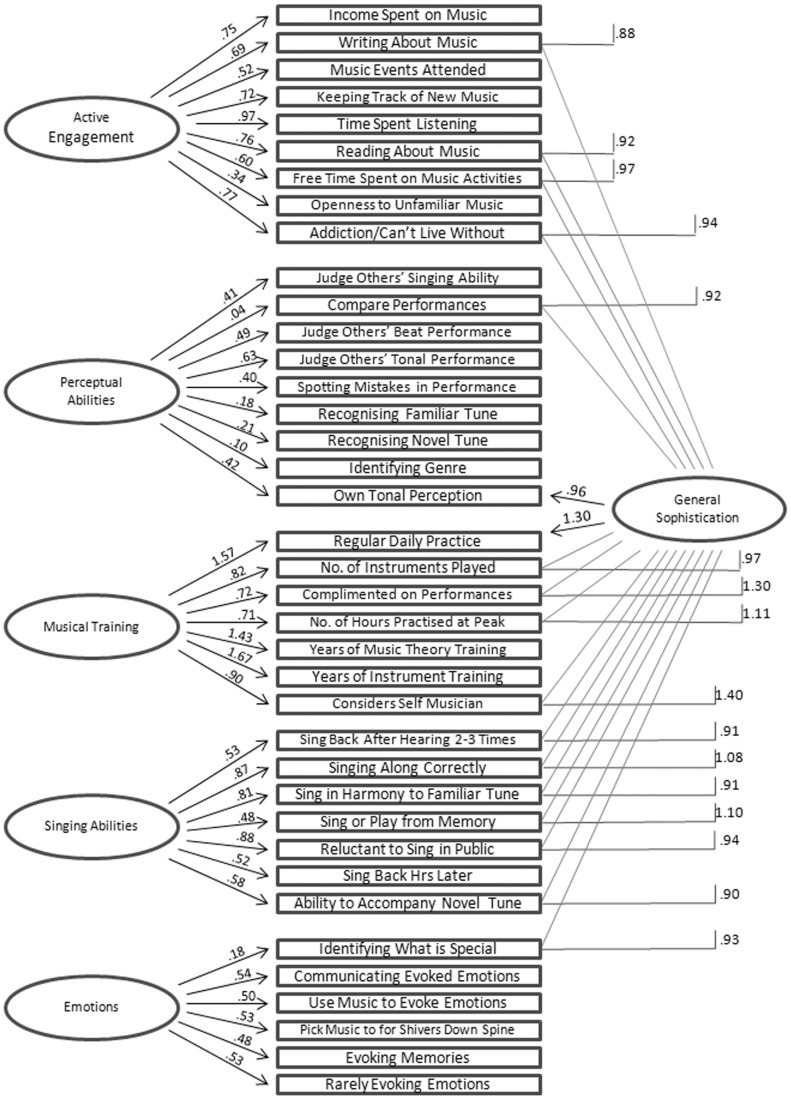
“The factor on ‘active engagement’ from the Gold-MSI [35,38] comprises nine items, measuring free time spent on musical activities, writing and reading about music, income spent on music, keeping track of new music, and openness to unfamiliar music as well as visited music events.”
BackgroundInfluentialMusicians show more integrated neural processing of contextually relevant acoustic features
Hansen, N. C., Højlund, A., Møller, C. M., Pearce, M. T., & Vuust, P. (2022) · Frontiers in Neuroscience · doi:10.3389/fnins.2022.907540 · Cited by 15
Musical Experience Relates to Insula-Based Functional Connectivity in Older Adults
Ai, M., Loui, P., Morris, T. P., Chaddock‐Heyman, L., Hillman, C. H., McAuley, E., & Kramer, A. F. (2022) · Brain Sciences · doi:10.3390/brainsci12111577 · Cited by 16
“The Gold-MSI was administered to assess musical sophistication, which refers to music-related behaviors, skills, and achievements [37].”
BackgroundMethodInfluentialPersonality and engagement with music: Results from network modeling in three adolescent samples
Ruth, N., Сергеевна, Ц. Э., Likhanov, M. V., Kovas, Y. V., & Müllensiefen, D. (2023) · Psychology of Music · doi:10.1177/03057356221135346 · Cited by 16
“…their lab studies focused on associations with personality traits and revealed a correlation of .43 between musical sophistication and openness to experience, a personality trait that is linked to sensitivity to art and beauty, intellectual curiosity, and imagination (Müllensiefen et al., 2014).”
BackgroundSelf-citationDemocratising Dmis: The Relationship Of Expertise And Control Intimacy
Jack, R. H., Harrison, J., Morreale, F., & McPherson, A. (2018) · ResearchSpace (University of Auckland) · doi:10.5281/zenodo.1302538 · Cited by 22
Learning Music Composers’ Styles: To Block or to Interleave?
Wong, S. S. H., Low, A. C. M., Kang, S. H. K., & Lim, S. W. H. (2020) · Journal of Research in Music Education · doi:10.1177/0022429420908312 · Cited by 19
“…potential predictor of participants’ inductive learning performance using the Goldsmiths Musical Sophistication Index (Gold-MSI), a 38-item battery that assesses musical sophistication in the general population through multiple self-reported musical skills and behaviors (Müllensiefen et al., 2014).”
MethodAn efficient and adaptive test of auditory mental imagery
Gelding, R. W., Harrison, P. M. C., Silas, S. J., Johnson, B. W., Thompson, W. F., & Müllensiefen, D. (2020) · Psychological Research · doi:10.1007/s00426-020-01322-3 · Cited by 17
Self-citationThe Effect of Familiarity on Neural Representations of Music and Language
Sternin, A., McGarry, L. M., Owen, A. M., & Grahn, J. A. (2021) · Journal of Cognitive Neuroscience · doi:10.1162/jocn_a_01737 · Cited by 16
Replacing the Orchestra? – The Discernibility of Sample Library and Live Orchestra Sounds
Kopiez, R., Wolf, A. D., Platz, F., & Mons, J. (2016) · PLoS ONE · doi:10.1371/journal.pone.0158324 · Cited by 18
“Gold-MSI = score from the Goldsmith Sophistication Index/General Sophistication Factor [31].”
BackgroundMethodInfluentialA comparison of serial order short-term memory effects across verbal and musical domains
Gorin, S., Mengal, P., & Majerus, S. (2017) · Memory & Cognition · doi:10.3758/s13421-017-0778-0 · Cited by 17
Composing on iPad as Middle Ground Education
Bandlien, B.-T. (2020) · doi:10.23865/noasp.108.ch9 · Cited by 11
Balsnes, A. H., Danbolt, I., Hagen, L. A., Haukenes, S., Knigge, J., & Schei, T. B. (2022) · doi:10.23865/noasp.162.ch2 · Cited by 14
Barchet, A. V., Henry, M. J., Pelofi, C., & Rimmele, J. M. (2024) · Communications Psychology · doi:10.1038/s44271-023-00053-6 · Cited by 18
“…session took 90 min and included, in the following order: the auditory perception task, the perception-production synchronization task, and questionnaires concerning demographics and musical experience including the German version of the Goldsmiths Musical Sophistication Index (Gold-MSI 99,100 ).”
A framework for neurophysiological experiments on flow states
Durcan, O., Holland, P. J., & Bhattacharya, J. (2024) · Communications Psychology · doi:10.1038/s44271-024-00115-3 · Cited by 15
“Additionally, standardisedscales can be usedto assess whetherparticipants meet these inclusion criteria, particularly in domains with unique, domain-speci fi c factors contributing to skills and expertise (e.g., in music 88 or videogames 89 ).”
Buus, R. M., Genovese, S., & Jespersen, K. V. (2025) · Journal of Sleep Research · doi:10.1111/jsr.70006 · Cited by 13
“…presented with additional questions, including the Goldsmith Musical Sophistication Index (Gold-MSI) – Active Engagement subscale (Møller et al., 2024; Müllensiefen et al., 2014) and part of the Ollen Musical Sophistication Index (Ollen, 2006) to assess their active engagement and integration of…”
Perception of Thematic Structure in Music Over Short and Long Timescales
Hall, E. T. R., & Pearce, M. T. (2025) · Music Perception An Interdisciplinary Journal · doi:10.1525/mp.2025.2459476 · Cited by 12
Li, S. T. K., & Hsiao, J. H. (2018) · Cognition · doi:10.1016/j.cognition.2018.03.010 · Cited by 16
“Prior to the English word sequential matching task, a demographic and music background questionnaire, the Goldsmiths Musical Sophistication Index (Müllensiefen et al., 2014) and”
InfluentialA data-driven model of tonal chord sequence complexity
Giorgi, B. D., Dixon, S., Zanoni, M., & Sarti, A. (2017) · IEEE/ACM Transactions on Audio Speech and Language Processing · doi:10.1109/taslp.2017.2756443 · Cited by 16
The brain tracks auditory rhythm predictability independent of selective attention
Foldal, M. D., Blenkmann, A. O., Llorens, A., Knight, R. T., Solbakk, A., & Endestad, T. (2020) · Scientific Reports · doi:10.1038/s41598-020-64758-y · Cited by 14
Gade, M., & Schlemmer, K. (2021) · Brain Sciences · doi:10.3390/brainsci11040451 · Cited by 19
“We assessed musical training by five items from the Gold MSI [47] training scale; our study participants had a score range of 5 to 34 (i.”
BackgroundMethodInfluentialSiedenburg, K., Goldmann, K., & van de Par, S. (2021) · Frontiers in Psychology · doi:10.3389/fpsyg.2021.608684 · Cited by 13
Liao, W., Li, S. T. K., & Hsiao, J. H. (2022) · Scientific Reports · doi:10.1038/s41598-022-12978-9 · Cited by 17
The Tapping-PROMS: A test for the assessment of sensorimotor rhythmic abilities
Georgi, M., Gingras, B., & Zentner, M. R. (2023) · Frontiers in Psychology · doi:10.3389/fpsyg.2022.862468 · Cited by 12
Self-citationListeners' and Performers' Shared Understanding of Jazz Improvisations
Schober, M. F., & Spiro, N. (2016) · Frontiers in Psychology · doi:10.3389/fpsyg.2016.01629 · Cited by 15
Exploring Online Music Listening Behaviors of Musically Sophisticated Users
Ferwerda, B., & Tkalčič, M. (2019) · ACM Conference on User Modeling, Adaptation and Personalization (UMAP) · doi:10.1145/3314183.3324974 · Cited by 13
Han, Y., Goudbeek, M. B., Mos, M., & Swerts, M. G. J. (2019) · Frontiers in Communication · doi:10.3389/fcomm.2019.00070 · Cited by 18
“In the current study, we use the Goldsmiths Musical Sophistication Index (Gold-MSI; Müllensiefen et al., 2014) as a tool to provide a more fine-grained analysis of the Frontiers in Communication | www.frontiersin.org 2 November 2019 | Volume 4 | Article 70 reported musical abilities of participants.”
BackgroundMethodResultInfluentialMemory improvement in aging as a function of exposure to mood-matching music
Ward, E. V., Isac, A., Donnelly, M., Puyvelde, M. V., & Franco, F. (2020) · Acta Psychologica · doi:10.1016/j.actpsy.2020.103206 · Cited by 12
Music Technology in Education: CHANNELING AND CHALLENGING PERSPECTIVES
Eiksund, Ø. J., Angelo, E., Knigge, J., Gullö, J.-O., Askerøi, E., Støckert, R., Bergsland, A., Xambó, A., Nguyen, T., Øien, O. B., et al. (2020) · doi:10.23865/noasp.108 · Cited by 11
Belfi, A. M., Kasdan, A. V., & Tranel, D. (2017) · Aphasiology · doi:10.1080/02687038.2017.1409871 · Cited by 13
Singing together: Pitch accuracy and interaction in unaccompanied unison and duet singing
Dai, J., & Dixon, S. (2019) · The Journal of the Acoustical Society of America · doi:10.1121/1.5087817 · Cited by 12
Nonmusicians Express Emotions in Musical Productions Using Conventional Cues
Kragness, H. E., & Trainor, L. J. (2019) · Music & Science · doi:10.1177/2059204319834943 · Cited by 18
“Recent work has shifted toward more sophisticated and multidimensional conceptions of musical experience using subscales and composite measures of overall engagement (e.g., Chin & Rickard, 2012; Müllensiefen et al., 2014).”
BackgroundBalancing Educational Purposes Within Higher Electronic Music Education – A Biestaian Perspective
Sørbø, E. (2020) · doi:10.23865/noasp.108.ch8 · Cited by 20
Fink, L., Alexander, P. C., & Janata, P. (2022) · Frontiers in Human Neuroscience · doi:10.3389/fnhum.2022.916551 · Cited by 14
“In each experiment, all participants completed the Goldsmith’s Music Sophistication Index (GOLD-MSI; Müllensiefen et al., 2014), the Internality, Powerful Others, and Chance Scales (IPC scales; Levenson, 1981), the Brief form of the Affective Neuroscience Personality Scales (BANPS; Barrett et al.,…”
MethodBalsnes, A. H., & Jansson, D. (2022) · doi:10.23865/noasp.162.ch7 · Cited by 9
Bannister, S., Greasley, A., Cox, T. J., Akeroyd, M. A., Barker, J., Fazenda, B., Firth, J. L., Graetzer, S., Dabike, G. R., Vos, R. R., et al. (2024) · Frontiers in Psychology · doi:10.3389/fpsyg.2024.1310176 · Cited by 13
Choir singing is associated with enhanced structural connectivity across the adult lifespan
Moisseinen, N., Ahveninen, L. M., Martínez‐Molina, N., Sairanen, V., Melkas, S., Kleber, B., Sihvonen, A. J., & Särkämö, T. (2024) · Human Brain Mapping · doi:10.1002/hbm.26705 · Cited by 15
“Musical sophistication was assessed with the Goldsmith's Musical Sophistication Index questionnaire (Gold-MSI; Müllensiefen et al., 2014).”
MethodThe contribution of short-term memory for sound features to speech-in-noise perception and cognition
Lad, M., Taylor, J., & Griffiths, T. D. (2024) · Hearing Research · doi:10.1016/j.heares.2024.109081 · Cited by 12
“Finally, participants completed the short version of the Goldsmiths Musical Sophistication Index (GMSI) questionnaire consisting of questions on paper as a test of musicality (Müllensiefen et al., 2014).”
BackgroundPutting Popularity Bias Mitigation to the Test: A User-Centric Evaluation in Music Recommenders
Ungruh, R., Dinnissen, K., Volk, A., Pera, M. S., & Hauptmann, H. (2024) · ACM Conference on Recommender Systems (RecSys) · doi:10.1145/3640457.3688102 · Cited by 19
“During the User Profile and Recommendation creation, users also filled in an initial survey, inquiring about demographic information (age, gender), as well as their musical engagement and sophistication based on Goldsmiths Musical Sophistication Index [39].”
MethodMicro-variations in timing and loudness affect music-evoked mental imagery
Ayyildiz, C., Milne, A. J., Irish, M., & Herff, S. A. (2025) · Scientific Reports · doi:10.1038/s41598-025-12604-4 · Cited by 11
Do Musicians Have Better Short-Term Memory Than Nonmusicians? A Multilab Study
Grassi, M., Talamini, F., Altoè, G., Brattico, E., Caclin, A., Carretti, B., Drai-Zerbib, V., Ferreri, L., Gambarota, F., Grahn, J. A., et al. (2025) · Advances in Methods and Practices in Psychological Science · doi:10.1177/25152459251379432 · Cited by 26
“This finding aligns with previous research, such as Müllensiefen et al. (2014), who observed that the SES of an individual’s family correlates with the individual’s musical sophistication.”
InfluentialSelf-citationReassessing Syntax-Related ERP Components Using Popular Music Chord Sequences
Goldman, A., Harrison, P. M. C., Jackson, T., & Pearce, M. T. (2021) · Music Perception An Interdisciplinary Journal · doi:10.1525/mp.2021.39.2.118 · Cited by 27
Tichko, P., Page, N., Kim, J. C., Large, E. W., & Loui, P. (2022) · Brain Sciences · doi:10.3390/brainsci12121676 · Cited by 15
Development and validation of the first adaptive test of emotion perception in music
MacGregor, C., Ruth, N., & Müllensiefen, D. (2023) · Cognition & Emotion · doi:10.1080/02699931.2022.2162003 · Cited by 15
“All fi ve subscales of the Gold-MSI (Müllensiefen et al., 2014) were included.”
Self-citationDerks‐Dijkman, M. W., Schaefer, R., & Kessels, R. P. C. (2023) · Neuropsychology Review · doi:10.1007/s11065-023-09585-4 · Cited by 24
“Several validated questionnaires are available that not only look at formal training, but also take musical engagement, exposure, or responsiveness into account (e.g., Chin & Rickard, 2012; Mas-Herrero et al., 2013; Müllensiefen et al., 2014).”
BackgroundComanducci, L., Gioiosa, D., Zanoni, M., Antonacci, F., & Sarti, A. (2023) · EURASIP Journal on Audio Speech and Music Processing · doi:10.1186/s13636-023-00288-5 · Cited by 16
“Before performing the actual listening test, the participants were profiled according to their musical background, through the self-report questionnaire of the Goldsmiths Musical Sophistication Index (GMSI) [62].”
MethodSilas, S. J., Müllensiefen, D., & Kopiez, R. (2023) · Behavior Research Methods · doi:10.3758/s13428-023-02188-0 · Cited by 15
“The Goldsmiths Musical Sophistication Index ( Gold-MSI ; Müllensiefen et al. 2014) is a self-report inventory for assessing dimensions of musicality in the general population.”
BackgroundMethodSelf-citationPoliakoff, E., Bek, J., Phillips, M., Young, W. R., & Rose, D. (2023) · Music & Science · doi:10.1177/20592043231197919 · Cited by 16
“Participants completed demographic questions, the Goldsmiths Musical Sophistication Index (Gold-MSI; Müllensiefen et al., 2014), and other questions about their preferred genres of music and why and how they listen to music.”
MethodGroves, K., Farbood, M. M., Carone, B., Ripollés, P., & Zuanazzi, A. (2025) · Scientific Reports · doi:10.1038/s41598-025-86089-6 · Cited by 8
Schweppe, J., & Knigge, J. (2020) · Memory & Cognition · doi:10.3758/s13421-020-01037-1 · Cited by 15
“Nonetheless, it would be insightful to include a finer measure of musical experience in future studies (e.g., the Goldsmiths Musical Sophistication Index; Müllensiefen, Gingras, Musil, & Stewart, 2014; Schaal, Bauer, & Müllensiefen, 2014).”
BackgroundFamilial cultural activities and child development – Findings from a longitudinal panel study
Feldhaus, M., & Kreutz, G. (2021) · Leisure Studies · doi:10.1080/02614367.2020.1843690 · Cited by 12
“For example, as efficient tools for the assessment of music sophistication at the population level are available today (Gold-MSI, Müllensiefen et al., 2014), such instruments could offer more differentiated insight into familial music activities to explore their roles in familial dynamics further.”
MethodMapping Tonal Hierarchy in the Brain
Sauvé, S. A., Cho, A., & Zendel, B. R. (2021) · Neuroscience · doi:10.1016/j.neuroscience.2021.03.019 · Cited by 13
The Perceptual Attraction of Pre-Dominant Chords
Brown, J. L., Tan, D., & Baker, D. J. (2021) · Music Perception An Interdisciplinary Journal · doi:10.1525/mp.2021.39.1.21 · Cited by 13
Metadata
- Authors
- Müllensiefen, D., Gingras, B., Musil, J., & Stewart, L.
- Affiliations
- Goldsmiths University of London (GB)
- University of Vienna (AT)
- Corresponding author
- Müllensiefen, Daniel
- Venue
- PLoS ONE
- Publisher
- Public Library of Science (PLoS)
- Published
- 2014-02-26
- Volume
- 9
- Issue
- 2
- Pages
- e89642
- ISSN
- 1932-6203 (ISSN-L)
- PMC
- PMC3935919
- OpenAlex
- W1981455444
- Cited by
- 1,155
- References
- 147
- Citations by year
- 2026: 106 · 2025: 150 · 2024: 124 · 2023: 134 · 2022: 153 · 2021: 130 · 2020: 81 · 2019: 78 · 2018: 77 · 2017: 41 · 2016: 35 · 2015: 28 · 2014: 14
- FWCI
- 21.94
- Type
- journal article
- Language
- en
- Update notices
- correction (2014-06-24)
- Open access
- gold
- doi.org
- Locations
- PLoS ONE (publishedVersion, cc-by)
- Europe PMC (PubMed Central) (publishedVersion, other-oa)
- PubMed Central (publishedVersion, cc-by)
- PubMed (publishedVersion)
- Goldsmiths (University of London) (acceptedVersion)
- Phaidra (Universität Wien) (submittedVersion, cc-by-nc-nd)
- DOAJ (DOAJ: Directory of Open Access Journals) (submittedVersion, cc-by-sa)
- Figshare (submittedVersion, cc-by)
- Topics
- Life Sciences › Neuroscience › Cognitive Neuroscience › Neuroscience and Music Perception
- Social Sciences › Arts and Humanities › Music › Diverse Music Education Insights
- Life Sciences › Neuroscience › Cognitive Neuroscience › Aesthetic Perception and Analysis
- Keywords
- musical sophistication, non-musicians, musicianship, Goldsmiths Musical Sophistication Index, music listening, statistical learning, sociodemographic factors, occupational status, scale development
- MeSH terms
- Adult, Aptitude Tests, Auditory Perception, Female, Humans, Male, Memory, Music, Self Report
About these checks
Registry, retraction, Cites and statistics results are computed, not judged, with one exception: a printed reference that no index lists is read once by a model before it counts as a citation error. Claims are extracted by a model and kept only when their quote appears verbatim in the text; each cited source is then checked, with a model’s help, for whether it says what the claim relies on. Those verdicts can be wrong — read the claim’s quote and the cited source before relying on one.
Statistics and arithmetic are recomputed, not judged.
Confidence bands are shown only for fields calibrated on our annotated test set. None is calibrated yet, so no band is shown.
What counts as a claim ›How we measure confidence ›How we check this ›
Are you an author, or do you see a problem with this page? Request a review
Data sources
Bibliographic data: Semantic Scholar, OpenAlex, Crossref.
Contains information from the Semantic Scholar Academic Graph Datasets, made available under the ODC Attribution License (ODC-BY 1.0).
Semantic Scholar’s data is described in: Kinney, R., et al. (2023). The Semantic Scholar Open Data Platform. arXiv:2301.10140.
