

The Musicality of Non-Musicians: An Index for Assessing Musical Sophistication in the General Population
Open accessThe DOI matches its Crossref record; 141 of the 147 references it cites were found in a registry or an index.
Abstract
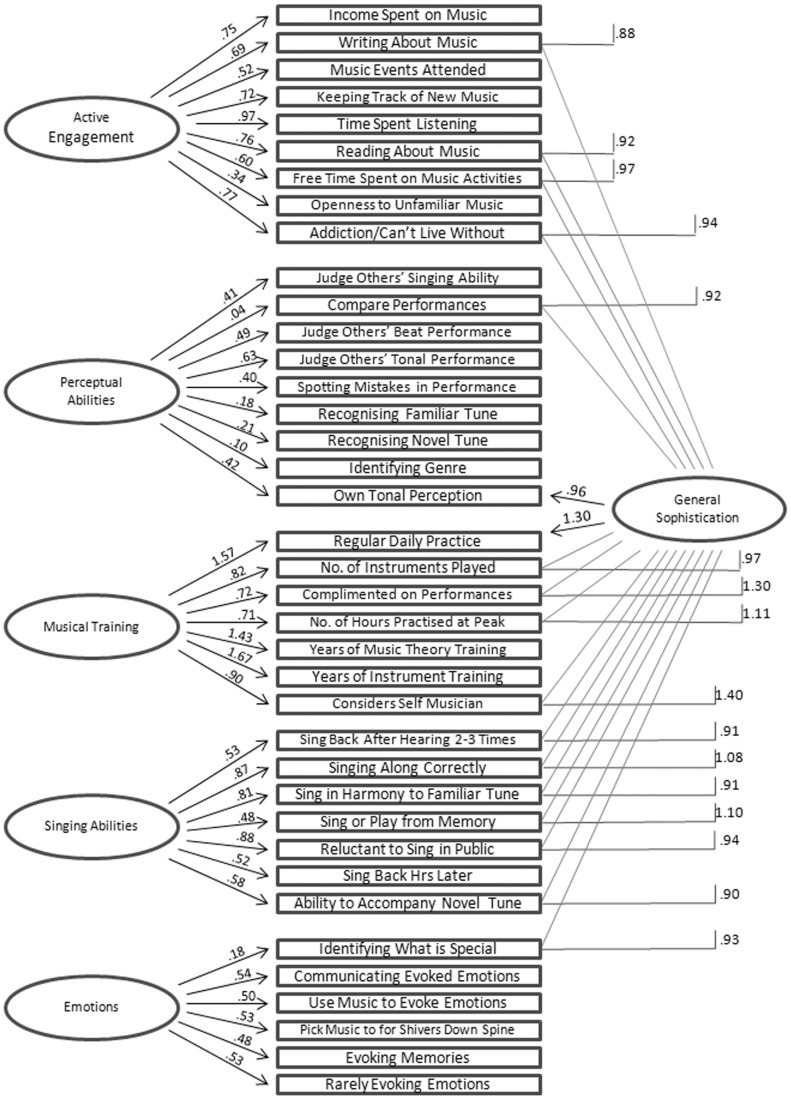
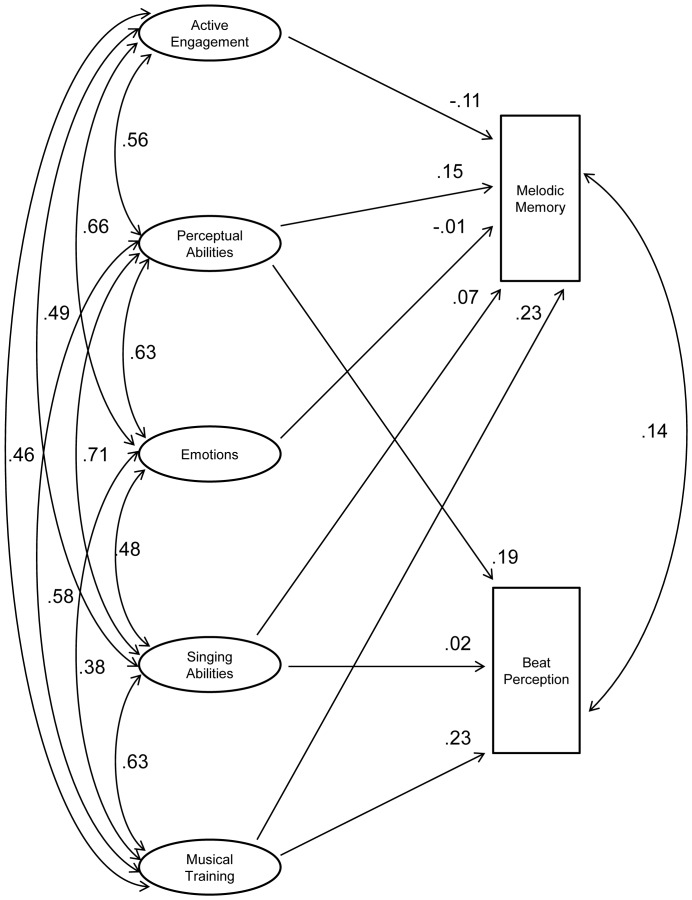
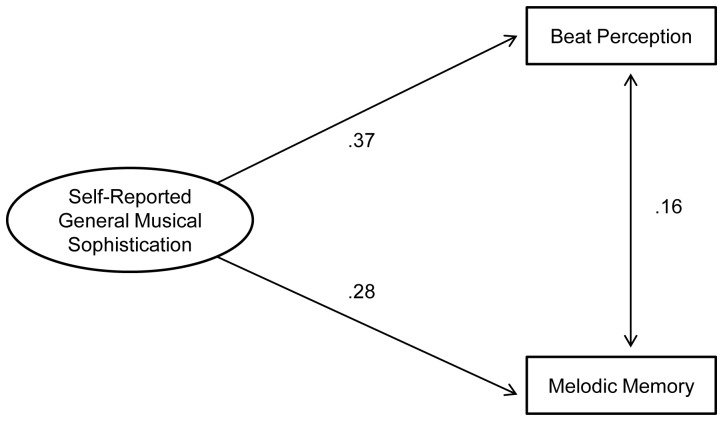
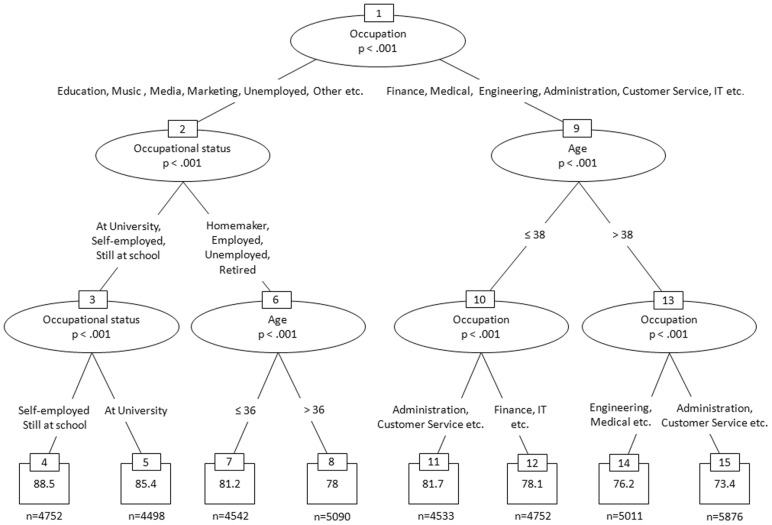
Musical skills and expertise vary greatly in Western societies. Individuals can differ in their repertoire of musical behaviours as well as in the level of skill they display for any single musical behaviour. The types of musical behaviours we refer to here are broad, ranging from performance on an instrument and listening expertise, to the ability to employ music in functional settings or to communicate about music. In this paper, we first describe the concept of 'musical sophistication' which can be used to describe the multi-faceted nature of musical expertise. Next, we develop a novel measurement instrument, the Goldsmiths Musical Sophistication Index (Gold-MSI) to assess self-reported musical skills and behaviours on multiple dimensions in the general population using a large Internet sample (n = 147,636). Thirdly, we report results from several lab studies, demonstrating that the Gold-MSI possesses good psychometric properties, and that self-reported musical sophistication is associated with performance on two listening tasks. Finally, we identify occupation, occupational status, age, gender, and wealth as the main socio-demographic factors associated with musical sophistication. Results are discussed in terms of theoretical accounts of implicit and statistical music learning and with regard to social conditions of sophisticated musical engagement.
Overview
The claims and statistics of this paper haven’t been checked yet.
Free: it reads the open-access text and checks the first 5 claims that cite a source we can check. Create a free account to check every claim.
Integrity signals
Registry
Cites
Statistics
Figures
Verification
Claims the paper makes
The claims and statistics of this paper haven’t been checked yet.
Free: it reads the open-access text and checks the first 5 claims that cite a source we can check. Create a free account to check every claim.
Claims other papers make about this one
Each is checked against this paper’s own text: does it say what the citing paper says it does?
The source backs part of the claim, not all of it — or backs it for a different population, condition or comparison.
In the citing paper
“all score 75% and over indicating their strong musical skills”
From Reflection Across AI-based Music Composition (2024) · cites this paper as [74]
Experimental — accuracy not yet measured
Self-check
Percentages, sums and reported differences re-computed from the paper’s own numbers.
The self-check needs the paper’s full text.
Citations
Cites
R: A Language and Environment for Statistical Computing
R Core Team (2025) · doi:10.32614/r.manuals · Cited by 352,181
Breiman, L. (2001) · Machine Learning · doi:10.1023/a:1010933404324 · Cited by 133,538
The Elements of Statistical Learning
Hastie, T., Tibshirani, R., & Friedman, J. (2009) · Springer Series in Statistics · doi:10.1007/978-0-387-84858-7 · Cited by 25,970
Classification and Regression by randomForest
Liaw, A. I., & Wiener, M. C. (2007) · Cited by 18,594
The Scree Test For The Number Of Factors
Cattell, R. B. (1966) · Multivariate Behavioral Research · doi:10.1207/s15327906mbr0102_10 · Cited by 13,554 · cited 1×
“We used different factor extraction methods (maximum likelihood factor analysis, principal axis factoring using an iterative least squares optimisation, minimum residual factor analysis) and as criteria employed the screeplot [67], Kaiser’s criterion of eigenvalues .”
MethodA very brief measure of the Big-Five personality domains
Gosling, S. D., Rentfrow, P. J., & Swann, W. B. (2003) · Journal of Research in Personality · doi:10.1016/s0092-6566(03)00046-1 · Cited by 8,307 · cited 7×
“The pattern of correlations between the five GoldMSI subscales/general factor and the ‘Big Five’ from the TIPI is given in Table 5.”
MethodInfluentialStatistical learning by 8-month-old infants
Saffran, J. R., Aslin, R. N., & Newport, E. L. (1996) · Science · doi:10.1126/science.274.5294.1926 · Cited by 5,659 · cited 1×
“Implicit learning of this sort relies upon the brain’s ability to internalise statistical regularities from its exposure to auditory stimuli [51–56].”
BackgroundCategorization and Representation of Physics Problems by Experts and Novices*
Chi, M. T. H., Feltovich, P. J., & Glaser, R. (1981) · Cognitive Science · doi:10.1207/s15516709cog0502_2 · Cited by 5,248 · cited 1×
“physics [27]; wine [28– 29]; computer programming [31]; badminton [32]).”
BackgroundStatistical Modeling: The Two Cultures (with comments and a rejoinder by the author)
Breiman, L. (2001) · Statistical Science · doi:10.1214/ss/1009213726 · Cited by 4,340 · cited 1×
“They also have the additional advantage that results can be generalised to new datasets, because they do not tend to overfit on training data [134].”
Background(1999) · Cited by 2,653
Research works printed but not linked: 5
- Merriam AP (1964) The anthropology of music. Chicago: Northwestern University Press.
- Ericsson KA, Smith J (1991) Toward a general theory of exercise: Prospects and limits. Cambridge - England: Cambridge University Press.
- Gordon EE (1975) Fourth year and fifth year results of a longitudinal study of the musical achievement of culturally disadvantaged students. Research in the Psychology of Music 10 (Iowa City: University of Iowa Press, 1975), 24.
- Kemp AE (1981) Personality differences between the players of string, woodwind, brass and keyboard instruments, and singers. Bulletin of the Council for Research in Music Education 66–67: 33– 38.
- Hargreaves D, North A (2002) Musical development and learning - Response. Br J Educ Psychol 72: 139– 140.
Cited by
Items 601–700 of 1,000
Repetition and Aesthetic Judgment in Post-tonal Music for Large Ensemble and Orchestra
Touizrar, M., Knoll, A. L., & Siedenburg, K. (2021) · Frontiers in Psychology · doi:10.3389/fpsyg.2021.673706 · Cited by 4
“FIGURE 5 | Scatter plot of the Gold-Musical Sophistication Index (MSI) of musical training (Müllensiefen et al., 2014) and Factor 1 (aesthetic preference).”
BackgroundSchaal, N. K., Kloos, S., Pollok, B., & Herff, S. A. (2021) · Brain and Cognition · doi:10.1016/j.bandc.2021.105798 · Cited by 5
How musicality changes moral consideration: People judge musical entities as more wrong to harm
Agrawal, T., Rottman, J., & Schachner, A. (2022) · Psychology of Music · doi:10.1177/03057356221096507 · Cited by 6
“Next, participants completed the Active Engagement subscale of the GoldMSI (Müllensiefen et al., 2014), nine questions regarding how frequently they listen to music and do music-related activities in their everyday lives (Cronbach’s α = .”
BackgroundMethodInfluentialAn Analysis of Music Perception Skills on Crowdsourcing Platforms
Samiotis, I. P., Qiu, S., Lofi, C., Yang, J., Gadiraju, U., & Bozzon, A. (2022) · Frontiers in Artificial Intelligence · doi:10.3389/frai.2022.828733 · Cited by 4
“More specifically, the musical sophistication of people based on Müllensiefen et al. (2014), is organized into the following five facets: • Active Engagement: this aspect determines the degree to which a person engages with music, by listening to and allocating their time/budget to it; • Perceptual…”
BackgroundMethodResultInfluentialRethinking Motivation in Choir Participation: Proposing a Contextual Model of Motivation
Eiksund, Ø. J. (2022) · doi:10.23865/noasp.162.ch8 · Cited by 6
Human voices escape the auditory attentional blink: Evidence from detections and pupil responses
Akça, M., Bishop, L., Vuoskoski, J. K., & Laeng, B. (2022) · Brain and Cognition · doi:10.1016/j.bandc.2022.105928 · Cited by 5
“General musical sophistication scores were on average 75.30 ± 23.27 SD, which ranked at the 36th percentile based on the data norms (Müllensiefen et al., 2014).”
MethodInfluentialThe influence of music liking on episodic memory for rich spatiotemporal contexts
Murphy, E., North, E., Nawaz, S., & Omigie, D. (2023) · Memory · doi:10.1080/09658211.2022.2154367 · Cited by 5
“…recorded participants ’ demographic information and their level of musical training (musical training sub-scale of the Goldsmiths-Musical Sophistication Index (Gold-MSI)) (Müllensiefen et al., 2014) but also allowed participants to rate the popular music that had been pre-selected by experimenters.”
BackgroundMethodInfluentialOpera trainees’ cognitive functioning is associated with physiological stress during performance
Motamed Yeganeh, N., McKee, T., Werker, J. F., Hermiston, N., Boyd, L. A., & Cui, A.-X. (2024) · Musicae Scientiae · doi:10.1177/10298649231184817 · Cited by 4
“Values of the General Sophistication scale ranged from 90 to 123 ( M = 105.00, SD = 7.91), one standard deviation higher than in the general public (Müllensiefen et al., 2014; Participants were enrolled in several university opera programs.”
BackgroundMethodInfluentialMusical Training as a Continuum: Relationships of Short-Term Memory and Musical Aptitudes
Jimenez, M. N., & Elliott, E. M. (2023) · Auditory Perception & Cognition · doi:10.1080/25742442.2023.2289823 · Cited by 6
Bao, W., Arnhold, A., & Järvikivi, J. (2024) · Applied Psycholinguistics · doi:10.1017/s0142716424000031 · Cited by 5
Absolute pitch in involuntary musical imagery
Evans, M., Gaeta, P., & Davidenko, N. (2024) · Attention Perception & Psychophysics · doi:10.3758/s13414-024-02936-0 · Cited by 4
“Participants also completed the Goldsmiths Musical Sophistication Index (GMSI), and these results are summarized in Table 1, found in Appendix B. GMSI questions are scored from 1 to 7 and divided into subscales.”
MethodFiedler, D., Hasselhorn, J., Arens, A. K., Frenzel, A. C., & Vispoel, W. P. (2024) · Psychology of Music · doi:10.1177/03057356241272999 · Cited by 5
“Future studies should focus on more diverse levels of education, broader age ranges, as well as different types of musical or non-musical activities and levels of musical sophistication (Müllensiefen et al., 2014) and engagement (Chin & Rickard, 2012).”
Voitova, T., Bernhofs, V., & Müllensiefen, D. (2025) · Gifted Child Quarterly · doi:10.1177/00169862241307660 · Cited by 8
“The Goldsmiths Musical Sophistication Index (GMS; Müllensiefen et al., 2014) assesses the degree of musical training, expertise, and musicrelated behaviors on five sub scales.”
Self-citationThe Nature and Nurture of Congenital Amusia: A Twin Case Study
Pfeifer, J., & Hamann, S. (2018) · Frontiers in Behavioral Neuroscience · doi:10.3389/fnbeh.2018.00120 · Cited by 6
“The Gold-MSI questionnaire yields six factors, which can be found in Table 3 with mean scores and endpoint of scales from Müllensiefen et al. (2014).”
InfluentialLumaca, M., Bonetti, L., Brattico, E., Baggio, G., Ravignani, A., & Vuust, P. (2023) · Cerebral Cortex · doi:10.1093/cercor/bhad009 · Cited by 4
“After the scans, the participants reported their musical skills and training using the Goldsmiths Musical Sophistication Index, Gold-MSI (Müllensiefen et al. 2014), and were then tested on their working memory and attention spans (backward and forward digit span) (Orsini et al. 1987).”
MethodMazzola, G. B., Baker, D. J., Vukovics, K., Davis, C. M., & Elliott, E. M. (2023) · Musicae Scientiae · doi:10.1177/10298649221149109 · Cited by 9
“…training (Akkermans et al., 2019; Castro & Lima, 2014; Dahary et al., 2020; Karreman Ali and Peynircioğlu (2006). et al., 2017; Taruffi et al., 2017), we used the Goldsmiths Musical Sophistication Index (Gold-MSI; Müllensiefen et al., 2014) as a robust, continuous measure of musical sophistication.”
BackgroundMethodPleasantness of nonlinear distortion in isolated triads of synthetic timbre
Baltes, F., Chemnitz, L., & Lange, E. B. (2023) · The Journal of the Acoustical Society of America · doi:10.1121/10.0020667 · Cited by 4
Importance of HRTF Personalisation for Audio Rendering in Music-Related Virtual Environments
Oehler, M., Voong, T. M., Regener, M., da Costa, M. D. V. M., & Reuter, C. W. (2022) · Convention of the European Acoustics Association Forum Acusticum · doi:10.61782/fa.2023.0441 · Cited by 4
Whitton, S. A., Sreenan, B., & Jiang, F. (2024) · Journal of Experimental Psychology General · doi:10.1037/xge0001601 · Cited by 4
“…a self-reported measure of participants’ musical general sophistication, the Gold-MSI contains the individual component of musical perceptual abilities, and high scores on this component have been shown to predict better accuracy on auditory rhythm perception tasks (M¨ullensiefen et al., 2014).”
Rapid Learning and Long-term Memory in the Speech-to-song Illusion
Kubit, B. M., Deng, C., Tierney, A. T., & Margulis, E. H. (2024) · Music Perception An Interdisciplinary Journal · doi:10.1525/mp.2024.41.5.348 · Cited by 7
Benjamin, A. J., & Siedenburg, K. (2025) · PLoS ONE · doi:10.1371/journal.pone.0316442 · Cited by 4
Gibbs, H. J., & Schiavio, A. (2025) · PLoS ONE · doi:10.1371/journal.pone.0302769 · Cited by 4
The CrossSong Puzzle: Developing a Logic Puzzle for Musical Thinking
Smith, J. B. L., Kato, J., Fukayama, S., Percival, G., & Goto, M. (2017) · Journal of New Music Research · doi:10.1080/09298215.2017.1303519 · Cited by 4
Musical and cognitive abilities in older adults with mild cognitive impairment
Petrovsky, D., Johnson, J. K., Tkacs, N. C., Mechanic-Hamilton, D. J., Hamilton, R. H., & Cacchione, P. Z. (2019) · Psychology of Music · doi:10.1177/0305735619843993 · Cited by 6
Li, G., & Walker, B. N. (2019) · International Conference on Auditory Display (ICAD) · doi:10.21785/icad2019.019 · Cited by 6
“Using a shortened version of the Goldsmiths Musical Sophistication Index (Gold-MSI) [19], participants self-reported musical skills and behaviors to”
MethodEl aprendizaje expresivo y las diferencias de género en la Educación Superior de Música
Bonastre, C., & Nuevo, R. (2019) · Revista Electrónica de LEEME · doi:10.7203/leeme.44.15679 · Cited by 4
Duration, song section, entropy: Suggestions for a model of rapid music recognition processes
Thiesen, F. C., Kopiez, R., Müllensiefen, D., Reuter, C. W., & Czedik-Eysenberg, I. (2020) · Journal of New Music Research · doi:10.1080/09298215.2020.1784955 · Cited by 4
“For the extraction of audio signal features, we used the software packages MIR Toolbox by Lartillot et al. (2013), TSM Toolbox (Driedger & Müller, 2014) as well as Genesis Loudness Toolbox (Genesis, 2009).”
MethodSelf-citationThe Origins of Musical Expertise
Burgoyne, A. P., Hambrick, D. Z., & Harris, L. J. (2022) · Oxford University Press eBooks · doi:10.1093/oxfordhb/9780190056285.013.2 · Cited by 6
The effect of timing on the singer’s tone of voice.
Schotanus, Y. (2021) · Psychomusicology Music Mind and Brain · doi:10.1037/pmu0000278 · Cited by 4
A Perceiver-Centered Approach for Representing and Annotating Prosodic Functions in Performed Music
Bedoya, D., Fyfe, L., & Chew, E. (2022) · Frontiers in Psychology · doi:10.3389/fpsyg.2022.886570 · Cited by 4
Cecchetti, G., Herff, S. A., Finkensiep, C., Harasim, D., & Rohrmeier, M. (2022) · Musicae Scientiae · doi:10.1177/10298649221122245 · Cited by 7
“The mean musical training score across the sample, assessed using the Musical Training subscale of the Goldsmiths Music Sophistication Index (Gold-MSI) (Müllensiefen et al., 2014), was 16.”
MethodSaccades predict and synchronize to visual rhythms irrespective of musical beats
Batten, J. P., & Smith, T. J. (2018) · Visual Cognition · doi:10.1080/13506285.2018.1544181 · Cited by 4
“Secondly, to complete the musical training questionnaire (Müllensiefen et al., 2014).”
BackgroundInfluentialThe effect of handedness on spatial and motor representation of pitch patterns in pianists
Smit, E. A., & Sadakata, M. (2018) · PLoS ONE · doi:10.1371/journal.pone.0195831 · Cited by 4
Acoustic-Phonetic Mismatches Impair Serial Recall of Degraded Words
Bosen, A. K., Monzingo, E., & AuBuchon, A. M. (2020) · Auditory Perception & Cognition · doi:10.1080/25742442.2020.1846012 · Cited by 4
Perception of speech, music and emotion by hearing-impaired listeners
Metcalfe, T. (2017) · White Rose eTheses Online (University of Leeds, The University of Sheffield, University of York) · Cited by 5
Bouwer, F. L. (2020) · bioRxiv (Cold Spring Harbor Laboratory) · doi:10.17605/osf.io/uwny8 · Cited by 4
Effects of Affectively Parameterized Music on Mood and AttentionPreprint
Orpella, J., Bowling, D. L., Tomaino, C. M., & Ripollés, P. (2023) · PsyArXiv (OSF Preprints) · doi:10.31234/osf.io/yauxt · Cited by 5
Campo, A., Michałko, A., Kerrebroeck, B. V., & Leman, M. (2023) · Data in Brief · doi:10.1016/j.dib.2023.109663 · Cited by 4
“Additionally, the level of musical skill and engagement of the participants was assessed using The Goldsmith Musical Sophistication Index (Gold-MSI), which yielded an average score of 4.9 ± 0.5 [4] .”
MethodInfluentialPolyRNN: A time-resolved model of polyphonic musical expectations aligned with human brain responsesPreprint
Robert, P., Cang, M. P. V., Mercier, M. R., Trébuchon, A., Bartoloméi, F., Arnal, L. H., Morillon, B., & Doelling, K. B. (2024) · bioRxiv (Cold Spring Harbor Laboratory) · doi:10.1101/2024.11.27.625704 · Cited by 6
Auditory-motor synchronization determines the use of predictions in music perceptionPreprint
Hartung, N., Barchet, A. V., Abel, C., Pittman-Polletta, B., Ullén, F., & Rimmele, J. M. (2025) · bioRxiv (Cold Spring Harbor Laboratory) · doi:10.1101/2025.08.20.671291 · Cited by 4
Evidence for a shared cognitive mechanism underlying relative rhythmic and melodic perception
van der Aa, J., & Fitch, W. T. (2025) · Frontiers in Psychology · doi:10.3389/fpsyg.2024.1512262 · Cited by 5
Individual differences in auditory scene analysis abilities in music and speech
Hake, R., Müllensiefen, D., & Siedenburg, K. (2025) · Scientific Reports · doi:10.1038/s41598-025-10263-z · Cited by 4
“The GMSI is a self-report questionnaire that assesses several aspects of musical expertise and experience, including a subscale for musical training.”
InfluentialSelf-citationAn Active Inference Model of Meter Perception and the Urge to Move to Music
Matthews, T. E., Vuust, P., & Cannon, J. J. (2025) · Annals of the New York Academy of Sciences · doi:10.1111/nyas.70129 · Cited by 3
Hashim, S., & Omigie, D. (2025) · Neuropsychologia · doi:10.1016/j.neuropsychologia.2025.109346 · Cited by 4
Gao, E., Armache, M., Kim, J. S., Arar, C., Thompson, E., Wang, C., Chasin, M., McRackan, T. R., & Chern, A. (2026) · Otolaryngology · doi:10.1002/ohn.70340 · Cited by 3
Tapping to drumbeats in an online experiment changes our perception of time and expressiveness
Wang, X., Burger, B., & Wöllner, C. (2023) · Psychological Research · doi:10.1007/s00426-023-01835-7 · Cited by 4
“Thus, independent variables include tapping (yes/no), tempo (3 levels), complexity (3 levels), and training (based on the Gold-MSI; Müllensiefen et al., 2014).”
BackgroundMethodMusic and Boredom: A First Insight Into an Unexplored Relationship
Merrill, J., & Niedecken, T. (2023) · Music & Science · doi:10.1177/20592043231181215 · Cited by 4
“To collect data on trait aspects and musical experience, three factors from the Goldsmith Musical Sophistication Index (Gold-MSI; Müllensiefen et al., 2014) were used, that is self-reports about the Active Engagement with music (i.e., listening to music, reading about music), perceived Perceptual Abilities (i.e., cogn…”
MethodInfluentialSelf-awareness of musical ability.
Correia, A. I., Lima, C. F., & Schellenberg, E. G. (2025) · Psychology of Aesthetics Creativity and the Arts · doi:10.1037/aca0000612 · Cited by 6
Petersen, S., Camp, M.-A., & Kull, A. (2023) · Music & Science · doi:10.1177/20592043231191029 · Cited by 4
“Research on the musical self-concept, or related constructs such as musical sophistication, has also gained momentum lately (e.g., Buchborn & Painsi, 2010; Busch & Kranefeld, 2012; Fiedler & Spychiger, 2017; Müllensiefen et al., 2014; Petersen & Camp, 2016; Shouldice, 2020).”
BackgroundLimited Emotional Value Added by Immersive 3D Audio: A Reanalysis
Sander, K., Wycisk, Y., & Kopiez, R. (2023) · Music & Science · doi:10.1177/20592043231194751 · Cited by 3
“We cannot exclude a more general effect of musical sophistication on the psychological rating of emotional experiences, but this should be based on a more differentiated approach to musical skills as offered by the Goldsmiths Musical Sophistication Index (Müllensiefen et al., 2014).”
MethodPerceptual representations mediate effects of stimulus properties on liking for music
Clemente, A., Kaplan, T. M., & Pearce, M. T. (2024) · Annals of the New York Academy of Sciences · doi:10.1111/nyas.15106 · Cited by 5
Rivera, K. M., Smyth, L., Pike-Rowney, G., & West, S. (2024) · Psychology of Music · doi:10.1177/03057356241256958 · Cited by 3
“…their “musician” and “non-musician” participants by music education experience (Chin & Rickard, 2010, 2012; Hamamoto et al., 2010; Madsen et al., 2019; Mullensiefen et al., 2014; F. Zhang et al., 2019), possibly indicating a similarity between the criteria used by academics and lay people to…”
Miksza, P., Tan, D., Potter, R. F., & Booth, M. A. (2024) · Music Perception An Interdisciplinary Journal · doi:10.1525/mp.2024.42.2.109 · Cited by 3
Musically evoked emotions in cochlear implant users and those with no known hearing loss
O’Connell, S. R., Papadopoulos, J., Inouye, D., van der Donk, B. J., Gan, H., & Goldsworthy, R. L. (2025) · Hearing Research · doi:10.1016/j.heares.2025.109196 · Cited by 3
Emerick, M., Hoddinott, J. D., & Grahn, J. A. (2025) · Scientific Reports · doi:10.1038/s41598-025-02316-0 · Cited by 4
“The type of stimulation received (sham, anodal, or cathodal) was counterbalanced across sessions, and in the first session, participants completed medical screening and demographic questionnaires as well as the musical training subscale of the Goldsmiths Musical Sophistication Index.”
InfluentialLearning to Listen, Listening to Learn: Music Perception and the Psychology of Enculturation
Pearce, M. T. (2025) · doi:10.1093/oso/9780198848004.001.0001 · Cited by 8
Measuring the immersive music listening experience: Convergence of online and laboratory data
Vogt, K., Wycisk, Y., Platz, F., & Kopiez, R. (2025) · Musicae Scientiae · doi:10.1177/10298649251337683 · Cited by 3
“The Emotions subscale of the Goldsmiths Musical Sophistication Index (Gold-MSI; Müllensiefen et al., 2014; Schaal et al., 2014) was used to assess the participants’ music-related emotional behavior.”
Unveiling the Neural Signature of Group Cohesion in Music Co‐Audition
Ding, Y., Sun, B., Tang, Y., & Zhang, D. (2025) · Annals of the New York Academy of Sciences · doi:10.1111/nyas.70105 · Cited by 5
Ellahiyoun, K., Pretty, E. J., Guarese, R., Takac, M., Fayek, H. M., & Zambetta, F. (2026) · Journal of the Brazilian Computer Society · doi:10.5753/jbcs.2026.8215 · Cited by 4
“A widely adopted measure of musical ability in the general population is the Goldsmiths Music Sophistication Index (Gold-MSI) [Müllensiefen et al ., 2014].”
InfluentialHow does Music Reading Expertise Modulate Visual Processing of English Words? An ERP study.
Li, T. K., Chan, H. Y. V., Li, L., & Hsiao, J. H. (2017) · Rare & Special e-Zone (The Hong Kong University of Science and Technology) · Cited by 3
Understanding Intonation Trajectories and Patterns of Vocal Notes
Dai, J., & Dixon, S. (2018) · Lecture notes in computer science · doi:10.1007/978-3-030-05716-9_20 · Cited by 3
Chang-Arana, Á. M., Mavrolampados, A., Thompson, M. R., Pokki, N., & Sams, M. E. (2022) · Frontiers in Psychology · doi:10.3389/fpsyg.2022.838041 · Cited by 5
Williamon, A., Ginsborg, J., Perkins, R., & Waddell, G. (2021) · Oxford University Press eBooks · doi:10.1093/oso/9780198714545.003.0010 · Cited by 3
Implicit assumptions of (prospective) music school teachers about musically gifted students
Bareiß, L., Platz, F., & Wirzberger, M. (2023) · Social Psychology of Education · doi:10.1007/s11218-023-09833-8 · Cited by 4
“Here, items selected from the Goldsmith’s Musical Sophistication Index (Gold-MSI; Müllensiefen et al., 2014; Schaal et al., 2014) were used as well as items eliciting demographic details.”
Musical training is not associated with spectral context effects in instrument sound categorization
Shorey, A. E., King, C. J., Whiteford, K. L., & Stilp, C. E. (2024) · Attention Perception & Psychophysics · doi:10.3758/s13414-023-02839-6 · Cited by 4
“These supplementary analyses also align with the growing movement to acknowledge the continuum of musical sophistication in the general population (Müllensiefen et al., 2014).”
Auditory imagery ability influences accuracy when singing with altered auditory feedback
Reed, C. N., Pearce, M. T., & McPherson, A. (2024) · Musicae Scientiae · doi:10.1177/10298649231223077 · Cited by 4
“Participants completed the Goldsmiths Music Sophistication Index (Gold-MSI; Müllensiefen et al., 2014) to assess musical background and demographics and the BAIS to assess auditory imagery ability.”
Velásquez, M. A., Winston, J. L., Sur, S., Yurgil, K. A., Upman, A. E., Wroblewski, S. R., Huddle, A., & Colombo, P. J. (2024) · Frontiers in Human Neuroscience · doi:10.3389/fnhum.2024.1384179 · Cited by 4
Benjamin, A. J., & Siedenburg, K. (2024) · JASA Express Letters · doi:10.1121/10.0032474 · Cited by 3
Killingly, C., Bielinski, D., & Lacherez, P. F. (2024) · Psychology of Music · doi:10.1177/03057356241300425 · Cited by 3
“The internal consistency of all subscales is acceptable, ranging between α = .79 and α = .92 (Müllensiefen, Gingras, et al., 2014).”
Musical Structure Influences the Perception of Sound Location
Hołubowska, Z. A., & Schönwiesner, M. (2025) · Journal of Cognitive Neuroscience · doi:10.1162/jocn_a_02336 · Cited by 3
Thorstensen, J. S., Warem, Ø., & Elle, Ø. (2025) · doi:10.23865/cdf.240.ch9 · Cited by 3
Bechtold, T., Curry, B., & Witek, M. A. G. (2025) · Music & Science · doi:10.1177/20592043251361627 · Cited by 3
“Further listener-related measures were gathered as in Bechtold et al. (2024): one item from each Gold-MSI subscale (Müllensiefen et al., 2014) and a self-assessment on a slider from music listener (1) to professional musician (101) are condensed into one dimension with con fi rmatory factor analysis…”
Audience Reactions to Repeating A Piece on A Concert Programme
Halpern, A. R., Chan, C., Müllensiefen, D., & SLOBODA, J. A. (2017) · Bucknell Digital Commons (Bucknell University) · Cited by 3
Self-citationUniversidad Anáhuac México Sur, E. D. P. A. D. L. T. 1., Toledo-Fernández, A., García‐Gómez, L., Villalobos-Gallegos, L., & Cruz, J. S. (2018) · Studia Psychologica · doi:10.21909/sp.2018.01.751 · Cited by 4
Musically developed personality: the approbation of Gold-MSI method
Сергеевна, К. Т., & Shokhman, T. V. (2018) · Journal of Modern Foreign Psychology · doi:10.17759/jmfp.2018070208 · Cited by 4
Timbre Discrimination for Brief Instrument Sounds
Bigoni, F., & Dahl, S. (2018) · VBN Forskningsportal (Aalborg Universitet) · doi:10.5281/zenodo.1492360 · Cited by 3
An interpretative phenomenological analysis of exercisers’ use of music during workouts
Hallett, R., & Lamont, A. M. (2019) · Psychology of Music · doi:10.1177/0305735619854527 · Cited by 6
“This is consistent with the Goldsmiths Musical Sophistication Index (Müllensiefen et al., 2014), demonstrating that selection is characterised by recognition of specific intrinsic musical devices rather than based on a “hunch”.”
ResultWas that me? exploring the effects of error in gestural digital musical instruments
Brown, D., Nash, C., & Mitchell, T. J. (2020) · Audio Mostly Conference (AM) · doi:10.1145/3411109.3411137 · Cited by 5
“All participants were right handed and were assessed for musical ability using the Gold-MSI metric [36] with general sophistication recorded in the range 57–76 ( 𝑀 = 66.8, 𝑆𝐷 = 6.24).”
MethodInfluentialMusic Discovery as Differentiation Strategy for Streaming Providers
Raff, A., Mladenow, A., & Strauß, C. (2020) · International Conference on Information Integration and Web-based Applications & Services (iiWAS) · doi:10.1145/3428757.3429151 · Cited by 6
The Moderating Effect of Active Engagement on Appreciation of Popularity in Song Recommendations
Graus, M. P., & Ferwerda, B. (2021) · Lecture notes in computer science · doi:10.1007/978-3-030-71292-1_28 · Cited by 6
Bruzzone, S. E. P., Haumann, N. T., Kliuchko, M., Vuust, P., & Brattico, E. (2021) · Clinical Neurophysiology · doi:10.1016/j.clinph.2021.05.007 · Cited by 4
Millecamp, M., Conati, C., & Verbert, K. (2021) · Lirias · Cited by 11
Carter-Ényì, A., & Rabinovitch, G. (2021) · Music Theory Online · doi:10.30535/mto.27.4.2 · Cited by 3
Pausch, V., Müllensiefen, D., & Kopiez, R. (2022) · Jahrbuch der Deutschen Gesellschaft für Musikpsychologie/Jahrbuch Musikpsychologie · doi:10.5964/jbdgm.89 · Cited by 4
“Der extrahierte Generalfaktor korreliert mäßig mit der Teilskala Musikalische Wahrnehmungsfähigkeiten (r = ,32, p < ,001; vgl. Müllensiefen et al., 2014).”
BackgroundInfluentialSelf-citationWilliamon, A., Ginsborg, J., Perkins, R., & Waddell, G. (2021) · Oxford University Press eBooks · doi:10.1093/oso/9780198714545.003.0009 · Cited by 3
Effect of Sound Coding Strategies on Music Perception with a Cochlear Implant
Leterme, G., Guigou, C., Guenser, G., Bigand, E., & Grayeli, A. B. (2022) · Journal of Clinical Medicine · doi:10.3390/jcm11154425 · Cited by 4
“The latter parameter is defined by the frequency of exerting musical skills or behaviors and the ease, the accuracy or the effect of musical behaviors, and a varied repertoire of musical behavior patterns can be a source of inter individual variability in music tests [44].”
BackgroundDerks‐Dijkman, M. W., Schaefer, R., Baan‐Wessels, L., van Tilborg, I. A. D. A., & Kessels, R. P. C. (2023) · Journal of Neuropsychology · doi:10.1111/jnp.12342 · Cited by 5
Classical singers are also proficient in non-classical singing
Bruder, C., & Larrouy-Maestri, P. (2023) · Frontiers in Psychology · doi:10.3389/fpsyg.2023.1215370 · Cited by 3
“According to an 18-items adapted version 8 of the scale of music sophistication of Gold-MSI (Müllensiefen et al., 2014), the average music sophistication score was 81.4 ( SD = 19.6) for Group 1 and 75.7 ( SD = 13.7) for Group 2 (these values are not statistically different, two-samples t (42.9) = 1.2, p = 0.239).”
MethodInfluentialA Brief Scoping Review of Musical Performance Support System in IEEE Study Fields
Yamaguchi, Y. (2023) · IEEE International Conference on Teaching, Assessment, and Learning for Engineering · doi:10.1109/tale56641.2023.10398299 · Cited by 3
“In the study fields of music psychology, performance science, and music pedagogy, the Goldsmith Musical Sophistication Index (Gold-MSI) is introduced [65].”
BackgroundLiu, X., & Liu, Y. (2024) · Journal of Psycholinguistic Research · doi:10.1007/s10936-024-10044-1 · Cited by 5
Kathios, N., Lopez, K. L., Gabard-Durnam, L. J., & Loui, P. (2024) · Behavior Research Methods · doi:10.3758/s13428-024-02469-2 · Cited by 7
“The Goldsmiths Musical Sophistication Index (Gold-MSI; Müllensiefen et al., 2014) was included as a measure of musical training and sophistication, broken down into four scores: Active Engagement, Perceptual Abilities, Musical Training, Singing Abilities, Emotion, and Musical Sophistication.”
Short and long term representation of an unfamiliar tone distribution
Cui, A., Diercks, C., Troje, N. F., & Cuddy, L. L. (2016) · PeerJ · doi:10.7717/peerj.2399 · Cited by 4
“The average responses on the Music Engagement Questionnaire (Vanstone et al., 2015), Short Test of Music Preferences (Rentfrow & Gosling, 2003), and Goldsmiths Musical Sophistication Index (Müllensiefen et al., 2014) can be found in the appendix.”
BackgroundLothwesen, K. (2018) · Musicae Scientiae · doi:10.1177/1029864918798417 · Cited by 5
Updating Musical Tonal Structure in Working Memory Engages Cognitive Control
Ogg, M., Okada, B. M., Novick, J. M., & Slevc, L. R. (2019) · Auditory Perception & Cognition · doi:10.1080/25742442.2019.1626686 · Cited by 4
Brown, J. L. (2019) · Music Theory Spectrum · doi:10.1093/mts/mtz018 · Cited by 3
Ζιώγα, Ι., Harrison, P. M. C., Pearce, M. T., Bhattacharya, J., & Luft, C. D. B. (2020) · Journal of Cognitive Neuroscience · doi:10.1162/jocn_a_01614 · Cited by 3
Modelling Intonation and Interaction in Vocal Ensembles
Dai, J. (2019) · Cited by 3
Age-Related Changes in Everyday Forms of Involuntary and Voluntary CognitionPreprint
Floridou, G. A., Halpern, A. R., & Williamson, V. J. (2019) · PsyArXiv (OSF Preprints) · doi:10.31234/osf.io/6e4ch · Cited by 3
Sketching sounds: an exploratory study on sound-shape associationsPreprint
Löbbers, S., Barthet, M., & Fazekas, G. (2021) · arXiv (Cornell University) · doi:10.48550/arxiv.2107.07360 · Cited by 3
“Participants first completed a questionnaire that included an excerpt of the Gold MSI framework [29] and was used to determine their music proficiency.”
MethodHadavi, S., Kuroda, J., Shimozono, T., Leongómez, J. D., & Savage, P. E. (2023) · PsyArXiv (OSF Preprints) · doi:10.31234/osf.io/26yg5 · Cited by 4
Metadata
- Authors
- Müllensiefen, D., Gingras, B., Musil, J., & Stewart, L.
- Affiliations
- Goldsmiths University of London (GB)
- University of Vienna (AT)
- Corresponding author
- Müllensiefen, Daniel
- Venue
- PLoS ONE
- Publisher
- Public Library of Science (PLoS)
- Published
- 2014-02-26
- Volume
- 9
- Issue
- 2
- Pages
- e89642
- ISSN
- 1932-6203 (ISSN-L)
- PMC
- PMC3935919
- OpenAlex
- W1981455444
- Cited by
- 1,155
- References
- 147
- Citations by year
- 2026: 106 · 2025: 150 · 2024: 124 · 2023: 134 · 2022: 153 · 2021: 130 · 2020: 81 · 2019: 78 · 2018: 77 · 2017: 41 · 2016: 35 · 2015: 28 · 2014: 14
- FWCI
- 21.94
- Type
- journal article
- Language
- en
- Update notices
- correction (2014-06-24)
- Open access
- gold
- doi.org
- Locations
- PLoS ONE (publishedVersion, cc-by)
- Europe PMC (PubMed Central) (publishedVersion, other-oa)
- PubMed Central (publishedVersion, cc-by)
- PubMed (publishedVersion)
- Goldsmiths (University of London) (acceptedVersion)
- Phaidra (Universität Wien) (submittedVersion, cc-by-nc-nd)
- DOAJ (DOAJ: Directory of Open Access Journals) (submittedVersion, cc-by-sa)
- Figshare (submittedVersion, cc-by)
- Topics
- Life Sciences › Neuroscience › Cognitive Neuroscience › Neuroscience and Music Perception
- Social Sciences › Arts and Humanities › Music › Diverse Music Education Insights
- Life Sciences › Neuroscience › Cognitive Neuroscience › Aesthetic Perception and Analysis
- Keywords
- musical sophistication, non-musicians, musicianship, Goldsmiths Musical Sophistication Index, music listening, statistical learning, sociodemographic factors, occupational status, scale development
- MeSH terms
- Adult, Aptitude Tests, Auditory Perception, Female, Humans, Male, Memory, Music, Self Report
About these checks
Registry, retraction, Cites and statistics results are computed, not judged, with one exception: a printed reference that no index lists is read once by a model before it counts as a citation error. Claims are extracted by a model and kept only when their quote appears verbatim in the text; each cited source is then checked, with a model’s help, for whether it says what the claim relies on. Those verdicts can be wrong — read the claim’s quote and the cited source before relying on one.
Statistics and arithmetic are recomputed, not judged.
Confidence bands are shown only for fields calibrated on our annotated test set. None is calibrated yet, so no band is shown.
What counts as a claim ›How we measure confidence ›How we check this ›
Are you an author, or do you see a problem with this page? Request a review
Data sources
Bibliographic data: Semantic Scholar, OpenAlex, Crossref.
Contains information from the Semantic Scholar Academic Graph Datasets, made available under the ODC Attribution License (ODC-BY 1.0).
Semantic Scholar’s data is described in: Kinney, R., et al. (2023). The Semantic Scholar Open Data Platform. arXiv:2301.10140.
