

The Musicality of Non-Musicians: An Index for Assessing Musical Sophistication in the General Population
Open accessThe DOI matches its Crossref record; 141 of the 147 references it cites were found in a registry or an index.
Abstract
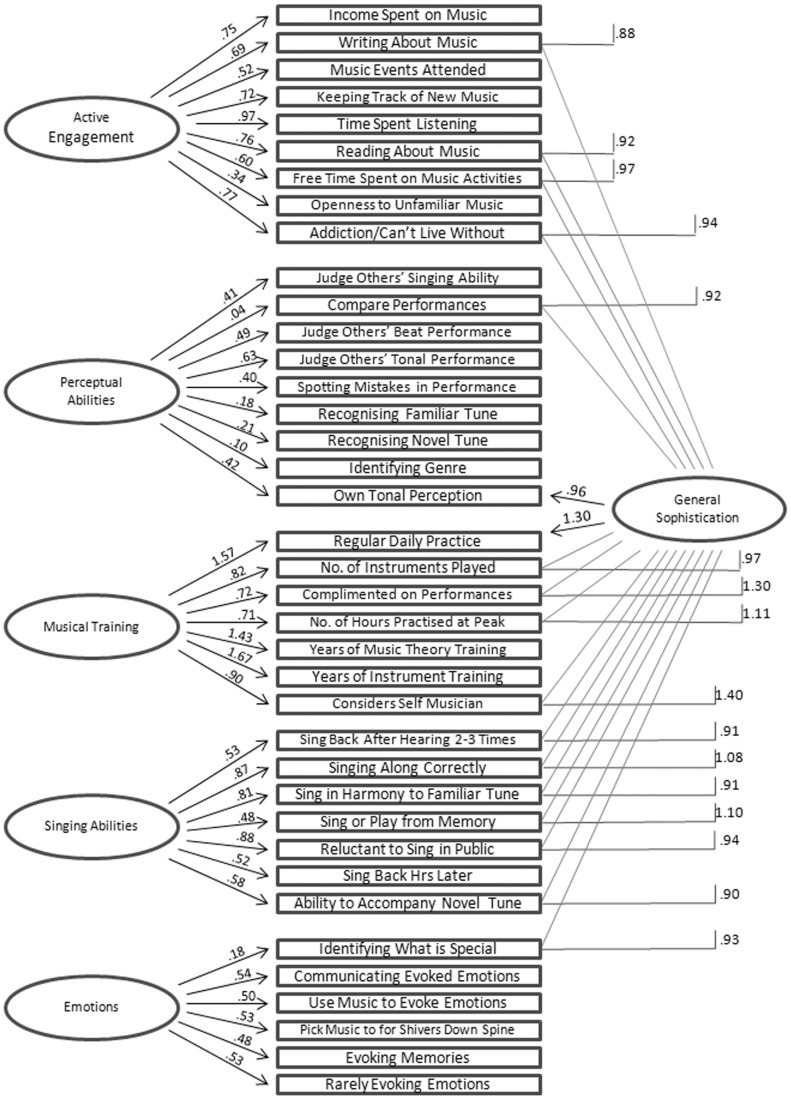
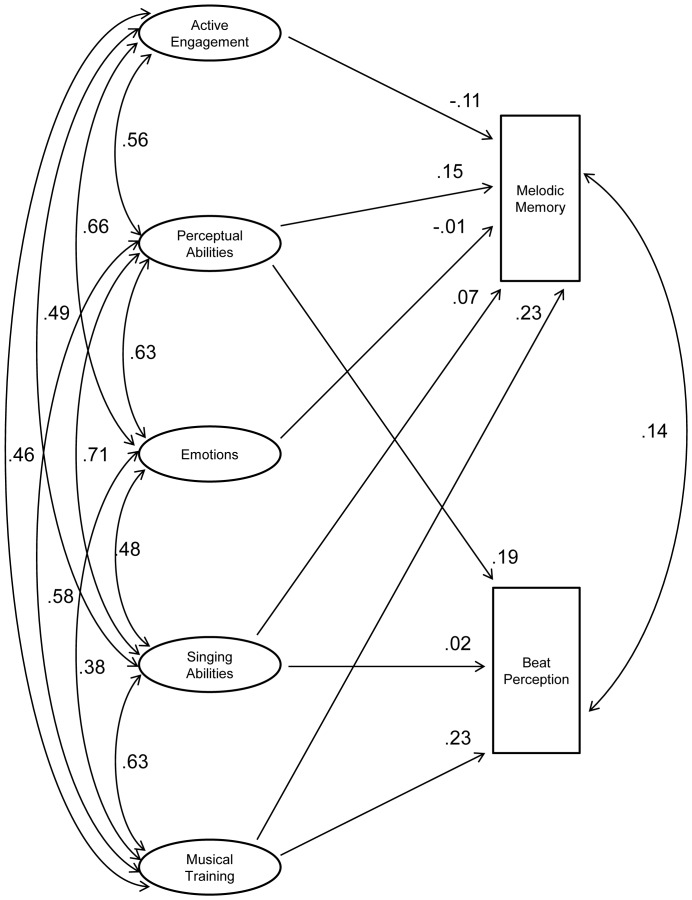
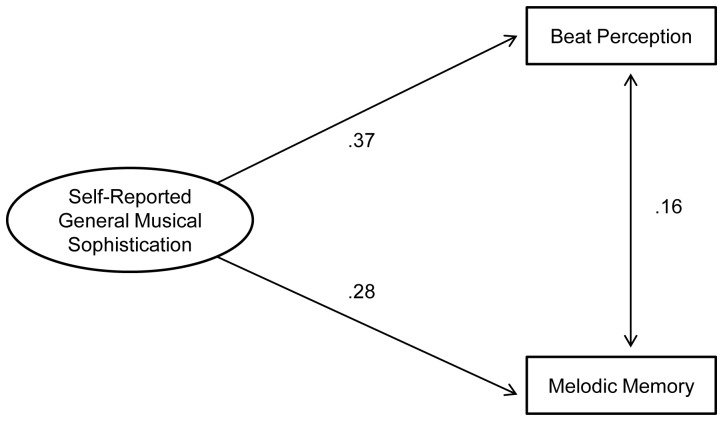
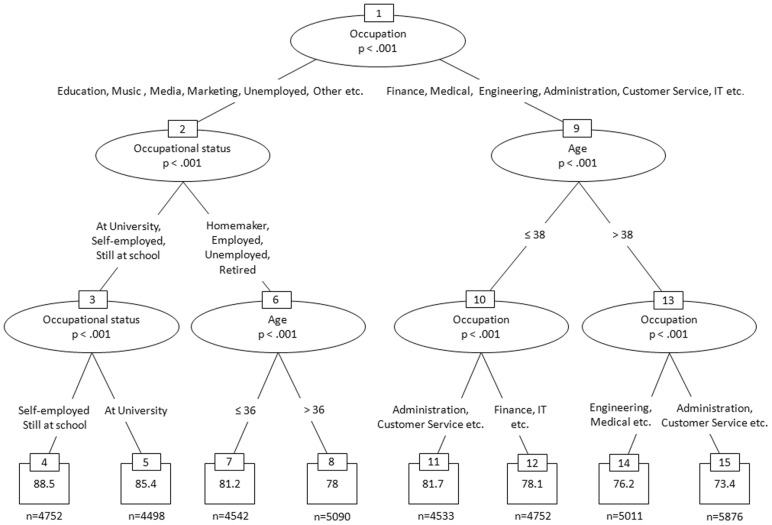
Musical skills and expertise vary greatly in Western societies. Individuals can differ in their repertoire of musical behaviours as well as in the level of skill they display for any single musical behaviour. The types of musical behaviours we refer to here are broad, ranging from performance on an instrument and listening expertise, to the ability to employ music in functional settings or to communicate about music. In this paper, we first describe the concept of 'musical sophistication' which can be used to describe the multi-faceted nature of musical expertise. Next, we develop a novel measurement instrument, the Goldsmiths Musical Sophistication Index (Gold-MSI) to assess self-reported musical skills and behaviours on multiple dimensions in the general population using a large Internet sample (n = 147,636). Thirdly, we report results from several lab studies, demonstrating that the Gold-MSI possesses good psychometric properties, and that self-reported musical sophistication is associated with performance on two listening tasks. Finally, we identify occupation, occupational status, age, gender, and wealth as the main socio-demographic factors associated with musical sophistication. Results are discussed in terms of theoretical accounts of implicit and statistical music learning and with regard to social conditions of sophisticated musical engagement.
Overview
The claims and statistics of this paper haven’t been checked yet.
Free: it reads the open-access text and checks the first 5 claims that cite a source we can check. Create a free account to check every claim.
Integrity signals
Registry
Cites
Statistics
Figures
Verification
Claims the paper makes
The claims and statistics of this paper haven’t been checked yet.
Free: it reads the open-access text and checks the first 5 claims that cite a source we can check. Create a free account to check every claim.
Claims other papers make about this one
Each is checked against this paper’s own text: does it say what the citing paper says it does?
The source backs part of the claim, not all of it — or backs it for a different population, condition or comparison.
In the citing paper
“all score 75% and over indicating their strong musical skills”
From Reflection Across AI-based Music Composition (2024) · cites this paper as [74]
Experimental — accuracy not yet measured
Self-check
Percentages, sums and reported differences re-computed from the paper’s own numbers.
The self-check needs the paper’s full text.
Citations
Cites
R: A Language and Environment for Statistical Computing
R Core Team (2025) · doi:10.32614/r.manuals · Cited by 352,181
Breiman, L. (2001) · Machine Learning · doi:10.1023/a:1010933404324 · Cited by 133,538
The Elements of Statistical Learning
Hastie, T., Tibshirani, R., & Friedman, J. (2009) · Springer Series in Statistics · doi:10.1007/978-0-387-84858-7 · Cited by 25,970
Classification and Regression by randomForest
Liaw, A. I., & Wiener, M. C. (2007) · Cited by 18,594
The Scree Test For The Number Of Factors
Cattell, R. B. (1966) · Multivariate Behavioral Research · doi:10.1207/s15327906mbr0102_10 · Cited by 13,554 · cited 1×
“We used different factor extraction methods (maximum likelihood factor analysis, principal axis factoring using an iterative least squares optimisation, minimum residual factor analysis) and as criteria employed the screeplot [67], Kaiser’s criterion of eigenvalues .”
MethodA very brief measure of the Big-Five personality domains
Gosling, S. D., Rentfrow, P. J., & Swann, W. B. (2003) · Journal of Research in Personality · doi:10.1016/s0092-6566(03)00046-1 · Cited by 8,307 · cited 7×
“The pattern of correlations between the five GoldMSI subscales/general factor and the ‘Big Five’ from the TIPI is given in Table 5.”
MethodInfluentialStatistical learning by 8-month-old infants
Saffran, J. R., Aslin, R. N., & Newport, E. L. (1996) · Science · doi:10.1126/science.274.5294.1926 · Cited by 5,659 · cited 1×
“Implicit learning of this sort relies upon the brain’s ability to internalise statistical regularities from its exposure to auditory stimuli [51–56].”
BackgroundCategorization and Representation of Physics Problems by Experts and Novices*
Chi, M. T. H., Feltovich, P. J., & Glaser, R. (1981) · Cognitive Science · doi:10.1207/s15516709cog0502_2 · Cited by 5,248 · cited 1×
“physics [27]; wine [28– 29]; computer programming [31]; badminton [32]).”
BackgroundStatistical Modeling: The Two Cultures (with comments and a rejoinder by the author)
Breiman, L. (2001) · Statistical Science · doi:10.1214/ss/1009213726 · Cited by 4,340 · cited 1×
“They also have the additional advantage that results can be generalised to new datasets, because they do not tend to overfit on training data [134].”
Background(1999) · Cited by 2,653
Research works printed but not linked: 5
- Merriam AP (1964) The anthropology of music. Chicago: Northwestern University Press.
- Ericsson KA, Smith J (1991) Toward a general theory of exercise: Prospects and limits. Cambridge - England: Cambridge University Press.
- Gordon EE (1975) Fourth year and fifth year results of a longitudinal study of the musical achievement of culturally disadvantaged students. Research in the Psychology of Music 10 (Iowa City: University of Iowa Press, 1975), 24.
- Kemp AE (1981) Personality differences between the players of string, woodwind, brass and keyboard instruments, and singers. Bulletin of the Council for Research in Music Education 66–67: 33– 38.
- Hargreaves D, North A (2002) Musical development and learning - Response. Br J Educ Psychol 72: 139– 140.
Cited by
Items 701–800 of 1,000
Williamon, A., Ginsborg, J., Perkins, R., & Waddell, G. (2021) · Oxford University Press eBooks · doi:10.1093/oso/9780198714545.002.0016 · Cited by 3
Fu, X., & Evans, B. G. (2025) · Phonetica · doi:10.1515/phon-2024-0055 · Cited by 3
“Musical experience was measured using the Gold-MSI [22], a self-report questionnaire which provides a nuanced measure of engagement with music, separating out measures of musical ability from musical training (i.”
InfluentialThe Musician-Nonmusician Conundrum and Developmental Music Research
Ilari, B. S., & Habibi, A. (2023) · The MIT Press eBooks · doi:10.7551/mitpress/14186.003.0031 · Cited by 2
Handedness and Musicality in Secondary School Students
Anstee, L., Müllensiefen, D., & Harrison, P. M. C. (2023) · Music Perception An Interdisciplinary Journal · doi:10.1525/mp.2023.40.5.373 · Cited by 2
Self-citationMatziorinis, A. M., Leemans, A., Skouras, S., Flo, B. K., Bashevkin, T., & Koelsch, S. (2024) · Imaging Neuroscience · doi:10.1162/imag_a_00248 · Cited by 5
“…we hypothesize that participants with increased musicality, quantified by elevated scores on the Goldsmiths Music Sophistication Index (Gold-MSI; M ü llensiefen et al., 2014) and intrinsic music perceptual skills, measured by the mini-version of the Profile of Music Perception skills…”
MethodInfluentialEffects of pitch range on singing accuracy training
Pfordresher, P. Q., & Greenspon, E. B. (2024) · Musicae Scientiae · doi:10.1177/10298649241289542 · Cited by 2
“All correlates were drawn from the Goldsmith’s Musical Sophistication Index (GSMI) and the Bucknell Auditory Imagery Scale (BAIS).”
Lo, C. Y., Zendel, B. R., Başkent, D., Boyle, C., Coffey, E. B. J., Gagné, N., Habibi, A., Harding, E., Keijzer, M. C. J., Kreutz, G., et al. (2024) · PLoS ONE · doi:10.1371/journal.pone.0314473 · Cited by 5
Metric Accent Affects Perception of Key Center in Pop-Music Chord Loops
Shea, N., White, C. W., Hughes, B., & Vuvan, D. T. (2025) · Music Perception An Interdisciplinary Journal · doi:10.1525/mp.2025.2321624 · Cited by 2
Who Listens? Experience, Cognition, and Musical Meaning
Bourne, J. E. (2025) · doi:10.1093/9780197797204.001.0001 · Cited by 2
Fine-Tuning the Details: Post-encoding Music Differentially Impacts General and Detailed Memory
Clark, K., & Leal, S. L. (2025) · Journal of Neuroscience · doi:10.1523/jneurosci.0158-25.2025 · Cited by 2
Biases in LLM-Generated Musical Taste Profiles for Recommendation
Sguerra, B., Epure, E. V., Lee, H., & Moussallam, M. (2025) · ACM Conference on Recommender Systems (RecSys) · doi:10.1145/3705328.3748030 · Cited by 11
“After rating all profiles, users are asked about their musical engagement based on the Goldsmiths Musical Sophistication Index [16].”
Schiavio, A., Kempf, A., Bailes, F., & Benedek, M. (2025) · Music & Science · doi:10.1177/20592043251364625 · Cited by 3
“…“ Openness to experience ” subscale “ BFI-O ” (John & Srivastava, 1999); 5) Interpersonal Reactivity Index Perspective-taking “ IRI-P ” and Empathetic concern subscale “ IRI-E ” (Davis, 1980); 6) the Goldsmiths Musical Sophistication Index, items 32 – 39 “ GMSI ” (Müllensiefen et al., 2014).”
Manting, C. L., Pantazis, D., Gabrieli, J. D. E., & Lundqvist, D. (2025) · Science Advances · doi:10.1126/sciadv.adz0510 · Cited by 9
Rose, D., Stadelmann, M., Jerjen, R., Köchli, S., Senn, O., Baldassarre, A., Poliakoff, E., & Phillips, M. (2025) · Music & Science · doi:10.1177/20592043251371380 · Cited by 2
“Table 1 shows the answers related to the single item from the MSI that asks how long respondents listen for per day.”
InfluentialSpiro, N., Sanfilippo, K. R. M., Shaughnessy, C., Rowles, M., Coombes, E., Perkins, R., & Tredget, E. (2025) · BMC Complementary Medicine and Therapies · doi:10.1186/s12906-025-05014-6 · Cited by 2
Lippolis, M., Matarrelli, B., Carraturo, G., Vuust, P., & Brattico, E. (2025) · Psychology of Music · doi:10.1177/03057356251368701 · Cited by 3
“Musical sophistication is a construct which embodies the concept of musicality, encompassing aspects like musical skills, expertise, achievements, and music-related behaviors (Müllensiefen et al., 2014; Ollen, 2006).”
InfluentialEye blinks synchronize with musical beats during music listening
Wu, Y., Teng, X., & Du, Y. (2025) · PLoS Biology · doi:10.1371/journal.pbio.3003456 · Cited by 5
“The “musical training” subscale of the Goldsmiths Musical Sophistication Index (Gold-MSI) questionnaire [77] was used to evaluate the amount of musical training of participants, on a scale from 7: no training to 49: more training than 99% of the random sample.”
Gigliotti, M. F., Lauret, D., & Delevoye, Y. (2025) · Cognitive Research Principles and Implications · doi:10.1186/s41235-025-00676-9 · Cited by 7
Vocal emotion recognition: A comparison of singers and instrumentalists, amateurs and professionals
Nussbaum, C., Dethloff, J., Schirmer, A., & Schweinberger, S. R. (2025) · iScience · doi:10.1016/j.isci.2025.114089 · Cited by 3
Zu, J., & Choi, W. (2025) · Quarterly Journal of Experimental Psychology · doi:10.1177/17470218251404928 · Cited by 3
“Musicianship was measured using the “music training” subscale in Goldsmiths Musical Sophisti-cation Index (Gold-MSI; Müllensiefen et al., 2014).”
How is musical expertise related to executive functions? A systematic review and meta-analysis
Aryanto, C. B., Aisyah, A. R. K., Timmers, R., Blakey, E., & von Bastian, C. C. (2026) · Psychonomic Bulletin & Review · doi:10.3758/s13423-025-02769-4 · Cited by 3
“Finally, musical sophistication pertains to a person’s perception of their own music-making habits and musical skills (Müllensiefen et al., 2014), and is often assessed through a mix of self-report and performance-based measures.”
Mapping the relationship between flow experience and music performance anxiety: a scoping review
Borges, N., Marinho, H., Araújo, M. V., Pereira, A., & Serra, S. (2026) · Frontiers in Psychology · doi:10.3389/fpsyg.2026.1746749 · Cited by 2
“…Levenson, 1981), the Trait Emotional Intelligence Questionnaire (TEIQue-SF; Petrides, 2009); the Goldsmiths Musical Sophistication Index (Gold-MSI; Müllensiefen et al., 2014); the Mindset Scale (MS; Dweck and Leggett, 1988), the Grit Scale (GS; Duckworth and Quinn, 2009); the Social Skill Scale…”
Musical ability and emotion recognition in speech prosody: The role of pitch discrimination
Baldé, A. M. N., Schellenberg, E. G., & Lima, C. F. (2026) · Psychonomic Bulletin & Review · doi:10.3758/s13423-026-02865-z · Cited by 3
“We assessed music training using the Music Training sub-scale from the Gold-MSI, a 38-item questionnaire that indexes different facets of musical expertise and behavior (Müllensiefen et al., 2014; Portuguese translation: Lima et al., 2020).”
Is there a “mind” behind the music? Attributing music to AI can suppress narrative meaning-making
Wu, S., & Holmes, K. J. (2026) · Cognitive Research Principles and Implications · doi:10.1186/s41235-026-00715-z · Cited by 2
“Following all clips, participants reported their general emotional reactions to music (Gold-MSI emotion subscale; Müllensiefen et al., 2014) and answered background questions.”
Haptic feedback in violin education as a case study of robotic exoskeleton-mediated motor learning
Campo, A., Peperoni, E., Capitani, S. L., Conti, R., Crea, S., Stefano, N. D., Tommaso, F. D., Giovacchini, F., Gener, C., Grazi, L., et al. (2026) · Scientific Reports · doi:10.1038/s41598-026-39226-8 · Cited by 3
“Finally, participants completed the Music Sophistication Index (MSI) questionnaire 49 , a user experience questionnaire, several questions related to their background in violin playing, and a self-assessment questionnaire.”
Visual processing of musical syntax and its relationship to sight-reading ability
Lim, Y., & Goldman, A. (2026) · PLoS ONE · doi:10.1371/journal.pone.0344490 · Cited by 2
“The questionnaire included items assessing demographics, specific sight-reading experiences, and relevant subscales from the Goldsmiths Musical Sophistication Index (Gold-MSI; Müllensiefen et al. [94], namely Perceptual Abilities and Musical Training.”
Tapping in Synchrony With Beat Enhances Groove Sensation
Ishida, K., Etani, T., & Nittono, H. (2026) · Annals of the New York Academy of Sciences · doi:10.1111/nyas.70292 · Cited by 2
“Prior to EEG recording, participants completed the Japanese version of the Goldsmiths Musical Sophistication Index (Gold-MSI) [ 26, 27 ], the Japanese version of the Barcelona Music Reward Questionnaire (BMRQ) [ 28, 29 ] to assess sensitivity to musical reward, and the Japanese version of the…”
The Design of Music Ear Training System in Building Mental Model with Image Stimulus Fading Strategy
Hwang, Y. T., & Chu, C. N. (2018) · Lecture notes in computer science · doi:10.1007/978-3-319-91743-6_9 · Cited by 3
Determinanten und Verläufe musikalischer Begabung im Jugendalter
Labonde, P., & Müllensiefen, D. (2022) · Zeitschrift für Erziehungswissenschaft · doi:10.1007/s11618-022-01111-1 · Cited by 2
“Die interne Konsistenz der englischen Subskala liegt bei alpha= 0,903 (deutsche Subskala: alpha 0,88) und die Test-Retest-Korrelation beträgt r= 0,974 (Müllensiefen et al. 2014).”
BackgroundInfluentialSelf-citationMoreno, M. V., Ryan, C., & Woodruff, E. (2022) · International Journal of Music Education · doi:10.1177/02557614221125941 · Cited by 2
“A modified Gold-MSI scale (Müllensiefen et al., 2014).”
MethodResultIdentifying a music-specific virtuoso: Exploratory factor analysis of virtuosos in Korean music
Kim, Y. J., & Song, M. K. (2023) · Psychology of Music · doi:10.1177/03057356231186924 · Cited by 2
“The notion of musical sophistication as a psychometric construct can be used to describe the individual attributes of music-related behaviors (Lad et al., 2022; Müllensiefen et al., 2014).”
BackgroundSimultaneous but independent spatial associations for pitch and loudness
Koch, S., Schubert, T., & Blankenberger, S. (2024) · Psychological Research · doi:10.1007/s00426-024-01970-9 · Cited by 3
“At the end of the fourth session, participants completed two subscales from the German version of the Goldsmith’s Musical-Sophistication Index (Gold-MSI, Müllensiefen et al., 2014; Schaal et al., 2014).”
Individual differences in music-evoked autobiographical memories
Jakubowski, K., Lee, E., Bai, E., & Belfi, A. M. (2024) · Musicae Scientiae · doi:10.1177/10298649241288173 · Cited by 5
“…no significant correlation between musical training (as measured via the Musical Training subscale of the Goldsmiths Musical Sophistication Index; Müllensiefen et al., 2014) and the frequency, emotionality, or involuntary nature of MEAMs, although the correlation with MEAM vividness was close to…”
InfluentialMusik und Wohlbefinden – ein dynamisch wachsendes Forschungsgebiet
Kreutz, G., & Bernatzky, G. (2015) · Springer eBooks · doi:10.1007/978-3-7091-1599-2_2 · Cited by 2
“Ausgehend von bereits vorliegenden, umfangreichen Erhebungen in der Normalbevölkerung (Müllensiefen et al. 2014), können Erwartungen an die Musikalität hospitalisierter Populationen formuliert und mittels geeigneter Verfahren überprüft werden.”
BackgroundMental control of musical imagery: Comparing tonal and song stimuli.
Cotter, K. N., & Silvia, P. J. (2020) · Psychomusicology Music Mind and Brain · doi:10.1037/pmu0000265 · Cited by 4
Timmers, R., Arthurs, Y., & Crook, H. (2020) · Consciousness and Cognition · doi:10.1016/j.concog.2020.103027 · Cited by 3
Generating Interesting Song-to-Song Segues With Dave
Gabbolini, G., & Bridge, D. (2021) · ACM Conference on User Modeling, Adaptation and Personalization (UMAP) · doi:10.1145/3450613.3456819 · Cited by 9
“I listen attentively to music for n hours per day)” [21].”
BackgroundMethodInfluentialWilliamon, A., Ginsborg, J., Perkins, R., & Waddell, G. (2021) · Oxford University Press eBooks · doi:10.1093/oso/9780198714545.003.0001 · Cited by 4
Williamon, A., Ginsborg, J., Perkins, R., & Waddell, G. (2021) · Oxford University Press eBooks · doi:10.1093/oso/9780198714545.003.0004 · Cited by 2
Preckel, F. (2020) · American Educational Research Association Annual Meeting (AERA) · doi:10.3102/1572519 · Cited by 2
Human-In-The-Loop Chord Progression Generator With Generative Adversarial Network
Matsumoto, Y., Ito, H., Terasawa, H., Yamamoto, Y., Hiraga, Y., & Matsubara, M. (2022) · Asia-Pacific Signal and Information Processing Association Annual Summit and Conference (APSIPA ASC) · doi:10.23919/apsipaasc55919.2022.9979830 · Cited by 3
Musical Aptitude Screening: A Brazilian Experience under Construction
Koga, F. O., Rangni, R. D. A., & Pereira, R. (2023) · doi:10.3390/engproc2023039007 · Cited by 2
The effect of repetition on intersubject synchrony assessed with fMRI
Sternin, A., McGarry, L. M., Stojanoski, B. B., Grahn, J. A., & Owen, A. M. (2023) · Cortex · doi:10.1016/j.cortex.2023.05.020 · Cited by 2
Is Major Minor? The Relationship Between Music Major Status and a Measure of Musical Sophistication
Morrison, S. J., Himes, A. D., Montemayor, M., & Springer, D. G. (2023) · Journal of Research in Music Education · doi:10.1177/00224294231185321 · Cited by 2
“As evidenced by the many citations of Gold-MSI (Google Scholar shows that Müllensiefen et al., 2014, has been cited 801 times as of this writing, while Web of Science, a global citation database, reports this article to be in the top 1% of articles cited in the psychiatry/psychology field, with…”
BackgroundInfluentialDissociating sensitivity from bias in the Mini Profile of Music Perception Skills
Whiteford, K. L., Goh, P. Y., Stevens, K. L., & Oxenham, A. J. (2023) · JASA Express Letters · doi:10.1121/10.0021096 · Cited by 2
Slusarenko, A., Rosenberg, M. C., Kazanski, M. E., McKay, J. L., Emmery, L., Kesar, T. M., & Hackney, M. E. (2024) · Journal of Alzheimer s Disease · doi:10.3233/jad-231453 · Cited by 4
“Further, established questionnaires, such as the Goldsmith ’ s Music and Dance Sophistication Indices and the Barcelona Music Reward Questionnaire test similar perceptual and motor constructs (e.g., active listening, singing ability, sensory-motor) as those assayed in the MRQ, DRQ, and RA [46 – 48].”
Eitel, M. J., Ruth, N., Harrison, P. M. C., Frieler, K., & Müllensiefen, D. (2024) · Music & Science · doi:10.1177/20592043241257654 · Cited by 2
“This is supported by the moderate correlation between HPT scores and self-reported perceptual abilities from the G-MSI.”
InfluentialSelf-citationAppreciation of singing and speaking voices is highly idiosyncratic
Bruder, C., Frieler, K., & Larrouy-Maestri, P. (2024) · Royal Society Open Science · doi:10.1098/rsos.241623 · Cited by 2
“(c) the 18-item version of the general Music Sophistication subscale from the Goldsmiths Music Sophistication Index (Gold-MSI [57]), as computed with the Gold-MSI configurator (https:// shiny.gold-msi.org/gmsiconfigurator).”
MethodInfluentialFraněk, M., & Režný, L. (2024) · Psychological Research · doi:10.1007/s00426-024-02029-5 · Cited by 2
Misophonia is associated with heightened emotion evocation by music
Babalola, O., Hedger, K. V., & Hedger, S. C. V. (2024) · Current Psychology · doi:10.1007/s12144-024-07050-w · Cited by 2
“Questionnaires Musicality was assessed via two measures: the Goldsmiths Musical Sophistication Index (Gold-MSI; Müllensiefen et al., 2014) and the Barcelona Musical Reward Questionnaire (BRMQ; Mas-Herrero et al., 2013).”
Chmiel, A., Dean, R. T., Stevens, C., & MacRitchie, J. (2025) · PLoS ONE · doi:10.1371/journal.pone.0320055 · Cited by 3
“These items were the Self-report questionnaire [10], the Melodic Discrimination Test, MDT [29] and the Comput-erised Adaptive Beat Alignment Test, CA-BAT [30].”
The role of Big Five personality domains and facets in musical sensibility: a twin study
Hansen, H. M. U., Laeng, B., Vassend, O. M., Czajkowski, N. O., Endestad, T., Danielsen, A., & Røysamb, E. (2025) · Scientific Reports · doi:10.1038/s41598-025-95661-z · Cited by 5
“The observed weak associations between extraversion and musical sensibility are consistent with past research on music reward sensitivity 13 and with some studies on general musical sophistication 8,9 , whereas others have reported a moderately strong association 10 .”
Cognitive and motor abilities predict auditory-cued finger tapping in a dual task
Mudarris, M. A., Krijt, R. N., Hassell, A. M., Murphy, T. M., Ruitenberg, M. F. L., Fokkema, M., & Schaefer, R. (2025) · Frontiers in Neuroscience · doi:10.3389/fnins.2025.1553548 · Cited by 3
Approaches to notation for embodied engagement with a novel neural network-based musical instrument
Bacon, B., Auri, L., & McKee, H. A. (2025) · Frontiers in Computer Science · doi:10.3389/fcomp.2025.1597806 · Cited by 4
Ayyildiz, C., Prince, J. B., Delalande, J., & Herff, S. A. (2026) · Humanities and Social Sciences Communications · doi:10.1057/s41599-026-07057-7 · Cited by 3
“To determine participants ’ musical background, we administered the Goldsmith-Musical Sophistication Index (Gold-MSI) (Müllensiefen et al., 2014), a well-validated, widely used measure of musical training developed using a large sample of English-speaking adult participants from the general…”
The effect of musical training on auditory grouping
Sauvé, S. A., Stewart, L., & Pearce, M. T. (2014) · Cited by 2
Self-citationPersonalized Retrieval and Browsing of Classical Music and Supporting Multimedia Material
Tkalčič, M., Schedl, M., Liem, C. C. S., & Melenhorst, M. (2016) · International Conference on Multimedia Retrieval · doi:10.1145/2911996.2912023 · Cited by 2
“The concept of music sophistication has been presented recently and it has shown good correlation with music preferences [11].”
BackgroundTuominen, P. P. A., Raitanen, J. A., Husu, P., Kujala, U. M., & Luoto, R. M. (2018) · PLoS ONE · doi:10.1371/journal.pone.0195837 · Cited by 2
The Creative Process in Lead Sheet Composition
Martín, D., Pachet, F., & Frantz, B. (2018) · Palgrave Macmillan UK eBooks · doi:10.1057/978-1-137-50563-7_11 · Cited by 2
Defining the Biological Bases of Individual Differences in Musicality
Gingras, B., Honing, H., Peretz, I., Trainor, L. J., & Fisher, S. E. (2018) · The MIT Press eBooks · doi:10.7551/mitpress/10636.003.0015 · Cited by 4
Self-citationWilliamon, A., Ginsborg, J., Perkins, R., & Waddell, G. (2021) · Oxford University Press eBooks · doi:10.1093/oso/9780198714545.003.0013 · Cited by 3
Sound i historisk perspektiv: oppdagelse, naturalisering, kanonisering
Askerøi, E. (2020) · doi:10.23865/noasp.108.ch2 · Cited by 6
The CI Music Hour: Building community and promoting well-being through music appreciation
Kovach, C., Papadopoulos, J., Ilari, B. S., & Goldsworthy, R. L. (2022) · International Journal of Community Music · doi:10.1386/ijcm_00069_1 · Cited by 2
Recognition of brief sounds in rapid serial auditory presentation
Akça, M., Vuoskoski, J. K., Laeng, B., & Bishop, L. (2023) · PLoS ONE · doi:10.1371/journal.pone.0284396 · Cited by 5
“The participants were also asked to answer a few demographics questions and fill part of the Gold-MSI musical sophistication questionnaire (the items relating to the general factor of musical sophistication) which is designed to measure musical sophistication in the general population [15].”
BackgroundMethodInfluentialKempf, A., Maes, P., Gener, C., & Schiavio, A. (2024) · Royal Society Open Science · doi:10.1098/rsos.240654 · Cited by 3
“We measured musical training via the musical training subscale of the Goldsmiths Musical Sophistication Index (GMSI) [50].”
Lothwesen, K. (2014) · Beiträge empirischer Musikpädagogik · doi:10.62563/bem.v201498 · Cited by 2
Williamon, A., Ginsborg, J., Perkins, R., & Waddell, G. (2021) · Oxford University Press eBooks · doi:10.1093/oso/9780198714545.003.0002 · Cited by 2
Identifying Engagement in Children’s Interaction whilst Composing Digital Music at Home
Ford, C., & Bryan–Kinns, N. (2022) · Creativity and Cognition · doi:10.1145/3527927.3532794 · Cited by 5
“This was selected in place of other measures such as [42] which would have been too complicated for children of this age [59].”
Background7. Executive Functioning and Self-Regulation
Hallam, S., & Himonides, E. (2022) · Open Book Publishers · doi:10.11647/obp.0292.07 · Cited by 2
Fortellinger om samsang – fellesskap i og mellom generasjoner
Vist, T. (2022) · doi:10.23865/noasp.162.ch13 · Cited by 1
Caressed by music: Related preferences for velocity of touch and tempo of music?
Sailer, U., Zucknick, M., & Laeng, B. (2023) · Frontiers in Psychology · doi:10.3389/fpsyg.2023.1135988 · Cited by 2
“, 1989) and the Goldsmiths Musical Sophistication Index (GoldMSI; Mullensiefen et al., 2014).”
BackgroundInfluentialGómez-Cañón, J. S., Herrera, P., Gómez, E., & Cano, E. (2019) · RECERCAT (Consorci de Serveis Universitaris de Catalunya) · doi:10.48550/arxiv.1909.05882 · Cited by 5
“In order to measure the musical knowledge from the participants, we use the Music Sophistication Index [14] and make the results available to the participants at the end of the survey as a small thank you.”
BackgroundMethodFuture Directions of Music Cognition
(2021) · doi:10.18061/fdmc.2021 · Cited by 2
Henry, M. J., Obleser, J., Crusey, M. R., & Peelle, J. E. (2022) · PsyArXiv (OSF Preprints) · doi:10.31234/osf.io/62r3u · Cited by 4
Individual differences in musical training and executive functions: A latent variable approachPreprint
Okada, B. M., & Slevc, L. R. (2018) · PsyArXiv (OSF Preprints) · doi:10.31234/osf.io/ymn5c · Cited by 2
Reverse-Engineering Speech and Music Categorization from a Single Sound SourcePreprint
Fink, L., Hörster, M., Poeppel, D., Wald‐Fuhrmann, M., & Larrouy-Maestri, P. (2026) · PsyArXiv (OSF Preprints) · doi:10.31234/osf.io/2635u · Cited by 3
Predicting Working Memory and Fluid Intelligence from Measures of Musicality
Ventura, J. A. (2018) · Louisiana State University · doi:10.31390/gradschool_theses.4755 · Cited by 1
“The answers were used to create a composite score of general musical sophistication and five subscales of active musical engagement, perceptual abilities, music training, singing abilities, and emotions (Müllensiefen et al., 2014).”
BackgroundMethodResultInfluentialUsing music in a word stress processing task: Does it favor learners with a musical background?
Degrave, P. (2022) · ITL Review of Applied Linguistics · doi:10.1075/itl.21011.deg · Cited by 1
4. Literacy and Related Language Skills
Hallam, S., & Himonides, E. (2022) · Open Book Publishers · doi:10.11647/obp.0292.04 · Cited by 1
12. Re-Engagement and Motivation
Hallam, S., & Himonides, E. (2022) · Open Book Publishers · doi:10.11647/obp.0292.12 · Cited by 1
Dyresanger i samvær med barn: Tradisjoner i og mellom generasjoner
Danbolt, I., & Haukenes, S. (2022) · doi:10.23865/noasp.162.ch3 · Cited by 2
psychTestR – Ein R-Paket für (musik-)psychologische Tests und Fragebogeninventare
Pausch, V., Harrison, P. M. C., Höger, F., Müllensiefen, D., & Frieler, K. (2023) · Musik und Medien · doi:10.1007/978-3-658-39145-4_16 · Cited by 1
Self-citationThe Impact of Art Therapy on Mental Health and Well-being
JOSÉ, H. M. G. (2023) · Frontiers research topics · doi:10.3389/978-2-8325-3508-0 · Cited by 1
Cochlear Implant Users Experience the Sound-To-Music Effect
Kasdan, A. V., Butera, I. M., DeFreese, A. J., Rowland, J., Hilbun, A. L., Gordon, R. L., Wallace, M. T., & Gifford, R. H. (2024) · Auditory Perception & Cognition · doi:10.1080/25742442.2024.2313430 · Cited by 3
Impact of interference on vocal and instrument recognition
Bürgel, M., & Siedenburg, K. (2024) · The Journal of the Acoustical Society of America · doi:10.1121/10.0028152 · Cited by 1
Schäfer, N., Kopiez, R., & Sander, K. (2024) · Jahrbuch der Deutschen Gesellschaft für Musikpsychologie/Jahrbuch Musikpsychologie · doi:10.5964/jbdgm.197 · Cited by 1
“Um diese Fähigkeiten als Ergänzung zum Erleben von Kompetenz zu erheben, bietet sich im Kontext des Singens im Musikunterricht das Konstrukt der musikalischen Erfahrenheit (musical sophistication; Müllensiefen et al., 2014) an.”
BackgroundReliable Web-Based Auditory Cognitive Testing: Observational Study
Lad, M., Taylor, J., & Griffiths, T. D. (2024) · Journal of Medical Internet Research · doi:10.2196/58444 · Cited by 3
“We compared whether participants scored similarly on a self-reported questionnaire about musical sophistication, the Goldsmiths Musical Sophistication Index (GMSI), to scores obtained using computerized behavioral experiments for auditory cognition such as SIN measures and AuM [16].”
Bouvier, B., Susini, P., & Ponsot, E. (2025) · JASA Express Letters · doi:10.1121/10.0034822 · Cited by 1
Giannos, K., Athanasopoulos, G., & Küssner, M. B. (2025) · Music Perception An Interdisciplinary Journal · doi:10.1525/mp.2025.2324025 · Cited by 2
Korean Music Education Society, Kwon, S., Yang, H., & Choi, J.-E. (2025) · 음악교육연구 · doi:10.30775/kmes.54.1.01 · Cited by 1
CoVox: A dataset of contrasting vocalizations
Bruder, C., & Larrouy-Maestri, P. (2025) · Behavior Research Methods · doi:10.3758/s13428-025-02664-9 · Cited by 1
“According to an 18-item adapted version 3 of the scale of music sophistication of the Goldsmiths Music Sophistication Index (Gold-MSI; Müllensiefen et al., 2014), participants’ average music sophistication score was 81.2 ( SD = 17.7).”
InfluentialO’Connell, S. R., Jounghani, A. R., Papadopoulos, J., Bortfeld, H., & Goldsworthy, R. L. (2025) · Auditory Perception & Cognition · doi:10.1080/25742442.2025.2510182 · Cited by 1
Familiarizing with Music: Discovery Patterns for Different Music Discovery Needs
Moscati, M., Afchar, D., Schedl, M., & Sguerra, B. (2025) · ACM Conference on User Modeling, Adaptation and Personalization (UMAP) · doi:10.1145/3699682.3728333 · Cited by 4
“Focusing more on the musical expertise, several works analyzed music listening behavior in relation to users’ musical sophistication [15, 30], typically measured through the Goldsmiths Musical Sophistication Index (Gold-MSI) [39].”
Stilp, C. E., Adames, I., & Shorey, A. E. (2025) · PLoS ONE · doi:10.1371/journal.pone.0328490 · Cited by 1
“Here, musical training was measured continuously using the musical training subscale of the Gold-MSI [42].”
InfluentialAlea Iacta Est! Impact of Musical Training on the Perception of Aleatoric Music
León, L. P. D., Privado, J., Martínez-Rodríguez, M., & Eizaguirre, M. P. (2025) · The American Journal of Psychology · doi:10.5406/19398298.138.1.05 · Cited by 1
Laurel–Yanny percept affects the speech-to-song illusion, but musical anhedonia does not
Kathios, N., Kubit, B. M., Grout, N., Everard, J., Zachary, E., Sankhe, A., Tierney, A. T., Patel, A. D., & Loui, P. (2025) · Scientific Reports · doi:10.1038/s41598-025-15592-7 · Cited by 1
“…with the completion of a four survey batteries: the Barcelona Music Reward Questionnaire (BMRQ) 17 , the Physical Anhedonia Scale (PAS) 18 , the Absorption in Music Scale (AIMS) 19 , the Goldsmiths Musical Sophistication Index (Gold-MSI) 20 , and a brief demographic questionnaire (see Materials).”
Teaching literary history with music: A classroom experiment
Schotanus, Y. (2025) · L1 Educational Studies in Language and Literature · doi:10.21248/l1esll.2025.25.1.468 · Cited by 3
Experience-driven Predictability Does Not Influence Neural Entrainment to the Beat
Hoddinott, J. D., Henry, M. J., & Grahn, J. A. (2026) · Journal of Cognitive Neuroscience · doi:10.1162/jocn.a.95 · Cited by 1
“The BAT (Hsu et al., 2022; Müllensiefen et al., 2014) measured participants ’ ability to produce and perceive a beat when listening to short music clips.”
Cui, A., Choi, Y., Yeganeh, N. M., Hermiston, N., Werker, J. F., & Boyd, L. A. (2025) · Frontiers in Psychology · doi:10.3389/fpsyg.2025.1659705 · Cited by 2
“…F (3,60) = 11.00, p 0.001, η 2p = 0.36, as measured using the training subscale of the Goldsmiths Musical Sophistication Index (GOLD-MSI, Müllensiefen et al., 2014) and a multilingual proficiency index calculated from participants’ self-assessment on the Language Experience and…”
InfluentialIncreased prevalence of synaesthesia in musicians
Williamson, L., Bailey, S. A., & Ward, J. (2025) · Perception · doi:10.1177/03010066251390106 · Cited by 1
“A recent study gave a questionnaire measure of musicality, called the GOLD-MSI (Müllensiefen et al., 2014), to two groups of synaesthetes (those for whom music and other sounds was an inducer of visual experiences, and those for whom it was not) and a control group of non-synaesthetes (Ward et al.,…”
Influential
Metadata
- Authors
- Müllensiefen, D., Gingras, B., Musil, J., & Stewart, L.
- Affiliations
- Goldsmiths University of London (GB)
- University of Vienna (AT)
- Corresponding author
- Müllensiefen, Daniel
- Venue
- PLoS ONE
- Publisher
- Public Library of Science (PLoS)
- Published
- 2014-02-26
- Volume
- 9
- Issue
- 2
- Pages
- e89642
- ISSN
- 1932-6203 (ISSN-L)
- PMC
- PMC3935919
- OpenAlex
- W1981455444
- Cited by
- 1,155
- References
- 147
- Citations by year
- 2026: 106 · 2025: 150 · 2024: 124 · 2023: 134 · 2022: 153 · 2021: 130 · 2020: 81 · 2019: 78 · 2018: 77 · 2017: 41 · 2016: 35 · 2015: 28 · 2014: 14
- FWCI
- 21.94
- Type
- journal article
- Language
- en
- Update notices
- correction (2014-06-24)
- Open access
- gold
- doi.org
- Locations
- PLoS ONE (publishedVersion, cc-by)
- Europe PMC (PubMed Central) (publishedVersion, other-oa)
- PubMed Central (publishedVersion, cc-by)
- PubMed (publishedVersion)
- Goldsmiths (University of London) (acceptedVersion)
- Phaidra (Universität Wien) (submittedVersion, cc-by-nc-nd)
- DOAJ (DOAJ: Directory of Open Access Journals) (submittedVersion, cc-by-sa)
- Figshare (submittedVersion, cc-by)
- Topics
- Life Sciences › Neuroscience › Cognitive Neuroscience › Neuroscience and Music Perception
- Social Sciences › Arts and Humanities › Music › Diverse Music Education Insights
- Life Sciences › Neuroscience › Cognitive Neuroscience › Aesthetic Perception and Analysis
- Keywords
- musical sophistication, non-musicians, musicianship, Goldsmiths Musical Sophistication Index, music listening, statistical learning, sociodemographic factors, occupational status, scale development
- MeSH terms
- Adult, Aptitude Tests, Auditory Perception, Female, Humans, Male, Memory, Music, Self Report
About these checks
Registry, retraction, Cites and statistics results are computed, not judged, with one exception: a printed reference that no index lists is read once by a model before it counts as a citation error. Claims are extracted by a model and kept only when their quote appears verbatim in the text; each cited source is then checked, with a model’s help, for whether it says what the claim relies on. Those verdicts can be wrong — read the claim’s quote and the cited source before relying on one.
Statistics and arithmetic are recomputed, not judged.
Confidence bands are shown only for fields calibrated on our annotated test set. None is calibrated yet, so no band is shown.
What counts as a claim ›How we measure confidence ›How we check this ›
Are you an author, or do you see a problem with this page? Request a review
Data sources
Bibliographic data: Semantic Scholar, OpenAlex, Crossref.
Contains information from the Semantic Scholar Academic Graph Datasets, made available under the ODC Attribution License (ODC-BY 1.0).
Semantic Scholar’s data is described in: Kinney, R., et al. (2023). The Semantic Scholar Open Data Platform. arXiv:2301.10140.
