

The Musicality of Non-Musicians: An Index for Assessing Musical Sophistication in the General Population
Open accessThe DOI matches its Crossref record; 141 of the 147 references it cites were found in a registry or an index.
Abstract
Musical skills and expertise vary greatly in Western societies. Individuals can differ in their repertoire of musical behaviours as well as in the level of skill they display for any single musical behaviour. The types of musical behaviours we refer to here are broad, ranging from performance on an instrument and listening expertise, to the ability to employ music in functional settings or to communicate about music. In this paper, we first describe the concept of 'musical sophistication' which can be used to describe the multi-faceted nature of musical expertise. Next, we develop a novel measurement instrument, the Goldsmiths Musical Sophistication Index (Gold-MSI) to assess self-reported musical skills and behaviours on multiple dimensions in the general population using a large Internet sample (n = 147,636). Thirdly, we report results from several lab studies, demonstrating that the Gold-MSI possesses good psychometric properties, and that self-reported musical sophistication is associated with performance on two listening tasks. Finally, we identify occupation, occupational status, age, gender, and wealth as the main socio-demographic factors associated with musical sophistication. Results are discussed in terms of theoretical accounts of implicit and statistical music learning and with regard to social conditions of sophisticated musical engagement.
Overview
The claims and statistics of this paper haven’t been checked yet.
Free: it reads the open-access text and checks the first 5 claims that cite a source we can check. Create a free account to check every claim.
Integrity signals
Registry
Cites
Statistics
Figures
Verification
Claims the paper makes
The claims and statistics of this paper haven’t been checked yet.
Free: it reads the open-access text and checks the first 5 claims that cite a source we can check. Create a free account to check every claim.
Claims other papers make about this one
Each is checked against this paper’s own text: does it say what the citing paper says it does?
The source backs part of the claim, not all of it — or backs it for a different population, condition or comparison.
In the citing paper
“all score 75% and over indicating their strong musical skills”
From Reflection Across AI-based Music Composition (2024) · cites this paper as [74]
Experimental — accuracy not yet measured
Self-check
Percentages, sums and reported differences re-computed from the paper’s own numbers.
The self-check needs the paper’s full text.
Citations
Cites
R: A Language and Environment for Statistical Computing
R Core Team (2025) · doi:10.32614/r.manuals · Cited by 352,181
Breiman, L. (2001) · Machine Learning · doi:10.1023/a:1010933404324 · Cited by 133,538
The Elements of Statistical Learning
Hastie, T., Tibshirani, R., & Friedman, J. (2009) · Springer Series in Statistics · doi:10.1007/978-0-387-84858-7 · Cited by 25,970
Classification and Regression by randomForest
Liaw, A. I., & Wiener, M. C. (2007) · Cited by 18,594
The Scree Test For The Number Of Factors
Cattell, R. B. (1966) · Multivariate Behavioral Research · doi:10.1207/s15327906mbr0102_10 · Cited by 13,554 · cited 1×
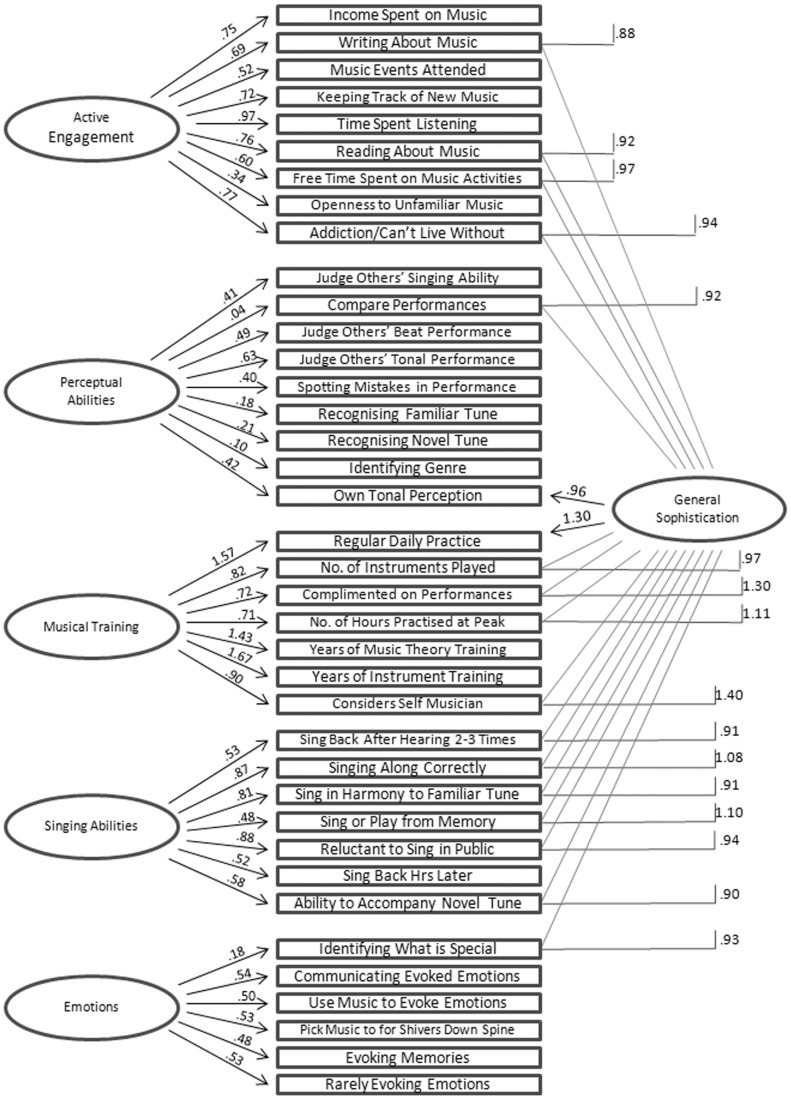
“We used different factor extraction methods (maximum likelihood factor analysis, principal axis factoring using an iterative least squares optimisation, minimum residual factor analysis) and as criteria employed the screeplot [67], Kaiser’s criterion of eigenvalues .”
MethodA very brief measure of the Big-Five personality domains
Gosling, S. D., Rentfrow, P. J., & Swann, W. B. (2003) · Journal of Research in Personality · doi:10.1016/s0092-6566(03)00046-1 · Cited by 8,307 · cited 7×
“The pattern of correlations between the five GoldMSI subscales/general factor and the ‘Big Five’ from the TIPI is given in Table 5.”
MethodInfluentialStatistical learning by 8-month-old infants
Saffran, J. R., Aslin, R. N., & Newport, E. L. (1996) · Science · doi:10.1126/science.274.5294.1926 · Cited by 5,659 · cited 1×
“Implicit learning of this sort relies upon the brain’s ability to internalise statistical regularities from its exposure to auditory stimuli [51–56].”
BackgroundCategorization and Representation of Physics Problems by Experts and Novices*
Chi, M. T. H., Feltovich, P. J., & Glaser, R. (1981) · Cognitive Science · doi:10.1207/s15516709cog0502_2 · Cited by 5,248 · cited 1×
“physics [27]; wine [28– 29]; computer programming [31]; badminton [32]).”
BackgroundStatistical Modeling: The Two Cultures (with comments and a rejoinder by the author)
Breiman, L. (2001) · Statistical Science · doi:10.1214/ss/1009213726 · Cited by 4,340 · cited 1×
“They also have the additional advantage that results can be generalised to new datasets, because they do not tend to overfit on training data [134].”
Background(1999) · Cited by 2,653
Research works printed but not linked: 5
- Merriam AP (1964) The anthropology of music. Chicago: Northwestern University Press.
- Ericsson KA, Smith J (1991) Toward a general theory of exercise: Prospects and limits. Cambridge - England: Cambridge University Press.
- Gordon EE (1975) Fourth year and fifth year results of a longitudinal study of the musical achievement of culturally disadvantaged students. Research in the Psychology of Music 10 (Iowa City: University of Iowa Press, 1975), 24.
- Kemp AE (1981) Personality differences between the players of string, woodwind, brass and keyboard instruments, and singers. Bulletin of the Council for Research in Music Education 66–67: 33– 38.
- Hargreaves D, North A (2002) Musical development and learning - Response. Br J Educ Psychol 72: 139– 140.
Cited by
Items 501–600 of 1,000
Ishida, K., & Nittono, H. (2025) · Psychophysiology · doi:10.1111/psyp.70113 · Cited by 8
“The participants' musical ability was assessed using the Japanese Gold-MSI questionnaire (Sadakata et al. 2023; the original is Müllensiefen et al. 2014): general sophistication ( M = 62.3, SD = 22.3), as well as sub-scales of active engagement ( M = 30.3, SD = 10.9), perceptual abilities ( M =…”
InfluentialConcert formats influence how audiences experience live classical music
Wald‐Fuhrmann, M., Herget, A.-K., Kreuzer, M., & Egermann, H. (2026) · Humanities and Social Sciences Communications · doi:10.1057/s41599-025-06461-9 · Cited by 11
“Participants had gone to 8.0 classical concerts on average in the previous year and reached an average score of 4.3 (SD = 1.0) on the GoldMSI (Müllensiefen et al., 2014) subscale of active engagement and 3.3 (SD = 1.5) on musical training.”
InfluentialJia, Z., Purdy, S. C., & Savage, P. E. (2026) · Peer Community Journal · doi:10.24072/pcjournal.698 · Cited by 1
“…Musicianship (self-perceived) and Musicianship (complimented by others) were adopted from Goldsmiths Musical Sophistication Index (Gold-MSI) (Müllensiefen et al., 2014 Among all the variables, Song Familiarity ratings showed the highest mean values and relatively low variability compared to…”
A Comparison of Human and Computational Melody Prediction Through Familiarity and Expertise
Pesek, M., Medvešek, Š., Podlešek, A., Tkalčič, M., & Marolt, M. (2020) · Frontiers in Psychology · doi:10.3389/fpsyg.2020.557398 · Cited by 9
“We also performed a confirmatory analysis of the Slovenian questionnaire, as the authors of the initial research report a poor fit to the one-factor model (Müllensiefen et al., 2014).”
MethodInfluentialExploring Changes in the Emotional Classification of Music between Eras
Kelly, B. O., Anderson, C. J., & Schutz, M. (2021) · Auditory Perception & Cognition · doi:10.1080/25742442.2021.1988422 · Cited by 6
Worschech, F., Passarotto, E., Losch, H., Oku, T., Lee, A., & ALTENMÜLLER, E. O. (2024) · Brain Sciences · doi:10.3390/brainsci14040405 · Cited by 9
“Piano experience questionnaire The participants were asked how long and how often they had played the piano in different periods of their lives.”
BackgroundSome, but not all, cochlear implant users prefer music stimuli with congruent haptic stimulation
Aker, S. C., Faulkner, K. F., Innes-Brown, H., Vatti, M., & Marozeau, J. (2024) · The Journal of the Acoustical Society of America · doi:10.1121/10.0025854 · Cited by 6
Decoding predicted musical notes from omitted stimulus potentials
Ishida, K., Ishida, T., & Nittono, H. (2024) · Scientific Reports · doi:10.1038/s41598-024-61989-1 · Cited by 7
“The participants’ musical ability was evaluated using the Japanese Gold-MSI questionnaire 49 (the original is Müllensiefen et al. 50 ), which evaluates General Sophistication (M = 62.5, SD = 18.0) as well as subscales of Active Engagement (M = 30.0, SD = 8.3), Perceptual Abilities (M = 38.7, SD =…”
InfluentialWard, J., Maciel, S., Rouw, R., Simner, J., & Root, N. (2024) · Psychology of Music · doi:10.1177/03057356241250020 · Cited by 6
“The questionnaires consisted of the STOMP (Rentfrow & Gosling, 2003) and the Gold-MSI (Müllensiefen et al., 2014).”
InfluentialThe Influence of Music Reading on Spatial Working Memory and Self-Assessment Accuracy
Cara, M. A. (2024) · Brain Sciences · doi:10.3390/brainsci14111152 · Cited by 7
Acquisition of musical skills and abilities in older adults—results of 12 months of music training
Losch, H., ALTENMÜLLER, E. O., Marié, D., Passarotto, E., Kretschmer, C. R., Scholz, D. S., Kliegel, M., Krüger, T. H. C., Sinke, C., Jünemann, K., et al. (2024) · BMC Geriatrics · doi:10.1186/s12877-024-05600-2 · Cited by 9
Buren, V., Müllensiefen, D., & Degé, F. (2025) · PLoS ONE · doi:10.1371/journal.pone.0317962 · Cited by 7
Self-citationEvaluative conditioning of responses to unfamiliar chords by exposure to valenced images
Smit, E. A., Milne, A. J., Dean, R. T., & Weidemann, G. (2021) · Psychology of Music · doi:10.1177/03057356211008972 · Cited by 10
“The Goldsmith’s Musical Sophistication Index (GMSI) questionnaire was used to document participants’ musical experience (Müllensiefen et al., 2014).”
MethodSalience of Frequency Micro-modulations in Popular Music
Bürgel, M., & Siedenburg, K. (2023) · Music Perception An Interdisciplinary Journal · doi:10.1525/mp.2023.41.1.1 · Cited by 9
Faber, S. E. M., Belden, A. G., Loui, P., & McIntosh, A. R. (2024) · Aging Brain · doi:10.1016/j.nbas.2024.100128 · Cited by 7
Automatic processing of abstract musical tonality
Choi, I., Bharadwaj, H., Bressler, S., Loui, P., Lee, K., & Shinn‐Cunningham, B. G. (2014) · Frontiers in Human Neuroscience · doi:10.3389/fnhum.2014.00988 · Cited by 7
“Future studies could adopt more sophisticated ways of measuring musical ability, such as described in Müllensiefen et al. (2014), to better understand the relationship between musical ability and sensitivity to violations of tonality.”
MethodTowards User-Aware Music Information Retrieval: Emotional and Color Perception of Music
Strle, G., Pesek, M., & Marolt, M. (2016) · Human-computer interaction series · doi:10.1007/978-3-319-31413-6_16 · Cited by 7
“musical concepts [57], but other aspects, such as mood and personality, should be considered as well [99].”
BackgroundRecognition of Leitmotives in Richard Wagner’s Music: An Item Response Theory Approach
Müllensiefen, D., Baker, D. J., Rhodes, C., Crawford, T., & Dreyfus, L. (2016) · Studies in classification, data analysis, and knowledge organization · doi:10.1007/978-3-319-25226-1_40 · Cited by 6
“After completing this memory recognition task, participants filled out questionnaires assessing factors that were believed to contribute to an individual’s leitmotive recognition ability: musical training, measured using the Musical Training subscale of the GoldsmithsMusic Sophistication Index self-report questionnair…”
MethodSelf-citationBecoming the Maestro - A Game to Enhance Curiosity for Classical Music
Sarasúa, Á., Melenhorst, M., Julià, C. F., & Gómez, E. (2016) · International Conference on Games and Virtual Worlds for Serious Applications · doi:10.1109/vs-games.2016.7590338 · Cited by 6
“This task challenges the player to perform these gestures with the correct timing.”
BackgroundHerbert, R. (2019) · Oxford University Press eBooks · doi:10.1093/oso/9780198804352.003.0014 · Cited by 10
Müllensiefen, D., Kozbelt, A., Olszewski‐Kubilius, P., Subotnik, R. F., Worrell, F. C., & Preckel, F. (2022) · Oxford University Press eBooks · doi:10.1093/oxfordhb/9780190056285.013.32 · Cited by 8
Self-citationSørbø, E., & Røshol, A. W. (2020) · doi:10.23865/noasp.108.ch10 · Cited by 12
Bissmeyer, S. R. S., Ortiz, J. R., Gan, H., & Goldsworthy, R. L. (2022) · Frontiers in Neuroscience · doi:10.3389/fnins.2022.903924 · Cited by 6
“All items, except those assessing musical training, are scored on a seven-point Likert scale with choices that range from completely disagree to completely agree (Müllensiefen et al., 2014).”
BackgroundMethodAuditory affective processing, musicality, and the development of misophonic reactions
Mednicoff, S. D., Barashy, S., Gonzales, D., Benning, S. D., Snyder, J. S., & Hannon, E. E. (2022) · Frontiers in Neuroscience · doi:10.3389/fnins.2022.924806 · Cited by 8
The critic’s voice: On the role and function of criticism of classical music recordings
Alessandri, E., Baldassarre, A., & Williamson, V. J. (2022) · Frontiers in Psychology · doi:10.3389/fpsyg.2022.925394 · Cited by 8
“The GoldMSI is a standardized self-report inventory that measures ability to engage with music in a nuanced, flexible, and effective way (Müllensiefen et al., 2014).”
BackgroundEvaluating user experience in music discovery on deezer and spotify
de Assunção, W. G., & Zaina, L. A. M. (2022) · Brazilian Symposium on Human Factors in Computing Systems (IHC) · doi:10.1145/3554364.3560901 · Cited by 8
“The authors used existing questionnaires to measure user experience [35], musical experience [45], and personality [33] in their study.”
MethodMulti-scale Modelling of Segmentation
Hartmann, M., Lartillot, O., & Toiviainen, P. (2016) · Music Perception An Interdisciplinary Journal · doi:10.1525/mp.2016.34.2.192 · Cited by 7
“…and classification: Gold-MSI takes into account that training may not determine musical abilities such as perception of form (Bigand & Poulin-Charronnat, 2006; Lalitte & Bigand, 2006), and also that some musical skills do not result from formal music training (Müllensiefen et al., 2014).”
BackgroundBellinger, D., ALTENMÜLLER, E. O., & Volkmann, J. (2017) · Frontiers in Neuroscience · doi:10.3389/fnins.2017.00068 · Cited by 6
“We assessed musical activity with a questionnaire referring to the subjects’ musical biographies based on findings on musical expertise by Müllensiefen et al. (2014).”
Musical auditory processing, cognition, and psychopathology in 22q11.2 deletion syndrome
Gao, L., Tang, S. X., Yi, J. J., McDonald‐McGinn, D. M., Zackai, E. H., Emanuel, B. S., Gur, R. C., Calkins, M. E., & Gur, R. E. (2018) · American Journal of Medical Genetics Part B Neuropsychiatric Genetics · doi:10.1002/ajmg.b.32690 · Cited by 6
“The Gold-MSI has been extensively validated in adult populations and is considered the gold standard assessment of musical engagement, but has not been well studied in pediatric populations (Mullensiefen et al., 2014; Schaal, Bauer, & Müllensiefen, 2014).”
BackgroundUnmixer: An Interface for Extracting and Remixing Loops
Smith, J. B. L., Kawasaki, Y., & Goto, M. (2019) · Zenodo (CERN European Organization for Nuclear Research) · doi:10.5281/zenodo.3527937 · Cited by 6
Fuchs, D., Tiebel, J., & Friedrich, P. (2020) · Procedia Computer Science · doi:10.1016/j.procs.2020.09.293 · Cited by 8
Undergraduate students with musical training report less conflict in interpersonal relationships
MacDonald, J., & Wilbiks, J. M. P. (2021) · Psychology of Music · doi:10.1177/03057356211030985 · Cited by 8
“We found Goldsmith’s Musical Sophistication Index (Gold-MSI; Müllensiefen et al., 2014) to be the most thorough for the current study because it is a reliable measure that does not require auditory tasks.”
BackgroundInfluentialProceedings of the 2020 Joint Conference on AI Music Creativity
Bazin, T., Hadjeres, G., Esling, P., & Malt, M. (2021) · KTH Royal Institute of Technology eBooks · doi:10.30746/978-91-519-5560-5 · Cited by 9
Music, Empathy, and Affiliation: Commentary on Greenberg, Rentfrow, and Baron-Cohen
Vuoskoski, J. K. (2015) · Empirical Musicology Review · doi:10.18061/emr.v10i1-2.4586 · Cited by 11
“If the small sex difference in detection accuracy of off-beat metronome beeps observed by Müllensiefen et al. (2014) does indeed reflect differences in empathizing and systemizing, this difference may not be related to beat perception per se, but to differences in discrimination.”
BackgroundFloridou, G. A. (2016) · Goldsmiths (University of London) · doi:10.25602/gold.00019424 · Cited by 11
Schotanus, Y. (2020) · Utrecht University Repository (Utrecht University) · doi:10.33540/249 · Cited by 16
Stupacher, J., Møller, C. M., Celma-Miralles, A., & Vuust, P. (2025) · Psychology of Music · doi:10.1177/03057356241311581 · Cited by 5
“Using the general factor of the Goldsmiths Musical Sophistication Index (Müllensiefen et al., 2014), Hammerschmidt and Wöllner (2023) found no effect of “musical experience” on SMT and a large online study reported inconclusive findings (Hammerschmidt et al., 2021).”
Knigge, J., Danbolt, I., Hagen, L. A., Haukenes, S., & Nguyen, T. (2025) · Music Education Research · doi:10.1080/14613808.2025.2540939 · Cited by 5
“Data collected from a large-scale internet survey using the Gold-MSI allowed the establishment of norms based on a sample size of over 147,000 participants (Müllensiefen et al. 2014).”
InfluentialOptimizing Gait Outcomes in Parkinson’s Disease: The Effects of Musical Groove and Familiarity
Ready, E. A., Holmes, J. D., Lonnee, E. P., & Grahn, J. A. (2025) · Brain Sciences · doi:10.3390/brainsci15090901 · Cited by 5
“Participants also completed a demographic questionnaire and the Musical Training subscale of the GMSI [54].”
An Investigation into the Relationship Between Musical Imagery and Anxiety
Ulor, M. N., Bailes, F., & O'Connor, D. B. (2022) · Imagination Cognition and Personality · doi:10.1177/02762366221083234 · Cited by 6
“Scale items were grouped under five areas: (1) musical engagement (Goldsmiths Musical Sophistication Index [Gold-MSI]; Müllensiefen et al., 2014), (2) musical imagery (Involuntary Musical Imagery Scale [IMIS]; Floridou et al., 2015, and the Bucknell Auditory Imagery Scale [BAIS]; Halpern, 2015,…”
BackgroundMethodSilva, L. B., Phillips, M., & Martins, J. O. (2023) · Quarterly Journal of Experimental Psychology · doi:10.1177/17470218231203459 · Cited by 9
“Müllensiefen et al. (2014) undertook a series of studies on assessing “musical sophistication.””
BackgroundStepanovic-Ilic, I., Krnjaić, Z., Videnović, M. P., & Krstić, K. (2024) · Psychology of Music · doi:10.1177/03057356241254458 · Cited by 8
“…more systematically, which means that hobbies and extracurricular activities could be inspected using a larger number of questions with consumer activities also included, with more adequate instruments such as The Goldsmiths Musical Sophistication Index (Gold-MSI) (Müllensiefen et al., 2014).”
Popescu, A., & Holman, A. C. (2024) · Psychological Reports · doi:10.1177/00332941241277474 · Cited by 6
“…musical experience by including speci fi c musical abilities such as pitch perception (Law & Zentner, 2012; Seror & Neill, 2015) and personality traits such as sophistication (Müllensiefen et al., 2014) or musical preferences (Nieminen et al., 2012; Rentfrow et al., 2011) into their designs.”
Musical Sophistication and Multilingualism: Effects on Arcuate Fasciculus Characteristics
Cui, A., Kraeutner, S. N., Kepinska, O., Yeganeh, N. M., Hermiston, N., Werker, J. F., & Boyd, L. A. (2024) · Human Brain Mapping · doi:10.1002/hbm.70035 · Cited by 5
“The emotional engagement subscale of the Gold-MSI includes items such as “I sometimes choose music that can trigger shivers down my spine” (Müllensiefen et al. 2014).”
MethodInfluentialSoundSignature: What Type of Music do you Like?
Carone, B. J., & Ripollés, P. (2024) · IEEE International Symposium on the Internet of Sounds (IS2) · doi:10.1109/is262782.2024.10704174 · Cited by 7
Jacobsen, S., & Siedenburg, K. (2024) · Acta Acustica · doi:10.1051/aacus/2024038 · Cited by 6
Lazzari, G., Sacheli, L. M., Benoit, C.-É., Lega, C., & van Vugt, F. T. (2024) · Frontiers in Human Neuroscience · doi:10.3389/fnhum.2024.1472632 · Cited by 5
Enhanced salience of edge frequencies in auditory pattern recognition
Bürgel, M., Mares, D., & Siedenburg, K. (2024) · Attention Perception & Psychophysics · doi:10.3758/s13414-024-02971-x · Cited by 6
“MSI scores had a positive effect on melody detection (Müllensiefen et al., 2014).”
Sequence Generation and Evaluation: A Novel Assessment of Musical Creativity
Loui, P., Parrish, C., Wu, X., Lee, J., & Margulis, E. H. (2024) · Creativity Research Journal · doi:10.1080/10400419.2024.2425494 · Cited by 10
“To assess participants’ level of experience and involvement with music, participants completed the Goldsmith Musical Sophistication Index (Gold-MSI; Müllensiefen et al., 2014).”
Musicality and social cognition in dementia: clinical and anatomical associations
Hooft, J. J. V. ’., Hartog, W. L., Braun, M., Boessen, D., Fieldhouse, J. L. P., van Engelen, M. E., Singleton, E. H., Jaschke, A. C., Schaefer, R., Venkatraghavan, V., et al. (2024) · Brain Communications · doi:10.1093/braincomms/fcae429 · Cited by 8
“4,5 Social interactions in daily life depend in large part on decoding acoustic signals, and musical capacities might therefore be useful in a social context.”
Music in Mood Regulation Brief Scale (B-MMR)
Ansani, A., Mallia, L., & Saarikallio, S. H. (2025) · Music Perception An Interdisciplinary Journal · doi:10.1525/mp.2025.2326557 · Cited by 7
A scoping review and categorization of music and health psychometric inventories
Koehler, F., Silverman, M. J., Riegelman, A., Abbazio, J. M., & Saarikallio, S. H. (2025) · Psychology of Music · doi:10.1177/03057356251322071 · Cited by 6
de Hoyos, L., Verhoef, E., Okbay, A., Vermeulen, J. R., Figaroa, C., Lense, M., Fisher, S. E., Gordon, R. L., & Pourcain, B. S. (2025) · npj Science of Learning · doi:10.1038/s41539-025-00329-y · Cited by 6
“…we aimed to control for genetic confounding of educational attainment (EA) in fl uences, given that families with higher socioeconomic status (SES) may have easier access to music training 29 but alsofosterimproved(social)communicationabilities 30,31 leadingtospurious association (confounding) 28 .”
Analysis Of Vocal Imitations Of Pitch Trajectories.
Dai, J., & Dixon, S. (2016) · Zenodo (CERN European Organization for Nuclear Research) · doi:10.5281/zenodo.1416317 · Cited by 5
The Audio-Visual Aesthetics of Music and Dance
Orgs, G., & Howlin, C. (2020) · Oxford University Press eBooks · doi:10.1093/oxfordhb/9780198824350.013.29 · Cited by 5
Examining Embodied Sensation and Perception in Singing
Reed, C. N. (2022) · International Conference on Tangible, Embedded, and Embodied Interaction (TEI) · doi:10.1145/3490149.3503581 · Cited by 5
“(BAIS) [45], as well as the Goldsmiths Musical Sophistication Index (Gold-MSI) [80, 81] to assess general musical experience and basic demographics of the teachers.”
MethodTask-irrelevant auditory metre shapes visuomotor sequential learning
MacIntyre, A. D., Lo, H. Y. J., Cross, I. R. M., & Scott, S. K. (2022) · Psychological Research · doi:10.1007/s00426-022-01690-y · Cited by 6
Does Reality Television-Style Singing Influence Singing Self-Concept?
Krause, A. E., Forbes, M., & Lowe-Brown, X. (2022) · Journal of Voice · doi:10.1016/j.jvoice.2022.06.024 · Cited by 8
Lisøy, R. S., Pfuhl, G., Sunde, H. F., & Biegler, R. (2022) · PLoS ONE · doi:10.1371/journal.pone.0275308 · Cited by 6
Working memory modulates the effect of music on word learning
Ong, J. H., & Chan, A. H. D. (2022) · Language and Cognition · doi:10.1017/langcog.2022.29 · Cited by 9
“…crude and could benefit from using more sophisticated measures, such as a point-system differentiating type ofmusical training (e.g., private vs. group; Russo et al., 2007) or standardised questionnaires such as the Goldsmiths Musical Sophistication Index (Gold-MSI; Müllensiefen et al., 2014).”
BackgroundAppreciation of Form in Bach’s Well-Tempered Clavier
McDonald, G., & Wöllner, C. (2022) · Music Perception An Interdisciplinary Journal · doi:10.1525/mp.2022.40.2.150 · Cited by 5
Subvocalization during Preparatory and Non-preparatory Auditory Imagery
Greenspon, E. B., Gentile, A. M., Pruitt, T. A., Halpern, A. R., & Pfordresher, P. Q. (2023) · Auditory Perception & Cognition · doi:10.1080/25742442.2022.2163582 · Cited by 5
Kreutz, G., & Feldhaus, M. (2023) · Music & Science · doi:10.1177/20592043221149351 · Cited by 10
“First, musical activities are not differentiated to re fl ect their speci fi c nature in terms of music listening, playing speci fi c musical instruments, or at the individual level of musical pro fi ciency or sophistication (Müllensiefen et al., 2014).”
BackgroundJohns, M., Calloway, R. C., Phillips, I., Karuzis, V. P., Dutta, K., Smith, E., Shamma, S., Goupell, M. J., & Kuchinsky, S. E. (2023) · The Journal of the Acoustical Society of America · doi:10.1121/10.0016756 · Cited by 7
Acoustic and structural differences between musically portrayed subtypes of fear
Trevor, C., Renner, M., & Frühholz, S. (2023) · The Journal of the Acoustical Society of America · doi:10.1121/10.0016857 · Cited by 8
Chee, Z. J., Leung, Y., & de Vries, M. (2023) · Musicae Scientiae · doi:10.1177/10298649231167488 · Cited by 6
“…predicted preference for certain types of music, it would be worth using more extensive instruments such as the Big Five Inventory (John & Srivastava, 1999) and the Goldsmiths Musical Sophistication Index (Müllensiefen et al., 2014) in future research, especially in non-Western contexts.”
MethodRose, D., Poliakoff, E., Young, W. R., & Phillips, M. (2023) · Music & Science · doi:10.1177/20592043231197792 · Cited by 9
“The general score and subscales have good internal reliability (all Cronbach statistics>.8), and normative data are available as the measure has been tested on over 147,000 participants (Müllensiefen et al., 2014).”
MethodHow accurate are self‐evaluations of singing ability?
Yeom, D., Stead, K. S., Tan, Y. T., McPherson, G. E., & Wilson, S. J. (2023) · Annals of the New York Academy of Sciences · doi:10.1111/nyas.15081 · Cited by 5
Cecchetti, G., Tomasini, C. A., Herff, S. A., & Rohrmeier, M. (2023) · Cognitive Science · doi:10.1111/cogs.13389 · Cited by 6
A Guide to Evaluating the Experience of Media and Arts Technology
Bryan-Kinns, N., & Reed, C. N. (2023) · Intelligent Systems Reference Library · doi:10.1007/978-3-031-31360-8_10 · Cited by 5
The association between liking, learning and creativity in music
Ζιώγα, Ι., Harrison, P. M. C., Pearce, M. T., Bhattacharya, J., & Luft, C. D. B. (2024) · Scientific Reports · doi:10.1038/s41598-024-70027-z · Cited by 8
Move Your Body! Low-frequency Amplitude and Syncopation Increase Groove Perception in House Music
Duncan, S.-L., & Orgs, G. (2024) · Music Perception An Interdisciplinary Journal · doi:10.1525/mp.2024.42.2.95 · Cited by 7
Long-Term Musical Training Alters Tactile Temporal-Order Judgment
Landry, S. P., & Champoux, F. (2017) · Multisensory Research · doi:10.1163/22134808-00002575 · Cited by 7
Behavioral and subcortical signatures of musical expertise in Mandarin Chinese speakers
Dawson, C., Tervaniemi, M. H., & Aalto, D. (2018) · PLoS ONE · doi:10.1371/journal.pone.0190793 · Cited by 5
Pertunjukan Musik Teatrikal “IBU” Produksi Teater Koma
Nalan, A. S. (2017) · RESITAL JURNAL SENI PERTUNJUKAN · doi:10.24821/resital.v18i1.2443 · Cited by 5
Microtask crowdsourcing for music score transcriptions: An experiment with error detection
Samiotis, I. P., Qiu, S., Mauri, A., Liem, C. C. S., Lofi, C., & Bozzon, A. (2020) · Data Archiving and Networked Services (DANS) · doi:10.5281/zenodo.4245579 · Cited by 5
Melody, not Beat Perception, Predicts Rhythmic Error Detection
Nichols, B. E., & Stambaugh, L. A. (2021) · Journal of Research in Music Education · doi:10.1177/00224294211032160 · Cited by 5
“Alpha coefficients from test and retest sessions were .87 and .92, and test-retest reliability were reported from d’ scores (intraclass correlation coefficient = .63, r = .70, ρ = .72, all p < .001; Müllensiefen et al., 2014).”
MethodUnderstanding the Association between Musical Sophistication and Well-Being in Music Students
Cara, M. A., Lobos, C., Varas, M., & Torres, O. (2022) · International Journal of Environmental Research and Public Health · doi:10.3390/ijerph19073867 · Cited by 10
“Current knowledge of music abilities has traditionally been associated mainly with music practice and expertise [6,7].”
BackgroundPrediction of Hedonic and Eudaimonic Characteristics from User Interactions
Tkalčič, M., Motamedi, E., Barile, F., Puc, E., & Bitenc, U. M. (2022) · ACM Conference on User Modeling, Adaptation and Personalization (UMAP) · doi:10.1145/3511047.3537656 · Cited by 8
“The film sophistication questionnaire was adapted from the music sophistication index proposed by [6].”
MethodSyncopation as Probabilistic Expectation: Conceptual, Computational, and Experimental Evidence
Fram, N. R., & Berger, J. (2023) · Cognitive Science · doi:10.1111/cogs.13390 · Cited by 8
A dataset of multimedia material about classical music: PHENICX-SMM
Schedl, M., Hauger, D., Tkalčič, M., Melenhorst, M., & Liem, C. C. S. (2016) · International Workshop on Content-Based Multimedia Indexing (CBMI) · doi:10.1109/cbmi.2016.7500240 · Cited by 6
“However, there exists a trade-off between the user’s willingness to fill in the fully fledged BFI-44 personality questionnaire [5] and music sophistication questionnaire [9] on the one hand, and the accuracy of the recommendations.”
BackgroundAytemür, A., Almeida, N., & Lee, K.-H. (2017) · Neuropsychologia · doi:10.1016/j.neuropsychologia.2017.01.012 · Cited by 5
“Handedness (measured by Edinburgh Handedness Inventory; Oldfield, 1971)) and musical sophistication scores (measured by Goldsmiths Musical Sophistication Index; Müllensiefen et al., 2014) were not significantly different between auditory and visual task groups (ps > 0.”
BackgroundInfluentialModeling Timbre Similarity of Short Music Clips
Siedenburg, K., & Müllensiefen, D. (2017) · Frontiers in Psychology · doi:10.3389/fpsyg.2017.00639 · Cited by 6
“This test forms part of the Goldsmiths Musical Sophistication battery of listing tests (Müllensiefen et al., 2014) and complements other individual differences tests that focus on melodic memory and beat perception abilities.”
BackgroundMethodResultInfluentialSelf-citationTuning the inner radio: The mental control of musical imagery in everyday environments
Cotter, K. N., & Silvia, P. J. (2019) · Psychology of Music · doi:10.1177/0305735618824987 · Cited by 6
Сергеевна, К. Т. (2019) · Musical Art and Education · doi:10.31862/2309-1428-2019-7-3-30-45 · Cited by 8
Porflitt, F., & Rosas, R. (2020) · Resonancias: Revista de investigación musical · doi:10.7764/res.2020.47.9 · Cited by 9
“However, the test showed similar reliability to the original psychometric data (original =.78, present study =.77).2 On the other hand, there is another test measuring musical sophistication in the literature: The Goldsmith Musical Sophistication Index (Gold-MSI) (Müllensiefen et al. 2014).”
BackgroundMethodResultInfluentialExploiting the emotional preference of music for music recommendation in daily activities
Zhang, H., Zhang, K., & Bryan–Kinns, N. (2020) · International Symposium on Computational Intelligence and Design · doi:10.1109/iscid51228.2020.00085 · Cited by 6
“After that, participants were asked to fill in some basic demographic information (gender, age and nationality) and six items from the Gold-MSI subscale of emotion factor (importance of music for emotional functions) [9].”
MethodLin, Z., Werner, A., Lindenberger, U., Brandmaier, A. M., & Wenger, E. (2021) · Music Perception An Interdisciplinary Journal · doi:10.1525/mp.2021.38.4.406 · Cited by 6
REPP: A robust cross-platform solution for online sensorimotor synchronization experimentsPreprint
Anglada-Tort, M., Harrison, P. M. C., & Jacoby, N. (2021) · bioRxiv (Cold Spring Harbor Laboratory) · doi:10.1101/2021.01.15.426897 · Cited by 5
Mechanisms and individual differences in music-evoked imaginings
Margulis, E. H., & McAuley, J. D. (2022) · Trends in Cognitive Sciences · doi:10.1016/j.tics.2022.11.014 · Cited by 5
“Listeners vary in their general imaginative tendencies [10], their musical experience [11], their creativity [12], and in myriad other ways that connect to how similar their imagined story might be to other participants’.”
BackgroundAudiovisual Aesthetics of Sound and Movement in Contemporary Dance
Howlin, C., Vicary, S. A., & Orgs, G. (2018) · Sage Journals Data · doi:10.25384/sage.c.4334216 · Cited by 5
Audiovisual spatial ventriloquism is reduced in musicians
O'Donohue, M. P., Lacherez, P. F., & Yamamoto, N. (2023) · Hearing Research · doi:10.1016/j.heares.2023.108918 · Cited by 4
“We also measured participants ’ scores on the Musical Training subscale on the Goldsmiths Musical Sophistication Index (GOLD-MSI; Müllensiefen et al., 2014), finding large differences between the groups in both experiments ( p s 〈 0.001, d s 〉 5.00; see Supplementary Material).”
MethodInfluentialZhu, M., Chen, F., Chen, W., & Zhang, Y. (2024) · Journal of Speech Language and Hearing Research · doi:10.1044/2024_jslhr-24-00141 · Cited by 4
A scalable and personal approach to gait rehabilitation beyond the clinic
Wall, C., McMeekin, P. J., Hetherington, V., Morris, R., Vitório, R., Walker, R. W., & Godfrey, A. (2025) · Expert Systems with Applications · doi:10.1016/j.eswa.2025.128090 · Cited by 4
Hake, R., Bürgel, M., Lesimple, C., Vormann, M., Wagener, K. C., Kuehnel, V., & Siedenburg, K. (2025) · Trends in Hearing · doi:10.1177/23312165251368669 · Cited by 8
“To evaluate the individual's level of musical training, the German version of the Goldsmith Musical Sophistication Index (GMSI; Müllensiefen et al., 2014) was employed.”
Serra, E., Lumaca, M., Brattico, E., Vuust, P., Kringelbach, M. L., & Bonetti, L. (2025) · Brain and Cognition · doi:10.1016/j.bandc.2025.106360 · Cited by 5
Musical expertise and cognitive abilities: no advantage for professionals over amateurs
Talamini, F., Schellenberg, E. G., Grassi, M., & Lima, C. F. (2026) · Royal Society Open Science · doi:10.1098/rsos.251613 · Cited by 5
Asthagiri, A., & Loui, P. (2026) · Social Cognitive and Affective Neuroscience · doi:10.1093/scan/nsag021 · Cited by 4
“…Questionnaire, eBMRQ, (Mas-Herrero et al. 2013, Cardona et al. 2022) musical sophistication and engagement (the Goldsmiths Music Sophistication Index, Gold-MSI, M € ullensiefen et al. 2014), The Synesthesia Battery (Eagleman et al. 2007), and the Adult ADHD Self-Report Scale (Kessler et al. 2005).”
Lizcano-Cortés, F., Ripollés, P., Barrios, F. A., & Assaneo, M. F. (2026) · Communications Psychology · doi:10.1038/s44271-026-00444-5 · Cited by 6
“The Goldsmiths Musical Sophistication Index (Gold-MSI 77 ) is a validated self-report that measures individual differences in musical experience.”
Preserving music reward in age-related hearing loss through training and adaptation
Gao, E., Thompson, E. C., Wang, C., Armache, M., Kim, J. S., Arar, C., Chasin, M., McRackan, T. R., & Chern, A. (2026) · BMC Geriatrics · doi:10.1186/s12877-026-07429-3 · Cited by 4
“Both the GMSI and BMRQ are further broken up into subscores [32, 33].”
Influential
Metadata
- Authors
- Müllensiefen, D., Gingras, B., Musil, J., & Stewart, L.
- Affiliations
- Goldsmiths University of London (GB)
- University of Vienna (AT)
- Corresponding author
- Müllensiefen, Daniel
- Venue
- PLoS ONE
- Publisher
- Public Library of Science (PLoS)
- Published
- 2014-02-26
- Volume
- 9
- Issue
- 2
- Pages
- e89642
- ISSN
- 1932-6203 (ISSN-L)
- PMC
- PMC3935919
- OpenAlex
- W1981455444
- Cited by
- 1,155
- References
- 147
- Citations by year
- 2026: 106 · 2025: 150 · 2024: 124 · 2023: 134 · 2022: 153 · 2021: 130 · 2020: 81 · 2019: 78 · 2018: 77 · 2017: 41 · 2016: 35 · 2015: 28 · 2014: 14
- FWCI
- 21.94
- Type
- journal article
- Language
- en
- Update notices
- correction (2014-06-24)
- Open access
- gold
- doi.org
- Locations
- PLoS ONE (publishedVersion, cc-by)
- Europe PMC (PubMed Central) (publishedVersion, other-oa)
- PubMed Central (publishedVersion, cc-by)
- PubMed (publishedVersion)
- Goldsmiths (University of London) (acceptedVersion)
- Phaidra (Universität Wien) (submittedVersion, cc-by-nc-nd)
- DOAJ (DOAJ: Directory of Open Access Journals) (submittedVersion, cc-by-sa)
- Figshare (submittedVersion, cc-by)
- Topics
- Life Sciences › Neuroscience › Cognitive Neuroscience › Neuroscience and Music Perception
- Social Sciences › Arts and Humanities › Music › Diverse Music Education Insights
- Life Sciences › Neuroscience › Cognitive Neuroscience › Aesthetic Perception and Analysis
- Keywords
- musical sophistication, non-musicians, musicianship, Goldsmiths Musical Sophistication Index, music listening, statistical learning, sociodemographic factors, occupational status, scale development
- MeSH terms
- Adult, Aptitude Tests, Auditory Perception, Female, Humans, Male, Memory, Music, Self Report
About these checks
Registry, retraction, Cites and statistics results are computed, not judged, with one exception: a printed reference that no index lists is read once by a model before it counts as a citation error. Claims are extracted by a model and kept only when their quote appears verbatim in the text; each cited source is then checked, with a model’s help, for whether it says what the claim relies on. Those verdicts can be wrong — read the claim’s quote and the cited source before relying on one.
Statistics and arithmetic are recomputed, not judged.
Confidence bands are shown only for fields calibrated on our annotated test set. None is calibrated yet, so no band is shown.
What counts as a claim ›How we measure confidence ›How we check this ›
Are you an author, or do you see a problem with this page? Request a review
Data sources
Bibliographic data: Semantic Scholar, OpenAlex, Crossref.
Contains information from the Semantic Scholar Academic Graph Datasets, made available under the ODC Attribution License (ODC-BY 1.0).
Semantic Scholar’s data is described in: Kinney, R., et al. (2023). The Semantic Scholar Open Data Platform. arXiv:2301.10140.
