

The Contribution of Social Networks to the Health and Self-Management of Patients with Long-Term Conditions: A Longitudinal Study
Open accessThe DOI matches its Crossref record; 53 of the 53 references it cites were found in a registry or an index.
Abstract
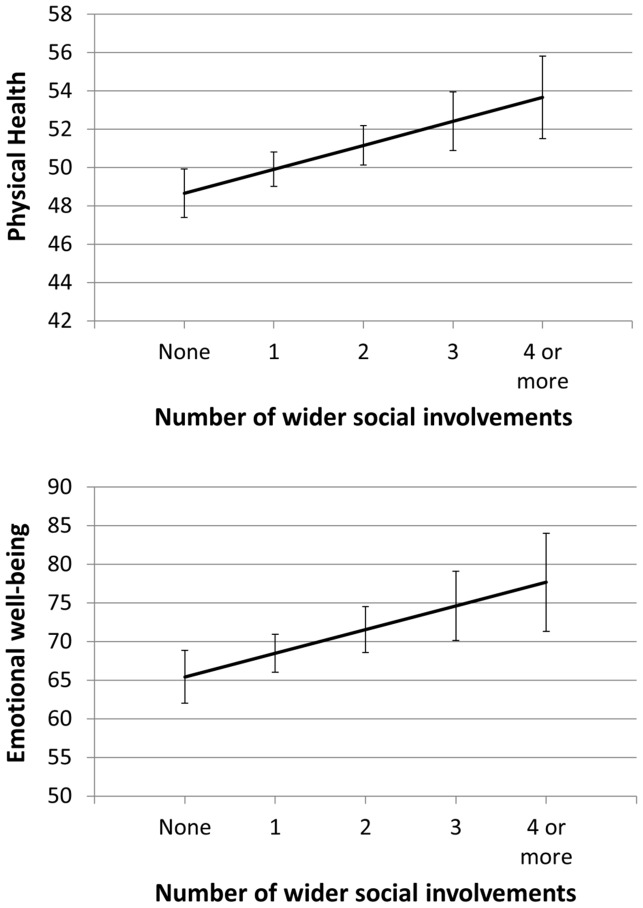
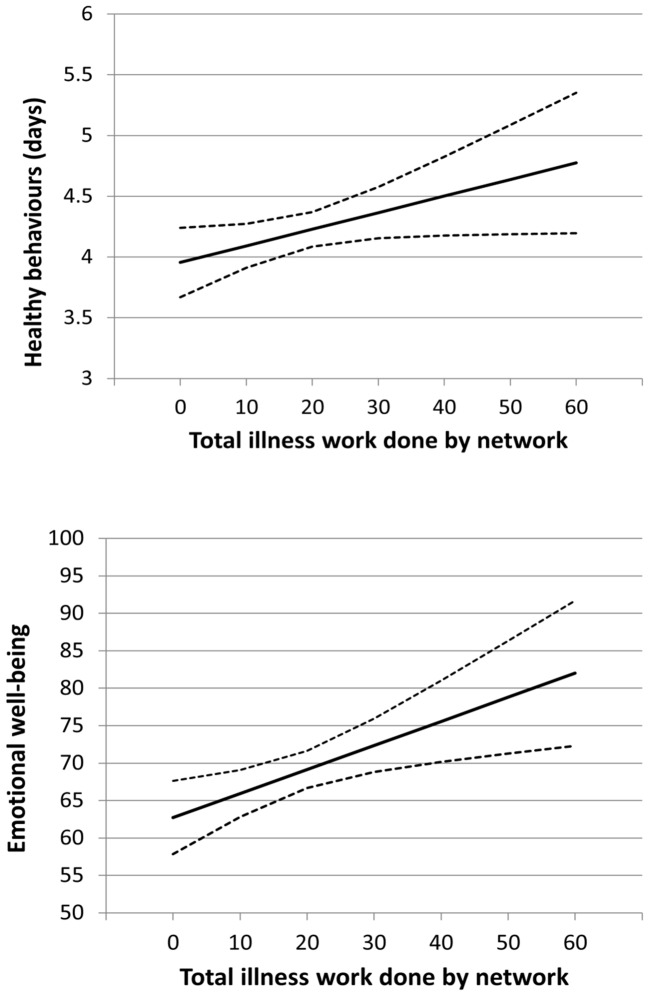
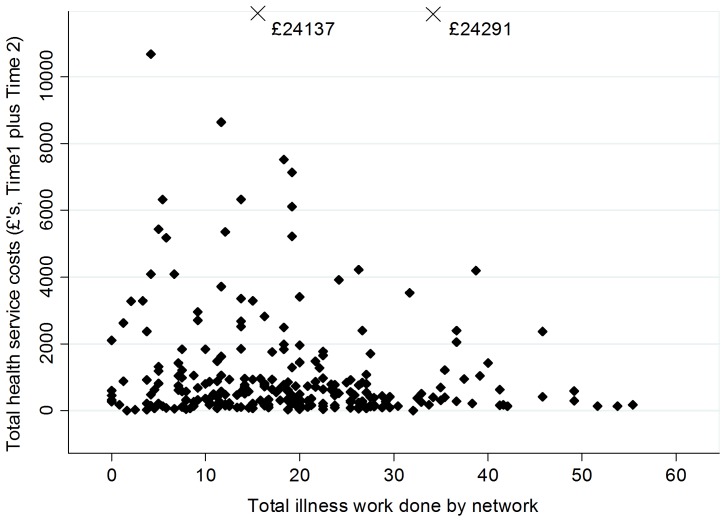
UNLABELLED: Evidence for the effectiveness of patient education programmes in changing individual self-management behaviour is equivocal. More distal elements of personal social relationships and the availability of social capital at the community level may be key to the mobilisation of resources needed for long-term condition self-management to be effective. AIM: To determine how the social networks of people with long-term conditions (diabetes and heart disease) are associated with health-related outcomes and changes in outcomes over time. METHODS: Patients with chronic heart disease (CHD) or diabetes (n = 300) randomly selected from the disease registers of 19 GP practices in the North West of England. Data on personal social networks collected using a postal questionnaire, alongside face-to-face interviewing. Follow-up at 12 months via postal questionnaire using a self-report grid for network members identified at baseline. ANALYSIS: Multiple regression analysis of relationships between health status, self-management and health-economics outcomes, and characteristics of patients' social networks. RESULTS: Findings indicated that: (1) social involvement with a wider variety of people and groups supports personal self-management and physical and mental well-being; (2) support work undertaken by personal networks expands in accordance with health needs helping people to cope with their condition; (3) network support substitutes for formal care and can produce substantial saving in traditional health service utilisation costs. Health service costs were significantly (p<0.01) reduced for patients receiving greater levels of illness work through their networks. CONCLUSIONS: Support for self-management which achieves desirable policy outcomes should be construed less as an individualised set of actions and behaviour and more as a social network phenomenon. This study shows the need for a greater focus on harnessing and sustaining the capacity of networks and the importance of social involvement with community groups and resources for producing a more desirable and cost-effective way of supporting long term illness management.
Overview
The claims and statistics of this paper haven’t been checked yet.
Free: it reads the open-access text and checks the first 5 claims that cite a source we can check. Create a free account to check every claim.
Integrity signals
Registry
Cites
Statistics
Figures
Verification
Claims the paper makes
The claims and statistics of this paper haven’t been checked yet.
Free: it reads the open-access text and checks the first 5 claims that cite a source we can check. Create a free account to check every claim.
Claims other papers make about this one
Each is checked against this paper’s own text: does it say what the citing paper says it does?
The cited source doesn’t support the claim as written.
In the citing paper
“This led to a successful intervention.”
From Implementation, context and complexity (2016) · cites this paper as [85]
Checked by a reasoning model — may be wrong.
Experimental — accuracy not yet measuredThe source backs part of the claim, not all of it — or backs it for a different population, condition or comparison.
In the citing paper
“Kennedy et al. [57, 84–86] overcame this by shifting the focus of their interventions to the normative and relational restructuring of informal social networks, where intervention components and implementation participants were much more loosely coupled.”
From Implementation, context and complexity (2016) · cites this paper as [85]
Experimental — accuracy not yet measuredThe cited source says what the claim attributes to it.
In the citing paper
“Indeed, studies of those with long-term health conditions show social networks can benefit wellbeing even if made up of ‘weak’ ties outside of family and friends51.”
From The experience of Anxiety for people with Parkinson’s disease (2023) · cites this paper as [51]
Self-check
Percentages, sums and reported differences re-computed from the paper’s own numbers.
The self-check needs the paper’s full text.
Citations
Cites
A Caution Regarding Rules of Thumb for Variance Inflation Factors
O’brien, R. M. (2007) · Quality & Quantity · doi:10.1007/s11135-006-9018-6 · Cited by 11,217
Analysis of serial measurements in medical research.
Matthews, J. N., Altman, D. G., Campbell, M. J., & Royston, P. (1990) · BMJ · doi:10.1136/bmj.300.6719.230 · Cited by 3,136
Adjusting for multiple testing—when and how?
Bender, R., & Lange, S. (2001) · Journal of Clinical Epidemiology · doi:10.1016/s0895-4356(00)00314-0 · Cited by 3,004 · cited 1×
“We conducted a large number of statistical tests but used an alpha level of 5% throughout: exploratory studies need to balance the risks of both Type 1 (false positive) and Type 2 (false negative) errors and we did not want to miss potentially important findings by setting too high an alpha level [56].”
MethodThe reliability of a two-item scale: Pearson, Cronbach, or spearman-brown?
Eisinga, R., Grotenhuis, M. T., & Pelzer, B. (2013) · International Journal of Public Health · doi:10.1007/s00038-012-0416-3 · Cited by 2,695 · cited 1×
“The two items had an internal consistency coefficient (Spearman-Brown reliability as just two items [37]) of 0.”
BackgroundThe summary of diabetes self-care activities measure: results from 7 studies and a revised scale.
Toobert, D. J., Hampson, S. E., & Glasgow, R. E. (2000) · Diabetes Care · doi:10.2337/diacare.23.7.943 · Cited by 2,561
The collective dynamics of smoking in a large social network
Christakis, N. A., & Fowler, J. H. (2008) · New England Journal of Medicine · doi:10.1056/nejmsa0706154 · Cited by 2,390
Marsden, P. V. (1990) · Annual Review of Sociology · doi:10.1146/annurev.so.16.080190.002251 · Cited by 2,176 · cited 1×
“8 [45,46].”
Different Strokes from Different Folks: Community Ties and Social Support
Wellman, B., & Wortley, S. (1990) · American Journal of Sociology · doi:10.1086/229572 · Cited by 2,034 · cited 1×
“Also, different types of relationships provide different kinds of support, thus a variety of types of ties are required to ensure stable and adaptable support [15].”
BackgroundFowler, J. H., & Christakis, N. A. (2008) · BMJ · doi:10.1136/bmj.a2338 · Cited by 1,990
Social capital and self-rated health: a contextual analysis.
Kawachi, I., Kennedy, B. P., & Glass, R. (1999) · American Journal of Public Health · doi:10.2105/ajph.89.8.1187 · Cited by 1,856 · cited 2×
“Low stocks of social capital, both at the community and individual levels, have been consistently shown to be strongly associated with poorer health outcomes [16,17].”
Background
Cited by
Items 201–238 of 238
Reidy, C., Foster, C. L., & Rogers, A. E. (2020) · Journal of Medical Internet Research · doi:10.2196/21381
Self-citationLaurie, E., Msoka, E. F., Wyke, S., Yongolo, N. M., Bunn, C., Msoka, P. C., McIntosh, E., & Mmbaga, B. T. (2024) · SSM - Qualitative Research in Health · doi:10.1016/j.ssmqr.2024.100481
Research Progress on Self-Care Ability of Chronic Disease Patients
杨, 子. (2024) · Nursing Science · doi:10.12677/ns.2024.1310199
Summary of the Best Evidence for Self-Management in Patients with Rheumatoid Arthritis
陈, 敏. (2024) · Nursing Science · doi:10.12677/ns.2024.1312239
Social Networks and Loneliness in the Blackfeet American Indian Community
John‐Henderson, N. A., Henderson‐Matthews, B., Wood, Z. J., Gilham, S., Runner, G. H., Johnson, L. R., Lafromboise, M. E., Malatare, M., & Salois, E. M. (2025) · International Journal of Behavioral Medicine · doi:10.1007/s12529-025-10347-0
Kelly, J. P. (2025) · Health Communication · doi:10.1080/10410236.2025.2499098
“…includes positive outcomes, such as a reduction of stress (Adelman et al., 1987) and benefits associated with the management of chronic conditions (Reeves et al., 2014; Rogers et al., 2014; Vassilev et al., 2014) and negative outcomes, such as increased suicidality (Baller & Richardson, 2009) and…”
A Narrative Review of the Support Structure Available to Newly Diagnosed Individuals with Diabetes
Mphasha, M. H. (2023) · The Open Public Health Journal · doi:10.2174/18749445-v16-230822-2023-74
Shortland, D. L., Fazil, Q., & Lavis, A. (2025) · BMJ Open · doi:10.1136/bmjopen-2025-099557
Bremond, M., Raigneau, M.-C., Burnel, J., & Pautrat, M. (2025) · Journal of Personalized Medicine · doi:10.3390/jpm15100462
“2 based on studies retained in the systematic review [16–19].”
India’s Centenarians: An Enquiry
Rajan, S. I., & Arya, U. R. (2025) · Springer eBooks · doi:10.1007/978-981-99-7842-7_144
Goh, M., Suppiah, S. D., Troeung, L., Visaria, A., & Malhotra, R. (2025) · Research Square · doi:10.21203/rs.3.rs-7987970/v1
Pigott, J., Kane, E. J., Ambler, G., Walters, K. R., & Schrag, A. E. (2022) · Figshare · doi:10.6084/m9.figshare.18230485
Pigott, J., Kane, E. J., Ambler, G., Walters, K. R., & Schrag, A. E. (2022) · Figshare · doi:10.6084/m9.figshare.18230473
McCallum, M. (2024) · Enlighten: Theses (The University of Glasgow) · doi:10.5525/gla.thesis.84272
Pigott, J., Kane, E. J., Ambler, G., Walters, K. R., & Schrag, A. E. (2022) · Figshare · doi:10.6084/m9.figshare.18230476
Pigott, J., Kane, E. J., Ambler, G., Walters, K. R., & Schrag, A. E. (2022) · Figshare · doi:10.6084/m9.figshare.18230470
Welch, L., Orlando, R., Lin, S. X., Vassilev, I., & Rogers, A. E. (2020) · Figshare · doi:10.6084/m9.figshare.12452330
Self-citationPigott, J., Kane, E. J., Ambler, G., Walters, K. R., & Schrag, A. E. (2022) · Figshare · doi:10.6084/m9.figshare.18230482
“Between a rock and a hard place”: the “wicked problem” of coproducing chronic oedema care
Dring, E. (2022) · Nottingham ePrints (University of Nottingham)
Social support networks of people recently diagnosed with HIV in Queensland: A qualitative study
Hollingdrake, O., Fitzgerald, L., Dean, J. A., Mutch, A. J., & Lui, C. (2020) · QUT ePrints (Queensland University of Technology)
Reidy, C. (2019) · ePrints Soton (University of Southampton)
Beutel, A. (2025) · Open University of Cape Town (University of Cape Town)
Beyond the hospital: what is the role of social networks in acute kidney injury recovery?
Bonfield, B., Veighey, K. V., & Vassilev, I. (2026) · Journal of Kidney Care · doi:10.12968/jokc.2026.11.1.8
Self-citationHitch, R. (2023) · Tuwhera (Auckland University of Technology)
Band, R. J., Ellis, J., Kinsella, K., James, E., Ciccognani, S., Breheny, K., Lawrence, M. M., Kandiyali, R., Ewings, S. M., & Rogers, A. E. (2026) · Frontiers in Public Health · doi:10.3389/fpubh.2026.1701579
“The study compared the intervention with a wait-list control group for addressing loneliness and social isolation (50).”
Self-citationSehmbi, T., Cao, R., Sapkota, R., & Pardhan, S. (2026) · Journal of Diabetes Research · doi:10.1155/jdr/8119786
“This fi nding has been demonstrated in other chronic conditions, where social networks play an important role in supporting the management of these conditions [38, 39].”
Bremond, M. (2024) · theses.fr (ABES) · doi:10.70675/ca5cb2c4z19c5z40dbz9ea3z31362e436204
Kylén, M., Johansson, M. F., McCarthy, L., Meijering, L., Tomsone, S., Tistad, M., & Elf, M. (2026) · BMJ Open · doi:10.1136/bmjopen-2025-110976
“28 29 Additionally, collective e ffi cacy, the belief that a group can achieve common goals, may complement individual self-efficacy.”
Rodríguez-Pérez, M. P., Hoyas, E. H., León-Herrera, S., Gómez-Bravo, R., García‐Bravo, C., Rodríguez-Rodríguez, E., & Poveda-García, A. (2026) · Frontiers in Pediatrics · doi:10.3389/fped.2026.1878494
“This level of chronicity may reflect, at least in part, a selection effect attributable to the recruitment strategy: families engaged with patient associations and support networks are likely to represent those with greater symptom burden and longer illness trajectories (21).”
Social connectedness in long-term care settings: A concept analysis
Smith, L., Theeke, L. A., & Kim, H. J. (2026) · Geriatric Nursing · doi:10.1016/j.gerinurse.2026.104164
Liu, Y., Zeng, L., Zhou, F., Zhang, W., Yang, C., & Liu, H. (2026) · Archives of Dermatological Research · doi:10.1007/s00403-026-04841-y
“When patients felt understood and supported, their perceived suffering was alleviated, and their emotional resilience improved [24, 25].”
Hanna, J. R., Anand, R., Paul, S., McCloy, K., Mhamane, S., Strutt, L., & Semple, C. J. (2026) · BMC Medicine · doi:10.1186/s12916-026-05157-4
Gkintoni, E., Farmakopoulou, I., Theodoratou, M., & Panagioti, M. (2026) · Brain Sciences · doi:10.3390/brainsci16090993
Cai, X., Pan, J., Li, G., Chen, T., Fang, Z., Ren, Z., Peng, L., Huang, J., Gong, X., Chen, Q., et al. (2026) · Frontiers in Endocrinology · doi:10.3389/fendo.2026.1934060
“This resonates with fi ndings from David Reeves et al (35), where broad social engagement enhanced self-management through knowledge sharing.”
Patient Safety in Low Resource Settings
(2026) · Frontiers research topics · doi:10.3389/978-2-8325-8763-8
Naruepatr, J. (2024) · Journal of Social Work and Social Administration
Smyth, N., Alwan, N. A., Band, R., Chaudhry, A., Chew-Graham, C. A., Gopal, D., Jackson, M., Kingstone, T., Wright, A., & Ridge, D. (2022) · doi:10.1371/journal.pone.0275166.r002
Becker, M., Dai, J., Chang, A. L., Feyaerts, D., Stelzer, I. A., Zhang, M., Berson, E., Saarunya, G., Francesco, D. D., Espinosa, C., et al. (2022) · doi:10.3389/fped.2022.933266.s001
Metadata
- Authors
- Reeves, D., Blickem, C., Vassilev, I., Brooks, H., Kennedy, A., Richardson, G., & Rogers, A.
- Affiliations
- University of Manchester (GB)
- National Institute for Health and Care Research (GB)
- University of York (GB)
- Corresponding author
- Reeves, David
- Venue
- PLoS ONE
- Publisher
- Public Library of Science (PLoS)
- Published
- 2014-06-02
- Volume
- 9
- Issue
- 6
- Pages
- e98340
- ISSN
- 1932-6203 (ISSN-L)
- PMC
- PMC4041782
- OpenAlex
- W2104545849
- Cited by
- 213
- References
- 53
- Citations by year
- 2026: 13 · 2025: 13 · 2024: 14 · 2023: 15 · 2022: 21 · 2021: 13 · 2020: 21 · 2019: 18 · 2018: 23 · 2017: 17 · 2016: 19 · 2015: 20 · 2014: 5
- FWCI
- 25.88
- Type
- journal article
- Language
- en
- Open access
- gold
- doi.org
- Locations
- PLoS ONE (publishedVersion, cc-by)
- PubMed Central (publishedVersion, cc-by)
- PubMed (publishedVersion)
- Liverpool John Moores University (acceptedVersion)
- ePrints Soton (University of Southampton) (acceptedVersion)
- DOAJ (DOAJ: Directory of Open Access Journals) (submittedVersion, cc-by-sa)
- Research Explorer (The University of Manchester) (submittedVersion)
- Funders
- National Institute for Health and Care Research
- University of Manchester
- Topics
- Social Sciences › Health › Health disparities and outcomes
- Health Sciences › Medicine › Endocrinology, Diabetes and Metabolism › Diabetes Management and Education
- Health Sciences › Medicine › Epidemiology › Chronic Disease Management Strategies
- Keywords
- social networks, self-management, chronic disease, chronic heart disease, diabetes mellitus, social capital, informal support, patient well-being, community participation, patient education
- MeSH terms
- Adult, Aged, Aged, 80 and over, Chronic Disease, England, Female, Health Status, Humans, Longitudinal Studies, Male, Middle Aged, Self Care, Social Support, Young Adult
About these checks
Registry, retraction, Cites and statistics results are computed, not judged, with one exception: a printed reference that no index lists is read once by a model before it counts as a citation error. Claims are extracted by a model and kept only when their quote appears verbatim in the text; each cited source is then checked, with a model’s help, for whether it says what the claim relies on. Those verdicts can be wrong — read the claim’s quote and the cited source before relying on one.
Statistics and arithmetic are recomputed, not judged.
Confidence bands are shown only for fields calibrated on our annotated test set. None is calibrated yet, so no band is shown.
What counts as a claim ›How we measure confidence ›How we check this ›
Are you an author, or do you see a problem with this page? Request a review
Data sources
Bibliographic data: Semantic Scholar, OpenAlex, Crossref.
Contains information from the Semantic Scholar Academic Graph Datasets, made available under the ODC Attribution License (ODC-BY 1.0).
Semantic Scholar’s data is described in: Kinney, R., et al. (2023). The Semantic Scholar Open Data Platform. arXiv:2301.10140.
