

The Involvement of the Mid1/Cch1/Yvc1 Calcium Channels in Aspergillus fumigatus Virulence
Open accessThe DOI matches its Crossref record; 75 of the 75 references it cites were found in a registry or an index.
Abstract
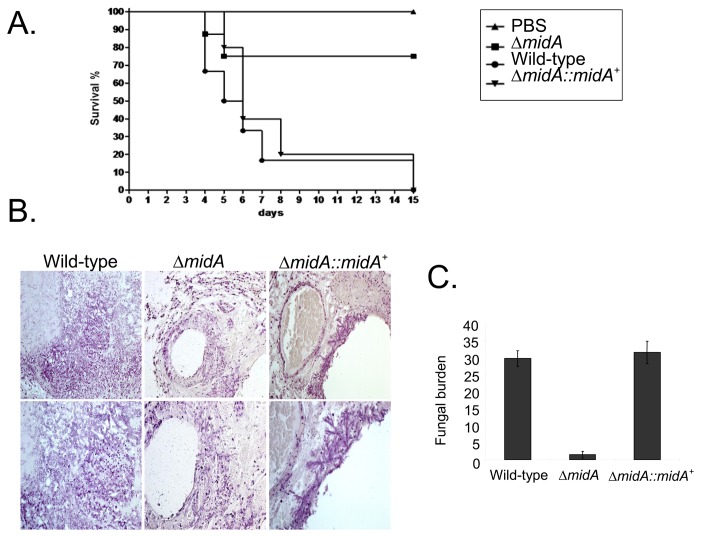
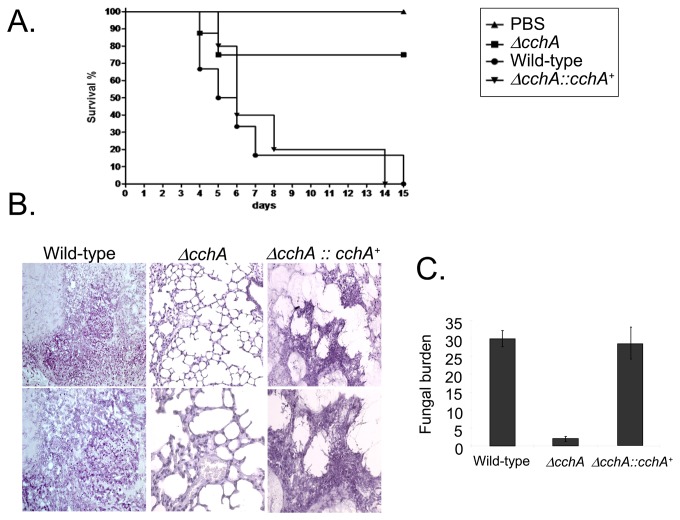
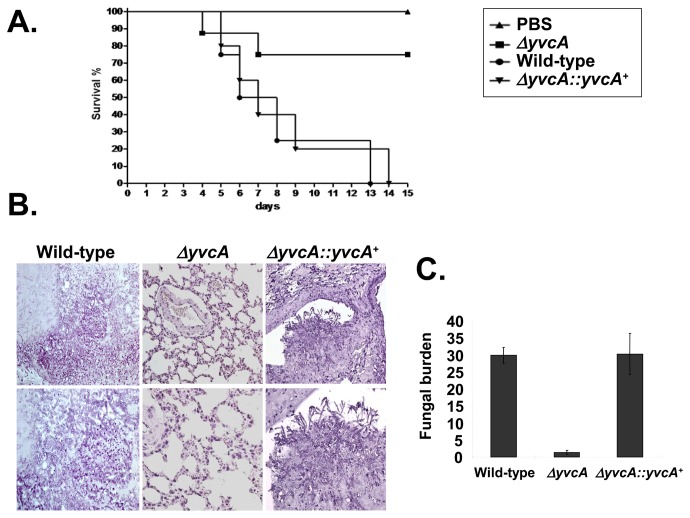
Aspergillus fumigatus is a major opportunistic pathogen and allergen of mammals. Calcium homeostasis and signaling is essential for numerous biological processes and also influences A. fumigatus pathogenicity. The presented study characterized the function of the A. fumigatus homologues of three Saccharomyces cerevisiae calcium channels, voltage-gated Cch1, stretch-activated Mid1 and vacuolar Yvc1. The A. fumigatus calcium channels cchA, midA and yvcA were regulated at transcriptional level by increased calcium levels. The YvcA::GFP fusion protein localized to the vacuoles. Both ΔcchA and ΔmidA mutant strains showed reduced radial growth rate in nutrient-poor minimal media. Interestingly, this growth defect in the ΔcchA strain was rescued by the exogenous addition of CaCl2. The ΔcchA, ΔmidA, and ΔcchA ΔmidA strains were also sensitive to the oxidative stress inducer, paraquat. Restriction of external Ca(2+) through the addition of the Ca(2+)-chelator EGTA impacted upon the growth of the ΔcchA and ΔmidA strains. All the A. fumigatus ΔcchA, ΔmidA, and ΔyvcA strains demonstrated attenuated virulence in a neutropenic murine model of invasive pulmonary aspergillosis. Infection with the parental strain resulted in a 100% mortality rate at 15 days post-infection, while the mortality rate of the ΔcchA, ΔmidA, and ΔyvcA strains after 15 days post-infection was only 25%. Collectively, this investigation strongly indicates that CchA, MidA, and YvcA play a role in A. fumigatus calcium homeostasis and virulence.
Overview
The claims and statistics of this paper haven’t been checked yet.
Free: it reads the open-access text and checks the first 5 claims that cite a source we can check. Create a free account to check every claim.
Integrity signals
Registry
Cites
Statistics
Figures
Verification
Claims the paper makes
The claims and statistics of this paper haven’t been checked yet.
Free: it reads the open-access text and checks the first 5 claims that cite a source we can check. Create a free account to check every claim.
Claims other papers make about this one
Each is checked against this paper’s own text: does it say what the citing paper says it does?
In the citing paper
“High-affinity plasma membrane calcium channels Cch1 and Mid1 have been characterized (377).”
From Aspergillus fumigatus and Aspergillosis in 2019 (2019) · cites this paper as [377]
Self-check
Percentages, sums and reported differences re-computed from the paper’s own numbers.
The self-check needs the paper’s full text.
Citations
Cites
The versatility and universality of calcium signalling
Berridge, M. J., Lipp, P., & Bootman, M. D. (2000) · Nature Reviews Molecular Cell Biology · doi:10.1038/35036035 · Cited by 5,701
Calcium signalling: dynamics, homeostasis and remodelling
Berridge, M. J., Bootman, M. D., & Roderick, H. L. (2003) · Nature Reviews Molecular Cell Biology · doi:10.1038/nrm1155 · Cited by 5,585 · cited 3×
“Calcium-mediated signaling regulates a diverse array of biological processes including gene transcription, protein conformation, energy metabolism, endo- and exo-cytosis, cytoskeletal arrangement, and cell physiology [1,2].”
BackgroundSchiestl, R. H., & Gietz, R. D. (1989) · Current Genetics · doi:10.1007/bf00340712 · Cited by 2,131 · cited 1×
“cerevisiae strain SC94721 using the lithium acetate method [67].”
MethodColot, H. V., Park, G., Turner, G. E., Ringelberg, C., Crew, C. M., Litvinkova, L., Weiss, R. L., Borkovich, K. A., & Dunlap, J. C. (2006) · Proceedings of the National Academy of Sciences · doi:10.1073/pnas.0601456103 · Cited by 1,117
Pathogenesis of Aspergillus fumigatus in Invasive Aspergillosis
Dagenais, T. R. T., & Keller, N. P. (2009) · Clinical Microbiology Reviews · doi:10.1128/cmr.00055-08 · Cited by 993 · cited 2×
“Aspergillus fumigatus is a major opportunistic pathogen and allergen of mammals [40], [41].”
BackgroundMeiotic and Mitotic Recombination in Aspergillus and Its Chromosomal Aberrations
Käfer, E. (1977) · Advances in Genetics · doi:10.1016/s0065-2660(08)60245-x · Cited by 736
Allergic bronchopulmonary aspergillosis
Greenberger, P. A. (2002) · Journal of Allergy and Clinical Immunology · doi:10.1067/mai.2002.130179 · Cited by 476
Yoshimoto, H., Saltsman, K., Gasch, A. P., Li, H. X., Ogawa, N., Botstein, D., Brown, P. O., & Cyert, M. S. (2002) · Journal of Biological Chemistry · doi:10.1074/jbc.m202718200 · Cited by 404
Calcineurin signaling in Saccharomyces cerevisiae: how yeast go crazy in response to stress.
Cyert, M. S. (2003) · Biochemical and Biophysical Research Communications · doi:10.1016/s0006-291x(03)01552-3 · Cited by 333 · cited 1×
“restoration of calcium homeostasis [9–12].”
Harnessing calcineurin as a novel anti-infective agent against invasive fungal infections.
Steinbach, W. J., Reedy, J. L., Cramer, R. A., Perfect, J. R., & Heitman, J. (2007) · Nature Reviews Microbiology · doi:10.1038/nrmicro1680 · Cited by 313 · cited 1×
“Calcium homeostasis and signaling is essential for numerous biological processes and importantly impacts upon the growth, stress tolerance and virulence of fungal pathogens [1], [48], [49].”
BackgroundRispail, N., Soanes, D. M., Ant, C., Czajkowski, R., Grünler, A., Huguet, R., Perez-Nadales, E., Poli, A., Sartorel, E., Valiante, V., et al. (2009) · Fungal Genetics and Biology · doi:10.1016/j.fgb.2009.01.002 · Cited by 309 · cited 1×
“cerevisiae have been identified in several filamentous fungi and linked to pathogenesis [54], [55].”
BackgroundDenis, V., & Cyert, M. S. (2002) · The Journal of Cell Biology · doi:10.1083/jcb.200111004 · Cited by 306
Stress, drugs, and evolution: the role of cellular signaling in fungal drug resistance.
Cowen, L. E., & Steinbach, W. J. (2008) · Eukaryotic Cell · doi:10.1128/ec.00041-08 · Cited by 285 · cited 1×
“Calcium is an important cellular signal for fungal drug resistance [46].”
BackgroundMowat, E., Butcher, J., Lang, S., Williams, C., & Ramage, G. (2007) · Journal of Medical Microbiology · doi:10.1099/jmm.0.47247-0 · Cited by 259 · cited 2×
“Crystal violet assays were used to assess biofilm formation as described previously by Mowat et al [72].”
MethodStathopoulos-Gerontides, A., Guo, J. J., & Cyert, M. S. (1999) · Genes & Development · doi:10.1101/gad.13.7.798 · Cited by 240 · cited 1×
“restoration of calcium homeostasis [9–12].”
CRZ1 , a target of the calcineurin pathway in Candida albicans
Karababa, M., Valentino, E., Pardini, G., Coste, A. T., Bille, J., & Sanglard, D. (2006) · Molecular Microbiology · doi:10.1111/j.1365-2958.2005.05037.x · Cited by 231 · cited 1×
“restoration of calcium homeostasis [9–12].”
Palmer, C. P., Zhou, X.-L., Lin, J., Loukin, S. H., Kung, C., & Saimi, Y. (2001) · Proceedings of the National Academy of Sciences · doi:10.1073/pnas.141036198 · Cited by 230 · cited 2×
“member of the transient receptor potential (TRP) family [34], [35]”
BackgroundIida, H., Nakamura, H., Ono, T., Okumura, M. S., & Anraku, Y. (1994) · Molecular and Cellular Biology · doi:10.1128/mcb.14.12.8259 · Cited by 218
Nguyen, Q. B., Kadotani, N., Kasahara, S., Tosa, Y., Mayama, S., & Nakayashiki, H. (2008) · Molecular Microbiology · doi:10.1111/j.1365-2958.2008.06242.x · Cited by 217
A Homolog of Voltage-Gated Ca 2+ Channels Stimulated by Depletion of Secretory Ca 2+ in Yeast
Locke, E. G., Bonilla, M., Liang, L., Takita, Y., & Cunningham, K. W. (2000) · Molecular and Cellular Biology · doi:10.1128/mcb.20.18.6686-6694.2000 · Cited by 212
Characterization of the Calcium-mediated Response to Alkaline Stress in Saccharomyces cerevisiae
Viladevall, L., Serrano, R., Ruiz, A., Domenech, G., Giraldo, J., Barceló, A., & Ariño, J. (2004) · Journal of Biological Chemistry · doi:10.1074/jbc.m403606200 · Cited by 207 · cited 1×
“response of the HACS [7,19], [22–24].”
Paidhungat, M., & Garrett, S. (1997) · Molecular and Cellular Biology · doi:10.1128/mcb.17.11.6339 · Cited by 191
The Saccharomyces cerevisiae CCH1 gene is involved in calcium influx and mating
Fischer, M., Schnell, N., Chattaway, J., Davies, P., Dixon, G., & Sanders, D. (1997) · FEBS Letters · doi:10.1016/s0014-5793(97)01466-x · Cited by 185 · cited 1×
“Cch1 [17], [18], the stretch-activated calcium channel/regulatory”
Cramer, R. A., Perfect, B. Z., Pinchai, N., Park, S., Perlin, D. S., Asfaw, Y. G., Heitman, J., Perfect, J. R., & Steinbach, W. J. (2008) · Eukaryotic Cell · doi:10.1128/ec.00086-08 · Cited by 172 · cited 1×
“[6,33,42], [49–53].”
Coping with stress: calmodulin and calcineurin in model and pathogenic fungi
Kraus, P. R., & Heitman, J. (2003) · Biochemical and Biophysical Research Communications · doi:10.1016/s0006-291x(03)01528-6 · Cited by 169 · cited 1×
“Additionally, in yeasts and filamentous fungi, Ca is important for the regulation of cell cycle, sporulation, hyphal morphogenesis, hyphal orientation and pathogenesis [3–8].”
BackgroundFunctional characterization of the Aspergillus fumigatus CRZ1 homologue, CrzA
Soriani, F. M., Malavazi, I., Da Silva Ferreira, M. E., Savoldi, M., Von Zeska Kress, M. R., De Souza Goldman, M. H., Loss, O., Bignell, E., & Goldman, G. H. (2008) · Molecular Microbiology · doi:10.1111/j.1365-2958.2008.06122.x · Cited by 168
Self-citationGoldman, G. H., dos Reis Marques, E., Duarte Ribeiro, D. C., de Souza Bernardes, L. A., Quiapin, A. C., Vitorelli, P. M., Savoldi, M., Semighini, C. P., de Oliveira, R. C., Nunes, L. R., et al. (2003) · Eukaryotic Cell · doi:10.1128/ec.2.1.34-48.2003 · Cited by 162 · cited 1×
“[68].”
Self-citationThe transient receptor potential channel on the yeast vacuole is mechanosensitive
Zhou, X.-L., Batiza, A. F., Loukin, S. H., Palmer, C. P., Kung, C., & Saimi, Y. (2003) · Proceedings of the National Academy of Sciences · doi:10.1073/pnas.1230540100 · Cited by 154 · cited 1×
“member of the transient receptor potential (TRP) family [34], [35]”
BackgroundPittman, J. K. (2011) · Cell Calcium · doi:10.1016/j.ceca.2011.01.004 · Cited by 149
Zelter, A., Benčina, M., Bowman, B. J., Yarden, O., & Read, N. D. (2004) · Fungal Genetics and Biology · doi:10.1016/j.fgb.2004.05.001 · Cited by 146 · cited 1×
“cerevisiae have been identified in several filamentous fungi and linked to pathogenesis [54], [55].”
Background113 Bronchoalveolar lavage in allergic bronchopulmonary aspergillosis (ABPA)
Greenberger, P., Smith, L. J., Roberts, M. S., & Liotta, J. L. (1985) · Journal of Allergy and Clinical Immunology · doi:10.1016/0091-6749(85)90248-9 · Cited by 145
Calcium signaling alterations, oxidative stress, and autophagy in aging
Ureshino, R. P., Rocha, K. K., Lopes, G. S., Bincoletto, C., & Smaili, S. S. (2014) · Antioxidants & Redox Signaling · doi:10.1089/ars.2013.5777 · Cited by 143 · cited 1×
“produced due to an ineffective mitochondrial respiration [61].”
BackgroundGood fungi gone bad: The corruption of calcineurin
Fox, D. S., & Heitman, J. (2002) · BioEssays · doi:10.1002/bies.10157 · Cited by 137 · cited 1×
“restoration of calcium homeostasis [9–12].”
Muller, E. M., Locke, E. G., & Cunningham, K. W. (2001) · Genetics · doi:10.1093/genetics/159.4.1527 · Cited by 133
Dinamarco, T. M., Freitas, F. Z., Almeida, R. S., Brown, N. A., dos Reis, T. F., Ramalho, L. N. Z., Savoldi, M., Goldman, M. H. S., Bertolini, M. C., & Goldman, G. H. (2012) · PLoS ONE · doi:10.1371/journal.pone.0037591 · Cited by 127 · cited 3×
“fumigatus, pmcA-C, were shown to be involved in calcium and manganese metabolism, but only pmcA influenced virulence [45].”
BackgroundSelf-citationSemighini, C. P., Marins, M., Goldman, M. H. S., & Goldman, G. H. (2002) · Applied and Environmental Microbiology · doi:10.1128/aem.68.3.1351-1357.2002 · Cited by 126 · cited 1×
“[74].”
Self-citationFunctional characterization of the Aspergillus fumigatus calcineurin
Ferreira, M. E. D. S., Heinekamp, T., Härtl, A., Brakhage, A. A., Semighini, C. P., Harris, S. D., Savoldi, M., de Gouvêa, P. F., Goldman, M. H. D. S., & Goldman, G. H. (2007) · Fungal Genetics and Biology · doi:10.1016/j.fgb.2006.08.004 · Cited by 121
Self-citationFig1p Facilitates Ca2+ Influx and Cell Fusion during Mating of Saccharomyces cerevisiae
Muller, E. M., Mackin, N. A., Erdman, S. E., & Cunningham, K. W. (2003) · Journal of Biological Chemistry · doi:10.1074/jbc.m304089200 · Cited by 112
Vacuolar Membrane Dynamics in the Filamentous Fungus Aspergillus oryzae
Shoji, J.-Y., Arioka, M., & Kitamoto, K. (2006) · Eukaryotic Cell · doi:10.1128/ec.5.2.411-421.2006 · Cited by 101 · cited 1×
“CMAC (CellTracker Blue CMAC - Molecular Probes) staining of vacuoles was performed as described previously [71].”
MethodNew Regulators of a High Affinity Ca2+ Influx System Revealed through a Genome-wide Screen in Yeast
Martin, D. C., Kim, H., Mackin, N. A., Maldonado-Báez, L., Evangelista, C. C., Beaudry, V. G., Dudgeon, D. D., Naiman, D. Q., Erdman, S. E., & Cunningham, K. W. (2011) · Journal of Biological Chemistry · doi:10.1074/jbc.m110.177451 · Cited by 93
Notes High‐efficiency transformation system for the biocontrol agents, Trichoderma spp.
Herrera‐Estrella, A., Goldman, G. H., & Montagu, M. V. (1990) · Molecular Microbiology · doi:10.1111/j.1365-2958.1990.tb00654.x · Cited by 88 · cited 1×
“The deleted mutant strains were complemented by co-transforming the respective gene plus a 1 kb flanking regions together with the pHATa vector [69] and selecting for hygromycin resistance on MM containing 150 mg/ml of hygromycin B.”
MethodSelf-citationWang, H., Liang, Y., Zhang, B., Zheng, W., Xing, L., & Li, M. (2011) · FEMS Yeast Research · doi:10.1111/j.1567-1364.2011.00730.x · Cited by 85 · cited 1×
“morphogenesis and attenuated virulence [38], [39], suggesting that ycv1 homologues may also play a role in pathogenicity.”
BackgroundJuvvadi, P. R., Fortwendel, J. R., Rogg, L. E., Burns, K. A., Randell, S. H., & Steinbach, W. J. (2011) · Molecular Microbiology · doi:10.1111/j.1365-2958.2011.07886.x · Cited by 80 · cited 1×
“[6,33,42], [49–53].”
Peiter, E., Fischer, M., Sidaway, K., Roberts, S. K., & Sanders, D. (2005) · FEBS Letters · doi:10.1016/j.febslet.2005.09.058 · Cited by 77
Cch1 Mediates Calcium Entry in Cryptococcus neoformans and Is Essential in Low-Calcium Environments
Liu, M., Du, P., Heinrich, G., Cox, G. M., & Gelli, A. (2006) · Eukaryotic Cell · doi:10.1128/ec.00158-06 · Cited by 76 · cited 1×
“attenuated in the respective mouse infection models [29,60].”
BackgroundShopova, I., Bruns, S., Thywissen, A., Kniemeyer, O., Brakhage, A. A., & Hillmann, F. (2013) · Frontiers in Microbiology · doi:10.3389/fmicb.2013.00141 · Cited by 75 · cited 1×
“[73].”
Yu, Q., Wang, F., Zhao, Q., Chen, J., Zhang, B., Ding, X., Wang, H., Yang, B., Lu, G., Zhang, B., et al. (2013) · International Journal of Medical Microbiology · doi:10.1016/j.ijmm.2013.11.022 · Cited by 71 · cited 1×
“morphogenesis and attenuated virulence [38], [39], suggesting that ycv1 homologues may also play a role in pathogenicity.”
BackgroundHallen, H. E., & Trail, F. (2008) · Eukaryotic Cell · doi:10.1128/ec.00248-07 · Cited by 71 · cited 2×
“and development, but they are still virulent [25–27].”
BackgroundWang, S., Cao, J., Liu, X., Hu, H., Shi, J. R., Zhang, S., Keller, N. P., & Lü, L. (2012) · PLoS ONE · doi:10.1371/journal.pone.0046564 · Cited by 68 · cited 3×
“nidulans using the yeast two-hybrid system [8].”
BackgroundTeepe, A. G., Loprete, D. M., He, Z., Hoggard, T., & Hill, T. W. (2006) · Fungal Genetics and Biology · doi:10.1016/j.fgb.2006.10.001 · Cited by 67 · cited 1×
“The gfp and yvc sequences were separated by four additional codons that after translation produce a four amino acid linker (glycine-threonine-arginine-glycine) [70].”
BackgroundCa2+ signalling early in evolution – all but primitive
Plattner, H., & Verkhratsky, A. (2013) · Journal of Cell Science · doi:10.1242/jcs.127449 · Cited by 64
Properties of the intracellular transient receptor potential (TRP) channel in yeast, Yvc1
Chang, Y., Schlenstedt, G., Flockerzi, V., & Beck, A. (2010) · FEBS Letters · doi:10.1016/j.febslet.2009.12.035 · Cited by 63 · cited 1×
“mediates calcium release from the vacuole in response to hypertonic shock [36], [37].”
BackgroundJiang, H., Shen, Y., Liu, W., & Lü, L. (2013) · Fungal Genetics and Biology · doi:10.1016/j.fgb.2013.11.003 · Cited by 63 · cited 1×
“However, Jiang and colleagues [63] showed that the deletion of afmid1, referred to as DmidA in the current investigation, led to hypervirulence in the immunosuppressed mice model.”
BackgroundIdentification of possible targets of the Aspergillus fumigatus CRZ1 homologue, CrzA
Soriani, F. M., Malavazi, I., Savoldi, M., Espeso, E. A., Dinamarco, T. M., Bernardes, L. Â. D. S., Ferreira, M. E. S., Goldman, M. H. S., & Goldman, G. H. (2010) · BMC Microbiology · doi:10.1186/1471-2180-10-12 · Cited by 61
Self-citationJuvvadi, P. R., Gehrke, C., Fortwendel, J. R., Lamoth, F., Soderblom, E. J., Cook, E. C., Hast, M. A., Asfaw, Y. G., Moseley, M. A., Creamer, T. P., et al. (2013) · PLoS Pathogens · doi:10.1371/journal.ppat.1003564 · Cited by 57 · cited 1×
“[6,33,42], [49–53].”
Cavinder, B., Hamam, A. M., Lew, R. R., & Trail, F. (2011) · Eukaryotic Cell · doi:10.1128/ec.00235-10 · Cited by 57 · cited 2×
“and development, but they are still virulent [25–27].”
BackgroundCavinder, B., & Trail, F. (2012) · Eukaryotic Cell · doi:10.1128/ec.00007-12 · Cited by 55 · cited 2×
“(LACS) calcium uptake system have been identified in fungi [7], [8], [13–16].”
BackgroundCch1 Restores Intracellular Ca2+ in Fungal Cells during Endoplasmic Reticulum Stress
Hong, M.-P., Vu, K., Bautos, J., & Gelli, A. (2010) · Journal of Biological Chemistry · doi:10.1074/jbc.m109.056218 · Cited by 54
Groppi, S., Belotti, F., Brandão, R. L., Martegani, E., & Tisi, R. (2011) · Cell Calcium · doi:10.1016/j.ceca.2011.03.006 · Cited by 53 · cited 1×
“(LACS) calcium uptake system have been identified in fungi [7], [8], [13–16].”
BackgroundTeng, J., Goto, R., Iida, K., Kojima, I., & Iida, H. (2008) · Microbiology · doi:10.1099/mic.0.2008/021089-0 · Cited by 53 · cited 1×
“human host [8], [29–31].”
Phenotype of a Mechanosensitive Channel Mutant, mid - 1 , in a Filamentous Fungus, Neurospora crassa
Lew, R. R., Abbas, Z., Anderca, M. I., & Free, S. J. (2008) · Eukaryotic Cell · doi:10.1128/ec.00411-07 · Cited by 47
Yu, Q., Ding, X., Zhang, B., Xu, N., Jia, C., Mao, J., Zhang, B., Xing, L., & Li, M. (2014) · FEMS Yeast Research · doi:10.1111/1567-1364.12150 · Cited by 44 · cited 1×
“albicans ability to adhere to a polystyrene surface and buccal epithelial cells was inhibited by exposure to verapamil, a calcium channel blocker [47].”
BackgroundPinchai, N., Juvvadi, P. R., Fortwendel, J. R., Perfect, B. Z., Rogg, L. E., Asfaw, Y. G., & Steinbach, W. J. (2010) · Eukaryotic Cell · doi:10.1128/ec.00378-09 · Cited by 43
Iida, K., Tada, T., & Iida, H. (2004) · FEBS Letters · doi:10.1016/j.febslet.2004.09.021 · Cited by 39
Roles of Cch1 and Mid1 in Morphogenesis, Oxidative Stress Response and Virulence in Candida albicans
Yu, Q., Wang, H., Cheng, X., Xu, N., Ding, X., Xing, L., & Li, M. (2012) · Mycopathologia · doi:10.1007/s11046-012-9569-0 · Cited by 39
Bormann, J., & Tudzynski, P. (2009) · Microbiology · doi:10.1099/mic.0.030825-0 · Cited by 37 · cited 2×
“loss of plant virulence [28].”
BackgroundHarren, K., & Tudzynski, B. (2013) · Eukaryotic Cell · doi:10.1128/ec.00338-12 · Cited by 33 · cited 16×
“However, in B. cinerea a split ubiquitin-based yeast two-hybrid approach did not reveal any interaction between Mid1 and Cch1 [16].”
BackgroundInfluentialDifferential distribution of the endoplasmic reticulum network in filamentous fungi
Maruyama, J., & Kitamoto, K. (2007) · FEMS Microbiology Letters · doi:10.1111/j.1574-6968.2007.00758.x · Cited by 32 · cited 1×
“cerevisiae by co-immunoprecipitation [57], [58] and in A.”
BackgroundDing, X., Yu, Q., Xu, N., Wang, Y., Cheng, X., Qian, K., Zhao, Q., Zhang, B., Xing, L., & Li, M. (2013) · Fungal Genetics and Biology · doi:10.1016/j.fgb.2013.05.010 · Cited by 30 · cited 2×
“response and hyphal development [20].”
Krishnan, K., Ren, Z., Losada, L. C., Nierman, W. C., Lu, L. J., & Askew, D. S. (2014) · BMC Genomics · doi:10.1186/1471-2164-15-159 · Cited by 29 · cited 1×
“[64] recently showed that a novel mRNA isoform of yvcA was induced in the A.”
BackgroundMalavazi, I., Ferreira, M. E. D. S., Soriani, F. M., Dinamarco, T. M., Savoldi, M., Uyemura, S. A., Goldman, M. H. S., & Goldman, G. H. (2009) · Fungal Genetics and Biology · doi:10.1016/j.fgb.2009.06.009 · Cited by 24 · cited 1×
“fumigatus virulence [6], [42–45].”
Self-citationMitochondrial and nuclear genomic integrity after oxidative damage in Saccharomyces cerevisiae
Yazgan, O., & Krebs, J. E. (2011) · Frontiers in bioscience · doi:10.2741/3974 · Cited by 19 · cited 1×
“mitochondrial function and in turn cause oxidative stress [62].”
Background宮脇, 千., Moriya, Y., Tatsumi, H., Iida, H., & Sokabe, M. (2005) · Experimental Cell Research · doi:10.1016/j.yexcr.2005.08.014 · Cited by 17
Molecular characterization of the Aspergillus fumigatus NCS-1 homologue, NcsA
Mota, A. O., Malavazi, I., Soriani, F. M., Heinekamp, T., Jacobsen, I. D., Brakhage, A. A., Savoldi, M., Goldman, M. H. S., Ferreira, M. E. D. S., & Goldman, G. H. (2008) · Molecular Genetics and Genomics · doi:10.1007/s00438-008-0381-y · Cited by 15
Self-citationCalcium signaling components in the human pathogenCryptococcus neoformans
Kmetzsch, L., Staats, C. C., Rodrigues, M. L., Schrank, A., & Vainstein, M. H. (2011) · Communicative & Integrative Biology · doi:10.4161/cib.4.2.14271 · Cited by 11 · cited 1×
“human host [8], [29–31].”
Cited by
Aspergillus fumigatus and Aspergillosis in 2019
Latgé, J.-P., & Chamilos, G. (2019) · Clinical Microbiology Reviews · doi:10.1128/cmr.00140-18 · Cited by 1,400
Liu, S., Hou, Y., Liu, W., Lu, C., Wang, W., & Sun, S. (2015) · Eukaryotic Cell · doi:10.1128/ec.00271-14 · Cited by 174
“In aspergilli, the homologs of CCH1 and MID1, cchA and midA, not only have the functional benefits of fast growth but also play important roles in calcium homeostasis and virulence (50, 51).”
BackgroundPark, H.-S., Lee, S. C., Cardenas, M. E., & Heitman, J. (2019) · Cell Host & Microbe · doi:10.1016/j.chom.2019.08.004 · Cited by 168
Pathogenicity and virulence of Aspergillus fumigatus
Earle, K., Valero, C., Conn, D. P., Vere, G., Cook, P. C., Bromley, M., Bowyer, P., & Gago, S. (2023) · Virulence · doi:10.1080/21505594.2023.2172264 · Cited by 132
Lange, M., & Peiter, E. (2020) · Frontiers in Microbiology · doi:10.3389/fmicb.2019.03100 · Cited by 93
“Aspergillus fumigatus harbors three Pmc1 homologs (PmcA, PmcB, and PmcC).”
BackgroundInfluential
Metadata
- Authors
- de Castro, P. A., Chiaratto, J., Winkelströter, L. K., Bom, V. L. P., Ramalho, L. N. Z., Goldman, M. H. S., Brown, N. A., & Goldman, G. H.
- Affiliations
- Universidade de São Paulo (BR)
- Corresponding author
- Chiaratto, Jéssica
- Winkelströter, Lizziane K.
- Bom, Vinícius Leite Pedro
- Goldman, Maria Helena S.
- Brown, Neil Andrew
- Goldman, Gustavo H.
- ORCID
- Venue
- PLoS ONE
- Publisher
- Public Library of Science (PLoS)
- Published
- 2014-08-01
- Volume
- 9
- Issue
- 8
- Pages
- e103957
- ISSN
- 1932-6203 (ISSN-L)
- PMC
- PMC4118995
- OpenAlex
- W2047882185
- Cited by
- 60
- References
- 75
- Citations by year
- 2026: 5 · 2025: 3 · 2024: 3 · 2023: 9 · 2022: 3 · 2021: 3 · 2020: 9 · 2019: 5 · 2018: 1 · 2017: 5 · 2016: 8 · 2015: 5 · 2014: 1
- FWCI
- 2.60
- Type
- journal article
- Language
- en
- Open access
- gold
- doi.org
- Locations
- PLoS ONE (publishedVersion, cc-by)
- PubMed Central (publishedVersion, cc-by)
- PubMed (publishedVersion)
- DOAJ (DOAJ: Directory of Open Access Journals) (submittedVersion, cc-by-sa)
- Figshare (submittedVersion, cc-by)
- Funders
- Fundação de Amparo à Pesquisa do Estado de São Paulo
- Conselho Nacional de Desenvolvimento Científico e Tecnológico
- Topics
- Life Sciences › Biochemistry, Genetics and Molecular Biology › Molecular Biology › Fungal and yeast genetics research
- Health Sciences › Medicine › Infectious Diseases › Antifungal resistance and susceptibility
- Life Sciences › Biochemistry, Genetics and Molecular Biology › Molecular Biology › Ion channel regulation and function
- Keywords
- Aspergillus fumigatus, calcium channels, MID1, calcium homeostasis, fungal virulence, invasive pulmonary aspergillosis, oxidative stress, paraquat sensitivity, vacuolar calcium, transcriptional regulation, fungal pathogenicity
- MeSH terms
- Animals, Antifungal Agents, Aspergillus fumigatus, Cytoplasm, Disease Models, Animal, Female, Fungal Proteins, Mice, Inbred BALB C, Mutation, Neutropenia, RNA, Messenger, Virulence, Calcium Channels, Gene Expression Regulation, Fungal, Sequence Homology, Amino Acid, Green Fluorescent Proteins
About these checks
Registry, retraction, Cites and statistics results are computed, not judged, with one exception: a printed reference that no index lists is read once by a model before it counts as a citation error. Claims are extracted by a model and kept only when their quote appears verbatim in the text; each cited source is then checked, with a model’s help, for whether it says what the claim relies on. Those verdicts can be wrong — read the claim’s quote and the cited source before relying on one.
Statistics and arithmetic are recomputed, not judged.
Confidence bands are shown only for fields calibrated on our annotated test set. None is calibrated yet, so no band is shown.
What counts as a claim ›How we measure confidence ›How we check this ›
Are you an author, or do you see a problem with this page? Request a review
Data sources
Bibliographic data: Semantic Scholar, OpenAlex, Crossref.
Contains information from the Semantic Scholar Academic Graph Datasets, made available under the ODC Attribution License (ODC-BY 1.0).
Semantic Scholar’s data is described in: Kinney, R., et al. (2023). The Semantic Scholar Open Data Platform. arXiv:2301.10140.
