

Does Anxiety Cause Freezing of Gait in Parkinson's Disease?
Open accessThe DOI matches its Crossref record; 54 of the 55 references it cites were found in a registry or an index.
Abstract
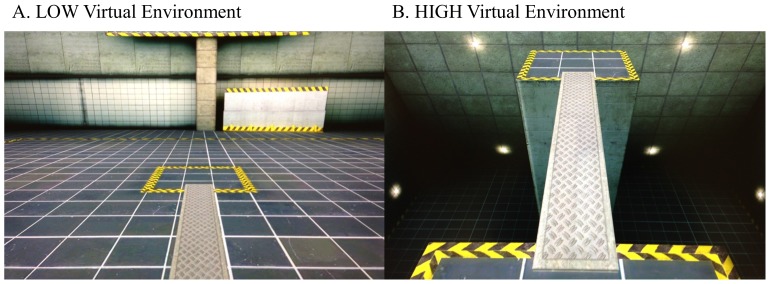
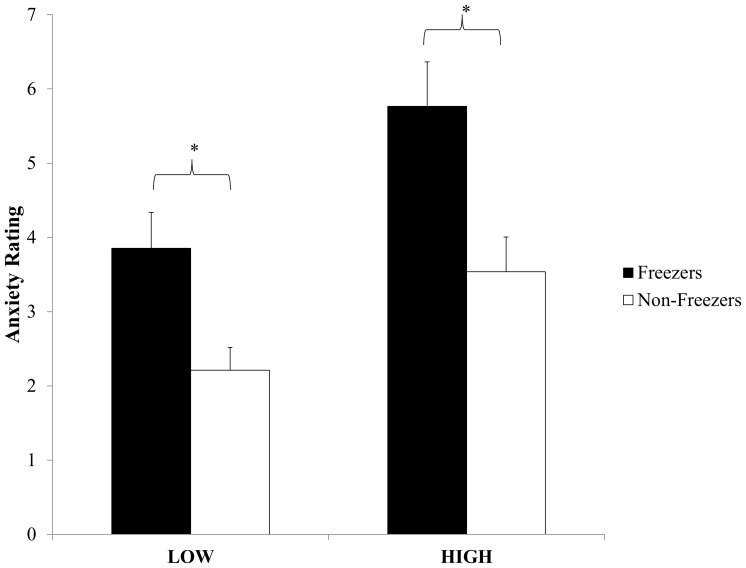
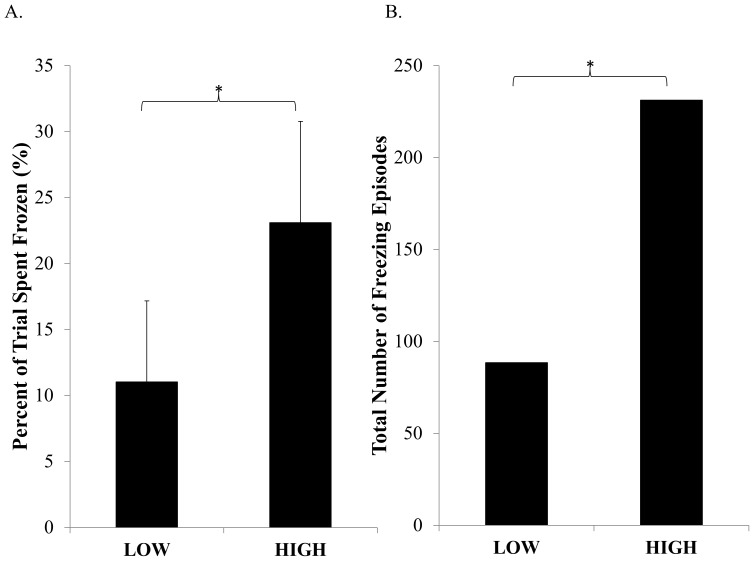
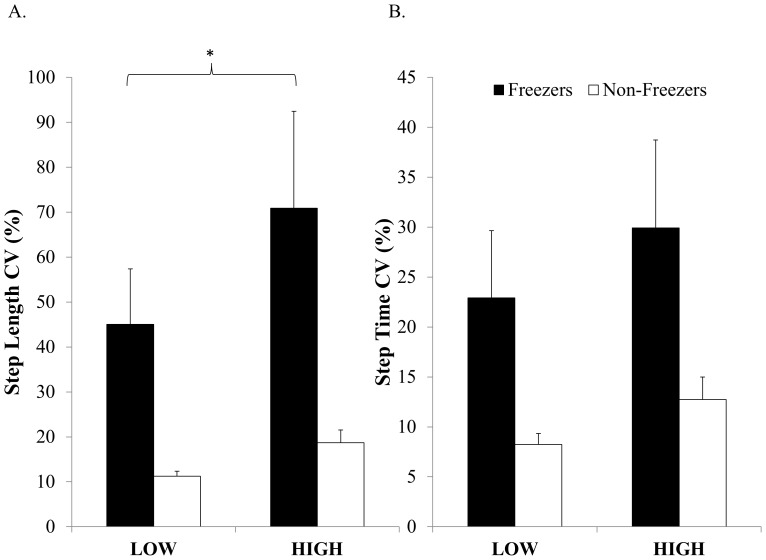
Individuals with Parkinson's disease (PD) commonly experience freezing of gait under time constraints, in narrow spaces, and in the dark. One commonality between these different situations is that they may all provoke anxiety, yet anxiety has never been directly examined as a cause of FOG. In this study, virtual reality was used to induce anxiety and evaluate whether it directly causes FOG. Fourteen patients with PD and freezing of gait (Freezers) and 17 PD without freezing of gait (Non-Freezers) were instructed to walk in two virtual environments: (i) across a plank that was located on the ground (LOW), (ii) across a plank above a deep pit (HIGH). Multiple synchronized motion capture cameras updated participants' movement through the virtual environment in real-time, while their gait was recorded. Anxiety levels were evaluated after each trial using self-assessment manikins. Freezers performed the experiment on two separate occasions (in their ON and OFF state). Freezers reported higher levels of anxiety compared to Non-Freezers (p < 0.001) and all patients reported greater levels of anxiety when walking across the HIGH plank compared to the LOW (p < 0.001). Freezers experienced significantly more freezing of gait episodes (p = 0.013) and spent a significantly greater percentage of each trial frozen (p = 0.005) when crossing the HIGH plank. This finding was even more pronounced when comparing Freezers in their OFF state. Freezers also had greater step length variability in the HIGH compared to the LOW condition, while the step length variability in Non-Freezers did not change. In conclusion, this was the first study to directly compare freezing of gait in anxious and non-anxious situations. These results present strong evidence that anxiety is an important mechanism underlying freezing of gait and supports the notion that the limbic system may have a profound contribution to freezing in PD.
Overview
The claims and statistics of this paper haven’t been checked yet.
Free: it reads the open-access text and checks the first 5 claims that cite a source we can check. Create a free account to check every claim.
Integrity signals
Registry
Cites
Statistics
Figures
Verification
Claims the paper makes
The claims and statistics of this paper haven’t been checked yet.
Free: it reads the open-access text and checks the first 5 claims that cite a source we can check. Create a free account to check every claim.
Claims other papers make about this one
Each is checked against this paper’s own text: does it say what the citing paper says it does?
The source backs part of the claim, not all of it — or backs it for a different population, condition or comparison.
In the citing paper
“Detection is complicated by overlapping symptoms such as tremor, fatigue, and loss of appetite, as well as PD-specific symptoms such as increased freezing of gait16,17.”
From The experience of Anxiety for people with Parkinson’s disease (2023) · cites this paper as [16]
Experimental — accuracy not yet measured
Self-check
Percentages, sums and reported differences re-computed from the paper’s own numbers.
The self-check needs the paper’s full text.
Citations
Cites
Development and validation of a geriatric depression screening scale: a preliminary report
Yesavage, J. A., Brink, T. L., Rose, T. L., Lum, O., Huang, V., Adey, M., & Leirer, V. O. (1982) · Journal of Psychiatric Research · doi:10.1016/0022-3956(82)90033-4 · Cited by 15,025 · cited 1×
“Additionally, all participants completed the State and Trait Anxiety Inventory [28] assessing baseline levels of anxiety prior to completing the experiment; Geriatric Depression Scale [29]; and the SCOPAAUT questionnaire which has been shown to assess the integrity of the autonomic nervous system [30].”
MethodMeasuring emotion: The self-assessment manikin and the semantic differential
Bradley, M. M., & Lang, P. J. (1994) · Journal of Behavior Therapy and Experimental Psychiatry · doi:10.1016/0005-7916(94)90063-9 · Cited by 9,538 · cited 1×
“After walking across the plank to the opposite platform in each trial, a 9 point self-assessment manikin scale [31] would be displayed and patients were asked to rate their feelings of stress and anxiety using the self-assessment manikins.”
MethodFunctional neuroanatomy of emotion: A meta-analysis of emotion activation studies in PET and fMRI
Phan, K. L., Wager, T., Taylor, S. F., & Liberzon, I. (2002) · NeuroImage · doi:10.1006/nimg.2002.1087 · Cited by 3,502
Cognitive Stimulation in Patients with Dementia: Randomized Controlled Trial
Mapelli, D., Di Rosa, E., Nocita, R., & Sava, D. (2013) · Dementia and Geriatric Cognitive Disorders Extra · doi:10.1159/000353457 · Cited by 3,453
(1987) · PubMed · Cited by 2,657
Spielberger, C. D. (2010) · The Corsini Encyclopedia of Psychology · doi:10.1002/9780470479216.corpsy0943 · Cited by 2,535
Goetz, C. G., Fahn, S., Martinez‐Martin, P., Poewe, W., Sampaio, C., Stebbins, G. T., Stern, M. B., Tilley, B. C., Dodel, R., Dubois, B., et al. (2007) · Movement Disorders · doi:10.1002/mds.21198 · Cited by 1,404
Freezing of gait: moving forward on a mysterious clinical phenomenon
Nutt, J. G., Bloem, B. R., Giladi, N., Hallett, M., Horak, F. B., & Nieuwboer, A. (2011) · The Lancet Neurology · doi:10.1016/s1474-4422(11)70143-0 · Cited by 1,304
Bloem, B. R., Hausdorff, J. M., Visser, J. E., & Giladi, N. (2004) · Movement Disorders · doi:10.1002/mds.20115 · Cited by 1,297
Assessment of autonomic dysfunction in Parkinson's disease: The SCOPA‐AUT
Visser, M., Marinus, J., Stiggelbout, A. M., & Van Hilten, J. J. (2004) · Movement Disorders · doi:10.1002/mds.20153 · Cited by 831
Yogev, G., Giladi, N., Peretz, C., Springer, S., Simon, E. S., & Hausdorff, J. M. (2005) · European Journal of Neuroscience · doi:10.1111/j.1460-9568.2005.04298.x · Cited by 822
Schaafsma, J. D., Balash, Y., Gurevich, T., Bartels, A. L., Hausdorff, J. M., & Giladi, N. (2003) · European Journal of Neurology · doi:10.1046/j.1468-1331.2003.00611.x · Cited by 725
Neuroanatomical correlates of externally and internally generated human emotion
(1997) · American Journal of Psychiatry · doi:10.1176/ajp.154.7.918 · Cited by 711 · cited 1×
“A recent review highlighted that nearly 60% of emotional induction studies reported activation of the insula [47], and furthermore the insula has been suggested to participate in evaluation of distressing thoughts and interoceptive emotional responses [48].”
BackgroundImpaired regulation of stride variability in Parkinson's disease subjects with freezing of gait
Hausdorff, J. M., Schaafsma, J. D., Balash, Y., Bartels, A. L., Gurevich, T., & Giladi, N. (2003) · Experimental Brain Research · doi:10.1007/s00221-002-1354-8 · Cited by 442
Neurological bases for balance–anxiety links
Balaban, C. D., & Thayer, J. F. (2001) · Journal of Anxiety Disorders · doi:10.1016/s0887-6185(00)00042-6 · Cited by 439
Quantitative analysis of gait in Parkinson patients: increased variability of stride length
Blin, O., Ferrandez, A. M., & Serratrice, G. (1990) · Journal of the Neurological Sciences · doi:10.1016/0022-510x(90)90184-o · Cited by 381
A pathophysiological model of freezing of gait in Parkinson's disease
Lewis, S. J. G., & Barker, R. A. (2009) · Parkinsonism & Related Disorders · doi:10.1016/j.parkreldis.2008.08.006 · Cited by 343
Shine, J. M., Matar, E., Ward, P. B., Frank, M. J., Moustafa, A. A., Pearson, M., Naismith, S. L., & Lewis, S. J. G. (2013) · Brain · doi:10.1093/brain/awt272 · Cited by 261
Knee trembling during freezing of gait represents multiple anticipatory postural adjustments
Jacobs, J. V., Nutt, J. G., Carlson-Kuhta, P., Stephens, M., & Horak, F. B. (2009) · Experimental Neurology · doi:10.1016/j.expneurol.2008.10.019 · Cited by 256
The role of mental function in the pathogenesis of freezing of gait in Parkinson's disease
Giladi, N., & Hausdorff, J. M. (2006) · Journal of the Neurological Sciences · doi:10.1016/j.jns.2006.05.015 · Cited by 249
Characterizing freezing of gait in Parkinson's disease: Models of an episodic phenomenon
Nieuwboer, A., & Giladi, N. (2013) · Movement Disorders · doi:10.1002/mds.25683 · Cited by 248
Freezing of gait in Parkinson's disease: a perceptual cause for a motor impairment?
Almeida, Q. J., & Lebold, C. A. (2010) · Journal of Neurology, Neurosurgery & Psychiatry · doi:10.1136/jnnp.2008.160580 · Cited by 243
Self-citationShine, J. M., Matar, E., Ward, P. B., Bolitho, S. J., Gilat, M., Pearson, M., Naismith, S. L., & Lewis, S. J. G. (2013) · Brain · doi:10.1093/brain/awt049 · Cited by 227
The nature of dual-task interference during gait in incident Parkinson’s disease
Rochester, L., Galna, B., Lord, S., & Burn, D. (2014) · Neuroscience · doi:10.1016/j.neuroscience.2014.01.041 · Cited by 209
Anxiety and Parkinson's disease
(1996) · The Journal of Neuropsychiatry and Clinical Neurosciences · doi:10.1176/jnp.8.4.383 · Cited by 201
Anxiety in Parkinson’s disease: A critical review of experimental and clinical studies
Prediger, R. D. S., Matheus, F. C., Schwarzbold, M. L., Lima, M. M. S., & Vital, M. A. B. F. (2012) · Neuropharmacology · doi:10.1016/j.neuropharm.2011.08.039 · Cited by 190
The allocation of attention during locomotion is altered by anxiety
Gage, W. H., Sleik, R. J., Polych, M. A., McKenzie, N. C., & Brown, L. A. (2003) · Experimental Brain Research · doi:10.1007/s00221-003-1468-7 · Cited by 188
Plotnik, M., & Hausdorff, J. M. (2008) · Movement Disorders · doi:10.1002/mds.21984 · Cited by 177
Freezing of gait in Parkinson's disease: disturbances in automaticity and control
Vandenbossche, J., Deroost, N., Soetens, E., Coomans, D., Spildooren, J., Vercruysse, S., Nieuwboer, A., & Kerckhofs, E. (2013) · Frontiers in Human Neuroscience · doi:10.3389/fnhum.2012.00356 · Cited by 174
Bilateral coordination of gait and Parkinson's disease: the effects of dual tasking
Plotnik, M., Giladi, N., & Hausdorff, J. M. (2009) · Journal of Neurology, Neurosurgery & Psychiatry · doi:10.1136/jnnp.2008.157362 · Cited by 149
Parkinson's disease motor subtypes and mood
Burn, D. J., Landau, S., Hindle, J. V., Samuel, M., Wilson, K. C., Hurt, C. S., Brown, R. G., & for the PROMS‐PD Study Group (2012) · Movement Disorders · doi:10.1002/mds.24041 · Cited by 148
Anxiety disorders in Parkinson's disease.
Richard, I. H. (2005) · PubMed · Cited by 147
Shine, J. M., Matar, E., Ward, P. B., Bolitho, S., Pearson, M., Naismith, S. L., & Lewis, S. J. G. (2013) · PLoS ONE · doi:10.1371/journal.pone.0052602 · Cited by 143
"Panic attacks" in Parkinson's disease. A long-term complication of levodopa therapy.
Vázquez, A., Jiménez-Jiménez, F. J., Ruiz, P., & García-Urra, D. (1993) · PubMed · Cited by 142
“Panic attacks” in Parkinson's disease: A long-term complication of levodopatherapy
Vázquez, A., Jiménez-Jiménez, F. J., García-Ruiz, P., & García-Urra, D. (2009) · Acta Neurologica Scandinavica · doi:10.1111/j.1600-0404.1993.tb04068.x · Cited by 128
A comparison of clinical and objective measures of freezing of gait in Parkinson's disease
Morris, T. R., Cho, C., Dilda, V., Shine, J. M., Naismith, S. L., Lewis, S. J. G., & Moore, S. T. (2012) · Parkinsonism & Related Disorders · doi:10.1016/j.parkreldis.2012.03.001 · Cited by 114
Doorway‐provoked freezing of gait in Parkinson's disease
Cowie, D., Limousin, P., Peters, A., Hariz, M., & Day, B. L. (2012) · Movement Disorders · doi:10.1002/mds.23990 · Cited by 107
Plotnik, M., Giladi, N., & Hausdorff, J. M. (2012) · Parkinson's Disease · doi:10.1155/2012/459321 · Cited by 107
Understanding the dopaminergic deficits in Parkinson’s disease: Insights into disease heterogeneity
Lewis, S. J. G., & Barker, R. A. (2009) · Journal of Clinical Neuroscience · doi:10.1016/j.jocn.2008.08.020 · Cited by 100
Anxiety, depression, and quality of life in Parkinson's disease
Quelhas, R., & Costa, M. (2009) · The Journal of Neuropsychiatry and Clinical Neurosciences · doi:10.1176/jnp.2009.21.4.413 · Cited by 100 · cited 1×
“Anxiety is a not only a common non-motor symptom of Parkinson’s disease (affecting up to 69% of patients [8,9]), but it is also one of the most influential predictors of quality of life in those with PD [10,11].”
BackgroundProgression of Parkinson Disease: Are We Making Progress in Charting the Course?
Jankovic, J. J. (2005) · Archives of Neurology · doi:10.1001/archneur.62.3.351 · Cited by 96
Impact of Anxiety on Quality of Life in Parkinson's Disease
Hanna, K. K., & Cronin-Golomb, A. (2012) · Parkinson's Disease · doi:10.1155/2012/640707 · Cited by 89
Are Freezing of Gait (FOG) and panic related?
LIEBERMAN, A. N. (2006) · Journal of the Neurological Sciences · doi:10.1016/j.jns.2006.05.023 · Cited by 87
Could Sensory Mechanisms Be a Core Factor That Underlies Freezing of Gait in Parkinson’s Disease?
Ehgoetz Martens, K. A., Pieruccini-Faria, F., & Almeida, Q. J. (2013) · PLoS ONE · doi:10.1371/journal.pone.0062602 · Cited by 79
Self-citationModeling freezing of gait in Parkinson's disease with a virtual reality paradigm
Shine, J. M., Matar, E., Bolitho, S., Dilda, V., Morris, T. R., Naismith, S. L., Moore, S. T., & Lewis, S. J. G. (2012) · Gait & Posture · doi:10.1016/j.gaitpost.2012.10.026 · Cited by 76
Psychiatric aspects in Parkinsonism treated with L-dopa
Damasio, A. R., Lobo-Antunes, J., & Macedo, C. (1971) · Journal of Neurology, Neurosurgery & Psychiatry · doi:10.1136/jnnp.34.5.502 · Cited by 74
Matar, E., Shine, J. M., Naismith, S. L., & Lewis, S. J. G. (2013) · Parkinsonism & Related Disorders · doi:10.1016/j.parkreldis.2013.06.002 · Cited by 73
Heart rate changes during freezing of gait in patients with Parkinson's disease
Maidan, I., Plotnik, M., Mirelman, A., Weiss, A., Giladi, N., & Hausdorff, J. M. (2010) · Movement Disorders · doi:10.1002/mds.23280 · Cited by 72
Moreau, C., Defebvre, L., Bleuse, S., Blatt, J. L., Duhamel, A., Bloem, B. R., Destée, A., & Krystkowiak, P. (2008) · Journal of Neural Transmission · doi:10.1007/s00702-008-0099-3 · Cited by 62
The relationship between motor planning and freezing of gait in Parkinson's disease
Knobl, P., Kielstra, L., & Almeida, Q. (2012) · Journal of Neurology, Neurosurgery & Psychiatry · doi:10.1136/jnnp-2011-300869 · Cited by 58
Self-citationLevodopa changes the severity of freezing in Parkinson's disease
Fietzek, U. M., Zwosta, J., Schroeteler, F. E., Ziegler, K., & Ceballos-Baumann, A. (2013) · Parkinsonism & Related Disorders · doi:10.1016/j.parkreldis.2013.04.004 · Cited by 53
Effects of postural threat on walking features of Parkinson's disease patients
Caetano, M. J. D., Gobbi, L. T. B., Sánchez-Arias, M. D. R., Stella, F., & Gobbi, S. (2009) · Neuroscience Letters · doi:10.1016/j.neulet.2009.01.053 · Cited by 47
Gilat, M., Shine, J. M., Bolitho, S., Matar, E., Kamsma, Y. P. T., Naismith, S. L., & Lewis, S. J. G. (2013) · PLoS ONE · doi:10.1371/journal.pone.0066718 · Cited by 45
Martens, K. A. E., Pieruccini‐Faria, F., Silveira, C. R. A., & Almeida, Q. J. (2013) · Parkinsonism & Related Disorders · doi:10.1016/j.parkreldis.2013.06.011 · Cited by 13
Self-citation
Cited by
Gait impairments in Parkinson’s disease
Mirelman, A., Bonato, P., Camicioli, R., Ellis, T. D., Giladi, N., Hamilton, J. L., Hass, C. J., Hausdorff, J. M., Pelosin, E., & Almeida, Q. J. (2019) · The Lancet Neurology · doi:10.1016/s1474-4422(19)30044-4 · Cited by 821
Self-citationMotor symptoms in Parkinson’s disease: A unified framework
Moustafa, A. A., Chakravarthy, S., Phillips, J. R., Gupta, A., Keri, S., Polner, B., Frank, M. J., & Jahanshahi, M. (2016) · Neuroscience & Biobehavioral Reviews · doi:10.1016/j.neubiorev.2016.07.010 · Cited by 481
Virtual reality in research and rehabilitation of gait and balance in Parkinson disease
Canning, C. G., Allen, N. E., Nackaerts, E., Paul, S. S., Nieuwboer, A., & Gilat, M. (2020) · Nature Reviews Neurology · doi:10.1038/s41582-020-0370-2 · Cited by 224
van Uem, J. M. T., Marinus, J., Canning, C., van Lummel, R., Dodel, R., Liepelt-Scarfone, I., Berg, D., Morris, M. E., & Maetzler, W. (2016) · Neuroscience & Biobehavioral Reviews · doi:10.1016/j.neubiorev.2015.11.014 · Cited by 207
Physical therapy and occupational therapy in Parkinson's disease
Radder, D. L. M., Sturkenboom, I. H., van Nimwegen, M., Keus, S. H., Bloem, B. R., & de Vries, N. M. (2017) · International Journal of Neuroscience · doi:10.1080/00207454.2016.1275617 · Cited by 173
“ceived time pressure aggravates symptoms like tremor and freezing [45].”
Background
Metadata
- Authors
- Ehgoetz Martens, K. A., Ellard, C. G., & Almeida, Q. J.
- Affiliations
- University of Waterloo (CA)
- Wilfrid Laurier University (CA)
- Corresponding author
- Almeida, Quincy J.
- Venue
- PLoS ONE
- Publisher
- Public Library of Science (PLoS)
- Published
- 2014-09-24
- Volume
- 9
- Issue
- 9
- Pages
- e106561
- ISSN
- 1932-6203 (ISSN-L)
- PMC
- PMC4175083
- OpenAlex
- W2023633357
- Cited by
- 171
- References
- 55
- Citations by year
- 2026: 22 · 2025: 13 · 2024: 12 · 2023: 22 · 2022: 14 · 2021: 16 · 2020: 14 · 2019: 18 · 2018: 8 · 2017: 10 · 2016: 13 · 2015: 8 · 2014: 1
- FWCI
- 27.59
- Type
- journal article
- Language
- en
- Open access
- gold
- doi.org
- Locations
- PLoS ONE (publishedVersion, cc-by)
- PubMed Central (publishedVersion, cc-by)
- PubMed (publishedVersion)
- DOAJ (DOAJ: Directory of Open Access Journals) (submittedVersion, cc-by-sa)
- Funders
- Parkinson Society Canada
- Canadian Institutes of Health Research (20774)
- Natural Sciences and Engineering Research Council of Canada
- Topics
- Health Sciences › Health Professions › Physical Therapy, Sports Therapy and Rehabilitation › Balance, Gait, and Falls Prevention
- Health Sciences › Medicine › Clinical Neurology › Deep Brain Stimulation and Movement Disorders
- Health Sciences › Medicine › Clinical Neurology › Parkinson's Disease Mechanisms and Treatments
- Keywords
- freezing of gait, Parkinson's disease, anxiety, virtual reality, gait, step length variability, limbic system, OFF state, Self-Assessment Manikin, motion capture
- MeSH terms
- Aged, Analysis of Variance, Anxiety, Female, Gait, Humans, Limbic System, Male, Middle Aged, Parkinson Disease, Psychomotor Performance, Walking, Gait Disorders, Neurologic, Freezing Reaction, Cataleptic
About these checks
Registry, retraction, Cites and statistics results are computed, not judged, with one exception: a printed reference that no index lists is read once by a model before it counts as a citation error. Claims are extracted by a model and kept only when their quote appears verbatim in the text; each cited source is then checked, with a model’s help, for whether it says what the claim relies on. Those verdicts can be wrong — read the claim’s quote and the cited source before relying on one.
Statistics and arithmetic are recomputed, not judged.
Confidence bands are shown only for fields calibrated on our annotated test set. None is calibrated yet, so no band is shown.
What counts as a claim ›How we measure confidence ›How we check this ›
Are you an author, or do you see a problem with this page? Request a review
Data sources
Bibliographic data: Semantic Scholar, OpenAlex, Crossref.
Contains information from the Semantic Scholar Academic Graph Datasets, made available under the ODC Attribution License (ODC-BY 1.0).
Semantic Scholar’s data is described in: Kinney, R., et al. (2023). The Semantic Scholar Open Data Platform. arXiv:2301.10140.
