

The DOI matches its Crossref record; 40 of the 40 references it cites were found in a registry or an index.
Dietary Patterns Differently Associate with Inflammation and Gut Microbiota in Overweight and Obese Subjects
Open accessAbstract
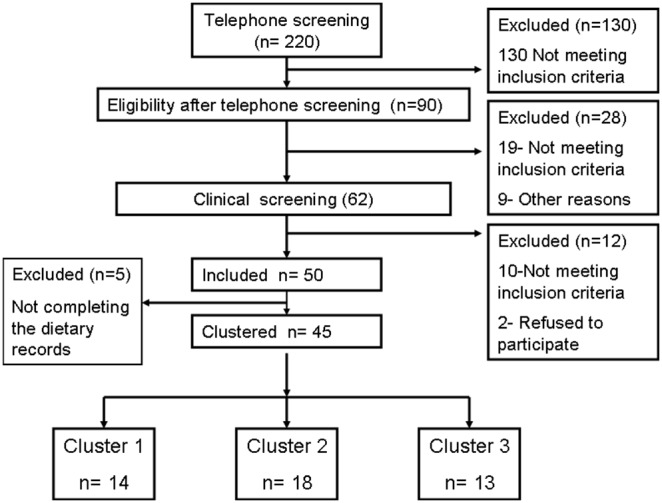
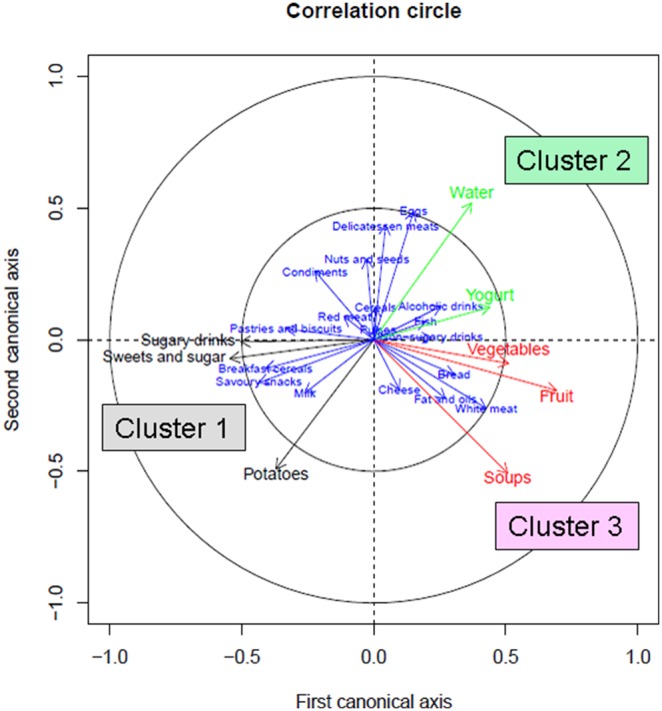
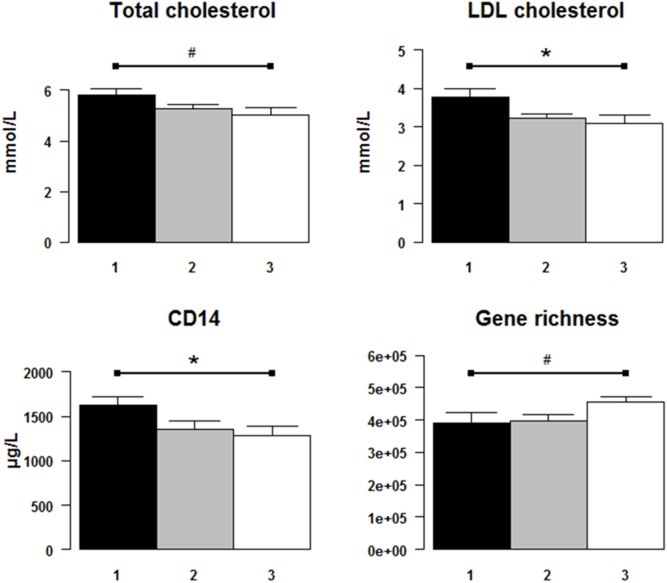
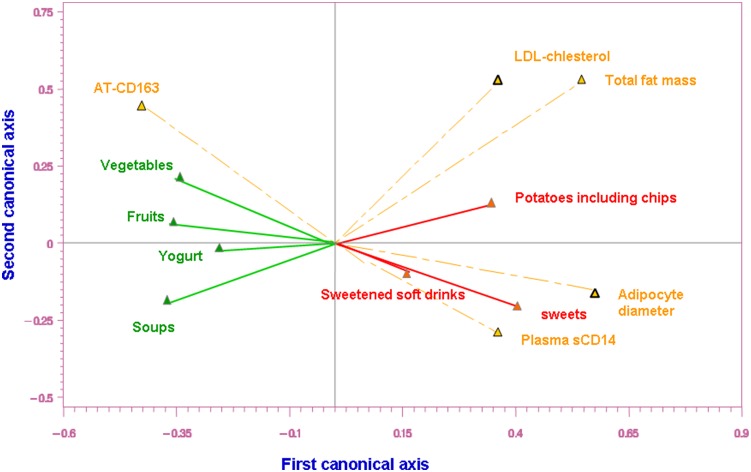
BACKGROUND: Associations between dietary patterns, metabolic and inflammatory markers and gut microbiota are yet to be elucidated. OBJECTIVES: We aimed to characterize dietary patterns in overweight and obese subjects and evaluate the different dietary patterns in relation to metabolic and inflammatory variables as well as gut microbiota. DESIGN: Dietary patterns, plasma and adipose tissue markers, and gut microbiota were evaluated in a group of 45 overweight and obese subjects (6 men and 39 women). A group of 14 lean subjects were also evaluated as a reference group. RESULTS: Three clusters of dietary patterns were identified in overweight/obese subjects. Cluster 1 had the least healthy eating behavior (highest consumption of potatoes, confectionary and sugary drinks, and the lowest consumption of fruits that was associated also with low consumption of yogurt, and water). This dietary pattern was associated with the highest LDL cholesterol, plasma soluble CD14 (p = 0.01) a marker of systemic inflammation but the lowest accumulation of CD163+ macrophages with anti-inflammatory profile in adipose tissue (p = 0.05). Cluster 3 had the healthiest eating behavior (lower consumption of confectionary and sugary drinks, and highest consumption of fruits but also yogurts and soups). Subjects in this Cluster had the lowest inflammatory markers (sCD14) and the highest anti-inflammatory adipose tissue CD163+ macrophages. Dietary intakes, insulin sensitivity and some inflammatory markers (plasma IL6) in Cluster 3 were close to those of lean subjects. Cluster 2 was in-between clusters 1 and 3 in terms of healthfulness. The 7 gut microbiota groups measured by qPCR were similar across the clusters. However, the healthiest dietary cluster had the highest microbial gene richness, as evaluated by quantitative metagenomics. CONCLUSION: A healthier dietary pattern was associated with lower inflammatory markers as well as greater gut microbiota richness in overweight and obese subjects. TRIAL REGISTRATION: ClinicalTrials.gov NCT01314690.
Overview
The claims and statistics of this paper haven’t been checked yet.
Run the check — free, no account needed. It reads the open-access text and checks the sources it cites.
Integrity signals
Registry
Cites
Statistics
Figures
Verification
Claims the paper makes
The claims and statistics of this paper haven’t been checked yet.
Run the check — free, no account needed. It reads the open-access text and checks the sources it cites.
Claims other papers make about this one
Each is checked against this paper’s own text: does it say what the citing paper says it does?
In the citing paper
“Fourth, the gut microbiota are affected by environmental factors37, 38 such as dietary intakes,39, 40, 41 which may, in turn, influence blood levels of TMAO and its precursors.4”
From Gut Microbiota Metabolites and Risk of Major Adverse Cardiovascular Disease Events and Death: A Systematic Review and Meta‐Analysis of Prospective Studies (2017) · cites this paper as [40]
Self-check
Percentages, sums and reported differences re-computed from the paper’s own numbers.
The self-check needs the paper’s full text.
Citations
Cites
A human gut microbial gene catalogue established by metagenomic sequencing
MetaHIT Consortium, Qin, J., Li, R., Raes, J., Arumugam, M., Burgdorf, K. S., Manichanh, C., Nielsen, T., Pons, N., Levenez, F., et al. (2010) · Nature · doi:10.1038/nature08821 · Cited by 11,624
Self-citationLinking long-term dietary patterns with gut microbial enterotypes
Wu, G. D., Chen, J., Hoffmann, C., Bittinger, K., Chen, Y.-Y., Keilbaugh, S. A., Bewtra, M., Knights, D., Walters, W. A., Knight, R., et al. (2011) · Science · doi:10.1126/science.1208344 · Cited by 6,513
Richness of human gut microbiome correlates with metabolic markers
Le Chatelier, E., Nielsen, T., Qin, J., Prifti, E., Hildebrand, F., Falony, G., Almeida, M., Arumugam, M., Batto, J.-M., Kennedy, S., et al. (2013) · Nature · doi:10.1038/nature12506 · Cited by 4,662
Self-citationFundamentals of Biostatistics.
(1969) · Annals of Internal Medicine · doi:10.7326/0003-4819-70-4-873 · Cited by 4,573
TLR4 links innate immunity and fatty acid-induced insulin resistance
Shi, H., Kokoeva, M. V., Inouye, K., Tzameli, I., Yin, H., & Flier, J. S. (2006) · Journal of Clinical Investigation · doi:10.1172/jci28898 · Cited by 3,690
The Effect of Diet on the Human Gut Microbiome: A Metagenomic Analysis in Humanized Gnotobiotic Mice
Turnbaugh, P. J., Ridaura, V. K., Faith, J. J., Rey, F. E., Knight, R., & Gordon, J. I. (2009) · Science Translational Medicine · doi:10.1126/scitranslmed.3000322 · Cited by 3,058 · cited 1×
“Interestingly, a rapid adaptation of gut microbiota could be observed after 24 h of switching from a low-fat, plant polysaccharide-rich diet to a high fat high sugar ‘‘western’’ diet [15], whereas the diversity of species within the gut microbiota organized into identifiable clusters or enterotypes are correlated with…”
BackgroundMacrophage-specific PPARγ controls alternative activation and improves insulin resistance
Odegaard, J. I., Ricardo-Gonzalez, R. R., Goforth, M. H., Morel, C. R., Subramanian, V., Mukundan, L., Eagle, A. R., Vats, D., Brombacher, F., Ferrante, A. W., et al. (2007) · Nature · doi:10.1038/nature05894 · Cited by 2,107 · cited 1×
“macrophage activation, are prone to diet-induced obesity and insulin resistance [40].”
BackgroundDietary intervention impact on gut microbial gene richness
Cotillard, A., Kennedy, S. P., Kong, L. C., Prifti, E., Pons, N., Le Chatelier, E., Almeida, M., Quinquis, B., Levenez, F., Galleron, N., et al. (2013) · Nature · doi:10.1038/nature12480 · Cited by 1,832
Self-citationHealth-promoting components of fruits and vegetables in the diet.
Liu, R. H. (2013) · Advances in Nutrition · doi:10.3945/an.112.003517 · Cited by 1,310
Differential Adaptation of Human Gut Microbiota to Bariatric Surgery–Induced Weight Loss
Furet, J.-P., Kong, L.-C., Tap, J., Poitou, C., Basdevant, A., Bouillot, J.-L., Mariat, D., Corthier, G., Doré, J., Henegar, C., et al. (2010) · Diabetes · doi:10.2337/db10-0253 · Cited by 1,173
Self-citation
Research works printed but not linked: 1
- Habi-Rachedi F, Rondeau P, Marque S, Holmes B (2012) A robust multivariate analysis to identify dietary patterns. Agrostat; 12th European symposium on statistical methods for the food industry. Paris. France 28/02-2/02.
Cited by
Sorted by citations
Dao, M. C., Everard, A., Aron-Wisnewsky, J., Sokolovska, N., Prifti, E., Verger, E. O., Kayser, B. D., Levenez, F., Chilloux, J., Hoyles, L., et al. (2016) · Gut · doi:10.1136/gutjnl-2014-308778 · Cited by 1,931
Self-citationEnergy balance and obesity: what are the main drivers?
On behalf of the IARC working group on Energy Balance and Obesity, Romieu, I., Dossus, L., Barquera, S., Blottière, H. M., Franks, P. W., Gunter, M. J., Hwalla, N. C., Hursting, S. D., Leitzmann, M. F., et al. (2017) · Cancer Causes & Control · doi:10.1007/s10552-017-0869-z · Cited by 818
Immune Dysfunction as a Cause and Consequence of Malnutrition
Bourke, C. D., Berkley, J. A., & Prendergast, A. J. (2016) · Trends in Immunology · doi:10.1016/j.it.2016.04.003 · Cited by 767
Wallace, T. C., Bailey, R. L., Blumberg, J. B., Burton-Freeman, B., Chen, C.-Y. O., Crowe-White, K. M., Drewnowski, A., Hooshmand, S., Johnson, E., Lewis, R., et al. (2020) · Critical Reviews in Food Science and Nutrition · doi:10.1080/10408398.2019.1632258 · Cited by 638
Heianza, Y., Ma, W., Manson, J. E., Rexrode, K. M., & Qi, L. (2017) · Journal of the American Heart Association · doi:10.1161/jaha.116.004947 · Cited by 544
Gut microbiota, obesity and diabetes
Patterson, E., Ryan, P. M., Cryan, J. F., Dinan, T. G., Ross, R. P., Fitzgerald, G. F., & Stanton, C. (2016) · Postgraduate Medical Journal · doi:10.1136/postgradmedj-2015-133285 · Cited by 552
Prebiotics: why definitions matter
Hutkins, R. W., Krumbeck, J. A., Bindels, L. B., Cani, P. D., Fahey, G. C., Jr., Goh, Y. J., Hamaker, B. R., Martens, E. C., Mills, D. A., Rastal, R. A., et al. (2015) · Current Opinion in Biotechnology · doi:10.1016/j.copbio.2015.09.001 · Cited by 460
Self-citationFactors Influencing the Gut Microbiota, Inflammation, and Type 2 Diabetes
Li, W., & Duffy, A. J. (2017) · Journal of Nutrition · doi:10.3945/jn.116.240754 · Cited by 433
Probiotics in prevention and treatment of obesity: a critical view
Kobyliak, N. M., Conte, C., Cammarota, G., Haley, A. P., Štyriak, I., Gašpar, Ľ., Fusek, J., Rodrigo, L., & Kružliak, P. (2016) · Nutrition & Metabolism · doi:10.1186/s12986-016-0067-0 · Cited by 373
The gut microbiome, diet, and links to cardiometabolic and chronic disorders
Aron‐Wisnewsky, J., & Clément, K. (2015) · Nature Reviews Nephrology · doi:10.1038/nrneph.2015.191 · Cited by 338
Self-citationInterindividual variability in gut microbiota and host response to dietary interventions
Healey, G. R., Murphy, R., Brough, L., Butts, C. A., & Coad, J. (2017) · Nutrition Reviews · doi:10.1093/nutrit/nux062 · Cited by 306
Tomas, J., Mulet, C., Saffarian, A., Cavin, J., Ducroc, R. A., Regnault, B., Tan, C. K., Duszka, K., Burcelin, R., Wahli, W., et al. (2016) · Proceedings of the National Academy of Sciences · doi:10.1073/pnas.1612559113 · Cited by 260
Hersoug, L., Möller, P., & Loft, S. H. (2018) · Nutrition Research Reviews · doi:10.1017/s0954422417000269 · Cited by 253
Deehan, E. C., Duar, R. M., Armet, A. M., Pérez-Muñoz, M. E., Jin, M., & Walter, J. (2017) · Microbiology Spectrum · doi:10.1128/microbiolspec.bad-0019-2017 · Cited by 240
Contribution of macronutrients to obesity: implications for precision nutrition
San-Cristóbal, R., Navas‐Carretero, S., Martínez‐González, M. Á., Ordovás, J. M., & Martínez, J. A. (2020) · Nature Reviews Endocrinology · doi:10.1038/s41574-020-0346-8 · Cited by 217
The influence of diet on the gut microbiota and its consequences for health
Dore, J. M., & Blottière, H. M. (2015) · Current Opinion in Biotechnology · doi:10.1016/j.copbio.2015.01.002 · Cited by 198
Gut Microbiota Dysbiosis in Human Obesity: Impact of Bariatric Surgery
Debédat, J., Clément, K., & Aron‐Wisnewsky, J. (2019) · Current Obesity Reports · doi:10.1007/s13679-019-00351-3 · Cited by 165
Self-citationFecal Microbiota Transplantation: a Future Therapeutic Option for Obesity/Diabetes?
Aron‐Wisnewsky, J., Clément, K., & Nieuwdorp, M. (2019) · Current Diabetes Reports · doi:10.1007/s11892-019-1180-z · Cited by 148
Self-citationSpecific properties of probiotic strains: relevance and benefits for the host
Bubnov, R. V., Babenko, L. P., Lazarenko, L. M., Mokrozub, V. V., & Spivak, M. Y. (2018) · The EPMA Journal · doi:10.1007/s13167-018-0132-z · Cited by 129
Röytiö, H., Mokkala, K., Vahlberg, T., & Laitinen, K. (2017) · British Journal Of Nutrition · doi:10.1017/s0007114517002100 · Cited by 128
Gut microbiota and obesity: Concepts relevant to clinical care
Dao, M. C., & Clément, K. (2017) · European Journal of Internal Medicine · doi:10.1016/j.ejim.2017.10.005 · Cited by 138
Self-citationImpact of increasing fruit and vegetables and flavonoid intake on the human gut microbiota
Klinder, A., Shen, Q., Heppel, S., Lovegrove, J. A., Rowland, I. R., & Tuohy, K. M. (2016) · Food & Function · doi:10.1039/c5fo01096a · Cited by 133
Advances in dietary pattern analysis in nutritional epidemiology
Schulz, C., Oluwagbemigun, K., & Nöthlings, U. (2021) · European Journal of Nutrition · doi:10.1007/s00394-021-02545-9 · Cited by 139
Islam, M. A., Khandker, S. S., Kotyla, P. J., & Hassan, R. (2020) · Frontiers in Immunology · doi:10.3389/fimmu.2020.01477 · Cited by 131
Zheng, J., Hoffman, K. L., Chen, J., Shivappa, N., Sood, A., Browman, G. J., Dirba, D. D., Hanash, S., Wei, P., Hébert, J. R., et al. (2020) · British Journal Of Nutrition · doi:10.1017/s0007114520001853 · Cited by 120
Rethinking Diet to Aid Human–Microbe Symbiosis
Derrien, M., & Veiga, P. (2016) · Trends in Microbiology · doi:10.1016/j.tim.2016.09.011 · Cited by 118
Moorthy, M., Chaiyakunapruk, N., Jacob, S. A., & Palanisamy, U. D. (2020) · Trends in Food Science & Technology · doi:10.1016/j.tifs.2020.03.036 · Cited by 113
Fangmann, D., Theismann, E., Türk, K., Schulte, D. M., Relling, I., Hartmann, K., Keppler, J. K., Knipp, J.-R., Rehman, A., Heinsen, F., et al. (2017) · Diabetes Care · doi:10.2337/dc17-1967 · Cited by 104
Overall Dietary Quality Relates to Gut Microbiota Diversity and Abundance
Laitinen, K., & Mokkala, K. (2019) · International Journal of Molecular Sciences · doi:10.3390/ijms20081835 · Cited by 102
Zacarías, M. F., Collado, M. C., Gómez-Gallego, C., Flinck, H., Aittoniemi, J., Isolauri, E., & Salminen, S. (2018) · PLoS ONE · doi:10.1371/journal.pone.0200305 · Cited by 102
de Moraes, A. C. F., de Almeida-Pititto, B., Fernandes, G. D. R., Gomes, E. P., Pereira, A. C., & Ferreira, S. R. G. (2017) · Diabetology & Metabolic Syndrome · doi:10.1186/s13098-017-0261-x · Cited by 97
Ciubotaru, I., Green, S. J., Kukreja, S. C., & Barengolts, E. I. (2015) · Translational research · doi:10.1016/j.trsl.2015.06.015 · Cited by 88
Glycemic index, glycemic load, and common psychological disorders
Haghighatdoost, F., Azadbakht, L., Keshteli, A. H., Feinle‐Bisset, C., Daghaghzadeh, H., Afshar, H., Feizi, A., Esmaillzadeh, A., & Adibi, P. (2015) · American Journal of Clinical Nutrition · doi:10.3945/ajcn.114.105445 · Cited by 84
Gut Microbiota in Obesity and Metabolic Abnormalities: A Matter of Composition or Functionality?
Morán‐Ramos, S., López-Contreras, B. E., & Canizales‐Quinteros, S. (2017) · Archives of Medical Research · doi:10.1016/j.arcmed.2017.11.003 · Cited by 91
Relationship between Diet and Non-alcoholic Fatty Liver Disease: A Review Article.
Mirmiran, P., Amirhamidi, Z., Ejtahed, H., Bahadoran, Z., & Azizi, F. (2017) · Europe PMC (PubMed Central) · Cited by 82
Mokkala, K., Houttu, N., Cansev, T., & Laitinen, K. (2019) · Clinical Nutrition · doi:10.1016/j.clnu.2019.05.003 · Cited by 82
Estrogens and female liver health
Chen, K. L., & Madak‐Erdogan, Z. (2017) · Steroids · doi:10.1016/j.steroids.2017.10.015 · Cited by 81
Khavandegar, A., Heidarzadeh, A., Angoorani, P., Hasani‐Ranjbar, S., Ejtahed, H., Larijani, B. A., & Qorbani, M. (2024) · BMC Medical Genomics · doi:10.1186/s12920-024-01861-3 · Cited by 91
Plant-Based Fat, Dietary Patterns Rich in Vegetable Fat and Gut Microbiota Modulation
Muralidharan, J., Galié, S., Hernández‐Alonso, P., Bulló, M., & Salas‐Salvadó, J. (2019) · Frontiers in Nutrition · doi:10.3389/fnut.2019.00157 · Cited by 79
Silveira, B. K. S., Oliveira, T. M. S., Andrade, P. A., Hermsdorff, H. H. M., Rosa, C. D. O. B., & Franceschini, S. D. C. C. (2018) · Cardiology Research and Practice · doi:10.1155/2018/4762575 · Cited by 81
Heinsen, F., Fangmann, D., Müller, N., Schulte, D. M., Rühlemann, M. C., Türk, K., Settgast, U., Lieb, W., Baines, J. F., Schreiber, S., et al. (2016) · Obesity Facts · doi:10.1159/000449506 · Cited by 76
Ranaivo, H., Thirion, F., Béra‐Maillet, C., Guilly, S., Simon, C., Sothier, M., Berghe, L. V. D., Feugier, N., Lambert-Porcheron, S., Dussous, I., et al. (2022) · Gut Microbes · doi:10.1080/19490976.2022.2044722 · Cited by 69
Self-citationLogan, A. C., Katzman, M. A., & Balanzá‐Martínez, V. (2015) · Journal of PHYSIOLOGICAL ANTHROPOLOGY · doi:10.1186/s40101-015-0041-y · Cited by 73
Kanwal, S., Aliya, S., & Xin, Y. (2020) · Frontiers in Endocrinology · doi:10.3389/fendo.2020.558874 · Cited by 61
Exploring the microbiome in health and disease
Scotti, E., Boué, S., Sasso, G. L., Zanetti, F., Belcastro, V., Poussin, C., Sierro, N., Battey, J. N. D., Gimalac, A., Ivanov, N. V., et al. (2017) · Toxicology Research and Application · doi:10.1177/2397847317741884 · Cited by 56
Social Influences on Prevotella and the Gut Microbiome of Young Monkeys
Amaral, W. Z., Lubach, G. R., Proctor, A., Lyte, M., Phillips, G. J., & Coe, C. L. (2017) · Psychosomatic Medicine · doi:10.1097/psy.0000000000000454 · Cited by 53
Wu, H. Y., Wu, F.-T., Zhou, Q., & Zhao, D.-P. (2021) · Frontiers in Microbiology · doi:10.3389/fmicb.2021.649466 · Cited by 52
Differential impact of environmental factors on systemic and localized autoimmunity
Touil, H., Mounts, K., & Jager, P. L. D. (2023) · Frontiers in Immunology · doi:10.3389/fimmu.2023.1147447 · Cited by 57
Vinberg, M., Ottesen, N. M., Meluken, I., Sørensen, N., Pedersen, O. B., Kessing, L. V., & Miskowiak, K. W. (2018) · Acta Psychiatrica Scandinavica · doi:10.1111/acps.12976 · Cited by 50
Kayser, B. D., Lhomme, M., Prifti, E., Cunha, C. D., Marquet, F., Chain, F., Naas, I., Pelloux, V., Dao, M. C., Kontush, A., et al. (2019) · The FASEB Journal · doi:10.1096/fj.201801897r · Cited by 57
Self-citationUnderlying evidence for the health benefits of fermented foods in humans
Rul, F., Béra‐Maillet, C., Champomier‐Vergès, M., Mecherfi, K. E. E., Foligné, B., Michalski, M., Milenković, D., & Savary‐Auzeloux, I. (2022) · Food & Function · doi:10.1039/d1fo03989j · Cited by 47
Kayser, B. D., Prifti, E., Lhomme, M., Belda, E., Dao, M. C., Aron‐Wisnewsky, J., Cotillard, A., Kennedy, S., Pons, N., Chatelier, E. L., et al. (2019) · Metabolomics · doi:10.1007/s11306-019-1596-0 · Cited by 47
Self-citationLogan, A. C., Katzman, M. A., & Balanzá‐Martínez, V. (2015) · Journal of PHYSIOLOGICAL ANTHROPOLOGY · doi:10.1186/s40101-014-0040-4 · Cited by 42
Verger, E. O., Armstrong, P., Nielsen, T., Chakaroun, R., Aron‐Wisnewsky, J., Gøbel, R. J., Schütz, T., Delaere, F., Gausserès, N., Clément, K., et al. (2016) · Journal of the Academy of Nutrition and Dietetics · doi:10.1016/j.jand.2016.10.030 · Cited by 44
Self-citationDao, M. C., Sokolovska, N., Brazeilles, R., Affeldt, S., Pelloux, V., Prifti, E., Chilloux, J., Verger, E. O., Kayser, B. D., Aron‐Wisnewsky, J., et al. (2019) · Frontiers in Physiology · doi:10.3389/fphys.2018.01958 · Cited by 40
Self-citationDalvi, P. S., Yang, S. H., Swain, N., Kim, J., Saha, S., Bourdon, C., Zhang, L., Chami, R., & Bandsma, R. (2018) · PLoS ONE · doi:10.1371/journal.pone.0199916 · Cited by 38
Vieira, A. D. S., de Souza, C. B., Padilha, M., Zoetendal, E. G., Smidt, H., Saad, S. M. I., & Venema, K. (2021) · Applied Microbiology and Biotechnology · doi:10.1007/s00253-021-11252-8 · Cited by 37
Pourreza, S., Khademi, Z., Mirzababaei, A., Yekaninejad, M. S., Sadeghniiat‐Haghighi, K., Naghshi, S., & Mirzaei, K. (2021) · International Journal of Clinical Practice · doi:10.1111/ijcp.14429 · Cited by 42
Gut Microbiome, Inflammation, and Cerebrovascular Function: Link Between Obesity and Cognition
Olsthoorn, L., Vreeken, D., & Kiliaan, A. J. (2021) · Frontiers in Neuroscience · doi:10.3389/fnins.2021.761456 · Cited by 39
A systematic review of the effect of yogurt consumption on chronic diseases risk markers in adults
Dumas, A., Lapointe, A., Dugrenier, M., Provencher, V., Lamarche, B., & Desroches, S. (2016) · European Journal of Nutrition · doi:10.1007/s00394-016-1341-7 · Cited by 39
Understanding the Burden and Management of Urinary Tract Infections in Women
Baimakhanova, B. B., САДАНОВ, А. К., Trenozhnikova, L. P., Balgimbaeva, A. S., Baimakhanova, G. B., Orasymbet, S., Tleubekova, D., Amangeldi, A., Жаиковна, Т. З., Nurgaliyeva, Z. Z., et al. (2025) · Diseases · doi:10.3390/diseases13020059 · Cited by 45
Losing weight for a better health: Role for the gut microbiota
Dao, M. C., Everard, A., Clément, K., & Cani, P. D. (2015) · Clinical Nutrition Experimental · doi:10.1016/j.yclnex.2015.12.001 · Cited by 35
Self-citationBarengolts, E. I., Green, S. J., Chlipala, G. E., Layden, B. T., Eisenberg, Y., Priyadarshini, M., & Dugas, L. R. (2019) · Microorganisms · doi:10.3390/microorganisms7090320 · Cited by 33
Dore, J. M., Multon, M.-C., Béhier, J., Affagard, H., Andremont, A., Barthélémy, P., Batitsa, R., Bonneville, M., Bonny, C., Boyaval, G., et al. (2017) · Therapies · doi:10.1016/j.therap.2016.12.007 · Cited by 35
Immune Dysfunctions and Immunotherapy in Colorectal Cancer: The Role of Dendritic Cells
Gessani, S., & Belardelli, F. (2019) · Cancers · doi:10.3390/cancers11101491 · Cited by 32
Beneficial Flavonoid in Foods and Anti-obesity Effect
Liu, J., Cao, J., Li, Y., & Guo, F. (2021) · Food Reviews International · doi:10.1080/87559129.2021.1923730 · Cited by 29
The relationship between non-HDL cholesterol and macrophage phenotypes in human adipose tissue
Poledne, R., Lesná, I. K., Králová, A., Froněk, J., & Čejková, S. (2016) · Journal of Lipid Research · doi:10.1194/jlr.p068015 · Cited by 29
Lim, Y. Y., Lee, Y. S., & Ooi, D. S. Q. (2020) · Biotechnology Journal · doi:10.1002/biot.202000013 · Cited by 26
Deehan, E. C., Duar, R. M., Armet, A. M., Pérez-Muñoz, M. E., Jin, M., & Walter, J. (2018) · ASM Press eBooks · doi:10.1128/9781555819705.ch20 · Cited by 28
Saha, A., Samadder, A., & Nandi, S. (2022) · Current Topics in Medicinal Chemistry · doi:10.2174/1568026623666221201150933 · Cited by 25
Schizophrenia and obesity: May the gut microbiota serve as a link for the pathogenesis?
Wu, H., Liu, Y., Wang, J., Chen, S., Xie, L., & Wu, X. (2023) · iMeta · doi:10.1002/imt2.99 · Cited by 24
Andrade, P. A., Hermsdorff, H. H. M., Leite, J. I. A., Shivappa, N., Hébert, J. R., Henriques, H. K. F., & Rosa, C. D. O. B. (2018) · Obesity Surgery · doi:10.1007/s11695-018-3530-3 · Cited by 23
Diet–Gut Microbiota Relations: Critical Appraisal of Evidence From Studies Using Metagenomics
Lotankar, M., Houttu, N., Mokkala, K., & Laitinen, K. (2024) · Nutrition Reviews · doi:10.1093/nutrit/nuae192 · Cited by 25
Gao, X., Jia, H.-Y., Chen, G., Li, C., & Mo, H. (2020) · Chinese Journal of Integrative Medicine · doi:10.1007/s11655-020-3085-8 · Cited by 22
Demine, S., Tejerina, S., Bihin, B., Thiry, M., Reddy, N., Renard, P., Raes, M., Jadot, M., & Arnould, T. (2018) · Journal of Cellular Physiology · doi:10.1002/jcp.25994 · Cited by 21
The Role of Human Gut Microbe Ruminococcus gnavus in Inflammatory Diseases
Kandasamy, S., Letchumanan, V., Hong, K., Chua, K.-O., Mutalib, N. A., Ng, A. L. O., Ming, L. C., Lim, H. X., Thurairajasingam, S., Law, J. W., et al. (2023) · Progress In Microbes & Molecular Biology · doi:10.36877/pmmb.a0000396 · Cited by 23
Bubnov, R. V., & Spivak, M. Y. (2023) · Advances in predictive, preventive and personalised medicine · doi:10.1007/978-3-031-19564-8_6 · Cited by 22
Incidence of Urinary Infections and Behavioral Risk Factors
Mititelu, M., Olteanu, G., Neacșu, S. M., Stoicescu, I., Dumitrescu, D. E., Gheorghe, E., Tarcea, M., Busnatu, Ș., Ioniță-Mîndrican, C.-B., Tafuni, O. I., et al. (2024) · Nutrients · doi:10.3390/nu16030446 · Cited by 17
Khan, Q. A., Asad, M., Ali, A. H., Farrukh, A. M., Naseem, U., Semakieh, B., Levin-Carrion, Y., & Afzal, M. (2024) · Medicine · doi:10.1097/md.0000000000037825 · Cited by 18
Gut Microbiota and Obesity: The Chicken or the Egg?
Tassoni, D. S., Macedo, R. C. O., Delpino, F. M., & Santos, H. O. (2023) · Obesities · doi:10.3390/obesities3040024 · Cited by 17
Gut microbiota-metabolite interactions meditate the effect of dietary patterns on precocious puberty
Wang, Y., Jin, C., Li, H., Liang, X., Zhao, C., Wu, N., Yue, M., Zhao, L., Han, Y., Wang, Q., et al. (2024) · iScience · doi:10.1016/j.isci.2024.109887 · Cited by 16
Type I Interferons as Joint Regulators of Tumor Growth and Obesity
Gessani, S., & Belardelli, F. (2021) · Cancers · doi:10.3390/cancers13020196 · Cited by 15
Mirizzi, A., Aballay, L. R., Misciagna, G., Caruso, M. G., Bonfiglio, C., Sorino, P., Bianco, A., Campanella, A., Franco, I., Curci, R., et al. (2021) · Nutrients · doi:10.3390/nu13114002 · Cited by 12
Blottière, H. M., & Dore, J. M. (2016) · médecine/sciences · doi:10.1051/medsci/20163211009 · Cited by 16
High-fat meal, systemic inflammation and glucose homeostasis in obese children and adolescents
Morandi, A., Fornari, E., Opri, F., Corradi, M., Tommasi, M., Bonadonna, R. C., & Maffeis, C. (2017) · International Journal of Obesity · doi:10.1038/ijo.2017.48 · Cited by 11
Ma, S., Zhu, J. L., Xie, S., Chen, R., Li, X., & Wei, W. (2023) · Journal of Affective Disorders · doi:10.1016/j.jad.2023.08.071 · Cited by 9
Towards improved pharmacotherapy in pulmonary arterial hypertension. Can diet play a role?
Semen, K. O., & Bast, A. (2019) · Clinical Nutrition ESPEN · doi:10.1016/j.clnesp.2018.12.087 · Cited by 9
The Yin-Yang Concept of Pediatric Obesity and Gut Microbiota
Meliţ, L. E., Mărginean, C. O., & Săsăran, M. O. (2022) · Biomedicines · doi:10.3390/biomedicines10030645 · Cited by 9
Backer, V., Baines, K. J., Powell, H. A., Porsbjerg, C. M., & Gibson, P. G. (2015) · Respiratory Medicine · doi:10.1016/j.rmed.2015.12.003 · Cited by 9
Tabrizi, F. P. F., & Farhangi, M. A. (2021) · Nutrition Clinique et Métabolisme · doi:10.1016/j.nupar.2021.06.003 · Cited by 8
Does total antioxidant capacity affect the features of metabolic syndrome? A systematic review
Rasaee, S., Alizadeh, M., Kheirouri, S., & Abdollahzad, H. (2020) · Nutrition & Food Science · doi:10.1108/nfs-01-2020-0031 · Cited by 8
Diet Quality, Obesity and Breast Cancer Risk: An Epidemiologic Study in Córdoba, Argentina
Coquet, J. B., Caballero, V. R., Camisasso, M. C., González, M. F., Niclis, C., Román, M. D., Muñoz, S. E., Leone, C. M., Procino, F., Osella, A. R., et al. (2019) · Nutrition and Cancer · doi:10.1080/01635581.2019.1664601 · Cited by 8
The effect of surgical fecal stream diversion of the healthy colon on the colonic microbiota
van der Sluis, W. B., Bouman, M., Mullender, M. G., Degen, M. C., Savelkoul, P. H. M., Meijerink, W. J. H. J., de Boer, N. K. H., Bodegraven, A. A. V., & Budding, A. E. (2019) · European Journal of Gastroenterology & Hepatology · doi:10.1097/meg.0000000000001330 · Cited by 7
Peng, D., Wang, Y., Yao, Y., Yang, Z., Wu, S., Zeng, K., Hu, X., & Zhao, Y. D. (2024) · Molecular and Cellular Biochemistry · doi:10.1007/s11010-023-04904-y · Cited by 8
De la dysfonction du tissu adipeux blanc aux phénotypes anatomocliniques de l’obésité
Ziegler, O., Böhme, P., & Valet, P. (2017) · Obésité · doi:10.1007/s11690-017-0555-z · Cited by 9
Bissonnette, N., Jiang, X., Matte, J. J., Guay, F., Talbot, G., Bontempo, V., Gong, J., Wang, Q., & Lessard, M. (2016) · Veterinary Immunology and Immunopathology · doi:10.1016/j.vetimm.2016.10.004 · Cited by 7
Dietary Patterns and Healthy Aging
Schoufour, J. D., Voortman, T., Franco, O. H., & Jong, J. C. K. (2016) · Elsevier eBooks · doi:10.1016/b978-0-08-100348-0.00011-1 · Cited by 7
Bubnov, R. V., & NIa, S. (2018) · Preprints.org · doi:10.20944/preprints201809.0185.v1 · Cited by 6
Multimodal (Bio)Markers and Risk of Obesity – A Comprehensive Scoping Review
Vahid, F., Loyola-Leyva, A., Tur, J. A., Bouzas, C., Devaux, Y., Malisoux, L., García-Hernández, S., Carvalho, M. D., Ródenas-Munar, M., Turner, J., et al. (2025) · Advances in Nutrition · doi:10.1016/j.advnut.2025.100579 · Cited by 8
Microbiote intestinal : qu’en attendre au plan physiologique et thérapeutique ?
Dore, J. M., Multon, M.-C., Béhier, J., Affagard, H., Andremont, A., Barthélémy, P., Batista, R., Bonneville, M., Bonny, C., Boyaval, G., et al. (2017) · Therapies · doi:10.1016/j.therap.2017.01.001 · Cited by 9
Metadata
- Authors
- Kong, L. C., Holmes, B. A., Cotillard, A., Habi-Rachedi, F., Brazeilles, R., Gougis, S., Gausserès, N., Cani, P. D., Fellahi, S., Bastard, J.-P., Kennedy, S. P., Doré, J., Ehrlich, S. D., Zucker, J.-D., Rizkalla, S. W., & Clément, K.
- Affiliations
- Inserm (FR)
- Danone (France) (FR)
- Assistance Publique – Hôpitaux de Paris (FR)
- Walloon Excellence in Lifesciences and Biotechnology (BE)
- Microbiologie de l’alimentation au service de la santé (FR)
- Corresponding author
- Rizkalla, Salwa W.
- ORCID
- Venue
- PLoS ONE
- Publisher
- Public Library of Science (PLoS)
- Published
- 2014-10-20
- Volume
- 9
- Issue
- 10
- Pages
- e109434
- ISSN
- 1932-6203 (ISSN-L)
- PMC
- PMC4203727
- OpenAlex
- W2014388281
- Cited by
- 132
- References
- 40
- Citations by year
- 2026: 2 · 2025: 4 · 2024: 11 · 2023: 11 · 2022: 5 · 2021: 14 · 2020: 8 · 2019: 15 · 2018: 10 · 2017: 24 · 2016: 16 · 2015: 11 · 2014: 1
- FWCI
- 17.17
- Type
- journal article
- Language
- en
- Open access
- gold
- doi.org
- Locations
- PLoS ONE (publishedVersion, cc-by)
- Europe PMC (PubMed Central) (publishedVersion, cc-by)
- PubMed Central (publishedVersion, cc-by)
- PubMed (publishedVersion)
- HAL (submittedVersion, other-oa)
- HAL (submittedVersion, cc-by)
- Digital Access to Libraries (submittedVersion, other-oa)
- DOAJ (DOAJ: Directory of Open Access Journals) (submittedVersion, cc-by-sa)
- Figshare (submittedVersion, cc-by)
- Funders
- Danone
- European Commission (305312, 201052)
- Agence Nationale de la Recherche (ANR-10, ANR-10-IAHU-05)
- Fonds De La Recherche Scientifique - FNRS
- Topics
- Health Sciences › Medicine › Public Health, Environmental and Occupational Health › Nutritional Studies and Diet
- Life Sciences › Biochemistry, Genetics and Molecular Biology › Molecular Biology › Gut microbiota and health
- Health Sciences › Medicine › Endocrinology, Diabetes and Metabolism › Adipokines, Inflammation, and Metabolic Diseases
- Keywords
- dietary habits, obesity, overweight, gut microbiota, systemic inflammation, soluble CD14, CD163+ macrophages, adipose tissue, insulin sensitivity, interleukin-6, healthy eating habits, fruit and vegetable intake, sugar-sweetened beverages
- MeSH terms
- Adipose Tissue, Adult, Aged, Diet, Eating, Feces, Female, Humans, Inflammation, Intestines, Male, Middle Aged, Obesity, Cohort Studies, Biomarkers, Case-Control Studies, Polymerase Chain Reaction, High-Throughput Nucleotide Sequencing, Microbiota
About these checks
Registry, retraction, Cites and statistics results are computed, not judged, with one exception: a printed reference that no index lists is read once by a model before it counts as a citation error. Claims are extracted by a model and kept only when their quote appears verbatim in the text; each cited source is then checked, with a model’s help, for whether it says what the claim relies on. Those verdicts can be wrong — read the claim’s quote and the cited source before relying on one.
Statistics and arithmetic are recomputed, not judged.
Confidence bands are shown only for fields calibrated on our annotated test set. None is calibrated yet, so no band is shown.
What counts as a claim ›How we measure confidence ›How we check this ›
Are you an author, or do you see a problem with this page? Request a review
