

Long-Lasting Effects of Early-Life Antibiotic Treatment and Routine Animal Handling on Gut Microbiota Composition and Immune System in Pigs
Open accessThe DOI matches its Crossref record; 48 of the 48 references it cites were found in a registry or an index.
Abstract
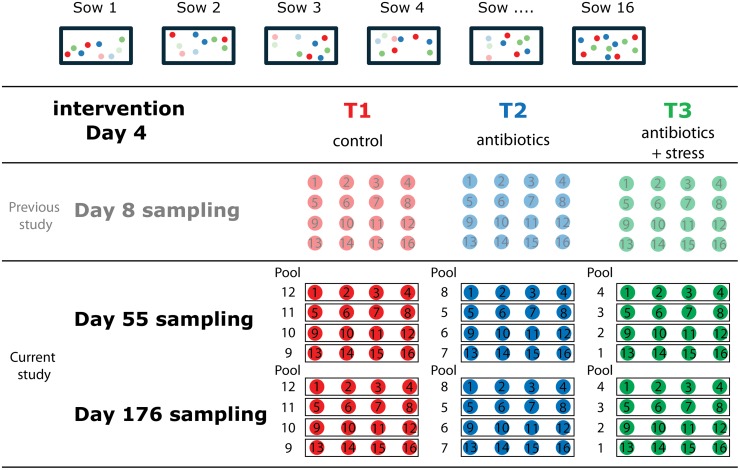
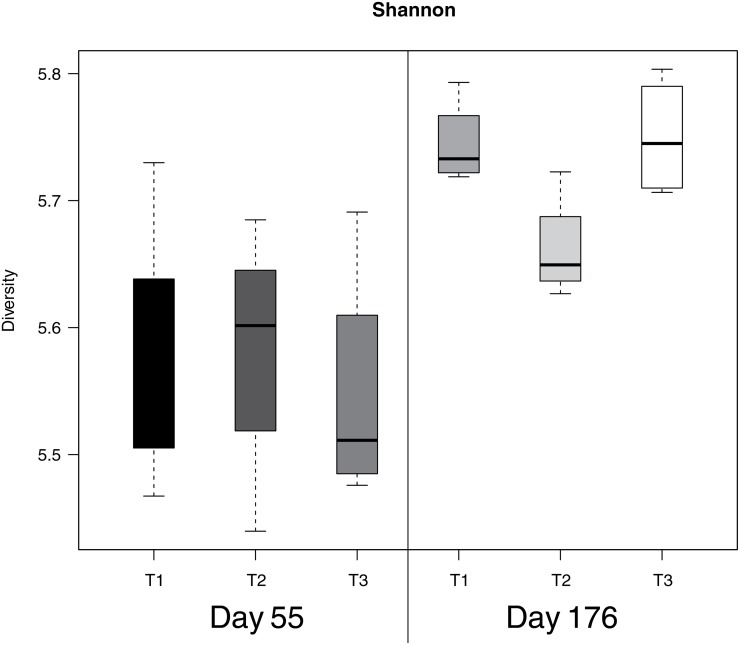
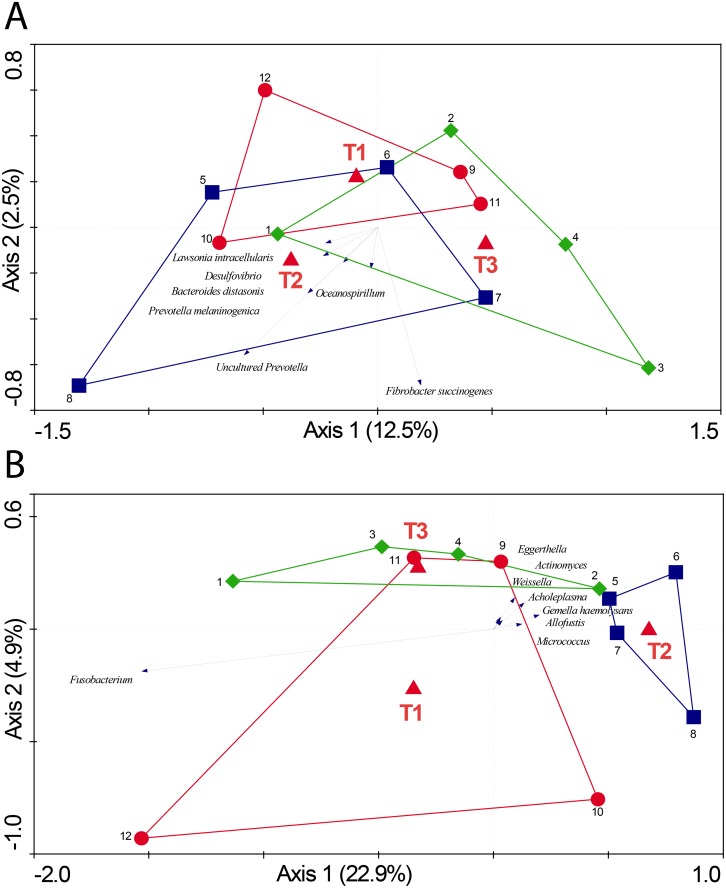
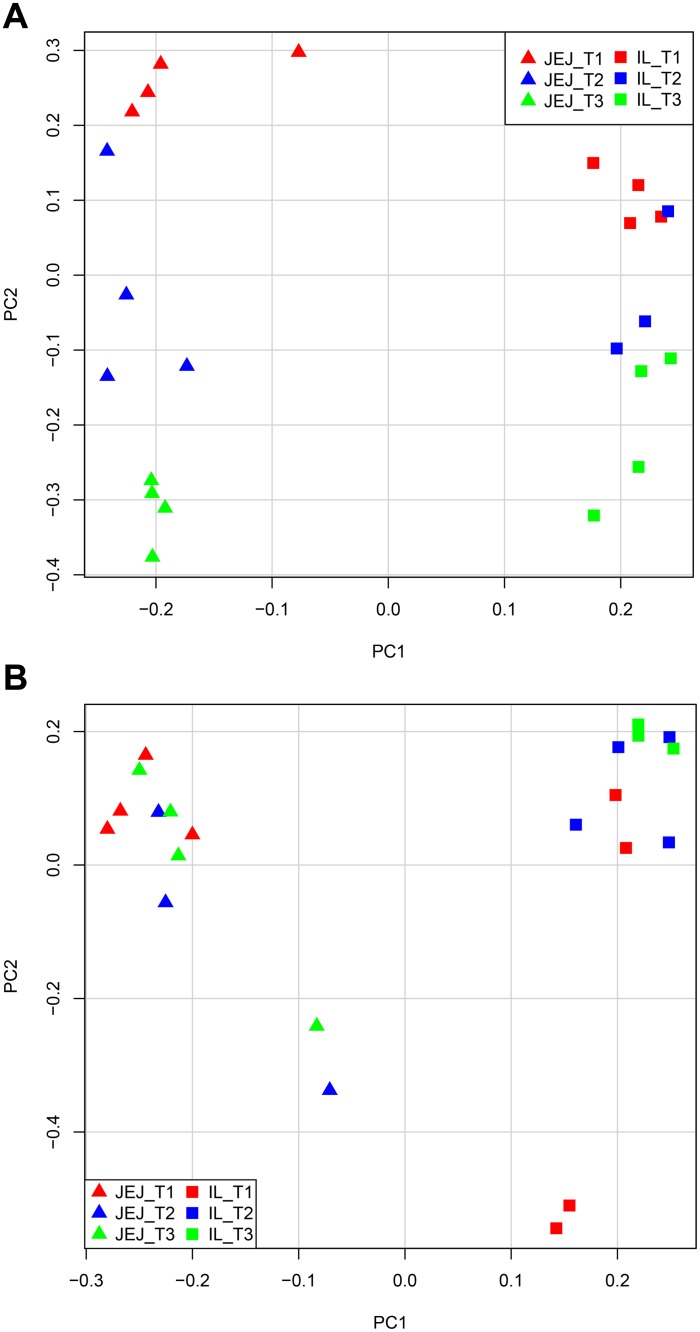
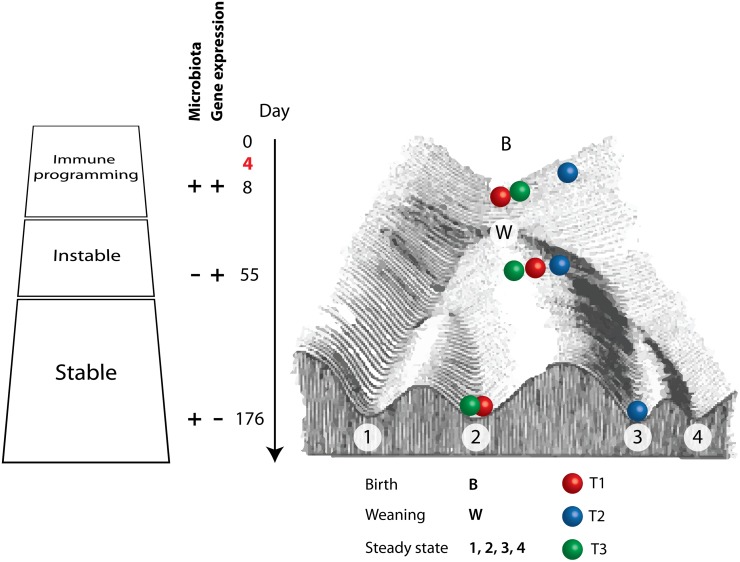
BACKGROUND: In intensive pig husbandry systems, antibiotics are frequently administrated during early life stages to prevent respiratory and gastro-intestinal tract infections, often in combination with stressful handlings. The immediate effects of these treatments on microbial colonization and immune development have been described recently. Here we studied whether the early life administration of antibiotics has long-lasting effects on the pig's intestinal microbial community and on gut functionality. METHODOLOGY/PRINCIPAL FINDINGS: To investigate the long-lasting effect of early-life treatment, piglets were divided into three different groups receiving the following treatments: 1) no antibiotics and no stress, 2) antibiotics and no stress, and 3) antibiotics and stress. All treatments were applied at day four after birth. Sampling of jejunal content for community scale microbiota analysis, and jejunal and ileal tissue for genome-wide transcription profiling, was performed at day 55 (~8 weeks) and day 176 (~25 weeks) after birth. Antibiotic treatment in combination with or without exposure to stress was found to have long-lasting effects on host intestinal gene expression involved in a multitude of processes, including immune related processes. CONCLUSIONS/SIGNIFICANCE: The results obtained in this study indicate that early life (day 4 after birth) perturbations have long-lasting effects on the gut system, both in gene expression (day 55) as well as on microbiota composition (day 176). At day 55 high variance was observed in the microbiota data, but no significant differences between treatment groups, which is most probably due to the newly acquired microbiota during and right after weaning (day 28). Based on the observed difference in gene expression at day 55, it is hypothesized that due to the difference in immune programming during early life, the systems respond differently to the post-weaning newly acquired microbiota. As a consequence, the gut systems of the treatment groups develop into different homeostasis.
Overview
The claims and statistics of this paper haven’t been checked yet.
Free: it reads the open-access text and checks the first 5 claims that cite a source we can check. Create a free account to check every claim.
Integrity signals
Registry
Cites
Statistics
Figures
Verification
Claims the paper makes
The claims and statistics of this paper haven’t been checked yet.
Free: it reads the open-access text and checks the first 5 claims that cite a source we can check. Create a free account to check every claim.
Claims other papers make about this one
Each is checked against this paper’s own text: does it say what the citing paper says it does?
The source backs part of the claim, not all of it — or backs it for a different population, condition or comparison.
In the citing paper
“Animal-to-animal variability in gene expression patterns has been observed for decades and is expected in many tissues, especially in immune cells, of animals that encounter different stressors or pathogens (Boedigheimer et al, 2008; Schokker et al, 2015; Paunovska et al, 2018; Reid et al, 2018).”
From Evaluation of genetic demultiplexing of single-cell sequencing data from model species (2023) · cites this paper as Schokker et al, 2015
Experimental — accuracy not yet measured
Self-check
Percentages, sums and reported differences re-computed from the paper’s own numbers.
The self-check needs the paper’s full text.
Citations
Cites
Subramanian, A., Tamayo, P., Mootha, V. K., Mukherjee, S., Ebert, B. L., Gillette, M. A., Paulovich, A., Pomeroy, S. L., Golub, T. R., Lander, E. S., et al. (2005) · Proceedings of the National Academy of Sciences · doi:10.1073/pnas.0506580102 · Cited by 53,625 · cited 9×
“In contrast, the GSEA for pigs of day 176 resulted in multiple significantly enriched gene sets, indicating that despite the more pronounced differences in microbial composition in adult life (176 vs. 55 days), host gene expression is not always changing accordingly.”
MethodInfluentialSystematic and integrative analysis of large gene lists using DAVID bioinformatics resources
Huang, D. W., Sherman, B. T., & Lempicki, R. A. (2009) · Nature Protocols · doi:10.1038/nprot.2008.211 · Cited by 35,890
Huang, D. W., Sherman, B. T., & Lempicki, R. A. (2009) · Nucleic Acids Research · doi:10.1093/nar/gkn923 · Cited by 14,108
Mootha, V. K., Lindgren, C. M., Eriksson, K.-F., Subramanian, A., Sihag, S., Lehar, J., Puigserver, P., Carlsson, E., Ridderstråle, M., Laurila, E., et al. (2003) · Nature Genetics · doi:10.1038/ng1180 · Cited by 10,197
Human gut microbes associated with obesity
Ley, R. E., Turnbaugh, P. J., Klein, S., & Gordon, J. I. (2006) · Nature · doi:10.1038/4441022a · Cited by 8,785
Catastrophic shifts in ecosystems
Scheffer, M., Carpenter, S., Foley, J. A., Folke, C., & Walker, B. (2001) · Nature · doi:10.1038/35098000 · Cited by 7,510 · cited 1×
“[47] by generating stability landscape(s), where hills depict unstable states and valleys steady states.”
BackgroundChanges of Intestinal Functions in Liver Cirrhosis
Fukui, H., & Wiest, R. (2016) · Inflammatory Intestinal Diseases · doi:10.1159/000444436 · Cited by 6,808
ter Braak, C. J. F. (1986) · Ecology · doi:10.2307/1938672 · Cited by 5,943 · cited 1×
“RDA was performed focusing on inter-sample correlation, and the Monte Carlo Permutation test was applied [25] to decide whether treatment had statistically significant influence on the microbial composition.”
MethodHost-Bacterial Mutualism in the Human Intestine
Bäckhed, F., Ley, R. E., Sonnenburg, J. L., Peterson, D. A., & Gordon, J. I. (2005) · Science · doi:10.1126/science.1104816 · Cited by 5,277
The gut microbiota shapes intestinal immune responses during health and disease
Round, J. L., & Mazmanian, S. K. (2009) · Nature Reviews Immunology · doi:10.1038/nri2515 · Cited by 5,029 · cited 1×
“Since at this stage the necessary regulatory and epigenetic processes underlying gut immune homeostasis have probably not been fully programmed yet, the composition and diversity of the colonizing microbiota is highly susceptible to environmental variations [5–9].”
BackgroundMultivariate Analysis of Ecological Data using CANOCO
Lepš, J., & Šmilauer, P. (2003) · Cambridge University Press eBooks · doi:10.1017/cbo9780511615146 · Cited by 4,554
The gut microbiota--masters of host development and physiology
Sommer, F., & Bäckhed, F. (2013) · Nature Reviews Microbiology · doi:10.1038/nrmicro2974 · Cited by 3,681 · cited 1×
“Experimentally induced changes in early life environmental factors have been associated with variations in the microbial composition at later ages [10], with variations in immune characteristics [11], and with differences in the susceptibility to immunological disorders [12–15].”
BackgroundInnate immunity and intestinal microbiota in the development of Type 1 diabetes
Wen, L., Ley, R. E., Volchkov, P. Y., Stranges, P. B., Avanesyan, L., Stonebraker, A. C., Hu, C., Wong, F. S., Szot, G. L., Bluestone, J. A., et al. (2008) · Nature · doi:10.1038/nature07336 · Cited by 1,921 · cited 1×
“Experimentally induced changes in early life environmental factors have been associated with variations in the microbial composition at later ages [10], with variations in immune characteristics [11], and with differences in the susceptibility to immunological disorders [12–15].”
BackgroundImproved extraction of PCR-quality community DNA from digesta and fecal samples
Yu, Z., & Morrison, M. (2004) · BioTechniques · doi:10.2144/04365st04 · Cited by 1,664 · cited 2×
“Microbial DNA was extracted from 250 mg of the pooled mixture using a faecal DNA extraction protocol adapted from Yu and Morrison [18], as previously described by Salonen et al.”
MethodGut immune maturation depends on colonization with a host-specific microbiota
Chung, H., Pamp, S. J., Hill, J. A., Surana, N. K., Edelman, S. M., Troy, E. B., Reading, N. C., Villablanca, E. J., Wang, S., Mora, J. R., et al. (2012) · Cell · doi:10.1016/j.cell.2012.04.037 · Cited by 1,241 · cited 1×
“Germ-free mice, for example, do not develop a proper working immune system because they lack microbial stimuli in early life [43].”
BackgroundEarly life antibiotic‐driven changes in microbiota enhance susceptibility to allergic asthma
Russell, S. L., Gold, M. J., Hartmann, M., Willing, B. P., Thorson, L., Wlodarska, M., Gill, N., Blanchet, M., Mohn, W. W., McNagny, K. M., et al. (2012) · The EMBO Reports · doi:10.1038/embor.2012.32 · Cited by 883 · cited 1×
“In human studies it has already been shown that different early life environmental factors can lead to a higher risk of diseases such as asthma and allergy [44–46].”
BackgroundPenders, J., Thijs, C., van den Brandt, P. A., Kummeling, I., Snijders, B., Stelma, F., Adams, H., van Ree, R., & Stobberingh, E. E. (2007) · Gut · doi:10.1136/gut.2006.100164 · Cited by 844 · cited 1×
“Experimentally induced changes in early life environmental factors have been associated with variations in the microbial composition at later ages [10], with variations in immune characteristics [11], and with differences in the susceptibility to immunological disorders [12–15].”
BackgroundOu, J., Carbonero, F., Zoetendal, E. G., DeLany, J. P., Wang, M., Newton, K., Gaskins, H. R., & O’Keefe, S. J. (2013) · The American Journal of Clinical Nutrition · doi:10.3945/ajcn.112.056689 · Cited by 646 · cited 1×
“in the gut [39,40].”
Update notes: Canoco, version 3.10
ter Braak, C. J. F. (1990) · Cited by 598
Salonen, A., Nikkilä, J., Jalanka-Tuovinen, J., Immonen, O., Rajilić-Stojanović, M., Kekkonen, R. A., Palva, A., & de Vos, W. M. (2010) · Journal of Microbiological Methods · doi:10.1016/j.mimet.2010.02.007 · Cited by 594
Mager, D., Haffajee, A., Devlin, P., Norris, C., Posner, M., & Goodson, J. (2005) · Journal of Translational Medicine · doi:10.1186/1479-5876-3-27 · Cited by 514
Rajilić‐Stojanović, M., Heilig, H. G. H. J., Molenaar, D., Kajander, K., Surakka, A., Smidt, H., & De Vos, W. M. (2009) · Environmental Microbiology · doi:10.1111/j.1462-2920.2009.01900.x · Cited by 484 · cited 4×
“Briefly, the bacterial 16S rRNA gene was amplified using the primers T7prom-Bact-27-for (5 ́-TGAATTGTAATACGACTCACTATAGGGGTTTGATCCTGGCTCAG-3 ́) and Uni-1492-rev (5 ́-CGGCTACCTTGTTACGAC-3 ́) [20,23].”
MethodInfluentialSelf-citationGut Microbiota and Inflammation
Hakansson, A., & Molin, G. (2011) · Nutrients · doi:10.3390/nu3060637 · Cited by 455
The role of the intestinal microbiota in the development of atopic disorders
Penders, J., Stobberingh, E. E., Brandt, P. A. V. D., & Thijs, C. (2007) · Allergy · doi:10.1111/j.1398-9995.2007.01462.x · Cited by 437
Post‐natal development of the porcine microbiota composition and activities
Konstantinov, S. R., Awati, A. A., Williams, B. A., Miller, B. G., Jones, P., Stokes, C. R., Akkermans, A. D. L., Smidt, H., & De Vos, W. M. (2006) · Environmental Microbiology · doi:10.1111/j.1462-2920.2006.01009.x · Cited by 350 · cited 1×
“The weaning period is known to cause a large shift in the composition and diversity of gut microbiota [33,34].”
BackgroundSelf-citationHaenen, D., Zhang, J., Souza da Silva, C., Bosch, G., van der Meer, I. M., van Arkel, J., van den Borne, J. J. G. C., Pérez Gutiérrez, O., Smidt, H., Kemp, B., et al. (2013) · The Journal of Nutrition · doi:10.3945/jn.112.169672 · Cited by 341
Self-citationJalanka-Tuovinen, J., Salojärvi, J., Salonen, A., Immonen, O., Garsed, K., Kelly, F. M., Zaitoun, A., Palva, A., Spiller, R. C., & de Vos, W. M. (2014) · Gut · doi:10.1136/gutjnl-2013-305994 · Cited by 340 · cited 1×
“in the gut [39,40].”
Longitudinal investigation of the age-related bacterial diversity in the feces of commercial pigs
Kim, H. B., Borewicz, K., White, B. A., Singer, R. S., Sreevatsan, S., Tu, Z. J., & Isaacson, R. E. (2011) · Veterinary Microbiology · doi:10.1016/j.vetmic.2011.05.021 · Cited by 335 · cited 1×
“75 at day 176, which is in agreement with similar observations in other pig studies [31,32].”
ResultTipping elements in the human intestinal ecosystem
Lahti, L., Salojärvi, J., Salonen, A., Scheffer, M., & de Vos, W. M. (2014) · Nature Communications · doi:10.1038/ncomms5344 · Cited by 325
Influence of the gastrointestinal microbiota on development of the immune system in young animals.
Bauer, E., Williams, B. A., Smidt, H., Verstegen, M. W. A., & Mosenthin, R. (2006) · PubMed · Cited by 284
Self-citationPerinatal antibiotic treatment affects murine microbiota, immune responses and allergic asthma
Russell, S. L., Gold, M. J., Willing, B. P., Thorson, L., McNagny, K. M., & Finlay, B. B. (2013) · Gut Microbes · doi:10.4161/gmic.23567 · Cited by 279 · cited 1×
“In human studies it has already been shown that different early life environmental factors can lead to a higher risk of diseases such as asthma and allergy [44–46].”
BackgroundA pig model of the human gastrointestinal tract
Zhang, Q., Widmer, G., & Tzipori, S. (2013) · Gut Microbes · doi:10.4161/gmic.23867 · Cited by 205 · cited 1×
“75 at day 176, which is in agreement with similar observations in other pig studies [31,32].”
ResultSchokker, D., Zhang, J., Zhang, L.-L., Vastenhouw, S. A., Heilig, H. G. H. J., Smidt, H., Rebel, J. M. J., & Smits, M. A. (2014) · PLoS ONE · doi:10.1371/journal.pone.0100040 · Cited by 195 · cited 7×
“However, because the immune programming at young age was found significantly different between the treatment groups [16], the system still responds differently towards this ‘newly’ acquired microbial community.”
BackgroundResultInfluentialSelf-citationMulder, I. E., Schmidt, B., Lewis, M., Delday, M., Stokes, C. R., Bailey, M., Aminov, R. I., Gill, B. P., Pluske, J. R., Mayer, C.-D., et al. (2011) · PLoS ONE · doi:10.1371/journal.pone.0028279 · Cited by 181 · cited 1×
“Experimentally induced changes in early life environmental factors have been associated with variations in the microbial composition at later ages [10], with variations in immune characteristics [11], and with differences in the susceptibility to immunological disorders [12–15].”
BackgroundStarke, I. C., Pieper, R., Neumann, K., Zentek, J., & Vahjen, W. (2014) · FEMS Microbiology Ecology · doi:10.1111/1574-6941.12233 · Cited by 179 · cited 1×
“It is known that such dietary changes greatly affect the composition and diversity of the microbiota in the gut [1,2].”
BackgroundThe role of gut microbiota in programming the immune phenotype
Weng, M., & Walker, W. A. (2013) · Journal of Developmental Origins of Health and Disease · doi:10.1017/s2040174412000712 · Cited by 171 · cited 1×
“It is known that the microbiota have an important role in the development of (intestinal) immunity in the neonatal period [42].”
BackgroundSu, Y., Yao, W., Gutiérrez, O. P., Smidt, H., & Zhu, W. (2008) · FEMS Microbiology Ecology · doi:10.1111/j.1574-6941.2008.00529.x · Cited by 133 · cited 1×
“It has previously been shown that Streptococcus suis, a potential pathogen, is more abundant in the pig intestine directly after weaning [35].”
BackgroundSelf-citationEarly life exposures: impact on asthma and allergic disease
Kozyrskyj, A. L., Bahreinian, S., & Azad, M. B. (2011) · Current Opinion in Allergy & Clinical Immunology · doi:10.1097/aci.0b013e328349b166 · Cited by 117 · cited 1×
“In human studies it has already been shown that different early life environmental factors can lead to a higher risk of diseases such as asthma and allergy [44–46].”
BackgroundOhnmacht, C., Marques, R., Presley, L., Sawa, S., Lochner, M., & Eberl, G. (2011) · Cellular Microbiology · doi:10.1111/j.1462-5822.2011.01577.x · Cited by 65 · cited 1×
“Since at this stage the necessary regulatory and epigenetic processes underlying gut immune homeostasis have probably not been fully programmed yet, the composition and diversity of the colonizing microbiota is highly susceptible to environmental variations [5–9].”
BackgroundArnal, M.-É., Zhang, J., Messori, S., Bosi, P., Smidt, H., & Lallès, J. P. (2014) · PLoS ONE · doi:10.1371/journal.pone.0087967 · Cited by 64
Self-citationLewis, M. C., Inman, C. F., Patel, D., Schmidt, B., Mulder, I., Miller, B., Gill, B. P., Pluske, J., Kelly, D., Stokes, C. R., et al. (2012) · Pediatric Allergy and Immunology · doi:10.1111/j.1399-3038.2011.01258.x · Cited by 61 · cited 1×
“Some publications have reported on the shortterm effects of experimentally induced environmental variations during the early life stages of piglets [6].”
BackgroundEffects of Microbiota on GI Health: Gnotobiotic Research
Wagner, R. D. (2009) · Advances in experimental medicine and biology · doi:10.1007/978-0-387-09550-9_4 · Cited by 54 · cited 1×
“Since at this stage the necessary regulatory and epigenetic processes underlying gut immune homeostasis have probably not been fully programmed yet, the composition and diversity of the colonizing microbiota is highly susceptible to environmental variations [5–9].”
BackgroundThe mucosal microbiome in shaping health and disease
Pfefferle, P. I., & Renz, H. E. (2014) · F1000Prime Reports · doi:10.12703/p6-11 · Cited by 36 · cited 1×
“From studies in model organisms (rodents), but also in pigs, it has become clear that this primary colonization is important for the right development and programming of the animal’s local and systemic immune system [3,4].”
BackgroundBrook, I., Foote, P. A., & Slots, J. (1997) · Journal of Antimicrobial Chemotherapy · doi:10.1093/jac/39.6.763 · Cited by 36 · cited 1×
“Several species of Prevotella, including Prevotella melaninogenica, are also potential pathogens that mostly occur in the upper digestive tract [36,37].”
BackgroundReduced apoptosis in term placentas from gestational diabetic pregnancies
Belkacemi, L., Kjos, S. L., Nelson, D. M., Desai, M., & Ross, M. G. (2013) · Journal of Developmental Origins of Health and Disease · doi:10.1017/s2040174413000068 · Cited by 31
The continuum of intestinal CD4+T cell adaptations in host-microbial mutualism
Geuking, M. B., McCoy, K. D., & Macpherson, A. J. (2011) · Gut Microbes · doi:10.4161/gmic.18604 · Cited by 27 · cited 1×
“Since at this stage the necessary regulatory and epigenetic processes underlying gut immune homeostasis have probably not been fully programmed yet, the composition and diversity of the colonizing microbiota is highly susceptible to environmental variations [5–9].”
BackgroundUnraveling piglet gut microbiota dynamics in response to feed additives
Gutiérrez, O. P. (2010) · doi:10.18174/139643 · Cited by 21
Development of the Gastrointestinal Tract in Pigs
Kang, Y., Sun, Z., Liu, Z.-K., Li, Z., & Yin, Y. (2013) · Springer eBooks · doi:10.1007/978-3-7091-1328-8_1 · Cited by 5
Research works printed but not linked: 2
- Haenen D, Zhang J, da Silva CS, Bosch G, van der Meer IM, et al (2013) A Diet High in Resistant Starch Modulates Microbiota Composition, SCFA Concentrations, and Gene Expression in Pig Intestine. The Journal of nutrition 143: 274– 283. 10.3945/jn.112.169672 23325922 · DOI · Paper page
- Salonen A, Nikkilä J, Jalanka-Tuovinen J, Immonen O, Rajilić-Stojanović M, et al (2010) Comparative analysis of fecal DNA extraction methods with phylogenetic microarray: effective recovery of bacterial and archaeal DNA using mechanical cell lysis. Journal of microbiological methods 81: 127– 134. 10.1016/j.mimet.2010.02.007 20171997 · DOI · Paper page
Cited by
Gut Microbiota Dysbiosis in Postweaning Piglets: Understanding the Keys to Health
Gresse, R., Chaucheyras-Durand, F., Fleury, M. A., Van de Wiele, T., Forano, E., & Blanquet-Diot, S. (2017) · Trends in Microbiology · doi:10.1016/j.tim.2017.05.004 · Cited by 890
EMA Committee for Medicinal Products for Veterinary Use (CVMP) and EFSA Panel on Biological Hazards (BIOHAZ), Murphy, D., Ricci, A., Auce, Z., Beechinor, J. G., Bergendahl, H., Breathnach, R., Bureš, J., Duarte Da Silva, J. P., Hederová, J., et al. (2017) · EFSA Journal · doi:10.2903/j.efsa.2017.4666 · Cited by 314
Critical review evaluating the pig as a model for human nutritional physiology
Roura, E., Koopmans, S.-J., Lallès, J.-P., Le Huerou-Luron, I., de Jager, N., Schuurman, T., & Val-Laillet, D. (2016) · Nutrition Research Reviews · doi:10.1017/s0954422416000020 · Cited by 303
Longitudinal study of the early-life fecal and nasal microbiotas of the domestic pig
Slifierz, M. J., Friendship, R. M., & Weese, J. S. (2015) · BMC Microbiology · doi:10.1186/s12866-015-0512-7 · Cited by 204
“The present characterization of the early-life microbiota of conventionally-raised pigs using next-generation sequencing provides a broader view of the microbial landscape than previous studies that have employed culture-based methods, fingerprinting, Sanger sequencing, microarrays, and 454-sequencing [1, 2, 5, 11, 12…”
MethodResultIntestinal microbiota and its interaction to intestinal health in nursery pigs
Duarte, M. E., & Kim, S. W. (2021) · Animal nutrition · doi:10.1016/j.aninu.2021.05.001 · Cited by 161
Metadata
- Authors
- Schokker, D., Zhang, J., Vastenhouw, S. A., Heilig, H. G. H. J., Smidt, H., Rebel, J. M. J., & Smits, M. A.
- Affiliations
- Wageningen University & Research (NL)
- Corresponding author
- Schokker, Dirkjan
- ORCID
- Venue
- PLOS ONE
- Publisher
- Public Library of Science (PLoS)
- Published
- 2015-02-06
- Volume
- 10
- Issue
- 2
- Pages
- e0116523
- ISSN
- 1932-6203 (ISSN-L)
- PMC
- PMC4319779
- OpenAlex
- W2120718555
- Cited by
- 142
- References
- 48
- Citations by year
- 2026: 3 · 2025: 18 · 2024: 11 · 2023: 10 · 2022: 21 · 2021: 16 · 2020: 16 · 2019: 16 · 2018: 8 · 2017: 12 · 2016: 7 · 2015: 4
- FWCI
- 14.61
- Type
- journal article
- Language
- en
- Open access
- gold
- doi.org
- Licence
- Locations
- PLoS ONE (publishedVersion, cc-by)
- PubMed Central (publishedVersion, cc-by)
- PubMed (publishedVersion)
- Socio-Environmental Systems Modeling (acceptedVersion, cc-by)
- DOAJ (DOAJ: Directory of Open Access Journals) (submittedVersion, cc-by-sa)
- Figshare (submittedVersion, cc-by)
- Data Archiving and Networked Services (DANS) (submittedVersion, cc-by)
- Funders
- European Commission (227549)
- Topics
- Life Sciences › Agricultural and Biological Sciences › Animal Science and Zoology › Animal Nutrition and Physiology
- Life Sciences › Biochemistry, Genetics and Molecular Biology › Molecular Biology › Gut microbiota and health
- Health Sciences › Veterinary › Small Animals › Veterinary medicine and infectious diseases
- Keywords
- animal handling stress, gut microbiota, immune programming, intestinal gene expression, piglets, weaning, long-lasting effects, jejunal microbiota, intestinal homeostasis
- MeSH terms
- Gastrointestinal Microbiome, Animals, Animals, Newborn, Anti-Bacterial Agents, Disaccharides, DNA, Bacterial, Heterocyclic Compounds, Intestinal Mucosa, Stress, Physiological, Gene Expression Regulation, Developmental, Macrolides, Gene Expression Profiling, Sus scrofa, Biodiversity
About these checks
Registry, retraction, Cites and statistics results are computed, not judged, with one exception: a printed reference that no index lists is read once by a model before it counts as a citation error. Claims are extracted by a model and kept only when their quote appears verbatim in the text; each cited source is then checked, with a model’s help, for whether it says what the claim relies on. Those verdicts can be wrong — read the claim’s quote and the cited source before relying on one.
Statistics and arithmetic are recomputed, not judged.
Confidence bands are shown only for fields calibrated on our annotated test set. None is calibrated yet, so no band is shown.
What counts as a claim ›How we measure confidence ›How we check this ›
Are you an author, or do you see a problem with this page? Request a review
Data sources
Bibliographic data: Semantic Scholar, OpenAlex, Crossref.
Contains information from the Semantic Scholar Academic Graph Datasets, made available under the ODC Attribution License (ODC-BY 1.0).
Semantic Scholar’s data is described in: Kinney, R., et al. (2023). The Semantic Scholar Open Data Platform. arXiv:2301.10140.
