

Psychological well‐being and the human conserved transcriptional response to adversity
Open accessThe DOI matches its Crossref record; 47 of the 48 references it cites were found in a registry or an index.
Abstract
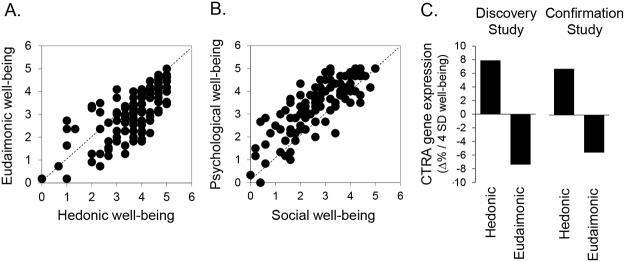
Research in human social genomics has identified a conserved transcriptional response to adversity (CTRA) characterized by up-regulated expression of pro-inflammatory genes and down-regulated expression of Type I interferon- and antibody-related genes. This report seeks to identify the specific aspects of positive psychological well-being that oppose such effects and predict reduced CTRA gene expression. In a new confirmation study of 122 healthy adults that replicated the approach of a previously reported discovery study, mixed effect linear model analyses identified a significant inverse association between expression of CTRA indicator genes and a summary measure of eudaimonic well-being from the Mental Health Continuum - Short Form. Analyses of a 2- representation of eudaimonia converged in finding correlated psychological and social subdomains of eudaimonic well-being to be the primary carriers of CTRA associations. Hedonic well-being showed no consistent CTRA association independent of eudaimonic well-being, and summary measures integrating hedonic and eudaimonic well-being showed less stable CTRA associations than did focal measures of eudaimonia (psychological and social well-being). Similar results emerged from analyses of pooled discovery and confirmation samples (n = 198). Similar results also emerged from analyses of a second new generalization study of 107 healthy adults that included the more detailed Ryff Scales of Psychological Well-being and found this more robust measure of eudaimonic well-being to also associate with reduced CTRA gene expression. Five of the 6 major sub-domains of psychological well-being predicted reduced CTRA gene expression when analyzed separately, and 3 remained distinctively prognostic in mutually adjusted analyses. All associations were independent of demographic characteristics, health-related confounders, and RNA indicators of leukocyte subset distribution. These results identify specific sub-dimensions of eudaimonic well-being as promising targets for future interventions to mitigate CTRA gene expression, and provide no support for any independent favorable contribution from hedonic well-being.
Overview
The claims and statistics of this paper haven’t been checked yet.
Free: it reads the open-access text and checks the first 5 claims that cite a source we can check. Create a free account to check every claim.
Integrity signals
Registry
Cites
Statistics
Figures
Verification
Claims the paper makes
The claims and statistics of this paper haven’t been checked yet.
Free: it reads the open-access text and checks the first 5 claims that cite a source we can check. Create a free account to check every claim.
Claims other papers make about this one
Each is checked against this paper’s own text: does it say what the citing paper says it does?
The cited source says what the claim attributes to it.
In the citing paper
“Frederickson et al 110 reported that individuals with high psychological wellbeing presented reduced CTRA gene expression, which introduces a potential protective role for psychological well-being in a number of medical disorders.”
From The pursuit of euthymia (2020) · cites this paper as [110]
Self-check
Percentages, sums and reported differences re-computed from the paper’s own numbers.
The self-check needs the paper’s full text.
Citations
Cites
Happiness is everything, or is it? Explorations on the meaning of psychological well-being.
Ryff, C. D. (1989) · Journal of Personality and Social Psychology · doi:10.1037/0022-3514.57.6.1069 · Cited by 14,847
A Caution Regarding Rules of Thumb for Variance Inflation Factors
O’brien, R. M. (2007) · Quality & Quantity · doi:10.1007/s11135-006-9018-6 · Cited by 11,217
The structure of psychological well-being revisited.
Ryff, C. D., & Keyes, C. L. M. (1995) · Journal of Personality and Social Psychology · doi:10.1037//0022-3514.69.4.719 · Cited by 10,285
Applied Linear Statistical Models
Ziegel, E. R., Neter, J., Wasserman, W., & Kutner, M. (1992) · Technometrics · doi:10.2307/1269588 · Cited by 9,907
Applied Linear Statistical Models.
Lorenz, F., Neter, J., Wasserman, W., & Kutner, M. H. (1986) · Journal of the American Statistical Association · doi:10.2307/2289108 · Cited by 5,565
The mental health continuum: from languishing to flourishing in life.
Keyes, C. L. M. (2002) · Journal of Health and Social Behavior · doi:10.2307/3090197 · Cited by 5,133 · cited 1×
“An alternative conceptual approach does not seek to distinguish among sub-domains of well-being but instead integrates measures of hedonic, psychological, and social well-being into a single overall categorical assessment of flourishing mental health [10, 15, 19].”
BackgroundKnow thyself and become what you are: a eudaimonic approach to psychological well-being
Ryff, C. D., & Singer, B. H. (2008) · Journal of Happiness Studies · doi:10.1007/s10902-006-9019-0 · Cited by 3,149 · cited 3×
“Other theorists have conceptualized eudaimonia predominately in terms of psychological well-being [17, 21–24], suggesting that it may be theoretically and psychometrically appropriate to consider psychological well-being separately from social well-being.”
BackgroundMethodResultGeneralized, Linear, and Mixed Models
McCulloch, C. E., & Searle, S. R. (2000) · Wiley Series in Probability and Statistics · doi:10.1002/0471722073 · Cited by 2,994
Psychological Well-Being Revisited: Advances in the Science and Practice of Eudaimonia
Ryff, C. D. (2014) · Psychotherapy and Psychosomatics · doi:10.1159/000353263 · Cited by 2,976 · cited 5×
“This approach is also consistent with findings from the generalization study, in which more robust and detailed measures of eudaimonia were available in the Ryff-PWB scales [17, 37] and results again found robust CTRA associations with the overall 6-d eudaimonia space as well as with the 1-d summary score.”
MethodResultInfluentialKeyes, C. L. M. (1998) · Social Psychology Quarterly · doi:10.2307/2787065 · Cited by 2,924 · cited 1×
“In the conceptual model underpinning the MHC-SF, eudaimonic well-being is comprised of distinct dimensions of psychological well-being and social well-being [12, 15].”
Method
Research works printed but not linked: 1
- National Research Council (2013) Subjective Well-Being: Measuring Happiness, Suffering, and Other Dimensions of Experience, Panel on Measuring Subjective Well-Being in a Policy-Relevant Framework. 24432436
Cited by
Garland, E. L., Farb, N. A., R. Goldin, P., & Fredrickson, B. L. (2015) · Psychological Inquiry · doi:10.1080/1047840x.2015.1064294 · Cited by 810
Self-citationPositive Affect and Health: What Do We Know and Where Next Should We Go?
Pressman, S. D., Jenkins, B. N., & Moskowitz, J. T. (2019) · Annual Review of Psychology · doi:10.1146/annurev-psych-010418-102955 · Cited by 452
Cole, S. W., Capitanio, J. P., Chun, K., Arevalo, J. M. G., Ma, J., & Cacioppo, J. T. (2015) · Proceedings of the National Academy of Sciences · doi:10.1073/pnas.1514249112 · Cited by 310
“Year 5, 7, and 8 samples were assayed by Ref8 arrays (Gene Expression Omnibus Series GSE65213, GSE65298, and GSE65317), year 9–10 samples were assayed by HT-12 BeadArrays (GSE65341 and GSE65403), and CTRA gene expression was analyzed using mixed effect linear models (43) testing association between average expression…”
MethodSelf-citationEntrepreneurship and eudaimonic well-being: Five venues for new science
Ryff, C. D. (2019) · Journal of Business Venturing · doi:10.1016/j.jbusvent.2018.09.003 · Cited by 307
Current Psychosomatic Practice
Fava, G. A., Cosci, F., & Sonino, N. (2017) · Psychotherapy and Psychosomatics · doi:10.1159/000448856 · Cited by 302
The conserved transcriptional response to adversity
Cole, S. W. (2019) · Current Opinion in Behavioral Sciences · doi:10.1016/j.cobeha.2019.01.008 · Cited by 294
Self-citationThe Relationship Between Spirituality, Health-Related Behavior, and Psychological Well-Being
Bożek, A., Nowak, P. F., & Blukacz, M. (2020) · Frontiers in Psychology · doi:10.3389/fpsyg.2020.01997 · Cited by 266
Loneliness, eudaimonia, and the human conserved transcriptional response to adversity
Cole, S. W., Levine, M. E., Arevalo, J. M. G., Ma, J., Weir, D. R., & Crimmins, E. M. (2015) · Psychoneuroendocrinology · doi:10.1016/j.psyneuen.2015.07.001 · Cited by 238
“…anuscript loom so large in the psychobiological regulation of leukocyte gene transcription that they overwhelm any salutary effects of positive psychological conditions such as eudaimonic well-being (Fredrickson et al., 2015; Fredrickson et al., 2013; Friedman, 2012; Ryff, 2014; Ryff et al., 2004)?”
BackgroundMethodResultInfluentialSelf-citationRyff, C. D., Boylan, J. M., & Kirsch, J. A. (2021) · Measuring Well-Being · doi:10.1093/oso/9780197512531.003.0005 · Cited by 237
“…well- being predicted down- regulation of the conserved transcriptional response to adversity (CTRA; Cole, 2013), marked by higher expression of pro- inflammatory genes and lower expression of antibody synthesis genes across multiple studies (Cole et al., 2015; Fredrickson et al., 2013, 2015).”
BackgroundEudaimonic well-being, inequality, and health: Recent findings and future directions
Ryff, C. D. (2017) · International Review of Economics · doi:10.1007/s12232-017-0277-4 · Cited by 236
“A subsequent study, using more detailed measures of eudaimonic wellbeing (Fredrickson et al. 2015), showed reduced CTRA expression for all but one of the six dimensions of well-being, again after adjusting for demographic characteristics , health-related confounders, and RNA indicators of leukocyte…”
Discrimination and systemic inflammation: A critical review and synthesis
Cuevas, A. G., Ong, A. D., Carvalho, K., Ho, T., Chan, S. W. (., Allen, J. D., Chen, R., Rodgers, J., Biba, U., & Williams, D. R. (2020) · Brain, Behavior, and Immunity · doi:10.1016/j.bbi.2020.07.017 · Cited by 185
Fredrickson, B. L., Boulton, A. J., Firestine, A. M., Van Cappellen, P., Algoe, S. B., Brantley, M. M., Kim, S. L., Brantley, J., & Salzberg, S. (2017) · Mindfulness · doi:10.1007/s12671-017-0735-9 · Cited by 153
Self-citationFava, G. A., & Guidi, J. (2020) · World Psychiatry · doi:10.1002/wps.20698 · Cited by 148
Nelson, S. K., Fritz, M. M., Lyubomirsky, S., & Cole, S. W. (2017) · Psychoneuroendocrinology · doi:10.1016/j.psyneuen.2017.03.025 · Cited by 160
Self-citationPurposeful Engagement, Healthy Aging, and the Brain
Ryff, C. D., Heller, A. S., Schaefer, S. M., van Reekum, C. M., & Davidson, R. J. (2016) · Current Behavioral Neuroscience Reports · doi:10.1007/s40473-016-0096-z · Cited by 155
Positive maternal mental health, parenting, and child development
Phua, D. Y., Kee, M. Z. L., & Meaney, M. J. (2020) · Biological Psychiatry · doi:10.1016/j.biopsych.2019.09.028 · Cited by 124
Bower, J. E., & Kuhlman, K. R. (2023) · Annual Review of Clinical Psychology · doi:10.1146/annurev-clinpsy-080621-045153 · Cited by 155
Kohrt, B. A., Worthman, C. M., Adhikari, R. P., Luitel, N. P., Arevalo, J. M. G., Ma, J., McCreath, H., Seeman, T. E., Crimmins, E. M., & Cole, S. W. (2016) · Proceedings of the National Academy of Sciences · doi:10.1073/pnas.1601301113 · Cited by 110
Self-citationWell-Being Therapy: Current Indications and Emerging Perspectives
Fava, G. A. (2016) · Psychotherapy and Psychosomatics · doi:10.1159/000444114 · Cited by 96
Antoni, M. H., Bouchard, L. C., Jacobs, J. M., Lechner, S. C., Jutagir, D. R., Gudenkauf, L. M., Carver, C. S., Lutgendorf, S., Cole, S. W., Lippman, M., et al. (2016) · Psychoneuroendocrinology · doi:10.1016/j.psyneuen.2016.09.012 · Cited by 89
Self-citationLe Nguyen, K. D., Lin, J., Algoe, S. B., Brantley, M. M., Kim, S. L., Brantley, J., Salzberg, S., & Fredrickson, B. L. (2019) · Psychoneuroendocrinology · doi:10.1016/j.psyneuen.2019.05.020 · Cited by 89
Self-citationThe clinical role of well-being therapy
Guidi, J., Rafanelli, C., & Fava, G. A. (2018) · Nordic Journal of Psychiatry · doi:10.1080/08039488.2018.1492013 · Cited by 85
Well-being and immune response: a multi-system perspective
Lasselin, J., Alvarez‐Salas, E., & Grigoleit, J. (2016) · Current Opinion in Pharmacology · doi:10.1016/j.coph.2016.05.003 · Cited by 101
Disparities in Breast Cancer Associated With African American Identity
Stringer-Reasor, E. M., Elkhanany, A. M., Khoury, K. E., Simon, M. A., & Newman, L. A. (2021) · American Society of Clinical Oncology Educational Book · doi:10.1200/edbk_319929 · Cited by 92
“Social Ties, Health and Wellbeing: A Literature Review and Model”,
Kemp, A. H., Arias, J. A., & Fisher, Z. (2017) · Neuroscience and Social Science · doi:10.1007/978-3-319-68421-5_17 · Cited by 79
Ryff, C. D. (2018) · Wiley eBooks · doi:10.1002/9781119362081.ch20 · Cited by 121
Boyle, C. C., Cole, S. W., Dutcher, J. M., Eisenberger, N. I., & Bower, J. E. (2019) · Psychoneuroendocrinology · doi:10.1016/j.psyneuen.2019.01.024 · Cited by 78
Self-citationAging with Purpose: Developmental Changes and Benefits of Purpose in Life Throughout the Lifespan
Pfund, G. N., & Lewis, N. A. (2020) · International perspectives on aging · doi:10.1007/978-3-030-32053-9_3 · Cited by 84
Seeman, T. E., Merkin, S. S., Goldwater, D. S., & Cole, S. W. (2019) · Psychoneuroendocrinology · doi:10.1016/j.psyneuen.2019.104468 · Cited by 75
Self-citationWork, meaning, and gene regulation: Findings from a Japanese information technology firm
Kitayama, S., Akutsu, S., Uchida, Y., & Cole, S. W. (2016) · Psychoneuroendocrinology · doi:10.1016/j.psyneuen.2016.07.004 · Cited by 73
Self-citationWhy we heal: The evolution of psychological healing and implications for global mental health
Kohrt, B. A., Ottman, K. E., Panter‐Brick, C., Konner, M. J., & Patel, V. (2020) · Clinical Psychology Review · doi:10.1016/j.cpr.2020.101920 · Cited by 104
Neighborhood Disadvantage and Breast Cancer–Specific Survival
Goel, N., Hernandez, A. E., Thompson, C., Choi, S., Westrick, A. C., Stoler, J. B., Antoni, M. H., Rojas, K. E., Kesmodel, S. B., Figueroa, M. E., et al. (2023) · JAMA Network Open · doi:10.1001/jamanetworkopen.2023.8908 · Cited by 77
Self-citationA genetic perspective on the relationship between eudaimonic –and hedonic well-being
Baselmans, B. M. L., & Bartels, M. (2018) · Scientific Reports · doi:10.1038/s41598-018-32638-1 · Cited by 92
Gender and psychological well-being in older adults
Aznar, M. P. M., Pérez, J. M. B., Fernández, I. I., & Marichal, D. F. (2020) · International Psychogeriatrics · doi:10.1017/s1041610220000824 · Cited by 79
Kumsta, R. (2019) · Psychology and Psychotherapy: Theory, Research and Practice · doi:10.1111/papt.12227 · Cited by 60
Emotion and biological health: the socio-cultural moderation
Kitayama, S., & Park, J. (2017) · Current Opinion in Psychology · doi:10.1016/j.copsyc.2017.06.016 · Cited by 62
McDade, T. W., M. Ross, K., L. Fried, R., Arevalo, J. M. G., Ma, J., Miller, G. E., & Cole, S. W. (2016) · Biodemography and Social Biology · doi:10.1080/19485565.2016.1185600 · Cited by 55
“Analyses used an a priori-defined contrast among differential gene expression estimates for 53 canonical CTRA indicator genes (Cole et al. 2015; Fredrickson et al. 2013, 2015; Vedhara et al. 2015), including 19 pro-inflammatory genes (IL1A, IL1B, IL6, IL8, TNF, PTGS1, PTGS2, FOS, FOSB, FOSL1,…”
InfluentialSelf-citationCalvo, V., D’Aquila, C., Rocco, D., & Carraro, E. (2022) · Current Psychology · doi:10.1007/s12144-020-00820-2 · Cited by 55
Natural language indicators of differential gene regulation in the human immune system
Mehl, M. R., Raison, C. L., Pace, T. W. W., Arevalo, J. M. G., & Cole, S. W. (2017) · Proceedings of the National Academy of Sciences · doi:10.1073/pnas.1707373114 · Cited by 54
Self-citationLevin, N. J., Zebrack, B., & Cole, S. W. (2019) · Pediatric Blood & Cancer · doi:10.1002/pbc.27789 · Cited by 61
Self-citationHedonic and eudaimonic motives to pursue well-being in three samples of youth
Gentzler, A. L., DeLong, K. L., Palmer, C. A., & Huta, V. (2021) · Motivation and Emotion · doi:10.1007/s11031-021-09882-6 · Cited by 66
Simons, R. L., Lei, M., Carter, S. E., Beach, S. R. H., Gibbons, F. X., Gerrard, M., & Philibert, R. A. (2019) · SSM - Population Health · doi:10.1016/j.ssmph.2019.100389 · Cited by 50
The Feeling of Excellent Functioning: Hedonic and Eudaimonic Emotions
Vittersø, J. (2016) · International handbooks of quality-of-life · doi:10.1007/978-3-319-42445-3_17 · Cited by 66
The Eudaimonics of Positive Emotions
Fredrickson, B. L. (2016) · International handbooks of quality-of-life · doi:10.1007/978-3-319-42445-3_12 · Cited by 67
Self-citationPositive Psychology in Lifestyle Medicine and Health Care: Strategies for Implementation
Lianov, L. S., Fredrickson, B. L., Barron, C., Krishnaswami, J., & Wallace, A. (2019) · American Journal of Lifestyle Medicine · doi:10.1177/1559827619838992 · Cited by 55
Self-citationDreaming of a Brighter Future: Anticipating Happiness Instills Meaning in Life
van Tilburg, W. A. P., & Igou, E. R. (2018) · Journal of Happiness Studies · doi:10.1007/s10902-018-9960-8 · Cited by 50
Replication initiatives will not salvage the trustworthiness of psychology
Coyne, J. C. (2016) · BMC Psychology · doi:10.1186/s40359-016-0134-3 · Cited by 48
Subjective and psychological well-being in Parkinson's Disease: A systematic review
Vescovelli, F., Sarti, D., & Ruini, C. (2018) · Acta Neurologica Scandinavica · doi:10.1111/ane.12946 · Cited by 48
Competence to thrive: resilience as an indicator of positive health and positive welfare in animals
Colditz, I. G. (2022) · Animal Production Science · doi:10.1071/an22061 · Cited by 56
Of Passions and Positive Spontaneous Thoughts
Rice, E. L., & Fredrickson, B. L. (2016) · Cognitive Therapy and Research · doi:10.1007/s10608-016-9755-3 · Cited by 48
Self-citationMacCormack, J. K., Gaudier‐Diaz, M. M., Armstrong‐Carter, E., Arevalo, J. M. G., Meltzer-Brody, S. E., Sloan, E. K., Cole, S. W., & Muscatell, K. A. (2021) · Neuropsychopharmacology · doi:10.1038/s41386-020-00897-0 · Cited by 39
Self-citationLee, H., Kim, S.-H., & Uhm, J.-P. (2021) · Frontiers in Psychology · doi:10.3389/fpsyg.2021.753019 · Cited by 59
Simons, R. L., Lei, M.-K., Beach, S. R. H., Barr, A. B., Cutrona, C. E., Gibbons, F. X., & Philibert, R. A. (2017) · Social Science & Medicine · doi:10.1016/j.socscimed.2017.03.005 · Cited by 38
Simons, R. L., Woodring, D. W., Simons, L. G., Sutton, T. E., Lei, M., Beach, S. R. H., Barr, A. B., & Gibbons, F. X. (2019) · Journal of Youth and Adolescence · doi:10.1007/s10964-018-0977-4 · Cited by 43
Cognitive Aspects of Positive Emotions: A Broader View for Well-Being
Kiken, L. G., & Fredrickson, B. L. (2017) · Springer eBooks · doi:10.1007/978-3-319-58763-9_9 · Cited by 48
Self-citationPurpose Among Youth From Low-Income Backgrounds: A Mixed Methods Investigation
Bronk, K. C., Mitchell, C., Hite, B. J., Mehoke, S., & Cheung, R. C. M. (2020) · Child Development · doi:10.1111/cdev.13434 · Cited by 42
Isgett, S. F., Kok, B. E., Baczkowski, B. M., Algoe, S. B., Grewen, K. M., & Fredrickson, B. L. (2017) · Emotion · doi:10.1037/emo0000301 · Cited by 35
Self-citationDutcher, J. M., Boyle, C. C., Eisenberger, N. I., Cole, S. W., & Bower, J. E. (2020) · Psychoneuroendocrinology · doi:10.1016/j.psyneuen.2020.105114 · Cited by 38
Self-citationPsychological well-being and gene expression in Korean adults: The role of age
Lee, S., Choi, I., Choi, E.-S., Lee, M., Kwon, Y., Oh, B., & Cole, S. W. (2020) · Psychoneuroendocrinology · doi:10.1016/j.psyneuen.2020.104785 · Cited by 34
Self-citationBower, J. E., Radin, A. S., & Kuhlman, K. R. (2022) · Behaviour Research and Therapy · doi:10.1016/j.brat.2022.104104 · Cited by 45
Ryff, C. D. (2016) · International handbooks of quality-of-life · doi:10.1007/978-3-319-42445-3_6 · Cited by 54
Positive mental well-being and immune transcriptional profiles in highly involved videogame players
Snodgrass, J. G., Lacy, M. G., Dengah, H. J. F., Polzer, E. R., Else, R. J., Arevalo, J. M. G., & Cole, S. W. (2019) · Brain Behavior and Immunity · doi:10.1016/j.bbi.2019.07.035 · Cited by 34
Self-citationBhardwaj, A., & Kohrt, B. A. (2020) · Current Opinion in HIV and AIDS · doi:10.1097/coh.0000000000000627 · Cited by 30
Insight Into the Hispanic Paradox: The Language Hypothesis
Llabre, M. M. (2021) · Perspectives on Psychological Science · doi:10.1177/1745691620968765 · Cited by 33
Incomplete Healing as a Cause of Aging: The Role of Mitochondria and the Cell Danger Response
Naviaux, R. K. (2019) · Biology · doi:10.3390/biology8020027 · Cited by 32
Social genomics of healthy and disordered internet gaming
Snodgrass, J. G., Dengah, H. J. F., Lacy, M. G., Else, R. J., Polzer, E. R., Arevalo, J. M. G., & Cole, S. W. (2018) · American Journal of Human Biology · doi:10.1002/ajhb.23146 · Cited by 27
Self-citationInternet gaming, embodied distress, and psychosocial well-being: A syndemic-syndaimonic continuum
Snodgrass, J. G., Lacy, M. G., & Cole, S. W. (2022) · Social Science & Medicine · doi:10.1016/j.socscimed.2019.112728 · Cited by 23
Self-citationWest, T. N., Zhou, J., Brantley, M. M., Kim, S. L., Brantley, J. G., Salzberg, S., Cole, S. W., & Fredrickson, B. L. (2022) · Mindfulness · doi:10.1007/s12671-022-01857-z · Cited by 27
Self-citationThe genomic impact of kindness to self vs. others: A randomized controlled trial
Regan, A., Fritz, M. M., Walsh, L. C., Lyubomirsky, S., & Cole, S. W. (2022) · Brain Behavior and Immunity · doi:10.1016/j.bbi.2022.07.159 · Cited by 30
Self-citationPositive psychology in health care: defining key stakeholders and their roles
Lianov, L. S., Barron, G. C., Fredrickson, B. L., Hashmi, S., Klemes, A. B., Krishnaswami, J., Lee, J., Pertel, N. L., Matthews, J. A., Millstein, R. A., et al. (2020) · Translational Behavioral Medicine · doi:10.1093/tbm/ibz150 · Cited by 28
Self-citationIntuitive Eating and Biomarkers Related to Cardiovascular Disease in Older Adults
Teas, E., Kimiecik, J. C., Ward, R. M., & Timmerman, K. L. (2022) · Journal of Nutrition Education and Behavior · doi:10.1016/j.jneb.2022.01.010 · Cited by 28
Self-Rated Health and Mortality: Moderation by Purpose in Life
Friedman, E. M., & Teas, E. (2023) · International Journal of Environmental Research and Public Health · doi:10.3390/ijerph20126171 · Cited by 28
Reward Processes in Extinction Learning and Applications to Exposure Therapy
Rosenberg, B. M., Barnes‐Horowitz, N. M., Zbozinek, T. D., & Craske, M. G. (2023) · Journal of Anxiety Disorders · doi:10.1016/j.janxdis.2024.102911 · Cited by 26
Whitaker, R. C., Dearth‐Wesley, T., Herman, A. N., Nagel, K. E., Smith, H. G., & Weil, H. (2020) · JAMA Network Open · doi:10.1001/jamanetworkopen.2020.0427 · Cited by 22
The immunomodulatory effects of social isolation in mice are linked to temperature control
Hamilton, A., Rizzo, R., Brod, S., Lab), M. O. (., Perretti, M., Cooper, D., & D’Acquisto, F. (2022) · Brain Behavior and Immunity · doi:10.1016/j.bbi.2022.02.022 · Cited by 25
Simons, R. L., Lei, M., Beach, S. R. H., Simons, L. G., Barr, A. B., Gibbons, F. X., & Philibert, R. A. (2019) · Journal of Health and Social Behavior · doi:10.1177/0022146519859896 · Cited by 22
Don, B. P., Algoe, S. B., & Fredrickson, B. L. (2020) · Mindfulness · doi:10.1007/s12671-020-01517-0 · Cited by 23
Self-citationSantamaría-García, H., Baez, S., Aponte-Canencio, D. M., Pasciarello, G. O., Donnelly-Kehoe, P. A., Maggiotti, G., Matallana, D., Hesse, E., Neely, A., Zapata, J. G., et al. (2021) · Patterns · doi:10.1016/j.patter.2020.100176 · Cited by 18
Quiroga-Garza, A., Cepeda-Lopez, A. C., Villareal, S., Villalobos-Daniel, V. E., Carreno, D. F., & Eisenbeck, N. (2021) · Frontiers in Psychology · doi:10.3389/fpsyg.2021.648069 · Cited by 27
Cultivating a healthy neuro‐immune network: A health psychology approach
Bower, J. E., Kuhlman, K. R., Haydon, M. D., Boyle, C. C., & Radin, A. S. (2019) · Social and Personality Psychology Compass · doi:10.1111/spc3.12498 · Cited by 23
Only the Lonely: Expression of Proinflammatory Genes Through Family Cancer Caregiving Experiences
Kim, Y., Cole, S. W., Carver, C. S., Antoni, M. H., & Penedo, F. J. (2020) · Psychosomatic Medicine · doi:10.1097/psy.0000000000000897 · Cited by 17
Self-citationBower, J. E., Partridge, A. H., Wolff, A. C., Cole, S. W., Irwin, M. R., Thorner, E. D., Joffe, H., Petersen, L., Crespi, C. M., & Ganz, P. A. (2022) · JNCI Journal of the National Cancer Institute · doi:10.1093/jnci/djac180 · Cited by 21
Self-citationPsychological Resources and Biomarkers of Health in the Context of Chronic Parenting Stress
Crosswell, A., Sagui-Henson, S. J., Prather, A., Coccia, M. A., Irwin, M. R., & Epel, E. (2021) · International Journal of Behavioral Medicine · doi:10.1007/s12529-021-10007-z · Cited by 16
Considering purpose through the lens of prospection
Bronk, K. C., & Mitchell, C. (2021) · The Journal of Positive Psychology · doi:10.1080/17439760.2021.2016899 · Cited by 18
Rahal, D., Tashjian, S. M., Karan, M., Eisenberger, N. I., Galván, A., Fuligni, A. J., Hastings, P. D., & Cole, S. W. (2023) · Psychoneuroendocrinology · doi:10.1016/j.psyneuen.2023.106103 · Cited by 24
Self-citationNew challenges in psycho‐oncology: Neural regulation of the cancer genome
Cole, S. W. (2018) · Psycho-Oncology · doi:10.1002/pon.4838 · Cited by 15
Self-citationGostoli, S., Buzzichelli, S., Guidi, J., Sirri, L., Marzola, E., Roncuzzi, R., Daga, G. A., Fava, G. A., & Rafanelli, C. (2021) · CNS Spectrums · doi:10.1017/s1092852921000924 · Cited by 16
Brown, N. J. L., MacDonald, D. A., Samanta, M., Friedman, H. L., & Coyne, J. (2016) · PLoS ONE · doi:10.1371/journal.pone.0156415 · Cited by 14
Moreno, P. I., Dooley, L. N., & Bower, J. E. (2018) · Journal of Psychosocial Oncology · doi:10.1080/07347332.2018.1471564 · Cited by 16
Snodgrass, J. G., Bendeck, S., Zhao, K. X., Sagstetter, S. I., Lacy, M. G., Nixon, C., Branstrator, J. R., Arevalo, J. M. G., & Cole, S. W. (2022) · Psychoneuroendocrinology · doi:10.1016/j.psyneuen.2022.105885 · Cited by 17
Self-citationCorrection: Psychological Well-Being and the Human Conserved Transcriptional Response to Adversity
Fredrickson, B. L., Grewen, K., Algoe, S. B., Firestine, A. M., Arevalo, J. M. G., Ma, J., & Cole, S. W. (2016) · PLoS ONE · doi:10.1371/journal.pone.0157116 · Cited by 14
Self-citationReduced Epigenetic Age in Older Adults With High Sense of Purpose in Life
Kim, E. S., Nakamura, J. S., Strecher, V. J., & Cole, S. W. (2023) · The Journals of Gerontology Series A · doi:10.1093/gerona/glad092 · Cited by 20
Self-citationPsychosocial stressors and breast cancer gene expression in the Black Women’s Health Study
Barnard, M. E., Wang, X., Petrick, J. L., Zirpoli, G., Jones, D., Johnson, W. E., & Palmer, J. R. (2023) · Breast Cancer Research and Treatment · doi:10.1007/s10549-023-07182-w · Cited by 17
Kelechi, T. J., Muise‐Helmericks, R. C., Theeke, L. A., Cole, S. W., Madisetti, M., Mueller, M., & Prentice, M. A. (2021) · BMC Geriatrics · doi:10.1186/s12877-021-02060-w · Cited by 15
Self-citationCan Practicing Mindfulness Improve Lawyer Decision-Making, Ethics, and Leadership?Preprint
Huang, P. H. (2017) · SSRN Electronic Journal · doi:10.2139/ssrn.2907513 · Cited by 20
A growing sense of well-being: a literature review on the complex framework well-being.Preprint
van de Weijer, M. P., Baselmans, B. M. L., van der Deijl, W., & Bartels, M. (2018) · PsyArXiv (OSF Preprints) · doi:10.31234/osf.io/3rmx9 · Cited by 16
Irwin, M. R., Boyle, C. C., Cho, H. J., Piber, D., Breen, E. C., Sadeghi, N., Castillo, D., Smith, M. T., Eisenberger, N. I., & Olmstead, R. (2023) · Brain Behavior & Immunity - Health · doi:10.1016/j.bbih.2023.100601 · Cited by 14
Taylor, M. R., Cole, S. W., Strom, J. M., Brazauskas, R., Baker, K. S., Phelan, R., Buchbinder, D. K., Hamilton, B. K., Schoemans, H. M., Shaw, B. E., et al. (2023) · Blood Advances · doi:10.1182/bloodadvances.2023010746 · Cited by 14
Self-citationLee, J., Papa, F. J., Jaini, P. A., Alpini, S., & Kenny, T. (2019) · American Journal of Lifestyle Medicine · doi:10.1177/1559827619847436 · Cited by 13
Lateef, A., & Herawati, N. (2018) · African Journal of Infectious Diseases · doi:10.21010/ajid.v12i1s.7 · Cited by 23
Metadata
- Authors
- Fredrickson, B. L., Grewen, K. M., Algoe, S. B., Firestine, A. M., Arevalo, J. M. G., Ma, J., & Cole, S. W.
- Affiliations
- University of North Carolina at Chapel Hill (US)
- University of California, Los Angeles (US)
- Corresponding author
- Fredrickson, Barbara L.
- ORCID
- Venue
- PLOS ONE
- Publisher
- Public Library of Science (PLoS)
- Published
- 2015-03-26
- Volume
- 10
- Issue
- 3
- Pages
- e0121839
- ISSN
- 1932-6203 (ISSN-L)
- PMC
- PMC4374902
- OpenAlex
- W2037006255
- Cited by
- 205
- References
- 48
- Citations by year
- 2026: 8 · 2025: 20 · 2024: 7 · 2023: 18 · 2022: 20 · 2021: 19 · 2020: 25 · 2019: 24 · 2018: 17 · 2017: 18 · 2016: 25 · 2015: 4
- FWCI
- 34.91
- Type
- journal article
- Language
- en
- Update notices
- correction (2016-06-03)
- Open access
- gold
- doi.org
- Licence
- Locations
- PLoS ONE (publishedVersion, cc-by)
- Europe PMC (PubMed Central) (publishedVersion, cc-by)
- PubMed Central (publishedVersion, cc-by)
- PubMed (publishedVersion)
- Carolina Digital Repository (University of North Carolina at Chapel Hill) (submittedVersion)
- RePEc: Research Papers in Economics (submittedVersion)
- DOAJ (DOAJ: Directory of Open Access Journals) (submittedVersion, cc-by-sa)
- Figshare (submittedVersion, cc-by)
- UNC Libraries
- Funders
- National Institutes of Health
- National Institute on Aging (P30AG107265)
- National Cancer Institute (R01CA116778)
- National Institute of Nursing Research (R01NR012899)
- Common Fund
- Topics
- Social Sciences › Psychology › Social Psychology › Psychological Well-being and Life Satisfaction
- Life Sciences › Neuroscience › Behavioral Neuroscience › Stress Responses and Cortisol
- Life Sciences › Neuroscience › Biological Psychiatry › Tryptophan and brain disorders
- Keywords
- conserved transcriptional response to adversity, eudaimonic well-being, psychological well-being, hedonic well-being, gene expression, pro-inflammatory genes, social genomics, Mental Health Continuum-Short Form, Ryff scale, psychological resilience
- MeSH terms
- Female, Gene Expression Regulation, Humans, Male, Middle Aged, Stress, Psychological, Transcription, Genetic, Reproducibility of Results
About these checks
Registry, retraction, Cites and statistics results are computed, not judged, with one exception: a printed reference that no index lists is read once by a model before it counts as a citation error. Claims are extracted by a model and kept only when their quote appears verbatim in the text; each cited source is then checked, with a model’s help, for whether it says what the claim relies on. Those verdicts can be wrong — read the claim’s quote and the cited source before relying on one.
Statistics and arithmetic are recomputed, not judged.
Confidence bands are shown only for fields calibrated on our annotated test set. None is calibrated yet, so no band is shown.
What counts as a claim ›How we measure confidence ›How we check this ›
Are you an author, or do you see a problem with this page? Request a review
Data sources
Bibliographic data: Semantic Scholar, OpenAlex, Crossref.
Contains information from the Semantic Scholar Academic Graph Datasets, made available under the ODC Attribution License (ODC-BY 1.0).
Semantic Scholar’s data is described in: Kinney, R., et al. (2023). The Semantic Scholar Open Data Platform. arXiv:2301.10140.
