

Validity of (ultra-)short recordings for heart rate variability measurements.
Open accessThe DOI matches its Crossref record; 26 of the 27 references it cites were found in a registry or an index.
Abstract
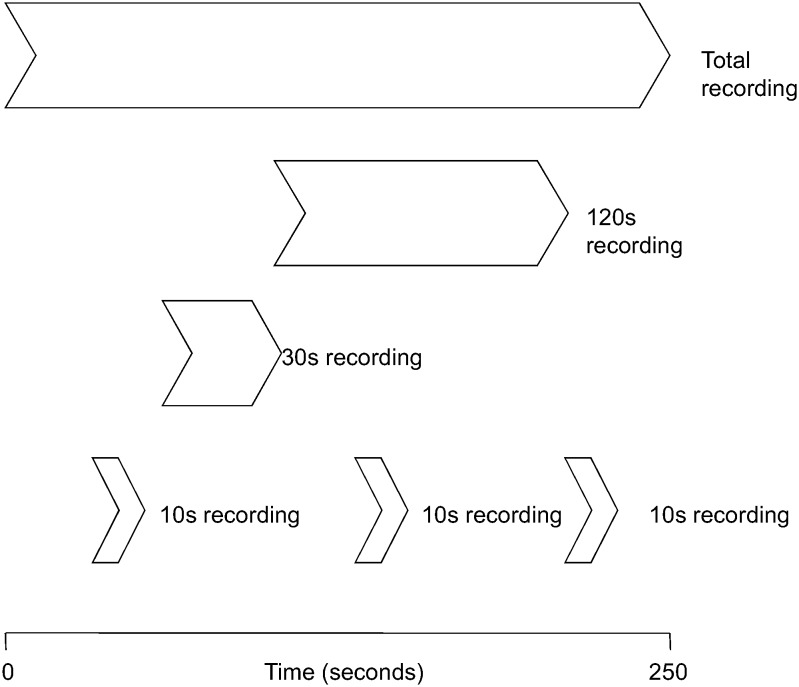
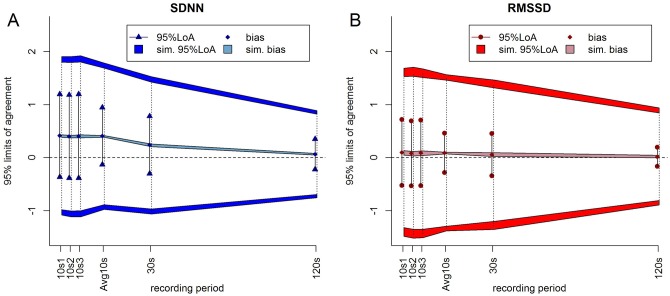
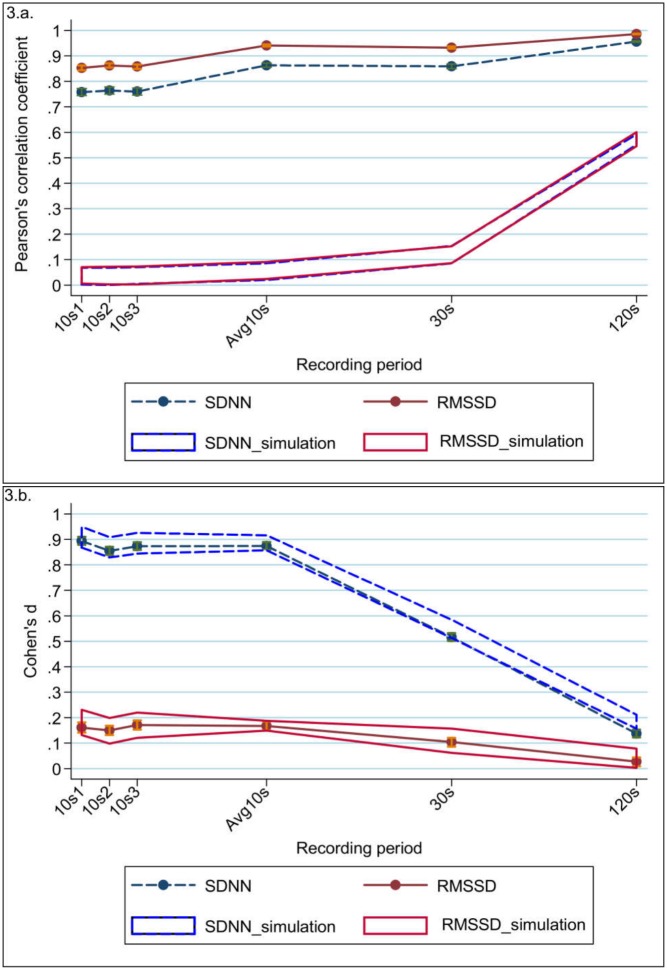
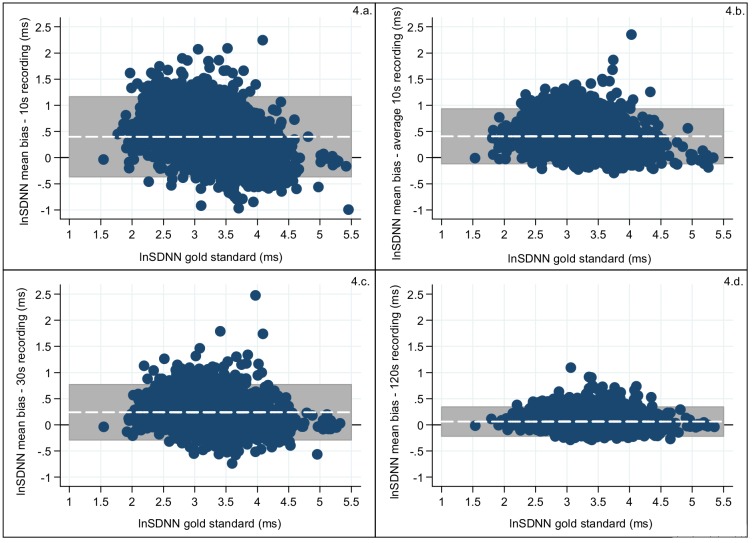
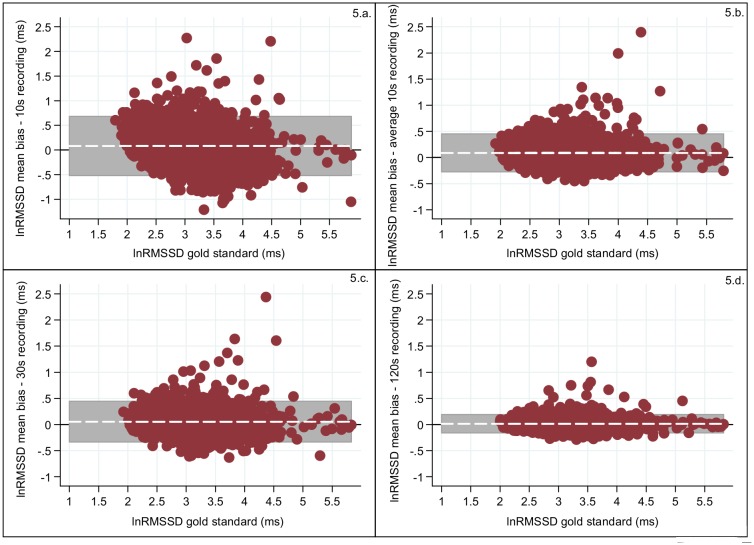
OBJECTIVES: In order to investigate the applicability of routine 10s electrocardiogram (ECG) recordings for time-domain heart rate variability (HRV) calculation we explored to what extent these (ultra-)short recordings capture the "actual" HRV. METHODS: The standard deviation of normal-to-normal intervals (SDNN) and the root mean square of successive differences (RMSSD) were measured in 3,387 adults. SDNN and RMSSD were assessed from (ultra)short recordings of 10s(3x), 30s, and 120s and compared to 240s-300s (gold standard) measurements. Pearson's correlation coefficients (r), Bland-Altman 95% limits of agreement and Cohen's d statistics were used as agreement analysis techniques. RESULTS: Agreement between the separate 10s recordings and the 240s-300s recording was already substantial (r = 0.758-0.764/Bias = 0.398-0.416/d = 0.855-0.894 for SDNN; r = 0.853-0.862/Bias = 0.079-0.096/d = 0.150-0.171 for RMSSD), and improved further when three 10s periods were averaged (r = 0.863/Bias = 0.406/d = 0.874 for SDNN; r = 0.941/Bias = 0.088/d = 0.167 for RMSSD). Agreement increased with recording length and reached near perfect agreement at 120s (r = 0.956/Bias = 0.064/d = 0.137 for SDNN; r = 0.986/Bias = 0.014/d = 0.027 for RMSSD). For all recording lengths and agreement measures, RMSSD outperformed SDNN. CONCLUSIONS: Our results confirm that it is unnecessary to use recordings longer than 120s to obtain accurate measures of RMSSD and SDNN in the time domain. Even a single 10s (standard ECG) recording yields a valid RMSSD measurement, although an average over multiple 10s ECGs is preferable. For SDNN we would recommend either 30s or multiple 10s ECGs. Future research projects using time-domain HRV parameters, e.g. genetic epidemiological studies, could calculate HRV from (ultra-)short ECGs enabling such projects to be performed at a large scale.
Overview
The claims and statistics of this paper haven’t been checked yet.
Free: it reads the open-access text and checks the first 5 claims that cite a source we can check. Create a free account to check every claim.
Integrity signals
Registry
Cites
Statistics
Figures
Verification
Claims the paper makes
The claims and statistics of this paper haven’t been checked yet.
Free: it reads the open-access text and checks the first 5 claims that cite a source we can check. Create a free account to check every claim.
Claims other papers make about this one
Each is checked against this paper’s own text: does it say what the citing paper says it does?
The cited source says what the claim attributes to it.
In the citing paper
“Those 10 s periods don’t need to be contiguous (i.e., not in succession), so it is possible to obtain a good estimate from several 10 s measurements spread over a trial or the experiment.”
From Heart Rate Variability and Cardiac Vagal Tone in Psychophysiological Research – Recommendations for Experiment Planning, Data Analysis, and Data Reporting (2017) · cites this paper as Munoz et al., 2015
The cited source says what the claim attributes to it.
In the citing paper
“In addition, even a single 10 s (standard ECG) was found to yield a valid RMSSD measurement, although an average over multiple 10 s ECGs is preferable.”
From Heart Rate Variability and Cardiac Vagal Tone in Psychophysiological Research – Recommendations for Experiment Planning, Data Analysis, and Data Reporting (2017) · cites this paper as Munoz et al., 2015
The cited source says what the claim attributes to it.
In the citing paper
“Very recent work by Munoz et al. (2015) investigated the validity of ultra-short and short recordings on HRV measurements in a very large adult sample (N = 3,387). They found that it is unnecessary to use recordings longer than 120 s to obtain accurate measures of RMSSD.”
From Heart Rate Variability and Cardiac Vagal Tone in Psychophysiological Research – Recommendations for Experiment Planning, Data Analysis, and Data Reporting (2017) · cites this paper as Munoz et al. (2015)
Self-check
Percentages, sums and reported differences re-computed from the paper’s own numbers.
The self-check needs the paper’s full text.
Citations
Cites
Statistical Power Analysis for the Behavioral Sciences
Muller, K. (1989) · Technometrics · doi:10.1080/00401706.1989.10488618 · Cited by 99,167
Statistical power analysis for the behavioral sciences
(1990) · Computers, Environment and Urban Systems · doi:10.1016/0198-9715(90)90050-4 · Cited by 65,269
Heart Rate Variability: Standards of Measurement, Physiological Interpretation, and Clinical Use
Electrophysiology, T. F. O. T. E. S. O. C. T. N. A. (1996) · Circulation · doi:10.1161/01.cir.93.5.1043 · Cited by 17,159
Measurement in Medicine: The Analysis of Method Comparison Studies
Altman, D. G., & Bland, J. M. (1983) · The Statistician · doi:10.2307/2987937 · Cited by 4,300
Heart rate variability: A review
Rajendra Acharya, U., Paul Joseph, K., Kannathal, N., Lim, C. M., & Suri, J. S. (2006) · Medical & Biological Engineering & Computing · doi:10.1007/s11517-006-0119-0 · Cited by 2,820 · cited 2×
“components [1–3].”
BackgroundApplying the right statistics: analyses of measurement studies
Bland, J. M., & Altman, D. G. (2003) · Ultrasound in Obstetrics & Gynecology · doi:10.1002/uog.122 · Cited by 1,311 · cited 18×
“However, the variation in those paired differences between the observed measurements of the (ultra-)short segments and those of the total recording is smaller than from the respective paired differences of the simulated measurements, explaining the much higher correlation and tighter 95%LoAs.”
BackgroundMethodInfluentialMalik, M. (1996) · Annals of Noninvasive Electrocardiology · doi:10.1111/j.1542-474x.1996.tb00275.x · Cited by 850
Heart Rate Variability ? A Historical Perspective
Billman, G. E. (2011) · Frontiers in Physiology · doi:10.3389/fphys.2011.00086 · Cited by 786 · cited 1×
“Both are easy to calculate and among the most widely used indices of HRV [7].”
How are we doing in soft psychology?
Rosenthal, R. (1990) · American Psychologist · doi:10.1037//0003-066x.45.6.775 · Cited by 515 · cited 1×
“80 is a large difference) [14,20].”
Dekker, J. M., Schouten, E. G., Klootwijk, P., Pool, J., Swenne, C. A., & Kromhout, D. (1997) · American Journal of Epidemiology · doi:10.1093/oxfordjournals.aje.a009049 · Cited by 512
Cited by
Items 301–400 of 422
Zhao, T., Fu, C., Chen, W., Chen, C., & Yu, H. (2026) · Diagnostics · doi:10.3390/diagnostics16121770 · Cited by 1
“Previous studies on ultra-short-term HRV have rigorously validated that time-domain metrics reflecting beat-to-beat variance—specifically RMSSD and SDSD—as well as the non-linear metric SD1, can be reliably computed and retain physiological validity in extremely short windows of 10 to 30 s [25,26].”
Is the Association Between Education and Sympathovagal Balance Mediated by Chronic Stressors?
van Nieuwenhuizen, B. P., Şekercan, A., Tan, H. L., Blom, M. T., Lok, A., van den Born, B. H., Kunst, A. E., & van Valkengoed, I. G. M. (2021) · International Journal of Behavioral Medicine · doi:10.1007/s12529-021-10027-9 · Cited by 1
“However, results from recordings as short as 30 s have been shown be highly correlated with results from 24 h recordings [71].”
ResultZhu, X., He, Z., Wang, C., Dai, Z., & Zhao, L. (2024) · Applied Sciences · doi:10.3390/app142411594 · Cited by 1
“The preprocessing module initially segments the original PPG signal data into time-series segments of 20 s intervals [28,29], yielding the processed PPG signal data W as the input for training the network model. for training the network model.”
Heart rate variability and its perspectives in anthropological studies (review)
Gorbacheva, A. K., Golubeva, N. K., & Fedotova, T. K. (2020) · Moscow University Anthropology Bulletin (Vestnik Moskovskogo Universiteta Seria XXIII Antropologia) · doi:10.32521/2074-8132.2020.3.032-045 · Cited by 2
Assessment of Variability in Irregularly Sampled Time Series: Applications to Mental Healthcare
Bonilla-Escribano, P., Ramírez, D., Porras‐Segovia, A., & Artés-Rodríguez, A. (2020) · Mathematics · doi:10.3390/math9010071 · Cited by 1
“In order to objectively assess the variability measures, we follow an approach similar to that of [43].”
MethodFundamental Considerations of HRV Analysis in the Development of Real-Time Biofeedback Systems
Bahameish, M., & Stockman, T. (2020) · Computing in cardiology · doi:10.22489/cinc.2020.078 · Cited by 1
“with durations of 2-min, 30-seconds, and 10-seconds using correlation test, Bland-Altman analysis, and Cohen’s d [7].”
MethodUltra-short heart rate variability and Poincaré plots
Gallardo, J., Bellone, G., & Risk, M. R. (2021) · ParadigmPlus · doi:10.55969/paradigmplus.v2n3a3 · Cited by 1
Melo, H. M., Melo, M. C., Walz, R., Takase, E., & Faber, J. (2022) · World Congress on Medical Physics and Biomedical Engineering, September 7 - 12, 2009, Munich, Germany · doi:10.1007/978-3-030-70601-2_302 · Cited by 1
Critchley, H., Botan, V., & Ward, J. (2020) · bioRxiv (Cold Spring Harbor Laboratory) · doi:10.1101/2020.07.24.219287 · Cited by 1
Yu, Y., Gao, X., Wang, M., Lei, M., Liu, Y., Chen, P., Zhao, X., Feng, Y., Hu, H., Niu, Y., et al. (2022) · Research Square · doi:10.21203/rs.3.rs-1417282/v2 · Cited by 1
Peers getting under the skin: The impact of childhood social stressors on the stress system
Behnsen, P. (2023) · doi:10.5463/thesis.135 · Cited by 1
Pupil self-regulation modulates markers of cortical excitability and cortical arousalPreprint
Weijs, M. L., Missura, S., Potok, W., Bächinger, M., Badii, B., Carro‐Domínguez, M., Wenderoth, N., & Meissner, S. N. (2024) · bioRxiv (Cold Spring Harbor Laboratory) · doi:10.1101/2024.09.04.611153 · Cited by 1
“We chose RMSSD because it is relatively free from breathing influences 83 and can be computed for intervals as short as 10s 84,85 .”
MethodJacobs, K. (2018) · Scholarship@Western (Western University) · Cited by 1
Extrinsic and intrinsic factors influencing the positive memory bias in aging
Ramdeen, K. T. (2019) · theses.fr (ABES) · doi:10.70675/da55b249z9e92z4520zac0bz0e0a032a2955 · Cited by 1
Jang, S.-H., Woo, Y. S., Lee, S.-Y., & Bahk, W. (2020) · Mood and Emotion · doi:10.35986/me.2020.18.1.1
“HRV is known as a potential diagnostic and prognostic biomarker of depression, and it is possible to measure acute HRV with only 120s of electrocardiographic recording [27].”
BackgroundEvaluation of biofeedback components for the management of acute stress in healthcare
Kennedy-Metz, L. R. (2018) · VTechWorks (Virginia Tech) · Cited by 1
Some features of pre-trip medical examination
Михайловна, Г. Е., Zhidkova, E. А., & Гуревич, К. Г. (2021) · City Healthcare · doi:10.47619/10.47619/2713-2617.zm.2021.v2i3;66-70
浜田, 陽., 大鳥, 利., 筑後, 孝., 太田, 善., 鈴木, 庸., & 岡本, 耕. (1991) · 近畿大学医学雑誌
Chan, H.-L., Kanayama, N., Mizuochi, R., Yamawaki, S., & Machizawa, M. G. (2021) · bioRxiv (Cold Spring Harbor Laboratory) · doi:10.1101/2021.12.06.471520
“However, it has been suggested that accurate measures of SDNN can be obtained from 10-s ECG recordings (55, 56); thus, we computed the temporal dynamics of HRV using a 10-s sliding window.”
MethodInfluentialFast and efficient Pre-Trip health examination using pulsogramPreprint
Dzyuba, E., Shlipakov, S. V., Михайловна, Г. Е., Zhidkova, E. А., Gurevich, M., Rudnikova, N., Pankova, V. B., Франкович, В. М., Гуревич, К. Г., Zaborova, V., et al. (2022) · Research Square · doi:10.21203/rs.3.rs-1349274/v1
Yu, Y., Gao, X., Wang, M., Lei, M., Liu, Y., Chen, P., Zhao, X., Feng, Y., Hu, H., Niu, Y., et al. (2022) · Research Square · doi:10.21203/rs.3.rs-1417282/v1
Baldwin, S. (2021) · Carleton University's Institutional Repository (MacOdrum Library, Carleton University) · doi:10.22215/etd/2021-14909
The Effect of Therapeutic Commands on the Teaching of Maintaining Correct Static Posture
Kania, D., Szurmik, T., Bibrowicz, K., Romaniszyn‐Kania, P., Czak, M., Mańka, A., Rosiak, M., Turner, B., Pollak, A. M., & Mitas, A. W. (2022) · Advances in intelligent systems and computing · doi:10.1007/978-3-031-09135-3_33
Predictors of psychological and physiological measures of graduate student health during COVID-19
Marashi, M., & Heisz, J. J. (2022) · Frontiers in Education · doi:10.3389/feduc.2022.941871 · Cited by 1
Man, T. (2022) · University of Groningen research database (University of Groningen / Centre for Information Technology) · doi:10.33612/diss.255261014
Insight and non-insight problem solving: A heart rate variability studyPreprint
Stuyck, H., Demeyer, F., Bratanov, C., Cleeremans, A., & den Bussche, E. V. (2023) · doi:10.31234/osf.io/sn7fa
Cornes, J. (2023) · Open Access Victoria University of Wellington | Te Herenga Waka (Figshare) · doi:10.26686/wgtn.22002647 · Cited by 1
ประสิทธิผลของการกระตุ้นพฤติกรรมที่มีต่อภาวะซึมเศร้าของผู้สูงอายุ
อยุธยา, ว. ส. ณ. (2019) · Chula Digiverse · doi:10.58837/chula.the.2019.721
Fló, E., Belloli, L., Cabana, Á., Ruyan-Belabbas, A., Jodaitis, L., Valente, M., Rohaut, B., Naccache, L., Rosanova, M., Comanducci, A., et al. (2024) · bioRxiv · doi:10.1101/2023.11.03.565584
Nielsen, T. A. (2023) · VBN Forskningsportal (Aalborg Universitet) · doi:10.54337/aau588597746
Joaquim, M. S., & Moreira, C. S. (2024) · bioRxiv (Cold Spring Harbor Laboratory) · doi:10.1101/2024.02.23.581710 · Cited by 1
“The heart rate values were computed every second using a 6-second window with a 5-second overlap The HRV values were computed using the RMSSD formula, with each value being calculated using 15-second windows (Munoz et al., 2015) and updated every 15 seconds with no overlap.”
MethodYoon, J. H., Kim, J.-E., Lagattuta, T. F., Pinsky, M. R., Hravnak, M., & Clermont, G. (2024) · Critical Care Explorations · doi:10.1097/cce.0000000000001073
“At the very early course of bleeding (100 mL), a decrease in SDNN was observed, which is known to be one of the most sensitive short-term HRV features along with RMSSD even with a short signal length (26).”
BackgroundChieng, T. M., Hau, Y. W., Omar, Z., Lim, C. W., Ting, C., & Mandala, S. (2024) · SSRN Electronic Journal · doi:10.2139/ssrn.4820739
Sorek, G., Gagnon, I. J., Schneider, K., Chevignard, M., Stern, N., Fadida, Y., Kalderon, L., Shaklai, S., & Leurer, M. K. (2024) · Clinical Autonomic Research · doi:10.1007/s10286-024-01067-8
“Frequency domain measures were not presented, due to their limited reliability for ultra-short recording periods [13].”
Melo, H. M., Rangel, N. B. D., Fialho, G. L., de Carvalho, C. R., Lin, K., & Walz, R. (2024) · Brain medicine : · doi:10.61373/bm024r.0070 · Cited by 1
“Theseresults,previouslyreportedinhealthysamples(38–40)arereplicatedinclinicalpopulations,asobservedinepilepsy(41)and diabetes(42).”
BackgroundLeveille, C., Saad, M., BRABANT, D., Birnie, D. H., Fonseca, K., Lee, E. K., Douglass, A. B., Northoff, G., Nikolitch, K., Carrier, J., et al. (2024) · Journal of Psychosomatic Research · doi:10.1016/j.jpsychores.2024.111996 · Cited by 3
Application Progress of Heart Rate Variability in Cardiovascular Diseases
戴, 伟. (2025) · Journal of Clinical Personalized Medicine · doi:10.12677/jcpm.2025.42162
Wallace, P. J., Lidstone, S., Nowlan, J. G., Ljubanovich, J., McKinlay, B. J., Klassen, S. A., & Cheung, S. S. (2025) · Experimental Physiology · doi:10.1113/ep092583
“Some studies show no differences and excellent ( > 0.90) intraclass correlations for RMSSD (Esco & Flatt, 2014; Holmes et al., 2020; Munoz et al., 2015; Wu et al., 2020), while others show good intraclass correlations for RMSSD and pNN50 for 1–2 min samples compared to 5 min (Burma et al., 2021).”
InfluentialPrimett, W., Mukhina, K. D., Yilmaz, M. B., Rietdijk, W., & Tikka, P. (2025) · Frontiers in Neuroscience · doi:10.3389/fnins.2025.1613485 · Cited by 4
Siswishanto, R., Nurdiati, D. S., Endrayanto, I., Rezza, A. I., & Batrisha, D. (2025) · doi:10.2196/preprints.81801
Lebedev, M., Medvedeva, A., Solovieva, K., Starodubtseva, N. M., Makarova, A. V., & Kleeva, D. F. (2025) · bioRxiv (Cold Spring Harbor Laboratory) · doi:10.1101/2025.08.13.670042
Wang, R., Zhou, K., Li, N., Tang, Y., Gao, H., Qin, L., Cai, H., Yang, F., Luo, C., Feng, S., et al. (2025) · The Journals of Gerontology Series A · doi:10.1093/gerona/glaf204
Mousavi, S. S., Karimi, S., Hassannia, M., Koscova, Z., Rad, A. B., Albert, D. J., Clifford, G. D., & Sameni, R. (2025) · Physiological Measurement · doi:10.1088/1361-6579/ae1926 · Cited by 2
“HRV was assessed using the standard deviation of R-R intervals and the root mean square of successive differences (Clifford et al 2006).”
Automation Surprise Detection Based on Facial Expression Changes and Operation Input Values
Matsuo, T., Suzuki, H., Kitajima, T., & Yasuno, T. (2025) · IEEJ Transactions on Electrical and Electronic Engineering · doi:10.1002/tee.70202
“It is also technically challenging to instantaneously capture deviations from a stable baseline for sudden events [17].”
The Physiology of Sociology: Students’ Biometric Response to Lessons on Race and Racism
Sims, J. P., Lanius, M., Conners, R. T., & Lanius, C. L. (2025) · Teaching Sociology · doi:10.1177/0092055x251380849
“…be sufficiently long to support the robustness of the HRV measure; to accurately compute an HRV value (more specifically, the variable root mean square of successive differences, which we discuss more in depth in the following), we need at least 120 seconds of heart rate data (Munoz et al. 2015).”
Nasr, A. J., Behbehani, K., Wang, J., Pierson, C. J., Jarrett, R. B., Greer, T. L., & Zafereo, J. A. (2025) · Digital Health · doi:10.1177/20552076251394960 · Cited by 2
“37 As a result, it is a preferred measure for the short-term recordings provided by wearable sensors.”
Correlations between Heart Rate Variability and Liver and Pancreatic Diseases
Mincă, A., Rusu, A., Lupașcu, C., Bursuc, R., Rîpă, A., Popescu, C. C., Călinoiu, A. L., & Vanghele, M.-E. (2025) · Cardiology and cardiovascular medicine. · doi:10.5772/intechopen.1012685
Estimate the Cognitive Load Using Electrocardiographic Measure: A Human-AI Collaborative Task
Lyu, X., Wu, J., Ma, Z., Su, Y., Zhao, S., Liu, T., Liu, X., & Qin, J. (2025) · Journal of Visualized Experiments · doi:10.3791/69621
Faasse, P. D., de Vos, A., Meeder, J. G., Hof, A. W. J. V. ’., Winkler, P. J. C., Widdershoven, J. W. M. G., Paradies, V., Wouters, E., Schouten, G., Maas, A. H. E. M., et al. (2025) · JMIR Formative Research · doi:10.2196/76146
“These ultrashort time frames capture the HRV RMSSD values well, as concluded by the validation study of Munoz et al [19].”
Bamert, M., Inauen, J., & Ruf, A. (2026) · Psychology of sport and exercise · doi:10.1016/j.psychsport.2026.103243
Ayudhaya, W. S. N., Pityaratstian, N., Eungpinichpong, W., Rattananupong, T., Kitidumrongsuk, P., Loonlawong, S., & Jiamjarasrangsi, W. (2022) · Figshare · doi:10.6084/m9.figshare.19720009
Additional file 1 of To thine own self be true: interoceptive accuracy and interpersonal problems
D'Andrea, W. M., Nieves, N., & Cleave, T. V. (2022) · Figshare · doi:10.6084/m9.figshare.19101903
Simões, C., Santos, A. C., & Arriaga, P. (2021) · OSF Preprints (OSF Preprints)
Moretta, T., Dell’Acqua, C., Patron, E., Bottesi, G., Demo, G., Buodo, G., & Palomba, D. (2025) · Journal of Affective Disorders Reports · doi:10.1016/j.jadr.2025.101017
Su, M., Wang, J., Lin, F., Lin, Z., & Chen, J. (2026) · PeerJ · doi:10.7717/peerj.20612 · Cited by 1
“R intervals were recorded continuously for 5 min under resting conditions ( Munoz et al., 2015 ).”
Nguyen, P. T. T. (2019) · theses.fr (ABES) · doi:10.70675/2ac7717bz5adfz494czae8ezba6bc35a6cf2 · Cited by 2
Békeffy, M. Z., Körei, A. E., Menyhárt, A., Balogh, D. M., Osgyán, K., Balaton, G., Lipták, K., Kempler, P., & Horváth, V. J. (2026) · Frontiers in Endocrinology · doi:10.3389/fendo.2026.1794135
“…absolute HRV values are not directly interchangeable across different recording lengths, these thresholds should be interpreted as pragmatic operational de fi nitions within the context of ultra-short (1-minute) resting recordings rather than universally validated diagnostic cut-offs (16, 17, 21).”
Hosoi, J., Ban, Y., & Warisawa, S. (2026) · CHI Conference on Human Factors in Computing Systems · doi:10.1145/3772318.3790818
“In this study, we adopted heart rate (HR) and the root mean square of successive differences (RMSSD) as indicators, which remain reliable even during ultra-short measurement periods of one minute [21, 65].”
Personality and spatial familiarity interact to shape affective responses in urban parks: a VR study
Liu, J., Hu, H., Jiang, M., & Jia, Y. (2026) · Frontiers in Psychology · doi:10.3389/fpsyg.2026.1700552
“Physiological protocols confirm that visual stimulation as brief as 90 s triggers significant autonomic changes (Song et al., 2018), and ultra-short-term HRV recordings have been validated for data accuracy (Munoz et al., 2015).”
Low-latency HRV analysis from ultra-short ECG windows using a modular deep-learning framework
Dobrosolski, J., Szymański, J., & Kozłowski, D. (2026) · Scientific Reports · doi:10.1038/s41598-026-48463-w · Cited by 1
“Prior work has shown that RMSSD can retain utility even on ultra-short segments relative to conventional short-term recordings, although reliability depends on context and segment duration 37,38 .”
Han, X., Li, E. X., Volodarskiy, A., Slotwiner, D. J., & Zhao, Y. (2026) · Physiological Measurement · doi:10.1088/1361-6579/ae66c7
“Previous HRV literature demonstrated that valid SDNN and RMSSD res-ults can be obtained from ECG recordings as short as 10–30 s (Munoz et al 2015, Chou et al 2021).”
Lu, S., Chui, C., & Li, L. (2026) · Innovation in Aging · doi:10.1093/geroni/igag044
“Across all groups, HR decreased, and HRV, measured by SDNN and RMSSD, increased over the intervention.”
InfluentialAccurately Quantified Heart Rate Variability through Non-Contact Wearable Radar Sensing
Riaz, Z., Pella, S. I., Tom, N., Halaki, M., Ugander, M., Esgin, T., & Yuce, M. R. (2026) · IEEE Applied Sensing Conference (APSCON) · doi:10.1109/apscon68325.2026.11497857
“Although there is ongoing debate on the validity of short-term HRV [12] [13], our primary objective is to evaluate how closely radar signals obtained from mechanical heart movement can replicate ECG patterns; therefore, the duration of the measurement is of secondary importance.”
Heng, S., & Yavari, A. (2026) · Sensors · doi:10.3390/s26102940
Etani, T., Takemi, M., Samma, T., Nitta, J., Homma, S., Ueda, K., Yoshida, K., Hayashida, K., Fujimaki, T., Kondoh, S., et al. (2026) · bioRxiv (Cold Spring Harbor Laboratory) · doi:10.64898/2026.05.09.722456
“We chose RMSSD as the measure of heart rate variability because it reflects parasympathetic nervous system activity and can be calculated from relatively short-duration recordings (Munoz et al. 2015) .”
Adhikari, P., Dinesh, M., Subramaniam, V., Krishna, T., Ashra, B., & Jain, C. B. (2026) · medRxiv · doi:10.64898/2026.05.13.26353099
Tilak, S., Haly, T., Prince, N., & Kennedy, K. (2026) · Discover Education · doi:10.1007/s44217-026-01607-6
“While HRV metrics are usually taken over the course of a day, from wakefulness to rest, there is substantial support for the effectiveness of short-term measurements of at least two minutes (120 s) for both adults [28], and adolescents [2, 10, 29].”
Schweiker, M., Schakib‐Ekbatan, K., Pathak, B. S., Pallubinsky, H., & Becker, S. (2026) · Building and Environment · doi:10.1016/j.buildenv.2026.114794
Investigating the role of adaptive multimodal Interface in take-over performance
Merlhiot, G. (2026) · Transportation Research Part F Traffic Psychology and Behaviour · doi:10.1016/j.trf.2026.103674
Jadram, N., Nishikawa, Y., & Sugaya, M. (2026) · International Symposium on Affective Science and Engineering · doi:10.5057/isase.2026-c000055
Dias, R. D., Michael, S. H., Harari, R. E., Yule, S., McGinnis, L. J., Skipworth, R., Mann-Salinas, E. A., & Davis, W. T. (2026) · Sensors · doi:10.3390/s26113596
“…has demonstrated that ultra-short HRV segments (approximately 1–2 min) provide valid estimates of autonomic modulation and are appropriate for task-based and dynamic operational contexts, where longer stationary windows may obscure rapid changes in workload and physiological state [16,28,29].”
Lee, J., Han, D., & Kyung, Y. (2026) · doi:10.2196/preprints.104011
Schwarz, N., Harlev, D., & Wolpe, N. (2026) · bioRxiv (Cold Spring Harbor Laboratory) · doi:10.64898/2026.06.05.730335
“This approach was chosen because RMSSD is relatively robust in ultra-short recordings 28 .”
Transformer-based deep learning for estimating bidirectional maternal-fetal cardiac coupling
Almadani, M., Hadjileontiadis, L. J., & Khandoker, A. H. (2026) · Frontiers in Medical Technology · doi:10.3389/fmedt.2026.1651162
Hughes, T. D., Ilaty, A., Farahani, S. A., Nelson, A. M., & Rahmani, A. M. (2026) · doi:10.2196/preprints.103289
Saluja, K., Roy, D., & Banerjee, A. (2026) · Imaging Neuroscience · doi:10.1162/imag.a.1319
“Accordingly, a 60-second window was used to obtain comparable baseline cardiovascular measures across the cohort ( Lehavi et al., 2019; Munoz et al., 2015) which also optimized computational time.”
Liu, B., Zhang, Z., Xu, R., Zhang, F., Zhang, X., Li, Y., Zhou, X., & Ji, L. (2026) · Nutrition Metabolism and Cardiovascular Diseases · doi:10.1016/j.numecd.2026.104869
Sorek, G., Grilli, L., Schichtman, D., Fransblow, L., Beaulieu, C., Friedman, D., Mazza, J., & Gagnon, I. J. (2026) · Pediatric Neurology · doi:10.1016/j.pediatrneurol.2026.07.025
Katayama, K., Uchida, H. A., Nagao, T., Eguchi, J., Tsuji, K., Matsumoto, Y., Nojima, I., Tanaka, K., Takeuchi, H., Onishi, Y., et al. (2026) · Journal of Diabetes Investigation · doi:10.1111/jdi.70399
Necroptosis and cellular stress characterize immune and endothelial dysfunction in long COVID
Dias, C. C., Capcha, J. M. C., Robleto, E., Guevara, P., Bast, E. S., Palacio, A., Tamariz, L. J., & Shehadeh, L. A. (2026) · Journal of Allergy and Clinical Immunology · doi:10.1016/j.jaci.2026.06.026
Al-Quran, F., Jawarneh, M. M. M., Mrayat, O. I. A., Ibrahim, D., Samara, G., Sheta, A. F., Elmarhomy, G., Baghdadi, N. A., Malki, A., & Atlam, E.-S. (2026) · Diagnostics · doi:10.3390/diagnostics16152353
“Thus, this confirms the effectiveness of the CNN–BiLSTM architecture for assessing OSA severity [29,50].”
Erdélyi, V., Gergely, B., Köteles, F. G., & Szemerszky, R. (2026) · International Journal of Psychophysiology · doi:10.1016/j.ijpsycho.2026.113441
Datta, T., & Frederiksen, M. R. (2026) · International Conference on Ubiquitous Robots (UR) · doi:10.1109/ur69537.2026.11626683
Esco, M. R. (2026) · Journal of Functional Morphology and Kinesiology · doi:10.3390/jfmk11030304
“Although each metric is often presented as providing distinct physiological information, substantial overlap exists among many commonly reported indices, and several are not suitable during short-term recordings [8,9,15,16].”
InfluentialThe Impact of Animal-Assisted Treatment on Inpatient Stroke Rehabilitation
Shih, H., Martin, F., Ness, D. K., Romine, W. M., Peck, T., Turpin, T., Horoschak, R., Steeby, C. C., Phillips, H. N., Claypool, M., et al. (2026) · Mayo Clinic Proceedings · doi:10.1016/j.mayocp.2026.04.012 · Cited by 1
Krumpholtz, L., Brenner, I., Koenig, J., Boehm, I., Eckstein, M., Ditzen, B., Nonnenmacher, N., Woll-Weber, C. F. J., Müller, M., Christiansen, H., et al. (2026) · Scientific Reports · doi:10.1038/s41598-026-65050-1
“In addition, cross-correlations based on short time series may be unstable, although RMSSD provides reliable HRV estimates in 10-second segments 46 .”
Gupta, D. K., & Chaudhuri, A. (2026) · CHRISMED Journal of Health and Research · doi:10.4103/cjhr.cjhr_7_26
Kriklenko, E., & Kovaleva, A. (2026) · Bioengineering · doi:10.3390/bioengineering13080898
“Total Power and SD2 were therefore included as relative descriptors of autonomic dynamics rather than as clinical HRV estimates [30].”
Glir, J. R. Z., do Nascimento, M. M., Trombetta, H., & de Menezes, I. A. C. (2026) · Frontiers in Medicine · doi:10.3389/fmed.2026.1877291
Tognotti, A., Otesteanu, C. F., Anceschi, L., & Menon, C. (2026) · Frontiers in Digital Health · doi:10.3389/fdgth.2026.1827279 · Cited by 1
“…physiological features have been shown to stabilize within approximately two minutes, including in psychophysiological stress research (39, 40), indicating that the additional baseline data used by rest_5 would not be expected to substantially improve the accuracy of the normalization…”
Motion-Artifact-Resilient HRV Estimation Based on Signal Reliability Assessment for Facial PPG
Ishii, S., Itami, T., & Suzuki, N. (2026) · IEEE/ASME International Conference on Advanced Intelligent Mechatronics · doi:10.1109/aim65483.2026.11658223
“The measurement duration was selected based on previous findings on the reliability of ultra-short-term HRV recordings [19].”
Xu, J., Qian, Y., Zhou, Z., Zha, K., Zhang, J., Takeda, S., Donglin, L., Zhang, S., & Nie, W. (2026) · Ecological Informatics · doi:10.1016/j.ecoinf.2026.104012
Vection-Induced Autonomic Responses in Virtual Reality Showing Individual Differences in HRV and BRV
Pramod Rajan, S., Manivannan, M., LaValle, A., & LaValle, S. M. (2026) · International Conference on Virtual Reality · doi:10.1109/icvr70658.2026.11672615
“Changes in HRV and BRV do not necessarily indicate motion sickness, as similar fluctuations may occur during non-aversive states such as excitement or increased attention to the virtual environment [41], [42], [44], [47], [48].”
Zhang, X., Ye, A., Su, M., Chai, H., Wei, Y., Yang, Y., Xiong, Y., Cui, Y., Zhang, D., Jiao, X., et al. (2026) · Psychiatry Research Neuroimaging · doi:10.1016/j.pscychresns.2026.112313
Validation of RMSSD-Based HRV Measurement Using an Open-Source Microcontroller Platform
Liao, S., Shen, M. J., Gabriela Licwinko, B. S., & Chen, V. C. (2026) · IEEE International Conference on Electro Information Technology · doi:10.1109/eit68936.2026.11670400
“Device equivalence was assessed via Two One-Sided Tests (TOST), with equivalence concluded if the 90% CI of paired mean differences fell within ± 5 ms[12, 15].”
Frau, L., Bruno, D., & Cazzato, V. (2026) · Brain Research · doi:10.1016/j.brainres.2026.150546
Gils, G. V. (2026) · medRxiv · doi:10.64898/2026.09.13.26362930
Metadata
- Authors
- Munoz, M. L., van Roon, A., Riese, H., Thio, C., Oostenbroek, E., Westrik, I., de Geus, E. J. C., Gansevoort, R., Lefrandt, J., Nolte, I. M., & Snieder, H.
- Affiliations
- University Medical Center Groningen (NL)
- Corresponding author
- Nolte, Ilja M.
- Snieder, Harold
- ORCID
- Venue
- PLOS ONE
- Publisher
- Public Library of Science (PLoS)
- Published
- 2015-09-28
- Volume
- 10
- Issue
- 9
- Pages
- e0138921
- ISSN
- 1932-6203 (ISSN-L)
- PMC
- PMC4586373
- OpenAlex
- W2298185395
- Cited by
- 423
- References
- 27
- Citations by year
- 2026: 80 · 2025: 55 · 2024: 47 · 2023: 33 · 2022: 45 · 2021: 51 · 2020: 32 · 2019: 26 · 2018: 26 · 2017: 17 · 2016: 8
- FWCI
- 12.36
- Type
- journal article
- Language
- en
- Open access
- gold
- doi.org
- Licence
- Locations
- PLoS ONE (publishedVersion, cc-by)
- Europe PMC (PubMed Central) (publishedVersion, cc-by)
- PubMed Central (publishedVersion, cc-by)
- PubMed (publishedVersion)
- University of Groningen research database (University of Groningen / Centre for Information Technology) (publishedVersion, cc-by)
- VU Research Portal (publishedVersion, other-oa)
- DOAJ (DOAJ: Directory of Open Access Journals) (submittedVersion, cc-by-sa)
- University of Groningen research database (University of Groningen / Centre for Information Technology) (submittedVersion, cc-by)
- Data Archiving and Networked Services (DANS) (submittedVersion, other-oa)
- Topics
- Health Sciences › Medicine › Cardiology and Cardiovascular Medicine › Heart Rate Variability and Autonomic Control
- Health Sciences › Medicine › Cardiology and Cardiovascular Medicine › ECG Monitoring and Analysis
- Physical Sciences › Engineering › Biomedical Engineering › Non-Invasive Vital Sign Monitoring
- Keywords
- heart rate variability, time-domain HRV, SDNN, RMSSD, measurement agreement, method validation, autonomic nervous system, adults, limits of agreement
- MeSH terms
- Adult, Demography, Electrocardiography, Female, Heart Rate, Humans, Male, Middle Aged, Statistics as Topic, Time Factors, Reproducibility of Results
About these checks
Registry, retraction, Cites and statistics results are computed, not judged, with one exception: a printed reference that no index lists is read once by a model before it counts as a citation error. Claims are extracted by a model and kept only when their quote appears verbatim in the text; each cited source is then checked, with a model’s help, for whether it says what the claim relies on. Those verdicts can be wrong — read the claim’s quote and the cited source before relying on one.
Statistics and arithmetic are recomputed, not judged.
Confidence bands are shown only for fields calibrated on our annotated test set. None is calibrated yet, so no band is shown.
What counts as a claim ›How we measure confidence ›How we check this ›
Are you an author, or do you see a problem with this page? Request a review
Data sources
Bibliographic data: Semantic Scholar, OpenAlex, Crossref.
Contains information from the Semantic Scholar Academic Graph Datasets, made available under the ODC Attribution License (ODC-BY 1.0).
Semantic Scholar’s data is described in: Kinney, R., et al. (2023). The Semantic Scholar Open Data Platform. arXiv:2301.10140.
