

Validity of (ultra-)short recordings for heart rate variability measurements.
Open accessThe DOI matches its Crossref record; 26 of the 27 references it cites were found in a registry or an index.
Abstract
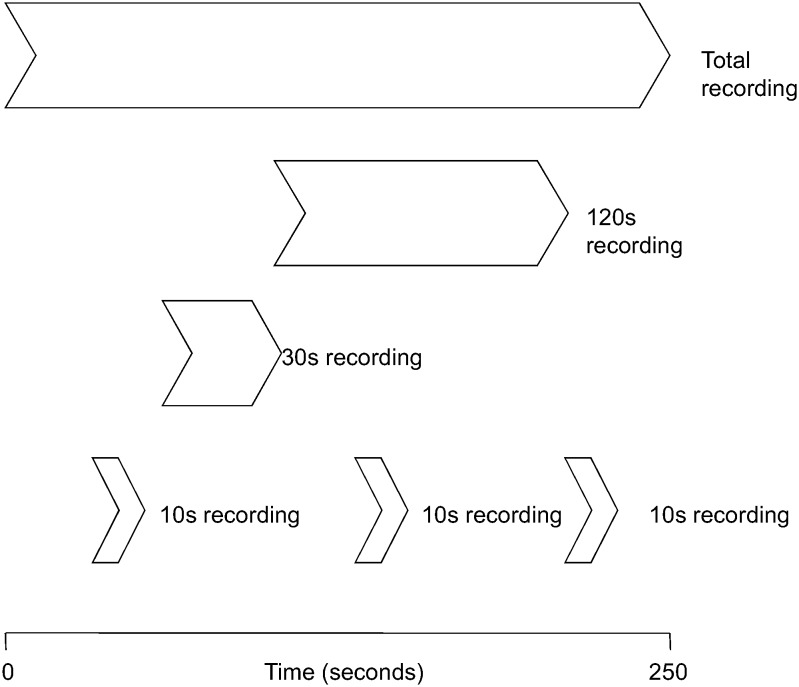
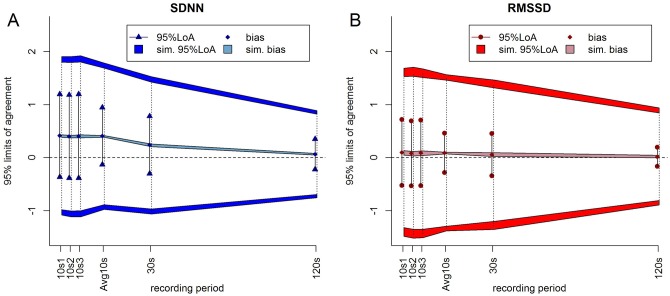
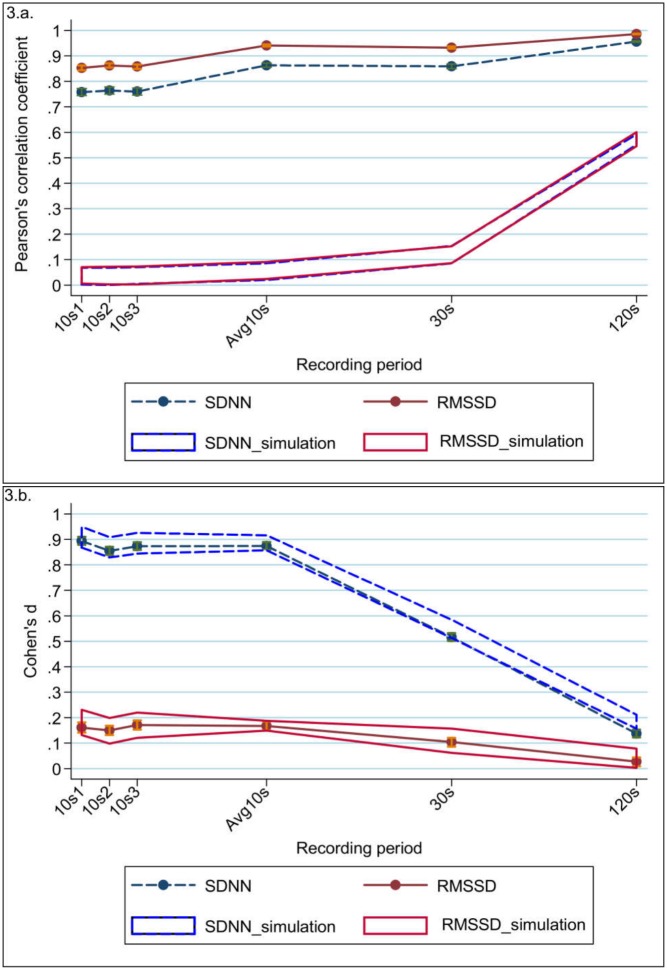
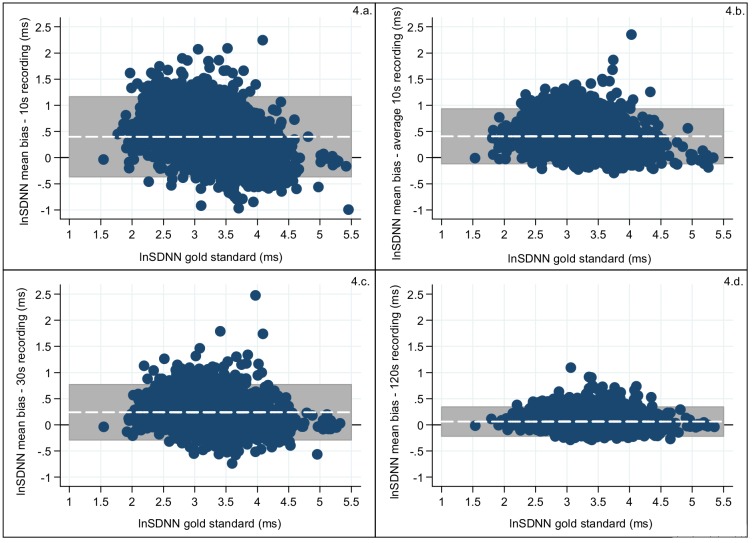
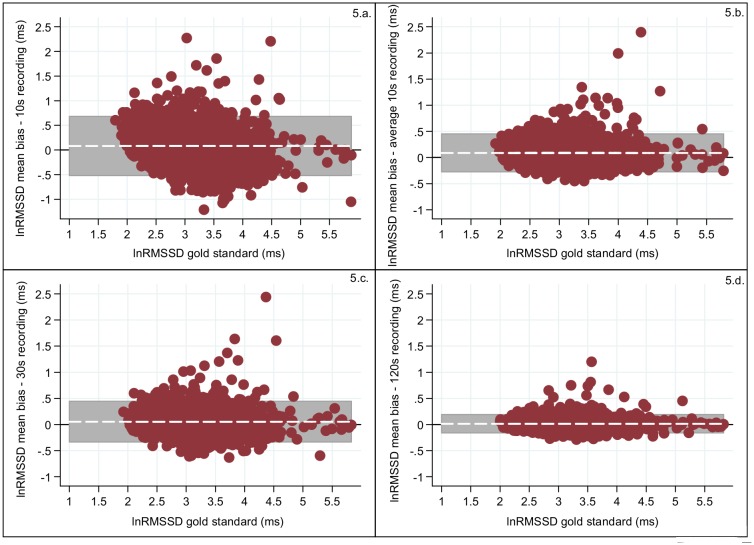
OBJECTIVES: In order to investigate the applicability of routine 10s electrocardiogram (ECG) recordings for time-domain heart rate variability (HRV) calculation we explored to what extent these (ultra-)short recordings capture the "actual" HRV. METHODS: The standard deviation of normal-to-normal intervals (SDNN) and the root mean square of successive differences (RMSSD) were measured in 3,387 adults. SDNN and RMSSD were assessed from (ultra)short recordings of 10s(3x), 30s, and 120s and compared to 240s-300s (gold standard) measurements. Pearson's correlation coefficients (r), Bland-Altman 95% limits of agreement and Cohen's d statistics were used as agreement analysis techniques. RESULTS: Agreement between the separate 10s recordings and the 240s-300s recording was already substantial (r = 0.758-0.764/Bias = 0.398-0.416/d = 0.855-0.894 for SDNN; r = 0.853-0.862/Bias = 0.079-0.096/d = 0.150-0.171 for RMSSD), and improved further when three 10s periods were averaged (r = 0.863/Bias = 0.406/d = 0.874 for SDNN; r = 0.941/Bias = 0.088/d = 0.167 for RMSSD). Agreement increased with recording length and reached near perfect agreement at 120s (r = 0.956/Bias = 0.064/d = 0.137 for SDNN; r = 0.986/Bias = 0.014/d = 0.027 for RMSSD). For all recording lengths and agreement measures, RMSSD outperformed SDNN. CONCLUSIONS: Our results confirm that it is unnecessary to use recordings longer than 120s to obtain accurate measures of RMSSD and SDNN in the time domain. Even a single 10s (standard ECG) recording yields a valid RMSSD measurement, although an average over multiple 10s ECGs is preferable. For SDNN we would recommend either 30s or multiple 10s ECGs. Future research projects using time-domain HRV parameters, e.g. genetic epidemiological studies, could calculate HRV from (ultra-)short ECGs enabling such projects to be performed at a large scale.
Overview
The claims and statistics of this paper haven’t been checked yet.
Free: it reads the open-access text and checks the first 5 claims that cite a source we can check. Create a free account to check every claim.
Integrity signals
Registry
Cites
Statistics
Figures
Verification
Claims the paper makes
The claims and statistics of this paper haven’t been checked yet.
Free: it reads the open-access text and checks the first 5 claims that cite a source we can check. Create a free account to check every claim.
Claims other papers make about this one
Each is checked against this paper’s own text: does it say what the citing paper says it does?
The cited source says what the claim attributes to it.
In the citing paper
“Those 10 s periods don’t need to be contiguous (i.e., not in succession), so it is possible to obtain a good estimate from several 10 s measurements spread over a trial or the experiment.”
From Heart Rate Variability and Cardiac Vagal Tone in Psychophysiological Research – Recommendations for Experiment Planning, Data Analysis, and Data Reporting (2017) · cites this paper as Munoz et al., 2015
The cited source says what the claim attributes to it.
In the citing paper
“In addition, even a single 10 s (standard ECG) was found to yield a valid RMSSD measurement, although an average over multiple 10 s ECGs is preferable.”
From Heart Rate Variability and Cardiac Vagal Tone in Psychophysiological Research – Recommendations for Experiment Planning, Data Analysis, and Data Reporting (2017) · cites this paper as Munoz et al., 2015
The cited source says what the claim attributes to it.
In the citing paper
“Very recent work by Munoz et al. (2015) investigated the validity of ultra-short and short recordings on HRV measurements in a very large adult sample (N = 3,387). They found that it is unnecessary to use recordings longer than 120 s to obtain accurate measures of RMSSD.”
From Heart Rate Variability and Cardiac Vagal Tone in Psychophysiological Research – Recommendations for Experiment Planning, Data Analysis, and Data Reporting (2017) · cites this paper as Munoz et al. (2015)
Self-check
Percentages, sums and reported differences re-computed from the paper’s own numbers.
The self-check needs the paper’s full text.
Citations
Cites
Statistical Power Analysis for the Behavioral Sciences
Muller, K. (1989) · Technometrics · doi:10.1080/00401706.1989.10488618 · Cited by 99,167
Statistical power analysis for the behavioral sciences
(1990) · Computers, Environment and Urban Systems · doi:10.1016/0198-9715(90)90050-4 · Cited by 65,269
Heart Rate Variability: Standards of Measurement, Physiological Interpretation, and Clinical Use
Electrophysiology, T. F. O. T. E. S. O. C. T. N. A. (1996) · Circulation · doi:10.1161/01.cir.93.5.1043 · Cited by 17,159
Measurement in Medicine: The Analysis of Method Comparison Studies
Altman, D. G., & Bland, J. M. (1983) · The Statistician · doi:10.2307/2987937 · Cited by 4,300
Heart rate variability: A review
Rajendra Acharya, U., Paul Joseph, K., Kannathal, N., Lim, C. M., & Suri, J. S. (2006) · Medical & Biological Engineering & Computing · doi:10.1007/s11517-006-0119-0 · Cited by 2,820 · cited 2×
“components [1–3].”
BackgroundApplying the right statistics: analyses of measurement studies
Bland, J. M., & Altman, D. G. (2003) · Ultrasound in Obstetrics & Gynecology · doi:10.1002/uog.122 · Cited by 1,311 · cited 18×
“However, the variation in those paired differences between the observed measurements of the (ultra-)short segments and those of the total recording is smaller than from the respective paired differences of the simulated measurements, explaining the much higher correlation and tighter 95%LoAs.”
BackgroundMethodInfluentialMalik, M. (1996) · Annals of Noninvasive Electrocardiology · doi:10.1111/j.1542-474x.1996.tb00275.x · Cited by 850
Heart Rate Variability ? A Historical Perspective
Billman, G. E. (2011) · Frontiers in Physiology · doi:10.3389/fphys.2011.00086 · Cited by 786 · cited 1×
“Both are easy to calculate and among the most widely used indices of HRV [7].”
How are we doing in soft psychology?
Rosenthal, R. (1990) · American Psychologist · doi:10.1037//0003-066x.45.6.775 · Cited by 515 · cited 1×
“80 is a large difference) [14,20].”
Dekker, J. M., Schouten, E. G., Klootwijk, P., Pool, J., Swenne, C. A., & Kromhout, D. (1997) · American Journal of Epidemiology · doi:10.1093/oxfordjournals.aje.a009049 · Cited by 512
Cited by
An overview of heart rate variability metrics and norms
Shaffer, F., & Ginsberg, J. P. (2017) · Frontiers in Public Health · doi:10.3389/fpubh.2017.00258 · Cited by 7,185
“(129) measured SDNN and RMSSD in 3,387 adults and analyzed data using Pearson’s correlation coefficients, the Bland-Altman LoA method, and Cohen’s d.”
MethodLaborde, S., Mosley, E., & Thayer, J. F. (2017) · Frontiers in Psychology · doi:10.3389/fpsyg.2017.00213 · Cited by 2,336
“Very recent work by Munoz et al. (2015) investigated the validity of ultra-short and short recordings on HRV measurements in a very large adult sample (N = 3,387).”
BackgroundHeart Rate Variability in Psychology: A Review of HRV Indices and an Analysis Tutorial
Pham, T., Lau, Z. J., Chen, S. H. A., & Makowski, D. (2021) · Sensors · doi:10.3390/s21123998 · Cited by 480
A Critical Review of Ultra-Short-Term Heart Rate Variability Norms Research
Shaffer, F., Meehan, Z. M., & Zerr, C. L. (2020) · Frontiers in Neuroscience · doi:10.3389/fnins.2020.594880 · Cited by 248
“Of the 28 UST HRV studies that we reviewed, four reported LOA plots whether used as a selection criterion or not (Esco and Flatt, 2014; Baek et al., 2015; Munoz et al., 2015; Shaffer et al., 2019) (Table 3).”
MethodResultCastaldo, R., Montesinos, L., Melillo, P., James, C., & Pecchia, L. (2019) · BMC Medical Informatics and Decision Making · doi:10.1186/s12911-019-0742-y · Cited by 246
“[39] to assess the validity of ultra-short HRV features seems more rigorous than other studies [22], they only investigated 2 time domain HRV features (SDNN and RMSSD) in resting condition.”
BackgroundMethodResultInfluentialQuigley, K. S., Gianaros, P. J., Norman, G. J., Jennings, J. R., Berntson, G. G., & de Geus, E. J. C. (2024) · Psychophysiology · doi:10.1111/psyp.14604 · Cited by 225
Genetic loci associated with heart rate variability and their effects on cardiac disease risk
Nolte, I. M., Munoz, M. L., Tragante, V., Amare, A. T., Jansen, R., Vaez, A., von der Heyde, B., Avery, C. L., Bis, J. C., Dierckx, B., et al. (2017) · Nature Communications · doi:10.1038/ncomms15805 · Cited by 156
“05 in the stage 2 meta-analysis congruent with the direction of effect in the stage 1 meta-analysis and (3) it had a genome-wide significant Po5 10 8/3 (two-sided) in the combined meta-analysis of stage 1 and 2 results, correcting for the testing of three separate traits.”
MethodResultSelf-citationDirect and indirect effects of age on interoceptive accuracy and awareness across the adult lifespan
Murphy, J., Geary, H., Millgate, E., Catmur, C., & Bird, G. (2018) · Psychonomic Bulletin & Review · doi:10.3758/s13423-017-1339-z · Cited by 137
“RMSSD was favoured over other measures of heartrate variability due to evidence attesting to its better reliability over short durations (Munoz et al., 2015).”
BackgroundHeart Rate Variability in the Perinatal Period: A Critical and Conceptual Review
Chiera, M., Cerritelli, F., Casini, A., Barsotti, N., Boschiero, D., Cavigioli, F., Corti, C. G., & Manzotti, A. (2020) · Frontiers in Neuroscience · doi:10.3389/fnins.2020.561186 · Cited by 142
Minimal Window Duration for Accurate HRV Recording in Athletes
Bourdillon, N., Schmitt, L., Yazdani, S., Vésin, J.-M., & Millet, G. P. (2017) · Frontiers in Neuroscience · doi:10.3389/fnins.2017.00456 · Cited by 142
“Accordingly, Munoz et al. (2015) studying a cohort of 3,387 adults, concluded that RMSSD should not be assessed using recordings shorter than 2 min, which is in accordance with the present work, focusing on elite athletes.”
ResultInfluentialPecchia, L., Castaldo, R., Montesinos, L., & Melillo, P. (2018) · Healthcare Technology Letters · doi:10.1049/htl.2017.0090 · Cited by 135
“Munoz, 2015 [33] StdNN and RMSSD 120, 30, 10 control 3.”
BackgroundMethodInfluentialNormal Values of Corrected Heart-Rate Variability in 10-Second Electrocardiograms for All Ages
van den Berg, M. E., Rijnbeek, P. R., Niemeijer, M. N., Hofman, A., van Herpen, G., Bots, M. L., Hillege, H. L., Swenne, C. A., Eijgelsheim, M., Stricker, B. H. C., et al. (2018) · Frontiers in Physiology · doi:10.3389/fphys.2018.00424 · Cited by 130
“It has recently been demonstrated that there is substantial agreement between 10-s and 4–5-min pulse-wave recordings for RMSSD, and to a lesser extent for SDNN (Munoz et al., 2015).”
Acute mental stress and surgical performance
Grantcharov, P., Boillat, T., Elkabany, S., Wac, K., & Rivas, H. (2018) · BJS Open · doi:10.1002/bjs5.104 · Cited by 110
Determinants of heart rate variability in the general population: the Lifelines Cohort Study
Tegegne, B. S., Man, T., van Roon, A. M., Riese, H., & Snieder, H. (2018) · Heart Rhythm · doi:10.1016/j.hrthm.2018.05.006 · Cited by 84
Self-citationPsychobiological response to pain in female adolescents with nonsuicidal self-injury
Koenig, J., Rinnewitz, L., Warth, M., Hillecke, T. K., Brunner, R. M., Resch, F., & Kaess, M. (2017) · Journal of Psychiatry and Neuroscience · doi:10.1503/jpn.160074 · Cited by 91
Afulani, P. A., Ongeri, L., Kinyua, J., Temmerman, M., Mendes, W. B., & Weiss, S. J. (2021) · BMC Public Health · doi:10.1186/s12889-021-10453-0 · Cited by 109
“The reading was taken in the seated position for 5 minutes, which is considered acceptable for short term HRV readings [44, 45].”
Flow experience and the mobilization of attentional resources
Barros, M. F. D. S., Araújo-Moreira, F. M., Trevelin, L. C., & Radel, R. (2018) · Cognitive Affective & Behavioral Neuroscience · doi:10.3758/s13415-018-0606-4 · Cited by 92
“RMSSD is associated with short-term, rapid changes in heart rate and can therefore be reliably assessed in a short duration (Laborde, Mosley, & Thayer, 2017; Munoz et al., 2015).”
BackgroundMachetanz, K., Berelidze, L., Guggenberger, R., & Gharabaghi, A. (2021) · Autonomic Neuroscience · doi:10.1016/j.autneu.2021.102894 · Cited by 86
Burma, J. S., Graver, S., Miutz, L. N., Macaulay, A., Copeland, P. V., & Smirl, J. D. (2021) · Journal of Applied Physiology · doi:10.1152/japplphysiol.00955.2020 · Cited by 83
O'Neal, W. T., Chen, L. Y., Nazarian, S., & Soliman, E. Z. (2016) · Journal of Electrocardiology · doi:10.1016/j.jelectrocard.2016.06.008 · Cited by 69
Maheshwari, A., Norby, F. L., Soliman, E. Z., Adabağ, S., Whitsel, E. A., Alonso, Á., & Chen, L. Y. (2016) · PLoS ONE · doi:10.1371/journal.pone.0161648 · Cited by 76
Kumral, D., Schaare, H. L., Beyer, F., Reinelt, J., Uhlig, M., Liem, F., Lampe, L., Babayan, A., Reiter, A., Erbey, M., et al. (2019) · NeuroImage · doi:10.1016/j.neuroimage.2018.10.027 · Cited by 64
Identifying Genetic Variants for Heart Rate Variability in the Acetylcholine Pathway
Riese, H., Venegas, L. M., Hartman, C. A., Ding, X., Su, S., Oldehinkel, A. J., van Roon, A. M., van der Most, P. J., Lefrandt, J. D., Gansevoort, R. T., et al. (2014) · PLoS ONE · doi:10.1371/journal.pone.0112476 · Cited by 66
Self-citationConstruction noise effects on human health: Evidence from physiological measures
Mir, M., Nasirzadeh, F., Bereznicki, H. G. K., Enticott, P. G., Lee, S. H., & Mills, A. J. (2023) · Sustainable Cities and Society · doi:10.1016/j.scs.2023.104470 · Cited by 74
Ultra‐short heart rate variability recording reliability: The effect of controlled paced breathing
Melo, H. M., Martins, T. C., Nascimento, L. M., Hoeller, A. A., Walz, R., & Takase, E. (2018) · Annals of Noninvasive Electrocardiology · doi:10.1111/anec.12565 · Cited by 67
Wintersberger, P., Riener, A., & Frison, A.-K. (2016) · Proceedings of the 8th International Conference on Automotive User Interfaces and Interactive Vehicular Applications · doi:10.1145/3003715.3005410 · Cited by 55
Koenig, J., Abler, B., Agartz, I., Åkerstedt, T., Andreassen, O. A., Anthony, M., Bär, K., Bertsch, K., Brown, R. C., Brunner, R. M., et al. (2020) · Psychophysiology · doi:10.1111/psyp.13688 · Cited by 56
“In sum, RMSSD is robust across sampling methods (including relatively short recordings (Munoz et al., 2015), making it a useful measure of HRV when pooling data from multiple cohorts with varying recording and experimental protocols.”
An optimization study of the ultra-short period for HRV analysis at rest and post-exercise
Wu, L., Shi, P. A., Yu, H., & Liu, Y. (2020) · Journal of Electrocardiology · doi:10.1016/j.jelectrocard.2020.10.002 · Cited by 60
Damoun, N., Amekran, Y., Taiek, N., & Hangouche, A. J. E. (2024) · Global Cardiology Science and Practice · doi:10.21542/gcsp.2024.35 · Cited by 107
“Numerous studies have indicated good agreement with the standard short-term recordings 86–88 .”
BackgroundResultLong-term association of ultra-short heart rate variability with cardiovascular events
Orini, M., van Duijvenboden, S., Young, W. J., Ramírez, J., Jones, A. R. C., Hughes, A. D., Tinker, A., Munroe, P. B., & Lambiase, P. D. (2023) · Scientific Reports · doi:10.1038/s41598-023-45988-2 · Cited by 70
Forte, G., Favieri, F., Leemhuis, E., Martino, M. L. D., Giannini, A. M., Gennaro, L. D., Casagrande, M., & Pazzaglia, M. (2022) · PeerJ · doi:10.7717/peerj.14447 · Cited by 50
Is Ultra-Short-Term Heart Rate Variability Valid in Non-static Conditions?
Kim, J. W., Seok, H. S., & Shin, H. (2021) · Frontiers in Physiology · doi:10.3389/fphys.2021.596060 · Cited by 68
HRVCam: robust camera-based measurement of heart rate variability
Pai, A., Veeraraghavan, A., & Sabharwal, A. (2021) · Journal of Biomedical Optics · doi:10.1117/1.jbo.26.2.022707 · Cited by 51
Heart rate dynamics for cognitive load estimation in a driving simulation task
Arutyunova, K. R., Bakhchina, A. V., Konovalov, D. I., Margaryan, M., Filimonov, A. V., & Shishalov, I. S. (2024) · Scientific Reports · doi:10.1038/s41598-024-79728-x · Cited by 58
“RMSSD shows reliable results on short recording, such as 10-and 30-second windows 36,40 and it outperforms SDNN on ultra-short intervals 36 .”
Wei, J., Hong, L., Wu, S. J., Zheng, P. P., Fu, G., & Lee, K. (2018) · Frontiers in Psychology · doi:10.3389/fpsyg.2018.00098 · Cited by 57
“Fourth, the study only assessed participants’ stress during a 2-min resting period, which is relatively short (Smith et al., 2013; Munoz et al., 2015).”
BackgroundCritchley, H., Sherrill, S. P., Ewing, D. L., van Praag, C. G., Habash‐Bailey, H., Quadt, L., Eccles, J., Meeten, F., Bibby-Jones, A.-M., & Garfinkel, S. N. (2023) · Autonomic Neuroscience · doi:10.1016/j.autneu.2023.103072 · Cited by 46
“HRV was computed as the root mean square of successive differences between pulses (RMSSD) (Munoz et al., 2015) during concatenated trials of the heartbeat tracking task (see below).”
MethodInfluentialVisser, L. N. C., Tollenaar, M. S., van Doornen, L. J. P., de Haes, J. C. J. M., & Smets, E. M. A. (2018) · Patient Education and Counseling · doi:10.1016/j.pec.2018.08.032 · Cited by 51
Neuromodulation Applied to Diseases: The Case of HRV Biofeedback
Gitler, A., Vanacker, L., Couck, M., Leeuw, I. D., & Gidron, Y. (2022) · Journal of Clinical Medicine · doi:10.3390/jcm11195927 · Cited by 49
“Furthermore, a 10-s signal is suitable for obtaining the two most commonly used time domain HRV indexes: the standard deviation of the normal-to-normal RR intervals (SDNN) and the root mean square of successive RR interval differences (RMSSD) [17].”
BackgroundInfluentialStuyck, H., Costa, L. D., Cleeremans, A., & den Bussche, E. V. (2022) · International Journal of Psychophysiology · doi:10.1016/j.ijpsycho.2022.10.003 · Cited by 53
Brain–Heart Interaction During Transcutaneous Auricular Vagus Nerve Stimulation
Machetanz, K., Berelidze, L., Guggenberger, R., & Gharabaghi, A. (2021) · Frontiers in Neuroscience · doi:10.3389/fnins.2021.632697 · Cited by 44
“Although even (ultra) short ECG recordings have been shown to be valid for HRV estimation (Percival and Walden, 1993; Kilner et al., 2005; Munoz et al., 2015; Shaffer and Ginsberg, 2017) and concurrent EEG/ECG evaluation (Patron et al.”
BackgroundSelf-regulating arousal via pupil-based biofeedback
Meissner, S. N., Bächinger, M., Kikkert, S., Imhof, J., Missura, S., Carro‐Domínguez, M., & Wenderoth, N. (2023) · Nature Human Behaviour · doi:10.1038/s41562-023-01729-z · Cited by 56
“We chose RMSSD because it is relatively free from breathing influences 78 and can be computed for intervals as short as 10 s 79,80 .”
Driver Stress Detection Using Ultra-Short-Term HRV Analysis under Real World Driving Conditions
Liu, K., Jiao, Y., Du, C., Zhang, X., Chen, X., Xu, F., & Jiang, C. (2023) · Entropy · doi:10.3390/e25020194 · Cited by 47
“Although Munoz et al. [20] evaluated the validity of two HRV features extracted from 10-sec epochs, it is unclear to measure the stress level for other HRV features, since more HRV features could be used to build a more robust detection model.”
MethodChen, Y., Lu, W.-A., Pagaduan, J. C., & Kuo, C. (2020) · JMIR mhealth and uhealth · doi:10.2196/18761 · Cited by 45
“In contrast, the minimum time requirement for HF and LF recordings has been suggested as 1 and 2 minutes, respectively [13,40].”
BackgroundLandreani, F., Faini, A., Martín-Yebra, A., Morri, M., Parati, G., & Caiani, E. G. (2019) · Sensors · doi:10.3390/s19173729 · Cited by 43
“Accordingly, our aim was to test the feasibility of detecting changes in the ANS state provoked by a mental task by using the beat-to-beat series from short recordings ( 1 min) extracted by a mobile phone m-ACC signal.”
BackgroundInfluentialWehler, D., Jelinek, H. F., Gronau, A., Wessel, N., Kraemer, J. F., Krones, R., & Penzel, T. (2021) · Biomedical Signal Processing and Control · doi:10.1016/j.bspc.2021.102651 · Cited by 47
Validity of Ultra-Short-Term HRV Analysis Using PPG—A Preliminary Study
Taoum, A., Bisiaux, A., Tilquin, F., Guillou, Y. L., & Carrault, G. (2022) · Sensors · doi:10.3390/s22207995 · Cited by 44
Sex differences in empathy for pain: What is the role of autonomic regulation?
Tracy, L. M., & Giummarra, M. J. (2017) · Psychophysiology · doi:10.1111/psyp.12895 · Cited by 42
Towards Wearable-based Hypoglycemia Detection and Warning in Diabetes
Maritsch, M., Föll, S., Lehmann, V., Bérubé, C., Kraus, M., Feuerriegel, S., Kowatsch, T., Züger, T., Stettler, C., Fleisch, E., et al. (2020) · Extended Abstracts of the 2020 CHI Conference on Human Factors in Computing Systems · doi:10.1145/3334480.3382808 · Cited by 35
“RMSSD has also been found to be reliable when calculated with a sample of 60 seconds, which was not always the case for SDNN or frequency-based measures [9].”
MethodChen, W., Yi, Z., Lim, L. J. R., Lim, R. Q. R., Zhang, A., Qian, Z., Huang, J., He, J., & Лю, Б. (2024) · Frontiers in Bioengineering and Biotechnology · doi:10.3389/fbioe.2024.1420100 · Cited by 52
“By combining UST with wearable technology or smartphone applications, one can assess a person ’ s wellbeing (mood, stress, health) while being user-friendly (speed and comfort) (Nussinovitch et al., 2011; Munoz et al., 2015; Castaldo et al., 2019; Fin ž gar and Podr ž aj, 2020).”
MethodHeart Rate Variability and Its Relation to Chronic Kidney Disease: Results From the PREVEND Study
Thio, C. H. L., van Roon, A. M., Lefrandt, J. D., Gansevoort, R. T., & Snieder, H. (2018) · Psychosomatic Medicine · doi:10.1097/psy.0000000000000556 · Cited by 40
“HRV Measures Details of the HRV measurement procedure in the PREVEND study have been described previously (27).”
MethodSelf-citationEarly indicators of vulnerability to depression: The role of rumination and heart rate variability
Moretta, T., & Benvenuti, S. M. (2022) · Journal of Affective Disorders · doi:10.1016/j.jad.2022.06.049 · Cited by 39
Empirical evidence for the relationship between cognitive workload and attentional reserve
Jaquess, K. J., Gentili, R. J., Lo, L.-C., Oh, H., Zhang, J., Rietschel, J. C., Miller, M. W., Tan, Y. H. V., & Hatfield, B. D. (2017) · International Journal of Psychophysiology · doi:10.1016/j.ijpsycho.2017.09.007 · Cited by 44
Fiskum, C., Andersen, T. G., Bornas, X., Aslaksen, P. M., Flaten, M. A., & Jacobsen, K. H. (2018) · Frontiers in Physiology · doi:10.3389/fphys.2018.00561 · Cited by 34
“RMSSD calculated from ultrashort 30-s segments have shown good correspondence with longer recordings (Munoz et al., 2015), so 30-s segments were chosen.”
MethodAutonomic Dysregulation in Adolescent Concussion Is Sex- and Posture-Dependent
Balestrini, C. S., Moir, M. E., Abbott, K. C., Klassen, S. A., Fischer, L. K., Fraser, D. D., & Shoemaker, J. K. (2019) · Clinical Journal of Sport Medicine · doi:10.1097/jsm.0000000000000734 · Cited by 42
Thu, T. N. P., Hernandez, A. I., Costet, N., Patural, H., Pichot, V., Carrault, G., & Beuchée, A. (2019) · PLoS ONE · doi:10.1371/journal.pone.0220692 · Cited by 45
Tatschl, J. M., Hochfellner, S., & Schwerdtfeger, A. R. (2020) · Frontiers in Neuroscience · doi:10.3389/fnins.2020.00738 · Cited by 47
Kumar, C. K., Manaswini, M., Maruthy, K. N., Kumar, A. V. S., & kumar, K. M. (2021) · Clinical Epidemiology and Global Health · doi:10.1016/j.cegh.2021.100698 · Cited by 40
Chen, L. Y., Zmora, R., Duval, S., Chow, L. S., Lloyd‐Jones, D. M., & Schreiner, P. J. (2018) · Medicine & Science in Sports & Exercise · doi:10.1249/mss.0000000000001796 · Cited by 34
Antink, C. H., Mai, Y., Aalto, R., Brüser, C., Leonhardt, S. K., Oksala, N., & Vehkaoja, A. T. (2020) · IEEE Journal of Biomedical and Health Informatics · doi:10.1109/jbhi.2020.2970298 · Cited by 33
“However, other authors have concluded that both RMSSD and SDNN can be calculated reliably from multiple windows of only 10 second [19].”
BackgroundAzulay, N., Olsen, R. B., Nielsen, C. S., Stubhaug, A., Jenssen, T. G., Schirmer, H., Frigessi, A., Rosseland, L. A., & Tronstad, C. (2022) · Scientific Reports · doi:10.1038/s41598-022-15824-0 · Cited by 39
Arefnezhad, S., Eichberger, A., Frühwirth, M., Kaufmann, C., Moser, M., & Koglbauer, I. V. (2022) · Energies · doi:10.3390/en15020480 · Cited by 39
Ultra-short-term heart rate variability analysis on accelerometric signals from mobile phone
Landreani, F., Morri, M., Martín-Yebra, A., Casellato, C., Pavan, E. E., Frigo, C., & Caiani, E. G. (2017) · E-Health and Bioengineering Conference (EHB) · doi:10.1109/ehb.2017.7995406 · Cited by 32
“For ECG-derived HRV analysis, the interest in using very short recordings (<5 minutes, even up to 10 sec) is emerging in the recent years, leading to the extraction of ultrashort variability (USV) indices in the time domain, able to characterize the sympatho-vagal balance in different circumstances [10]-[12], especial…”
Parsimonious Correction of Heart Rate Variability for Its Dependency on Heart Rate
van Roon, A. M., Snieder, H., Lefrandt, J. D., de Geus, E. J. C., & Riese, H. (2016) · Hypertension · doi:10.1161/hypertensionaha.116.08053 · Cited by 31
Self-citationHeart rate variability is associated with thermal heat pain threshold in males, but not females
Tracy, L. M., Koenig, J., Georgiou‐Karistianis, N., Gibson, S. J., & Giummarra, M. J. (2018) · International Journal of Psychophysiology · doi:10.1016/j.ijpsycho.2018.02.017 · Cited by 37
Jungmann, M., Vencatachellum, S., Ryckeghem, D. M. L. V., & Vögele, C. (2018) · JMIR Formative Research · doi:10.2196/10257 · Cited by 45
Pohlin, F., Brabender, K., Fluch, G., Stalder, G. L., Petit, T., & Walzer, C. (2017) · Frontiers in Physiology · doi:10.3389/fphys.2017.00664 · Cited by 36
“However, it has been shown that RMSSD, but not SDANN, can reliably be assessed from shorter recordings (Nussinovitch et al., 2011; Plews et al., 2013; Esco and Flatt, 2014; Munoz et al., 2015).”
Backgroundvan der Ploeg, M. M., BROSSCHOT, J. F., Thayer, J. F., & Verkuil, B. (2016) · Frontiers in Psychology · doi:10.3389/fpsyg.2016.00425 · Cited by 40
“Root mean squared successive differences (RMSSD; ms) was derived from the ECG signal as a measure of HRV (Berntson et al., 2007; Nussinovitch et al., 2011; Smith et al., 2013; Munoz et al., 2015).”
MethodLow cardiac vagal tone index by heart rate variability differentiates bipolar from major depression
Hage, B., Britton, B., Daniels, D., Heilman, K. J., Porges, S. W., & Halaris, A. E. (2017) · The World Journal of Biological Psychiatry · doi:10.1080/15622975.2017.1376113 · Cited by 35
“HRV assessment is a potential diagnostic and prognostic biomarker in depressive disorders, especially since acute HRV measurements can be obtained by only 120 s of ECG recordings (Munoz et al. 2015).”
BackgroundA method to quantify autonomic nervous system function in healthy, able-bodied individuals
Debnath, S., Levy, T. J., Bellehsen, M. H., Schwartz, R. M., Barnaby, D. P., Zanos, S. P., Volpe, B. T., & Zanos, T. P. (2021) · Bioelectronic Medicine · doi:10.1186/s42234-021-00075-7 · Cited by 33
“…minutes) HRV measures are not common, it is reported that the root mean square of successive R-R interval differences (RMSSD) is a reliable surrogate for parasympathetic activity in as low as 30 second intervals (Salahuddin et al., 2007; Baek et al., 2015; Munoz et al., 2015; Kang et al., 2016).”
BackgroundTransdiagnostic Expression of Interoceptive Abnormalities in Psychiatric ConditionsPreprint
Critchley, H., Ewing, D. L., van Praag, C. G., Habash‐Bailey, H., Eccles, J., Meeten, F., & Garfinkel, S. N. (2019) · SSRN Electronic Journal · doi:10.1101/19012393 · Cited by 32
Autonomic Dysfunction and Blood Pressure in Glaucoma Patients: The Lifelines Cohort Study
Asefa, N. G., Neustaeter, A., Jansonius, N. M., & Snieder, H. (2020) · Investigative Ophthalmology & Visual Science · doi:10.1167/iovs.61.11.25 · Cited by 32
“39 RMSSD was calculated with a 10-second resting electrocardiogram (ECG) reading (for details, see Tegegne et al. 40 and Munoz et al. 41 ).”
Self-citationA Neural Network Approach for Anxiety Detection Based on ECG
Vulpe-Grigorasi, A., & Grigore, O. (2021) · E-Health and Bioengineering Conference (EHB) · doi:10.1109/ehb52898.2021.9657544 · Cited by 32
Halamová, J., Koróniová, J., Kanovský, M., Túniyová, M. K., & Kupeli, N. (2019) · Research in Psychotherapy Psychopathology Process and Outcome · doi:10.4081/ripppo.2019.358 · Cited by 31
“…frequency-domain measures of HRV, but only some of them perform satisfactorily for ultra-short ECG recordings (30 s) (Baek, Cho, Cho, & Woo, 2015; Munoz et al., 2015; Nussinovitch et al., 2011): the Standard Deviation of the normal-to normal intervals (SDNN), the Root Mean Square of Successive…”
Solorzano, C. S., Violani, C., & Grano, C. (2022) · Journal of Affective Disorders · doi:10.1016/j.jad.2022.09.056 · Cited by 29
Humans interacting with multi-robot systems: a natural affect-based approach
Villani, V., Capelli, B., Secchi, C., Fantuzzi, C., & Sabattini, L. (2019) · Autonomous Robots · doi:10.1007/s10514-019-09889-6 · Cited by 30
“…& The North American Society of Pacing and Electrophysiology 1996), research is considering the opportunity of measuring HRV from shorter recordings, aiming at a faster detection of cardiovascular associated diseases or physiological conditions (Nussinovitch et al. 2011; Munoz et al. 2015).”
BackgroundIn Touch with the Heartbeat: Newborns’ Cardiac Sensitivity to Affective and Non-Affective Touch
Longa, L. D., Dragovic, D., & Farroni, T. (2021) · International Journal of Environmental Research and Public Health · doi:10.3390/ijerph18052212 · Cited by 39
“We select this interval length as it has been shown that two-minute recording is sufficient for obtaining accurate measures of RMSSD [70].”
MethodVolpes, G., Barà, C., Busacca, A., Stivala, S. S., Javorka, M., Faes, L., & Pernice, R. (2022) · Sensors · doi:10.3390/s22239149 · Cited by 33
Esco, M. R., Fields, A., Mohammadnabi, M. A., & Kliszczewicz, B. M. (2025) · Sensors · doi:10.3390/s26010003 · Cited by 50
“Based on the findings of a number of studies [31,48,49,84], an optimal protocol involves a 1 min stabilization period, followed by a 1 min recording period using a device that automatically calculates the HRV metric, such as RMSSD or adjusted lnRMSSD.”
InfluentialLong-Term Influence of Concussion on Cardio-Autonomic Function in Adolescent Hockey Players
Memmini, A. K., Fountaine, M. F. L., Broglio, S. P., & Moore, R. D. (2021) · Journal of Athletic Training · doi:10.4085/1062-6050-0578.19 · Cited by 30
“Two-minute data-collection windows have been shown to be accurate for computing the root mean square of successive NN interval differences (RMSSD) and the standard deviation of NN intervals (SDNN).(13) From these data, time-domain parameters of HRV were computed for each epoch, including the mean value of NN intervals…”
MethodPope, Z., Gabriel, K. P., Whitaker, K. M., Chen, L. Y., Schreiner, P. J., Jacobs, D. R., Sternfeld, B., Carr, J. J., Lloyd‐Jones, D. M., & Pereira, M. A. (2020) · Medicine & Science in Sports & Exercise · doi:10.1249/mss.0000000000002259 · Cited by 29
Pilots’ Performance and Workload Assessment: Transition from Analogue to Glass-Cockpit
Socha, V., Socha, Ľ., Hanáková, L., Valenta, V., Kušmírek, S., & Lališ, A. (2020) · Applied Sciences · doi:10.3390/app10155211 · Cited by 26
“In general, a signal of a minimum 300 s is required for HRV indicies calculation, which is considered a gold standard for short-term recordings [28,34,35].”
BackgroundCritchley, H., Botan, V., & Ward, J. (2021) · PLoS ONE · doi:10.1371/journal.pone.0237282 · Cited by 26
Feasibility of assessing ultra-short-term pulse rate variability from video recordings
Finžgar, M., & Podržaj, P. (2020) · PeerJ · doi:10.7717/peerj.8342 · Cited by 24
“This finding is in line with the studies examining UST-HRV (Munoz et al., 2015; Nussinovitch et al., 2011).”
ResultInfluentialEfficacy of Non-contact BallistocardiographySystem to Determine Heart Rate Variability
Parchani, G., Kumar, G., Rao, R., Udupa, K., & Saran, V. (2022) · Annals of Neurosciences · doi:10.1177/09727531211063426 · Cited by 22
Improving heart rate variability measurements from consumer smartwatches with machine learning
Maritsch, M., Bérubé, C., Kraus, M., Lehmann, V., Züger, T., Feuerriegel, S., Kowatsch, T., & Wortmann, F. (2019) · ACM International Joint Conference on Pervasive and Ubiquitous Computing (UbiComp) · doi:10.1145/3341162.3346276 · Cited by 25
“However, RMSSD has been found to be reliable when calculated with a sample of 10, 30 or 60 seconds, which was not always the case for SDNN, or frequency-based measures [1, 7, 16, 17, 21, 23].”
MethodGitler, A., Yosef, Y. B., Kotzer, U., & Levine, A. (2025) · Medicine International · doi:10.3892/mi.2025.236 · Cited by 34
“…recordings have gained traction in clinical settings due to their practicality and strong correla‑ tion with longer recordings, particularly for rMSSD (15,30). the frequency‑domain analysis divides heart rate oscil‑ lations into specific frequency bands, each representing physiological processes.”
Tracy, L. M., Gibson, S. J., Labuschagne, I., Georgiou‐Karistianis, N., & Giummarra, M. J. (2017) · Progress in Neuro-Psychopharmacology and Biological Psychiatry · doi:10.1016/j.pnpbp.2017.08.016 · Cited by 25
McCall, W. V., Rosenquist, P. B., & Miller, B. J. (2022) · Current Psychiatry Reports · doi:10.1007/s11920-022-01315-6 · Cited by 23
“HRV metrics are relatively stable over short periods of time [53, 54].”
BackgroundCamera-Based Seismocardiogram for Heart Rate Variability Monitoring
Liu, L., Yu, D., Lu, H., Shan, C., & Wang, W. (2024) · IEEE Journal of Biomedical and Health Informatics · doi:10.1109/jbhi.2024.3370394 · Cited by 23
“Although PRV and HRV are physiologically related [29], and PPG signals can be acquired from multiple locations such as the face [27], [30], finger [1], [26], toe [31] and earlobe [29], the use of PRV as a surrogate of HRV in estimating cardiac-related information remains a topic of controversy [32].”
BackgroundEffects of Changes in Environmental Color Chroma on Heart Rate Variability and Stress by Gender
Oh, J., & Park, H. (2022) · International Journal of Environmental Research and Public Health · doi:10.3390/ijerph19095711 · Cited by 28
Adang, E. A. M. C., Strous, M. T. A., van den Bergh, J. P., Gach, D., van Kampen, V. E. M., van Zeeland, R., Barten, D. G., & van Osch, F. (2023) · Sensors · doi:10.3390/s23052473 · Cited by 19
“Two previous studies determined that only RMSDD is a reliable parameter for assessing HRV from a 10 s ECG [27,29], which may explain the differences in ORs.”
MethodLiu, K. Y., Whitsel, E. A., HEISS, G. M., Palta, P., Reeves, S., Lin, F. V., Mather, M., Roiser, J. P., & Howard, R. J. (2023) · Brain Communications · doi:10.1093/braincomms/fcad269 · Cited by 24
“Although earlier studies have reported on the potential validity of single ‘ultra-short’ 10-s HRV recordings, especially for RMSSD, 25,44,45 and such recordings show expected relationships with age and cognition in our study, 46,47 these may have been subject to higher measurement error compared to…”
ResultHeart rate variability is associated with social value orientation in males but not females
Lischke, A., Mau‐Moeller, A., Jacksteit, R., Pahnke, R., Hamm, A. O., & Weippert, M. (2018) · Scientific Reports · doi:10.1038/s41598-018-25739-4 · Cited by 23
Lischke, A., Weippert, M., Mau‐Moeller, A., Päschke, S., Jacksteit, R., Hamm, A. O., & Pahnke, R. (2019) · Frontiers in Neuroscience · doi:10.3389/fnins.2018.01040 · Cited by 24
Rueda-Ochoa, O. L., Osorio-Romero, L. F., & Mendez, L. D. D. S. (2024) · Journal of Electrocardiology · doi:10.1016/j.jelectrocard.2024.03.006 · Cited by 24
Effects of ECG Data Length on Heart Rate Variability among Young Healthy Adults
Chou, E., Khine, M., Lockhart, T. E., & Soangra, R. (2021) · Sensors · doi:10.3390/s21186286 · Cited by 24
“Chen and coworkers conducted a study with 3387 adult participants with ECG recordings of longer than two minutes, but reported that such long ECG recording may not be required since the valid results of RMSSD and SDNN can be attained from 10 and 30 s of ECG recordings, respectively [29].”
BackgroundHuang, Y. H., Alexeenko, V., Tse, G., Huang, C. L.-H., Marr, C. M., & Jeevaratnam, K. (2020) · Function · doi:10.1093/function/zqaa031 · Cited by 20
Modulating cortical excitability and cortical arousal by pupil self-regulation
Weijs, M. L., Missura, S., Potok, W., Bächinger, M., Badii, B., Carro‐Domínguez, M., Wenderoth, N., & Meissner, S. N. (2025) · Nature Communications · doi:10.1038/s41467-025-59837-5 · Cited by 23
“We chose RMSSD because it is relatively free from breathing in fl uences 86 and canbe computedfor intervalsas short as 10s 87,88 .”
Coste, A., Millour, G., & Hausswirth, C. (2025) · Sensors · doi:10.3390/s25185745 · Cited by 31
“However, ultra-short-term recordings (e.g., 2 min) have been proposed as a more practical alternative for use in applied settings [14].”
Swor, D. E., Thomas, L. F., Maas, M. B., Grimaldi, D., Manno, E. M., Sorond, F. A., Batra, A., Kim, M., Prabhakaran, S., Naidech, A. M., et al. (2019) · Neurocritical Care · doi:10.1007/s12028-019-00684-w · Cited by 18
Metadata
- Authors
- Munoz, M. L., van Roon, A., Riese, H., Thio, C., Oostenbroek, E., Westrik, I., de Geus, E. J. C., Gansevoort, R., Lefrandt, J., Nolte, I. M., & Snieder, H.
- Affiliations
- University Medical Center Groningen (NL)
- Corresponding author
- Nolte, Ilja M.
- Snieder, Harold
- ORCID
- Venue
- PLOS ONE
- Publisher
- Public Library of Science (PLoS)
- Published
- 2015-09-28
- Volume
- 10
- Issue
- 9
- Pages
- e0138921
- ISSN
- 1932-6203 (ISSN-L)
- PMC
- PMC4586373
- OpenAlex
- W2298185395
- Cited by
- 423
- References
- 27
- Citations by year
- 2026: 80 · 2025: 55 · 2024: 47 · 2023: 33 · 2022: 45 · 2021: 51 · 2020: 32 · 2019: 26 · 2018: 26 · 2017: 17 · 2016: 8
- FWCI
- 12.36
- Type
- journal article
- Language
- en
- Open access
- gold
- doi.org
- Licence
- Locations
- PLoS ONE (publishedVersion, cc-by)
- Europe PMC (PubMed Central) (publishedVersion, cc-by)
- PubMed Central (publishedVersion, cc-by)
- PubMed (publishedVersion)
- University of Groningen research database (University of Groningen / Centre for Information Technology) (publishedVersion, cc-by)
- VU Research Portal (publishedVersion, other-oa)
- DOAJ (DOAJ: Directory of Open Access Journals) (submittedVersion, cc-by-sa)
- University of Groningen research database (University of Groningen / Centre for Information Technology) (submittedVersion, cc-by)
- Data Archiving and Networked Services (DANS) (submittedVersion, other-oa)
- Topics
- Health Sciences › Medicine › Cardiology and Cardiovascular Medicine › Heart Rate Variability and Autonomic Control
- Health Sciences › Medicine › Cardiology and Cardiovascular Medicine › ECG Monitoring and Analysis
- Physical Sciences › Engineering › Biomedical Engineering › Non-Invasive Vital Sign Monitoring
- Keywords
- heart rate variability, time-domain HRV, SDNN, RMSSD, measurement agreement, method validation, autonomic nervous system, adults, limits of agreement
- MeSH terms
- Adult, Demography, Electrocardiography, Female, Heart Rate, Humans, Male, Middle Aged, Statistics as Topic, Time Factors, Reproducibility of Results
About these checks
Registry, retraction, Cites and statistics results are computed, not judged, with one exception: a printed reference that no index lists is read once by a model before it counts as a citation error. Claims are extracted by a model and kept only when their quote appears verbatim in the text; each cited source is then checked, with a model’s help, for whether it says what the claim relies on. Those verdicts can be wrong — read the claim’s quote and the cited source before relying on one.
Statistics and arithmetic are recomputed, not judged.
Confidence bands are shown only for fields calibrated on our annotated test set. None is calibrated yet, so no band is shown.
What counts as a claim ›How we measure confidence ›How we check this ›
Are you an author, or do you see a problem with this page? Request a review
Data sources
Bibliographic data: Semantic Scholar, OpenAlex, Crossref.
Contains information from the Semantic Scholar Academic Graph Datasets, made available under the ODC Attribution License (ODC-BY 1.0).
Semantic Scholar’s data is described in: Kinney, R., et al. (2023). The Semantic Scholar Open Data Platform. arXiv:2301.10140.
