

IL-6 Contributes to the Defective Osteogenesis of Bone Marrow Stromal Cells from the Vertebral Body of the Glucocorticoid-Induced Osteoporotic Mouse
Open accessThe DOI matches its Crossref record; 55 of the 55 references it cites were found in a registry or an index.
Abstract
Osteoporosis is one of the most prevalent skeletal system diseases. It is characterized by a decrease in bone mass and microarchitectural changes in bone tissue that lead to an attenuation of bone resistance and susceptibility to fracture. Vertebral fracture is by far the most prevalent osteoporotic fracture. In the musculoskeletal system, osteoblasts, originated from bone marrow stromal cells (BMSC), are responsible for osteoid synthesis and mineralization. In osteoporosis, BMSC osteogenic differentiation is defective. However, to date, what leads to the defective BMSC osteogenesis in osteoporosis remains an open question. In the current study, we made attempts to answer this question. A mouse model of glucocorticoid-induced osteoporosis (GIO) was established and BMSC were isolated from vertebral body. The impairment of osteogenesis was observed in BMSC of osteoporotic vertebral body. The expression profiles of thirty-six factors, which play important roles in bone metabolisms, were compared through antibody array between normal and osteoporotic BMSC. Significantly higher secretion level of IL-6 was observed in osteoporotic BMSCs compared with normal control. We provided evidences that IL-6 over-secretion impaired osteogenesis of osteoporotic BMSC. Further, it was observed that β-catenin activity was inhibited in response to IL-6 over-secretion. More importantly, in vivo administration of IL-6 neutralizing antibody was found to be helpful to rescue the osteoporotic phenotype of mouse vertebral body. Our study provides a deeper insight into the pathophysiology of osteoporosis and identifies IL-6 as a promising target for osteoporosis therapy.
Overview
The claims and statistics of this paper haven’t been checked yet.
Free: it reads the open-access text and checks the first 5 claims that cite a source we can check. Create a free account to check every claim.
Integrity signals
Registry
Cites
Statistics
Figures
Verification
Claims the paper makes
The claims and statistics of this paper haven’t been checked yet.
Free: it reads the open-access text and checks the first 5 claims that cite a source we can check. Create a free account to check every claim.
Claims other papers make about this one
Each is checked against this paper’s own text: does it say what the citing paper says it does?
The check wasn’t confident either way, so it gives no verdict — never disputed.
In the citing paper
“Therefore, the above-mentioned cytokines may be related to each other in combined fashion [88,92,93,94,96,101,102,103].”
From Bone diseases in patients with chronic liver disease (2019) · cites this paper as [92]
Experimental — accuracy not yet measured
Self-check
Percentages, sums and reported differences re-computed from the paper’s own numbers.
The self-check needs the paper’s full text.
Citations
Cites
Parfitt, A. M., Drezner, M. K., Glorieux, F. H., Kanis, J. A., Malluche, H., Meunier, P. J., Ott, S. M., & Recker, R. R. (1987) · Journal of Bone and Mineral Research · doi:10.1002/jbmr.5650020617 · Cited by 5,016
mPPAR gamma 2: tissue-specific regulator of an adipocyte enhancer.
Tontonoz, P., Hu, E., Graves, R. A., Budavari, A. I., & Spiegelman, B. M. (1994) · Genes & Development · doi:10.1101/gad.8.10.1224 · Cited by 2,181 · cited 1×
“In osteoporosis, distinctive bone marrow conditions provide support for the development and maintenance of unbalanced bone formation and resorption [10, 11].”
BackgroundPathogenesis of osteoporosis: concepts, conflicts, and prospects
Raisz, L. G. (2005) · Journal of Clinical Investigation · doi:10.1172/jci27071 · Cited by 1,779 · cited 1×
“The multiple kinds of cells in bone marrow interact intensely through locally produced factors, the extracellular matrix components, and systemic factors [8, 9] in autocrine, paracrine and endocrine modes.”
BackgroundImpaired immune and acute-phase responses in interleukin-6-deficient mice
Kopf, M., Baumann, H., Freer, G., Freudenberg, M., Lamers, M., Kishimoto, T., Zinkernagel, R., Bluethmann, H., & Köhler, G. (1994) · Nature · doi:10.1038/368339a0 · Cited by 1,768 · cited 1×
“In IL-6 knock-out mice, there are microstructure abnormalities in cortical bones and delayed fracture healing were observed [33, 34], in spite of the grossly normal phenotype [35, 36].”
BackgroundWeinstein, R. S., Jilka, R. L., Parfitt, A. M., & Manolagas, S. C. (1998) · Journal of Clinical Investigation · doi:10.1172/jci2799 · Cited by 1,753 · cited 3×
“Therefore, spontaneous vertebrae fractures are often present in the disorder [2, 3].”
BackgroundResultSambrook, P., & Cooper, C. (2006) · The Lancet · doi:10.1016/s0140-6736(06)68891-0 · Cited by 1,165
Cushing, H. (1964) · Journal of Neurosurgery · doi:10.3171/jns.1964.21.4.0318 · Cited by 851 · cited 1×
“the adverse effects of glucocorticoid overdose on bone have been revealed for more than 80 years [1], but the precise cellular and molecular basis remains largely unknown.”
BackgroundHoussiau, F. A., Devogelaer, J., Damme, J. V., Deuxchaisnes, C. N. D., & Snick, J. V. (1988) · Arthritis & Rheumatism · doi:10.1002/art.1780310614 · Cited by 847 · cited 1×
“Previous reports revealed the elevated production of IL-6 in RA, and indicated a causative role for IL-6 in disease activity [29].”
BackgroundSoluble interleukin-6 receptor triggers osteoclast formation by interleukin 6.
Tamura, T., Udagawa, N., Takahashi, N., Miyaura, C., Tanaka, S., Yamada, Y., Koishihara, Y., Ohsugi, Y., Kumaki, K., & Taga, T. (1993) · Proceedings of the National Academy of Sciences · doi:10.1073/pnas.90.24.11924 · Cited by 825 · cited 1×
“In addition, IL-6 is regarded as a key factor of postmenopausal osteoporosis due to its ability to activate osteoclast and induce bone resoption [52].”
BackgroundMultiple Myeloma: Increasing Evidence for a Multistep Transformation Process
Hallek, M., Leif Bergsagel, P., & Anderson, K. C. (1998) · Blood · doi:10.1182/blood.v91.1.3 · Cited by 752
Interleukin-6 deficient mice are protected from bone loss caused by estrogen depletion.
Poli, V., Balena, R., Fattori, E., Markatos, A., Yamamoto, M., Tanaka, H., Ciliberto, G., Rodan, G. A., & Costantini, F. (1994) · The EMBO Journal · doi:10.1002/j.1460-2075.1994.tb06368.x · Cited by 749 · cited 2×
“reported that IL6-deficient mice are protected from bone loss caused by estrogen depletion [36].”
BackgroundDonor variation in the growth properties and osteogenic potential of human marrow stromal cells
Phinney, D. G., Kopen, G., Righter, W., Webster, S., Tremain, N., & Prockop, D. J. (1999) · Journal of Cellular Biochemistry · doi:10.1002/(sici)1097-4644(19991201)75:3<424::aid-jcb8>3.0.co;2-8 · Cited by 500
Nuttall, M. (2004) · Current Opinion in Pharmacology · doi:10.1016/j.coph.2004.03.002 · Cited by 370 · cited 1×
“In osteoporosis, distinctive bone marrow conditions provide support for the development and maintenance of unbalanced bone formation and resorption [10, 11].”
BackgroundDing, C., Parameswaran, V., Udayan, R., Burgess, J., & Jones, G. (2008) · The Journal of Clinical Endocrinology & Metabolism · doi:10.1210/jc.2007-2325 · Cited by 333
Vertebral Fractures: Clinical Importance and Management
Kendler, D. L., Bauer, D. C., Davison, K. S., Dian, L., Hanley, D. A., Harris, S. T., McClung, M. R., Miller, P. D., Schousboe, J. T., Yuen, C. K., et al. (2016) · The American Journal of Medicine · doi:10.1016/j.amjmed.2015.09.020 · Cited by 319 · cited 1×
“In addition to pain, osteoporotic vertebral fractures result in immobility that can lead to chest infection, muscle loss, the inability to cope with daily activities, and social isolation [4].”
BackgroundPerspectives bone histomorphometry in glucocorticoid-induced osteoporosis
Dr. Dempster, D. W. (1989) · Journal of Bone and Mineral Research · doi:10.1002/jbmr.5650040202 · Cited by 319
Yang, X., Ricciardi, B. F., Hernandez-Soria, A., Shi, Y., Pleshko Camacho, N., & Bostrom, M. P. G. (2007) · Bone · doi:10.1016/j.bone.2007.07.022 · Cited by 298 · cited 1×
“In IL-6 knock-out mice, there are microstructure abnormalities in cortical bones and delayed fracture healing were observed [33, 34], in spite of the grossly normal phenotype [35, 36].”
BackgroundDe Benedetti, F., Rucci, N., Del Fattore, A., Peruzzi, B., Paro, R., Longo, M., Vivarelli, M., Muratori, F., Berni, S., Ballanti, P., et al. (2006) · Arthritis & Rheumatism · doi:10.1002/art.22175 · Cited by 296
Scheidt-Nave, C. (2001) · Journal of Clinical Endocrinology & Metabolism · doi:10.1210/jc.86.5.2032 · Cited by 255
Rodríguez, J. P., Garat, S., Gajardo, H., Pino, A. M., & Seitz, G. (1999) · Journal of Cellular Biochemistry · doi:10.1002/(sici)1097-4644(19991201)75:3<414::aid-jcb7>3.0.co;2-c · Cited by 240
Ferrari, S. L., Ahn-Luong, L., Garnero, P., Humphries, S. E., & Greenspan, S. L. (2003) · The Journal of Clinical Endocrinology & Metabolism · doi:10.1210/jc.2002-020092 · Cited by 239 · cited 1×
“Clinically, enhanced IL-6 production is reported to be associated with osteoporosis [14, 15].”
BackgroundInterleukin 6 is essential for in vivo development of B lineage neoplasms.
Hilbert, D. M., Kopf, M., Mock, B. A., Köhler, G., & Rudikoff, S. (1995) · The Journal of experimental medicine · doi:10.1084/jem.182.1.243 · Cited by 222
The dual role of IL-6-type cytokines on bone remodeling and bone tumors
Blanchard, F., Duplomb, L., Baud’huin, M., & Brounais, B. (2009) · Cytokine & Growth Factor Reviews · doi:10.1016/j.cytogfr.2008.11.004 · Cited by 218 · cited 1×
“Soon, IL-6 appeared to be produced by stromal/osteoblastic cells and to enhance osteoclast formation by increasing interactions between osteoblasts and osteoclasts [32].”
BackgroundKaneshiro, S., Ebina, K., Shi, K., Higuchi, C., Hirao, M., Okamoto, M., Koizumi, K., Morimoto, T., Yoshikawa, H., & Hashimoto, J. (2014) · Journal of Bone and Mineral Metabolism · doi:10.1007/s00774-013-0514-1 · Cited by 218 · cited 2×
“found that IL-6 negatively regulates osteoblast differentiation in vitro through the SHP2/MEK2 and SHP2/Akt2 pathways [38].”
BackgroundBellido, T. (1997) · Endocrinology · doi:10.1210/en.138.9.3666 · Cited by 212
Rodr�guez, J. P., Montecinos, L., R�os, S., Reyes, P., & Mart�nez, J. (2000) · Journal of Cellular Biochemistry · doi:10.1002/1097-4644(20001215)79:4<557::aid-jcb40>3.0.co;2-h · Cited by 203
Khosla, S., Atkinson, E. J., Dunstan, C. R., & O’Fallon, W. M. (2002) · The Journal of Clinical Endocrinology & Metabolism · doi:10.1210/jcem.87.4.8397 · Cited by 191
gp130 CYTOKINE FAMILY AND BONE CELLS
Heymann, D., & Rousselle, A.-V. (2000) · Cytokine · doi:10.1006/cyto.2000.0747 · Cited by 173
De Vos, J., Jourdan, M., Tarte, K., Jasmin, C., & Klein, B. (2000) · British Journal of Haematology · doi:10.1046/j.1365-2141.2000.02127.x · Cited by 172 · cited 1×
“Since AG490 is not entirely STAT3 specific [21], shRNAs against IL-6 were used to silence IL-6 expression in osteoporotic BMSCs to block IL-6/STAT3 signaling specifically.”
BackgroundPATHOGENESIS AND TREATMENT OF STEROID OSTEOPOROSIS
REID, I. R. (1989) · Clinical Endocrinology · doi:10.1111/j.1365-2265.1989.tb03730.x · Cited by 171 · cited 1×
“Therefore, spontaneous vertebrae fractures are often present in the disorder [2, 3].”
BackgroundInterleukin-11 Receptor Signaling Is Required for Normal Bone Remodeling
Sims, N. A., Jenkins, B. J., Nakamura, A., Quinn, J. M., Li, R., Gillespie, M. T., Ernst, M., Robb, L., & Martin, T. J. (2005) · Journal of Bone and Mineral Research · doi:10.1359/jbmr.050209 · Cited by 163
Cushing, H. (1994) · Obesity Research · doi:10.1002/j.1550-8528.1994.tb00097.x · Cited by 154
The role of the interleukin‐6 family of cytokines in inflammatory arthritis and bone turnover
Wong, P. K. K., Campbell, I. K., Egan, P. J., Ernst, M., & Wicks, I. P. (2003) · Arthritis & Rheumatism · doi:10.1002/art.10943 · Cited by 153
Inflammatory markers and the risk of hip fracture: The women's health initiative
Barbour, K. E., Boudreau, R., Danielson, M. E., Youk, A. O., Wactawski-Wende, J., Greep, N. C., LaCroix, A. Z., Jackson, R. D., Wallace, R. B., Bauer, D. C., et al. (2012) · Journal of Bone and Mineral Research · doi:10.1002/jbmr.1559 · Cited by 146
Astudillo, P., Ríos, S., Pastenes, L., Pino, A. M., & Rodríguez, J. P. (2007) · Journal of Cellular Biochemistry · doi:10.1002/jcb.21516 · Cited by 139 · cited 1×
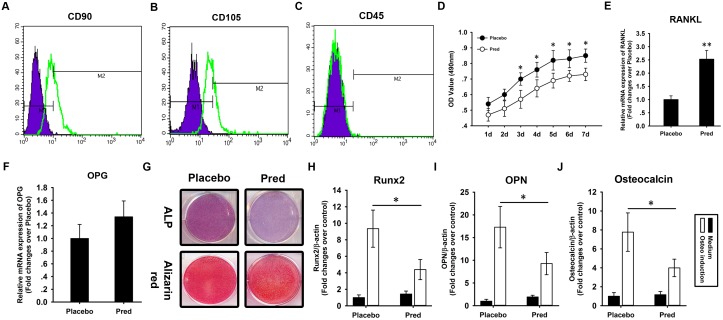
“It was reported that osteoporotic BMSCs have increased adipogenesis, which is characterized by impaired leptin action [22].”
BackgroundDefective development of pristane-oil-induced plasmacytomas in interleukin-6-deficient BALB/c mice.
(1997) · Europe PMC (PubMed Central) · Cited by 111
Karsdal, M. A., Schett, G. A., Emery, P., Harari, O., Byrjalsen, I., Kenwright, A., Bay‐Jensen, A., & Platt, A. (2012) · Seminars in Arthritis and Rheumatism · doi:10.1016/j.semarthrit.2012.01.004 · Cited by 110
Dhennin-Duthille, I., Masson, M., Damiens, E., Fillebeen, C., Spik, G., & Mazurier, J. (2000) · Journal of Cellular Biochemistry · doi:10.1002/1097-4644(20001215)79:4<583::aid-jcb70>3.0.co;2-9 · Cited by 105
Characterization of a 5-fluorouracil-enriched osteoprogenitor population of the murine bone marrow
Falla, N., Van, V., Bierkens, J., Borremans, B., Schoeters, G., & Van Gorp, U. (1993) · Blood · doi:10.1182/blood.v82.12.3580.3580 · Cited by 98 · cited 1×
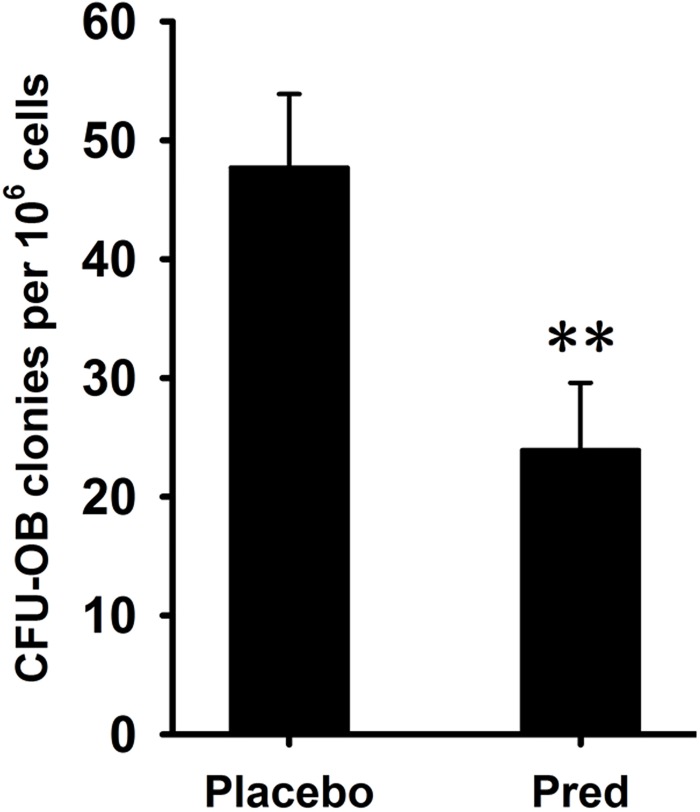
“The number of CFU-osteoblasts (CFU-OB) in the bone marrow preparations was determined as described previously [19].”
MethodTerpos, E., Fragiadaki, K., Konsta, M. A. P., Bratengeier, C., Παπαθεοδώρου, Α., & Sfikakis, P. P. (2011) · PubMed · Cited by 84
Bian, Z., Fan, Q., Li, G., Xu, W., & Tang, T. (2010) · Cancer Science · doi:10.1111/j.1349-7006.2010.01731.x · Cited by 83 · cited 1×
“reported that the IL-6 secreted by osteosarcoma cells inhibits BMSC osteogenic differentiation [39].”
BackgroundFukuyo, S., Yamaoka, K., Sonomoto, K., Oshita, K., Okada, Y., Saito, K., Yoshida, Y., Kanazawa, T., Minami, Y., & Tanaka, Y. (2014) · Rheumatology · doi:10.1093/rheumatology/ket496 · Cited by 67
Lrp5 and bone formation: A serotonin‐dependent pathway
Yadav, V. K., & Ducy, P. F. (2010) · Annals of the New York Academy of Sciences · doi:10.1111/j.1749-6632.2009.05312.x · Cited by 64 · cited 1×
“Wnt/β-catenin signaling plays an essential role in the osteogenic differentiation of BMSCs [20].”
BackgroundRodríguez, J. P., Ríos, S., Fernández, M., & Santibañez, J. F. (2004) · Journal of Cellular Biochemistry · doi:10.1002/jcb.20119 · Cited by 61 · cited 1×
“the mitogenic effect of IGF-1, which is involved in the MAPK signaling pathway [23, 24].”
BackgroundPark, J. H., Park, K. H., Cho, S., Choi, Y. S., Seo, S. K., Lee, B. S., & Park, H. S. (2013) · Menopause The Journal of The North American Menopause Society · doi:10.1097/gme.0b013e31827cabca · Cited by 59
IL-6 is produced by adipose-derived stromal cells and promotes osteogenesis
Huh, J.-E., & Lee, S. Y. (2013) · Biochimica et Biophysica Acta (BBA) - Molecular Cell Research · doi:10.1016/j.bbamcr.2013.06.025 · Cited by 53 · cited 1×
“who found that IL-6 is produced by adipose-derived stromal cells and promotes osteogenesis [45].”
BackgroundDe Benedetti, F., Pignatti, P., Vivarelli, M., Meazza, C., Ciliberto, G., Savino, R., & Martini, A. (2001) · The Journal of Immunology · doi:10.4049/jimmunol.166.7.4334 · Cited by 48 · cited 1×
“Many reports have confirmed the role of IL-6 in the pathogenesis of various diseases [48].”
BackgroundDynamic and distinct histone modifications of osteogenic genes during osteogenic differentiation
Zhang, Y., Sun, H., He, L., Li, K., Fan, Q., & Zhao, Q. (2015) · The Journal of Biochemistry · doi:10.1093/jb/mvv059 · Cited by 46 · cited 3×
“observed the attenuation of osteogenic potential and the enhancement of adipogenic potential in osteoporotic BMSCs in which epigenetic modifications in key transcriptional factors play important roles [6, 7].”
BackgroundSelf-citationThe Role of the Interleukin‐6/gp130 Signaling Pathway in Bone Metabolism
Liu, X., Kirschenbaum, A. M., Yao, S., & Levine, A. C. (2006) · Vitamins and hormones · doi:10.1016/s0083-6729(06)74014-6 · Cited by 37
Strontium promotes cell proliferation and suppresses IL-6 expression in human PDL cells
Römer, P., Desaga, B., Proff, P., Faltermeier, A., & Reicheneder, C. A. (2011) · Annals of Anatomy - Anatomischer Anzeiger · doi:10.1016/j.aanat.2011.09.008 · Cited by 37
Osteoclastogenic potential of bone marrow cells increases with age in elderly women with fracture
Koshihara, Y., Suematsu, A., Feng, D., Okawara, R., Ishibashi, H., & Yamamoto, S. (2002) · Mechanisms of Ageing and Development · doi:10.1016/s0047-6374(02)00071-4 · Cited by 31 · cited 1×
“Enhancement of IL-6 level is observed in the ongoing processes of aging and menopause which is manifested by osteoclast activation and bone resorption [12, 13].”
BackgroundZhang, Y., Ma, C., Liu, X., Wu, Z., Yan, P., Ma, N., Fan, Q., & Zhao, Q. (2015) · Biochimica et Biophysica Acta (BBA) - Molecular Basis of Disease · doi:10.1016/j.bbadis.2015.08.020 · Cited by 26
Self-citationYamaguchi, K., Yada, M., Tsuji, T., Hatanaka, Y., Goda, K.-I., & Kobori, T. (1999) · Bioorganic & Medicinal Chemistry Letters · doi:10.1016/s0960-894x(99)00122-5 · Cited by 23
Etidronate inhibits the production of IL-6 by osteoblast-like cells
Olmos, J. M., Vega, T., Perera, L., Riancho, J. A., Amado, J. A., & González-Macı́as, J. (1999) · Methods and Findings in Experimental and Clinical Pharmacology · doi:10.1358/mf.1999.21.8.794832 · Cited by 15
Hattori, T., Fei, W., Kizawa, T., Nishida, S., Yoshikawa, H., & Kishida, Y. (2010) · Phytomedicine · doi:10.1016/j.phymed.2009.12.004 · Cited by 13
Cited by
Macrophage Polarization and Osteoporosis: A Review
Muñoz, J., Akhavan, N. S., Mullins, A. P., & Arjmandi, B. H. (2020) · Nutrients · doi:10.3390/nu12102999 · Cited by 384
Interleukin-6 Interweaves the Bone Marrow Microenvironment, Bone Loss, and Multiple Myeloma
Harmer, D., Falank, C., & Reagan, M. R. (2019) · Frontiers in Endocrinology · doi:10.3389/fendo.2018.00788 · Cited by 307
The effect of cytokines on osteoblasts and osteoclasts in bone remodeling in osteoporosis: a review
Xu, J., Yu, L., Liu, F., Wan, L., & Deng, Z. (2023) · Frontiers in Immunology · doi:10.3389/fimmu.2023.1222129 · Cited by 263
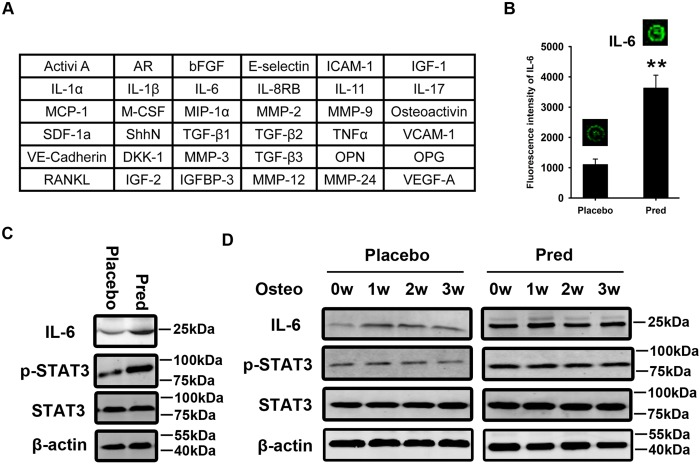
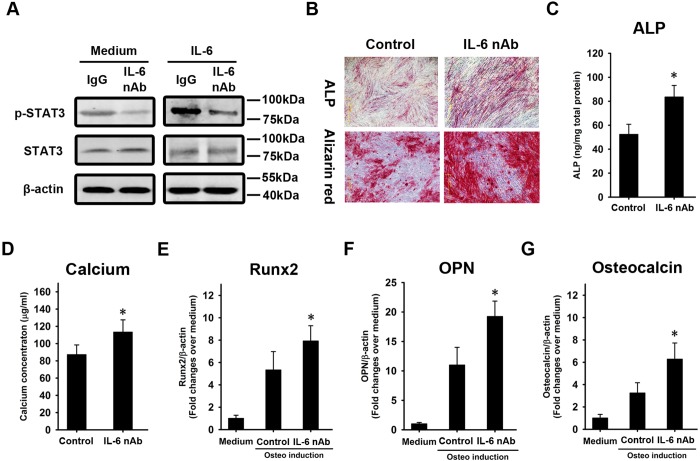
“The overactivated IL-6-STAT3 pathway inhibits b-catenin activity, and anti-IL-6 neutralizing antibodies rescue the osteoporotic phenotype in rodents (44), providing a potential therapeutic target for osteoporosis.”
BackgroundBone diseases in patients with chronic liver disease
Jeong, H., & Kim, D. (2019) · International Journal of Molecular Sciences · doi:10.3390/ijms20174270 · Cited by 113
“A previous study revealed that IL-6 contributes to the defective osteogenesis of bone marrow stromal cell (BMSC) in the vertebral body of the osteoporotic mice and that the in vivo administration of an IL-6 neutralizing antibody can rescue this phenotype [92].”
BackgroundYang, Y. J., & Kim, D. J. (2021) · International Journal of Molecular Sciences · doi:10.3390/ijms22052604 · Cited by 112
“Experimental studies revealed that IL-6 was associated with disrupted osteogenesis of bone marrow stem cells in osteoporosis models, and suppression of the IL-6 receptor prevented osteoclast-mediated bone resorption [60,61].”
Background
Metadata
- Authors
- Li, X., Zhou, Z.-Y., Zhang, Y.-Y., & Yang, H.-L.
- Affiliations
- Huaian First People’s Hospital (CN)
- Huai'an Hospital of Huai'an City (CN)
- ORCID
- Li, Xiang
- Venue
- PLOS ONE
- Publisher
- Public Library of Science (PLoS)
- Published
- 2016-04-29
- Volume
- 11
- Issue
- 4
- Pages
- e0154677
- ISSN
- 1932-6203 (ISSN-L)
- PMC
- PMC4851291
- OpenAlex
- W2343542044
- Cited by
- 89
- References
- 54
- Citations by year
- 2026: 4 · 2025: 11 · 2024: 9 · 2023: 8 · 2022: 7 · 2021: 14 · 2020: 12 · 2019: 12 · 2018: 8 · 2017: 3 · 2016: 1
- FWCI
- 4.16
- Type
- journal article
- Language
- en
- Open access
- gold
- doi.org
- Licence
- Locations
- PLoS ONE (publishedVersion, cc-by)
- PubMed Central (publishedVersion, cc-by)
- PubMed (publishedVersion)
- DOAJ (DOAJ: Directory of Open Access Journals) (submittedVersion, cc-by-sa)
- Figshare (submittedVersion, cc-by)
- Funders
- Jiangsu provincial special program of medical science (BL2012004)
- Jiangsu provincial clinical orthopedic center
- Priority Academic Program Development of Jiangsu Higher Education Institutions
- Topics
- Life Sciences › Biochemistry, Genetics and Molecular Biology › Molecular Biology › Bone Metabolism and Diseases
- Health Sciences › Medicine › Orthopedics and Sports Medicine › Bone health and osteoporosis research
- Life Sciences › Pharmacology, Toxicology and Pharmaceutics › Pharmacology › Medicinal Plant Pharmacodynamics Research
- Keywords
- interleukin-6, glucocorticoid-induced osteoporosis, mesenchymal stem cells, osteogenic differentiation, vertebral body, β-catenin signaling, IL-6 neutralizing antibody, osteoporosis treatment, bone metabolism
- MeSH terms
- Interleukin-6 Inhibitors, Animals, Disease Models, Animal, Glucocorticoids, Male, Mice, Inbred C57BL, Osteogenesis, Osteoporosis, Prednisolone, Spine, Signal Transduction, Interleukin-6, Mice, Knockout, STAT3 Transcription Factor, beta Catenin, Mice, Antibodies, Neutralizing, Mesenchymal Stem Cells
About these checks
Registry, retraction, Cites and statistics results are computed, not judged, with one exception: a printed reference that no index lists is read once by a model before it counts as a citation error. Claims are extracted by a model and kept only when their quote appears verbatim in the text; each cited source is then checked, with a model’s help, for whether it says what the claim relies on. Those verdicts can be wrong — read the claim’s quote and the cited source before relying on one.
Statistics and arithmetic are recomputed, not judged.
Confidence bands are shown only for fields calibrated on our annotated test set. None is calibrated yet, so no band is shown.
What counts as a claim ›How we measure confidence ›How we check this ›
Are you an author, or do you see a problem with this page? Request a review
Data sources
Bibliographic data: Semantic Scholar, OpenAlex, Crossref.
Contains information from the Semantic Scholar Academic Graph Datasets, made available under the ODC Attribution License (ODC-BY 1.0).
Semantic Scholar’s data is described in: Kinney, R., et al. (2023). The Semantic Scholar Open Data Platform. arXiv:2301.10140.
