

The DOI matches its Crossref record; 51 of the 51 references it cites were found in a registry or an index.
Debunking in a world of tribes
Open accessAbstract
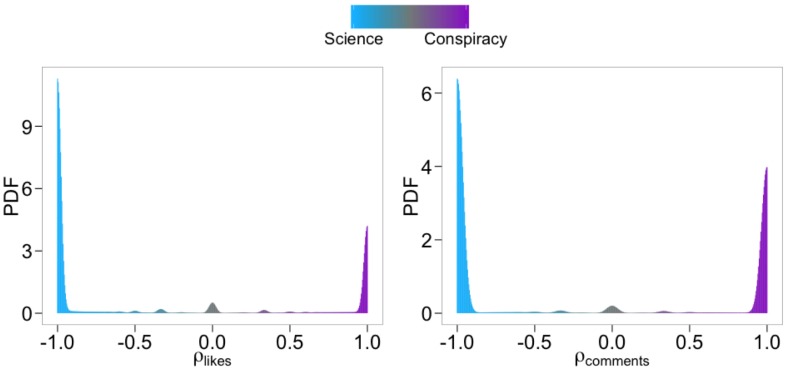
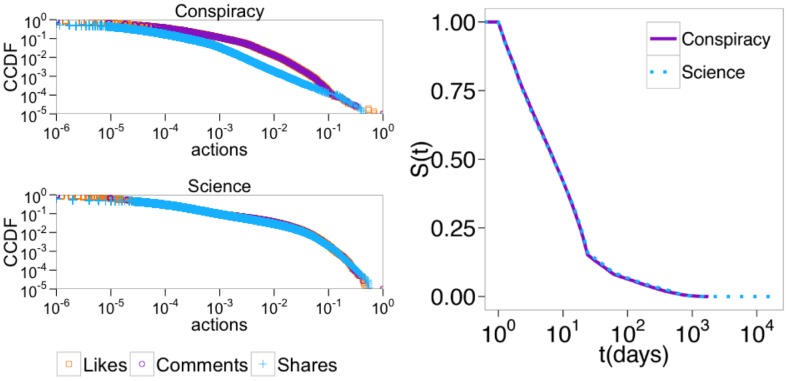
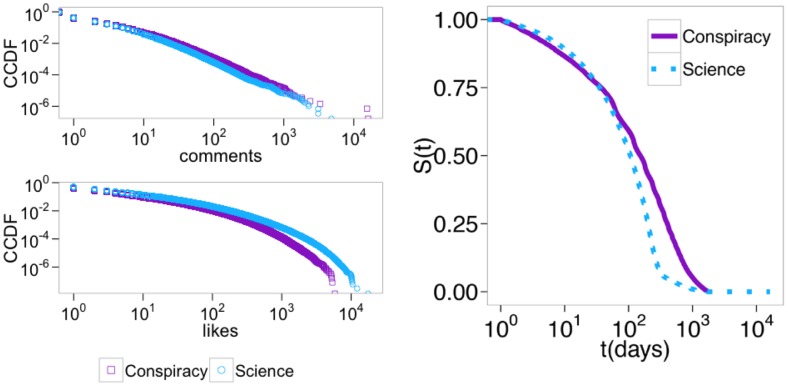
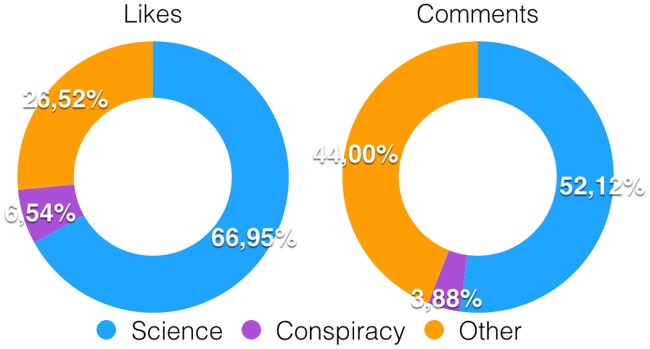
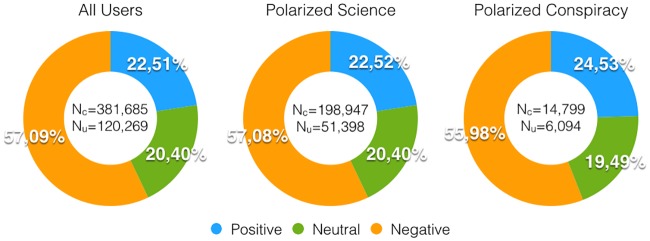
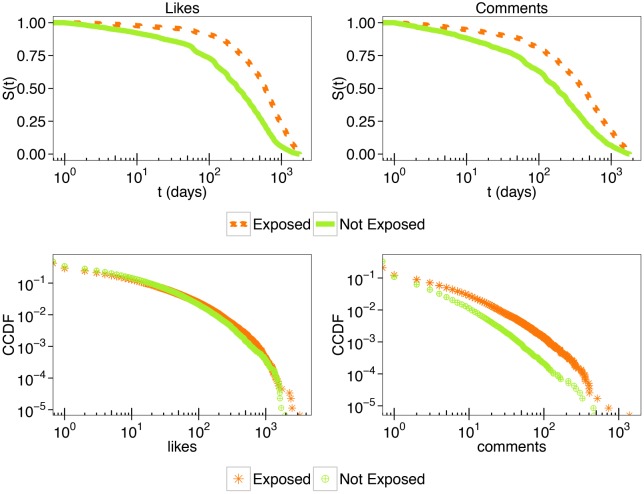
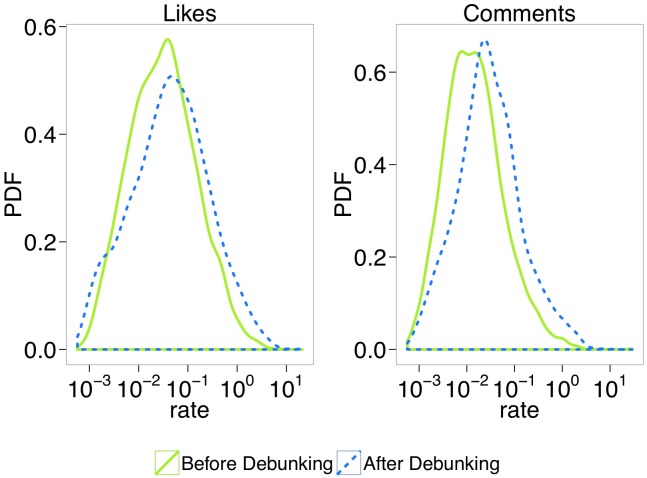
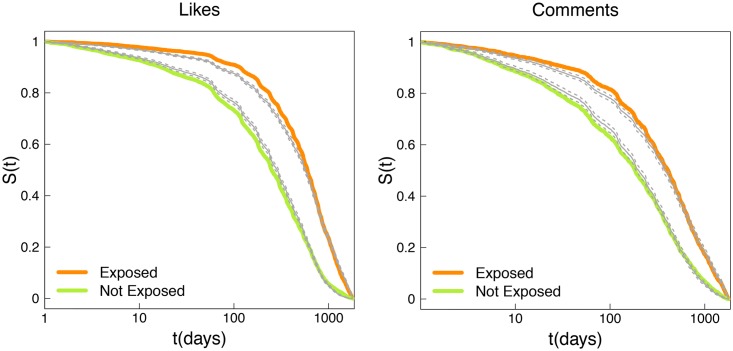
Social media aggregate people around common interests eliciting collective framing of narratives and worldviews. However, in such a disintermediated environment misinformation is pervasive and attempts to debunk are often undertaken to contrast this trend. In this work, we examine the effectiveness of debunking on Facebook through a quantitative analysis of 54 million users over a time span of five years (Jan 2010, Dec 2014). In particular, we compare how users usually consuming proven (scientific) and unsubstantiated (conspiracy-like) information on Facebook US interact with specific debunking posts. Our findings confirm the existence of echo chambers where users interact primarily with either conspiracy-like or scientific pages. However, both groups interact similarly with the information within their echo chamber. Then, we measure how users from both echo chambers interacted with 50,220 debunking posts accounting for both users consumption patterns and the sentiment expressed in their comments. Sentiment analysis reveals a dominant negativity in the comments to debunking posts. Furthermore, such posts remain mainly confined to the scientific echo chamber. Only few conspiracy users engage with corrections and their liking and commenting rates on conspiracy posts increases after the interaction.
Overview
The claims and statistics of this paper haven’t been checked yet.
Run the check — free, no account needed. It reads the open-access text and checks the sources it cites.
Integrity signals
Registry
Cites
Statistics
Figures
Verification
Claims the paper makes
The claims and statistics of this paper haven’t been checked yet.
Run the check — free, no account needed. It reads the open-access text and checks the sources it cites.
Claims other papers make about this one
Each is checked against this paper’s own text: does it say what the citing paper says it does?
The source backs part of the claim, not all of it — or backs it for a different population, condition or comparison.
In the citing paper
“This phenomenon is particularly pronounced in segregated networks, such as”
From A systematic review of echo chamber research: comparative analysis of conceptualizations, operationalizations, and varying outcomes (2025) · cites this paper as [50]
Experimental — accuracy not yet measuredThe source backs part of the claim, not all of it — or backs it for a different population, condition or comparison.
In the citing paper
“They find that the amount of media a person consumes is anti-proportional to their chance of being trapped in an echo chamber, which contradicts findings by CSS studies [48,50,66,67] that find that engagement and echo chambers are positively correlated.”
From A systematic review of echo chamber research: comparative analysis of conceptualizations, operationalizations, and varying outcomes (2025) · cites this paper as [50]
Experimental — accuracy not yet measuredIn the citing paper
“fact-checks are unlikely to reach everyone who was exposed to the initial misinformation (10);”
From Psychological inoculation improves resilience against misinformation on social media (2022) · cites this paper as [10]
Self-check
Percentages, sums and reported differences re-computed from the paper’s own numbers.
The self-check needs the paper’s full text.
Citations
Cites
Nonparametric Estimation from Incomplete Observations
Kaplan, E. L., & Meier, P. (1992) · Springer series in statistics · doi:10.1007/978-1-4612-4380-9_25 · Cited by 45,239
Regression Models and Life-Tables
Cox, D. R. (1972) · Journal of the Royal Statistical Society Series B: Statistical Methodology · doi:10.1111/j.2517-6161.1972.tb00899.x · Cited by 39,793
Nonparametric Estimation from Incomplete Observations
Kaplan, E. L., & Meier, P. (1958) · Journal of the American Statistical Association · doi:10.1080/01621459.1958.10501452 · Cited by 39,158
The Nature of Statistical Learning Theory
Vapnik, V. N. (1995) · doi:10.1007/978-1-4757-2440-0 · Cited by 39,138
Regression Models and Life-Tables
Cox, D. R. (1992) · Springer Series in Statistics · doi:10.1007/978-1-4612-4380-9_37 · Cited by 26,297
Content Analysis: An Introduction to its Methodology.
Shelley, M., & Krippendorff, K. (1984) · Journal of the American Statistical Association · doi:10.2307/2288384 · Cited by 24,346
Content Analysis: An Introduction to Its Methodology
Krippendorff, K. (2019) · doi:10.4135/9781071878781 · Cited by 15,448
On a Test of Whether one of Two Random Variables is Stochastically Larger than the Other
Mann, H. B., & Whitney, D. R. (1947) · The Annals of Mathematical Statistics · doi:10.1214/aoms/1177730491 · Cited by 14,320
Ellison, N. B., Steinfield, C., & Lampe, C. (2007) · Journal of Computer-Mediated Communication · doi:10.1111/j.1083-6101.2007.00367.x · Cited by 9,939
Power-Law Distributions in Empirical Data
Clauset, A., Shalizi, C. R., & Newman, M. E. J. (2009) · SIAM Review · doi:10.1137/070710111 · Cited by 8,019
Research works printed but not linked: 1
- Resnick P, Carton S, Park S, Shen Y, Zeffer N. RumorLens: A System for Analyzing the Impact of Rumors and Corrections in Social Media. In: Proc. Computational Journalism Conference; 2014.
Cited by
Sorted by citations
Using social and behavioural science to support COVID-19 pandemic response
Bavel, J. J. V., Baicker, K., Boggio, P. S., Capraro, V., Cichocka, A., Cikara, M., Crockett, M. J., Crum, A. J., Douglas, K. M., Druckman, J. N., et al. (2020) · Nature Human Behaviour · doi:10.1038/s41562-020-0884-z · Cited by 4,964
The COVID-19 social media infodemic
Cinelli, M., Quattrociocchi, W., Galeazzi, A., Valensise, C. M., Brugnoli, E., Schmidt, A. L., Zola, P., Zollo, F., & Scala, A. (2020) · Scientific Reports · doi:10.1038/s41598-020-73510-5 · Cited by 2,313
Self-citationInfluence of fake news in Twitter during the 2016 US presidential election
Bovet, A., & Makse, H. A. (2019) · CUNY Academic Works (City University of New York) · Cited by 882
Horne, B. D., & Adalı, S. (2017) · Proceedings of the International AAAI Conference on Web and Social Media · doi:10.1609/icwsm.v11i1.14976 · Cited by 787
Misinformation: susceptibility, spread, and interventions to immunize the public
van der Linden, S. (2022) · Nature Medicine · doi:10.1038/s41591-022-01713-6 · Cited by 570
Psychological inoculation improves resilience against misinformation on social media
Roozenbeek, J., van der Linden, S., Goldberg, B., Rathje, S., & Lewandowsky, S. (2022) · Science Advances · doi:10.1126/sciadv.abo6254 · Cited by 472
Fake news, social media and marketing: A systematic review
Domenico, G. D., Sit, J., Ishizaka, A., & Nunan, D. (2020) · Journal of Business Research · doi:10.1016/j.jbusres.2020.11.037 · Cited by 519
Polarization of the vaccination debate on Facebook
Schmidt, A. L., Zollo, F., Scala, A., Betsch, C., & Quattrociocchi, W. (2018) · Vaccine · doi:10.1016/j.vaccine.2018.05.040 · Cited by 403
Self-citationSocial Media, Echo Chambers, and Political Polarization
Barberá, P. (2020) · Social Media and Democracy · doi:10.1017/9781108890960.004 · Cited by 373
An exploratory study of COVID-19 misinformation on Twitter
Shahi, G. K., Dirkson, A. R., & Majchrzak, T. A. (2021) · Online Social Networks and Media · doi:10.1016/j.osnem.2020.100104 · Cited by 397
Anatomy of news consumption on Facebook
Schmidt, A. L., Zollo, F., Del Vicario, M., Bessi, A., Scala, A., Caldarelli, G., Stanley, H. E., & Quattrociocchi, W. (2017) · Proceedings of the National Academy of Sciences · doi:10.1073/pnas.1617052114 · Cited by 305
Self-citationUsers Polarization on Facebook and Youtube
Bessi, A., Zollo, F., Del Vicario, M., Puliga, M., Scala, A., Caldarelli, G., Uzzi, B., & Quattrociocchi, W. (2016) · PLOS ONE · doi:10.1371/journal.pone.0159641 · Cited by 285
Self-citationPolarization and Fake News: Early Warning of Potential Misinformation Targets
Vicario, M. D., Quattrociocchi, W., Scala, A., & Zollo, F. (2019) · ACM Transactions on the Web · doi:10.1145/3316809 · Cited by 280
Self-citationAgley, J. D., & Xiao, Y. (2021) · BMC Public Health · doi:10.1186/s12889-020-10103-x · Cited by 266
Allgaier, J. (2019) · Frontiers in Communication · doi:10.3389/fcomm.2019.00036 · Cited by 244
Modeling confirmation bias and polarization
Vicario, M. D., Scala, A., Caldarelli, G., Stanley, E., & Quattrociocchi, W. (2017) · Scientific Reports · doi:10.1038/srep40391 · Cited by 245
Self-citationMisinformation, Disinformation, and Online Propaganda
Guess, A. M., & Lyons, B. A. (2020) · Social Media and Democracy · doi:10.1017/9781108890960.003 · Cited by 284
Echo Chambers on Social Media: A Systematic Review of the Literature
Ludovic Terren, L. T., & Rosa Borge-Bravo, R. B.-B. (2021) · Review of Communication Research · doi:10.12840/issn.2255-4165.028 · Cited by 272
Political Attitudes and the Processing of Misinformation Corrections
Ecker, U. K. H., & Ang, L. C. (2018) · Political Psychology · doi:10.1111/pops.12494 · Cited by 191
Fake news propagates differently from real news even at early stages of spreading
Zhao, Z., Zhao, J., Sano, Y., Levy, O., Hideki Takayasu, C., Takayasu, M., Li, D., Wu, J., & Havlin, S. (2020) · EPJ Data Science · doi:10.1140/epjds/s13688-020-00224-z · Cited by 220
Self-citationMapping social dynamics on Facebook: The Brexit debate
Del Vicario, M., Zollo, F., Caldarelli, G., Scala, A., & Quattrociocchi, W. (2017) · Social Networks · doi:10.1016/j.socnet.2017.02.002 · Cited by 233
Self-citationVraga, E. K., Kim, S. C., & Cook, J. (2019) · Journal of Broadcasting & Electronic Media · doi:10.1080/08838151.2019.1653102 · Cited by 162
The emergence of consensus: a primer
Baronchelli, A. (2018) · Royal Society Open Science · doi:10.1098/rsos.172189 · Cited by 161
Social media’s contribution to political misperceptions in U.S. Presidential elections
Garrett, R. K. (2019) · PLOS ONE · doi:10.1371/journal.pone.0213500 · Cited by 151
Personality traits and echo chambers on facebook
Bessi, A. (2016) · Computers in Human Behavior · doi:10.1016/j.chb.2016.08.016 · Cited by 150
Self-citationKaakinen, M., Sirola, A., Savolainen, I., & Oksanen, A. (2018) · Media Psychology · doi:10.1080/15213269.2018.1544910 · Cited by 163
The role of bot squads in the political propaganda on Twitter
Caldarelli, G., Nicola, R. D., Vigna, F. D., Petrocchi, M., & Saracco, F. (2020) · Communications Physics · doi:10.1038/s42005-020-0340-4 · Cited by 142
Self-citationHate Knows No Boundaries: Online Hate in Six Nations
Reichelmann, A. V., E.Hawdon, J., Costello, M., Ryan, J., Blaya, C., Llorent, V. J., Oksanen, A., Räsänen, P., & Zych, I. (2020) · Deviant Behavior · doi:10.1080/01639625.2020.1722337 · Cited by 132
Selective exposure shapes the Facebook news diet
Cinelli, M., Brugnoli, E., Schmidt, A. L., Zollo, F., Quattrociocchi, W., & Scala, A. (2020) · PLOS ONE · doi:10.1371/journal.pone.0229129 · Cited by 130
Self-citationWissenschaftskommunikation und Social Media: Neue Akteure, Polarisierung und Vertrauen
Könneker, C. (2019) · Springer eBooks · doi:10.1007/978-3-662-59466-7_3 · Cited by 130
Roozenbeek, J., Culloty, E., & Suiter, J. (2023) · European Psychologist · doi:10.1027/1016-9040/a000492 · Cited by 151
Reynolds, J., Stautz, K., Pilling, M., van der Linden, S., & Marteau, T. (2020) · Royal Society Open Science · doi:10.1098/rsos.190522 · Cited by 109
Facts and Where to Find Them: Empirical Research on Internet Platforms and Content Moderation
Keller, D., & Leerssen, P. (2020) · Data Archiving and Networked Services (DANS) · doi:10.1017/9781108890960
Persistent interaction patterns across social media platforms and over time
Avalle, M., Marco, N. D., Etta, G., Sangiorgio, E., Alipour, S., Bonetti, A., Alvisi, L., Scala, A., Baronchelli, A., Cinelli, M., et al. (2024) · Nature · doi:10.1038/s41586-024-07229-y · Cited by 166
Self-citationConspiracy theories and social media platforms
Cinelli, M., Etta, G., Avalle, M., Quattrociocchi, A., Marco, N. D., Valensise, C. M., Galeazzi, A., & Quattrociocchi, W. (2022) · Current Opinion in Psychology · doi:10.1016/j.copsyc.2022.101407 · Cited by 147
Self-citationSiegel, A. A. (2020) · Cambridge University Press eBooks · doi:10.1017/9781108890960.005 · Cited by 123
Giglietto, F., Iannelli, L., Valeriani, A., & Rossi, L. (2019) · Current Sociology · doi:10.1177/0011392119837536 · Cited by 137
Democracy by Design: Perspectives for Digitally Assisted, Participatory Upgrades of Society
Helbing, D., Mahajan, S., Hänggli, R., Musso, A., Hausladen, C. I., Carissimo, C., Carpentras, D., Stockinger, E., Sánchez–Vaquerizo, J. A., Yang, J. C., et al. (2023) · Journal of Computational Science · doi:10.1016/j.jocs.2023.102061 · Cited by 150
Kirk, H. R., Vidgen, B., Röttger, P., & Hale, S. A. (2024) · Nature Machine Intelligence · doi:10.1038/s42256-024-00820-y · Cited by 122
Rumor Propagation is Amplified by Echo Chambers in Social Media
Choi, D., Chun, S., Oh, H., Han, J., & Kwon, T. “. (2020) · Scientific Reports · doi:10.1038/s41598-019-57272-3 · Cited by 164
Social media behavior is associated with vaccine hesitancy
Rathje, S., He, J. K., Roozenbeek, J., Van Bavel, J. J., & van der Linden, S. (2022) · PNAS Nexus · doi:10.1093/pnasnexus/pgac207 · Cited by 100
Garrett, R. K. (2017) · Journal of Applied Research in Memory and Cognition · doi:10.1016/j.jarmac.2017.09.011 · Cited by 113
Investigating Italian disinformation spreading on Twitter in the context of 2019 European elections
Pierri, F., Artoni, A., & Ceri, S. (2020) · PLOS ONE · doi:10.1371/journal.pone.0227821 · Cited by 93
Ruffo, G., Semeraro, A., Giachanou, A., & Rosso, P. (2022) · Computer Science Review · doi:10.1016/j.cosrev.2022.100531 · Cited by 129
Dynamics of online hate and misinformation
Cinelli, M., Pelicon, A., Mozetič, I., Quattrociocchi, W., Novak, P. K., & Zollo, F. (2021) · Scientific Reports · doi:10.1038/s41598-021-01487-w · Cited by 107
Self-citationThe Web of False Information: Rumors, Fake News, Hoaxes, Clickbait, and Various Other Shenanigans
Zannettou, S., Sirivianos, M., Blackburn, J., & Kourtellis, N. (2019) · Journal of Data and Information Quality · doi:10.1145/3309699 · Cited by 86
A minimalistic model of bias, polarization and misinformation in social networks
Sikder, O., Smith, R. E., Vivo, P., & Livan, G. (2020) · Scientific Reports · doi:10.1038/s41598-020-62085-w · Cited by 91
Bakir, V. (2020) · Frontiers in Communication · doi:10.3389/fcomm.2020.00067 · Cited by 83
Recursive patterns in online echo chambers
Brugnoli, E., Cinelli, M., Quattrociocchi, W., & Scala, A. (2019) · Scientific Reports · doi:10.1038/s41598-019-56191-7 · Cited by 95
Self-citationUnderstanding and countering climate science denial
Cook, J. (2017) · Journal and proceedings of the Royal Society of New South Wales · doi:10.5962/p.361798 · Cited by 79
Using Social and Behavioural Science to Support COVID-19 Pandemic ResponsePreprint
Bavel, J. J. V., D, K. B. A., Boggio, P. S., Capraro, V., Cichocka, A. K., Cikara, M., Crockett, M. J., Crum, A. J., Douglas, K. M., Druckman, J. N., et al. (2022) · SSRN Electronic Journal · doi:10.2139/ssrn.4178356 · Cited by 89
Fong, A. A., Roozenbeek, J., Goldwert, D., Rathje, S., & van der Linden, S. (2021) · Group Processes & Intergroup Relations · doi:10.1177/1368430220987596 · Cited by 82
Misinformation Spreading on Facebook
Zollo, F., & Quattrociocchi, W. (2018) · Computational social sciences · doi:10.1007/978-3-319-77332-2_10 · Cited by 83
Self-citationCharacteristics of Antivaccine Messages on Social Media: Systematic Review
Wawrzuta, D., Jaworski, M., Gotlib, J., & Pańczyk, M. (2021) · Journal of Medical Internet Research · doi:10.2196/24564 · Cited by 79
The geographic embedding of online echo chambers: Evidence from the Brexit campaign
Bastos, M., Mercea, D., & Baronchelli, A. (2018) · PLOS ONE · doi:10.1371/journal.pone.0206841 · Cited by 68
Democratic Transparency in the Platform Society
Gorwa, R., & Ash, T. G. (2020) · Cambridge University Press eBooks · doi:10.1017/9781108890960.013 · Cited by 71
Interian, R., G. Marzo, R., Mendoza, I., & Ribeiro, C. C. (2023) · International Transactions in Operational Research · doi:10.1111/itor.13224 · Cited by 67
Misinformation and Its Correction
Wittenberg, C., & Berinsky, A. J. (2020) · Cambridge University Press eBooks · doi:10.1017/9781108890960.009 · Cited by 64
Harambam, J. (2021) · Journal for Cultural Research · doi:10.1080/14797585.2021.1886424 · Cited by 70
Social and Cognitive Aspects of the Vulnerability to Political Misinformation
Pantazi, M., Hale, S. A., & Klein, O. (2021) · Political Psychology · doi:10.1111/pops.12797 · Cited by 81
How to Combat Health Misinformation: A Psychological Approach
Roozenbeek, J., & van der Linden, S. (2022) · American Journal of Health Promotion · doi:10.1177/08901171211070958 · Cited by 60
Sirola, A., Kaakinen, M., Savolainen, I., Paek, H., Zych, I., & Oksanen, A. (2021) · Telematics and Informatics · doi:10.1016/j.tele.2021.101582 · Cited by 87
Polarization and Fake News: Early Warning of Potential Misinformation TargetsPreprint
Vicario, M. D., Quattrociocchi, W., Antonio Scala, A., & Zollo, F. (2018) · arXiv (Cornell University) · doi:10.48550/arxiv.1802.01400 · Cited by 60
Self-citationThe Web of False Information: Rumors, Fake News, Hoaxes, Clickbait, and Various Other ShenanigansPreprint
Zannettou, S., Sirivianos, M., Blackburn, J., & Kourtellis, N. (2018) · arXiv (Cornell University) · doi:10.48550/arxiv.1804.03461 · Cited by 60
Hartmann, D., Wang, S. M., Pohlmann, L., & Berendt, B. (2025) · Journal of Computational Social Science · doi:10.1007/s42001-025-00381-z · Cited by 59
Neuberger, C., Bartsch, A., Reinemann, C., Fröhlich, R., Hanitzsch, T., & Schindler, J. (2019) · Medien & Kommunikationswissenschaft · doi:10.5771/1615-634x-2019-2-167 · Cited by 69
Flow of online misinformation during the peak of the COVID-19 pandemic in Italy
Caldarelli, G., Nicola, R. D., Petrocchi, M., Pratelli, M., & Saracco, F. (2021) · EPJ Data Science · doi:10.1140/epjds/s13688-021-00289-4 · Cited by 60
Self-citationHow People Weave Online Information Into Pseudoknowledge
Introne, J. E., Yildirim, I., Iandoli, L., DeCook, J. R., & Elzeini, S. (2018) · Social Media + Society · doi:10.1177/2056305118785639 · Cited by 51
Dealing with digital misinformation: a polarised context of narratives and tribes
Zollo, F. (2019) · EFSA Journal · doi:10.2903/j.efsa.2019.e170720 · Cited by 60
Self-citationWang, D., Zhou, Y., Qian, Y., & Liu, Y. (2021) · Computers in Human Behavior · doi:10.1016/j.chb.2021.107088 · Cited by 48
On the statistical properties of viral misinformation in online social media
Bessi, A. (2016) · Physica A Statistical Mechanics and its Applications · doi:10.1016/j.physa.2016.11.012 · Cited by 46
Self-citationMiller, S., Menard, P., Bourrie, D. M., & Sittig, S. (2022) · Information Systems Journal · doi:10.1111/isj.12418 · Cited by 60
Artificial Intelligence and Political Deepfakes: Shaping Citizen Perceptions Through Misinformation
Momeni, M. (2024) · Journal of Creative Communications · doi:10.1177/09732586241277335 · Cited by 69
Wang, D., & Qian, Y. (2021) · Journal of Medical Internet Research · doi:10.2196/27009 · Cited by 42
The drivers of online polarization: Fitting models to data
Valensise, C. M., Cinelli, M., & Quattrociocchi, W. (2023) · Information Sciences · doi:10.1016/j.ins.2023.119152 · Cited by 48
Self-citationInformative Contagion: The Coronavirus (COVID-19) in Italian journalism
Papapicco, C. (2020) · Online Journal of Communication and Media Technologies · doi:10.29333/ojcmt/7938 · Cited by 43
Technical assistance in the field of risk communication
(EFSA), E. F. S. A., Maxim, L., Mazzocchi, M., den Broucke, S. V., Zollo, F., Robinson, T. P., Rogers, C., Vrbos, D., Zamariola, G., & Smith, A. (2021) · EFSA Journal · doi:10.2903/j.efsa.2021.6574 · Cited by 42
Self-citationAnalysing Twitter semantic networks: the case of 2018 Italian elections
Radicioni, T., Saracco, F., Pavan, E., & Squartini, T. (2021) · Scientific Reports · doi:10.1038/s41598-021-92337-2 · Cited by 40
Online silence: why do people not challenge others when posting misinformation?
Gurgun, S., Arden-Close, E. J., Phalp, K. T., & Ali, R. (2022) · Internet Research · doi:10.1108/intr-06-2022-0407 · Cited by 44
Managing Infodemics in the 21st Century
Purnat, T. D., Nguyen, T., & Briand, S. C. (2023) · Springer eBooks · doi:10.1007/978-3-031-27789-4 · Cited by 54
Bots and Computational Propaganda: Automation for Communication and Control
Woolley, S. (2020) · Cambridge University Press eBooks · doi:10.1017/9781108890960.006 · Cited by 41
Facts and Where to Find Them: Empirical Research on Internet Platforms and Content Moderation
Keller, D., & Leerssen, P. (2020) · Cambridge University Press eBooks · doi:10.1017/9781108890960.011 · Cited by 39
Conti, M., Lain, D., Lazzeretti, R., Lovisotto, G., & Quattrociocchi, W. (2017) · IEEE International Workshop on Information Forensics and Security · doi:10.1109/wifs.2017.8267653 · Cited by 38
Self-citationNews Consumption during the Italian Referendum: A Cross-Platform Analysis on Facebook and Twitter
Vicario, M. D., Gaito, S., Quattrociocchi, W., Zignani, M., & Zollo, F. (2017) · IEEE International Conference on Data Science and Advanced Analytics (DSAA) · doi:10.1109/dsaa.2017.33 · Cited by 38
Self-citationIdentifying Key Rumor Refuters on Social Media
Gao, Y., Sun, Y., Zhang, L., Liu, F., & Gao, L. (2022) · Expert Systems with Applications · doi:10.1016/j.eswa.2023.120603 · Cited by 35
García-Marín, D. (2021) · Doxa Comunicación Revista interdisciplinar de estudios de comunicación y ciencias sociales · doi:10.31921/doxacom.n33a854 · Cited by 37
Democratic Creative Destruction? The Effect of a Changing Media Landscape on Democracy
Nielsen, R. K., & Fletcher, R. (2020) · Cambridge University Press eBooks · doi:10.1017/9781108890960.008 · Cited by 35
Bella, E. L., Allen, C., & Lirussi, F. (2021) · Integrative Medicine Research · doi:10.1016/j.imr.2021.100731 · Cited by 38
Eismann, K. (2021) · Journal of Business Economics · doi:10.1007/s11573-020-01022-9 · Cited by 37
LOCO: The 88-million-word language of conspiracy corpus
Miani, A., Hills, T. T., & Bangerter, A. (2021) · Behavior Research Methods · doi:10.3758/s13428-021-01698-z · Cited by 36
Impulsivity, internalizing symptoms, and online group behavior as determinants of online hate
Kaakinen, M., Sirola, A., Savolainen, I., & Oksanen, A. (2020) · PLoS ONE · doi:10.1371/journal.pone.0231052 · Cited by 37
Luzsa, R., & Mayr, S. (2021) · Cyberpsychology Journal of Psychosocial Research on Cyberspace · doi:10.5817/cp2021-1-3 · Cited by 33
How strong is the association between social media use and false consensus?
Bunker, C. J., & Varnum, M. E. W. (2021) · Computers in Human Behavior · doi:10.1016/j.chb.2021.106947 · Cited by 30
Integrating Social Media in Modern Oncology Practice and Research
Sedrak, M. S., Attai, D. J., George, K., Katz, M. S., & Markham, M. J. (2018) · American Society of Clinical Oncology Educational Book · doi:10.1200/edbk_204453 · Cited by 30
“Is It the Message or the Messenger?”: Conspiracy Endorsement and Media Sources
Mancosu, M., & Vegetti, F. (2020) · Social science computer review · doi:10.1177/0894439320965107 · Cited by 33
Online Relationships and Social Media Interaction in Youth Problem Gambling: A Four-Country Study
Savolainen, I., Kaakinen, M., Sirola, A., Koivula, A., Hagfors, H., Zych, I., Paek, H., & Oksanen, A. (2020) · International Journal of Environmental Research and Public Health · doi:10.3390/ijerph17218133 · Cited by 33
Factors associated with the belief in COVID-19 related conspiracy theories in Pakistan
Ejaz, W., Ittefaq, M., Seo, H., & Naz, F. (2021) · Health Risk & Society · doi:10.1080/13698575.2021.1929865 · Cited by 30
Winters, M., Oppenheim, B., Sengeh, P., Jalloh, M. B., Webber, N., Pratt, S., Leigh, B., Mölsted-Alvesson, H., Zeebari, Z., Sundberg, C. J., et al. (2021) · BMJ Global Health · doi:10.1136/bmjgh-2021-006954 · Cited by 34
Radicioni, T., Squartini, T., Pavan, E., & Saracco, F. (2021) · PLoS ONE · doi:10.1371/journal.pone.0256705 · Cited by 29
Evaluating the effect of viral posts on social media engagement
Sangiorgio, E., Marco, N. D., Etta, G., Cinelli, M., Cerqueti, R., & Quattrociocchi, W. (2025) · Scientific Reports · doi:10.1038/s41598-024-84960-6 · Cited by 46
Self-citation
Metadata
- Authors
- Zollo, F., Bessi, A., Del Vicario, M., Scala, A., Caldarelli, G., Shekhtman, L., Havlin, S., & Quattrociocchi, W.
- Affiliations
- IMT School for Advanced Studies Lucca (IT)
- Istituto Universitario di Studi Superiori di Pavia (IT)
- Bar-Ilan University (IL)
- Corresponding author
- Zollo, Fabiana
- ORCID
- Venue
- PLOS ONE
- Publisher
- Public Library of Science (PLoS)
- Published
- 2017-07-24
- Volume
- 12
- Issue
- 7
- Pages
- e0181821
- ISSN
- 1932-6203 (ISSN-L)
- PMC
- PMC5524392
- OpenAlex
- W2962740444
- Cited by
- 345
- References
- 51
- Citations by year
- 2026: 19 · 2025: 39 · 2024: 32 · 2023: 34 · 2022: 39 · 2021: 53 · 2020: 55 · 2019: 30 · 2018: 21 · 2017: 16
- FWCI
- 85.15
- Type
- journal article
- Language
- en
- Open access
- gold
- doi.org
- Licence
- Locations
- PLoS ONE (publishedVersion, cc-by)
- Europe PMC (PubMed Central) (publishedVersion, cc-by)
- PubMed Central (publishedVersion, cc-by)
- PubMed (publishedVersion)
- arXiv (Cornell University) (submittedVersion)
- DOAJ (DOAJ: Directory of Open Access Journals) (submittedVersion, cc-by-sa)
- IRIS Research product catalog (Sapienza University of Rome) (submittedVersion)
- ARCA (Università Ca' Foscari Venezia) (submittedVersion)
- arXiv (Cornell University)
- Topics
- Social Sciences › Sociology and Political Science › Misinformation and Its Impacts
- Physical Sciences › Physics and Astronomy › Statistical and Nonlinear Physics › Complex Network Analysis Techniques
- Social Sciences › Communication › Social Media and Politics
- Keywords
- debunking, misinformation, conspiracy beliefs, echo chambers, Facebook, social media, user engagement, sentiment analysis, scientific information, disintermediation
- MeSH terms
- Attention, Communication, Humans, United States, Social Networking, Social Media
About these checks
Registry, retraction, Cites and statistics results are computed, not judged, with one exception: a printed reference that no index lists is read once by a model before it counts as a citation error. Claims are extracted by a model and kept only when their quote appears verbatim in the text; each cited source is then checked, with a model’s help, for whether it says what the claim relies on. Those verdicts can be wrong — read the claim’s quote and the cited source before relying on one.
Statistics and arithmetic are recomputed, not judged.
Confidence bands are shown only for fields calibrated on our annotated test set. None is calibrated yet, so no band is shown.
What counts as a claim ›How we measure confidence ›How we check this ›
Are you an author, or do you see a problem with this page? Request a review
