

The DOI matches its Crossref record; 69 of the 69 references it cites were found in a registry or an index.
Metabolite patterns predicting sex and age in participants of the Karlsruhe Metabolomics and Nutrition (KarMeN) study
Open accessAbstract
Physiological and functional parameters, such as body composition, or physical fitness are known to differ between men and women and to change with age. The goal of this study was to investigate how sex and age-related physiological conditions are reflected in the metabolome of healthy humans and whether sex and age can be predicted based on the plasma and urine metabolite profiles. In the cross-sectional KarMeN (Karlsruhe Metabolomics and Nutrition) study 301 healthy men and women aged 18-80 years were recruited. Participants were characterized in detail applying standard operating procedures for all measurements including anthropometric, clinical, and functional parameters. Fasting blood and 24 h urine samples were analyzed by targeted and untargeted metabolomics approaches, namely by mass spectrometry coupled to one- or comprehensive two-dimensional gas chromatography or liquid chromatography, and by nuclear magnetic resonance spectroscopy. This yielded in total more than 400 analytes in plasma and over 500 analytes in urine. Predictive modelling was applied on the metabolomics data set using different machine learning algorithms. Based on metabolite profiles from urine and plasma, it was possible to identify metabolite patterns which classify participants according to sex with > 90% accuracy. Plasma metabolites important for the correct classification included creatinine, branched-chain amino acids, and sarcosine. Prediction of age was also possible based on metabolite profiles for men and women, separately. Several metabolites important for this prediction could be identified including choline in plasma and sedoheptulose in urine. For women, classification according to their menopausal status was possible from metabolome data with > 80% accuracy. The metabolite profile of human urine and plasma allows the prediction of sex and age with high accuracy, which means that sex and age are associated with a discriminatory metabolite signature in healthy humans and therefore should always be considered in metabolomics studies.
Overview
The claims and statistics of this paper haven’t been checked yet.
Run the check — free, no account needed. It reads the open-access text and checks the sources it cites.
Integrity signals
Registry
Cites
Statistics
Figures
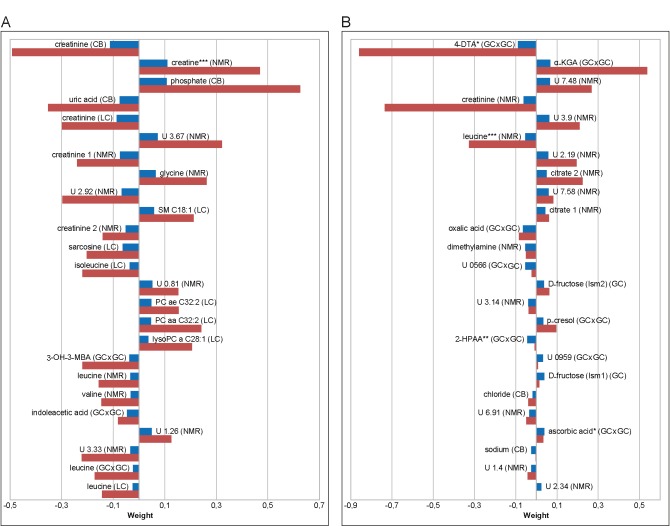
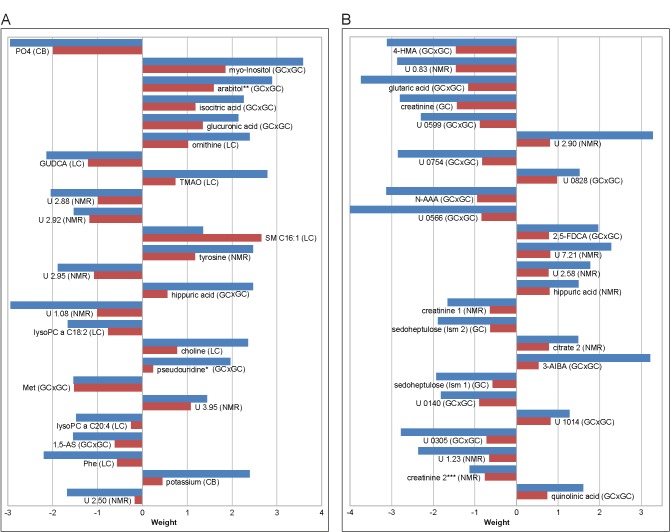
Verification
Claims the paper makes
The claims and statistics of this paper haven’t been checked yet.
Run the check — free, no account needed. It reads the open-access text and checks the sources it cites.
Claims other papers make about this one
Each is checked against this paper’s own text: does it say what the citing paper says it does?
In the citing paper
“State-of-the-art mass spectrometry and NMR methods can identify hundreds to thousands of metabolites in human plasma, and multiple studies have attempted to understand how they interact with ageing113–116.”
From Measuring biological age using omics data (2022) · cites this paper as [113]
In the citing paper
“Furthermore, metabolomic clocks have demonstrated lower age prediction accuracy than other omics data types despite training on extremely large sample sizes, and effect sizes for ageing traits have been modest113,116–121.”
From Measuring biological age using omics data (2022) · cites this paper as [113]
Self-check
Percentages, sums and reported differences re-computed from the paper’s own numbers.
The self-check needs the paper’s full text.
Citations
Cites
The Human Serum Metabolome (HUSERMET) Consortium, Dunn, W. B., Broadhurst, D., Begley, P., Zelena, E., Francis-McIntyre, S., Anderson, N., Brown, M., Knowles, J. D., Halsall, A., et al. (2011) · Nature Protocols · doi:10.1038/nprot.2011.335 · Cited by 3,294
Lipid extraction by methyl-tert-butyl ether for high-throughput lipidomics
Matyash, V., Liebisch, G., Kurzchalia, T. V., Shevchenko, A., & Schwudke, D. (2008) · Journal of Lipid Research · doi:10.1194/jlr.d700041-jlr200 · Cited by 2,633
Thévenot, E., Roux, A., Xu, Y., Ezan, É., & Junot, C. (2015) · Journal of Proteome Research · doi:10.1021/acs.jproteome.5b00354 · Cited by 1,802
Bouatra, S., Aziat, F., Mandal, R., Guo, A. C., Wilson, M. R., Knox, C., Bjorndahl, T. C., Krishnamurthy, R., Saleem, F., Liu, P., et al. (2013) · PLoS ONE · doi:10.1371/journal.pone.0073076 · Cited by 1,530
Analysis of the Adult Human Plasma Metabolome
Lawton, K. A., Berger, A., Mitchell, M., Milgram, K. E., Evans, A. M., Guo, L., Hanson, R. W., Kalhan, S. C., Ryals, J. A., & Milburn, M. V. (2008) · Pharmacogenomics · doi:10.2217/14622416.9.4.383 · Cited by 490
Slupsky, C. M., Rankin, K. N., Wagner, J., Fu, H., Chang, D., Weljie, A. M., Saude, E. J., Lix, B., Adamko, D. J., Shah, S. L., et al. (2007) · Analytical Chemistry · doi:10.1021/ac0708588 · Cited by 410
Discovery of Sexual Dimorphisms in Metabolic and Genetic Biomarkers
Mittelstraß, K., Ried, J. S., Yu, Z., Krumsiek, J., Gieger, C., Prehn, C. P., Roemisch‐Margl, W., Polonikov, A., Peters, A., Theis, F. J., et al. (2011) · PLoS Genetics · doi:10.1371/journal.pgen.1002215 · Cited by 385
Individual variability in human blood metabolites identifies age-related differences
Chaleckis, R., Murakami, I., Takada, J., Kondoh, H., & Yanagida, M. (2016) · Proceedings of the National Academy of Sciences · doi:10.1073/pnas.1603023113 · Cited by 373
Schmidt, J. A., Rinaldi, S., Scalbert, A., Ferrari, P., Achaintre, D., Gunter, M. J., Appleby, P. N., Key, T. J., & Travis, R. C. (2016) · European Journal of Clinical Nutrition · doi:10.1038/ejcn.2015.144 · Cited by 349
Human serum metabolic profiles are age dependent
Yu, Z., Zhai, G., Singmann, P., He, Y., Xu, T., Prehn, C., Römisch‐Margl, W., Lattka, E., Gieger, C., Soranzo, N., et al. (2012) · Aging Cell · doi:10.1111/j.1474-9726.2012.00865.x · Cited by 340
Cited by
Sorted by citations
Measuring biological age using omics data
Rutledge, J., Oh, H., & Wyss-Coray, T. (2022) · Nature Reviews Genetics · doi:10.1038/s41576-022-00511-7 · Cited by 570
Bao, H., Cao, J., Chen, M., Min, C., Chen, W., Chen, X., Chen, Y., Chen, Y., Chen, Y., Chen, Z., et al. (2023) · Science China Life Sciences · doi:10.1007/s11427-023-2305-0 · Cited by 402
Tryptophan Metabolism in Inflammaging: From Biomarker to Therapeutic Target
Sorgdrager, F. J. H., Naudé, P. J. W., Kema, I. P., Nollen, E. A. A., & Deyn, P. P. D. (2019) · Frontiers in Immunology · doi:10.3389/fimmu.2019.02565 · Cited by 381
Nutrimetabolomics: An Integrative Action for Metabolomic Analyses in Human Nutritional Studies
Ulaszewska, M., Weinert, C. H., Trimigno, A., Portmann, R., Andrés‐Lacueva, C., Badertscher, R., Brennan, L., Brunius, C. F., Bub, A., Capozzi, F., et al. (2018) · Molecular Nutrition & Food Research · doi:10.1002/mnfr.201800384 · Cited by 251
Self-citationDeterminants of accelerated metabolomic and epigenetic aging in a UK cohort
Robinson, O., Chadeau Hyam, M., Karaman, I., Climaco Pinto, R., Ala-Korpela, M., Handakas, E., Fiorito, G., Gao, H., Heard, A., Jarvelin, M., et al. (2020) · Aging Cell · doi:10.1111/acel.13149 · Cited by 205
Longitudinal plasma metabolomics of aging and sex
Darst, B. F., Koscik, R. L., Hogan, K. J., Johnson, S. C., & Engelman, C. D. (2019) · Aging · doi:10.18632/aging.101837 · Cited by 198
The metabolomics of human aging: Advances, challenges, and opportunities
Panyard, D. J., Yu, B., & Snyder, M. P. (2022) · Science Advances · doi:10.1126/sciadv.add6155 · Cited by 159
Sex differences in the human metabolome
Costanzo, M., Caterino, M., Sotgiu, G., Ruoppolo, M., Franconi, F., & Campesi, I. (2022) · Biology of Sex Differences · doi:10.1186/s13293-022-00440-4 · Cited by 148
Advances in the application of comprehensive two-dimensional gas chromatography in metabolomics
Keppler, E. A. H., Jenkins, C. L., Davis, T. J., & Bean, H. D. (2018) · TrAC Trends in Analytical Chemistry · doi:10.1016/j.trac.2018.10.015 · Cited by 132
Emerging Insights into the Metabolic Alterations in Aging Using Metabolomics
Srivastava, S. (2019) · Metabolites · doi:10.3390/metabo9120301 · Cited by 124
Krüger, R., Merz, B., Rist, M. J., Ferrario, P. G., Bub, A., Kulling, S. E., & Watzl, B. (2017) · Molecular Nutrition & Food Research · doi:10.1002/mnfr.201700363 · Cited by 114
Self-citationvan den Akker, E. B., Trompet, S., Barkey Wolf, J. J. H., Beekman, M., Suchiman, H. E. D., Deelen, J., Asselbergs, F. W., Boersma, E., Cats, D., Elders, P. M., et al. (2020) · Circulation: Genomic and Precision Medicine · doi:10.1161/circgen.119.002610 · Cited by 109
Lehallier, B., Shokhirev, M. N., Wyss‐Coray, T., & Johnson, A. A. (2020) · Aging Cell · doi:10.1111/acel.13256 · Cited by 106
Soukup, S. T., Merz, B., Bub, A., Hoffmann, I., Watzl, B., Steinberg, P., & Kulling, S. E. (2020) · Archives of Toxicology · doi:10.1007/s00204-020-02704-7 · Cited by 96
Self-citationFranconi, F., Campesi, I., Colombo, D., & Antonini, P. (2019) · Cells · doi:10.3390/cells8050476 · Cited by 96
Paepe, E. D., Meulebroek, L. V., Rombouts, C., Huysman, S., Verplanken, K., Lapauw, B., Wauters, J., Hemeryck, L., & Vanhaecke, L. (2018) · Analytica Chimica Acta · doi:10.1016/j.aca.2018.06.065 · Cited by 95
Decoding aging clocks: New insights from metabolomics
Huang, H., Chen, Y., Xu, W., Cao, L., Qian, K., Bischof, E. Y., Kennedy, B. K., & Pu, J. (2024) · Cell Metabolism · doi:10.1016/j.cmet.2024.11.007 · Cited by 93
Targeting metabolic pathways for extension of lifespan and healthspan across multiple species
Parkhitko, A. A., Filine, E., Mohr, S. E., Moskalev, A., & Perrimon, N. (2020) · Ageing Research Reviews · doi:10.1016/j.arr.2020.101188 · Cited by 91
Doshi, B., Athans, S. R., & Woloszynska‐Read, A. (2023) · Oncogenesis · doi:10.1038/s41389-023-00489-9 · Cited by 88
Haines, N. R., Manoharan, N., Olson, J. L., D’Alessandro, A., & Reisz, J. A. (2018) · Journal of Proteome Research · doi:10.1021/acs.jproteome.8b00169 · Cited by 86
Age and Sex Effects on Plasma Metabolite Association Networks in Healthy Subjects
Vignoli, A., Tenori, L., Luchinat, C., & Saccenti, E. (2017) · Journal of Proteome Research · doi:10.1021/acs.jproteome.7b00404 · Cited by 89
Metabolomics Signatures of Aging: Recent Advances
Adav, S. S., & Wang, Y. (2021) · Aging and Disease · doi:10.14336/ad.2020.0909 · Cited by 95
Semba, R. D. (2020) · Advances in Nutrition · doi:10.1093/advances/nmaa024 · Cited by 78
Jin, H., Zhu, B., Liu, X., Jin, J., & Zou, H. (2019) · Journal of Pharmaceutical and Biomedical Analysis · doi:10.1016/j.jpba.2019.06.013 · Cited by 73
Honma, A., Revell, V. L., Gunn, P. J., Davies, S. K., Middleton, B., Raynaud, F. I., & Skene, D. J. (2019) · European Journal of Neuroscience · doi:10.1111/ejn.14411 · Cited by 75
Plasma metabolomic profiling of amino acids and polar lipids in Iranian obese adults
Bagheri, M., Djazayery, A., Farzadfar, F., Qi, L., Yekaninejad, M. S., Aslibekyan, S. W., Chamari, M., Hassani, H., Koletzko, B. V., & Uhl, O. (2019) · Lipids in Health and Disease · doi:10.1186/s12944-019-1037-0 · Cited by 71
Hippuric acid: Could became a barometer for frailty and geriatric syndromes?
Simone, G. D., Balducci, C., Forloni, G., Pastorelli, R., & Brunelli, L. (2021) · Ageing Research Reviews · doi:10.1016/j.arr.2021.101466 · Cited by 68
Biomarkers of ageing: Current state‐of‐art, challenges, and opportunities
Chen, R., Wang, Y., Zhang, S., Bulloch, G., Zhang, J., Liao, H., Shang, X., Clark, M., Peng, Q., Ge, Z., et al. (2023) · MedComm – Future Medicine · doi:10.1002/mef2.50 · Cited by 63
Lipidomes in health and disease: Analytical strategies and considerations
Wei, F., Lamichhane, S., Orešič, M., & Hyötyläinen, T. (2019) · TrAC Trends in Analytical Chemistry · doi:10.1016/j.trac.2019.115664 · Cited by 61
Hosseinkhani, S., Arjmand, B., Dilmaghani‐Marand, A., Fateh, S. M., Dehghanbanadaki, H., Najjar, N., Alavi-Moghadam, S., Ghodssi-Ghassemabadi, R., Nasli‐Esfahani, E., Farzadfar, F., et al. (2022) · Scientific Reports · doi:10.1038/s41598-022-11970-7 · Cited by 65
Mitchell, S. L., Uppal, K., Williamson, S. M., Liu, K., Burgess, L. G., Tran, V., Umfress, A. C., Jarrell, K. L., Bailey, J. N. C., Agarwal, A., et al. (2018) · Investigative Ophthalmology & Visual Science · doi:10.1167/iovs.18-25137 · Cited by 54
Jhanji, M., Rao, C. N., Massey, J. C., Hope, M. C., Zhou, X., Keene, C. D., Ma, T., Wyatt, M. D., Stewart, J. A., & Sajish, M. (2022) · Nature Communications · doi:10.1038/s41467-022-30785-8 · Cited by 55
Targeted metabolomic profiling in rat tissues reveals sex differences
Ruoppolo, M., Caterino, M., Albano, L., Pecce, R., Girolamo, M. G. D., Crisci, D., Costanzo, M., Milella, L., Franconi, F., & Campesi, I. (2018) · Scientific Reports · doi:10.1038/s41598-018-22869-7 · Cited by 50
Global metabolic profiling to model biological processes of aging in twins
Bunning, B., Contrepois, K., Lee‐McMullen, B., Dhondalay, G. K., Zhang, W., Tupa, D., Raeber, O., Desai, M., Nadeau, K. C., Snyder, M. P., et al. (2019) · Aging Cell · doi:10.1111/acel.13073 · Cited by 52
Brennan, L., & Gibbons, H. (2019) · Proceedings of The Nutrition Society · doi:10.1017/s002966511900106x · Cited by 50
Burton, K. J., Krüger, R., Scherz, V., Münger, L. H., Picone, G., Vionnet, N., Bertelli, C., Greub, G., Capozzi, F., & Vergères, G. (2020) · Nutrients · doi:10.3390/nu12010234 · Cited by 48
Self-citationInfluence of Sex on Urinary Organic Acids: A Cross-Sectional Study in Children
Caterino, M., Ruoppolo, M., Villani, G. R. D., Marchese, E., Costanzo, M., Sotgiu, G., Dore, S., Franconi, F., & Campesi, I. (2020) · International Journal of Molecular Sciences · doi:10.3390/ijms21020582 · Cited by 45
A Metabolomic Aging Clock Using Human Cerebrospinal Fluid
Hwangbo, N., Zhang, X., Raftery, D., Gu, H., Hu, S., Montine, T. J., Quinn, J. F., Chung, K. A., Hiller, A., Wang, D., et al. (2021) · The Journals of Gerontology Series A · doi:10.1093/gerona/glab212 · Cited by 49
Wanichthanarak, K., Jeamsripong, S., Pornputtapong, N., & Khoomrung, S. (2019) · Computational and Structural Biotechnology Journal · doi:10.1016/j.csbj.2019.04.009 · Cited by 42
Circulating metabolites in progression to islet autoimmunity and type 1 diabetes
Lamichhane, S., Kemppainen, E., Trôst, K., Siljander, H., Hyöty, H., Ilonen, J., Toppari, J., Veijola, R., Hyötyläinen, T., Knip, M., et al. (2019) · Diabetologia · doi:10.1007/s00125-019-04980-0 · Cited by 42
Xie, K., Qin, Q., Long, Z., Yang, Y., Peng, C., Xi, C., Li, L., Wu, Z., Daria, V., Zhao, Y., et al. (2021) · Frontiers in Cell and Developmental Biology · doi:10.3389/fcell.2021.602887 · Cited by 41
Berezhnoy, G., Laske, C., & Trautwein, C. (2023) · Frontiers in Aging Neuroscience · doi:10.3389/fnagi.2023.1219718 · Cited by 41
Sex-associated differences in baseline urinary metabolites of healthy adults
Fan, S., Yeon, A., Shahid, M., Anger, J. T., EILBER, K. S., Fiehn, O., & Kim, J. (2018) · Scientific Reports · doi:10.1038/s41598-018-29592-3 · Cited by 39
Lassen, J. K., Wang, T., Nielsen, K. L., Hasselstrøm, J. B., Johannsen, M., & Villesen, P. (2023) · Aging Cell · doi:10.1111/acel.13813 · Cited by 40
Hernández, P., Bradford, J. C., Brahmachary, P. P., Ulman, S. M., Robinson, J. L., June, R. K., & Cucchiarini, M. (2024) · Osteoarthritis and Cartilage · doi:10.1016/j.joca.2024.04.015 · Cited by 41
Personalized nutrition and healthy aging
Ordovás, J. M., & Berciano, S. (2020) · Nutrition Reviews · doi:10.1093/nutrit/nuaa102 · Cited by 45
Kynurenine Pathway Metabolites in the Blood and Cerebrospinal Fluid Are Associated with Human Aging
Solvang, S.-E. H., Hodge, A. M., Watne, L. O., Cabral-Marques, O., Nordrehaug, J. E., Giles, G. G., Dugué, P., Nygard, O. K., Ueland, P. M., McCann, A., et al. (2022) · Oxidative Medicine and Cellular Longevity · doi:10.1155/2022/5019752 · Cited by 38
The Aging Process: A Metabolomics Perspective
Castro, A., Signini, É. D. F., de Oliveira, J. M., Leal, M. C. B. D. M., Rehder‐Santos, P., Millan-Mattos, J. C., Minatel, V., Pantoni, C. B. F., Oliveira, R. V., Catai, A. M., et al. (2022) · Molecules · doi:10.3390/molecules27248656 · Cited by 38
Emwas, A.-H. M., Zacharias, H. U., Alborghetti, M. R., Gowda, G. A. N., Raftery, D., McKay, R. T., Chang, C., Saccenti, E., Gronwald, W., Schuchardt, S., et al. (2025) · Metabolomics · doi:10.1007/s11306-025-02259-7 · Cited by 42
Hernandes, V. V., Đorđević, N., Hantikainen, E. M., Sigurdsson, B. B., Smarason, S., García-Larsen, V., Gögele, M., Caprioli, G., Bozzolan, I., Pramstaller, P. P., et al. (2022) · Metabolites · doi:10.3390/metabo12030205 · Cited by 33
Simonetti, G., Mengucci, C., Padella, A., Fonzi, E., Picone, G., Delpino, C., Nanni, J., Tommaso, R. D., Franchini, E., Papayannidis, C., et al. (2021) · Leukemia · doi:10.1038/s41375-021-01318-x · Cited by 40
Age-specific urinary metabolite signatures and functions in patients with major depressive disorder
Chen, J., Xie, J., Li, W., Bai, S., Wang, W., Zheng, P., & Xie, P. (2019) · Aging · doi:10.18632/aging.102133 · Cited by 35
Metabolic Impairment in Coronary Artery Disease: Elevated Serum Acylcarnitines Under the Spotlights
Gander, J., Carrard, J., Gallart‐Ayala, H., Borreggine, R., Teav, T., Infanger, D., Colledge, F., Streese, L., Wagner, J., Klenk, C., et al. (2021) · Frontiers in Cardiovascular Medicine · doi:10.3389/fcvm.2021.792350 · Cited by 36
Jahagirdar, S., & Saccenti, E. (2020) · Metabolites · doi:10.3390/metabo10040171 · Cited by 32
Metabolomics in Radiation Biodosimetry: Current Approaches and Advances
Satyamitra, M. M., Cassatt, D. R., Hollingsworth, B. A., Price, P. W., Rios, C. I., Taliaferro, L. P., Winters, T. A., & DiCarlo, A. L. (2020) · Metabolites · doi:10.3390/metabo10080328 · Cited by 33
Eguchi, A., Nomiyama, K., Sakurai, K., Trang, P. T. K., Viet, P. H., Takahashi, S. I., Iwata, H., Tanabe, S., Todaka, E., & Mori, C. (2018) · Environmental Pollution · doi:10.1016/j.envpol.2018.06.071 · Cited by 32
Malik, M., Demetrowitsch, T. J., Schwarz, K., & Kunze, T. (2024) · Communications Biology · doi:10.1038/s42003-024-05943-x · Cited by 29
Effects of Different Pollens on Primary Metabolism and Lignin Biosynthesis in Pear
Li, S., Su, X., Abdullah, M., Sun, Y., Li, G., Cheng, X. R., Lin, Y., Cai, Y., & Jin, Q. (2018) · International Journal of Molecular Sciences · doi:10.3390/ijms19082273 · Cited by 30
Kim, Y. H., Shim, H. S., Kim, K. H., Lee, J.-H., Chung, B. C., Kowall, N. W., Ryu, H., & Lee, J. (2019) · Experimental Neurobiology · doi:10.5607/en.2019.28.3.376 · Cited by 28
Metabolic View on Human Healthspan: A Lipidome-Wide Association Study
Carrard, J., Gallart‐Ayala, H., Infanger, D., Teav, T., Wagner, J., Knaier, R., Colledge, F., Streese, L., Königstein, K., Hinrichs, T., et al. (2021) · Metabolites · doi:10.3390/metabo11050287 · Cited by 28
Validation and Application of Biocrates AbsoluteIDQ® p180 Targeted Metabolomics Kit Using Human Milk
Hampel, D., Shahab‐Ferdows, S., Hossain, M., Islam, M. M., Ahmed, T., & Allen, L. H. (2019) · Nutrients · doi:10.3390/nu11081733 · Cited by 30
Gonzales, G. B., & Saeger, S. D. (2018) · Scientific Reports · doi:10.1038/s41598-018-21851-7 · Cited by 27
Devi, S., Nongkhlaw, B., Limesh, M., Pasanna, R. M., Thomas, T. S., Kuriyan, R., Kurpad, A. V., & Mukhopadhyay, A. (2019) · Scientific Reports · doi:10.1038/s41598-019-54584-2 · Cited by 27
Utilization of Host and Microbiome Features in Determination of Biological Aging
Ratiner, K., Abdeen, S. K., Goldenberg, K., & Elinav, E. (2022) · Microorganisms · doi:10.3390/microorganisms10030668 · Cited by 27
Metabolomics Distinguishes DOCK8 Deficiency from Atopic Dermatitis: Towards a Biomarker Discovery
Jacob, M., Gu, X., Luo, X. F., Al‐Mousa, H., Arnaout, R., Al‐Saud, B., Lopata, A. L., Li, L., Dasouki, M., & Rahman, A. M. A. (2019) · Metabolites · doi:10.3390/metabo9110274 · Cited by 27
Andraos, S., Lange, K., Clifford, S. A., Jones, B., Thorstensen, E. B., Kerr, J. A., Wake, M. A., Saffery, R., Burgner, D. P., & O'Sullivan, J. M. (2020) · Current Developments in Nutrition · doi:10.1093/cdn/nzaa103 · Cited by 29
Metabolomics of Cerebrospinal Fluid from Healthy Subjects Reveal Metabolites Associated with Ageing
Carlsson, H., Rollborn, N., Herman, S., Freyhult, E., Svenningsson, A., Burman, J., & Kultima, K. (2021) · Metabolites · doi:10.3390/metabo11020126 · Cited by 27
Tian, X., Liu, X., Wang, Y. Q., Liu, Y., Ma, J., Sun, H., Li, J., Tang, X., Guo, Z., Sun, W., et al. (2022) · Frontiers in Psychiatry · doi:10.3389/fpsyt.2022.819498 · Cited by 26
The Urinary Metabolome of Healthy Newborns
López‐Hernández, Y., Oropeza-Valdez, J. J., Blanco-Sandate, J. O., Oostdam, A. S. H.-V., Zheng, J., Guo, A. C., Lima‐Rogel, V., Rajabzadeh, R., Salgado‐Bustamante, M., López, J. A., et al. (2020) · Metabolites · doi:10.3390/metabo10040165 · Cited by 26
An epidemiological introduction to human metabolomic investigations
Joshi, A. D., Rahnavard, A., Kachroo, P., Mendez, K. M., Lawrence, W. R., Julián‐Serrano, S., Hua, X., Fuller, H., Sinnott-Armstrong, N., Tabung, F. K., et al. (2023) · Trends in Endocrinology and Metabolism · doi:10.1016/j.tem.2023.06.006 · Cited by 26
Relation of the kynurenine pathway with normal age: A systematic review
Bakker, L., Choe, K., Eussen, S. J. P. M., Ramakers, I. H. G. B., van den Hove, D., Kenis, G., Rutten, B. P. F., Verhey, F. R. J., & Köhler, S. (2023) · Mechanisms of Ageing and Development · doi:10.1016/j.mad.2023.111890 · Cited by 27
Thongprayoon, C., Vučković, I., Vaughan, L. E., Macura, S. I., Larson, N. B., D’Costa, M. R., Lieske, J. C., Rule, A. D., & Đenić, A. (2022) · Journal of the American Society of Nephrology · doi:10.1681/asn.2022040416 · Cited by 24
Integrative Multi-omics Analysis of Childhood Aggressive Behavior
Hagenbeek, F. A., van Dongen, J., Pool, R., Roetman, P. J., Harms, A. C., Hottenga, J., Kluft, C., Colins, O. F., van Beijsterveldt, C. E. M., Fanos, V., et al. (2022) · Behavior Genetics · doi:10.1007/s10519-022-10126-7 · Cited by 26
Seo, S.-H., Na, C.-S., Park, S.-E., Kim, E.-J., Kim, W.-S., Park, C., Oh, S., You, Y., Lee, M., Cho, K., et al. (2023) · Gut Microbes · doi:10.1080/19490976.2023.2226915 · Cited by 25
Kistner, S., Rist, M. J., Krüger, R., Döring, M., Schlechtweg, S., & Bub, A. (2019) · Metabolites · doi:10.3390/metabo9070137 · Cited by 24
Self-citation1H-NMR metabolomics-based surrogates to impute common clinical risk factors and endpoints
Bizzarri, D., Reinders, M. J. T., Beekman, M., Slagboom, P. E., Bbmri-Nl, & van den Akker, E. B. (2021) · EBioMedicine · doi:10.1016/j.ebiom.2021.103764 · Cited by 21
Belugina, R., Karpushchenko, E., Sleptsov, A., Протощак, В. В., Legin, A. V., & Kirsanov, D. O. (2021) · Talanta · doi:10.1016/j.talanta.2021.122696 · Cited by 23
New insights into healthy ageing, inflammageing and frailty using metabolomics
Abdullah, G. A., Akpan, A., Phelan, M. M., & Wright, H. L. (2024) · Frontiers in Aging · doi:10.3389/fragi.2024.1426436 · Cited by 22
Watanabe, K., Iida, M., Harada, S., Kato, S., Kuwabara, K., Kurihara, A., Takeuchi, A., Sugiyama, D., Okamura, T., Suzuki, A., et al. (2021) · Maturitas · doi:10.1016/j.maturitas.2021.10.004 · Cited by 22
Aging markers in human urine: A comprehensive, non‐targeted LC‐MS study
Teruya, T., Goga, H., & Yanagida, M. (2020) · FASEB BioAdvances · doi:10.1096/fba.2020-00047 · Cited by 21
Serum Metabolomic Profiling in Aging Mice Using Liquid Chromatography—Mass Spectrometry
Yue, T., Tan, H., Shi, Y., Xu, M., Luo, S., Weng, J., & Xu, S. (2022) · Biomolecules · doi:10.3390/biom12111594 · Cited by 22
Yusri, K., Kumar, S., Fong, S., Gruber, J., & Sorrentino, V. (2024) · International Journal of Molecular Sciences · doi:10.3390/ijms25126793 · Cited by 23
The complex human urinary sugar profile: determinants revealed in the cross-sectional KarMeN study
Mack, C. I., Weinert, C. H., Egert, B., Ferrario, P. G., Bub, A., Hoffmann, I., Watzl, B., Daniel, H., & Kulling, S. E. (2018) · American Journal of Clinical Nutrition · doi:10.1093/ajcn/nqy131 · Cited by 21
Self-citationKistner, S., Rist, M. J., Döring, M., Dörr, C., Neumann, R., Härtel, S., & Bub, A. (2020) · Metabolites · doi:10.3390/metabo10050212 · Cited by 21
Self-citationSorgdrager, F. J. H., van der Ley, C. P., van Faassen, M. H. J. R., Calus, E., Nollen, E. A. A., Kema, I. P., Dam, D. V., & Deyn, P. D. (2020) · International Journal of Tryptophan Research · doi:10.1177/1178646920972657 · Cited by 19
Metabolic footprint of aging and obesity in red blood cells
Domingo-Ortí, I., Lamas‐Domingo, R., Ciudin, A., Hernández, C., Herance, J. R., Palomino‐Schätzlein, M., & Pineda‐Lucena, A. (2021) · Aging · doi:10.18632/aging.202693 · Cited by 22
Associations of the Lipidome with Ageing, Cognitive Decline and Exercise Behaviours
Kadyrov, M., Whiley, L., Brown, B. M., Erickson, K. I., & Holmes, E. C. (2022) · Metabolites · doi:10.3390/metabo12090822 · Cited by 25
Implications of metabolism on multi‐systems healthy aging across the lifespan
Yao, S., Colangelo, L. A., Perry, A., Marron, M. M., Yaffe, K. S., Sedaghat, S., Lima, J. A. C., Tian, Q., Clish, C. B., Newman, A. B., et al. (2024) · Aging Cell · doi:10.1111/acel.14090 · Cited by 19
Chen, D., Chan, W., Zhao, S., Li, L., & Li, L. (2022) · Analytical Chemistry · doi:10.1021/acs.analchem.2c01816 · Cited by 19
Couch, C. A., Ament, Z., Patki, A., Kijpaisalratana, N., Bhave, V. M., Jones, A. C., Armstrong, N. D., Cushman, M., Kimberly, W. T., & Irvin, M. R. (2024) · Journal of the American Heart Association · doi:10.1161/jaha.123.032643 · Cited by 17
The Impact of Exercise on Telomere Length, DNA Methylation and Metabolic Footprints
Haupt, S., Niedrist, T., Sourij, H., Schwarzinger, S., & Moser, O. (2022) · Cells · doi:10.3390/cells11010153 · Cited by 21
The Immune System and Cellular Senescence: A Complex Interplay in Aging and Disease
Ayoub, M., Jaoude, C. A., Ayoub, M., Hamadé, A., & Rima, M. (2025) · Immunology · doi:10.1111/imm.70036 · Cited by 25
Circulating metabolite signatures indicate differential gut-liver crosstalk in lean and obese MASLD
Haag, M., Winter, S., Kemas, A. M., Tevini, J., Feldman, A., Eder, S. K., Felder, T. K., Datz, C., Paulweber, B., Liebisch, G., et al. (2025) · JCI Insight · doi:10.1172/jci.insight.180943 · Cited by 21
Evaluation of Single Sample Network Inference Methods for Metabolomics-Based Systems Medicine
Jahagirdar, S., & Saccenti, E. (2020) · Journal of Proteome Research · doi:10.1021/acs.jproteome.0c00696 · Cited by 17
Ageing and cancer: a research gap to fill
Solary, É., Abou‐Zeid, N., & Calvo, F. M. (2022) · Molecular Oncology · doi:10.1002/1878-0261.13222 · Cited by 18
Lamichhane, S., Sen, P., Dickens, A. M., Kråkström, M., Ilonen, J., Lempainen, J., Hyöty, H., Lahesmaa, R., Veijola, R., Toppari, J., et al. (2023) · Frontiers in Endocrinology · doi:10.3389/fendo.2023.1211015 · Cited by 17
Bongaerts, M., Bonte, R., Demirdas, S., Jacobs, E. H., Oussoren, E., van der Ploeg, A., Wagenmakers, M. A. E. M., Hofstra, R. M. W., Blom, H. J., Reinders, M. J. T., et al. (2020) · Metabolites · doi:10.3390/metabo11010008 · Cited by 17
Ishibashi, Y., Harada, S., Takeuchi, A., Iida, M., Kurihara, A., Kato, S., Kuwabara, K., Hirata, A., Shibuki, T., Okamura, T., et al. (2021) · Scientific Reports · doi:10.1038/s41598-021-86600-9 · Cited by 17
Pei, L., Fukutani, K. F., Tibúrcio, R., Rupert, A. W., Dahlstrom, E. W., Galindo, F., Laidlaw, E., Lisco, A., Manion, M. M., Andrade, B. B., et al. (2021) · Frontiers in Immunology · doi:10.3389/fimmu.2021.693074 · Cited by 19
Metabolic drift in the aging nervous system is reflected in human cerebrospinal fluid
Peters, K., Herman, S., Khoonsari, P. E., Burman, J., Neumann, S., & Kultima, K. (2021) · Scientific Reports · doi:10.1038/s41598-021-97491-1 · Cited by 16
Metadata
- Authors
- Rist, M. J., Roth, A., Frommherz, L., Weinert, C. H., Krüger, R., Merz, B., Bunzel, D., Mack, C., Egert, B., Bub, A., Görling, B., Tzvetkova, P., Luy, B., Hoffmann, I., Kulling, S. E., & Watzl, B.
- Affiliations
- Max Rubner Institut (DE)
- Karlsruhe Institute of Technology (DE)
- Corresponding author
- Rist, Manuela J.
- ORCID
- Venue
- PLOS ONE
- Publisher
- Public Library of Science (PLoS)
- Published
- 2017-08-16
- Volume
- 12
- Issue
- 8
- Pages
- e0183228
- ISSN
- 1932-6203 (ISSN-L)
- PMC
- PMC5558977
- OpenAlex
- W2749646273
- Cited by
- 202
- References
- 69
- Citations by year
- 2026: 13 · 2025: 20 · 2024: 22 · 2023: 25 · 2022: 25 · 2021: 26 · 2020: 31 · 2019: 24 · 2018: 14 · 2017: 2
- FWCI
- 7.93
- Type
- journal article
- Language
- en
- Open access
- gold
- doi.org
- Licence
- Locations
- PLoS ONE (publishedVersion, cc-by)
- PubMed Central (publishedVersion, cc-by)
- Repository KITopen (Karlsruhe Institute of Technology) (publishedVersion, cc-by)
- PubMed (publishedVersion)
- RePEc: Research Papers in Economics (submittedVersion)
- DOAJ (DOAJ: Directory of Open Access Journals) (submittedVersion, cc-by-sa)
- Figshare (submittedVersion, cc-by)
- OpenAgrar (submittedVersion, cc-by)
- KITopen (cc-by)
- Funders
- German Federal Ministry of Food and Agriculture (BMEL)
- Topics
- Life Sciences › Biochemistry, Genetics and Molecular Biology › Molecular Biology › Metabolomics and Mass Spectrometry Studies
- Physical Sciences › Environmental Science › Health, Toxicology and Mutagenesis › Health, Environment, Cognitive Aging
- Physical Sciences › Engineering › Biomedical Engineering › Advanced Chemical Sensor Technologies
- Keywords
- sex prediction, age prediction, plasma metabolites, urinary metabolites, sex differences, menopause, creatinine, branched-chain amino acids, sarcosine, choline, sedoheptulose, metabolic signatures, healthy adults
- MeSH terms
- Adolescent, Adult, Age Factors, Aged, Aged, 80 and over, Choline, Chromatography, Liquid, Cross-Sectional Studies, Female, Heptoses, Humans, Male, Gas Chromatography-Mass Spectrometry, Middle Aged, Magnetic Resonance Spectroscopy, Sex Factors, Metabolomics, Metabolome, Young Adult
About these checks
Registry, retraction, Cites and statistics results are computed, not judged, with one exception: a printed reference that no index lists is read once by a model before it counts as a citation error. Claims are extracted by a model and kept only when their quote appears verbatim in the text; each cited source is then checked, with a model’s help, for whether it says what the claim relies on. Those verdicts can be wrong — read the claim’s quote and the cited source before relying on one.
Statistics and arithmetic are recomputed, not judged.
Confidence bands are shown only for fields calibrated on our annotated test set. None is calibrated yet, so no band is shown.
What counts as a claim ›How we measure confidence ›How we check this ›
Are you an author, or do you see a problem with this page? Request a review
