

The DOI matches its Crossref record; 48 of the 48 references it cites were found in a registry or an index.
Hypoxia and hypoxia-inducible factor (HIF) downregulate antigen-presenting MHC class I molecules limiting tumor cell recognition by T cells
Open accessAbstract
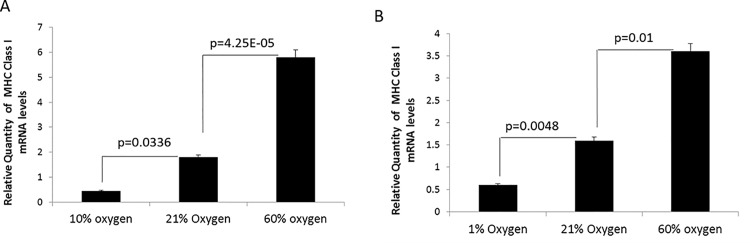
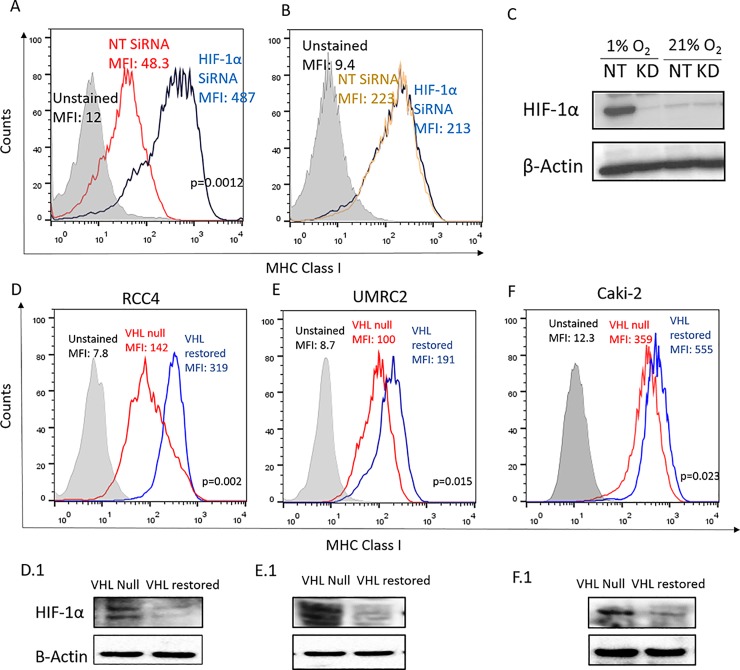
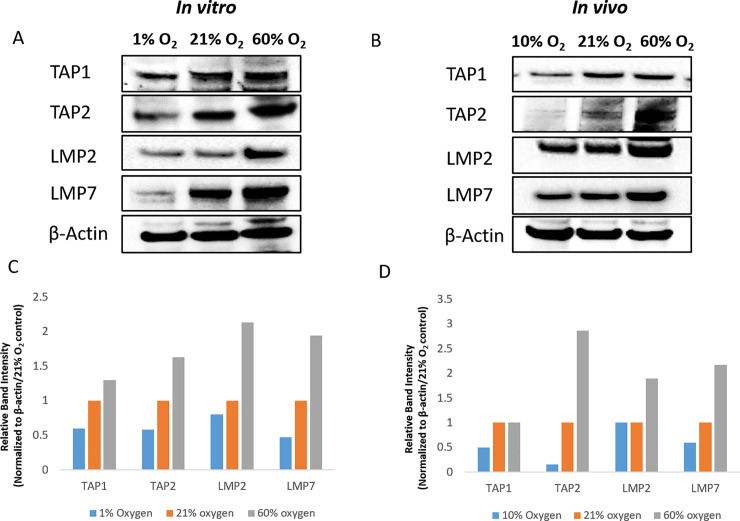
Human cancers are known to downregulate Major Histocompatibility Complex (MHC) class I expression thereby escaping recognition and rejection by anti-tumor T cells. Here we report that oxygen tension in the tumor microenvironment (TME) serves as an extrinsic cue that regulates antigen presentation by MHC class I molecules. In support of this view, hypoxia is shown to negatively regulate MHC expression in a HIF-dependent manner as evidenced by (i) lower MHC expression in the hypoxic TME in vivo and in hypoxic 3-dimensional (3D) but not 2-dimensional (2D) tumor cell cultures in vitro; (ii) decreased MHC in human renal cell carcinomas with constitutive expression of HIF due to genetic loss of von Hippel-Lindau (VHL) function as compared with isogenically paired cells with restored VHL function, and iii) increased MHC in tumor cells with siRNA-mediated knockdown of HIF. In addition, hypoxia downregulated antigen presenting proteins like TAP 1/2 and LMP7 that are known to have a dominant role in surface display of peptide-MHC complexes. Corroborating oxygen-dependent regulation of MHC antigen presentation, hyperoxia (60% oxygen) transcriptionally upregulated MHC expression and increased levels of TAP2, LMP2 and 7. In conclusion, this study reveals a novel mechanism by which intra-tumoral hypoxia and HIF can potentiate immune escape. It also suggests the use of hyperoxia to improve tumor cell-based cancer vaccines and for mining novel immune epitopes. Furthermore, this study highlights the advantage of 3D cell cultures in reproducing hypoxia-dependent changes observed in the TME.
Overview
The claims and statistics of this paper haven’t been checked yet.
Run the check — free, no account needed. It reads the open-access text and checks the sources it cites.
Integrity signals
Registry
Cites
Statistics
Figures
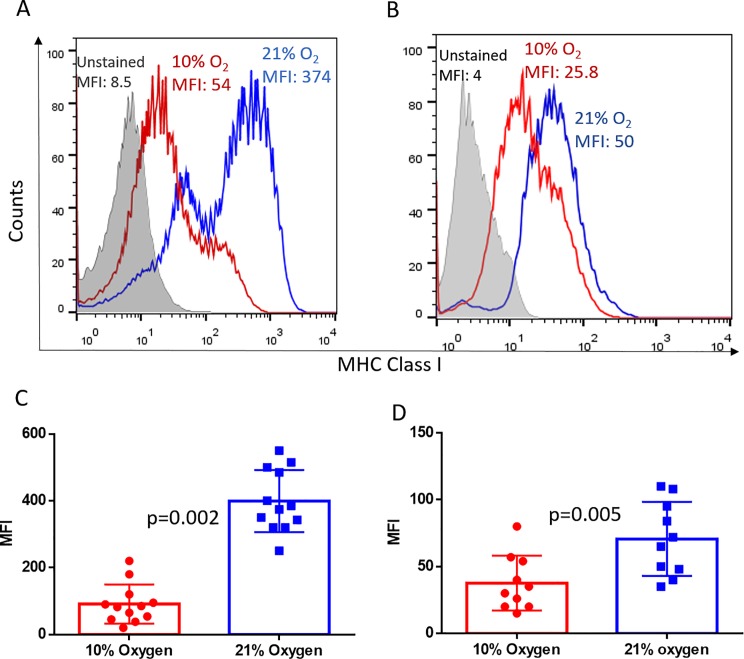
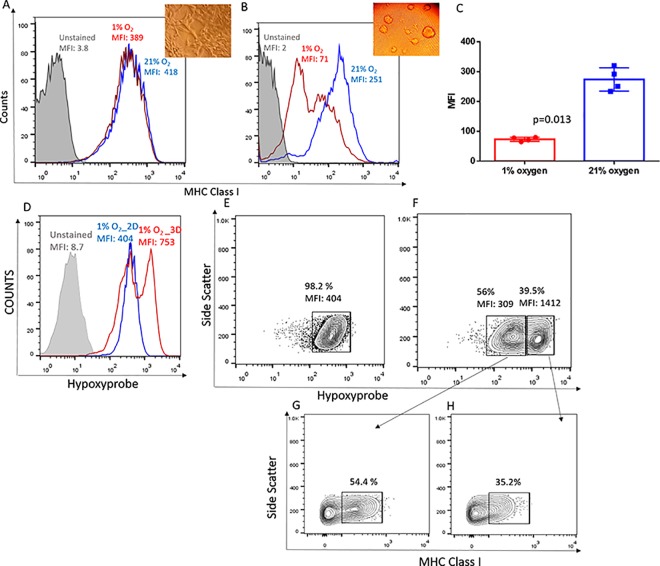
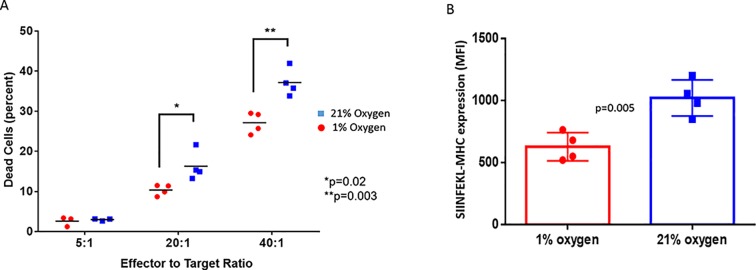
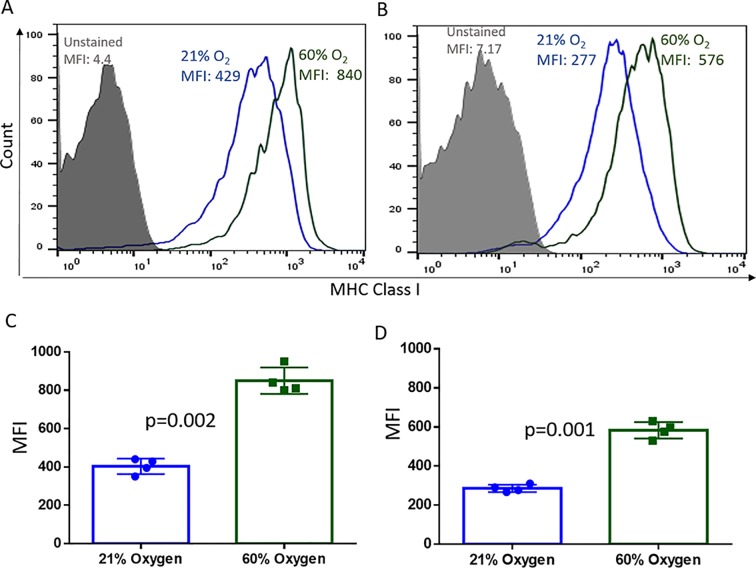
Verification
Claims the paper makes
The claims and statistics of this paper haven’t been checked yet.
Run the check — free, no account needed. It reads the open-access text and checks the sources it cites.
Claims other papers make about this one
Each is checked against this paper’s own text: does it say what the citing paper says it does?
The source backs part of the claim, not all of it — or backs it for a different population, condition or comparison.
In the citing paper
“Finally, the parallel increase in NK cells enables killing of cancer cells that have downregulated the expression of class I MHC proteins to evade killing by T cells (91, 92).”
From HIF inhibitor 32-134D eradicates murine hepatocellular carcinoma in combination with anti-PD1 therapy (2022) · cites this paper as [91]
Experimental — accuracy not yet measured
Self-check
Percentages, sums and reported differences re-computed from the paper’s own numbers.
The self-check needs the paper’s full text.
Citations
Cites
Microenvironmental regulation of tumor progression and metastasis
Quail, D. F., & Joyce, J. A. (2013) · Nature Medicine · doi:10.1038/nm.3394 · Cited by 7,994
ROS function in redox signaling and oxidative stress
Schieber, M., & Chandel, N. S. (2014) · Current Biology · doi:10.1016/j.cub.2014.03.034 · Cited by 6,931
Innate and adaptive immune cells in the tumor microenvironment
Gajewski, T. F., Schreiber, H., & Fu, Y.-X. (2013) · Nature Immunology · doi:10.1038/ni.2703 · Cited by 4,148
ROS as signalling molecules: Mechanisms that generate specificity in ROS homeostasis
D'Autréaux, B., & Toledano, M. B. (2007) · Nature Reviews Molecular Cell Biology · doi:10.1038/nrm2256 · Cited by 3,642
Reits, E. A., Hodge, J. W., Herberts, C. A., Groothuis, T. A., Chakraborty, M., K.Wansley, E., Camphausen, K., Luiten, R. M., de Ru, A. H., Neijssen, J., et al. (2006) · The Journal of Experimental Medicine · doi:10.1084/jem.20052494 · Cited by 1,737
HIF-1 mediates metabolic responses to intratumoral hypoxia and oncogenic mutations
Semenza, G. L. (2013) · Journal of Clinical Investigation · doi:10.1172/jci67230 · Cited by 1,335
Cancer exome analysis reveals a T-cell-dependent mechanism of cancer immunoediting
Matsushita, H., Vesely, M. D., Koboldt, D. C., Rickert, C. G., Uppaluri, R., Magrini, V. J., Arthur, C. D., White, J. M., Chen, Y.-S., Shea, L. K., et al. (2012) · Nature · doi:10.1038/nature10755 · Cited by 1,285
Smyth, M. J., Dunn, G. P., & Schreiber, R. D. (2006) · Advances in immunology · doi:10.1016/s0065-2776(06)90001-7 · Cited by 919
The von Hippel–Lindau tumour suppressor protein: O2 sensing and cancer
Kaelin, W. G. (2008) · Nature reviews. Cancer · doi:10.1038/nrc2502 · Cited by 754
Purinergic Signaling during Inflammation
Eltzschig, H. K., Sitkovsky, M. V., & Robson, S. C. (2012) · New England Journal of Medicine · doi:10.1056/nejmra1205750 · Cited by 739
Self-citationTumour suppression by the human von Hippel-Lindau gene product
Iliopoulos, O., Kibel, A. S., Gray, S. G., & Kaelin, W. G. (1995) · Nature Medicine · doi:10.1038/nm0895-822 · Cited by 710
Purinergic Signaling during Inflammation
Eltzschig, H. K., Mv, S., & Robson, S. C. (2013) · New England Journal of Medicine · doi:10.1056/nejmc1300259 · Cited by 609
Immunological mechanisms of the antitumor effects of supplemental oxygenation
Hatfield, S. M., Kjaergaard, J., Lukashev, D., Schreiber, T. H., Belikoff, B., Abbott, R., Sethumadhavan, S., Philbrook, P., Ko, K., Cannici, R., et al. (2015) · Science Translational Medicine · doi:10.1126/scitranslmed.aaa1260 · Cited by 600
Self-citationMole, D. R., Blancher, C., Copley, R. R., Pollard, P. J., Gleadle, J. M., Ragoussis, J., & Ratcliffe, P. J. (2009) · Journal of Biological Chemistry · doi:10.1074/jbc.m901790200 · Cited by 552
The determinants of tumour immunogenicity
Blankenstein, T. J. F., Coulie, P. G., Gilboa, E., & Jaffee, E. M. (2012) · Nature reviews. Cancer · doi:10.1038/nrc3246 · Cited by 454
The VHL/HIF axis in clear cell renal carcinoma
Shen, C., & Kaelin, W. G. (2012) · Seminars in Cancer Biology · doi:10.1016/j.semcancer.2012.06.001 · Cited by 408
26S proteasomes and immunoproteasomes produce mainly N‐extended versions of an antigenic peptide
Cascio, P., Hilton, C., Kisselev, A. F., Rock, K. L., & Goldberg, A. L. (2001) · The EMBO Journal · doi:10.1093/emboj/20.10.2357 · Cited by 330
The Von Hippel-Lindau Tumor Suppressor Gene and Kidney Cancer
Kaelin, W. G. (2004) · Clinical Cancer Research · doi:10.1158/1078-0432.ccr-sup-040025 · Cited by 318
Meißner, M., Reichert, T. E., Kunkel, M., Gooding, W. E., Whiteside, T. L., Ferrone, S., & Seliger, B. (2005) · Clinical Cancer Research · doi:10.1158/1078-0432.ccr-04-2146 · Cited by 263
Hatfield, S. M., Kjaergaard, J., Lukashev, D., Belikoff, B., Schreiber, T. H., Sethumadhavan, S., Abbott, R., Philbrook, P., Thayer, M., Shujia, D., et al. (2014) · Journal of Molecular Medicine · doi:10.1007/s00109-014-1189-3 · Cited by 211
Self-citationMechanisms of Hypoxia-Mediated Immune Escape in Cancer
Barsoum, I. B., Koti, M., Siemens, D. R., & Graham, C. H. (2014) · Cancer Research · doi:10.1158/0008-5472.can-14-2598 · Cited by 205
Characterization of the major histocompatibility complex class I deficiencies in B16 melanoma cells.
Seliger, B., Wollscheid, U., Momburg, F., Blankenstein, T. J. F., & Huber, C. (2001) · PubMed · Cited by 195
Transcriptional regulation of antigen presentation
van den Elsen, P. J., Holling, T. M., Kuipers, H. F., & van der Stoep, N. (2003) · Current Opinion in Immunology · doi:10.1016/j.coi.2003.11.015 · Cited by 172
Shinojima, T., Oya, M., Takayanagi, A., Mizuno, R., Shimizu, N., & Murai, M. (2006) · Carcinogenesis · doi:10.1093/carcin/bgl143 · Cited by 168
Philip, B., Ito, K., Moreno‐Sánchez, R., & Ralph, S. J. (2013) · Carcinogenesis · doi:10.1093/carcin/bgt209 · Cited by 166
Expression Regulation of Major Histocompatibility Complex Class I and Class II Encoding Genes
van den Elsen, P. J. (2011) · Frontiers in Immunology · doi:10.3389/fimmu.2011.00048 · Cited by 139
Hypoxia Increases Tumor Cell Shedding of MHC Class I Chain-Related Molecule: Role of Nitric Oxide
Siemens, D. R., Hu, N., Sheikhi, A., Chung, E., Frederiksen, L. J., Pross, H. F., & Graham, C. H. (2008) · Cancer Research · doi:10.1158/0008-5472.can-08-0054 · Cited by 138
Carretero, R., Romero, J. M., Ruiz‐Cabello, F., Maleno, I., Rodriguez, F., Camacho, F. M., Real, L. M., Garrido, F., & Cabrera, T. (2008) · Immunogenetics · doi:10.1007/s00251-008-0303-5 · Cited by 128
On the definition of a criterion of immunogenicity
Pradeu, T., & Carosella, E. D. (2006) · Proceedings of the National Academy of Sciences · doi:10.1073/pnas.0608683103 · Cited by 128
Tumour Immunogenicity, Antigen Presentation, and Immunological Barriers in Cancer Immunotherapy
Escors, D. (2014) · New Journal of Science · doi:10.1155/2014/734515 · Cited by 119
Sijts, A. J. A. M., Standera, S., Toes, R. E. M., Ruppert, T., Beekman, N. J. C. M., van Veelen, P. A., OSSENDORP, F. A., Melief, C. J. M., & Kloetzel, P. M. (2000) · The Journal of Immunology · doi:10.4049/jimmunol.164.9.4500 · Cited by 116
The hypoxic tumor microenvironment and gene expression
Leo, C., Giaccia, A. J., & Denko, N. C. (2004) · Seminars in Radiation Oncology · doi:10.1016/j.semradonc.2004.04.007 · Cited by 106
Grandis, J. R., Falkner, D. H., Melhem, M. F., Gooding, W. E., Drenning, S. D., & Morel, P. A. (2000) · PubMed · Cited by 99
In vivo T Cell Activation in Lymphoid Tissues is Inhibited in the Oxygen-Poor Microenvironment
Ohta, A., Diwanji, R., Kini, R., Subramanian, M., Ohta, A., & Sitkovsky, M. V. (2011) · Frontiers in Immunology · doi:10.3389/fimmu.2011.00027 · Cited by 87
Self-citationHypoxic repression of STAT1 and its downstream genes by a pVHL/HIF-1 target DEC1/STRA13
Ivanov, S. V., Salnikow, K., Ivanova, A. V., Bai, L., & Lerman, M. I. (2006) · Oncogene · doi:10.1038/sj.onc.1209842 · Cited by 73
Aptsiauri, N., Carretero, R., Garcia-Lora, A. M., Real, L. M., Cabrera, T., & Garrido, F. (2008) · Cancer Immunology Immunotherapy · doi:10.1007/s00262-008-0532-3 · Cited by 62
Howcroft, T. K., Raval, A., Weissman, J. D., Gégonne, A., & Singer, D. S. (2003) · Molecular and Cellular Biology · doi:10.1128/mcb.23.10.3377-3391.2003 · Cited by 40
Intracellular Rate-Limiting Steps in MHC Class I Antigen Processing
Montoya, M., & Val, M. D. (1999) · The Journal of Immunology · doi:10.4049/jimmunol.163.4.1914 · Cited by 40
Interferon regulatory factor-1 is required for interferon-γ-induced MHC class I genes in astrocytes
Jarosinski, K. W., & Massa, P. T. (2002) · Journal of Neuroimmunology · doi:10.1016/s0165-5728(01)00467-2 · Cited by 37
Schmitt, T. M., Stromnes, I. M., Chapuis, A. G., & Greenberg, P. D. (2015) · Clinical Cancer Research · doi:10.1158/1078-0432.ccr-15-0860 · Cited by 37
Page, P., DeJong, J., Bandstra, A., & Boomsma, R. A. (2014) · International Journal of Cell Biology · doi:10.1155/2014/601063 · Cited by 34
Immunotherapy eradicates metastases with reversible defects in MHC class I expression
Garrido, C., Romero, I., Berruguilla, E., Cancela, B., Algarra, I., Collado, A., Garcia-Lora, A. M., & Garrido, F. (2011) · Cancer Immunology Immunotherapy · doi:10.1007/s00262-011-1027-1 · Cited by 32
Oliveira, C. C., Querido, B. J., Sluijter, M., Derbinski, J., van der Burg, S. H., & van Hall, T. (2011) · European Journal of Immunology · doi:10.1002/eji.201141836 · Cited by 32
Perier, A., Fregni, G., Wittnebel, S., Gad, S., Allard, M., Gervois, N., Escudier, B. J., Azzarone, B. G., & Caignard, A. (2011) · Oncogene · doi:10.1038/onc.2010.638 · Cited by 31
White, C. A., Thomson, S. A., Cooper, L. T., Endert, P. V., Tampé, R., Coupar, B. E. H., Li, Q., Parsons, P. G., Moss, D. J., & Khanna, R. (1998) · International Journal of Cancer · doi:10.1002/(sici)1097-0215(19980209)75:4 · Cited by 27
Srivastava, P. K., & Duan, F. (2013) · Cancer Immunology Immunotherapy · doi:10.1007/s00262-013-1422-x · Cited by 25
Regulation of MHC Class I Expression by Foxp3 and Its Effect on Regulatory T Cell Function
Mu, J., Tai, X., Iyer, S. S., Weissman, J. D., Singer, A., & Singer, D. S. (2014) · The Journal of Immunology · doi:10.4049/jimmunol.1302847 · Cited by 18
Barbash, Z. S., Weissman, J. D., Campbell, J. A., Mu, J., & Singer, D. S. (2013) · Molecular and Cellular Biology · doi:10.1128/mcb.00553-13 · Cited by 10
Cited by
Sorted by citations
Improving cancer immunotherapy using nanomedicines: progress, opportunities and challenges
Martin, J. D., Cabral, H., Stylianopoulos, T., & Jain, R. K. (2020) · Nature Reviews Clinical Oncology · doi:10.1038/s41571-019-0308-z · Cited by 691
Therapeutic targeting of the hypoxic tumour microenvironment
Singleton, D. C., Macann, A., & Wilson, W. R. (2021) · Nature Reviews Clinical Oncology · doi:10.1038/s41571-021-00539-4 · Cited by 507
Emerging evidence for adapting radiotherapy to immunotherapy
Galluzzi, L., Aryankalayil, M. J., Coleman, C. N., & Formenti, S. C. (2023) · Nature Reviews Clinical Oncology · doi:10.1038/s41571-023-00782-x · Cited by 389
Proteomics of Melanoma Response to Immunotherapy Reveals Mitochondrial Dependence
Harel, M., Ortenberg, R., Varanasi, S. K., Mangalhara, K. C., Mardamshina, M., Markovits, E., Baruch, E. N., Tripple, V., Arama-Chayoth, M., Greenberg, E., et al. (2019) · Cell · doi:10.1016/j.cell.2019.08.012 · Cited by 328
Hypoxia-Driven Immune Escape in the Tumor Microenvironment
Vito, A., El-Sayes, N., & Mossman, K. L. (2020) · Cells · doi:10.3390/cells9040992 · Cited by 287
Metadata
- Authors
- Sethumadhavan, S., Silva, M., Philbrook, P., Nguyen, T., Hatfield, S. M., Ohta, A., & Sitkovsky, M. V.
- Affiliations
- Northeastern University (US)
- Corresponding author
- Sitkovsky, Michail V.
- ORCID
- Venue
- PLOS ONE
- Publisher
- Public Library of Science (PLoS)
- Published
- 2017-11-20
- Volume
- 12
- Issue
- 11
- Pages
- e0187314
- ISSN
- 1932-6203 (ISSN-L)
- PMC
- PMC5695785
- OpenAlex
- W2769873734
- Cited by
- 119
- References
- 48
- Citations by year
- 2026: 6 · 2025: 20 · 2024: 12 · 2023: 19 · 2022: 11 · 2021: 15 · 2020: 19 · 2019: 13 · 2018: 4
- FWCI
- 4.46
- Type
- journal article
- Language
- en
- Open access
- gold
- doi.org
- Licence
- Locations
- PLoS ONE (publishedVersion, cc-by)
- PubMed Central (publishedVersion, cc-by)
- PubMed (publishedVersion)
- DOAJ (DOAJ: Directory of Open Access Journals) (submittedVersion, cc-by-sa)
- Figshare (submittedVersion, cc-by)
- Funders
- National Institutes of Health (R01GM)
- National Cancer Institute (R01CA112561, R01CA111985)
- National Institute of General Medical Sciences (R01GM097320)
- National Center for Complementary and Integrative Health (R21AT002788)
- Topics
- Life Sciences › Immunology and Microbiology › Immunology › Immunotherapy and Immune Responses
- Life Sciences › Biochemistry, Genetics and Molecular Biology › Cancer Research › Cancer, Hypoxia, and Metabolism
- Health Sciences › Medicine › Oncology › Cancer Immunotherapy and Biomarkers
- Keywords
- tumor hypoxia, hypoxia-inducible factor, MHC class I downregulation, antigen presentation, tumor microenvironment, immune evasion, T cell recognition, VHL, LMP7, hyperoxia, renal cell carcinoma, cancer vaccines, immune epitopes
- MeSH terms
- ATP Binding Cassette Transporter, Subfamily B, Member 2, Antigen-Presenting Cells, Genes, MHC Class I, Humans, Kidney Neoplasms, Oxygen, T-Lymphocytes, Transcriptional Activation, Cell Hypoxia, Gene Expression Regulation, Neoplastic, Proteasome Endopeptidase Complex, Hypoxia-Inducible Factor 1, Von Hippel-Lindau Tumor Suppressor Protein, Tumor Microenvironment
About these checks
Registry, retraction, Cites and statistics results are computed, not judged, with one exception: a printed reference that no index lists is read once by a model before it counts as a citation error. Claims are extracted by a model and kept only when their quote appears verbatim in the text; each cited source is then checked, with a model’s help, for whether it says what the claim relies on. Those verdicts can be wrong — read the claim’s quote and the cited source before relying on one.
Statistics and arithmetic are recomputed, not judged.
Confidence bands are shown only for fields calibrated on our annotated test set. None is calibrated yet, so no band is shown.
What counts as a claim ›How we measure confidence ›How we check this ›
Are you an author, or do you see a problem with this page? Request a review
