

Mental health problems and social media exposure during COVID-19 outbreak
Open accessThe DOI matches its Crossref record; 14 of the 14 references it cites were found in a registry or an index; 10 of the 24 sources its claims cite were checked for support.
Abstract
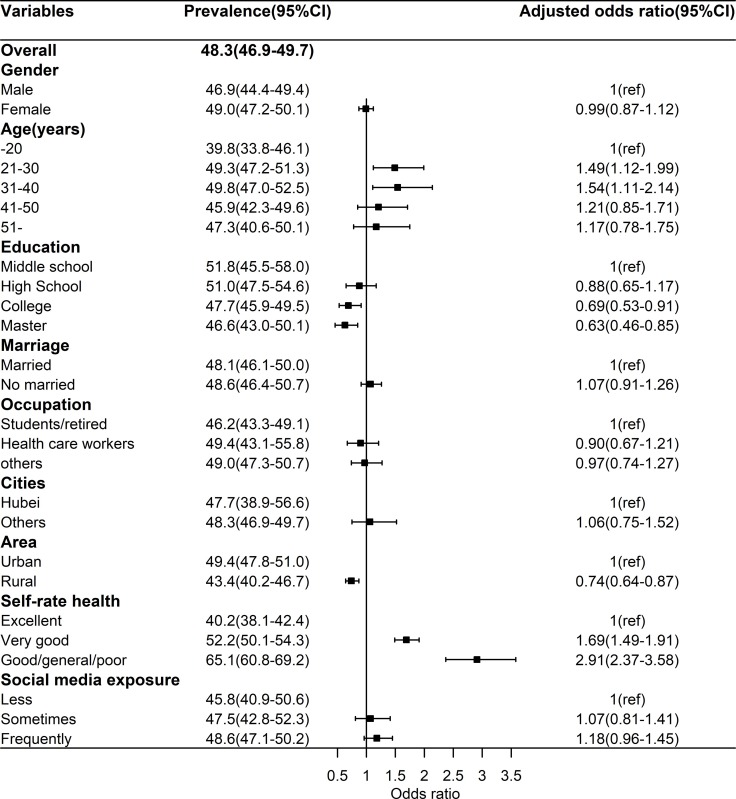
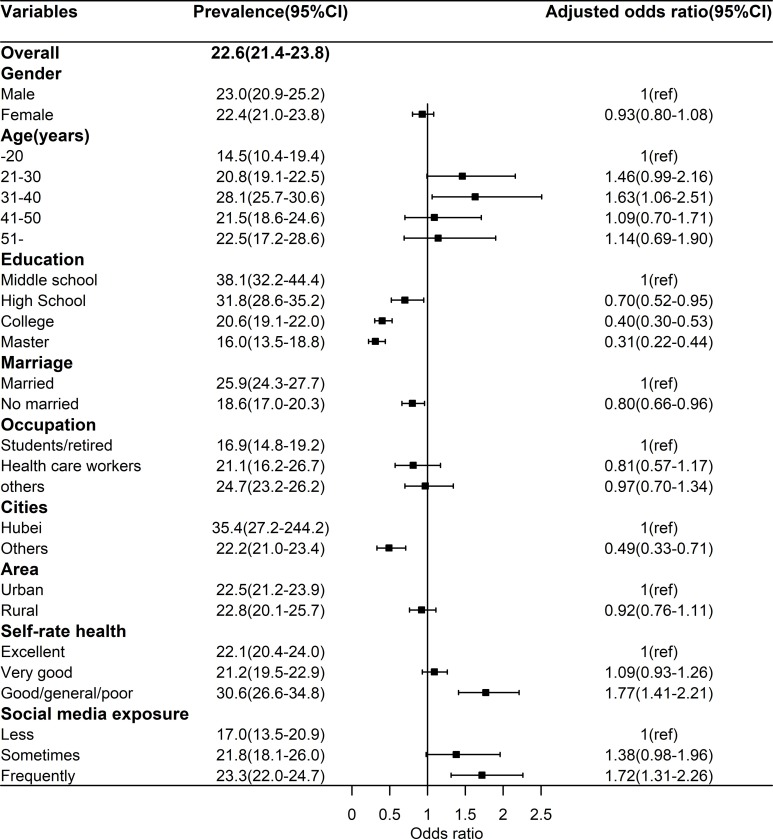
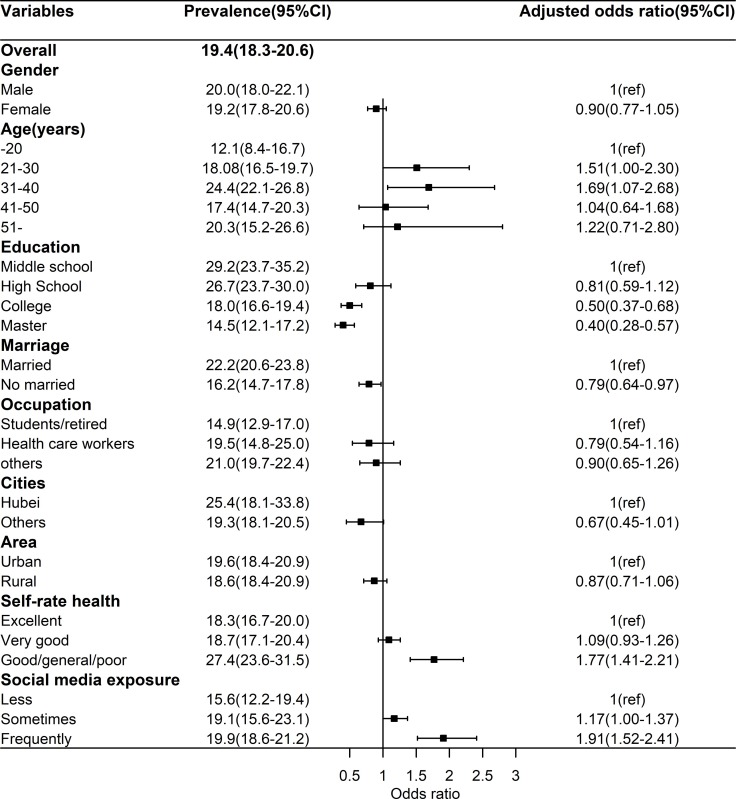
Huge citizens expose to social media during a novel coronavirus disease (COVID-19) outbroke in Wuhan, China. We assess the prevalence of mental health problems and examine their association with social media exposure. A cross-sectional study among Chinese citizens aged≥18 years old was conducted during Jan 31 to Feb 2, 2020. Online survey was used to do rapid assessment. Total of 4872 participants from 31 provinces and autonomous regions were involved in the current study. Besides demographics and social media exposure (SME), depression was assessed by The Chinese version of WHO-Five Well-Being Index (WHO-5) and anxiety was assessed by Chinese version of generalized anxiety disorder scale (GAD-7). multivariable logistic regressions were used to identify associations between social media exposure with mental health problems after controlling for covariates. The prevalence of depression, anxiety and combination of depression and anxiety (CDA) was 48.3% (95%CI: 46.9%-49.7%), 22.6% (95%CI: 21.4%-23.8%) and 19.4% (95%CI: 18.3%-20.6%) during COVID-19 outbroke in Wuhan, China. More than 80% (95%CI:80.9%-83.1%) of participants reported frequently exposed to social media. After controlling for covariates, frequently SME was positively associated with high odds of anxiety (OR = 1.72, 95%CI: 1.31-2.26) and CDA (OR = 1.91, 95%CI: 1.52-2.41) compared with less SME. Our findings show there are high prevalence of mental health problems, which positively associated with frequently SME during the COVID-19 outbreak. These findings implicated the government need pay more attention to mental health problems, especially depression and anxiety among general population and combating with "infodemic" while combating during public health emergency.
Overview
CoChat Summary
## TL;DR
This cross-sectional online survey of 4,872 Chinese adults during the COVID-19 outbreak found high prevalence of depression, anxiety, and co-occurring depression/anxiety. Frequent social media exposure was positively associated with anxiety and with the combination of depression and anxiety, but not significantly with depression alone after adjustment.
## Key findings
- Among 4,827 participants in the results, the prevalence was 48.3% for depression, 22.6% for anxiety, and 19.4% for combination of depression and anxiety (CDA).
- 82.0% of participants reported frequent social media exposure; only 8.8% reported less exposure and 9.2% reported sometimes exposure.
- After controlling for covariates, frequent SME was associated with higher odds of anxiety (OR = 1.72, 95% CI 1.31–2.26) and CDA (OR = 1.91, 95% CI 1.52–2.41) compared with less SME.
- Frequent SME was not significantly associated with depression after adjustment.
- Depression, anxiety, and CDA were all reported as much higher than the cited national sample estimates in China during the same period.
## Methods
- Design: Cross-sectional online survey conducted Jan 31 to Feb 2, 2020 during the COVID-19 outbreak.
- Sample/data: Chinese citizens aged 18 years or older recruited via the Wenjuanxing platform; 5,851 participated and 4,872 completed questionnaires from 31 provinces and autonomous regions were included.
- Measures/analysis: Depression was assessed with the WHO-5 (score <13), anxiety with the GAD-7 (score ≥10), and social media exposure was categorized as less, sometimes, or frequently. The authors used chi-square/trend tests and multivariable logistic regression adjusting for demographic and other covariates.
## Limitations
- The paper states that, because the study is cross-sectional, it is difficult to determine causal relationships between SME and mental health.
- The paper notes possible respondent bias from the online survey, including few elder citizens’ participation.
- The paper states that residual confounding from unmeasured factors cannot be excluded.
- Evident from the text: the sample was online and self-selected, so it may not be fully representative of all Chinese adults.
Model-written summary. Check it against the paper before relying on it.
Integrity signals
Registry
Cites
Statistics
Figures
Verification
Claims the paper makes
7 Valid · 1 Not valid · 6 Not checked · 13 Own results and interpretations
The cited sources support only part of this claim — read each source’s verdict below.
In the paper
“It indicated that participants from Hubei province- the infectious focus directly expose to public health emergency, and may suffer more mental health problemes[17,19].”
§ Mental health problems and social media exposure during COVID-19 outbreak > Discussion
What the sources say
- Not checked — no full text of the sourcecites [17] Xie Z, Xu J, Wu Z. Mental health problems among survivors in hard-hit areas of the 5.12 Wenchuan and 4.20 Lushan earthquakes. J Ment Health 2017; 26(1): 43– 9. 10.1080/09638237.2016.1276525 28084103 source
- Partly supportedcites [19] Mak IW, Chu CM, Pan PC, Yiu MG, Chan VL. Long-term psychiatric morbidities among SARS survivors. Gen Hosp Psychiatry 2009; 31(4): 318– 26. 10.1016/j.genhosppsych.2009.03.001 19555791 PMC7112501 sourceExperimental — accuracy not yet measured
The Introduction describes SARS survivors as direct victims of an outbreak, and the Results (Subgroup analysis of HCWs; page unavailable) report more chronic PTSD among health care workers than other survivors. This supports the general possibility of greater mental-health burden with outbreak exposure, but the paper studies SARS survivors in Hong Kong, not participants from Hubei province or a comparison based on residence in an infectious focus. (LLM, conf=0.82)
hedgedstates a possible cause- Asserted: passes — The authors put it forward as true.
- Checkable: passes — It can be checked against evidence.
- Load-bearing: passes — The paper’s conclusions depend on it.
- Based: passes — The paper gives a reason why it holds.
The cited sources that could be checked couldn’t confirm or dispute this claim.
In the paper
“Besides, many citizens expressed their negative feelings, such as fear, worry, nervous, anxiety et al. on social media, which are contagious social network[21,22].”
§ Mental health problems and social media exposure during COVID-19 outbreak > Discussion
What the sources say
- Not checked — no full text of the sourcecites [21] Kramer AD, Guillory JE, Hancock JT. Experimental evidence of massive-scale emotional contagion through social networks. Proc Natl Acad Sci U S A 2014; 111(24): 8788– 90. 10.1073/pnas.1320040111 24889601 PMC4066473 source
- Could not verifycites [22] Niederkrotenthaler T, Stack S, Till B, et al Association of Increased Youth Suicides in the United States With the Release of 13 Reasons Why. JAMA Psychiatry 2019; 76(9): 933– 40. PMC6547137 31141094 sourceExperimental — accuracy not yet measured
The Discussion and Conclusions discuss possible suicide contagion following a fictional television portrayal, using social-media activity to gauge attention to the show. They do not address whether fear, worry, anxiety, or other negative feelings expressed on social media spread through social networks; searches for negative feelings and emotional contagion found no such passage. The indexed passages provide section labels but no page numbers. (LLM, conf=0.77)
plainstates a cause- Asserted: passes — The authors put it forward as true.
- Checkable: passes — It can be checked against evidence.
- Load-bearing: passes — The paper’s conclusions depend on it.
- Based: passes — The paper gives a reason why it holds.
The sources with a verdict support this claim; the rest weren’t checked yet, have no full text we could read, or their verdicts aren’t rated yet.
In the paper
“These findings are consistent with the previous studies’ that exposing public health emergency can cause public mental health problems, such as Wenchuan and Lushan earthquakes[17], 2014 Ebola Outbreak[7,18], and SARS[19].”
§ Mental health problems and social media exposure during COVID-19 outbreak > Discussion
What the sources say
- Not checked — no full text of the sourcecites [17] Xie Z, Xu J, Wu Z. Mental health problems among survivors in hard-hit areas of the 5.12 Wenchuan and 4.20 Lushan earthquakes. J Ment Health 2017; 26(1): 43– 9. 10.1080/09638237.2016.1276525 28084103 source
- Not checked — no full text of the sourcecites [7] Shultz JM, Baingana F, Neria Y. The 2014 Ebola Outbreak and Mental Health: Current Status and Recommended Response. JAMA 2015; 313(6): 567– 8. 10.1001/jama.2014.17934 25532102 source
- Supportedcites [18] Ji D, Ji YJ, Duan XZ, et al Prevalence of psychological symptoms among Ebola survivors and healthcare workers during the 2014–2015 Ebola outbreak in Sierra Leone: a cross-sectional study. Oncotarget 2017; 8(8): 12784– 91. 10.18632/oncotarget.14498 28061463 PMC5355054 source
For the Ebola example attributed to this source, the Discussion reports pronounced psychological symptoms among Ebola survivors and Sierra Leonean healthcare workers exposed during the outbreak. The Introduction also describes public fear and panic. The earthquake and SARS examples have separate citations and are not attributed to this paper. (LLM, conf=0.90)
- Supportedcites [19] Mak IW, Chu CM, Pan PC, Yiu MG, Chan VL. Long-term psychiatric morbidities among SARS survivors. Gen Hosp Psychiatry 2009; 31(4): 318– 26. 10.1016/j.genhosppsych.2009.03.001 19555791 PMC7112501 source
The citation is attached to SARS, not to the earthquakes or Ebola outbreak. The Discussion (Clinical implications) states that SARS can cause significant, prolonged psychiatric problems, and the Discussion (Range of psychiatric disorders and functional outcome) identifies PTSD, depression, and anxiety disorders among survivors. (LLM, conf=0.90)
plainstates a cause- Asserted: passes — The authors put it forward as true.
- Checkable: passes — It can be checked against evidence.
- Load-bearing: unclear — It is unclear whether the paper’s conclusions depend on it.
- Based: passes — The paper gives a reason why it holds.
A result the paper reports from its own data — it cites no other source for it, so there is none to check. The quote shows it is in the paper.
In the paper
“higher frequency of SME was insignificantly positively associated with the adjusted odds of depression after controlling for all covariates.”
§ Mental health problems and social media exposure during COVID-19 outbreak > Results > Depression and SME
plainstates an association- Asserted: passes — The authors put it forward as true.
- Checkable: passes — It can be checked against evidence.
- Load-bearing: passes — The paper’s conclusions depend on it.
- Based: passes — The paper gives a reason why it holds.
A result the paper reports from its own data — it cites no other source for it, so there is none to check. The quote shows it is in the paper.
In the paper
“After controlling for covariates, frequently SME was positively associated with high odds of anxiety (OR = 1.72, 95%CI: 1.31–2.26) and CDA (OR = 1.91, 95%CI: 1.52–2.41) compared with less SME.”
- Also stated in: § Combination of depression and anxiety and SME · plain
“frequently SME can increase the adjusted odds (OR = 1.91, 95%CI: 1.52–2.41) of CDA compared with less SEM after controlling for all covariates.”
- Also stated in: § Discussion · plain
“frequently SME associated high odds of anxiety and CDA”
§ Mental health problems and social media exposure during COVID-19 outbreak > Abstract Huge citizens expose to social media during a novel coronavirus disease (COVID-19) outbroke in Wuhan, China. We assess the prevalence of mental health problems and examine their association with social media exposure. A cross-sectional study among Chinese citizens aged≥18 years old was conducted during Jan 31 to Feb 2, 2020. Online survey was used to do rapid assessment. Total of 4872 participants from 31 provinces and autonomous regions were involved in the current study. Besides demographics and social media exposure (SME), depression was assessed by The Chinese version of WHO-Five Well-Being Index (WHO-5) and anxiety was assessed by Chinese version of generalized anxiety disorder scale (GAD-7). multivariable logistic regressions were used to identify associations between social media exposure with mental health problems after controlling for covariates. The prevalence of depression, anxiety and combination of depression and anxiety (CDA) was 48.3% (95%CI: 46.9%-49.7%), 22.6% (95%CI: 21.4%-23.8%) and 19.4% (95%CI: 18.3%-20.6%) during COVID-19 outbroke in Wuhan, China. More than 80% (95%CI:80.9%-83.1%) of participants reported frequently exposed to social media. After controlling for covariates, frequently SME was positively associated with high odds of anxiety (OR = 1.72, 95%CI: 1.31–2.26) and CDA (OR = 1.91, 95%CI: 1.52–2.41) compared with less SME. Our findings show there are high prevalence of mental health problems, which positively associated with frequently SME during the COVID-19 outbreak. These findings implicated the government need pay more attention to mental health problems, especially depression and anxiety among general population and combating with “infodemic” while combating during public health emergency.
plainstates an associationn = 4,872- Asserted: passes — The authors put it forward as true.
- Checkable: passes — It can be checked against evidence.
- Load-bearing: passes — The paper’s conclusions depend on it.
- Based: passes — The paper gives a reason why it holds.
- Also stated in: § Combination of depression and anxiety and SME · plain
10 more claims
Create a free account to see all 27 claims and every source verdict.
- Probably not a substantial claim. 8
- It may state two separate claims as one. 4
- The quote only partly states this claim. 1
Claims other papers make about this one
Each is checked against this paper’s own text: does it say what the citing paper says it does?
The source backs part of the claim, not all of it — or backs it for a different population, condition or comparison.
In the citing paper
“In the current pandemic, the additional layer of extensive social media use and exposure to often sensationalized online news while in physical isolation may add new complexities to implementing emotional epidemiology in managing concerns, fears, and misconceptions [96,97], as these tools have been argued to bear negative effects on psychological well-being [97,98].”
From Psychosocial Effects of the COVID-19 Pandemic: Large-scale Quasi-Experimental Study on Social Media (2020) · cites this paper as [96]
Experimental — accuracy not yet measuredThe source backs part of the claim, not all of it — or backs it for a different population, condition or comparison.
In the citing paper
“Recent research has shown that, in the general public, the COVID-19 pandemic is associated with greater levels of psychological distress and a range of psychopathological problems such as depression, anxiety, and post-traumatic stress symptoms (e.g., Gao et al., 2020; Qiu et al., 2020; Wang et al., 2020).”
From Why did all the toilet paper disappear? Distinguishing between panic buying and hoarding during COVID-19 (2021) · cites this paper as Gao et al., 2020
Experimental — accuracy not yet measuredThe source backs part of the claim, not all of it — or backs it for a different population, condition or comparison.
In the citing paper
“Misleading content overload and the distortion of information affect users' stress levels and create mental health problems (Gao et al., 2020).”
From The Psycho-Emotive Effects of AI-Generated Fake News on Social Media Users (2026) · cites this paper as Gao et al., 2020
Experimental — accuracy not yet measuredThe source backs part of the claim, not all of it — or backs it for a different population, condition or comparison.
In the citing paper
“It is known that exposure to news about the process on social media also increases the levels of psychological distress and that the use of social media is higher in young people.[47]”
From Psychological Distress of Breast Cancer Survivors During the COVID-19 Pandemic and Related Factors: A Controlled Study. (2023) · cites this paper as [47]
Experimental — accuracy not yet measuredThe source backs part of the claim, not all of it — or backs it for a different population, condition or comparison.
In the citing paper
“Studies have concluded that perceived poor health status during the COVID-19 period is associated with increased anxiety levels.[47]”
From Psychological Distress of Breast Cancer Survivors During the COVID-19 Pandemic and Related Factors: A Controlled Study. (2023) · cites this paper as [47]
Experimental — accuracy not yet measured
4 more claims about this paper
Create a free account to see every claim other papers make about this one.
Self-check
Percentages, sums and reported differences re-computed from the paper’s own numbers.
Each contradiction between two passages listed here was confirmed by an independent check.
Rated major: it would touch a result — a value a result rests on, reported and recomputed p-values on opposite sides of the significance level, two passages that conflict with no sign which is right, or a cited work retracted before this paper was published.
In the paper
§ Mental health problems and social media exposure during COVID-19 outbreak > Materials and methods > Design and participants
“After removing the participants without completed questionnaires, 4872 participants from 31 provinces and autonomous regions were involved in the current study.”
§ Mental health problems and social media exposure during COVID-19 outbreak > Results > Social media exposure
“Of all 4827 participants, the mean age of was 32.3±10.0 years (ranged 18–85),”
Rated minor: it would not touch a result — a value no result rests on, a p-value that stays on the same side of the significance level, or a conflict that is clerical, resolved elsewhere in the paper, or outside its own findings.
In the paper
§ Mental health problems and social media exposure during COVID-19 outbreak > Abstract
“Total of 4872 participants from 31 provinces and autonomous regions were involved in the current study.”
§ Mental health problems and social media exposure during COVID-19 outbreak > Results > Social media exposure
“Of all 4827 participants, the mean age of was 32.3±10.0 years (ranged 18–85), the proportion of “less”, “sometimes”, and “frequently” of SME was 8.8%(95%CI:8.0%-9.6%), 9.2%(95%CI:8.4%-10.0%) and 82.0%(95%CI:80.9%-83.1%).”
Citations
Cites
A Brief Measure for Assessing Generalized Anxiety Disorder: The GAD-7
Spitzer, R. L., Kroenke, K., Williams, J. B. W., & Löwe, B. (2006) · Archives of Internal Medicine · doi:10.1001/archinte.166.10.1092 · Cited by 31,765 · cited 2×
“Anxiety was assessed by Chinese version of generalized anxiety disorder scale (GAD-7) [15, 16] , which consists 7 symptoms.”
BackgroundMethodExperimental evidence of massive-scale emotional contagion through social networks
Kramer, A. D. I., Guillory, J. E., & Hancock, J. T. (2014) · Proceedings of the National Academy of Sciences · doi:10.1073/pnas.1320040111 · Cited by 3,687 · cited 1×
“on social media, which are contagious social network[21,22].”
BackgroundPrevalence of mental disorders in China: a cross-sectional epidemiological study
Huang, Y., Wang, Y., Wang, H., Liu, Z., Yu, X., Yan, J., Yu, Y., Kou, C., Xu, X., Lu, J., et al. (2019) · The Lancet Psychiatry · doi:10.1016/s2215-0366(18)30511-x · Cited by 2,335 · cited 2×
“So, the current study aims to describes the prevalence and distribution of two major mental disorders-anxiety and depression among Chinese population [13], and examine their associations with social media exposure by rapid assessment during COVID-19 outbreak.”
BackgroundSelf-citationThe mental health of medical workers in Wuhan, China dealing with the 2019 novel coronavirus.
Kang, L., Li, Y., Hu, S., Chen, M., Yang, C., Yang, B. X., Wang, Y., Hu, J., Lai, J., Ma, X., et al. (2020) · The Lancet Psychiatry · doi:10.1016/s2215-0366(20)30047-x · Cited by 2,061 · cited 8×
“%) during COVID-19 outbroke in Wuhan, China.”
BackgroundInfluentialSelf-citation2019-nCoV epidemic: Address mental health care to empower society
Bao, Y., Sun, Y., Meng, S., Shi, J., & Lu, L. (2020) · The Lancet · doi:10.1016/s0140-6736(20)30309-3 · Cited by 2,038 · cited 11×
“%) during COVID-19 outbroke in Wuhan, China.”
BackgroundInfluentialShigemura, J., Ursano, R. J., Morganstein, J. C., Kurosawa, M., & Benedek, D. M. (2020) · Psychiatry and Clinical Neurosciences · doi:10.1111/pcn.12988 · Cited by 1,959 · cited 1×
“The outbreak of COVID-19 in China has caused mental health problems among the public in China[3] and Japan[4] and medical workers in Wuhan[5].”
BackgroundLong-term psychiatric morbidities among SARS survivors
Mak, I. W. C., Chu, C. M., Pan, P. C., Yiu, M. G. C., & Chan, V. L. (2009) · General Hospital Psychiatry · doi:10.1016/j.genhosppsych.2009.03.001 · Cited by 1,018 · cited 2×
“It indicated that participants from Hubei province- the infectious focus directly expose to public health emergency, and may suffer more mental health problemes[17,19].”
BackgroundResultThe 2014 Ebola Outbreak and Mental Health: Current Status and Recommended Response
Shultz, J. M., Baingana, F., & Neria, Y. (2015) · JAMA · doi:10.1001/jama.2014.17934 · Cited by 324
Ji, D., Ji, Y.-J., Duan, X.-Z., Li, W.-G., Sun, Z.-Q., Song, X.-A., Meng, Y.-H., Tang, H.-M., Chu, F., Niu, X.-X., et al. (2017) · Oncotarget · doi:10.18632/oncotarget.14498 · Cited by 257 · cited 1×
“These findings are consistent with the previous studies’ that exposing public health emergency can cause public mental health problems, such as Wenchuan and Lushan earthquakes[17], 2014 Ebola Outbreak[7,18], and SARS[19].”
ResultThe impact of social media on risk perceptions during the MERS outbreak in South Korea
Choi, D.-H., Yoo, W., Noh, G.-Y., & Park, K. (2017) · Computers in Human Behavior · doi:10.1016/j.chb.2017.03.004 · Cited by 246 · cited 1×
“A previous study also shown social media exposure may positively related to forming risk perceptions during the MERS outbreak in South Korea [12] .”
Result
Research works printed but not linked: 2
- Florian Roth, Brönnimann G. Focal Report 8: Risk Analysis Using the Internet for Public Risk Communication. https://www.researchgate.net/publication/256126259. (accessed Feb 12, 2020)
- Xu WF PY, Chen BQ. Assessment of Anxiety and Depression by Self-rating Scales of GAD-7 and PHQ-9 in Cardiovascular Outpatients. World Latest Medicine Information (Electronic Version), 2018, 18(16): 12– 14. (in Chinese)
Cited by
Items 2,301–2,400 of 2,694
Psychological impact of COVID-19 pandemic among students studying in private university at Chennai
Bhavya, E., & Gowsalya, K. (2022) · International Journal of Health Sciences · doi:10.53730/ijhs.v6ns1.6840
COVID-19 DÖNEMİNDE SAĞLIK YÖNETİMİ VE HALKIN DAYANIKLILIĞININ ARTIRILMASI (GÜMÜŞHANE İLİ ÖRNEĞİ)
Ulutaşdemir, N., Kulakaç, N., Uzun, S., NAZIR, E., & ÇİFTÇİ, H. (2022) · Mehmet Akif Ersoy Üniversitesi İktisadi ve İdari Bilimler Fakültesi Dergisi · doi:10.30798/makuiibf.979635
Stress among the higher secondary school students during the COVID-19 pandemic
Das, S. R., Deka, P., & Das, P. (2022) · International Journal of Health Sciences · doi:10.53730/ijhs.v6ns2.5569
Xie, T., & Yuan, Y. (2022) · SSRN Electronic Journal · doi:10.2139/ssrn.4007688
Uzşen, H., Zengin, D., Sevgili, S. A., Yılmaz, H. B., & Başbakkal, Z. (2022) · SSRN Electronic Journal · doi:10.2139/ssrn.4062743
Song, Y., Sznajder, K. K., Cui, C., Jia, Y., Yang, Y., Li, Y., & Yang, X. (2021) · doi:10.2196/preprints.27229
Self-citationBoni, L. D. (2021) · Journal of Law Public Policies and Human Sciences · doi:10.52571/jlpphs.v02.n02.pgi.35.2021
Luo, A., Peng, X., Chen, Y., Zhang, Y., Liu, F., He, H.-Y., Luo, T. L., Dai, P.-P., & Xie, W. (2020) · doi:10.2196/preprints.24094
Mass media and social media during COVID-19: A review
Shameer, S. M. (2021) · Journal of Dr. YSR University of Health Sciences. · doi:10.4103/jdrntruhs.jdrntruhs_147_20
REMOVED DUE TO POLICY VIOLATIONSPreprint
Lodder, G. M. A., van Halem, S., Bülow, A., van Scheppingen, M. A., Weller, J. A., & Reitz, A. K. (2021) · PsyArXiv (OSF Preprints) · doi:10.31234/osf.io/nf3ja
Vietnamese People’s Well-Being During the COVID-19 Pandemic: An Online SurveyPreprint
Hoang, T. D., Colebunders, R., Fodjo, J. N. S., Nguyen, N. P. T., Trung, T. Đ., & Vo, T. V. (2020) · doi:10.21203/rs.3.rs-77346/v1
Psychological effects of government measures taken to face COVID-19Preprint
Rodas, J. A., Jara-Rizzo, M. F., Greene, C. M., Moreta‐Herrera, R., & Oleas, D. (2021) · PsyArXiv (OSF Preprints) · doi:10.31234/osf.io/b8mg3
Social Stigma and Mental Health Among Overseas Chinese During the COVID-19 Pandemic (Preprint)Preprint
Gao, J., Wang, Z., Chen, H., Wang, Y., Yan, H., Chen, Y., & Xu, J. (2020) · doi:10.2196/preprints.24575
Self-citationكتاكت, ه. ب. م. (2021) · المجلة العلمية لبحوث الصحافة · doi:10.21608/sjsj.2021.221295
Wlasak, W., Zwanenburg, S. P., & Paton, C. (2022) · doi:10.2196/preprints.38500
Ahmed, M. S., Abid, R., & Ahmed, N. (2022) · PsyArXiv (OSF Preprints) · doi:10.31234/osf.io/8hvbj
Kyaw, T. M., Khiruddin, A. H. B. M. K. M., Zulkarnain, A. M. B. M. Z. M., Hamzah, T. A. B. H., & Ibrahim, A. N. B. I. (2022) · Research Square · doi:10.21203/rs.3.rs-1756497/v1
Iftikhar, F., Tayyab, M., Ahmed, T. F., & Sadiq, T. (2022) · EMJ Respiratory · doi:10.33590/emjrespir/21-00159
How Anxious are Indonesians when They Can Travel Again Soon?
Hakim, I. N., & Amory, I. D. G. R. A. (2022) · Jurnal Ilmu Sosial dan Humaniora · doi:10.23887/jish.v11i1.38971 · Cited by 1
Chilipenok, Y. Y., Gaponova, O., Сергеевна, Г. Н., et al. (2022) · Woman in Russian society · doi:10.21064/winrs.2022.2.1
Living through the COVID-19 pandemic in Mauritius: mental well-being and dependence on Facebook
Ramdawor, S., Putteeraj, M., Moty, N., & Somanah, J. (2022) · Discover Psychology · doi:10.1007/s44202-022-00044-4
Headache in Brazilian older people in the context of COVID-19 infodemic
dos Santos, C. M., Frichembruder, K., Severo, M. B., et al. (2022) · Revista Brasileira de Geriatria e Gerontologia · doi:10.1590/1981-22562021024.210240.en
The Impact of Pandemic on the Ways Children Use TechnologyPreprint
Dulkadir, R., Yaman, F., & Yaman, N. D. (2022) · SSRN Electronic Journal · doi:10.2139/ssrn.4121289
COVID -19 and Stress Management
Azraf, F., Berrada, H., Laboudi, F., & Ouanass, A. (2021) · SAS Journal of Medicine · doi:10.36347/sasjm.2021.v07i09.020
Özdemir, Ö., Sarıdoğan, G. E., Kulacaoğlu, F., Özdemir, C., Evecen, A., Sertler, İ., Sünbül, E. A., Yigit, D. K. G., Gökçe, C., & Çallı, S. Y. (2022) · Northern Clinics of Istanbul · doi:10.14744/nci.2022.89983
Bukhari, S. R., Riaz, K., Tabassum, S., & Nisar, A. (2021) · Humanities & Social Sciences Reviews · doi:10.18510/hssr.2021.93172
Impact of the Covid-19 pandemic on mental health in Brazil, an analysis by Google Trends
de Castro, M. A., Almeida, C. M. S., Franzin, H., Bigai, L. G., Júnior, L. H., & Duscable, R. Q. G. (2022) · International Journal of Health Science · doi:10.22533/at.ed.1592382214077
A infodemia de COVID-19 e suas repercussões na saúde mental de idosos no cenário mundial
Fabriz, L. A., Martins, J. G. D., Zacharias, F. C. M., Ferro, D., & Pinto, I. C. (2022) · Editora ABEn eBooks · doi:10.51234/aben.22.e10.c16
A Prática Baseada Em Evidências Em Tempos De Infodemia: Reflexões E Indicativos
Püschel, V. A. D. A., de Oliveira, L. B., Carbogim, F. D. C., & Fhon, J. R. S. (2022) · Editora ABEn eBooks · doi:10.51234/aben.22.e10.c07 · Cited by 5
The Effects and Treatment of Mental Health by COVID-19
Zuo, J. (2022) · Advances in Social Science, Education and Humanities Research/Advances in social science, education and humanities research · doi:10.2991/assehr.k.220704.077
Psychiatry Update 2021 Spring Abstract Compendium
(2022) · Annals of Clinical Psychiatry · doi:10.12788/acp.0059
The Mental Health Of Turkish Society During The COVID-19 Pandemic
Kaçer, İ., Çağlar, A., Öztürk, B., & Hacımustafaoğlu, M. (2022) · Journal of Contemporary Medicine · doi:10.16899/jcm.1057608
Ardlina, N., Hanindriyo, L., & Priyono, B. (2022) · ODONTO Dental Journal · doi:10.30659/odj.9.1.138-147 · Cited by 2
Socjalizacja ekonomiczna dzieci w zdalnym nauczaniu w ramach projektu Oczy Szeroko Otwarte
Bajak, M., & Manczak, I. (2022) · Przegląd Prawno-Ekonomiczny · doi:10.31743/ppe.13470
Bothma, N., Kroon, R., Mathieu, S. L., Farrell, L. J., & Fontenelle, L. F. (2022) · Research Square · doi:10.21203/rs.3.rs-1865955/v1
Mental health promotion in children and the elderly during Covid-19
Shelimaki, S. T., & Kordan, M. R. (2022) · International Journal of Health Sciences · doi:10.53730/ijhs.v6ns7.11571
GAMBARAN KONDISI PSIKOLOGIS SISWA SMA PADA MASA PANDEMI COVID-19 DI DENPASAR BARAT
Devi, N. M. R. S., & Sari, K. A. K. (2022) · ARCHIVE OF COMMUNITY HEALTH · doi:10.24843/ach.2022.v09.i02.p10
Technology Addiction in Nursing Students in the Covid-19 Period
Körpe, G., & Küçük, L. (2021) · DergiPark (Istanbul University)
Tuğçenur, A. V. C. I., & Arpacıoğlu, S. (2022) · Anadolu Kliniği Tıp Bilimleri Dergisi · doi:10.21673/anadoluklin.1038361 · Cited by 2
Puri, S. (2022) · Journal of Medical Science And clinical Research · doi:10.18535/jmscr/v10i4.15
Ayaz, E. Y., & Dinçer, B. (2022) · Srpski arhiv za celokupno lekarstvo · doi:10.2298/sarh210624053y
Refuge Vol. 38 no. 1 (2022) - Special Issue: Refuge in the Time of Pandemic (print copy)
Editors (2022) · Refuge Canada s Journal on Refuge · doi:10.25071/1920-7336.41043
Impact of COVID-19 Pandemic on the Mental Health of the Younger Generation: A Review
Kakodkar, P. V., Singh, R. N., & Agarwal, S. (2022) · Journal of Medical Evidence · doi:10.4103/jme.jme_109_21
Predictors of anxiety and depression in Korean adults during COVID-19 pandemic
Sohn, J. N. (2022) · The Journal of Korean Academic Society of Nursing Education · doi:10.5977/jkasne.2022.28.3.328 · Cited by 1
A qualitative study of COVID-19 home quarantine in public
Ghobadi, A., Esmaeili, M., & Shahmari, M. (2022) · Journal of Nursing and Midwifery Sciences · doi:10.4103/jnms.jnms_98_21
Safitri, R. G., & Qonitatin, N. (2021) · Jurnal EMPATI · doi:10.14710/empati.2021.32602
Zhang, H., Wang, Z., & Tang, D. (2022) · Research Square · doi:10.21203/rs.3.rs-1826136/v1
Dwivedi, A., Malik, S., & Rani, S. (2022) · Sleep Science · doi:10.5935/1984-0063.20220060
COVID-19 pandemic, family climate, and social media addiction among pharmacy faculty students
Ozden-Yıldırım, M. S. (2022) · International Journal of Emerging Trends in Health Sciences · doi:10.18844/ijeths.v6i1.7640
Peran Social Media Exposure terhadap Kecemasan Mahasiswa Tingkat Akhir selama Pandemi Covid-19
Yusuf, R. S. (2022) · Buletin Riset Psikologi dan Kesehatan Mental (BRPKM) · doi:10.20473/brpkm.v2i1.36533 · Cited by 2
The Relationship of Covıd-19 Related Anxiety with Positive and Negative Emotions of Individuals
Özdoğan, B., Sayar, G. H., & Ünübol, H. (2022) · doi:10.35365/ctjpp.22.3.03 · Cited by 1
Psychological Impacts of the COVID-19 Pandemic
Powell, S. K., Saali, A., Serafini, R. A., O’Shea, C. P., Frere, J. J., & Katz, C. L. (2022) · Springer eBooks · doi:10.1007/978-3-031-08045-6_10 · Cited by 2
Anticipated Long-Term Neurobehavioral Outcomes Following COVID-19
Bailey, E. K., Kamper, J. E., & Gius, B. K. (2022) · Springer eBooks · doi:10.1007/978-3-031-08045-6_30
Gladson, S. R. A., Srinivasan, S., Ravi, G., et al. (2022) · World Journal of Dentistry · doi:10.5005/jp-journals-10015-2122
The Complex Role of Anxiety in Public Engagement
Rocque, R., Cameron, L., & Mauro, I. J. (2022) · doi:10.1093/oso/9780197622674.003.0009
Khan, M. N. A., Maroof, M., Preeti, et al. (2022) · Research Square · doi:10.21203/rs.3.rs-2209151/v1
Nie, Y., Ma, Y., Zhang, C., Gao, Y., Li, J., & Zheng, X. (2022) · Research Square · doi:10.21203/rs.3.rs-2314913/v1
Bokhari, N. M., Zafar, M., Arif, M. M., Azhar, A., Kanwal, S., & Mouinuddin, K. G. (2022) · Medical Science · doi:10.54905/disssi/v26i129/ms443e2475
Stress, Genetics and Mood: Impact of COVID-19 on a College Freshman SamplePreprint
Turner, C. A., Khalil, H., Murphy-Weinberg, V., Hagenauer, M. H., Gates, L., Tang, Y., Weinberg, L. S., Grysko, R., Floran-Garduno, L., Dokas, T., et al. (2022) · medRxiv · doi:10.1101/2022.12.13.22283409
A COVID–19-pandémia, halálszorongás és lelki egészség a terrormenedzsment-elmélet szemszögéből
Vona, G. (2022) · Mentálhigiéné és Pszichoszomatika · doi:10.1556/0406.23.2022.016 · Cited by 1
Golga, D. N., Kassaw, E. S., & Midakso, B. (2022) · Education and human development · doi:10.5772/intechopen.108505
Tosun, B., Ünal, N., GÜNGÖR, S., et al. (2022) · Central European Journal of Nursing and Midwifery · doi:10.15452/cejnm.2022.13.0017
The Effects of the COVID-19 Pandemic on the Parenting of Infants: A Couples Study
Anikiej‐Wiczenbach, P., & Kaźmierczak, M. (2022) · International Journal of Environmental Research and Public Health · doi:10.3390/ijerph192416883 · Cited by 1
The Effects Of Covid-19 Quarantine On Young Adults In San Francisco Bay Area
Alaçam, B. (2022) · SOCIAL MENTALITY AND RESEARCHER THINKERS JOURNAL · doi:10.29228/smryj.66078
de Azevedo, D. Q. (2022) · Editora Conhecimento Livre eBooks · doi:10.37423/221006661
Pereira, N. S., Santos, F. S., Neto, M. S., Santos, R. M. D. M. S., de Sousa, C. S. R., Barros, E. A., Santos, L. F. S., Pascoal, L. M., Costa, A. C. P. D. J., & Rolim, I. L. T. P. (2022) · Editora Conhecimento Livre eBooks · doi:10.37423/221006771
Cao, J., & Guo, X. (2022) · Future of business and finance · doi:10.1007/978-981-19-4230-3_3 · Cited by 1
Multidisciplinaridade em saúde: a necessidade da integração
(2022) · Editora Conhecimento Livre eBooks · doi:10.37423/2022.edcl605
Martin, I. S., Cunningham, P. D., Zyromski, B., Nuñez, M., Romero, S. D., & Choi, J. (2022) · Professional School Counseling · doi:10.1177/2156759x221137312 · Cited by 5
Effect of COVID -19 Pandemic on Mental Health of Students: A Contemporary Literature Review
Gyawali, K. (2020) · Education and Development · doi:10.3126/ed.v30i1.49404
Dellalibera-Joviliano, R., Tincani, N. N., Silveira, E. B., Pedra, Y. F., Martins, W. L. P., Pereira, C. D. B., & Dellalibera, E. (2022) · Editora Conhecimento Livre eBooks · doi:10.37423/221006766
Prevenção primária de delirium em idosos sob terapia intensiva: uma revisão integrativa
Afonso, T. D. O., dos Santos, S. L., Melo, R. P. R., Cronemberger, V. D. S., Moreira, K. F. G., Fonseca, S. D. S. S., Barroso, D. C. B. D. S. B., da Silva, A. B., & Alves, W. D. C. (2022) · Editora Conhecimento Livre eBooks · doi:10.37423/221006668
Adão, M. B., Dellalibera, E., & Dellalibera-Joviliano, R. (2022) · Editora Conhecimento Livre eBooks · doi:10.37423/221006758
Sarmento, M. D. D. S., Benassule, S. C., FERREIRA, A. C. S., NEVES, S. K. D. S., & SANTOS, A. C. D. (2022) · Editora Conhecimento Livre eBooks · doi:10.37423/221106802
CLASSE III DE ANGLE EM TRATAMENTO COM APARELHO ORTOPÉDICO FUNCIONAL DOS MAXILARES RFIII
Guimarães, R. D. C. S., da Silva, S. M. S., Silva, H. M. D. C., de Abreu, A. M. A., da Silva, E. M., da Silva, L. A., de Melo, E. N., da Silva, M. L., de Araújo, N. G., & da Cruz, M. C. C. (2022) · Editora Conhecimento Livre eBooks · doi:10.37423/221106801
Soares, J. D. J. P., de Macêdo, M. R. C., Marinho, S. C., & Ferreira, J. G. C. F. (2022) · Editora Conhecimento Livre eBooks · doi:10.37423/221006647
Lima, T. D. S., & Machado, D. (2022) · Editora Conhecimento Livre eBooks · doi:10.37423/221106800
A INCIDÊNCIA DA SÍFILIS CONGÊNITA NO PERÍODO DE 2015-2016 NO BRASIL
ARAUJO, R. H. N., Oliveira, L. S. D. S., Marques, D. D. V., Espíndola, N. S., & Zorilla, V. P. (2022) · Editora Conhecimento Livre eBooks · doi:10.37423/221006751
ORTOPEDIA FUNCIONAL DOS MAXILARES COMO TRATAMENTO DA MORDIDA CRUZADA UNILATERAL EM CRIANÇA
Guimarães, R. D. C. S., da Silva, S. M. S., da Silva, L. N., Albuquerque, R. M. B. N. D. Ó., Miranda, J. C. D. N., de Araújo, C. A. S., Teles, L. X. D. S., Doblin, M. D. C. D. S., Moreira, J. F. M. D. A., & Bezerra, P. V. S. (2022) · Editora Conhecimento Livre eBooks · doi:10.37423/221006796
A importancia de ações coletivas de saúde na prevenção e diagnóstico precoce do cancer de boca
Silva, D. R. D. S., Pereira, F. M., dos Santos, R. S., & de Araújo, M. D. O. (2022) · Editora Conhecimento Livre eBooks · doi:10.37423/221006768
Factors Affecting Physical Activity Level in Healthy Individuals During the COVID-19 Pandemic Period
Akbaş, A. N., & Suner-Keklik, S. (2022) · Hacettepe Üniversitesi Sağlık Bilimleri Fakültesi Dergisi · doi:10.21020/husbfd.1075181
Alodhayani, A. A., Almutairi, K. M., Altasan, Z., Alkhaldi, G., & Aljasser, A. I. (2022) · Journal of King Saud University - Science · doi:10.1016/j.jksus.2022.102529 · Cited by 2
Accelerated media and mental health: A descriptive study among Saudi general population
Heji, E. S., Alzahrani, A. A., Alasmari, I. H., Aljefri, S. H., Qanadily, H. M. S., Alkhalaf, H. H., & AlAteeq, D. A. (2022) · Medical Science · doi:10.54905/disssi/v26i130/ms560e2570
Savić, N., Kocic, S. S., Bogdanović-Vasić, S., Pantelic, V., Mladenović, M., Kaljević, J., Lukić, I., Đorđević, S., & Milošević, N. (2022) · Glasnik javnog zdravlja · doi:10.5937/serbjph2204394s
Impacto de la epidemia de Covid-19 en la salud mental: panorama internacional y nacional
Cabrales-Arreola, J. L., Morales-Carmona, E., & Hernández–Girón, C. (2023) · Psicología y Salud · doi:10.25009/pys.v32i3.2797 · Cited by 3
Well-Being of Greek University Students During the COVID-19 Pandemic
Karakasidou, E., Raftopoulou, G., Papadimitriou, A., Pezirkianidis, C., & Stalikas, A. (2022) · Cross-cultural advancements in positive psychology · doi:10.1007/978-3-031-22288-7_6
Surya, B., Balaann, K., Ramachandran, U., Anantha Eashwar, V. M., Charulatha, R., & Pragadeesh, P. (2023) · National Journal of Community Medicine · doi:10.55489/njcm.140120232594
Dechent, F., Mayer, G., Hummel, S., Moritz, S., Benoy, C., de Almeida, R. M. R., Losada, R., Ribeiro, Ó. M., Frisardi, V., Tarricone, I., et al. (2023) · doi:10.2196/preprints.46109
Weaponising Social Media, Mental Health and Surveillance Capitalism Another Side of the Coin
Chaudhary, A. A., Ayub, U., Riaz, A., Mirza, F., & Latif, S. (2022) · Journal of history and social sciences · doi:10.46422/jhss.v13i2.226 · Cited by 2
Zhu, K., Zhang, X., Xiong, Y., Zhuang, Z., Dai, M., Zhang, Y., & Liu, Z. (2023) · Research Square · doi:10.21203/rs.3.rs-2533462/v1
Explaining the Legitimacy of the Chinese Dynamite Zero-COVID Policy based on Weber and Foucault
Dong, X. (2023) · Journal of Education Humanities and Social Sciences · doi:10.54097/ehss.v8i.4298
Impact of Covid-19 Lock down on Stress & Life Satisfaction of Diabetic People in Central Kerala
Varghese, S. M. (2022) · Diabetes & Obesity International Journal · doi:10.23880/doij-16000256 · Cited by 1
Depression, Anxiety, Stress, and Coping Mechanism During Covid-19 Pandemic
Popovici, A.-F., & Vaida, S. R. (2022) · Studia Universitatis Babeș-Bolyai Psychologia-Paedagogia · doi:10.24193/subbpsyped.2022.2.03
Islam, M. R., Monaf, J., & Islam, A. O. (2023) · Wiley eBooks · doi:10.1002/9781119183785.refs
Zunehmende Nutzung sozialer Medien während einer Pandemie
Kothambikar, A. (2022) · Springer eBooks · doi:10.1007/978-3-658-39489-9_1
ERGENLERDE GÖRÜLEN COVİD-19 FOBİSİNİN ANKSİYETE DÜZEYLERİNE ETKİSİ
GÜLEY, B. (2023) · Premium e-Journal of Social Science · doi:10.37242/pejoss.4358
Metadata
- Authors
- Gao, J., Zheng, P., Jia, Y., Chen, H., Mao, Y., Chen, S., Wang, Y., Fu, H., & Dai, J.
- Affiliations
- Fudan University (CN)
- Corresponding author
- Dai, Junming
- ORCID
- Venue
- PLoS ONE
- Publisher
- Public Library of Science (PLoS)
- Published
- 2020-04-16
- Volume
- 15
- Issue
- 4
- Pages
- e0231924
- ISSN
- 1932-6203 (ISSN-L)
- PMC
- PMC7162477
- OpenAlex
- W3011720761
- Semantic Scholar
- e6352661273fcd34e64ee831c1033952c75f1bee
- Cited by
- 2,830
- References
- 14
- Citations by year
- 2026: 55 · 2025: 140 · 2024: 211 · 2023: 392 · 2022: 599 · 2021: 965 · 2020: 463
- FWCI
- 241.45
- Type
- journal article
- Language
- en
- Open access
- gold
- doi.org
- Licence
- Locations
- PLoS ONE (publishedVersion, cc-by)
- SSRN Electronic Journal (publishedVersion)
- PubMed Central (publishedVersion, cc-by)
- PubMed (publishedVersion)
- RePEc: Research Papers in Economics (submittedVersion, cc-by)
- DOAJ (DOAJ: Directory of Open Access Journals) (submittedVersion, cc-by-sa)
- Figshare (submittedVersion, cc-by)
- Funders
- National key R&D Program of China (2018YFC2002000 & 2018YFC2002001)
- National Natural Science Foundation of China (71573048)
- Topics
- Social Sciences › Psychology › Clinical Psychology › COVID-19 and Mental Health
- Social Sciences › Sociology and Political Science › Impact of Technology on Adolescents
- Social Sciences › Communication › Communication and COVID-19 Impact
- Keywords
- COVID-19 pandemic, social media exposure, mental health, depression, anxiety, infodemic, public health emergencies, prevalence, Wuhan
- MeSH terms
- Betacoronavirus, COVID-19, SARS-CoV-2, Adolescent, Adult, Aged, Aged, 80 and over, Anxiety, Depression, Disease Outbreaks, Female, Humans, Male, Mental Health, Middle Aged, Pneumonia, Viral, Coronavirus Infections, Young Adult, Pandemics, Social Media
About these checks
Registry, retraction, Cites and statistics results are computed, not judged, with one exception: a printed reference that no index lists is read once by a model before it counts as a citation error. Claims are extracted by a model and kept only when their quote appears verbatim in the text; each cited source is then checked, with a model’s help, for whether it says what the claim relies on. Those verdicts can be wrong — read the claim’s quote and the cited source before relying on one.
The claim verdicts this report counts are experimental: their accuracy is not yet measured.
A language model drew the claims from the paper on 2026-10-10, under version 3 of the claim definition (model deepseek-v4.1-flash, prompt extract-v3).
A second model labelled each claim on 2026-10-10 (model jev-1.13-20260917, definition revision gold-guideline-v0.2).
Cited sources are checked with a language model’s help (gpt-6-sol).
Statistics and arithmetic are recomputed, not judged.
Confidence bands are shown only for fields calibrated on our annotated test set. None is calibrated yet, so no band is shown.
What counts as a claim ›How we measure confidence ›How we check this ›
Are you an author, or do you see a problem with this page? Request a review
Data sources
Bibliographic data: Semantic Scholar, OpenAlex, Crossref.
Contains information from the Semantic Scholar Academic Graph Datasets, made available under the ODC Attribution License (ODC-BY 1.0).
Semantic Scholar’s data is described in: Kinney, R., et al. (2023). The Semantic Scholar Open Data Platform. arXiv:2301.10140.
