

Mental health problems and social media exposure during COVID-19 outbreak
Open accessThe DOI matches its Crossref record; 14 of the 14 references it cites were found in a registry or an index; 10 of the 24 sources its claims cite were checked for support.
Abstract
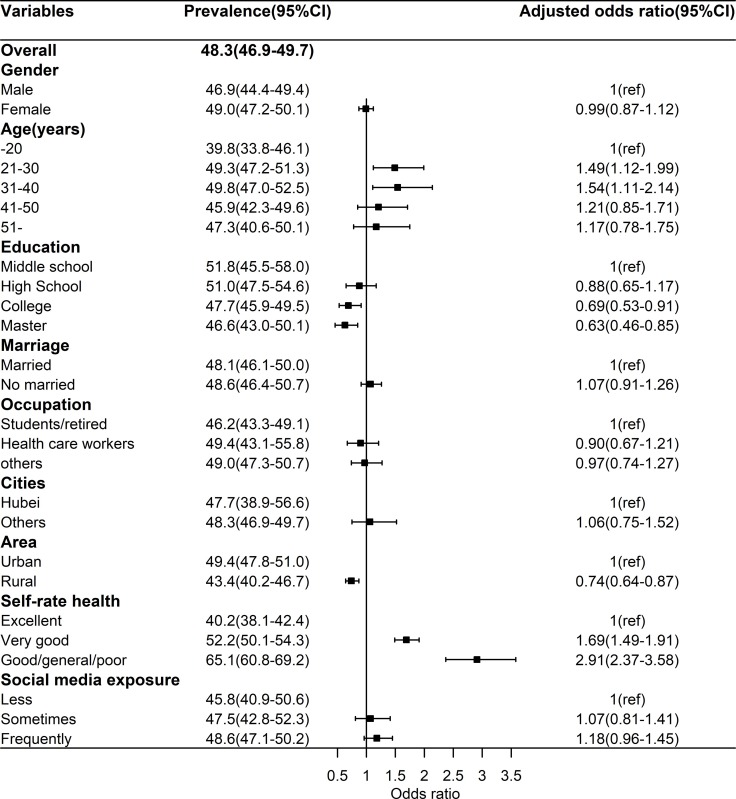
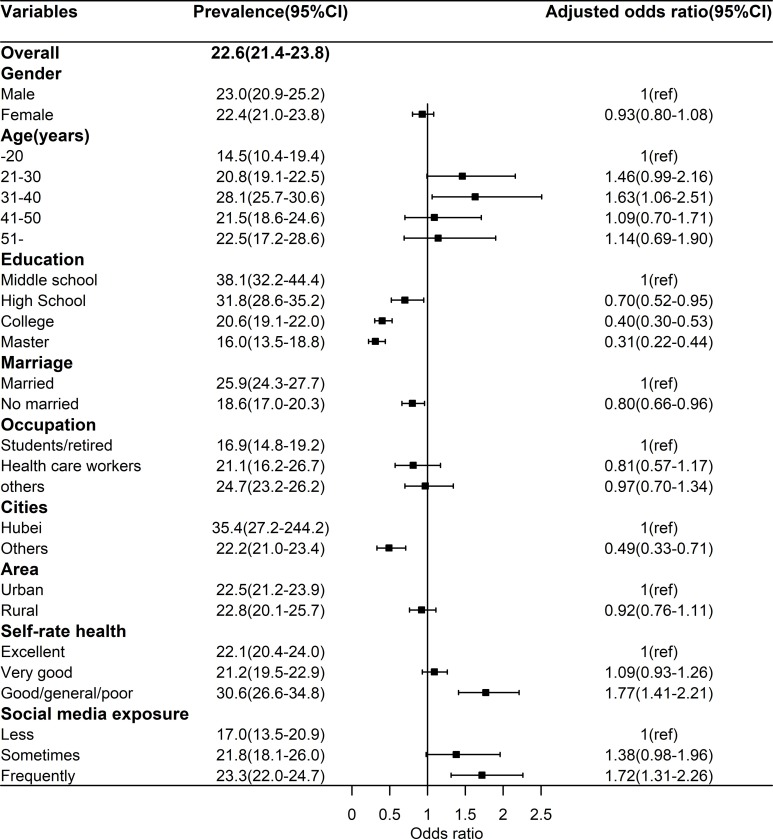
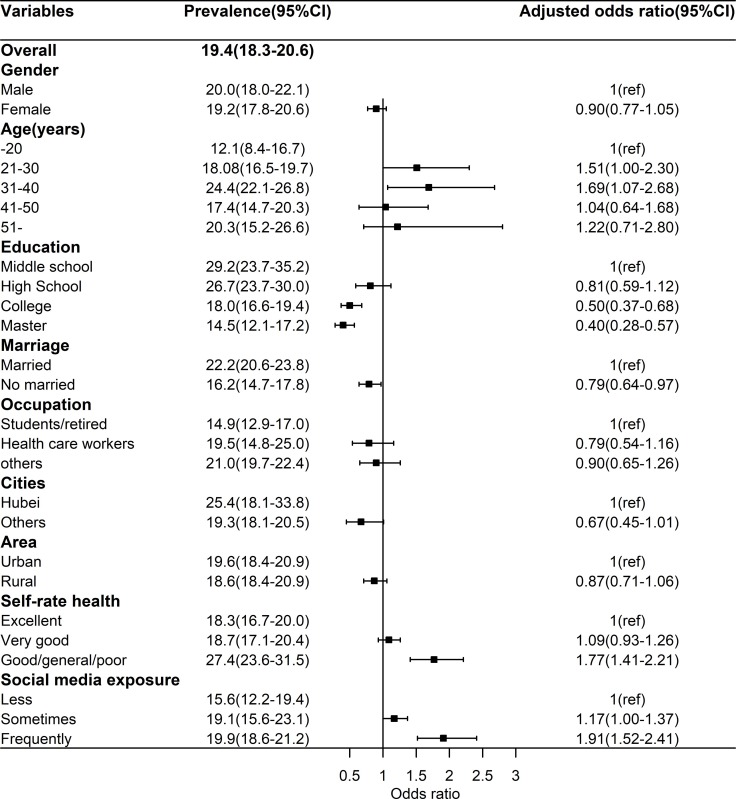
Huge citizens expose to social media during a novel coronavirus disease (COVID-19) outbroke in Wuhan, China. We assess the prevalence of mental health problems and examine their association with social media exposure. A cross-sectional study among Chinese citizens aged≥18 years old was conducted during Jan 31 to Feb 2, 2020. Online survey was used to do rapid assessment. Total of 4872 participants from 31 provinces and autonomous regions were involved in the current study. Besides demographics and social media exposure (SME), depression was assessed by The Chinese version of WHO-Five Well-Being Index (WHO-5) and anxiety was assessed by Chinese version of generalized anxiety disorder scale (GAD-7). multivariable logistic regressions were used to identify associations between social media exposure with mental health problems after controlling for covariates. The prevalence of depression, anxiety and combination of depression and anxiety (CDA) was 48.3% (95%CI: 46.9%-49.7%), 22.6% (95%CI: 21.4%-23.8%) and 19.4% (95%CI: 18.3%-20.6%) during COVID-19 outbroke in Wuhan, China. More than 80% (95%CI:80.9%-83.1%) of participants reported frequently exposed to social media. After controlling for covariates, frequently SME was positively associated with high odds of anxiety (OR = 1.72, 95%CI: 1.31-2.26) and CDA (OR = 1.91, 95%CI: 1.52-2.41) compared with less SME. Our findings show there are high prevalence of mental health problems, which positively associated with frequently SME during the COVID-19 outbreak. These findings implicated the government need pay more attention to mental health problems, especially depression and anxiety among general population and combating with "infodemic" while combating during public health emergency.
Overview
CoChat Summary
## TL;DR
This cross-sectional online survey of 4,872 Chinese adults during the COVID-19 outbreak found high prevalence of depression, anxiety, and co-occurring depression/anxiety. Frequent social media exposure was positively associated with anxiety and with the combination of depression and anxiety, but not significantly with depression alone after adjustment.
## Key findings
- Among 4,827 participants in the results, the prevalence was 48.3% for depression, 22.6% for anxiety, and 19.4% for combination of depression and anxiety (CDA).
- 82.0% of participants reported frequent social media exposure; only 8.8% reported less exposure and 9.2% reported sometimes exposure.
- After controlling for covariates, frequent SME was associated with higher odds of anxiety (OR = 1.72, 95% CI 1.31–2.26) and CDA (OR = 1.91, 95% CI 1.52–2.41) compared with less SME.
- Frequent SME was not significantly associated with depression after adjustment.
- Depression, anxiety, and CDA were all reported as much higher than the cited national sample estimates in China during the same period.
## Methods
- Design: Cross-sectional online survey conducted Jan 31 to Feb 2, 2020 during the COVID-19 outbreak.
- Sample/data: Chinese citizens aged 18 years or older recruited via the Wenjuanxing platform; 5,851 participated and 4,872 completed questionnaires from 31 provinces and autonomous regions were included.
- Measures/analysis: Depression was assessed with the WHO-5 (score <13), anxiety with the GAD-7 (score ≥10), and social media exposure was categorized as less, sometimes, or frequently. The authors used chi-square/trend tests and multivariable logistic regression adjusting for demographic and other covariates.
## Limitations
- The paper states that, because the study is cross-sectional, it is difficult to determine causal relationships between SME and mental health.
- The paper notes possible respondent bias from the online survey, including few elder citizens’ participation.
- The paper states that residual confounding from unmeasured factors cannot be excluded.
- Evident from the text: the sample was online and self-selected, so it may not be fully representative of all Chinese adults.
Model-written summary. Check it against the paper before relying on it.
Integrity signals
Registry
Cites
Statistics
Figures
Verification
Claims the paper makes
7 Valid · 1 Not valid · 6 Not checked · 13 Own results and interpretations
The cited sources support only part of this claim — read each source’s verdict below.
In the paper
“It indicated that participants from Hubei province- the infectious focus directly expose to public health emergency, and may suffer more mental health problemes[17,19].”
§ Mental health problems and social media exposure during COVID-19 outbreak > Discussion
What the sources say
- Not checked — no full text of the sourcecites [17] Xie Z, Xu J, Wu Z. Mental health problems among survivors in hard-hit areas of the 5.12 Wenchuan and 4.20 Lushan earthquakes. J Ment Health 2017; 26(1): 43– 9. 10.1080/09638237.2016.1276525 28084103 source
- Partly supportedcites [19] Mak IW, Chu CM, Pan PC, Yiu MG, Chan VL. Long-term psychiatric morbidities among SARS survivors. Gen Hosp Psychiatry 2009; 31(4): 318– 26. 10.1016/j.genhosppsych.2009.03.001 19555791 PMC7112501 sourceExperimental — accuracy not yet measured
The Introduction describes SARS survivors as direct victims of an outbreak, and the Results (Subgroup analysis of HCWs; page unavailable) report more chronic PTSD among health care workers than other survivors. This supports the general possibility of greater mental-health burden with outbreak exposure, but the paper studies SARS survivors in Hong Kong, not participants from Hubei province or a comparison based on residence in an infectious focus. (LLM, conf=0.82)
hedgedstates a possible cause- Asserted: passes — The authors put it forward as true.
- Checkable: passes — It can be checked against evidence.
- Load-bearing: passes — The paper’s conclusions depend on it.
- Based: passes — The paper gives a reason why it holds.
The cited sources that could be checked couldn’t confirm or dispute this claim.
In the paper
“Besides, many citizens expressed their negative feelings, such as fear, worry, nervous, anxiety et al. on social media, which are contagious social network[21,22].”
§ Mental health problems and social media exposure during COVID-19 outbreak > Discussion
What the sources say
- Not checked — no full text of the sourcecites [21] Kramer AD, Guillory JE, Hancock JT. Experimental evidence of massive-scale emotional contagion through social networks. Proc Natl Acad Sci U S A 2014; 111(24): 8788– 90. 10.1073/pnas.1320040111 24889601 PMC4066473 source
- Could not verifycites [22] Niederkrotenthaler T, Stack S, Till B, et al Association of Increased Youth Suicides in the United States With the Release of 13 Reasons Why. JAMA Psychiatry 2019; 76(9): 933– 40. PMC6547137 31141094 sourceExperimental — accuracy not yet measured
The Discussion and Conclusions discuss possible suicide contagion following a fictional television portrayal, using social-media activity to gauge attention to the show. They do not address whether fear, worry, anxiety, or other negative feelings expressed on social media spread through social networks; searches for negative feelings and emotional contagion found no such passage. The indexed passages provide section labels but no page numbers. (LLM, conf=0.77)
plainstates a cause- Asserted: passes — The authors put it forward as true.
- Checkable: passes — It can be checked against evidence.
- Load-bearing: passes — The paper’s conclusions depend on it.
- Based: passes — The paper gives a reason why it holds.
The sources with a verdict support this claim; the rest weren’t checked yet, have no full text we could read, or their verdicts aren’t rated yet.
In the paper
“These findings are consistent with the previous studies’ that exposing public health emergency can cause public mental health problems, such as Wenchuan and Lushan earthquakes[17], 2014 Ebola Outbreak[7,18], and SARS[19].”
§ Mental health problems and social media exposure during COVID-19 outbreak > Discussion
What the sources say
- Not checked — no full text of the sourcecites [17] Xie Z, Xu J, Wu Z. Mental health problems among survivors in hard-hit areas of the 5.12 Wenchuan and 4.20 Lushan earthquakes. J Ment Health 2017; 26(1): 43– 9. 10.1080/09638237.2016.1276525 28084103 source
- Not checked — no full text of the sourcecites [7] Shultz JM, Baingana F, Neria Y. The 2014 Ebola Outbreak and Mental Health: Current Status and Recommended Response. JAMA 2015; 313(6): 567– 8. 10.1001/jama.2014.17934 25532102 source
- Supportedcites [18] Ji D, Ji YJ, Duan XZ, et al Prevalence of psychological symptoms among Ebola survivors and healthcare workers during the 2014–2015 Ebola outbreak in Sierra Leone: a cross-sectional study. Oncotarget 2017; 8(8): 12784– 91. 10.18632/oncotarget.14498 28061463 PMC5355054 source
For the Ebola example attributed to this source, the Discussion reports pronounced psychological symptoms among Ebola survivors and Sierra Leonean healthcare workers exposed during the outbreak. The Introduction also describes public fear and panic. The earthquake and SARS examples have separate citations and are not attributed to this paper. (LLM, conf=0.90)
- Supportedcites [19] Mak IW, Chu CM, Pan PC, Yiu MG, Chan VL. Long-term psychiatric morbidities among SARS survivors. Gen Hosp Psychiatry 2009; 31(4): 318– 26. 10.1016/j.genhosppsych.2009.03.001 19555791 PMC7112501 source
The citation is attached to SARS, not to the earthquakes or Ebola outbreak. The Discussion (Clinical implications) states that SARS can cause significant, prolonged psychiatric problems, and the Discussion (Range of psychiatric disorders and functional outcome) identifies PTSD, depression, and anxiety disorders among survivors. (LLM, conf=0.90)
plainstates a cause- Asserted: passes — The authors put it forward as true.
- Checkable: passes — It can be checked against evidence.
- Load-bearing: unclear — It is unclear whether the paper’s conclusions depend on it.
- Based: passes — The paper gives a reason why it holds.
A result the paper reports from its own data — it cites no other source for it, so there is none to check. The quote shows it is in the paper.
In the paper
“higher frequency of SME was insignificantly positively associated with the adjusted odds of depression after controlling for all covariates.”
§ Mental health problems and social media exposure during COVID-19 outbreak > Results > Depression and SME
plainstates an association- Asserted: passes — The authors put it forward as true.
- Checkable: passes — It can be checked against evidence.
- Load-bearing: passes — The paper’s conclusions depend on it.
- Based: passes — The paper gives a reason why it holds.
A result the paper reports from its own data — it cites no other source for it, so there is none to check. The quote shows it is in the paper.
In the paper
“After controlling for covariates, frequently SME was positively associated with high odds of anxiety (OR = 1.72, 95%CI: 1.31–2.26) and CDA (OR = 1.91, 95%CI: 1.52–2.41) compared with less SME.”
- Also stated in: § Combination of depression and anxiety and SME · plain
“frequently SME can increase the adjusted odds (OR = 1.91, 95%CI: 1.52–2.41) of CDA compared with less SEM after controlling for all covariates.”
- Also stated in: § Discussion · plain
“frequently SME associated high odds of anxiety and CDA”
§ Mental health problems and social media exposure during COVID-19 outbreak > Abstract Huge citizens expose to social media during a novel coronavirus disease (COVID-19) outbroke in Wuhan, China. We assess the prevalence of mental health problems and examine their association with social media exposure. A cross-sectional study among Chinese citizens aged≥18 years old was conducted during Jan 31 to Feb 2, 2020. Online survey was used to do rapid assessment. Total of 4872 participants from 31 provinces and autonomous regions were involved in the current study. Besides demographics and social media exposure (SME), depression was assessed by The Chinese version of WHO-Five Well-Being Index (WHO-5) and anxiety was assessed by Chinese version of generalized anxiety disorder scale (GAD-7). multivariable logistic regressions were used to identify associations between social media exposure with mental health problems after controlling for covariates. The prevalence of depression, anxiety and combination of depression and anxiety (CDA) was 48.3% (95%CI: 46.9%-49.7%), 22.6% (95%CI: 21.4%-23.8%) and 19.4% (95%CI: 18.3%-20.6%) during COVID-19 outbroke in Wuhan, China. More than 80% (95%CI:80.9%-83.1%) of participants reported frequently exposed to social media. After controlling for covariates, frequently SME was positively associated with high odds of anxiety (OR = 1.72, 95%CI: 1.31–2.26) and CDA (OR = 1.91, 95%CI: 1.52–2.41) compared with less SME. Our findings show there are high prevalence of mental health problems, which positively associated with frequently SME during the COVID-19 outbreak. These findings implicated the government need pay more attention to mental health problems, especially depression and anxiety among general population and combating with “infodemic” while combating during public health emergency.
plainstates an associationn = 4,872- Asserted: passes — The authors put it forward as true.
- Checkable: passes — It can be checked against evidence.
- Load-bearing: passes — The paper’s conclusions depend on it.
- Based: passes — The paper gives a reason why it holds.
- Also stated in: § Combination of depression and anxiety and SME · plain
10 more claims
Create a free account to see all 27 claims and every source verdict.
- Probably not a substantial claim. 8
- It may state two separate claims as one. 4
- The quote only partly states this claim. 1
Claims other papers make about this one
Each is checked against this paper’s own text: does it say what the citing paper says it does?
The source backs part of the claim, not all of it — or backs it for a different population, condition or comparison.
In the citing paper
“In the current pandemic, the additional layer of extensive social media use and exposure to often sensationalized online news while in physical isolation may add new complexities to implementing emotional epidemiology in managing concerns, fears, and misconceptions [96,97], as these tools have been argued to bear negative effects on psychological well-being [97,98].”
From Psychosocial Effects of the COVID-19 Pandemic: Large-scale Quasi-Experimental Study on Social Media (2020) · cites this paper as [96]
Experimental — accuracy not yet measuredThe source backs part of the claim, not all of it — or backs it for a different population, condition or comparison.
In the citing paper
“Recent research has shown that, in the general public, the COVID-19 pandemic is associated with greater levels of psychological distress and a range of psychopathological problems such as depression, anxiety, and post-traumatic stress symptoms (e.g., Gao et al., 2020; Qiu et al., 2020; Wang et al., 2020).”
From Why did all the toilet paper disappear? Distinguishing between panic buying and hoarding during COVID-19 (2021) · cites this paper as Gao et al., 2020
Experimental — accuracy not yet measuredThe source backs part of the claim, not all of it — or backs it for a different population, condition or comparison.
In the citing paper
“Misleading content overload and the distortion of information affect users' stress levels and create mental health problems (Gao et al., 2020).”
From The Psycho-Emotive Effects of AI-Generated Fake News on Social Media Users (2026) · cites this paper as Gao et al., 2020
Experimental — accuracy not yet measuredThe source backs part of the claim, not all of it — or backs it for a different population, condition or comparison.
In the citing paper
“It is known that exposure to news about the process on social media also increases the levels of psychological distress and that the use of social media is higher in young people.[47]”
From Psychological Distress of Breast Cancer Survivors During the COVID-19 Pandemic and Related Factors: A Controlled Study. (2023) · cites this paper as [47]
Experimental — accuracy not yet measuredThe source backs part of the claim, not all of it — or backs it for a different population, condition or comparison.
In the citing paper
“Studies have concluded that perceived poor health status during the COVID-19 period is associated with increased anxiety levels.[47]”
From Psychological Distress of Breast Cancer Survivors During the COVID-19 Pandemic and Related Factors: A Controlled Study. (2023) · cites this paper as [47]
Experimental — accuracy not yet measured
4 more claims about this paper
Create a free account to see every claim other papers make about this one.
Self-check
Percentages, sums and reported differences re-computed from the paper’s own numbers.
Each contradiction between two passages listed here was confirmed by an independent check.
Rated major: it would touch a result — a value a result rests on, reported and recomputed p-values on opposite sides of the significance level, two passages that conflict with no sign which is right, or a cited work retracted before this paper was published.
In the paper
§ Mental health problems and social media exposure during COVID-19 outbreak > Materials and methods > Design and participants
“After removing the participants without completed questionnaires, 4872 participants from 31 provinces and autonomous regions were involved in the current study.”
§ Mental health problems and social media exposure during COVID-19 outbreak > Results > Social media exposure
“Of all 4827 participants, the mean age of was 32.3±10.0 years (ranged 18–85),”
Rated minor: it would not touch a result — a value no result rests on, a p-value that stays on the same side of the significance level, or a conflict that is clerical, resolved elsewhere in the paper, or outside its own findings.
In the paper
§ Mental health problems and social media exposure during COVID-19 outbreak > Abstract
“Total of 4872 participants from 31 provinces and autonomous regions were involved in the current study.”
§ Mental health problems and social media exposure during COVID-19 outbreak > Results > Social media exposure
“Of all 4827 participants, the mean age of was 32.3±10.0 years (ranged 18–85), the proportion of “less”, “sometimes”, and “frequently” of SME was 8.8%(95%CI:8.0%-9.6%), 9.2%(95%CI:8.4%-10.0%) and 82.0%(95%CI:80.9%-83.1%).”
Citations
Cites
A Brief Measure for Assessing Generalized Anxiety Disorder: The GAD-7
Spitzer, R. L., Kroenke, K., Williams, J. B. W., & Löwe, B. (2006) · Archives of Internal Medicine · doi:10.1001/archinte.166.10.1092 · Cited by 31,765 · cited 2×
“Anxiety was assessed by Chinese version of generalized anxiety disorder scale (GAD-7) [15, 16] , which consists 7 symptoms.”
BackgroundMethodExperimental evidence of massive-scale emotional contagion through social networks
Kramer, A. D. I., Guillory, J. E., & Hancock, J. T. (2014) · Proceedings of the National Academy of Sciences · doi:10.1073/pnas.1320040111 · Cited by 3,687 · cited 1×
“on social media, which are contagious social network[21,22].”
BackgroundPrevalence of mental disorders in China: a cross-sectional epidemiological study
Huang, Y., Wang, Y., Wang, H., Liu, Z., Yu, X., Yan, J., Yu, Y., Kou, C., Xu, X., Lu, J., et al. (2019) · The Lancet Psychiatry · doi:10.1016/s2215-0366(18)30511-x · Cited by 2,335 · cited 2×
“So, the current study aims to describes the prevalence and distribution of two major mental disorders-anxiety and depression among Chinese population [13], and examine their associations with social media exposure by rapid assessment during COVID-19 outbreak.”
BackgroundSelf-citationThe mental health of medical workers in Wuhan, China dealing with the 2019 novel coronavirus.
Kang, L., Li, Y., Hu, S., Chen, M., Yang, C., Yang, B. X., Wang, Y., Hu, J., Lai, J., Ma, X., et al. (2020) · The Lancet Psychiatry · doi:10.1016/s2215-0366(20)30047-x · Cited by 2,061 · cited 8×
“%) during COVID-19 outbroke in Wuhan, China.”
BackgroundInfluentialSelf-citation2019-nCoV epidemic: Address mental health care to empower society
Bao, Y., Sun, Y., Meng, S., Shi, J., & Lu, L. (2020) · The Lancet · doi:10.1016/s0140-6736(20)30309-3 · Cited by 2,038 · cited 11×
“%) during COVID-19 outbroke in Wuhan, China.”
BackgroundInfluentialShigemura, J., Ursano, R. J., Morganstein, J. C., Kurosawa, M., & Benedek, D. M. (2020) · Psychiatry and Clinical Neurosciences · doi:10.1111/pcn.12988 · Cited by 1,959 · cited 1×
“The outbreak of COVID-19 in China has caused mental health problems among the public in China[3] and Japan[4] and medical workers in Wuhan[5].”
BackgroundLong-term psychiatric morbidities among SARS survivors
Mak, I. W. C., Chu, C. M., Pan, P. C., Yiu, M. G. C., & Chan, V. L. (2009) · General Hospital Psychiatry · doi:10.1016/j.genhosppsych.2009.03.001 · Cited by 1,018 · cited 2×
“It indicated that participants from Hubei province- the infectious focus directly expose to public health emergency, and may suffer more mental health problemes[17,19].”
BackgroundResultThe 2014 Ebola Outbreak and Mental Health: Current Status and Recommended Response
Shultz, J. M., Baingana, F., & Neria, Y. (2015) · JAMA · doi:10.1001/jama.2014.17934 · Cited by 324
Ji, D., Ji, Y.-J., Duan, X.-Z., Li, W.-G., Sun, Z.-Q., Song, X.-A., Meng, Y.-H., Tang, H.-M., Chu, F., Niu, X.-X., et al. (2017) · Oncotarget · doi:10.18632/oncotarget.14498 · Cited by 257 · cited 1×
“These findings are consistent with the previous studies’ that exposing public health emergency can cause public mental health problems, such as Wenchuan and Lushan earthquakes[17], 2014 Ebola Outbreak[7,18], and SARS[19].”
ResultThe impact of social media on risk perceptions during the MERS outbreak in South Korea
Choi, D.-H., Yoo, W., Noh, G.-Y., & Park, K. (2017) · Computers in Human Behavior · doi:10.1016/j.chb.2017.03.004 · Cited by 246 · cited 1×
“A previous study also shown social media exposure may positively related to forming risk perceptions during the MERS outbreak in South Korea [12] .”
Result
Research works printed but not linked: 2
- Florian Roth, Brönnimann G. Focal Report 8: Risk Analysis Using the Internet for Public Risk Communication. https://www.researchgate.net/publication/256126259. (accessed Feb 12, 2020)
- Xu WF PY, Chen BQ. Assessment of Anxiety and Depression by Self-rating Scales of GAD-7 and PHQ-9 in Cardiovascular Outpatients. World Latest Medicine Information (Electronic Version), 2018, 18(16): 12– 14. (in Chinese)
Cited by
Items 701–800 of 2,694
Martínez-Garcia, M., Rabasa, A., Barber, X., Polotskaya, K., Roomp, K., & Oliver, N. (2021) · Scientific Reports · doi:10.1038/s41598-021-97645-1 · Cited by 23
Schlüter, P. J., Généreux, M., Hung, K. K. C., Landaverde, E., Law, R. P., Mok, C. P. Y., Murray, V. S. G., O’Sullivan, T. L., Qadar, Z., & Roy, M. (2022) · JMIR Public Health and Surveillance · doi:10.2196/32140 · Cited by 29
Preparing for the Next Pandemic to Protect Public Mental Health
Morganstein, J. C. (2021) · Psychiatric Clinics of North America · doi:10.1016/j.psc.2021.11.012 · Cited by 39
Sagar, S. K., Farhana, N., Rashid, M. U., Ghosh, P., Sultana, M., Ahsan, A., Pinky, S. D., Mahboob, R., Nayon, S. R., Islam, S. M. S., et al. (2022) · Heliyon · doi:10.1016/j.heliyon.2022.e08785 · Cited by 27
TMIF: transformer-based multi-modal interactive fusion for automatic rumor detection
Lv, J., Wang, X., & Shao, C. (2022) · Multimedia Systems · doi:10.1007/s00530-022-00916-8 · Cited by 31
Somé, N. H., Wells, S. L., Felsky, D., Hamilton, H. A., Ali, S., Elton‐Marshall, T., & Rehm, J. T. (2022) · BMC Psychiatry · doi:10.1186/s12888-022-03917-z · Cited by 30
SwahBERT: Language Model of Swahili
Martin, G. L., Mswahili, M. E., Jeong, Y.-S., & Young-Seob, J. (2022) · Conference of the North American Chapter of the Association for Computational Linguistics: Human Language Technologies (NAACL-HLT) · doi:10.18653/v1/2022.naacl-main.23 · Cited by 51
Quality of life during the COVID-19 pandemic in Austria
Dale, R., Budimir, S., Probst, T., Humer, E. C., & Pieh, C. (2022) · Frontiers in Psychology · doi:10.3389/fpsyg.2022.934253 · Cited by 31
“In China, depression prevalence was higher in urban than rural participants (Gao et al., 2020), and in Turkey, depression scores were higher in urban areas and high urbanization was a risk factor for anxiety (Özdin and Bayrak Özdin, 2020).”
BackgroundImpact of COVID‐19 inequalities on children: An intersectional analysis
Lemkow–Tovías, G., Lemkow, L., Cash‐Gibson, L., Teixidó‐Compañó, E., & Benach, J. (2022) · Sociology of Health & Illness · doi:10.1111/1467-9566.13557 · Cited by 31
“Some recent studies show that during the pandemic, fake news has spread easily, as some technological devices and social media are acting as echo chambers as it were, thus being able to multiply a lie, convincing some sections of the public, and their families, of its (fake) truthfulness, which has quickly created soc…”
BackgroundHuang, F., Yang, Z., Wang, Y., Zhang, W., Lin, Y., Zeng, L., Jiang, X., & Shang, L. (2020) · Frontiers in Public Health · doi:10.3389/fpubh.2020.565849 · Cited by 32
Self-citationBonsaksen, T., Thygesen, H., Leung, J., Lamph, G., Kabelenga, I., & Geirdal, A. Ø. (2024) · Social Sciences · doi:10.3390/socsci13040194 · Cited by 31
Braun, B., Taraktaş, B., Beckage, B., & Molofsky, J. (2020) · PLoS ONE · doi:10.1371/journal.pone.0238412 · Cited by 30
Home Alone: Implications of COVID-19 for Mental Health
Paudel, J. (2021) · Social Science & Medicine · doi:10.1016/j.socscimed.2021.114259 · Cited by 27
Psychometric properties of the Brazilian version of the fear of COVID-19 scale (FCV-19S)
de Medeiros, É. D., Reis, L. M., Guimarães, C. L. C., da Silva, P. G. N., Monteiro, R. P., Coelho, G. L. D. H., Guimarães, C. M. C., Martins, E. R. D. S., & de França, L. L. A. (2021) · Current Psychology · doi:10.1007/s12144-021-01476-2 · Cited by 30
Experiencing COVID-19 symptoms without the disease: The role of nocebo in reporting of symptoms
Daniali, H., & Flaten, M. A. (2021) · Scandinavian Journal of Public Health · doi:10.1177/14034948211018385 · Cited by 22
Rizwan, M. S., Ahmad, T., Qi, X., Murad, M. A., Baig, M., Sagga, A. K., Tariq, S., Baig, F., Naz, R., & Jin, H. (2021) · Frontiers in Medicine · doi:10.3389/fmed.2021.754121 · Cited by 36
Luo, Y.-F., Shen, H.-Y., Yang, S. C., & Chen, L. (2021) · International Journal of Environmental Research and Public Health · doi:10.3390/ijerph182413189 · Cited by 27
Doan, Q.-H., Tran, N.-N., Than, M.-H., Nguyen, H.-T., Bui, V.-S., Nguyen, D.-H., Vo, H.-L., Do, T. H. L., Pham, N. T., Nguyen, T.-K., et al. (2021) · Tropical Medicine and Infectious Disease · doi:10.3390/tropicalmed7010003 · Cited by 33
Patwary, M. M., Bardhan, M., Browning, M. H. E. M., Disha, A. S., Haque, M. Z., Billah, S. M., Kabir, M. P., Hossain, M. R., Alam, M. A., Shuvo, F. K., et al. (2021) · Healthcare · doi:10.3390/healthcare10010024 · Cited by 30
Kim, Y., Choi, Y., & Kim, H. (2022) · International Journal of Environmental Research and Public Health · doi:10.3390/ijerph19053130 · Cited by 28
“Job stress is a now new topic in the Corona Blue era, and it has become a major problem that can threaten the health of workers [2].”
BackgroundFear of Covid-19 and health-related outcomes: results from two Brazilian population-based studies
Meller, F. D. O., Schäfer, A. A., Quadra, M. R., Demenech, L. M., Paludo, S. D. S., da Silva, P. A., Neiva-Silva, L., & Dumith, S. C. (2022) · Psychiatry Research · doi:10.1016/j.psychres.2022.114596 · Cited by 32
Calegaro, V. C., Ramos-Lima, L. F., Hoffmann, M. S., Zoratto, G., Kerber, N., Costa, F. C. D., Picinin, V. D., Köchler, J., Rodrigues, L., Maciel, L., et al. (2022) · Journal of Affective Disorders · doi:10.1016/j.jad.2022.05.052 · Cited by 26
Luo, W., & Mohammed, J. (2023) · PLoS ONE · doi:10.1371/journal.pone.0296309 · Cited by 39
Afrin, S., Nasrullah, S. M., Dalal, K., Tasnim, Z., Benzadid, S., Humayra, F., Saif‐Ur‐Rahman, K., & Hawlader, M. D. H. (2022) · BMC Psychology · doi:10.1186/s40359-022-00819-3 · Cited by 28
“Moreover, news of widespread infection and deaths and incorrect and misleading information could be creating panic and mental pressure in adolescents and children [39].”
BackgroundImpact of Media-Induced Uncertainty on Mental Health: Narrative-Based Perspective.
Kesner, L., Juríčková, V., Grygarová, D., & Horáček, J. (2025) · JMIR Mental Health · doi:10.2196/68640 · Cited by 23
“Social media has also fueled the rapid spread of misinformation and rumors, which can create a sense of panic and confusion among the public [76], underscoring the importance of combating the “infodemic” during a public health emergency [77].”
Kayes, A. S. M., Islam, M. S., Watters, P., Ng, A., & Kayesh, H. (2020) · First Monday · doi:10.5210/fm.v25i11.10599 · Cited by 22
Ide, K., Asami, T., Suda, A., Yoshimi, A., Fujita, J., Nomoto, M., Roppongi, T., Hino, K., Takahashi, Y., Watanabe, K., et al. (2021) · PLoS ONE · doi:10.1371/journal.pone.0245294 · Cited by 29
(Mis)Information and Anxiety: Evidence from a Randomized COVID-19 Information Campaign
Sadish, D., Adhvaryu, A. R., & Nyshadham, A. (2021) · Journal of Development Economics · doi:10.1016/j.jdeveco.2021.102699 · Cited by 25
Adu, M. K., Wallace, L. J., Lartey, K. F., Arthur, J. A., Oteng, K. F., Dwomoh, S., Owusu‐Antwi, R., Larsen‐Reindorf, R., & Agyapong, V. I. O. (2021) · International Journal of Environmental Research and Public Health · doi:10.3390/ijerph18137106 · Cited by 28
Mental health of the Mexican population during the COVID-19 pandemic
Rodríguez-Hernández, C., Espinosa, O. M., & Hernández-Sánchez, A. (2021) · Gaceta Médica de México · doi:10.24875/gmm.20000612 · Cited by 42
Stigma, guilt and motherhood: Experiences of pregnant women with COVID-19 in Brazil
Freitas-Jesus, J. V., Sánchez, O. D. R., Rodrigues, L., Faria-Schützer, D. B., Serapilha, A. A. A., & Surita, F. G. (2021) · Women and Birth · doi:10.1016/j.wombi.2021.08.009 · Cited by 25
Daily uplifts during the COVID-19 pandemic: what is considered helpful in everyday life?
Eklund, R., Bondjers, K., Hensler, I., Bragesjö, M., Johannesson, K. B., Arnberg, F. K., & Sveen, J. (2022) · BMC Public Health · doi:10.1186/s12889-022-12506-4 · Cited by 28
Cao, Y., Siu, J. Y., Shek, D. T. L., & Shum, D. (2022) · BMC Psychiatry · doi:10.1186/s12888-022-03904-4 · Cited by 27
“This is consistent with previous findings that over-exposure to pandemic-related news leads to psychological distress [12, 44].”
ResultLi, P., Chen, B., Deveaux, G., Luo, Y., Tao, W., Li, W., Wen, J., & Yuan, Z. (2022) · JMIR Public Health and Surveillance · doi:10.2196/33577 · Cited by 31
Educación remota y salud mental docente en tiempos de COVID-19
Tapia, V. O. (2022) · Revista de Estudios y Experiencias en Educación · doi:10.21703/0718-5162.v21.n45.2022.001 · Cited by 43
Ceccon, C., & Moscardino, U. M. M. (2022) · Transcultural Psychiatry · doi:10.1177/13634615221098306 · Cited by 28
“However, this tendency could also have served as a protective factor, since frequent exposure to news concerning COVID-19 is associated with higher levels of distress (Gao et al., 2020).”
BackgroundMengistu, N., Habtamu, E., Kassaw, C., Madoro, D., Molla, W., Wudneh, A., Abebe, L., & Duko, B. (2023) · PLoS ONE · doi:10.1371/journal.pone.0280724 · Cited by 33
“However, the employment of such coping methods may have a number of negative implications, including functional deficits as a result of excessive use [24, 25].”
BackgroundImpacts of COVID-19 on tourism and management response from Banff National Park, Canada
Geng, C. D., Harshaw, H. W., Wu, W., & Wang, G. (2023) · Journal of Forestry Research · doi:10.1007/s11676-022-01580-4 · Cited by 24
The Psychobiology of Problematic Use of Social Media
Morris, R., Moretta, T., & Potenza, M. N. (2023) · Current Behavioral Neuroscience Reports · doi:10.1007/s40473-023-00261-8 · Cited by 30
“PUSM has also been associated with other mental health concerns (e.g., depression, anxiety, psychological distress, and poor sleep quality), high-lighting the need to develop more effective identification, prevention, and intervention programs [19–22].”
BackgroundYILMAZ, S. K., & Eskici, G. (2020) · Public Health Nutrition · doi:10.1017/s136898002000498x · Cited by 40
Mirhosseini, S., Dadgari, A., Basirinezhad, M. H., Mohammadpourhodki, R., & Ebrahimi, H. (2021) · Family Medicine & Primary Care Review · doi:10.5114/fmpcr.2021.103154 · Cited by 26
Caycho‐Rodríguez, T., Tomás, J. M., Vilca, L. W., Cadena, C. H. G., Rojas-Jara, C., White, M., & Peña-Calero, B. N. (2021) · Psychology Health & Medicine · doi:10.1080/13548506.2021.1944655 · Cited by 28
Zhang, C., Qiu, W., Li, H., Li, J., Zhang, L., Li, X., & Li, J. (2021) · Early Education and Development · doi:10.1080/10409289.2021.1949561 · Cited by 24
Ypsilanti, A., Mullings, E. L., Hawkins, O., & Lazuras, L. (2021) · Journal of Affective Disorders · doi:10.1016/j.jad.2021.08.031 · Cited by 26
Bonsaksen, T., Steigen, A. M., Stea, T. H., Kleppang, A. L., Lien, L., & Leonhardt, M. (2023) · Frontiers in Public Health · doi:10.3389/fpubh.2022.1037375 · Cited by 49
Ma, M., Fang, J., Li, C., Bao, J., Zhang, Y., Chen, N., Guo, J., & He, L. (2020) · The Journal of Headache and Pain · doi:10.1186/s10194-020-01168-5 · Cited by 21
Imbriano, G., Larsen, E. M., Mackin, D. M., An, A. K., Luhmann, C. C., Mohanty, A., & Jin, J. (2021) · Frontiers in Public Health · doi:10.3389/fpubh.2021.612725 · Cited by 26
Weiskittle, R., Tsang, W., Schwabenbauer, A. K., Andrew, N., & Mlinac, M. E. (2021) · Clinical Gerontologist · doi:10.1080/07317115.2021.1906812 · Cited by 25
Public fear of COVID-19 vaccines in Iraqi Kurdistan region: a cross-sectional study
Tahir, A. I., Ramadhan, D. S., Taha, A. A., Abdullah, R. Y., Karim, S. K., Ahmed, A. K., & Ahmed, S. F. (2021) · Middle East Current Psychiatry · doi:10.1186/s43045-021-00126-4 · Cited by 23
Jones, G. L., York, H., Lawal, O., Cherrill, R., Mercer, S., & McCarthy, Z. (2021) · Journal of Medical Radiation Sciences · doi:10.1002/jmrs.544 · Cited by 25
Laufer, A., & Bitton, M. S. (2021) · Journal of Family Issues · doi:10.1177/0192513x211054460 · Cited by 25
Gewirtz‐Meydan, A., & Lassri, D. (2021) · Child Abuse & Neglect · doi:10.1016/j.chiabu.2021.105442 · Cited by 23
Latif, N. I. A., Ismail, N. A. M., Loh, S. Y. E., Azurah, A. G. N., Midin, M., Shah, S. A., & Kalok, A. H. M. (2022) · International Journal of Environmental Research and Public Health · doi:10.3390/ijerph19084590 · Cited by 23
“Our study demonstrated that lower educational level is a significant risk factor for psychological distress; a finding similar to other published studies [36,37].”
ResultQin, N., Shi, S., Ma, G., Li, X., Duan, Y., Shen, Z., Luo, A., & Zhong, Z. (2022) · Frontiers in Public Health · doi:10.3389/fpubh.2021.776829 · Cited by 24
Haucke, M. N., Golde, S., Saft, S., Hellweg, R., Liu, S., & Heinzel, S. (2022) · Psychoneuroendocrinology · doi:10.1016/j.psyneuen.2022.105894 · Cited by 28
“We expect COVID-19 related stressors to increase salivary cortisol, as these factors have been previously associated with self-reported stress during a post-lockdown as well as during a lockdown stage (Gao et al., 2020; Haucke et al., 2022, 2021; Mækelæ et al., 2020; Stainback et al., 2020).”
Ngoc, A. L. T., Van, C. D., Thanh, P. N., Lewycka, S. O., & Nuil, J. I. V. (2022) · PLOS Global Public Health · doi:10.1371/journal.pgph.0000823 · Cited by 24
Resilience and Wellbeing Strategies for Pandemic Fatigue in Times of Covid-19
Zarowsky, Z., & Rashid, T. (2022) · International Journal of Applied Positive Psychology · doi:10.1007/s41042-022-00078-y · Cited by 32
“, 2020a, b), with some studies finding negative outcomes (Gao et al., 2020) and others suggesting potential for positive outcomes (Yousri et al.”
BackgroundDing, J., Xu, M., Tse, Y. K., Lin, K., & Zhang, M. (2022) · Enterprise Information Systems · doi:10.1080/17517575.2022.2130012 · Cited by 29
“Gao et al. (2020) evaluated the prevalence of mental health problems and examined their relationship with social media exposure during the COVID-19 outbreak.”
BackgroundChiwaridzo, O. T., & Masengu, R. (2023) · Future Business Journal · doi:10.1186/s43093-023-00249-6 · Cited by 31
“These actions have had many benefits, such as raising campaign awareness, achieving worldwide reach without borders, refining client interactions, increasing e-marketing, and managing public reputation [1].”
BackgroundPoonai, N., Freedman, S. B., Newton, A. S., Sawyer, S., Gaucher, N. O., Ali, S., Wright, B. J., Miller, M. R., Mater, A., Fitzpatrick, E. A., et al. (2023) · Canadian Medical Association Journal · doi:10.1503/cmaj.220507 · Cited by 26
Gossip, Rumors, and the COVID-19 Crisis
Abdoli, A. (2020) · Disaster Medicine and Public Health Preparedness · doi:10.1017/dmp.2020.272 · Cited by 22
Elhai, J. D., Yang, H., McKay, D., Asmundson, G. J. G., & Montag, C. (2021) · Anxiety Stress & Coping · doi:10.1080/10615806.2021.1878158 · Cited by 23
Reuter, K., Deodhar, A. A., Makri, S., Zimmer, M. T., Berenbaum, F., & Nikiphorou, E. (2021) · Rheumatology · doi:10.1093/rheumatology/keab174 · Cited by 24
AlAteeq, D. A., Almughera, H. N., Almughera, T. N., Alfedeah, R. F., Nasser, T. S., & Alaraj, K. A. (2021) · Saudi Medical Journal · doi:10.15537/smj.2021.42.7.20210181 · Cited by 28
Mental health and resilience during the coronavirus pandemic: A machine learning approach
Samuelson, K. W., Dixon, K. E., Jordan, J. T., Powers, T., Sonderman, S., & Brickman, S. (2021) · Journal of Clinical Psychology · doi:10.1002/jclp.23254 · Cited by 23
Gambin, M., Sekowski, M. M., Woźniak‐Prus, M., Wnuk, A., Oleksy, T., Cudo, A., Hansen, K., Huflejt-Łukasik, M., Kubicka, K., Łyś, A. E., et al. (2020) · PsyArXiv (OSF Preprints) · doi:10.31234/osf.io/42m87 · Cited by 23
Kožuh, I., & Čakš, P. (2023) · Healthcare · doi:10.3390/healthcare11202796 · Cited by 21
“Another opportunity is to spread the research across other social media platforms, as was the case in previous studies [2,6,54], and the range of crisis topics is up to researchers themselves.”
BackgroundHealth anxiety, coping mechanisms and COVID 19: An Indian community sample at week 1 of lockdown
Barron Millar, E., Singhal, D., Vijayaraghavan, P., Seshadri, S., Smith, E., Dixon, P., Humble, S., Rodgers, J., & Sharma, A. N. (2021) · PLoS ONE · doi:10.1371/journal.pone.0250336 · Cited by 21
Contemporary self-reflective practices: A large-scale survey
Tyler, J., Boldi, M., & Cherubini, M. (2022) · Acta Psychologica · doi:10.1016/j.actpsy.2022.103768 · Cited by 37
Social Agency for Artifacts: Chatbots and the Ethics of Artificial Intelligence
Symons, J., & AbuMusab, S. (2023) · Digital Society · doi:10.1007/s44206-023-00086-8 · Cited by 39
“Internet technologies are widely suspected to have caused degraded levels of social trust and to have harmed the quality of close personal relationships, social norms, and institutions (Gao et al., 2020; Symons & Elmer, 2022).”
Pandemic: the view of a clinical psychologist
Alekhin, A. N., & Dubinina, E. A. (2020) · Arterial’naya Gipertenziya (Arterial Hypertension) · doi:10.18705/1607-419x-2020-26-3-312-316 · Cited by 35
Guibarra, N. I. L., & Sánchez, J. C. A. (2020) · REVISTA ESPAÑOLA DE COMUNICACIÓN EN SALUD · doi:10.20318/recs.2020.5451 · Cited by 31
Broche‐Pérez, Y., Fernández-Fleites, Z., Castillo, E. F., Jiménez-Puig, E., Vizcaíno-Escobar, A. E., Ferrer-Lozano, D. M., Rodríguez, L. M., & Martín-González, R. (2021) · Frontiers in Global Women s Health · doi:10.3389/fgwh.2021.634088 · Cited by 30
Internet Use, eHealth Literacy and Fear of COVID-19 among Nursing Students in the Philippines
Oducado, R. M., Tuppal, C. P., Estoque, H., Sadang, J. M., Superio, D. L., Real, D. V. C., Roa, M. N. T., Malaga, X. G., Quiros, J., Fajardo, M. T. M., et al. (2021) · IJERI International Journal of Educational Research and Innovation · doi:10.46661/ijeri.5520 · Cited by 28
Bliźniewska-Kowalska, K. M., Halaris, A. E., Wang, S.-C., Su, K., Maes, M. H. J., Berk, M., & Gałecki, P. (2021) · Medical Science Monitor · doi:10.12659/msm.932220 · Cited by 26
The impact of COVID-19 quarantine measures on the mental health of families
Gharaibeh, F. A., & Gibson, L. (2021) · Journal of Social Work · doi:10.1177/14680173211011705 · Cited by 25
Interventions to Optimise Mental Health Outcomes During the COVID-19 Pandemic: A Scoping Review
Safieh, J., Broughan, J., McCombe, G., McCarthy, N., Frawley, T., Guérandel, A., Lambert, J. S., & Cullen, W. (2021) · International Journal of Mental Health and Addiction · doi:10.1007/s11469-021-00558-3 · Cited by 19
Li, L., Erfani, A., Wang, Y., & Cui, Q. (2021) · PLoS ONE · doi:10.1371/journal.pone.0254359 · Cited by 25
Self-citationBakebillah, M., Billah, M. A., Wubishet, B. L., & Khan, M. N. (2021) · PLoS ONE · doi:10.1371/journal.pone.0257410 · Cited by 22
Shelef, L., Schiff, M., Pat‐Horenczyk, R., & Dekel, R. (2022) · Journal of Psychiatric Research · doi:10.1016/j.jpsychires.2022.01.023 · Cited by 25
Han, R., Xu, J., & Pan, D. (2022) · International Journal of Environmental Research and Public Health · doi:10.3390/ijerph19073942 · Cited by 32
“There have also been a large number of studies conducted about the impact that media exposure has on public mental health [15,16].”
BackgroundImpact of COVID-19 on mental health and emotional well-being of older adults
Joseph, L. M. (2022) · World Journal of Virology · doi:10.5501/wjv.v11.i3.129 · Cited by 31
Daimer, S., Mihatsch, L. L., Neufeld, S. A., Murray, G. K., & Knolle, F. (2022) · eLife · doi:10.7554/elife.75893 · Cited by 21
“, 2020), and as pointed out above is linked to lower mental health, especially to higher levels of anxiety and depression (Gao et al., 2020; Zhao and Zhou, 2020).”
BackgroundZhu, Y., Li, Y., & Xu, X. (2022) · Psychiatry Research · doi:10.1016/j.psychres.2022.114837 · Cited by 26
Somasundram, K. G., Hackney, A., Yung, M., Du, B., Oakman, J., Nowrouzi‐Kia, B., & Yazdani, A. (2022) · BMC Public Health · doi:10.1186/s12889-022-14349-5 · Cited by 40
“Emerging research have shown that mental well-being of WFH employees could be affected by demographic variables such as age [15, 18], gender [15, 18, 29], presence of children [15, 29], type of industry [15], as well as socioeconomic variables such as employment status [30], education level [31], and economic status […”
BackgroundSocial Media Use and Depression in Older Adults: A Systematic Review
Guzman, A. A., Brecht, M., Doering, L. V., Macey, P. M., & Mentes, J. C. (2023) · Research in Gerontological Nursing · doi:10.3928/19404921-20230220-05 · Cited by 31
Watson, J. D., Pierce, B. S., Tyler, C. M., Donovan, E. K., Merced, K., Mallon, M., Autler, A. S., & Perrin, P. B. (2023) · International Journal of Environmental Research and Public Health · doi:10.3390/ijerph20085467 · Cited by 27
“Anxiety, panic disorder, and depression initially rose in response to unknowns about relative risks [9,10], and measures taken to preclude contagion may also have contributed to decreased mental wellbeing [11].”
BackgroundSerrano, M. F., Martínez, M. P. L., & Lozano-Blasco, R. (2020) · El Profesional de la Informacion · doi:10.3145/epi.2020.nov.12 · Cited by 35
Estudio del impacto emocional de la pandemia por COVID-19 en niños de 7 a 15 años de Sevilla
Quero, L., Montero-Galvache, M. Á. M., Molinari, P. D. L., Aguilar, R. E., & Coronel‐Rodríguez, C. (2021) · Revista de Psiquiatría Infanto-Juvenil · doi:10.31766/revpsij.v38n1a4 · Cited by 48
Wang, Y., & Sun, B. (2021) · Operational Research · doi:10.1007/s12351-021-00655-0 · Cited by 23
Self-citationStories of Life during the First Wave of the COVID-19 Pandemic in Italy: A Qualitative Study
Tomaino, S. C. M., Cipolletta, S., Kostova, Z., & Todorova, I. L. G. (2021) · International Journal of Environmental Research and Public Health · doi:10.3390/ijerph18147630 · Cited by 23
Diaries of Nursing Students during the COVID-19 Pandemic: A Qualitative Descriptive Study
Türkleş, S., Boğahan, M., Duru, H. A., Yaman, Z., & Yılmaz, M. (2021) · International Journal of Environmental Research and Public Health · doi:10.3390/ijerph18168556 · Cited by 22
Asian Development Outlook 2020 Update: Wellness in Worrying Times
Bank, A. D. (2020) · Asian development outlook update · doi:10.22617/fls200256-3 · Cited by 54
Stieger, S., Lewetz, D., & Swami, V. (2020) · PsyArXiv (OSF Preprints) · doi:10.31234/osf.io/qjhfp · Cited by 28
Policosanols: Chemistry, Occurrence, and Health Effects
Weerawatanakorn, M., Meerod, K., Wongwaiwech, D., & Ho, C. (2019) · Current Pharmacology Reports · doi:10.1007/s40495-019-00174-9 · Cited by 24
Role of mental health professionals in dealing with the stigma attached to COVID‐19
Prasad, S. K., Karahda, A., Singh, P., & Gupta, R. (2020) · General Psychiatry · doi:10.1136/gpsych-2020-100298 · Cited by 23
Infodemia, la otra pandemia durante la enfermedad por coronavirus 2019
Arroyo-Sánchez, A. S., Paredes, J. E. C., & Vallejos, M. P. C. (2020) · Anales de la Facultad de Medicina · doi:10.15381/anales.v81i2.17793 · Cited by 39
Crosby, S., Younie, S., Williamson, I. R., & Laird, K. (2020) · PLoS ONE · doi:10.1371/journal.pone.0239234 · Cited by 23
Adaptability to social distancing due to COVID-19 and its moderating effect on stress by gender
Zamarripa, J., Delgado, M., Sánchez, R. M., Baños, R., de la Cruz, M., & Félix, H. D. (2020) · Salud Mental · doi:10.17711/sm.0185-3325.2020.037 · Cited by 26
Parolin, L. A. L., Benzi, I. M. A., Fanti, E., Milesi, A., Cipresso, P., & Preti, E. (2021) · Research in Psychotherapy Psychopathology Process and Outcome · doi:10.4081/ripppo.2021.517 · Cited by 31
Metadata
- Authors
- Gao, J., Zheng, P., Jia, Y., Chen, H., Mao, Y., Chen, S., Wang, Y., Fu, H., & Dai, J.
- Affiliations
- Fudan University (CN)
- Corresponding author
- Dai, Junming
- ORCID
- Venue
- PLoS ONE
- Publisher
- Public Library of Science (PLoS)
- Published
- 2020-04-16
- Volume
- 15
- Issue
- 4
- Pages
- e0231924
- ISSN
- 1932-6203 (ISSN-L)
- PMC
- PMC7162477
- OpenAlex
- W3011720761
- Semantic Scholar
- e6352661273fcd34e64ee831c1033952c75f1bee
- Cited by
- 2,830
- References
- 14
- Citations by year
- 2026: 55 · 2025: 140 · 2024: 211 · 2023: 392 · 2022: 599 · 2021: 965 · 2020: 463
- FWCI
- 241.45
- Type
- journal article
- Language
- en
- Open access
- gold
- doi.org
- Licence
- Locations
- PLoS ONE (publishedVersion, cc-by)
- SSRN Electronic Journal (publishedVersion)
- PubMed Central (publishedVersion, cc-by)
- PubMed (publishedVersion)
- RePEc: Research Papers in Economics (submittedVersion, cc-by)
- DOAJ (DOAJ: Directory of Open Access Journals) (submittedVersion, cc-by-sa)
- Figshare (submittedVersion, cc-by)
- Funders
- National key R&D Program of China (2018YFC2002000 & 2018YFC2002001)
- National Natural Science Foundation of China (71573048)
- Topics
- Social Sciences › Psychology › Clinical Psychology › COVID-19 and Mental Health
- Social Sciences › Sociology and Political Science › Impact of Technology on Adolescents
- Social Sciences › Communication › Communication and COVID-19 Impact
- Keywords
- COVID-19 pandemic, social media exposure, mental health, depression, anxiety, infodemic, public health emergencies, prevalence, Wuhan
- MeSH terms
- Betacoronavirus, COVID-19, SARS-CoV-2, Adolescent, Adult, Aged, Aged, 80 and over, Anxiety, Depression, Disease Outbreaks, Female, Humans, Male, Mental Health, Middle Aged, Pneumonia, Viral, Coronavirus Infections, Young Adult, Pandemics, Social Media
About these checks
Registry, retraction, Cites and statistics results are computed, not judged, with one exception: a printed reference that no index lists is read once by a model before it counts as a citation error. Claims are extracted by a model and kept only when their quote appears verbatim in the text; each cited source is then checked, with a model’s help, for whether it says what the claim relies on. Those verdicts can be wrong — read the claim’s quote and the cited source before relying on one.
The claim verdicts this report counts are experimental: their accuracy is not yet measured.
A language model drew the claims from the paper on 2026-10-10, under version 3 of the claim definition (model deepseek-v4.1-flash, prompt extract-v3).
A second model labelled each claim on 2026-10-10 (model jev-1.13-20260917, definition revision gold-guideline-v0.2).
Cited sources are checked with a language model’s help (gpt-6-sol).
Statistics and arithmetic are recomputed, not judged.
Confidence bands are shown only for fields calibrated on our annotated test set. None is calibrated yet, so no band is shown.
What counts as a claim ›How we measure confidence ›How we check this ›
Are you an author, or do you see a problem with this page? Request a review
Data sources
Bibliographic data: Semantic Scholar, OpenAlex, Crossref.
Contains information from the Semantic Scholar Academic Graph Datasets, made available under the ODC Attribution License (ODC-BY 1.0).
Semantic Scholar’s data is described in: Kinney, R., et al. (2023). The Semantic Scholar Open Data Platform. arXiv:2301.10140.
