

Mental health problems and social media exposure during COVID-19 outbreak
Open accessThe DOI matches its Crossref record; 14 of the 14 references it cites were found in a registry or an index; 10 of the 24 sources its claims cite were checked for support.
Abstract
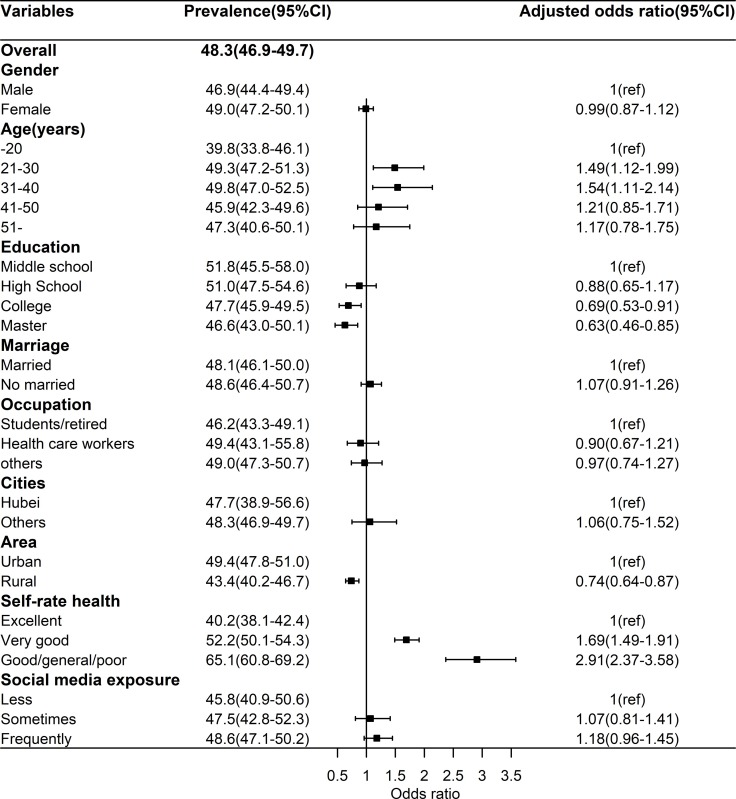
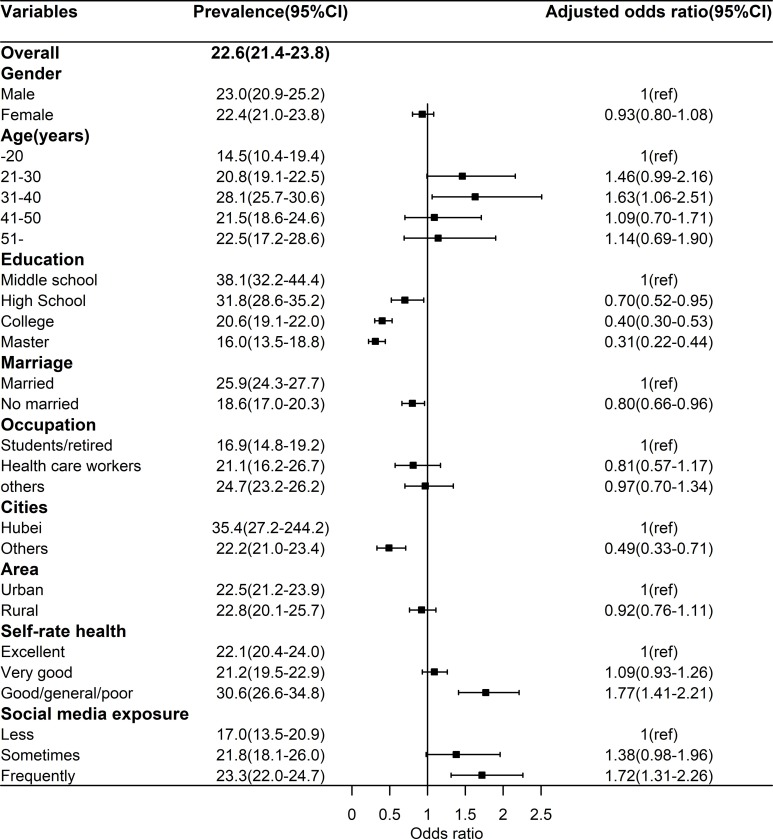
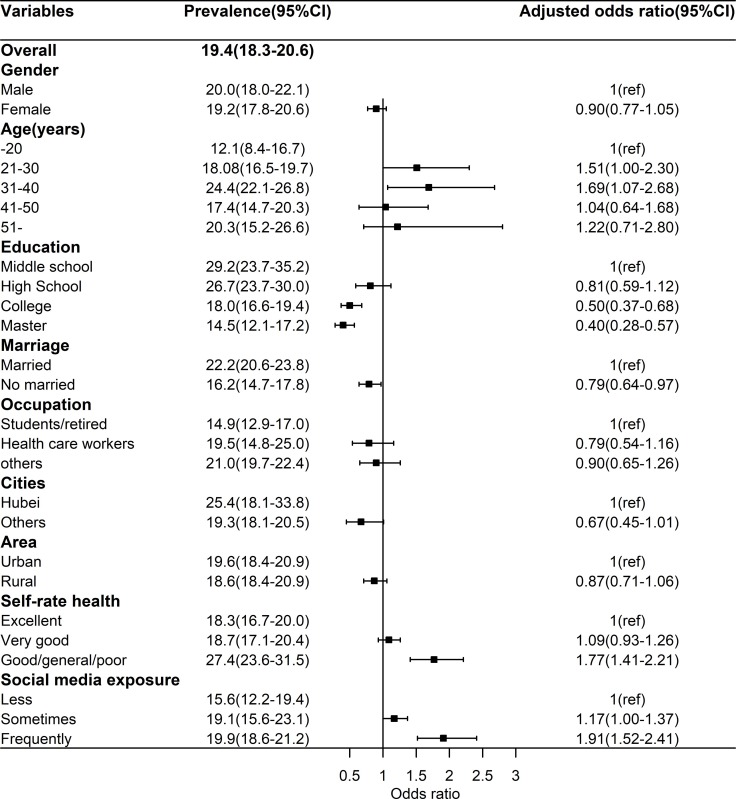
Huge citizens expose to social media during a novel coronavirus disease (COVID-19) outbroke in Wuhan, China. We assess the prevalence of mental health problems and examine their association with social media exposure. A cross-sectional study among Chinese citizens aged≥18 years old was conducted during Jan 31 to Feb 2, 2020. Online survey was used to do rapid assessment. Total of 4872 participants from 31 provinces and autonomous regions were involved in the current study. Besides demographics and social media exposure (SME), depression was assessed by The Chinese version of WHO-Five Well-Being Index (WHO-5) and anxiety was assessed by Chinese version of generalized anxiety disorder scale (GAD-7). multivariable logistic regressions were used to identify associations between social media exposure with mental health problems after controlling for covariates. The prevalence of depression, anxiety and combination of depression and anxiety (CDA) was 48.3% (95%CI: 46.9%-49.7%), 22.6% (95%CI: 21.4%-23.8%) and 19.4% (95%CI: 18.3%-20.6%) during COVID-19 outbroke in Wuhan, China. More than 80% (95%CI:80.9%-83.1%) of participants reported frequently exposed to social media. After controlling for covariates, frequently SME was positively associated with high odds of anxiety (OR = 1.72, 95%CI: 1.31-2.26) and CDA (OR = 1.91, 95%CI: 1.52-2.41) compared with less SME. Our findings show there are high prevalence of mental health problems, which positively associated with frequently SME during the COVID-19 outbreak. These findings implicated the government need pay more attention to mental health problems, especially depression and anxiety among general population and combating with "infodemic" while combating during public health emergency.
Overview
CoChat Summary
## TL;DR
This cross-sectional online survey of 4,872 Chinese adults during the COVID-19 outbreak found high prevalence of depression, anxiety, and co-occurring depression/anxiety. Frequent social media exposure was positively associated with anxiety and with the combination of depression and anxiety, but not significantly with depression alone after adjustment.
## Key findings
- Among 4,827 participants in the results, the prevalence was 48.3% for depression, 22.6% for anxiety, and 19.4% for combination of depression and anxiety (CDA).
- 82.0% of participants reported frequent social media exposure; only 8.8% reported less exposure and 9.2% reported sometimes exposure.
- After controlling for covariates, frequent SME was associated with higher odds of anxiety (OR = 1.72, 95% CI 1.31–2.26) and CDA (OR = 1.91, 95% CI 1.52–2.41) compared with less SME.
- Frequent SME was not significantly associated with depression after adjustment.
- Depression, anxiety, and CDA were all reported as much higher than the cited national sample estimates in China during the same period.
## Methods
- Design: Cross-sectional online survey conducted Jan 31 to Feb 2, 2020 during the COVID-19 outbreak.
- Sample/data: Chinese citizens aged 18 years or older recruited via the Wenjuanxing platform; 5,851 participated and 4,872 completed questionnaires from 31 provinces and autonomous regions were included.
- Measures/analysis: Depression was assessed with the WHO-5 (score <13), anxiety with the GAD-7 (score ≥10), and social media exposure was categorized as less, sometimes, or frequently. The authors used chi-square/trend tests and multivariable logistic regression adjusting for demographic and other covariates.
## Limitations
- The paper states that, because the study is cross-sectional, it is difficult to determine causal relationships between SME and mental health.
- The paper notes possible respondent bias from the online survey, including few elder citizens’ participation.
- The paper states that residual confounding from unmeasured factors cannot be excluded.
- Evident from the text: the sample was online and self-selected, so it may not be fully representative of all Chinese adults.
Model-written summary. Check it against the paper before relying on it.
Integrity signals
Registry
Cites
Statistics
Figures
Verification
Claims the paper makes
7 Valid · 1 Not valid · 6 Not checked · 13 Own results and interpretations
The cited sources support only part of this claim — read each source’s verdict below.
In the paper
“It indicated that participants from Hubei province- the infectious focus directly expose to public health emergency, and may suffer more mental health problemes[17,19].”
§ Mental health problems and social media exposure during COVID-19 outbreak > Discussion
What the sources say
- Not checked — no full text of the sourcecites [17] Xie Z, Xu J, Wu Z. Mental health problems among survivors in hard-hit areas of the 5.12 Wenchuan and 4.20 Lushan earthquakes. J Ment Health 2017; 26(1): 43– 9. 10.1080/09638237.2016.1276525 28084103 source
- Partly supportedcites [19] Mak IW, Chu CM, Pan PC, Yiu MG, Chan VL. Long-term psychiatric morbidities among SARS survivors. Gen Hosp Psychiatry 2009; 31(4): 318– 26. 10.1016/j.genhosppsych.2009.03.001 19555791 PMC7112501 sourceExperimental — accuracy not yet measured
The Introduction describes SARS survivors as direct victims of an outbreak, and the Results (Subgroup analysis of HCWs; page unavailable) report more chronic PTSD among health care workers than other survivors. This supports the general possibility of greater mental-health burden with outbreak exposure, but the paper studies SARS survivors in Hong Kong, not participants from Hubei province or a comparison based on residence in an infectious focus. (LLM, conf=0.82)
hedgedstates a possible cause- Asserted: passes — The authors put it forward as true.
- Checkable: passes — It can be checked against evidence.
- Load-bearing: passes — The paper’s conclusions depend on it.
- Based: passes — The paper gives a reason why it holds.
The cited sources that could be checked couldn’t confirm or dispute this claim.
In the paper
“Besides, many citizens expressed their negative feelings, such as fear, worry, nervous, anxiety et al. on social media, which are contagious social network[21,22].”
§ Mental health problems and social media exposure during COVID-19 outbreak > Discussion
What the sources say
- Not checked — no full text of the sourcecites [21] Kramer AD, Guillory JE, Hancock JT. Experimental evidence of massive-scale emotional contagion through social networks. Proc Natl Acad Sci U S A 2014; 111(24): 8788– 90. 10.1073/pnas.1320040111 24889601 PMC4066473 source
- Could not verifycites [22] Niederkrotenthaler T, Stack S, Till B, et al Association of Increased Youth Suicides in the United States With the Release of 13 Reasons Why. JAMA Psychiatry 2019; 76(9): 933– 40. PMC6547137 31141094 sourceExperimental — accuracy not yet measured
The Discussion and Conclusions discuss possible suicide contagion following a fictional television portrayal, using social-media activity to gauge attention to the show. They do not address whether fear, worry, anxiety, or other negative feelings expressed on social media spread through social networks; searches for negative feelings and emotional contagion found no such passage. The indexed passages provide section labels but no page numbers. (LLM, conf=0.77)
plainstates a cause- Asserted: passes — The authors put it forward as true.
- Checkable: passes — It can be checked against evidence.
- Load-bearing: passes — The paper’s conclusions depend on it.
- Based: passes — The paper gives a reason why it holds.
The sources with a verdict support this claim; the rest weren’t checked yet, have no full text we could read, or their verdicts aren’t rated yet.
In the paper
“These findings are consistent with the previous studies’ that exposing public health emergency can cause public mental health problems, such as Wenchuan and Lushan earthquakes[17], 2014 Ebola Outbreak[7,18], and SARS[19].”
§ Mental health problems and social media exposure during COVID-19 outbreak > Discussion
What the sources say
- Not checked — no full text of the sourcecites [17] Xie Z, Xu J, Wu Z. Mental health problems among survivors in hard-hit areas of the 5.12 Wenchuan and 4.20 Lushan earthquakes. J Ment Health 2017; 26(1): 43– 9. 10.1080/09638237.2016.1276525 28084103 source
- Not checked — no full text of the sourcecites [7] Shultz JM, Baingana F, Neria Y. The 2014 Ebola Outbreak and Mental Health: Current Status and Recommended Response. JAMA 2015; 313(6): 567– 8. 10.1001/jama.2014.17934 25532102 source
- Supportedcites [18] Ji D, Ji YJ, Duan XZ, et al Prevalence of psychological symptoms among Ebola survivors and healthcare workers during the 2014–2015 Ebola outbreak in Sierra Leone: a cross-sectional study. Oncotarget 2017; 8(8): 12784– 91. 10.18632/oncotarget.14498 28061463 PMC5355054 source
For the Ebola example attributed to this source, the Discussion reports pronounced psychological symptoms among Ebola survivors and Sierra Leonean healthcare workers exposed during the outbreak. The Introduction also describes public fear and panic. The earthquake and SARS examples have separate citations and are not attributed to this paper. (LLM, conf=0.90)
- Supportedcites [19] Mak IW, Chu CM, Pan PC, Yiu MG, Chan VL. Long-term psychiatric morbidities among SARS survivors. Gen Hosp Psychiatry 2009; 31(4): 318– 26. 10.1016/j.genhosppsych.2009.03.001 19555791 PMC7112501 source
The citation is attached to SARS, not to the earthquakes or Ebola outbreak. The Discussion (Clinical implications) states that SARS can cause significant, prolonged psychiatric problems, and the Discussion (Range of psychiatric disorders and functional outcome) identifies PTSD, depression, and anxiety disorders among survivors. (LLM, conf=0.90)
plainstates a cause- Asserted: passes — The authors put it forward as true.
- Checkable: passes — It can be checked against evidence.
- Load-bearing: unclear — It is unclear whether the paper’s conclusions depend on it.
- Based: passes — The paper gives a reason why it holds.
A result the paper reports from its own data — it cites no other source for it, so there is none to check. The quote shows it is in the paper.
In the paper
“higher frequency of SME was insignificantly positively associated with the adjusted odds of depression after controlling for all covariates.”
§ Mental health problems and social media exposure during COVID-19 outbreak > Results > Depression and SME
plainstates an association- Asserted: passes — The authors put it forward as true.
- Checkable: passes — It can be checked against evidence.
- Load-bearing: passes — The paper’s conclusions depend on it.
- Based: passes — The paper gives a reason why it holds.
A result the paper reports from its own data — it cites no other source for it, so there is none to check. The quote shows it is in the paper.
In the paper
“After controlling for covariates, frequently SME was positively associated with high odds of anxiety (OR = 1.72, 95%CI: 1.31–2.26) and CDA (OR = 1.91, 95%CI: 1.52–2.41) compared with less SME.”
- Also stated in: § Combination of depression and anxiety and SME · plain
“frequently SME can increase the adjusted odds (OR = 1.91, 95%CI: 1.52–2.41) of CDA compared with less SEM after controlling for all covariates.”
- Also stated in: § Discussion · plain
“frequently SME associated high odds of anxiety and CDA”
§ Mental health problems and social media exposure during COVID-19 outbreak > Abstract Huge citizens expose to social media during a novel coronavirus disease (COVID-19) outbroke in Wuhan, China. We assess the prevalence of mental health problems and examine their association with social media exposure. A cross-sectional study among Chinese citizens aged≥18 years old was conducted during Jan 31 to Feb 2, 2020. Online survey was used to do rapid assessment. Total of 4872 participants from 31 provinces and autonomous regions were involved in the current study. Besides demographics and social media exposure (SME), depression was assessed by The Chinese version of WHO-Five Well-Being Index (WHO-5) and anxiety was assessed by Chinese version of generalized anxiety disorder scale (GAD-7). multivariable logistic regressions were used to identify associations between social media exposure with mental health problems after controlling for covariates. The prevalence of depression, anxiety and combination of depression and anxiety (CDA) was 48.3% (95%CI: 46.9%-49.7%), 22.6% (95%CI: 21.4%-23.8%) and 19.4% (95%CI: 18.3%-20.6%) during COVID-19 outbroke in Wuhan, China. More than 80% (95%CI:80.9%-83.1%) of participants reported frequently exposed to social media. After controlling for covariates, frequently SME was positively associated with high odds of anxiety (OR = 1.72, 95%CI: 1.31–2.26) and CDA (OR = 1.91, 95%CI: 1.52–2.41) compared with less SME. Our findings show there are high prevalence of mental health problems, which positively associated with frequently SME during the COVID-19 outbreak. These findings implicated the government need pay more attention to mental health problems, especially depression and anxiety among general population and combating with “infodemic” while combating during public health emergency.
plainstates an associationn = 4,872- Asserted: passes — The authors put it forward as true.
- Checkable: passes — It can be checked against evidence.
- Load-bearing: passes — The paper’s conclusions depend on it.
- Based: passes — The paper gives a reason why it holds.
- Also stated in: § Combination of depression and anxiety and SME · plain
10 more claims
Create a free account to see all 27 claims and every source verdict.
- Probably not a substantial claim. 8
- It may state two separate claims as one. 4
- The quote only partly states this claim. 1
Claims other papers make about this one
Each is checked against this paper’s own text: does it say what the citing paper says it does?
The source backs part of the claim, not all of it — or backs it for a different population, condition or comparison.
In the citing paper
“In the current pandemic, the additional layer of extensive social media use and exposure to often sensationalized online news while in physical isolation may add new complexities to implementing emotional epidemiology in managing concerns, fears, and misconceptions [96,97], as these tools have been argued to bear negative effects on psychological well-being [97,98].”
From Psychosocial Effects of the COVID-19 Pandemic: Large-scale Quasi-Experimental Study on Social Media (2020) · cites this paper as [96]
Experimental — accuracy not yet measuredThe source backs part of the claim, not all of it — or backs it for a different population, condition or comparison.
In the citing paper
“Recent research has shown that, in the general public, the COVID-19 pandemic is associated with greater levels of psychological distress and a range of psychopathological problems such as depression, anxiety, and post-traumatic stress symptoms (e.g., Gao et al., 2020; Qiu et al., 2020; Wang et al., 2020).”
From Why did all the toilet paper disappear? Distinguishing between panic buying and hoarding during COVID-19 (2021) · cites this paper as Gao et al., 2020
Experimental — accuracy not yet measuredThe source backs part of the claim, not all of it — or backs it for a different population, condition or comparison.
In the citing paper
“Misleading content overload and the distortion of information affect users' stress levels and create mental health problems (Gao et al., 2020).”
From The Psycho-Emotive Effects of AI-Generated Fake News on Social Media Users (2026) · cites this paper as Gao et al., 2020
Experimental — accuracy not yet measuredThe source backs part of the claim, not all of it — or backs it for a different population, condition or comparison.
In the citing paper
“It is known that exposure to news about the process on social media also increases the levels of psychological distress and that the use of social media is higher in young people.[47]”
From Psychological Distress of Breast Cancer Survivors During the COVID-19 Pandemic and Related Factors: A Controlled Study. (2023) · cites this paper as [47]
Experimental — accuracy not yet measuredThe source backs part of the claim, not all of it — or backs it for a different population, condition or comparison.
In the citing paper
“Studies have concluded that perceived poor health status during the COVID-19 period is associated with increased anxiety levels.[47]”
From Psychological Distress of Breast Cancer Survivors During the COVID-19 Pandemic and Related Factors: A Controlled Study. (2023) · cites this paper as [47]
Experimental — accuracy not yet measured
4 more claims about this paper
Create a free account to see every claim other papers make about this one.
Self-check
Percentages, sums and reported differences re-computed from the paper’s own numbers.
Each contradiction between two passages listed here was confirmed by an independent check.
Rated major: it would touch a result — a value a result rests on, reported and recomputed p-values on opposite sides of the significance level, two passages that conflict with no sign which is right, or a cited work retracted before this paper was published.
In the paper
§ Mental health problems and social media exposure during COVID-19 outbreak > Materials and methods > Design and participants
“After removing the participants without completed questionnaires, 4872 participants from 31 provinces and autonomous regions were involved in the current study.”
§ Mental health problems and social media exposure during COVID-19 outbreak > Results > Social media exposure
“Of all 4827 participants, the mean age of was 32.3±10.0 years (ranged 18–85),”
Rated minor: it would not touch a result — a value no result rests on, a p-value that stays on the same side of the significance level, or a conflict that is clerical, resolved elsewhere in the paper, or outside its own findings.
In the paper
§ Mental health problems and social media exposure during COVID-19 outbreak > Abstract
“Total of 4872 participants from 31 provinces and autonomous regions were involved in the current study.”
§ Mental health problems and social media exposure during COVID-19 outbreak > Results > Social media exposure
“Of all 4827 participants, the mean age of was 32.3±10.0 years (ranged 18–85), the proportion of “less”, “sometimes”, and “frequently” of SME was 8.8%(95%CI:8.0%-9.6%), 9.2%(95%CI:8.4%-10.0%) and 82.0%(95%CI:80.9%-83.1%).”
Citations
Cites
A Brief Measure for Assessing Generalized Anxiety Disorder: The GAD-7
Spitzer, R. L., Kroenke, K., Williams, J. B. W., & Löwe, B. (2006) · Archives of Internal Medicine · doi:10.1001/archinte.166.10.1092 · Cited by 31,765 · cited 2×
“Anxiety was assessed by Chinese version of generalized anxiety disorder scale (GAD-7) [15, 16] , which consists 7 symptoms.”
BackgroundMethodExperimental evidence of massive-scale emotional contagion through social networks
Kramer, A. D. I., Guillory, J. E., & Hancock, J. T. (2014) · Proceedings of the National Academy of Sciences · doi:10.1073/pnas.1320040111 · Cited by 3,687 · cited 1×
“on social media, which are contagious social network[21,22].”
BackgroundPrevalence of mental disorders in China: a cross-sectional epidemiological study
Huang, Y., Wang, Y., Wang, H., Liu, Z., Yu, X., Yan, J., Yu, Y., Kou, C., Xu, X., Lu, J., et al. (2019) · The Lancet Psychiatry · doi:10.1016/s2215-0366(18)30511-x · Cited by 2,335 · cited 2×
“So, the current study aims to describes the prevalence and distribution of two major mental disorders-anxiety and depression among Chinese population [13], and examine their associations with social media exposure by rapid assessment during COVID-19 outbreak.”
BackgroundSelf-citationThe mental health of medical workers in Wuhan, China dealing with the 2019 novel coronavirus.
Kang, L., Li, Y., Hu, S., Chen, M., Yang, C., Yang, B. X., Wang, Y., Hu, J., Lai, J., Ma, X., et al. (2020) · The Lancet Psychiatry · doi:10.1016/s2215-0366(20)30047-x · Cited by 2,061 · cited 8×
“%) during COVID-19 outbroke in Wuhan, China.”
BackgroundInfluentialSelf-citation2019-nCoV epidemic: Address mental health care to empower society
Bao, Y., Sun, Y., Meng, S., Shi, J., & Lu, L. (2020) · The Lancet · doi:10.1016/s0140-6736(20)30309-3 · Cited by 2,038 · cited 11×
“%) during COVID-19 outbroke in Wuhan, China.”
BackgroundInfluentialShigemura, J., Ursano, R. J., Morganstein, J. C., Kurosawa, M., & Benedek, D. M. (2020) · Psychiatry and Clinical Neurosciences · doi:10.1111/pcn.12988 · Cited by 1,959 · cited 1×
“The outbreak of COVID-19 in China has caused mental health problems among the public in China[3] and Japan[4] and medical workers in Wuhan[5].”
BackgroundLong-term psychiatric morbidities among SARS survivors
Mak, I. W. C., Chu, C. M., Pan, P. C., Yiu, M. G. C., & Chan, V. L. (2009) · General Hospital Psychiatry · doi:10.1016/j.genhosppsych.2009.03.001 · Cited by 1,018 · cited 2×
“It indicated that participants from Hubei province- the infectious focus directly expose to public health emergency, and may suffer more mental health problemes[17,19].”
BackgroundResultThe 2014 Ebola Outbreak and Mental Health: Current Status and Recommended Response
Shultz, J. M., Baingana, F., & Neria, Y. (2015) · JAMA · doi:10.1001/jama.2014.17934 · Cited by 324
Ji, D., Ji, Y.-J., Duan, X.-Z., Li, W.-G., Sun, Z.-Q., Song, X.-A., Meng, Y.-H., Tang, H.-M., Chu, F., Niu, X.-X., et al. (2017) · Oncotarget · doi:10.18632/oncotarget.14498 · Cited by 257 · cited 1×
“These findings are consistent with the previous studies’ that exposing public health emergency can cause public mental health problems, such as Wenchuan and Lushan earthquakes[17], 2014 Ebola Outbreak[7,18], and SARS[19].”
ResultThe impact of social media on risk perceptions during the MERS outbreak in South Korea
Choi, D.-H., Yoo, W., Noh, G.-Y., & Park, K. (2017) · Computers in Human Behavior · doi:10.1016/j.chb.2017.03.004 · Cited by 246 · cited 1×
“A previous study also shown social media exposure may positively related to forming risk perceptions during the MERS outbreak in South Korea [12] .”
Result
Research works printed but not linked: 2
- Florian Roth, Brönnimann G. Focal Report 8: Risk Analysis Using the Internet for Public Risk Communication. https://www.researchgate.net/publication/256126259. (accessed Feb 12, 2020)
- Xu WF PY, Chen BQ. Assessment of Anxiety and Depression by Self-rating Scales of GAD-7 and PHQ-9 in Cardiovascular Outpatients. World Latest Medicine Information (Electronic Version), 2018, 18(16): 12– 14. (in Chinese)
Cited by
Items 101–200 of 2,694
Deep learning via LSTM models for COVID-19 infection forecasting in India
Chandra, R., Jain, A., & Singh Chauhan, D. (2022) · PLOS ONE · doi:10.1371/journal.pone.0262708 · Cited by 186
Chen, X., Qi, H., Liu, R., Feng, Y., Li, W., Xiang, M., Cheung, T., Jackson, T., Wang, G., & Xiang, Y.-T. (2021) · Translational Psychiatry · doi:10.1038/s41398-021-01271-4 · Cited by 184
McCracken, L. M., Badinlou, F., Buhrman, M., & Brocki, K. C. (2020) · European Psychiatry · doi:10.1192/j.eurpsy.2020.81 · Cited by 180
Sallam, M., Dababseh, D., Yaseen, A., Al-Haidar, A., Taim, D., Eid, H., Ababneh, N. A., Bakri, F. G., & Mahafzah, A. (2020) · PLOS ONE · doi:10.1371/journal.pone.0243264 · Cited by 180
Mahmud, S., Mohsin, M., Dewan, M. N., & Muyeed, A. (2022) · Trends in Psychology · doi:10.1007/s43076-021-00116-9 · Cited by 181
Bareeqa, S. B., Ahmed, S. I., Samar, S. S., Yasin, W., Zehra, S., Monese, G. M., & Gouthro, R. V. (2021) · The International Journal of Psychiatry in Medicine · doi:10.1177/0091217420978005 · Cited by 180
Pian, W., Chi, J., & Ma, F. (2021) · Information Processing & Management · doi:10.1016/j.ipm.2021.102713 · Cited by 179
Mental disorders following COVID-19 and other epidemics: a systematic review and meta-analysis
Leung, C. M. C., Ho, M. K., Bharwani, A. A., Cogo-Moreira, H., Wang, Y., Chow, M. S. C., Fan, X., Galea, S., Leung, G. M., & Ni, M. Y. (2022) · Translational Psychiatry · doi:10.1038/s41398-022-01946-6 · Cited by 174
“Social media [64, 66,163,167], General media [65,168]”
BackgroundSelf-citationPolitical polarization drives online conversations about COVID ‐19 in the United States
Jiang, J., Chen, E., Yan, S., Lerman, K., & Ferrara, E. (2020) · Human Behavior and Emerging Technologies · doi:10.1002/hbe2.202 · Cited by 171
Porat, T., Nyrup, R., Calvo, R. A., Paudyal, P., & Ford, E. (2020) · Frontiers in Public Health · doi:10.3389/fpubh.2020.573397 · Cited by 171
Tušl, M., Brauchli, R., Kerksieck, P., & Bauer, G. F. (2021) · BMC Public Health · doi:10.1186/s12889-021-10788-8 · Cited by 173
Siste, K., Hanafi, E., Sen, L. T., Christian, H., Adrian, Siswidiani, L. P., Limawan, A. P., Murtani, B. J., & Suwartono, C. (2020) · Frontiers in Psychiatry · doi:10.3389/fpsyt.2020.580977 · Cited by 170
“Gao et al., found that 82% of the Chinese samples were frequently exposed to social media during the pandemic (11) and Ni et al., noticed that a third of the samples spent at least 2 h online per day for social media and COVID-19 news (12).”
BackgroundBrailovskaia, J., & Margraf, J. (2021) · Computers in Human Behavior · doi:10.1016/j.chb.2021.106720 · Cited by 167
Psychosocial Effects of the COVID-19 Pandemic: Large-scale Quasi-Experimental Study on Social Media
Saha, K., Torous, J., Caine, E. D., & De Choudhury, M. (2020) · Journal of Medical Internet Research · doi:10.2196/22600 · Cited by 166
Amsalem, D., Dixon, L. B., & Neria, Y. (2021) · JAMA Psychiatry · doi:10.1001/jamapsychiatry.2020.1730 · Cited by 164
Risk Perception towards COVID-19: A Systematic Review and Qualitative Synthesis
Cipolletta, S., Andreghetti, G., & Mioni, G. (2022) · International Journal of Environmental Research and Public Health · doi:10.3390/ijerph19084649 · Cited by 162
“During the COVID-19 pandemic, people were bombarded with a large amount of information, which some authors [110] have defined as an emerging infodemic.”
BackgroundChen, X., Zhang, S. X., Jahanshahi, A. A., Alvarez-Risco, A., Dai, H., Li, J., & Ibarra, V. G. (2020) · JMIR Public Health and Surveillance · doi:10.2196/20737 · Cited by 162
Zeballos Rivas, D. R., Lopez Jaldin, M. L., Nina Canaviri, B., Portugal Escalante, L. F., Alanes Fernández, A. M. C., & Aguilar Ticona, J. P. (2021) · PLOS ONE · doi:10.1371/journal.pone.0245859 · Cited by 163
Jian, Y., Yu, I. Y., Yang, M. X., & Zeng, K. J. (2020) · Sustainability · doi:10.3390/su12208688 · Cited by 163
Sheng, N., Yang, C., Han, L., & Jou, M. (2023) · Computers in Human Behavior · doi:10.1016/j.chb.2022.107500 · Cited by 162
The Impact of the COVID-19 Pandemic on Mental Disorders. A Critical Review
Clemente-Suárez, V. J., Martínez-González, M. B., Benitez-Agudelo, J. C., Navarro-Jiménez, E., Beltran-Velasco, A. I., Ruisoto, P., Diaz Arroyo, E., Laborde-Cárdenas, C. C., & Tornero-Aguilera, J. F. (2021) · International Journal of Environmental Research and Public Health · doi:10.3390/ijerph181910041 · Cited by 161
Gibson, B., Schneider, J., Talamonti, D., & Forshaw, M. (2021) · Canadian Psychology / Psychologie canadienne · doi:10.1037/cap0000272 · Cited by 158
An overview of mental health during the COVID-19 pandemic
Chen, P. J., Pusica, Y., Sohaei, D., Prassas, I., & Diamandis, E. P. (2021) · Diagnosis · doi:10.1515/dx-2021-0046 · Cited by 159
Guo, Y., Cheng, C., Zeng, Y., Li, Y., Zhu, M., Yang, W., He, X., Li, X., Leng, J., Monroe‐Wise, A., et al. (2020) · Journal of Medical Internet Research · doi:10.2196/20328 · Cited by 169
Moroń, M., & Biolik-Moroń, M. (2020) · Personality and Individual Differences · doi:10.1016/j.paid.2020.110348 · Cited by 209
Santamaría, M. D., Mondragón, N. I., Santxo, N. B., & Ozamiz-Etxebarria, N. (2021) · Cambridge Prisms Global Mental Health · doi:10.1017/gmh.2021.14 · Cited by 215
Rogowska, A. M., Pavlova, I., Kuśnierz, C., Ochnik, D., Bodnar, I., & Petrytsa, P. (2020) · Journal of Clinical Medicine · doi:10.3390/jcm9113494 · Cited by 154
Stieger, S., Lewetz, D., & Swami, V. (2021) · Journal of Happiness Studies · doi:10.1007/s10902-020-00337-2 · Cited by 151
McCracken, L. M., Badinlou, F., Buhrman, M., & Brocki, K. C. (2021) · Journal of Contextual Behavioral Science · doi:10.1016/j.jcbs.2020.11.003 · Cited by 146
McKay, D., Yang, H., Elhai, J., & Asmundson, G. J. G. (2020) · Journal of Anxiety Disorders · doi:10.1016/j.janxdis.2020.102233 · Cited by 152
The SARS-CoV-2 and mental health: From biological mechanisms to social consequences
Szcześniak, D., Gładka, A., Misiak, B., Cyran, A., & Rymaszewska, J. (2021) · Progress in Neuro-Psychopharmacology and Biological Psychiatry · doi:10.1016/j.pnpbp.2020.110046 · Cited by 149
Servidio, R., Bartolo, M. G., Palermiti, A. L., & Costabile, A. (2021) · Journal of Affective Disorders Reports · doi:10.1016/j.jadr.2021.100097 · Cited by 148
What types of COVID-19 conspiracies are populated by Twitter bots?
Ferrara, E. (2020) · First Monday · doi:10.5210/fm.v25i6.10633 · Cited by 223
“On a different note, [23] looked at social media sentiment as expression of potential mental health issues associated with social isolation and other side-effects of containment measures enacted to limit the spread of COVID-19 in China.”
BackgroundInfluentialRisk Perception and Depression in Public Health Crises: Evidence from the COVID-19 Crisis in China
Ding, Y., Xu, J., Huang, S., Li, P., Lu, C., & Xie, S. (2020) · International Journal of Environmental Research and Public Health · doi:10.3390/ijerph17165728 · Cited by 146
Landi, G., Pakenham, K. I., Boccolini, G., Grandi, S., & Tossani, E. (2020) · Frontiers in Psychology · doi:10.3389/fpsyg.2020.02195 · Cited by 146
Sujarwoto, Saputri, R. A. M., & Yumarni, T. (2023) · International Journal of Mental Health and Addiction · doi:10.1007/s11469-021-00582-3 · Cited by 144
Fukase, Y., Ichikura, K., Murase, H., & Tagaya, H. (2021) · BMC Psychiatry · doi:10.1186/s12888-021-03047-y · Cited by 150
Saravanan, C., Mahmoud, I., Elshami, W., & Taha, M. H. (2020) · Frontiers in Psychiatry · doi:10.3389/fpsyt.2020.582189 · Cited by 177
Price, M., Legrand, A. C., Brier, Z. M. F., van Stolk-Cooke, K., Peck, K., Dodds, P. S., Danforth, C. M., & Adams, Z. W. (2022) · Psychological Trauma: Theory, Research, Practice, and Policy · doi:10.1037/tra0001202 · Cited by 141
Huang, F., Ding, H., Liu, Z., Wu, P., Zhu, M., Li, A., & Zhu, T. (2020) · BMC Public Health · doi:10.1186/s12889-020-09674-6 · Cited by 137
Castaldelli-Maia, J. M., Marziali, M. E., Lu, Z., & Martins, S. S. (2021) · Psychological Medicine · doi:10.1017/s0033291721000933 · Cited by 158
Future scenarios of risk of Vibrio infections in a warming planet: a global mapping study
Trinanes, J. A., & Martínez-Urtaza, J. (2021) · The Lancet Planetary Health · doi:10.1016/s2542-5196(21)00169-8 · Cited by 174
Anxiety, depression and stress during the COVID-19 pandemic: Results from a cross-sectional survey
Turna, J., Zhang, J., Lamberti, N., Patterson, B., Simpson, W., Francisco, A. P., Bergmann, C. G., & Ameringen, M. V. (2021) · Journal of Psychiatric Research · doi:10.1016/j.jpsychires.2021.02.059 · Cited by 138
Li, D.-J., Ko, N.-Y., Chen, Y.-L., Wang, P.-W., Chang, Y.-P., Yen, C.-F., & Lu, W.-H. (2020) · International Journal of Environmental Research and Public Health · doi:10.3390/ijerph17124479 · Cited by 136
Tso, I. F., & Park, S. (2020) · Psychiatry Research · doi:10.1016/j.psychres.2020.113423 · Cited by 138
Riehm, K. E., Holingue, C., Kalb, L. G., Bennett, D., Kapteyn, A., Jiang, Q., Veldhuis, C. B., Johnson, R. M., Fallin, M. D., Kreuter, F., et al. (2020) · American Journal of Preventive Medicine · doi:10.1016/j.amepre.2020.06.008 · Cited by 135
The impact of trade on energy efficiency in the global value chain: A simultaneous equation approach
Yao, X., Shah, W. U. H., Yasmeen, R., Zhang, Y., Kamal, M. A., & Khan, A. A. (2020) · The Science of The Total Environment · doi:10.1016/j.scitotenv.2020.142759 · Cited by 153
Karakose, T., Yirci, R., & Papadakis, S. (2022) · International Journal of Environmental Research and Public Health · doi:10.3390/ijerph19041951 · Cited by 137
“[89] stated that with the pandemic, more and more people have become dependent on the use of social media, which has increased the likelihood of encountering mental health problems.”
BackgroundHayran, C., & Anik, L. (2021) · International Journal of Environmental Research and Public Health · doi:10.3390/ijerph18041974 · Cited by 137
Hassannia, L., Taghizadeh, F., Moosazadeh, M., Zarghami, M., Taghizadeh, H., Dooki, A. F., Fathi, M., Alizadeh‐Navaei, R., Hedayatizadeh‐Omran, A., & Dehghan, N. (2021) · Neuropsychopharmacology Reports · doi:10.1002/npr2.12153 · Cited by 135
Depression and Anxiety During the COVID-19 Pandemic: Epidemiology, Mechanism, and Treatment
Zhu, C., Zhang, T., Li, Q., Chen, X., & Wang, K. (2022) · Neuroscience Bulletin · doi:10.1007/s12264-022-00970-2 · Cited by 185
“The vulnerability of females may be due to the higher proportion of SME [7].”
BackgroundInfluentialDu, J., Mayer, G., Hummel, S., Oetjen, N., Gronewold, N., Zafar, A., & Schultz, J. (2020) · Journal of Medical Internet Research · doi:10.2196/24240 · Cited by 156
Skapinakis, P., Bellos, S., Oikonomou, A., Dimitriadis, G., Gkikas, P., Perdikari, E., & Mavreas, V. (2020) · Depression Research and Treatment · doi:10.1155/2020/3158954 · Cited by 133
Lin, Y., Hu, Z., Alias, H., & Wong, L. P. (2020) · Journal of Medical Internet Research · doi:10.2196/19982 · Cited by 132
Peng, M., Mo, B., Liu, Y., Xu, M., Song, X., Liu, L., Fang, Y., Guo, T., Ye, J., Yu, Z., et al. (2020) · Journal of Affective Disorders · doi:10.1016/j.jad.2020.06.035 · Cited by 130
Aknin, L. B., De Neve, J. E., Dunn, E. W., Fancourt, D., Goldberg, E., Helliwell, J., Jones, S., Karam, E., Layard, R., Lyubomirsky, S., et al. (2021) · doi:10.31234/osf.io/zw93g · Cited by 131
Capuzzi, E., Di Brita, C., Caldiroli, A., Colmegna, F., Nava, R., Buoli, M., & Clerici, M. (2020) · Psychiatry Research · doi:10.1016/j.psychres.2020.113463 · Cited by 132
Islam, M. S., Sujan, M. S. H., Tasnim, R., Mohona, R. A., Ferdous, M. Z., Kamruzzaman, S., Toma, T. Y., Sakib, M. N., Pinky, K. N., Islam, M. R., et al. (2021) · Frontiers in Psychiatry · doi:10.3389/fpsyt.2021.647386 · Cited by 131
Moreira, P., Ferreira, S., Couto, B., Machado-Sousa, M., Fernández, M., Raposo-Lima, C., Sousa, N., Picó-Pérez, M., & Morgado, P. (2020) · doi:10.1101/2020.04.28.20080671 · Cited by 131
“In line with our findings, recent reports demonstrated an association between frequent social media exposure or access to COVID-19 information and increased levels of depression and anxiety in the Chinese population during the COVID-19 pandemic [27,28,37].”
ResultJiang, Y. (2021) · Frontiers in Psychology · doi:10.3389/fpsyg.2021.612007 · Cited by 128
Mental Health during the COVID-19 Crisis in Africa: A Systematic Review and Meta-Analysis
Chen, J., Farah, N., Dong, R. K., Chen, R. Z., Xu, W., Yin, J., Chen, B. Z., Delios, A. Y., Miller, S., Wan, X., et al. (2021) · International Journal of Environmental Research and Public Health · doi:10.3390/ijerph182010604 · Cited by 128
Flaherty, G. T., Hession, P., Liew, C. H., Lim, B. C. W., Leong, T. K., Lim, V., & Sulaiman, L. H. (2020) · Tropical Diseases, Travel Medicine and Vaccines · doi:10.1186/s40794-020-00118-y · Cited by 127
Van Daele, T., Karekla, M., Kassianos, A. P., Compare, A., Haddouk, L., Salgado, J., Ebert, D. D., Trebbi, G., Bernaerts, S., Van Assche, E., et al. (2020) · Journal of Psychotherapy Integration · doi:10.1037/int0000218 · Cited by 122
Salameh, P., Hajj, A., Badro, D. A., Selwan, C. A., Aoun, R., & Sacre, H. (2020) · Psychiatry Research · doi:10.1016/j.psychres.2020.113520 · Cited by 145
Mrklas, K., Shalaby, R., Hrabok, M., Gusnowski, A., Vuong, W., Surood, S., Urichuk, L., Li, D., Li, X.-M., Greenshaw, A. J., et al. (2020) · JMIR Mental Health · doi:10.2196/22408 · Cited by 126
Riad, A., Drobov, A., Krobot, M., Antalová, N., Alkasaby, M. A., Peřina, A., & Koščík, M. (2022) · International Journal of Environmental Research and Public Health · doi:10.3390/ijerph19148418 · Cited by 128
“Frequent exposure to social media content was associated with higher odds of anxiety among Chinese adults during the COVID-19 outbreak in early 2020 [49,50].”
BackgroundMental health of frontline healthcare workers exposed to COVID-19 in Egypt: A call for action
Elkholy, H. A., Tawfik, F. A., Ibrahim, I., Eldin, W. S., Sabry, M. A., Mohammed, S., Hamza, M., Mohamed, A., Fawzy, A. Z., Ashmawy, R., et al. (2020) · International Journal of Social Psychiatry · doi:10.1177/0020764020960192 · Cited by 137
Guidelines for TMS/tES clinical services and research through the COVID-19 pandemic
Bikson, M., Hanlon, C. A., Woods, A. J., Gillick, B. T., Charvet, L., Lamm, C., Madeo, G., Holczer, A., Almeida, J., Antal, A., et al. (2020) · Brain Stimulation · doi:10.1016/j.brs.2020.05.010 · Cited by 123
Automatic detection of depression symptoms in twitter using multimodal analysis
Safa, R., Bayat, P., & Moghtader, L. (2021) · The Journal of Supercomputing · doi:10.1007/s11227-021-04040-8 · Cited by 144
Cultivating Resilience During the COVID-19 Pandemic: A Socioecological Perspective
Zhang, N., Yang, S., & Jia, P. (2021) · Annual Review of Psychology · doi:10.1146/annurev-psych-030221-031857 · Cited by 159
Pharmacological and natural products diversity of the brown algae genus Sargassum
Rushdi, M. I., Abdel-Rahman, I. A. M., Saber, H., Attia, E. Z., Abdelraheem, W. M., Madkour, H. A., Hassan, H. M., Elmaidomy, A. H., & Abdelmohsen, U. R. (2020) · RSC Advances · doi:10.1039/d0ra03576a · Cited by 154
Alizadeh, H., Sharifi, A., Damanbagh, S., Nazarnia, H., & Nazarnia, M. (2023) · Natural Hazards · doi:10.1007/s11069-023-05959-2 · Cited by 186
Haddad, J. M., Macenski, C., Mosier-Mills, A., Hibara, A., Kester, K., Schneider, M., Conrad, R. C., & Liu, C. H. (2021) · Current Psychiatry Reports · doi:10.1007/s11920-021-01288-y · Cited by 121
Ismail, L. C., Osaili, T. M. I., Mohamad, M. N., Marzouqi, A. M. A., Jarrar, A. H., Zampelas, A., Habib-Mourad, C., Jamous, D. O. A., Ali, H. I., Sabbah, H. A., et al. (2020) · British Journal Of Nutrition · doi:10.1017/s0007114520004547 · Cited by 134
The Influence of the COVID-19 Pandemic on Social Anxiety: A Systematic Review
Kindred, R., & Bates, G. W. (2023) · International Journal of Environmental Research and Public Health · doi:10.3390/ijerph20032362 · Cited by 167
DIFFERENCES IN DISTRESS AND COPING WITH THE COVID-19 STRESSOR IN NURSES AND PHYSICIANS
General County Hospital Našice, N., Salopek-Ziha, D., Hlavati, M., General County Hospital Našice, N., Faculty of Medicine, J. J. S. U. O. O., Gvozdanovic, Z., General County Hospital Našice, N., Faculty of Medicine, J. J. S. U. O. O., Faculty of Dental Medicine and Health Osijek, J. J. S. U. O. O., Gasic, M., et al. (2020) · Psychiatria Danubina · doi:10.24869/psyd.2020.287 · Cited by 117
Validity and Psychometric Evaluation of the Chinese Version of the 5-Item WHO Well-Being Index
Fung, S.-F., Kong, C. Y. W., Liu, Y.-M., Huang, Q., Xiong, Z.-K., Jiang, Z.-Q., Zhu, F., Chen, Z., Sun, K., Zhao, H., et al. (2022) · Frontiers in Public Health · doi:10.3389/fpubh.2022.872436 · Cited by 138
Bonsaksen, T., Ruffolo, M. C., Price, D., Leung, J., Thygesen, H., Lamph, G., Kabelenga, I., & Geirdal, A. Ø. (2023) · Health Psychology and Behavioral Medicine · doi:10.1080/21642850.2022.2158089 · Cited by 209
“, 2020), other studies have found higher levels of social media use to be associated with poorer mental health (Gao et al., 2020; Geirdal, Ruffolo, et al., 2021) and higher levels”
BackgroundCOVID-19 Self-quarantine and Weight Gain Risk Factors in Adults
Zeigler, Z. (2021) · Current Obesity Reports · doi:10.1007/s13679-021-00449-7 · Cited by 138
Delpino, F. M., da Silva, C. N., Jerônimo, J. S., Mulling, E. S., da Cunha, L. L., Weymar, M. K., Alt, R., Caputo, E. L., & Feter, N. (2022) · Journal of Affective Disorders · doi:10.1016/j.jad.2022.09.003 · Cited by 156
Corona and value change. The role of social media and emotional contagion
Steinert, S. (2021) · Ethics and Information Technology · doi:10.1007/s10676-020-09545-z · Cited by 116
Hashemi, S. G. S., Hosseinnezhad, S., Dini, S., Griffiths, M. D., Lin, C., & Pakpour, A. H. (2020) · Heliyon · doi:10.1016/j.heliyon.2020.e05135 · Cited by 141
Parsons Leigh, J., Fiest, K., Brundin-Mather, R., Plotnikoff, K., Soo, A., Sypes, E. E., Whalen-Browne, L., Ahmed, S. B., Burns, K. E. A., Fox-Robichaud, A., et al. (2020) · PLOS ONE · doi:10.1371/journal.pone.0241259 · Cited by 116
Burhamah, W., AlKhayyat, A., Oroszlányová, M., AlKenane, A., Almansouri, A., Behbehani, M., Karimi, N., Jafar, H., & AlSuwaidan, M. (2020) · Journal of Affective Disorders · doi:10.1016/j.jad.2020.09.014 · Cited by 115
Priego-Parra, B. A., Triana‐Romero, A., Gálvez, S. M. P., Ramos, C. D., Nolasco, O. I. S., Reyes, M. M., la Medina, A. R., & Remes-Troche, J. M. (2020) · medRxiv · doi:10.1101/2020.05.10.20095844 · Cited by 145
Effects of a Comprehensive Pulmonary Rehabilitation in Severe Post-COVID-19 Patients
Spielmanns, M., Pekacka-Egli, A. M., Schoendorf, S., Windisch, W., & Hermann, M. (2021) · International Journal of Environmental Research and Public Health · doi:10.3390/ijerph18052695 · Cited by 140
Radwan, E., Radwan, A., & Radwan, W. (2020) · Heliyon · doi:10.1016/j.heliyon.2020.e05807 · Cited by 111
“The older students and teenagers tend to present with more worry and depressive more than children [56,61, 62, 63, 64, 65] due to feeling with anxiety due to several reasons such as worry about their educational performance during the closure of schools or fear being infected by the coronavirus [54].”
Social Media Use and Mental Health: A Global Analysis
Ulvi, O., Karamehic-Muratovic, A., Baghbanzadeh, M., Bashir, A., Smith, J., & Haque, U. (2022) · Epidemiologia · doi:10.3390/epidemiologia3010002 · Cited by 111
“Another study conducted by Ni et al. (2020) examined risk factors, including the use of social media, for probable anxiety and depression in the community and among health Epidemiologia 2022, 3 16 professionals also in Wuhan, China [45].”
BackgroundInfluentialPandemi COVID-19 dan Tantangan Kebijakan Kesehatan Mental di Indonesia
Ridlo, I. A. (2020) · INSAN Jurnal Psikologi dan Kesehatan Mental · doi:10.20473/jpkm.v5i22020.162-171 · Cited by 200
Psychological Impacts of the COVID-19 Pandemic on the Public in Egypt
Arafa, A., Mohamed, A. A. E., Saleh, L., & Senosy, S. A. (2020) · Community Mental Health Journal · doi:10.1007/s10597-020-00701-9 · Cited by 124
Hossain, M. T., Ahammed, B., Chanda, S. K., Jahan, N., Ela, M. Z., & Islam, M. N. (2020) · PLoS ONE · doi:10.1371/journal.pone.0238974 · Cited by 115
Zheng, R., Zhou, Y., Qiu, M., Yan, Y., Yue, J., Yu, L., Lei, X., Tu, D., & Hu, Y. (2020) · Comprehensive Psychiatry · doi:10.1016/j.comppsych.2020.152217 · Cited by 127
Wong, F. H. C., Liu, T., Leung, D. K. Y., Zhang, A. Y., Au, W. S. H., Kwok, W. W., Shum, A. K. Y., Wong, G. H. Y., & Lum, T. Y.-S. (2021) · Journal of Medical Internet Research · doi:10.2196/26570 · Cited by 106
Filimonau, V., Vi, L. H., Beer, S., & Ермолаев, В. А. (2021) · Socio-Economic Planning Sciences · doi:10.1016/j.seps.2021.101125 · Cited by 133
Aqeel, M., Rehna, T., Shuja, K. H., & Abbas, J. (2022) · Frontiers in Psychiatry · doi:10.3389/fpsyt.2022.835585 · Cited by 142
“The results of many previous studies conducted in China revealed that the higher the disclosure of “misinformation” by social media, the more probability it is in contributing to the growth of depression, anxiety, and other psychological problems in students (14, 38, 39).”
ResultLuo, T., Chen, W., & Liao, Y. (2021) · Journal of Psychiatric Research · doi:10.1016/j.jpsychires.2021.05.057 · Cited by 106
Galali, Y. (2021) · Food Science & Nutrition · doi:10.1002/fsn3.2179 · Cited by 130
SÖGÜT, S. C., Dolu, İ., & Cangöl, E. (2020) · Perspectives In Psychiatric Care · doi:10.1111/ppc.12555 · Cited by 121
Trastornos psiquiátricos en los niños y adolescentes en tiempo de la pandemia por COVID-19
Palacio-Ortíz, J. D., Londoño-Herrera, J. P., Márquez, A. N., Robledo-Rengifo, P., & Quintero-Cadavid, C. P. (2020) · Revista Colombiana de Psiquiatría · doi:10.1016/j.rcp.2020.05.006 · Cited by 188
Rosário, R., Martins, M. R. O., Augusto, C., Silva, M. J., Martins, S., Duarte, A., Fronteira, I., Ramos, N., Okan, O., & Dadaczynski, K. (2020) · International Journal of Environmental Research and Public Health · doi:10.3390/ijerph17238987 · Cited by 103
“[20] found that respondents with higher social media use were more often affected by adverse COVID-19 mental health outcomes such as fear.”
Background
Metadata
- Authors
- Gao, J., Zheng, P., Jia, Y., Chen, H., Mao, Y., Chen, S., Wang, Y., Fu, H., & Dai, J.
- Affiliations
- Fudan University (CN)
- Corresponding author
- Dai, Junming
- ORCID
- Venue
- PLoS ONE
- Publisher
- Public Library of Science (PLoS)
- Published
- 2020-04-16
- Volume
- 15
- Issue
- 4
- Pages
- e0231924
- ISSN
- 1932-6203 (ISSN-L)
- PMC
- PMC7162477
- OpenAlex
- W3011720761
- Semantic Scholar
- e6352661273fcd34e64ee831c1033952c75f1bee
- Cited by
- 2,830
- References
- 14
- Citations by year
- 2026: 55 · 2025: 140 · 2024: 211 · 2023: 392 · 2022: 599 · 2021: 965 · 2020: 463
- FWCI
- 241.45
- Type
- journal article
- Language
- en
- Open access
- gold
- doi.org
- Licence
- Locations
- PLoS ONE (publishedVersion, cc-by)
- SSRN Electronic Journal (publishedVersion)
- PubMed Central (publishedVersion, cc-by)
- PubMed (publishedVersion)
- RePEc: Research Papers in Economics (submittedVersion, cc-by)
- DOAJ (DOAJ: Directory of Open Access Journals) (submittedVersion, cc-by-sa)
- Figshare (submittedVersion, cc-by)
- Funders
- National key R&D Program of China (2018YFC2002000 & 2018YFC2002001)
- National Natural Science Foundation of China (71573048)
- Topics
- Social Sciences › Psychology › Clinical Psychology › COVID-19 and Mental Health
- Social Sciences › Sociology and Political Science › Impact of Technology on Adolescents
- Social Sciences › Communication › Communication and COVID-19 Impact
- Keywords
- COVID-19 pandemic, social media exposure, mental health, depression, anxiety, infodemic, public health emergencies, prevalence, Wuhan
- MeSH terms
- Betacoronavirus, COVID-19, SARS-CoV-2, Adolescent, Adult, Aged, Aged, 80 and over, Anxiety, Depression, Disease Outbreaks, Female, Humans, Male, Mental Health, Middle Aged, Pneumonia, Viral, Coronavirus Infections, Young Adult, Pandemics, Social Media
About these checks
Registry, retraction, Cites and statistics results are computed, not judged, with one exception: a printed reference that no index lists is read once by a model before it counts as a citation error. Claims are extracted by a model and kept only when their quote appears verbatim in the text; each cited source is then checked, with a model’s help, for whether it says what the claim relies on. Those verdicts can be wrong — read the claim’s quote and the cited source before relying on one.
The claim verdicts this report counts are experimental: their accuracy is not yet measured.
A language model drew the claims from the paper on 2026-10-10, under version 3 of the claim definition (model deepseek-v4.1-flash, prompt extract-v3).
A second model labelled each claim on 2026-10-10 (model jev-1.13-20260917, definition revision gold-guideline-v0.2).
Cited sources are checked with a language model’s help (gpt-6-sol).
Statistics and arithmetic are recomputed, not judged.
Confidence bands are shown only for fields calibrated on our annotated test set. None is calibrated yet, so no band is shown.
What counts as a claim ›How we measure confidence ›How we check this ›
Are you an author, or do you see a problem with this page? Request a review
Data sources
Bibliographic data: Semantic Scholar, OpenAlex, Crossref.
Contains information from the Semantic Scholar Academic Graph Datasets, made available under the ODC Attribution License (ODC-BY 1.0).
Semantic Scholar’s data is described in: Kinney, R., et al. (2023). The Semantic Scholar Open Data Platform. arXiv:2301.10140.
