

Mental health problems and social media exposure during COVID-19 outbreak
Open accessThe DOI matches its Crossref record; 14 of the 14 references it cites were found in a registry or an index; 10 of the 24 sources its claims cite were checked for support.
Abstract
Huge citizens expose to social media during a novel coronavirus disease (COVID-19) outbroke in Wuhan, China. We assess the prevalence of mental health problems and examine their association with social media exposure. A cross-sectional study among Chinese citizens aged≥18 years old was conducted during Jan 31 to Feb 2, 2020. Online survey was used to do rapid assessment. Total of 4872 participants from 31 provinces and autonomous regions were involved in the current study. Besides demographics and social media exposure (SME), depression was assessed by The Chinese version of WHO-Five Well-Being Index (WHO-5) and anxiety was assessed by Chinese version of generalized anxiety disorder scale (GAD-7). multivariable logistic regressions were used to identify associations between social media exposure with mental health problems after controlling for covariates. The prevalence of depression, anxiety and combination of depression and anxiety (CDA) was 48.3% (95%CI: 46.9%-49.7%), 22.6% (95%CI: 21.4%-23.8%) and 19.4% (95%CI: 18.3%-20.6%) during COVID-19 outbroke in Wuhan, China. More than 80% (95%CI:80.9%-83.1%) of participants reported frequently exposed to social media. After controlling for covariates, frequently SME was positively associated with high odds of anxiety (OR = 1.72, 95%CI: 1.31-2.26) and CDA (OR = 1.91, 95%CI: 1.52-2.41) compared with less SME. Our findings show there are high prevalence of mental health problems, which positively associated with frequently SME during the COVID-19 outbreak. These findings implicated the government need pay more attention to mental health problems, especially depression and anxiety among general population and combating with "infodemic" while combating during public health emergency.
Overview
CoChat Summary
## TL;DR
This cross-sectional online survey of 4,872 Chinese adults during the COVID-19 outbreak found high prevalence of depression, anxiety, and co-occurring depression/anxiety. Frequent social media exposure was positively associated with anxiety and with the combination of depression and anxiety, but not significantly with depression alone after adjustment.
## Key findings
- Among 4,827 participants in the results, the prevalence was 48.3% for depression, 22.6% for anxiety, and 19.4% for combination of depression and anxiety (CDA).
- 82.0% of participants reported frequent social media exposure; only 8.8% reported less exposure and 9.2% reported sometimes exposure.
- After controlling for covariates, frequent SME was associated with higher odds of anxiety (OR = 1.72, 95% CI 1.31–2.26) and CDA (OR = 1.91, 95% CI 1.52–2.41) compared with less SME.
- Frequent SME was not significantly associated with depression after adjustment.
- Depression, anxiety, and CDA were all reported as much higher than the cited national sample estimates in China during the same period.
## Methods
- Design: Cross-sectional online survey conducted Jan 31 to Feb 2, 2020 during the COVID-19 outbreak.
- Sample/data: Chinese citizens aged 18 years or older recruited via the Wenjuanxing platform; 5,851 participated and 4,872 completed questionnaires from 31 provinces and autonomous regions were included.
- Measures/analysis: Depression was assessed with the WHO-5 (score <13), anxiety with the GAD-7 (score ≥10), and social media exposure was categorized as less, sometimes, or frequently. The authors used chi-square/trend tests and multivariable logistic regression adjusting for demographic and other covariates.
## Limitations
- The paper states that, because the study is cross-sectional, it is difficult to determine causal relationships between SME and mental health.
- The paper notes possible respondent bias from the online survey, including few elder citizens’ participation.
- The paper states that residual confounding from unmeasured factors cannot be excluded.
- Evident from the text: the sample was online and self-selected, so it may not be fully representative of all Chinese adults.
Model-written summary. Check it against the paper before relying on it.
Integrity signals
Registry
Cites
Statistics
Figures
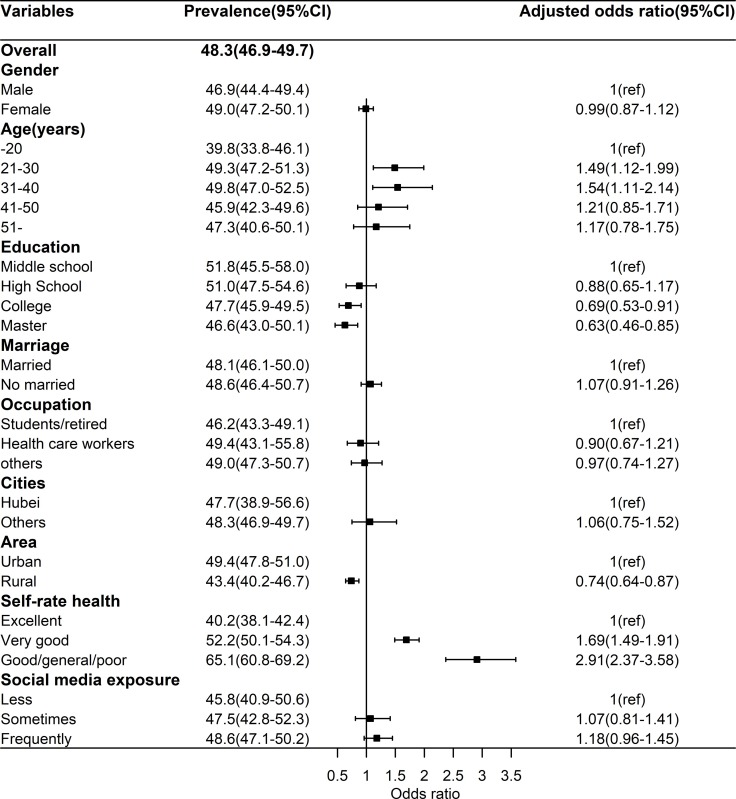
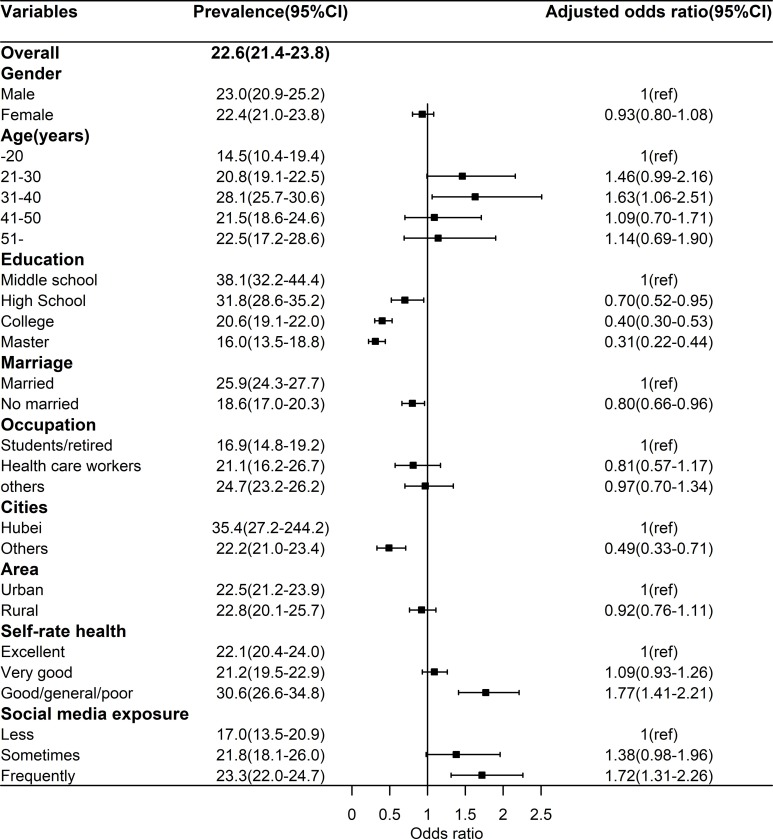
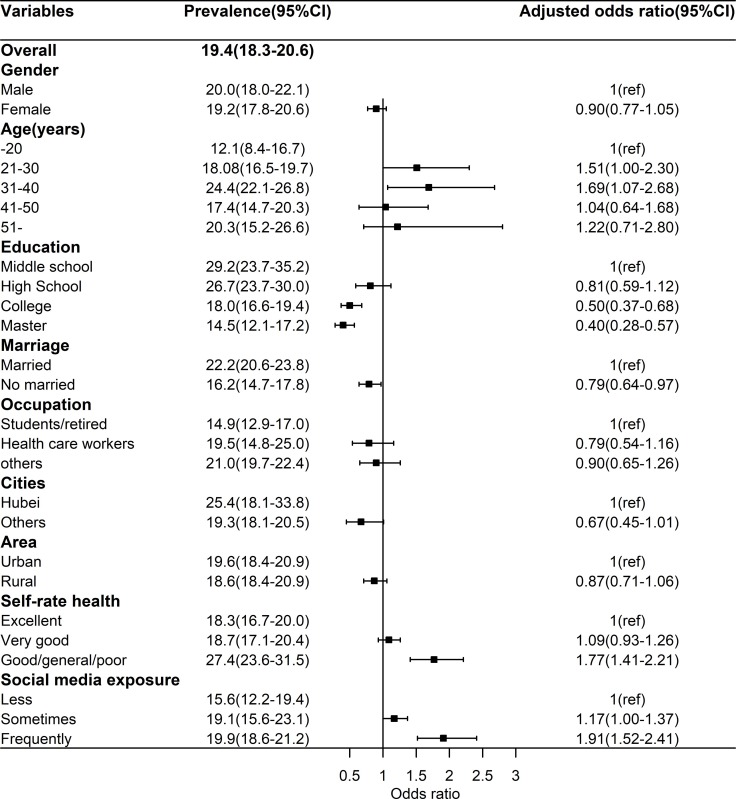
Verification
Claims the paper makes
7 Valid · 1 Not valid · 6 Not checked · 13 Own results and interpretations
The cited sources support only part of this claim — read each source’s verdict below.
In the paper
“It indicated that participants from Hubei province- the infectious focus directly expose to public health emergency, and may suffer more mental health problemes[17,19].”
§ Mental health problems and social media exposure during COVID-19 outbreak > Discussion
What the sources say
- Not checked — no full text of the sourcecites [17] Xie Z, Xu J, Wu Z. Mental health problems among survivors in hard-hit areas of the 5.12 Wenchuan and 4.20 Lushan earthquakes. J Ment Health 2017; 26(1): 43– 9. 10.1080/09638237.2016.1276525 28084103 source
- Partly supportedcites [19] Mak IW, Chu CM, Pan PC, Yiu MG, Chan VL. Long-term psychiatric morbidities among SARS survivors. Gen Hosp Psychiatry 2009; 31(4): 318– 26. 10.1016/j.genhosppsych.2009.03.001 19555791 PMC7112501 sourceExperimental — accuracy not yet measured
The Introduction describes SARS survivors as direct victims of an outbreak, and the Results (Subgroup analysis of HCWs; page unavailable) report more chronic PTSD among health care workers than other survivors. This supports the general possibility of greater mental-health burden with outbreak exposure, but the paper studies SARS survivors in Hong Kong, not participants from Hubei province or a comparison based on residence in an infectious focus. (LLM, conf=0.82)
hedgedstates a possible cause- Asserted: passes — The authors put it forward as true.
- Checkable: passes — It can be checked against evidence.
- Load-bearing: passes — The paper’s conclusions depend on it.
- Based: passes — The paper gives a reason why it holds.
The cited sources that could be checked couldn’t confirm or dispute this claim.
In the paper
“Besides, many citizens expressed their negative feelings, such as fear, worry, nervous, anxiety et al. on social media, which are contagious social network[21,22].”
§ Mental health problems and social media exposure during COVID-19 outbreak > Discussion
What the sources say
- Not checked — no full text of the sourcecites [21] Kramer AD, Guillory JE, Hancock JT. Experimental evidence of massive-scale emotional contagion through social networks. Proc Natl Acad Sci U S A 2014; 111(24): 8788– 90. 10.1073/pnas.1320040111 24889601 PMC4066473 source
- Could not verifycites [22] Niederkrotenthaler T, Stack S, Till B, et al Association of Increased Youth Suicides in the United States With the Release of 13 Reasons Why. JAMA Psychiatry 2019; 76(9): 933– 40. PMC6547137 31141094 sourceExperimental — accuracy not yet measured
The Discussion and Conclusions discuss possible suicide contagion following a fictional television portrayal, using social-media activity to gauge attention to the show. They do not address whether fear, worry, anxiety, or other negative feelings expressed on social media spread through social networks; searches for negative feelings and emotional contagion found no such passage. The indexed passages provide section labels but no page numbers. (LLM, conf=0.77)
plainstates a cause- Asserted: passes — The authors put it forward as true.
- Checkable: passes — It can be checked against evidence.
- Load-bearing: passes — The paper’s conclusions depend on it.
- Based: passes — The paper gives a reason why it holds.
The sources with a verdict support this claim; the rest weren’t checked yet, have no full text we could read, or their verdicts aren’t rated yet.
In the paper
“These findings are consistent with the previous studies’ that exposing public health emergency can cause public mental health problems, such as Wenchuan and Lushan earthquakes[17], 2014 Ebola Outbreak[7,18], and SARS[19].”
§ Mental health problems and social media exposure during COVID-19 outbreak > Discussion
What the sources say
- Not checked — no full text of the sourcecites [17] Xie Z, Xu J, Wu Z. Mental health problems among survivors in hard-hit areas of the 5.12 Wenchuan and 4.20 Lushan earthquakes. J Ment Health 2017; 26(1): 43– 9. 10.1080/09638237.2016.1276525 28084103 source
- Not checked — no full text of the sourcecites [7] Shultz JM, Baingana F, Neria Y. The 2014 Ebola Outbreak and Mental Health: Current Status and Recommended Response. JAMA 2015; 313(6): 567– 8. 10.1001/jama.2014.17934 25532102 source
- Supportedcites [18] Ji D, Ji YJ, Duan XZ, et al Prevalence of psychological symptoms among Ebola survivors and healthcare workers during the 2014–2015 Ebola outbreak in Sierra Leone: a cross-sectional study. Oncotarget 2017; 8(8): 12784– 91. 10.18632/oncotarget.14498 28061463 PMC5355054 source
For the Ebola example attributed to this source, the Discussion reports pronounced psychological symptoms among Ebola survivors and Sierra Leonean healthcare workers exposed during the outbreak. The Introduction also describes public fear and panic. The earthquake and SARS examples have separate citations and are not attributed to this paper. (LLM, conf=0.90)
- Supportedcites [19] Mak IW, Chu CM, Pan PC, Yiu MG, Chan VL. Long-term psychiatric morbidities among SARS survivors. Gen Hosp Psychiatry 2009; 31(4): 318– 26. 10.1016/j.genhosppsych.2009.03.001 19555791 PMC7112501 source
The citation is attached to SARS, not to the earthquakes or Ebola outbreak. The Discussion (Clinical implications) states that SARS can cause significant, prolonged psychiatric problems, and the Discussion (Range of psychiatric disorders and functional outcome) identifies PTSD, depression, and anxiety disorders among survivors. (LLM, conf=0.90)
plainstates a cause- Asserted: passes — The authors put it forward as true.
- Checkable: passes — It can be checked against evidence.
- Load-bearing: unclear — It is unclear whether the paper’s conclusions depend on it.
- Based: passes — The paper gives a reason why it holds.
A result the paper reports from its own data — it cites no other source for it, so there is none to check. The quote shows it is in the paper.
In the paper
“higher frequency of SME was insignificantly positively associated with the adjusted odds of depression after controlling for all covariates.”
§ Mental health problems and social media exposure during COVID-19 outbreak > Results > Depression and SME
plainstates an association- Asserted: passes — The authors put it forward as true.
- Checkable: passes — It can be checked against evidence.
- Load-bearing: passes — The paper’s conclusions depend on it.
- Based: passes — The paper gives a reason why it holds.
A result the paper reports from its own data — it cites no other source for it, so there is none to check. The quote shows it is in the paper.
In the paper
“After controlling for covariates, frequently SME was positively associated with high odds of anxiety (OR = 1.72, 95%CI: 1.31–2.26) and CDA (OR = 1.91, 95%CI: 1.52–2.41) compared with less SME.”
- Also stated in: § Combination of depression and anxiety and SME · plain
“frequently SME can increase the adjusted odds (OR = 1.91, 95%CI: 1.52–2.41) of CDA compared with less SEM after controlling for all covariates.”
- Also stated in: § Discussion · plain
“frequently SME associated high odds of anxiety and CDA”
§ Mental health problems and social media exposure during COVID-19 outbreak > Abstract Huge citizens expose to social media during a novel coronavirus disease (COVID-19) outbroke in Wuhan, China. We assess the prevalence of mental health problems and examine their association with social media exposure. A cross-sectional study among Chinese citizens aged≥18 years old was conducted during Jan 31 to Feb 2, 2020. Online survey was used to do rapid assessment. Total of 4872 participants from 31 provinces and autonomous regions were involved in the current study. Besides demographics and social media exposure (SME), depression was assessed by The Chinese version of WHO-Five Well-Being Index (WHO-5) and anxiety was assessed by Chinese version of generalized anxiety disorder scale (GAD-7). multivariable logistic regressions were used to identify associations between social media exposure with mental health problems after controlling for covariates. The prevalence of depression, anxiety and combination of depression and anxiety (CDA) was 48.3% (95%CI: 46.9%-49.7%), 22.6% (95%CI: 21.4%-23.8%) and 19.4% (95%CI: 18.3%-20.6%) during COVID-19 outbroke in Wuhan, China. More than 80% (95%CI:80.9%-83.1%) of participants reported frequently exposed to social media. After controlling for covariates, frequently SME was positively associated with high odds of anxiety (OR = 1.72, 95%CI: 1.31–2.26) and CDA (OR = 1.91, 95%CI: 1.52–2.41) compared with less SME. Our findings show there are high prevalence of mental health problems, which positively associated with frequently SME during the COVID-19 outbreak. These findings implicated the government need pay more attention to mental health problems, especially depression and anxiety among general population and combating with “infodemic” while combating during public health emergency.
plainstates an associationn = 4,872- Asserted: passes — The authors put it forward as true.
- Checkable: passes — It can be checked against evidence.
- Load-bearing: passes — The paper’s conclusions depend on it.
- Based: passes — The paper gives a reason why it holds.
- Also stated in: § Combination of depression and anxiety and SME · plain
10 more claims
Create a free account to see all 27 claims and every source verdict.
- Probably not a substantial claim. 8
- It may state two separate claims as one. 4
- The quote only partly states this claim. 1
Claims other papers make about this one
Each is checked against this paper’s own text: does it say what the citing paper says it does?
The source backs part of the claim, not all of it — or backs it for a different population, condition or comparison.
In the citing paper
“In the current pandemic, the additional layer of extensive social media use and exposure to often sensationalized online news while in physical isolation may add new complexities to implementing emotional epidemiology in managing concerns, fears, and misconceptions [96,97], as these tools have been argued to bear negative effects on psychological well-being [97,98].”
From Psychosocial Effects of the COVID-19 Pandemic: Large-scale Quasi-Experimental Study on Social Media (2020) · cites this paper as [96]
Experimental — accuracy not yet measuredThe source backs part of the claim, not all of it — or backs it for a different population, condition or comparison.
In the citing paper
“Recent research has shown that, in the general public, the COVID-19 pandemic is associated with greater levels of psychological distress and a range of psychopathological problems such as depression, anxiety, and post-traumatic stress symptoms (e.g., Gao et al., 2020; Qiu et al., 2020; Wang et al., 2020).”
From Why did all the toilet paper disappear? Distinguishing between panic buying and hoarding during COVID-19 (2021) · cites this paper as Gao et al., 2020
Experimental — accuracy not yet measuredThe source backs part of the claim, not all of it — or backs it for a different population, condition or comparison.
In the citing paper
“Misleading content overload and the distortion of information affect users' stress levels and create mental health problems (Gao et al., 2020).”
From The Psycho-Emotive Effects of AI-Generated Fake News on Social Media Users (2026) · cites this paper as Gao et al., 2020
Experimental — accuracy not yet measuredThe source backs part of the claim, not all of it — or backs it for a different population, condition or comparison.
In the citing paper
“It is known that exposure to news about the process on social media also increases the levels of psychological distress and that the use of social media is higher in young people.[47]”
From Psychological Distress of Breast Cancer Survivors During the COVID-19 Pandemic and Related Factors: A Controlled Study. (2023) · cites this paper as [47]
Experimental — accuracy not yet measuredThe source backs part of the claim, not all of it — or backs it for a different population, condition or comparison.
In the citing paper
“Studies have concluded that perceived poor health status during the COVID-19 period is associated with increased anxiety levels.[47]”
From Psychological Distress of Breast Cancer Survivors During the COVID-19 Pandemic and Related Factors: A Controlled Study. (2023) · cites this paper as [47]
Experimental — accuracy not yet measured
4 more claims about this paper
Create a free account to see every claim other papers make about this one.
Self-check
Percentages, sums and reported differences re-computed from the paper’s own numbers.
Each contradiction between two passages listed here was confirmed by an independent check.
Rated major: it would touch a result — a value a result rests on, reported and recomputed p-values on opposite sides of the significance level, two passages that conflict with no sign which is right, or a cited work retracted before this paper was published.
In the paper
§ Mental health problems and social media exposure during COVID-19 outbreak > Materials and methods > Design and participants
“After removing the participants without completed questionnaires, 4872 participants from 31 provinces and autonomous regions were involved in the current study.”
§ Mental health problems and social media exposure during COVID-19 outbreak > Results > Social media exposure
“Of all 4827 participants, the mean age of was 32.3±10.0 years (ranged 18–85),”
Rated minor: it would not touch a result — a value no result rests on, a p-value that stays on the same side of the significance level, or a conflict that is clerical, resolved elsewhere in the paper, or outside its own findings.
In the paper
§ Mental health problems and social media exposure during COVID-19 outbreak > Abstract
“Total of 4872 participants from 31 provinces and autonomous regions were involved in the current study.”
§ Mental health problems and social media exposure during COVID-19 outbreak > Results > Social media exposure
“Of all 4827 participants, the mean age of was 32.3±10.0 years (ranged 18–85), the proportion of “less”, “sometimes”, and “frequently” of SME was 8.8%(95%CI:8.0%-9.6%), 9.2%(95%CI:8.4%-10.0%) and 82.0%(95%CI:80.9%-83.1%).”
Citations
Cites
A Brief Measure for Assessing Generalized Anxiety Disorder: The GAD-7
Spitzer, R. L., Kroenke, K., Williams, J. B. W., & Löwe, B. (2006) · Archives of Internal Medicine · doi:10.1001/archinte.166.10.1092 · Cited by 31,765 · cited 2×
“Anxiety was assessed by Chinese version of generalized anxiety disorder scale (GAD-7) [15, 16] , which consists 7 symptoms.”
BackgroundMethodExperimental evidence of massive-scale emotional contagion through social networks
Kramer, A. D. I., Guillory, J. E., & Hancock, J. T. (2014) · Proceedings of the National Academy of Sciences · doi:10.1073/pnas.1320040111 · Cited by 3,687 · cited 1×
“on social media, which are contagious social network[21,22].”
BackgroundPrevalence of mental disorders in China: a cross-sectional epidemiological study
Huang, Y., Wang, Y., Wang, H., Liu, Z., Yu, X., Yan, J., Yu, Y., Kou, C., Xu, X., Lu, J., et al. (2019) · The Lancet Psychiatry · doi:10.1016/s2215-0366(18)30511-x · Cited by 2,335 · cited 2×
“So, the current study aims to describes the prevalence and distribution of two major mental disorders-anxiety and depression among Chinese population [13], and examine their associations with social media exposure by rapid assessment during COVID-19 outbreak.”
BackgroundSelf-citationThe mental health of medical workers in Wuhan, China dealing with the 2019 novel coronavirus.
Kang, L., Li, Y., Hu, S., Chen, M., Yang, C., Yang, B. X., Wang, Y., Hu, J., Lai, J., Ma, X., et al. (2020) · The Lancet Psychiatry · doi:10.1016/s2215-0366(20)30047-x · Cited by 2,061 · cited 8×
“%) during COVID-19 outbroke in Wuhan, China.”
BackgroundInfluentialSelf-citation2019-nCoV epidemic: Address mental health care to empower society
Bao, Y., Sun, Y., Meng, S., Shi, J., & Lu, L. (2020) · The Lancet · doi:10.1016/s0140-6736(20)30309-3 · Cited by 2,038 · cited 11×
“%) during COVID-19 outbroke in Wuhan, China.”
BackgroundInfluentialShigemura, J., Ursano, R. J., Morganstein, J. C., Kurosawa, M., & Benedek, D. M. (2020) · Psychiatry and Clinical Neurosciences · doi:10.1111/pcn.12988 · Cited by 1,959 · cited 1×
“The outbreak of COVID-19 in China has caused mental health problems among the public in China[3] and Japan[4] and medical workers in Wuhan[5].”
BackgroundLong-term psychiatric morbidities among SARS survivors
Mak, I. W. C., Chu, C. M., Pan, P. C., Yiu, M. G. C., & Chan, V. L. (2009) · General Hospital Psychiatry · doi:10.1016/j.genhosppsych.2009.03.001 · Cited by 1,018 · cited 2×
“It indicated that participants from Hubei province- the infectious focus directly expose to public health emergency, and may suffer more mental health problemes[17,19].”
BackgroundResultThe 2014 Ebola Outbreak and Mental Health: Current Status and Recommended Response
Shultz, J. M., Baingana, F., & Neria, Y. (2015) · JAMA · doi:10.1001/jama.2014.17934 · Cited by 324
Ji, D., Ji, Y.-J., Duan, X.-Z., Li, W.-G., Sun, Z.-Q., Song, X.-A., Meng, Y.-H., Tang, H.-M., Chu, F., Niu, X.-X., et al. (2017) · Oncotarget · doi:10.18632/oncotarget.14498 · Cited by 257 · cited 1×
“These findings are consistent with the previous studies’ that exposing public health emergency can cause public mental health problems, such as Wenchuan and Lushan earthquakes[17], 2014 Ebola Outbreak[7,18], and SARS[19].”
ResultThe impact of social media on risk perceptions during the MERS outbreak in South Korea
Choi, D.-H., Yoo, W., Noh, G.-Y., & Park, K. (2017) · Computers in Human Behavior · doi:10.1016/j.chb.2017.03.004 · Cited by 246 · cited 1×
“A previous study also shown social media exposure may positively related to forming risk perceptions during the MERS outbreak in South Korea [12] .”
Result
Research works printed but not linked: 2
- Florian Roth, Brönnimann G. Focal Report 8: Risk Analysis Using the Internet for Public Risk Communication. https://www.researchgate.net/publication/256126259. (accessed Feb 12, 2020)
- Xu WF PY, Chen BQ. Assessment of Anxiety and Depression by Self-rating Scales of GAD-7 and PHQ-9 in Cardiovascular Outpatients. World Latest Medicine Information (Electronic Version), 2018, 18(16): 12– 14. (in Chinese)
Cited by
Items 301–400 of 2,694
Understanding patterns of adherence to COVID-19 mitigation measures: a qualitative interview study
Denford, S., Morton, K. S., Lambert, H., Zhang, J., Smith, L., Rubin, G. J., Cai, S., Zhang, T., Robin, C., Lasseter, G., et al. (2021) · Journal of Public Health · doi:10.1093/pubmed/fdab005 · Cited by 77
Zhao, Y.-J., Jin, Y., Rao, W.-W., Li, W., Zhao, N., Cheung, T., Ng, C. H., Wang, Y.-Y., Zhang, Q.-E., & Xiang, Y.-T. (2021) · Journal of Affective Disorders · doi:10.1016/j.jad.2021.03.016 · Cited by 69
Self-citationEmotions of COVID-19: Content Analysis of Self-Reported Information Using Artificial Intelligence
Adikari, A., Nawaratne, R., Silva, D. D., Ranasinghe, S., Alahakoon, O., & Alahakoon, D. (2021) · Journal of Medical Internet Research · doi:10.2196/27341 · Cited by 76
COVID-19: challenges faced by Nepalese migrants living in Japan
Bhandari, D., Kotera, Y., Ozaki, A., Abeysinghe, S., Kosaka, M., & Tanimoto, T. E. (2021) · BMC Public Health · doi:10.1186/s12889-021-10796-8 · Cited by 74
Lotzin, A., Krause, L., Acquarini, E., Ajduković, D., Ardino, V., Arnberg, F. K., Böttche, M., Bragesjö, M., Dragan, M., Figueiredo‐Braga, M., et al. (2021) · European Journal of Psychotraumatology · doi:10.1080/20008198.2021.1964197 · Cited by 78
COVID-19 infodemic and adult and elderly mental health: a scoping review
Delgado, C. E., Silva, E. A., de Castro, E. A. B., Carbogim, F. D. C., Püschel, V. A. D. A., & Cavalcante, R. B. (2021) · Revista da Escola de Enfermagem da USP · doi:10.1590/1980-220x-reeusp-2021-0170 · Cited by 100
Sang, X., Menhas, R., Saqib, Z. A., Mahmood, S., Weng, Y., Khurshid, S., Iqbal, W., & Shahzad, B. (2021) · Frontiers in Psychology · doi:10.3389/fpsyg.2020.614770 · Cited by 77
Chaudhury, P., & Banerjee, D. (2020) · Frontiers in Public Health · doi:10.3389/fpubh.2020.604440 · Cited by 94
RetractedDynamics of antibodies to SARS‐CoV‐2 in convalescent plasma donors
Steenhuis, M., van Mierlo, G. J., Derksen, N. I. L., Heer, P. O., Kruithof, S., Loeff, F. C., Berkhout, L. C., Linty, F., Reusken, C. B. E. M., Reimerink, J. H. J., et al. (2021) · Clinical & Translational Immunology · doi:10.1002/cti2.1285 · Cited by 65
Choudrie, J., Patil, S., Kotecha, K. V., Matta, N., & Pappas, I. O. (2021) · Information Systems Frontiers · doi:10.1007/s10796-021-10152-6 · Cited by 82
Sampogna, G., Del Vecchio, V., Giallonardo, V., Luciano, M., Albert, U., Carmassi, C., Carrà, G., Cirulli, F., Dell’Osso, B., Menculini, G., et al. (2021) · Brain Sciences · doi:10.3390/brainsci11091231 · Cited by 67
The Phenomenology of Tics and Tic-Like Behavior in TikTok
Vera, A. G. Z., Bruce, A. B., Garris, J. F., Tochen, L. S., Bhatia, P., Lehman, R., Lopez, W. L., Wu, S. W., & Gilbert, D. L. (2022) · Pediatric Neurology · doi:10.1016/j.pediatrneurol.2022.02.003 · Cited by 77
Rubinelli, S., Purnat, T. D., Wilhelm, E., Traicoff, D. A., Namageyo-Funa, A., Thomson, A., Wardle, C., Lamichhane, J., Briand, S. C., & Nguyen, T. (2022) · Human Resources for Health · doi:10.1186/s12960-022-00733-0 · Cited by 87
Connecting electronically with friends to cope with isolation during COVID-19 pandemic
Juvonen, J., Schacter, H. L., & Lessard, L. M. (2021) · Journal of Social and Personal Relationships · doi:10.1177/0265407521998459 · Cited by 88
Campos‐Castillo, C., & Laestadius, L. I. (2020) · Journal of Medical Internet Research · doi:10.2196/20472 · Cited by 74
Li, M., Liu, L., Yang, Y., Wang, Y., Yang, X., & Wu, H. L. (2020) · Journal of Medical Internet Research · doi:10.2196/20656 · Cited by 77
Self-citationUncertainty in geospatial health: challenges and opportunities ahead
Delmelle, E. M., Desjardins, M. R., Jung, P. H., Owusu, C., Lan, Y., Hohl, A., & Dony, C. C. (2021) · Annals of Epidemiology · doi:10.1016/j.annepidem.2021.10.002 · Cited by 80
Abiola, O., Abayomi-Alli, A. A., Arogundade, O. '., Misra, S., & Abayomi‐Alli, O. (2023) · Journal of Electrical Systems and Information Technology · doi:10.1186/s43067-023-00070-9 · Cited by 102
“Gao et al. [11] explored the outcomes regarding mental prosperity by the individuals who were constantly revealed to online media during this pandemic.”
BackgroundPandemias, COVID-19 y Salud Mental: ¿Qué Sabemos Actualmente?
Martínez‐Taboas, A. (2020) · Revista Caribeña de Psicología · doi:10.37226/rcp.v4i2.4907 · Cited by 133
Covid-19—Beyond virology: Potentials for maintaining mental health during lockdown
Munk, A. J. L., Schmidt, N. M., Alexander, N., Henkel, K., & Hennig, J. (2020) · PLOS ONE · doi:10.1371/journal.pone.0236688 · Cited by 62
Liu, J. C., & Tong, E. M. W. (2020) · Journal of Medical Internet Research · doi:10.2196/22142 · Cited by 74
Mongkhon, P., Ruengorn, C., Awiphan, R., Thavorn, K., Hutton, B., Wongpakaran, N., Wongpakaran, T., & Nochaiwong, S. (2021) · Journal of Medical Internet Research · doi:10.2196/25363 · Cited by 76
Giri, S. P., & Maurya, A. K. (2021) · Personality and Individual Differences · doi:10.1016/j.paid.2021.110962 · Cited by 77
Song, Y., Sznajder, K. K., Cui, C., Yang, Y., Li, Y., & Yang, X. (2021) · Journal of Affective Disorders · doi:10.1016/j.jad.2021.09.095 · Cited by 72
Faruk Caner, Y. A. M., Korkmaz, O., & Griffiths, M. D. (2021) · Current Psychology · doi:10.1007/s12144-021-02324-z · Cited by 74
Sun, J., Sarfraz, M., Ivascu, L., Iqbal, K., & Mansoor, A. (2022) · International Journal of Environmental Research and Public Health · doi:10.3390/ijerph191610359 · Cited by 64
“Research findings indicate that depression results in poorer work outcomes, negatively affecting healthcare performance [30].”
BackgroundZhong, B., Jiang, Z., Xie, W., & Qin, X. (2020) · Journal of Medical Internet Research · doi:10.2196/23696 · Cited by 63
Cardoso, V. G. K., & Poppi, R. J. (2021) · Food Control · doi:10.1016/j.foodcont.2021.107917 · Cited by 72
Hou, K., Hou, T., & Cai, L. (2021) · Personality and Individual Differences · doi:10.1016/j.paid.2021.110701 · Cited by 72
Nayak, B., Sahu, P. K., Ramsaroop, K., Maharaj, S., Mootoo, W., Khan, S., & Extavour, R. M. (2021) · BMJ Open · doi:10.1136/bmjopen-2020-044397 · Cited by 78
A Study of Older Adults’ Mental Health across 33 Countries during the COVID-19 Pandemic
Tyler, C. M., McKee, G. B., Alzueta, E., Perrin, P. B., Kingsley, K., Baker, F. C., & Arango‐Lasprilla, J. C. (2021) · International Journal of Environmental Research and Public Health · doi:10.3390/ijerph18105090 · Cited by 78
Werneck, A. O., da Silva, D. R. P., Malta, D. C., Júnior, P. R. B. D. S., Azevedo, L. O., Barros, M. B. D. A., & Szwarcwald, C. L. (2020) · Translational Behavioral Medicine · doi:10.1093/tbm/ibaa095 · Cited by 74
Yang, X., Song, B., Wu, A. M. S., Mo, P. K. H., Di, J., Wang, Q., Lau, J. T. F., & Wang, L. (2020) · Journal of Medical Internet Research · doi:10.2196/24495 · Cited by 66
Zhang, X., Zhao, K., Zhang, G., Feng, R., Chen, J., Xu, D., Liu, X., Ngoubene-Atioky, A. J., Huang, H., Liu, Y., et al. (2020) · Frontiers in Psychiatry · doi:10.3389/fpsyt.2020.555703 · Cited by 75
Deng, Y., Chen, Y., & Zhang, B. (2021) · Asian Journal of Psychiatry · doi:10.1016/j.ajp.2021.102547 · Cited by 62
Wang, Y., Fu, P., Li, J., Jing, Z., Wang, Q., Zhao, D., & Zhou, C. (2021) · Age and Ageing · doi:10.1093/ageing/afab061 · Cited by 68
Self-citationTravel risk in the ecotourism industry amid COVID-19 pandemic: ecotourists’ perceptions
Samdin, Z., Abdullah, S. I. N. W., Alfred, K., & Subramaniam, T. (2021) · Journal of Ecotourism · doi:10.1080/14724049.2021.1938089 · Cited by 75
Reizer, A., Koslowsky, M., & Geffen, L. (2020) · Health Care For Women International · doi:10.1080/07399332.2020.1829626 · Cited by 63
Yue, J.-L., Yan, W., Sun, Y., Yuan, K., Su, S.-Z., Han, Y., Ravindran, A. V., Kosten, T. R., Everall, I., Davey, C. G., et al. (2020) · Psychological Medicine · doi:10.1017/s0033291720003888 · Cited by 70
Ismail, L. C., Mohamad, M. N., Bataineh, M. F., Ajab, A., Marzouqi, A. M. A., Jarrar, A. H., Jamous, D. O. A., Ali, H. I., Sabbah, H. A., Hasan, H. A., et al. (2021) · Frontiers in Psychiatry · doi:10.3389/fpsyt.2021.633230 · Cited by 75
Jones, R., Mougouei, D., & Evans, S. L. (2021) · Human Behavior and Emerging Technologies · doi:10.1002/hbe2.304 · Cited by 62
Ali, A., Siddiqui, A. A., Arshad, M. S., Iqbal, F., & Arif, T. B. (2021) · Annales Médico-psychologiques revue psychiatrique · doi:10.1016/j.amp.2021.02.004 · Cited by 74
Mack, D. L., DaSilva, A. W., Rogers, C., Hedlund, E. L., Murphy, E. I., Vojdanovski, V., Plomp, J., Wang, W., Nepal, S. K., Holtzheimer, P. E., et al. (2021) · Journal of Medical Internet Research · doi:10.2196/28892 · Cited by 68
Sert, H. P., & Başkale, H. (2022) · Health Information & Libraries Journal · doi:10.1111/hir.12448 · Cited by 96
“Gao et al. (2020) stated that >80% of young people used social media very frequently during the COVID-19 pandemic.”
BackgroundPsychiatric disorders in children and adolescents during the COVID-19 pandemic
Palacio-Ortíz, J. D., Londoño-Herrera, J. P., Márquez, A. N., Robledo-Rengifo, P., & Quintero-Cadavid, C. P. (2020) · Revista Colombiana de Psiquiatría (English ed ) · doi:10.1016/j.rcpeng.2020.11.003 · Cited by 73
Patelarou, A., Mechili, E. A., Galanis, P., Zografakis-Sfakianakis, M., Konstantinidis, T., Saliaj, A., Bucaj, J., Alushi, E., Carmona-Torres, J. M., Cobo-Cuenca, A. I., et al. (2021) · Journal of Mental Health · doi:10.1080/09638237.2021.1875420 · Cited by 59
Muñoz‐Navarro, R., Malonda, E., Llorca, A., Vindel, A. C., & Fernández‐Berrocal, P. (2021) · Journal of Psychiatric Research · doi:10.1016/j.jpsychires.2021.03.004 · Cited by 71
Xiong, N., Fritzsche, K., Pan, Y., Löhlein, J., & Leonhart, R. (2022) · Social Psychiatry and Psychiatric Epidemiology · doi:10.1007/s00127-022-02264-4 · Cited by 67
“However, the increased values differed little from the values reported for the general population in China in the above-mentioned months [4, 62, 63].”
BackgroundRosen, A. O., Holmes, A. L., Balluerka, N., Montesinos, M. D. H., Gorostiaga, A., Gómez‐Benito, J., & Huedo-Medina, T. B. (2022) · International Journal of Environmental Research and Public Health · doi:10.3390/ijerph19073952 · Cited by 86
“Further, Western Europe and North America have the highest social media saturation rates in the world, and Spain in particular has been cited as seeing massive increases in media consumption for news, instant messaging applications, and social media platforms since the start of the pandemic [6,9,10].”
BackgroundZhang, S., Yu, P., Chen, Y., Jing, Y., & Zeng, F. (2022) · International Journal of Environmental Research and Public Health · doi:10.3390/ijerph19095440 · Cited by 67
“Regular exposure to park green space has positive implications for maintaining public physical and mental health [16].”
BackgroundAzhari, A., Toms, Z., Pavlopoulou, G., Esposito, G., & Dimitriou, D. (2022) · Acta Psychologica · doi:10.1016/j.actpsy.2022.103706 · Cited by 58
“The accumulated detrimental effects of heavy social media usage during the pandemic have already been shown to aggravate loneliness, anxiety and depression, and could worsen in the next few years (Ashiru et al. (2022); Gao et al., 2020; Hammad & Alqarni, 2021; Helm et al., 2022; Jiang, 2021).”
An, H., Gu, X., Obrenovic, B., & Godinic, D. (2023) · Psychology Research and Behavior Management · doi:10.2147/prbm.s416100 · Cited by 59
Hamam, A. A., Milo, S., Mor, I., Shaked, E., Eliav, A. S., & Lahav, Y. (2020) · Journal of Psychiatric Research · doi:10.1016/j.jpsychires.2020.09.029 · Cited by 65
Dymecka, J., Gerymski, R., & Machnik-Czerwik, A. (2020) · Health Psychology Report · doi:10.5114/hpr.2020.102136 · Cited by 77
Abdalla, S. M., Cohen, G. H., Tamrakar, S., Koya, S. F., & Galea, S. (2021) · Frontiers in Psychiatry · doi:10.3389/fpsyt.2021.674263 · Cited by 59
“For example, a recent study showed that persons whowere exposed to COVID-19 related information on social media frequently had higher odds of anxiety compared to those with less exposure to COVID-19 related information on social media (20).”
ResultRens, E., Smith, P., Nicaise, P., Lorant, V., & Van den Broeck, K. (2021) · Frontiers in Psychiatry · doi:10.3389/fpsyt.2021.575553 · Cited by 58
“While the use of digital technologies might mitigate some of the negative effects of social distancing, young people’s affinity with social media might also pose a threat to their wellbeing when they are confronted with information overload and “fake news,” which is especially detrimental during global crises (22, 23).”
BackgroundHoang, T. D. L., Nguyen, H. K., & Nguyen, H. T. (2021) · Management & Marketing · doi:10.2478/mmcks-2021-0004 · Cited by 77
Learning about COVID-19: a qualitative interview study of Australians’ use of information sources
Lupton, D. A., & Lewis, S. C. (2021) · BMC Public Health · doi:10.1186/s12889-021-10743-7 · Cited by 62
The Psychological Impact of the COVID-19 Pandemic on Dentists in Germany
Mekhemar, M. K., Attia, S., Dörfer, C. E., & Conrad, J. (2021) · Journal of Clinical Medicine · doi:10.3390/jcm10051008 · Cited by 70
Hammad, M. A., & Alqarni, T. M. (2021) · PLOS ONE · doi:10.1371/journal.pone.0248811 · Cited by 58
A Survey Study on U.S. College Students’ Learning Experience in COVID-19
Zhou, J., & Zhang, Q. (2021) · Education Sciences · doi:10.3390/educsci11050248 · Cited by 71
Jha, I. P., Awasthi, R., Kumar, A., Kumar, V., & Sethi, T. (2021) · JMIR Mental Health · doi:10.2196/25097 · Cited by 60
Šrol, J., Čavojová, V., & Mikušková, E. B. (2022) · Frontiers in Psychology · doi:10.3389/fpsyg.2021.726076 · Cited by 83
Li, X., Lu, P., Hu, L., Huang, T., & Lu, L. J. (2020) · International Journal of Environmental Research and Public Health · doi:10.3390/ijerph17155627 · Cited by 55
COVID-19 in Guangdong: Immediate Perceptions and Psychological Impact on 304,167 College Students
Li, X., Lv, S., Liu, L., Chen, R., Chen, J., Liang, S., Tang, S., & Zhao, J. (2020) · Frontiers in Psychology · doi:10.3389/fpsyg.2020.02024 · Cited by 65
Torrente, F. M., Yoris, A., Low, D. M., López, P. L., Bekinschtein, P., Manes, F. F., & Cetkovich, M. (2020) · Journal of Affective Disorders · doi:10.1016/j.jad.2020.12.124 · Cited by 63
Gonçalves, A. R., Barcelos, J. L. M., Duarte, A. P., Lucchetti, G., Gonçalves, D. R., Dutra, F. C. M. S. E., & Gonçalves, J. R. L. (2021) · Aging & Mental Health · doi:10.1080/13607863.2021.1891198 · Cited by 63
Mota, D. C. B., da Silva, Y. V., Costa, T. F., Aguiar, M. H. D. C., Marques, M. E. D. M., & Monaquezi, R. M. (2021) · Ciência & Saúde Coletiva · doi:10.1590/1413-81232021266.44142020 · Cited by 107
Dubey, N., Podder, P., & Pandey, D. (2020) · Frontiers in Psychology · doi:10.3389/fpsyg.2020.589365 · Cited by 56
Teksin, G., Uluyol, O. B., Onur, O. S., Teksin, M. G., & Ozdemir, H. M. (2020) · SiSli Etfal Hastanesi Tip Bulteni / The Medical Bulletin of Sisli Hospital · doi:10.14744/semb.2020.02800 · Cited by 71
COVID-19 Vaccine Uptake and Intent Among Emergency Healthcare Workers: A Cross-Sectional Survey
Pacella‐LaBarbara, M. L., Park, Y. L., Patterson, P. D., Doshi, A. A., Guyette, M. K., Wong, A. H.-W., Chang, B., & Suffoletto, B. P. (2021) · Journal of Occupational and Environmental Medicine · doi:10.1097/jom.0000000000002298 · Cited by 62
Mahamid, F., Veronese, G., & Bdier, D. (2021) · Current Psychology · doi:10.1007/s12144-021-02395-y · Cited by 66
Cheema, M., Mitrev, N., Hall, L., Tiongson, M., Ahlenstiel, G., & Kariyawasam, V. C. (2021) · BMJ Open Gastroenterology · doi:10.1136/bmjgast-2020-000581 · Cited by 64
Coletro, H. N., Mendonça, R. D. D., Meireles, A. L., Machado-Coelho, G. L. L., & de Menezes, M. C. (2021) · Clinical Nutrition ESPEN · doi:10.1016/j.clnesp.2021.12.013 · Cited by 78
Chen, S., She, R., Qin, P., Kershenbaum, A., Fernandez-Egea, E., Nelder, J. R., Ma, C., Lewis, J., Wang, C., & Cardinal, R. N. (2020) · Frontiers in Psychiatry · doi:10.3389/fpsyt.2020.585915 · Cited by 54
Self-citationIntolerance of uncertainty and reactions to the COVID-19 pandemic
Bavolar, J., Kacmar, P., Hricova, M., Schrötter, J., Kovacova-Holevova, B., Köverova, M., & Raczova, B. (2023) · The Journal of General Psychology · doi:10.1080/00221309.2021.1922346 · Cited by 54
Xiao, P., Chen, L., Dong, X., Zhao, Z., Yu, J., Wang, D., & Li, W. (2022) · Frontiers in Psychiatry · doi:10.3389/fpsyt.2021.777190 · Cited by 72
“Besides, students were required to report their daily health conditions and comply with prevention promotion of the COVID-19 and daily updates about surveillance and active cases (19), which may result in psychological distress.”
BackgroundAhmad, P. N., Shah, A. M., & Lee, K. Y. (2023) · Healthcare · doi:10.3390/healthcare11091268 · Cited by 77
“, to diagnose whether a patient is suffering from disease or not [91].”
BackgroundCharles, N. E. (2020) · doi:10.31234/osf.io/rge9k · Cited by 55
David, J., Visvalingam, S., & Norberg, M. M. (2021) · Psychiatry Research · doi:10.1016/j.psychres.2021.114062 · Cited by 54
Xie, Q., Fan, F., Fan, X., Wang, X.-J., Chen, M.-J., Zhong, B., & Chiu, H. F. K. (2020) · Translational Psychiatry · doi:10.1038/s41398-020-01022-x · Cited by 73
Sarfraz, M., Ji, X., Asghar, M., Ivaşcu, L., & Öztürk, İ. (2022) · International Journal of Environmental Research and Public Health · doi:10.3390/ijerph19052657 · Cited by 71
“The increased symptoms of COVID19 made the global health sector the most vulnerable to experience severe symptoms of depression and distress [56].”
BackgroundThe reception of public health messages during the COVID-19 pandemic
McClaughlin, E., Vilar-Lluch, S., Parnell, T., Knight, D., Nichele, E., Adolphs, S., Clos, J., & Schiazza, G. (2022) · Applied Corpus Linguistics · doi:10.1016/j.acorp.2022.100037 · Cited by 71
Exposure to media and fear and worry about COVID ‐19
Sasaki, N., Kuroda, R., Tsuno, K., & Kawakami, N. (2020) · Psychiatry and Clinical Neurosciences · doi:10.1111/pcn.13095 · Cited by 56
Nguyen, L. H. T., Vo, M. T. H., Tran, L. T. M., Dadaczynski, K., Okan, O., Murray, L., & Van Vo, T. (2021) · Frontiers in Digital Health · doi:10.3389/fdgth.2021.739476 · Cited by 54
“The overabundance of COVID-19 related information could bring about negative mental health consequences to those who are not able to critically evaluate the information they read (37), as disinformation and fake news could lead to confusion and increased stress (38, 39).”
BackgroundCurșeu, P. L., Coman, A. D., Panchenko, A., Fodor, O. C., & Rațiu, L. (2023) · Current Psychology · doi:10.1007/s12144-020-01171-8 · Cited by 54
Iqbal, Y., Al Abdulla, M. A., Albrahim, S., Latoo, J., Kumar, R., & Haddad, P. M. (2020) · BJPsych Open · doi:10.1192/bjo.2020.85 · Cited by 53
Al-Hasan, A., Khuntia, J., & Yim, D. (2020) · Journal of Medical Internet Research · doi:10.2196/23019 · Cited by 64
Increases in Anxiety and Depression During COVID-19: A Large Longitudinal Study From China
Wu, S., Zhang, K., Parks‐Stamm, E. J., Hu, Z., Ji, Y., & Cui, X. (2021) · Frontiers in Psychology · doi:10.3389/fpsyg.2021.706601 · Cited by 69
Quantifying the mental health burden of the most severe covid-19 restrictions: A natural experiment
Fisher, J., Tran, T. D., Hammarberg, K., Nguyen, H. T. M., Stocker, R., Rowe, H. J., Sastri, J., Popplestone, S., & Kirkman, M. (2021) · Journal of Affective Disorders · doi:10.1016/j.jad.2021.06.060 · Cited by 59
Panarese, P., & Azzarita, V. (2021) · Young · doi:10.1177/11033088211031389 · Cited by 63
Kosendiak, A., Król, M., Ściskalska, M., & Kepinska, M. (2021) · International Journal of Environmental Research and Public Health · doi:10.3390/ijerph19010302 · Cited by 53
“Another stressor was certainly the rapid spread of the new coronavirus and its high contagiousness, as well as difficulties in accessing healthcare, which also turned out to have a large impact on the behavior of the general public [9,10].”
BackgroundZhang, B., Zaman, A., Silenzio, V., Kautz, H., & Hoque, E. (2020) · JMIR Mental Health · doi:10.2196/24012 · Cited by 52
A mini-review on the effects of COVID-19 on younger individuals
Manivannan, M., Jogalekar, M. P., Kavitha, M. S., Maran, B. A. V., & Gangadaran, P. (2020) · Experimental Biology and Medicine · doi:10.1177/1535370220975118 · Cited by 70
Psychological distress among Italians during the 2019 coronavirus disease (COVID-19) quarantine
Bonati, M., Campi, R., Zanetti, M., Cartabia, M., Scarpellini, F., Clavenna, A., & Segre, G. (2021) · BMC Psychiatry · doi:10.1186/s12888-020-03027-8 · Cited by 52
Li, Q., Zhang, H., Zhang, M., Li, T., Ma, W., An, C., Chen, Y., Liu, S., Kuang, W., Yu, X., et al. (2021) · Frontiers in Psychiatry · doi:10.3389/fpsyt.2020.590343 · Cited by 65
Zakeri, M. A., Rafsanjanipoor, S. M. H., Zakeri, M., & Dehghan, M. (2021) · Nursing Open · doi:10.1002/nop2.832 · Cited by 69
Kor, P. P. K., Leung, A. Y. M., Parial, L. L., Wong, E. M. L., Dadaczynski, K., Okan, O., Amoah, P. A., Wang, S. S., Deng, R., Cheung, T. C. C., et al. (2021) · Journal of Nursing Scholarship · doi:10.1111/jnu.12616 · Cited by 52
COVID-19 Related Symptoms of Anxiety, Depression, and PTSD among US Adults
Zhu, K., Niu, Z., Freudenheim, J. L., Zhang, Z., Lei, L., Homish, G. G., Cao, Y., Zorich, S. C., Yue, Y., Liu, R., et al. (2021) · Psychiatry Research · doi:10.1016/j.psychres.2021.113959 · Cited by 62
Han, M., Ooka, R., Kikumoto, H., Oh, W., Bu, Y., & Hu, S. (2021) · Building and Environment · doi:10.1016/j.buildenv.2021.108293 · Cited by 56
Metadata
- Authors
- Gao, J., Zheng, P., Jia, Y., Chen, H., Mao, Y., Chen, S., Wang, Y., Fu, H., & Dai, J.
- Affiliations
- Fudan University (CN)
- Corresponding author
- Dai, Junming
- ORCID
- Venue
- PLoS ONE
- Publisher
- Public Library of Science (PLoS)
- Published
- 2020-04-16
- Volume
- 15
- Issue
- 4
- Pages
- e0231924
- ISSN
- 1932-6203 (ISSN-L)
- PMC
- PMC7162477
- OpenAlex
- W3011720761
- Semantic Scholar
- e6352661273fcd34e64ee831c1033952c75f1bee
- Cited by
- 2,830
- References
- 14
- Citations by year
- 2026: 55 · 2025: 140 · 2024: 211 · 2023: 392 · 2022: 599 · 2021: 965 · 2020: 463
- FWCI
- 241.45
- Type
- journal article
- Language
- en
- Open access
- gold
- doi.org
- Licence
- Locations
- PLoS ONE (publishedVersion, cc-by)
- SSRN Electronic Journal (publishedVersion)
- PubMed Central (publishedVersion, cc-by)
- PubMed (publishedVersion)
- RePEc: Research Papers in Economics (submittedVersion, cc-by)
- DOAJ (DOAJ: Directory of Open Access Journals) (submittedVersion, cc-by-sa)
- Figshare (submittedVersion, cc-by)
- Funders
- National key R&D Program of China (2018YFC2002000 & 2018YFC2002001)
- National Natural Science Foundation of China (71573048)
- Topics
- Social Sciences › Psychology › Clinical Psychology › COVID-19 and Mental Health
- Social Sciences › Sociology and Political Science › Impact of Technology on Adolescents
- Social Sciences › Communication › Communication and COVID-19 Impact
- Keywords
- COVID-19 pandemic, social media exposure, mental health, depression, anxiety, infodemic, public health emergencies, prevalence, Wuhan
- MeSH terms
- Betacoronavirus, COVID-19, SARS-CoV-2, Adolescent, Adult, Aged, Aged, 80 and over, Anxiety, Depression, Disease Outbreaks, Female, Humans, Male, Mental Health, Middle Aged, Pneumonia, Viral, Coronavirus Infections, Young Adult, Pandemics, Social Media
About these checks
Registry, retraction, Cites and statistics results are computed, not judged, with one exception: a printed reference that no index lists is read once by a model before it counts as a citation error. Claims are extracted by a model and kept only when their quote appears verbatim in the text; each cited source is then checked, with a model’s help, for whether it says what the claim relies on. Those verdicts can be wrong — read the claim’s quote and the cited source before relying on one.
The claim verdicts this report counts are experimental: their accuracy is not yet measured.
A language model drew the claims from the paper on 2026-10-10, under version 3 of the claim definition (model deepseek-v4.1-flash, prompt extract-v3).
A second model labelled each claim on 2026-10-10 (model jev-1.13-20260917, definition revision gold-guideline-v0.2).
Cited sources are checked with a language model’s help (gpt-6-sol).
Statistics and arithmetic are recomputed, not judged.
Confidence bands are shown only for fields calibrated on our annotated test set. None is calibrated yet, so no band is shown.
What counts as a claim ›How we measure confidence ›How we check this ›
Are you an author, or do you see a problem with this page? Request a review
Data sources
Bibliographic data: Semantic Scholar, OpenAlex, Crossref.
Contains information from the Semantic Scholar Academic Graph Datasets, made available under the ODC Attribution License (ODC-BY 1.0).
Semantic Scholar’s data is described in: Kinney, R., et al. (2023). The Semantic Scholar Open Data Platform. arXiv:2301.10140.
