

Academic performance of K-12 students in an online-learning environment for mathematics increased during the shutdown of schools in wake of the COVID-19 pandemic
Open accessThe DOI matches its Crossref record; 65 of the 72 references it cites were found in a registry or an index, and 6 are not checked yet.
Abstract
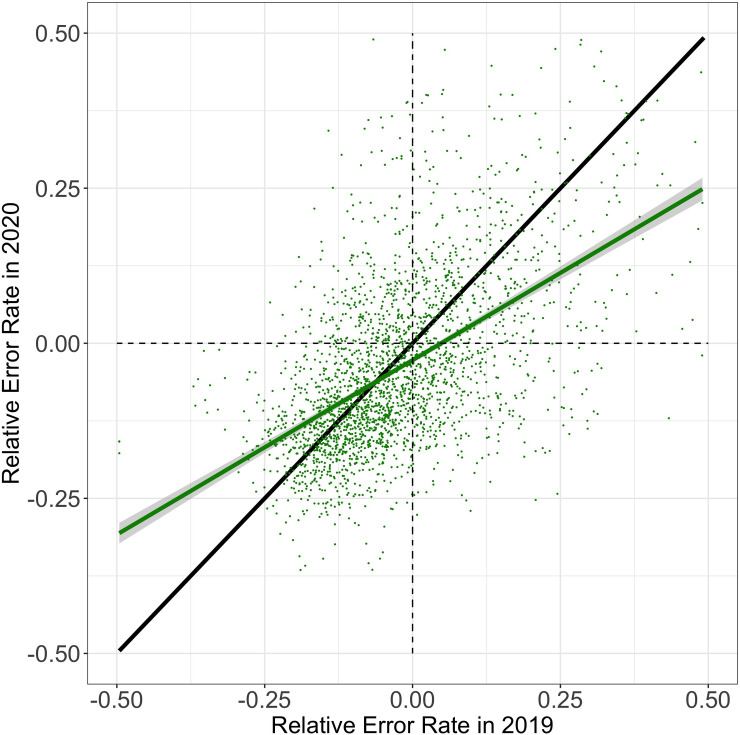
The shutdown of schools in response to the rapid spread of COVID-19 poses risks to the education of young children, including a widening education gap. In the present article, we investigate how school closures in 2020 influenced the performance of German students in a curriculum-based online learning software for mathematics. We analyzed data from more than 2,500 K-12 students who computed over 124,000 mathematical problem sets before and during the shutdown, and found that students’ performance increased during the shutdown of schools in 2020 relative to the year before. Our analyses also revealed that low-achieving students showed greater improvements in performance than high-achieving students, suggesting a narrowing gap in performance between low- and high-achieving students. We conclude that online learning environments may be effective in preventing educational losses associated with current and future shutdowns of schools.
Overview
The claims and statistics of this paper haven’t been checked yet.
Free: it reads the open-access text and checks the first 5 claims that cite a source we can check. Create a free account to check every claim.
Integrity signals
Registry
Cites
Statistics
Figures
Verification
Claims the paper makes
The claims and statistics of this paper haven’t been checked yet.
Free: it reads the open-access text and checks the first 5 claims that cite a source we can check. Create a free account to check every claim.
Claims other papers make about this one
Each is checked against this paper’s own text: does it say what the citing paper says it does?
The source backs part of the claim, not all of it — or backs it for a different population, condition or comparison.
In the citing paper
“Moreover, students increased the time using the online-learning software at home, were less distracted or experienced less time pressure in a home-schooling rather than classroom setting, or were presented with individualized assignments within the online program (see also Meeter, 2021; Spitzer and Musslick, 2021; van der Velde et al., 2021).”
From Effects of COVID-19-Related School Closures on Student Achievement-A Systematic Review (2021) · cites this paper as Spitzer and Musslick, 2021
Experimental — accuracy not yet measuredThe cited source says what the claim attributes to it.
In the citing paper
“Positive effects of the COVID-19-related school closures on student achievement were almost exclusively reported by studies using data from learning apps or online learning environments (Meeter, 2021;Spitzer & Musslick, 2021;van der Velde et al., 2021).”
From The Impact of COVID‐19‐Related School Closures on Student Achievement—A Meta‐Analysis (2022) · cites this paper as Spitzer & Musslick, 2021
The cited source says what the claim attributes to it.
In the citing paper
“Meeter (2021) and Spitzer and Musslick (2021) showed students to improve their mathematics achievement when learning with an online-learning software during the COVID-related school closures.”
From Effects of COVID-19-Related School Closures on Student Achievement-A Systematic Review (2021) · cites this paper as Spitzer and Musslick, 2021
The cited source says what the claim attributes to it.
In the citing paper
“Additionally, low-performing students might be less distracted in comparison to learning in a classroom setting (Spitzer and Musslick, 2021).”
From Effects of COVID-19-Related School Closures on Student Achievement-A Systematic Review (2021) · cites this paper as Spitzer and Musslick, 2021
The cited source says what the claim attributes to it.
In the citing paper
“Finally, low-performing students benefited more from systematic online-learning methods (Clark et al., 2020; Spitzer and Musslick, 2021).”
From Effects of COVID-19-Related School Closures on Student Achievement-A Systematic Review (2021) · cites this paper as Spitzer and Musslick, 2021
1 more claim about this paper
Create a free account to see every claim other papers make about this one.
Self-check
Percentages, sums and reported differences re-computed from the paper’s own numbers.
The self-check needs the paper’s full text.
Citations
Cites
1 retracted
Argyropoulos, K. V., Serrano, A., Hu, J., Black, M., Feng, X., Shen, G., Call, M., Kim, M. J., Lytle, A., Belovarac, B., et al. (2020) · The American Journal of Pathology · doi:10.1016/j.ajpath.2020.07.001 · Cited by 188
RetractedlmerTest Package: Tests in Linear Mixed Effects Models
Kuznetsova, A., Brockhoff, P. B., & Christensen, R. H. B. (2017) · Journal of Statistical Software · doi:10.18637/jss.v082.i13 · Cited by 24,346
Social Foundations of Thought and Action
Bandura, A. (2002) · The Health Psychology Reader · doi:10.4135/9781446221129.n6 · Cited by 9,902 · cited 1×
“, in mathematics, may adopt maladaptive beliefs about their own self-efficacy in learning, hampering further achievement [24, 25].”
BackgroundThe psychological impact of the COVID-19 epidemic on college students in China
Cao, W., Fang, Z., Hou, G., Han, M., Xu, X., Dong, J., & Zheng, J. (2020) · Psychiatry Research · doi:10.1016/j.psychres.2020.112934 · Cited by 5,843 · cited 1×
“While the full consequences of this outage will take years or even decades to unfold, preliminary data highlight immediate effects on student’s academic performance and well-being: the COVID-19 pandemic required students to be educated from home which has been linked to lower performance on national tests [1–10] (note…”
BackgroundStanovich, K. E. (1986) · Reading Research Quarterly · doi:10.1598/rrq.21.4.1 · Cited by 5,222
(2009) · US Department of Education · Cited by 3,654
The expected value of control: an integrative theory of anterior cingulate cortex function
Shenhav, A., Botvinick, M. M., & Cohen, J. D. (2013) · Neuron · doi:10.1016/j.neuron.2013.07.007 · Cited by 2,321
Learning loss due to school closures during the COVID-19 pandemic
Engzell, P., Frey, A., & Verhagen, M. D. (2021) · Proceedings of the National Academy of Sciences · doi:10.1073/pnas.2022376118 · Cited by 1,848
The Advanced Theory of Statistics
L., S., Kendall, M. G., & Stuart, A. (1963) · Population (French Edition) · doi:10.2307/1527192 · Cited by 1,827
Linear Regressions in Fishery Research
Ricker, W. E. (1973) · Journal of the Fisheries Research Board of Canada · doi:10.1139/f73-072 · Cited by 1,799 · cited 1×
“Such a bias can occur in the presence of measurement noise associated with both the predictor and the dependent variable [29].”
Background
Research works printed but not linked: 2
- Wößmann L, Freundl V, Grewenig E, Lergetporer P, Werner K, Zierow L. Coronavirus Crisis Cut the Time Children Spend on Schooling in Half. 2020. Available: https://www.ifo.de/en/node/57298.
- Musslick S, Botvinick MM, Cohen JD. A computational model of control allocation based on the Expected Value of Control. Reinforcement Learning and Decision Making Conference 2015. 2015.
Cited by
Effects of COVID-19-Related School Closures on Student Achievement-A Systematic Review
Hammerstein, S., König, C., Dreisörner, T., & Frey, A. (2021) · Frontiers in Psychology · doi:10.3389/fpsyg.2021.746289 · Cited by 588
“Additionally, low-performing students might be less distracted in comparison to learning in a classroom setting (Spitzer and Musslick, 2021).”
BackgroundInfluentialSchult, J., Mahler, N., Fauth, B., & Lindner, M. A. (2022) · School Effectiveness and School Improvement · doi:10.1080/09243453.2022.2061014 · Cited by 262
“Empirical studies of formative assessments during the first COVID-19 wave showed a performance increase compared to the regular classes in previous years (Meeter, 2021; for older students, see Spitzer & Musslick, 2021).”
ResultThe impact of Covid-19 on student achievement: Evidence from a recent meta-analysis
Di Pietro, G. (2023) · Educational Research Review · doi:10.1016/j.edurev.2023.100530 · Cited by 173
School Performance among Children and Adolescents during COVID-19 Pandemic: A Systematic Review
Panagouli, E. D., Stavridou, A., Savvidi, C., Kourti, A., Ψαλτοπούλου, Θ., Sergentanis, T. Ν., & Τσίτσικα, Ά. (2021) · Children · doi:10.3390/children8121134 · Cited by 174
“Low-achievement students, who either presented improvements [7,30,37] or performed poorly, acquired greater changes in performance [25,34].”
BackgroundResultInfluentialStudents’ Perceptions of Online Learning during COVID-19 Pandemic: A Qualitative Approach
Curelaru, M., Curelaru, V., & Cristea, M. (2022) · Sustainability · doi:10.3390/su14138138 · Cited by 146
“In another study on K–12 students, low-performing students showed greater improvements in performance than high-performing students, suggesting that online learning had different effects and narrowed the gap between lowand high-performing students [52].”
Nachouki, M., Mohamed, E. A., Mehdi, R. A. K., & Naaj, M. A. (2023) · Trends in Neuroscience and Education · doi:10.1016/j.tine.2023.100214 · Cited by 149
“However, Spitzer and Musslick [53] found that students’ performance increased during the shutdown of schools in 2020 relative to the year before.”
BackgroundThe Impact of COVID‐19‐Related School Closures on Student Achievement—A Meta‐Analysis
König, C., & Frey, A. (2022) · Educational Measurement: Issues and Practice · doi:10.1111/emip.12495 · Cited by 147
Schult, J., Mahler, N., Fauth, B., & Lindner, M. A. (2021) · doi:10.31234/osf.io/pqtgf · Cited by 262
Addressing Students Learning Gaps in Mathematics through Differentiated Instruction
Aguhayon, H., Tingson, R., & Pentang, J. T. (2023) · International Journal of Educational Management and Development Studies · doi:10.53378/352967 · Cited by 125
Cortés-Albornoz, M. C., Ramírez-Guerrero, S., García-Guáqueta, D. P., Vélez-van-Meerbeke, A., & Talero‐Gutiérrez, C. (2023) · International Journal of Educational Development · doi:10.1016/j.ijedudev.2023.102835 · Cited by 117
“Of these, only one study reported improved children’s academic outcomes, comparing the relative error and absolute error rates in mathematical problem sets in 2500 German students from grades 4–10 before and during school closures (Spitzer and Musslick, 2021).”
InfluentialMeeter, M. (2021) · Trends in Neuroscience and Education · doi:10.1016/j.tine.2021.100163 · Cited by 85
“This replicates such findings of Spitzer and Musslik [10].”
Fütterer, T., Hoch, E., Lachner, A., Scheiter, K., & Stürmer, K. (2023) · Computers & Education · doi:10.1016/j.compedu.2023.104788 · Cited by 97
Lerkkanen, M., Pakarinen, E., Salminen, J., & Torppa, M. (2022) · Reading and Writing · doi:10.1007/s11145-022-10358-3 · Cited by 82
“For example, Spitzer and Musslick (2021) showed that students’ performance in math at K-12 (N = 2500) increased during the lockdown in Germany.”
BackgroundResultYang, Y., Chen, L., He, W., Sun, D., & Salas‐Pilco, S. Z. (2024) · International Journal of Artificial Intelligence in Education · doi:10.1007/s40593-024-00422-0 · Cited by 103
“Furthermore, during COVID-19, Spitzer et al. found that disadvantaged students made significant progress with AI-enhanced online math learning software (Spitzer & Musslick, 2021).”
Spitzer, M., Gutsfeld, R., Wirzberger, M., & Moeller, K. (2021) · Trends in Neuroscience and Education · doi:10.1016/j.tine.2021.100168 · Cited by 80
Self-citationNo evidence of a major learning slide 14 months into the COVID-19 pandemic in Denmark
Birkelund, J. F., & Karlson, K. B. (2022) · European Societies · doi:10.1080/14616696.2022.2129085 · Cited by 80
“Moreover, a number of studies suggest that students ’ performance in online-learning environments has generally increased during the pandemic (Meeter 2021; Spitzer and Musslick 2021; Tomasik et al .”
BackgroundExploring the factors that influence academic performance in Jordanian higher education institutions
Al‐Okaily, M., Magatef, S. G., Al-Okaily, A., & Shiyyab, F. S. (2024) · Heliyon · doi:10.1016/j.heliyon.2024.e33783 · Cited by 74
“Spitzer and Musslick [26] conducted a study that examined the expanding disparity in education, namely among youngsters, due to the swift transmission of COVID-19 and the shutdown of schools.”
BackgroundLiao, H., Ma, S., & Xue, H. (2022) · China Economic Review · doi:10.1016/j.chieco.2022.101847 · Cited by 66
Schult, J., Mahler, N., Fauth, B., & Lindner, M. A. (2022) · Frontiers in Education · doi:10.3389/feduc.2022.867316 · Cited by 71
Capinding, A. T. (2022) · European Journal of Educational Research · doi:10.12973/eu-jer.11.2.917 · Cited by 68
“In contrast, Spitzer and Musslick (2021) discovered that students' performance increased significantly before and throughout the shutdown, based on data from over 2,500 K12 students who computed over 124,000 mathematical problem sets before and after the closure.”
BackgroundNavigating learners towards technology-enhanced learning during post COVID-19 semesters
Ironsi, C. S. (2022) · Trends in Neuroscience and Education · doi:10.1016/j.tine.2022.100189 · Cited by 53
Stella, M. (2022) · Journal of Complex Networks · doi:10.1093/comnet/cnac012 · Cited by 46
Online teaching, procrastination and student achievement
De Paola, M., Gioia, F., & Scoppa, V. (2023) · Economics of Education Review · doi:10.1016/j.econedurev.2023.102378 · Cited by 38
Effects of the COVID-19 pandemic on reading performance of second grade children in Germany
Förster, N., Forthmann, B., Back, M. D., & Souvignier, E. (2022) · Reading and Writing · doi:10.1007/s11145-022-10379-y · Cited by 44
“In some studies, positive effects of school closures on student achievement have been found, and in three of these studies, some kind of learning software was used to assess student achievement (Meeter, 2021; Spitzer & Musslick, 2021; van der Velde et al., 2021).”
Spitzer, M., & Moeller, K. (2022) · Journal of Computer Assisted Learning · doi:10.1111/jcal.12721 · Cited by 32
Self-citationSpitzer, M., & Moeller, K. (2023) · Trends in Neuroscience and Education · doi:10.1016/j.tine.2023.100203 · Cited by 30
“Consequently, students were required to rapidly shift to distance learning scenarios [3–8], relying on digital learning software—such as intelligent tutoring systems(1)—for distance learning, in lieu of traditional in-person schooling [9,10].”
BackgroundMethodResultInfluentialSelf-citationSpitzer, M., Ruiz-García, M., & Moeller, K. (2024) · British Journal of Educational Technology · doi:10.1111/bjet.13517 · Cited by 29
Self-citationLalin, S. A. A., Ahmed, M. N. Q., & Haq, S. M. A. (2024) · Regional Science Policy & Practice · doi:10.1016/j.rspp.2024.100046 · Cited by 29
Kosiyaporn, H., Phaiyarom, M., Uansri, S., Kunpeuk, W., Julchoo, S., Sinam, P., Pudpong, N., & Suphanchaimat, R. (2023) · PLoS ONE · doi:10.1371/journal.pone.0286674 · Cited by 27
Hilz, A., Guill, K., Roloff, J., Sommerhoff, D., & Aldrup, K. (2023) · Journal of Intelligence · doi:10.3390/jintelligence11060108 · Cited by 28
“Further, inactivity and dropout rates are serious issues when investigating the effects of learning programs, and they might explain missing effects as well (Bacca-Acosta and Avila-Garzon 2021; Spitzer and Musslick 2021).”
Backgroundde la Maisonneuve, C., Égert, B., & Turner, D. D. (2022) · OECD Economics Department working papers · doi:10.1787/eea048c5-en · Cited by 26
ETHNO-FLIPPED CLASSROOM MODEL: SEBUAH REKOMENDASI MODEL PEMBELAJARAN MATEMATIKA DI MASA NEW NORMAL
Ramadhani, R., Syahputra, E., & Simamora, E. (2022) · AXIOM Jurnal Pendidikan dan Matematika · doi:10.30821/axiom.v10i2.10331 · Cited by 27
“…yang dirasakan siswa selama mengikuti proses pembelajaran jarak jauh berbasis teknologi, diantaranya meningkatkan motivasi belajar siswa, meningkatkan minat belajar, serta capaian akademik yang cukup menjanjikan (Khan, Vivek, Khojah, et al., 2021; Spitzer & Musslick, 2021; Wei et al., 2020).”
BackgroundFu, L., Zeng, Y., & Kang, X. (2023) · Child & Family Social Work · doi:10.1111/cfs.13045 · Cited by 24
Developmental Losses in Young Children from Preprimary Program Closures during the COVID-19 Pandemic
Abufhele, A., Bravo, D., Bóo, F. L., & Soto‐Ramírez, P. (2024) · Comparative Education Review · doi:10.1086/731588 · Cited by 22
Cano, J. S. (2022) · International Journal on Social and Education Sciences · doi:10.46328/ijonses.369 · Cited by 25
Pulungan, D. A., Retnawati, H., & Jaedun, . (2022) · Qualitative Research in Education · doi:10.17583/qre.9805 · Cited by 23
The influence of social support on academic performance: The mediating role of cognitive engagement
Achdiyah, H. N., Latipun, L., & Yuniardi, M. S. (2023) · Jurnal Ilmiah Psikologi Terapan · doi:10.22219/jipt.v11i2.22651 · Cited by 11
How Challenging It Is to Learn Mathematics Online
Casinillo, L. F., Casinillo, E. L., Valenzona, J. V., Almonite, M. R. C., & Valenzona, D. L. (2022) · Philippine Social Science Journal · doi:10.52006/main.v5i1.447 · Cited by 20
A meta-analysis of students’ academic learning losses over the course of the COVID-19 pandemic
Wisenöcker, A. S., Helm, C., Große, C. S., Hübner, N., & Zitzmann, S. (2025) · Learning and Instruction · doi:10.1016/j.learninstruc.2025.102111 · Cited by 29
Sydänmaanlakka, A., Häsä, J., Holm, M. E., & Hannula, M. S. (2024) · Learning and Individual Differences · doi:10.1016/j.lindif.2024.102486 · Cited by 19
A meta-analysis of the impact of COVID-19 on student achievement
Storey, N., & Zhang, Q. (2024) · Educational Research Review · doi:10.1016/j.edurev.2024.100624 · Cited by 18
Spitzer, M., Moeller, K., & Musslick, S. (2023) · PLoS ONE · doi:10.1371/journal.pone.0284868 · Cited by 19
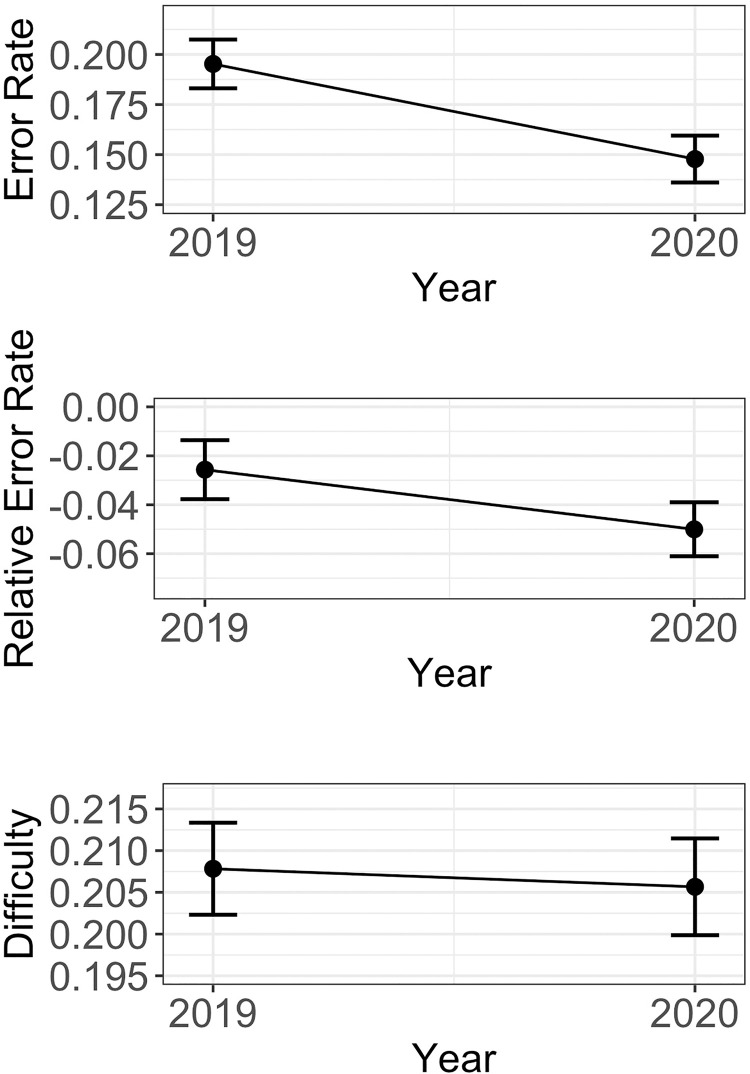
“In an earlier study, we measured students’ performance in terms of their average error rate, normalized by problem set difficulty [6].”
BackgroundResultInfluentialSelf-citationMartínez-Líbano, J., & Yeomans‐Cabrera, M. (2023) · Frontiers in Education · doi:10.3389/feduc.2023.1293259 · Cited by 25
Hou, Y., Qin, C., & Xu, P. (2024) · Behavioral Sciences · doi:10.3390/bs14100867 · Cited by 22
“To be specific, some researchers found that there were certain correlations linking online learning behavior and prosocial behavior with students’ educational development [13,14].”
BackgroundLiu, Z. (2023) · SAGE Open · doi:10.1177/21582440231218114 · Cited by 17
“In contrast, some studies have reported that online instruction improves learning outcomes (Bourelle et al., 2016; Clark et al., 2021; T. Gonzalez et al., 2020; Kamal et al., 2021; Means et al., 2009; Spitzer & Musslick, 2021).”
ResultSpitzer, M., & Moeller, K. (2024) · Computers and Education Open · doi:10.1016/j.caeo.2024.100162 · Cited by 16
Self-citationAdaptive learning in bionics: transforming science education
Honke, N., & Becker, S. (2025) · Frontiers in Education · doi:10.3389/feduc.2025.1427083 · Cited by 18
Elementary school teachers’ perspectives about learning during the COVID-19 pandemic
Alvarez-Rivero, A., Odgers, C. L., & Ansari, D. (2023) · npj Science of Learning · doi:10.1038/s41539-023-00191-w · Cited by 18
Intelligent Tutoring Systems Need Teachers
Bardach, L., Moeller, K., Ruiz-García, M., Strittmatter, Y., Meyer, J., Musslick, S., & Spitzer, M. (2025) · Journal of Computer Assisted Learning · doi:10.1002/jcal.70159 · Cited by 17
Self-citationSocial disparities in students’ intention to enter higher education during the COVID-19 pandemic
Stark, J., Daniel, A., & Twardawski, M. (2022) · PLoS ONE · doi:10.1371/journal.pone.0267978 · Cited by 8
“This may have limited upper secondary school students in their exploration of career opportunities outside of their family environment [28, 32].”
BackgroundResultOrbach, L., Fritz, A., Haase, V. G., Dowker, A., & Räsänen, P. (2023) · Frontiers in Education · doi:10.3389/feduc.2023.1083074 · Cited by 16
Hospital homebound students and K-12 online schooling
Black, E. W., Ferdig, R. E., Fleetwood, A., & Thompson, L. A. (2022) · PLoS ONE · doi:10.1371/journal.pone.0264841 · Cited by 16
Alkouri, Z., & Wardat, Y. (2025) · International Electronic Journal of Mathematics Education · doi:10.29333/iejme/16662 · Cited by 14
Khajuria, R., Sharma, A., & Sharma, A. K. (2023) · Indonesian Journal of Electrical Engineering and Computer Science · doi:10.11591/ijeecs.v29.i3.pp1634-1641 · Cited by 15
“Spitzer and Musslick [5] have worked on During the school closures caused by the COVID-19 epidemic, the academic achievement of K-12 children in an online learning environment for mathematics improved.”
Lo, C. K., Hew, K. F., Xu, S., Song, Y., Chen, G., & Jong, M. S. (2025) · Journal of Computer Assisted Learning · doi:10.1111/jcal.70005 · Cited by 14
Svaleryd, H., & Vlachos, J. (2022) · Springer eBooks · doi:10.1007/978-3-319-57365-6_318-1 · Cited by 14
Online and In-Class Evaluation of a Music Theory E-Learning Platform
Pesek, M., Klavž, F., Šavli, P., & Marolt, M. (2022) · Applied Sciences · doi:10.3390/app12147296 · Cited by 11
“Moreover, online learning environments may be needed to prevent knowledge loss in future situations similar to the recent COVID-19 outbreak, where in-class learning is not available or permitted [9].”
BackgroundKapoor, G., Vostanis, A., Mejía-Buenaño, S., & Langdon, P. E. (2023) · Journal of Behavioral Education · doi:10.1007/s10864-023-09520-w · Cited by 11
“The recent COVID-19 pandemic led to major educational disruptions, with an abrupt shift to online learning, and adverse effects on student well-being and attainment (Chaabane et al., 2021; Spitzer & Musslick, 2021).”
Lopres, J. R., Niadas, G. Y., Minez, G. P., Lopres, G. M., Gutierrez, M. I., Quiap, A. M. Q., & Bangot, S. R. O. (2023) · International Journal of Learning Teaching and Educational Research · doi:10.26803/ijlter.22.5.9 · Cited by 12
Learning physics online or face-to-face: A case study of STEM and non-STEM students
AlZohbi, G., Pilotti, M., Abdelsalam, H., & El-Moussa, O. J. (2022) · Frontiers in Psychology · doi:10.3389/fpsyg.2022.1041187 · Cited by 8
Dental Student Perceptions of Distance Education over Time: A Mixed-Methods Study
Yeh, S. Y., Ramesh, N. P., Kaczmarek-Stewart, K., Ahn, C., Li, A., & Ohyama, H. (2023) · Dentistry Journal · doi:10.3390/dj11100233 · Cited by 8
“While some studies have indicated adverse effects of distance learning on academic performance [10–12], others have demonstrated that it may have maintained the quality of student learning [13–16].”
BackgroundDevelopment and validation of School Resilience Questionnaire (SRQ) in Iranian adolescents
Afzali, L., & Hosseinian, S. (2024) · BMC Psychology · doi:10.1186/s40359-023-01496-6 · Cited by 11
“By prioritizing a nurturing atmosphere, educational institutions significantly enhance student engagement, motivation, and satisfaction with their educational experience, thereby strengthening their connection to the school [6].”
BackgroundCoscos, R. M. M., Doncillo, J. A. D., Sausal, J. M., Tanquilan, M. C. M., Tumana, S. R. S., & Ucang, J. T. (2022) · International Journal of Applied Science and Research · doi:10.56293/ijasr.2022.5404 · Cited by 9
The Impact of the COVID-19 Pandemic on Education Learning
Sanz, I., & Tena, J. D. (2023) · Springer eBooks · doi:10.1007/978-3-031-45802-6_2 · Cited by 7
E-learning in the Time of COVID-19
(2021) · E-learning · doi:10.34916/el.2021.13 · Cited by 8
Perusopetuksen tilannekuva erilaistuvissa kunnissa: Manner-Suomen kuntien tarkastelu
Kalalahti, M., Minkkinen, L., Saarinen, T., Tyni, K., Vaara, E., Ala‐Vähälä, T., Häkkinen, P., Jänkälä, J.-P., Pitkänen, H., Pöysä‐Tarhonen, J., et al. (2025) · Koulutuksen tutkimuslaitos Raportteja ja työpapereita · doi:10.17011/ktl-rt/16 · Cited by 6
The impact of personality type on online learning performance among high school students
Wang, Y., Yu, R., Wu, X., Chen, Z., & Huang, Y. (2024) · Education and Information Technologies · doi:10.1007/s10639-024-13161-5 · Cited by 7
“Similarly, a study from Germany reported that students’ mathematical performance improved during the period of online learning compared to the previous year (Spitzer & Musslick, 2021).”
Modeling Creativity and Enjoyment in Learning Statistics Online in the New Normal
Casinillo, L. F. (2022) · Philippine Social Science Journal · doi:10.52006/main.v5i4.601 · Cited by 6
“…will determine the socioeconomic profile of students (Francom et al., 2021), their learning experience amid the pandemic (Suprianto et al., 2020; Spitzer & Musslick, 2021), social relationships (Gardee, 2019; Thurston et al., 2020), and health (Zhai & Du, 2020; Ziols & Kirchgasler, 2021), among…”
BackgroundKim, J., Burey, J., Hwang, H., McMaster, K. L., & Kendeou, P. (2022) · Reading and Writing · doi:10.1007/s11145-022-10391-2 · Cited by 6
“Changes in and interruptions to students’ learning environments during the pandemic have prompted deep concerns about the learning challenges that students are experiencing as a result (Spitzer & Musslick, 2021).”
BackgroundResultInfluentialThe use of digital tools in teaching general mathematics among senior high students
Aljas, C. J. D., Suana, E. O., & Saldivar, J. M. N. (2025) · International Journal of Educational Technology and Learning · doi:10.55217/101.v18i1.912 · Cited by 5
“The usage of online learning modules in General Mathematics is related to Spitzer and Musslick (2021) study, which found that closing schools in 2020 had a favourable influence on students' performance in an online math learning environment.”
Salazar, S. D. S., Gil‐Pareja, S., & García-Grande, M. J. (2022) · Applied Economic Analysis · doi:10.1108/aea-04-2021-0083 · Cited by 6
de la Maisonneuve, C., Égert, B., & Turner, D. (2023) · Economies · doi:10.3390/economies11120289 · Cited by 5
Harkin, B., Yates, A., Wright, L., & Nerantzi, C. (2022) · International Journal Of Management and Applied Research · doi:10.18646/2056.91.22-003 · Cited by 5
“As such, we offer a solution to a plethora of excellent research which looks at the various components of the DLS from a descriptive (e.g., Carrillo & Flores, 2020; Nerantzi, 2017) or reductionist (e.g., Almendingen, et al., 2021; Spitzer & Musslick, 2021) perspective.”
BackgroundShree, T., Juneja, K., Srivastava, S., & Mahajan, H. (2022) · Indian Journal of Community Health · doi:10.47203/ijch.2022.v34i02.013 · Cited by 5
“Spitzer & Musslick, in a study done among German students assessing their performance before and after lockdown, found that there was an overall increase in the performance of the students and also an improvement was observed in the performance of low-achieving students.(20) According to our study, a comparable propor…”
ResultCasler-Failing, S. L. (2024) · Journal of Teaching and Learning · doi:10.22329/jtl.v18i1.7813 · Cited by 4
Kreitz-Sandberg, S., Enderle, C., Isaksson, J., Fredriksson, U., & Backlund, Å. (2025) · Scandinavian Journal of Educational Research · doi:10.1080/00313831.2025.2558721 · Cited by 4
“…effects on children’s lives in Europe and beyond, resulting in a worsening of both mental health (Chaabane et al., 2021; Meherali et al., 2021; Ravens-Sieberer et al., 2022) and social, emotional and academic learning (Aguaded et al., 2023; Hammerstein et al., 2021; Spitzer & Musslick, 2021).”
Putriani, C., & Aini, I. N. (2022) · Eduma Mathematics Education Learning and Teaching · doi:10.24235/eduma.v11i1.10001 · Cited by 4
"Exploring the Impact of Online Learning on Student Academic Performance in Higher Education"
Tara, A. N., Tariq, A., & Zhang, Y. (2023) · Sir Syed Journal of Education & Social Research (SJESR) · doi:10.36902/sjesr-vol6-iss4-2023(16-25 · Cited by 5
Pariyanto, Abdullah, S., Nugroho, M., Barata, F. A., Pramesti, T., Putri, E. P., Ahmad, R. B., Ahmad, A., & Ahmad, A. (2025) · Pertanika journal of social science & humanities · doi:10.47836/pjssh.33.1.21 · Cited by 4
Obina, J. E., Tecson, R. Q. S., Kalis, G. L. G., & Bura-ay, D. C. (2025) · European Journal of Education Studies · doi:10.46827/ejes.v12i1.5776 · Cited by 4
Pedagogical Goal-setting in a Digital Environment: Problem Actualization
Noskova, T., & Pavlova, T. B. (2021) · E-learning · doi:10.34916/el.2021.13.11 · Cited by 4
Compagnoni, M., Rechsteiner, B., Grob, U., Bayer, N., Wullschleger, A., & Merki, K. M. (2023) · Zeitschrift für Pädagogische Psychologie · doi:10.1024/1010-0652/a000366 · Cited by 7
Interacción asíncrona y recursos discursivos para la construcción del conocimiento en pandemia
Ramírez, J. C. C. (2023) · HUMAN REVIEW International Humanities Review / Revista Internacional de Humanidades · doi:10.37467/revhuman.v18.4853 · Cited by 3
Lee, J., Ottmar, E., Chan, J. Y., Decker, L. E., & Booker, B. (2025) · Learning Environments Research · doi:10.1007/s10984-025-09525-4 · Cited by 3
“Additionally, some research indicates that virtual learning might be effective in mitigating learning loss (Meeter, 2021; Spitzer & Musslick., 2021).”
Žilková, K., & Kondeková, A. (2021) · E-learning · doi:10.34916/el.2021.13.10 · Cited by 3
Magatef, S. G., Abuhussein, T., Ashour, L. M., Rehman, S. U., & Al‐Okaily, M. (2024) · Global Knowledge, Memory and Communication · doi:10.1108/gkmc-07-2023-0260 · Cited by 3
RetractedAccess, Supports, and Performance in Dual Enrollment: A COVID-19 Case’s Implications for Equity
Giani, M., Khandekar, S., & Porter, J. (2025) · AERA Open · doi:10.1177/23328584251327161 · Cited by 3
“…students’ achievement accelerated even faster than that of high-achieving students during COVID-19 lock-downs in online learning contexts (Spitzer & Musslick, 2021), NAEP data clearly showed that educational inequalities by race/ethnicity and prior achievement widened overall (NAEP,…”
InfluentialEffects of the COVID-19 pandemic on academic success in higher education
Bassleer, M., Schelfhout, S., Fonteyne, L., Caen, M., Bourdeaudhuij, I. D., Dirix, N., & Duyck, W. (2025) · Educational Assessment Evaluation and Accountability · doi:10.1007/s11092-025-09456-x · Cited by 3
“…COVID-19 research, only in compulsory education, examined how academic success of low-, (average) and high-achieving students, using population percentiles (Schult et al., 2021) or relative error rates (Spitzer & Musslick, 2021), differ between spring 2020 and at least one previous academic year.”
Students' Mathematical Understanding Ability Through the M-Apos Approach on Derivative Materials
Tamalene, H., Palinussa, A. L., & Silitonga, R. H. Y. (2022) · AL-ISHLAH Jurnal Pendidikan · doi:10.35445/alishlah.v14i3.1876 · Cited by 4
“The lack of teaching materials also makes learning difficult, so students' understanding abilities are low (Spitzer & Musslick, 2021).”
BackgroundHelm, C., Huber, S. G., & Postlbauer, A. (2021) · Zenodo (CERN European Organization for Nuclear Research) · doi:10.5281/zenodo.5795035 · Cited by 3
Study Habits and Learners’ Performance During Online Distance Learning
Freo, I. M. B. (2022) · International Journal of Research Publications · doi:10.47119/ijrp1001041720223528 · Cited by 2
Lumacad, G. S., Damasing, J. V. C., Tacastacas, S. B. M., & Quipanes, A. R. T. (2022) · Latin American Conference on Learning Technologies (LACLO) · doi:10.1109/laclo56648.2022.10013373 · Cited by 2
Digel, S., & Röth, J. (2023) · Edition Fachdidaktiken · doi:10.1007/978-3-658-40109-2_26 · Cited by 2
Evaluating Students’ Performance Relative to Their Time Investment in an Asynchronous Online Class
Ilozor, B. D., Efuntoye, O. T., & Das, R. R. (2023) · The Journal of Technology Management and Applied Engineering · doi:10.31274/jtmae.1679 · Cited by 2
Pulumbarit, J. P., Pulumbarit, C. B., & Pulumbarit (2024) · INTERNATIONAL JOURNAL OF MULTIDISCIPLINARY RESEARCH AND ANALYSIS · doi:10.47191/ijmra/v7-i01-31 · Cited by 2
Vaknin‐Nusbaum, V., & Nevo, E. (2025) · Educational Technology Research and Development · doi:10.1007/s11423-025-10518-6 · Cited by 2
“While students in higher grades were able to adapt to distance learning, drawing on their prior exposure to digital learning components woven into regular instruction (König & Frey, 2022; Spitzer & Musslick, 2021), their younger counterparts encountered greater challenges.”
Analytics and Gaps in the Use of Digital Platforms for Mathematics Education in Uruguay
Zidán, E. R., Biagas, G. B., & Solari, M. (2025) · Revista Electrónica de Investigación Educativa · doi:10.24320/redie.2025.27.e05.6438 · Cited by 2
“These findings contradict previous research conducted in Uruguay, which found no significant gender-based differences in the impact of PAM use on mathematics learning in primary education (Perera & Aboal, 2018), as well as international reports (Spitzer & Musslick, 2021).”
InfluentialIncreased performance in tutoring systems during COVID-19 in Uruguay and Germany
Spitzer, M., Bardach, L., Kopatz, M., & Moeller, K. (2026) · Acta Psychologica · doi:10.1016/j.actpsy.2026.107955 · Cited by 2
Self-citationHubungan antara Tingkat Kecanduan Game Online dengan Prestasi Akademik SiswaSMA
Amril, A. F., Surur, N., & Hidayat, R. R. (2022) · Jurnal Psikoedukasi dan Konseling · doi:10.20961/jpk.v6i2.61295 · Cited by 4
Internet use and educational outcomes – a cross-country panel study
Bala, P. (2024) · Applied Economics Letters · doi:10.1080/13504851.2024.2332555 · Cited by 1
“…impact educational outcomes by preventing educational losses associated with shutdowns of schools, such as during the COVID-19 pandemic (e.g. Spitzer, Musslick, and Petri 2021), and by teaching students in blended learning conditions, which is more effective than traditional face-to-face…”
Metadata
- Authors
- Spitzer, M. W. H., & Musslick, S.
- Affiliations
- University of Freiburg (DE)
- Princeton University (US)
- Corresponding author
- Spitzer, Markus Wolfgang Hermann
- Venue
- PLOS ONE
- Publisher
- Public Library of Science (PLoS)
- Published
- 2021-08-03
- Volume
- 16
- Issue
- 8
- Pages
- e0255629
- ISSN
- 1932-6203 (ISSN-L)
- PMC
- PMC8330947
- OpenAlex
- W3192682282
- Cited by
- 138
- References
- 70
- Citations by year
- 2026: 9 · 2025: 21 · 2024: 26 · 2023: 31 · 2022: 42 · 2021: 9
- FWCI
- 47.48
- Type
- journal article
- Language
- en
- Open access
- gold
- doi.org
- Licence
- Locations
- PLoS ONE (publishedVersion, cc-by)
- PubMed Central (publishedVersion, cc-by)
- PubMed (publishedVersion)
- DOAJ (DOAJ: Directory of Open Access Journals) (submittedVersion, cc-by-sa)
- EdArXiv (OSF Preprints) (submittedVersion)
- EdArXiv (OSF Preprints) (submittedVersion, cc-by-nc-nd)
- Funders
- John Templeton Foundation (61434)
- Topics
- Social Sciences › Education › Education during COVID-19 pandemic
- Social Sciences › Education › Online Learning Methods and Innovations
- Physical Sciences › Computer Science › Computer Science Applications › Online Learning and Analytics
- Keywords
- COVID-19 school closures, online learning, mathematics achievement, K-12 students, educational inequality, low-achieving students, high-achieving students, educational losses, adaptive learning software, German students
- MeSH terms
- Academic Performance, COVID-19, SARS-CoV-2, Adolescent, Child, Child, Preschool, Germany, Humans, Mathematics, Software, Education, Distance, Pandemics
About these checks
Registry, retraction, Cites and statistics results are computed, not judged, with one exception: a printed reference that no index lists is read once by a model before it counts as a citation error. Claims are extracted by a model and kept only when their quote appears verbatim in the text; each cited source is then checked, with a model’s help, for whether it says what the claim relies on. Those verdicts can be wrong — read the claim’s quote and the cited source before relying on one.
Statistics and arithmetic are recomputed, not judged.
Confidence bands are shown only for fields calibrated on our annotated test set. None is calibrated yet, so no band is shown.
What counts as a claim ›How we measure confidence ›How we check this ›
Are you an author, or do you see a problem with this page? Request a review
Data sources
Bibliographic data: Semantic Scholar, OpenAlex, Crossref.
Contains information from the Semantic Scholar Academic Graph Datasets, made available under the ODC Attribution License (ODC-BY 1.0).
Semantic Scholar’s data is described in: Kinney, R., et al. (2023). The Semantic Scholar Open Data Platform. arXiv:2301.10140.
