

Academic performance of K-12 students in an online-learning environment for mathematics increased during the shutdown of schools in wake of the COVID-19 pandemic
Open accessThe DOI matches its Crossref record; 65 of the 72 references it cites were found in a registry or an index, and 6 are not checked yet.
Abstract
The shutdown of schools in response to the rapid spread of COVID-19 poses risks to the education of young children, including a widening education gap. In the present article, we investigate how school closures in 2020 influenced the performance of German students in a curriculum-based online learning software for mathematics. We analyzed data from more than 2,500 K-12 students who computed over 124,000 mathematical problem sets before and during the shutdown, and found that students’ performance increased during the shutdown of schools in 2020 relative to the year before. Our analyses also revealed that low-achieving students showed greater improvements in performance than high-achieving students, suggesting a narrowing gap in performance between low- and high-achieving students. We conclude that online learning environments may be effective in preventing educational losses associated with current and future shutdowns of schools.
Overview
The claims and statistics of this paper haven’t been checked yet.
Free: it reads the open-access text and checks the first 5 claims that cite a source we can check. Create a free account to check every claim.
Integrity signals
Registry
Cites
Statistics
Figures
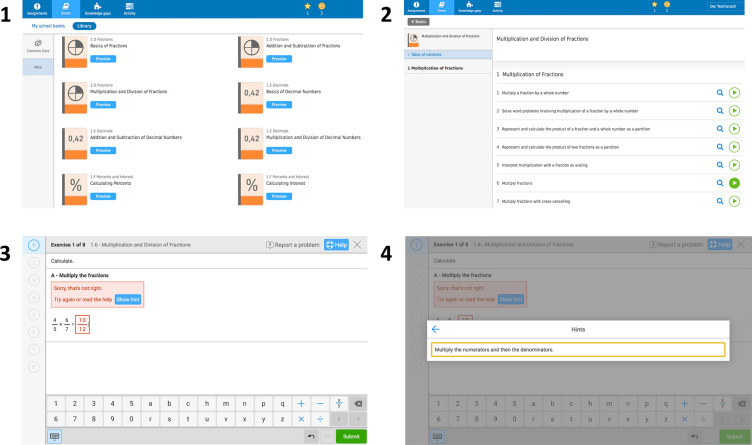
Verification
Claims the paper makes
The claims and statistics of this paper haven’t been checked yet.
Free: it reads the open-access text and checks the first 5 claims that cite a source we can check. Create a free account to check every claim.
Claims other papers make about this one
Each is checked against this paper’s own text: does it say what the citing paper says it does?
The source backs part of the claim, not all of it — or backs it for a different population, condition or comparison.
In the citing paper
“Moreover, students increased the time using the online-learning software at home, were less distracted or experienced less time pressure in a home-schooling rather than classroom setting, or were presented with individualized assignments within the online program (see also Meeter, 2021; Spitzer and Musslick, 2021; van der Velde et al., 2021).”
From Effects of COVID-19-Related School Closures on Student Achievement-A Systematic Review (2021) · cites this paper as Spitzer and Musslick, 2021
Experimental — accuracy not yet measuredThe cited source says what the claim attributes to it.
In the citing paper
“Positive effects of the COVID-19-related school closures on student achievement were almost exclusively reported by studies using data from learning apps or online learning environments (Meeter, 2021;Spitzer & Musslick, 2021;van der Velde et al., 2021).”
From The Impact of COVID‐19‐Related School Closures on Student Achievement—A Meta‐Analysis (2022) · cites this paper as Spitzer & Musslick, 2021
The cited source says what the claim attributes to it.
In the citing paper
“Meeter (2021) and Spitzer and Musslick (2021) showed students to improve their mathematics achievement when learning with an online-learning software during the COVID-related school closures.”
From Effects of COVID-19-Related School Closures on Student Achievement-A Systematic Review (2021) · cites this paper as Spitzer and Musslick, 2021
The cited source says what the claim attributes to it.
In the citing paper
“Additionally, low-performing students might be less distracted in comparison to learning in a classroom setting (Spitzer and Musslick, 2021).”
From Effects of COVID-19-Related School Closures on Student Achievement-A Systematic Review (2021) · cites this paper as Spitzer and Musslick, 2021
The cited source says what the claim attributes to it.
In the citing paper
“Finally, low-performing students benefited more from systematic online-learning methods (Clark et al., 2020; Spitzer and Musslick, 2021).”
From Effects of COVID-19-Related School Closures on Student Achievement-A Systematic Review (2021) · cites this paper as Spitzer and Musslick, 2021
1 more claim about this paper
Create a free account to see every claim other papers make about this one.
Self-check
Percentages, sums and reported differences re-computed from the paper’s own numbers.
The self-check needs the paper’s full text.
Citations
Cites
1 retracted
Argyropoulos, K. V., Serrano, A., Hu, J., Black, M., Feng, X., Shen, G., Call, M., Kim, M. J., Lytle, A., Belovarac, B., et al. (2020) · The American Journal of Pathology · doi:10.1016/j.ajpath.2020.07.001 · Cited by 188
RetractedlmerTest Package: Tests in Linear Mixed Effects Models
Kuznetsova, A., Brockhoff, P. B., & Christensen, R. H. B. (2017) · Journal of Statistical Software · doi:10.18637/jss.v082.i13 · Cited by 24,346
Social Foundations of Thought and Action
Bandura, A. (2002) · The Health Psychology Reader · doi:10.4135/9781446221129.n6 · Cited by 9,902 · cited 1×
“, in mathematics, may adopt maladaptive beliefs about their own self-efficacy in learning, hampering further achievement [24, 25].”
BackgroundThe psychological impact of the COVID-19 epidemic on college students in China
Cao, W., Fang, Z., Hou, G., Han, M., Xu, X., Dong, J., & Zheng, J. (2020) · Psychiatry Research · doi:10.1016/j.psychres.2020.112934 · Cited by 5,843 · cited 1×
“While the full consequences of this outage will take years or even decades to unfold, preliminary data highlight immediate effects on student’s academic performance and well-being: the COVID-19 pandemic required students to be educated from home which has been linked to lower performance on national tests [1–10] (note…”
BackgroundStanovich, K. E. (1986) · Reading Research Quarterly · doi:10.1598/rrq.21.4.1 · Cited by 5,222
(2009) · US Department of Education · Cited by 3,654
The expected value of control: an integrative theory of anterior cingulate cortex function
Shenhav, A., Botvinick, M. M., & Cohen, J. D. (2013) · Neuron · doi:10.1016/j.neuron.2013.07.007 · Cited by 2,321
Learning loss due to school closures during the COVID-19 pandemic
Engzell, P., Frey, A., & Verhagen, M. D. (2021) · Proceedings of the National Academy of Sciences · doi:10.1073/pnas.2022376118 · Cited by 1,848
The Advanced Theory of Statistics
L., S., Kendall, M. G., & Stuart, A. (1963) · Population (French Edition) · doi:10.2307/1527192 · Cited by 1,827
Linear Regressions in Fishery Research
Ricker, W. E. (1973) · Journal of the Fisheries Research Board of Canada · doi:10.1139/f73-072 · Cited by 1,799 · cited 1×
“Such a bias can occur in the presence of measurement noise associated with both the predictor and the dependent variable [29].”
BackgroundLearning loss due to school closures during the COVID-19 pandemic
Engzell, P., Frey, A., & Verhagen, M. D. (2020) · doi:10.31235/osf.io/ve4z7 · Cited by 1,739
Brehm, J. W., & Self, E. A. (1989) · Annual Review of Psychology · doi:10.1146/annurev.ps.40.020189.000545 · Cited by 1,292
Duflo, E., Dupas, P., & Kremer, M. (2011) · American Economic Review · doi:10.1257/aer.101.5.1739 · Cited by 1,080 · cited 1×
“For instance, Duflo and colleagues (2011) [50] demonstrated in a field experiment, including over 300 first grade classes in Kenya, that the division of students into classes based on prior abilities can yield significant improvements in the academic performance of low-performing students.”
BackgroundReducing the racial achievement gap: A social-psychological intervention
Cohen, G. L., Garcia, J., Apfel, N., & Master, A. (2006) · Science · doi:10.1126/science.1128317 · Cited by 1,073
Influence of COVID-19 confinement on students’ performance in higher education
Gonzalez, T., de la Rubia, M. A., Hincz, K. P., Comas-Lopez, M., Subirats, L., Fort, S., & Sacha, G. M. (2020) · PLOS ONE · doi:10.1371/journal.pone.0239490 · Cited by 743 · cited 1×
“For instance, Gonzalez and colleagues (2020) [33] analyzed the performance of students on weekly examinations in an online learning class on metabolism and found that students performed better during the shutdown of their University, relative to two cohorts of students who took the same online class in the preceding t…”
BackgroundEnduring links from childhood mathematics and reading achievement to adult socioeconomic status
Ritchie, S. J., & Bates, T. C. (2013) · Psychological Science · doi:10.1177/0956797612466268 · Cited by 715 · cited 1×
“Given positive correlations between SES and mathematical achievements, as well as higher salaries during adulthood [13] such differential effects on the education of students with different SES are troubling—especially in light of the “Every Student Succeeds Act” [14] which aims to provide equal opportunities for stud…”
BackgroundStress and anxiety among university students in France during Covid-19 mandatory confinement
Husky, M. M., Kovess-Masfety, V., & Swendsen, J. D. (2020) · Comprehensive Psychiatry · doi:10.1016/j.comppsych.2020.152191 · Cited by 702 · cited 1×
“While the full consequences of this outage will take years or even decades to unfold, preliminary data highlight immediate effects on student’s academic performance and well-being: the COVID-19 pandemic required students to be educated from home which has been linked to lower performance on national tests [1–10] (note…”
The Advanced Theory of Statistics
Champernowne, D. G., & Kendall, M. G. (1947) · The Economic Journal · doi:10.2307/2225825 · Cited by 695
Impact of COVID-19 lockdown on sleep quality in university students and administration staff
Marelli, S., Castelnuovo, A., Somma, A., Castronovo, V., Mombelli, S., Bottoni, D., Leitner, C., Fossati, A., & Ferini-Strambi, L. (2021) · Journal of Neurology · doi:10.1007/s00415-020-10056-6 · Cited by 685
Vouchers for Private Schooling in Colombia: Evidence from a Randomized Natural Experiment
Angrist, J., Bettinger, E., Bloom, E., King, E., & Kremer, M. (2002) · American Economic Review · doi:10.1257/000282802762024629 · Cited by 682
Who teaches whom? Race and the distribution of novice teachers
Clotfelter, C. T., Ladd, H. F., & Vigdor, J. (2005) · Economics of Education Review · doi:10.1016/j.econedurev.2004.06.008 · Cited by 530
Penno, J. F., Wilkinson, I. A. G., & Moore, D. W. (2002) · Journal of Educational Psychology · doi:10.1037//0022-0663.94.1.23 · Cited by 480 · cited 1×
“Results from these studies comport with the observation that students with a small advantage in academic performance continue to benefit, while those with a slight disadvantage continue to lose ground, as has been reported for reading [15], vocabulary acquisition [16] and mathematics [17–19].”
ResultMath anxiety: who has it, why it develops, and how to guard against it
Maloney, E. A., & Beilock, S. L. (2012) · Trends in Cognitive Sciences · doi:10.1016/j.tics.2012.06.008 · Cited by 480 · cited 1×
“Math anxiety is known to impair cognitive faculties contributing to high performance in such tasks, such as working memory capacity [46].”
BackgroundGoldemberg, D., Azevedo, J. P., Iqbal, S. A., Hasan, A., & Geven, K. (2020) · doi:10.1596/1813-9450-9284 · Cited by 476
'Matthew' Effects in Education
Walberg, H. J., & Tsai, S.-L. (1983) · American Educational Research Journal · doi:10.2307/1162605 · Cited by 458
Inequalities in Children's Experiences of Home Learning during the COVID‐19 Lockdown in England*
Andrew, A., Cattan, S., Costa Dias, M., Farquharson, C., Kraftman, L., Krutikova, S., Phimister, A., & Sevilla, A. (2020) · Fiscal Studies · doi:10.1111/1475-5890.12240 · Cited by 451
The Role of Epistemic Beliefs in Self-Regulated Learning
MUIS, K. R. (2007) · Educational Psychologist · doi:10.1080/00461520701416306 · Cited by 425 · cited 1×
“This observation, commonly referred to as the Matthew effect—referencing the biblical assertion “the rich get richer” in the Gospel of Matthew [20, 21]—can be attributed to an interaction between motivational beliefs and the capacity for self-regulated learning [22, 23].”
BackgroundStanovich, K. E. (2009) · Journal of Education · doi:10.1177/0022057409189001-204 · Cited by 382 · cited 6×
“Finally, according to the Matthew effect, high-performing should be less affected by this than low-performing students, resulting in a widening performance gap.”
BackgroundInfluentialGoldhaber, D., Lavery, L., & Theobald, R. (2015) · Educational Researcher · doi:10.3102/0013189x15592622 · Cited by 351
Hasan, A., Azevedo, J. P., Goldemberg, D., Geven, K., & Iqbal, S. A. (2021) · doi:10.1596/40037 · Cited by 349
Correcting for Regression Dilution Bias: Comparison of Methods for a Single Predictor Variable
Frost, C., & Thompson, S. G. (2000) · Journal of the Royal Statistical Society Series A: Statistics in Society · doi:10.1111/1467-985x.00164 · Cited by 314 · cited 2×
“Note that the performed analysis may be subject to regression dilution bias, that is, a biasing of the regression slope towards zero [28].”
BackgroundMethodDuflo, E., Dupas, P., & Kremer, M. (2008) · National Bureau of Economic Research · doi:10.3386/w14475 · Cited by 292
Math Anxiety: Who Has It, Why It Develops, and How to Guard against It
Maloney, E. A., & Beilock, S. L. (2014) · The Best Writing on Mathematics 2013 · doi:10.1515/9781400847990-016 · Cited by 281
Bodovski, K., & Farkas, G. (2007) · The Elementary School Journal · doi:10.1086/525550 · Cited by 264
COVID-19 and educational inequality: How school closures affect low- and high-achieving students
Grewenig, E., Lergetporer, P., Werner, K., Woessmann, L., & Zierow, L. (2021) · European Economic Review · doi:10.1016/j.euroecorev.2021.103920 · Cited by 260 · cited 2×
“An important consequence of school shutdowns concerns an increase in educational differences between students in the same cohort [8, 11].”
BackgroundInequality in learning opportunities during Covid-19: Evidence from library takeout
Jæger, M. M., & Blaabæk, E. H. (2020) · Research in Social Stratification and Mobility · doi:10.1016/j.rssm.2020.100524 · Cited by 245 · cited 1×
“Another study, based on 55 million library check-outs in Denmark, showed that families with higher socioeconomic status (SES) borrowed more books than families with lower SES, and that this difference increased during the shutdown of schools [12].”
BackgroundPereda, N., & Díaz-Faes, D. A. (2020) · Child and Adolescent Psychiatry and Mental Health · doi:10.1186/s13034-020-00347-1 · Cited by 243
Figlio, D. N., & Page, M. E. (2002) · Journal of Urban Economics · doi:10.1006/juec.2001.2255 · Cited by 227
Vouchers for Private Schooling in Colombia: Evidence from a Randomized Natural Experiment
Angrist, J., Bettinger, E., Bloom, E., King, E., & Kremer, M. (2001) · National Bureau of Economic Research · doi:10.3386/w8343 · Cited by 202
Different Teachers, Different Peers: The Magnitude of Student Sorting Within Schools
Kalogrides, D., & Loeb, S. (2013) · Educational Researcher · doi:10.3102/0013189x13495087 · Cited by 201
Morgan, P. L., Farkas, G., & Wu, Q. (2011) · Journal of Learning Disabilities · doi:10.1177/0022219411414010 · Cited by 194
College students’ homework and academic achievement: The mediating role of self-regulatory beliefs
Kitsantas, A., & Zimmerman, B. J. (2009) · Metacognition and Learning · doi:10.1007/s11409-008-9028-y · Cited by 187 · cited 1×
“This observation, commonly referred to as the Matthew effect—referencing the biblical assertion “the rich get richer” in the Gospel of Matthew [20, 21]—can be attributed to an interaction between motivational beliefs and the capacity for self-regulated learning [22, 23].”
BackgroundDoes online learning impede degree completion? A national study of community college students
Shea, P., & Bidjerano, T. (2014) · Computers & Education · doi:10.1016/j.compedu.2014.02.009 · Cited by 182 · cited 1×
“A similar effect has been observed for college students [40].”
BackgroundLearning during the lockdown: real-time data on children’s experiences during home learning
Sevilla, A., Phimister, A., Krutikova, S., Kraftman, L., Farquharson, C., Costa Dias, M., Cattan, S., & Andrew, A. (2020) · doi:10.1920/bn.ifs.2020.bn0288 · Cited by 177
Systematic Sorting: Teacher Characteristics and Class Assignments
Kalogrides, D., Loeb, S., & Béteille, T. (2013) · Sociology of Education · doi:10.1177/0038040712456555 · Cited by 175
Azevedo, J. P., Hasan, A., Goldemberg, D., Geven, K., & Iqbal, S. A. (2021) · The World Bank Research Observer · doi:10.1093/wbro/lkab003 · Cited by 148 · cited 1×
“However, previous studies suggest otherwise [8, 10, 48], showing that performance on national exams in the Netherlands decreased after the shutdown, as evidenced by a large dataset of approximately 350,000 K-12 students.”
Result(2000) · Journal of college student development · Cited by 128
THE EFFECT OF FINANCIAL REWARDS ON STUDENTS' ACHIEVEMENT: EVIDENCE FROM A RANDOMIZED EXPERIMENT4
Leuven, E., Oosterbeek, H., & van der Klaauw, B. (2010) · Journal of the European Economic Association · doi:10.1111/j.1542-4774.2010.tb00554.x · Cited by 124
International evidence on school tracking: A review
Woessmann, L. (2009) · RePEc: Research Papers in Economics · Cited by 105
Self-Regulation of Mathematical Knowledge and Skills
Corte, E. D., Masón, L., Depaepe, F., & Verschaffel, L. (2015) · Routledge eBooks · doi:10.4324/9780203839010.ch10 · Cited by 98 · cited 1×
“, in mathematics, may adopt maladaptive beliefs about their own self-efficacy in learning, hampering further achievement [24, 25].”
BackgroundThe Effect of Financial Rewards on Students' Achievement: Evidence from a Randomized Experiment
Leuven, E., Oosterbeek, H., & van der Klaauw, B. (2010) · Journal of the European Economic Association · doi:10.1162/jeea_a_00024 · Cited by 89
The Impact of Learning Time on Academic Achievement
Jez, S. J., & Wassmer, R. W. (2013) · Education and Urban Society · doi:10.1177/0013124513495275 · Cited by 74
Forma mentis networks quantify crucial differences in STEM perception between students and experts
Stella, M., de Nigris, S., Aloric, A., & Siew, C. S. Q. (2019) · PLOS ONE · doi:10.1371/journal.pone.0222870 · Cited by 69 · cited 1×
“Recent work indicates that math anxiety may be absent in home schooling situations compared to more stress-inducing face-to-face settings, even if students were enrolled in STEMfocused curricula [47].”
BackgroundThe Effect of Financial Rewards on Students' Achievement: Evidence from a Randomized ExperimentPreprint
Leuven, E., Oosterbeek, H., & van der Klaauw, B. (2003) · SSRN Electronic Journal · doi:10.2139/ssrn.383160 · Cited by 65
Spitzer, M. (2021) · European Journal of Psychology of Education · doi:10.1007/s10212-021-00546-0 · Cited by 64 · cited 1×
“Teachers registered themselves and their students with pseudonyms at the learning platform and thus, only anonymized data was collected from students (for another detailed description of the software see [26]).”
BackgroundSelf-citationUsing wise interventions to motivate deliberate practice.
Eskreis-Winkler, L., Shulman, E. P., Young, V., Tsukayama, E., Brunwasser, S. M., & Duckworth, A. L. (2016) · Journal of Personality and Social Psychology · doi:10.1037/pspp0000074 · Cited by 62
What Can Be Done To Improve Struggling High Schools?
Cullen, J. B., Levitt, S. D., Robertson, E., & Sadoff, S. (2013) · Journal of Economic Perspectives · doi:10.1257/jep.27.2.133 · Cited by 61
Ran, H., Kasli, M., & Secada, W. G. (2021) · Journal of Educational Computing Research · doi:10.1177/0735633120952063 · Cited by 55 · cited 1×
“This is evidenced by two independent meta-analyses reporting that more exposure to online-learning environments can lead to increases in the academic achievement of high school students [38, 39].”
De Paola, M., Scoppa, V., & Nisticó, R. (2012) · Journal of Human Capital · doi:10.1086/664795 · Cited by 53 · cited 1×
“However, prior studies suggests the opposite, demonstrating that incentives have greater effects on high-performing students compared to low-performing students [44, 45].”
ResultFisher, D. J., Rudolph, E. D., Ells, E. M. L., Knott, V. J., Labelle, A., & Tibbo, P. G. (2019) · Psychiatry Research: Neuroimaging · doi:10.1016/j.pscychresns.2019.03.010 · Cited by 50
Otto, B., & Kistner, S. (2017) · Learning and Individual Differences · doi:10.1016/j.lindif.2017.03.005 · Cited by 46
Matthew Effects in Reading Comprehension: Myth or Reality?
Protopapas, A., Sideridis, G. D., Mouzaki, A., & Simos, P. G. (2011) · Journal of Learning Disabilities · doi:10.1177/0022219411417568 · Cited by 42 · cited 1×
“Results from these studies comport with the observation that students with a small advantage in academic performance continue to benefit, while those with a slight disadvantage continue to lose ground, as has been reported for reading [15], vocabulary acquisition [16] and mathematics [17–19].”
ResultCOVID-19 and Educational Inequality: How School Closures Affect Low- and High-Achieving StudentsPreprint
Grewenig, E., Lergetporer, P., Werner, K., Woessmann, L., & Zierow, L. (2020) · SSRN Electronic Journal · doi:10.2139/ssrn.3720405 · Cited by 40
The role of self-study time in freshmen’s achievement
Doumen, S., Broeckmans, J., & Masui, C. (2014) · Educational Psychology · doi:10.1080/01443410.2013.785063 · Cited by 39
Ligier, F., Giguère, C., Notredame, C., Lesage, A., Renaud, J., & Séguin, M. (2020) · Child and Adolescent Psychiatry and Mental Health · doi:10.1186/s13034-019-0308-x · Cited by 30
School Choice and the Distributional Effects of Ability Tracking: Does Separation Increase Equality?
Figlio, D., & Page, M. (2000) · National Bureau of Economic Research · doi:10.3386/w8055 · Cited by 30
Couzin-Frankel, J., Vogel, G., & Weiland, M. (2020) · Science · doi:10.1126/science.369.6501.241 · Cited by 29
Chignola, R., Sega, M., Molesini, B., Baruzzi, A., Stella, S., & Milotti, E. (2019) · PLoS ONE · doi:10.1371/journal.pone.0206713 · Cited by 23
On Fitting a Straight Line to Data when the “Noise” in Both Variables Is Unknown*
Clarke, A. J., & Gorder, S. V. (2012) · Journal of Atmospheric and Oceanic Technology · doi:10.1175/jtech-d-12-00067.1 · Cited by 13 · cited 2×
“However, since the relative error rate of the same students in 2019 and 2020 represent the same type of measurement performed at two different time points, it is possible that the measurement noise in both variables is correlated, potentially violating the assumption of [30].”
BackgroundMethodNovel Single-RF MIMO System Based on Repetitive Pulse Width Modulation
Park, D.-H., Kim, M., & Cho, D. (2015) · IEEE Communications Letters · doi:10.1109/lcomm.2015.2496171 · Cited by 9
Reply to Morris: Heritability of education remains associated with social mobility
Engzell, P., & Tropf, F. C. (2020) · Proceedings of the National Academy of Sciences · doi:10.1073/pnas.2017308117 · Cited by 3
Ran, H. (2021) · Proceedings of the 2021 AERA Annual Meeting · doi:10.3102/1688790
Research works printed but not linked: 2
- Wößmann L, Freundl V, Grewenig E, Lergetporer P, Werner K, Zierow L. Coronavirus Crisis Cut the Time Children Spend on Schooling in Half. 2020. Available: https://www.ifo.de/en/node/57298.
- Musslick S, Botvinick MM, Cohen JD. A computational model of control allocation based on the Expected Value of Control. Reinforcement Learning and Decision Making Conference 2015. 2015.
Cited by
Effects of COVID-19-Related School Closures on Student Achievement-A Systematic Review
Hammerstein, S., König, C., Dreisörner, T., & Frey, A. (2021) · Frontiers in Psychology · doi:10.3389/fpsyg.2021.746289 · Cited by 588
“Additionally, low-performing students might be less distracted in comparison to learning in a classroom setting (Spitzer and Musslick, 2021).”
BackgroundInfluentialSchult, J., Mahler, N., Fauth, B., & Lindner, M. A. (2022) · School Effectiveness and School Improvement · doi:10.1080/09243453.2022.2061014 · Cited by 262
“Empirical studies of formative assessments during the first COVID-19 wave showed a performance increase compared to the regular classes in previous years (Meeter, 2021; for older students, see Spitzer & Musslick, 2021).”
ResultThe impact of Covid-19 on student achievement: Evidence from a recent meta-analysis
Di Pietro, G. (2023) · Educational Research Review · doi:10.1016/j.edurev.2023.100530 · Cited by 173
School Performance among Children and Adolescents during COVID-19 Pandemic: A Systematic Review
Panagouli, E. D., Stavridou, A., Savvidi, C., Kourti, A., Ψαλτοπούλου, Θ., Sergentanis, T. Ν., & Τσίτσικα, Ά. (2021) · Children · doi:10.3390/children8121134 · Cited by 174
“Low-achievement students, who either presented improvements [7,30,37] or performed poorly, acquired greater changes in performance [25,34].”
BackgroundResultInfluentialStudents’ Perceptions of Online Learning during COVID-19 Pandemic: A Qualitative Approach
Curelaru, M., Curelaru, V., & Cristea, M. (2022) · Sustainability · doi:10.3390/su14138138 · Cited by 146
“In another study on K–12 students, low-performing students showed greater improvements in performance than high-performing students, suggesting that online learning had different effects and narrowed the gap between lowand high-performing students [52].”
Metadata
- Authors
- Spitzer, M. W. H., & Musslick, S.
- Affiliations
- University of Freiburg (DE)
- Princeton University (US)
- Corresponding author
- Spitzer, Markus Wolfgang Hermann
- Venue
- PLOS ONE
- Publisher
- Public Library of Science (PLoS)
- Published
- 2021-08-03
- Volume
- 16
- Issue
- 8
- Pages
- e0255629
- ISSN
- 1932-6203 (ISSN-L)
- PMC
- PMC8330947
- OpenAlex
- W3192682282
- Cited by
- 138
- References
- 70
- Citations by year
- 2026: 9 · 2025: 21 · 2024: 26 · 2023: 31 · 2022: 42 · 2021: 9
- FWCI
- 47.48
- Type
- journal article
- Language
- en
- Open access
- gold
- doi.org
- Licence
- Locations
- PLoS ONE (publishedVersion, cc-by)
- PubMed Central (publishedVersion, cc-by)
- PubMed (publishedVersion)
- DOAJ (DOAJ: Directory of Open Access Journals) (submittedVersion, cc-by-sa)
- EdArXiv (OSF Preprints) (submittedVersion)
- EdArXiv (OSF Preprints) (submittedVersion, cc-by-nc-nd)
- Funders
- John Templeton Foundation (61434)
- Topics
- Social Sciences › Education › Education during COVID-19 pandemic
- Social Sciences › Education › Online Learning Methods and Innovations
- Physical Sciences › Computer Science › Computer Science Applications › Online Learning and Analytics
- Keywords
- COVID-19 school closures, online learning, mathematics achievement, K-12 students, educational inequality, low-achieving students, high-achieving students, educational losses, adaptive learning software, German students
- MeSH terms
- Academic Performance, COVID-19, SARS-CoV-2, Adolescent, Child, Child, Preschool, Germany, Humans, Mathematics, Software, Education, Distance, Pandemics
About these checks
Registry, retraction, Cites and statistics results are computed, not judged, with one exception: a printed reference that no index lists is read once by a model before it counts as a citation error. Claims are extracted by a model and kept only when their quote appears verbatim in the text; each cited source is then checked, with a model’s help, for whether it says what the claim relies on. Those verdicts can be wrong — read the claim’s quote and the cited source before relying on one.
Statistics and arithmetic are recomputed, not judged.
Confidence bands are shown only for fields calibrated on our annotated test set. None is calibrated yet, so no band is shown.
What counts as a claim ›How we measure confidence ›How we check this ›
Are you an author, or do you see a problem with this page? Request a review
Data sources
Bibliographic data: Semantic Scholar, OpenAlex, Crossref.
Contains information from the Semantic Scholar Academic Graph Datasets, made available under the ODC Attribution License (ODC-BY 1.0).
Semantic Scholar’s data is described in: Kinney, R., et al. (2023). The Semantic Scholar Open Data Platform. arXiv:2301.10140.
