

Transcriptional Regulation of Chemical Diversity in Aspergillus fumigatus by LaeA
Open accessThe DOI matches its Crossref record; 67 of the 67 references it cites were found in a registry or an index.
Abstract
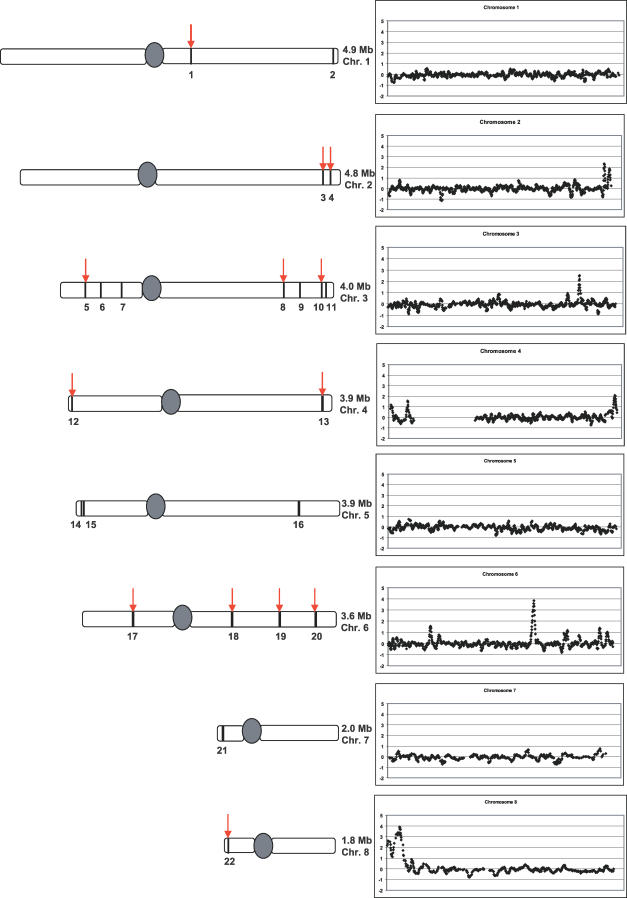
Secondary metabolites, including toxins and melanins, have been implicated as virulence attributes in invasive aspergillosis. Although not definitively proved, this supposition is supported by the decreased virulence of an Aspergillus fumigatus strain, DeltalaeA, that is crippled in the production of numerous secondary metabolites. However, loss of a single LaeA-regulated toxin, gliotoxin, did not recapitulate the hypovirulent DeltalaeA pathotype, thus implicating other toxins whose production is governed by LaeA. Toward this end, a whole-genome comparison of the transcriptional profile of wild-type, DeltalaeA, and complemented control strains showed that genes in 13 of 22 secondary metabolite gene clusters, including several A. fumigatus-specific mycotoxin clusters, were expressed at significantly lower levels in the DeltalaeA mutant. LaeA influences the expression of at least 9.5% of the genome (943 of 9,626 genes in A. fumigatus) but positively controls expression of 20% to 40% of major classes of secondary metabolite biosynthesis genes such as nonribosomal peptide synthetases (NRPSs), polyketide synthases, and P450 monooxygenases. Tight regulation of NRPS-encoding genes was highlighted by quantitative real-time reverse-transcription PCR analysis. In addition, expression of a putative siderophore biosynthesis NRPS (NRPS2/sidE) was greatly reduced in the DeltalaeA mutant in comparison to controls under inducing iron-deficient conditions. Comparative genomic analysis showed that A. fumigatus secondary metabolite gene clusters constitute evolutionarily diverse regions that may be important for niche adaptation and virulence attributes. Our findings suggest that LaeA is a novel target for comprehensive modification of chemical diversity and pathogenicity.
Overview
The claims and statistics of this paper haven’t been checked yet.
Free: it reads the open-access text and checks the first 5 claims that cite a source we can check. Create a free account to check every claim.
Integrity signals
Registry
Cites
Statistics
Figures
Verification
Claims the paper makes
The claims and statistics of this paper haven’t been checked yet.
Free: it reads the open-access text and checks the first 5 claims that cite a source we can check. Create a free account to check every claim.
Claims other papers make about this one
Each is checked against this paper’s own text: does it say what the citing paper says it does?
In the citing paper
“However, only a limited impact of the deletion of the LaeA was seen in experimental murine aspergillosis trials with a laeA mutant (436–438).”
From Aspergillus fumigatus and Aspergillosis in 2019 (2019) · cites this paper as [438]
Self-check
Percentages, sums and reported differences re-computed from the paper’s own numbers.
The self-check needs the paper’s full text.
Citations
Cites
Robust Locally Weighted Regression and Smoothing Scatterplots
Cleveland, W. S. (1979) · Journal of the American Statistical Association · doi:10.1080/01621459.1979.10481038 · Cited by 11,594 · cited 1×
“Prior to statistical analysis, the LOWESS normalization method was used to remove any systematic bias from the raw expression ratios [61].”
MethodIn silico prediction of protein-protein interactions in human macrophages
Souiai, O., Guerfali, F., Ben Miled, S., Brun, C., & Benkahla, A. (2014) · BMC Research Notes · doi:10.1186/1756-0500-7-157 · Cited by 10,803
Significance analysis of microarrays applied to the ionizing radiation response
Tusher, V. G., Tibshirani, R., & Chu, G. (2001) · Proceedings of the National Academy of Sciences · doi:10.1073/pnas.091062498 · Cited by 10,568
TM4: a free, open-source system for microarray data management and analysis
Saeed, A. I., Sharov, V., White, J., Li, J., Liang, W., Bhagabati, N., Braisted, J., Klapa, M., Currier, T., Thiagarajan, M., et al. (2003) · BioTechniques · doi:10.2144/03342mt01 · Cited by 4,837
Aspergillus fumigatus and Aspergillosis
Latgé, J.-P. (1999) · Clinical Microbiology Reviews · doi:10.1128/cmr.12.2.310 · Cited by 2,307 · cited 2×
“Invasive aspergillosis has an associated mortality rate ranging from 50% to 90% depending on the patient population [2].”
BackgroundPfam: clans, web tools and services
Finn, R. D. (2006) · Nucleic Acids Research · doi:10.1093/nar/gkj149 · Cited by 2,302 · cited 1×
“Numbers of genes in the indicated Pfam protein domain categories [65] were subjected to statistical analysis by EASE [64] to identify categories overrepresented compared with the whole genome data set.”
Method[9] TM4 Microarray Software Suite
Saeed, A. I., Bhagabati, N. K., Braisted, J. C., Liang, W., Sharov, V., Howe, E. A., Li, J., Thiagarajan, M., White, J. A., & Quackenbush, J. (2006) · Methods in Enzymology · doi:10.1016/s0076-6879(06)11009-5 · Cited by 1,983 · cited 1×
“tm4.org) [62, 63 ]. This allowed identification of genes whose mean expression across experiments is significantly different from a userspecified mean (log2 ¼ 0, corresponding to identical mRNA levels in the mutant and wild-type strains).”
BackgroundIdentifying biological themes within lists of genes with EASE
Hosack, D. A., Dennis, G., Sherman, B. T., Lane, H. C., & Lempicki, R. A. (2003) · Genome Biology · doi:10.1186/gb-2003-4-10-r70 · Cited by 1,950 · cited 9×
“Fisher’s exact test probabilities and Bonferroni corrected (step-down) probabilities (Bonferroni SD Corr.) are reported from the EASE analysis.”
BackgroundMethodInfluentialFungal secondary metabolism — from biochemistry to genomics
Keller, N. P., Turner, G., & Bennett, J. W. (2005) · Nature Reviews Microbiology · doi:10.1038/nrmicro1286 · Cited by 1,731 · cited 5×
“Alternative models suggest that clusters are maintained due to coregulation mechanisms, likely at the level of chromatin regulation [8,9].”
BackgroundInfluentialSelf-citationGenomic sequence of the pathogenic and allergenic filamentous fungus Aspergillus fumigatus
Nierman, W. C., Pain, A., Anderson, M. J., Wortman, J. R., Kim, H. S., Arroyo, J., Berriman, M., Abe, K., Archer, D. B., Bermejo, C., et al. (2005) · Nature · doi:10.1038/nature04332 · Cited by 1,391 · cited 8×
“The clustering of secondary metabolite biosynthetic genes has been suggested to reflect their evolutionary history [8,9,20,51,56,57].”
BackgroundMethodInfluentialSelf-citation
Cited by
Items 101–200 of 351
Aspergillus fumigatus: virulence genes in a street-smart mold
Askew, D. S. (2008) · Current Opinion in Microbiology · doi:10.1016/j.mib.2008.05.009 · Cited by 105
Sakai, K., Kinoshita, H., & Nihira, T. (2011) · Applied Microbiology and Biotechnology · doi:10.1007/s00253-011-3657-9 · Cited by 93
“LaeA has been reported to activate the transcription of a wide range of gene clusters for secondary metabolites in Aspergillus species (Kosalková et al. 2009; Perrin et al. 2007; Bok and Keller 2004), and is regarded as a global regulator of secondary metabolism in filamentous fungi.”
Discovery of McrA, a master regulator of Aspergillus secondary metabolism
Oakley, C. E., Ahuja, M., Sun, W., Entwistle, R., Akashi, T., Yaegashi, J., Guo, C., Cerqueira, G., Wortman, J. R., Wang, C. C. C., et al. (2016) · Molecular Microbiology · doi:10.1111/mmi.13562 · Cited by 89
“A great deal has been achieved (Keller et al., 2005; Yu and Keller, 2005; Keller et al., 2006; Perrin et al., 2007; Bok et al., 2006; Hoffmeister and Keller, 2007; Calvo, 2008; Fox and Howlett, 2008a; Hertweck, 2009; Georgianna et al., 2010; Yin and Keller, 2011; Sanchez et al., 2012b; Bayram and…”
BackgroundSelf-citationPredicted Roles of the Uncharacterized Clustered Genes in Aflatoxin Biosynthesis
Ehrlich, K. C. (2009) · Toxins · doi:10.3390/toxins1010037 · Cited by 85
“LaeA [25,75–79].”
Genome-Based Cluster Deletion Reveals an Endocrocin Biosynthetic Pathway in Aspergillus fumigatus
Lim, F. Y., Hou, Y., Chen, Y., Oh, J.-H., Lee, I., Bugni, T. S., & Keller, N. P. (2012) · Applied and Environmental Microbiology · doi:10.1128/aem.07710-11 · Cited by 85
Self-citationChang, P., Scharfenstein, L. L., Ehrlich, K. C., Wei, Q., Bhatnagar, D., & Ingber, B. F. (2011) · Fungal Biology · doi:10.1016/j.funbio.2011.12.003 · Cited by 83
“Based on microarray studies disruption of laeA in A. fumigatus affected expression of 9.5 % of the genes (Perrin et al. 2007).”
InfluentialPillay, L. C., Nekati, L., Makhwitine, J. P., & Ndlovu, S. I. (2022) · Frontiers in Microbiology · doi:10.3389/fmicb.2022.815008 · Cited by 90
Dolan, S. K., Owens, R. A., O’Keeffe, G., Hammel, S., Fitzpatrick, D. A., Jones, G. W., & Doyle, S. (2014) · Chemistry & Biology · doi:10.1016/j.chembiol.2014.07.006 · Cited by 91
“…fumigatus secondary metabolism, whereby as an uncharacterized gene, gtmA expression was found to be significantly attenuated in A. fumigatus DlaeA (Perrin et al., 2007). veA is a global regulator of secondary metabolism in A. fumigatus and gtmA was noted as significantly downregulated in a veA…”
BackgroundKim, H.-K., Lee, S.-H., Jo, S.-M., McCormick, S. P., Butchko, R. A. E., Proctor, R. H., & Yun, S. (2013) · PLoS ONE · doi:10.1371/journal.pone.0068441 · Cited by 83
Self-citationNiu, J., Arentshorst, M., Nair, P. D. S., Dai, Z., Baker, S., Frisvad, J. C., Nielsen, K. F., Punt, P. J., & Ram, A. F. J. (2015) · G3 Genes Genomes Genetics · doi:10.1534/g3.115.024067 · Cited by 82
“fumigatus (Perrin et al. 2007; Sugui et al. 2007), Penicillium chrysogenum (Kosalková et al.”
Chiang, L. Y., Sheppard, D. C., Gravelat, F. N., Patterson, T. F., & Filler, S. G. (2008) · Infection and Immunity · doi:10.1128/iai.01510-07 · Cited by 78
“fumigatus genome contains 22 to 26 gene clusters that specify the enzymes necessary for the synthesis of a corresponding number of secondary metabolites (mycotoxins) (15, 20).”
BackgroundPenicillium chrysogenum, a Vintage Model with a Cutting-Edge Profile in Biotechnology
Fierro, F., Vaca, I., Castillo, N. I., García-Rico, R. O., & Chávez, R. (2022) · Microorganisms · doi:10.3390/microorganisms10030573 · Cited by 100
Throckmorton, K., Lim, F. Y., Kontoyiannis, D. P., Zheng, W., & Keller, N. P. (2016) · Environmental Microbiology · doi:10.1111/1462-2920.13007 · Cited by 75
“Endocrocin produced by both the tpc and enc clusters through distinct routes Because trypacidin and endocrocin are both regulated by LaeA and BrlA (Fig.”
InfluentialSelf-citationThe ergot alkaloid gene cluster: Functional analyses and evolutionary aspects
Lorenz, N., Haarmann, T., Pažoutová, S., Jung, M., & Tudzynski, P. (2009) · Phytochemistry · doi:10.1016/j.phytochem.2009.05.023 · Cited by 80
Recent advances in reconstructing microbial secondary metabolites biosynthesis in Aspergillus spp.
He, Y., Wang, B., Chen, W., Cox, R. J., He, J., & Chen, F. (2018) · Biotechnology Advances · doi:10.1016/j.biotechadv.2018.02.001 · Cited by 81
In Vivo and In Vitro Production Options for Fungal Secondary Metabolites
Schneider, P., Misiek, M., & Hoffmeister, D. (2008) · Molecular Pharmaceutics · doi:10.1021/mp7001544 · Cited by 75
Dhingra, S., Lind, A., Lin, H., Tang, Y., Rokas, A., & Calvo, A. M. (2013) · PLoS ONE · doi:10.1371/journal.pone.0077147 · Cited by 80
“previously carried out with a ∆laeA mutant [51].”
BackgroundPatananan, A. N., Palmer, J. M., Garvey, G. S., Keller, N. P., & Clarke, S. G. (2013) · Journal of Biological Chemistry · doi:10.1074/jbc.m113.465765 · Cited by 91
“LaeA is known to transcriptionally regulate as much as 10% of the transcriptome (15) and subsequently has been linked to changes in chromatin structure (24).”
BackgroundSelf-citationRegulation of Secondary Metabolism by the Velvet Complex Is Temperature-Responsive in Aspergillus
Lind, A., Smith, T. D., Satterlee, T. R., Calvo, A. M., & Rokas, A. (2016) · G3 Genes Genomes Genetics · doi:10.1534/g3.116.033084 · Cited by 78
“While the lists of which genes are parts of the known SM gene clusters are not identical to the lists used in previous analyses of LaeA ’ s regulatory role of controlling secondary metabolism, our RNA-seq results generally agree with previously published microarray data (Perrin et al. 2007).”
Lim, F. Y., Ames, B. D., Walsh, C. T., & Keller, N. P. (2014) · Cellular Microbiology · doi:10.1111/cmi.12284 · Cited by 70
“, 2012) are also regulated by LaeA which itself regulates BrlA (Perrin et al., 2007).”
BackgroundSelf-citationLind, A. L., Lim, F. Y., Soukup, A. A., Keller, N. P., & Rokas, A. (2018) · mSphere · doi:10.1128/msphere.00050-18 · Cited by 64
“fumigatus (13) and more recently a similar requirement of LaeA for brlA expression was noted in P.”
BackgroundInfluentialSelf-citationZhgun, A. A. (2023) · International Journal of Molecular Sciences · doi:10.3390/ijms241311184 · Cited by 73
Atoui, A., Bao, D., Kaur, N., Grayburn, W. S., & Calvo, A. M. (2008) · Applied and Environmental Microbiology · doi:10.1128/aem.02842-07 · Cited by 71
“Aspergillus nidulans Natural Product Biosynthesis Is Regulated by MpkB, a Putative Pheromone Response Mitogen-Activated Protein Kinase † Ali Atoui, Dapeng Bao, Navgeet Kaur, W. Scott Grayburn, and Ana M. Calvo* Department of Biological Sciences, Northern Illinois University, DeKalb, Illinois 60115 Received 17 December…”
BackgroundInfluentialThe Zebrafish as a Model Host for Invasive Fungal Infections
Rosowski, E. E., Knox, B. P., Archambault, L. S., Huttenlocher, A., Keller, N. P., Wheeler, R. T., & Davis, J. M. (2018) · Journal of Fungi · doi:10.3390/jof4040136 · Cited by 73
“The effect of two additional LaeA-regulated genes that were identified in a microarray analysis [91] has also been tested in fish in the context of fungal infection.”
BackgroundSelf-citationJanevska, S., & Tudzynski, B. (2017) · Applied Microbiology and Biotechnology · doi:10.1007/s00253-017-8679-5 · Cited by 66
“, Penicillium chrysogenum, Trichoderma reesei, and Aspergillus fumigatus (Hoff et al. 2010; KarimiAghcheh et al. 2013; Perrin et al. 2007; Dhingra et al. 2012).”
BackgroundPost‐translational modifications drive secondary metabolite biosynthesis in Aspergillus : a review
Yang, K., Tian, J., & Keller, N. P. (2022) · Environmental Microbiology · doi:10.1111/1462-2920.16034 · Cited by 67
“Additional seminal studies involved demonstrations that LaeA, a global regulator of SM in all filamentous fungi studied to date (Perrin et al., 2007; Zhang et al., 2016b) was involved in chromatin level activation of BGCs (Bok et al., 2006), in part by counteracting the establishment of…”
BackgroundSelf-citationProtostadienol Biosynthesis and Metabolism in the Pathogenic Fungus Aspergillus fumigatus
Lodeiro, S., Xiong, Q., Wilson, W. K., Ivanova, Y., Smith, M. L., May, G. S., & Matsuda, S. P. T. (2009) · Organic Letters · doi:10.1021/ol802696a · Cited by 61
Trienens, M., Keller, N. P., & Rohlfs, M. (2010) · Oikos · doi:10.1111/j.1600-0706.2010.18088.x · Cited by 63
Self-citationNakazawa, T., Ishiuchi, K., Sato, M., Tsunematsu, Y., Sugimoto, S., Gotanda, Y., Noguchi, H., Hotta, K., & Watanabe, K. (2013) · Journal of the American Chemical Society · doi:10.1021/ja405128k · Cited by 61
Insights to fungal biology through LaeA sleuthing
Jain, S., & Keller, N. P. (2013) · Fungal Biology Reviews · doi:10.1016/j.fbr.2013.05.004 · Cited by 68
Self-citationLight regulation of secondary metabolism in fungi
Yu, W., Pei, R., Zhang, Y., Tu, Y., & He, B. (2023) · Journal of Biological Engineering · doi:10.1186/s13036-023-00374-4 · Cited by 68
“Tran-scriptomic profiling analysis of WT, Δ laeA strains showed that LaeA positively regulates the expression of up to 40% of major classes of SM biosynthetic genes, such as nonribosomal peptide synthetases, polyketide synthases, and P450 monooxygenases [90].”
BackgroundOwens, R. A., O’Keeffe, G., Smith, E. B., Dolan, S. K., Hammel, S., Sheridan, K. J., Fitzpatrick, D. A., Keane, T., Jones, G. W., & Doyle, S. (2015) · Eukaryotic Cell · doi:10.1128/ec.00055-15 · Cited by 68
“∆gliG exposure to gliotoxin abolishes the presence of 27 proteins, including two 424 (AFUA_8G00390 and 8G00440) encoded by the super-cluster on chromosome 8 425 (41, 42), and results in decreased abundance of 5 additional proteins (Table 5).”
Zhang, C., Zhang, H., Zhu, Q., Hao, S., Chai, S., Li, Y., Jiao, Z., Shi, J., Sun, B., & Wang, C. (2020) · Applied Microbiology and Biotechnology · doi:10.1007/s00253-020-10379-4 · Cited by 56
“Microarray analysis of wild-type strains of A. fumigatus and LaeA mutants showed that up to 9.5% of the genes coding for secondary metabolites were regulated by LaeA, and 13 of the 22 secondary metabolic gene clusters were affected by LaeA (Perrin et al. 2007).”
BackgroundInfluentialInvolvement of transposon-like elements in penicillin gene cluster regulation
Shaaban, M. I., Palmer, J. M., El-Naggar, W., el-Sokkary, M. A., Habib, E. E., & Keller, N. P. (2010) · Fungal Genetics and Biology · doi:10.1016/j.fgb.2010.02.006 · Cited by 62
“SM clusters in Aspergillus species also tend to be located near the telomeres of chromosomes (Perrin et al., 2007).”
InfluentialSelf-citationKwon, M. J., Steiniger, C., Cairns, T. C., Wisecaver, J. H., Lind, A., Pohl, C., Regner, C., Rokas, A., & Meyer, V. (2021) · Microbiology Spectrum · doi:10.1128/spectrum.00898-21 · Cited by 70
“For example, deletion of genes predicted to encode the methyltransferase LaeA, which is thought to silence BGC expression by the formation of transcriptionally silent heterochromatin, increased the expression of 7 of 17 BGCs in the biomassdegrading fungus Trichoderma reesei and 13 of 22 BGCs analyzed in the human-infe…”
BackgroundJiang, T., Wang, M., Li, L., Si, J.-G., Song, B., Zhou, C., Yu, M., Wang, X., Zhang, Y., Ding, G., et al. (2016) · Journal of Natural Products · doi:10.1021/acs.jnatprod.6b00333 · Cited by 56
Wang, G., Zhang, H., Wang, Y., Liu, F., Li, E., Ma, J., Yang, B., Zhang, C., Li, L., & Liu, Y. (2019) · Frontiers in Microbiology · doi:10.3389/fmicb.2019.02759 · Cited by 55
Druzhinina, I. S., & Kubicek, C. P. (2016) · Advances in applied microbiology · doi:10.1016/bs.aambs.2016.02.001 · Cited by 63
O’Keeffe, G., Hammel, S., Owens, R. A., Keane, T., Fitzpatrick, D. A., Jones, G. W., & Doyle, S. (2014) · BMC Genomics · doi:10.1186/1471-2164-15-894 · Cited by 60
“A closer inspection of some of the secondary metabolite genes clusters revealed significant alterations in the expression of genes in the helvolic biosynthesis cluster [25] and the “supercluster” on chromosome 8 which encodes the biosynthetic pathways of a number of secondary metabolites, including fumitremorgin B, fu…”
BackgroundInfluentialTrienens, M., & Rohlfs, M. (2011) · Fungal ecology · doi:10.1016/j.funeco.2011.07.009 · Cited by 50
Owens, R. A., Hammel, S., Sheridan, K. J., Jones, G. W., & Doyle, S. (2014) · PLoS ONE · doi:10.1371/journal.pone.0106942 · Cited by 62
“Products of these SM clusters include up to 3 unknown metabolites, fumigaclavine C [55], fumitremorgins [39,44,45], pseurotin A [40], fumagillin [41,46], gliotoxin [43] and a putative siderophore [38].”
InfluentialCurrent status of systems biology in Aspergilli
Andersen, M. R., & Nielsen, J. (2008) · Fungal Genetics and Biology · doi:10.1016/j.fgb.2008.07.006 · Cited by 63
“Other studies include deletion of the A. fumigatus virulence and morphology-regulating factor StuA (Sheppard et al., 2005), the global regulator of secondary metabolism LaeA in A. fumigatus (Perrin et al., 2007), and the toxin regulator VeA in A. flavus and A. parasiticus (Cary et al., 2007).”
BackgroundWang, B., Lv, Y., Li, X., Lin, Y., Deng, H., & Pan, L. (2017) · Research in Microbiology · doi:10.1016/j.resmic.2017.10.002 · Cited by 65
Knowles, S. L., Mead, M. E., Silva, L. P., Raja, H. A., Steenwyk, J. L., Goldman, G. H., Rokas, A., & Oberlies, N. H. (2020) · mBio · doi:10.1128/mbio.03361-19 · Cited by 52
“fumigatus (11, 12), our results suggest that the losses of laeA and secondary metabolite production (14) in A.”
BackgroundAspergillus Biofilm In Vitro and In Vivo
Beauvais, A., & Latgé, J.-P. (2015) · Microbial Biofilms · doi:10.1128/9781555817466.ch8 · Cited by 47
Fungal Secondary Metabolites: Ancient Toxins and Novel Effectors in Plant–Microbe Interactions
Collemare, J., & Lebrun, M. (2011) · doi:10.1002/9781119949138.ch15 · Cited by 47
O’Hanlon, K. A., Gallagher, L., Schrettl, M., Jöchl, C., Kavanagh, K. A., Larsen, T. O., & Doyle, S. (2012) · Applied and Environmental Microbiology · doi:10.1128/aem.07249-11 · Cited by 50
“pesL was proposed to be part of a five-gene SM cluster spanning the region from AFUA_6G12040 to AFUA_6G12080 (33), and transcriptional studies revealed that pesL and all other genes in this proposed cluster were found to be under LaeA regulation (35).”
BackgroundThe host-infecting fungal transcriptome: Infection-related gene expression in fungi
Cairns, T., Minuzzi, F., & Bignell, E. (2010) · FEMS Microbiology Letters · doi:10.1111/j.1574-6968.2010.01961.x · Cited by 45
Zhao, C., Waalwijk, C., WIT, P. J. G. M. D., Tang, D., & van der Lee, T. (2014) · BMC Genomics · doi:10.1186/1471-2164-15-191 · Cited by 52
“The rapid rearrangement of subtelomeric regions may promote the rapid evolution of these genes to become species-specific attributes [25,33].”
Bromley, M., Johns, A., Davies, E., Fraczek, M., Mabey Gilsenan, J., Kurbatova, N., Keays, M., Kapushesky, M., Gut, M., Gut, I., et al. (2016) · PLOS ONE · doi:10.1371/journal.pone.0158724 · Cited by 45
“In recent years a global regulator of secondary metabolism, LaeA has been described in various species of Aspergillus [41].”
BackgroundLiu, H., Xu, W., Bruno, V. M., Phan, Q. T., Solis, N. V., Woolford, C. A., Ehrlich, R. L., Shetty, A. C., McCracken, C. L., Lin, J., et al. (2021) · PLoS Pathogens · doi:10.1371/journal.ppat.1009235 · Cited by 44
“Microarray analysis indicates that LaeA governs the expression of at least 16 secondary metabolite gene clusters [46,48].”
InfluentialLah, L., Haridas, S., Bohlmann, J., & Breuil, C. (2012) · Fungal Genetics and Biology · doi:10.1016/j.fgb.2012.10.002 · Cited by 44
Soukup, A. A., Farnoodian, M., Berthier, E., & Keller, N. P. (2012) · Fungal Genetics and Biology · doi:10.1016/j.fgb.2012.09.005 · Cited by 45
Self-citationLee, S. S., Lee, J. H., & Lee, I. (2013) · Journal of Microbiology and Biotechnology · doi:10.4014/jmb.1303.03026 · Cited by 46
“[20] reported that LaeA positively regulates 20-40% of SM gene clusters in Aspergillus fumigatus.”
O’Hanlon, K. A., Cairns, T. C., Stack, D., Schrettl, M., Bignell, E., Kavanagh, K. A., Miggin, S. M., O’Keeffe, G., Larsen, T. O., & Doyle, S. (2011) · Infection and Immunity · doi:10.1128/iai.00192-11 · Cited by 48
“Interestingly, pes3 was not found to be under LaeA regulation (52), which suggested it might not be responsible for the production of a secreted metabolite.”
BackgroundHou, X., Liu, L., Xu, D. Q., Lai, D., & Zhou, L. (2024) · Journal of Fungi · doi:10.3390/jof10080561 · Cited by 48
Effect of Environmental Change on Secondary Metabolite Production in Lichen-Forming Fungi
Deduke, C., Timsina, B. A., & Michele, D. R. A. Z. D. S. (2012) · InTech eBooks · doi:10.5772/26954 · Cited by 65
“The loss of laeA results in gene silencing (Bok et al., 2006b; Perrin et al., 2007).”
BackgroundLópez‐Berges, M. S., Schäfer, K., Hera, C., & Pietro, A. D. (2013) · Fungal Genetics and Biology · doi:10.1016/j.fgb.2013.11.002 · Cited by 43
Ergot alkaloids contribute to virulence in an insect model of invasive aspergillosis
Panaccione, D. G., & Arnold, S. L. (2017) · Scientific Reports · doi:10.1038/s41598-017-09107-2 · Cited by 44
Huber, E. M. (2022) · ChemBioChem · doi:10.1002/cbic.202200341 · Cited by 40
Fungal secondary metabolite biosynthesis – a chemical defence strategy against antagonistic animals?
Kempken, F., & Rohlfs, M. (2009) · Fungal ecology · doi:10.1016/j.funeco.2009.08.001 · Cited by 54
Construction of an Efficient and Robust Aspergillus terreus Cell Factory for Monacolin J Production
Huang, X., Tang, S., Zheng, L., Teng, Y., Yang, Y., Zhu, J., & Lü, X. (2019) · ACS Synthetic Biology · doi:10.1021/acssynbio.8b00489 · Cited by 40
Iron acquisition and oxidative stress response in aspergillus fumigatus
Brandon, M., Howard, B. A., Lawrence, C. B., & Laubenbacher, R. (2015) · BMC Systems Biology · doi:10.1186/s12918-015-0163-1 · Cited by 41
“NOX expressed by host phagocytic cells catalyzes the conversion of oxygen to the the extremely reactive superoxide anion, O−2 .”
BackgroundInfluentialSecondary Metabolite Diversity of the Genus Aspergillus: Recent Advances
Soltani, J. (2016) · Elsevier eBooks · doi:10.1016/b978-0-444-63505-1.00035-x · Cited by 47
Insight into the global regulation of laeA in Aspergillus flavus based on proteomic profiling
Lv, Y., Lv, A., Zhai, H.-C., Zhang, S., Li, L., Cai, J.-P., & Hu, Y. (2018) · International Journal of Food Microbiology · doi:10.1016/j.ijfoodmicro.2018.06.024 · Cited by 39
Hong, E. J., Kim, N. K., Lee, D. Y., Kim, W. G., & Lee, I. (2015) · Fungal Biology · doi:10.1016/j.funbio.2015.06.006 · Cited by 39
Kamerewerd, J., Zadra, I., Kürnsteiner, H., & Kück, U. (2011) · Microbiology · doi:10.1099/mic.0.051896-0 · Cited by 46
Baba, S., Kinoshita, H., & Nihira, T. (2011) · Current Genetics · doi:10.1007/s00294-011-0359-x · Cited by 38
Dothistromin genes at multiple separate loci are regulated by AflR
Chettri, P., Ehrlich, K. C., Cary, J. W., Collemare, J., Cox, M. P., Griffiths, S. A., Olson, M. A., WIT, P. J. G. M. D., & Bradshaw, R. E. (2012) · Fungal Genetics and Biology · doi:10.1016/j.fgb.2012.11.006 · Cited by 36
Aspergillus fumigatusvirulence through the lens of transcription factors: Table 1.
Bultman, K. M., Kowalski, C. H., & Cramer, R. A. (2016) · Medical Mycology · doi:10.1093/mmy/myw120 · Cited by 43
Self-citationGliotoxin in Aspergillus fumigatus: an example that mycotoxins are potential virulence factors
Hof, H., & Kupfahl, C. (2009) · Mycotoxin Research · doi:10.1007/s12550-009-0020-4 · Cited by 48
“The transcription factor GliZ is encoded within the gliotoxin gene cluster (Gardiner et al. 2005), whereas the transcriptional regulator LaeA is a global regulator of several A. fumigatus secondary metabolites including gliotoxin ( Perrin et al. 2007 ).”
BackgroundZhang, X., Zhu, Y., Bao, L., Gao, L., Yao, G., Li, Y., Yang, Z., Li, Z., Zhong, Y., Li, F., et al. (2016) · Fungal Genetics and Biology · doi:10.1016/j.fgb.2016.07.004 · Cited by 39
LaeA Controls Virulence and Secondary Metabolism in Apple Canker Pathogen Valsa mali
Feng, Y., Yin, Z., Wu, Y., Xu, L., Du, H., Wang, N., & Huang, L. (2020) · Frontiers in Microbiology · doi:10.3389/fmicb.2020.581203 · Cited by 37
Schoberle, T. J., Nguyen-Coleman, C. K., Herold, J., Yang, A. W. H., Weirauch, M., Hughes, T. R., McMurray, J. S., & May, G. S. (2014) · PLoS Genetics · doi:10.1371/journal.pgen.1004336 · Cited by 41
“*Cluster ranges for unknown products are defined in [52] or were predicted using SMURF at http://jcvi.”
InfluentialRNAseq analysis of Aspergillus fumigatus in blood reveals a just wait and see resting stage behavior
Irmer, H., Tarazona, S., Sasse, C., Olbermann, P., Loeffler, J., Krappmann, S., Conesa, A., & Braus, G. H. (2015) · BMC Genomics · doi:10.1186/s12864-015-1853-1 · Cited by 41
“The transcriptome data, did not show much correlation to our results and also no LaeA independent cluster was up-regulated [38].”
ResultAwakening of Fungal Secondary Metabolite Gene Clusters
Fischer, J., Schroeckh, V., & Brakhage, A. A. (2016) · Fungal biology · doi:10.1007/978-3-319-27951-0_11 · Cited by 32
Wang, W., Yu, Y., Keller, N. P., & Wang, P. (2021) · International Journal of Molecular Sciences · doi:10.3390/ijms22168709 · Cited by 36
“fumigatus ∆laeA array, leading to the hypothesis that it could be a PSTF for surrounding genes [99].”
BackgroundSelf-citationAlves, P. C., Hartmann, D. O., Núñez, Ó., Martins, I., Gomes, T. L., Garcia, H., Galceran, M. T., Hampson, R., Becker, J. D., & Pereira, C. S. (2016) · BMC Genomics · doi:10.1186/s12864-016-2577-6 · Cited by 37
“fumigatus (the laeA deletion mutant shows repression of 13 of 22 SM biosynthetic clusters) [81], but is also known to impact other fungi (e.”
BackgroundUpstream Regulation of Development and Secondary Metabolism in Aspergillus Species
Moon, H., Han, K., & Yu, J. (2022) · Cells · doi:10.3390/cells12010002 · Cited by 37
“ΔlaeA, and C’laeA strains revealed that LaeA positively controls the expression of up to 40% of major classes of SM biosynthetic genes such as nonribosomal peptide synthetases, polyketide synthases, and P450 monooxygenases [91].”
BackgroundChromatin-Mediated Regulation of Genome Plasticity in Human Fungal Pathogens
Buscaino, A. (2019) · Genes · doi:10.3390/genes10110855 · Cited by 40
Polarized response of endothelial cells to invasion byAspergillus fumigatus
Kamai, Y., Lossinsky, A. S., Liu, H., Sheppard, D. C., & Filler, S. G. (2008) · Cellular Microbiology · doi:10.1111/j.1462-5822.2008.01247.x · Cited by 43
“Aspergillus fumigatus synthesizes multiple secondary metabolites that may influence endothelial cell gene expression (Bok et al., 2005; Perrin et al., 2007).”
BackgroundTranscriptional and Proteomic Analysis of the Aspergillus fumigatus ΔprtT Protease-Deficient Mutant
Hagag, S., Kubitschek-Barreira, P. H., Neves, G. W. P., Amar, D., Nierman, W. C., Shalit, I., Shamir, R., Lopes-Bezerra, L. M., & Osherov, N. (2012) · PLoS ONE · doi:10.1371/journal.pone.0033604 · Cited by 40
“Its expression is elevated under stressful conditions including hypoxia, during murine lung infection and following deletion of the global secondary metabolite regulator LaeA and the developmental transcription factor BrlA [13,15,36,37].”
BackgroundInfluentialSelf-citationArakawa, G.-Y., Kudo, H., Yanase, A., Eguchi, Y., Kodama, H., Ogawa, M., Koyama, Y., Shindo, H., HOSAKA, M., & Tokuoka, M. (2019) · Fungal Genetics and Biology · doi:10.1016/j.fgb.2019.02.004 · Cited by 33
Molecular Insights into Pathogenesis and Infection with Aspergillus fumigatus
Ghazaei, C. (2017) · Malaysian Journal of Medical Sciences · doi:10.21315/mjms2017.24.1.2 · Cited by 34
Role of Aspergillus fumigatus DvrA in Host Cell Interactions and Virulence
Ejzykowicz, D. E., Solis, N. V., Gravelat, F. N., Chabot, J., Li, X., Sheppard, D. C., & Filler, S. G. (2010) · Eukaryotic Cell · doi:10.1128/ec.00055-10 · Cited by 30
“We next investigated whether the increased host cell damage caused by the dvrA mutant was due to the release of soluble factors, such as mycotoxins (2, 24).”
Background18 Velvet Regulation of Fungal Development
Calvo, A. M., Lohmar, J. M., Ibarra, B. A., & Satterlee, T. R. (2016) · The mycota · doi:10.1007/978-3-319-25844-7_18 · Cited by 35
Regulatory Mechanism of Mycotoxin Tenuazonic Acid Production in Pyricularia oryzae
Yun, C., Motoyama, T., & Osada, H. (2017) · ACS Chemical Biology · doi:10.1021/acschembio.7b00353 · Cited by 28
Secondary Metabolites Production
Barrios-González, J. (2017) · Elsevier eBooks · doi:10.1016/b978-0-444-63990-5.00013-x · Cited by 34
Motoyama, T., Yun, C., & Osada, H. (2021) · Journal of Industrial Microbiology & Biotechnology · doi:10.1093/jimb/kuab058 · Cited by 38
Aflatoxin Biosynthetic Pathway and Pathway Genes
Yu, J., & Kenneth, C. (2011) · InTech eBooks · doi:10.5772/23034 · Cited by 31
“Other physically unrelated genes, such as laeA and veA, also have been shown to exhibit a “global” regulatory role on aflatoxin biosynthesis (Kato et al., 2003; Bok & Keller, 2004; Calvo et al., 2004; Perrin et al., 2007).”
BackgroundMotoyama, T. (2020) · International Journal of Molecular Sciences · doi:10.3390/ijms21228698 · Cited by 30
Nowrousian, M. (2009) · Current Genetics · doi:10.1007/s00294-009-0236-z · Cited by 29
“For example, this technology was successfully used with Aspergillus nidulans, Aspergillus fumigatus, and Ustilago maydis (Bok and Keller 2004; Bok et al. 2006; Kämper et al. 2006; Perrin et al. 2007).”
MethodUmemura, M., Koike, H., & Machida, M. (2015) · Frontiers in Microbiology · doi:10.3389/fmicb.2015.00371 · Cited by 27
“fumigatus (Perrin et al., 2007; Fedorova et al., 2008), Magnaporthe oryzae (Rehmeyer et al.”
Systems Biology of Industrial Microorganisms
Papini, M., Salazar, M. P., & Nielsen, J. (2010) · Springer eBooks · doi:10.1007/10_2009_59 · Cited by 31
Steinchen, W., Lackner, G., Yasmin, S., Schrettl, M., Dahse, H., Haas, H., & Hoffmeister, D. (2013) · Applied and Environmental Microbiology · doi:10.1128/aem.02642-13 · Cited by 27
“(13, 27), expression of sidE is somewhat upregulated by (i) iron starvation in comparison to iron-replete conditions (10 M FeSO4) and (ii) under high-iron conditions (1.”
BackgroundUpstream Regulation of Mycotoxin Biosynthesis
Alkhayyat, F., & Yu, J. (2014) · Advances in applied microbiology · doi:10.1016/b978-0-12-800262-9.00005-6 · Cited by 34
Developing filamentous fungal chassis for natural product production
Fan, J., Wei, P., Li, Y., Zhang, S., Ren, Z., Li, W., & Yin, W. (2024) · Bioresource Technology · doi:10.1016/j.biortech.2024.131703 · Cited by 26
Bok, J. W., Wiemann, P., Garvey, G. S., Lim, F. Y., Haas, B. J., Wortman, J. R., & Keller, N. P. (2014) · BMC Genomics · doi:10.1186/1471-2164-15-1011 · Cited by 27
“As both proteins regulate a substantial proportion of the fungal genome [12-14], efforts have been focused on characterizing LaeA and VeA signaling pathways with the goal of thoroughly understanding regulation of either secondary metabolism or differentiation processes in fungi.”
BackgroundSelf-citationFekete, E., Karaffa, L., Aghcheh, R. K., Németh, Z., Fekete, É., Orosz, A., Paholcsek, M., Stágel, A., & Kubicek, C. P. (2014) · BMC Genomics · doi:10.1186/1471-2164-15-447 · Cited by 31
“LaeA is known to be a nuclear protein, and is localized to the nucleus [1-3].”
BackgroundLeitão, A. L., & Enguita, F. J. (2014) · Microbiological Research · doi:10.1016/j.micres.2014.02.007 · Cited by 27
Metadata
- Authors
- Perrin, R. M., Fedorova, N. D., Bok, J. W., Cramer, R. A., Wortman, J. R., Kim, H. S., Nierman, W. C., & Keller, N. P.
- Affiliations
- University of Wisconsin–Madison (US)
- Duke Medical Center (US)
- Korea University (KR)
- George Washington University (US)
- Corresponding author
- Keller, Nancy P
- ORCID
- Venue
- PLoS Pathogens
- Publisher
- Public Library of Science (PLoS)
- Published
- 2007-04-13
- Volume
- 3
- Issue
- 4
- Pages
- e50
- ISSN
- 1553-7366 (ISSN-L)
- 1553-7374
- PMC
- PMC1851976
- OpenAlex
- W2018878486
- Cited by
- 352
- References
- 67
- Citations by year
- 2026: 5 · 2025: 7 · 2024: 13 · 2023: 13 · 2022: 15 · 2021: 10 · 2020: 12 · 2019: 18 · 2018: 16 · 2017: 14 · 2016: 22 · 2015: 21 · 2014: 32 · 2013: 24 · 2012: 29
- FWCI
- 18.37
- Type
- journal article
- Language
- en
- Open access
- gold
- doi.org
- Locations
- PLoS Pathogens (publishedVersion, cc-by)
- PubMed Central (publishedVersion, cc-by)
- PubMed (publishedVersion)
- DOAJ (DOAJ: Directory of Open Access Journals) (submittedVersion, cc-by-sa)
- Figshare (submittedVersion, cc-by)
- Funders
- National Science Foundation (0236393)
- National Institutes of Health
- National Institute of Allergy and Infectious Diseases (AI052080, R21AI052236, R01AI065728, AI052236, U01AI048830, T32AI052080)
- Topics
- Life Sciences › Immunology and Microbiology › Applied Microbiology and Biotechnology › Microbial Natural Products and Biosynthesis
- Life Sciences › Biochemistry, Genetics and Molecular Biology › Molecular Biology › Fungal and yeast genetics research
- Life Sciences › Agricultural and Biological Sciences › Plant Science › Mycotoxins in Agriculture and Food
- Keywords
- Aspergillus fumigatus, LaeA, transcriptional regulation, secondary metabolites, invasive aspergillosis, gliotoxin, nonribosomal peptide synthetase, polyketide synthase, cytochrome P450 monooxygenase, siderophore biosynthesis, iron deficiency, virulence, chemical diversity, gene expression profiling
- MeSH terms
- Aspergillus fumigatus, Genes, Fungal, Multigene Family, Iron, Peptide Synthases, RNA, Fungal, RNA, Messenger, Transcription, Genetic, Genetic Variation, Chromosomes, Fungal, Gene Expression Regulation, Fungal, Siderophores, Gene Deletion, Reverse Transcriptase Polymerase Chain Reaction, Oligonucleotide Array Sequence Analysis, Gene Expression Profiling, Genomics
About these checks
Registry, retraction, Cites and statistics results are computed, not judged, with one exception: a printed reference that no index lists is read once by a model before it counts as a citation error. Claims are extracted by a model and kept only when their quote appears verbatim in the text; each cited source is then checked, with a model’s help, for whether it says what the claim relies on. Those verdicts can be wrong — read the claim’s quote and the cited source before relying on one.
Statistics and arithmetic are recomputed, not judged.
Confidence bands are shown only for fields calibrated on our annotated test set. None is calibrated yet, so no band is shown.
What counts as a claim ›How we measure confidence ›How we check this ›
Are you an author, or do you see a problem with this page? Request a review
Data sources
Bibliographic data: Semantic Scholar, OpenAlex, Crossref.
Contains information from the Semantic Scholar Academic Graph Datasets, made available under the ODC Attribution License (ODC-BY 1.0).
Semantic Scholar’s data is described in: Kinney, R., et al. (2023). The Semantic Scholar Open Data Platform. arXiv:2301.10140.
