

Transcriptional Regulation of Chemical Diversity in Aspergillus fumigatus by LaeA
Open accessThe DOI matches its Crossref record; 67 of the 67 references it cites were found in a registry or an index.
Abstract
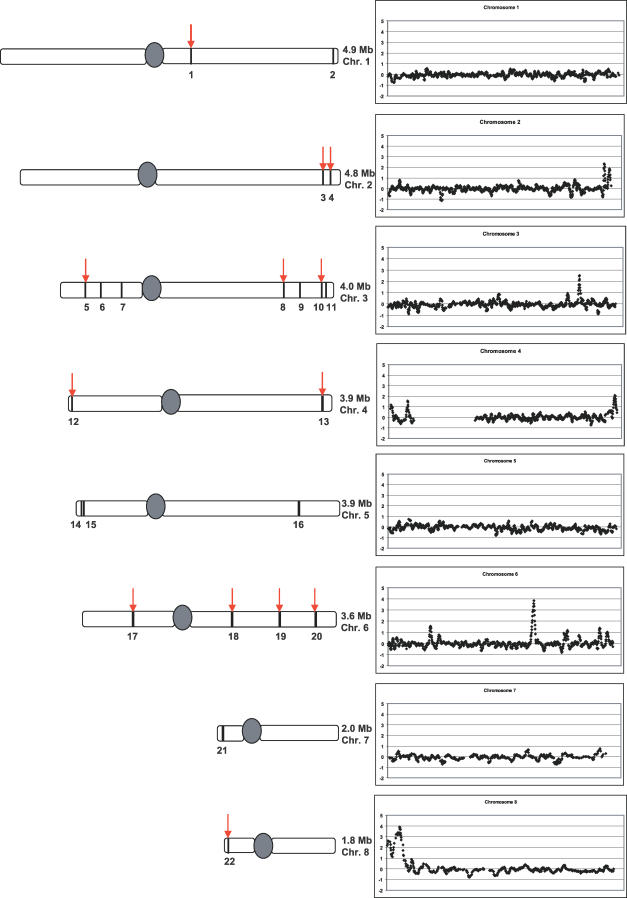
Secondary metabolites, including toxins and melanins, have been implicated as virulence attributes in invasive aspergillosis. Although not definitively proved, this supposition is supported by the decreased virulence of an Aspergillus fumigatus strain, DeltalaeA, that is crippled in the production of numerous secondary metabolites. However, loss of a single LaeA-regulated toxin, gliotoxin, did not recapitulate the hypovirulent DeltalaeA pathotype, thus implicating other toxins whose production is governed by LaeA. Toward this end, a whole-genome comparison of the transcriptional profile of wild-type, DeltalaeA, and complemented control strains showed that genes in 13 of 22 secondary metabolite gene clusters, including several A. fumigatus-specific mycotoxin clusters, were expressed at significantly lower levels in the DeltalaeA mutant. LaeA influences the expression of at least 9.5% of the genome (943 of 9,626 genes in A. fumigatus) but positively controls expression of 20% to 40% of major classes of secondary metabolite biosynthesis genes such as nonribosomal peptide synthetases (NRPSs), polyketide synthases, and P450 monooxygenases. Tight regulation of NRPS-encoding genes was highlighted by quantitative real-time reverse-transcription PCR analysis. In addition, expression of a putative siderophore biosynthesis NRPS (NRPS2/sidE) was greatly reduced in the DeltalaeA mutant in comparison to controls under inducing iron-deficient conditions. Comparative genomic analysis showed that A. fumigatus secondary metabolite gene clusters constitute evolutionarily diverse regions that may be important for niche adaptation and virulence attributes. Our findings suggest that LaeA is a novel target for comprehensive modification of chemical diversity and pathogenicity.
Overview
The claims and statistics of this paper haven’t been checked yet.
Free: it reads the open-access text and checks the first 5 claims that cite a source we can check. Create a free account to check every claim.
Integrity signals
Registry
Cites
Statistics
Figures
Verification
Claims the paper makes
The claims and statistics of this paper haven’t been checked yet.
Free: it reads the open-access text and checks the first 5 claims that cite a source we can check. Create a free account to check every claim.
Claims other papers make about this one
Each is checked against this paper’s own text: does it say what the citing paper says it does?
In the citing paper
“However, only a limited impact of the deletion of the LaeA was seen in experimental murine aspergillosis trials with a laeA mutant (436–438).”
From Aspergillus fumigatus and Aspergillosis in 2019 (2019) · cites this paper as [438]
Self-check
Percentages, sums and reported differences re-computed from the paper’s own numbers.
The self-check needs the paper’s full text.
Citations
Cites
Robust Locally Weighted Regression and Smoothing Scatterplots
Cleveland, W. S. (1979) · Journal of the American Statistical Association · doi:10.1080/01621459.1979.10481038 · Cited by 11,594 · cited 1×
“Prior to statistical analysis, the LOWESS normalization method was used to remove any systematic bias from the raw expression ratios [61].”
MethodIn silico prediction of protein-protein interactions in human macrophages
Souiai, O., Guerfali, F., Ben Miled, S., Brun, C., & Benkahla, A. (2014) · BMC Research Notes · doi:10.1186/1756-0500-7-157 · Cited by 10,803
Significance analysis of microarrays applied to the ionizing radiation response
Tusher, V. G., Tibshirani, R., & Chu, G. (2001) · Proceedings of the National Academy of Sciences · doi:10.1073/pnas.091062498 · Cited by 10,568
TM4: a free, open-source system for microarray data management and analysis
Saeed, A. I., Sharov, V., White, J., Li, J., Liang, W., Bhagabati, N., Braisted, J., Klapa, M., Currier, T., Thiagarajan, M., et al. (2003) · BioTechniques · doi:10.2144/03342mt01 · Cited by 4,837
Aspergillus fumigatus and Aspergillosis
Latgé, J.-P. (1999) · Clinical Microbiology Reviews · doi:10.1128/cmr.12.2.310 · Cited by 2,307 · cited 2×
“Invasive aspergillosis has an associated mortality rate ranging from 50% to 90% depending on the patient population [2].”
BackgroundPfam: clans, web tools and services
Finn, R. D. (2006) · Nucleic Acids Research · doi:10.1093/nar/gkj149 · Cited by 2,302 · cited 1×
“Numbers of genes in the indicated Pfam protein domain categories [65] were subjected to statistical analysis by EASE [64] to identify categories overrepresented compared with the whole genome data set.”
Method[9] TM4 Microarray Software Suite
Saeed, A. I., Bhagabati, N. K., Braisted, J. C., Liang, W., Sharov, V., Howe, E. A., Li, J., Thiagarajan, M., White, J. A., & Quackenbush, J. (2006) · Methods in Enzymology · doi:10.1016/s0076-6879(06)11009-5 · Cited by 1,983 · cited 1×
“tm4.org) [62, 63 ]. This allowed identification of genes whose mean expression across experiments is significantly different from a userspecified mean (log2 ¼ 0, corresponding to identical mRNA levels in the mutant and wild-type strains).”
BackgroundIdentifying biological themes within lists of genes with EASE
Hosack, D. A., Dennis, G., Sherman, B. T., Lane, H. C., & Lempicki, R. A. (2003) · Genome Biology · doi:10.1186/gb-2003-4-10-r70 · Cited by 1,950 · cited 9×
“Fisher’s exact test probabilities and Bonferroni corrected (step-down) probabilities (Bonferroni SD Corr.) are reported from the EASE analysis.”
BackgroundMethodInfluentialFungal secondary metabolism — from biochemistry to genomics
Keller, N. P., Turner, G., & Bennett, J. W. (2005) · Nature Reviews Microbiology · doi:10.1038/nrmicro1286 · Cited by 1,731 · cited 5×
“Alternative models suggest that clusters are maintained due to coregulation mechanisms, likely at the level of chromatin regulation [8,9].”
BackgroundInfluentialSelf-citationGenomic sequence of the pathogenic and allergenic filamentous fungus Aspergillus fumigatus
Nierman, W. C., Pain, A., Anderson, M. J., Wortman, J. R., Kim, H. S., Arroyo, J., Berriman, M., Abe, K., Archer, D. B., Bermejo, C., et al. (2005) · Nature · doi:10.1038/nature04332 · Cited by 1,391 · cited 8×
“The clustering of secondary metabolite biosynthetic genes has been suggested to reflect their evolutionary history [8,9,20,51,56,57].”
BackgroundMethodInfluentialSelf-citation
Cited by
Items 201–300 of 351
Archer, M., & Xu, J. (2021) · Genes · doi:10.3390/genes12070960 · Cited by 26
“Actin N (1) GMM at 25 ◦C for 60 days with shaking at 280 rpm (2) High iron liquid media or low iron liquid media at 37 ◦C for 24 h with shaking at 280 rpm [23]”
BackgroundMethodResultInfluentialGesing, S., Schindler, D., Fränzel, B., Wolters, D. A., & Nowrousian, M. (2012) · Molecular Microbiology · doi:10.1111/j.1365-2958.2012.08058.x · Cited by 25
“regulator gene laeA in Aspergillus fumigatus (Perrin et al., 2007), we analysed the expression of four genes involved in polyketide biosynthesis.”
BackgroundDubey, A. K., Barad, S., Luria, N., Kumar, D., Espeso, E. A., & Prusky, D. (2016) · PLoS ONE · doi:10.1371/journal.pone.0168561 · Cited by 28
Teixeira, M. D. M., Stajich, J., Sahl, J. W., Thompson, G. R., Brem, R. B., Dubin, C. A., Blackmon, A. V., Mead, H., Keim, P., & Barker, B. M. (2022) · G3 Genes Genomes Genetics · doi:10.1093/g3journal/jkac031 · Cited by 24
“This observed evolutionary pattern might help the organism survive the harsh microenvironments in desert areas where the organism lives, or these SMs may be important for host-pathogen interactions (Perrin et al. 2007; Narra et al. 2016).”
BackgroundOf patterns and pathways: microarray technologies for the analysis of filamentous fungi
Nowrousian, M. (2007) · Fungal Biology Reviews · doi:10.1016/j.fbr.2007.09.002 · Cited by 23
“Thus, one can conclude that the combination of secondary metabolites that are produced by A. fumigatus in the presence of LaeA might be a prerequisite for virulence, making LaeA a promising target for the development of antifungal drugs (Perrin et al. 2007).”
BackgroundMethodEpigenetics of Filamentous Fungi
Smith, K., Phatale, P. A., Bredeweg, E., Connolly, L., Pomraning, K., & Freitag, M. (2012) · Wiley-VCH eBooks · doi:10.1002/3527600906.mcb.201100035 · Cited by 30
2 Insight into Fungal Secondary Metabolism from Ten Years of LaeA Research
Bok, J. W., & Keller, N. P. (2016) · Springer eBooks · doi:10.1007/978-3-319-27790-5_2 · Cited by 24
Self-citationGenome Engineering and Modification Toward Synthetic Biology for the Production of Antibiotics
Zou, X., Wang, L., Li, Z., Luo, J., Wang, Y., Deng, Z., Du, S., & Chen, S. (2017) · Medicinal Research Reviews · doi:10.1002/med.21439 · Cited by 24
Spotlights on advances in mycotoxin research
Bohnert, M., Wackler, B., & Hoffmeister, D. (2010) · Applied Microbiology and Biotechnology · doi:10.1007/s00253-010-2565-8 · Cited by 23
“Particularly pertinent to fungal toxins and secondary metabolism in general was the discovery of LaeA, a nuclear protein and master regulator of natural product synthesis in several Aspergillus species (Perrin et al. 2007; Kale et al. 2008).”
BackgroundTralau, T., & Luch, A. (2013) · Expert Opinion on Drug Metabolism & Toxicology · doi:10.1517/17425255.2013.828692 · Cited by 24
“As before this includes pathogenic species such as Aspergillus fumigatus [8,27].”
BackgroundChang, P., Scharfenstein, L. L., Mack, B. M., Yu, J., & Ehrlich, K. C. (2014) · Fungal Genetics and Biology · doi:10.1016/j.fgb.2014.04.007 · Cited by 22
Epigenetic and Posttranslational Modifications in Regulating the Biology of Aspergillus Species
Nie, X., Li, B., & Wang, S. (2018) · Advances in applied microbiology · doi:10.1016/bs.aambs.2018.05.004 · Cited by 24
Seo, H., Wassano, N. S., Rawa, M. S. A., Nickles, G., Damásio, A., & Keller, N. P. (2024) · Journal of Fungi · doi:10.3390/jof10040266 · Cited by 22
“At least five BGCs and their metabolites were characterized following a microarray study of the global SM regulator LaeA [99].”
Self-citationRegulation of secondary metabolite production in the fungal tomato pathogen Cladosporium fulvum
Griffiths, S. A., Saccomanno, B., WIT, P. J. G. M. D., & Collemare, J. (2015) · Fungal Genetics and Biology · doi:10.1016/j.fgb.2015.09.009 · Cited by 26
A polyphasic method for the identification of aflatoxigenic Aspergilla from cashew nuts
Adetunji, M. C., Ngoma, L., Atanda, O., & Mwanza, M. (2019) · World Journal of Microbiology and Biotechnology · doi:10.1007/s11274-018-2575-8 · Cited by 22
Zhao, Z., Gu, S., Liu, D., Liu, D., Chen, B., Li, J., & Tian, C. (2023) · Biotechnology for Biofuels and Bioproducts · doi:10.1186/s13068-023-02313-3 · Cited by 23
Molecular cloning and characterization of the global regulator LaeA in Penicillium citrinum
Xing, W., Deng, C., & Hu, C. (2010) · Biotechnology Letters · doi:10.1007/s10529-010-0375-9 · Cited by 20
“Furthermore, 13 secondary metabolite clusters including 102 genes are under the control of LaeA (Perrin et al. 2007).”
BackgroundJain, S., Sekonyela, R., Knox, B. P., Palmer, J. M., Huttenlocher, A., Kabbage, M., & Keller, N. P. (2018) · Fungal Genetics and Biology · doi:10.1016/j.fgb.2018.05.001 · Cited by 19
“Microarray analysis of laeA mutants show LaeA to regulate at least 10 percent of the genome (Fekete et al., 2014; Perrin et al., 2007; Wang et al., 2017).”
BackgroundSelf-citationColabardini, A. C., Wang, F., Miao, Z., Pardeshi, L. A., Valero, C., de Castro, P. A., Akiyama, D. Y., Tan, K., Nora, L. C., Silva‐Rocha, R., et al. (2022) · PLoS Genetics · doi:10.1371/journal.pgen.1010001 · Cited by 18
Wang, R., Leng, Y., Shrestha, S., & Zhong, S. (2016) · Fungal Biology · doi:10.1016/j.funbio.2016.05.004 · Cited by 20
“For 21 example, expression of NRPS (NRPS2/sidE) for biosynthesis of a putative siderophore was 22 M AN US CR IP T AC CE PT ED ACCEPTED MANUSCRIPT P a g e | 25 greatly reduced in the ∆laeA mutant of A. fumigatus under inducing iron-deficient conditions 1 (Perrin et al. 2007).”
BackgroundResultThe LaeA orthologue in Epichloë festucae is required for symbiotic interaction with Lolium perenne
Rahnama, M., Maclean, P. H., Fleetwood, D. J., & Johnson, R. D. (2019) · Fungal Genetics and Biology · doi:10.1016/j.fgb.2019.05.001 · Cited by 17
LaeA-Regulated Fungal Traits Mediate Bacterial Community Assembly
Tannous, J., Cosetta, C. M., Drott, M. T., Rush, T. A., Abraham, P. E., Giannone, R. J., Keller, N. P., & Wolfe, B. E. (2023) · mBio · doi:10.1128/mbio.00769-23 · Cited by 22
Self-citationTakao, K., Akagi, Y., Tsuge, T., Harimoto, Y., Yamamoto, M., & Kodama, M. (2016) · Journal of General Plant Pathology · doi:10.1007/s10327-016-0656-9 · Cited by 19
“fumigatus, LaeA was found to control 13 of 22 secondary metabolic gene clusters (Perrin et al. 2007).”
BackgroundZhu, C., Wang, Y., Hu, X., Lei, M., Wang, M., Zeng, J., Li, H., Liu, Z., Zhou, T., & Yu, D. (2019) · Journal of Basic Microbiology · doi:10.1002/jobm.201900367 · Cited by 20
“LaeA is associated with global SM biosynthesis in Aspergillus and Penicillium species [23], and LaeA deletion mutants are especially important for the identification of specifically expressed BGCs [1,24–27].”
BackgroundSecreted biomolecules in fungal plant pathogenesis
Brown, N. A., & Hammond-Kosack, K. E. (2015) · Wiley eBooks · doi:10.1002/9781118958308.ch19 · Cited by 21
Fungi: Pioneers of chemical creativity – Techniques and strategies to uncover fungal chemistry
Schrey, H., Lambert, C. R., & Stadler, M. (2025) · IMA Fungus · doi:10.3897/imafungus.16.142462 · Cited by 23
Telomeric and Sub-Telomeric Structure and Implications in Fungal Opportunistic Pathogens
Diotti, R., Esposito, M. M., & Shen, C. H. (2021) · Microorganisms · doi:10.3390/microorganisms9071405 · Cited by 16
Natural products in the predatory defence of the filamentous fungal pathogen Aspergillus fumigatus
Boysen, J. M., Saeed, N., & Hillmann, F. (2021) · Beilstein Journal of Organic Chemistry · doi:10.3762/bjoc.17.124 · Cited by 19
Fedorova, N. D., Harris, S., Chen, D., Denning, D. W., Yu, J., Cotty, P. J., & Nierman, W. C. (2009) · Medical Mycology · doi:10.1080/13693780802354029 · Cited by 21
“Other A. flavus strains used in this study are listed in Table 1. All strains were grown in triplicate at 258 Ci n liquid minimal media as described previously [ 27 ].”
MethodSelf-citationDoyle, S., Jones, G. W., & Dolan, S. K. (2017) · Fungal Biology · doi:10.1016/j.funbio.2017.12.007 · Cited by 18
“RmtA (AFUA_1G06190; 1.06), a putative arginine methyltransferase previously shown to act as a global regulator in Aspergillus flavus, mediating broad effects on secondary metabolism and development in this organism (Satterlee et al., 2016), also exhibited significantly elevated abundance.”
BackgroundInfluentialZhgun, A. A., Dumina, M. V., Voinova, T. M., Джавахия, В. В., & Eldarov, M. A. (2018) · Applied Biochemistry and Microbiology · doi:10.1134/s0003683818020138 · Cited by 17
Kim, W., Park, J.-J., Gang, D. R., Peever, T. L., & Chen, W. (2015) · Eukaryotic Cell · doi:10.1128/ec.00084-15 · Cited by 20
Coregulated expression of loline alkaloid-biosynthesis genes in Neotyphodium uncinatum cultures
Zhang, D.-X., Stromberg, A. J., Spiering, M. J., & Schardl, C. L. (2009) · Fungal Genetics and Biology · doi:10.1016/j.fgb.2009.03.010 · Cited by 18
“Thus, it has been reported that modification of laeA in A. nidulans changes secondary metabolite diversity due to the transcriptional regulation of metabolite genes (Perrin et al., 2007).”
BackgroundPhenotypic responses to microbial volatiles render a mold fungus more susceptible to insect damage
Ortiz, S. C., Trienens, M., Pfohl, K., Karlovský, P., Holighaus, G., & Rohlfs, M. (2018) · Ecology and Evolution · doi:10.1002/ece3.3978 · Cited by 16
“The global loss of chemical diversity in volatile- exposed A. nidulans is at least in part the result of suppressed laeA- depended mechanisms necessary for secondary metabolite gene cluster activation (Bok & Keller, 2004; Perrin et al., 2007).”
BackgroundTsunematsu, Y., Takanishi, J., Asai, S., Masuya, T., Nakazawa, T., & Watanabe, K. (2019) · Organic Letters · doi:10.1021/acs.orglett.9b02861 · Cited by 17
Baba, S., Abe, Y., Suzuki, T., Ono, C., Iwamoto, K., Nihira, T., & Hosobuchi, M. (2009) · Applied Microbiology and Biotechnology · doi:10.1007/s00253-009-1933-8 · Cited by 15
“In particular, overexpression of pathwayspecific positive regulators (activators) or inactivation of repressors is a simple and successful approach, as in the case of Streptomyces SARP positive regulators ( Olano et al. 2008 ).”
BackgroundLaeA regulates morphological development and ochratoxin A biosynthesis in Aspergillus niger
Zhang, M., Yang, Y. H., Li, L., Liu, S., Xue, X., Gao, Q., Wang, D., Zhang, Y., & Zhang, J. (2022) · Mycotoxin Research · doi:10.1007/s12550-022-00463-1 · Cited by 16
Crowley, S., Mahony, J., Morrissey, J. P., & van Sinderen, D. (2013) · Microbiology · doi:10.1099/mic.0.068742-0 · Cited by 20
“Indeed, Perrin et al. (2007) determined that 13 of the 22 secondary metabolite gene clusters of A. fumigatus Af293 are under the transcriptional influence of LaeA, including the gliotoxin biosynthesis cluster and a gene cluster containing Afpes1, involved in spore morphology and melanin synthesis.”
BackgroundREGULATION OF ASPERGILLUS MYCOTOXIN BIOSYNTHESIS
Cary, J. W., & Calvo, A. M. (2008) · Toxin Reviews · doi:10.1080/15569540802373999 · Cited by 19
“As is the case in veA mutants, strains with a laeA deletion are defective in production of secondary metabolites (Bok and Keller, 2004; Hoffmeister and Keller, 2007; Perrin et al., 2007).”
BackgroundImamura, K., 津山, 善., Hirata, T., Shiraishi, S., Sakamoto, K., Yamada, O., Akita, O., & Shimoi, H. (2012) · Applied and Environmental Microbiology · doi:10.1128/aem.01770-12 · Cited by 15
“WYK-1 is a dipeptidyl peptidase IV inhibitor produced by Aspergillus oryzae strain AO-1.”
BackgroundInfluentialBen-Ami, R. (2013) · Future Microbiology · doi:10.2217/fmb.13.114 · Cited by 14
“LaeA deletion impairs the production of gliotoxin and attenuates gene expression within 13 out of 22 secondary metabolite gene clusters, accounting for 20–40% of secondary metabolism biosynthesis genes [46].”
BackgroundThe chemical profile of activated secondary metabolites by overexpressing LaeA in Aspergillus niger
Wang, B., Li, X., Tabudravu, J. N., Wang, S., Deng, H., & Pan, L. (2021) · Microbiological Research · doi:10.1016/j.micres.2021.126735 · Cited by 15
Phylogenetic and Structural Analysis of Polyketide Synthases in Aspergilli
Bhetariya, P. J., Prajapati, M., Bhaduri, A., Mandal, R. S., Varma, A., Madan, T., Singh, Y. P., & Sarma, P. U. (2016) · Evolutionary Bioinformatics · doi:10.4137/ebo.s32694 · Cited by 16
Fungal Secondary Metabolites and Their Fundamental Roles in Human Mycoses
Garvey, G. S., & Keller, N. P. (2010) · Current Fungal Infection Reports · doi:10.1007/s12281-010-0032-8 · Cited by 14
“fumigatus [18] and a microarray analysis with a ΔlaeA strain revealed that 13 clusters were downregulated in one single experimental condition, including the known virulence determinant, gliotoxin [18, 22].”
BackgroundSelf-citationSynthesis and Regulation of Fungal Secondary Metabolites
Kumar, A., & Kumar, A. (2019) · Microorganisms for sustainability · doi:10.1007/978-981-13-8844-6_2 · Cited by 12
10 Evolution of Genes for Secondary Metabolism in Fungi
Teichert, I., & Nowrousian, M. (2011) · Springer eBooks · doi:10.1007/978-3-642-19974-5_10 · Cited by 14
Epigenetics of Fungal Secondary Metabolism Related Genes
Wu, M.-Y., & Yu, J. (2015) · Fungal biology · doi:10.1007/978-1-4939-2531-5_3 · Cited by 14
A strain of Fusarium kyushuense is able to produce aflatoxin B1 and G1
Schmidt‐Heydt, M., Häckel, S., Rüfer, C. E., & Geisen, R. M. (2009) · Mycotoxin Research · doi:10.1007/s12550-009-0019-x · Cited by 11
“fumigatus, for example, 22 clusters are described (Perrin et al. 2007).”
BackgroundThe BcLAE1 is involved in the regulation of ABA biosynthesis in Botrytis cinerea TB-31
Wei, Z., Shu, D., Sun, Q., Chen, D., Li, Z., Luo, D., Yang, J., & Tan, H. K. (2022) · Frontiers in Microbiology · doi:10.3389/fmicb.2022.969499 · Cited by 11
“Of course, studies have shown that ectopic laeA complementation in Aspergillus fumigatus restored NRPS gene expression levels (Perrin et al., 2007).”
BackgroundPrasad, S. K., Bhat, S. S., Koskowska, O., Sangta, J., Ahmad, S. F., Nadeem, A., & Sommano, S. R. (2023) · Molecules · doi:10.3390/molecules28135189 · Cited by 12
Karyotype determination and gene mapping in two clinical isolates ofPenicillium marneffei
Gifford, T. D., & Cooper, C. R. (2008) · Medical Mycology · doi:10.1080/13693780802291437 · Cited by 11
Rohlfs, M. (2015) · Fungal biology · doi:10.1007/978-1-4939-2531-5_9 · Cited by 11
Llobregat, B., Cervini, C., González-Candelas, L., Verheecke‐Vaessen, C., Ballester, A., & Medina, Á. (2025) · International Journal of Food Microbiology · doi:10.1016/j.ijfoodmicro.2025.111250 · Cited by 12
Epigenetic Regulation of Secondary Metabolite Biosynthetic Genes in Fungi
Cichewicz, R. H. (2012) · Springer eBooks · doi:10.1007/978-94-007-4264-2_4 · Cited by 10
Roles of AaVeA on Mycotoxin Production via Light in Alternaria alternata
Wang, L., Wang, M., Jiao, J., & Liu, H. (2022) · Frontiers in Microbiology · doi:10.3389/fmicb.2022.842268 · Cited by 13
d’Enfert, C., & Bougnoux, M. (2014) · Elsevier eBooks · doi:10.1016/b978-0-12-801238-3.00139-2 · Cited by 16
Strategies for Accessing Microbial Secondary Metabolites from Silent Biosynthetic Pathways
Cichewicz, R. H., Henrikson, J. C., Wang, X., & Branscum, K. M. (2014) · ASM Press eBooks · doi:10.1128/9781555816827.ch7 · Cited by 10
Regulin, A., & Kempken, F. (2018) · PLoS ONE · doi:10.1371/journal.pone.0190543 · Cited by 9
“Like LaeA, transcriptome analysis shows that VeA regulates a large portion of gene expression in A. nidulans including but not limited to secondary metabolism [26].”
InfluentialFungal Genome Mining and Activation of Silent Gene Clusters
Brakhage, A. A., Bergmann, S., Schuemann, J., Scherlach, K., Schroeckh, V., & Hertweck, C. (2009) · Springer eBooks · doi:10.1007/978-3-642-00286-1_14 · Cited by 9
Back to the Future for Dermatophyte Genomics
Rivera, Z. S., Losada, L. C., & Nierman, W. C. (2012) · mBio · doi:10.1128/mbio.00381-12 · Cited by 11
Self-citationCLOCI: unveiling cryptic fungal gene clusters with generalized detection
Konkel, Z. M., Kubatko, L. S., & Slot, J. C. (2024) · Nucleic Acids Research · doi:10.1093/nar/gkae625 · Cited by 11
“These compounds include UV-absorbing carotenoids ( 9 ), antimicrobial compounds ( 10 ,11 ) and siderophores ( 12 ,13 ).”
BackgroundYang, J., Li, J., Zhang, F., & Zhao, X. (2022) · Engineering Microbiology · doi:10.1016/j.engmic.2022.100065 · Cited by 12
5 Fungal Chromatin and Its Role in Regulation of Gene Expression
Freitag, M. (2014) · Springer eBooks · doi:10.1007/978-3-642-45218-5_5 · Cited by 11
Ehrlich, K., Mack, B. M., Cary, J. W., Bhatnagar, D., & Kale, S. P. (2011) · World Mycotoxin Journal · doi:10.3920/wmj2010.1230 · Cited by 8
“Keywords: Aspergillus flavus, Aspergillus parasiticus, aflatoxin, biosynthetic genes, polyketide synthase (PKS) genes 54 World Mycotoxin Journal 4 (1) 2008; Kim et al., 2009a,b; Kosalkova et al., 2009; Perrin et al., 2007).”
BackgroundGuan, J., Wang, W., Zhang, K., Shi, X., Yang, Q., & Song, J. (2024) · International Journal of Biological Macromolecules · doi:10.1016/j.ijbiomac.2024.135153 · Cited by 7
Do, J. H., & Miyano, S. (2008) · Applied Microbiology and Biotechnology · doi:10.1007/s00253-008-1638-4 · Cited by 8
“, most of cluster genes are significantly downregulated in ΔlaeA mutant (Perrin et al. 2007).”
BackgroundResultInfluentialFunctions, Cooperation, and Interplays of the Vegetative Growth Signaling Pathway in theAspergilli
Pusztahelyi, T., & Pócsi, I. (2013) · Journal of Mycology · doi:10.1155/2013/832521 · Cited by 9
“fumigatus [131], including the genes required for the production of secondary metabolites [46, 130].”
BackgroundDewing, C., van der Nest, M. A., Santana, Q. C., Proctor, R. H., Wingfield, B. D., Steenkamp, E. T., & Vos, L. D. (2022) · Pathogens · doi:10.3390/pathogens11080858 · Cited by 6
Fascinating Potential of Aspergilli
Sarma, P. U. (2010) · Indian Journal of Clinical Biochemistry · doi:10.1007/s12291-010-0079-x · Cited by 8
A molecular approach to taxol biosynthesis
Onrubia, M. (2012) · Repositori digital de la UPF (Universitat Pompeu Fabra) · Cited by 10
Role of the osaA Gene in Aspergillus fumigatus Development, Secondary Metabolism and Virulence
Dabholkar, A., Pandit, S. S., Devkota, R., Dhingra, S., Lorber, S., Puel, O., & Calvo, A. M. (2024) · Journal of Fungi · doi:10.3390/jof10020103 · Cited by 7
Shen, Y., Zhang, Y., Zhang, H., Wang, X., Chen, J., & Li, Y. (2023) · Journal of Fungi · doi:10.3390/jof9010120 · Cited by 7
Zhang, X., Leahy, I., Collemare, J., & Seidl, M. F. (2024) · Genome Biology and Evolution · doi:10.1093/gbe/evae228 · Cited by 8
“In regard to chromosomal location, only 21% of all genes are located in sub-telomeric regions, and BUSCO genes are significantly located outside of these regions (7% in sub-telomeric regions; χ 2 P -value = 4.34 e − 72 [Fig.”
InfluentialRahnama, M., Maclean, P. H., Fleetwood, D. J., & Johnson, R. D. (2019) · Microorganisms · doi:10.3390/microorganisms8010033 · Cited by 6
Kamat, S., Kumari, M., Sajna, K. V., Mohan, S., & Jayabaskaran, C. (2022) · Sustainable Chemistry and Pharmacy · doi:10.1016/j.scp.2022.100675 · Cited by 8
Nishitani, A., Hiramatsu, K., Kadooka, C., Mori, K., Okutsu, K., Yoshizaki, Y., Takamine, K. T., Tashiro, K., Goto, M., Tamaki, H., et al. (2023) · Journal of Bioscience and Bioengineering · doi:10.1016/j.jbiosc.2023.09.004 · Cited by 8
Genetic Regulation of Aspergillus Secondary Metabolites and Their Role in Fungal Pathogenesis
Cramer, R. A., Shwab, E. K., & Keller, N. P. (2014) · ASM Press eBooks · doi:10.1128/9781555815523.ch15 · Cited by 7
Self-citationThe fungal treasure chest: Spore origins?
Keller, N. P. (2011) · Fungal Biology Reviews · doi:10.1016/j.fbr.2011.01.004 · Cited by 8
Self-citation2 Aspergillus fumigatus: Saprotroph to Pathogen
Bignell, E. (2013) · Springer eBooks · doi:10.1007/978-3-642-39432-4_2 · Cited by 9
Rebaza-Cardenas, T. D., Ludeña, Y., Samolski, I., & Villena, G. K. (2020) · Journal of Fungi · doi:10.3390/jof6040376 · Cited by 6
“laeA Secondary metabolism master regulation Induces gliotoxin and other secondary metabolites production and cytotoxicity of host cells [44,45]”
13 Evolution of Special Metabolism in Fungi: Concepts, Mechanisms, and Pathways
Schimek, C. (2011) · Springer eBooks · doi:10.1007/978-3-642-19974-5_13 · Cited by 7
Evolutionary and Ecological Interactions of Mould and Insects
Rohlfs, M., Trienens, M., Fohgrub, U., & Kempken, F. (2009) · Springer eBooks · doi:10.1007/978-3-642-00286-1_7 · Cited by 6
Fleetwood, D. J. (2007) · ResearchSpace (University of Auckland) · Cited by 6
Martín, J. F., Kosalková, K., & Liras, P. (2026) · Frontiers in Microbiology · doi:10.3389/fmicb.2026.1764309 · Cited by 5
Diseases Caused by Aspergillus fumigatus
Garcia‐Rubio, R., & Alcázar‐Fuoli, L. (2018) · Elsevier eBooks · doi:10.1016/b978-0-12-809633-8.12078-3 · Cited by 7
Wu, Y., Wang, Y., Han, S., Li, Q., & Kong, L. (2023) · Frontiers in Plant Science · doi:10.3389/fpls.2023.1132507 · Cited by 8
“fumigatus genome was regulated by LaeA, wherein the positive control SM biosynthesis genes such as polyketide synthases, P450, nonribosomal peptide synthetases (NRPSs), and monooxygenases amounted to 20% to 40% (Perrin et al., 2007).”
BackgroundZhu, L., Tang, L. H., Tian, X., Bai, Y., & Huang, L. (2024) · Phytopathology · doi:10.1094/phyto-12-23-0498-r · Cited by 5
Zhgun, A. A. (2024) · International Journal of Molecular Sciences · doi:10.3390/ijms26010181 · Cited by 5
“In addition, mutations affect the chromatin remodeling system, which plays a key role, including in the regulation of secondary metabolite biosynthesis in fungi [137,143], and can be disrupted in highly active fungal producers [41].”
Exploring the modern approaches to enhance fungal endophyte-derived bioactive secondary metabolites
Sodhi, P. K., Kour, T., Kaur, G., Gahlaut, V., Rath, S. K., Dwibedi, V., & Joshi, M. (2025) · 3 Biotech · doi:10.1007/s13205-025-04328-z · Cited by 5
“Various SM clusters can be targeted simultaneously, and this is made possible by globally manipulating the transcription factors (Perrin et al. 2007).”
The Aspergillus flavus fluP-associated metabolite promotes sclerotial production
Chang, P., Scharfenstein, L. L., Ehrlich, K. C., & Mavungu, J. D. D. (2016) · Fungal Biology · doi:10.1016/j.funbio.2016.07.010 · Cited by 6
“Aspergillus flavus is able to produce a diverse array of secondarymetabolites (Pildain et al. 2008).”
BackgroundRhodes, J. C., & Askew, D. S. (2014) · ASM Press eBooks · doi:10.1128/9781555816636.ch43 · Cited by 5
Turgeon, B. G., & Bushley, K. E. (2014) · ASM Press eBooks · doi:10.1128/9781555816636.ch26 · Cited by 5
Engineering of Global Transcriptional Regulators (GTRs) in Aspergillus for Natural Product Discovery
Zhao, Y., Gong, Q., & Zhang, H. (2025) · Journal of Fungi · doi:10.3390/jof11060449 · Cited by 6
Gao, J., Song, C., Zhang, J., Hu, Y., & Shao, Y. (2022) · Journal of Applied Microbiology · doi:10.1111/jam.15586 · Cited by 4
“…mainly mediated by LaeA, and LaeA epigenetically regulates brlA expression by preventing heterochromatin formation on the brlA promoter, further controlling secondary metabolism in the context of fungal vegetative growth and asexual development metabolism (Lind et al., 2018; Perrin et al., 2007).”
BackgroundA gene regulating ergot alkaloid biosynthesis in Metarhizium brunneum
Fabian, S. J., Steen, C. R., Damron, F. H., DeRiggi, C. A., & Panaccione, D. G. (2024) · Applied and Environmental Microbiology · doi:10.1128/aem.01051-24 · Cited by 4
Huber, F., & Bignell, E. (2014) · Fungal Genetics and Biology · doi:10.1016/j.fgb.2014.01.002 · Cited by 7
Waking Sleeping Pathways in Filamentous Fungi
Spraker, J. E., & Keller, N. P. (2014) · Wiley eBooks · doi:10.1002/9781118794623.ch15 · Cited by 5
Self-citationFungal antibiotics control bacterial community diversity in the cheese rind microbiomePreprint
Tannous, J., Cosetta, C. M., Drott, M. T., Rush, T. A., Abraham, P. E., Giannone, R. J., Keller, N. P., & Wolfe, B. E. (2022) · bioRxiv (Cold Spring Harbor Laboratory) · doi:10.1101/2022.11.26.518062 · Cited by 4
Self-citationIdentification of a fungal antibacterial endopeptidase that cleaves peptidoglycan
Machata, S., Bertsche, U., Hoffmann, F. S., Fattal, Z. M., Kage, F., Flak, M., Iliou, A., Hillmann, F., von Eggeling, F., Slevogt, H., et al. (2025) · EMBO Reports · doi:10.1038/s44319-025-00508-3 · Cited by 4
“The gene encoding B0YAY0 is located on chromosome 8 bordering the fumagillin gene cluster and was found to be transcriptionally upregulated in LaeA (1.42-fold) and SltA (37-fold) deletion mutants, but not by FapR (Liu et al, 2021; Perrin et al, 2007; Wiemann et al, 2013) in vitro.”
InfluentialThe Strategy of Aspergillus fumigatus to Evade Attacks from Host
Toyotome, T., Watanabe, A., Iwasaki, A., & Kamei, K. (2009) · Nippon Ishinkin Gakkai Zasshi · doi:10.3314/jjmm.50.139 · Cited by 3
Metadata
- Authors
- Perrin, R. M., Fedorova, N. D., Bok, J. W., Cramer, R. A., Wortman, J. R., Kim, H. S., Nierman, W. C., & Keller, N. P.
- Affiliations
- University of Wisconsin–Madison (US)
- Duke Medical Center (US)
- Korea University (KR)
- George Washington University (US)
- Corresponding author
- Keller, Nancy P
- ORCID
- Venue
- PLoS Pathogens
- Publisher
- Public Library of Science (PLoS)
- Published
- 2007-04-13
- Volume
- 3
- Issue
- 4
- Pages
- e50
- ISSN
- 1553-7366 (ISSN-L)
- 1553-7374
- PMC
- PMC1851976
- OpenAlex
- W2018878486
- Cited by
- 352
- References
- 67
- Citations by year
- 2026: 5 · 2025: 7 · 2024: 13 · 2023: 13 · 2022: 15 · 2021: 10 · 2020: 12 · 2019: 18 · 2018: 16 · 2017: 14 · 2016: 22 · 2015: 21 · 2014: 32 · 2013: 24 · 2012: 29
- FWCI
- 18.37
- Type
- journal article
- Language
- en
- Open access
- gold
- doi.org
- Locations
- PLoS Pathogens (publishedVersion, cc-by)
- PubMed Central (publishedVersion, cc-by)
- PubMed (publishedVersion)
- DOAJ (DOAJ: Directory of Open Access Journals) (submittedVersion, cc-by-sa)
- Figshare (submittedVersion, cc-by)
- Funders
- National Science Foundation (0236393)
- National Institutes of Health
- National Institute of Allergy and Infectious Diseases (AI052080, R21AI052236, R01AI065728, AI052236, U01AI048830, T32AI052080)
- Topics
- Life Sciences › Immunology and Microbiology › Applied Microbiology and Biotechnology › Microbial Natural Products and Biosynthesis
- Life Sciences › Biochemistry, Genetics and Molecular Biology › Molecular Biology › Fungal and yeast genetics research
- Life Sciences › Agricultural and Biological Sciences › Plant Science › Mycotoxins in Agriculture and Food
- Keywords
- Aspergillus fumigatus, LaeA, transcriptional regulation, secondary metabolites, invasive aspergillosis, gliotoxin, nonribosomal peptide synthetase, polyketide synthase, cytochrome P450 monooxygenase, siderophore biosynthesis, iron deficiency, virulence, chemical diversity, gene expression profiling
- MeSH terms
- Aspergillus fumigatus, Genes, Fungal, Multigene Family, Iron, Peptide Synthases, RNA, Fungal, RNA, Messenger, Transcription, Genetic, Genetic Variation, Chromosomes, Fungal, Gene Expression Regulation, Fungal, Siderophores, Gene Deletion, Reverse Transcriptase Polymerase Chain Reaction, Oligonucleotide Array Sequence Analysis, Gene Expression Profiling, Genomics
About these checks
Registry, retraction, Cites and statistics results are computed, not judged, with one exception: a printed reference that no index lists is read once by a model before it counts as a citation error. Claims are extracted by a model and kept only when their quote appears verbatim in the text; each cited source is then checked, with a model’s help, for whether it says what the claim relies on. Those verdicts can be wrong — read the claim’s quote and the cited source before relying on one.
Statistics and arithmetic are recomputed, not judged.
Confidence bands are shown only for fields calibrated on our annotated test set. None is calibrated yet, so no band is shown.
What counts as a claim ›How we measure confidence ›How we check this ›
Are you an author, or do you see a problem with this page? Request a review
Data sources
Bibliographic data: Semantic Scholar, OpenAlex, Crossref.
Contains information from the Semantic Scholar Academic Graph Datasets, made available under the ODC Attribution License (ODC-BY 1.0).
Semantic Scholar’s data is described in: Kinney, R., et al. (2023). The Semantic Scholar Open Data Platform. arXiv:2301.10140.
