

Transcriptional Regulation of Chemical Diversity in Aspergillus fumigatus by LaeA
Open accessThe DOI matches its Crossref record; 67 of the 67 references it cites were found in a registry or an index.
Abstract
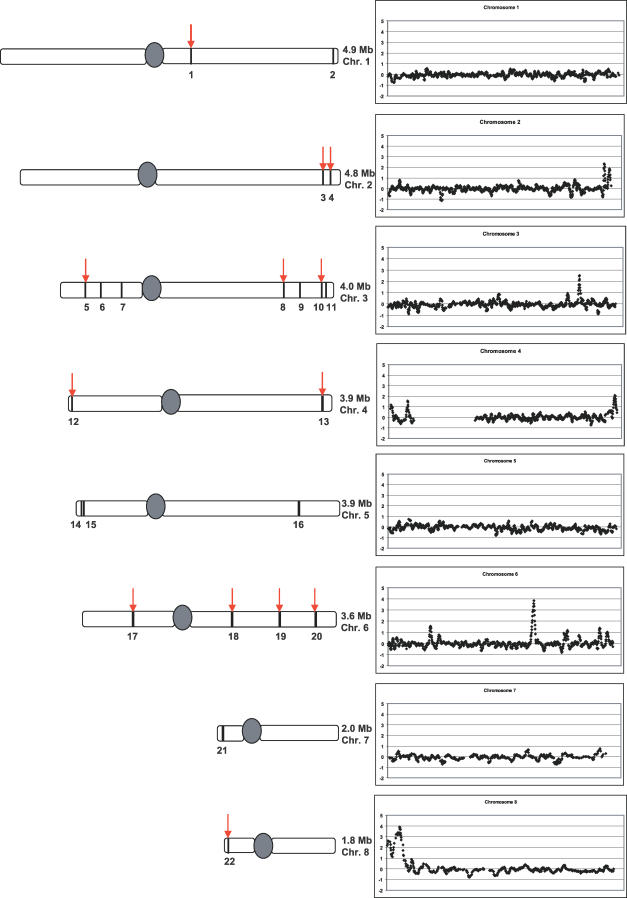
Secondary metabolites, including toxins and melanins, have been implicated as virulence attributes in invasive aspergillosis. Although not definitively proved, this supposition is supported by the decreased virulence of an Aspergillus fumigatus strain, DeltalaeA, that is crippled in the production of numerous secondary metabolites. However, loss of a single LaeA-regulated toxin, gliotoxin, did not recapitulate the hypovirulent DeltalaeA pathotype, thus implicating other toxins whose production is governed by LaeA. Toward this end, a whole-genome comparison of the transcriptional profile of wild-type, DeltalaeA, and complemented control strains showed that genes in 13 of 22 secondary metabolite gene clusters, including several A. fumigatus-specific mycotoxin clusters, were expressed at significantly lower levels in the DeltalaeA mutant. LaeA influences the expression of at least 9.5% of the genome (943 of 9,626 genes in A. fumigatus) but positively controls expression of 20% to 40% of major classes of secondary metabolite biosynthesis genes such as nonribosomal peptide synthetases (NRPSs), polyketide synthases, and P450 monooxygenases. Tight regulation of NRPS-encoding genes was highlighted by quantitative real-time reverse-transcription PCR analysis. In addition, expression of a putative siderophore biosynthesis NRPS (NRPS2/sidE) was greatly reduced in the DeltalaeA mutant in comparison to controls under inducing iron-deficient conditions. Comparative genomic analysis showed that A. fumigatus secondary metabolite gene clusters constitute evolutionarily diverse regions that may be important for niche adaptation and virulence attributes. Our findings suggest that LaeA is a novel target for comprehensive modification of chemical diversity and pathogenicity.
Overview
The claims and statistics of this paper haven’t been checked yet.
Free: it reads the open-access text and checks the first 5 claims that cite a source we can check. Create a free account to check every claim.
Integrity signals
Registry
Cites
Statistics
Figures
Verification
Claims the paper makes
The claims and statistics of this paper haven’t been checked yet.
Free: it reads the open-access text and checks the first 5 claims that cite a source we can check. Create a free account to check every claim.
Claims other papers make about this one
Each is checked against this paper’s own text: does it say what the citing paper says it does?
In the citing paper
“However, only a limited impact of the deletion of the LaeA was seen in experimental murine aspergillosis trials with a laeA mutant (436–438).”
From Aspergillus fumigatus and Aspergillosis in 2019 (2019) · cites this paper as [438]
Self-check
Percentages, sums and reported differences re-computed from the paper’s own numbers.
The self-check needs the paper’s full text.
Citations
Cites
Robust Locally Weighted Regression and Smoothing Scatterplots
Cleveland, W. S. (1979) · Journal of the American Statistical Association · doi:10.1080/01621459.1979.10481038 · Cited by 11,594 · cited 1×
“Prior to statistical analysis, the LOWESS normalization method was used to remove any systematic bias from the raw expression ratios [61].”
MethodIn silico prediction of protein-protein interactions in human macrophages
Souiai, O., Guerfali, F., Ben Miled, S., Brun, C., & Benkahla, A. (2014) · BMC Research Notes · doi:10.1186/1756-0500-7-157 · Cited by 10,803
Significance analysis of microarrays applied to the ionizing radiation response
Tusher, V. G., Tibshirani, R., & Chu, G. (2001) · Proceedings of the National Academy of Sciences · doi:10.1073/pnas.091062498 · Cited by 10,568
TM4: a free, open-source system for microarray data management and analysis
Saeed, A. I., Sharov, V., White, J., Li, J., Liang, W., Bhagabati, N., Braisted, J., Klapa, M., Currier, T., Thiagarajan, M., et al. (2003) · BioTechniques · doi:10.2144/03342mt01 · Cited by 4,837
Aspergillus fumigatus and Aspergillosis
Latgé, J.-P. (1999) · Clinical Microbiology Reviews · doi:10.1128/cmr.12.2.310 · Cited by 2,307 · cited 2×
“Invasive aspergillosis has an associated mortality rate ranging from 50% to 90% depending on the patient population [2].”
BackgroundPfam: clans, web tools and services
Finn, R. D. (2006) · Nucleic Acids Research · doi:10.1093/nar/gkj149 · Cited by 2,302 · cited 1×
“Numbers of genes in the indicated Pfam protein domain categories [65] were subjected to statistical analysis by EASE [64] to identify categories overrepresented compared with the whole genome data set.”
Method[9] TM4 Microarray Software Suite
Saeed, A. I., Bhagabati, N. K., Braisted, J. C., Liang, W., Sharov, V., Howe, E. A., Li, J., Thiagarajan, M., White, J. A., & Quackenbush, J. (2006) · Methods in Enzymology · doi:10.1016/s0076-6879(06)11009-5 · Cited by 1,983 · cited 1×
“tm4.org) [62, 63 ]. This allowed identification of genes whose mean expression across experiments is significantly different from a userspecified mean (log2 ¼ 0, corresponding to identical mRNA levels in the mutant and wild-type strains).”
BackgroundIdentifying biological themes within lists of genes with EASE
Hosack, D. A., Dennis, G., Sherman, B. T., Lane, H. C., & Lempicki, R. A. (2003) · Genome Biology · doi:10.1186/gb-2003-4-10-r70 · Cited by 1,950 · cited 9×
“Fisher’s exact test probabilities and Bonferroni corrected (step-down) probabilities (Bonferroni SD Corr.) are reported from the EASE analysis.”
BackgroundMethodInfluentialFungal secondary metabolism — from biochemistry to genomics
Keller, N. P., Turner, G., & Bennett, J. W. (2005) · Nature Reviews Microbiology · doi:10.1038/nrmicro1286 · Cited by 1,731 · cited 5×
“Alternative models suggest that clusters are maintained due to coregulation mechanisms, likely at the level of chromatin regulation [8,9].”
BackgroundInfluentialSelf-citationGenomic sequence of the pathogenic and allergenic filamentous fungus Aspergillus fumigatus
Nierman, W. C., Pain, A., Anderson, M. J., Wortman, J. R., Kim, H. S., Arroyo, J., Berriman, M., Abe, K., Archer, D. B., Bermejo, C., et al. (2005) · Nature · doi:10.1038/nature04332 · Cited by 1,391 · cited 8×
“The clustering of secondary metabolite biosynthetic genes has been suggested to reflect their evolutionary history [8,9,20,51,56,57].”
BackgroundMethodInfluentialSelf-citationSequencing of Aspergillus nidulans and comparative analysis with A. fumigatus and A. oryzae
Galagan, J. E., Calvo, S. E., Cuomo, C., Ma, L.-J., Wortman, J. R., Batzoglou, S., Lee, S.-I., Baştürkmen, M., Spevak, C. C., Clutterbuck, J., et al. (2005) · Nature · doi:10.1038/nature04341 · Cited by 1,365 · cited 1×
“The variability of secondary metabolite clusters may be explained by the fact that many of them are located in highly divergent telomere-proximal regions characterized by frequent chromosomal rearrangements [20,50].”
BackgroundSelf-citationLaeA, a Regulator of Secondary Metabolism in Aspergillus spp
Bok, J. W., & Keller, N. P. (2004) · Eukaryotic Cell · doi:10.1128/ec.3.2.527-535.2004 · Cited by 902 · cited 5×
“fumigatus [10,11], including gliotoxin in the latter.”
BackgroundInfluentialSelf-citationBiosynthesis of fungal melanins and their importance for human pathogenic fungi
Langfelder, K., Streibel, M., Jahn, B., Haase, G., & Brakhage, A. A. (2003) · Fungal Genetics and Biology · doi:10.1016/s1087-1845(02)00526-1 · Cited by 634 · cited 1×
“Melanins found in conidia are one of the few described virulence factors in A. fumigatus [5, 6 ,24].”
BackgroundMetabolic Pathway Gene Clusters in Filamentous Fungi
Keller, N. P., & Hohn, T. M. (1997) · Fungal Genetics and Biology · doi:10.1006/fgbi.1997.0970 · Cited by 604 · cited 1×
“The clustering of secondary metabolite biosynthetic genes has been suggested to reflect their evolutionary history [8,9,20,51,56,57].”
BackgroundSelf-citationThe pathobiology of Aspergillus fumigatus
Latgé, J.-P. (2001) · Trends in Microbiology · doi:10.1016/s0966-842x(01)02104-7 · Cited by 546 · cited 2×
“Prolific production of asexual spores (conidia) and nearly ubiquitous distribution in the environment ensures constant host exposure to its spores, at a density of 1 to 100 conidia/m 3 [1].”
BackgroundWard, T. J., Bielawski, J. P., Kistler, H. C., Sullivan, E., & O'Donnell, K. (2002) · Proceedings of the National Academy of Sciences · doi:10.1073/pnas.142307199 · Cited by 523 · cited 1×
“In Fusarium graminearum, the major cause of wheat and barley head blight, intraspecific polymorphic variations in a trichothecene mycotoxin gene cluster were correlated with chemotype differences, host range, and fitness [55].”
BackgroundSchrettl, M., Bignell, E., Kragl, C., Joechl, C., Rogers, T., Arst, H. N., Haynes, K., & Haas, H. (2004) · The Journal of Experimental Medicine · doi:10.1084/jem.20041242 · Cited by 493 · cited 1×
“It remains to be determined whether NRPS3/sidE is involved in siderophore production, a process known to be critical to virulence [31,32], or whether it synthesizes an iron-responsive compound with a distinct function.”
BackgroundShimizu, K., & Keller, N. P. (2001) · Genetics · doi:10.1093/genetics/157.2.591 · Cited by 445
Self-citationGardiner, D. M., Waring, P., & Howlett, B. J. (2005) · Microbiology · doi:10.1099/mic.0.27847-0 · Cited by 429 · cited 1×
“Like all other compounds in the epipolythiodioxopiperazine class, gliotoxin is a cyclic dipeptide with an internal disulfide bridge that can undergo redox cycling (for a recent review, see [33]).”
Tsai, H.-F., Wheeler, M. H., Chang, Y. C., & Kwon-Chung, K. J. (1999) · Journal of Bacteriology · doi:10.1128/jb.181.20.6469-6477.1999 · Cited by 385 · cited 3×
“fumigatus [5,6,24].”
BackgroundInfluentialHaas, H. (2003) · Applied Microbiology and Biotechnology · doi:10.1007/s00253-003-1335-2 · Cited by 334 · cited 1×
“It remains to be determined whether NRPS3/sidE is involved in siderophore production, a process known to be critical to virulence [31,32], or whether it synthesizes an iron-responsive compound with a distinct function.”
BackgroundPahl, H. L., Krauss, B., Schulze-Osthoff, K., Decker, T., Traenckner, E. B., Vogt, M., Myers, C., Parks, T., Warring, P., Mühlbacher, A., et al. (1996) · The Journal of experimental medicine · doi:10.1084/jem.183.4.1829 · Cited by 334 · cited 1×
“Immunosuppressive activity of gliotoxin is due at least in part to negative regulation of the transcription factor nuclear factor–jB, which occurs by inhibition of proteasomemediated degradation of the nuclear factor–jB inhibitor IjBa [34,35].”
BackgroundTsai, H.-F., Chang, Y. C., Washburn, R. G., Wheeler, M. H., & Kwon-Chung, K. J. (1998) · Journal of Bacteriology · doi:10.1128/jb.180.12.3031-3038.1998 · Cited by 334 · cited 1×
“Lack of melanins leads to increased susceptibility to reactive oxygen species produced by the host innate immune response during infection as well as altered (smooth) conidial morphology [5,7].”
BackgroundLaeA, a Regulator of Morphogenetic Fungal Virulence Factors
Bok, J. W., Balajee, S. A., Marr, K. A., Andes, D., Nielsen, K. F., Frisvad, J. C., & Keller, N. P. (2005) · Eukaryotic Cell · doi:10.1128/ec.4.9.1574-1582.2005 · Cited by 283 · cited 8×
“Most of these characteristics are common to the DlaeA phenotype [11], possibly implicating a role of the Afpes1 metabolite in the attenuated virulence of DlaeA.”
BackgroundMethodInfluentialSelf-citationWalton, J. D. (2000) · Fungal Genetics and Biology · doi:10.1006/fgbi.2000.1224 · Cited by 266 · cited 2×
“The ‘‘selfish cluster’’ hypothesis proposes that selection occurs at the level of the cluster and promotes maintenance of the cluster as a unit, possibly through horizontal transfer events [56].”
BackgroundGardiner, D. M., & Howlett, B. J. (2005) · FEMS Microbiology Letters · doi:10.1016/j.femsle.2005.05.046 · Cited by 242
Bok, J. W., Chung, D., Balajee, S. A., Marr, K. A., Andes, D., Nielsen, K. F., Frisvad, J. C., Kirby, K. A., & Keller, N. P. (2006) · Infection and Immunity · doi:10.1128/iai.00780-06 · Cited by 224 · cited 2×
“The DlaeA mutant is impaired in gliotoxin production during growth in culture as well as growth in vivo in murine models of invasive aspergillosis [10,15], and the microarray results presented here confirm that LaeA strongly influences expression of genes in this cluster under the condition investigated.”
BackgroundSelf-citationCramer, R. A., Gamcsik, M. P., Brooking, R. M., Najvar, L. K., Kirkpatrick, W. R., Patterson, T. F., Balibar, C. J., Graybill, J. R., Perfect, J. R., Abraham, S. N., et al. (2006) · Eukaryotic Cell · doi:10.1128/ec.00049-06 · Cited by 207
Self-citationSecondary metabolic gene cluster silencing in Aspergillus nidulans
Bok, J. W., Noordermeer, D., Kale, S. P., & Keller, N. P. (2006) · Molecular Microbiology · doi:10.1111/j.1365-2958.2006.05330.x · Cited by 204
Self-citationUnsöld, I. A., & Li, S.-M. (2005) · Microbiology · doi:10.1099/mic.0.27759-0 · Cited by 200
Maiya, S., Grundmann, A., Li, S., & Turner, G. (2006) · ChemBioChem · doi:10.1002/cbic.200600003 · Cited by 189 · cited 2×
“The pathway involves generation of the cyclic dipeptide brevianamide F by the NRPS brevianamide synthetase [27], prenylation of brevianamide F by the prenyltransferase FtmPT1 to tryptrostatin B [26], and subsequent conversion in several steps to fumitremorgen B.”
BackgroundImmunosuppression in vitro by a metabolite of a human pathogenic fungus.
Müllbacher, A., & Eichner, R. D. (1984) · Proceedings of the National Academy of Sciences · doi:10.1073/pnas.81.12.3835 · Cited by 177 · cited 1×
“First identified in 1936, this compound has immunosuppressive properties in vitro [12] and in vivo [13,14], although its direct contribution to pathogenicity is only beginning to be understood [15–17].”
BackgroundIn vivo immunosuppressive activity of gliotoxin, a metabolite produced by human pathogenic fungi
Sutton, P., Newcombe, N. R., Waring, P., & Müllbacher, A. (1994) · Infection and Immunity · doi:10.1128/iai.62.4.1192-1198.1994 · Cited by 175
Detection of Gliotoxin in Experimental and Human Aspergillosis
Lewis, R. E., Wiederhold, N. P., Chi, J., Han, X. Y., Komanduri, K. V., Kontoyiannis, D. P., & Prince, R. A. (2005) · Infection and Immunity · doi:10.1128/iai.73.1.635-637.2005 · Cited by 175 · cited 1×
“Despite the known immunosuppressive activities of the molecule and its detection in blood serum of patients with invasive aspergillosis [44], three recent studies using genetic mutants of the gliotoxin gene cluster demonstrated that gliotoxin is not a virulence factor in murine models of invasive aspergillosis [15–17].”
BackgroundGrundmann, A., & Li, S.-M. (2005) · Microbiology · doi:10.1099/mic.0.27962-0 · Cited by 171 · cited 2×
“The pathway involves generation of the cyclic dipeptide brevianamide F by the NRPS brevianamide synthetase [27], prenylation of brevianamide F by the prenyltransferase FtmPT1 to tryptrostatin B [26], and subsequent conversion in several steps to fumitremorgen B.”
BackgroundPutative virulence factors of Aspergillus fumigatus
Tomee, & Kauffman (2000) · Clinical & Experimental Allergy · doi:10.1046/j.1365-2222.2000.00796.x · Cited by 164 · cited 1×
“secondary metabolites or natural products (e.g., conidial melanins and mycotoxins) have been implicated as affecting virulence [”
BackgroundTranscriptome analysis of Aspergillus fumigatus exposed to voriconazole
Ferreira, M. E. D. S., Malavazi, I., Savoldi, M., Brakhage, A. A., Goldman, M. H. S., Kim, H. S., Nierman, W. C., & Goldman, G. H. (2006) · Current Genetics · doi:10.1007/s00294-006-0073-2 · Cited by 160 · cited 1×
“Total RNA was isolated from fungal mats, labeled, and hybridized with a DNA whole-genome amplicon microarray [20,60] in three independent biological replicates.”
MethodSelf-citationKupfahl, C., Heinekamp, T., Geginat, G., Ruppert, T., Härtl, A., Hof, H., & Brakhage, A. A. (2006) · Molecular Microbiology · doi:10.1111/j.1365-2958.2006.05373.x · Cited by 157 · cited 4×
“Despite the known immunosuppressive activities of the molecule and its detection in blood serum of patients with invasive aspergillosis [44], three recent studies using genetic mutants of the gliotoxin gene cluster demonstrated that gliotoxin is not a virulence factor in murine models of invasive aspergillosis [15–17].”
BackgroundInfluentialThe secondary fungal metabolite gliotoxin targets proteolytic activities of the proteasome
Kroll, M., Arenzana‐Seisdedos, F., Bachelerie, F., Thomas, D., Friguet, B., & Conconi, M. (1999) · Chemistry & Biology · doi:10.1016/s1074-5521(00)80016-2 · Cited by 154 · cited 1×
“Immunosuppressive activity of gliotoxin is due at least in part to negative regulation of the transcription factor nuclear factor–jB, which occurs by inhibition of proteasomemediated degradation of the nuclear factor–jB inhibitor IjBa [34,35].”
BackgroundGliotoxin induces apoptosis in macrophages unrelated to its antiphagocytic properties.
Waring, P., Eichner, R. D., Müllbacher, A., & Sjaarda, A. (1988) · Journal of Biological Chemistry · doi:10.1016/s0021-9258(19)81385-6 · Cited by 153
Gliotoxin-mediated apoptosis of activated human hepatic stellate cells
Kweon, Y.-O., Paik, Y.-H., Schnabl, B., Qian, T., Lemasters, J. J., & Brenner, D. A. (2003) · Journal of Hepatology · doi:10.1016/s0168-8278(03)00178-8 · Cited by 140 · cited 1×
“Gliotoxin is also known to be cytotoxic and can evoke both apoptotic [36–39] and necrotic [40,41] cell death.”
BackgroundInteraction of Human Phagocytes with Pigmentless Aspergillus Conidia
Jahn, B., Boukhallouk, F., Lotz, J., Langfelder, K., Wanner, G., & Brakhage, A. A. (2000) · Infection and Immunity · doi:10.1128/iai.68.6.3736-3739.2000 · Cited by 131 · cited 1×
“Lack of melanins leads to increased susceptibility to reactive oxygen species produced by the host innate immune response during infection as well as altered (smooth) conidial morphology [5,7].”
An Ergot Alkaloid Biosynthesis Gene and Clustered Hypothetical Genes from Aspergillus fumigatus
Coyle, C. M., & Panaccione, D. G. (2005) · Applied and Environmental Microbiology · doi:10.1128/aem.71.6.3112-3118.2005 · Cited by 117 · cited 2×
“Recently, Coyle and Panaccione [25] showed that deletion of an A.”
BackgroundHissen, A. H. T., Chow, J. M. T., Pinto, L. J., & Moore, M. M. (2004) · Infection and Immunity · doi:10.1128/iai.72.3.1402-1408.2004 · Cited by 112 · cited 1×
“Although siderophores do not fit neatly into a definition of secondary metabolites, which are dispensable in laboratory growth conditions [29], these molecules are produced from clustered genes and are critical for pathogen growth in blood serum [30].”
BackgroundOrigins and significance of ergot alkaloid diversity in fungi
Panaccione, D. G. (2005) · FEMS Microbiology Letters · doi:10.1016/j.femsle.2005.07.039 · Cited by 109 · cited 1×
“fumigatus synthesizes several clavine ergot alkaloids, compounds that can be partial agonists or antagonists of serotonin, dopamine, and a-adrenalin receptors, thus affecting nervous, circulatory, reproductive, and immune system function [46].”
BackgroundPardo, J., Urban, C., Galvez, E. M., Ekert, P. G., Müller, U., Kwon-Chung, J., Lobigs, M., Müllbacher, A., Wallich, R., Borner, C., et al. (2006) · The Journal of Cell Biology · doi:10.1083/jcb.200604044 · Cited by 108 · cited 1×
“Recently, gliotoxin was shown to trigger the release of apoptogenic factors by the host mitochondrial protein Bak [42].”
BackgroundUnsöld, I. A., & Li, S. (2006) · ChemBioChem · doi:10.1002/cbic.200500318 · Cited by 106
Chang, P., Ehrlich, K. C., & Hua, S.-S. T. (2006) · International Journal of Food Microbiology · doi:10.1016/j.ijfoodmicro.2005.11.008 · Cited by 103 · cited 1×
“oryzae used in the production of traditional Asian products such as miso and soy sauce, which may have arisen as a result of telomereproximal rearrangements [53].”
BackgroundAbundant Respirable Ergot Alkaloids from the Common Airborne Fungus Aspergillus fumigatus
Panaccione, D. G., & Coyle, C. M. (2005) · Applied and Environmental Microbiology · doi:10.1128/aem.71.6.3106-3111.2005 · Cited by 94 · cited 1×
“fumigatus is cytostatic and is directly mutagenic in the Ames assay [47,48].”
BackgroundAspergillusfumigatus conidial pigment and cAMP signal transduction: significance for virulence
Brakhage, A. A., & Liebmann, B. (2005) · Medical Mycology · doi:10.1080/13693780400028967 · Cited by 94 · cited 1×
“Expression of this gene cluster is also regulated by cAMP/protein kinase A signaling [49] as is LaeA itself [10], perhaps a suggestion that in this case LaeA control of this cluster may be both directly and indirectly mediated by protein kinase A.”
BackgroundExacerbation of invasive aspergillosis by the immunosuppressive fungal metabolite, gliotoxin
SUTTON, P., WARING, P., & MÜLLBACHER, A. (1996) · Immunology & Cell Biology · doi:10.1038/icb.1996.57 · Cited by 78
Reeves, E. P., Reiber, K., Neville, C., Scheibner, O., Kavanagh, K., & Doyle, S. (2006) · The FEBS Journal · doi:10.1111/j.1742-4658.2006.05315.x · Cited by 70 · cited 3×
“Secondary metabolite cluster 1 on Chromosome 1, which is differentially expressed in DlaeA, contains an atypical NRPS called Afpes1 that is required for virulence in an insect model of invasive aspergillosis [4].”
BackgroundPhylogenomic analysis of non-ribosomal peptide synthetases in the genus Aspergillus
Cramer, R. A., Stajich, J. E., Yamanaka, Y., Dietrich, F. S., Steinbach, W. J., & Perfect, J. R. (2006) · Gene · doi:10.1016/j.gene.2006.07.008 · Cited by 66
Self-citationGenomics of Aspergillus fumigatus
Ronning, C. M., Fedorova, N. D., Bowyer, P., Coulson, R., Goldman, G. H., Kim, H. S., Turner, G., Wortman, J. R., Yu, J., Anderson, M. J., et al. (2005) · Revista Iberoamericana de Micología · doi:10.1016/s1130-1406(05)70047-4 · Cited by 62 · cited 1×
“Initial comparative genome analyses indicate that the telomere-proximal regions (and to a lesser extent, synteny breakpoints and intrasyntenic regions) appear to be a hotbed of diversity, not only between Aspergillus species but even between different strains of the same species [51,52].”
BackgroundSelf-citationSuen, Y. K., Fung, K. P., Lee, C. Y., & Kong, S. K. (2001) · Free Radical Research · doi:10.1080/10715760100300541 · Cited by 61 · cited 1×
“]. Gliotoxin is also known to be cytotoxic and can evoke both apoptotic [”
BackgroundReiber, K., Reeves, E. P., Neville, C. M., Winkler, R., Gebhardt, P., Kavanagh, K., & Doyle, S. (2005) · FEMS Microbiology Letters · doi:10.1016/j.femsle.2005.05.028 · Cited by 52 · cited 6×
“Little is known about the function of SidE, although it has been speculated to be involved in siderophore biosynthesis on the basis of homology to SidC [29].”
BackgroundMethodInfluentialGuillemette, T., Sellam, A., & Simoneau, P. (2004) · Current Genetics · doi:10.1007/s00294-003-0479-z · Cited by 49 · cited 1×
“PLoS Pathogens | www.plospathogens.org April 2007 | Volume 3 | Issue 4 | e50 Chemical Diversity in A. fumigatus Alternaria brassicae [ 45 ].”
BackgroundBeaver, J., & Waring, P. (1994) · Immunology and Cell Biology · doi:10.1038/icb.1994.73 · Cited by 44 · cited 1×
“Gliotoxin is also known to be cytotoxic and can evoke both apoptotic [36–39] and necrotic [40,41] cell death.”
BackgroundPhylogenetic analysis of the isopenicillin-N-synthetase horizontal gene transfer
Buades, C., & Moyá, A. (1996) · Journal of Molecular Evolution · doi:10.1007/bf02352283 · Cited by 42 · cited 1×
“]. However, there is only limited evidence for widespread horizontal transfer of secondary metabolism gene clusters, with penicillin being a notable exception [”
BackgroundSecondary Metabolite Gene Clusters
Zhang, Y., Wilkinson, H. H., Keller, N. P., & Tsitsigiannis, D. Ι. (2004) · CRC Press eBooks · doi:10.1201/9780203970553-16 · Cited by 41
Self-citationWhat theAspergillusgenomes have told us
Nierman, W. C., May, G. S., Kim, H. S., Anderson, M. J., Chen, D., & Denning, D. W. (2005) · Medical Mycology · doi:10.1080/13693780400029049 · Cited by 35 · cited 3×
“The clustering of secondary metabolite biosynthetic genes has been suggested to reflect their evolutionary history [8,9,20,51,56,57].”
BackgroundSelf-citationNeville, C. M., Murphy, A., Kavanagh, K. A., & Doyle, S. (2005) · ChemBioChem · doi:10.1002/cbic.200400147 · Cited by 30 · cited 1×
“fumigatus [4] and expression of Afpes1 was not responsive to iron levels [4,21].”
BackgroundTalbot, N. J., Vincent, P., & Wildman, H. G. (1996) · Fungal Genetics and Biology · doi:10.1006/fgbi.1996.0040 · Cited by 25 · cited 1×
“also proved to be a major determinant of metabolite production and geographic distribution [”
BackgroundGliotoxin-induced cytotoxicity in three salmonid cell lines: Cell death by apoptosis and necrosis
DeWitte‐Orr, S. J., & Bols, N. C. (2005) · Comparative Biochemistry and Physiology Part C Toxicology & Pharmacology · doi:10.1016/j.cca.2005.05.015 · Cited by 24 · cited 1×
“Gliotoxin is also known to be cytotoxic and can evoke both apoptotic [36–39] and necrotic [40,41] cell death.”
BackgroundGliotoxin induces apoptosis in mouse L929 fibroblast cells.
Piva, T. J. (1994) · PubMed · Cited by 23
Clavine alkaloids and derivatives as mutagens detected in the Ames test
Glatt, H. R., Pertz, H. H., Kasper, R., & Eich, E. (1992) · Anti-Cancer Drugs · doi:10.1097/00001813-199212000-00008 · Cited by 14 · cited 1×
“fumigatus is cytostatic and is directly mutagenic in the Ames assay [47,48].”
BackgroundSecondary Metabolite Gene Clusters
Wilkinson, H. H., Tsitsigiannis, D. Ι., Zhang, Y., & Keller, N. P. (2004) · Mycology · doi:10.1201/9780203970553.ch12 · Cited by 8
Self-citation
Cited by
Fungal secondary metabolism: regulation, function and drug discovery
Keller, N. P. (2019) · Nature Reviews Microbiology · doi:10.1038/s41579-018-0121-1 · Cited by 1,390
Self-citationAspergillus fumigatus and Aspergillosis in 2019
Latgé, J.-P., & Chamilos, G. (2019) · Clinical Microbiology Reviews · doi:10.1128/cmr.00140-18 · Cited by 1,400
Regulation of fungal secondary metabolism
Brakhage, A. A. (2013) · Nature Reviews Microbiology · doi:10.1038/nrmicro2916 · Cited by 1,147
One Juliet and four Romeos: VeA and its methyltransferases
Sarikaya-Bayram, Ã., Palmer, J. M., Keller, N., Braus, G. H., & Bayram, Ã. (2015) · Frontiers in Microbiology · doi:10.3389/fmicb.2015.00001 · Cited by 1,148
“In the postgenomic era, understanding the diversity and the molecular control of secondary metabolites (SMs) are two challenging tasks addressed by the research community.”
BackgroundInfluentialSelf-citationPathogenesis of Aspergillus fumigatus in Invasive Aspergillosis
Dagenais, T. R. T., & Keller, N. P. (2009) · Clinical Microbiology Reviews · doi:10.1128/cmr.00055-08 · Cited by 993
Self-citation
Metadata
- Authors
- Perrin, R. M., Fedorova, N. D., Bok, J. W., Cramer, R. A., Wortman, J. R., Kim, H. S., Nierman, W. C., & Keller, N. P.
- Affiliations
- University of Wisconsin–Madison (US)
- Duke Medical Center (US)
- Korea University (KR)
- George Washington University (US)
- Corresponding author
- Keller, Nancy P
- ORCID
- Venue
- PLoS Pathogens
- Publisher
- Public Library of Science (PLoS)
- Published
- 2007-04-13
- Volume
- 3
- Issue
- 4
- Pages
- e50
- ISSN
- 1553-7366 (ISSN-L)
- 1553-7374
- PMC
- PMC1851976
- OpenAlex
- W2018878486
- Cited by
- 352
- References
- 67
- Citations by year
- 2026: 5 · 2025: 7 · 2024: 13 · 2023: 13 · 2022: 15 · 2021: 10 · 2020: 12 · 2019: 18 · 2018: 16 · 2017: 14 · 2016: 22 · 2015: 21 · 2014: 32 · 2013: 24 · 2012: 29
- FWCI
- 18.37
- Type
- journal article
- Language
- en
- Open access
- gold
- doi.org
- Locations
- PLoS Pathogens (publishedVersion, cc-by)
- PubMed Central (publishedVersion, cc-by)
- PubMed (publishedVersion)
- DOAJ (DOAJ: Directory of Open Access Journals) (submittedVersion, cc-by-sa)
- Figshare (submittedVersion, cc-by)
- Funders
- National Science Foundation (0236393)
- National Institutes of Health
- National Institute of Allergy and Infectious Diseases (AI052080, R21AI052236, R01AI065728, AI052236, U01AI048830, T32AI052080)
- Topics
- Life Sciences › Immunology and Microbiology › Applied Microbiology and Biotechnology › Microbial Natural Products and Biosynthesis
- Life Sciences › Biochemistry, Genetics and Molecular Biology › Molecular Biology › Fungal and yeast genetics research
- Life Sciences › Agricultural and Biological Sciences › Plant Science › Mycotoxins in Agriculture and Food
- Keywords
- Aspergillus fumigatus, LaeA, transcriptional regulation, secondary metabolites, invasive aspergillosis, gliotoxin, nonribosomal peptide synthetase, polyketide synthase, cytochrome P450 monooxygenase, siderophore biosynthesis, iron deficiency, virulence, chemical diversity, gene expression profiling
- MeSH terms
- Aspergillus fumigatus, Genes, Fungal, Multigene Family, Iron, Peptide Synthases, RNA, Fungal, RNA, Messenger, Transcription, Genetic, Genetic Variation, Chromosomes, Fungal, Gene Expression Regulation, Fungal, Siderophores, Gene Deletion, Reverse Transcriptase Polymerase Chain Reaction, Oligonucleotide Array Sequence Analysis, Gene Expression Profiling, Genomics
About these checks
Registry, retraction, Cites and statistics results are computed, not judged, with one exception: a printed reference that no index lists is read once by a model before it counts as a citation error. Claims are extracted by a model and kept only when their quote appears verbatim in the text; each cited source is then checked, with a model’s help, for whether it says what the claim relies on. Those verdicts can be wrong — read the claim’s quote and the cited source before relying on one.
Statistics and arithmetic are recomputed, not judged.
Confidence bands are shown only for fields calibrated on our annotated test set. None is calibrated yet, so no band is shown.
What counts as a claim ›How we measure confidence ›How we check this ›
Are you an author, or do you see a problem with this page? Request a review
Data sources
Bibliographic data: Semantic Scholar, OpenAlex, Crossref.
Contains information from the Semantic Scholar Academic Graph Datasets, made available under the ODC Attribution License (ODC-BY 1.0).
Semantic Scholar’s data is described in: Kinney, R., et al. (2023). The Semantic Scholar Open Data Platform. arXiv:2301.10140.
