

Transcriptional Regulation of Chemical Diversity in Aspergillus fumigatus by LaeA
Open accessThe DOI matches its Crossref record; 67 of the 67 references it cites were found in a registry or an index.
Abstract
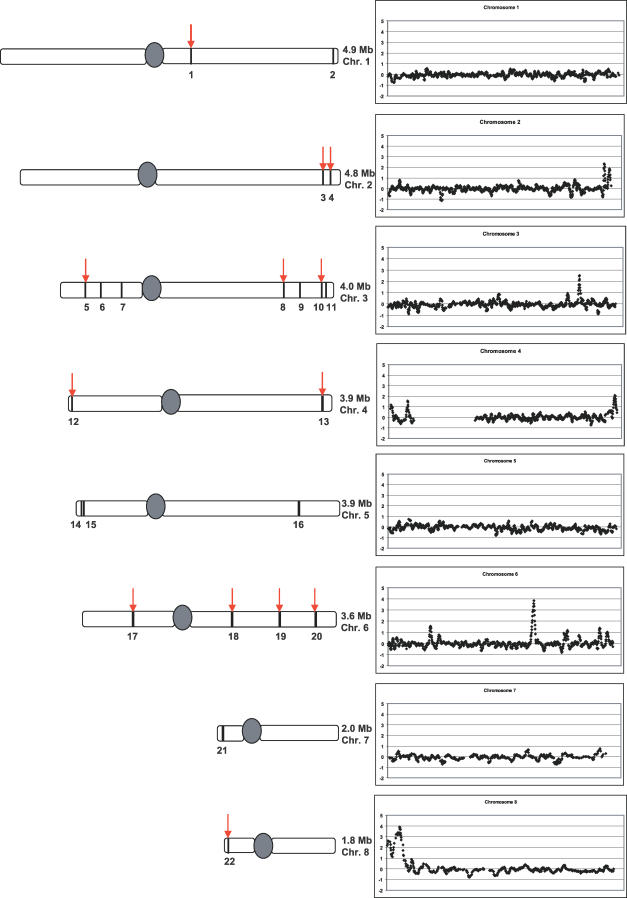
Secondary metabolites, including toxins and melanins, have been implicated as virulence attributes in invasive aspergillosis. Although not definitively proved, this supposition is supported by the decreased virulence of an Aspergillus fumigatus strain, DeltalaeA, that is crippled in the production of numerous secondary metabolites. However, loss of a single LaeA-regulated toxin, gliotoxin, did not recapitulate the hypovirulent DeltalaeA pathotype, thus implicating other toxins whose production is governed by LaeA. Toward this end, a whole-genome comparison of the transcriptional profile of wild-type, DeltalaeA, and complemented control strains showed that genes in 13 of 22 secondary metabolite gene clusters, including several A. fumigatus-specific mycotoxin clusters, were expressed at significantly lower levels in the DeltalaeA mutant. LaeA influences the expression of at least 9.5% of the genome (943 of 9,626 genes in A. fumigatus) but positively controls expression of 20% to 40% of major classes of secondary metabolite biosynthesis genes such as nonribosomal peptide synthetases (NRPSs), polyketide synthases, and P450 monooxygenases. Tight regulation of NRPS-encoding genes was highlighted by quantitative real-time reverse-transcription PCR analysis. In addition, expression of a putative siderophore biosynthesis NRPS (NRPS2/sidE) was greatly reduced in the DeltalaeA mutant in comparison to controls under inducing iron-deficient conditions. Comparative genomic analysis showed that A. fumigatus secondary metabolite gene clusters constitute evolutionarily diverse regions that may be important for niche adaptation and virulence attributes. Our findings suggest that LaeA is a novel target for comprehensive modification of chemical diversity and pathogenicity.
Overview
The claims and statistics of this paper haven’t been checked yet.
Free: it reads the open-access text and checks the first 5 claims that cite a source we can check. Create a free account to check every claim.
Integrity signals
Registry
Cites
Statistics
Figures
Verification
Claims the paper makes
The claims and statistics of this paper haven’t been checked yet.
Free: it reads the open-access text and checks the first 5 claims that cite a source we can check. Create a free account to check every claim.
Claims other papers make about this one
Each is checked against this paper’s own text: does it say what the citing paper says it does?
In the citing paper
“However, only a limited impact of the deletion of the LaeA was seen in experimental murine aspergillosis trials with a laeA mutant (436–438).”
From Aspergillus fumigatus and Aspergillosis in 2019 (2019) · cites this paper as [438]
Self-check
Percentages, sums and reported differences re-computed from the paper’s own numbers.
The self-check needs the paper’s full text.
Citations
Cites
Robust Locally Weighted Regression and Smoothing Scatterplots
Cleveland, W. S. (1979) · Journal of the American Statistical Association · doi:10.1080/01621459.1979.10481038 · Cited by 11,594 · cited 1×
“Prior to statistical analysis, the LOWESS normalization method was used to remove any systematic bias from the raw expression ratios [61].”
MethodIn silico prediction of protein-protein interactions in human macrophages
Souiai, O., Guerfali, F., Ben Miled, S., Brun, C., & Benkahla, A. (2014) · BMC Research Notes · doi:10.1186/1756-0500-7-157 · Cited by 10,803
Significance analysis of microarrays applied to the ionizing radiation response
Tusher, V. G., Tibshirani, R., & Chu, G. (2001) · Proceedings of the National Academy of Sciences · doi:10.1073/pnas.091062498 · Cited by 10,568
TM4: a free, open-source system for microarray data management and analysis
Saeed, A. I., Sharov, V., White, J., Li, J., Liang, W., Bhagabati, N., Braisted, J., Klapa, M., Currier, T., Thiagarajan, M., et al. (2003) · BioTechniques · doi:10.2144/03342mt01 · Cited by 4,837
Aspergillus fumigatus and Aspergillosis
Latgé, J.-P. (1999) · Clinical Microbiology Reviews · doi:10.1128/cmr.12.2.310 · Cited by 2,307 · cited 2×
“Invasive aspergillosis has an associated mortality rate ranging from 50% to 90% depending on the patient population [2].”
BackgroundPfam: clans, web tools and services
Finn, R. D. (2006) · Nucleic Acids Research · doi:10.1093/nar/gkj149 · Cited by 2,302 · cited 1×
“Numbers of genes in the indicated Pfam protein domain categories [65] were subjected to statistical analysis by EASE [64] to identify categories overrepresented compared with the whole genome data set.”
Method[9] TM4 Microarray Software Suite
Saeed, A. I., Bhagabati, N. K., Braisted, J. C., Liang, W., Sharov, V., Howe, E. A., Li, J., Thiagarajan, M., White, J. A., & Quackenbush, J. (2006) · Methods in Enzymology · doi:10.1016/s0076-6879(06)11009-5 · Cited by 1,983 · cited 1×
“tm4.org) [62, 63 ]. This allowed identification of genes whose mean expression across experiments is significantly different from a userspecified mean (log2 ¼ 0, corresponding to identical mRNA levels in the mutant and wild-type strains).”
BackgroundIdentifying biological themes within lists of genes with EASE
Hosack, D. A., Dennis, G., Sherman, B. T., Lane, H. C., & Lempicki, R. A. (2003) · Genome Biology · doi:10.1186/gb-2003-4-10-r70 · Cited by 1,950 · cited 9×
“Fisher’s exact test probabilities and Bonferroni corrected (step-down) probabilities (Bonferroni SD Corr.) are reported from the EASE analysis.”
BackgroundMethodInfluentialFungal secondary metabolism — from biochemistry to genomics
Keller, N. P., Turner, G., & Bennett, J. W. (2005) · Nature Reviews Microbiology · doi:10.1038/nrmicro1286 · Cited by 1,731 · cited 5×
“Alternative models suggest that clusters are maintained due to coregulation mechanisms, likely at the level of chromatin regulation [8,9].”
BackgroundInfluentialSelf-citationGenomic sequence of the pathogenic and allergenic filamentous fungus Aspergillus fumigatus
Nierman, W. C., Pain, A., Anderson, M. J., Wortman, J. R., Kim, H. S., Arroyo, J., Berriman, M., Abe, K., Archer, D. B., Bermejo, C., et al. (2005) · Nature · doi:10.1038/nature04332 · Cited by 1,391 · cited 8×
“The clustering of secondary metabolite biosynthetic genes has been suggested to reflect their evolutionary history [8,9,20,51,56,57].”
BackgroundMethodInfluentialSelf-citation
Cited by
Fungal secondary metabolism: regulation, function and drug discovery
Keller, N. P. (2019) · Nature Reviews Microbiology · doi:10.1038/s41579-018-0121-1 · Cited by 1,390
Self-citationAspergillus fumigatus and Aspergillosis in 2019
Latgé, J.-P., & Chamilos, G. (2019) · Clinical Microbiology Reviews · doi:10.1128/cmr.00140-18 · Cited by 1,400
Regulation of fungal secondary metabolism
Brakhage, A. A. (2013) · Nature Reviews Microbiology · doi:10.1038/nrmicro2916 · Cited by 1,147
One Juliet and four Romeos: VeA and its methyltransferases
Sarikaya-Bayram, Ã., Palmer, J. M., Keller, N., Braus, G. H., & Bayram, Ã. (2015) · Frontiers in Microbiology · doi:10.3389/fmicb.2015.00001 · Cited by 1,148
“In the postgenomic era, understanding the diversity and the molecular control of secondary metabolites (SMs) are two challenging tasks addressed by the research community.”
BackgroundInfluentialSelf-citationPathogenesis of Aspergillus fumigatus in Invasive Aspergillosis
Dagenais, T. R. T., & Keller, N. P. (2009) · Clinical Microbiology Reviews · doi:10.1128/cmr.00055-08 · Cited by 993
Self-citationSMURF: Genomic mapping of fungal secondary metabolite clusters
Khaldi, N., Seifuddin, F. T., Turner, G., Haft, D., Nierman, W. C., Wolfe, K. H., & Fedorova, N. D. (2010) · Fungal Genetics and Biology · doi:10.1016/j.fgb.2010.06.003 · Cited by 771
Self-citationFungal secondary metabolites – Strategies to activate silent gene clusters
Brakhage, A. A., & Schroeckh, V. (2011) · Fungal Genetics and Biology · doi:10.1016/j.fgb.2010.04.004 · Cited by 729
Amaike, S., & Keller, N. P. (2011) · Annual Review of Phytopathology · doi:10.1146/annurev-phyto-072910-095221 · Cited by 668
Self-citationTriggering cryptic natural product biosynthesis in microorganisms
Scherlach, K., & Hertweck, C. (2009) · Organic & Biomolecular Chemistry · doi:10.1039/b821578b · Cited by 574
Genomic Islands in the Pathogenic Filamentous Fungus Aspergillus fumigatus
Fedorova, N. D., Khaldi, N., Joardar, V. S., Maiti, R., Amedeo, P., Anderson, M. J., Crabtree, J., Silva, J. C., Badger, J. H., Albarraq, A., et al. (2008) · PLoS Genetics · doi:10.1371/journal.pgen.1000046 · Cited by 508
“fumigaclavine and another unknown secondary metabolite [36].”
Self-citationUse and misuse of the gene ontology annotations
Yon Rhee, S., Wood, V., Dolinski, K., & Draghici, S. (2008) · Nature Reviews Genetics · doi:10.1038/nrg2363 · Cited by 506
Secondary metabolism: regulation and role in fungal biology
Fox, E. M., & Howlett, B. J. (2008) · Current Opinion in Microbiology · doi:10.1016/j.mib.2008.10.007 · Cited by 471
Regulation and Role of Fungal Secondary Metabolites
Macheleidt, J., Mattern, D. J., Fischer, J., Netzker, T., Weber, J., Schroeckh, V., Valiante, V., & Brakhage, A. A. (2016) · Annual Review of Genetics · doi:10.1146/annurev-genet-120215-035203 · Cited by 433
Histone Deacetylase Activity Regulates Chemical Diversity in Aspergillus
Shwab, E. K., Bok, J. W., Tribus, M., Galehr, J., Graessle, S., & Keller, N. P. (2007) · Eukaryotic Cell · doi:10.1128/ec.00186-07 · Cited by 411
Self-citationAbad, A., Victoria Fernández-Molina, J., Bikandi, J., Ramírez, A., Margareto, J., Sendino, J., Luis Hernando, F., Pontón, J., Garaizar, J., & Rementeria, A. (2010) · Revista Iberoamericana de Micología · doi:10.1016/j.riam.2010.10.003 · Cited by 394
“220 The deletion of this gene in A. fumigatus blocked the production of almost all secondary metabolites, including gliotoxin, 268 and a leaA mutant strain was hypovirulent after intranasal inoculation of neutropenic mice.”
Chromatin-level regulation of biosynthetic gene clusters
Bok, J. W., Chiang, Y.-M., Szewczyk, E., Reyes-Dominguez, Y., Davidson, A. D., Sanchez, J. F., Lo, H.-C., Watanabe, K., Strauss, J., Oakley, B. R., et al. (2009) · Nature Chemical Biology · doi:10.1038/nchembio.177 · Cited by 381
Self-citationEpigenetic remodeling of the fungal secondary metabolome
Williams, R. B., Henrikson, J. C., Hoover, A. R., Lee, A. E., & Cichewicz, R. H. (2008) · Organic & Biomolecular Chemistry · doi:10.1039/b804701d · Cited by 353
Yu, J. (2012) · Toxins · doi:10.3390/toxins4111024 · Cited by 344
“[170] carried out a whole-genome comparison of the transcriptional profiles of wild-type and laeA-deleted A.”
BackgroundSecondary metabolic gene clusters: evolutionary toolkits for chemical innovation
Osbourn, A. (2010) · Trends in Genetics · doi:10.1016/j.tig.2010.07.001 · Cited by 334
Reyes-Dominguez, Y., Bok, J. W., Berger, H., Shwab, E. K., Basheer, A., Gallmetzer, A., Scazzocchio, C., Keller, N., & Strauss, J. (2010) · Molecular Microbiology · doi:10.1111/j.1365-2958.2010.07051.x · Cited by 319
Self-citationConnolly, L. R., Smith, K. M., & Freitag, M. (2013) · PLoS Genetics · doi:10.1371/journal.pgen.1003916 · Cited by 318
“We did, however, find changes in several predicted LaeA homologs whose functions are still largely unknown.”
BackgroundResultInfluentialInglis, D. O., Binkley, J., Skrzypek, M. S., Arnaud, M. B., Cerqueira, G. C., Shah, P., Wymore, F., Wortman, J. R., & Sherlock, G. (2013) · BMC Microbiology · doi:10.1186/1471-2180-13-91 · Cited by 293
“Secondary metabolite biosynthetic genes often occur in clusters that tend to be sub-telomerically located and are coordinately regulated under certain laboratory conditions [18-20].”
BackgroundSelf-citationEpigenome manipulation as a pathway to new natural product scaffolds and their congeners
Cichewicz, R. H. (2010) · Nat. Prod. Rep. · doi:10.1039/b920860g · Cited by 282
Wiemann, P., Brown, D. W., Kleigrewe, K., Bok, J. W., Keller, N. P., Humpf, H., & Tudzynski, B. (2010) · Molecular Microbiology · doi:10.1111/j.1365-2958.2010.07263.x · Cited by 283
Self-citationTranslating biosynthetic gene clusters into fungal armor and weaponry
Keller, N. P. (2015) · Nature Chemical Biology · doi:10.1038/nchembio.1897 · Cited by 275
Self-citationSreA‐mediated iron regulation in Aspergillus fumigatus
Schrettl, M., Kim, H. S., Eisendle, M., Kragl, C., Nierman, W. C., Heinekamp, T., Werner, E. R., Jacobsen, I., Illmer, P., Yi, H., et al. (2008) · Molecular Microbiology · doi:10.1111/j.1365-2958.2008.06376.x · Cited by 266
“© 2008 The Authors Journal compilation © 2008 Blackwell Publishing Ltd, Molecular Microbiology, 70, 27–43 gene clusters (Perrin et al., 2007).”
BackgroundSelf-citationFungal secondary metabolites as modulators of interactions with insects and other arthropods
Rohlfs, M., & Churchill, A. C. L. (2011) · Fungal Genetics and Biology · doi:10.1016/j.fgb.2010.08.008 · Cited by 265
“…systems (e.g., Bayram et al., 2008; Bok et al., 2009; Chiang et al., 2008; Fischbach et al., 2008; Jenke-Kodama and Dittmann, 2009; Palmer and Keller, 2010; Perrin et al., 2007; Reyes-Dominguez et al., 2010), integration of these perspectives into ecological research programs remains to be done.”
BackgroundInfluentialGenetic regulation of aflatoxin biosynthesis: From gene to genome
Georgianna, D. R., & Payne, G. A. (2009) · Fungal Genetics and Biology · doi:10.1016/j.fgb.2008.10.011 · Cited by 264
Advances in Aspergillus secondary metabolite research in the post-genomic era
Sanchez, J. F., Somoza, A. D., Keller, N. P., & Wang, C. C. C. (2012) · Natural Product Reports · doi:10.1039/c2np00084a · Cited by 257
Self-citationSub-Telomere Directed Gene Expression during Initiation of Invasive Aspergillosis
McDonagh, A., Fedorova, N. D., Crabtree, J., Yu, Y., Kim, S., Chen, D., Loss, O., Cairns, T., Goldman, G., Armstrong-James, D., et al. (2008) · PLoS Pathogens · doi:10.1371/journal.ppat.1000154 · Cited by 235
“Siderophore-mediated iron uptake and storage, also partially under LaeA control[16] is indispensable for A.”
BackgroundInfluentialSelf-citationThe completed genome sequence of the pathogenic ascomycete fungus Fusarium graminearum
King, R., Urban, M., Hammond-Kosack, M. C. U., Hassani-Pak, K., & Hammond-Kosack, K. E. (2015) · BMC Genomics · doi:10.1186/s12864-015-1756-1 · Cited by 228
“For example, in the Aspergillus species, species unique secondary metabolite genes are enriched in subtelomeric regions [66, 67].”
BackgroundSecondary metabolism in fungi: does chromosomal location matter?
Palmer, J. M., & Keller, N. P. (2010) · Current Opinion in Microbiology · doi:10.1016/j.mib.2010.04.008 · Cited by 222
Self-citationRegulation of secondary metabolism by chromatin structure and epigenetic codes
Strauss, J., & Reyes-Dominguez, Y. (2011) · Fungal Genetics and Biology · doi:10.1016/j.fgb.2010.07.009 · Cited by 221
“fumigatus have shown LaeA target gene clusters positioned at different chromosomal locations, from 30 kb sub-telomeric to central positions on different chromosome arms (Perrin et al., 2007; Shwab et al., 2007).”
BackgroundInfluentialProgress in tracing the evolutionary paths of cytochrome P450
Nelson, D. R. (2011) · Biochimica et Biophysica Acta (BBA) - Proteins and Proteomics · doi:10.1016/j.bbapap.2010.08.008 · Cited by 219
The chromatin code of fungal secondary metabolite gene clusters
Gacek, A., & Strauss, J. (2012) · Applied Microbiology and Biotechnology · doi:10.1007/s00253-012-4208-8 · Cited by 218
“…chemical diversity in a large range of fungi (Bok and Keller 2004; Kale et al. 2007; Kale et al. 2008; Kosalkova et al. 2009; Oda et al. 2011; Perrin et al. 2007; Wiemann et al. 2010; Xing et al. 2010), factors regulating heterochromatin formation in SM gene clusters have only been studied…”
BackgroundOsbourn, A. E., & Field, B. (2009) · Cellular and Molecular Life Sciences · doi:10.1007/s00018-009-0114-3 · Cited by 214
“Seven of the LaeA-regulated clusters are in subtelomeric regions of chromosomes with a high degree of heterochromatin [58].”
BackgroundRequirement of LaeA for secondary metabolism and sclerotial production in Aspergillus flavus
Kale, S. P., Milde, L., Trapp, M. K., Frisvad, J. C., Keller, N. P., & Bok, J. W. (2008) · Fungal Genetics and Biology · doi:10.1016/j.fgb.2008.06.009 · Cited by 207
Self-citationPrototype of an intertwined secondary-metabolite supercluster
Wiemann, P., Guo, C.-J., Palmer, J. M., Sekonyela, R., Wang, C. C. C., & Keller, N. P. (2013) · Proceedings of the National Academy of Sciences · doi:10.1073/pnas.1313258110 · Cited by 195
“Here, using previously published microarray data of a ΔlaeAmutant in Aspergillus fumigatus (24), we uncover the blending and regulation of a “supercluster” in the subtelomeric region of chromosome VIII (25–27).”
BackgroundMethodSelf-citationStrategies for mining fungal natural products
Wiemann, P., & Keller, N. P. (2014) · Journal of Industrial Microbiology and Biotechnology · doi:10.1007/s10295-013-1366-3 · Cited by 194
“cus pilosus [36, 67, 102, 134], some of which were later”
BackgroundSelf-citationRegulation of secondary metabolite production in filamentous ascomycetes
Shwab, E. K., & Keller, N. P. (2008) · Mycological Research · doi:10.1016/j.mycres.2007.08.021 · Cited by 194
“…limited to genes within the cluster, although several aflR-regulated genes were recently identified elsewhere in the genome of A. parasiticus (Price et al. 2006). aflR encodes a Zn(II)2Cys6 zinc binuclear protein that activates transcription by binding to palindromic DNA sequences in the…”
BackgroundSelf-citationHautbergue, T., Jamin, E. L., Debrauwer, L., Puel, O., & Oswald, I. P. (2018) · Natural Product Reports · doi:10.1039/c7np00032d · Cited by 185
Molecular mechanisms of Aspergillus flavus secondary metabolism and development
Amare, M. G., & Keller, N. P. (2014) · Fungal Genetics and Biology · doi:10.1016/j.fgb.2014.02.008 · Cited by 183
Self-citationTranscriptional regulatory elements in fungal secondary metabolism
Yin, W., & Keller, N. P. (2011) · The Journal of Microbiology · doi:10.1007/s12275-011-1009-1 · Cited by 184
“fumigatus showed similar regulation effect on SM gene clusters (Perrin et al., 2007).”
BackgroundInfluentialSelf-citationDiscovering the secondary metabolite potential encoded within entomopathogenic fungi
Gibson, D. M., Donzelli, B. G. G., Krasnoff, S. B., & Keyhani, N. O. (2014) · Nat. Prod. Rep. · doi:10.1039/c4np00054d · Cited by 182
The Sound of Silence: Activating Silent Biosynthetic Gene Clusters in Marine Microorganisms
Reen, F., Romano, S., Dobson, A., & O'Gara, F. (2015) · Marine Drugs · doi:10.3390/md13084754 · Cited by 180
“Some early indication of the importance of global regulatory mechanisms came from the observation that the putative nuclear regulator LaeA controlled fungal secondary metabolite production [113].”
BackgroundLópez‐Berges, M. S., Hera, C., Sulyok, M., Schäfer, K., Capilla, J., Guarro, J., & Di Pietro, A. (2013) · Molecular Microbiology · doi:10.1111/mmi.12082 · Cited by 176
“In Aspergillus, LaeA (Bok and Keller, 2004; Bok et al., 2006; Perrin et al., 2007) and the velvet complex (Bayram et al.”
BackgroundInfluentialHistone modifications and chromatin dynamics: a focus on filamentous fungi
Brosch, G., Loidl, P., & Graessle, S. (2008) · FEMS Microbiology Reviews · doi:10.1111/j.1574-6976.2007.00100.x · Cited by 173
“Interestingly, this cross-connection between entirely different HDAC families could be confirmed by recent data from Aspergillus nidulans, which are discussed in detail below (Shwab et al., 2007).”
BackgroundFungal model systems and the elucidation of pathogenicity determinants
Perez-Nadales, E., Almeida Nogueira, M. F., Baldin, C., Castanheira, S., El Ghalid, M., Grund, E., Lengeler, K., Marchegiani, E., Mehrotra, P. V., Moretti, M., et al. (2014) · Fungal Genetics and Biology · doi:10.1016/j.fgb.2014.06.011 · Cited by 172
“…traits include the importance of secondary metabolic pathways in pathogenic fungi, often in linked clusters in Aspergillus (Bergmann et al., 2007; Perrin et al., 2007) and M. oryzae (Dean et al., 2005), for example, and the considerable secreted proteomes associated with pathogens (Ma et al.,…”
BackgroundDistinct Roles for VeA and LaeA in Development and Pathogenesis of Aspergillus flavus
Amaike, S., & Keller, N. P. (2009) · Eukaryotic Cell · doi:10.1128/ec.00088-09 · Cited by 172
“flavus (2, 21), as well as dozens of putative toxins in the human pathogen Aspergillus fumigatus (32).”
BackgroundSelf-citationComparison of Cytochrome P450 Genes from Six Plant Genomes
Nelson, D. R., Ming, R., Alam, M., & Schuler, M. A. (2008) · Tropical Plant Biology · doi:10.1007/s12042-008-9022-1 · Cited by 170
Chemical induction of silent biosynthetic pathway transcription in Aspergillus niger
Fisch, K. M., Gillaspy, A. F., Gipson, M., Henrikson, J. C., Hoover, A. R., Jackson, L., Najar, F. Z., Wägele, H., & Cichewicz, R. H. (2009) · Journal of Industrial Microbiology & Biotechnology · doi:10.1007/s10295-009-0601-4 · Cited by 168
“Moreover, deletion of the transcriptional regulator laeA, whose methyltransferase product was suggested to alter chromatin structure [45], has been shown to decrease the expression of many telomere proximal NRPS gene clusters in Aspergillus fumigatus [46].”
BackgroundFusaric acid contributes to virulence of Fusarium oxysporum on plant and mammalian hosts
López‐Díaz, C., Rahjoo, V., Sulyok, M., Ghionna, V., Martín‐Vicente, A., Capilla, J., Di Pietro, A., & López‐Berges, M. S. (2018) · Molecular Plant Pathology · doi:10.1111/mpp.12536 · Cited by 162
Secondary chemicals protect mould from fungivory
Rohlfs, M., Albert, M., Keller, N. P., & Kempken, F. (2007) · Biology Letters · doi:10.1098/rsbl.2007.0338 · Cited by 162
“Deletion of the laeA gene (DlaeA) results in fungal strains with vigorous vegetative growth but reduced or eliminated SM gene transcripts (Bok & Keller 2004; Perrin et al. 2007).”
BackgroundSelf-citationMetabolomics of Aspergillus fumigatus
Frisvad, J. C., Rank, C., Nielsen, K. F., & Larsen, T. O. (2009) · Medical Mycology · doi:10.1080/13693780802307720 · Cited by 160
Hoff, B., Kamerewerd, J., Sigl, C., Mitterbauer, R., Zadra, I., Kürnsteiner, H., & Kück, U. (2010) · Eukaryotic Cell · doi:10.1128/ec.00077-10 · Cited by 158
“fumigatus comparing a laeA mutant to the wild type demonstrated that LaeA positively controls the expression of 20 to 40% of the major classes of secondary metabolite biosynthesis genes such as nonribosomal peptide synthetases, polyketide synthases, and P450 monooxygenases (55).”
BackgroundFrom hormones to secondary metabolism: the emergence of metabolic gene clusters in plants
Chu, H. Y., Wegel, E., & Osbourn, A. (2011) · The Plant Journal · doi:10.1111/j.1365-313x.2011.04503.x · Cited by 154
Lee, I., Oh, J.-H., Keats Shwab, E., Dagenais, T. R. T., Andes, D., & Keller, N. P. (2009) · Fungal Genetics and Biology · doi:10.1016/j.fgb.2009.06.007 · Cited by 147
“Regardless of location, there was considerable overlap in HdaA and LaeA regulation of NRPS. LaeA also regulated – all positively - NRPS1, NRPS4 (in high iron conditions), NRPS9, NRPS10, NRPS11, NRPS12, NRPS13 and NRPS14 (Table 3 and Perrin et al, 2007).”
BackgroundSelf-citationWu, D. L., Oide, S., Zhang, N., Choi, M. Y., & Turgeon, B. G. (2012) · PLoS Pathogens · doi:10.1371/journal.ppat.1002542 · Cited by 161
“[13] that LaeA is dispensable for the low iron-induced expression of sidC and sidD in A.”
Transcriptomic analysis of the exit from dormancy of Aspergillus fumigatus conidia
Lamarre, C., Sokol, S., Debeaupuis, J.-P., Henry, C., Lacroix, C., Glaser, P., Coppée, J.-Y., François, J.-M., & Latgé, J.-P. (2008) · BMC Genomics · doi:10.1186/1471-2164-9-417 · Cited by 148
“Global gene expression analysis of this fungus under stress conditions (thermic shock or drug) or in mutants have been already reported [29-32].”
BackgroundFungal antioxidant pathways promote survival against neutrophils during infection
Leal, S. M., Vareechon, C., Cowden, S., Cobb, B. A., Latgé, J.-P., Momany, M., & Pearlman, E. (2012) · Journal of Clinical Investigation · doi:10.1172/jci63239 · Cited by 146
Chang, P., Horn, B. W., & Dorner, J. W. (2008) · Fungal Genetics and Biology · doi:10.1016/j.fgb.2008.11.002 · Cited by 144
“fumigatus genome, 8 of the 22 gene clusters are located in subtelomeric regions (Perrin et al., 2007).”
BackgroundBacterial–fungal interactions revealed by genome-wide analysis of bacterial mutant fitness
Pierce, E. C., Morin, M., Little, J., Liu, R. B., Tannous, J., Keller, N. P., Pogliano, K., Wolfe, B. E., Sanchez, L. M., & Dutton, R. J. (2020) · Nature Microbiology · doi:10.1038/s41564-020-00800-z · Cited by 158
Self-citationAflatoxins: Implications on Health
Sarma, U. P., Bhetariya, P. J., Devi, P., & Varma, A. (2017) · Indian Journal of Clinical Biochemistry · doi:10.1007/s12291-017-0649-2 · Cited by 142
“Recent researches show that twenty species of Aspergilli are capable of producing aflatoxins.”
BackgroundInfluentialRecent advances in the biosynthesis of penicillins, cephalosporins and clavams and its regulation
Özcengiz, G., & Demain, A. L. (2012) · Biotechnology Advances · doi:10.1016/j.biotechadv.2012.12.001 · Cited by 159
Secondary metabolites from hypocrealean entomopathogenic fungi: novel bioactive compounds
Zhang, L., Fasoyin, O. E., Molnár, I., & Xu, Y. (2020) · Natural Product Reports · doi:10.1039/c9np00065h · Cited by 134
Yin, W.-B., Baccile, J. A., Bok, J. W., Chen, Y., Keller, N. P., & Schroeder, F. C. (2013) · Journal of the American Chemical Society · doi:10.1021/ja311145n · Cited by 133
Self-citationToward Awakening Cryptic Secondary Metabolite Gene Clusters in Filamentous Fungi
Lim, F. Y., Sanchez, J. F., Wang, C. C. C., & Keller, N. P. (2012) · Methods in enzymology on CD-ROM/Methods in enzymology · doi:10.1016/b978-0-12-404634-4.00015-2 · Cited by 134
“and shown to both positively and negatively regulate production of natural compounds (Baba, Kinoshita, & Nihira, 2011; Bok et al., 2005; Kale et al., 2008; Oda, Kobayashi, Ohashi, & Sano, 2011; Perrin et al., 2007; Wiemann et al., 2010; Xing, Deng, & Hu, 2010).”
BackgroundSelf-citationTwumasi-Boateng, K., Yu, Y., Chen, D., Gravelat, F. N., Nierman, W. C., & Sheppard, D. C. (2009) · Eukaryotic Cell · doi:10.1128/ec.00265-08 · Cited by 125
“The boundaries of this supercluster, as determined by our expression data, are in agreement with a previous report which found the supercluster to also be dependent on the transcription factor LaeA (30).”
BackgroundResultSelf-citationKjærbølling, I., Vesth, T., Frisvad, J. C., Rasmussen, J. L. N., Theobald, S., Kuo, A., Bowyer, P., Matsuda, Y., Mondo, S. J., Lyhne, E. K., et al. (2018) · Proceedings of the National Academy of Sciences · doi:10.1073/pnas.1715954115 · Cited by 123
“The biosynthetic genes of SMs are located in clusters setting the stage for common gene regulation (9, 10).”
BackgroundYin, W., Chooi, Y., Smith, A. R., Cacho, R. A., Hu, Y., White, T. C., & Tang, Y. (2013) · ACS Synthetic Biology · doi:10.1021/sb400048b · Cited by 133
Aghcheh, R. K., Bok, J. W., Phatale, P. A., Smith, K., Baker, S., Lichius, A., Omann, M. R., Zeilinger, S., Seiboth, B., Rhee, C., et al. (2013) · G3 Genes Genomes Genetics · doi:10.1534/g3.112.005140 · Cited by 139
“It was later shown to be required for the biosynthesis of secondary metabolites in Aspergillus (Bok et al. 2006a; Bouhired et al. 2007; Perrin et al., 2007; Kale et al. 2008; Georgianna et al. 2010; Oda et al. 2011), in the industrial fungus Penicillium chrysogenum (e.g., penicillin) and the…”
InfluentialSelf-citationGibbons, J. G., Beauvais, A., Beau, R., McGary, K. L., Latgé, J.-P., & Rokas, A. (2012) · Eukaryotic Cell · doi:10.1128/ec.05102-11 · Cited by 118
“fumigatus (55) (see “Widespread differential regulation of transcription factors” below), prompted us to also examine differential expression in all known A.”
BackgroundMethodInfluentialPotential of Aspergillus flavus genomics for applications in biotechnology
Cleveland, T. E., Yu, J., Fedorova, N. D., Bhatnagar, D., Payne, G. A., Nierman, W. C., & Bennett, J. W. (2009) · Trends in biotechnology · doi:10.1016/j.tibtech.2008.11.008 · Cited by 119
Self-citationLae1 regulates expression of multiple secondary metabolite gene clusters in Fusarium verticillioides
Butchko, R. A. E., Brown, D. W., Busman, M., Tudzynski, B., & Wiemann, P. (2012) · Fungal Genetics and Biology · doi:10.1016/j.fgb.2012.06.003 · Cited by 118
“Work with the laeA deletion strain in Aspergillus species led to the identification of multiple new SM gene clusters as well as the corresponding metabolites (Bok et al., 2006b; Bouhired et al., 2007; Perrin et al., 2007).”
BackgroundResistance is not futile: gliotoxin biosynthesis, functionality and utility
Dolan, S. K., O’Keeffe, G., Jones, G. W., & Doyle, S. (2015) · Trends in Microbiology · doi:10.1016/j.tim.2015.02.005 · Cited by 137
Soukup, A. A., Chiang, Y., Bok, J. W., Reyes-Domínguez, Y., Oakley, B. R., Wang, C. C. C., Strauss, J., & Keller, N. P. (2012) · Molecular Microbiology · doi:10.1111/j.1365-2958.2012.08195.x · Cited by 124
“Regulation of secondary metabolite (SM) gene clusters in Aspergillus nidulans has been shown to occur through cluster-specific transcription factors or through global regulators of chromatin structure such as histone methyltransferases, histone deacetylases, or the putative methyltransferase LaeA.”
InfluentialSelf-citationModulation of genetic clusters for synthesis of bioactive molecules in fungal endophytes: A review
Deepika, V. B., Murali, T. S., & Satyamoorthy, K. (2015) · Microbiological Research · doi:10.1016/j.micres.2015.10.009 · Cited by 117
Strategies to establish the link between biosynthetic gene clusters and secondary metabolites
Kjærbølling, I., Mortensen, U. H., Vesth, T., & Andersen, M. R. (2019) · Fungal Genetics and Biology · doi:10.1016/j.fgb.2019.06.001 · Cited by 130
“fumigatus wild type, laeA deletion and a complementation control strain found that 13 out of 22 BGCs were positively regulated by LaeA on a transcriptional level (Perrin et al., 2007).”
BackgroundAflatoxins: Detection, toxicity, and biosynthesis
Hanwan, J., & Choi, D. (2007) · Biotechnology and Bioprocess Engineering · doi:10.1007/bf02931073 · Cited by 114
Microbial volatile communication in human organotypic lung models
Barkal, L. J., Procknow, C. L., Álvarez-García, Y. R., Niu, M., Jiménez‐Torres, J. A., Brockman‐Schneider, R. A., Gern, J. E., Denlinger, L. C., Theberge, A. B., Keller, N. P., et al. (2017) · Nature Communications · doi:10.1038/s41467-017-01985-4 · Cited by 123
Self-citationGuruceaga, X., Perez-Cuesta, U., Abad-Diaz de Cerio, A., Gonzalez, O., Alonso, R. M., Hernando, F. L., Ramirez-Garcia, A., & Rementeria, A. (2019) · Toxins · doi:10.3390/toxins12010007 · Cited by 104
“fumigatus), and to be specific, controls the expression of 20%–40% of major classes of SM biosynthesis genes [27].”
BackgroundWiemann, P., Perevitsky, A., Lim, F. Y., Shadkchan, Y., Knox, B. P., Landero Figueora, J. A., Choera, T., Niu, M., Steinberger, A. J., Wüthrich, M., et al. (2017) · Cell Reports · doi:10.1016/j.celrep.2017.04.019 · Cited by 104
Self-citationWasil, Z., Zaman, K. A. K. P., Butts, C. P., Simpson, T. J., Lazarus, C. M., & Cox, R. J. (2013) · Chemical Science · doi:10.1039/c3sc51785c · Cited by 113
Iron and copper as virulence modulators in human fungal pathogens
Ding, C., Festa, R. A., Sun, T., & Wang, Z. (2014) · Molecular Microbiology · doi:10.1111/mmi.12653 · Cited by 103
“While no direct reports have been made on the roles of Aspergillus melanin in Fe acquisition, it has been shown that a master regulator of secondary metabolites (laeA) co-regulates expression of sidE and fungal pigmentation (Bok and Keller, 2004; Perrin et al., 2007).”
BackgroundUnlocking Fungal Cryptic Natural Products
Chiang, Y., Lee, K., Sanchez, J. F., Keller, N. P., & Wang, C. C. C. (2009) · Natural Product Communications · doi:10.1177/1934578x0900401113 · Cited by 105
“Seven of these regulated clusters are sub-telomeric, in the regions with a high degree of heterochromatin [21].”
BackgroundSelf-citationThe function and evolution of the Aspergillus genome
Gibbons, J. G., & Rokas, A. (2012) · Trends in Microbiology · doi:10.1016/j.tim.2012.09.005 · Cited by 123
Shaaban, M. I., Bok, J. W., Lauer, C., & Keller, N. P. (2010) · Eukaryotic Cell · doi:10.1128/ec.00189-10 · Cited by 108
“LaeA is thus used as a genomic mining tool, providing a novel method for identifying new SM through microarray and chemical analyses (8, 20, 34).”
MethodSelf-citationRole of gliotoxin in the symbiotic and pathogenic interactions of Trichoderma virens
Vargas, W. A., Mukherjee, P. K., Laughlin, D., Wiest, A. E., Morán-Diez, M. E., & Kenerley, C. M. (2014) · Microbiology · doi:10.1099/mic.0.079210-0 · Cited by 108
“…to gliP , 12 other genes that are co-regulated during gliotoxin biosynthesis, with expression regulated by the velvet complex proteins (Dhingra et al. , 2012; Perrin et al. , 2007; Sugui et al. , 2007; Schrettl et al. , 2010) and components of the MAPK signalling pathways (Jain et al. , 2011).”
Collemare, J., & Seidl, M. F. (2019) · FEMS Microbiology Reviews · doi:10.1093/femsre/fuz018 · Cited by 112
Trypacidin, a Spore-Borne Toxin from Aspergillus fumigatus, Is Cytotoxic to Lung Cells
Gauthier, T., Wang, X., Sifuentes Dos Santos, J., Fysikopoulos, A., Tadrist, S., Canlet, C., Artigot, M. P., Loiseau, N., Oswald, I. P., & Puel, O. (2012) · PLoS ONE · doi:10.1371/journal.pone.0029906 · Cited by 97
“fumigatus genome putatively involved in secondary metabolism [12,13].”
Variability of chromosome structure in pathogenic fungi—of ‘ends and odds’
Galazka, J. M., & Freitag, M. (2014) · Current Opinion in Microbiology · doi:10.1016/j.mib.2014.04.002 · Cited by 96
“Overwhelmingly, SMCs are localized closer to the ends of chromosomes, in what can be broadly defined as ‘subtelomeric regions’, and they are often flanked by repetitive elements [2 ,11,12,13 ].”
Secondary metabolite arsenal of an opportunistic pathogenic fungus
Bignell, E., Cairns, T. C., Throckmorton, K., Nierman, W. C., & Keller, N. P. (2016) · Philosophical Transactions of the Royal Society B: Biological Sciences · doi:10.1098/rstb.2016.0023 · Cited by 92
Self-citationSugui, J. A., Pardo, J., Chang, Y. C., Müllbacher, A., Zarember, K. A., Galvez, E. M., Brinster, L., Zerfas, P., Gallin, J. I., Simon, M. M., et al. (2007) · Eukaryotic Cell · doi:10.1128/ec.00140-07 · Cited by 93
“fumigatus genome and positively regulates the expression of genes involved in the synthesis of 20 to 40% of the major classes of secondary metabolites (25).”
BackgroundAspergillus Biofilm In Vitro and In Vivo
Beauvais, A., & Latgé, J.-P. (2015) · Microbiology Spectrum · doi:10.1128/microbiolspec.mb-0017-2015 · Cited by 93
“The upregulation of the secondarymetabolism regulator gene LAEA in biofilm is in agreement with these data since LaeA is the major regulator of secondary metabolite gene clusters (34).”
ResultExtrolites of Aspergillus fumigatus and Other Pathogenic Species in Aspergillus Section Fumigati
Frisvad, J. C., & Larsen, T. O. (2016) · Frontiers in Microbiology · doi:10.3389/fmicb.2015.01485 · Cited by 108
“For example A. fumigatus can be distinguished fromA. lentulus by exometabolite profiling (Larsen et al., 2007), MALDI-TOF (Verwer et al., 2014), and sequencing (Balajee et al., 2005a; Samson et al., 2007), but only partially by morphology and Raman spectroscopy (Verwer et al., 2014).”
BackgroundRecent advances in the genome mining of Aspergillus secondary metabolites (covering 2012–2018)
Romsdahl, J., & Wang, C. C. C. (2019) · MedChemComm · doi:10.1039/c9md00054b · Cited by 103
Palková, Z., & Váchová, L. (. (2012) · Springer eBooks · doi:10.1007/978-94-007-4264-2 · Cited by 94
Ames, B. D., Liu, X., & Walsh, C. T. (2010) · Biochemistry · doi:10.1021/bi1012029 · Cited by 95
“Perrin RM, et al. Transcriptional regulation of chemical diversity in Aspergillus fumigatus by LaeA.”
BackgroundInfluentialA survey of nonribosomal peptide synthetase (NRPS) genes in Aspergillus nidulans
von Döhren, H. (2008) · Fungal Genetics and Biology · doi:10.1016/j.fgb.2008.08.008 · Cited by 100
The CYPome (Cytochrome P450 complement) of Aspergillus nidulans
Kelly, D. E., Kraševec, N., Mullins, J. G. L., & Nelson, D. R. (2008) · Fungal Genetics and Biology · doi:10.1016/j.fgb.2008.08.010 · Cited by 103
“Recently the gene LaeA has been identified as a global regulator of many of these gene clusters (Perrin et al., 2007).”
Background
Metadata
- Authors
- Perrin, R. M., Fedorova, N. D., Bok, J. W., Cramer, R. A., Wortman, J. R., Kim, H. S., Nierman, W. C., & Keller, N. P.
- Affiliations
- University of Wisconsin–Madison (US)
- Duke Medical Center (US)
- Korea University (KR)
- George Washington University (US)
- Corresponding author
- Keller, Nancy P
- ORCID
- Venue
- PLoS Pathogens
- Publisher
- Public Library of Science (PLoS)
- Published
- 2007-04-13
- Volume
- 3
- Issue
- 4
- Pages
- e50
- ISSN
- 1553-7366 (ISSN-L)
- 1553-7374
- PMC
- PMC1851976
- OpenAlex
- W2018878486
- Cited by
- 352
- References
- 67
- Citations by year
- 2026: 5 · 2025: 7 · 2024: 13 · 2023: 13 · 2022: 15 · 2021: 10 · 2020: 12 · 2019: 18 · 2018: 16 · 2017: 14 · 2016: 22 · 2015: 21 · 2014: 32 · 2013: 24 · 2012: 29
- FWCI
- 18.37
- Type
- journal article
- Language
- en
- Open access
- gold
- doi.org
- Locations
- PLoS Pathogens (publishedVersion, cc-by)
- PubMed Central (publishedVersion, cc-by)
- PubMed (publishedVersion)
- DOAJ (DOAJ: Directory of Open Access Journals) (submittedVersion, cc-by-sa)
- Figshare (submittedVersion, cc-by)
- Funders
- National Science Foundation (0236393)
- National Institutes of Health
- National Institute of Allergy and Infectious Diseases (AI052080, R21AI052236, R01AI065728, AI052236, U01AI048830, T32AI052080)
- Topics
- Life Sciences › Immunology and Microbiology › Applied Microbiology and Biotechnology › Microbial Natural Products and Biosynthesis
- Life Sciences › Biochemistry, Genetics and Molecular Biology › Molecular Biology › Fungal and yeast genetics research
- Life Sciences › Agricultural and Biological Sciences › Plant Science › Mycotoxins in Agriculture and Food
- Keywords
- Aspergillus fumigatus, LaeA, transcriptional regulation, secondary metabolites, invasive aspergillosis, gliotoxin, nonribosomal peptide synthetase, polyketide synthase, cytochrome P450 monooxygenase, siderophore biosynthesis, iron deficiency, virulence, chemical diversity, gene expression profiling
- MeSH terms
- Aspergillus fumigatus, Genes, Fungal, Multigene Family, Iron, Peptide Synthases, RNA, Fungal, RNA, Messenger, Transcription, Genetic, Genetic Variation, Chromosomes, Fungal, Gene Expression Regulation, Fungal, Siderophores, Gene Deletion, Reverse Transcriptase Polymerase Chain Reaction, Oligonucleotide Array Sequence Analysis, Gene Expression Profiling, Genomics
About these checks
Registry, retraction, Cites and statistics results are computed, not judged, with one exception: a printed reference that no index lists is read once by a model before it counts as a citation error. Claims are extracted by a model and kept only when their quote appears verbatim in the text; each cited source is then checked, with a model’s help, for whether it says what the claim relies on. Those verdicts can be wrong — read the claim’s quote and the cited source before relying on one.
Statistics and arithmetic are recomputed, not judged.
Confidence bands are shown only for fields calibrated on our annotated test set. None is calibrated yet, so no band is shown.
What counts as a claim ›How we measure confidence ›How we check this ›
Are you an author, or do you see a problem with this page? Request a review
Data sources
Bibliographic data: Semantic Scholar, OpenAlex, Crossref.
Contains information from the Semantic Scholar Academic Graph Datasets, made available under the ODC Attribution License (ODC-BY 1.0).
Semantic Scholar’s data is described in: Kinney, R., et al. (2023). The Semantic Scholar Open Data Platform. arXiv:2301.10140.
