

Stimulation of Chitin Synthesis Rescues Candida albicans from Echinocandins
Open accessThe DOI matches its Crossref record; 61 of the 61 references it cites were found in a registry or an index.
Abstract
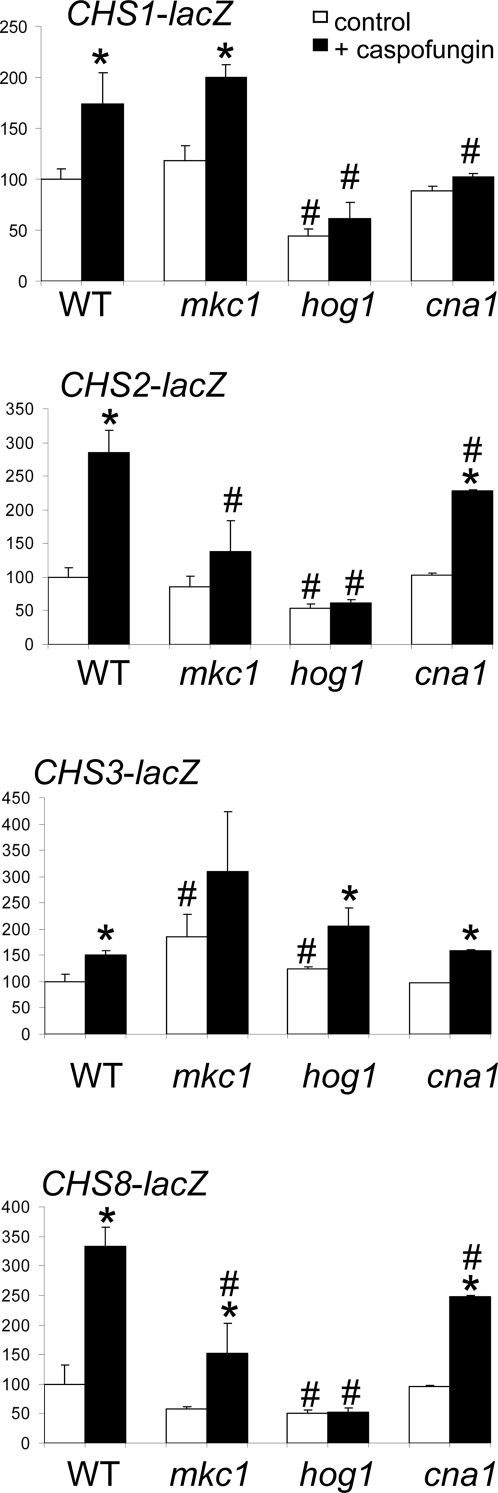
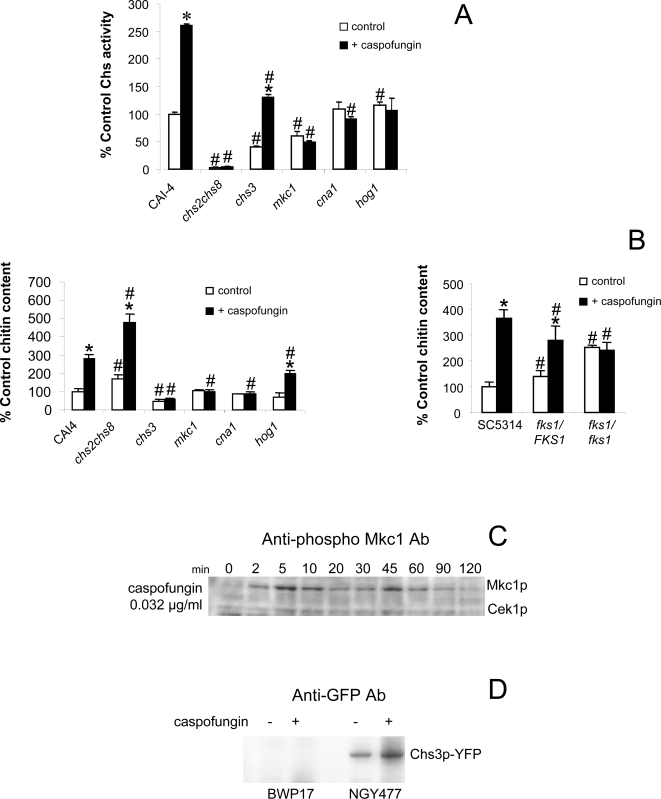
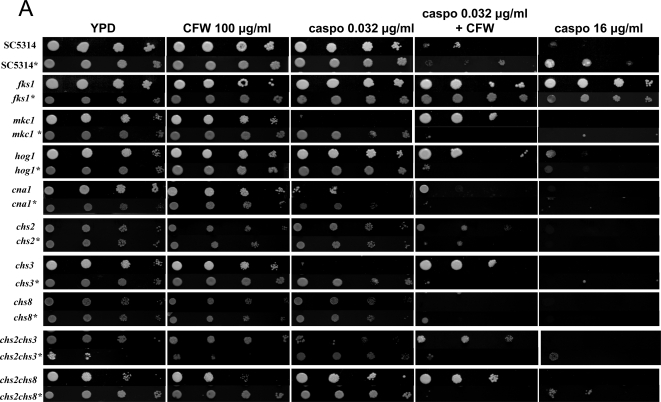
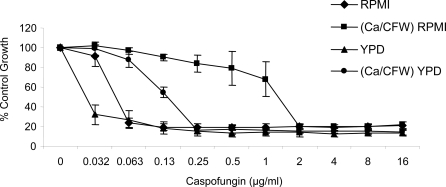
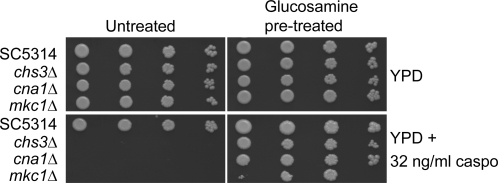
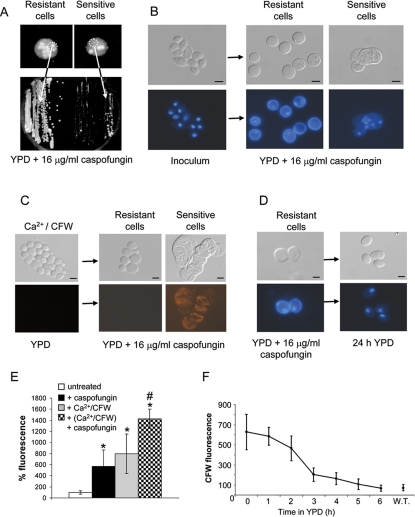
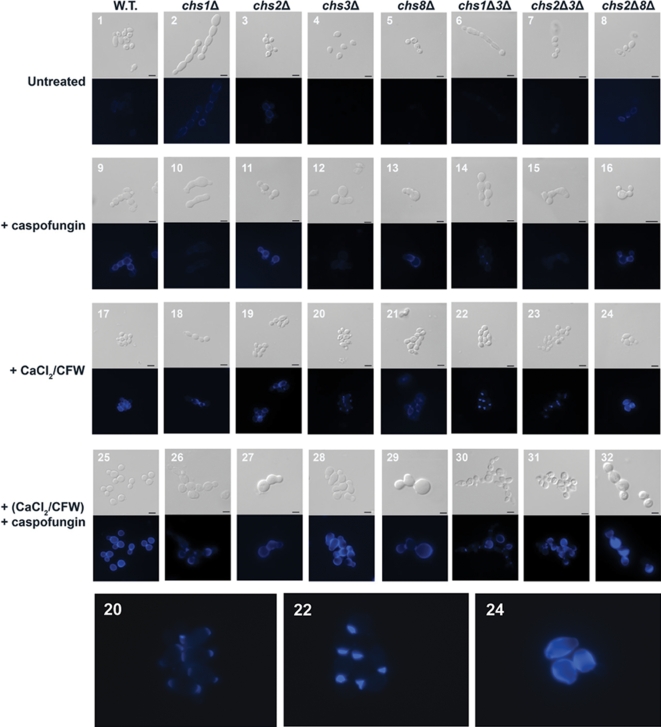
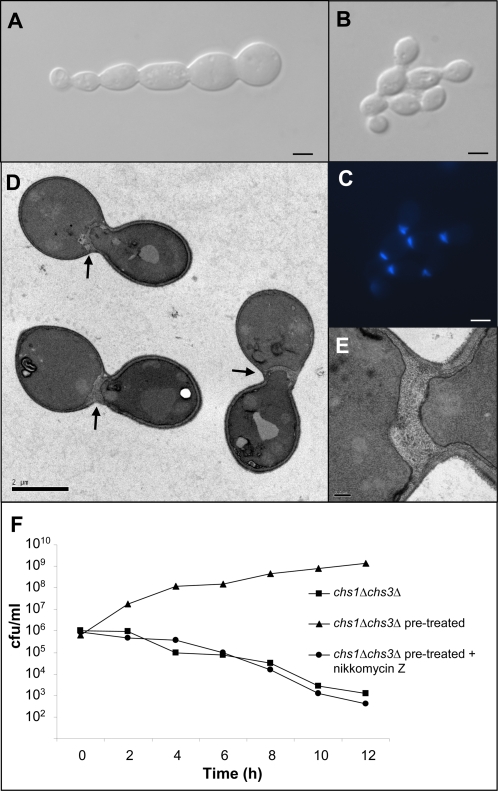
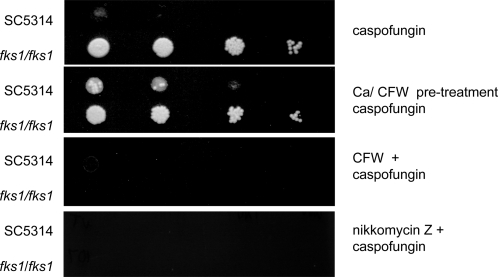
Echinocandins are a new generation of novel antifungal agent that inhibit cell wall beta(1,3)-glucan synthesis and are normally cidal for the human pathogen Candida albicans. Treatment of C. albicans with low levels of echinocandins stimulated chitin synthase (CHS) gene expression, increased Chs activity, elevated chitin content and reduced efficacy of these drugs. Elevation of chitin synthesis was mediated via the PKC, HOG, and Ca(2+)-calcineurin signalling pathways. Stimulation of Chs2p and Chs8p by activators of these pathways enabled cells to survive otherwise lethal concentrations of echinocandins, even in the absence of Chs3p and the normally essential Chs1p, which synthesize the chitinous septal ring and primary septum of the fungus. Under such conditions, a novel proximally offset septum was synthesized that restored the capacity for cell division, sustained the viability of the cell, and abrogated morphological and growth defects associated with echinocandin treatment and the chs mutations. These findings anticipate potential resistance mechanisms to echinocandins. However, echinocandins and chitin synthase inhibitors synergized strongly, highlighting the potential for combination therapies with greatly enhanced cidal activity.
Overview
The claims and statistics of this paper haven’t been checked yet.
Free: it reads the open-access text and checks the first 5 claims that cite a source we can check. Create a free account to check every claim.
Integrity signals
Registry
Cites
Statistics
Figures
Verification
Claims the paper makes
The claims and statistics of this paper haven’t been checked yet.
Free: it reads the open-access text and checks the first 5 claims that cite a source we can check. Create a free account to check every claim.
Claims other papers make about this one
Each is checked against this paper’s own text: does it say what the citing paper says it does?
The source backs part of the claim, not all of it — or backs it for a different population, condition or comparison.
In the citing paper
“Our functional analyses demonstrate that CHS3 is crucial during hyphal growth in the absence of Phr1p and support the notion that Chs3p is the major compensatory chitin synthase both in cell wall stress and HWS in fungi [21, 28, 47, 62, 63].”
From Genomic and functional analyses unveil the response to hyphal wall stress in Candida albicans cells lacking β(1,3)-glucan remodeling (2016) · cites this paper as [47]
Experimental — accuracy not yet measuredThe source backs part of the claim, not all of it — or backs it for a different population, condition or comparison.
In the citing paper
“This up-regulation of transcription correlates with an overall increase in the in vitro chitin synthase activity in membranes prepared from yeast cells treated with caspofungin or CaCl2 and CFW (Munro et al., 2007; Walker et al., 2008).”
From Cell wall protection by the Candida albicans class I chitin synthases (2015) · cites this paper as Walker et al., 2008
Experimental — accuracy not yet measuredThe source backs part of the claim, not all of it — or backs it for a different population, condition or comparison.
In the citing paper
“Transcription of the genes encoding the class I chitin synthases (CHS2 and CHS8) are the most highly up-regulated of the chitin synthase genes in C. albicans yeast cells treated with caspofungin or CaCl2 and CFW (CaCl2/CFW).”
From Cell wall protection by the Candida albicans class I chitin synthases (2015) · cites this paper as Walker et al., 2008
Experimental — accuracy not yet measuredThe source backs part of the claim, not all of it — or backs it for a different population, condition or comparison.
In the citing paper
“Moreover, CHS3 is responsible for Calcofluor white (CW)/CaCl2 induced chitin accumulation which protects C. albicans from the lethal effect of echinocandin [47].”
From Genomic and functional analyses unveil the response to hyphal wall stress in Candida albicans cells lacking β(1,3)-glucan remodeling (2016) · cites this paper as [47]
Experimental — accuracy not yet measuredThe source backs part of the claim, not all of it — or backs it for a different population, condition or comparison.
In the citing paper
“Our functional analyses demonstrate that CHS3 is crucial during hyphal growth in the absence of Phr1p and support the notion that Chs3p is the major compensatory chitin synthase both in cell wall stress and HWS in fungi [21, 28, 47, 62, 63].”
From Genomic and functional analyses unveil the response to hyphal wall stress in Candida albicans cells lacking β(1,3)-glucan remodeling (2016) · cites this paper as [47]
Experimental — accuracy not yet measured
6 more claims about this paper
Create a free account to see every claim other papers make about this one.
Self-check
Percentages, sums and reported differences re-computed from the paper’s own numbers.
The self-check needs the paper’s full text.
Citations
Cites
National Committee for Clinical Laboratory Standards
Bruck, E. (1980) · Pediatrics · doi:10.1542/peds.65.1.187 · Cited by 14,751
Isogenic strain construction and gene mapping in Candida albicans.
Fonzi, W. A., & Irwin, M. Y. (1993) · Genetics · doi:10.1093/genetics/134.3.717 · Cited by 1,687
Cell Wall Integrity Signaling in Saccharomyces cerevisiae
Levin, D. E. (2005) · Microbiology and Molecular Biology Reviews · doi:10.1128/mmbr.69.2.262-291.2005 · Cited by 1,136 · cited 1×
“Damage to the cell wall involves cell wall protein sensors which transmit signals that lead to activation of the ScRho1p GTPase, which activates b(1,3)-glucan synthase as well as ScPkc1p and hence the PKC cell integrity MAP kinase cascade [8].”
BackgroundDenning, D. W. (2003) · The Lancet · doi:10.1016/s0140-6736(03)14472-8 · Cited by 1,131 · cited 1×
“Caspofungin is the first echinocandin to be approved for clinical use and is fungicidal for Candida albicans, and other Candida species, and fungistatic for Aspergillus fumigatus [10,11].”
BackgroundRapid Hypothesis Testing with Candida albicans through Gene Disruption with Short Homology Regions
Wilson, R. B., Davis, D., & Mitchell, A. P. (1999) · Journal of Bacteriology · doi:10.1128/jb.181.6.1868-1874.1999 · Cited by 762 · cited 2×
“BWP17 [57], the untagged parent strain of NGY477, provided a negative control for the anti-GFP antibody [41].”
BackgroundInfluentialPark, S., Kelly, R., Kahn, J. N., Robles, J., Hsu, M.-J., Register, E., Li, W., Vyas, V., Fan, H., Abruzzo, G., et al. (2005) · Antimicrobial Agents and Chemotherapy · doi:10.1128/aac.49.8.3264-3273.2005 · Cited by 434 · cited 1×
“The homozygous fks1 point mutant, strain NR3, which was greatly reduced in sensitivity to caspofungin [9,14] was included as a control.”
BackgroundDifferential Expression and Function of Two Homologous Subunits of Yeast 1,3-β-D-Glucan Synthase
Mazur, P., Morin, N., Baginsky, W., el-Sherbeini, M., Clemas, J. A., Nielsen, J. B., & Foor, F. (1995) · Molecular and Cellular Biology · doi:10.1128/mcb.15.10.5671 · Cited by 424
Sanglard, D., Ischer, F., Marchetti, O., Entenza, J., & Bille, J. (2003) · Molecular Microbiology · doi:10.1046/j.1365-2958.2003.03495.x · Cited by 350 · cited 1×
“albicans calcineurin mutants are hypersensitive to caspofungin, suggesting that the calcineurin pathway is involved in the response to cell wall damage caused by caspofungin [32].”
BackgroundDouglas, C. M., D'Ippolito, J. A., Shei, G. J., Meinz, M., Onishi, J., Marrinan, J. A., Li, W., Abruzzo, G. K., Flattery, A., Bartizal, K., et al. (1997) · Antimicrobial Agents and Chemotherapy · doi:10.1128/aac.41.11.2471 · Cited by 344 · cited 1×
“Rescue of such cells was strictly dependent on chitin synthesis from residual class I enzymes and combinations of echinocandins and chitin synthase inhibitors exhibited synergy in the killing of C. albicans.”
BackgroundAlonso-Monge, R., Navarro-García, F., Molero, G., Diez-Orejas, R., Gustin, M., Pla, J., Sánchez, M., & Nombela, C. (1999) · Journal of Bacteriology · doi:10.1128/jb.181.10.3058-3068.1999 · Cited by 344
Cited by
Items 301–400 of 444
Candida albicans Cell Wall Mediated Virulence
Munro, C. A. (2009) · Springer eBooks · doi:10.1007/978-3-642-03150-2_4 · Cited by 11
“The echinocandins are not only welcome in the clinic but have provided researchers with important tools to improve our understanding of how the cell wall is assembled and re-modelled (Walker et al. 2008).”
BackgroundSelf-citationMechanisms of Resistance to Antifungal Agents
White, T. C., & Hoot, S. J. (2011) · Wiley eBooks · doi:10.1128/9781555816728.ch127 · Cited by 10
Induced endosymbiosis between a fungus and bacterium reveals a shift from antagonism to commensalism
Gassler, T., Giger, G. H., Sintsova, A., Bossert, O. X., Holderbusch, A., Bortfeld‐Miller, M., Dehapiot, B., Sunagawa, S., & Vorholt, J. A. (2025) · Nature Communications · doi:10.1038/s41467-025-65741-9 · Cited by 9
“The germination rates were determined by sorting single spores into 96-well plates and subsequent optical observation whether a mycelium formed using a stereomicroscope, and bacterial presence was”
van Leeuwe, T. M., Arentshorst, M., Forn‐Cuní, G., Geoffrion, N., Tsang, A., Delvigne, F., Meijer, A. H., Ram, A. F. J., & Punt, P. J. (2020) · Microorganisms · doi:10.3390/microorganisms8121918 · Cited by 11
“We checked for upregulation of additional genes involved in the CWI response, as previously published [43,44].”
ResultIzumi, T., Hirai, T., Makiuchi, T., Shinzawa, N., Iwanaga, S., Annoura, T., Nagamune, K., Nozaki, T., & Saito‐Nakano, Y. (2021) · Frontiers in Cellular and Infection Microbiology · doi:10.3389/fcimb.2020.610200 · Cited by 9
Owens, R. A., & Doyle, S. (2021) · Expert Review of Proteomics · doi:10.1080/14789450.2021.1912601 · Cited by 11
“Caspofungin induces fungal cell wall remodeling, increasing chitin content through induction of chitin synthases [93,94],”
BackgroundCandida albicans Can Survive Antifungal Surface Coatings on Surfaces with Microcone Topography
Chakraborty, A., Jasieniak, M., Coad, B. R., & Griesser, H. J. (2021) · ACS Applied Bio Materials · doi:10.1021/acsabm.1c00307 · Cited by 8
Jiménez, C., Sacristán, C., Roncero, M. I. G., & Roncero, C. (2010) · Fungal Genetics and Biology · doi:10.1016/j.fgb.2010.08.013 · Cited by 11
Gu, X., Reid, D., Higham, D. J., & Gilbert, D. (2013) · PLoS ONE · doi:10.1371/journal.pone.0053734 · Cited by 8
Candida albicans Mannosidases, Dfg5 and Dcw1, Are Required for Cell Wall Integrity and Pathogenesis
Razmi, M., Kim, J.-W., Chinnici, J. L., Busarajan, S., Vuppalapaty, H., Lankipalli, D., Li, R., & Maddi, A. (2024) · Journal of Fungi · doi:10.3390/jof10080525 · Cited by 11
“This was further confirmed by SEM analysis, which showed that the cell separation defect was due to the lack of separation of the mother–bud neck following cell division (Figure 2B).”
MethodResultShen, T., Li, M., Tian, B., Liu, W., Chu, L., Yu, P., Zhou, H., Han, Y., Ding, C., & Sai, S. (2024) · International Journal of Nanomedicine · doi:10.2147/ijn.s488456 · Cited by 9
“45 In contrast, polyoxin D impacts septum formation, cell wall maturation, and bud ring formation, leading to impaired fungal cell growth due to its inhibition of chitin polymerization.”
Mechanisms of Resistance to Antifungal Agents
Perlin, D. S. (2015) · ASM Press eBooks · doi:10.1128/9781555817381.ch130 · Cited by 10
Juin, C., Perrin, F., Puy, T., Bernard, C., Mollichella, M.-L., Girardot, M., Costa, D., Guillard, J., & Imbert, C. (2019) · Medical Mycology · doi:10.1093/mmy/myz087 · Cited by 8
Li, H., Cao, Y., Yan, T., Jiang, Y., & Yang, F. J. (2022) · Journal of Infection · doi:10.1016/j.jinf.2022.09.028 · Cited by 9
Liu, W., Li, E., Liu, L., Tian, F., Luo, X., Cai, Y., Wang, J., & Jin, X. (2023) · Heliyon · doi:10.1016/j.heliyon.2023.e17777 · Cited by 8
Biosynthesis and Mechanism of Action of Antifungal Peptidyl Nucleoside Natural Products
Draelos, M. M., & Yokoyama, K. (2019) · Elsevier eBooks · doi:10.1016/b978-0-12-409547-2.14680-3 · Cited by 8
Zeng, G., Xu, X., Gao, J., Dantas, A. D. S., Gow, N. A. R., & Wang, Y. (2021) · The Cell Surface · doi:10.1016/j.tcsw.2021.100057 · Cited by 9
Self-citationQueiroz, M. G., Elsztein, C., & de Morais, M. A. (2019) · Antonie van Leeuwenhoek · doi:10.1007/s10482-019-01335-y · Cited by 7
Commensal to Pathogen Transition of Candida albicans
Niemiec, M. J., Kapitan, M., Polke, M., & Jacobsen, I. D. (2017) · Elsevier eBooks · doi:10.1016/b978-0-12-809633-8.12077-1 · Cited by 9
Kulig, K., Rudolphi-Skórska, E., Barbasz, A., Surowiec, M., Wronowska, E., Kowalik, K., Satała, D., Braś, G., Woźnicka, O., Karnas, E., et al. (2025) · Microbiology · doi:10.1099/mic.0.001565 · Cited by 7
Ross, Z. K., Alsayegh, S., Zhao, Y., McPherson, S., Munro, C. A., & Lorenz, A. (2025) · Microbiological Research · doi:10.1016/j.micres.2025.128322 · Cited by 8
Self-citationCaspofungin binding to iron compromises its antifungal efficacy against Candida albicans
Pedras, A., Malta-Luís, C., Lima, L. M. P., Mil‐Homens, D., Amaral, C., Duarte, A. G., Antunes, W., Gaspar‐Cordeiro, A., Louro, R. O., Lamosa, P., et al. (2025) · Communications Biology · doi:10.1038/s42003-025-08834-x · Cited by 7
“3B), re fl ecting a compensatory mechanism to counteract the reduced β -1,3-D-glucans in the cell wall 38 .”
Baicalin promotes β-1,3-glucan exposure in Candida albicans and enhances macrophage response
Pan, Y., Shi, Z., Wang, Y., Chen, F., Yang, Y., Ma, K., & Li, W. (2024) · Frontiers in Cellular and Infection Microbiology · doi:10.3389/fcimb.2024.1487173 · Cited by 9
Ibe, C., Otu, A. A., & Pohl, C. H. (2025) · Expert Review of Anti-infective Therapy · doi:10.1080/14787210.2024.2448844 · Cited by 7
“…that in vitro echinocandin treatment stimulates compensatory chitin biosynthesis which rescues Candida cells and at the same time induces the formation of novel rescue septum that enables continual cell division under lethal conditions in C. albicans [89] as well as in Aspergillus fumigatus [90].”
Host Immune Responses During Infections with Candida albicans
Stappers, M. H. T., & Brown, G. D. (2017) · Springer eBooks · doi:10.1007/978-3-319-50409-4_9 · Cited by 10
Antifungal drug resistance: Significance and mechanisms
Dharmaiah, S., Sherif, R., & Mukherjee, P. K. (2019) · CRC Press eBooks · doi:10.1201/9780429402012-4 · Cited by 7
Candida albicans Mrv8, is involved in epithelial damage and biofilm formation
Costa, A. C. B. P., Back‐Brito, G. N., Mayer, F. L., Hube, B., & Wilson, D. (2020) · FEMS Yeast Research · doi:10.1093/femsyr/foaa033 · Cited by 6
“Caspofungin targets β-1,3-glucan via inhibition of the cognate synthase Fks1 and hot-spot mutations in FKS1 have been associated with caspofungin resistance (Walker et al. 2008; Walker, Gow and Munro 2013).”
BackgroundMethodInfluentialSharma, D., Paul, R. A., Chakrabarti, A., Bhattacharya, S., Soman, R. N., Shankarnarayan, S. A., Chavan, D., Singh, S., Das, P., Kaur, H., et al. (2020) · bioRxiv (Cold Spring Harbor Laboratory) · doi:10.1101/2020.07.09.196600 · Cited by 6
“Illuminating” Echinocandins’ Mechanism of Action
Loh, B. S., & Ang, W. H. (2020) · ACS Central Science · doi:10.1021/acscentsci.0c01222 · Cited by 6
Chen, X., Koteva, K. K., Chou, S., Guitor, A. K., Pallant, D., Lee, Y., Sychantha, D., French, S., Hackenberger, D., Robbins, N., et al. (2025) · Nature Communications · doi:10.1038/s41467-025-62630-z · Cited by 7
“Chitin is an essential component of the fungal cell wall located in the inner layer and has tightly regulated synthesis that can be induced in response to β -glucan damage, aiding in survival against cell wall stressors 63,64 .”
Wróbel, K., Wróbel, K., Lara, B. G., Guerrero-Esperanza, M., Roncero, M. I. G., & Escobosa, A. R. C. (2019) · International Journal of Mass Spectrometry · doi:10.1016/j.ijms.2019.116288 · Cited by 5
Zhang, J., Jiang, X., Shi, G., Zhang, H., Hu, K., Wu, D., Shao, J., Liu, T., Wang, T., & Wang, C. (2024) · Fitoterapia · doi:10.1016/j.fitote.2024.105825 · Cited by 5
The Mechanisms of Resistance to Echinocandin Class of Antifungal Drugs
Niimi, K., & Niimi, M. (2009) · Nippon Ishinkin Gakkai Zasshi · doi:10.3314/jjmm.50.057 · Cited by 6
Cellular apoptosis: An alternative mechanism of action for caspofungin against Candida glabrata
Aryamlo, P., Asgarian‐Omran, H., Aslani, N., Hossein‐Nataj, H., Shokohi, T., Badali, H., Nabili, M., Gohar, A. A., & Moazeni, M. (2019) · Current Medical Mycology · doi:10.18502/cmm.5.2.1155 · Cited by 8
“Currently, three echinocandins, including caspofungin, micafungin, and anidulafungin, have been approved for clinical applications [3-6].”
BackgroundNew Antifungal Susceptibility Test Based on Chitin Detection by Image Cytometry
Wang, Y., Andriampamonjy, A. N., Bailly, S., Garnaud, C., Maubon, D., Cornet, M., & Aldebert, D. (2019) · Antimicrobial Agents and Chemotherapy · doi:10.1128/aac.01101-19 · Cited by 6
Commensal to Pathogen Transition of Candida albicans
Jacobsen, I. D., Niemiec, M. J., Kapitan, M., & Polke, M. (2020) · Elsevier eBooks · doi:10.1016/b978-0-12-809633-8.21281-8 · Cited by 6
Zhao, Y., Zou, W., Su, C., & Lu, Y. (2026) · iFungi · doi:10.26599/ifungi.2026.9670011 · Cited by 4
Xu, D., Wang, M., Zhang, X., Mao, H., Xu, H., Zhang, B., Zeng, X. W., & Li, F. (2024) · Journal of Fungi · doi:10.3390/jof10050316 · Cited by 4
“The staining of the cell wall chitin with CFW was conducted following established procedures [31].”
BackgroundMethodda Fonseca, D. M., Rodrigues, L., Sousa-Baptista, J., Tejedor, F. M., Mota, M., Cunha, R. A., Fernandes, C., & Gonçalves, T. (2024) · International Journal of Molecular Sciences · doi:10.3390/ijms25158303 · Cited by 4
Induction of Antifungal Tolerance Reveals Genetic and Phenotypic Changes in Candida glabrata
Chedraoui, C., Fattouh, N., Hachem, S. E., Younes, M., & Khalaf, R. A. (2025) · Journal of Fungi · doi:10.3390/jof11040284 · Cited by 5
“It has been established that overexpression of the chitin synthase gene can reduce the efficacy of the drug [30,54].”
Sah, S. K., Yadav, A., Kruppa, M., & Rustchenko, E. P. (2023) · Microbiology Spectrum · doi:10.1128/spectrum.03295-23 · Cited by 5
“The decrease of glucan due to exposure to CAS is also known to be accompanied by an increase of chitin and mannan and can be viewed as a compensatory means to fortify the cell wall (19, 40).”
BackgroundCharacterization and Differentiation of Candida auris on Dixon’s Agar Using Raman Spectroscopy
Petrokilidou, C., Pavlou, E., Velegraki, A., Simou, A., Marsellou, I., Filis, G., Bassukas, I. D., Gaitanis, G., & Kourkoumelis, N. (2024) · Pathogens · doi:10.3390/pathogens13110978 · Cited by 4
“The chitin content increases in the hyphal form, which N-linked man-nans are particularly effective in concealing β-glucan from recognition by Dectin-1, a pattern recognition receptor on host immune cells. is invasive growth and infection [31].”
Dharra, R., Radhakrishnan, V. S., Prasad, T., Thakur, Z., Cirillo, J. D., Sheoran, A., Pandey, A. K., Kulharia, M., & Mehta, P. K. (2019) · Scientific Reports · doi:10.1038/s41598-019-46295-5 · Cited by 5
Molecular and Microscopic Methods of Quantifying Candida albicans Cell Wall PAMP Exposure
Bojang, E., Drummond, R. A., & Hall, R. A. (2022) · Methods in molecular biology · doi:10.1007/978-1-0716-2549-1_23 · Cited by 5
New Cell Wall-Affecting Antifungal Antibiotics
Ribas, J. C., Durán, Á., & Cortés, J. C. G. (2013) · Springer eBooks · doi:10.1007/978-3-642-40444-3_9 · Cited by 7
Hickey, E., Leaves, I., Pradhan, A., Ma, Q., Yuecel, R., Gow, N. A. R., Brown, G. D., & Brown, A. J. P. (2025) · Current Microbiology · doi:10.1007/s00284-025-04400-0 · Cited by 4
“Cell wall stresses, and echinocandins in particular, induce cell wall remodelling in C. albicans , leading to an increase in chitin content [67–69].”
Self-citationOpciones terapéuticas frente a especies de Candida resistentes a las equinocandinas
Hidalgo, A. P. C., Dueñas, O. H. R., Fandiño, Y. R. M., & Álvarez, C. (2018) · Universitas Médica · doi:10.11144/javeriana.umed59-2.cand · Cited by 5
“Se ha observado que, in vitro, las equinocandinas estimulan la formación de quitina (44), otro polisacárido de la pared celular (45), el cual reduce la eficacia de las equinocandinas e induce la formación de estructuras nuevas,”
BackgroundNeutralization of Pathogenic Fungi with Small‐Molecule Immunotherapeutics
Chirkin, E., Muthusamy, V., Mann, P. A., Roemer, T., Nantermet, P. G., & Spiegel, D. A. (2017) · Angewandte Chemie · doi:10.1002/ange.201707536 · Cited by 3
Zheng, L., Xu, Y., Wang, C., Yang, F. J., Dong, Y., & Guo, L. (2023) · Microbiology Spectrum · doi:10.1128/spectrum.01790-23 · Cited by 3
“Compensatory increase of chitin in response to CSP treatment is dependent on the regulatory circuit composed of PKC pathway, calcineurin pathway, high-osmolar ity glycerol pathway, and heat shock protein 90 (Hsp90) (22, 27).”
BackgroundMa, X., Liu, Z., Zeng, X., Li, Z., Luo, R., Liu, R., Wang, C., & Gu, Y. (2024) · Journal of Fungi · doi:10.3390/jof10020123 · Cited by 3
“In conclusion, our study fills a gap in the MDR superfamily in T. asahii and provides a basis for further analysis of genes associated with drug resistance in T. asahii .”
A cell wall-targeting urease-derived peptide as a potential antifungal agent against Candida species
Perin, A. P. A., Reuwsaat, J. C. V., Motta, H., Lopes, F. C., Grahl, M. V. C., Tavanti, A. G., Vainstein, M. H., Staats, C. C., Carlini, C. R., Ligabue‐Braun, R., et al. (2025) · Current Research in Microbial Sciences · doi:10.1016/j.crmicr.2025.100399 · Cited by 4
“A similar phenomenon has also been observed in C. albicans treated with caspofungin (CSF), where CSF-induced cell wall stress triggers a compensatory increase in chitin and beta-1,3-glucan exposure (Mora-Montes et al., 2011; Walker et al., 2008; Wheeler et al., 2008).”
Hans, S., Fatima, Z., & Hameed, S. (2020) · Current Medical Mycology · doi:10.18502/cmm.6.3.3980 · Cited by 5
Zamith‐Miranda, D., Amatuzzi, R. F., Martins, S. T., Vieira, A. Z., da Rocha, I. M., Rodrigues, M. L., Trentin, G., Almeida, F. B. D. R., Nakayasu, E. S., Nosanchuk, J. D., et al. (2020) · bioRxiv (Cold Spring Harbor Laboratory) · doi:10.1101/2020.12.04.411843 · Cited by 3
“This outcome has been described for several Candida species that rapidly responded to caspofungin by increasing the cell wall chitin content (44, 45).”
BackgroundCandida albicans Mannosidases, Dfg5 and Dcw1, Are Required for PathogenesisPreprint
Razmi, M., Kim, J., Chinnici, J. L., Busarajan, S., Vuppalapaty, H., Lankipalli, D., Li, R., & Maddi, A. (2024) · Preprints.org · doi:10.20944/preprints202406.1097.v1 · Cited by 3
Yang, X., Ge, A., Zhou, H., Hu, C., Yang, X., Song, Z., & Xin, C. (2026) · Future Microbiology · doi:10.1080/17460913.2026.2656109 · Cited by 3
Chen, R., Zhang, J., Chen, Y., Wang, K., & Chen, F. (2026) · Journal of Agricultural and Food Chemistry · doi:10.1021/acs.jafc.5c16825 · Cited by 2
Peng, L., Xu, Y., Chen, X., Li, W., & Guo, L. (2026) · Frontiers in Cellular and Infection Microbiology · doi:10.3389/fcimb.2026.1860421 · Cited by 2
Pharmacokinetics of nikkomycin Z following multiple doses in healthy subjects
Nix, D. E., Hoover, S. E., Hanan, N., & Galgiani, J. N. (2025) · Antimicrobial Agents and Chemotherapy · doi:10.1128/aac.00395-25 · Cited by 3
“Echinocandins inhibit the synthesis of β(1,3)-D- glucan, which leads to upregulation of chitin synthesis (6).”
Membrane et paroi fongiques : des rôles clés dans la résistance aux antifongiques
Garnaud, C., & Cornet, M. (2020) · Revue Francophone des Laboratoires · doi:10.1016/s1773-035x(20)30062-9 · Cited by 6
Evaluation of Chitin as a Biomarker of Pathogenic Fungal Isolates
Lafi, A. S. A., Santhanam, J., Khaithir, T. M. N., Musa, N. F., & Huyop, F. (2021) · Sains Malaysiana · doi:10.17576/jsm-2021-5003-15 · Cited by 2
“Fungi compensate for drug induced cell wall damage by increased production of chitin to strengthen the cell wall (Walker et al. 2008).”
BackgroundAntifungal Drug Resistance: Significance and Mechanisms
Mukherjee, P. K., & Wang, M. (2009) · CRC Press eBooks · doi:10.3109/9780849387869-5 · Cited by 4
Application of Nanotechnologies in Studying Yeast Structure in Candida
Savin, N. A., Колмогоров, В., Timoshenko, R. V., Klyachko, N. L., Parkhomenko, Y. N., Salikhov, S. V., Majouga, A. G., Erofeev, A. S., & Gorelkin, P. V. (2021) · Nanobiotechnology Reports · doi:10.1134/s263516762104011x · Cited by 2
Pelletier, C., & Lorenz, A. (2022) · Methods in molecular biology · doi:10.1007/978-1-0716-2417-3_14 · Cited by 3
Naik, S., Cahoon, R. E., Tripp, B. A., Elowsky, C. G., Alvarez, S., Liu, K., Zhang, C., & Riekhof, W. R. (2017) · bioRxiv (Cold Spring Harbor Laboratory) · doi:10.1101/199133 · Cited by 3
“Increased levels of cell wall chitin have been known to exhibit reduced sensitivity to echinocandins like drugs (34).”
BackgroundCell wall biosynthesis in the pathogenic oomycete Saprolegnia parasitica
Rzeszutek, E. (2019) · KTH Publication Database DiVA (KTH Royal Institute of Technology) · Cited by 5
The Genetic Profiles of TIF1 and TIF2 Duplicate Genes
Venturi, V. (2012) · Open Access Victoria University of Wellington | Te Herenga Waka (Figshare) · doi:10.26686/wgtn.16999348.v1 · Cited by 2
Mechanisms of Resistance to Antifungal Agents
Perlin, D. S. (2023) · Wiley eBooks · doi:10.1002/9781683670438.mcm0134 · Cited by 2
Calegari-Alves, Y. P., da Rosa, R. L., Costa, R. P., Innocente-Alves, C., Faustino, A. M., Yates, J. R., Beys‐da‐Silva, W. O., & Santi, L. (2024) · Canadian Journal of Microbiology · doi:10.1139/cjm-2024-0084 · Cited by 5
Chedraoui, C., Fattouh, N., Hachem, S. E., Sourenian, T., Bitar, L. E., Moheb, L. E., Sleiman, A., Bitar, I., Husni, R., & Khalaf, R. A. (2026) · Mycoses · doi:10.1111/myc.70181 · Cited by 1
“Numerous isolates displayed mutations in CHS1 and CHS3 , two important genes related to chitin synthesis; CHS1 is involved in the repair of damaged chitin, while CHS3 is responsible for general chitin synthesis [63, 64].”
George, R., Pradeep, H. G., Mana, N. A., Raj, N., Praveen, P., Harish, R. P., Mahesh, N., Renuka, D., Nair, B. G., Kumar, G. B., et al. (2026) · Journal of Fungi · doi:10.3390/jof12080620 · Cited by 2
“Activation of the CWI pathway induces the expression of chitin synthases and other cell wall remodeling enzymes, resulting in increased chitin deposition that compensates for β -1,3-glucan depletion and restores cell wall integrity during echinocandin exposure [90].”
Metabolic Adaptation of Isocitrate Lyase in the Yeast Pathogen Candida albicans
Sandai, D. A. (2016) · InTech eBooks · doi:10.5772/62406 · Cited by 2
AMPlified Defense: Antimicrobial Peptides During Candida albicans Infection
Ernst, J. F., & Swidergall, M. (2017) · Springer eBooks · doi:10.1007/978-3-319-50409-4_10 · Cited by 2
Candidiasis and the impact of flow cytometry on antifungal drug discovery
Ku, T. S. N., Bernardo, S. M., Walraven, C. J., & Lee, S. A. (2017) · Expert Opinion on Drug Discovery · doi:10.1080/17460441.2017.1377179 · Cited by 1
Wang, Y., Wang, M., Zhou, M., Zhang, X., & Feng, J. (2019) · Plant Disease · doi:10.1094/pdis-04-19-0883-re · Cited by 2
Innate Immunity to Candida Infections
Netea, M. G., & Gow, N. A. R. (2014) · ASM Press eBooks · doi:10.1128/9781555817176.ch11 · Cited by 5
Self-citationFilho, M., & Araraquara, C. D. (2010) · Cited by 1
The MAP Kinase Network As the Nervous System of Fungi
Correia, I., Prieto, D., Alonso‐Monge, R., Plá, J., & Román, E. (2016) · Elsevier eBooks · doi:10.1016/b978-0-12-809633-8.12094-1 · Cited by 1
In the Crossroad Between Drug Resistance and Virulence in Fungal Pathogens
Cavalheiro, M., & Teixeira, M. C. (2018) · Springer eBooks · doi:10.1007/978-3-030-00683-9_7 · Cited by 1
Antifungal susceptibility testing and resistance
Johnson, E. M. (2017) · Oxford University Press eBooks · doi:10.1093/med/9780198755388.003.0047 · Cited by 1
He, X. (2014) · University Library - University of Saskatchewan (University of Saskatchewan) · Cited by 1
Characterization of specific domains of the cellulose and chitin synthases from pathogenic oomycetes
Brown, C. (2015) · DiVA (Digitala Vetenskapliga Arkivet) · Cited by 3
Functional Genomic and Chemical Biology Analysis of Echinocandin Resistance in Candida albicans
Caplan, T. (2018) · TSpace (University of Toronto) · Cited by 2
Adaptive changes in the fungal cell wall mediate copper homeostasisPreprint
Probst, C., García‐Santamarina, S., Brooks, J. T., Kloet, I. V. D., Thiele, D. J., & Alspaugh, J. A. (2021) · bioRxiv (Cold Spring Harbor Laboratory) · doi:10.1101/2021.12.14.472543 · Cited by 1
Ex-chitin-g news on drug-induced fungal epitope unmasking
Wheeler, R. T. (2023) · mBio · doi:10.1128/mbio.01387-23 · Cited by 1
“These responses can drive increased inflammation through increased epitope exposure, can create a cell wall that is more resistant to subsequent antifungal treatment, and can limit pathogenesis in systemic and gastrointestinal models of disease (4–7).”
BackgroundMechanisms of Resistance to Antifungal Agents
Perlin, D. S. (2023) · Wiley eBooks · doi:10.1002/9781683674849.mcm0134 · Cited by 1
Accoceberry, I., Lefranc, M., Meunier, C., Quilès, F., Kordalewska, M., Biteau, N., Perlin, D. S., El‐Kirat‐Chatel, S., & Noël, T. (2025) · bioRxiv (Cold Spring Harbor Laboratory) · doi:10.1101/2025.04.08.647726 · Cited by 1
Qi, W., Roy, U., Cai, C., Acosta‐Zaldívar, M., Mascio, J., Asara, J. M., Fierro, J. F., Andrés, M. T. A., Sun, L., & Köhler, J. R. (2025) · bioRxiv (Cold Spring Harbor Laboratory) · doi:10.64898/2025.12.02.691982 · Cited by 1
The Aspergillus nidulans Galf biosynthesis pathway is a promising drug target
El-Ganiny, A. M. (2011) · University Library - University of Saskatchewan (University of Saskatchewan) · Cited by 1
Antifungal Activity of Cationic Conjugated Polyelectrolytes and Oligomers against Candida albicans
Ingersol, L. J. (2014) · UNM’s Digital Repository (University of New Mexico)
Ouedraogo, J. (2011) · DepositOnce · doi:10.14279/depositonce-3013
Vasicek, E. M. (2013) · doi:10.21007/etd.cghs.2013.0335
“In order to examine the extent at which Cas5p is involved, we constructed cas5Δ/Δ mutant strains in the background of an azole-resistant clinical isolate (12-99) known to carry four of the most common mechanisms of azole resistance: overexpression of CDR1 and CDR2, overexpression of MDR1, overexpression of ERG11, and…”
Bhattacharya, I., Bezawada, J., Yadav, J. S. S., Yan, S., Tyagi, R. D., & Surampalli, R. Y. (2016) · Journal of Microbiology Biotechnology and Food Sciences · doi:10.15414/jmbfs.2016.5.6.509-517
Echinocandins – Caspofungin, Anidulafungin and Micafungin
Lewis, R. E., & Kontoyiannis, D. P. (2010) · CRC Press eBooks · doi:10.1201/b13787-145
Molecular Targets for Anticandidal Chemotherapy
Milewski, S. (2017) · Springer eBooks · doi:10.1007/978-3-319-50409-4_21
Silva, P. A. (2017) · Digital Library of Theses and Dissertations (Universidade de São Paulo) · doi:10.11606/d.17.2017.tde-27012017-144118
Shekhar‐Guturja, T. (2016) · TSpace (University of Toronto)
The Roles of Hsp90 and Calcineurin in Antifungal Drug Resistance
Singh, S. (2012) · TSpace (University of Toronto)
Rodríguez-Leguizamón, G. (2016) · Repositorio Institucional E-DocUR (Universidad Del Rosario) · doi:10.48713/10336_13785
Exposure of Aspergillus fumigatus to caspofungin induces an oxidative stress response.
Eshwika, A., Smith, A., Fallon, J. P., Kelly, J., & Kavanagh, K. A. (2018) · Lebda Medical Journal · doi:10.65137/lmj.v4i1.73
“albicans to this agent leads to increased chitin content (Walker et al., 2008) and the induction of a number of genes associated with the PKC pathway in C.”
BackgroundInfluentialLee, K. K., & Munro, C. A. (2014) · Springer eBooks · doi:10.1007/978-3-642-55013-3_7 · Cited by 1
Self-citation
Metadata
- Authors
- Walker, L. A., Munro, C. A., de Bruijn, I., Lenardon, M. D., McKinnon, A., & Gow, N. A. R.
- Affiliations
- University of Aberdeen (GB)
- Corresponding author
- Gow, Neil A. R.
- Venue
- PLoS Pathogens
- Publisher
- Public Library of Science (PLoS)
- Published
- 2008-04-04
- Volume
- 4
- Issue
- 4
- Pages
- e1000040
- ISSN
- 1553-7366 (ISSN-L)
- 1553-7374
- PMC
- PMC2271054
- OpenAlex
- W2038204439
- Cited by
- 445
- References
- 61
- Citations by year
- 2026: 21 · 2025: 21 · 2024: 16 · 2023: 17 · 2022: 25 · 2021: 24 · 2020: 33 · 2019: 41 · 2018: 20 · 2017: 37 · 2016: 25 · 2015: 21 · 2014: 24 · 2013: 26 · 2012: 23
- FWCI
- 15.21
- Type
- journal article
- Language
- en
- Open access
- gold
- doi.org
- Locations
- PLoS Pathogens (publishedVersion, cc-by)
- PubMed Central (publishedVersion, cc-by)
- PubMed (publishedVersion)
- Aberdeen University Research Archive (Aberdeen University) (submittedVersion)
- DOAJ (DOAJ: Directory of Open Access Journals) (submittedVersion, cc-by-sa)
- Figshare (submittedVersion, cc-by)
- Funders
- Pfizer
- Wellcome Trust (080088)
- Medical Research Council
- Biotechnology and Biological Sciences Research Council (BB/C510191/1)
- Topics
- Health Sciences › Medicine › Infectious Diseases › Antifungal resistance and susceptibility
- Life Sciences › Biochemistry, Genetics and Molecular Biology › Molecular Biology › Fungal and yeast genetics research
- Health Sciences › Medicine › Infectious Diseases › Fungal Infections and Studies
- Keywords
- Candida albicans, echinocandins, chitin synthesis, chitin synthase, HOG pathway, drug resistance, septum formation, cell division, antifungal synergy, combination therapy
- MeSH terms
- Antifungal Agents, Benzenesulfonates, Calcium Chloride, Candida albicans, Chitin, Chitin Synthase, Dose-Response Relationship, Drug, Drug Antagonism, Drug Therapy, Combination, Enzyme Inhibitors, Gene Expression Regulation, Enzyme Activators, Echinocandins
About these checks
Registry, retraction, Cites and statistics results are computed, not judged, with one exception: a printed reference that no index lists is read once by a model before it counts as a citation error. Claims are extracted by a model and kept only when their quote appears verbatim in the text; each cited source is then checked, with a model’s help, for whether it says what the claim relies on. Those verdicts can be wrong — read the claim’s quote and the cited source before relying on one.
Statistics and arithmetic are recomputed, not judged.
Confidence bands are shown only for fields calibrated on our annotated test set. None is calibrated yet, so no band is shown.
What counts as a claim ›How we measure confidence ›How we check this ›
Are you an author, or do you see a problem with this page? Request a review
Data sources
Bibliographic data: Semantic Scholar, OpenAlex, Crossref.
Contains information from the Semantic Scholar Academic Graph Datasets, made available under the ODC Attribution License (ODC-BY 1.0).
Semantic Scholar’s data is described in: Kinney, R., et al. (2023). The Semantic Scholar Open Data Platform. arXiv:2301.10140.
