

Stimulation of Chitin Synthesis Rescues Candida albicans from Echinocandins
Open accessThe DOI matches its Crossref record; 61 of the 61 references it cites were found in a registry or an index.
Abstract
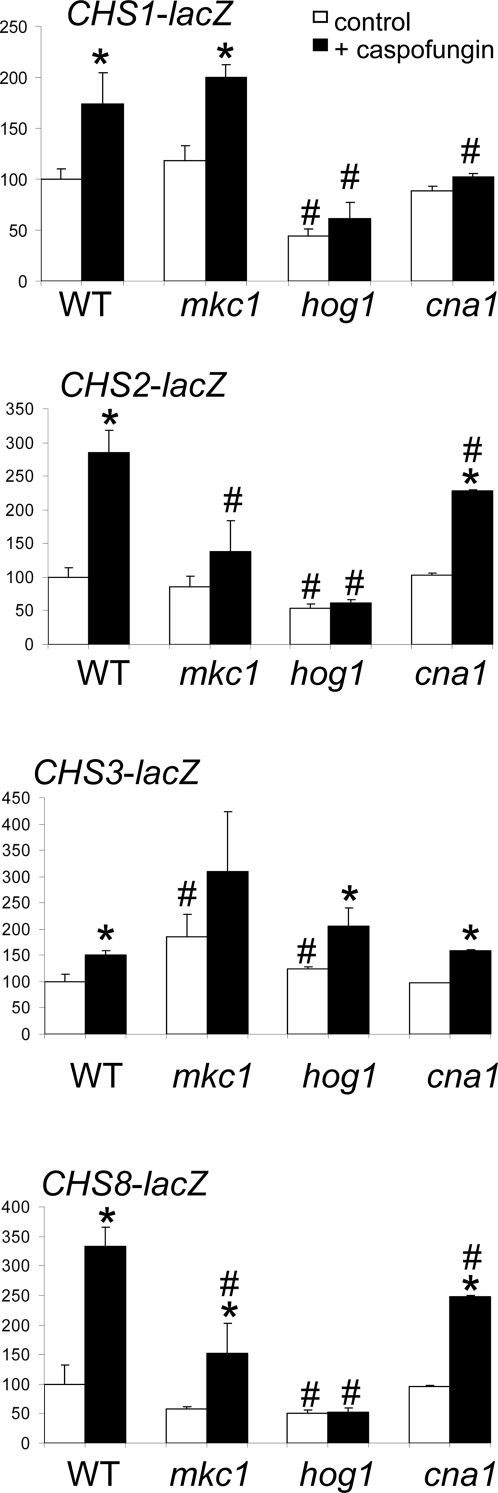
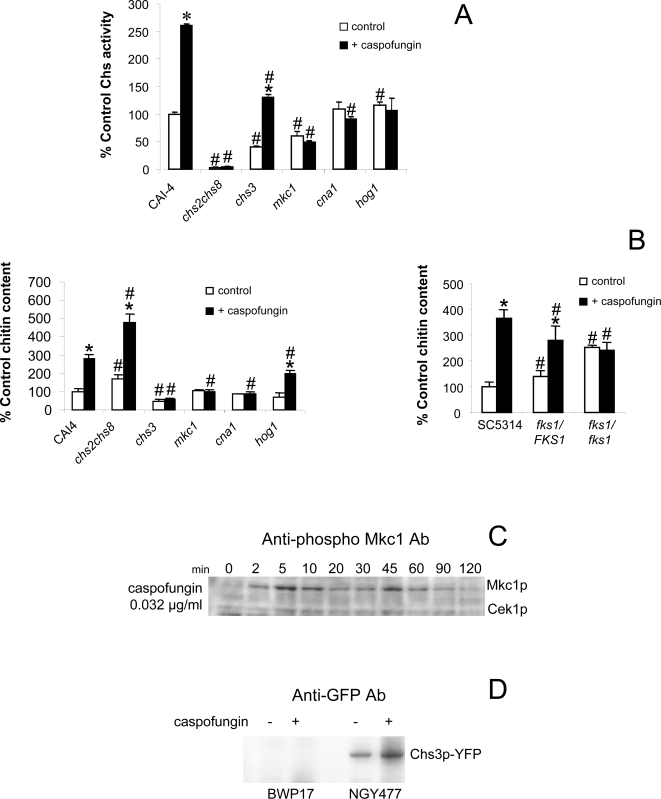
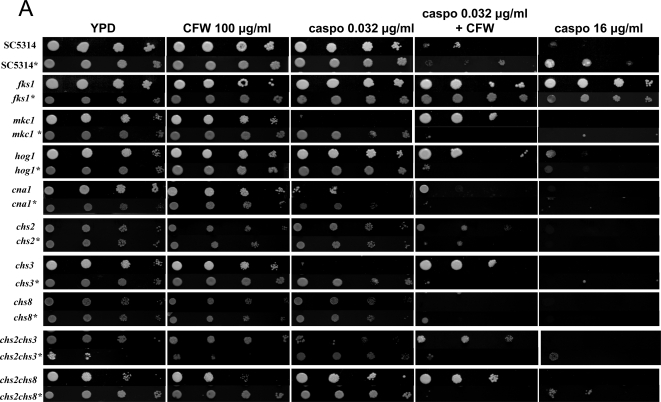
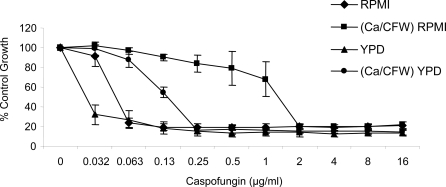
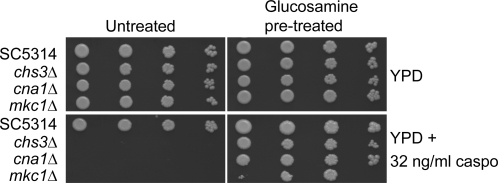
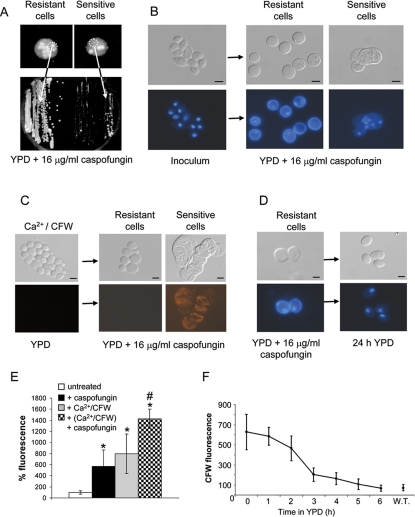
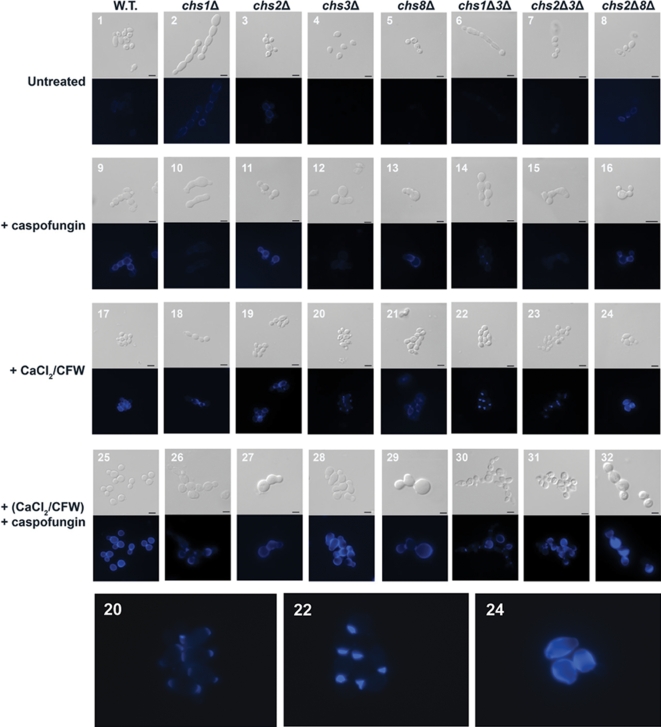
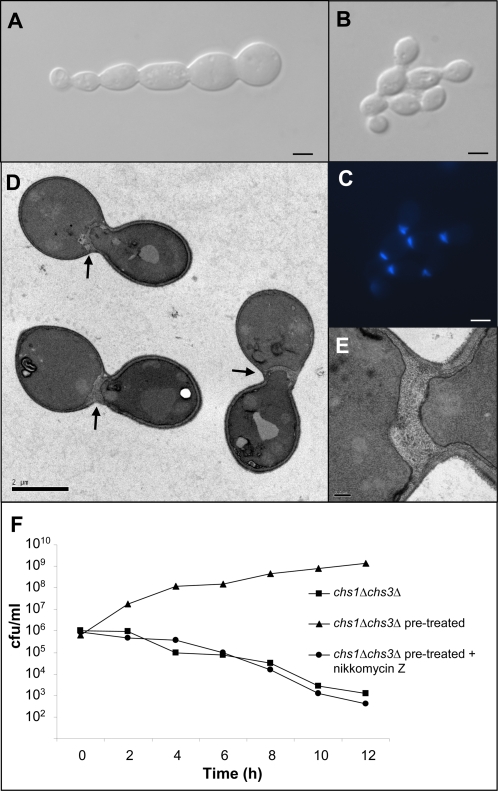
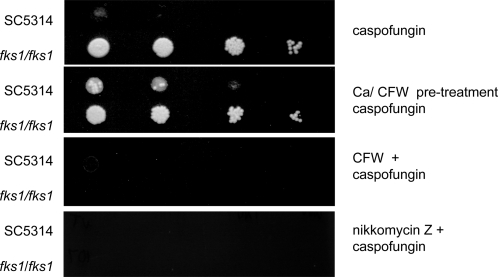
Echinocandins are a new generation of novel antifungal agent that inhibit cell wall beta(1,3)-glucan synthesis and are normally cidal for the human pathogen Candida albicans. Treatment of C. albicans with low levels of echinocandins stimulated chitin synthase (CHS) gene expression, increased Chs activity, elevated chitin content and reduced efficacy of these drugs. Elevation of chitin synthesis was mediated via the PKC, HOG, and Ca(2+)-calcineurin signalling pathways. Stimulation of Chs2p and Chs8p by activators of these pathways enabled cells to survive otherwise lethal concentrations of echinocandins, even in the absence of Chs3p and the normally essential Chs1p, which synthesize the chitinous septal ring and primary septum of the fungus. Under such conditions, a novel proximally offset septum was synthesized that restored the capacity for cell division, sustained the viability of the cell, and abrogated morphological and growth defects associated with echinocandin treatment and the chs mutations. These findings anticipate potential resistance mechanisms to echinocandins. However, echinocandins and chitin synthase inhibitors synergized strongly, highlighting the potential for combination therapies with greatly enhanced cidal activity.
Overview
The claims and statistics of this paper haven’t been checked yet.
Free: it reads the open-access text and checks the first 5 claims that cite a source we can check. Create a free account to check every claim.
Integrity signals
Registry
Cites
Statistics
Figures
Verification
Claims the paper makes
The claims and statistics of this paper haven’t been checked yet.
Free: it reads the open-access text and checks the first 5 claims that cite a source we can check. Create a free account to check every claim.
Claims other papers make about this one
Each is checked against this paper’s own text: does it say what the citing paper says it does?
The source backs part of the claim, not all of it — or backs it for a different population, condition or comparison.
In the citing paper
“Our functional analyses demonstrate that CHS3 is crucial during hyphal growth in the absence of Phr1p and support the notion that Chs3p is the major compensatory chitin synthase both in cell wall stress and HWS in fungi [21, 28, 47, 62, 63].”
From Genomic and functional analyses unveil the response to hyphal wall stress in Candida albicans cells lacking β(1,3)-glucan remodeling (2016) · cites this paper as [47]
Experimental — accuracy not yet measuredThe source backs part of the claim, not all of it — or backs it for a different population, condition or comparison.
In the citing paper
“This up-regulation of transcription correlates with an overall increase in the in vitro chitin synthase activity in membranes prepared from yeast cells treated with caspofungin or CaCl2 and CFW (Munro et al., 2007; Walker et al., 2008).”
From Cell wall protection by the Candida albicans class I chitin synthases (2015) · cites this paper as Walker et al., 2008
Experimental — accuracy not yet measuredThe source backs part of the claim, not all of it — or backs it for a different population, condition or comparison.
In the citing paper
“Transcription of the genes encoding the class I chitin synthases (CHS2 and CHS8) are the most highly up-regulated of the chitin synthase genes in C. albicans yeast cells treated with caspofungin or CaCl2 and CFW (CaCl2/CFW).”
From Cell wall protection by the Candida albicans class I chitin synthases (2015) · cites this paper as Walker et al., 2008
Experimental — accuracy not yet measuredThe source backs part of the claim, not all of it — or backs it for a different population, condition or comparison.
In the citing paper
“Moreover, CHS3 is responsible for Calcofluor white (CW)/CaCl2 induced chitin accumulation which protects C. albicans from the lethal effect of echinocandin [47].”
From Genomic and functional analyses unveil the response to hyphal wall stress in Candida albicans cells lacking β(1,3)-glucan remodeling (2016) · cites this paper as [47]
Experimental — accuracy not yet measuredThe source backs part of the claim, not all of it — or backs it for a different population, condition or comparison.
In the citing paper
“Our functional analyses demonstrate that CHS3 is crucial during hyphal growth in the absence of Phr1p and support the notion that Chs3p is the major compensatory chitin synthase both in cell wall stress and HWS in fungi [21, 28, 47, 62, 63].”
From Genomic and functional analyses unveil the response to hyphal wall stress in Candida albicans cells lacking β(1,3)-glucan remodeling (2016) · cites this paper as [47]
Experimental — accuracy not yet measured
6 more claims about this paper
Create a free account to see every claim other papers make about this one.
Self-check
Percentages, sums and reported differences re-computed from the paper’s own numbers.
The self-check needs the paper’s full text.
Citations
Cites
National Committee for Clinical Laboratory Standards
Bruck, E. (1980) · Pediatrics · doi:10.1542/peds.65.1.187 · Cited by 14,751
Isogenic strain construction and gene mapping in Candida albicans.
Fonzi, W. A., & Irwin, M. Y. (1993) · Genetics · doi:10.1093/genetics/134.3.717 · Cited by 1,687
Cell Wall Integrity Signaling in Saccharomyces cerevisiae
Levin, D. E. (2005) · Microbiology and Molecular Biology Reviews · doi:10.1128/mmbr.69.2.262-291.2005 · Cited by 1,136 · cited 1×
“Damage to the cell wall involves cell wall protein sensors which transmit signals that lead to activation of the ScRho1p GTPase, which activates b(1,3)-glucan synthase as well as ScPkc1p and hence the PKC cell integrity MAP kinase cascade [8].”
BackgroundDenning, D. W. (2003) · The Lancet · doi:10.1016/s0140-6736(03)14472-8 · Cited by 1,131 · cited 1×
“Caspofungin is the first echinocandin to be approved for clinical use and is fungicidal for Candida albicans, and other Candida species, and fungistatic for Aspergillus fumigatus [10,11].”
BackgroundRapid Hypothesis Testing with Candida albicans through Gene Disruption with Short Homology Regions
Wilson, R. B., Davis, D., & Mitchell, A. P. (1999) · Journal of Bacteriology · doi:10.1128/jb.181.6.1868-1874.1999 · Cited by 762 · cited 2×
“BWP17 [57], the untagged parent strain of NGY477, provided a negative control for the anti-GFP antibody [41].”
BackgroundInfluentialPark, S., Kelly, R., Kahn, J. N., Robles, J., Hsu, M.-J., Register, E., Li, W., Vyas, V., Fan, H., Abruzzo, G., et al. (2005) · Antimicrobial Agents and Chemotherapy · doi:10.1128/aac.49.8.3264-3273.2005 · Cited by 434 · cited 1×
“The homozygous fks1 point mutant, strain NR3, which was greatly reduced in sensitivity to caspofungin [9,14] was included as a control.”
BackgroundDifferential Expression and Function of Two Homologous Subunits of Yeast 1,3-β-D-Glucan Synthase
Mazur, P., Morin, N., Baginsky, W., el-Sherbeini, M., Clemas, J. A., Nielsen, J. B., & Foor, F. (1995) · Molecular and Cellular Biology · doi:10.1128/mcb.15.10.5671 · Cited by 424
Sanglard, D., Ischer, F., Marchetti, O., Entenza, J., & Bille, J. (2003) · Molecular Microbiology · doi:10.1046/j.1365-2958.2003.03495.x · Cited by 350 · cited 1×
“albicans calcineurin mutants are hypersensitive to caspofungin, suggesting that the calcineurin pathway is involved in the response to cell wall damage caused by caspofungin [32].”
BackgroundDouglas, C. M., D'Ippolito, J. A., Shei, G. J., Meinz, M., Onishi, J., Marrinan, J. A., Li, W., Abruzzo, G. K., Flattery, A., Bartizal, K., et al. (1997) · Antimicrobial Agents and Chemotherapy · doi:10.1128/aac.41.11.2471 · Cited by 344 · cited 1×
“Rescue of such cells was strictly dependent on chitin synthesis from residual class I enzymes and combinations of echinocandins and chitin synthase inhibitors exhibited synergy in the killing of C. albicans.”
BackgroundAlonso-Monge, R., Navarro-García, F., Molero, G., Diez-Orejas, R., Gustin, M., Pla, J., Sánchez, M., & Nombela, C. (1999) · Journal of Bacteriology · doi:10.1128/jb.181.10.3058-3068.1999 · Cited by 344
García, R., Bermejo, C., Grau, C., Pérez, R., Rodríguez-Peña, J. M., Francois, J., Nombela, C., & Arroyo, J. (2004) · Journal of Biological Chemistry · doi:10.1074/jbc.m312954200 · Cited by 338 · cited 1×
“The downstream target of this cell wall salvage pathway is the ScRlm1p transcription factor, which activates transcription of cell wall related genes [28].”
BackgroundThe genetic complexity of chitin synthesis in fungi
Roncero, C. (2002) · Current Genetics · doi:10.1007/s00294-002-0318-7 · Cited by 327 · cited 1×
“glucan and chitin, form a primary scaffold that is responsible for structural integrity and shape of the cell wall [1–4].”
BackgroundHeinisch, J. J., Lorberg, A., Schmitz, H., & Jacoby, J. J. (1999) · Molecular Microbiology · doi:10.1046/j.1365-2958.1999.01375.x · Cited by 322 · cited 1×
“. Other β-linked polysaccharides and glycosylated proteins are attached to this glucan-chitin core, thus modifying the properties of the wall. The integrity of the cell wall scaffold must, however, be monitored and regulated constantly to ensure cell viability. This is not a trivial challenge since surface expansion d…”
BackgroundLiu, T. T., Lee, R. E. B., Barker, K. S., Lee, R. E., Wei, L., Homayouni, R., & Rogers, P. D. (2005) · Antimicrobial Agents and Chemotherapy · doi:10.1128/aac.49.6.2226-2236.2005 · Cited by 313 · cited 1×
“In addition microarray analyses have shown that CaCHS2 expression increases in response to caspofungin treatment [23,24].”
BackgroundFungal ß(1,3)-D-glucan synthesis
Douglas, C. M. (2001) · Medical Mycology · doi:10.1080/mmy.39.1.55.66 · Cited by 312
Munro, C. A., Selvaggini, S., De Bruijn, I., Walker, L., Lenardon, M. D., Gerssen, B., Milne, S., Brown, A. J. P., & Gow, N. A. R. (2007) · Molecular Microbiology · doi:10.1111/j.1365-2958.2007.05588.x · Cited by 309
Self-citationBowman, J. C., Hicks, P. S., Kurtz, M. B., Rosen, H., Schmatz, D. M., Liberator, P. A., & Douglas, C. M. (2002) · Antimicrobial Agents and Chemotherapy · doi:10.1128/aac.46.9.3001-3012.2002 · Cited by 303 · cited 1×
“Caspofungin is the first echinocandin to be approved for clinical use and is fungicidal for Candida albicans, and other Candida species, and fungistatic for Aspergillus fumigatus [10,11].”
Backgroundde Groot, P. W. J., de Boer, A. D., Cunningham, J., Dekker, H. L., de Jong, L., Hellingwerf, K. J., de Koster, C., & Klis, F. M. (2004) · Eukaryotic Cell · doi:10.1128/ec.3.4.955-965.2004 · Cited by 266 · cited 1×
“glucan and chitin, form a primary scaffold that is responsible for structural integrity and shape of the cell wall [1–4].”
BackgroundMoudgal, V., Little, T., Boikov, D., & Vazquez, J. A. (2005) · Antimicrobial Agents and Chemotherapy · doi:10.1128/aac.49.2.767-769.2005 · Cited by 242 · cited 1×
“parapsilosis [50,51] and C.”
Balashov, S. V., Park, S., & Perlin, D. S. (2006) · Antimicrobial Agents and Chemotherapy · doi:10.1128/aac.01653-05 · Cited by 225 · cited 1×
“competitive inhibitors and results in reduced susceptibility [9,15].”
BackgroundKraus, P. R., Fox, D. S., Cox, G. M., & Heitman, J. (2003) · Molecular Microbiology · doi:10.1046/j.1365-2958.2003.03508.x · Cited by 217 · cited 1×
“cerevisiae [25] and Cryptococcus neoformans [26] with caspofungin results in activation of the PKC cell integrity pathway via phosphorylation of the mitogen activated protein kinase, ScSlt2p/ScMkc1p.”
BackgroundZhao, C., Jung, U. S., Garrett-Engele, P., Roe, T., Cyert, M. S., & Levin, D. E. (1998) · Molecular and Cellular Biology · doi:10.1128/mcb.18.2.1013 · Cited by 209 · cited 1×
“The Ca-calcineurin pathway has also been implicated in the regulation of cell wall biosynthesis [29–31].”
BackgroundKrogh-Madsen, M., Arendrup, M. C., Heslet, L., & Knudsen, J. D. (2006) · Clinical Infectious Diseases · doi:10.1086/500939 · Cited by 201 · cited 1×
“glabrata [49], C.”
Reinoso-Martín, C., Schüller, C., Schuetzer-Muehlbauer, M., & Kuchler, K. (2003) · Eukaryotic Cell · doi:10.1128/ec.2.6.1200-1210.2003 · Cited by 193 · cited 2×
“cerevisiae [25] and Cryptococcus neoformans [26] with caspofungin results in activation of the PKC cell integrity pathway via phosphorylation of the mitogen activated protein kinase, ScSlt2p/ScMkc1p.”
BackgroundStevens, D. A., Ichinomiya, M., Koshi, Y., & Horiuchi, H. (2006) · Antimicrobial Agents and Chemotherapy · doi:10.1128/aac.00563-06 · Cited by 193 · cited 1×
“It has also been suggested that an increase in cell wall chitin may explain the so-called ‘‘paradoxical effect’’ whereby some clinical isolates exhibit decreased sensitivity to increased concentrations of caspofungin [54].”
BackgroundLaverdière, M., Lalonde, R. G., Baril, J.-G., Sheppard, D. C., Park, S., & Perlin, D. S. (2006) · Journal of Antimicrobial Chemotherapy · doi:10.1093/jac/dkl022 · Cited by 192 · cited 10×
“Scchs3D mutants are hypersensitive to caspofungin [20] and ScCHS3 and ScFKS1 are synthetically lethal [21,22] suggesting that Scfks1D mutants depend on chitin synthesis for their survival.”
BackgroundInfluentialKatiyar, S., Pfaller, M., & Edlind, T. (2006) · Antimicrobial Agents and Chemotherapy · doi:10.1128/aac.00349-06 · Cited by 189 · cited 2×
“FKS1 point mutations associated with resistance accumulate in two hot spot regions that encode residues 641–649 and 1345–1365 of CaFks1p in C. albicans and other species [14–17].”
BackgroundChitin synthesis in human pathogenic fungi
Munro, C. A., & Gow, N. A. R. (2001) · Medical Mycology · doi:10.1080/mmy.39.1.41.53 · Cited by 188 · cited 1×
“glucan and chitin, form a primary scaffold that is responsible for structural integrity and shape of the cell wall [1–4].”
BackgroundSelf-citationNavarro-García, F., Sánchez, M., Pla, J., & Nombela, C. (1995) · Molecular and Cellular Biology · doi:10.1128/mcb.15.4.2197 · Cited by 186
Del Poeta, M., Cruz, M. C., Cardenas, M. E., Perfect, J. R., & Heitman, J. (2000) · Antimicrobial Agents and Chemotherapy · doi:10.1128/aac.44.3.739-746.2000 · Cited by 169 · cited 1×
“The calcineurin inhibitors, FK506 and cyclosporin A, have also been shown to act synergistically with caspofungin against Aspergillus fumigatus and Cryptococcus neoformans [26,33–35].”
BackgroundMunro, C. A., Winter, K., Buchan, A., Henry, K., Becker, J. M., Brown, A. J. P., Bulawa, C. E., & Gow, N. A. R. (2001) · Molecular Microbiology · doi:10.1046/j.1365-2958.2001.02347.x · Cited by 162 · cited 12×
“A 1 kb upstream region from the ATG start codon of each CHS1, CHS2, CHS3 and CHS8 ORF was cloned into the PstI-XhoI sites of placpoly-6 generating pCHS1plac, pCHS2plac, pCHS3plac, pCHS8plac respectively as described previously [31].”
BackgroundInfluentialSelf-citationHernandez, S., López-Ribot, J. L., Najvar, L. K., McCarthy, D. I., Bocanegra, R., & Graybill, J. R. (2004) · Antimicrobial Agents and Chemotherapy · doi:10.1128/aac.48.4.1382-1383.2004 · Cited by 162 · cited 1×
“albicans [45–48], C.”
Bulik, D. A., Olczak, M., Lucero, H. A., Osmond, B. C., Robbins, P. W., & Specht, C. A. (2003) · Eukaryotic Cell · doi:10.1128/ec.2.5.886-900.2003 · Cited by 159 · cited 1×
“cerevisiae on glucosamine–supplemented medium has been shown to stimulate chitin synthesis [42].”
BackgroundEmergence of a Candida krusei Isolate with Reduced Susceptibility to Caspofungin during Therapy
Hakki, M., Staab, J. F., & Marr, K. A. (2006) · Antimicrobial Agents and Chemotherapy · doi:10.1128/aac.00148-06 · Cited by 148 · cited 1×
“krusei isolate with decreased caspofungin susceptibility [53] was found subsequently to have a heterozygous mutation in the FKS1 hotspot region [17].”
BackgroundAttenuated virulence of chitin-deficient mutants of Candida albicans.
Bulawa, C. E., Miller, D. W., Henry, L. K., & Becker, J. M. (1995) · Proceedings of the National Academy of Sciences · doi:10.1073/pnas.92.23.10570 · Cited by 146 · cited 2×
“CaChs1p is an essential class II enzyme that synthesizes the chitin of the primary septum and contributes to lateral wall integrity [36]; CaChs2p and CaChs8p are two class I enzymes that account for almost all measured chitin synthase activity in vitro [37–39] and CaChs3p is a class IV enzyme that synthesizes the majo…”
BackgroundGow, N. A., Robbins, P. W., Lester, J. W., Brown, A. J., Fonzi, W. A., Chapman, T., & Kinsman, O. S. (1994) · Proceedings of the National Academy of Sciences · doi:10.1073/pnas.91.13.6216 · Cited by 145 · cited 1×
“CaChs1p is an essential class II enzyme that synthesizes the chitin of the primary septum and contributes to lateral wall integrity [36]; CaChs2p and CaChs8p are two class I enzymes that account for almost all measured chitin synthase activity in vitro [37–39] and CaChs3p is a class IV enzyme that synthesizes the majo…”
BackgroundSelf-citationThe yeast cell-wall salvage pathway
Popolo, L., Gualtieri, T., & Ragni, E. (2001) · Medical Mycology · doi:10.1080/mmy.39.1.111.121 · Cited by 142 · cited 1×
“In Saccharomyces cerevisiae deletion of ScFKS1 is not lethal and inhibition of b(1,3)-glucan synthesis or damage to b(1,3)-glucan results in increased levels of chitin synthesized by ScChs3p [7,19].”
BackgroundWiederhold, N. P., Kontoyiannis, D. P., Prince, R. A., & Lewis, R. E. (2005) · Antimicrobial Agents and Chemotherapy · doi:10.1128/aac.49.12.5146-5148.2005 · Cited by 131 · cited 9×
“All treatments and conditions that led to elevation of chitin content also increased the MIC to echinocandins.”
BackgroundInfluentialAn interactional network of genes involved in chitin synthesis in Saccharomyces cerevisiae
Lesage, G., Shapiro, J., Specht, C. A., Sdicu, A.-M., Ménard, P., Hussein, S., Tong, A. H. Y., Boone, C., & Bussey, H. (2005) · BMC Genetics · doi:10.1186/1471-2156-6-8 · Cited by 125 · cited 1×
“Scchs3D mutants are hypersensitive to caspofungin [20] and ScCHS3 and ScFKS1 are synthetically lethal [21,22] suggesting that Scfks1D mutants depend on chitin synthesis for their survival.”
BackgroundRole of three chitin synthase genes in the growth of Candida albicans
Mio, T., Yabe, T., Sudoh, M., Satoh, Y., Nakajima, T., Arisawa, M., & Yamada-Okabe, H. (1996) · Journal of Bacteriology · doi:10.1128/jb.178.8.2416-2419.1996 · Cited by 124
Markovich, S., Yekutiel, A., Shalit, I., Shadkchan, Y., & Osherov, N. (2004) · Antimicrobial Agents and Chemotherapy · doi:10.1128/aac.48.10.3871-3876.2004 · Cited by 122 · cited 2×
“Scchs3D mutants are hypersensitive to caspofungin [20] and ScCHS3 and ScFKS1 are synthetically lethal [21,22] suggesting that Scfks1D mutants depend on chitin synthesis for their survival.”
BackgroundAcquired Echinocandin Resistance in a Candida krusei Isolate Due to Modification of Glucan Synthase
Kahn, J. N., Garcia-Effron, G., Hsu, M.-J., Park, S., Marr, K. A., & Perlin, D. S. (2007) · Antimicrobial Agents and Chemotherapy · doi:10.1128/aac.00067-07 · Cited by 118 · cited 1×
“krusei isolate with decreased caspofungin susceptibility [53] was found subsequently to have a heterozygous mutation in the FKS1 hotspot region [17].”
BackgroundKontoyiannis, D. P. (2003) · Journal of Antimicrobial Chemotherapy · doi:10.1093/jac/dkg090 · Cited by 116 · cited 1×
“The calcineurin inhibitors, FK506 and cyclosporin A, have also been shown to act synergistically with caspofungin against Aspergillus fumigatus and Cryptococcus neoformans [26,33–35].”
BackgroundMolecular organization of the cell wall of Candida albicans
Klis, F. M., De Groot, P., & Hellingwerf, K. (2001) · Medical Mycology · doi:10.1080/744118876 · Cited by 111 · cited 1×
“In fungi, two covalently cross-linked polysaccharides, β(1,3)-glucan and chitin, form a primary scaffold that is responsible for structural integrity and shape of the cell wall”
BackgroundCharacterization of Aspergillus fumigatus mutants with reduced susceptibility to caspofungin
Gardiner, R. E., Souteropoulos, P., Park, S., & Perlin, D. S. (2005) · Medical Mycology · doi:10.1080/13693780400029023 · Cited by 110 · cited 1×
“albicans, although point mutations in FKS1 can arise that result in reduced susceptibility to caspofungin [9,13–15].”
BackgroundCalcineurin Inhibition or Mutation Enhances Cell Wall Inhibitors against Aspergillus fumigatus
Steinbach, W. J., Cramer, R. A., Perfect, B. Z., Henn, C., Nielsen, K., Heitman, J., & Perfect, J. R. (2007) · Antimicrobial Agents and Chemotherapy · doi:10.1128/aac.01394-06 · Cited by 108 · cited 1×
“Cidal combinations of chemotherapeutic agents can also be devised by using inhibitors of b(1,3)-glucan synthesis along with agents that block the cell wall compensatory pathways of fungi [35].”
BackgroundCaspofungin Activity against Clinical Isolates of Fluconazole-Resistant Candida
Pfaller, M. A., Messer, S. A., Boyken, L., Rice, C., Tendolkar, S., Hollis, R. J., & Diekema, D. J. (2003) · Journal of Clinical Microbiology · doi:10.1128/jcm.41.12.5729-5731.2003 · Cited by 107 · cited 1×
“that are resistant to other antifungals such as fluconazole [12].”
BackgroundLenardon, M. D., Whitton, R. K., Munro, C. A., Marshall, D., & Gow, N. A. R. (2007) · Molecular Microbiology · doi:10.1111/j.1365-2958.2007.05990.x · Cited by 103 · cited 1×
“). We also quantified an increase in Chs3p upon caspofungin treatment by western analysis using anti-GFP antibodies and a strain engineered with a C-terminal YFP tag fused to Chs3p”
BackgroundSelf-citationRegulation of chitin synthesis during dimorphic growth of Candida albicans
Munro, C. A., Schofield, D. A., Gooday, G. W., & Gow, N. A. R. (1998) · Microbiology · doi:10.1099/00221287-144-2-391 · Cited by 102 · cited 1×
“, the class IV enzyme Chs3p synthesizes the chitin ring around the rim of the primary septal plate and makes 80–90% of the total cell wall chitin of both yeast and hyphal cells”
BackgroundSelf-citationProgressive Esophagitis Caused by Candida albicans with Reduced Susceptibility to Caspofungin
Miller, C. D., Lomaestro, B. W., Park, S., & Perlin, D. S. (2006) · Pharmacotherapy: The Journal of Human Pharmacology and Drug Therapy · doi:10.1592/phco.26.6.877 · Cited by 92 · cited 10×
“Scchs3D mutants are hypersensitive to caspofungin [20] and ScCHS3 and ScFKS1 are synthetically lethal [21,22] suggesting that Scfks1D mutants depend on chitin synthesis for their survival.”
BackgroundInfluentialMunro, C. A., Whitton, R. K., Bleddyn Hughes, H., Rella, M., Selvaggini, S., & Gow, N. A. R. (2003) · Fungal Genetics and Biology · doi:10.1016/s1087-1845(03)00083-5 · Cited by 91 · cited 1×
“CaChs1p is an essential class II enzyme that synthesizes the chitin of the primary septum and contributes to lateral wall integrity [36]; CaChs2p and CaChs8p are two class I enzymes that account for almost all measured chitin synthase activity in vitro [37–39] and CaChs3p is a class IV enzyme that synthesizes the majo…”
BackgroundSelf-citationDevelopment of Streptococcus thermophilus lacZ as a reporter gene for Candida albicans
Uhl, M. A., & Johnson, A. D. (2001) · Microbiology · doi:10.1099/00221287-147-5-1189 · Cited by 90 · cited 2×
“Measurement of CHS expression Plasmid placpoly-6 was used for the lacZ promoter reporter system [56] (Uhl and Johnson, 2001).”
MethodGarcı́a-Rodriguez, L. J., Trilla, J. A., Castro, C., Valdivieso, M. H., Durán, A., & Roncero, C. (2000) · FEBS Letters · doi:10.1016/s0014-5793(00)01835-4 · Cited by 89 · cited 1×
“In Saccharomyces cerevisiae deletion of ScFKS1 is not lethal and inhibition of b(1,3)-glucan synthesis or damage to b(1,3)-glucan results in increased levels of chitin synthesized by ScChs3p [7,19].”
BackgroundFsFKS1, the 1,3-β-Glucan Synthase from the Caspofungin-Resistant Fungus Fusarium solani
Ha, Y.-S., Covert, S. F., & Momany, M. (2006) · Eukaryotic Cell · doi:10.1128/ec.00030-06 · Cited by 70 · cited 1×
“Fungi that are inherently less susceptible to echinocandins, have a tyrosine at residue 641 compared to phenylalanine in that position in CaFks1p [16,18], suggesting sequence divergence around the hot spot regions may contribute to reduced echinocandin susceptibility.”
BackgroundOsmond, B. C., Specht, C. A., & Robbins, P. W. (1999) · Proceedings of the National Academy of Sciences · doi:10.1073/pnas.96.20.11206 · Cited by 66 · cited 1×
“Scchs3D mutants are hypersensitive to caspofungin [20] and ScCHS3 and ScFKS1 are synthetically lethal [21,22] suggesting that Scfks1D mutants depend on chitin synthesis for their survival.”
BackgroundIdentification of a Novel Inhibitor Specific to the Fungal Chitin Synthase
Sudoh, M., Yamazaki, T., Masubuchi, K., Taniguchi, M., Shimma, N., Arisawa, M., & Yamada-Okabe, H. (2000) · Journal of Biological Chemistry · doi:10.1074/jbc.m003634200 · Cited by 58 · cited 1×
“developed by Roche against the class II enzyme Chs1p [43], phenocopied all the effects of the chs1 conditional mutation (data”
BackgroundPelletier, R., Alarie, I., Lagacé, R., & Walsh, T. J. (2005) · Medical Mycology · doi:10.1080/13693780500220415 · Cited by 58 · cited 1×
“krusei [52].”
Development of Candidemia on Caspofungin Therapy: a Case Report
Cheung, C. N., Guo, Y., Gialanella, P., & Feldmesser, M. (2006) · Infection · doi:10.1007/s15010-006-5613-7 · Cited by 56 · cited 1×
“parapsilosis [50,51] and C.”
Prabhu, R. M., & Orenstein, R. (2004) · Clinical Infectious Diseases · doi:10.1086/424449 · Cited by 47 · cited 1×
“albicans [45–48], C.”
Neuhof, T., Seibold, M., Thewes, S., Laue, M. M., Han, C.-O., Hube, B., & von Döhren, H. (2006) · Biochemical and Biophysical Research Communications · doi:10.1016/j.bbrc.2006.08.110 · Cited by 18 · cited 1×
“In addition microarray analyses have shown that CaCHS2 expression increases in response to caspofungin treatment [23,24].”
BackgroundECHINOCANDIN ANTIFUNGAL DRUG RESISTANCE
Rogers, T., Johnson, E., & Munro, C. A. (2007) · Cited by 8
Self-citation
Cited by
The Fungal Cell Wall: Structure, Biosynthesis, and Function
Gow, N. A. R., Latge, J.-P., & Munro, C. A. (2017) · Microbiology Spectrum · doi:10.1128/microbiolspec.funk-0035-2016 · Cited by 1,423
Self-citationHamed, I., Özogul, F., & Regenstein, J. M. (2016) · Trends in Food Science & Technology · doi:10.1016/j.tifs.2015.11.007 · Cited by 1,144
Candida albicans morphogenesis and host defence: discriminating invasion from colonization
Gow, N. A. R., van de Veerdonk, F. L., Brown, A. J. P., & Netea, M. G. (2012) · Nature Reviews Microbiology · doi:10.1038/nrmicro2711 · Cited by 888
“However, the chitin content of yeast cells can be increased threefold to fourfold by conditions that affect the cell wall, such as caspofungin-mediated inhibition of β-1,3-glucan synthesi”
Self-citationAntifungal Drug Resistance: Molecular Mechanisms in Candida albicans and Beyond
Lee, Y., Puumala, E., Robbins, N., & Cowen, L. E. (2021) · Chemical Reviews · doi:10.1021/acs.chemrev.0c00199 · Cited by 801
Mechanisms of Antifungal Drug Resistance
Cowen, L. E., Sanglard, D., Howard, S. J., Rogers, P. D., & Perlin, D. S. (2015) · Cold Spring Harbor Perspectives in Medicine · doi:10.1101/cshperspect.a019752 · Cited by 647
“Cite this article as Cold Spring Harb Perspect Med doi: 10.1101/cshperspect.a019752 w w w .p er sp ec ti ve si n m ed ic in e. o rg induces chitin synthase gene expression, and leads to elevated chitin content and reduced echinocandin efficacy (Walker et al. 2008).”
BackgroundInfluential
Metadata
- Authors
- Walker, L. A., Munro, C. A., de Bruijn, I., Lenardon, M. D., McKinnon, A., & Gow, N. A. R.
- Affiliations
- University of Aberdeen (GB)
- Corresponding author
- Gow, Neil A. R.
- Venue
- PLoS Pathogens
- Publisher
- Public Library of Science (PLoS)
- Published
- 2008-04-04
- Volume
- 4
- Issue
- 4
- Pages
- e1000040
- ISSN
- 1553-7366 (ISSN-L)
- 1553-7374
- PMC
- PMC2271054
- OpenAlex
- W2038204439
- Cited by
- 445
- References
- 61
- Citations by year
- 2026: 21 · 2025: 21 · 2024: 16 · 2023: 17 · 2022: 25 · 2021: 24 · 2020: 33 · 2019: 41 · 2018: 20 · 2017: 37 · 2016: 25 · 2015: 21 · 2014: 24 · 2013: 26 · 2012: 23
- FWCI
- 15.21
- Type
- journal article
- Language
- en
- Open access
- gold
- doi.org
- Locations
- PLoS Pathogens (publishedVersion, cc-by)
- PubMed Central (publishedVersion, cc-by)
- PubMed (publishedVersion)
- Aberdeen University Research Archive (Aberdeen University) (submittedVersion)
- DOAJ (DOAJ: Directory of Open Access Journals) (submittedVersion, cc-by-sa)
- Figshare (submittedVersion, cc-by)
- Funders
- Pfizer
- Wellcome Trust (080088)
- Medical Research Council
- Biotechnology and Biological Sciences Research Council (BB/C510191/1)
- Topics
- Health Sciences › Medicine › Infectious Diseases › Antifungal resistance and susceptibility
- Life Sciences › Biochemistry, Genetics and Molecular Biology › Molecular Biology › Fungal and yeast genetics research
- Health Sciences › Medicine › Infectious Diseases › Fungal Infections and Studies
- Keywords
- Candida albicans, echinocandins, chitin synthesis, chitin synthase, HOG pathway, drug resistance, septum formation, cell division, antifungal synergy, combination therapy
- MeSH terms
- Antifungal Agents, Benzenesulfonates, Calcium Chloride, Candida albicans, Chitin, Chitin Synthase, Dose-Response Relationship, Drug, Drug Antagonism, Drug Therapy, Combination, Enzyme Inhibitors, Gene Expression Regulation, Enzyme Activators, Echinocandins
About these checks
Registry, retraction, Cites and statistics results are computed, not judged, with one exception: a printed reference that no index lists is read once by a model before it counts as a citation error. Claims are extracted by a model and kept only when their quote appears verbatim in the text; each cited source is then checked, with a model’s help, for whether it says what the claim relies on. Those verdicts can be wrong — read the claim’s quote and the cited source before relying on one.
Statistics and arithmetic are recomputed, not judged.
Confidence bands are shown only for fields calibrated on our annotated test set. None is calibrated yet, so no band is shown.
What counts as a claim ›How we measure confidence ›How we check this ›
Are you an author, or do you see a problem with this page? Request a review
Data sources
Bibliographic data: Semantic Scholar, OpenAlex, Crossref.
Contains information from the Semantic Scholar Academic Graph Datasets, made available under the ODC Attribution License (ODC-BY 1.0).
Semantic Scholar’s data is described in: Kinney, R., et al. (2023). The Semantic Scholar Open Data Platform. arXiv:2301.10140.
