

Stimulation of Chitin Synthesis Rescues Candida albicans from Echinocandins
Open accessThe DOI matches its Crossref record; 61 of the 61 references it cites were found in a registry or an index.
Abstract
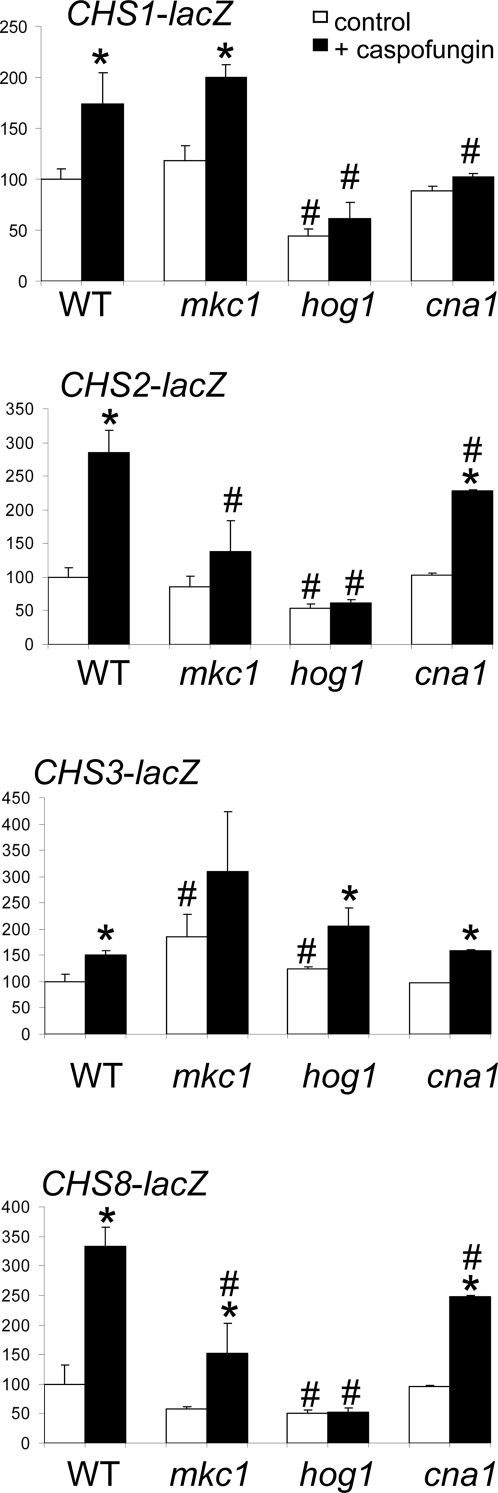
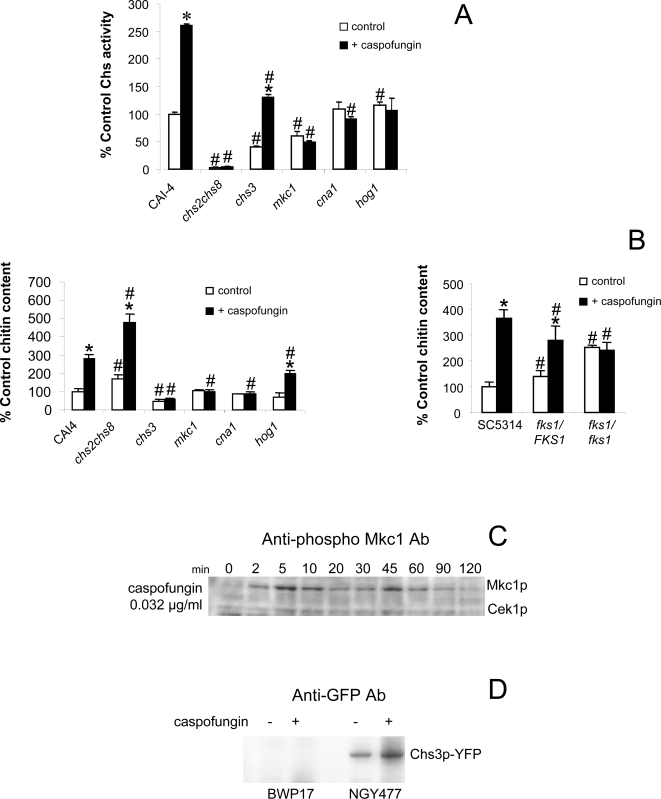
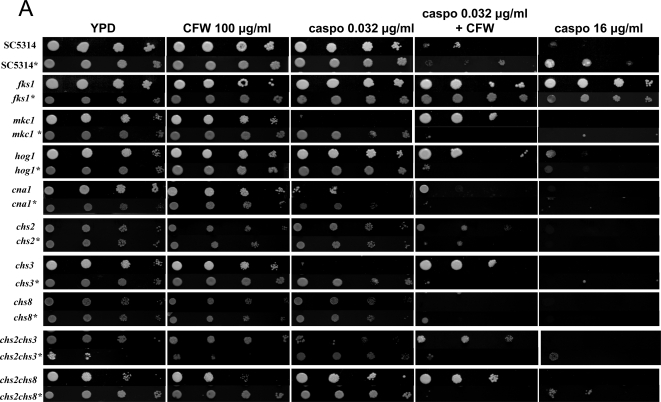
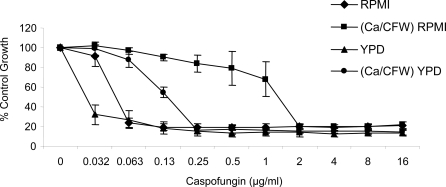
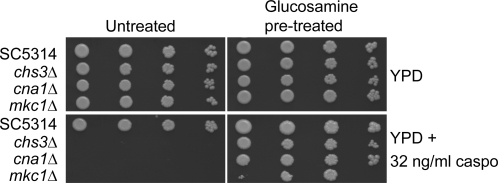
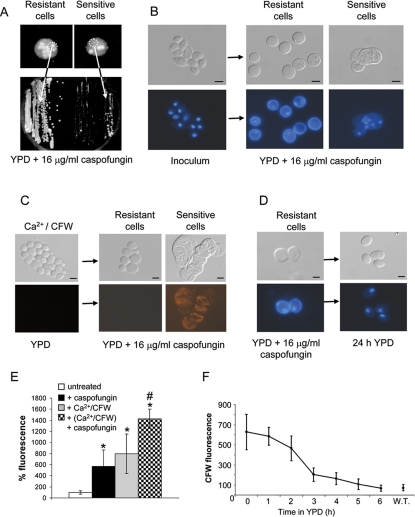
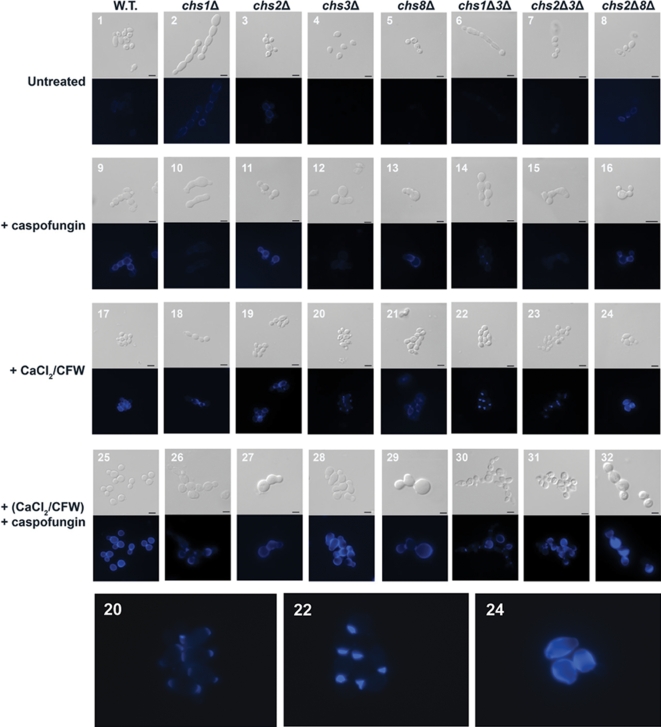
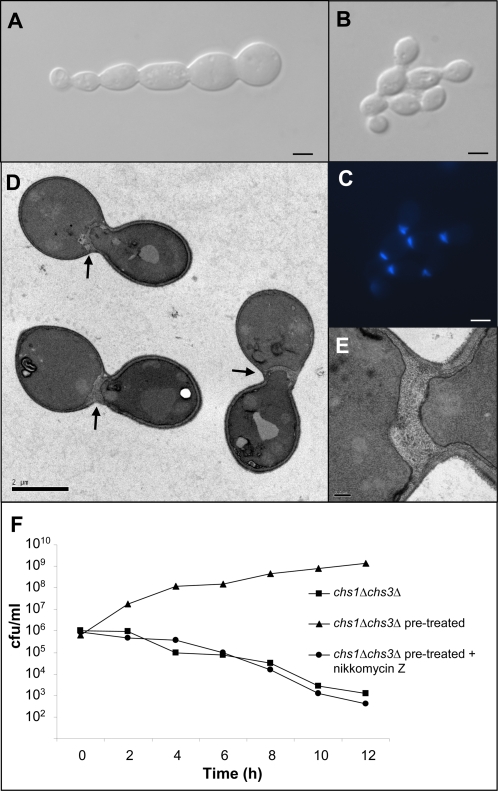
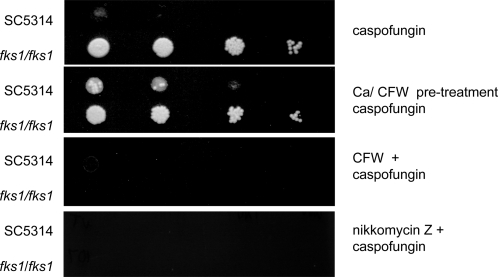
Echinocandins are a new generation of novel antifungal agent that inhibit cell wall beta(1,3)-glucan synthesis and are normally cidal for the human pathogen Candida albicans. Treatment of C. albicans with low levels of echinocandins stimulated chitin synthase (CHS) gene expression, increased Chs activity, elevated chitin content and reduced efficacy of these drugs. Elevation of chitin synthesis was mediated via the PKC, HOG, and Ca(2+)-calcineurin signalling pathways. Stimulation of Chs2p and Chs8p by activators of these pathways enabled cells to survive otherwise lethal concentrations of echinocandins, even in the absence of Chs3p and the normally essential Chs1p, which synthesize the chitinous septal ring and primary septum of the fungus. Under such conditions, a novel proximally offset septum was synthesized that restored the capacity for cell division, sustained the viability of the cell, and abrogated morphological and growth defects associated with echinocandin treatment and the chs mutations. These findings anticipate potential resistance mechanisms to echinocandins. However, echinocandins and chitin synthase inhibitors synergized strongly, highlighting the potential for combination therapies with greatly enhanced cidal activity.
Overview
The claims and statistics of this paper haven’t been checked yet.
Free: it reads the open-access text and checks the first 5 claims that cite a source we can check. Create a free account to check every claim.
Integrity signals
Registry
Cites
Statistics
Figures
Verification
Claims the paper makes
The claims and statistics of this paper haven’t been checked yet.
Free: it reads the open-access text and checks the first 5 claims that cite a source we can check. Create a free account to check every claim.
Claims other papers make about this one
Each is checked against this paper’s own text: does it say what the citing paper says it does?
The source backs part of the claim, not all of it — or backs it for a different population, condition or comparison.
In the citing paper
“Our functional analyses demonstrate that CHS3 is crucial during hyphal growth in the absence of Phr1p and support the notion that Chs3p is the major compensatory chitin synthase both in cell wall stress and HWS in fungi [21, 28, 47, 62, 63].”
From Genomic and functional analyses unveil the response to hyphal wall stress in Candida albicans cells lacking β(1,3)-glucan remodeling (2016) · cites this paper as [47]
Experimental — accuracy not yet measuredThe source backs part of the claim, not all of it — or backs it for a different population, condition or comparison.
In the citing paper
“This up-regulation of transcription correlates with an overall increase in the in vitro chitin synthase activity in membranes prepared from yeast cells treated with caspofungin or CaCl2 and CFW (Munro et al., 2007; Walker et al., 2008).”
From Cell wall protection by the Candida albicans class I chitin synthases (2015) · cites this paper as Walker et al., 2008
Experimental — accuracy not yet measuredThe source backs part of the claim, not all of it — or backs it for a different population, condition or comparison.
In the citing paper
“Transcription of the genes encoding the class I chitin synthases (CHS2 and CHS8) are the most highly up-regulated of the chitin synthase genes in C. albicans yeast cells treated with caspofungin or CaCl2 and CFW (CaCl2/CFW).”
From Cell wall protection by the Candida albicans class I chitin synthases (2015) · cites this paper as Walker et al., 2008
Experimental — accuracy not yet measuredThe source backs part of the claim, not all of it — or backs it for a different population, condition or comparison.
In the citing paper
“Moreover, CHS3 is responsible for Calcofluor white (CW)/CaCl2 induced chitin accumulation which protects C. albicans from the lethal effect of echinocandin [47].”
From Genomic and functional analyses unveil the response to hyphal wall stress in Candida albicans cells lacking β(1,3)-glucan remodeling (2016) · cites this paper as [47]
Experimental — accuracy not yet measuredThe source backs part of the claim, not all of it — or backs it for a different population, condition or comparison.
In the citing paper
“Our functional analyses demonstrate that CHS3 is crucial during hyphal growth in the absence of Phr1p and support the notion that Chs3p is the major compensatory chitin synthase both in cell wall stress and HWS in fungi [21, 28, 47, 62, 63].”
From Genomic and functional analyses unveil the response to hyphal wall stress in Candida albicans cells lacking β(1,3)-glucan remodeling (2016) · cites this paper as [47]
Experimental — accuracy not yet measured
6 more claims about this paper
Create a free account to see every claim other papers make about this one.
Self-check
Percentages, sums and reported differences re-computed from the paper’s own numbers.
The self-check needs the paper’s full text.
Citations
Cites
National Committee for Clinical Laboratory Standards
Bruck, E. (1980) · Pediatrics · doi:10.1542/peds.65.1.187 · Cited by 14,751
Isogenic strain construction and gene mapping in Candida albicans.
Fonzi, W. A., & Irwin, M. Y. (1993) · Genetics · doi:10.1093/genetics/134.3.717 · Cited by 1,687
Cell Wall Integrity Signaling in Saccharomyces cerevisiae
Levin, D. E. (2005) · Microbiology and Molecular Biology Reviews · doi:10.1128/mmbr.69.2.262-291.2005 · Cited by 1,136 · cited 1×
“Damage to the cell wall involves cell wall protein sensors which transmit signals that lead to activation of the ScRho1p GTPase, which activates b(1,3)-glucan synthase as well as ScPkc1p and hence the PKC cell integrity MAP kinase cascade [8].”
BackgroundDenning, D. W. (2003) · The Lancet · doi:10.1016/s0140-6736(03)14472-8 · Cited by 1,131 · cited 1×
“Caspofungin is the first echinocandin to be approved for clinical use and is fungicidal for Candida albicans, and other Candida species, and fungistatic for Aspergillus fumigatus [10,11].”
BackgroundRapid Hypothesis Testing with Candida albicans through Gene Disruption with Short Homology Regions
Wilson, R. B., Davis, D., & Mitchell, A. P. (1999) · Journal of Bacteriology · doi:10.1128/jb.181.6.1868-1874.1999 · Cited by 762 · cited 2×
“BWP17 [57], the untagged parent strain of NGY477, provided a negative control for the anti-GFP antibody [41].”
BackgroundInfluentialPark, S., Kelly, R., Kahn, J. N., Robles, J., Hsu, M.-J., Register, E., Li, W., Vyas, V., Fan, H., Abruzzo, G., et al. (2005) · Antimicrobial Agents and Chemotherapy · doi:10.1128/aac.49.8.3264-3273.2005 · Cited by 434 · cited 1×
“The homozygous fks1 point mutant, strain NR3, which was greatly reduced in sensitivity to caspofungin [9,14] was included as a control.”
BackgroundDifferential Expression and Function of Two Homologous Subunits of Yeast 1,3-β-D-Glucan Synthase
Mazur, P., Morin, N., Baginsky, W., el-Sherbeini, M., Clemas, J. A., Nielsen, J. B., & Foor, F. (1995) · Molecular and Cellular Biology · doi:10.1128/mcb.15.10.5671 · Cited by 424
Sanglard, D., Ischer, F., Marchetti, O., Entenza, J., & Bille, J. (2003) · Molecular Microbiology · doi:10.1046/j.1365-2958.2003.03495.x · Cited by 350 · cited 1×
“albicans calcineurin mutants are hypersensitive to caspofungin, suggesting that the calcineurin pathway is involved in the response to cell wall damage caused by caspofungin [32].”
BackgroundDouglas, C. M., D'Ippolito, J. A., Shei, G. J., Meinz, M., Onishi, J., Marrinan, J. A., Li, W., Abruzzo, G. K., Flattery, A., Bartizal, K., et al. (1997) · Antimicrobial Agents and Chemotherapy · doi:10.1128/aac.41.11.2471 · Cited by 344 · cited 1×
“Rescue of such cells was strictly dependent on chitin synthesis from residual class I enzymes and combinations of echinocandins and chitin synthase inhibitors exhibited synergy in the killing of C. albicans.”
BackgroundAlonso-Monge, R., Navarro-García, F., Molero, G., Diez-Orejas, R., Gustin, M., Pla, J., Sánchez, M., & Nombela, C. (1999) · Journal of Bacteriology · doi:10.1128/jb.181.10.3058-3068.1999 · Cited by 344
Cited by
The Fungal Cell Wall: Structure, Biosynthesis, and Function
Gow, N. A. R., Latge, J.-P., & Munro, C. A. (2017) · Microbiology Spectrum · doi:10.1128/microbiolspec.funk-0035-2016 · Cited by 1,423
Self-citationHamed, I., Özogul, F., & Regenstein, J. M. (2016) · Trends in Food Science & Technology · doi:10.1016/j.tifs.2015.11.007 · Cited by 1,144
Candida albicans morphogenesis and host defence: discriminating invasion from colonization
Gow, N. A. R., van de Veerdonk, F. L., Brown, A. J. P., & Netea, M. G. (2012) · Nature Reviews Microbiology · doi:10.1038/nrmicro2711 · Cited by 888
“However, the chitin content of yeast cells can be increased threefold to fourfold by conditions that affect the cell wall, such as caspofungin-mediated inhibition of β-1,3-glucan synthesi”
Self-citationAntifungal Drug Resistance: Molecular Mechanisms in Candida albicans and Beyond
Lee, Y., Puumala, E., Robbins, N., & Cowen, L. E. (2021) · Chemical Reviews · doi:10.1021/acs.chemrev.0c00199 · Cited by 801
Mechanisms of Antifungal Drug Resistance
Cowen, L. E., Sanglard, D., Howard, S. J., Rogers, P. D., & Perlin, D. S. (2015) · Cold Spring Harbor Perspectives in Medicine · doi:10.1101/cshperspect.a019752 · Cited by 647
“Cite this article as Cold Spring Harb Perspect Med doi: 10.1101/cshperspect.a019752 w w w .p er sp ec ti ve si n m ed ic in e. o rg induces chitin synthase gene expression, and leads to elevated chitin content and reduced echinocandin efficacy (Walker et al. 2008).”
BackgroundInfluentialRegulatory circuitry governing fungal development, drug resistance, and disease.
Shapiro, R. S., Robbins, N., & Cowen, L. E. (2011) · Microbiology and Molecular Biology Reviews · doi:10.1128/mmbr.00045-10 · Cited by 576
“Intriguingly, the treatment of cells with echinocandins not only increases the chitin content but also induces the formation of novel structures, such as a salvage septum, that enable the cell to continue to grow and divide under otherwise lethal echinocandin concentrations (607).”
BackgroundInfluentialChitin synthesis and fungal pathogenesis
Lenardon, M. D., Munro, C. A., & Gow, N. A. (2010) · Current Opinion in Microbiology · doi:10.1016/j.mib.2010.05.002 · Cited by 502
“albicans [17,22 ], but reciprocally, combinations of CHS and glucan synthase inhibitors are more potent against C.”
BackgroundInfluentialSelf-citationArchitecture of the dynamic fungal cell wall
Gow, N. A. R., & Lenardon, M. D. (2023) · Nature Reviews Microbiology · doi:10.1038/s41579-022-00796-9 · Cited by 447
Self-citationAbad, A., Victoria Fernández-Molina, J., Bikandi, J., Ramírez, A., Margareto, J., Sendino, J., Luis Hernando, F., Pontón, J., Garaizar, J., & Rementeria, A. (2010) · Revista Iberoamericana de Micología · doi:10.1016/j.riam.2010.10.003 · Cited by 394
“65,73,131,242,266,290 Notably, this pathway is highly conserved throughout the fungal kingdom.”
Antifungal drug resistance among Candida species: mechanisms and clinical impact
Sanguinetti, M., Posteraro, B., & Lass‐Flörl, C. (2015) · Mycoses · doi:10.1111/myc.12330 · Cited by 394
Echinocandin resistance in Candida.
Perlin, D. S. (2015) · Clinical Infectious Diseases · doi:10.1093/cid/civ791 · Cited by 374
“Cell wall stress is sensed by receptors (eg, Mtl2 andWsc1) that induce a variety of stress adaptation pathways involving cell wall integrity, protein kinase C (PKC), calcineurin-Crz1, and HOG [30, 31].”
Hsp90 Governs Echinocandin Resistance in the Pathogenic Yeast Candida albicans via Calcineurin
Singh, S. D., Robbins, N., Zaas, A. K., Schell, W. A., Perfect, J. R., & Cowen, L. E. (2009) · PLoS Pathogens · doi:10.1371/journal.ppat.1000532 · Cited by 362
“albicans from echinocandins and this stimulation is mediated via calcineurin in concert with the cell wall integrity signaling pathway and the high osmolarity glycerol signaling pathway [15,16].”
BackgroundLaFayette, S. L., Collins, C., Zaas, A. K., Schell, W. A., Betancourt-Quiroz, M., Gunatilaka, A. A. L., Perfect, J. R., & Cowen, L. E. (2010) · PLoS Pathogens · doi:10.1371/journal.ppat.1001069 · Cited by 329
“drugs targeting the cell wall [34,35,36,37], suggest that compromising Pkc1 could have therapeutic benefits by enhancing the efficacy of the two most widely deployed classes of antifungals, the”
BackgroundInfluentialEne, I. V., Adya, A. K., Wehmeier, S., Brand, A. C., MacCallum, D. M., Gow, N. A. R., & Brown, A. J. P. (2012) · Cellular Microbiology · doi:10.1111/j.1462-5822.2012.01813.x · Cited by 313
“The stress-activated protein kinase Hog1 (Smith et al., 2004) influences cell wall biosynthesis (Eisman et al., 2006), partly by regulating chitin synthesis (Munro et al., 2007; Walker et al., 2008).”
BackgroundSelf-citationMechanisms of echinocandin antifungal drug resistance
Perlin, D. S. (2015) · Annals of the New York Academy of Sciences · doi:10.1111/nyas.12831 · Cited by 313
Rispail, N., Soanes, D. M., Ant, C., Czajkowski, R., Grünler, A., Huguet, R., Perez-Nadales, E., Poli, A., Sartorel, E., Valiante, V., et al. (2009) · Fungal Genetics and Biology · doi:10.1016/j.fgb.2009.01.002 · Cited by 309
“…of processes, including stress response, mating, budding, and actin-based processes (Cyert, 2001) as well as in determining tolerance to antifungal drugs (Cruz et al., 2002; Del Poeta et al., 2000; Kontoyiannis et al., 2003; Sanglard et al., 2003; Steinbach et al., 2007; Walker et al., 2008).”
Self-citationStress adaptation in a pathogenic fungus
Brown, A. J. P., Budge, S., Kaloriti, D., Tillmann, A., Jacobsen, M. D., Yin, Z., Ene, I. V., Bohovych, I., Sandai, D., Kastora, S., et al. (2014) · Journal of Experimental Biology · doi:10.1242/jeb.088930 · Cited by 299
“…drugs such as caspofungin and chemicals such as Calcofluor White and Congo Red are often used to exert stress upon the cell wall of C. albicans in vitro (Wiederhold et al., 2005; Eisman Th e Jo ur na l o f E xp er im en ta l B io lo gy et al., 2006; Walker et al., 2008; Leach et al., 2012a).”
Fungal Chitin Dampens Inflammation through IL-10 Induction Mediated by NOD2 and TLR9 Activation
Wagener, J., Malireddi, R. K. S., Lenardon, M. D., Köberle, M., Vautier, S., MacCallum, D. M., Biedermann, T., Schaller, M., Netea, M. G., Kanneganti, T.-D., et al. (2014) · PLoS Pathogens · doi:10.1371/journal.ppat.1004050 · Cited by 289
“Paradoxical growth during echinocandin treatment has been linked to the ability of the fungi to upregulate chitin synthesis to restore the cell wall integrity after echinocandinmediated cell wall damage [7,27].”
BackgroundSelf-citationFungal echinocandin resistance
Walker, L. A., Gow, N. A. R., & Munro, C. A. (2010) · Fungal Genetics and Biology · doi:10.1016/j.fgb.2009.09.003 · Cited by 267
Self-citationFuchs, B. B., & Mylonakis, E. (2009) · Eukaryotic Cell · doi:10.1128/ec.00193-09 · Cited by 266
“In an slt2/mpk1 mutant strain, CHS2 and CHS8 exhibit only marginal increases in expression upon caspofungin exposure compared to a wild-type strain exposed to caspofungin, which exhibits significant increases in CHS2 and CHS8 expression (80).”
BackgroundCell Wall Remodeling Enzymes Modulate Fungal Cell Wall Elasticity and Osmotic Stress Resistance
Ene, I. V., Walker, L. A., Schiavone, M., Lee, K. K., Martin-Yken, H., Dague, E., Gow, N. A. R., Munro, C. A., & Brown, A. J. P. (2015) · mBio · doi:10.1128/mbio.00986-15 · Cited by 254
“Klis and others have highlighted the flexibility of the yeast cell wall in terms of new cell wall growth and cellular adaptation to environmental change (10, 12, 23, 36, 37).”
BackgroundSelf-citationPlaine, A., Walker, L., Da Costa, G., Mora-Montes, H. M., McKinnon, A., Gow, N. A. R., Gaillardin, C., Munro, C. A., & Richard, M. L. (2008) · Fungal Genetics and Biology · doi:10.1016/j.fgb.2008.08.003 · Cited by 238
Self-citationDynamic Fungal Cell Wall Architecture in Stress Adaptation and Immune Evasion
Hopke, A., Brown, A. J. P., Hall, R. A., & Wheeler, R. T. (2018) · Trends in Microbiology · doi:10.1016/j.tim.2018.01.007 · Cited by 228
“However, it is also possible that, in other host contexts, dynamic fungal cell wall remodeling could instead directly bene fi t the pathogen by reinforcing the cell wall [22,28,82], exacerbating immunopathology [22,25,83 – 88], or affecting sensitivity to antifungal agent [28].”
BackgroundCosta-de-Oliveira, S., & Rodrigues, A. G. (2020) · Microorganisms · doi:10.3390/microorganisms8020154 · Cited by 229
Comparative distribution of human and avian type sialic acid influenza receptors in the pig
Nelli, R. K., Kuchipudi, S. V., White, G. A., Perez, B. B., Dunham, S. P., & Chang, K.-C. (2010) · BMC Veterinary Research · doi:10.1186/1746-6148-6-4 · Cited by 225
Fungal Cell Wall: Emerging Antifungals and Drug Resistance.
Lima, S. L., Colombo, A. L., & de Almeida Junior, J. N. (2019) · Frontiers in Microbiology · doi:10.3389/fmicb.2019.02573 · Cited by 223
Elevated Chitin Content Reduces the Susceptibility of Candida Species to Caspofungin
Walker, L. A., Gow, N. A. R., & Munro, C. A. (2013) · Antimicrobial Agents and Chemotherapy · doi:10.1128/aac.01486-12 · Cited by 214
“Often, this cell wall salvage mechanism results in increased chitin synthesis (7, 37, 39).”
BackgroundInfluentialSelf-citationMannosylation in Candida albicans: role in cell wall function and immune recognition
Hall, R. A., & Gow, N. A. R. (2013) · Molecular Microbiology · doi:10.1111/mmi.12426 · Cited by 210
“For example, the presence of echinocandin antifungals results in increased chitin synthesis to compensate for the depletion of glucan, to maintain cell wall integrity (Walker et al., 2008).”
BackgroundSelf-citationElevated Cell Wall Chitin in Candida albicans Confers Echinocandin Resistance In Vivo
Lee, K. K., MacCallum, D. M., Jacobsen, M. D., Walker, L. A., Odds, F. C., Gow, N. A. R., & Munro, C. A. (2012) · Antimicrobial Agents and Chemotherapy · doi:10.1128/aac.00683-11 · Cited by 209
“albicans strains with FKS1 hot-spot mutations have increased chitin content compared to wild-type strains (4, 70).”
BackgroundMethodResultSelf-citationRecognition and Blocking of Innate Immunity Cells by Candida albicans Chitin
Mora-Montes, H. M., Netea, M. G., Ferwerda, G., Lenardon, M. D., Brown, G. D., Mistry, A. R., Kullberg, B. J., O'Callaghan, C. A., Sheth, C. C., Odds, F. C., et al. (2011) · Infection and Immunity · doi:10.1128/iai.01282-10 · Cited by 204
“However, the chitin content of the wall can increase significantly in response to cell wall damage (54).”
BackgroundSelf-citationSherrington, S. L., Sorsby, E., Mahtey, N., Kumwenda, P., Lenardon, M. D., Brown, I., Ballou, E. R., MacCallum, D. M., & Hall, R. A. (2017) · PLOS Pathogens · doi:10.1371/journal.ppat.1006403 · Cited by 202
“albicans to cell wall stress is to up-regulate chitin synthesis to provide increased cell wall integrity [20].”
BackgroundSelf-citationDifferential Adaptation of Candida albicans In Vivo Modulates Immune Recognition by Dectin-1
Marakalala, M. J., Vautier, S., Potrykus, J., Walker, L. A., Shepardson, K. M., Hopke, A., Mora-Montes, H. M., Kerrigan, A., Netea, M. G., Murray, G. I., et al. (2013) · PLoS Pathogens · doi:10.1371/journal.ppat.1003315 · Cited by 202
“TEM analysis was performed as previously described [36].”
BackgroundMethodResultInfluentialSelf-citationAn Extensive Circuitry for Cell Wall Regulation in Candida albicans
Blankenship, J. R., Fanning, S., Hamaker, J. J., & Mitchell, A. P. (2010) · PLoS Pathogens · doi:10.1371/journal.ppat.1000752 · Cited by 201
“The protective role preserves the integrity of the cell in the face of environmental assaults [1,2].”
BackgroundValiante, V., Macheleidt, J., Föge, M., & Brakhage, A. A. (2015) · Frontiers in Microbiology · doi:10.3389/fmicb.2015.00325 · Cited by 184
Epidemiology and molecular mechanisms of antifungal resistance in Candida and Aspergillus
Gonçalves, S. S., Souza, A. C. R., Chowdhary, A., Meis, J. F., & Colombo, A. L. (2016) · Mycoses · doi:10.1111/myc.12469 · Cited by 180
Radhakrishnan, V. S., Reddy Mudiam, M. K., Kumar, M., Dwivedi, S. P., Singh, S. P., & Prasad, T. (2018) · International Journal of Nanomedicine · doi:10.2147/ijn.s150648 · Cited by 179
Update on Antifungal Drug Resistance
Perlin, D. S., Shor, E., & Zhao, Y. (2015) · Current Clinical Microbiology Reports · doi:10.1007/s40588-015-0015-1 · Cited by 174
The fungal cell wall as a target for the development of new antifungal therapies
Cortés, J. C. G., Curto, M.-Á., Carvalho, V. S. D., Pérez, P., & Ribas, J. C. (2019) · Biotechnology Advances · doi:10.1016/j.biotechadv.2019.02.008 · Cited by 170
Interaction between amphiphilic peptides and phospholipid membranes
Strömstedt, A. A., Ringstad, L., Schmidtchen, A., & Malmsten, M. (2010) · Current Opinion in Colloid & Interface Science · doi:10.1016/j.cocis.2010.05.006 · Cited by 167
Candida albicans and Candida glabrata : global priority pathogens
Katsipoulaki, M., Stappers, M. H. T., Malavia-Jones, D., Brunke, S., Hube, B., & Gow, N. A. R. (2024) · Microbiology and Molecular Biology Reviews · doi:10.1128/mmbr.00021-23 · Cited by 180
“Candida spp. can also upregulate chitin synthesis as a response to damage of β-1,3-glucan, which leads to strengthening of the wall and reduced sensitivity to echinocandins (128–130).”
BackgroundSelf-citationBen-Ami, R., Garcia-Effron, G., Lewis, R. E., Gamarra, S., Leventakos, K., Perlin, D. S., & Kontoyiannis, D. P. (2011) · The Journal of Infectious Diseases · doi:10.1093/infdis/jir351 · Cited by 162
“albicans to echinocandins triggers cell wall salvage pathways, including the high-osmolarity glycerol mitogenactivated protein kinase, Ca(12)/calcineurin, and protein kinase C pathways [26, 27].”
BackgroundInfluentialFortwendel, J. R., Juvvadi, P. R., Pinchai, N., Perfect, B. Z., Alspaugh, J. A., Perfect, J. R., & Steinbach, W. J. (2009) · Antimicrobial Agents and Chemotherapy · doi:10.1128/aac.01154-08 · Cited by 161
“For example, in Candida albicans, the inhibition of 1,3- -D-glucan synthesis by caspofungin treatment leads to a compensatory increase in chitin, allowing the cell to escape lethality (27, 29).”
BackgroundInfluentialBertuzzi, M., Schrettl, M., Alcazar-Fuoli, L., Cairns, T. C., Muñoz, A., Walker, L. A., Herbst, S., Safari, M., Cheverton, A. M., Chen, D., et al. (2014) · PLoS Pathogens · doi:10.1371/journal.ppat.1004413 · Cited by 158
“Preparation of samples for Transmission Electron Microscopy (TEM) were performed as previously described [79].”
MethodSelf-citationCaspofungin Kills Candida albicans by Causing both Cellular Apoptosis and Necrosis
Hao, B., Cheng, S., Clancy, C. J., & Nguyen, M. H. (2013) · Antimicrobial Agents and Chemotherapy · doi:10.1128/aac.01366-12 · Cited by 157
“albicans, including upregulation of CHS chitin synthase genes and activation of the protein kinase C (PKC) cell wall integrity signaling pathway (32, 33).”
BackgroundWhy is mucormycosis more difficult to cure than more common mycoses?
Katragkou, A., Walsh, T. J., & Roilides, E. (2013) · Clinical Microbiology and Infection · doi:10.1111/1469-0691.12466 · Cited by 169
“Notably, at higher doses, echinocandins have attenuated activity compared with lower doses possibly reflecting upregulation of homeostatic cell-wall responses in the fungi that ‘rescue’ the fungus from the effects of echinocandins through compensatory increase in chitin synthesis [68,69].”
BackgroundUpdate on Candida krusei , a potential multidrug-resistant pathogen
Jamiu, A. T., Albertyn, J., Sebolai, O. M., & Pohl, C. H. (2020) · Medical Mycology · doi:10.1093/mmy/myaa031 · Cited by 211
Fortwendel, J. R., Juvvadi, P. R., Perfect, B. Z., Rogg, L. E., Perfect, J. R., & Steinbach, W. J. (2010) · Antimicrobial Agents and Chemotherapy · doi:10.1128/aac.00854-09 · Cited by 153
“albicans paradoxical effect, including protein kinase C (PKC), highosmolarity glycerol response (HOG), and calcineurin signaling events (25, 34, 35).”
BackgroundThe CWI Pathway: Regulation of the Transcriptional Adaptive Response to Cell Wall Stress in Yeast
Sanz, A., García, R., Rodríguez-Peña, J., & Arroyo, J. (2017) · Journal of Fungi · doi:10.3390/jof4010001 · Cited by 149
“fumigatus [23,24,87,88] and can compromise the clinical treatment success [25,89,90].”
BackgroundMolecular and Cellular Mechanisms That Lead to Candida Biofilm Formation
ten Cate, J. M., Klis, F. M., Pereira-Cenci, T., Crielaard, W., & de Groot, P. W. J. (2009) · Journal of Dental Research · doi:10.1177/0022034508329273 · Cited by 149
The Quiet and Underappreciated Rise of Drug-Resistant Invasive Fungal Pathogens
Arastehfar, A., Lass-Flörl, C., Garcia-Rubio, R., Daneshnia, F., Ilkit, M., Boekhout, T., Gabaldon, T., & Perlin, D. S. (2020) · Journal of Fungi · doi:10.3390/jof6030138 · Cited by 145
“This is followed by the engagement of main signal transduction pathways involved in stress adaptation and cell wall integrity, including protein kinase C (PKC), high-osmolarity glycerol (HOG), and calcineurin pathways, activation of appropriate transcription factors, and, finally, expression of response element genes,…”
BackgroundChen, Y., Montedonico, A. E., Kauffman, S., Dunlap, J. R., Menn, F., & Reynolds, T. B. (2010) · Molecular Microbiology · doi:10.1111/j.1365-2958.2009.07018.x · Cited by 144
“This paradoxical effect has been shown to be mediated by the Pkc1p, calcineurin and HOG pathways through upregulation of chitin levels to compensate for loss of b1,3-glucan (Walker et al., 2008).”
BackgroundFunctional duality of the cell wall
Latgé, J.-P., & Beauvais, A. (2014) · Current Opinion in Microbiology · doi:10.1016/j.mib.2014.05.009 · Cited by 144
Cell wall integrity signalling in human pathogenic fungi: CWI signalling in pathogenic fungi
Dichtl, K., Samantaray, S., & Wagener, J. (2016) · Cellular Microbiology · doi:10.1111/cmi.12612 · Cited by 144
“Furthermore, a role for CaPkc1 together with the HOG and calcineurin signalling pathways has been widely implicated in stimulation of chitin synthesis in response to low levels of echinocandin exposure, thereby reducing the drug efficacy (Munro et al., 2007; Walker et al., 2008).”
BackgroundArroyo, J., Farkaš, V., Sanz, A. B., & Cabib, E. (2016) · Cellular Microbiology · doi:10.1111/cmi.12615 · Cited by 140
“…or inhibitors of Calcineurin, whose signaling route has been involved in regulation of fungal compensatory responses (Lagorce et al., 2003; Walker et al., 2008), has also been previously proposed and can be explored in the future as alternative antifungal treatments (Aimanianda and…”
BackgroundInfluentialEchinocandins for the treatment of invasive aspergillosis: from laboratory to bedside
Aruanno, M., Glampedakis, E., & Lamoth, F. (2019) · Antimicrobial Agents and Chemotherapy · doi:10.1128/aac.00399-19 · Cited by 136
Leach, M. D., Budge, S., Walker, L., Munro, C., Cowen, L. E., & Brown, A. J. P. (2012) · PLoS Pathogens · doi:10.1371/journal.ppat.1003069 · Cited by 131
“Also, the Hog1 stress pathway has been implicated in cell wall biosynthesis [81], partly by regulating chitin synthesis [66,69].”
BackgroundMethodSelf-citationHopke, A., Nicke, N., Hidu, E. E., Degani, G., Popolo, L., & Wheeler, R. T. (2016) · PLOS Pathogens · doi:10.1371/journal.ppat.1005644 · Cited by 131
“Increased chitin levels can rescue C . albicans from stress, including antifungal treatment [33].”
Interplay between Candida albicans and the Antimicrobial Peptide Armory
Swidergall, M., & Ernst, J. F. (2014) · Eukaryotic Cell · doi:10.1128/ec.00093-14 · Cited by 131
“albicans from the action of echinocandin, a glucan synthesis inhibitor (70).”
BackgroundMora-Montes, H. M., Bates, S., Netea, M. G., Castillo, L., Brand, A., Buurman, E. T., Díaz-Jiménez, D. F., Jan Kullberg, B., Brown, A. J. P., Odds, F. C., et al. (2010) · Journal of Biological Chemistry · doi:10.1074/jbc.m109.081513 · Cited by 129
Self-citationDagley, M. J., Gentle, I. E., Beilharz, T. H., Pettolino, F. A., Djordjevic, J. T., Lo, T. L., Uwamahoro, N., Rupasinghe, T., Tull, D. L., McConville, M., et al. (2011) · Molecular Microbiology · doi:10.1111/j.1365-2958.2010.07503.x · Cited by 128
“Cell wall synthesis and remodelling is a dynamic process, which responds to growth conditions, cell cycle progression, changes in cell morphology, and cell wall stress (Staab et al., 1996; Ruiz-Herrera et al., 2005; Klis et al., 2006; 2009; Bahn et al., 2007; Walker et al., 2008; Côte et al., 2009).”
BackgroundChitin and chitinase: Role in pathogenicity, allergenicity and health
Patel, S. V., & Goyal, A. (2017) · International Journal of Biological Macromolecules · doi:10.1016/j.ijbiomac.2017.01.042 · Cited by 142
Wagener, J., MacCallum, D. M., Brown, G. D., & Gow, N. A. R. (2017) · mBio · doi:10.1128/mbio.01820-16 · Cited by 122
Self-citationHeilmann, C. J., Sorgo, A. G., Mohammadi, S., Sosinska, G. J., de Koster, C. G., Brul, S., de Koning, L. J., & Klis, F. M. (2013) · Eukaryotic Cell · doi:10.1128/ec.00278-12 · Cited by 122
“Reinforcement of the cell wall in response to antifungal stresses is well described, especially with respect to an increase in chitin content as a result of increased chitin synthesis (11, 12).”
BackgroundOccidiofungin, a Unique Antifungal Glycopeptide Produced by a Strain of Burkholderia contaminans
Lu, S., Novák, J., Austin, F. W., Gu, G., Ellis, D., Kirk, M., Wilson-Stanford, S., Tonelli, M., & Smith, L. (2009) · Biochemistry · doi:10.1021/bi900814c · Cited by 139
“changes were observed on the membrane (17, 20).”
Román, E., Cottier, F., Ernst, J. F., & Pla, J. (2009) · Eukaryotic Cell · doi:10.1128/ec.00081-09 · Cited by 113
“This could contribute to the increased sensitivity of msb2 and sho1 mutants to caspofungin, as these two polymers play compensatory roles in the cell wall (72) and as their synthesis is coordinated in response to cell wall damage (28, 92).”
BackgroundBeyda, N. D., Lewis, R. E., & Garey, K. W. (2012) · Annals of Pharmacotherapy · doi:10.1345/aph.1r020 · Cited by 109
Echinocandins: production and applications
Emri, T., Majoros, L., Tóth, V., & Pócsi, I. (2013) · Applied Microbiology and Biotechnology · doi:10.1007/s00253-013-4761-9 · Cited by 123
“…of data suggests that echinocandin exposure as a stress signal activates cell wall remodeling via protein kinase C (PKC), HOG, Ca 2+ -calcineurin and HSP90 pathways (Fortwendel et al. 2010; Singh et al. 2009; Singh-Babak et al. 2012; Stevens et al. 2006; Walker et al. 2008, 2012; Wiederhold 2007).”
BackgroundCalcineurin controls drug tolerance, hyphal growth, and virulence in Candida dubliniensis
Chen, Y.-L., Brand, A., Morrison, E. L., Silao, F. G. S., Bigol, U. G., Malbas, F. F., Nett, J. E., Andes, D. R., Solis, N. V., Filler, S. G., et al. (2011) · Eukaryotic Cell · doi:10.1128/ec.00310-10 · Cited by 107
“Therefore, there is increased interest in the study of Candida cell wall integrity (19, 26, 87).”
BackgroundMelanin Externalization in Candida albicans Depends on Cell Wall Chitin Structures
Walker, C. A., Gómez, B. L., Mora-Montes, H. M., Mackenzie, K. S., Munro, C. A., Brown, A. J. P., Gow, N. A. R., Kibbler, C. C., & Odds, F. C. (2010) · Eukaryotic Cell · doi:10.1128/ec.00051-10 · Cited by 107
“CHS1 is an essential gene under normal conditions (59), and its product is the main enzyme involved in septum formation (83).”
BackgroundSelf-citationBrown, A. J. P., Cowen, L. E., Pietro, A. D., & Quinn, J. (2017) · Microbiology Spectrum · doi:10.1128/microbiolspec.funk-0048-2016 · Cited by 125
Nicholls, S., Leach, M. D., Priest, C. L., & Brown, A. J. P. (2009) · Molecular Microbiology · doi:10.1111/j.1365-2958.2009.06883.x · Cited by 105
“This was interesting because Hsp90 is known to modulate the activity of the cell integrity pathway in S. cerevisiae (Duina et al., 1998), and cell wall stresses increase the resistance of C. albicans to antifungal therapy with echinocandins (Walker et al., 2008).”
BackgroundChen, L., Yue, Q., Zhang, X., Xiang, M., Wang, C., Li, S., Che, Y., Ortiz‐López, F. J., Bills, G. F., Liu, X., et al. (2013) · BMC Genomics · doi:10.1186/1471-2164-14-339 · Cited by 113
Dichtl, K., Samantaray, S., Aimanianda, V., Zhu, Z., Prévost, M., Latgé, J., Ebel, F., & Wagener, J. (2015) · Molecular Microbiology · doi:10.1111/mmi.12877 · Cited by 100
“It was reported previously that fungi compensate echinocandin treatment by increasing their cell wall chitin content (Walker et al., 2008; Fortwendel et al., 2010).”
BackgroundWei, J., Bi, Y., Xue, H., Wang, Y., Zong, Y., & Prusky, D. (2020) · Journal of Applied Microbiology · doi:10.1111/jam.14601 · Cited by 120
“This interesting phenomenon has been suggested to a salvage pathway, leading to a compensatory increase in cell wall chitin (Walker et al. 2008).”
BackgroundAneuploidy Enables Cross-Adaptation to Unrelated Drugs
Yang, F., Teoh, F., Tan, A. S. M., Cao, Y., Pavelka, N., & Berman, J. (2019) · Molecular Biology and Evolution · doi:10.1093/molbev/msz104 · Cited by 101
The eagle effect and antibiotic-induced persistence: two sides of the same coin?
Prasetyoputri, A., Jarrad, A. M., Cooper, M. A., & Blaskovich, M. A. T. (2019) · Trends in Microbiology · doi:10.1016/j.tim.2018.10.007 · Cited by 101
Elucidating Drug Resistance in Human Fungal Pathogens
Xie, J. L., Polvi, E. J., Shekhar-Guturja, T., & Cowen, L. E. (2014) · Future Microbiology · doi:10.2217/fmb.14.18 · Cited by 100
Echinocandin Resistance, Susceptibility Testing and Prophylaxis: Implications for Patient Management
Perlin, D. S. (2014) · Drugs · doi:10.1007/s40265-014-0286-5 · Cited by 99
“contents are less susceptible to echinocandins both in vitro [92, 93, 96, 97] and in vivo [98].”
Rueda, C., Cuenca-Estrella, M., & Zaragoza, O. (2014) · Antimicrobial Agents and Chemotherapy · doi:10.1128/aac.00946-13 · Cited by 98
“Chitin upregulation has been described as the main adaptation mechanism involved in the paradoxical effect (15, 17, 19, 21, 23).”
BackgroundOliveira-Garcia, E., & Deising, H. B. (2013) · The Plant Cell · doi:10.1105/tpc.112.103499 · Cited by 98
“During hyphal growth, a delicate balance between apical plasticity and subapical rigidity is required and is mediated by tight regulation of enzymes involved in cell wall biogenesis (Sietsma et al., 1985; Walker et al., 2008).”
BackgroundPrieto, D., Román, E., Correia, I., & Pla, J. (2014) · PLoS ONE · doi:10.1371/journal.pone.0087128 · Cited by 96
Parente-Rocha, J. A., Bailão, A. M., Amaral, A. C., Taborda, C. P., Paccez, J. D., Borges, C. L., & Pereira, M. (2017) · Mediators of Inflammation · doi:10.1155/2017/9870679 · Cited by 94
Hayes, B. M. E., Anderson, M. A., Traven, A., van der Weerden, N. L., & Bleackley, M. R. (2014) · Cellular and Molecular Life Sciences · doi:10.1007/s00018-014-1573-8 · Cited by 93
Rocha, M. C., Fabri, J. H. T. M., Franco de Godoy, K., Alves de Castro, P., Hori, J. I., Ferreira da Cunha, A., Arentshorst, M., Ram, A. F. J., van den Hondel, C. A. M. J. J., Goldman, G. H., et al. (2016) · G3 Genes|Genomes|Genetics · doi:10.1534/g3.116.031112 · Cited by 92
“Staining was performed as previously described (Walker et al. 2008; Winkelstroter et al. 2015).”
Curto, M.-Á., Butassi, E., Ribas, J. C., Svetaz, L. A., & Cortés, J. C. G. (2021) · Phytomedicine · doi:10.1016/j.phymed.2021.153556 · Cited by 109
Bizerra, F. C., Melo, A. S. A., Katchburian, E., Freymüller, E., Straus, A. H., Takahashi, H. K., & Colombo, A. L. (2011) · Antimicrobial Agents and Chemotherapy · doi:10.1128/aac.00633-10 · Cited by 91
“(36) showed that low levels of echinocandins stimulated chitin synthase (CHS) gene expression.”
BackgroundWalker, L. A., Lee, K. K., Munro, C. A., & Gow, N. A. R. (2015) · Antimicrobial Agents and Chemotherapy · doi:10.1128/aac.00862-15 · Cited by 90
“albicans and reduce susceptibility to caspofungin (19, 23).”
BackgroundSelf-citationRabhi, S., Rabhi, I., Trentin, B., Piquemal, D., Regnault, B., Goyard, S., Lang, T., Descoteaux, A., Enninga, J., & Guizani-Tabbane, L. (2016) · PLoS ONE · doi:10.1371/journal.pone.0148640 · Cited by 100
Alvarez, F. J., Douglas, L. M., Rosebrock, A., & Konopka, J. B. (2008) · Molecular Biology of the Cell · doi:10.1091/mbc.e08-05-0479 · Cited by 88
“albicans cells treated with a sublethal dose of caspofungin (Walker et al., 2008).”
InfluentialMunro, C. A. (2013) · Advances in applied microbiology · doi:10.1016/b978-0-12-407678-5.00004-0 · Cited by 104
Self-citationMouyna, I., Kniemeyer, O., Jank, T., Loussert, C., Mellado, E., Aimanianda, V., Beauvais, A., Wartenberg, D., Sarfati, J., Bayry, J., et al. (2010) · Molecular Microbiology · doi:10.1111/j.1365-2958.2010.07164.x · Cited by 87
“…integrity pathway and the HOG pathway suggested that the echinocandin has been sensed by the fungus and induced a typical signal transduction cascade response to drugs that is usually associated to an increased susceptibility to cell wall drugs (Reinoso-Martin et al., 2003; Walker et al., 2008).”
BackgroundXu, T., Cao, L., Zeng, J., Franco, C. M. M., Yang, Y., Hu, X., Liu, Y., Wang, X., Gao, Y., Bu, Z., et al. (2019) · Pesticide Biochemistry and Physiology · doi:10.1016/j.pestbp.2019.06.015 · Cited by 90
Fungal Cell Wall Proteins and Signaling Pathways Form a Cytoprotective Network to Combat Stresses
Ibe, C., & Munro, C. A. (2021) · Journal of Fungi · doi:10.3390/jof7090739 · Cited by 85
Self-citationThe Fungal Cell Wall: Structure, Biosynthesis, and Function
Gow, N. A. R., Latge, J.-P., & Munro, C. A. (2017) · The Fungal Kingdom · doi:10.1128/9781555819583.ch12 · Cited by 86
Self-citationWhat do we know about the biology of the emerging fungal pathogen of humans Candida auris?
Bravo Ruiz, G., & Lorenz, A. (2021) · Microbiological Research · doi:10.1016/j.micres.2020.126621 · Cited by 85
Koselny, K., Green, J., DiDone, L., Halterman, J. P., Fothergill, A. W., Wiederhold, N. P., Patterson, T. F., Cushion, M. T., Rappelye, C., Wellington, M., et al. (2016) · Antimicrobial Agents and Chemotherapy · doi:10.1128/aac.01061-16 · Cited by 83
Membrane selectivity by W-tagging of antimicrobial peptides
Schmidtchen, A., Ringstad, L., Kasetty, G., Mizuno, H., Rutland, M. W., & Malmsten, M. (2010) · Biochimica et Biophysica Acta (BBA) - Biomembranes · doi:10.1016/j.bbamem.2010.12.020 · Cited by 84
Burrack, L. S., Todd, R. T., Soisangwan, N., Wiederhold, N. P., & Selmecki, A. (2022) · mBio · doi:10.1128/mbio.00842-22 · Cited by 82
Yang, F., Zhang, L., Wakabayashi, H., Myers, J., Jiang, Y., Cao, Y., Jimenez-Ortigosa, C., Perlin, D. S., & Rustchenko, E. (2017) · Antimicrobial Agents and Chemotherapy · doi:10.1128/aac.00071-17 · Cited by 81
“Overall, this result is consistent with earlier reports that treatment with caspofungin stimulates expression of chitin synthases or that inducing larger amounts of cell wall chitin confers caspofungin resistance in animal models (18, 20, 33).”
ResultChitin: A “Hidden Figure” in the Fungal Cell Wall
Brown, H. E., Esher, S. K., & Alspaugh, J. A. (2019) · Current topics in microbiology and immunology · doi:10.1007/82_2019_184 · Cited by 108
Metadata
- Authors
- Walker, L. A., Munro, C. A., de Bruijn, I., Lenardon, M. D., McKinnon, A., & Gow, N. A. R.
- Affiliations
- University of Aberdeen (GB)
- Corresponding author
- Gow, Neil A. R.
- Venue
- PLoS Pathogens
- Publisher
- Public Library of Science (PLoS)
- Published
- 2008-04-04
- Volume
- 4
- Issue
- 4
- Pages
- e1000040
- ISSN
- 1553-7366 (ISSN-L)
- 1553-7374
- PMC
- PMC2271054
- OpenAlex
- W2038204439
- Cited by
- 445
- References
- 61
- Citations by year
- 2026: 21 · 2025: 21 · 2024: 16 · 2023: 17 · 2022: 25 · 2021: 24 · 2020: 33 · 2019: 41 · 2018: 20 · 2017: 37 · 2016: 25 · 2015: 21 · 2014: 24 · 2013: 26 · 2012: 23
- FWCI
- 15.21
- Type
- journal article
- Language
- en
- Open access
- gold
- doi.org
- Locations
- PLoS Pathogens (publishedVersion, cc-by)
- PubMed Central (publishedVersion, cc-by)
- PubMed (publishedVersion)
- Aberdeen University Research Archive (Aberdeen University) (submittedVersion)
- DOAJ (DOAJ: Directory of Open Access Journals) (submittedVersion, cc-by-sa)
- Figshare (submittedVersion, cc-by)
- Funders
- Pfizer
- Wellcome Trust (080088)
- Medical Research Council
- Biotechnology and Biological Sciences Research Council (BB/C510191/1)
- Topics
- Health Sciences › Medicine › Infectious Diseases › Antifungal resistance and susceptibility
- Life Sciences › Biochemistry, Genetics and Molecular Biology › Molecular Biology › Fungal and yeast genetics research
- Health Sciences › Medicine › Infectious Diseases › Fungal Infections and Studies
- Keywords
- Candida albicans, echinocandins, chitin synthesis, chitin synthase, HOG pathway, drug resistance, septum formation, cell division, antifungal synergy, combination therapy
- MeSH terms
- Antifungal Agents, Benzenesulfonates, Calcium Chloride, Candida albicans, Chitin, Chitin Synthase, Dose-Response Relationship, Drug, Drug Antagonism, Drug Therapy, Combination, Enzyme Inhibitors, Gene Expression Regulation, Enzyme Activators, Echinocandins
About these checks
Registry, retraction, Cites and statistics results are computed, not judged, with one exception: a printed reference that no index lists is read once by a model before it counts as a citation error. Claims are extracted by a model and kept only when their quote appears verbatim in the text; each cited source is then checked, with a model’s help, for whether it says what the claim relies on. Those verdicts can be wrong — read the claim’s quote and the cited source before relying on one.
Statistics and arithmetic are recomputed, not judged.
Confidence bands are shown only for fields calibrated on our annotated test set. None is calibrated yet, so no band is shown.
What counts as a claim ›How we measure confidence ›How we check this ›
Are you an author, or do you see a problem with this page? Request a review
Data sources
Bibliographic data: Semantic Scholar, OpenAlex, Crossref.
Contains information from the Semantic Scholar Academic Graph Datasets, made available under the ODC Attribution License (ODC-BY 1.0).
Semantic Scholar’s data is described in: Kinney, R., et al. (2023). The Semantic Scholar Open Data Platform. arXiv:2301.10140.
