

Stimulation of Chitin Synthesis Rescues Candida albicans from Echinocandins
Open accessThe DOI matches its Crossref record; 61 of the 61 references it cites were found in a registry or an index.
Abstract
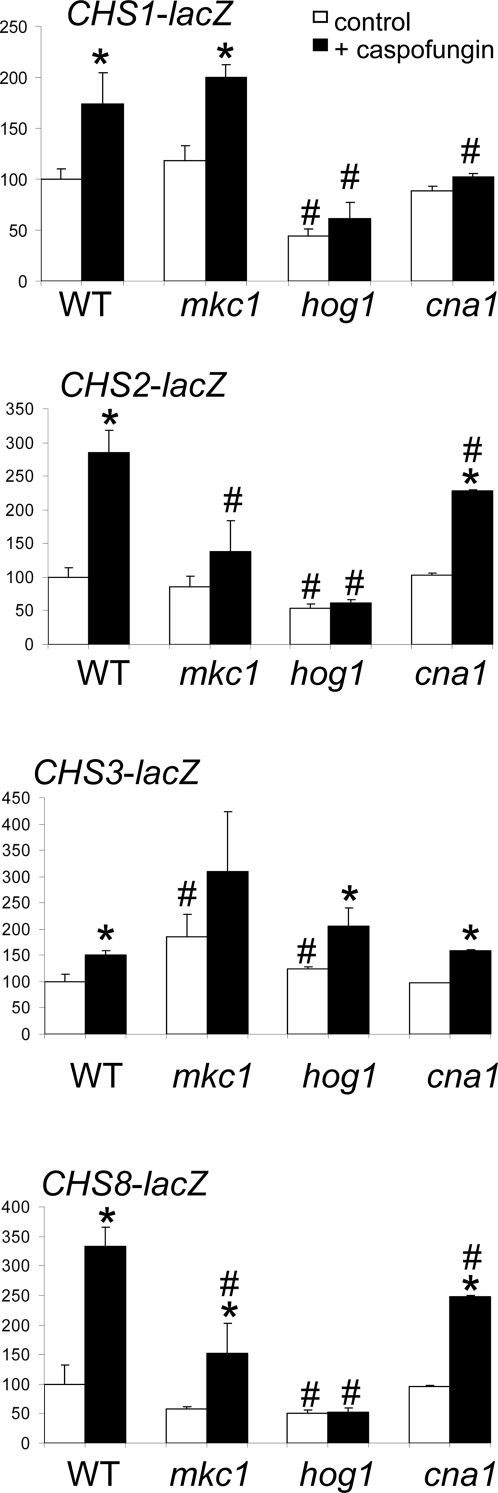
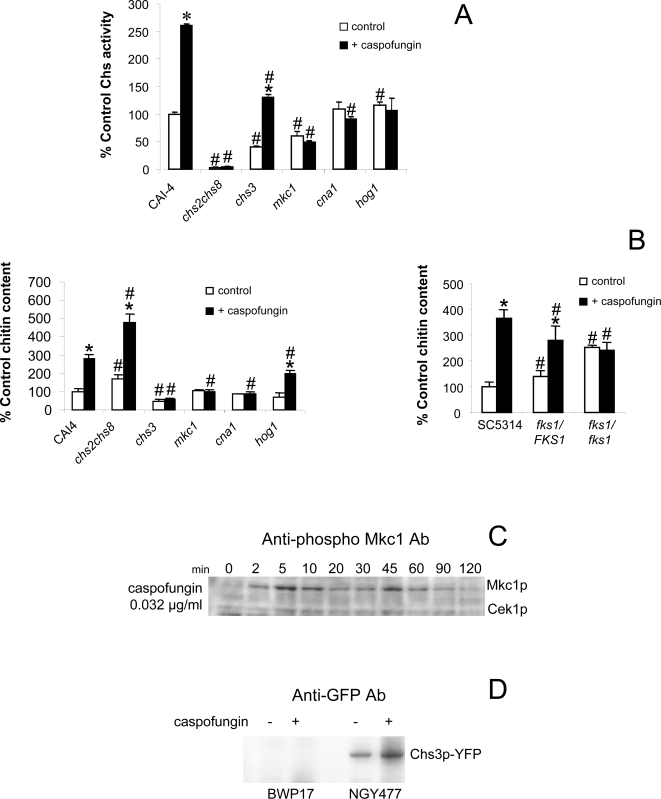
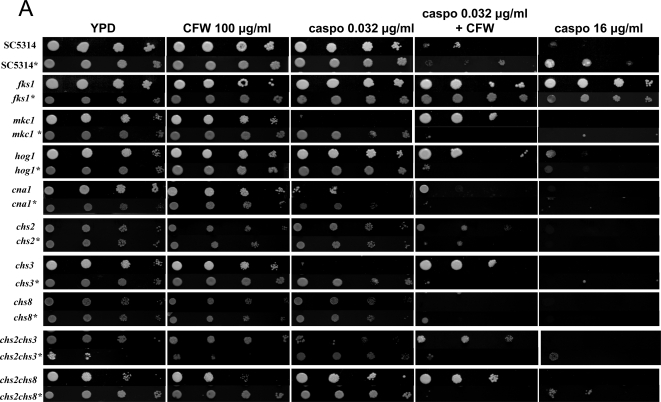
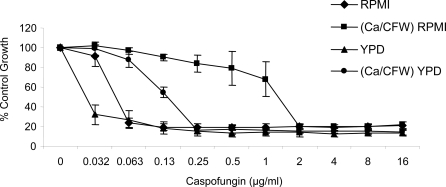
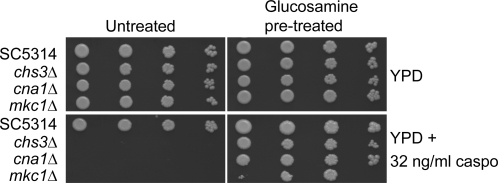
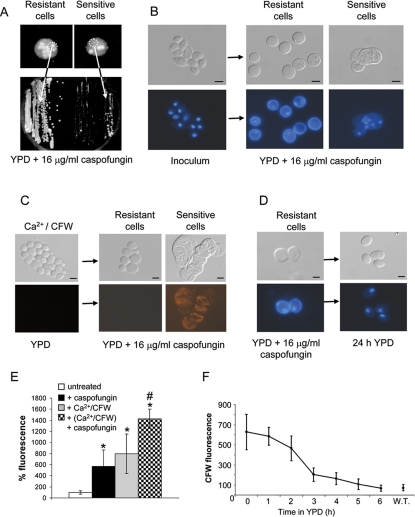
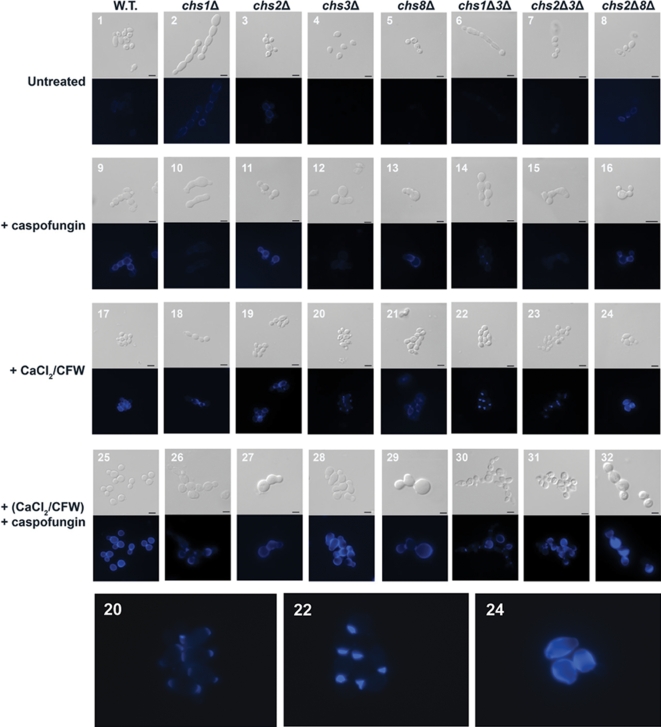
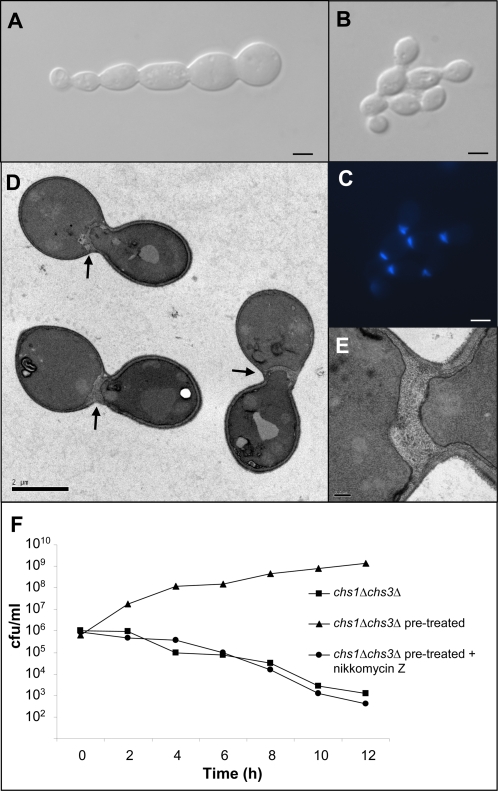
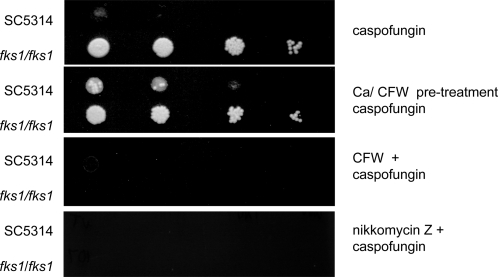
Echinocandins are a new generation of novel antifungal agent that inhibit cell wall beta(1,3)-glucan synthesis and are normally cidal for the human pathogen Candida albicans. Treatment of C. albicans with low levels of echinocandins stimulated chitin synthase (CHS) gene expression, increased Chs activity, elevated chitin content and reduced efficacy of these drugs. Elevation of chitin synthesis was mediated via the PKC, HOG, and Ca(2+)-calcineurin signalling pathways. Stimulation of Chs2p and Chs8p by activators of these pathways enabled cells to survive otherwise lethal concentrations of echinocandins, even in the absence of Chs3p and the normally essential Chs1p, which synthesize the chitinous septal ring and primary septum of the fungus. Under such conditions, a novel proximally offset septum was synthesized that restored the capacity for cell division, sustained the viability of the cell, and abrogated morphological and growth defects associated with echinocandin treatment and the chs mutations. These findings anticipate potential resistance mechanisms to echinocandins. However, echinocandins and chitin synthase inhibitors synergized strongly, highlighting the potential for combination therapies with greatly enhanced cidal activity.
Overview
The claims and statistics of this paper haven’t been checked yet.
Free: it reads the open-access text and checks the first 5 claims that cite a source we can check. Create a free account to check every claim.
Integrity signals
Registry
Cites
Statistics
Figures
Verification
Claims the paper makes
The claims and statistics of this paper haven’t been checked yet.
Free: it reads the open-access text and checks the first 5 claims that cite a source we can check. Create a free account to check every claim.
Claims other papers make about this one
Each is checked against this paper’s own text: does it say what the citing paper says it does?
The source backs part of the claim, not all of it — or backs it for a different population, condition or comparison.
In the citing paper
“Our functional analyses demonstrate that CHS3 is crucial during hyphal growth in the absence of Phr1p and support the notion that Chs3p is the major compensatory chitin synthase both in cell wall stress and HWS in fungi [21, 28, 47, 62, 63].”
From Genomic and functional analyses unveil the response to hyphal wall stress in Candida albicans cells lacking β(1,3)-glucan remodeling (2016) · cites this paper as [47]
Experimental — accuracy not yet measuredThe source backs part of the claim, not all of it — or backs it for a different population, condition or comparison.
In the citing paper
“This up-regulation of transcription correlates with an overall increase in the in vitro chitin synthase activity in membranes prepared from yeast cells treated with caspofungin or CaCl2 and CFW (Munro et al., 2007; Walker et al., 2008).”
From Cell wall protection by the Candida albicans class I chitin synthases (2015) · cites this paper as Walker et al., 2008
Experimental — accuracy not yet measuredThe source backs part of the claim, not all of it — or backs it for a different population, condition or comparison.
In the citing paper
“Transcription of the genes encoding the class I chitin synthases (CHS2 and CHS8) are the most highly up-regulated of the chitin synthase genes in C. albicans yeast cells treated with caspofungin or CaCl2 and CFW (CaCl2/CFW).”
From Cell wall protection by the Candida albicans class I chitin synthases (2015) · cites this paper as Walker et al., 2008
Experimental — accuracy not yet measuredThe source backs part of the claim, not all of it — or backs it for a different population, condition or comparison.
In the citing paper
“Moreover, CHS3 is responsible for Calcofluor white (CW)/CaCl2 induced chitin accumulation which protects C. albicans from the lethal effect of echinocandin [47].”
From Genomic and functional analyses unveil the response to hyphal wall stress in Candida albicans cells lacking β(1,3)-glucan remodeling (2016) · cites this paper as [47]
Experimental — accuracy not yet measuredThe source backs part of the claim, not all of it — or backs it for a different population, condition or comparison.
In the citing paper
“Our functional analyses demonstrate that CHS3 is crucial during hyphal growth in the absence of Phr1p and support the notion that Chs3p is the major compensatory chitin synthase both in cell wall stress and HWS in fungi [21, 28, 47, 62, 63].”
From Genomic and functional analyses unveil the response to hyphal wall stress in Candida albicans cells lacking β(1,3)-glucan remodeling (2016) · cites this paper as [47]
Experimental — accuracy not yet measured
6 more claims about this paper
Create a free account to see every claim other papers make about this one.
Self-check
Percentages, sums and reported differences re-computed from the paper’s own numbers.
The self-check needs the paper’s full text.
Citations
Cites
National Committee for Clinical Laboratory Standards
Bruck, E. (1980) · Pediatrics · doi:10.1542/peds.65.1.187 · Cited by 14,751
Isogenic strain construction and gene mapping in Candida albicans.
Fonzi, W. A., & Irwin, M. Y. (1993) · Genetics · doi:10.1093/genetics/134.3.717 · Cited by 1,687
Cell Wall Integrity Signaling in Saccharomyces cerevisiae
Levin, D. E. (2005) · Microbiology and Molecular Biology Reviews · doi:10.1128/mmbr.69.2.262-291.2005 · Cited by 1,136 · cited 1×
“Damage to the cell wall involves cell wall protein sensors which transmit signals that lead to activation of the ScRho1p GTPase, which activates b(1,3)-glucan synthase as well as ScPkc1p and hence the PKC cell integrity MAP kinase cascade [8].”
BackgroundDenning, D. W. (2003) · The Lancet · doi:10.1016/s0140-6736(03)14472-8 · Cited by 1,131 · cited 1×
“Caspofungin is the first echinocandin to be approved for clinical use and is fungicidal for Candida albicans, and other Candida species, and fungistatic for Aspergillus fumigatus [10,11].”
BackgroundRapid Hypothesis Testing with Candida albicans through Gene Disruption with Short Homology Regions
Wilson, R. B., Davis, D., & Mitchell, A. P. (1999) · Journal of Bacteriology · doi:10.1128/jb.181.6.1868-1874.1999 · Cited by 762 · cited 2×
“BWP17 [57], the untagged parent strain of NGY477, provided a negative control for the anti-GFP antibody [41].”
BackgroundInfluentialPark, S., Kelly, R., Kahn, J. N., Robles, J., Hsu, M.-J., Register, E., Li, W., Vyas, V., Fan, H., Abruzzo, G., et al. (2005) · Antimicrobial Agents and Chemotherapy · doi:10.1128/aac.49.8.3264-3273.2005 · Cited by 434 · cited 1×
“The homozygous fks1 point mutant, strain NR3, which was greatly reduced in sensitivity to caspofungin [9,14] was included as a control.”
BackgroundDifferential Expression and Function of Two Homologous Subunits of Yeast 1,3-β-D-Glucan Synthase
Mazur, P., Morin, N., Baginsky, W., el-Sherbeini, M., Clemas, J. A., Nielsen, J. B., & Foor, F. (1995) · Molecular and Cellular Biology · doi:10.1128/mcb.15.10.5671 · Cited by 424
Sanglard, D., Ischer, F., Marchetti, O., Entenza, J., & Bille, J. (2003) · Molecular Microbiology · doi:10.1046/j.1365-2958.2003.03495.x · Cited by 350 · cited 1×
“albicans calcineurin mutants are hypersensitive to caspofungin, suggesting that the calcineurin pathway is involved in the response to cell wall damage caused by caspofungin [32].”
BackgroundDouglas, C. M., D'Ippolito, J. A., Shei, G. J., Meinz, M., Onishi, J., Marrinan, J. A., Li, W., Abruzzo, G. K., Flattery, A., Bartizal, K., et al. (1997) · Antimicrobial Agents and Chemotherapy · doi:10.1128/aac.41.11.2471 · Cited by 344 · cited 1×
“Rescue of such cells was strictly dependent on chitin synthesis from residual class I enzymes and combinations of echinocandins and chitin synthase inhibitors exhibited synergy in the killing of C. albicans.”
BackgroundAlonso-Monge, R., Navarro-García, F., Molero, G., Diez-Orejas, R., Gustin, M., Pla, J., Sánchez, M., & Nombela, C. (1999) · Journal of Bacteriology · doi:10.1128/jb.181.10.3058-3068.1999 · Cited by 344
Cited by
Items 401–444 of 444
Chiaratto, J. (2019) · Digital Library of Theses and Dissertations (Universidade de São Paulo) · doi:10.11606/d.17.2019.tde-26072019-170555
Candida species: the silent enemy
Al-laaeiby, A. I. E., Ali, S. M., & Al-Saadoon, A. H. (2019) · African Journal of Clinical and Experimental Microbiology · doi:10.4314/ajcem.v20i4.1 · Cited by 3
Manfiolli, A. O., dos Reis, T. F., de Assis, L. J., de Castro, P. A., Silva, L. P., Hori, J. I., Walker, L. A., Munro, C. A., Rajendran, R., Ramage, G., et al. (2020) · The Cell Surface · doi:10.1016/j.tcsw.2020.100035
Self-citationSchwarz, A. (2010) · eDiss (Georg-August-Universität Göttingen) · doi:10.53846/goediss-849
Germination of a Field: Women in Candida albicans Research
Anderson, F. M., Polvi, E. J., Veri, A. O., & O’Meara, T. R. (2021) · Current Clinical Microbiology Reports · doi:10.1007/s40588-021-00169-5
Spórafelszíni fehérjéket kódoló gének jellemzése Mucor circinelloides-ben
Szebenyi, C. (2021) · SZTE Repository of Dissertations (University of Szeged) · doi:10.14232/phd.10708
Hube, B., & Wilson, D. (2013) · Faculty Opinions – Post-Publication Peer Review of the Biomedical Literature · doi:10.3410/f.718174276.793486789
The MAP Kinase Network As the Nervous System of Fungi
Correia, I., Prieto, D., Alonso‐Monge, R., Plá, J., & Román, E. (2017) · Elsevier eBooks · doi:10.1016/b978-0-12-819990-9.12094-3 · Cited by 1
(2008) · Yeast · doi:10.1002/yea.1559
Perlin, D. S. (2017) · Springer eBooks · doi:10.1007/978-3-319-46718-4_29
Physiology and metabolism of fungal pathogens
Gow, N. A. R., & Brown, A. J. P. (2017) · Oxford University Press eBooks · doi:10.1093/med/9780198755388.003.0003
Self-citationSamanta, I., & Bandyopadhyay, S. (2019) · Elsevier eBooks · doi:10.1016/b978-0-12-815770-1.00026-2
Trentin, G. (2022) · Digital Library of Theses and Dissertations (Universidade de São Paulo) · doi:10.11606/d.17.2022.tde-20062022-161952
Bending stiffness of Candida albicans hyphae reflects adaptive behavior of the fungal cell wallPreprint
Couttenier, E., Bachellier‐Bassi, S., d’Enfert, C., & Villard, C. (2022) · bioRxiv (Cold Spring Harbor Laboratory) · doi:10.1101/2022.03.22.485357
“branching) and to prevent any adaptation mechanisms through the activation of cell wall compensatory pathways [54].”
BackgroundCandida: Biofilm formation and antifungal resistance
Sharma, S., Singh, S. M., Mane, G., Pote, S. T., Patole, M. S., & Sharma, R. K. (2023) · Elsevier eBooks · doi:10.1016/b978-0-323-99977-9.00024-7
Kaushik, M., Sharma, A., Gupta, S., & Gulati, P. (2023) · BENTHAM SCIENCE PUBLISHERS eBooks · doi:10.2174/9789815080056123020008
Shi, M., Mi, X., Huang, L., Qiu, L., Yang, L., Sun, X. H., Hong, C., Yang, Y., Wang, X., & Liu, G. (2023) · Analytical Chemistry · doi:10.1021/acs.analchem.3c01016
Wright, G. D., Chen, X., Koteva, K. K., Chou, S., Guitor, A. K., Pallant, D., Lee, Y., Sychantha, D., French, S., Hackenberger, D., et al. (2025) · Research Square · doi:10.21203/rs.3.rs-5802877/v1
Sah, S. K., Yadav, A., Stahl, T. J., Hayes, J. J., Bulger, M., & Rustchenko, E. P. (2025) · Journal of Fungi · doi:10.3390/jof11020110
Antifungal exposure can enhance Candida glabrata pathogenesisPreprint
Ribeiro, G. F., Danecka, W., Tomlinson, L., Wallace, E. W. J., & Childers, D. S. (2025) · bioRxiv (Cold Spring Harbor Laboratory) · doi:10.1101/2025.07.31.667834 · Cited by 1
“Previous studies demonstrated that antifungal treatment leads to differential cell wall gene expression and significant changes in the cell wall that can have paradoxical effects on survival in C. albicans mammalian infections (Hopke et al., 2018; Lee et al., 2012; Walker et al., 2008).”
Zhang, Y., Luo, Y., Liu, X., Li, J., Xia, Y., & Cao, Y. (2025) · Mycology: An International Journal on Fungal Biology · doi:10.1080/21501203.2025.2599679
“This response, mediated by the Cell Wall Integrity (CWI) pathway, typically involves upregulating chitin biosynthesis to reinforce cell wall strength when glucan deposition is impaired (Walker et al. 2008; Arroyo et al. 2016).”
Alam, K. (2014) · University Library - University of Saskatchewan (University of Saskatchewan)
Gaurav, A., Hameed, S., Al-Jameel, S. S., Rehman, S., Hammami, I., Mnif, W., Alghamdi, Z. S., & Fatima, Z. (2026) · Pharmaceuticals · doi:10.3390/ph19020233 · Cited by 1
“In this study, NEO treatment resulted in pronounced alteration in cell wall polysaccharide exposure, suggesting interference with normal cell wall components and organization [33].”
Dantuslia, S. K., Prajapati, B., & Prabha, C. R. (2026) · Cell Biochemistry and Biophysics · doi:10.1007/s12013-026-02041-z
Loiselet, A. (2019) · theses.fr (ABES) · doi:10.70675/8960b3ecz4598z4c60za01cz9399c6404ab8
Biophysique de la croissance filamenteuse fongique et mécanique de perforation dans des élastomères
Kukhaleishvili, N. (2020) · theses.fr (ABES) · doi:10.70675/d078d26fz536cz4f1dzabddz2e947c8f556e · Cited by 2
Fonctions et biosynthèse des β-1,6-glucanes de la paroi cellulaire chez Candida albicans
Bekirian, C. (2024) · theses.fr (ABES) · doi:10.70675/b1028289z0c26z4acaz8f96z18e5c0c94464
Geng, Y., Yan, F., Zhang, Y., Yang, M., Li, C., Shi, R., Xu, C., Zang, R., Guo, Q., Guo, Y., et al. (2026) · World Journal of Microbiology and Biotechnology · doi:10.1007/s11274-026-04917-x
“Such 'paradoxical resistance' is often observed in fungi where cell wall defects induce adaptive changes, such as hyper-accumulation of chitin or alterations in β-glucan cross-link - ing, which can reduce the efficacy of specific dyes or drugs (Levin 2011 ; Walker et al. 2008; Cortés et al. 2019 ).”
Efficient labeling of pathogenic fungal chitin with bioorthogonal probes
Williams, C. T., Stathoulopoulos, K. C., Blanda, C., Carnahan, B. R., & Grimes, C. L. (2026) · Methods in enzymology on CD-ROM/Methods in enzymology · doi:10.1016/bs.mie.2026.05.026
Micafungin exposure drives multidrug resistance in Clavispora lusitaniaePreprint
Wash, E., Scott, N. E., Metzner, K., Zhou, X., Dasilva, D., de Sá, N. P., Usmani, S. A., Sa, N. F. V. D., Poeta, M. D., & Selmecki, A. M. (2026) · bioRxiv (Cold Spring Harbor Laboratory) · doi:10.64898/2026.06.29.735437
“FKS1 mutations can decrease drug binding or alter the enzyme’s catalytic capacity, leading to a decrease in 1,3-β-D-glucan abundance in the cell wall (30, 31), frequently with a compensatory increase of chitin synthase activity to support the compromised cell wall (38–40).”
Cascading damage to Candida albicans cells through thioredoxin reductase loss
Qi, W., Roy, U., Cai, C., Acosta‐Zaldívar, M., Mascio, J., Asara, J. M., Fierro, J. F., Andrés, M. T. A., Sun, L., & Köhler, J. R. (2026) · Proceedings of the National Academy of Sciences · doi:10.1073/pnas.2615451123 · Cited by 1
“Beta-1,3-glucan synthesis inhibition is known to induce compensatory increased chitin biosynthesis (59, 60).”
Voronov, I., Shbeta, M., & Fridman, M. (2026) · ACS Infectious Diseases · doi:10.1021/acsinfecdis.6c00671
dos Santos, M. M., Barroso, V. D. M., Prampero, S., Furlaneto, M. C., Nishiyama, M. Y., & Ishida, K. (2026) · Microbiology Spectrum · doi:10.1128/spectrum.00519-26 · Cited by 1
“It is also known that the response to cellular damage and chitin synthesis comprises the Protein kinase C, HOG, and calcium-calcineurin signaling pathways (66, 67).”
Endoplasmic reticulum stress reduces caspofungin resistance in Cryptococcus neoformans
Qu, X., Hu, G., Lee, C. W. J., Horianopoulos, L. C., & Kronstad, J. W. (2026) · mSphere · doi:10.1128/msphere.00451-26
Taş, E., Çetin, B., Yılmazer, A. N., & Işık, T. (2026) · Molecular Biology Reports · doi:10.1007/s11033-026-12737-3
“Increased chitin production can partially compensate for inhibition of β-1,3-glucan synthesis and improve survival during echi - nocandin exposure [77].”
Ghodrati, M., Sharifzadeh, A., Fasaei, B. N., Malakootikhah, J., Mirabi, S., & Koli, A. M. (2026) · BioNanoScience · doi:10.1007/s12668-026-02877-y
Parra‐Giraldo, C. M., Estrada‐Valbuena, J. J., Vargas‐Casanova, Y., Aldea, I., Clemente, L. F., Gil, C., Martínez‐López, R., & Monteoliva, L. (2026) · bioRxiv (Cold Spring Harbor Laboratory) · doi:10.64898/2026.09.19.752827
“Antifungal-induced cell wall remodeling has been shown to alter the exposure of immunogenic components such as -glucan, thereby modulating recognition by macrophage receptors such as Dectin-1 (Wheeler and Fink, 2006; Walker et al., 2008; Gow et al., 2012).”
Hao, M., You, R., Jiang, Z., Liu, L., Huang, L., Möck, T., 申乃坤, & Liang, J. (2026) · Research · doi:10.34133/research.1452
“Conversely, when silicon becomes limiting, diatoms compensate by up-regulating chitin synthesis to maintain cell wall integrity, which is a compensatory strategy analogous to cell wall remodeling observed in fungi [ 25 , 64 , 68 ].”
Kamasah, J. S., Akin, B. E., Baker, L. J., Taba, A., Mahjouri‐Samani, M., & Hasim, S. (2026) · Microbiology Spectrum · doi:10.1128/spectrum.00184-26
“…with this interpretation, prior studies by Walker and colleagues and Lee and colleagues show that alterations in chitin content and organization can disrupt cell wall architecture and expose β(1,3)-glucan that is normally concealed beneath the outer mannan layer in untreated cells (38, 39).”
Abbas, M., Fattouh, N., Chedraoui, C., Hachem, S. E., Sourenian, T., Bitar, I., & Khalaf, R. A. (2026) · PLoS ONE · doi:10.1371/journal.pone.0360234
“Its increased production has been previously shown to play a key role in caspofungin resistance [18,33].”
Influential
Metadata
- Authors
- Walker, L. A., Munro, C. A., de Bruijn, I., Lenardon, M. D., McKinnon, A., & Gow, N. A. R.
- Affiliations
- University of Aberdeen (GB)
- Corresponding author
- Gow, Neil A. R.
- Venue
- PLoS Pathogens
- Publisher
- Public Library of Science (PLoS)
- Published
- 2008-04-04
- Volume
- 4
- Issue
- 4
- Pages
- e1000040
- ISSN
- 1553-7366 (ISSN-L)
- 1553-7374
- PMC
- PMC2271054
- OpenAlex
- W2038204439
- Cited by
- 445
- References
- 61
- Citations by year
- 2026: 21 · 2025: 21 · 2024: 16 · 2023: 17 · 2022: 25 · 2021: 24 · 2020: 33 · 2019: 41 · 2018: 20 · 2017: 37 · 2016: 25 · 2015: 21 · 2014: 24 · 2013: 26 · 2012: 23
- FWCI
- 15.21
- Type
- journal article
- Language
- en
- Open access
- gold
- doi.org
- Locations
- PLoS Pathogens (publishedVersion, cc-by)
- PubMed Central (publishedVersion, cc-by)
- PubMed (publishedVersion)
- Aberdeen University Research Archive (Aberdeen University) (submittedVersion)
- DOAJ (DOAJ: Directory of Open Access Journals) (submittedVersion, cc-by-sa)
- Figshare (submittedVersion, cc-by)
- Funders
- Pfizer
- Wellcome Trust (080088)
- Medical Research Council
- Biotechnology and Biological Sciences Research Council (BB/C510191/1)
- Topics
- Health Sciences › Medicine › Infectious Diseases › Antifungal resistance and susceptibility
- Life Sciences › Biochemistry, Genetics and Molecular Biology › Molecular Biology › Fungal and yeast genetics research
- Health Sciences › Medicine › Infectious Diseases › Fungal Infections and Studies
- Keywords
- Candida albicans, echinocandins, chitin synthesis, chitin synthase, HOG pathway, drug resistance, septum formation, cell division, antifungal synergy, combination therapy
- MeSH terms
- Antifungal Agents, Benzenesulfonates, Calcium Chloride, Candida albicans, Chitin, Chitin Synthase, Dose-Response Relationship, Drug, Drug Antagonism, Drug Therapy, Combination, Enzyme Inhibitors, Gene Expression Regulation, Enzyme Activators, Echinocandins
About these checks
Registry, retraction, Cites and statistics results are computed, not judged, with one exception: a printed reference that no index lists is read once by a model before it counts as a citation error. Claims are extracted by a model and kept only when their quote appears verbatim in the text; each cited source is then checked, with a model’s help, for whether it says what the claim relies on. Those verdicts can be wrong — read the claim’s quote and the cited source before relying on one.
Statistics and arithmetic are recomputed, not judged.
Confidence bands are shown only for fields calibrated on our annotated test set. None is calibrated yet, so no band is shown.
What counts as a claim ›How we measure confidence ›How we check this ›
Are you an author, or do you see a problem with this page? Request a review
Data sources
Bibliographic data: Semantic Scholar, OpenAlex, Crossref.
Contains information from the Semantic Scholar Academic Graph Datasets, made available under the ODC Attribution License (ODC-BY 1.0).
Semantic Scholar’s data is described in: Kinney, R., et al. (2023). The Semantic Scholar Open Data Platform. arXiv:2301.10140.
