

Stimulation of Chitin Synthesis Rescues Candida albicans from Echinocandins
Open accessThe DOI matches its Crossref record; 61 of the 61 references it cites were found in a registry or an index.
Abstract
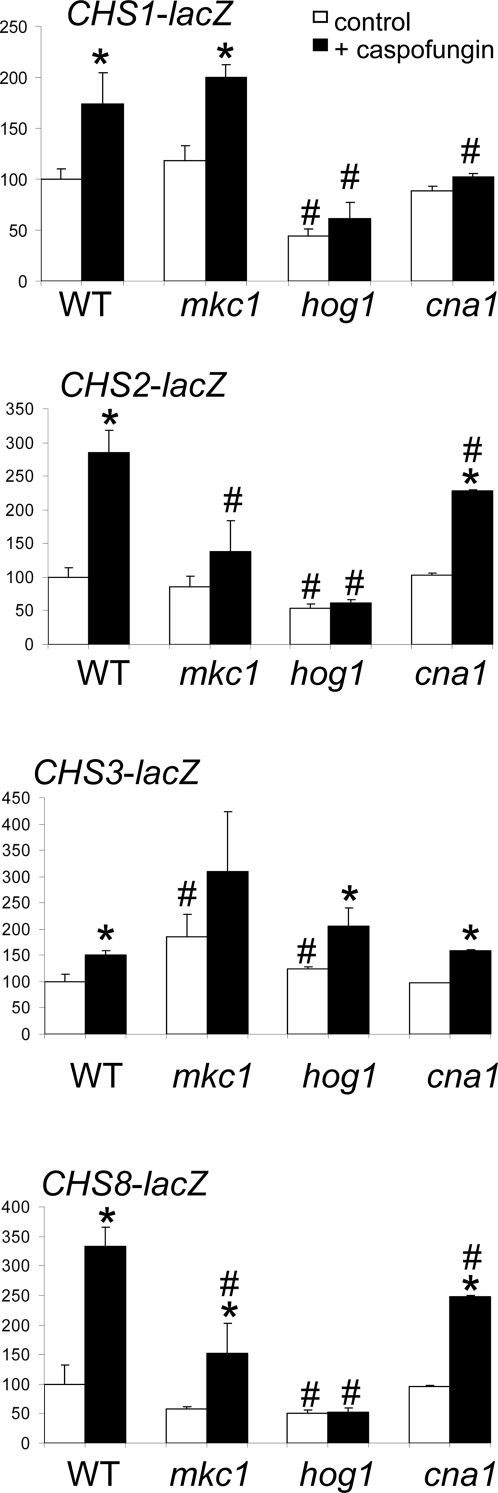
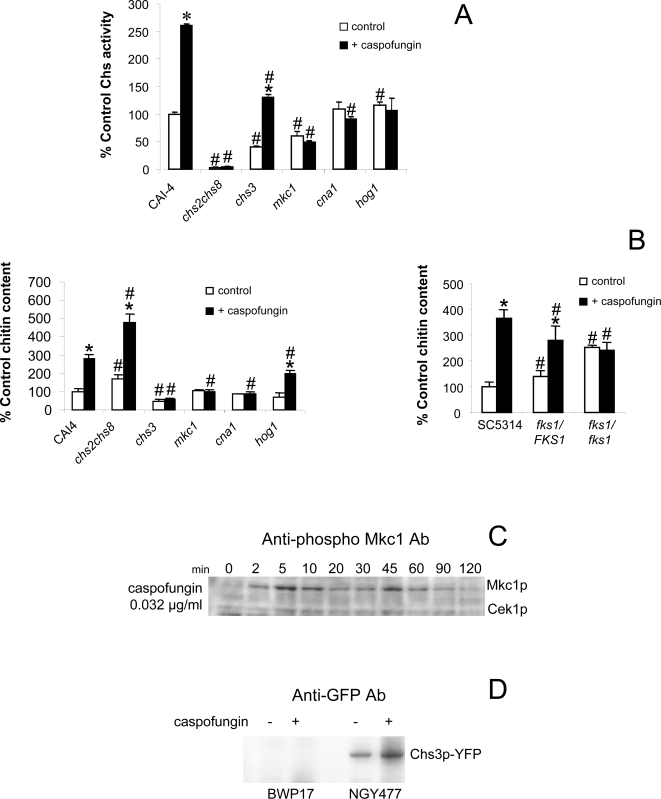
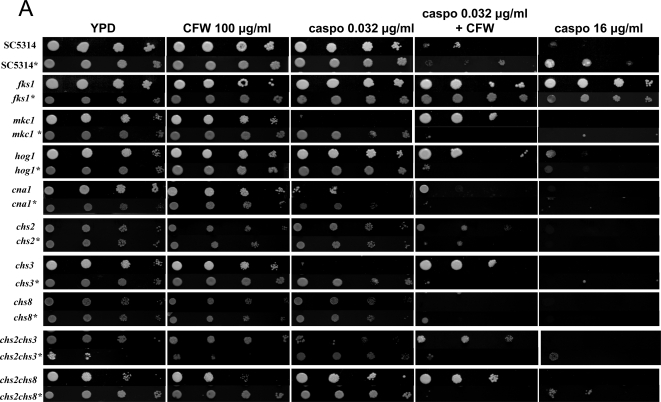
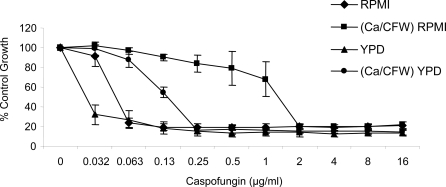
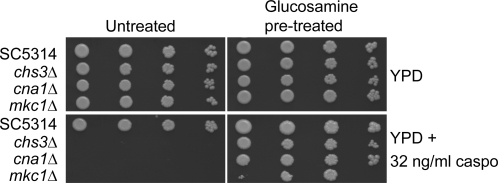
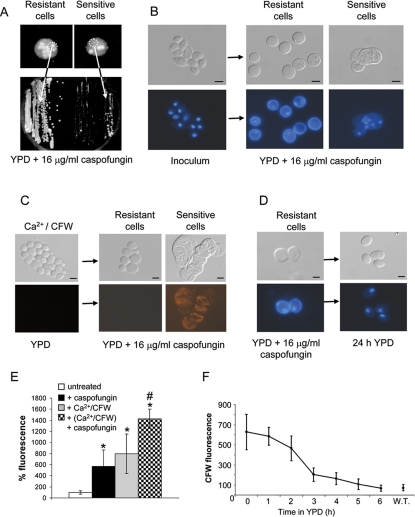
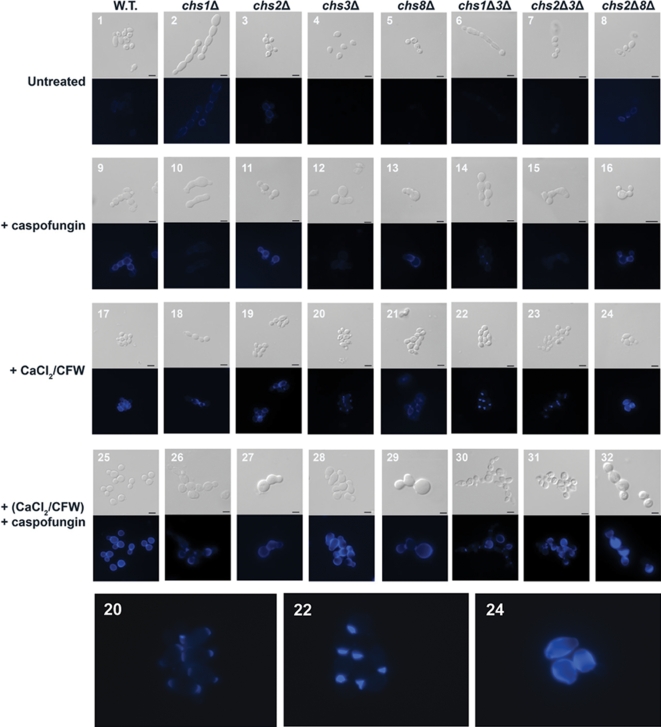
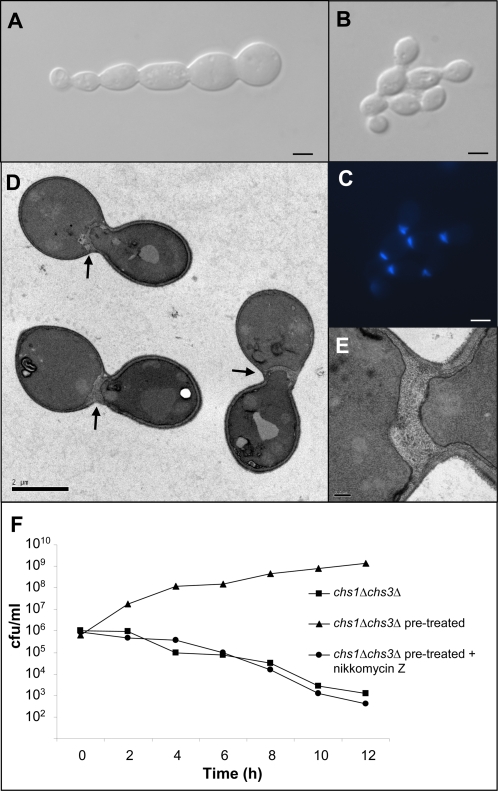
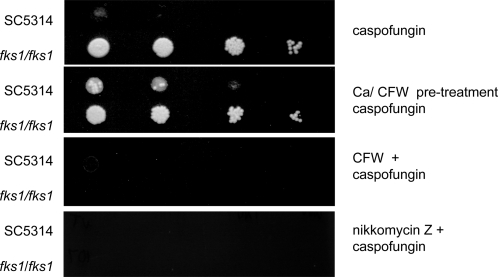
Echinocandins are a new generation of novel antifungal agent that inhibit cell wall beta(1,3)-glucan synthesis and are normally cidal for the human pathogen Candida albicans. Treatment of C. albicans with low levels of echinocandins stimulated chitin synthase (CHS) gene expression, increased Chs activity, elevated chitin content and reduced efficacy of these drugs. Elevation of chitin synthesis was mediated via the PKC, HOG, and Ca(2+)-calcineurin signalling pathways. Stimulation of Chs2p and Chs8p by activators of these pathways enabled cells to survive otherwise lethal concentrations of echinocandins, even in the absence of Chs3p and the normally essential Chs1p, which synthesize the chitinous septal ring and primary septum of the fungus. Under such conditions, a novel proximally offset septum was synthesized that restored the capacity for cell division, sustained the viability of the cell, and abrogated morphological and growth defects associated with echinocandin treatment and the chs mutations. These findings anticipate potential resistance mechanisms to echinocandins. However, echinocandins and chitin synthase inhibitors synergized strongly, highlighting the potential for combination therapies with greatly enhanced cidal activity.
Overview
The claims and statistics of this paper haven’t been checked yet.
Free: it reads the open-access text and checks the first 5 claims that cite a source we can check. Create a free account to check every claim.
Integrity signals
Registry
Cites
Statistics
Figures
Verification
Claims the paper makes
The claims and statistics of this paper haven’t been checked yet.
Free: it reads the open-access text and checks the first 5 claims that cite a source we can check. Create a free account to check every claim.
Claims other papers make about this one
Each is checked against this paper’s own text: does it say what the citing paper says it does?
The source backs part of the claim, not all of it — or backs it for a different population, condition or comparison.
In the citing paper
“Our functional analyses demonstrate that CHS3 is crucial during hyphal growth in the absence of Phr1p and support the notion that Chs3p is the major compensatory chitin synthase both in cell wall stress and HWS in fungi [21, 28, 47, 62, 63].”
From Genomic and functional analyses unveil the response to hyphal wall stress in Candida albicans cells lacking β(1,3)-glucan remodeling (2016) · cites this paper as [47]
Experimental — accuracy not yet measuredThe source backs part of the claim, not all of it — or backs it for a different population, condition or comparison.
In the citing paper
“This up-regulation of transcription correlates with an overall increase in the in vitro chitin synthase activity in membranes prepared from yeast cells treated with caspofungin or CaCl2 and CFW (Munro et al., 2007; Walker et al., 2008).”
From Cell wall protection by the Candida albicans class I chitin synthases (2015) · cites this paper as Walker et al., 2008
Experimental — accuracy not yet measuredThe source backs part of the claim, not all of it — or backs it for a different population, condition or comparison.
In the citing paper
“Transcription of the genes encoding the class I chitin synthases (CHS2 and CHS8) are the most highly up-regulated of the chitin synthase genes in C. albicans yeast cells treated with caspofungin or CaCl2 and CFW (CaCl2/CFW).”
From Cell wall protection by the Candida albicans class I chitin synthases (2015) · cites this paper as Walker et al., 2008
Experimental — accuracy not yet measuredThe source backs part of the claim, not all of it — or backs it for a different population, condition or comparison.
In the citing paper
“Moreover, CHS3 is responsible for Calcofluor white (CW)/CaCl2 induced chitin accumulation which protects C. albicans from the lethal effect of echinocandin [47].”
From Genomic and functional analyses unveil the response to hyphal wall stress in Candida albicans cells lacking β(1,3)-glucan remodeling (2016) · cites this paper as [47]
Experimental — accuracy not yet measuredThe source backs part of the claim, not all of it — or backs it for a different population, condition or comparison.
In the citing paper
“Our functional analyses demonstrate that CHS3 is crucial during hyphal growth in the absence of Phr1p and support the notion that Chs3p is the major compensatory chitin synthase both in cell wall stress and HWS in fungi [21, 28, 47, 62, 63].”
From Genomic and functional analyses unveil the response to hyphal wall stress in Candida albicans cells lacking β(1,3)-glucan remodeling (2016) · cites this paper as [47]
Experimental — accuracy not yet measured
6 more claims about this paper
Create a free account to see every claim other papers make about this one.
Self-check
Percentages, sums and reported differences re-computed from the paper’s own numbers.
The self-check needs the paper’s full text.
Citations
Cites
National Committee for Clinical Laboratory Standards
Bruck, E. (1980) · Pediatrics · doi:10.1542/peds.65.1.187 · Cited by 14,751
Isogenic strain construction and gene mapping in Candida albicans.
Fonzi, W. A., & Irwin, M. Y. (1993) · Genetics · doi:10.1093/genetics/134.3.717 · Cited by 1,687
Cell Wall Integrity Signaling in Saccharomyces cerevisiae
Levin, D. E. (2005) · Microbiology and Molecular Biology Reviews · doi:10.1128/mmbr.69.2.262-291.2005 · Cited by 1,136 · cited 1×
“Damage to the cell wall involves cell wall protein sensors which transmit signals that lead to activation of the ScRho1p GTPase, which activates b(1,3)-glucan synthase as well as ScPkc1p and hence the PKC cell integrity MAP kinase cascade [8].”
BackgroundDenning, D. W. (2003) · The Lancet · doi:10.1016/s0140-6736(03)14472-8 · Cited by 1,131 · cited 1×
“Caspofungin is the first echinocandin to be approved for clinical use and is fungicidal for Candida albicans, and other Candida species, and fungistatic for Aspergillus fumigatus [10,11].”
BackgroundRapid Hypothesis Testing with Candida albicans through Gene Disruption with Short Homology Regions
Wilson, R. B., Davis, D., & Mitchell, A. P. (1999) · Journal of Bacteriology · doi:10.1128/jb.181.6.1868-1874.1999 · Cited by 762 · cited 2×
“BWP17 [57], the untagged parent strain of NGY477, provided a negative control for the anti-GFP antibody [41].”
BackgroundInfluentialPark, S., Kelly, R., Kahn, J. N., Robles, J., Hsu, M.-J., Register, E., Li, W., Vyas, V., Fan, H., Abruzzo, G., et al. (2005) · Antimicrobial Agents and Chemotherapy · doi:10.1128/aac.49.8.3264-3273.2005 · Cited by 434 · cited 1×
“The homozygous fks1 point mutant, strain NR3, which was greatly reduced in sensitivity to caspofungin [9,14] was included as a control.”
BackgroundDifferential Expression and Function of Two Homologous Subunits of Yeast 1,3-β-D-Glucan Synthase
Mazur, P., Morin, N., Baginsky, W., el-Sherbeini, M., Clemas, J. A., Nielsen, J. B., & Foor, F. (1995) · Molecular and Cellular Biology · doi:10.1128/mcb.15.10.5671 · Cited by 424
Sanglard, D., Ischer, F., Marchetti, O., Entenza, J., & Bille, J. (2003) · Molecular Microbiology · doi:10.1046/j.1365-2958.2003.03495.x · Cited by 350 · cited 1×
“albicans calcineurin mutants are hypersensitive to caspofungin, suggesting that the calcineurin pathway is involved in the response to cell wall damage caused by caspofungin [32].”
BackgroundDouglas, C. M., D'Ippolito, J. A., Shei, G. J., Meinz, M., Onishi, J., Marrinan, J. A., Li, W., Abruzzo, G. K., Flattery, A., Bartizal, K., et al. (1997) · Antimicrobial Agents and Chemotherapy · doi:10.1128/aac.41.11.2471 · Cited by 344 · cited 1×
“Rescue of such cells was strictly dependent on chitin synthesis from residual class I enzymes and combinations of echinocandins and chitin synthase inhibitors exhibited synergy in the killing of C. albicans.”
BackgroundAlonso-Monge, R., Navarro-García, F., Molero, G., Diez-Orejas, R., Gustin, M., Pla, J., Sánchez, M., & Nombela, C. (1999) · Journal of Bacteriology · doi:10.1128/jb.181.10.3058-3068.1999 · Cited by 344
Cited by
Items 101–200 of 444
The Effect of Chitin Size, Shape, Source and Purification Method on Immune Recognition
Alvarez, F. (2014) · Molecules · doi:10.3390/molecules19044433 · Cited by 79
“The level of chitin has been shown to increase as a compensatory response to the defects in other cell wall components such as a reduced β-1,3-glucan synthesis caused by mutations [31] or antifungal drugs [32] and mutations affecting the glycosylation of cell wall proteins [29].”
BackgroundMukaremera, L., Lee, K. K., Wagener, J., Wiesner, D. L., Gow, N. A. R., & Nielsen, K. (2018) · The Cell Surface · doi:10.1016/j.tcsw.2017.12.001 · Cited by 79
“wall β,1–3 glucan synthesis (Walker et al., 2008), and likely explains why echinocandin drugs show promising anti-cryptococcal activity in vitro (Bartizal et al.”
Self-citationNikkomycin Z—Ready to Meet the Promise?
Larwood, D. J. (2020) · Journal of Fungi · doi:10.3390/jof6040261 · Cited by 78
Ries, L. N. A., Rocha, M. C., de Castro, P. A., Silva-Rocha, R., Silva, R. N., Freitas, F. Z., de Assis, L. J., Bertolini, M. C., Malavazi, I., & Goldman, G. H. (2017) · mBio · doi:10.1128/mbio.00705-17 · Cited by 76
“albicans, the upregulation of chitin synthase-encoding genes during the CPE is dependent on calcineurin signaling (19, 29).”
Determination of Chitin Content in Insects: An Alternate Method Based on Calcofluor Staining
Henriques‐Santos, B. M., Garcia, E. S., Azambuja, P., & Genta, F. A. (2020) · Frontiers in Physiology · doi:10.3389/fphys.2020.00117 · Cited by 75
Recent Insights into the Paradoxical Effect of Echinocandins
Wagener, J., & Loiko, V. (2017) · Journal of Fungi · doi:10.3390/jof4010005 · Cited by 73
“albicans the cell wall integrity (CWI), the high osmolarity glycerol (HOG), and the calcineurin signaling pathways mutually stimulate the chitin synthases Chs2 and Chs8 to overcome echinocandin-induced stress [59].”
BackgroundBrand, A., Lee, K., Veses, V., & Gow, N. A. R. (2009) · Molecular Microbiology · doi:10.1111/j.1365-2958.2008.06592.x · Cited by 72
“, 1995), and fks1D, a glucan synthase mutant which has a 50% reduction in cell wall glucan levels and a threefold increase in chitin content (Mio et al., 1997; Walker et al., 2008) (Fig.”
BackgroundSelf-citationMiyazaki, T., Inamine, T., Yamauchi, S., Nagayoshi, Y., Saijo, T., Izumikawa, K., Seki, M., Kakeya, H., Yamamoto, Y., Yanagihara, K., et al. (2010) · FEMS Yeast Research · doi:10.1111/j.1567-1364.2010.00611.x · Cited by 70
“fumigatus (Stevens, 2000; Chiou et al., 2001; Ganesan et al., 2004; Sandovsky-Losica et al., 2008; Walker et al., 2008).”
BackgroundDetermination of chitin content in fungal cell wall: An alternative flow cytometric method
Costa‐de‐Oliveira, S., Silva, A. P., Miranda, I. M., Salvador, A., Azevedo, M. M., Munro, C. A., Rodrigues, A. G., & Pina‐Vaz, C. (2013) · Cytometry Part A · doi:10.1002/cyto.a.22250 · Cited by 67
“Flow cytometry chitin measurements were concordant with the chitin levels determined by the quantification of glucosamine released by acid hydrolysis, previously obtained by others (7,20,21).”
BackgroundMethodResultSelf-citationJoubert, A., Bataillé‐Simoneau, N., Campion, C., Guillemette, T., Hudhomme, P., Iacomı, B., Leroy, T., Pochon, S., Poupard, P., & Simoneau, P. (2010) · Cellular Microbiology · doi:10.1111/j.1462-5822.2010.01520.x · Cited by 80
“In S. cerevisiae, such homeostatic mechanisms are mediated via a signalling network that communicates information about cell surface stresses to the biosynthetic enzymes involved in cell wall synthesis and repair (Walker et al., 2008).”
BackgroundGarcía, R., Botet, J., Rodríguez-Peña, J. M., Bermejo, C., Ribas, J. C., Revuelta, J. L., Nombela, C., & Arroyo, J. (2015) · BMC Genomics · doi:10.1186/s12864-015-1879-4 · Cited by 91
“This adaptive compensatory response, which is also triggered by echinocandin-derivate antifungals, creates a new potential concept in antifungal drug treatment based on the possibility of combinatorial therapy using two drugs together, one targeting the cell wall and the other targeting the molecular mechanism of fung…”
BackgroundJiménez-Ortigosa, C., Aimanianda, V., Muszkieta, L., Mouyna, I., Alsteens, D., Pire, S., Beau, R., Krappmann, S., Beauvais, A., Dufrêne, Y. F., et al. (2012) · Antimicrobial Agents and Chemotherapy · doi:10.1128/aac.00752-12 · Cited by 67
“calcofluor white is also associated to a reduction in the sensitivity to caspofungin (53).”
BackgroundHow Does Antifungal Pharmacology Differ for Mucormycosis Versus Aspergillosis?
Lewis, R. E., Lortholary, O., Spellberg, B. J., Roilides, E., Kontoyiannis, D. P., & Walsh, T. J. (2012) · Clinical Infectious Diseases · doi:10.1093/cid/cir884 · Cited by 67
“The attenuated activity of echinocandins at higher daily doses may reflect upregulation of homeostatic cell-wall responses in the fungi that ‘‘rescue’’ the fungus from the effects of echinocandins through compensatory increases in chitin synthesis [42].”
BackgroundZhou, Y., Liao, M., Zhu, C., Hu, Y., Tong, T., Peng, X., Li, M., Feng, M., Cheng, L., Ren, B., et al. (2018) · International Journal of Oral Science · doi:10.1038/s41368-018-0013-2 · Cited by 64
Shields, R. K., Nguyen, M. H., Du, C., Press, E., Cheng, S., & Clancy, C. J. (2011) · Antimicrobial Agents and Chemotherapy · doi:10.1128/aac.00999-10 · Cited by 65
“Activation of the PKC-Mkc1 cell wall integrity signaling pathway also has been shown to contribute to paradoxical growth (17, 27, 28), at least in part by coordinately regulating chitin synthesis in conjunction with the calcineurin pathway.”
BackgroundCaspofungin Induced Cell Wall Changes of Candida Species Influences Macrophage Interactions
Walker, L. A., & Munro, C. A. (2020) · Frontiers in Cellular and Infection Microbiology · doi:10.3389/fcimb.2020.00164 · Cited by 70
“Chitin and β-1,3-glucan exposure were measured by quantifying WGATR and Fc:Dectin1-488 fluorescence, respectively, of individual yeast cells (Walker et al., 2008).”
BackgroundMethodSelf-citationExtracellular DNA release confers heterogeneity in Candida albicans biofilm formation
Rajendran, R., Sherry, L., Lappin, D. F., Nile, C. J., Smith, K., Williams, C., Munro, C. A., & Ramage, G. (2014) · BMC Microbiology · doi:10.1186/s12866-014-0303-6 · Cited by 66
“Mismanagement also has important repercussions, as it has been shown that treatment with sub-MIC levels of antifungals causes an increase in chitin content within Candida species, which relates to decreased antifungal sensitivity [39,40].”
BackgroundSelf-citationLeach, M. D., Stead, D. A., Argo, E., & Brown, A. J. P. (2011) · Molecular Biology of the Cell · doi:10.1091/mbc.e10-07-0632 · Cited by 65
“albicans to cell wall damage (Richard et al., 2002; Walker et al., 2008), in part through activation of the cell integrity (Pkc1) pathway (Munro et al.”
BackgroundRole of the Fungal Cell Wall in Pathogenesis and Antifungal Resistance
Díaz-Jiménez, D. F., Pérez-García, L. A., Martínez-Álvarez, J. A., & Mora-Montes, H. M. (2012) · Current Fungal Infection Reports · doi:10.1007/s12281-012-0109-7 · Cited by 70
Propolis extract has bioactivity on the wall and cell membrane of Candida albicans
Corrêa, J. L., Veiga, F. F., Jarros, I. C., Costa, M. I., de Castilho, P. F., de Oliveira, K. M. P., Rosseto, H. C., Bruschi, M. L., Svidzinski, T. I. E., & Negri, M. (2020) · Journal of Ethnopharmacology · doi:10.1016/j.jep.2020.112791 · Cited by 76
Ning, Y., Xiao, M., Perlin, D. S., Zhao, Y., Lu, M., Li, Y., Luo, Z., Dai, R., Li, S., Xu, J., et al. (2023) · Emerging Microbes & Infections · doi:10.1080/22221751.2022.2153086 · Cited by 63
“Previous studies have shown that Candida species can rapidly respond to echinocandin treatment with a compensatory elevation in chitin content; this response protects the yeast cells from cell wall damage that would occur due to the inhibition of β -1,3-D-glu-can synthesis [39,40].”
The GPI-modified proteins Pga59 and Pga62 of Candida albicans are required for cell wall integrity
Moreno-Ruiz, E., Ortu, G., de Groot, P. W. J., Cottier, F., Loussert, C., Prévost, M.-C., de Koster, C., Klis, F. M., Goyard, S., & d'Enfert, C. (2009) · Microbiology · doi:10.1099/mic.0.028902-0 · Cited by 63
“An increase in chitin levels is known in yeasts to compensate for alterations in the cell wall (Kapteyn et al., 2000; Popolo et al., 2001; Richard et al., 2002a; Walker et al., 2008) and to correlate with increased sensitivity to Congo red, a cell wall binding dye known to interfere with the proper assembly of cell wa…”
BackgroundLamoth, F., Juvvadi, P. R., Gehrke, C., Asfaw, Y. G., & Steinbach, W. J. (2014) · The Journal of Infectious Diseases · doi:10.1093/infdis/jit530 · Cited by 62
“Although Hsp90 seems essential in this response, other signaling proteins and pathways have been involved [13, 16, 17], and the role of the innate immune system in regulating caspofungin activity in a dose-dependent manner has also been highlighted recently [37].”
BackgroundYang, F., Kravets, A., Bethlendy, G., Welle, S., & Rustchenko, E. (2013) · Antimicrobial Agents and Chemotherapy · doi:10.1128/aac.00516-13 · Cited by 60
“We also asked whether a decrease in cell wall 1,3- -glucan is accompanied by an increase in the cell wall chitin by measuring the absorbance of glucosamine released from hydrolyzed cell walls (44).”
BackgroundSharma, D., Paul, R. A., Rudramurthy, S. M., Kashyap, N., Bhattacharya, S., Soman, R., Shankarnarayan, S. A., Chavan, D., Singh, S., Das, P., et al. (2022) · Antimicrobial Agents and Chemotherapy · doi:10.1128/aac.01652-21 · Cited by 60
Rueda, C., Puig-Asensio, M., Guinea, J., Almirante, B., Cuenca-Estrella, M., Zaragoza, O., Padilla, B., Muñoz, P., Guinea, J., Paño Pardo, J. R., et al. (2017) · Clinical Microbiology and Infection · doi:10.1016/j.cmi.2016.09.016 · Cited by 58
Synergy of the antibiotic colistin with echinocandin antifungals in Candida species
Zeidler, U., Bougnoux, M.-E., Lupan, A., Helynck, O., Doyen, A., Garcia, Z., Sertour, N., Clavaud, C., Munier-Lehmann, H., Saveanu, C., et al. (2013) · Journal of Antimicrobial Chemotherapy · doi:10.1093/jac/dks538 · Cited by 58
Genetic basis of antifungal drug resistance
Marie, C., & White, T. C. (2009) · Current Fungal Infection Reports · doi:10.1007/s12281-009-0021-y · Cited by 57
Regulation of expression, activity and localization of fungal chitin synthases
Rogg, L. E., Fortwendel, J. R., Juvvadi, P. R., & Steinbach, W. J. (2011) · Medical Mycology · doi:10.3109/13693786.2011.577104 · Cited by 67
Rocha, M. C., de Godoy, K. F., de Castro, P. A., Hori, J. I., Bom, V. L. P., Brown, N. A., da Cunha, A. F., Goldman, G. H., & Malavazi, I. (2015) · PLoS ONE · doi:10.1371/journal.pone.0135195 · Cited by 64
Survival Strategies of Yeast and Filamentous Fungi against the Antifungal Protein AFP
Ouedraogo, J., Hagen, S., Spielvogel, A., Engelhardt, S., & Meyer, V. (2011) · Journal of Biological Chemistry · doi:10.1074/jbc.m110.203588 · Cited by 65
Nanoscale analysis of caspofungin-induced cell surface remodelling in Candida albicans
El-Kirat-Chatel, S., Beaussart, A., Alsteens, D., Jackson, D. N., Lipke, P. N., & Dufrêne, Y. F. (2013) · Nanoscale · doi:10.1039/c2nr33215a · Cited by 56
Shahina, Z., El-Ganiny, A. M., Minion, J., Whiteway, M. S., Sultana, T., & Dahms, T. E. S. (2018) · Fungal Biology and Biotechnology · doi:10.1186/s40694-018-0046-5 · Cited by 60
Alanazi, H., Semlali, A., Chmielewski, W., & Rouabhia, M. (2019) · International Journal of Environmental Research and Public Health · doi:10.3390/ijerph16020294 · Cited by 67
“albicans exposed to antifungal molecules increased chitin production to overcome the impact of the drug [16,22].”
BackgroundRyder, L. S., Harris, B. D., Soanes, D. M., Kershaw, M. J., Talbot, N. J., & Thornton, C. R. (2011) · Microbiology · doi:10.1099/mic.0.051854-0 · Cited by 64
“2a, b), an echinocandin antifungal drug that inhibits b-1,3-glucan synthases (Lesage et al., 2004; Walker et al., 2008; Fuchs & Mylonakis, 2009), was not unexpected since chitin in the fungal cell wall is covalently linked via a peptide linkage to b-glucan.”
BackgroundRadhakrishnan, V. S., Dwivedi, S. P., Siddiqui, M. H., & Prasad, T. (2018) · International Journal of Nanomedicine · doi:10.2147/ijn.s125010 · Cited by 61
“electron microscopy for the study of surface morphology and cellular ultrastructure of the treated cells Alterations in the surface morphology and cellular ultrastructure of AgNp-treated cells were determined by using SEM and TEM.(9)”
Protein kinase A and fungal virulence: A sinister side to a conserved nutrient sensing pathway
Fuller, K. K., & Rhodes, J. C. (2012) · Virulence · doi:10.4161/viru.19396 · Cited by 53
“Important fungal resistance mechanisms to these drugs may include the induction of salvage pathways that promote chitin synthesis to preserve cell wall stability.(121,122) The major conserved cell wall-integrity pathway in fungi is the Protein Kinase C-MAP Kinase (MAPK) pathway, and defects in MAPK signaling lead to h…”
BackgroundEvaluation of adhesion forces of Staphylococcus aureus along the length of Candida albicanshyphae
Ovchinnikova, E. S., Krom, B. P., Busscher, H. J., & van der Mei, H. C. (2012) · BMC Microbiology · doi:10.1186/1471-2180-12-281 · Cited by 62
Polvi, E. J., Averette, A. F., Lee, S. C., Kim, T., Bahn, Y.-S., Veri, A. O., Robbins, N., Heitman, J., & Cowen, L. E. (2016) · PLOS Genetics · doi:10.1371/journal.pgen.1006350 · Cited by 52
Lee, K. K., Kubo, K., Abdelaziz, J. A., Cunningham, I., de Silva Dantas, A., Chen, X., Okada, H., Ohya, Y., & Gow, N. A. R. (2018) · The Cell Surface · doi:10.1016/j.tcsw.2018.09.001 · Cited by 52
Self-citationLoiko, V., & Wagener, J. (2017) · Antimicrobial Agents and Chemotherapy · doi:10.1128/aac.01690-16 · Cited by 51
“, nikkomycin Z, were reported to act synergistically with echinocandins (12, 20).”
BackgroundDickwella Widanage, M. C., Singh, K., Li, J., Yarava, J. R., Scott, F. J., Xu, Y., Gow, N. A. R., Mentink-Vigier, F., Wang, P., Lamoth, F., et al. (2025) · Nature Communications · doi:10.1038/s41467-025-61678-1 · Cited by 51
“…the chitin content increased, with higher intensities observed for the signature Ch4 and Ch2 peaks, re fl ecting the induction of the classical chitin upregulation compensatory mechanism that has been identi fi ed in different fungal species in response to echinocandin treatment 28,77 – 79 .”
Self-citationKlebsiella pneumoniae prevents spore germination and hyphal development of Aspergillus species
Nogueira, F., Pereira, L., Jenull, S., Kuchler, K., & Lion, T. (2019) · Scientific Reports · doi:10.1038/s41598-018-36524-8 · Cited by 59
Activation of Melanin Synthesis in Alternaria infectoria by Antifungal Drugs
Fernandes, C., Prados‐Rosales, R., Silva, B. M. A., Nakouzi, A. S., Zuzarte, M., Chatterjee, S., Stark, R. E., Casadevall, A., & Gonçalves, T. (2015) · Antimicrobial Agents and Chemotherapy · doi:10.1128/aac.02190-15 · Cited by 56
“infectoria strain IMF006 was 417 not provided with the salvage mechanism (40) that lead to an increase of the chitin cell wall 418 content in response to the inhibition of the β(1,3)-glucan synthesis by echinocandins and 419 that is responsible for the caspofungin in vitro activity attenuation at higher concentrations…”
BackgroundNew developments and directions in the clinical application of the echinocandins
Chang, C. C., Slavin, M. A., & Chen, S. C. A. (2017) · Archives of Toxicology · doi:10.1007/s00204-016-1916-3 · Cited by 56
Immune cells fold and damage fungal hyphae
Bain, J. M., Alonso, M. F., Childers, D. S., Walls, C. A., Mackenzie, K. S., Pradhan, A., Lewis, L. E., Louw, J., Avelar, G. M., Larcombe, D. E., et al. (2021) · Proceedings of the National Academy of Sciences · doi:10.1073/pnas.2020484118 · Cited by 61
“Cell wall stains such as Calcofluor White perturb cell wall PAMPs (19, 20) and, thereby, immune interactions, and therefore we avoided such stains.”
InfluentialSelf-citationImplication of Candida parapsilosis FKS1 and FKS2 Mutations in Reduced Echinocandin Susceptibility
Martí-Carrizosa, M., Sánchez-Reus, F., March, F., Cantón, E., & Coll, P. (2015) · Antimicrobial Agents and Chemotherapy · doi:10.1128/aac.04922-14 · Cited by 46
The potential impact of antifungal drug resistance mechanisms on the host immune response to Candida
Lewis, R. E., Viale, P., & Kontoyiannis, D. P. (2012) · Virulence · doi:10.4161/viru.20746 · Cited by 46
“Interestingly, compensatory increases in cell wall chitin synthesis were also found to be a good indicator if which stain display paradoxical growth at high echinocandin concentrations.(65) The investigators were able to demonstrate that chitin purified from Candida albicans cell wall blocked Dectin-1 mediated recogni…”
BackgroundInsights to plant immunity: Defense signaling to epigenetics
Panigrahi, G. K., Sahoo, A., & Satapathy, K. B. (2020) · Physiological and Molecular Plant Pathology · doi:10.1016/j.pmpp.2020.101568 · Cited by 51
Bom, V. L. P., de Castro, P. A., Winkelströter, L. K., Mariné, M., Hori, J. I., Ramalho, L. N. Z., dos Reis, T. F., Goldman, M. H. S., Brown, N. A., Rajendran, R., et al. (2015) · Eukaryotic Cell · doi:10.1128/ec.00008-15 · Cited by 53
“was as previously described (39) with the following modifications.”
MethodSelf-citationCao, C., Wang, Y., Husain, S., Soteropoulos, P., & Xue, C. (2019) · mBio · doi:10.1128/mbio.01952-19 · Cited by 53
“For instance, treatment with echinocandins, such as caspofungin, inhibits the synthesis of cell wall -1,3-glucan and leads to a compensatory increase in cell wall chitin synthesis, helping to restore cell wall integrity (16, 18).”
BackgroundHarris, M. R., & Coote, P. J. (2010) · International Journal of Antimicrobial Agents · doi:10.1016/j.ijantimicag.2009.11.021 · Cited by 48
Phosphorylation regulates polarisation of chitin synthesis in Candida albicans
Lenardon, M. D., Milne, S. A., Mora-Montes, H. M., Kaffarnik, F. A. R., Peck, S. C., Brown, A. J. P., Munro, C. A., & Gow, N. A. R. (2010) · Journal of Cell Science · doi:10.1242/jcs.060210 · Cited by 44
“3C, middle panels) (Walker et al., 2008).”
BackgroundMethodInfluentialSelf-citationCell wall protection by the Candida albicans class I chitin synthases
Preechasuth, K., Anderson, J. C., Peck, S. C., Brown, A. J. P., Gow, N. A. R., & Lenardon, M. D. (2015) · Fungal Genetics and Biology · doi:10.1016/j.fgb.2015.08.001 · Cited by 43
Self-citationCalcofluor White Combination Antifungal Treatments for Trichophyton rubrum and Candida albicans
Kingsbury, J. M., Heitman, J., & Pinnell, S. R. (2012) · PLoS ONE · doi:10.1371/journal.pone.0039405 · Cited by 48
“albicans sensitivity to echinocandin by stimulation of chitin synthesis [69].”
BackgroundCell wall stress induces alternative fungal cytokinesis and septation strategies
Walker, L. A., Lenardon, M. D., Preechasuth, K., Munro, C. A., & Gow, N. A. R. (2013) · Journal of Cell Science · doi:10.1242/jcs.118885 · Cited by 42
“…Chs8 account for .90% of in vitro chitin synthase activity (Gow et al., 1994; Munro et al., 1998; Munro et al., 2003), are normally non-essential, but are strongly upregulated in response to cell wall stress such as treatment with echinocandin antifungals (Munro et al., 2007; Walker et al., 2008).”
BackgroundMethodSelf-citationHuang, L., Zhang, J., Song, T., Yuan, L., Zhou, J., Yin, H., He, T., Gao, W., Sun, Y., Hu, X., et al. (2016) · International Immunopharmacology · doi:10.1016/j.intimp.2016.03.010 · Cited by 46
The Antifungal Occidiofungin Triggers an Apoptotic Mechanism of Cell Death in Yeast
Emrick, D., Ravichandran, A., Gosai, J., Lu, S., Gordon, D. M., & Smith, L. (2013) · Journal of Natural Products · doi:10.1021/np300678e · Cited by 47
Pianalto, K. M., Billmyre, R. B., Telzrow, C. L., & Alspaugh, J. A. (2019) · Genetics · doi:10.1534/genetics.119.302290 · Cited by 41
Potential Microbiological Effects of Higher Dosing of Echinocandins
Steinbach, W. J., Lamoth, F., & Juvvadi, P. R. (2015) · Clinical Infectious Diseases · doi:10.1093/cid/civ725 · Cited by 41
Chew, S. Y., Ho, K. L., Cheah, Y. K., Sandai, D., Brown, A. J. P., & Than, L. T. L. (2019) · International Journal of Molecular Sciences · doi:10.3390/ijms20133172 · Cited by 40
Effect of Nicotinamide Against Candida albicans
Xing, X., Liao, Z., Tan, F., Zhu, Z., Jiang, Y., & Cao, Y. (2019) · Frontiers in Microbiology · doi:10.3389/fmicb.2019.00595 · Cited by 40
Efg1 Controls Caspofungin-Induced Cell Aggregation of Candida albicans through the Adhesin Als1
Gregori, C., Glaser, W., Frohner, I. E., Reinoso-Martín, C., Rupp, S., Schüller, C., & Kuchler, K. (2011) · Eukaryotic Cell · doi:10.1128/ec.05187-11 · Cited by 39
“Pretreatment of cells with CaCl2 and Calcofluor White (CFW) elevates chitin levels but reduces the CASP sensitivity of mkc1 / as well as of wild-type (WT) cells (34, 59).”
BackgroundPericolini, E., Perito, S., Castagnoli, A., Gabrielli, E., Mencacci, A., Blasi, E., Vecchiarelli, A., & Wheeler, R. T. (2018) · PLOS ONE · doi:10.1371/journal.pone.0201436 · Cited by 40
Hsu, C.-M., Liao, Y.-L., Chang, C.-K., & Lan, C. (2021) · International Journal of Molecular Sciences · doi:10.3390/ijms221910633 · Cited by 41
“β-1,3-glucan synthesis and causes elevated chitin levels, resulting in reduced efficacy of this antifungal drug [13].”
BackgroundKim, H. Y., Baldelli, S., Märtson, A., STOCKER, S. L., Alffenaar, J. C., Cattaneo, D., & Marriott, D. J. E. (2021) · Therapeutic Drug Monitoring · doi:10.1097/ftd.0000000000000931 · Cited by 42
Badrane, H., Nguyen, M. H., Blankenship, J. R., Cheng, S., Hao, B., Mitchell, A. P., & Clancy, C. J. (2012) · Antimicrobial Agents and Chemotherapy · doi:10.1128/aac.00112-12 · Cited by 38
“albicans to -1,3-D-glucan synthase inhibition by caspofungin (54).”
BackgroundSignaling the glycoshield: Maintenance of the Candida albicans cell wall
Ernst, J. F., & Plá, J. (2011) · International Journal of Medical Microbiology · doi:10.1016/j.ijmm.2011.04.003 · Cited by 43
Alanazi, H., Semlali, A., Perraud, L., Chmielewski, W., Zakrzewski, A., & Rouabhia, M. (2014) · BioMed Research International · doi:10.1155/2014/963156 · Cited by 44
“fumigates to echinocandins was shown to lead to a compensatory increase in chitin content [45, 46].”
BackgroundHan, Q., Wang, N., Yao, G., Mu, C., Wang, Y., & Sang, J. (2019) · Molecular Microbiology · doi:10.1111/mmi.14176 · Cited by 38
“Also, an increase in chitin content can offset the loss of β-1,3-glucan caused by echinocandin treatment (Walker et al., 2008; 2010).”
BackgroundFungal resilience and host–pathogen interactions: Future perspectives and opportunities
Brown, A. J. P. (2022) · Parasite Immunology · doi:10.1111/pim.12946 · Cited by 46
Fungal cell wall biogenesis: structural complexity, regulation and inhibition
Gow, N. A. R. (2025) · Fungal Genetics and Biology · doi:10.1016/j.fgb.2025.103991 · Cited by 47
Self-citationCosta-de-Oliveira, S., Marcos Miranda, I., Silva, R. M., Pinto e Silva, A., Rocha, R., Amorim, A., Gonçalves Rodrigues, A., & Pina-Vaz, C. (2011) · Antimicrobial Agents and Chemotherapy · doi:10.1128/aac.00589-10 · Cited by 37
“The significant increase in the chitin content following in vitro echinocandin exposure has been suggested as an escape or salvage mechanism for echinocandins (7, 23, 25).”
BackgroundPellón, A., Ramirez‐Garcia, A., Buldain, I., Antoran, A., Martin–Souto, L., Rementería, A., & Hernando, F. L. (2017) · International Journal of Antimicrobial Agents · doi:10.1016/j.ijantimicag.2017.06.009 · Cited by 39
Fei, W., Wang, Z., & Tang, J. (2023) · Gut Pathogens · doi:10.1186/s13099-023-00559-8 · Cited by 44
Suchodolski, J., Derkacz, D., Muraszko, J., Panek, J. J., Jezierska, A., Łukaszewicz, M., & Krasowska, A. (2020) · Pharmaceutics · doi:10.3390/pharmaceutics12040314 · Cited by 35
“albicans upregulates chitin synthesis, reducing drug efficacy [17].”
BackgroundLee, J. A., Robbins, N., Xie, J. L., Ketela, T., & Cowen, L. E. (2016) · PLOS Genetics · doi:10.1371/journal.pgen.1006452 · Cited by 35
Manfiolli, A. O., dos Reis, T. F., de Assis, L. J., de Castro, P. A., Silva, L. P., Hori, J. I., Walker, L. A., Munro, C. A., Rajendran, R., Ramage, G., et al. (2018) · The Cell Surface · doi:10.1016/j.tcsw.2018.03.002 · Cited by 39
Self-citationImmune responses to airborne fungi and non-invasive airway diseases
Vacher, G., Niculita-Hirzel, H., & Roger, T. (2015) · Seminars in Immunopathology · doi:10.1007/s00281-014-0471-3 · Cited by 33
Liu, N., Acosta‐Zaldívar, M., Qi, W., Diray‐Arce, J., Walker, L. A., Kottom, T. J., Kelly, R. S., Yuan, M., Asara, J. M., Lasky-Su, J. A., et al. (2020) · mBio · doi:10.1128/mbio.03225-19 · Cited by 36
“cell wall stability and inhibition of growth (57).”
Self-citationFernandes, C., Anjos, J., Walker, L. A., Silva, B. M. A., Cortes, L., Mota, M., Munro, C. A., Gow, N. A. R., & Gonçalves, T. (2014) · Antimicrobial Agents and Chemotherapy · doi:10.1128/aac.02647-13 · Cited by 43
Self-citationAFM combined to ATR-FTIR reveals Candida cell wall changes under caspofungin treatment
Quilès, F., Accoceberry, I., Couzigou, C., Francius, G., Noël, T., & El‐Kirat‐Chatel, S. (2017) · Nanoscale · doi:10.1039/c7nr02170d · Cited by 36
Imtiaz, T., Lee, K. K., Munro, C. A., MacCallum, D. M., Shankland, G. S., Johnson, E. M., MACGREGOR, M. S., & Bal, A. M. (2012) · Journal of Medical Microbiology · doi:10.1099/jmm.0.045047-0 · Cited by 37
Self-citationYu, L., Xiong, D., Han, Z., Liang, Y., & Tian, C. (2019) · Fungal Genetics and Biology · doi:10.1016/j.fgb.2019.03.005 · Cited by 35
Effects of two porcine zona pellucida immunocontraceptive vaccines on ovarian activity in horses
Bechert, U. S., Bartell, J. A., Kutzler, M. A., Menino, A. R., Bildfell, R. J., Anderson, M. L., & Fraker, M. A. (2013) · Journal of Wildlife Management · doi:10.1002/jwmg.600 · Cited by 32
Martins, M. P., Silva, L. G., Rossi, A., Sanches, P. R., de Souza, L. D. R., & Martinez-Rossi, N. M. (2019) · Frontiers in Microbiology · doi:10.3389/fmicb.2019.02168 · Cited by 35
“Fungal cell walls increase their chitin content in reaction to stress conditions (Walker et al., 2008; Fortwendel et al., 2009).”
Backgroundda Silva Dantas, A., Nogueira, F., Lee, K. K., Walker, L. A., Edmondson, M., Brand, A. C., Lenardon, M. D., & Gow, N. A. R. (2021) · Journal of Cell Science · doi:10.1242/jcs.258889 · Cited by 31
“Furthermore, this increase in CHS gene expression is accompanied by increases in Chs activity, cell wall chitin content (Walker et al., 2008) and cell wall remodeling that leads to increased exposure of chitin in the outer layers of the cell wall (Mora-Montes et al., 2011).”
InfluentialSelf-citationNovel Promising Antifungal Target Proteins for Conquering Invasive Fungal Infections
Zhen, C., Lu, H., & Jiang, Y. (2022) · Frontiers in Microbiology · doi:10.3389/fmicb.2022.911322 · Cited by 36
Rogg, L. E., Fortwendel, J. R., Juvvadi, P. R., Lilley, A., & Steinbach, W. J. (2011) · Biochemical and Biophysical Research Communications · doi:10.1016/j.bbrc.2011.06.180 · Cited by 36
“albicans in the presence of lethal doses of echinocandins [11].”
Childers, D. S., Avelar, G. M., Bain, J. M., Larcombe, D. E., Pradhan, A., Budge, S., Heaney, H., & Brown, A. J. P. (2019) · Current topics in microbiology and immunology · doi:10.1007/82_2019_182 · Cited by 36
DifferentialAspergillus lentulusEchinocandin Susceptibilities Are Fksp Independent
Staab, J. F., Kahn, J. N., & Marr, K. A. (2010) · Antimicrobial Agents and Chemotherapy · doi:10.1128/aac.00774-10 · Cited by 37
“(38, 41), we investigated whether the chitin content of A.”
BackgroundMarakalala, M. J., Vautier, S., Potrykus, J., Walker, L. A., Shepardson, K. M., Hopke, A. R., Mora-Montes, H. M., Kerrigan, A. M., Netea, M. G., Murray, G. I., et al. (2013) · PLoS Pathogens · doi:10.1371/annotation/7821bda1-dde3-4e72-b688-447b6bca20ea · Cited by 33
“TEM analysis was performed as previously described [36].”
BackgroundMethodResultInfluentialSelf-citationTranscriptional and translational landscape of Candida auris in response to caspofungin
Zamith-Miranda, D., Amatuzzi, R. F., Munhoz da Rocha, I. F., Martins, S. T., Lucena, A. C. R., Vieira, A. Z., Trentin, G., Almeida, F., Rodrigues, M. L., Nakayasu, E. S., et al. (2021) · Computational and Structural Biotechnology Journal · doi:10.1016/j.csbj.2021.09.007 · Cited by 29
“described that in response to caspofungin, the cells increased the chitin content and b-1,3-glucan become more exposed on the cell surface [46,47,62].”
BackgroundJung, S., Rodriguez, N. S., Irrizary, J., Liboro, K., Bogarin, T., Macias, M., Eivers, E., Porter, E. M., Filler, S. G., & Park, H. (2017) · PLoS ONE · doi:10.1371/journal.pone.0187721 · Cited by 40
Avramovska, O., & Hickman, M. A. (2019) · G3 Genes Genomes Genetics · doi:10.1534/g3.119.400752 · Cited by 29
Shahi, G., Kumar, M., Skwarecki, A. S., Edmondson, M. B., Banerjee, A., Usher, J., Gow, N. A. R., Milewski, S., & Prasad, R. (2022) · The Cell Surface · doi:10.1016/j.tcsw.2022.100076 · Cited by 33
“The glucan level increase in Nva-FMDP treated CBS10931T cells might therefore reflect the activation of compensatory mechanism responding to lower chitin levels in this isolate (Walker et al., 2008).”
BackgroundSelf-citationGenetic diversity among Bolivian arenaviruses
Cajimat, M. N. B., Milazzo, M. L., Rollin, P. E., Nichol, S. T., Bowen, M. D., Ksiazek, T. G., & Fulhorst, C. F. (2008) · Virus Research · doi:10.1016/j.virusres.2008.10.016 · Cited by 29
The eagle-like effect of echinocandins: what’s in a name?
Vanstraelen, K., Lagrou, K., Maertens, J., Wauters, J., Willems, L., & Spriet, I. (2013) · Expert Review of Anti-infective Therapy · doi:10.1586/14787210.2013.841543 · Cited by 28
Schoen, T. J., Calise, D. G., Bok, J. W., Giese, M. A., Nwagwu, C. D., Żarnowski, R., Andes, D. R., Huttenlocher, A., & Keller, N. P. (2023) · PLoS Pathogens · doi:10.1371/journal.ppat.1011152 · Cited by 27
“Moreover, increased chitin content is associated with increased caspofungin tolerance [37,41].”
BackgroundAucklandia lappa Causes Cell Wall Damage in Candida albicans by Reducing Chitin and (1,3)-β-D-Glucan
Lee, H.-S., & Kim, Y. (2020) · Journal of Microbiology and Biotechnology · doi:10.4014/jmb.2002.02025 · Cited by 30
“to the (1,3)-β-glucan and chitin of the fungal cell wall, and the intensity of Calcofluor White fluorescence in yeast cells was found to be an accurate reflection of the relative chitin content [25].”
Background
Metadata
- Authors
- Walker, L. A., Munro, C. A., de Bruijn, I., Lenardon, M. D., McKinnon, A., & Gow, N. A. R.
- Affiliations
- University of Aberdeen (GB)
- Corresponding author
- Gow, Neil A. R.
- Venue
- PLoS Pathogens
- Publisher
- Public Library of Science (PLoS)
- Published
- 2008-04-04
- Volume
- 4
- Issue
- 4
- Pages
- e1000040
- ISSN
- 1553-7366 (ISSN-L)
- 1553-7374
- PMC
- PMC2271054
- OpenAlex
- W2038204439
- Cited by
- 445
- References
- 61
- Citations by year
- 2026: 21 · 2025: 21 · 2024: 16 · 2023: 17 · 2022: 25 · 2021: 24 · 2020: 33 · 2019: 41 · 2018: 20 · 2017: 37 · 2016: 25 · 2015: 21 · 2014: 24 · 2013: 26 · 2012: 23
- FWCI
- 15.21
- Type
- journal article
- Language
- en
- Open access
- gold
- doi.org
- Locations
- PLoS Pathogens (publishedVersion, cc-by)
- PubMed Central (publishedVersion, cc-by)
- PubMed (publishedVersion)
- Aberdeen University Research Archive (Aberdeen University) (submittedVersion)
- DOAJ (DOAJ: Directory of Open Access Journals) (submittedVersion, cc-by-sa)
- Figshare (submittedVersion, cc-by)
- Funders
- Pfizer
- Wellcome Trust (080088)
- Medical Research Council
- Biotechnology and Biological Sciences Research Council (BB/C510191/1)
- Topics
- Health Sciences › Medicine › Infectious Diseases › Antifungal resistance and susceptibility
- Life Sciences › Biochemistry, Genetics and Molecular Biology › Molecular Biology › Fungal and yeast genetics research
- Health Sciences › Medicine › Infectious Diseases › Fungal Infections and Studies
- Keywords
- Candida albicans, echinocandins, chitin synthesis, chitin synthase, HOG pathway, drug resistance, septum formation, cell division, antifungal synergy, combination therapy
- MeSH terms
- Antifungal Agents, Benzenesulfonates, Calcium Chloride, Candida albicans, Chitin, Chitin Synthase, Dose-Response Relationship, Drug, Drug Antagonism, Drug Therapy, Combination, Enzyme Inhibitors, Gene Expression Regulation, Enzyme Activators, Echinocandins
About these checks
Registry, retraction, Cites and statistics results are computed, not judged, with one exception: a printed reference that no index lists is read once by a model before it counts as a citation error. Claims are extracted by a model and kept only when their quote appears verbatim in the text; each cited source is then checked, with a model’s help, for whether it says what the claim relies on. Those verdicts can be wrong — read the claim’s quote and the cited source before relying on one.
Statistics and arithmetic are recomputed, not judged.
Confidence bands are shown only for fields calibrated on our annotated test set. None is calibrated yet, so no band is shown.
What counts as a claim ›How we measure confidence ›How we check this ›
Are you an author, or do you see a problem with this page? Request a review
Data sources
Bibliographic data: Semantic Scholar, OpenAlex, Crossref.
Contains information from the Semantic Scholar Academic Graph Datasets, made available under the ODC Attribution License (ODC-BY 1.0).
Semantic Scholar’s data is described in: Kinney, R., et al. (2023). The Semantic Scholar Open Data Platform. arXiv:2301.10140.
