

The DOI matches its Crossref record; 12 of the 12 references it cites were found in a registry or an index.
Human Papillomaviruses Activate the ATM DNA Damage Pathway for Viral Genome Amplification upon Differentiation
Overview
The claims and statistics of this paper haven’t been checked yet.
Run the check — free, no account needed. It reads the open-access text and checks the sources it cites.
Integrity signals
Registry
Cites
Statistics
Figures
Verification
Claims the paper makes
The claims and statistics of this paper haven’t been checked yet.
Run the check — free, no account needed. It reads the open-access text and checks the sources it cites.
Claims other papers make about this one
Each is checked against this paper’s own text: does it say what the citing paper says it does?
In the citing paper
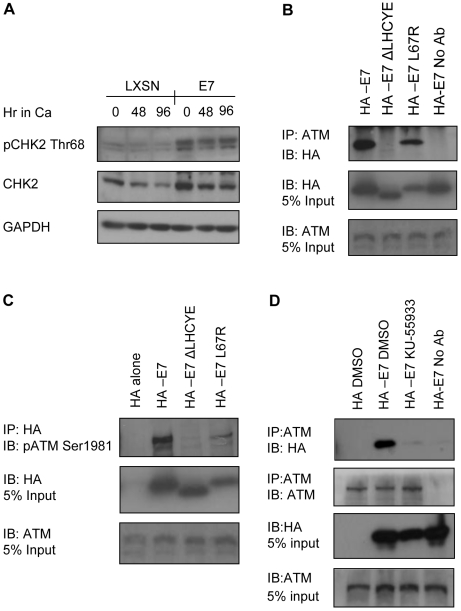
“high-risk E7 targets ATM/ATR DNA damage response pathways: HPV-31 E7 was shown to bind ATM, inducing its phosphorylation and activating Chk2 [317], while HPV-18 E7 was shown to induce increased levels of phosphorylated ATM and the downstream kinases Chk1, Chk2 and JNKs (c-jun N-terminal kinases) [318]”
From The Not-So-Good, the Bad and the Ugly: HPV E5, E6 and E7 Oncoproteins in the Orchestration of Carcinogenesis (2021) · cites this paper as [317]
Self-check
Percentages, sums and reported differences re-computed from the paper’s own numbers.
The self-check needs the paper’s full text.
Citations
Cites
DNA double-stranded breaks induce histone H2AX phosphorylation on serine 139
Rogakou, E. P., Pilch, D. R., Orr, A. H., Ivanova, V. S., & Bonner, W. M. (1998) · Journal of Biological Chemistry · doi:10.1074/jbc.273.10.5858 · Cited by 5,438
DNA damage activates ATM through intermolecular autophosphorylation and dimer dissociation
Bakkenist, C. J., & Kastan, M. B. (2003) · Nature · doi:10.1038/nature01368 · Cited by 3,466
Molecular Mechanisms of Mammalian DNA Repair and the DNA Damage Checkpoints
Sancar, A., Lindsey-Boltz, L. A., Ünsal-Kaçmaz, K., & Linn, S. (2004) · Annual Review of Biochemistry · doi:10.1146/annurev.biochem.73.011303.073723 · Cited by 3,317
ATR: an essential regulator of genome integrity
Cimprich, K. A., & Cortez, D. (2008) · Nature Reviews Molecular Cell Biology · doi:10.1038/nrm2450 · Cited by 1,798
The DNA Damage Response: Ten Years After
Harper, J. W., & Elledge, S. J. (2007) · Molecular Cell · doi:10.1016/j.molcel.2007.11.015 · Cited by 1,705
ATM Activation by DNA Double-Strand Breaks Through the Mre11-Rad50-Nbs1 Complex
Lee, J.-H., & Paull, T. T. (2005) · Science · doi:10.1126/science.1108297 · Cited by 1,424
Hickson, I., Zhao, Y., Richardson, C. J., Green, S. J., Martin, N. M. B., Orr, A. I., Reaper, P. M., Jackson, S. P., Curtin, N. J., & Smith, G. C. M. (2004) · Cancer Research · doi:10.1158/0008-5472.can-04-2727 · Cited by 1,220
The MRE11 complex: at the crossroads of DNA repair and checkpoint signalling
D'Amours, D., & Jackson, S. P. (2002) · Nature Reviews Molecular Cell Biology · doi:10.1038/nrm805 · Cited by 874
ATM-dependent phosphorylation of Mdm2 on serine 395: role in p53 activation by DNA damage
Maya, R., Balass, M., Kim, S.-T., Shkedy, D., Leal, J.-F. M., Shifman, O., Moas, M., Buschmann, T., Ronai, Z., Shiloh, Y., et al. (2001) · Genes & Development · doi:10.1101/gad.886901 · Cited by 731 · cited 1×
“ATM directly activates p53 by phosphorylation at serine 15, as well as by phosphorylating Mdm2, the ubiquitin ligase that regulates p53 stability [18,19,20].”
BackgroundActivation and regulation of ATM kinase activity in response to DNA double-strand breaks
Lee, J.-H., & Paull, T. T. (2007) · Oncogene · doi:10.1038/sj.onc.1210872 · Cited by 545
Research works printed but not linked: 50
- H zur Hausen, 2002, Papillomaviruses and cancer: from basic studies to clinical application., Nat Rev Cancer, 2, 342, 10.1038/nrc798 · DOI
- JM Walboomers, 1999, Human papillomavirus is a necessary cause of invasive cervical cancer worldwide., J Pathol, 189, 12, 10.1002/(SICI)1096-9896(199909)189:1<12::AID-PATH431>3.0.CO;2-F · DOI
- MA Bedell, 1991, Amplification of human papillomavirus genomes in vitro is dependent on epithelial differentiation., J Virol, 65, 2254, 10.1128/JVI.65.5.2254-2260.1991 · DOI
- M Hummel, 1992, Differentiation-induced and constitutive transcription of human papillomavirus type 31b in cell lines containing viral episomes., J Virol, 66, 6070, 10.1128/JVI.66.10.6070-6080.1992 · DOI
- S Cheng, 1995, Differentiation-dependent up-regulation of the human papillomavirus E7 gene reactivates cellular DNA replication in suprabasal differentiated keratinocytes., Genes Dev, 9, 2335, 10.1101/gad.9.19.2335 · DOI
- CA Moody, 2007, Human papillomaviruses activate caspases upon epithelial differentiation to induce viral genome amplification., Proc Natl Acad Sci U S A, 104, 19541, 10.1073/pnas.0707947104 · DOI
- CE Lilley, 2007, Using or abusing: viruses and the cellular DNA damage response., Trends Microbiol, 15, 119, 10.1016/j.tim.2007.01.003 · DOI
- N Shirata, 2005, Activation of ataxia telangiectasia-mutated DNA damage checkpoint signal transduction elicited by herpes simplex virus infection., J Biol Chem, 280, 30336, 10.1074/jbc.M500976200 · DOI
- CE Lilley, 2005, DNA repair proteins affect the lifecycle of herpes simplex virus 1., Proc Natl Acad Sci U S A, 102, 5844, 10.1073/pnas.0501916102 · DOI
- HA Rogoff, 2004, Apoptosis associated with deregulated E2F activity is dependent on E2F1 and Atm/Nbs1/Chk2., Mol Cell Biol, 24, 2968, 10.1128/MCB.24.7.2968-2977.2004 · DOI
- S Matsuoka, 2007, ATM and ATR substrate analysis reveals extensive protein networks responsive to DNA damage., Science, 316, 1160, 10.1126/science.1140321 · DOI · Paper page
- S Banin, 1998, Enhanced phosphorylation of p53 by ATM in response to DNA damage., Science, 281, 1674, 10.1126/science.281.5383.1674 · DOI · Paper page
- CE Canman, 1998, Activation of the ATM kinase by ionizing radiation and phosphorylation of p53., Science, 281, 1677, 10.1126/science.281.5383.1677 · DOI · Paper page
- S Matsuoka, 1998, Linkage of ATM to cell cycle regulation by the Chk2 protein kinase., Science, 282, 1893, 10.1126/science.282.5395.1893 · DOI
- JY Ahn, 2000, Threonine 68 phosphorylation by ataxia telangiectasia mutated is required for efficient activation of Chk2 in response to ionizing radiation., Cancer Res, 60, 5934
- M Gatei, 2001, Ataxia telangiectasia mutated (ATM) kinase and ATM and Rad3 related kinase mediate phosphorylation of Brca1 at distinct and overlapping sites. In vivo assessment using phospho-specific antibodies., J Biol Chem, 276, 17276, 10.1074/jbc.M011681200 · DOI
- PT Yazdi, 2002, SMC1 is a downstream effector in the ATM/NBS1 branch of the human S-phase checkpoint., Genes Dev, 16, 571, 10.1101/gad.970702 · DOI
- R Kitagawa, 2004, Phosphorylation of SMC1 is a critical downstream event in the ATM-NBS1-BRCA1 pathway., Genes Dev, 18, 1423, 10.1101/gad.1200304 · DOI
- O Fernandez-Capetillo, 2004, H2AX: the histone guardian of the genome., DNA Repair (Amst), 3, 959, 10.1016/j.dnarep.2004.03.024 · DOI
- TT Paull, 2000, A critical role for histone H2AX in recruitment of repair factors to nuclear foci after DNA damage., Curr Biol, 10, 886, 10.1016/S0960-9822(00)00610-2 · DOI · Paper page
- MN Ruesch, 1998, Activation of papillomavirus late gene transcription and genome amplification upon differentiation in semisolid medium is coincident with expression of involucrin and transglutaminase but not keratin-10., J Virol, 72, 5016, 10.1128/JVI.72.6.5016-5024.1998 · DOI
- M Gatei, 2000, ATM-dependent phosphorylation of nibrin in response to radiation exposure., Nat Genet, 25, 115, 10.1038/75508 · DOI · Paper page
- DS Lim, 2000, ATM phosphorylates p95/nbs1 in an S-phase checkpoint pathway., Nature, 404, 613, 10.1038/35007091 · DOI · Paper page
- B Xu, 2001, Involvement of Brca1 in S-phase and G(2)-phase checkpoints after ionizing irradiation., Mol Cell Biol, 21, 3445, 10.1128/MCB.21.10.3445-3450.2001 · DOI
- XQ Wang, 2006, ATR dependent activation of Chk2., J Cell Physiol, 208, 613, 10.1002/jcp.20700 · DOI
- JH Lee, 2004, Direct activation of the ATM protein kinase by the Mre11/Rad50/Nbs1 complex., Science, 304, 93, 10.1126/science.1091496 · DOI · Paper page
- J Falck, 2005, Conserved modes of recruitment of ATM, ATR and DNA-PKcs to sites of DNA damage., Nature, 434, 605, 10.1038/nature03442 · DOI
- CT Carson, 2003, The Mre11 complex is required for ATM activation and the G2/M checkpoint., Embo J, 22, 6610, 10.1093/emboj/cdg630 · DOI · Paper page
- E Fuchs, 1990, Epidermal differentiation: the bare essentials., J Cell Biol, 111, 2807, 10.1083/jcb.111.6.2807 · DOI
- C Stevens, 2003, Chk2 activates E2F-1 in response to DNA damage., Nat Cell Biol, 5, 401, 10.1038/ncb974 · DOI
- MT Jack, 2004, DNA-dependent protein kinase and checkpoint kinase 2 synergistically activate a latent population of p53 upon DNA damage., J Biol Chem, 279, 15269, 10.1074/jbc.M309917200 · DOI
- JT Powers, 2004, E2F1 uses the ATM signaling pathway to induce p53 and Chk2 phosphorylation and apoptosis., Mol Cancer Res, 2, 203, 10.1158/1541-7786.203.2.4 · DOI
- ME McLaughlin-Drubin, 2009, The human papillomavirus E7 oncoprotein., Virology, 384, 335, 10.1016/j.virol.2008.10.006 · DOI
- MS Longworth, 2004, The binding of histone deacetylases and the integrity of zinc finger-like motifs of the E7 protein are essential for the life cycle of human papillomavirus type 31., J Virol, 78, 3533, 10.1128/JVI.78.7.3533-3541.2004 · DOI
- ER Flores, 1997, Evidence for a switch in the mode of human papillomavirus type 16 DNA replication during the viral life cycle., J Virol, 71, 7167, 10.1128/JVI.71.10.7167-7179.1997 · DOI
- DE Wilkinson, 2004, Recruitment of cellular recombination and repair proteins to sites of herpes simplex virus type 1 DNA replication is dependent on the composition of viral proteins within prereplicative sites and correlates with the induction of the DNA damage response., J Virol, 78, 4783, 10.1128/JVI.78.9.4783-4796.2004 · DOI
- X Zhao, 2008, Ataxia telangiectasia-mutated damage-signaling kinase- and proteasome-dependent destruction of Mre11-Rad50-Nbs1 subunits in Simian virus 40-infected primate cells., J Virol, 82, 5316, 10.1128/JVI.02677-07 · DOI
- L Antoni, 2007, CHK2 kinase: cancer susceptibility and cancer therapy - two sides of the same coin?, Nat Rev Cancer, 7, 925, 10.1038/nrc2251 · DOI
- C Karlsson-Rosenthal, 2006, Cdc25: mechanisms of checkpoint inhibition and recovery., Trends Cell Biol, 16, 285, 10.1016/j.tcb.2006.04.002 · DOI
- HK Wang, 2009, Robust production and passaging of infectious HPV in squamous epithelium of primary human keratinocytes., Genes Dev, 23, 181, 10.1101/gad.1735109 · DOI
- RS Maser, 2001, Mre11 complex and DNA replication: linkage to E2F and sites of DNA synthesis., Mol Cell Biol, 21, 6006, 10.1128/MCB.21.17.6006-6016.2001 · DOI
- MS Longworth, 2005, HPV31 E7 facilitates replication by activating E2F2 transcription through its interaction with HDACs., Embo J, 24, 1821, 10.1038/sj.emboj.7600651 · DOI · Paper page
- TR Wooldridge, 2008, Regulation of human papillomavirus type 31 gene expression during the differentiation-dependent life cycle through histone modifications and transcription factor binding., Virology, 374, 371, 10.1016/j.virol.2007.12.011 · DOI
- DJ Klumpp, 1999, Differentiation-induced changes in promoter usage for transcripts encoding the human papillomavirus type 31 replication protein E1., Virology, 257, 239, 10.1006/viro.1999.9636 · DOI
- M Kadaja, 2007, Genomic instability of the host cell induced by the human papillomavirus replication machinery., Embo J, 26, 2180, 10.1038/sj.emboj.7601665 · DOI
- CL Halbert, 1992, The E6 and E7 genes of human papillomavirus type 6 have weak immortalizing activity in human epithelial cells., J Virol, 66, 2125, 10.1128/JVI.66.4.2125-2134.1992 · DOI · Paper page
- WG Hubert, 2002, Human papillomavirus type 31 replication modes during the early phases of the viral life cycle depend on transcriptional and posttranscriptional regulation of E1 and E2 expression., J Virol, 76, 2263, 10.1128/jvi.76.5.2263-2273.2002 · DOI
- F Fehrmann, 2005, Human papillomavirus type 31 life cycle: methods for study using tissue culture models., Methods Mol Biol, 292, 317
- F Fehrmann, 2003, Human papillomavirus type 31 E5 protein supports cell cycle progression and activates late viral functions upon epithelial differentiation., J Virol, 77, 2819, 10.1128/JVI.77.5.2819-2831.2003 · DOI
- BA Van Tine, 2005, Simultaneous in situ detection of RNA, DNA, and protein using tyramide-coupled immunofluorescence., Methods Mol Biol, 292, 215
Cited by
CHK2 kinase in the DNA damage response and beyond
Zannini, L., Delia, D., & Buscemi, G. (2014) · Journal of Molecular Cell Biology · doi:10.1093/jmcb/mju045 · Cited by 455
Basukala, O., & Banks, L. (2021) · Viruses · doi:10.3390/v13101892 · Cited by 137
Li, J., Wang, X., Diaz, J., Tsang, S. H., Buck, C. B., & You, J. (2013) · Journal of Virology · doi:10.1128/jvi.01216-13 · Cited by 128
Metadata
- Authors
- Moody, C. A., & Laimins, L. A.
- Venue
- PLoS Pathogens
- Publisher
- Public Library of Science (PLoS)
- Published
- 2009-10-02
- Volume
- 5
- Issue
- 10
- Pages
- e1000605
- ISSN
- 1553-7374
- PMC
- PMC2745661
- Cited by
- 371
- References
- 12
- Language
- en
About these checks
Registry, retraction, Cites and statistics results are computed, not judged, with one exception: a printed reference that no index lists is read once by a model before it counts as a citation error. Claims are extracted by a model and kept only when their quote appears verbatim in the text; each cited source is then checked, with a model’s help, for whether it says what the claim relies on. Those verdicts can be wrong — read the claim’s quote and the cited source before relying on one.
Statistics and arithmetic are recomputed, not judged.
Confidence bands are shown only for fields calibrated on our annotated test set. None is calibrated yet, so no band is shown.
What counts as a claim ›How we measure confidence ›How we check this ›
Are you an author, or do you see a problem with this page? Request a review
