

Mechanisms of Candida albicans Trafficking to the Brain
Open accessThe DOI matches its Crossref record; 51 of the 51 references it cites were found in a registry or an index.
Abstract
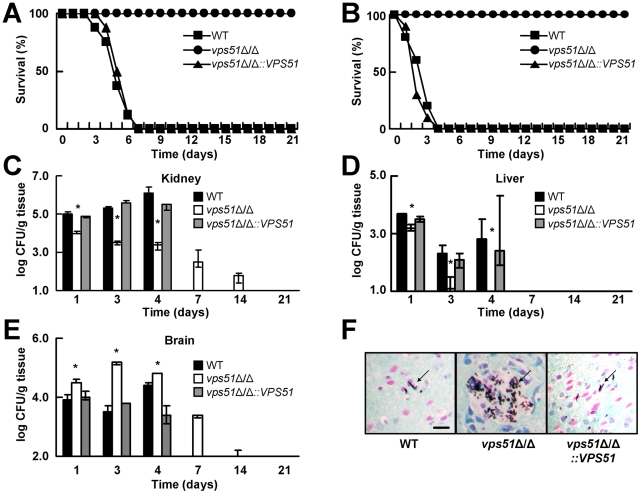
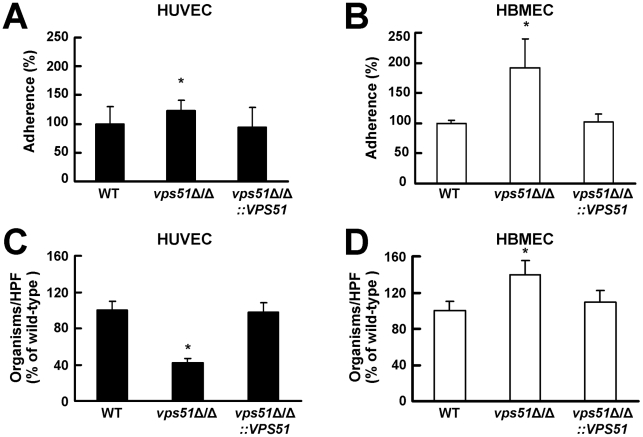
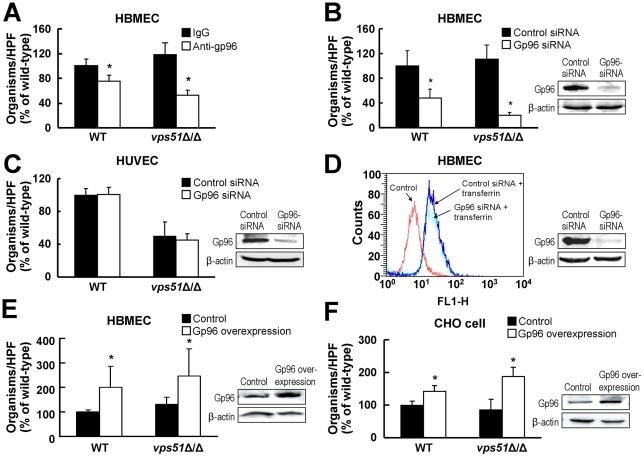
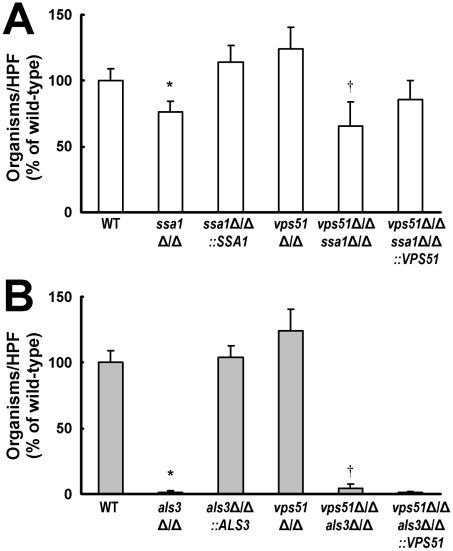
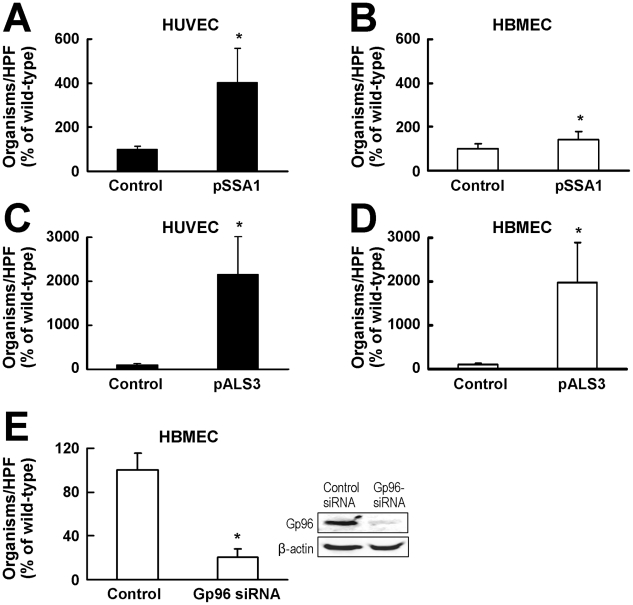
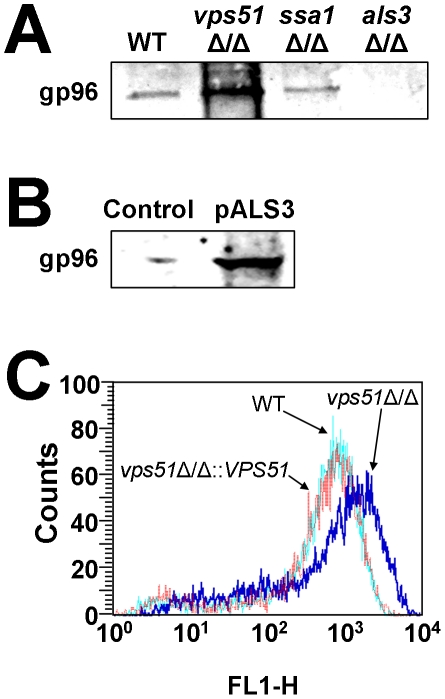
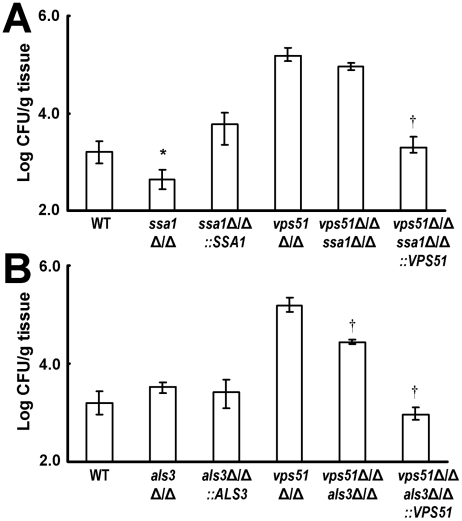
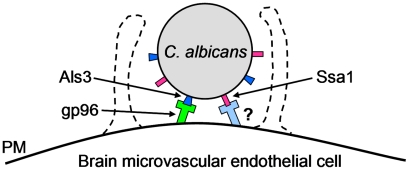
During hematogenously disseminated disease, Candida albicans infects most organs, including the brain. We discovered that a C. albicans vps51Δ/Δ mutant had significantly increased tropism for the brain in the mouse model of disseminated disease. To investigate the mechanisms of this enhanced trafficking to the brain, we studied the interactions of wild-type C. albicans and the vps51Δ/Δ mutant with brain microvascular endothelial cells in vitro. These studies revealed that C. albicans invasion of brain endothelial cells is mediated by the fungal invasins, Als3 and Ssa1. Als3 binds to the gp96 heat shock protein, which is expressed on the surface of brain endothelial cells, but not human umbilical vein endothelial cells, whereas Ssa1 binds to a brain endothelial cell receptor other than gp96. The vps51Δ/Δ mutant has increased surface expression of Als3, which is a major cause of the increased capacity of this mutant to both invade brain endothelial cells in vitro and traffic to the brain in mice. Therefore, during disseminated disease, C. albicans traffics to and infects the brain by binding to gp96, a unique receptor that is expressed specifically on the surface of brain endothelial cells.
Overview
The claims and statistics of this paper haven’t been checked yet.
Free: it reads the open-access text and checks the first 5 claims that cite a source we can check. Create a free account to check every claim.
Integrity signals
Registry
Cites
Statistics
Figures
Verification
Claims the paper makes
The claims and statistics of this paper haven’t been checked yet.
Free: it reads the open-access text and checks the first 5 claims that cite a source we can check. Create a free account to check every claim.
Claims other papers make about this one
Each is checked against this paper’s own text: does it say what the citing paper says it does?
In the citing paper
“For example, invasins Als3 and Ssa1, bind to the heat shock protein gp96 and an unknown endothelial receptor respectively, and induce endocytosis into brain endothelial cells [211, 218].”
From Mechanisms of fungal dissemination (2021) · cites this paper as [218]
Self-check
Percentages, sums and reported differences re-computed from the paper’s own numbers.
The self-check needs the paper’s full text.
Citations
Cites
Wisplinghoff, H., Bischoff, T., Tallent, S. M., Seifert, H., Wenzel, R. P., & Edmond, M. B. (2004) · Clinical Infectious Diseases · doi:10.1086/421946 · Cited by 4,496 · cited 1×
“that remains associated with approximately 35% mortality, even with currently available treatment, and Candida albicans is the infecting organism in approximately 50% of patients [1,2].”
BackgroundHorn, D. L., Neofytos, D., Anaissie, E. J., Fishman, J. A., Steinbach, W. J., Olyaei, A. J., Marr, K. A., Pfaller, M. A., Chang, C., & Webster, K. M. (2009) · Clinical Infectious Diseases · doi:10.1086/599039 · Cited by 956 · cited 1×
“that remains associated with approximately 35% mortality, even with currently available treatment, and Candida albicans is the infecting organism in approximately 50% of patients [1,2].”
BackgroundRapid Hypothesis Testing with Candida albicans through Gene Disruption with Short Homology Regions
Wilson, R. B., Davis, D., & Mitchell, A. P. (1999) · Journal of Bacteriology · doi:10.1128/jb.181.6.1868-1874.1999 · Cited by 762 · cited 5×
“The resulting strain was subsequently transformed with pGEM-URA3 [47] to re-integrate URA3 at its native locus.”
BackgroundMethodInfluentialAls3 Is a Candida albicans Invasin That Binds to Cadherins and Induces Endocytosis by Host Cells
Phan, Q. T., Myers, C. L., Fu, Y., Sheppard, D. C., Yeaman, M. R., Welch, W. H., Ibrahim, A. S., Edwards, J. E., & Filler, S. G. (2007) · PLoS Biology · doi:10.1371/journal.pbio.0050064 · Cited by 641
Self-citationThe Role of Toll‐like Receptor (TLR) 2 and TLR4 in the Host Defense against Disseminated Candidiasis
Netea, M. G., Van der Graaf, C. A. A., Vonk, A. G., Verschueren, I., Van der Meer, J. W. M., & Kullberg, B. J. (2002) · The Journal of Infectious Diseases · doi:10.1086/340511 · Cited by 486 · cited 1×
“albicans in mice or the susceptibility of mutant strains of mice to disseminated candidiasis [27–31].”
BackgroundNeonatal Candidiasis: Epidemiology, Risk Factors, and Clinical Judgment
Benjamin, D. K., Stoll, B. J., Gantz, M. G., Walsh, M. C., Sánchez, P. J., Das, A., Shankaran, S., Higgins, R. D., Auten, K. J., Miller, N. A., et al. (2010) · Pediatrics · doi:10.1542/peds.2009-3412 · Cited by 375 · cited 1×
“The brain is a particularly important target organ in neonates with hematogenously disseminated candidiasis [4,5], and its blood vessels are lined with the unique endothelial cells that form the blood-brain barrier.”
BackgroundCellular interactions of Candida albicans with human oral epithelial cells and enterocytes
Dalle, F., Wächtler, B., L'Ollivier, C., Holland, G., Bannert, N., Wilson, D., Labruère, C., Bonnin, A., & Hube, B. (2010) · Cellular Microbiology · doi:10.1111/j.1462-5822.2009.01394.x · Cited by 347 · cited 1×
“Such mechanisms include the induction of endocytosis by binding to one or more receptors, such as N-cadherin that are independent of gp96 and active penetration, in which hyphae physically push their way into host cells by progressively elongating [16,36].”
BackgroundAlonso-Monge, R., Navarro-García, F., Molero, G., Diez-Orejas, R., Gustin, M., Pla, J., Sánchez, M., & Nombela, C. (1999) · Journal of Bacteriology · doi:10.1128/jb.181.10.3058-3068.1999 · Cited by 344 · cited 1×
“For example, mice infected with ecm33D/D and hog1D/D mutants had improved survival and reduced fungal burden in both the kidney and the brain, as compared to mice infected with the wild-type strain [34,35].”
BackgroundLaFayette, S. L., Collins, C., Zaas, A. K., Schell, W. A., Betancourt-Quiroz, M., Gunatilaka, A. A. L., Perfect, J. R., & Cowen, L. E. (2010) · PLoS Pathogens · doi:10.1371/journal.ppat.1001069 · Cited by 329 · cited 1×
“in mice or the susceptibility of mutant strains of mice to disseminated candidiasis”
BackgroundOrihuela, C. J., Mahdavi, J., Thornton, J., Mann, B., Wooldridge, K. G., Abouseada, N., Oldfield, N. J., Self, T., Ala’Aldeen, D. A. A., & Tuomanen, E. I. (2009) · Journal of Clinical Investigation · doi:10.1172/jci36759 · Cited by 303 · cited 1×
“human brain microvascular endothelial cells (HBMECs), which enables them to preferentially infect the central nervous system via the hematogenous route [7–11].”
BackgroundOrgan-Specific Innate Immune Responses in a Mouse Model of Invasive Candidiasis
Lionakis, M. S., Lim, J. K., Lee, C.-C. R., & Murphy, P. M. (2011) · Journal of Innate Immunity · doi:10.1159/000321157 · Cited by 302 · cited 1×
“Importantly, there are significant differences among the endothelial cells that line the vasculature of the different organs, as well as the immunologic milieu of these organs [32,33].”
BackgroundFunctional and Structural Diversity in the Als Protein Family of Candida albicans
Sheppard, D. C., Yeaman, M. R., Welch, W. H., Phan, Q. T., Fu, Y., Ibrahim, A. S., Filler, S. G., Zhang, M., Waring, A. J., & Edwards, J. E. (2004) · Journal of Biological Chemistry · doi:10.1074/jbc.m401929200 · Cited by 300 · cited 3×
“albicans to HUVECs and HBMECs grown in 6-well tissue culture plates was measured by a modification of our previously described method [25].”
BackgroundMethodInfluentialSelf-citationChang, Y. C., Stins, M. F., McCaffery, M. J., Miller, G. F., Pare, D. R., Dam, T., Paul-Satyasee, M., Kim, K. S., & Kwon-Chung, K. J. (2004) · Infection and Immunity · doi:10.1128/iai.72.9.4985-4995.2004 · Cited by 278 · cited 1×
“human brain microvascular endothelial cells (HBMECs), which enables them to preferentially infect the central nervous system via the hematogenous route [7–11].”
BackgroundMice with Disseminated Candidiasis Die of Progressive Sepsis
Spellberg, B., Ibrahim, A. S., Edwards Jr., J. E., & Filler, S. G. (2005) · The Journal of Infectious Diseases · doi:10.1086/430952 · Cited by 230 · cited 1×
“In the mouse model of disseminated candidiasis, kidney fungal burden is directly correlated with mortality [23,26].”
BackgroundSelf-citationHuang, S. H., Wass, C., Fu, Q., Prasadarao, N. V., Stins, M., & Kim, K. S. (1995) · Infection and Immunity · doi:10.1128/iai.63.11.4470-4475.1995 · Cited by 222 · cited 1×
“human brain microvascular endothelial cells (HBMECs), which enables them to preferentially infect the central nervous system via the hematogenous route [7–11].”
BackgroundSelf-citationHost Cell Invasion and Virulence Mediated by Candida albicans Ssa1
Sun, J. N., Solis, N. V., Phan, Q. T., Bajwa, J. S., Kashleva, H., Thompson, A., Liu, Y., Dongari-Bagtzoglou, A., Edgerton, M., & Filler, S. G. (2010) · PLoS Pathogens · doi:10.1371/journal.ppat.1001181 · Cited by 220 · cited 6×
“of our previously described method [14].”
BackgroundResultInfluentialSelf-citationCoureuil, M., Lécuyer, H., Scott, M. G. H., Boularan, C., Enslen, H., Soyer, M., Mikaty, G., Bourdoulous, S., Nassif, X., & Marullo, S. (2010) · Cell · doi:10.1016/j.cell.2010.11.035 · Cited by 192
Vps51p Mediates the Association of the GARP (Vps52/53/54) Complex with the Late Golgi t-SNARE Tlg1p
Conibear, E., Cleck, J. N., & Stevens, T. H. (2003) · Molecular Biology of the Cell · doi:10.1091/mbc.e02-10-0654 · Cited by 188 · cited 1×
“In Saccharomyces cerevisiae, Vps51 is known to bind to the Vps52/53/54 complex and is required for the retrograde transport of proteins from endosomes to the late Golgi [21,22].”
BackgroundGp96 is a receptor for a novel Listeria monocytogenes virulence factor, Vip, a surface protein
Cabanes, D., Sousa, S., Cebriá, A., Lecuit, M., García‐del Portillo, F., & Cossart, P. (2005) · The EMBO Journal · doi:10.1038/sj.emboj.7600750 · Cited by 188 · cited 1×
“Gp96 has been reported to be expressed on the surface of some epithelial cells where it functions as a receptor for Listeria monocytogenes, Neisseria gonorrhoeae and bovine adeno-associated virus [38–40].”
BackgroundFolding of Toll-like receptors by the HSP90 paralogue gp96 requires a substrate-specific cochaperone
Liu, B., Yang, Y., Qiu, Z., Staron, M., Hong, F., Li, Y., Wu, S., Li, Y., Hao, B., Bona, R., et al. (2010) · Nature Communications · doi:10.1038/ncomms1070 · Cited by 186 · cited 1×
“Because gp96 also functions as a molecular chaperone [37], it is possible that it could be involved in the endocytosis of C.”
BackgroundPenetration and damage of endothelial cells by Candida albicans
Filler, S. G., Swerdloff, J. N., Hobbs, C., & Luckett, P. M. (1995) · Infection and Immunity · doi:10.1128/iai.63.3.976-983.1995 · Cited by 184 · cited 1×
“albicans adheres to, invades, and damages these cells in vitro [12,13].”
BackgroundSelf-citationRole of Hyphal Formation in Interactions of Candida albicans with Endothelial Cells
Phan, Q. T., Belanger, P. H., & Filler, S. G. (2000) · Infection and Immunity · doi:10.1128/iai.68.6.3485-3490.2000 · Cited by 181 · cited 1×
“HUVECs were harvested from umbilical cords with collagenase and grown in M-199 medium supplemented with 10% fetal bovine serum and 10% defined bovine calf serum (Gemini Bio-Products), and containing 2 mM L-glutamine with penicillin and streptomycin (Irvine Scientific) as previously described [51].”
MethodSelf-citationShen, J., Guo, W., & Köhler, J. R. (2005) · Infection and Immunity · doi:10.1128/iai.73.2.1239-1242.2005 · Cited by 155 · cited 1×
“To delete the entire protein coding region of ALS3 in the vps51D/D mutant, deletion cassettes containing ALS3 flanking regions and the URA3 or NAT1 selection markers were amplified by PCR with primers als3-pgem-KO-f and als3-pgem-KO-r, using pGEM-URA3 [47] and pJK795 [48] as templates, respectively.”
MethodTranscytosis of Protein through the Mammalian Cerebral Epithelium and Endothelium
Broadwell, R. D., Baker-Cairns, B., Friden, P. M., Oliver, C., & Villegas, J. C. (1996) · Experimental Neurology · doi:10.1006/exnr.1996.0178 · Cited by 148 · cited 1×
“hydrophilic molecules into the central nervous system, while allowing the diffusion of small hydrophobic molecules [6].”
BackgroundRotrosen, D., Edwards, J. E., Gibson, T. R., Moore, J. C., Cohen, A. H., & Green, I. (1985) · Journal of Infectious Diseases · doi:10.1093/infdis/152.6.1264 · Cited by 146 · cited 1×
“albicans adheres to, invades, and damages these cells in vitro [12,13].”
BackgroundTraversal of Candida albicans across Human Blood-Brain Barrier In Vitro
Jong, A. Y., Stins, M. F., Huang, S.-H., Chen, S. H. M., & Kim, K. S. (2001) · Infection and Immunity · doi:10.1128/iai.69.7.4536-4544.2001 · Cited by 142 · cited 1×
“albicans yeast and hyphae can also invade HBMECs by inducing their own endocytosis [18,19].”
BackgroundMacCallum, D. M., & Odds, F. C. (2005) · Mycoses · doi:10.1111/j.1439-0507.2005.01121.x · Cited by 140 · cited 2×
“The mouse model of hematogenous disseminated candidiasis mimics many aspects of this disease in humans, particularly the formation of microabscesses in most organs [23,24].”
BackgroundN-cadherin Mediates Endocytosis of Candida albicans by Endothelial Cells
Phan, Q. T., Fratti, R. A., Prasadarao, N. V., Edwards, J. E., & Filler, S. G. (2005) · Journal of Biological Chemistry · doi:10.1074/jbc.m412592200 · Cited by 113 · cited 1×
“, the findings that neither the anti-gp96 antibody nor siRNA knockdown of gp96 completely blocked the endocytosis of this organism suggest that it can invade HBMECs by additional mechanisms. Such mechanisms include the induction of endocytosis by binding to one or more receptors, such as N-cadherin that are independen…”
BackgroundSelf-citationMartinez-Lopez, R. (2004) · Microbiology · doi:10.1099/mic.0.27320-0 · Cited by 111 · cited 1×
“Δ/Δ mutants had improved survival and reduced fungal burden in both the kidney and the brain, as compared to mice infected with the wild-type strain”
BackgroundNicholls, S., MacCallum, D. M., Kaffarnik, F. A. R., Selway, L., Peck, S. C., & Brown, A. J. P. (2011) · Fungal Genetics and Biology · doi:10.1016/j.fgb.2010.08.010 · Cited by 109 · cited 1×
“albicans in mice or the susceptibility of mutant strains of mice to disseminated candidiasis [27–31].”
BackgroundReggiori, F., Wang, C.-W., Stromhaug, P. E., Shintani, T., & Klionsky, D. J. (2003) · Journal of Biological Chemistry · doi:10.1074/jbc.m210436200 · Cited by 107 · cited 1×
“In Saccharomyces cerevisiae, Vps51 is known to bind to the Vps52/53/54 complex and is required for the retrograde transport of proteins from endosomes to the late Golgi [21,22].”
BackgroundThe Tetraspanin Protein CD37 Regulates IgA Responses and Anti-Fungal Immunity
van Spriel, A. B., Sofi, M., Gartlan, K. H., van der Schaaf, A., Verschueren, I., Torensma, R., Raymakers, R. A. P., Loveland, B. E., Netea, M. G., Adema, G. J., et al. (2009) · PLoS Pathogens · doi:10.1371/journal.ppat.1000338 · Cited by 102
Sanchez, A. A., Johnston, D. A., Myers, C., Edwards, J. E., Mitchell, A. P., & Filler, S. G. (2004) · Infection and Immunity · doi:10.1128/iai.72.1.598-601.2004 · Cited by 101 · cited 1×
“albicans strains [50] and then monitored for survival three times daily.”
BackgroundSelf-citationMolecular differentiation and specialization of vascular beds
Rocha, S. F., & Adams, R. H. (2009) · Angiogenesis · doi:10.1007/s10456-009-9132-x · Cited by 97 · cited 1×
“Importantly, there are significant differences among the endothelial cells that line the vasculature of the different organs, as well as the immunologic milieu of these organs [32,33].”
BackgroundLi, X. S., Sun, J. N., Okamoto-Shibayama, K., & Edgerton, M. (2006) · Journal of Biological Chemistry · doi:10.1074/jbc.m604064200 · Cited by 90 · cited 1×
“0 kb fragment containing the SSA1 protein coding region was generated by PCR with primers ssa1-exp-bglii-f and ssa1-exp-xhoi-r using pRP10-SSA1ORF as template [49].”
MethodRechner, C., Kühlewein, C., Mueller, A., Schild, H., & Rudel, T. (2007) · Cell Host & Microbe · doi:10.1016/j.chom.2007.11.002 · Cited by 88 · cited 1×
“Gp96 has been reported to be expressed on the surface of some epithelial cells where it functions as a receptor for Listeria monocytogenes, Neisseria gonorrhoeae and bovine adeno-associated virus [38–40].”
BackgroundCorreia, A., Lermann, U., Teixeira, L., Cerca, F., Botelho, S., Gil da Costa, R. M., Sampaio, P., Gärtner, F., Morschhäuser, J., Vilanova, M., et al. (2010) · Infection and Immunity · doi:10.1128/iai.00248-10 · Cited by 86 · cited 1×
“albicans in mice or the susceptibility of mutant strains of mice to disseminated candidiasis [27–31].”
BackgroundPrasadarao, N. V., Srivastava, P. K., Rudrabhatla, R. S., Kim, K. S., Huang, S.-H., & Sukumaran, S. K. (2003) · Infection and Immunity · doi:10.1128/iai.71.4.1680-1688.2003 · Cited by 81
Self-citationColeman, D. A., Oh, S.-H., Zhao, X., Zhao, H., Hutchins, J. T., Vernachio, J. H., Patti, J. M., & Hoyer, L. L. (2009) · Journal of Microbiological Methods · doi:10.1016/j.mimet.2009.05.002 · Cited by 70 · cited 1×
“It is unclear why there is such a large discrepancy between the host cell interactions of the als3D/D mutant in vitro and its virulence in mice, especially because ALS3 is highly expressed in vivo [45,46].”
BackgroundHuman cerebral candidosis — A postmortem evaluation of 19 patients
Parker, J. C., McCloskey, J. J., & Lee, R. S. (1981) · Human Pathology · doi:10.1016/s0046-8177(81)80238-9 · Cited by 64 · cited 1×
“disseminated candidiasis, it is frequently found at autopsy in patients who die of this disease [3].”
BackgroundTranscriptional Responses of Candida albicans to Epithelial and Endothelial Cells
Park, H., Liu, Y., Solis, N., Spotkov, J., Hamaker, J., Blankenship, J. R., Yeaman, M. R., Mitchell, A. P., Liu, H., & Filler, S. G. (2009) · Eukaryotic Cell · doi:10.1128/ec.00165-09 · Cited by 58 · cited 3×
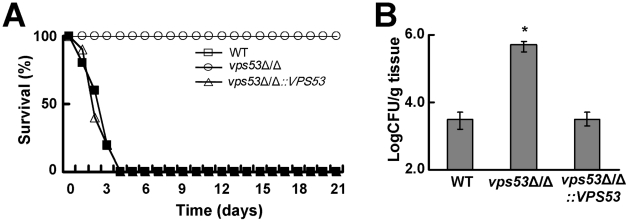
“In that study, we determined that a vps51/vps51 insertion mutant had reduced capacity to damage HUVECs and increased susceptibility to antimicrobial peptides [20].”
BackgroundInfluentialSelf-citationCleary, I. A., Reinhard, S. M., Miller, C. L., Murdoch, C., Thornhill, M. H., Lazzell, A. L., Monteagudo, C., Thomas, D. P., & Saville, S. P. (2011) · Microbiology · doi:10.1099/mic.0.046326-0 · Cited by 56
Sukumaran, S. K., & Prasadarao, N. V. (2002) · Journal of Biological Chemistry · doi:10.1074/jbc.m110740200 · Cited by 52 · cited 1×
“coli by activating signal transducer and activator of transcription 3 (STAT3), which functions upstream of phosphatidylinositol-3 kinase and protein kinase C-a [41–43].”
BackgroundSelf-citationStins, M. F., Nemani, P. V., Wass, C., & Kim, K. S. (1999) · Infection and Immunity · doi:10.1128/iai.67.10.5522-5525.1999 · Cited by 51 · cited 1×
“HBMECs were harvested from these capillaries and maintained in a mixture of M-199 and Ham’s F-12 media (1:1 v/ v) supplemented with 10% fetal bovine serum, 1 mM sodium pyruvate, and 2 mM glutamine as described previously [52].”
MethodSelf-citationCentral nervous system candidiasis in the high-risk neonate
Faix, R. G., & Chapman, R. L. (2003) · Seminars in Perinatology · doi:10.1016/s0146-0005(03)00065-x · Cited by 40
Green, C. B., Zhao, X., & Hoyer, L. L. (2005) · Infection and Immunity · doi:10.1128/iai.73.3.1852-1855.2005 · Cited by 36 · cited 1×
“It is unclear why there is such a large discrepancy between the host cell interactions of the als3D/D mutant in vitro and its virulence in mice, especially because ALS3 is highly expressed in vivo [45,46].”
BackgroundSukumaran, S. K., McNamara, G. T., & Prasadarao, N. V. (2003) · Journal of Biological Chemistry · doi:10.1074/jbc.m307374200 · Cited by 33
Self-citationCandida albicans Stimulates Local Expression of Leukocyte Adhesion Molecules and Cytokines In Vivo
Cannom, R. R. M., French, S. W., Johnston, D. A., Edwards, J. E., & Filler, S. G. (2002) · The Journal of Infectious Diseases · doi:10.1086/341660 · Cited by 31 · cited 1×
“The mouse model of hematogenous disseminated candidiasis mimics many aspects of this disease in humans, particularly the formation of microabscesses in most organs [23,24].”
BackgroundSelf-citationMaruvada, R., Argon, Y., & Prasadarao, N. V. (2008) · Cellular Microbiology · doi:10.1111/j.1462-5822.2008.01214.x · Cited by 27 · cited 1×
“coli by activating signal transducer and activator of transcription 3 (STAT3), which functions upstream of phosphatidylinositol-3 kinase and protein kinase C-a [41–43].”
BackgroundSelf-citationLossinsky, A. S., Jong, A., Fiala, M., Mukhtār, M., BUTTLE, K. F., & Ingram, M. (2006) · PubMed · doi:10.14670/hh-21.1029 · Cited by 25 · cited 1×
“albicans yeast and hyphae can also invade HBMECs by inducing their own endocytosis [18,19].”
BackgroundBAAV Transcytosis Requires an Interaction with β-1-4 Linked- Glucosamine and gp96
Di Pasquale, G., Kaludov, N., Agbandje-McKenna, M., & Chiorini, J. A. (2010) · PLoS ONE · doi:10.1371/journal.pone.0009336 · Cited by 25 · cited 1×
“Gp96 has been reported to be expressed on the surface of some epithelial cells where it functions as a receptor for Listeria monocytogenes, Neisseria gonorrhoeae and bovine adeno-associated virus [38–40].”
Background
Cited by
Plants send small RNAs in extracellular vesicles to fungal pathogen to silence virulence genes
Cai, Q., Qiao, L., Wang, M., He, B., Lin, F.-M., Palmquist, J., Huang, S.-D., & Jin, H. (2018) · Science · doi:10.1126/science.aar4142 · Cited by 1,260
Neuroinfections caused by fungi
Góralska, K., Blaszkowska, J., & Dzikowiec, M. (2018) · Infection · doi:10.1007/s15010-018-1152-2 · Cited by 295
Small RNAs – Big Players in Plant-Microbe Interactions
Huang, C.-Y., Wang, H., Hu, P., Hamby, R., & Jin, H. (2019) · Cell Host & Microbe · doi:10.1016/j.chom.2019.07.021 · Cited by 296
Stress adaptation in a pathogenic fungus
Brown, A. J. P., Budge, S., Kaloriti, D., Tillmann, A., Jacobsen, M. D., Yin, Z., Ene, I. V., Bohovych, I., Sandai, D., Kastora, S., et al. (2014) · Journal of Experimental Biology · doi:10.1242/jeb.088930 · Cited by 299
“One of these adhesins, Als3, also acts as an invasin by promoting the invasion of endothelial cells (Phan et al., 2007), contributing to the assimilation of the essential micronutrient iron (Almeida et al., 2008; Almeida et al., 2009) and to brain colonisation (Liu et al., 2011).”
CotH3 mediates fungal invasion of host cells during mucormycosis
Gebremariam, T., Liu, M., Luo, G., Bruno, V., Phan, Q. T., Waring, A. J., Edwards, J. E., Filler, S. G., Yeaman, M. R., & Ibrahim, A. S. (2014) · Journal of Clinical Investigation · doi:10.1172/jci71349 · Cited by 254
“Additionally, Als3 protein facilitates invasion of C. albicans to brain microvascular endothelial cells via binding to the heat shock protein Gp96 (28).”
InfluentialSelf-citation
Metadata
- Authors
- Liu, Y., Mittal, R., Solis, N. V., Prasadarao, N. V., & Filler, S. G.
- Affiliations
- University of California, Los Angeles (US)
- Children's Hospital Los Angeles (US)
- University of Southern California (US)
- Corresponding author
- Filler, Scott G.
- Venue
- PLoS Pathogens
- Publisher
- Public Library of Science (PLoS)
- Published
- 2011-10-06
- Volume
- 7
- Issue
- 10
- Pages
- e1002305
- ISSN
- 1553-7366 (ISSN-L)
- 1553-7374
- PMC
- PMC3188548
- OpenAlex
- W2063145009
- Cited by
- 93
- References
- 51
- Citations by year
- 2026: 4 · 2025: 6 · 2024: 5 · 2023: 5 · 2022: 9 · 2021: 10 · 2020: 10 · 2019: 7 · 2018: 4 · 2017: 1 · 2016: 6 · 2015: 4 · 2014: 4 · 2013: 11 · 2012: 7
- FWCI
- 4.77
- Type
- journal article
- Language
- en
- Open access
- gold
- doi.org
- Locations
- PLoS Pathogens (publishedVersion, cc-by)
- Europe PMC (PubMed Central) (publishedVersion, cc-by)
- PubMed Central (publishedVersion, cc-by)
- PubMed (publishedVersion)
- eScholarship (California Digital Library) (submittedVersion, cc-by)
- DOAJ (DOAJ: Directory of Open Access Journals) (submittedVersion, cc-by-sa)
- eScholarship (California Digital Library) (submittedVersion)
- Figshare (submittedVersion, cc-by)
- Funders
- National Institutes of Health (1ul1rr033176-01, UL1TR000124, MO1-RR00425)
- National Institute of Allergy and Infectious Diseases (R01AI019990, R01AI040567, R01-AI19990, R01AI054928, R01AI40567)
- National Center for Research Resources (UL1-RR-033176, MO1-RR00425, M01RR000425, 1UL1RR033176)
- National Center for Advancing Translational Sciences
- Topics
- Health Sciences › Medicine › Infectious Diseases › Antifungal resistance and susceptibility
- Life Sciences › Biochemistry, Genetics and Molecular Biology › Molecular Biology › Fungal and yeast genetics research
- Health Sciences › Medicine › Infectious Diseases › Fungal Infections and Studies
- Keywords
- Candida albicans, brain infection, fungal dispersal, ALS3, Ssa1, gp96, brain microvascular endothelial cells, endothelial cell invasion, fungal adhesins, heat shock proteins
- MeSH terms
- Animals, Brain, Candida albicans, Carrier Proteins, Fungal Proteins, Humans, Male, Membrane Glycoproteins, Mice, Inbred BALB C, Plasmids, Protein Transport, Mice, Human Umbilical Vein Endothelial Cells
About these checks
Registry, retraction, Cites and statistics results are computed, not judged, with one exception: a printed reference that no index lists is read once by a model before it counts as a citation error. Claims are extracted by a model and kept only when their quote appears verbatim in the text; each cited source is then checked, with a model’s help, for whether it says what the claim relies on. Those verdicts can be wrong — read the claim’s quote and the cited source before relying on one.
Statistics and arithmetic are recomputed, not judged.
Confidence bands are shown only for fields calibrated on our annotated test set. None is calibrated yet, so no band is shown.
What counts as a claim ›How we measure confidence ›How we check this ›
Are you an author, or do you see a problem with this page? Request a review
Data sources
Bibliographic data: Semantic Scholar, OpenAlex, Crossref.
Contains information from the Semantic Scholar Academic Graph Datasets, made available under the ODC Attribution License (ODC-BY 1.0).
Semantic Scholar’s data is described in: Kinney, R., et al. (2023). The Semantic Scholar Open Data Platform. arXiv:2301.10140.
