

Glutamate dehydrogenase (Gdh2)-dependent alkalization is dispensable for escape from macrophages and virulence of Candida albicans
Open accessPublished version of a preprint
The DOI matches its Crossref record; 64 of the 64 references it cites were found in a registry or an index.
Abstract
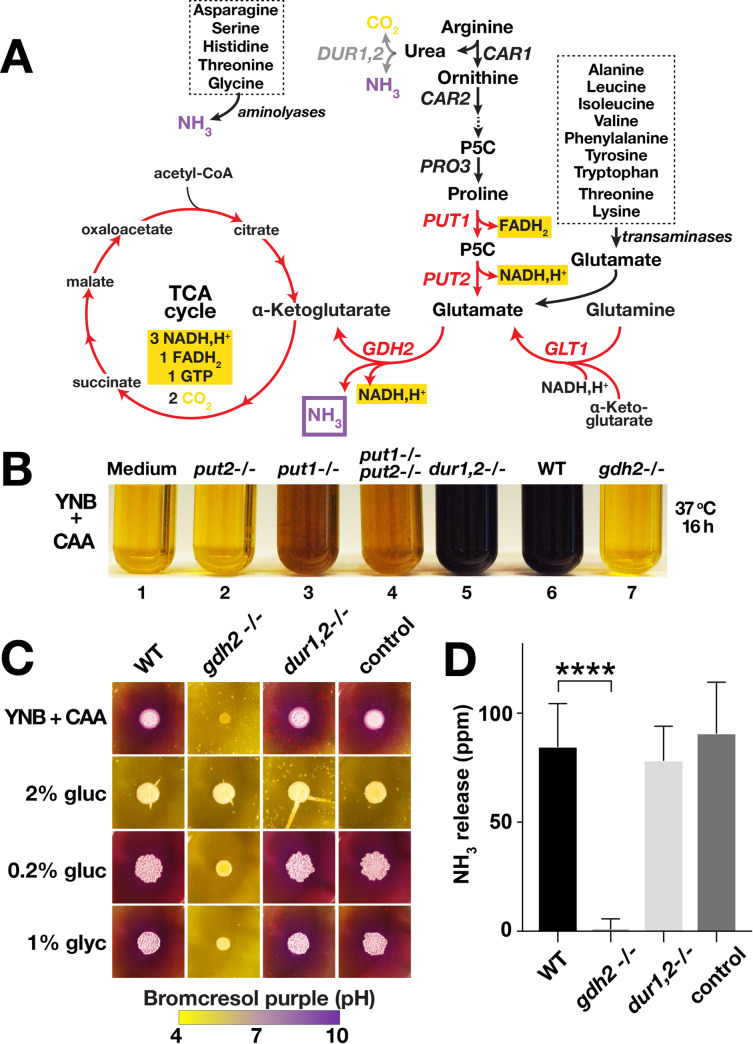
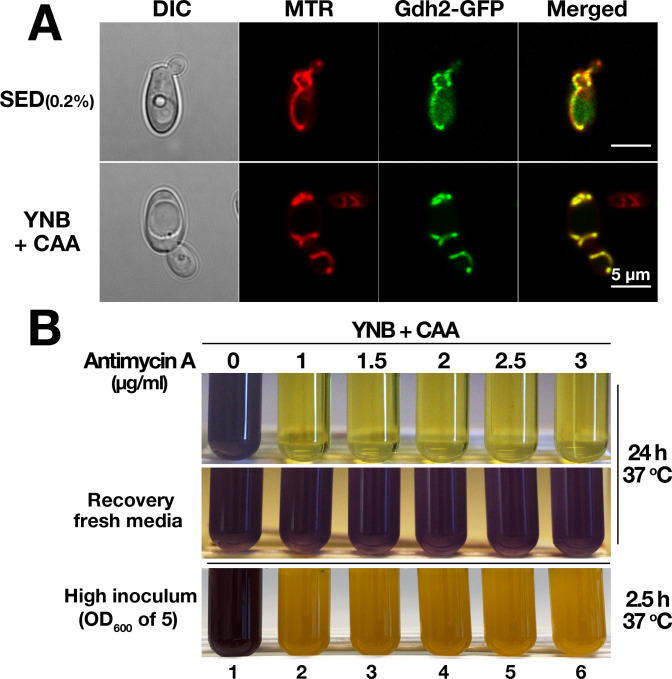
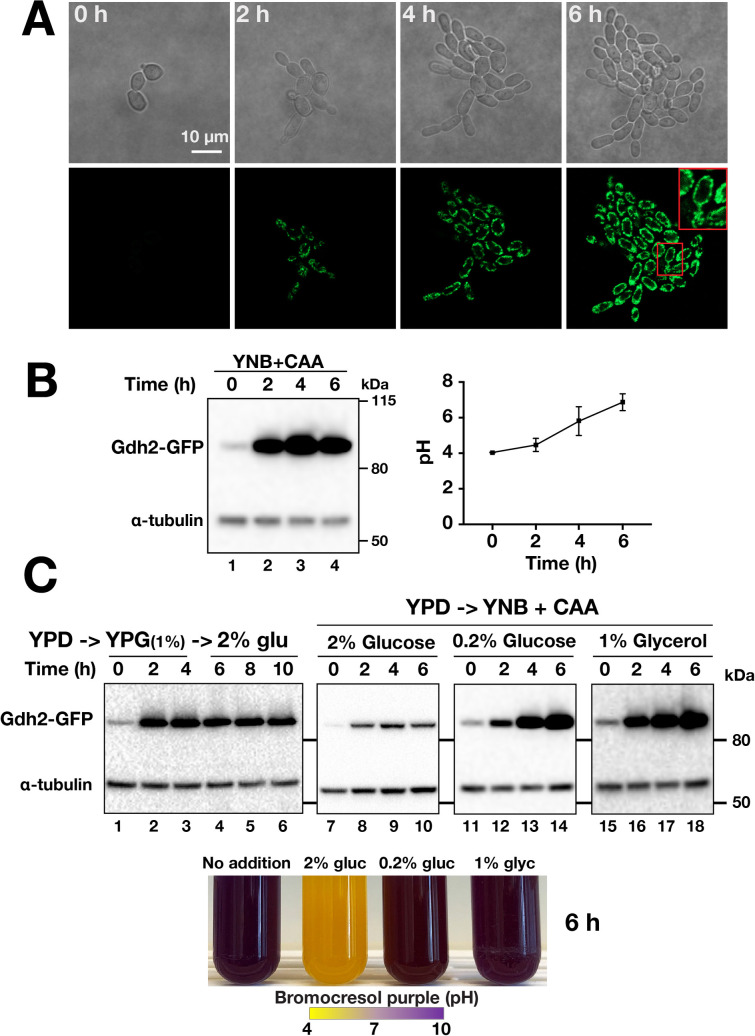
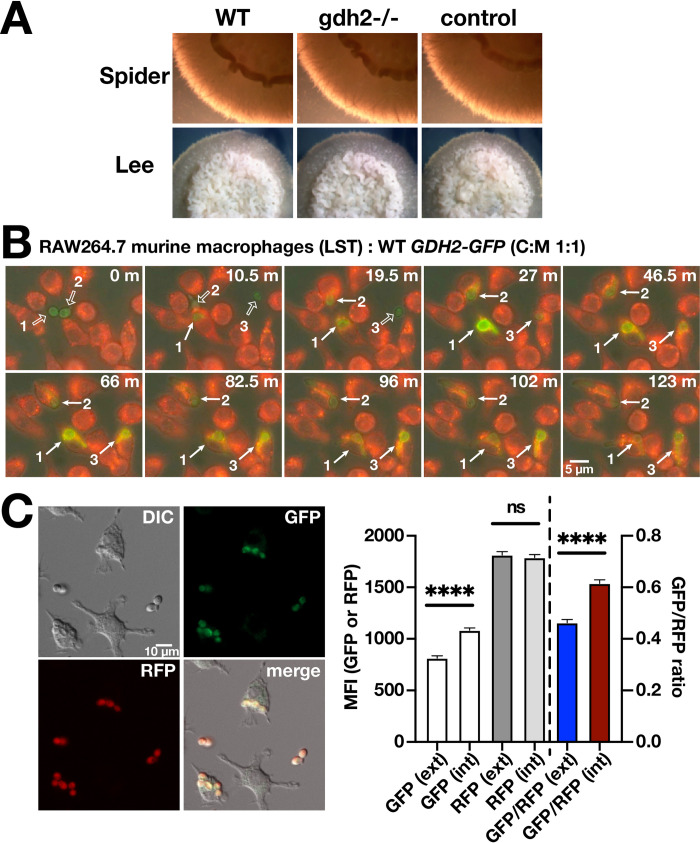
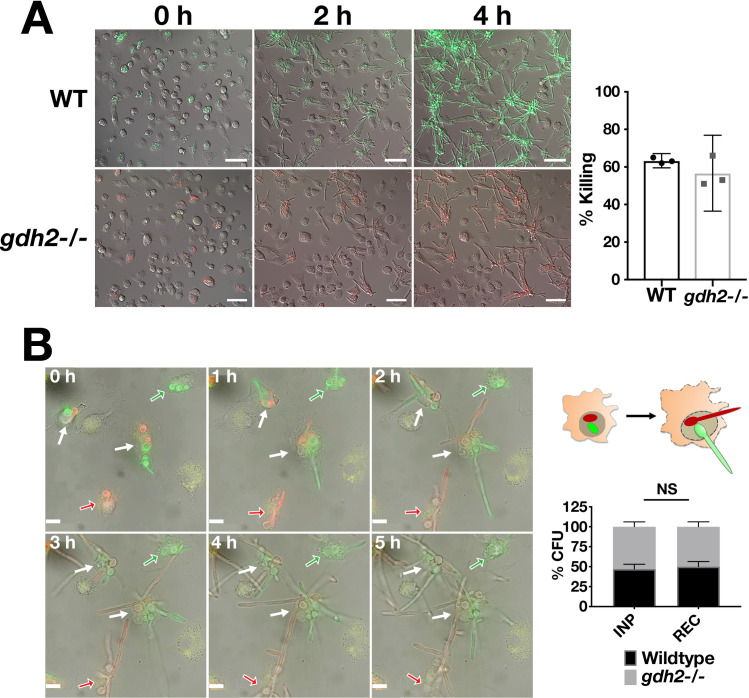
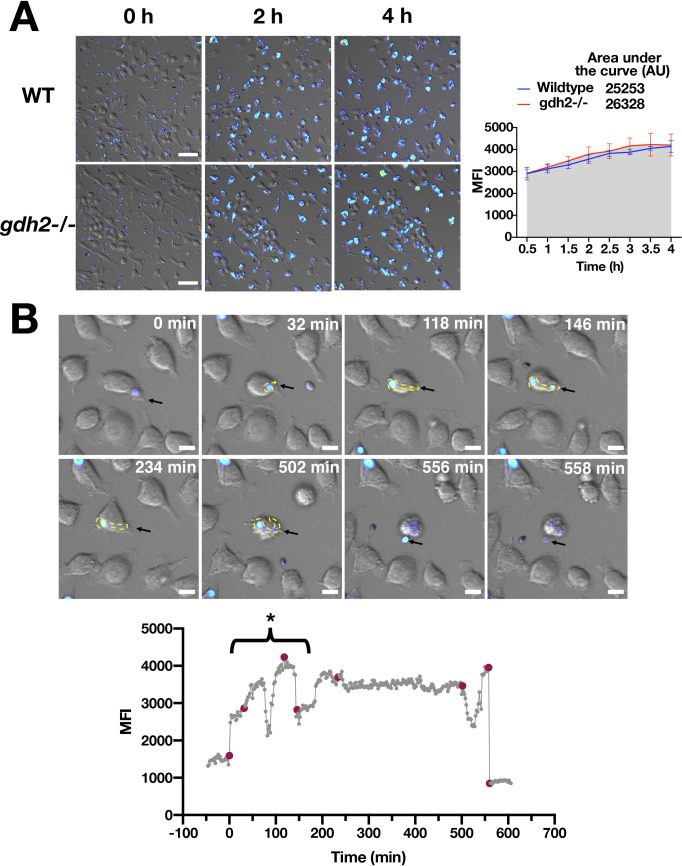
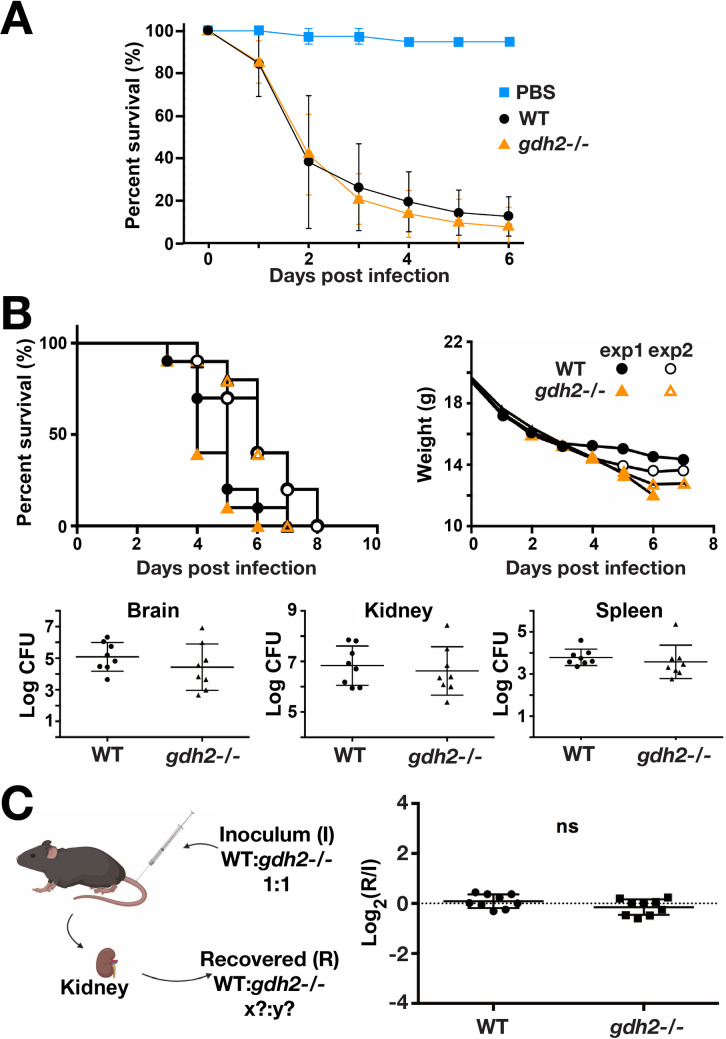
Abstract Candida albicans cells depend on the energy derived from amino acid catabolism to induce and sustain hyphal growth inside phagosomes of engulfing macrophages. The concomitant deamination of amino acids is thought to neutralize the acidic microenvironment of phagosomes, a presumed requisite for survival and initiation of hyphal growth. Here, in contrast to an existing model, we show that mitochondrial-localized NAD + -dependent glutamate dehydrogenase ( GDH2 ) catalyzing the deamination of glutamate to α-ketoglutarate, and not the cytosolic urea amidolyase ( DUR1,2 ), accounts for the observed alkalization of media when amino acids are the sole sources of carbon and nitrogen. C. albicans strains lacking GDH2 ( gdh2 -/-) are viable and do not extrude ammonia on amino acid-based media. Environmental alkalization does not occur under conditions of high glucose (2%), a finding attributable to glucose-repression of GDH2 expression and mitochondrial function. Consistently, inhibition of oxidative phosphorylation or mitochondrial translation by antimycin A or chloramphenicol, respectively, prevents alkalization. GDH2 expression and mitochondrial function are derepressed as glucose levels are lowered from 2% (∼110 mM) to 0.2% (∼11 mM), or when glycerol is used as carbon source. Using time-lapse microscopy, we document that gdh2 -/- cells survive, filament and escape from primary murine macrophages at rates indistinguishable from wildtype. Consistently, gdh2 -/- strains are as virulent as wildtype in fly and murine models of systemic candidiasis. Thus, although Gdh2 has a critical role in central nitrogen metabolism, Gdh2-catalyzed deamination of glutamate is surprisingly dispensable for escape from macrophages and virulence, demonstrating that amino acid-dependent alkalization is not essential for hyphal growth, survival in macrophages and hosts. An accurate description of the microenvironment within the phagosomal compartment of macrophages and the metabolic events underlying the survival of phagocytosed C. albicans cells and their escape are critical to understanding the host-pathogen interactions that ultimately determine the pathogenic outcome. Author Summary Candida albicans is a commensal component of the human microflora and the most common fungal pathogen. The incidence of candidiasis is low in healthy populations. Consequently, environmental factors, such as interactions with innate immune cells, play critical roles. Macrophages provide the first line of defense and rapidly internalize C. albicans cells within specialized intracellular compartments called phagosomes. The microenvironment within phagosomes is dynamic and ill defined, but has a low pH, and contains potent hydrolytic enzymes and oxidative stressors. Despite the inhospitable conditions, phagocytized C. albicans cells catabolize amino acids to obtain energy to survive and grow. Here, we have critically examined amino acid catabolism and ammonia extrusion in C. albicans , the latter is thought to neutralize the phagosomal pH and induce the switch of morphologies from round “yeast-like” to elongated hyphal cells that can pierce the phagosomal membrane leading to escape from macrophages. We report that Gdh2, which catalyzes the deamination of glutamate to α-ketoglutarate, is responsible for the observed environmental alkalization when C. albicans catabolize amino acids. Strikingly, Gdh2 is dispensable for escape from macrophages and virulent growth. These results provide new insights into host-pathogen interactions that determine the pathogenic outcome of C. albicans infections.
Overview
The claims and statistics of this paper haven’t been checked yet.
Free: it reads the open-access text and checks the first 5 claims that cite a source we can check. Create a free account to check every claim.
Integrity signals
Registry
Cites
Statistics
Figures
Verification
Claims the paper makes
The claims and statistics of this paper haven’t been checked yet.
Free: it reads the open-access text and checks the first 5 claims that cite a source we can check. Create a free account to check every claim.
Claims other papers make about this one
Each is checked against this paper’s own text: does it say what the citing paper says it does?
The source backs part of the claim, not all of it — or backs it for a different population, condition or comparison.
In the citing paper
“Proline dehydrogenase (Put1) and ∆1-pyrroline-5-carboxylate dehydrogenase (Put2), localized in mitochondria, are two key enzymes essential for amino acid catabolism in C. albicans to produce NH3 to alkalinize environment [32,33].”
From The F 1 F o -ATP synthase α subunit of Candida albicans induces inflammatory responses by controlling amino acid catabolism (2023) · cites this paper as [32]
Experimental — accuracy not yet measuredThe cited source says what the claim attributes to it.
In the citing paper
“Additionally, OXPHOS is required for C. albicans to alkalinize environment via amino acid catabolism [32].”
From The F 1 F o -ATP synthase α subunit of Candida albicans induces inflammatory responses by controlling amino acid catabolism (2023) · cites this paper as [32]
The cited source says what the claim attributes to it.
In the citing paper
“In addition, inhibition of oxidative phosphorylation (OXPHOS) prevents C. albicans from catabolizing amino acids to alkalinize environment [32].”
From The F 1 F o -ATP synthase α subunit of Candida albicans induces inflammatory responses by controlling amino acid catabolism (2023) · cites this paper as [32]
Self-check
Percentages, sums and reported differences re-computed from the paper’s own numbers.
The self-check needs the paper’s full text.
Citations
Cites
Global analysis of protein localization in budding yeast
Huh, W.-K., Falvo, J. V., Gerke, L. C., Carroll, A. S., Howson, R. W., Weissman, J. S., & O'Shea, E. K. (2003) · Nature · doi:10.1038/nature02026 · Cited by 4,248
Isogenic strain construction and gene mapping in Candida albicans.
Fonzi, W. A., & Irwin, M. Y. (1993) · Genetics · doi:10.1093/genetics/134.3.717 · Cited by 1,687
Kullberg, B. J., & Arendrup, M. C. (2015) · New England Journal of Medicine · doi:10.1056/nejmra1315399 · Cited by 1,315 · cited 1×
“albicans can cause 83 serious systemic infections associated with high rates of mortality (1, 2).”
Growth of Candida albicans hyphae
Sudbery, P. E. (2011) · Nature Reviews Microbiology · doi:10.1038/nrmicro2636 · Cited by 1,110 · cited 1×
“, hyphae and pseudohyphae), reviewed in (3-5).”
The proteome of Saccharomyces cerevisiae mitochondria
Sickmann, A., Reinders, J., Wagner, Y., Joppich, C., Zahedi, R., Meyer, H. E., Schönfisch, B., Perschil, I., Chacinska, A., Guiard, B., et al. (2003) · Proceedings of the National Academy of Sciences · doi:10.1073/pnas.2135385100 · Cited by 895
The distinct morphogenic states of Candida albicans
Sudbery, P., Gow, N., & Berman, J. (2004) · Trends in Microbiology · doi:10.1016/j.tim.2004.05.008 · Cited by 876 · cited 1×
“, hyphae and pseudohyphae), reviewed in (3-5).”
Lee, K. L., Buckley, H. R., & Campbell, C. C. (1975) · Medical Mycology · doi:10.1080/00362177585190271 · Cited by 788
Suppression of Hyphal Formation in Candida albicans by Mutation of a STE12 Homolog
Liu, H., Köhler, J., & Fink, G. R. (1994) · Science · doi:10.1126/science.7992058 · Cited by 786
The SAT1 flipper, an optimized tool for gene disruption in Candida albicans
Reuß, O., Vik, Å., Kolter, R., & Morschhäuser, J. (2004) · Gene · doi:10.1016/j.gene.2004.06.021 · Cited by 742
Transcriptional Response of Candida albicans upon Internalization by Macrophages
Lorenz, M. C., Bender, J. A., & Fink, G. R. (2004) · Eukaryotic Cell · doi:10.1128/ec.3.5.1076-1087.2004 · Cited by 712
Shui, J., Wang, M., Du, F., & Dai, L. (2015) · Science Advances · doi:10.1126/sciadv.1400129 · Cited by 671
Interactions of fungal pathogens with phagocytes
Erwig, L. P., & Gow, N. A. R. (2016) · Nature Reviews Microbiology · doi:10.1038/nrmicro.2015.21 · Cited by 626
MitoFates: Improved Prediction of Mitochondrial Targeting Sequences and Their Cleavage Sites*
Fukasawa, Y., Tsuji, J., Fu, S.-C., Tomii, K., Horton, P., & Imai, K. (2015) · Molecular & Cellular Proteomics · doi:10.1074/mcp.m114.043083 · Cited by 562
Regulation of Amino Acid, Nucleotide, and Phosphate Metabolism in Saccharomyces cerevisiae
Ljungdahl, P. O., & Daignan-Fornier, B. (2012) · Genetics · doi:10.1534/genetics.111.133306 · Cited by 546
Self-citationThe Fungal Pathogen Candida albicans Autoinduces Hyphal Morphogenesis by Raising Extracellular pH
Vylkova, S., Carman, A. J., Danhof, H. A., Collette, J. R., Zhou, H., & Lorenz, M. C. (2011) · mBio · doi:10.1128/mbio.00055-11 · Cited by 365
A Candida albicans CRISPR system permits genetic engineering of essential genes and gene families
Vyas, V. K., Barrasa, M. I., & Fink, G. R. (2015) · Science Advances · doi:10.1126/sciadv.1500248 · Cited by 362
Metabolism impacts upon Candida immunogenicity and pathogenicity at multiple levels
Brown, A. J. P., Brown, G. D., Netea, M. G., & Gow, N. A. R. (2014) · Trends in Microbiology · doi:10.1016/j.tim.2014.07.001 · Cited by 258 · cited 1×
“In addition to escaping from innate immune 92 cells, fungal cells must successfully compete with host cells and even other 93 constituents of the microbiome to take up necessary nutrients for growth (6).”
BackgroundDramatic Enhancement of Genome Editing by CRISPR/Cas9 Through Improved Guide RNA Design
Farboud, B., & Meyer, B. J. (2015) · Genetics · doi:10.1534/genetics.115.175166 · Cited by 246
Control of Candida albicans Metabolism and Biofilm Formation by Pseudomonas aeruginosa Phenazines
Morales, D. K., Grahl, N., Okegbe, C., Dietrich, L. E. P., Jacobs, N. J., & Hogan, D. A. (2013) · mBio · doi:10.1128/mbio.00526-12 · Cited by 242
Morphogenesis and cell cycle progression in Candida albicans
Berman, J. (2006) · Current Opinion in Microbiology · doi:10.1016/j.mib.2006.10.007 · Cited by 237 · cited 1×
“, hyphae and pseudohyphae), reviewed in (3-5).”
Contrasting phagosome pH regulation and Maturation in Human M1 and M2 macrophages
Canton, J., Khezri, R., Glogauer, M., & Grinstein, S. (2014) · Molecular Biology of the Cell · doi:10.1091/mbc.e14-05-0967 · Cited by 221
Environmental pH modulation by pathogenic fungi as a strategy to conquer the host
Vylkova, S. (2017) · PLOS Pathogens · doi:10.1371/journal.ppat.1006149 · Cited by 211
Glucose Promotes Stress Resistance in the Fungal Pathogen Candida albicans
Rodaki, A., Bohovych, I. M., Enjalbert, B., Young, T., Odds, F. C., Gow, N. A. R., & Brown, A. J. P. (2009) · Molecular Biology of the Cell · doi:10.1091/mbc.e09-01-0002 · Cited by 190
The macrophage marches on its phagosome: dynamic assays of phagosome function
Russell, D. G., VanderVen, B. C., Glennie, S., Mwandumba, H., & Heyderman, R. S. (2009) · Nature Reviews Immunology · doi:10.1038/nri2591 · Cited by 188
Vylkova, S., & Lorenz, M. C. (2014) · PLoS Pathogens · doi:10.1371/journal.ppat.1003995 · Cited by 174
Ghosh, S., Navarathna, D. H. M. L. P., Roberts, D. D., Cooper, J. T., Atkin, A. L., Petro, T. M., & Nickerson, K. W. (2009) · Infection and Immunity · doi:10.1128/iai.01452-08 · Cited by 165 · cited 1×
“The proline catabolic pathway is the 117 primary route of arginine utilization (15) and operates independently of the cytosolic 118 Dur1,2-catalyzed urea-CO2 pathway (15, 16).”
BackgroundDirect recruitment of H+-ATPase from lysosomes for phagosomal acidification
Sun-Wada, G.-H., Tabata, H., Kawamura, N., Aoyama, M., & Wada, Y. (2009) · Journal of Cell Science · doi:10.1242/jcs.050443 · Cited by 160
An Effector Peptide Family Required for Drosophila Toll-Mediated Immunity
Clemmons, A. W., Lindsay, S. A., & Wasserman, S. A. (2015) · PLOS Pathogens · doi:10.1371/journal.ppat.1004876 · Cited by 159
Role of NAD-linked glutamate dehydrogenase in nitrogen metabolism in Saccharomyces cerevisiae
Miller, S. M., & Magasanik, B. (1990) · Journal of Bacteriology · doi:10.1128/jb.172.9.4927-4935.1990 · Cited by 155
Ammonia pulses and metabolic oscillations guide yeast colony development.
Palková, Z., Devaux, F., R̆ic̆icová, M., Mináriková, L., Le Crom, S., & Jacq, C. (2002) · Molecular Biology of the Cell · doi:10.1091/mbc.e01-12-0149 · Cited by 151
Daugherty, J. R., Rai, R., el Berry, H. M., & Cooper, T. (1993) · Journal of Bacteriology · doi:10.1128/jb.175.1.64-73.1993 · Cited by 138
Mucosal Immunity and Candida albicans Infection
Moyes, D. L., & Naglik, J. R. (2011) · Clinical and Developmental Immunology · doi:10.1155/2011/346307 · Cited by 138
Balbi, H. J. (2004) · Pediatrics in Review · doi:10.1542/pir.25-8-284 · Cited by 135
How alkalinization drives fungal pathogenicity
Fernandes, T. R., Segorbe, D., Prusky, D., & Pietro, A. D. (2017) · PLoS Pathogens · doi:10.1371/journal.ppat.1006621 · Cited by 123
Martínez, P., & Ljungdahl, P. O. (2005) · Molecular and Cellular Biology · doi:10.1128/mcb.25.21.9435-9446.2005 · Cited by 114
Self-citationCandida albicans Hyphal Expansion Causes Phagosomal Membrane Damage and Luminal Alkalinization
Westman, J., Moran, G., Mogavero, S., Hube, B., & Grinstein, S. (2018) · mBio · doi:10.1128/mbio.01226-18 · Cited by 112
Sandai, D., Yin, Z., Selway, L., Stead, D., Walker, J., Leach, M. D., Bohovych, I., Ene, I. V., Kastora, S., Budge, S., et al. (2012) · mBio · doi:10.1128/mbio.00495-12 · Cited by 110
New CRISPR Mutagenesis Strategies Reveal Variation in Repair Mechanisms among Fungi
Vyas, V. K., Bushkin, G. G., Bernstein, D. A., Getz, M. A., Sewastianik, M., Barrasa, M. I., Bartel, D. P., & Fink, G. R. (2018) · mSphere · doi:10.1128/msphere.00154-18 · Cited by 107
Intracellular localization of enzymes in yeast
Perlman, P. S., & Mahler, H. R. (1970) · Archives of Biochemistry and Biophysics · doi:10.1016/0003-9861(70)90348-6 · Cited by 98
Membrane Insertion of Uracil Permease, a Poly topic Yeast Plasma Membrane Protein
Silve, S., Volland, C., Garnier, C., Jund, R., Chevallier, M. R., & Haguenauer‐Tsapis, R. (1991) · Molecular and Cellular Biology · doi:10.1128/mcb.11.2.1114 · Cited by 95
Mitochondrial proline catabolism activates Ras1/cAMP/PKA-induced filamentation in Candida albicans
Silao, F. G. S., Ward, M., Ryman, K., Wallström, A., Brindefalk, B., Udekwu, K., & Ljungdahl, P. O. (2019) · PLOS Genetics · doi:10.1371/journal.pgen.1007976 · Cited by 93 · cited 10×
“The proline catabolic pathway is the 117 primary route of arginine utilization (15) and operates independently of the cytosolic 118 Dur1,2-catalyzed urea-CO2 pathway (15, 16).”
BackgroundResultInfluentialSelf-citationMicroevolution of Candida albicans in Macrophages Restores Filamentation in a Nonfilamentous Mutant
Wartenberg, A., Linde, J., Martin, R., Schreiner, M., Horn, F., Jacobsen, I. D., Jenull, S., Wolf, T., Kuchler, K., Guthke, R., et al. (2014) · PLoS Genetics · doi:10.1371/journal.pgen.1004824 · Cited by 86
Childers, D. S., Raziunaite, I., Mol Avelar, G., Mackie, J., Budge, S., Stead, D., Gow, N. A. R., Lenardon, M. D., Ballou, E. R., MacCallum, D. M., et al. (2016) · PLOS Pathogens · doi:10.1371/journal.ppat.1005566 · Cited by 81
Han, T.-L., Cannon, R. D., Gallo, S. M., & Villas-Bôas, S. G. (2019) · npj Biofilms and Microbiomes · doi:10.1038/s41522-019-0086-5 · Cited by 74
Robust Extracellular pH Modulation by Candida albicans during Growth in Carboxylic Acids
Danhof, H. A., Vylkova, S., Vesely, E. M., Ford, A. E., Gonzalez-Garay, M., & Lorenz, M. C. (2016) · mBio · doi:10.1128/mbio.01646-16 · Cited by 72
GLN3 encodes a global regulator of nitrogen metabolism and virulence of C. albicans
Liao, W.-L., Ramón, A., & Fonzi, W. A. (2007) · Fungal Genetics and Biology · doi:10.1016/j.fgb.2007.08.006 · Cited by 68
The pleiotropic effects of the glutamate dehydrogenase (GDH) pathway in Saccharomyces cerevisiae
Mara, P., Fragiadakis, G. S., Gkountromichos, F., & Alexandraki, D. (2018) · Microbial Cell Factories · doi:10.1186/s12934-018-1018-4 · Cited by 67
Vonk, A. G., Wieland, C. W., Netea, M. G., & Kullberg, B. J. (2002) · Journal of Microbiological Methods · doi:10.1016/s0167-7012(01)00348-7 · Cited by 65
Dabas, N., & Morschhäuser, J. (2007) · Eukaryotic Cell · doi:10.1128/ec.00307-06 · Cited by 60
Martínez, P., & Ljungdahl, P. O. (2004) · Molecular Microbiology · doi:10.1046/j.1365-2958.2003.03845.x · Cited by 58
Self-citationThe Candida albicans ATO Gene Family Promotes Neutralization of the Macrophage Phagolysosome
Danhof, H. A., & Lorenz, M. C. (2015) · Infection and Immunity · doi:10.1128/iai.00984-15 · Cited by 57
Yáñez, A., Flores, A., Murciano, C., O'Connor, J.-E., Gozalbo, D., & Gil, M. L. (2009) · Cellular Microbiology · doi:10.1111/j.1462-5822.2009.01382.x · Cited by 53
Avraham, R., Haseley, N., Fan, A., Bloom-Ackermann, Z., Livny, J., & Hung, D. T. (2016) · Nature Protocols · doi:10.1038/nprot.2016.090 · Cited by 51
The glutamate dehydrogenases of yeast: Extra-mitochondrial enzymes
Hollenberg, C. P., Riks, W. F., & Borst, P. (1970) · Biochimica et Biophysica Acta (BBA) - General Subjects · doi:10.1016/0304-4165(70)90004-8 · Cited by 45
Davis, M. M., Álvarez, F. J., Ryman, K., Holm, Å., Ljungdahl, P. O., & Engström, Y. (2011) · PLoS ONE · doi:10.1371/journal.pone.0027434 · Cited by 44
Self-citationN -Acetylglucosamine Metabolism Promotes Survival of Candida albicans in the Phagosome
Vesely, E. M., Williams, R. B., Konopka, J. B., & Lorenz, M. C. (2017) · mSphere · doi:10.1128/msphere.00357-17 · Cited by 41
Maneu, V., Yáñez, A., Murciano, C., Molina, A., Gil, M. L., & Gozalbo, D. (2011) · FEMS Immunology & Medical Microbiology · doi:10.1111/j.1574-695x.2011.00829.x · Cited by 40
Nishimura, A., Nasuno, R., & Takagi, H. (2012) · FEBS Letters · doi:10.1016/j.febslet.2012.05.056 · Cited by 35
Tumusiime, S., Zhang, C., Overstreet, M. S., & Liu, Z. (2010) · Journal of Biological Chemistry · doi:10.1074/jbc.m110.195313 · Cited by 30
Řičicová, M., Kučerová, H., Váchová, L., & Palková, Z. (2007) · Biochimica et Biophysica Acta (BBA) - Biomembranes · doi:10.1016/j.bbamem.2007.02.011 · Cited by 29
Azim, A., Ahmed, A., & Marak, R. S. K. (2016) · New England Journal of Medicine · doi:10.1056/nejmc1514201 · Cited by 24
Put3 Positively Regulates Proline Utilization in Candida albicans
Tebung, W. A., Omran, R. P., Fulton, D. L., Morschhäuser, J., & Whiteway, M. S. (2017) · mSphere · doi:10.1128/msphere.00354-17 · Cited by 20
Schwencke, J., Canut, H., & Flores, A. (1983) · FEBS Letters · doi:10.1016/0014-5793(83)80512-2 · Cited by 19
Human Endothelial Cells Internalize Candida parapsilosis via N-WASP-Mediated Endocytosis
Shintaku, T., Glass, K. A., Hirakawa, M. P., Longley, S. J., Bennett, R. J., Bliss, J. M., & Shaw, S. K. (2013) · Infection and Immunity · doi:10.1128/iai.00535-13 · Cited by 16
Cited by
Fungal resilience and host–pathogen interactions: Future perspectives and opportunities
Brown, A. J. P. (2022) · Parasite Immunology · doi:10.1111/pim.12946 · Cited by 46
Amino Acid Sensing and Assimilation by the Fungal Pathogen Candida albicans in the Human Host
Silao, F. G. S., & Ljungdahl, P. O. (2021) · Pathogens · doi:10.3390/pathogens11010005 · Cited by 40
Self-citationA human commensal-pathogenic fungus suppresses host immunity via targeting TBK1
Luo, G., Zhang, J., Wang, T., Cui, H., Bai, Y., Luo, J., Zhang, J., Zhang, M., Di, L., Yuan, Y., et al. (2024) · Cell Host & Microbe · doi:10.1016/j.chom.2024.07.003 · Cited by 30
Qin, Z., Zhu, X., Shen, Y., Ling, H., Ruan, N., Ye, W., Xu, Y., & Gan, X. (2025) · Cellular and Molecular Life Sciences · doi:10.1007/s00018-025-05802-w · Cited by 27
Proline catabolism is a key factor facilitating Candida albicans pathogenicity
Silao, F. G. S., Jiang, T., Bereczky-Veress, B., Kühbacher, A., Ryman, K., Uwamohoro, N., Jenull, S., Nogueira, F., Ward, M., Lion, T., et al. (2023) · PLoS Pathogens · doi:10.1371/journal.ppat.1011677 · Cited by 24
Self-citation
Metadata
- Authors
- Silao, F. G. S., Ryman, K., Jiang, T., Ward, M., Hansmann, N., Molenaar, C., Liu, N.-N., Chen, C., & Ljungdahl, P. O.
- Affiliations
- Stockholm University (SE)
- Chinese Academy of Sciences (CN)
- Corresponding author
- Ljungdahl, Per O.
- ORCID
- Venue
- PLOS Pathogens
- Publisher
- Public Library of Science (PLoS)
- Published
- 2020-09-16
- Volume
- 16
- Issue
- 9
- Pages
- e1008328
- ISSN
- 1553-7366 (ISSN-L)
- 1553-7374
- PMC
- PMC7521896
- OpenAlex
- W3087752070
- Cited by
- 32
- References
- 64
- Citations by year
- 2026: 3 · 2025: 8 · 2024: 7 · 2023: 6 · 2022: 3 · 2021: 5
- FWCI
- 1.14
- Type
- journal article
- Language
- en
- Update notices
- Open access
- gold
- doi.org
- Licence
- Locations
- PLoS Pathogens (publishedVersion, cc-by)
- bioRxiv (Cold Spring Harbor Laboratory) (acceptedVersion, cc-by)
- PubMed Central (publishedVersion, cc-by)
- PubMed (publishedVersion)
- DOAJ (DOAJ: Directory of Open Access Journals) (submittedVersion, cc-by-sa)
- Funders
- Vetenskapsrådet (2015-04202, 2019-01547)
- FP7 People: Marie-Curie Actions ITN (MC-ITN-606786)
- Topics
- Life Sciences › Biochemistry, Genetics and Molecular Biology › Molecular Biology › Fungal and yeast genetics research
- Health Sciences › Medicine › Infectious Diseases › Antifungal resistance and susceptibility
- Health Sciences › Medicine › Infectious Diseases › Fungal Infections and Studies
- Keywords
- Candida albicans, phagosome acidification, hyphal growth, macrophage escape, virulence, amino acid catabolism, glutamate deamination, mitochondrial function, glucose repression, systemic candidiasis, fungal pathogenesis, phagosomal pH
- MeSH terms
- Amino Acids, Animals, Candida albicans, Candidiasis, Drosophila melanogaster, Female, Fungal Proteins, Glutamate Dehydrogenase, Hydrogen-Ion Concentration, Macrophages, Mice, Inbred C57BL, Nitrogen, Phagosomes, Virulence, Mice, Host-Pathogen Interactions
About these checks
Registry, retraction, Cites and statistics results are computed, not judged, with one exception: a printed reference that no index lists is read once by a model before it counts as a citation error. Claims are extracted by a model and kept only when their quote appears verbatim in the text; each cited source is then checked, with a model’s help, for whether it says what the claim relies on. Those verdicts can be wrong — read the claim’s quote and the cited source before relying on one.
Statistics and arithmetic are recomputed, not judged.
Confidence bands are shown only for fields calibrated on our annotated test set. None is calibrated yet, so no band is shown.
What counts as a claim ›How we measure confidence ›How we check this ›
Are you an author, or do you see a problem with this page? Request a review
Data sources
Bibliographic data: Semantic Scholar, OpenAlex, Crossref.
Contains information from the Semantic Scholar Academic Graph Datasets, made available under the ODC Attribution License (ODC-BY 1.0).
Semantic Scholar’s data is described in: Kinney, R., et al. (2023). The Semantic Scholar Open Data Platform. arXiv:2301.10140.
