

The DOI matches its Crossref record; 74 of the 75 references it cites were found in a registry or an index.
Human Astrocytes Transfer Aggregated Alpha-Synuclein via Tunneling Nanotubes
Open accessAbstract
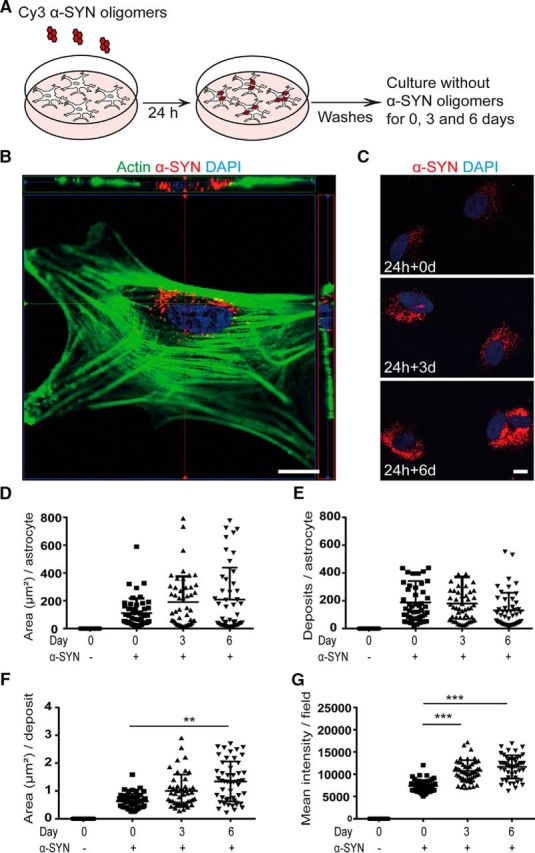
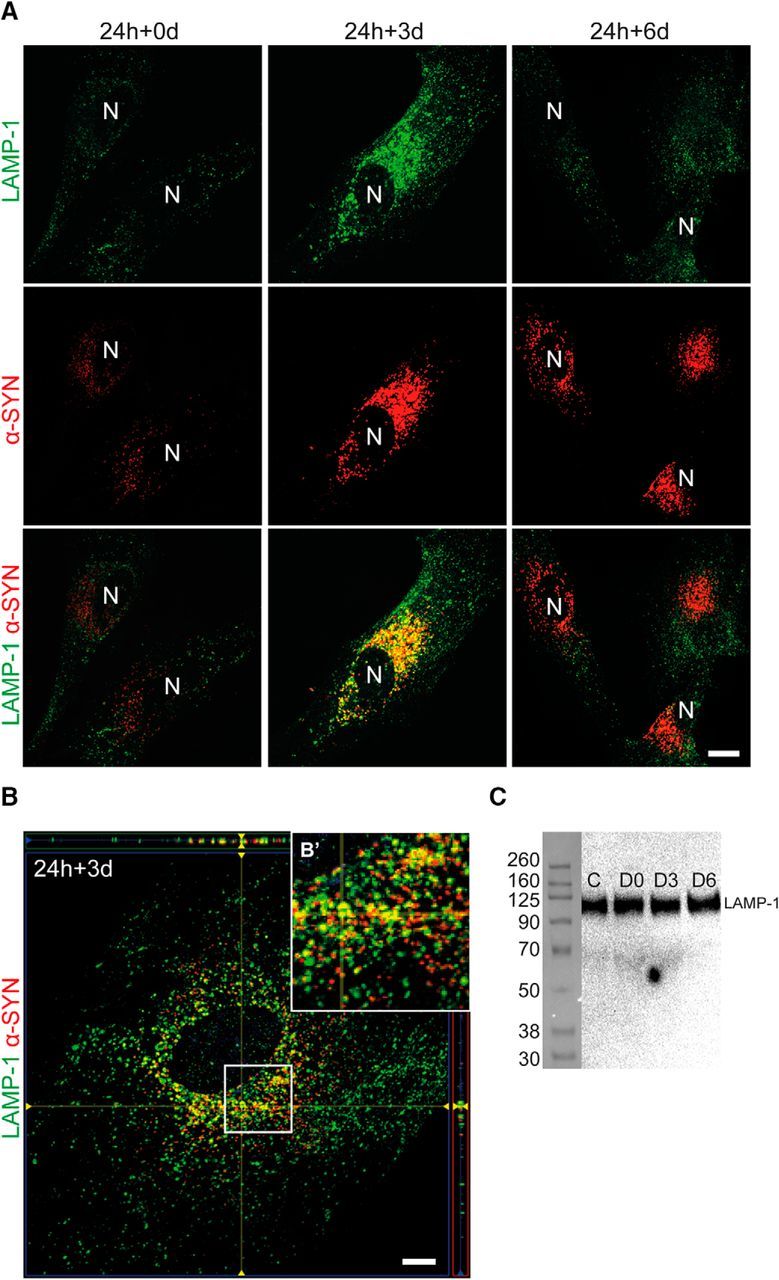
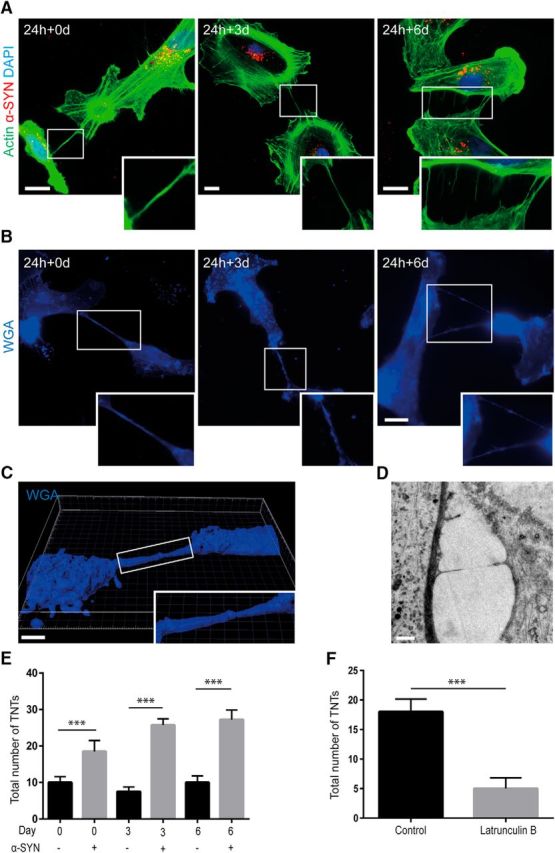
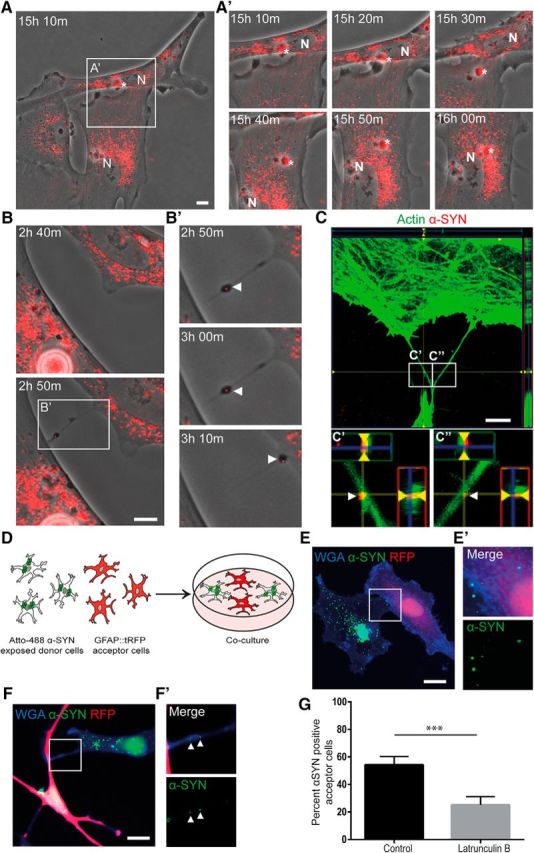
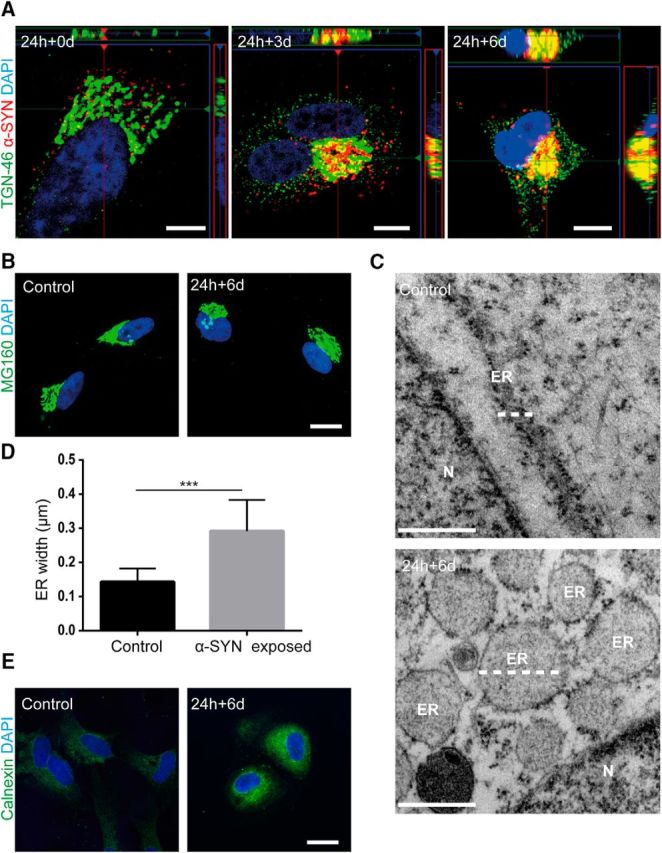
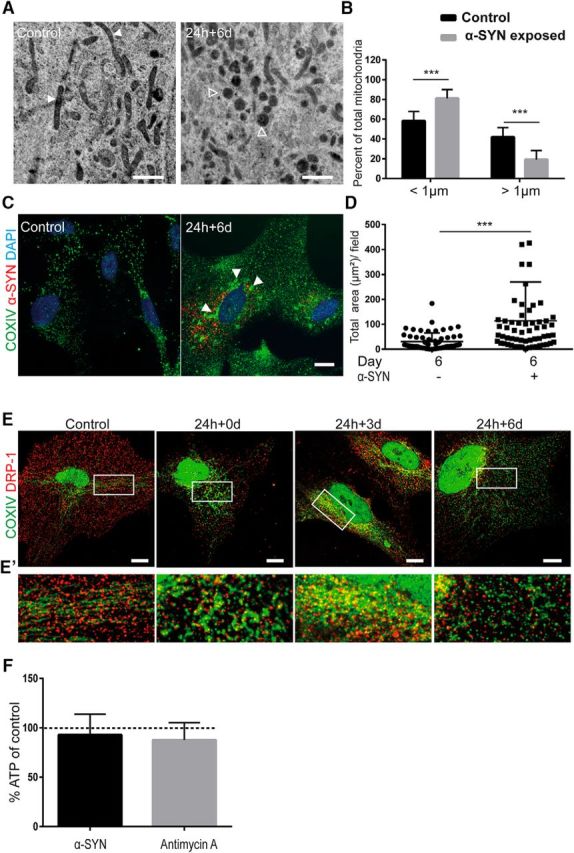
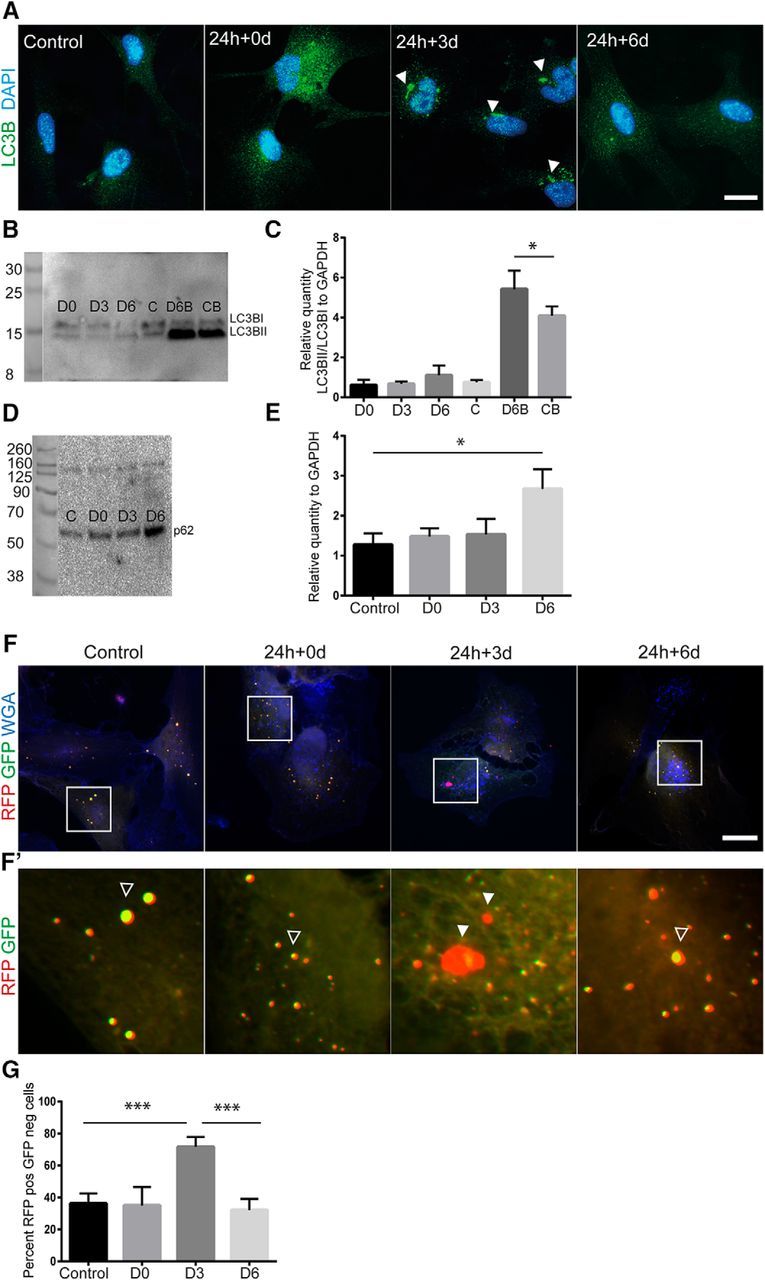
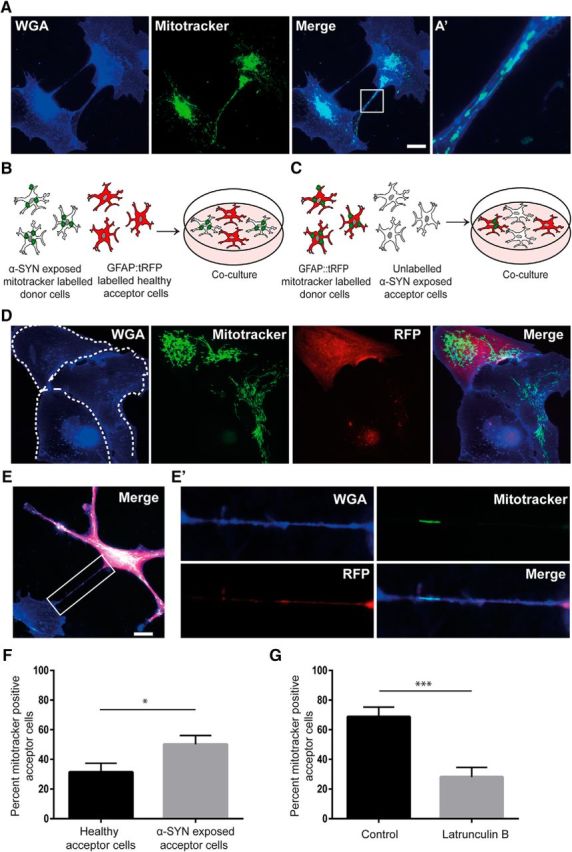
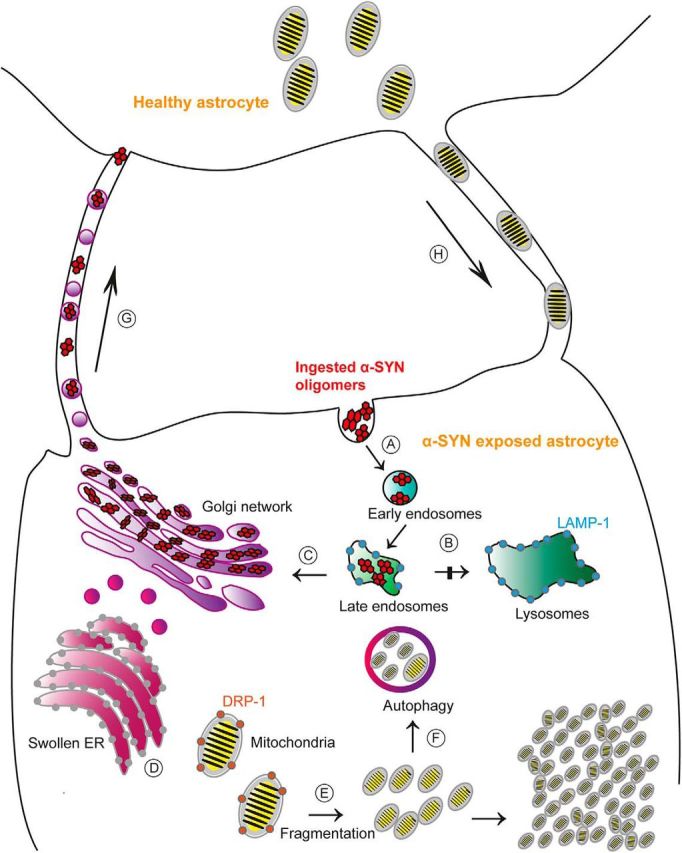
Many lines of evidence suggest that the Parkinson's disease (PD)-related protein α-synuclein (α-SYN) can propagate from cell to cell in a prion-like manner. However, the cellular mechanisms behind the spreading remain elusive. Here, we show that human astrocytes derived from embryonic stem cells actively transfer aggregated α-SYN to nearby astrocytes via direct contact and tunneling nanotubes (TNTs). Failure in the astrocytes' lysosomal digestion of excess α-SYN oligomers results in α-SYN deposits in the trans-Golgi network followed by endoplasmic reticulum swelling and mitochondrial disturbances. The stressed astrocytes respond by conspicuously sending out TNTs, enabling intercellular transfer of α-SYN to healthy astrocytes, which in return deliver mitochondria, indicating a TNT-mediated rescue mechanism. Using a pharmacological approach to inhibit TNT formation, we abolished the transfer of both α-SYN and mitochondria. Together, our results highlight the role of astrocytes in α-SYN cell-to-cell transfer, identifying possible pathophysiological events in the PD brain that could be of therapeutic relevance. SIGNIFICANCE STATEMENT Astrocytes are the major cell type in the brain, yet their role in Parkinson's disease progression remains elusive. Here, we show that human astrocytes actively transfer aggregated α-synuclein (α-SYN) to healthy astrocytes via direct contact and tunneling nanotubes (TNTs), rather than degrade it. The astrocytes engulf large amounts of oligomeric α-SYN that are subsequently stored in the trans-Golgi network region. The accumulation of α-SYN in the astrocytes affects their lysosomal machinery and induces mitochondrial damage. The stressed astrocytes respond by sending out TNTs, enabling intercellular transfer of α-SYN to healthy astrocytes. Our findings highlight an unexpected role of astrocytes in the propagation of α-SYN pathology via TNTs, revealing astrocytes as a potential target for therapeutic intervention.
Overview
The claims and statistics of this paper haven’t been checked yet.
Run the check — free, no account needed. It reads the open-access text and checks the sources it cites.
Integrity signals
Registry
Cites
Statistics
Figures
Verification
Claims the paper makes
The claims and statistics of this paper haven’t been checked yet.
Run the check — free, no account needed. It reads the open-access text and checks the sources it cites.
Claims other papers make about this one
Each is checked against this paper’s own text: does it say what the citing paper says it does?
The source backs part of the claim, not all of it — or backs it for a different population, condition or comparison.
In the citing paper
“In the AD and PD brain, both astrocytes and microglia acquire reactive, inflammatory phenotypes and can effectively phagocytose aggregated proteins and cell debris, as well as secrete various cytokines and inflammatory mediators [8–13].”
From Crosstalk between astrocytes and microglia results in increased degradation of α-synuclein and amyloid-β aggregates (2021) · cites this paper as [11]
Experimental — accuracy not yet measuredThe source backs part of the claim, not all of it — or backs it for a different population, condition or comparison.
In the citing paper
“Subsequently, stressed astrocytes respond by sending out tunneling nanotubes (TNTs), enabling intercellular transfer of pathogenic protein aggregates, as well as MHCII complexes to nearby cells [11, 24].”
From Crosstalk between astrocytes and microglia results in increased degradation of α-synuclein and amyloid-β aggregates (2021) · cites this paper as [11]
Experimental — accuracy not yet measuredThe source backs part of the claim, not all of it — or backs it for a different population, condition or comparison.
In the citing paper
“The concentrations were selected based on our previous studies [11, 12, 23, 28, 29].”
From Crosstalk between astrocytes and microglia results in increased degradation of α-synuclein and amyloid-β aggregates (2021) · cites this paper as [11]
Experimental — accuracy not yet measuredThe source backs part of the claim, not all of it — or backs it for a different population, condition or comparison.
In the citing paper
“The αSYN and Aβ accumulation result in severe cellular stress, indicated by lysosomal and mitochondrial deficiencies [11, 12, 23].”
From Crosstalk between astrocytes and microglia results in increased degradation of α-synuclein and amyloid-β aggregates (2021) · cites this paper as [11]
Experimental — accuracy not yet measuredThe source backs part of the claim, not all of it — or backs it for a different population, condition or comparison.
In the citing paper
“These observations are in line with our previous discoveries that astrocytes easily degrade αSYN and Aβ monomers, while they accumulate larger oligomers and fibrils [11, 12].”
From Crosstalk between astrocytes and microglia results in increased degradation of α-synuclein and amyloid-β aggregates (2021) · cites this paper as [11]
Experimental — accuracy not yet measured
The source backs part of the claim, not all of it — or backs it for a different population, condition or comparison.
In the citing paper
“Our previous results indicate that astrocytes are capable of transferring αSYN as well as MHCII to other astrocytes via direct membrane contact and through TNTs, implicating astrocytes as one of the important players in propagation of αSYN pathology [11, 24].”
From Crosstalk between astrocytes and microglia results in increased degradation of α-synuclein and amyloid-β aggregates (2021) · cites this paper as [11]
Experimental — accuracy not yet measuredThe source backs part of the claim, not all of it — or backs it for a different population, condition or comparison.
In the citing paper
“Microglia and astrocytes are known to be responsible for many inflammatory processes in affected brains, including phagocytosis of αSYN and Aβ aggregates, secretion of inflammatory mediators, and stimulation of the innate immune system [8–12].”
From Crosstalk between astrocytes and microglia results in increased degradation of α-synuclein and amyloid-β aggregates (2021) · cites this paper as [11]
Experimental — accuracy not yet measuredThe source backs part of the claim, not all of it — or backs it for a different population, condition or comparison.
In the citing paper
“We have previously shown that astrocytes accumulate large amounts of αSYN and Aβ aggregates, resulting in severe cellular stress [11, 12, 23, 24].”
From Crosstalk between astrocytes and microglia results in increased degradation of α-synuclein and amyloid-β aggregates (2021) · cites this paper as [11]
Experimental — accuracy not yet measuredThe cited source says what the claim attributes to it.
In the citing paper
“We have previously reported that cultured astrocytes accumulate αSYN and Aβ aggregates but not the monomeric form of the proteins [11, 12].”
From Crosstalk between astrocytes and microglia results in increased degradation of α-synuclein and amyloid-β aggregates (2021) · cites this paper as [11]
In the citing paper
“iii) αSyn has the ability to spread to adjacent cells via secretion in exosomes [209], uptake via endocytosis [210] and cell-surface receptors like HSPGs, or even direct neuron-to-neuron [211, 212] or astrocyte-to-neuron [213] transfer via tunneling nanotubes (Fig. 2).”
From α-synuclein in the pathophysiology of Alzheimer’s disease (2019) · cites this paper as [213]
Self-check
Percentages, sums and reported differences re-computed from the paper’s own numbers.
The self-check needs the paper’s full text.
Citations
Cites
Spillantini, M. G., Schmidt, M. L., Lee, V. M.-Y., Trojanowski, J. Q., Jakes, R., & Goedert, M. (1997) · Nature · doi:10.1038/42166 · Cited by 8,382
Guidelines for the use and interpretation of assays for monitoring autophagy (3rd edition).
Klionsky, D. J., Abdelmohsen, K., Abe, A., Abedin, M. J., Abeliovich, H., Acevedo Arozena, A., Adachi, H., Adams, C. M., Adams, P. D., Adeli, K., et al. (2016) · Autophagy · doi:10.1080/15548627.2015.1100356 · Cited by 5,894
Astrocytes: Biology and pathology
Sofroniew, M. V., & Vinters, H. V. (2010) · Acta Neuropathologica · doi:10.1007/s00401-009-0619-8 · Cited by 5,196
Spillantini, M. G., Crowther, R. A., Jakes, R., Hasegawa, M., & Goedert, M. (1998) · Proceedings of the National Academy of Sciences · doi:10.1073/pnas.95.11.6469 · Cited by 2,868
Nanotubular Highways for Intercellular Organelle Transport
Rustom, A., Saffrich, R., Markovic, I., Walther, P., & Gerdes, H.-H. (2004) · Science · doi:10.1126/science.1093133 · Cited by 2,038
Li, J.-Y., Englund, E., Holton, J. L., Soulet, D., Hagell, P., Lees, A. J., Lashley, T., Quinn, N. P., Rehncrona, S., Björklund, A., et al. (2008) · Nature Medicine · doi:10.1038/nm1746 · Cited by 1,845
Lewy body–like pathology in long-term embryonic nigral transplants in Parkinson's disease
Kordower, J. H., Chu, Y., Hauser, R. A., Freeman, T. B., & Olanow, C. W. (2008) · Nature Medicine · doi:10.1038/nm1747 · Cited by 1,722
Inclusion formation and neuronal cell death through neuron-to-neuron transmission of α-synuclein
Desplats, P., Lee, H.-J., Bae, E.-J., Patrick, C., Rockenstein, E., Crews, L., Spencer, B., Masliah, E., & Lee, S.-J. (2009) · Proceedings of the National Academy of Sciences · doi:10.1073/pnas.0903691106 · Cited by 1,485
In vivo demonstration that α-synuclein oligomers are toxic
Winner, B., Jappelli, R., Maji, S. K., Desplats, P. A., Boyer, L., Aigner, S., Hetzer, C., Loher, T., Vilar, M., Campioni, S., et al. (2011) · Proceedings of the National Academy of Sciences · doi:10.1073/pnas.1100976108 · Cited by 1,463
α-Synuclein Blocks ER-Golgi Traffic and Rab1 Rescues Neuron Loss in Parkinson's Models
Cooper, A. A., Gitler, A. D., Cashikar, A. G., Haynes, C. M., Hill, K. J., Bhullar, B., Liu, K., Xu, K., Strathearn, K. E., Liu, F., et al. (2006) · Science · doi:10.1126/science.1129462 · Cited by 1,411
Cited by
Sorted by citations
Items 201–300 of 341
Chakraborty, R., Palese, F., Samella, P., Testa, V., Montero-Muñoz, J., Syan, S., Nonaka, T., Hasegawa, M., Consiglio, A., & Zurzolo, C. (2026) · Nature Communications · doi:10.1038/s41467-026-69930-y · Cited by 11
The Brain‐Gut Axis in Parkinson's Disease Pathology
Ozkaya, K. S., & Browning, K. N. (2026) · Comprehensive physiology · doi:10.1002/cph4.70137 · Cited by 6
Ezan, P., Hardy, E., Bemelmans, A., Taiel, M., Dossi, E., & Rouach, N. (2024) · Neurobiology of Disease · doi:10.1016/j.nbd.2024.106681 · Cited by 5
Andromidas, F., MacKinnon, B., Myers, A. J., Shaffer, M. M., Brahimi, A., Atashpanjeh, S., Vazquez, T. L., Le, T., Jellison, E. R., Staurovsky, S., et al. (2024) · Molecular and Cellular Neuroscience · doi:10.1016/j.mcn.2024.103975 · Cited by 4
Cutting-edge technologies illuminate the neural landscape of cancer: Insights into tumor development
Wang, Y., Wang, Z., Mao, X., Zhang, H., Zhang, L., Yang, Y., Liu, B., Li, X., Luo, F., & Sun, H. (2025) · Cancer Letters · doi:10.1016/j.canlet.2025.217667 · Cited by 5
Immunotherapeutic interventions in Parkinson's disease: Focus on α-Synuclein
Ganguly, U., Singh, S., Chakrabarti, S., Saini, A. K., & Saini, R. V. (2022) · Advances in protein chemistry and structural biology · doi:10.1016/bs.apcsb.2021.11.010 · Cited by 6
Neuronal Autophagy Failure Drives α-Synuclein Transfer to Microglia to Outsource Aggregate ClearancePreprint
Chakraborty, R., Samella, P., Testa, V., Montero-Muñoz, J., Nonaka, T., Hasegawa, M., Consiglio, A., & Zurzolo, C. (2024) · bioRxiv (Cold Spring Harbor Laboratory) · doi:10.1101/2024.04.19.590207 · Cited by 5
Astrocyte alterations in α-synucleinopathies
Rodríguez-Castañeda, M., Campos-Ríos, A., Lamas, J. A., & Covelo, A. (2025) · Frontiers in Cellular Neuroscience · doi:10.3389/fncel.2025.1650326 · Cited by 5
Exploiting glial cell functions for neurodegeneration therapy
Olajide, T. S. (2025) · Neuroprotection/Neuroprotection (Chichester, England. Print) · doi:10.1002/nep3.70020 · Cited by 4
Luo, Y., Zang, N., Tang, Y., Chen, H., Liu, H., Wang, L., & Xu, P. (2024) · NeuroMolecular Medicine · doi:10.1007/s12017-024-08812-2 · Cited by 4
Höllerhage, M., Duan, L., Chua, O. W. H., Moebius, C., Bothe, S., Losse, K., Kotzur, R., Lau, K., Hopfner, F., Richter, F., et al. (2025) · Translational Neurodegeneration · doi:10.1186/s40035-025-00486-5 · Cited by 4
Paschou, C., Apokotou, O., Charmpi, K., Kollias, A., Dede, S., Samiotaki, M. K., Koutsoudaki, P. N., Havaki, S., Palese, F., Dimoula, K., et al. (2025) · Proceedings of the National Academy of Sciences · doi:10.1073/pnas.2505240122 · Cited by 5
Curing the brain: in search for new astrocyte-specific therapies
Verkhratsky, A., Lee, C. J., Chun, H., Göritz, C., Harkany, T., Lee, J., Lee, S., Lindskog, M., Koh, W., Mulder, J., et al. (2026) · Experimental & Molecular Medicine · doi:10.1038/s12276-026-01712-4 · Cited by 8
Tunneling Nanotubes in the Brain
Budinger, D., Baker, V., & Heneka, M. T. (2024) · Results and problems in cell differentiation · doi:10.1007/978-3-031-62036-2_10 · Cited by 4
Tau processing and tau-mediated inflammation differ in human APOEε2 and APOEε4 astrocytes
Mothes, T., Konstantinidis, E., Eltom, K., Dakhel, A., Rostami, J., & Erlandsson, A. (2024) · iScience · doi:10.1016/j.isci.2024.111163 · Cited by 5
Self-citationShah, S., Tereda, A., & Mansour, H. M. (2024) · Current Genetic Medicine Reports · doi:10.1007/s40142-024-00210-1 · Cited by 6
Tönges, L., Metzdorf, J., & Zella, S. M. A. (2018) · Fortschritte der Neurologie · Psychiatrie · doi:10.1055/s-0044-101608 · Cited by 6
Oligodendroglia-to-neuron material transfer lights up the mouse CNS
Pluchino, S., & Prasad, P. (2023) · The Journal of Experimental Medicine · doi:10.1084/jem.20230489 · Cited by 4
Intercellular mitochondrial transfer and trans-mitophagy in response to protein import dysfunction
Glover, E., Wiseman, B., Dugdale, C. A., Humphery, C., Ballesteros, L. S., Hodgson, L. R., Wilkinson, K. A., & Collinson, I. R. (2026) · The Journal of Cell Biology · doi:10.1083/jcb.202511211 · Cited by 3
Organelle Dysfunction and TNT-Mediated Aggregate Spreading in Neurodegeneration
Thomas, V., & Zurzolo, C. (2026) · Physiology · doi:10.1152/physiol.00048.2025 · Cited by 3
Breaking cellular boundaries: molecular mechanisms of tunneling nanotube formation and fusion
Belian, S., & Zurzolo, C. (2026) · Biochemical Society Transactions · doi:10.1042/bst20250093 · Cited by 4
Astrocytic dysfunction in Parkinson’s disease pathogenesis: focusing on alpha-synuclein
Al-Qahtani, Z., Al‐kuraishy, H. M., Al-Gareeb, A. I., Albuhadily, A. K., Abdelaziz, A. M., Alruwaili, M., & Batiha, G. E. (2026) · Inflammopharmacology · doi:10.1007/s10787-026-02176-8 · Cited by 3
Liang, Y.-L., Yang, F.-G., & Tang, Q. (2026) · Journal of Neurology · doi:10.1007/s00415-026-13900-3 · Cited by 3
Bustos, L. M., & Sattler, R. (2023) · Frontiers in Molecular Medicine · doi:10.3389/fmmed.2023.1075805 · Cited by 4
Role of non-neuronal cells in neurorepair: a focus on proteinopathy and neurodegeneration
Rodríguez-Carreiro, S., Nogales, M. D. C., Jiménez-Galán, D., Carmona-Lorenzo, S., Caro-Martín, A., Navarro, E., & Esteras, N. (2024) · Regenerative medicine reports . · doi:10.4103/regenmed.regenmed-d-24-00005 · Cited by 2
Chen, J., & Zhang, Q. (2025) · Biochemical and Biophysical Research Communications · doi:10.1016/j.bbrc.2025.152157 · Cited by 3
Contribution of α‐synuclein cytopathologies to distinct seeding of misfolded α‐synuclein
Kim, A., Martínez-Valbuena, I., Danics, K., Forrest, S. L., & Kovács, G. G. (2025) · Brain Pathology · doi:10.1111/bpa.70024 · Cited by 3
Sükösd, A. K. (2020) · International Journal of Ophthalmology · doi:10.18240/ijo.2020.06.11 · Cited by 3
The direct transfer approach for transcellular drug delivery
Wang, Y.-F., Shen, Z.-F., Xiang, F., Wang, H., Zhang, P., & Zhang, Q. (2023) · Drug Delivery · doi:10.1080/10717544.2023.2288799 · Cited by 3
Segura‐Aguilar, J. (2021) · Elsevier eBooks · doi:10.1016/b978-0-12-822120-4.00001-0 · Cited by 4
α-Synuclein strains influence multiple system atrophy via central and peripheral mechanismsPreprint
Torre-Muruzabal, T., der Perren, A. V., Coens, A., Janer, A. B., Camacho-Garcia, S., Stefanova, N., Melki, R., Baekelandt, V., & Peelaerts, W. (2020) · bioRxiv (Cold Spring Harbor Laboratory) · doi:10.1101/2020.10.16.342089 · Cited by 3
Chakraborty, R., & Zurzolo, C. (2022) · bioRxiv (Cold Spring Harbor Laboratory) · doi:10.1101/2022.12.13.519450 · Cited by 3
Rubio, C., Pérez-Rubio, R., Pérez-Villavicencio, J., Serrano‐García, N., Lee, Á., Granados-Rojas, L., Tena‐Suck, M. L., & Rubio‐Osornio, M. (2026) · Life · doi:10.3390/life16061007 · Cited by 2
Dipta, P., Bansal, N., Chien, A., Sumer‐Bayraktar, Z., Onizuka, H., Kasugai, D., Marando, D., Anugraham, M., Ahn, S. B., Kolarich, D., et al. (2026) · Proceedings of the National Academy of Sciences · doi:10.1073/pnas.2623365123 · Cited by 4
Patrigeon, M., Brot, S., Bonnet, M., Belnoue, L., & Gaillard, A. (2023) · Transplantation · doi:10.1097/tp.0000000000004565 · Cited by 2
Serum Biomarkers of Olfactory Identification Deficits in Patients with Parkinson’s Disease
Li, F.-J., Li, Y., Liu, X., Zu, J., Zhang, W., Xiao, Q., Niu, X., Du, L., Cui, C.-C., Zhang, R.-Y., et al. (2023) · Acta Neurologica Scandinavica · doi:10.1155/2023/8860125 · Cited by 3
Krüssel, S., Deb, I., Son, S., Ewall, G., Chang, M., Lee, H., Heo, W. D., & Kwon, H. (2024) · iScience · doi:10.1016/j.isci.2024.110535 · Cited by 1
The Influence of Striatal Astrocyte Dysfunction on Locomotor Activity in Dopamine-depleted Rats
Воронков, Д. Н., Stavrovskaya, A. V., Olshansky, A. S., Guschina, A. S., Худоерков, Р. М., & Illarioshkin, S. N. (2021) · Basic and Clinical Neuroscience Journal · doi:10.32598/bcn.2021.1923.1 · Cited by 2
Uspenskaya, Y. A., Malinovskaya, N. A., & Salmina, A. B. (2022) · Cell and Tissue Biology · doi:10.1134/s1990519x22020109 · Cited by 2
Courte, J., Le, N. A., Bousset, L., Melki, R., Villard, C., & Peyrin, J. (2021) · bioRxiv (Cold Spring Harbor Laboratory) · doi:10.1101/2021.10.06.463379 · Cited by 2
Paschou, C., Apokotou, O., Κόλλιας, Α., Charmpi, K., Dede, S., Samiotaki, M. K., Palese, F., Dimoula, K., Emmanouilidou, E., Taoufik, E., et al. (2024) · bioRxiv (Cold Spring Harbor Laboratory) · doi:10.1101/2024.11.06.621638 · Cited by 2
Dipta, P., Bansal, N., Sumer‐Bayraktar, Z., Chien, A., Ugonotti, J., Chau, T. H., Anugraham, M., Kolarich, D., Tirosh, B., Kawahara, R., et al. (2024) · bioRxiv (Cold Spring Harbor Laboratory) · doi:10.1101/2024.11.28.625934 · Cited by 2
Liu, Z., Lemus, J., Smirnova, I. V., & Liu, W. (2023) · Exploration of Neuroprotective Therapy · doi:10.37349/ent.2023.00049 · Cited by 1
Tunneling Nanotubes in Myeloid Cells: Perspectives for Health and Infectious Diseases
Rey-Barroso, J., Dufrançais, O., & Vérollet, C. (2024) · Results and problems in cell differentiation · doi:10.1007/978-3-031-62036-2_17 · Cited by 1
Zhao, F., Zhang, J.-R., Liu, M.-H., Liu, H., Mao, C.-J., Wang, F., Chen, J., & Liu, C.-F. (2025) · International Immunopharmacology · doi:10.1016/j.intimp.2025.114364 · Cited by 1
Santos, E. R., dos Santos, T. F. O., Bispo, J. M. M., de Carvalho, M. C., Melo, J. E. C., Mendonça, M. S., Medeiros, K. A. A. L., Ribeiro, A. M., Silva, R. H., Freire, M. A. M., et al. (2025) · Physiology & Behavior · doi:10.1016/j.physbeh.2025.115042 · Cited by 1
Brain rewired: Redox control of brain cell crosstalk via nanotubes and vesicles
Zheng, F., Jiang, S., Lin, X., Chang, X., Wang, W., Tang, J., Li, Y., Liao, S., Zhu, A., Shao, W., et al. (2025) · Free Radical Biology and Medicine · doi:10.1016/j.freeradbiomed.2025.09.037 · Cited by 1
Tunneling nanotubes in the nervous system: The fourth pillar of brain connectivity
Budinger, D., & Heneka, M. T. (2026) · Neuron · doi:10.1016/j.neuron.2026.07.010 · Cited by 1
Sharing is caring: The benefits of distributing protein aggregates among microglial networks
Wiersma, V. I., & Polymenidou, M. (2021) · Neuron · doi:10.1016/j.neuron.2021.10.008 · Cited by 1
Astrocytes in Neuroinflammatory and Neurodegenerative Diseases
Bhandarkar, S., Qavi, D., Park, C., & Pitt, D. (2023) · Elsevier eBooks · doi:10.1016/b978-0-323-95702-1.00048-8 · Cited by 1
Surviving Stress with the Tumour Microenvironment: Understanding Complex Cell - Cell Interactions
Dawson, R. (2021) · Open Access Victoria University of Wellington | Te Herenga Waka (Figshare) · doi:10.26686/wgtn.15102033 · Cited by 2
Surviving Stress with the Tumour Microenvironment: Understanding Complex Cell - Cell Interactions
Dawson, R. (2021) · doi:10.26686/wgtn.15102033.v1 · Cited by 1
Nath, S., Pountney, D. L., & Neužil, J. (2023) · Frontiers in Molecular Neuroscience · doi:10.3389/fnmol.2023.1240959 · Cited by 1
Electron Tunneling in Ferritin and Its Potential Influence on Myelin and CardiomyocytesPreprint
Rourk, C. J. (2024) · Qeios · doi:10.32388/t3k6lx · Cited by 1
LRRK2 I1371V Impairs Astrocytic Glucose Metabolism and Triggers Multi-Organellar Dysfunction in PDPreprint
Banerjee, R., Santhoshkumar, R., Holla, V. V., Kamble, N. L., Yadav, R., Pal, P. K., & Datta, I. (2026) · bioRxiv (Cold Spring Harbor Laboratory) · doi:10.64898/2026.01.19.700314 · Cited by 1
Introductory Chapter: Little Pigeons Can Carry Great Messages
Surguchov, A. P. (2019) · IntechOpen eBooks · doi:10.5772/intechopen.82670
Sequence-Specific Extracellular MicroRNAs Activate TLR7
Wu, N. (2018) · DigitalCommons@UNMC
Matula, Z., Mikala, G., Valyi-Nagy, I. T., & Uher, F. (2020) · Hematológia–Transzfuziológia · doi:10.1556/2068.2020.53.1.5
Pharmacological Ablation of Astroglia in a Rat Model of Parkinson’s Disease
Groulx, C. (2021) · Carleton University's Institutional Repository (MacOdrum Library, Carleton University) · doi:10.22215/etd/2021-14407
Alpha-synuclein spreading mechanisms in Parkinson's disease: The role of membrane receptors
Brás, I. C., & Outeiro, T. F. (2021) · International review of movement disorders · doi:10.1016/bs.irmvd.2021.08.002
Acrylamide Induces Protein Aggregation in CNS through Suppression of FoxO1-mediated AutophagyPreprint
He, X., Huang, H., Wu, Y., & Guo, F. (2022) · bioRxiv (Cold Spring Harbor Laboratory) · doi:10.1101/2022.07.29.498756
Experimental parkinsonism in modeling striatal astrocyte damage
Stavrovskaya, A. V., Воронков, Д. Н., Olshansky, A. S., Гущина, А. С., & Yamshchikova, N. G. (2019) · Annals of Clinical and Experimental Neurology · doi:10.25692/acen.2019.3.4
Exuberant de novo dendritic spine growth in mature neuronsPreprint
Krüssel, S., Deb, I., Son, S., Ewall, G., Chang, M., Lee, H., Heo, W. D., & Kwon, H. (2023) · bioRxiv (Cold Spring Harbor Laboratory) · doi:10.1101/2023.07.21.550095
Geut, H., van den Berg, E., Boon, B. D. C., Hoozemans, J. J. M., Tunold, J., Pihlstrøm, L., Jonkman, L. E., Rozemüller, A. J. M., Lemstra, A. W., & van de Berg, W. D. J. (2024) · bioRxiv (Cold Spring Harbor Laboratory) · doi:10.1101/2024.01.02.573857
Nath, S., Raghavan, A., Kashyap, R., Sreedevi, P. R., Jos, S., Chatterjee, S., Alex, A., D’Souza, M., Giridharan, M., Manjithaya, R. R., et al. (2024) · Research Square · doi:10.21203/rs.3.rs-3747717/v1
Walz, W. (2023) · Springer eBooks · doi:10.1007/978-3-031-48105-5_13
Höllerhage, M., Duan, L., Chua, O. W. H., Moebius, C., Bothe, S., Hopfner, F., Wahl‐Schott, C., Bickle, M., & Höglinger, G. U. (2024) · bioRxiv (Cold Spring Harbor Laboratory) · doi:10.1101/2024.03.13.584847
Geut, A. J. (2024) · doi:10.5463/thesis.484
Astrocytes in multiple sclerosis
Piester, G., & Quintana, F. J. (2024) · Elsevier eBooks · doi:10.1016/b978-0-12-823848-6.00010-5
Edgünlü, T., & Özdemir, Ç. (2024) · Elsevier eBooks · doi:10.1016/b978-0-443-18858-9.00005-6
Intercellular Highways in Transport Processes
Szabó‐Meleg, E. (2024) · Results and problems in cell differentiation · doi:10.1007/978-3-031-62036-2_9
LeeBae, J., Bopp, V., Goreth, A., Grozdanov, V., Kühlwein, J. K., Gazzola, E., Rombach, D., Meier, L., Dimou, L., & Danzer, K. M. (2025) · bioRxiv (Cold Spring Harbor Laboratory) · doi:10.1101/2025.08.08.669249
Extracellular mitochondria: dual roles in neurodegeneration and neuroprotection
Ferro, T., Tejero, A., & Duarte, F. V. (2025) · Elsevier eBooks · doi:10.1016/b978-0-443-29283-5.00005-4
Lee, E. J., Yoon, H. H., & Jeon, S. R. (2025) · Scientific Reports · doi:10.1038/s41598-025-30935-0
Mothes, T., Portal, B., Konstantinidis, E., Eltom, K., Libard, S., Streubel-Gallasch, L., Ingelsson, M., Rostami, J., Lindskog, M., & Erlandsson, A. (2024) · Figshare · doi:10.6084/m9.figshare.26598035
Self-citationSheng, L., Stewart, T., Yang, D., Thorland, E., Soltys, D., Aro, P., Khrisat, T., Xie, Z., Li, N., Liu, Z., et al. (2020) · Figshare · doi:10.6084/m9.figshare.12629109
Mothes, T., Portal, B., Konstantinidis, E., Eltom, K., Libard, S., Streubel-Gallasch, L., Ingelsson, M., Rostami, J., Lindskog, M., & Erlandsson, A. (2024) · Figshare · doi:10.6084/m9.figshare.26598053
Self-citationMothes, T., Portal, B., Konstantinidis, E., Eltom, K., Libard, S., Streubel-Gallasch, L., Ingelsson, M., Rostami, J., Lindskog, M., & Erlandsson, A. (2024) · Figshare · doi:10.6084/m9.figshare.26598050
Self-citationKonstantinidis, E., Portal, B., Mothes, T., Beretta, C., Lindskog, M., & Erlandsson, A. (2023) · Figshare · doi:10.6084/m9.figshare.22603982
Self-citationEltom, K., Mothes, T., Libard, S., Ingelsson, M., & Erlandsson, A. (2024) · Figshare · doi:10.6084/m9.figshare.26685735
Self-citationZyśk, M., Beretta, C., Naia, L., Dakhel, A., Påvénius, L., Brismar, H., Lindskog, M., Ankarcrona, M., & Erlandsson, A. (2023) · Figshare · doi:10.6084/m9.figshare.22610219
Self-citationEltom, K., Mothes, T., Libard, S., Ingelsson, M., & Erlandsson, A. (2024) · Figshare · doi:10.6084/m9.figshare.26685723
Self-citationEltom, K., Mothes, T., Libard, S., Ingelsson, M., & Erlandsson, A. (2024) · Figshare · doi:10.6084/m9.figshare.26685714
Self-citationZyśk, M., Beretta, C., Naia, L., Dakhel, A., Påvénius, L., Brismar, H., Lindskog, M., Ankarcrona, M., & Erlandsson, A. (2023) · Figshare · doi:10.6084/m9.figshare.22610222
Self-citationEltom, K., Mothes, T., Libard, S., Ingelsson, M., & Erlandsson, A. (2024) · Figshare · doi:10.6084/m9.figshare.26685744
Self-citationEltom, K., Mothes, T., Libard, S., Ingelsson, M., & Erlandsson, A. (2024) · Figshare · doi:10.6084/m9.figshare.26685726
Self-citationFriend or Foe: How glial cells interfere with prion-like spreading
Iycattil, A. (2023) · Journal of High School Science · doi:10.64336/001c.84219
Mothes, T., Portal, B., Konstantinidis, E., Eltom, K., Libard, S., Streubel-Gallasch, L., Ingelsson, M., Rostami, J., Lindskog, M., & Erlandsson, A. (2024) · Figshare · doi:10.6084/m9.figshare.26598032
Self-citationZyśk, M., Beretta, C., Naia, L., Dakhel, A., Påvénius, L., Brismar, H., Lindskog, M., Ankarcrona, M., & Erlandsson, A. (2023) · Figshare · doi:10.6084/m9.figshare.22610228
Self-citationZyśk, M., Beretta, C., Naia, L., Dakhel, A., Påvénius, L., Brismar, H., Lindskog, M., Ankarcrona, M., & Erlandsson, A. (2023) · Figshare · doi:10.6084/m9.figshare.22610213
Self-citationEltom, K., Mothes, T., Libard, S., Ingelsson, M., & Erlandsson, A. (2024) · Figshare · doi:10.6084/m9.figshare.26685741
Self-citationEltom, K., Mothes, T., Libard, S., Ingelsson, M., & Erlandsson, A. (2024) · Figshare · doi:10.6084/m9.figshare.26685717
Self-citationMothes, T., Portal, B., Konstantinidis, E., Eltom, K., Libard, S., Streubel-Gallasch, L., Ingelsson, M., Rostami, J., Lindskog, M., & Erlandsson, A. (2024) · Figshare · doi:10.6084/m9.figshare.26598044
Self-citationEltom, K., Mothes, T., Libard, S., Ingelsson, M., & Erlandsson, A. (2024) · Figshare · doi:10.6084/m9.figshare.26685711
Self-citationEltom, K., Mothes, T., Libard, S., Ingelsson, M., & Erlandsson, A. (2024) · Figshare · doi:10.6084/m9.figshare.26685732
Self-citationZyśk, M., Beretta, C., Naia, L., Dakhel, A., Påvénius, L., Brismar, H., Lindskog, M., Ankarcrona, M., & Erlandsson, A. (2023) · Figshare · doi:10.6084/m9.figshare.22610210
Self-citationAltay, M. F., Liu, A. K. L., Holton, J. L., Parkkinen, L., & Lashuel, H. A. (2022) · Figshare · doi:10.6084/m9.figshare.21547378
Zyśk, M., Beretta, C., Naia, L., Dakhel, A., Påvénius, L., Brismar, H., Lindskog, M., Ankarcrona, M., & Erlandsson, A. (2023) · Figshare · doi:10.6084/m9.figshare.22610216
Self-citationMothes, T., Portal, B., Konstantinidis, E., Eltom, K., Libard, S., Streubel-Gallasch, L., Ingelsson, M., Rostami, J., Lindskog, M., & Erlandsson, A. (2024) · Figshare · doi:10.6084/m9.figshare.26598047
Self-citation
Metadata
- Authors
- Rostami, J., Holmqvist, S., Lindström, V., Sigvardson, J., Westermark, G. T., Ingelsson, M., Bergström, J., Roybon, L., & Erlandsson, A.
- Affiliations
- Uppsala University (SE)
- Lund University (SE)
- Corresponding author
- Erlandsson, Anna
- ORCID
- Venue
- The Journal of Neuroscience
- Publisher
- Society for Neuroscience
- Published
- 2017-10-31
- Volume
- 37
- Issue
- 49
- Pages
- 11835-11853
- ISSN
- 0270-6474 (ISSN-L)
- 1529-2401
- PMC
- PMC5719970
- OpenAlex
- W2765364382
- Cited by
- 339
- References
- 75
- Citations by year
- 2026: 45 · 2025: 30 · 2024: 64 · 2023: 47 · 2022: 34 · 2021: 38 · 2020: 26 · 2019: 31 · 2018: 24
- FWCI
- 15.43
- Type
- journal article
- Language
- en
- Open access
- hybrid
- doi.org
- Locations
- Journal of Neuroscience (publishedVersion, cc-by)
- Europe PMC (PubMed Central) (publishedVersion, cc-by)
- PubMed Central (publishedVersion, cc-by)
- PubMed (publishedVersion)
- Uppsala University Publications (Uppsala University) (submittedVersion, other-oa)
- Lund University Publications (Lund University) (submittedVersion)
- Apollo (University of Cambridge) (submittedVersion, cc-by)
- Apollo (cc-by)
- Funders
- Åke Wiberg Stiftelse
- Innovationsfonden
- Vetenskapsrådet
- Topics
- Health Sciences › Medicine › Clinical Neurology › Parkinson's Disease Mechanisms and Treatments
- Life Sciences › Neuroscience › Neurology › Neuroinflammation and Neurodegeneration Mechanisms
- Life Sciences › Neuroscience › Cellular and Molecular Neuroscience › Alzheimer's disease research and treatments
- Keywords
- alpha-synuclein, Parkinson's disease, tunneling nanotubes, astrocytes, prion-like propagation, intercellular transfer, lysosomal degradation, trans-Golgi network, mitochondrial damage, endoplasmic reticulum stress, mitochondrial transfer
- MeSH terms
- Astrocytes, Cell Communication, Cells, Cultured, Humans, Nanotubes, alpha-Synuclein, Embryonic Stem Cells
About these checks
Registry, retraction, Cites and statistics results are computed, not judged, with one exception: a printed reference that no index lists is read once by a model before it counts as a citation error. Claims are extracted by a model and kept only when their quote appears verbatim in the text; each cited source is then checked, with a model’s help, for whether it says what the claim relies on. Those verdicts can be wrong — read the claim’s quote and the cited source before relying on one.
Statistics and arithmetic are recomputed, not judged.
Confidence bands are shown only for fields calibrated on our annotated test set. None is calibrated yet, so no band is shown.
What counts as a claim ›How we measure confidence ›How we check this ›
Are you an author, or do you see a problem with this page? Request a review
