

The DOI matches its Crossref record; 74 of the 75 references it cites were found in a registry or an index.
Human Astrocytes Transfer Aggregated Alpha-Synuclein via Tunneling Nanotubes
Open accessAbstract
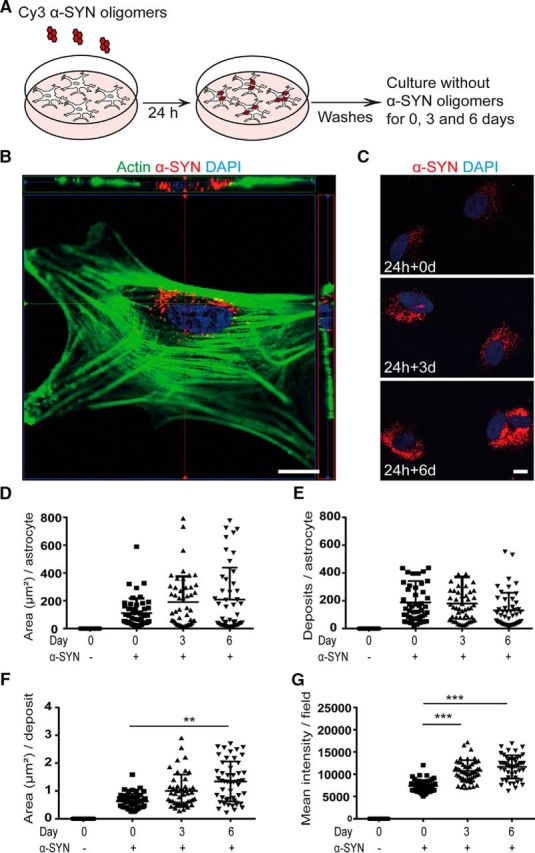
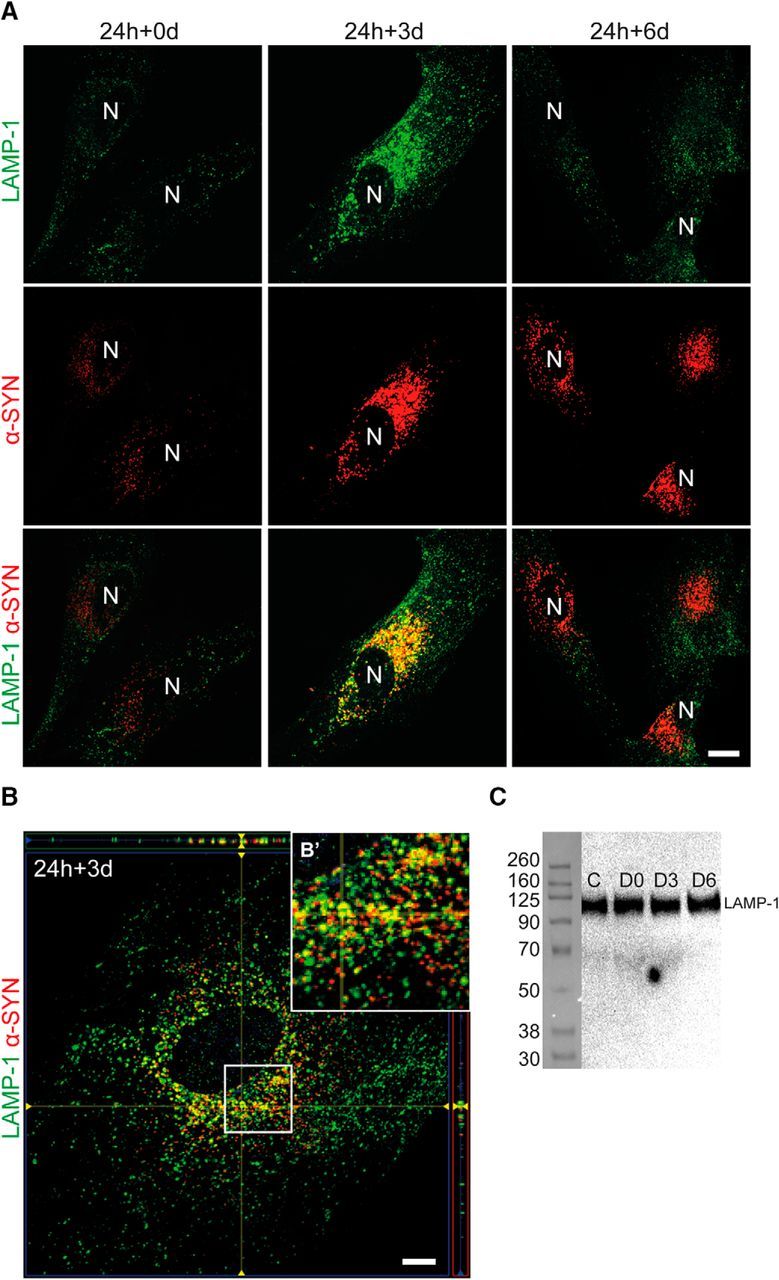
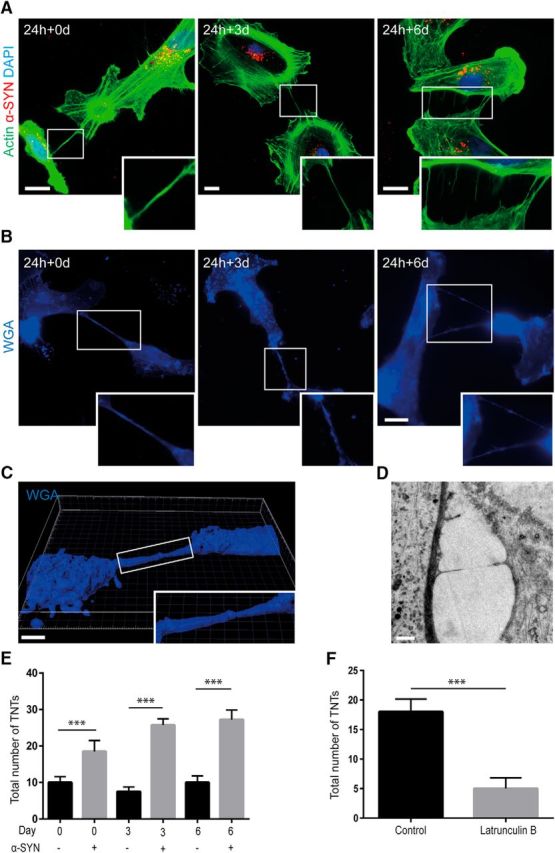
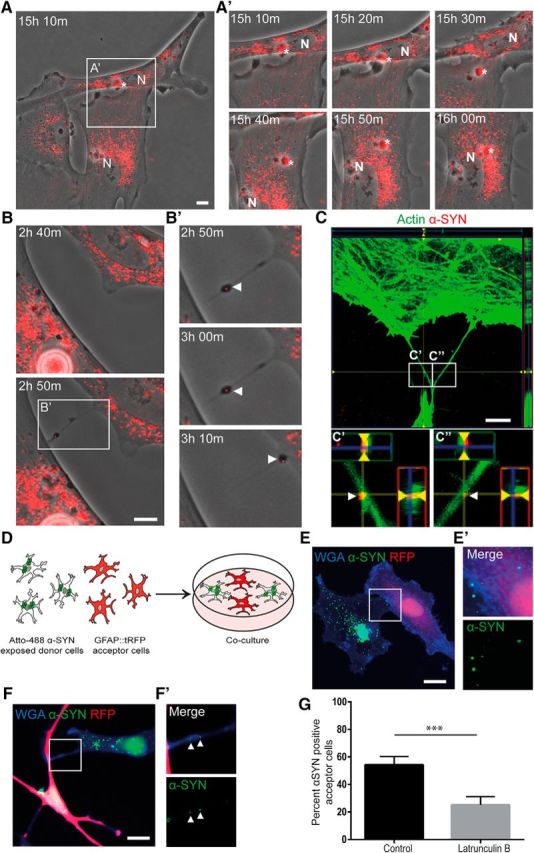
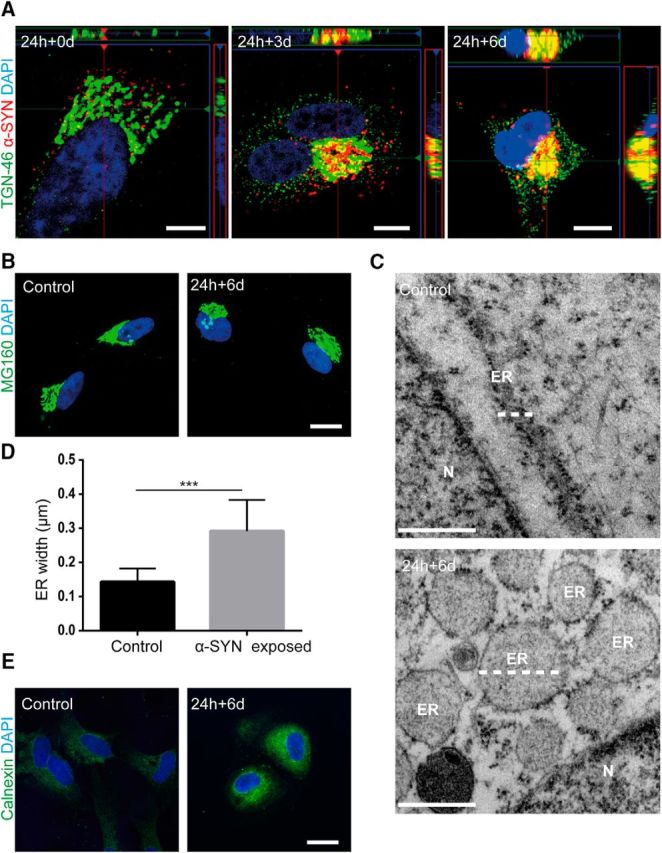
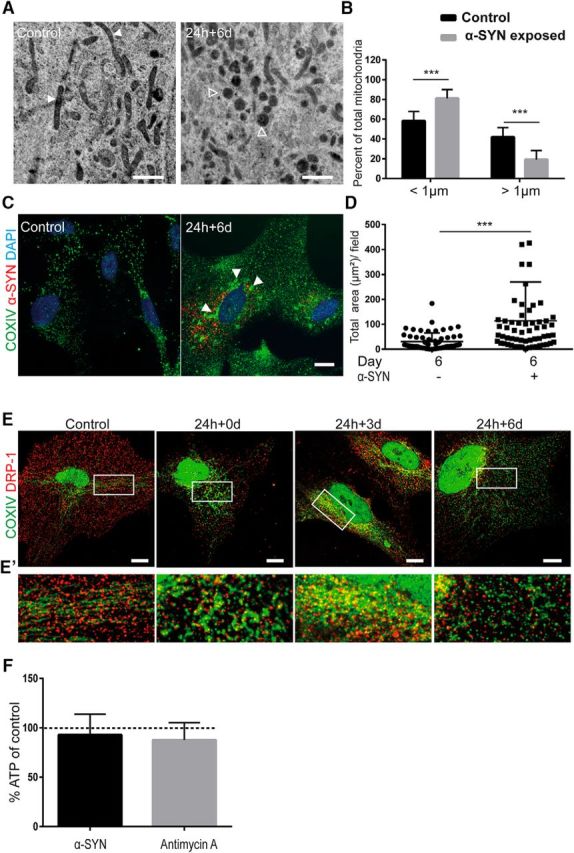
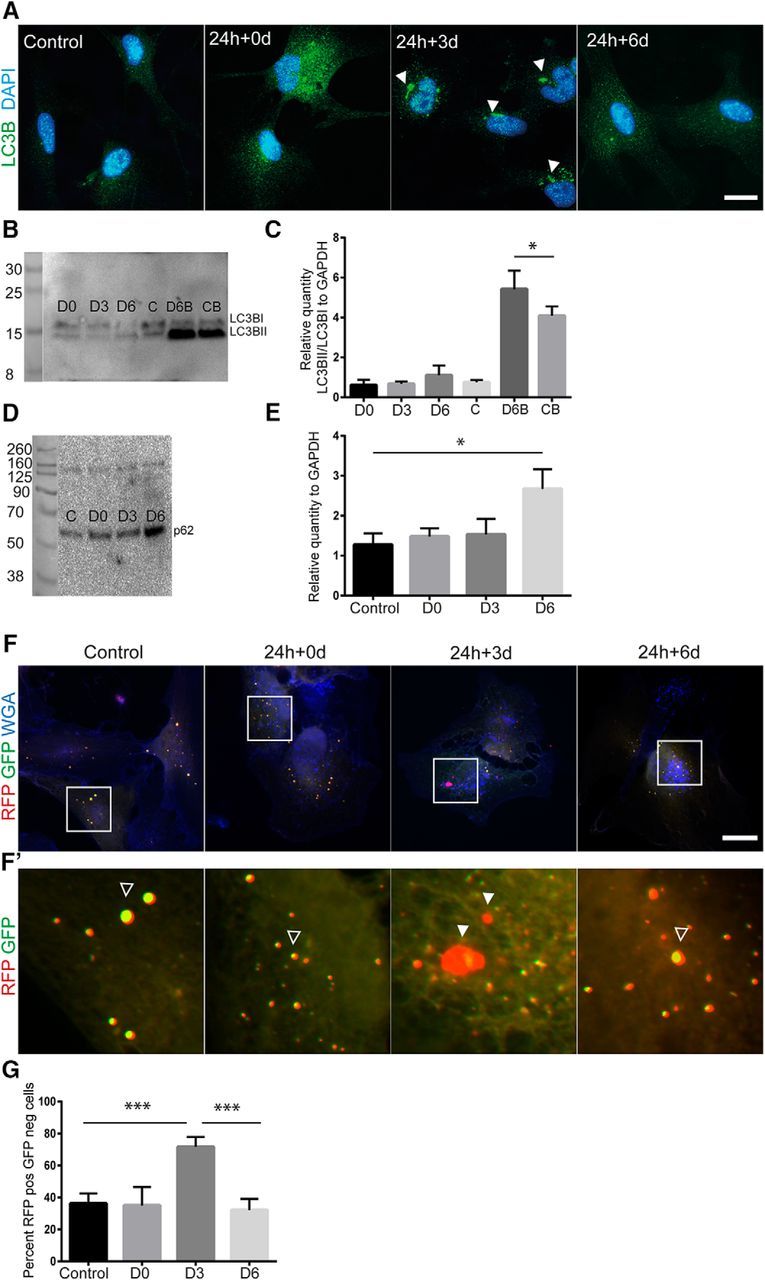
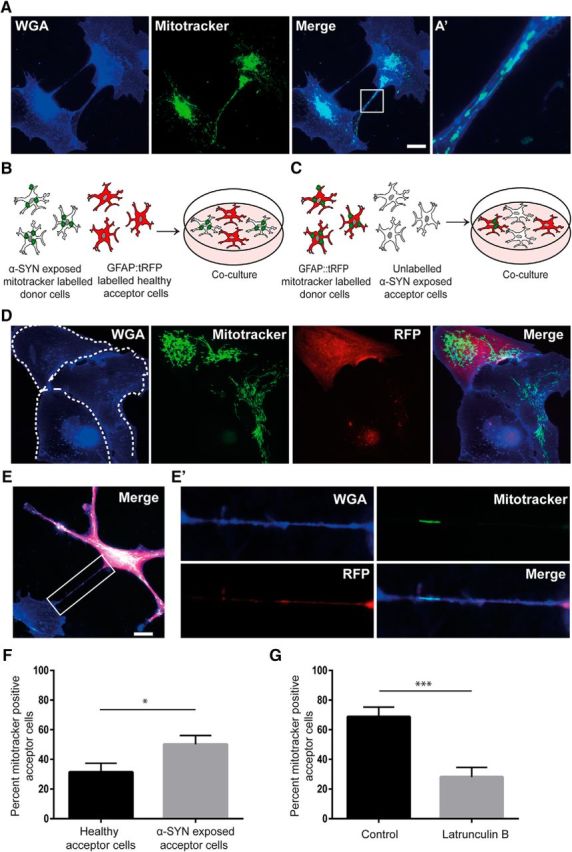
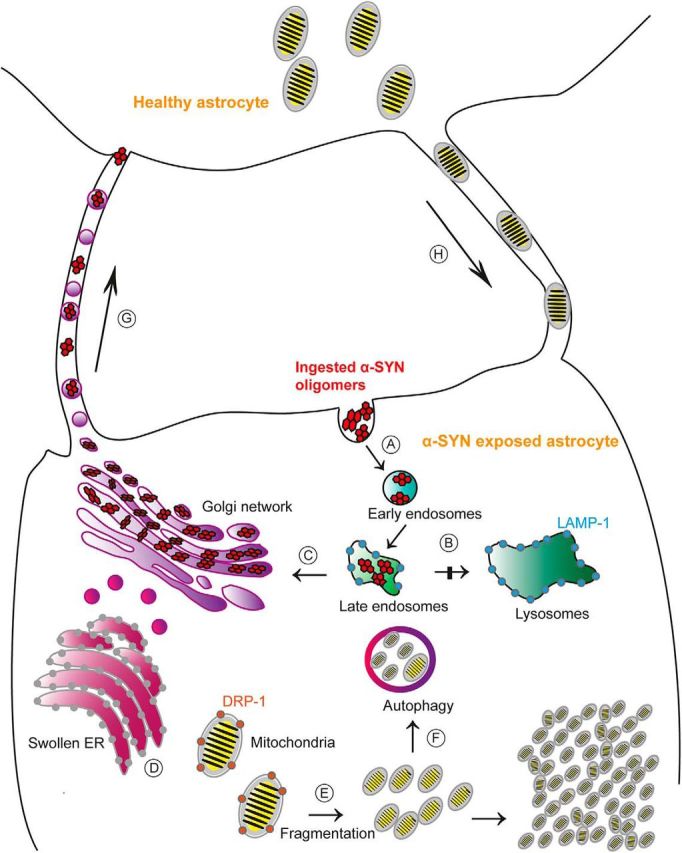
Many lines of evidence suggest that the Parkinson's disease (PD)-related protein α-synuclein (α-SYN) can propagate from cell to cell in a prion-like manner. However, the cellular mechanisms behind the spreading remain elusive. Here, we show that human astrocytes derived from embryonic stem cells actively transfer aggregated α-SYN to nearby astrocytes via direct contact and tunneling nanotubes (TNTs). Failure in the astrocytes' lysosomal digestion of excess α-SYN oligomers results in α-SYN deposits in the trans-Golgi network followed by endoplasmic reticulum swelling and mitochondrial disturbances. The stressed astrocytes respond by conspicuously sending out TNTs, enabling intercellular transfer of α-SYN to healthy astrocytes, which in return deliver mitochondria, indicating a TNT-mediated rescue mechanism. Using a pharmacological approach to inhibit TNT formation, we abolished the transfer of both α-SYN and mitochondria. Together, our results highlight the role of astrocytes in α-SYN cell-to-cell transfer, identifying possible pathophysiological events in the PD brain that could be of therapeutic relevance. SIGNIFICANCE STATEMENT Astrocytes are the major cell type in the brain, yet their role in Parkinson's disease progression remains elusive. Here, we show that human astrocytes actively transfer aggregated α-synuclein (α-SYN) to healthy astrocytes via direct contact and tunneling nanotubes (TNTs), rather than degrade it. The astrocytes engulf large amounts of oligomeric α-SYN that are subsequently stored in the trans-Golgi network region. The accumulation of α-SYN in the astrocytes affects their lysosomal machinery and induces mitochondrial damage. The stressed astrocytes respond by sending out TNTs, enabling intercellular transfer of α-SYN to healthy astrocytes. Our findings highlight an unexpected role of astrocytes in the propagation of α-SYN pathology via TNTs, revealing astrocytes as a potential target for therapeutic intervention.
Overview
The claims and statistics of this paper haven’t been checked yet.
Run the check — free, no account needed. It reads the open-access text and checks the sources it cites.
Integrity signals
Registry
Cites
Statistics
Figures
Verification
Claims the paper makes
The claims and statistics of this paper haven’t been checked yet.
Run the check — free, no account needed. It reads the open-access text and checks the sources it cites.
Claims other papers make about this one
Each is checked against this paper’s own text: does it say what the citing paper says it does?
The source backs part of the claim, not all of it — or backs it for a different population, condition or comparison.
In the citing paper
“In the AD and PD brain, both astrocytes and microglia acquire reactive, inflammatory phenotypes and can effectively phagocytose aggregated proteins and cell debris, as well as secrete various cytokines and inflammatory mediators [8–13].”
From Crosstalk between astrocytes and microglia results in increased degradation of α-synuclein and amyloid-β aggregates (2021) · cites this paper as [11]
Experimental — accuracy not yet measuredThe source backs part of the claim, not all of it — or backs it for a different population, condition or comparison.
In the citing paper
“Subsequently, stressed astrocytes respond by sending out tunneling nanotubes (TNTs), enabling intercellular transfer of pathogenic protein aggregates, as well as MHCII complexes to nearby cells [11, 24].”
From Crosstalk between astrocytes and microglia results in increased degradation of α-synuclein and amyloid-β aggregates (2021) · cites this paper as [11]
Experimental — accuracy not yet measuredThe source backs part of the claim, not all of it — or backs it for a different population, condition or comparison.
In the citing paper
“The concentrations were selected based on our previous studies [11, 12, 23, 28, 29].”
From Crosstalk between astrocytes and microglia results in increased degradation of α-synuclein and amyloid-β aggregates (2021) · cites this paper as [11]
Experimental — accuracy not yet measuredThe source backs part of the claim, not all of it — or backs it for a different population, condition or comparison.
In the citing paper
“The αSYN and Aβ accumulation result in severe cellular stress, indicated by lysosomal and mitochondrial deficiencies [11, 12, 23].”
From Crosstalk between astrocytes and microglia results in increased degradation of α-synuclein and amyloid-β aggregates (2021) · cites this paper as [11]
Experimental — accuracy not yet measuredThe source backs part of the claim, not all of it — or backs it for a different population, condition or comparison.
In the citing paper
“These observations are in line with our previous discoveries that astrocytes easily degrade αSYN and Aβ monomers, while they accumulate larger oligomers and fibrils [11, 12].”
From Crosstalk between astrocytes and microglia results in increased degradation of α-synuclein and amyloid-β aggregates (2021) · cites this paper as [11]
Experimental — accuracy not yet measured
The source backs part of the claim, not all of it — or backs it for a different population, condition or comparison.
In the citing paper
“Our previous results indicate that astrocytes are capable of transferring αSYN as well as MHCII to other astrocytes via direct membrane contact and through TNTs, implicating astrocytes as one of the important players in propagation of αSYN pathology [11, 24].”
From Crosstalk between astrocytes and microglia results in increased degradation of α-synuclein and amyloid-β aggregates (2021) · cites this paper as [11]
Experimental — accuracy not yet measuredThe source backs part of the claim, not all of it — or backs it for a different population, condition or comparison.
In the citing paper
“Microglia and astrocytes are known to be responsible for many inflammatory processes in affected brains, including phagocytosis of αSYN and Aβ aggregates, secretion of inflammatory mediators, and stimulation of the innate immune system [8–12].”
From Crosstalk between astrocytes and microglia results in increased degradation of α-synuclein and amyloid-β aggregates (2021) · cites this paper as [11]
Experimental — accuracy not yet measuredThe source backs part of the claim, not all of it — or backs it for a different population, condition or comparison.
In the citing paper
“We have previously shown that astrocytes accumulate large amounts of αSYN and Aβ aggregates, resulting in severe cellular stress [11, 12, 23, 24].”
From Crosstalk between astrocytes and microglia results in increased degradation of α-synuclein and amyloid-β aggregates (2021) · cites this paper as [11]
Experimental — accuracy not yet measuredThe cited source says what the claim attributes to it.
In the citing paper
“We have previously reported that cultured astrocytes accumulate αSYN and Aβ aggregates but not the monomeric form of the proteins [11, 12].”
From Crosstalk between astrocytes and microglia results in increased degradation of α-synuclein and amyloid-β aggregates (2021) · cites this paper as [11]
In the citing paper
“iii) αSyn has the ability to spread to adjacent cells via secretion in exosomes [209], uptake via endocytosis [210] and cell-surface receptors like HSPGs, or even direct neuron-to-neuron [211, 212] or astrocyte-to-neuron [213] transfer via tunneling nanotubes (Fig. 2).”
From α-synuclein in the pathophysiology of Alzheimer’s disease (2019) · cites this paper as [213]
Self-check
Percentages, sums and reported differences re-computed from the paper’s own numbers.
The self-check needs the paper’s full text.
Citations
Cites
Spillantini, M. G., Schmidt, M. L., Lee, V. M.-Y., Trojanowski, J. Q., Jakes, R., & Goedert, M. (1997) · Nature · doi:10.1038/42166 · Cited by 8,382
Guidelines for the use and interpretation of assays for monitoring autophagy (3rd edition).
Klionsky, D. J., Abdelmohsen, K., Abe, A., Abedin, M. J., Abeliovich, H., Acevedo Arozena, A., Adachi, H., Adams, C. M., Adams, P. D., Adeli, K., et al. (2016) · Autophagy · doi:10.1080/15548627.2015.1100356 · Cited by 5,894
Astrocytes: Biology and pathology
Sofroniew, M. V., & Vinters, H. V. (2010) · Acta Neuropathologica · doi:10.1007/s00401-009-0619-8 · Cited by 5,196
Spillantini, M. G., Crowther, R. A., Jakes, R., Hasegawa, M., & Goedert, M. (1998) · Proceedings of the National Academy of Sciences · doi:10.1073/pnas.95.11.6469 · Cited by 2,868
Nanotubular Highways for Intercellular Organelle Transport
Rustom, A., Saffrich, R., Markovic, I., Walther, P., & Gerdes, H.-H. (2004) · Science · doi:10.1126/science.1093133 · Cited by 2,038
Li, J.-Y., Englund, E., Holton, J. L., Soulet, D., Hagell, P., Lees, A. J., Lashley, T., Quinn, N. P., Rehncrona, S., Björklund, A., et al. (2008) · Nature Medicine · doi:10.1038/nm1746 · Cited by 1,845
Lewy body–like pathology in long-term embryonic nigral transplants in Parkinson's disease
Kordower, J. H., Chu, Y., Hauser, R. A., Freeman, T. B., & Olanow, C. W. (2008) · Nature Medicine · doi:10.1038/nm1747 · Cited by 1,722
Inclusion formation and neuronal cell death through neuron-to-neuron transmission of α-synuclein
Desplats, P., Lee, H.-J., Bae, E.-J., Patrick, C., Rockenstein, E., Crews, L., Spencer, B., Masliah, E., & Lee, S.-J. (2009) · Proceedings of the National Academy of Sciences · doi:10.1073/pnas.0903691106 · Cited by 1,485
In vivo demonstration that α-synuclein oligomers are toxic
Winner, B., Jappelli, R., Maji, S. K., Desplats, P. A., Boyer, L., Aigner, S., Hetzer, C., Loher, T., Vilar, M., Campioni, S., et al. (2011) · Proceedings of the National Academy of Sciences · doi:10.1073/pnas.1100976108 · Cited by 1,463
α-Synuclein Blocks ER-Golgi Traffic and Rab1 Rescues Neuron Loss in Parkinson's Models
Cooper, A. A., Gitler, A. D., Cashikar, A. G., Haynes, C. M., Hill, K. J., Bhullar, B., Liu, K., Xu, K., Strathearn, K. E., Liu, F., et al. (2006) · Science · doi:10.1126/science.1129462 · Cited by 1,411
Cited by
Sorted by citations
Protein transmission in neurodegenerative disease
Peng, C., Trojanowski, J. Q., & Lee, V. M.-Y. (2020) · Nature Reviews Neurology · doi:10.1038/s41582-020-0333-7 · Cited by 625
Intercellular mitochondrial transfer as a means of tissue revitalization
Liu, D., Gao, Y., Liu, J., Huang, Y., Yin, J., Feng, Y., Shi, L., Meloni, B. P., Zhang, C., Zheng, M., et al. (2021) · Signal Transduction and Targeted Therapy · doi:10.1038/s41392-020-00440-z · Cited by 403
α-synuclein in the pathophysiology of Alzheimer’s disease
Twohig, D., & Nielsen, H. M. (2019) · Molecular Neurodegeneration · doi:10.1186/s13024-019-0320-x · Cited by 374
Astrocyte Heterogeneity: Impact to Brain Aging and Disease
Matias, I., Morgado, J., & Gomes, F. C. A. (2019) · Frontiers in Aging Neuroscience · doi:10.3389/fnagi.2019.00059 · Cited by 387
New insights into the complex role of mitochondria in Parkinson’s disease
Grünewald, A., Kumar, K. R., & Sue, C. M. (2018) · Progress in Neurobiology · doi:10.1016/j.pneurobio.2018.09.003 · Cited by 375
Scheiblich, H., Dansokho, C., Mercan, D., Schmidt, S. V., Bousset, L., Wischhof, L., Eikens, F., Odainic, A., Spitzer, J., Griep, A., et al. (2021) · Cell · doi:10.1016/j.cell.2021.09.007 · Cited by 360
Mechanisms of secretion and spreading of pathological tau protein
Brunello, C. A., Merezhko, M., Uronen, R.-L., & Huttunen, H. J. (2020) · Cellular and Molecular Life Sciences · doi:10.1007/s00018-019-03349-1 · Cited by 304
Astrocytes: a double-edged sword in neurodegenerative diseases
Ding, Z.-B., Song, L., Wang, Q., Kumar, G., Yan, Y.-Q., & Kumar, G. (2021) · Neural Regeneration Research · doi:10.4103/1673-5374.306064 · Cited by 259
Rostami, J., Mothes, T., Kolahdouzan, M., Eriksson, O., Moslem, M., Bergström, J., Ingelsson, M., O’Callaghan, P., Healy, L. M., Falk, A., et al. (2021) · Journal of Neuroinflammation · doi:10.1186/s12974-021-02158-3 · Cited by 224
“Our previous results indicate that astrocytes are capable of transferring αSYN as well as MHCII to other astrocytes via direct membrane contact and through TNTs, implicating astrocytes as one of the important players in propagation of αSYN pathology [11, 24].”
BackgroundMethodResultInfluentialSelf-citationAstrocytes have the capacity to act as antigen-presenting cells in the Parkinson’s disease brain
Rostami, J., Fotaki, G., Sirois, J., Mzezewa, R., Bergström, J., Essand, M., Healy, L., & Erlandsson, A. (2020) · Journal of Neuroinflammation · doi:10.1186/s12974-020-01776-7 · Cited by 212
Self-citationScheiblich, H., Eikens, F., Wischhof, L., Opitz, S., Jüngling, K., Cserép, C., Schmidt, S. V., Lambertz, J., Bellande, T., Pósfai, B., et al. (2024) · Neuron · doi:10.1016/j.neuron.2024.06.029 · Cited by 207
Dutta, D., Jana, M., Majumder, M., Mondal, S., Roy, A., & Pahan, K. (2021) · Nature Communications · doi:10.1038/s41467-021-25767-1 · Cited by 195
Quick, J. D., Silva, C., Wong, J. H., Lim, K. L., Reynolds, R., Barron, A. M., Zeng, J., & Lo, C. H. (2023) · Journal of Neuroinflammation · doi:10.1186/s12974-023-02866-y · Cited by 203
Chakraborty, R., Nonaka, T., Hasegawa, M., & Zurzolo, C. (2023) · Cell Death & Disease · doi:10.1038/s41419-023-05835-8 · Cited by 190
Alpha-Synuclein Physiology and Pathology: A Perspective on Cellular Structures and Organelles
Bernal-Conde, L. D., Ramos-Acevedo, R., Reyes-Hernández, M. A., Balbuena-Olvera, A. J., Morales-Moreno, I. D., Argüero‐Sánchez, R., Schüle, B., & Guerra‐Crespo, M. (2020) · Frontiers in Neuroscience · doi:10.3389/fnins.2019.01399 · Cited by 197
Neuroinflammation and Parkinson’s Disease—From Neurodegeneration to Therapeutic Opportunities
Araújo, B., Caridade-Silva, R., Soares-Guedes, C., Martins‐Macedo, J., Gomes, E. D., Monteiro, S., & Teixeira, F. G. (2022) · Cells · doi:10.3390/cells11182908 · Cited by 209
The concept of alpha-synuclein as a prion-like protein: ten years after
Steiner, J. A., Quansah, E., & Brundin, P. (2018) · Cell and Tissue Research · doi:10.1007/s00441-018-2814-1 · Cited by 183
Sorrentino, Z. A., Giasson, B. I., & Chakrabarty, P. (2019) · Acta Neuropathologica · doi:10.1007/s00401-019-01977-2 · Cited by 179
Peering into tunneling nanotubes—The path forward
Cervantes, D. C., & Zurzolo, C. (2021) · The EMBO Journal · doi:10.15252/embj.2020105789 · Cited by 175
Copas, A. N. M., McComish, S. F., Fletcher, J. M., & Caldwell, M. A. (2021) · Frontiers in Neurology · doi:10.3389/fneur.2021.666737 · Cited by 186
Microglia and Astrocyte Function and Communication: What Do We Know in Humans?
Garland, E. F., Hartnell, I. J., & Boche, D. (2022) · Frontiers in Neuroscience · doi:10.3389/fnins.2022.824888 · Cited by 165
Glial phagocytic clearance in Parkinson’s disease
Tremblay, M.-E., Cookson, M. R., & Civiero, L. (2019) · Molecular Neurodegeneration · doi:10.1186/s13024-019-0314-8 · Cited by 152
Blood–brain barrier alterations and their impact on Parkinson’s disease pathogenesis and therapy
Lau, K., Kotzur, R., & Richter, F. (2024) · Translational Neurodegeneration · doi:10.1186/s40035-024-00430-z · Cited by 174
Tzioras, M., Davies, C., Newman, A., Jackson, R., & Spires‐Jones, T. (2019) · Neuropathology and Applied Neurobiology · doi:10.1111/nan.12529 · Cited by 147
The immune system in Parkinson's disease: what we know so far
Roodveldt, C., Bernardino, L. I., Çakmak, Ö. Ö., Dragić, M., Fladmark, K. E., Ertan, S., Aktaş, B., Pita, C., Ciglar, L., Garraux, G., et al. (2024) · Brain · doi:10.1093/brain/awae177 · Cited by 151
Pinnell, J. R., Cui, M., & Tieu, K. (2020) · Journal of Neurochemistry · doi:10.1111/jnc.15288 · Cited by 146
Intercellular Spread of Protein Aggregates in Neurodegenerative Disease
Davis, A. A., Leyns, C. E. G., & Holtzman, D. M. (2018) · Annual Review of Cell and Developmental Biology · doi:10.1146/annurev-cellbio-100617-062636 · Cited by 131
Alpha-Synuclein: Mechanisms of Release and Pathology Progression in Synucleinopathies
Brás, I. C., & Outeiro, T. F. (2021) · Cells · doi:10.3390/cells10020375 · Cited by 136
Inflammatory aspects of Alzheimer’s disease
Lucena, P. B., & Heneka, M. T. (2024) · Acta Neuropathologica · doi:10.1007/s00401-024-02790-2 · Cited by 152
Peelaerts, W., Bousset, L., Baekelandt, V., & Melki, R. (2018) · Cell and Tissue Research · doi:10.1007/s00441-018-2839-5 · Cited by 128
The Wnt/Ca2+ pathway is involved in interneuronal communication mediated by tunneling nanotubes
Vargas, J., Loría, F., Wu, Y.-J., Córdova, G., Nonaka, T., Bellow, S., Syan, S., Hasegawa, M., van Woerden, G. M., Trollet, C., et al. (2019) · The EMBO Journal · doi:10.15252/embj.2018101230 · Cited by 123
Prion-Like Mechanisms in Parkinson’s Disease
Ma, J., Gao, J., Wang, J., & Xie, A. (2019) · Frontiers in Neuroscience · doi:10.3389/fnins.2019.00552 · Cited by 134
Astrocyte-Neuron Metabolic Crosstalk in Neurodegeneration: A Mitochondrial Perspective
Mulica, P., Grünewald, A., & Pereira, S. L. (2021) · Frontiers in Endocrinology · doi:10.3389/fendo.2021.668517 · Cited by 126
Parkinson’s Disease–Associated LRRK2 Interferes with Astrocyte-Mediated Alpha-Synuclein Clearance
Streubel-Gallasch, L., Giusti, V., Sandre, M., Tessari, I., Plotegher, N., Giusto, E., Masato, A., Iovino, L., Battisti, I., Arrigoni, G., et al. (2021) · Molecular Neurobiology · doi:10.1007/s12035-021-02327-8 · Cited by 100
Self-citationAstrocytes Protect Human Dopaminergic Neurons from α-Synuclein Accumulation and Propagation
Tsunemi, T., Ishiguro, Y., Yoroisaka, A., Valdez, C., Miyamoto, K., Ishikawa, K., Saiki, S., Akamatsu, W., Hattori, N., & Krainc, D. (2020) · Journal of Neuroscience · doi:10.1523/jneurosci.0954-20.2020 · Cited by 118
Mitochondria on the move: Horizontal mitochondrial transfer in disease and health
Dong, L., Rohlena, J., Zobalová, R., Nahácka, Z., Rodriguez, A., Berridge, M. V., & Neužil, J. (2023) · The Journal of Cell Biology · doi:10.1083/jcb.202211044 · Cited by 118
Spreading of α-Synuclein and Tau: A Systematic Comparison of the Mechanisms Involved
Vasili, E., Dominguez‐Meijide, A., & Outeiro, T. F. (2019) · Frontiers in Molecular Neuroscience · doi:10.3389/fnmol.2019.00107 · Cited by 121
Rodríguez-Giraldo, M., González-Reyes, R. E., Ramírez-Guerrero, S., Bonilla-Trilleras, C. E., Guardo-Maya, S., & Nava-Mesa, M. O. (2022) · International Journal of Molecular Sciences · doi:10.3390/ijms232113630 · Cited by 122
Zyśk, M., Beretta, C., Naia, L., Dakhel, A., Påvénius, L., Brismar, H., Lindskog, M., Ankarcrona, M., & Erlandsson, A. (2023) · Journal of Neuroinflammation · doi:10.1186/s12974-023-02722-z · Cited by 115
Self-citationThe prion-like spreading of α-synuclein: From in vitro to in vivo models of Parkinson’s disease
Vargas, J., Grudina, C., & Zurzolo, C. (2019) · Ageing Research Reviews · doi:10.1016/j.arr.2019.01.012 · Cited by 112
Molecular Chaperones: A Double-Edged Sword in Neurodegenerative Diseases
Tittelmeier, J., Nachman, E., & Nussbaum-Krammer, C. I. (2020) · Frontiers in Aging Neuroscience · doi:10.3389/fnagi.2020.581374 · Cited by 114
Cell communication by tunneling nanotubes: Implications in disease and therapeutic applications
Mittal, R., Karhu, E., Wang, J., Delgado, S., Zukerman, R. J., Mittal, J., & Jhaveri, V. M. (2018) · Journal of Cellular Physiology · doi:10.1002/jcp.27072 · Cited by 107
Miao, J., Chen, L., Pan, X., Li, L.-Q., Zhao, B., & Lan, J. X. (2023) · Cellular and Molecular Neurobiology · doi:10.1007/s10571-023-01376-y · Cited by 121
Bidirectional Communication Between Microglia and Astrocytes in Neuroinflammation
Bhusal, A., Afridi, R., Lee, W., & Suk, K. (2022) · Current Neuropharmacology · doi:10.2174/1570159x21666221129121715 · Cited by 113
Alpha-Synuclein Targeting Therapeutics for Parkinson's Disease and Related Synucleinopathies
Menon, S. A., Armstrong, S. E. M., Hamzeh, A. M., Visanji, N. P., Sardi, S. P., & Tandon, A. (2022) · Frontiers in Neurology · doi:10.3389/fneur.2022.852003 · Cited by 108
Interactions between iron and α-synuclein pathology in Parkinson's disease
Chen, B., Wen, X., Jiang, H. F., Wang, J., Song, N., & Xie, J. (2019) · Free Radical Biology and Medicine · doi:10.1016/j.freeradbiomed.2019.06.024 · Cited by 107
Innate Immunity: A Common Denominator between Neurodegenerative and Neuropsychiatric Diseases
Novellino, F., Saccà, V., Donato, A., Zaffino, P., Spadea, M. F., Vismara, M. F. M., Arcidiacono, B., Malara, N., Presta, I., & Donato, G. (2020) · International Journal of Molecular Sciences · doi:10.3390/ijms21031115 · Cited by 107
The A1 astrocyte paradigm: New avenues for pharmacological intervention in neurodegeneration
Hinkle, J. T., Dawson, V. L., & Dawson, T. M. (2019) · Movement Disorders · doi:10.1002/mds.27718 · Cited by 100
Immune responses in the Parkinson's disease brain
Weiss, F. C., Labrador‐Garrido, A., Dzamko, N. L., & Halliday, G. M. (2022) · Neurobiology of Disease · doi:10.1016/j.nbd.2022.105700 · Cited by 100
Miranda, B. R. D., Rocha, E. M., Bai, Q., Ayadi, A. E., Hinkle, D., Burton, E. A., & Greenamyre, J. T. (2018) · Neurobiology of Disease · doi:10.1016/j.nbd.2018.04.008 · Cited by 99
Secretion and Uptake of α-Synuclein Via Extracellular Vesicles in Cultured Cells
Gustafsson, G., Lööv, C., Persson, E., Lázaro, D. F., Takeda, S., Bergström, J. J. E., Erlandsson, A., Sehlin, D., Balaj, L., György, B., et al. (2018) · Cellular and Molecular Neurobiology · doi:10.1007/s10571-018-0622-5 · Cited by 101
Self-citationMultiple System Atrophy: Recent Developments and Future Perspectives
Meissner, W. G., Fernagut, P., Dehay, B., Péran, P., Traon, A. P., Foubert‐Samier, A., Cuina, M. L., Bézard, E., Tison, F., & Rascol, O. (2019) · Movement Disorders · doi:10.1002/mds.27894 · Cited by 96
The role of natural killer cells in Parkinson’s disease
Earls, R. H., & Lee, J. (2020) · Experimental & Molecular Medicine · doi:10.1038/s12276-020-00505-7 · Cited by 94
Pathogenesis of α-Synuclein in Parkinson’s Disease: From a Neuron-Glia Crosstalk Perspective
Yi, S., Wang, L., Wang, H., Ho, M. S.-C., & Zhang, S. (2022) · International Journal of Molecular Sciences · doi:10.3390/ijms232314753 · Cited by 96
Tunneling nanotubes evoke pericyte/endothelial communication during normal and tumoral angiogenesis
Errede, M., Mangieri, D., Longo, G., Girolamo, F., de Trizio, I., Vimercati, A., Serio, G., Frei, K., Perris, R., & Virgintino, D. (2018) · Fluids and Barriers of the CNS · doi:10.1186/s12987-018-0114-5 · Cited by 88
Altay, M. F., Liu, A. K. L., Holton, J. L., Parkkinen, L., & Lashuel, H. A. (2022) · Acta Neuropathologica Communications · doi:10.1186/s40478-022-01468-8 · Cited by 85
Wang, C., Yang, T., Liang, M., Xie, J., & Song, N. (2021) · Translational Neurodegeneration · doi:10.1186/s40035-021-00265-y · Cited by 90
Alpha-Synuclein as a Prominent Actor in the Inflammatory Synaptopathy of Parkinson’s Disease
Cardinale, A., Calabrese, V., de Iure, A., & Picconi, B. (2021) · International Journal of Molecular Sciences · doi:10.3390/ijms22126517 · Cited by 79
Mechanisms of alpha-synuclein toxicity: An update and outlook
Brás, I. C., Xylaki, M., & Outeiro, T. F. (2019) · Progress in brain research · doi:10.1016/bs.pbr.2019.10.005 · Cited by 78
Proteostatic imbalance and protein spreading in amyotrophic lateral sclerosis
Cicardi, M. E., Marrone, L., Azzouz, M., & Trotti, D. (2021) · The EMBO Journal · doi:10.15252/embj.2020106389 · Cited by 75
Propagation of tau and α-synuclein in the brain: therapeutic potential of the glymphatic system
Lopes, D. M., Llewellyn, S. K., & Harrison, I. F. (2022) · Translational Neurodegeneration · doi:10.1186/s40035-022-00293-2 · Cited by 75
Liu, S., Hossinger, A., Heumüller, S.-E., Hornberger, A., Buravlova, O., Konstantoulea, K., Müller, S. A., Paulsen, L., Rousseau, F., Schymkowitz, J., et al. (2021) · Nature Communications · doi:10.1038/s41467-021-25855-2 · Cited by 72
Wiseman, J. A., Murray, H. C., Faull, R. L. M., Dragunow, M., Turner, C. P., Dieriks, B. V., & Curtis, M. A. (2024) · npj Parkinson s Disease · doi:10.1038/s41531-023-00614-w · Cited by 73
Stevenson, T. J., Murray, H. C., Turner, C. P., Faull, R. L. M., Dieriks, B. V., & Curtis, M. A. (2020) · Scientific Reports · doi:10.1038/s41598-020-63412-x · Cited by 70
Suppression of astrocytic autophagy by αB-crystallin contributes to α-synuclein inclusion formation
Lu, S., Guo, Y.-S., Liang, P., Zhang, S., Yin, S., Yin, Y., Wang, X., Ding, F., Gu, X., & Zhou, J. (2019) · Translational Neurodegeneration · doi:10.1186/s40035-018-0143-7 · Cited by 74
SARS-CoV-2: A Master of Immune Evasion
Rubio‐Casillas, A., Redwan, E. M. M. M., & Uversky, V. N. (2022) · Biomedicines · doi:10.3390/biomedicines10061339 · Cited by 72
Circadian clock protein BMAL1 broadly influences autophagy and endolysosomal function in astrocytes
McKee, C. A., Polino, A. J., King, M. W., & Musiek, E. S. (2023) · Proceedings of the National Academy of Sciences · doi:10.1073/pnas.2220551120 · Cited by 70
Henrich, M. T., Geibl, F. F., Lee, B., Chiu, W., Koprich, J. B., Brotchie, J. M., Timmermann, L., Decher, N., Matschke, L. A., & Oertel, W. H. (2018) · Acta Neuropathologica Communications · doi:10.1186/s40478-018-0541-1 · Cited by 70
Iorio, R., Petricca, S., Mattei, V., & Monache, S. D. (2024) · Journal of Translational Medicine · doi:10.1186/s12967-024-05047-4 · Cited by 65
Intracellular and Intercellular Mitochondrial Dynamics in Parkinson’s Disease
Valdinocci, D., Simões, R. F., Kovářová, J., Cunha‐Oliveira, T., Neužil, J., & Pountney, D. L. (2019) · Frontiers in Neuroscience · doi:10.3389/fnins.2019.00930 · Cited by 69
Astroglial and microglial contributions to iron metabolism disturbance in Parkinson's disease
Song, N., Wang, J., Jiang, H. F., & Xie, J. (2018) · Biochimica et Biophysica Acta (BBA) - Molecular Basis of Disease · doi:10.1016/j.bbadis.2018.01.008 · Cited by 63
Emerging Immunotherapies for Parkinson Disease
Zella, S. M. A., Metzdorf, J., Ciftci, E., Ostendorf, F., Muhlack, S., Gold, R., & Tönges, L. (2019) · Neurology and Therapy · doi:10.1007/s40120-018-0122-z · Cited by 64
Gut mucosal cells transfer α-synuclein to the vagus nerve
Chandra, R., Sokratian, A., Chavez, K. R., King, S., Swain, S. M., Snyder, J. C., West, A. B., & Liddle, R. A. (2023) · JCI Insight · doi:10.1172/jci.insight.172192 · Cited by 65
Russ, K., Teku, G., Bousset, L., Redeker, V., Piel, S., Savchenko, E., Pomeshchik, Y., Savistchenko, J., Stummann, T. C., Azevedo, C., et al. (2021) · Cell Reports · doi:10.1016/j.celrep.2021.108895 · Cited by 61
Self-citationChi, A., Yang, B., Dai, H., Li, X., Mo, J., Gao, Y., Chen, Z., Feng, X. G., Ma, M., Li, Y., et al. (2024) · Nature Communications · doi:10.1038/s41467-024-46190-2 · Cited by 60
The Cell Biology of Tau Secretion
Merezhko, M., Uronen, R., & Huttunen, H. J. (2020) · Frontiers in Molecular Neuroscience · doi:10.3389/fnmol.2020.569818 · Cited by 65
Sheng, L., Stewart, T., Yang, D., Thorland, E., Soltys, D., Aro, P., Khrisat, T., Xie, Z., Li, N., Liu, Z., et al. (2020) · Acta Neuropathologica Communications · doi:10.1186/s40478-020-00983-w · Cited by 56
Intercellular Communication in the Brain through Tunneling Nanotubes
Khattar, K. E., Safi, J., Rodriguez, A., & Vignais, M. (2022) · Cancers · doi:10.3390/cancers14051207 · Cited by 54
Long-term effects of amyloid-beta deposits in human iPSC-derived astrocytes
Konstantinidis, E., Dakhel, A., Beretta, C., & Erlandsson, A. (2023) · Molecular and Cellular Neuroscience · doi:10.1016/j.mcn.2023.103839 · Cited by 56
Self-citationMotor neuron loss and neuroinflammation in a model of α-synuclein-induced neurodegeneration
Sorrentino, Z. A., Xia, Y., Funk, C., Riffe, C. J., Rutherford, N. J., Ceballos Diaz, C., Sacino, A. N., Price, N. D., Golde, T. E., Giasson, B. I., et al. (2018) · Neurobiology of Disease · doi:10.1016/j.nbd.2018.09.005 · Cited by 54
Molecular mechanisms of mitochondrial quality control
Li, W., Gui, Y., Guo, C., Huang, Y.-T., Liu, Y., Yu, X., Zhang, H., Wang, J., Liu, R., Mahaman, Y. A. R., et al. (2025) · Translational Neurodegeneration · doi:10.1186/s40035-025-00505-5 · Cited by 57
Brain clearance of protein aggregates: a close-up on astrocytes
Giusti, V., Kaur, G., Giusto, E., & Civiero, L. (2024) · Molecular Neurodegeneration · doi:10.1186/s13024-024-00703-1 · Cited by 54
The role of glia in protein aggregation
Li, Q., & Haney, M. S. (2020) · Neurobiology of Disease · doi:10.1016/j.nbd.2020.105015 · Cited by 54
Neurons and Glia Interplay in α-Synucleinopathies
Mavroeidi, P., & Xilouri, M. (2021) · International Journal of Molecular Sciences · doi:10.3390/ijms22094994 · Cited by 55
Association of Glial Activation and α-Synuclein Pathology in Parkinson’s Disease
Wang, R., Ren, H., Kaznacheyeva, E. V., Lu, X., & Wang, G. (2022) · Neuroscience Bulletin · doi:10.1007/s12264-022-00957-z · Cited by 51
Role of Astrocytes in Parkinson’s Disease Associated with Genetic Mutations and Neurotoxicants
Kim, S., Pajarillo, E. A. B., Nyarko‐Danquah, I., Aschner, M., & Lee, E.-S. (2023) · Cells · doi:10.3390/cells12040622 · Cited by 60
Walters, H., & Cox, L. S. (2021) · Oxidative Medicine and Cellular Longevity · doi:10.1155/2021/6697861 · Cited by 51
Formicola, B., D’Aloia, A., Magro, R. D., Stucchi, S., Rigolio, R., Ceriani, M., & Re, F. (2019) · Frontiers in Bioengineering and Biotechnology · doi:10.3389/fbioe.2019.00403 · Cited by 48
Bayati, A., & McPherson, P. S. (2024) · Journal of Biological Chemistry · doi:10.1016/j.jbc.2024.107742 · Cited by 47
Alpha-synuclein and the prion hypothesis in Parkinson's disease
Melki, R. (2018) · Revue Neurologique · doi:10.1016/j.neurol.2018.08.002 · Cited by 52
Prionoid Proteins in the Pathogenesis of Neurodegenerative Diseases
Wells, C., Brennan, S. E., Keon, M., & Saksena, N. (2019) · Frontiers in Molecular Neuroscience · doi:10.3389/fnmol.2019.00271 · Cited by 46
Tunneling Nanotubes Facilitate Intercellular Protein Transfer and Cell Networks Function
Turos-Korgul, L., Kolba, M. D., Chrościcki, P., Zieminska, A., & Piwocka, K. (2022) · Frontiers in Cell and Developmental Biology · doi:10.3389/fcell.2022.915117 · Cited by 44
van der Gaag, B., Deshayes, N. A. C., Brevé, J. J. P., Bol, J. G. J. M., Jonker, A. J., Hoozemans, J. J. M., Courade, J., & van de Berg, W. D. J. (2024) · Acta Neuropathologica · doi:10.1007/s00401-023-02657-y · Cited by 45
Eltom, K., Mothes, T., Libard, S., Ingelsson, M., & Erlandsson, A. (2024) · Acta Neuropathologica Communications · doi:10.1186/s40478-024-01745-8 · Cited by 46
Self-citationAstrocytic uptake of neuronal corpses promotes cell‐to‐cell spreading of tau pathology
Mothes, T., Portal, B., Konstantinidis, E., Eltom, K., Libard, S., Streubel-Gallasch, L., Ingelsson, M., Rostami, J., Lindskog, M., & Erlandsson, A. (2023) · Acta Neuropathologica Communications · doi:10.1186/s40478-023-01589-8 · Cited by 43
Self-citationZella, M. A. S., Metzdorf, J., Ostendorf, F., Maass, F., Muhlack, S., Gold, R., Haghikia, A., & Tönges, L. (2019) · Cells · doi:10.3390/cells8020105 · Cited by 43
Enteroendocrine cells: the gatekeepers of microbiome-gut-brain communication
Grundeken, E., & Aidy, S. E. (2025) · npj Biofilms and Microbiomes · doi:10.1038/s41522-025-00810-x · Cited by 48
Palese, F., Rakotobé, M., & Zurzolo, C. (2025) · Physiological Reviews · doi:10.1152/physrev.00023.2024 · Cited by 44
Selective Neuronal Death in Neurodegenerative Diseases: The Ongoing Mystery.
Subramaniam, S. (2019) · Europe PMC (PubMed Central) · Cited by 40
Astrocytes: The Stars in Neurodegeneration?
Dittlau, K. S., & Freude, K. (2024) · Biomolecules · doi:10.3390/biom14030289 · Cited by 39
Metadata
- Authors
- Rostami, J., Holmqvist, S., Lindström, V., Sigvardson, J., Westermark, G. T., Ingelsson, M., Bergström, J., Roybon, L., & Erlandsson, A.
- Affiliations
- Uppsala University (SE)
- Lund University (SE)
- Corresponding author
- Erlandsson, Anna
- ORCID
- Venue
- The Journal of Neuroscience
- Publisher
- Society for Neuroscience
- Published
- 2017-10-31
- Volume
- 37
- Issue
- 49
- Pages
- 11835-11853
- ISSN
- 0270-6474 (ISSN-L)
- 1529-2401
- PMC
- PMC5719970
- OpenAlex
- W2765364382
- Cited by
- 339
- References
- 75
- Citations by year
- 2026: 45 · 2025: 30 · 2024: 64 · 2023: 47 · 2022: 34 · 2021: 38 · 2020: 26 · 2019: 31 · 2018: 24
- FWCI
- 15.43
- Type
- journal article
- Language
- en
- Open access
- hybrid
- doi.org
- Locations
- Journal of Neuroscience (publishedVersion, cc-by)
- Europe PMC (PubMed Central) (publishedVersion, cc-by)
- PubMed Central (publishedVersion, cc-by)
- PubMed (publishedVersion)
- Uppsala University Publications (Uppsala University) (submittedVersion, other-oa)
- Lund University Publications (Lund University) (submittedVersion)
- Apollo (University of Cambridge) (submittedVersion, cc-by)
- Apollo (cc-by)
- Funders
- Åke Wiberg Stiftelse
- Innovationsfonden
- Vetenskapsrådet
- Topics
- Health Sciences › Medicine › Clinical Neurology › Parkinson's Disease Mechanisms and Treatments
- Life Sciences › Neuroscience › Neurology › Neuroinflammation and Neurodegeneration Mechanisms
- Life Sciences › Neuroscience › Cellular and Molecular Neuroscience › Alzheimer's disease research and treatments
- Keywords
- alpha-synuclein, Parkinson's disease, tunneling nanotubes, astrocytes, prion-like propagation, intercellular transfer, lysosomal degradation, trans-Golgi network, mitochondrial damage, endoplasmic reticulum stress, mitochondrial transfer
- MeSH terms
- Astrocytes, Cell Communication, Cells, Cultured, Humans, Nanotubes, alpha-Synuclein, Embryonic Stem Cells
About these checks
Registry, retraction, Cites and statistics results are computed, not judged, with one exception: a printed reference that no index lists is read once by a model before it counts as a citation error. Claims are extracted by a model and kept only when their quote appears verbatim in the text; each cited source is then checked, with a model’s help, for whether it says what the claim relies on. Those verdicts can be wrong — read the claim’s quote and the cited source before relying on one.
Statistics and arithmetic are recomputed, not judged.
Confidence bands are shown only for fields calibrated on our annotated test set. None is calibrated yet, so no band is shown.
What counts as a claim ›How we measure confidence ›How we check this ›
Are you an author, or do you see a problem with this page? Request a review
