

The DOI matches its Crossref record; 4 of the 4 references it cites were found in a registry or an index.
Neuronal and psychophysical sensitivity to motion signals in extrastriate area MST of the macaque monkey
Abstract
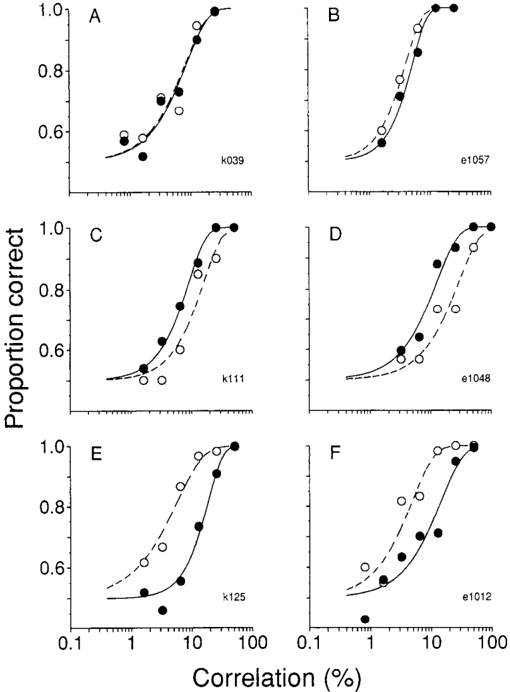
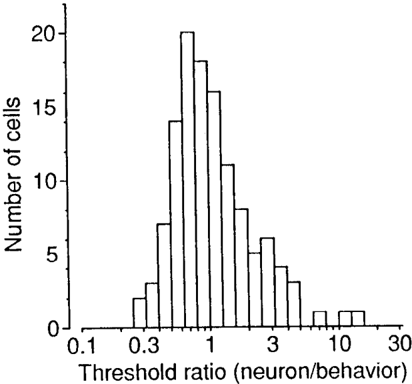
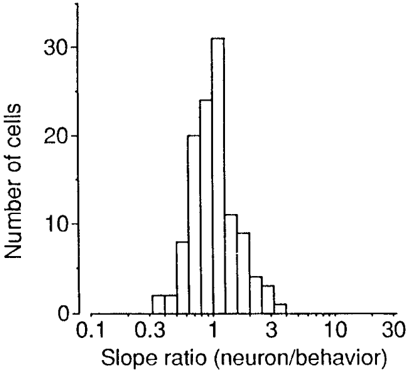
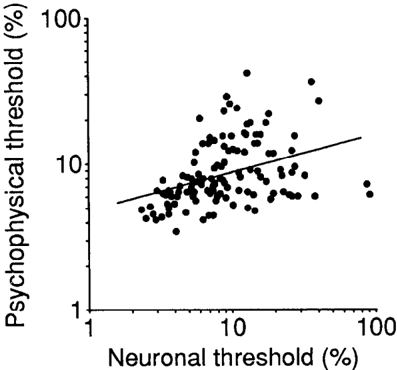
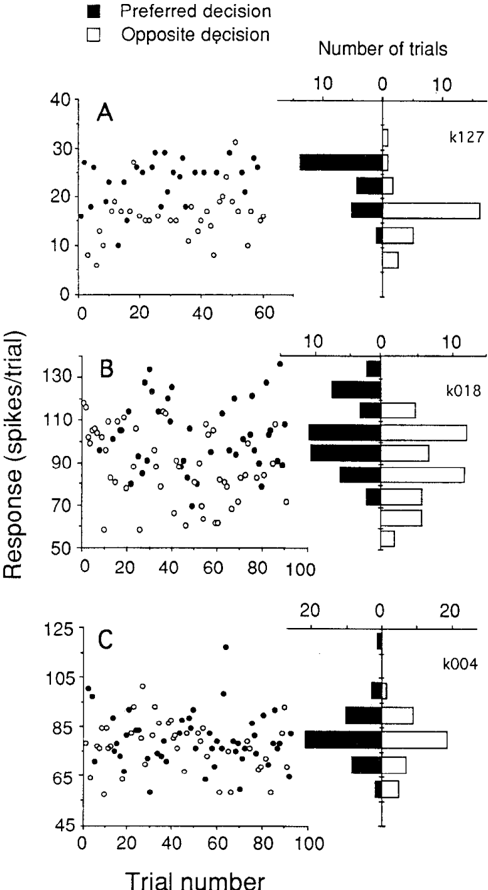
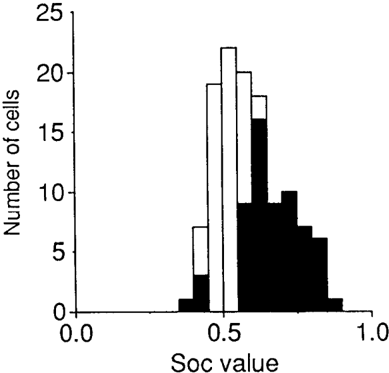
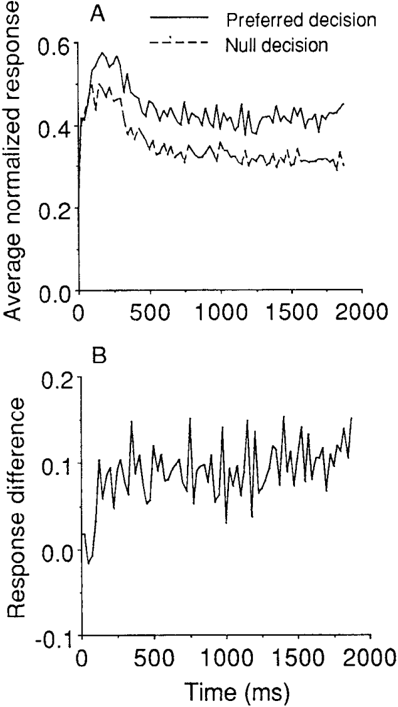
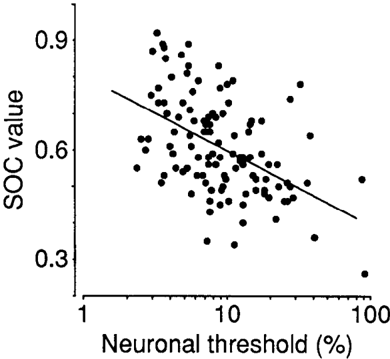
We recorded the responses of single neurons in extrastriate area MST while rhesus monkeys discriminated the direction of motion in a set of stochastic visual displays. By varying systematically the strength of a coherent motion signal within the visual display, we were able to measure simultaneously the monkeys' psychophysical thresholds for direction discrimination and the responses of single neurons to the same motion signals. Neuronal thresholds for reliably signaling the direction of motion in the visual display were calculated from the measured responses using a method based in signal detection theory. Neurons in MST were exquisitely sensitive to motion signals in the display, having thresholds for discriminating the direction of coherent motion that were, on average, equal to the psychophysical thresholds of the monkeys. For many MST neurons, the intensity of the response was correlated with the monkey's psychophysical judgements for repeated presentations of a given near-threshold stimulus; the monkey tended to choose the preferred direction of the neuron under study when that neuron responded more strongly to the stimulus. In both of these respects, MST neurons were indistinguishable from neurons in extrastriate area MT, a major source of afferent input to MST. In a second set of experiments, we found that both of these results held true in the face of pronounced manipulations of the visual stimulus. Severe reductions in stimulus size and speed, for example, compromised neuronal and psychophysical sensitivities by similar amounts so that the average neuronal and psychophysical thresholds remained approximately equal. In addition, the trial-to-trial covariation of neuronal response and perceptual decision was unaffected by our stimulus manipulations. Thus, MST neurons carry signals appropriate for supporting psychophysical performance on our task over an impressively wide range of stimulus configurations.
Overview
The claims and statistics of this paper haven’t been checked yet.
Run the check — free, no account needed. It reads the open-access text and checks the sources it cites.
Integrity signals
Registry
Cites
Statistics
Figures
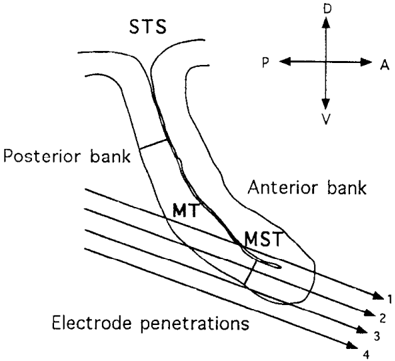
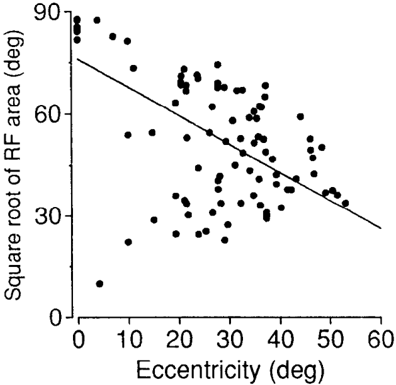
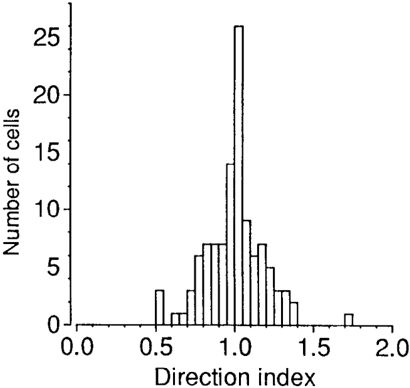
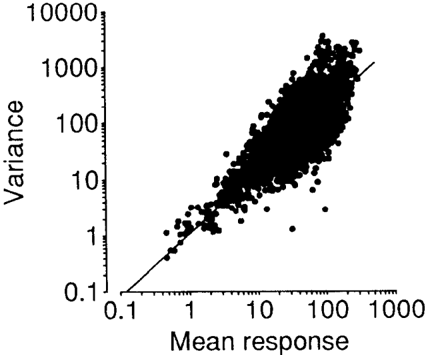
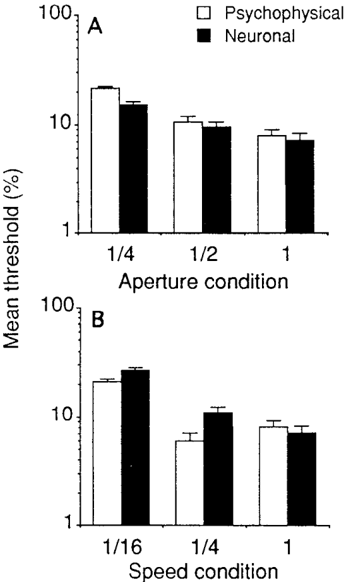
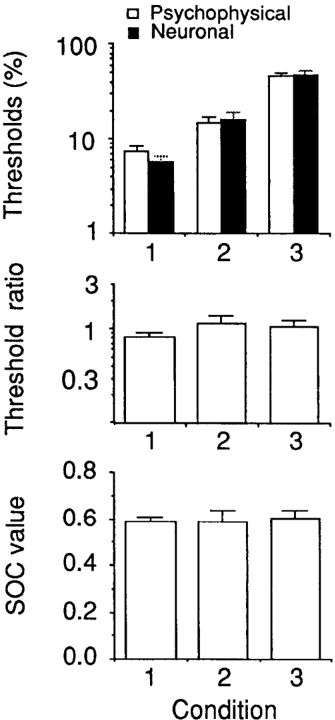
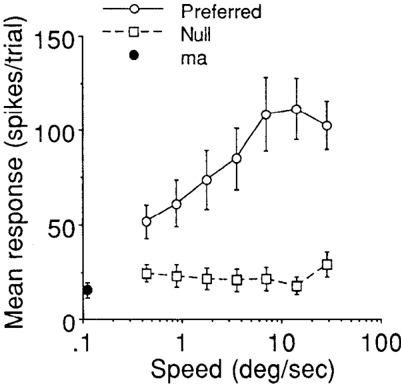
Verification
Claims the paper makes
The claims and statistics of this paper haven’t been checked yet.
Run the check — free, no account needed. It reads the open-access text and checks the sources it cites.
Claims other papers make about this one
Each is checked against this paper’s own text: does it say what the citing paper says it does?
The cited source says what the claim attributes to it.
In the citing paper
“The relationship between single neuron activity in LIP and RT might therefore be likened to a similar weak relationship between the activity of single neurons in MT and the monkey's choice, so-called choice probability”
From Response of Neurons in the Lateral Intraparietal Area during a Combined Visual Discrimination Reaction Time Task (2002) · cites this paper as Celebrini and Newsome, 1994
Self-check
Percentages, sums and reported differences re-computed from the paper’s own numbers.
The self-check needs the paper’s full text.
Citations
Cites
Distributed hierarchical processing in the primate cerebral cortex
Felleman, D. J., & Van Essen, D. C. (1991) · Cerebral Cortex · doi:10.1093/cercor/1.1.1 · Cited by 7,783
Maunsell, J., & van Essen, D. (1983) · The Journal of Neuroscience · doi:10.1523/jneurosci.03-12-02563.1983 · Cited by 1,602
Cortical microstimulation influences perceptual judgements of motion direction
Salzman, C. D., Britten, K. H., & Newsome, W. T. (1990) · Nature · doi:10.1038/346174a0 · Cited by 881 · cited 1×
“…pathway, we have produced several lines of evidence that monkeys use directional information supplied by MT neurons to form perceptual judgements during our psychophysical task (Newsome and Pare, 1988; Newsome et al., 1989; Salzman et al., 1990, 1992; Britten et al., 1992; Murasugi et al., 1993).”
BackgroundSelf-citationResponses of neurons in macaque MT to stochastic motion signals
Britten, K. H., Shadlen, M. N., Newsome, W. T., & Movshon, J. A. (1993) · Visual Neuroscience · doi:10.1017/s0952523800010269 · Cited by 594
Self-citation
Research works printed but not linked: 4
- Albright TD (1993) Cortical processing of visual motion. In: Visual motion and its role in the stabilization of gaze (Miles FA, Wallman J, eds), pp 177-201. New York: Elsevier.
- Green DM, Swets JA (1966) Signal detection theory and psycho- physics. New York: Wiley.
- Hawken MJ, Parker AJ (1990) Detection and discrimination mech- anisms in the striate cortex of the Old-World monkey. In: Vision: coding and efficiency (Blakemore C, ed), pp 103-l 16. Cambridge: Cambridge UP.
- Newsome WT, B&ten KH, Movshon JA, Shadlen M (1989) Single neurons and the perception of visual motion. In: Neural mechanisms of visual perception. Proceedings of the retina research foundation (Lam DM-K, Gilbert CD, eds), pp 171-198. The Woodlands, TX: Portfolio.
Cited by
Sorted by citations
Neural Basis of a Perceptual Decision in the Parietal Cortex (Area LIP) of the Rhesus Monkey
Shadlen, M. N., & Newsome, W. T. (2001) · Journal of Neurophysiology · doi:10.1152/jn.2001.86.4.1916 · Cited by 1,755
Self-citationRoitman, J. D., & Shadlen, M. N. (2002) · The Journal of Neuroscience · doi:10.1523/jneurosci.22-21-09475.2002 · Cited by 1,589
A relationship between behavioral choice and the visual responses of neurons in macaque MT
Britten, K. H., Newsome, W. T., Shadlen, M. N., Celebrini, S., & Movshon, J. A. (1996) · Visual Neuroscience · doi:10.1017/s095252380000715x · Cited by 1,049
Self-citationNeural correlates of a decision in the dorsolateral prefrontal cortex of the macaque
Kim, J.-N., & Shadlen, M. N. (1999) · Nature Neuroscience · doi:10.1038/5739 · Cited by 950
Shadlen, M., Britten, K., Newsome, W., & Movshon, J. (1996) · The Journal of Neuroscience · doi:10.1523/jneurosci.16-04-01486.1996 · Cited by 824
Self-citationSENSE AND THE SINGLE NEURON: Probing the Physiology of Perception
Parker, A. J., & Newsome, W. T. (1998) · Annual Review of Neuroscience · doi:10.1146/annurev.neuro.21.1.227 · Cited by 801
Self-citationMotion perception: seeing and deciding.
Shadlen, M. N., & Newsome, W. T. (1996) · Proceedings of the National Academy of Sciences · doi:10.1073/pnas.93.2.628 · Cited by 723
Self-citationA role for neural integrators in perceptual decision making
Mazurek, M. E., Roitman, J. D., Ditterich, J., & Shadlen, M. N. (2003) · Cerebral Cortex · doi:10.1093/cercor/bhg097 · Cited by 620
Neural correlates of multisensory cue integration in macaque MSTd
Gu, Y., Angelaki, D. E., & DeAngelis, G. C. (2008) · Nature Neuroscience · doi:10.1038/nn.2191 · Cited by 554
Neural correlates of perceptual learning in a sensory-motor, but not a sensory, cortical area
Law, C.-T., & Gold, J. I. (2008) · Nature Neuroscience · doi:10.1038/nn2070 · Cited by 516
Dynamics of neuronal responses in macaque MT and VIP during motion detection
Cook, E. P., & Maunsell, J. H. R. (2002) · Nature Neuroscience · doi:10.1038/nn924 · Cited by 289
Neural Mechanisms of Saccadic Suppression
Thiele, A., Henning, P., Kubischik, M., & Hoffmann, K.-P. (2002) · Science · doi:10.1126/science.1068788 · Cited by 278
Processing of global, but not local, motion direction is deficient in schizophrenia
Chen, Y. (2003) · Schizophrenia Research · doi:10.1016/s0920-9964(02)00222-0 · Cited by 183
Origins of choice-related activity in mouse somatosensory cortex
Yang, H., Kwon, S. E., Severson, K. S., & O'Connor, D. H. (2016) · Nature Neuroscience · doi:10.1038/nn.4183 · Cited by 180
“We did this to understand variability in cortical spike rate, which has been widely observed to predict choice 1,2,4,6–11,13,14 .”
InfluentialRepresentation of accumulating evidence for a decision in two parietal areas
de Lafuente, V., Jazayeri, M., & Shadlen, M. N. (2015) · The Journal of Neuroscience · doi:10.1523/jneurosci.2451-14.2015 · Cited by 162
“The random-dot motion task is useful for studying this process because (1) its solution requires integration of evidence across space and time and (2) a neural representation of the momentary evidence has been established in areas MT and MST (Salzman et al., 1990; Celebrini and Newsome, 1994; Ditterich et al., 2003).”
BackgroundTemporally Extended Dopamine Responses to Perceptually Demanding Reward-Predictive Stimuli
Nomoto, K., Schultz, W., Watanabe, T., & Sakagami, M. (2010) · The Journal of Neuroscience · doi:10.1523/jneurosci.4828-09.2010 · Cited by 158
Lumer, E. (1997) · Cerebral Cortex · doi:10.1093/cercor/7.3.228 · Cited by 103
Khalvati, K., Kiani, R., & Rao, R. P. N. (2021) · Nature Communications · doi:10.1038/s41467-021-25419-4 · Cited by 64
Prior knowledge of illumination for 3D perception in the human brain
Gerardin, P., Kourtzi, Z., & Mamassian, P. (2010) · Proceedings of the National Academy of Sciences · doi:10.1073/pnas.1006285107 · Cited by 57
Metadata
- Authors
- Celebrini, S., & Newsome, W.
- Venue
- The Journal of Neuroscience
- Publisher
- Society for Neuroscience
- Published
- 1994-07-01
- Volume
- 14
- Issue
- 7
- Pages
- 4109-4124
- ISSN
- 0270-6474
- 1529-2401
- Cited by
- 232
- References
- 4
- Language
- en
About these checks
Registry, retraction, Cites and statistics results are computed, not judged, with one exception: a printed reference that no index lists is read once by a model before it counts as a citation error. Claims are extracted by a model and kept only when their quote appears verbatim in the text; each cited source is then checked, with a model’s help, for whether it says what the claim relies on. Those verdicts can be wrong — read the claim’s quote and the cited source before relying on one.
Statistics and arithmetic are recomputed, not judged.
Confidence bands are shown only for fields calibrated on our annotated test set. None is calibrated yet, so no band is shown.
What counts as a claim ›How we measure confidence ›How we check this ›
Are you an author, or do you see a problem with this page? Request a review
