

Genetically engineered mouse models in oncology research and cancer medicine
Open accessThe DOI matches its Crossref record; 167 of the 168 references it cites were found in a registry or an index.
Abstract
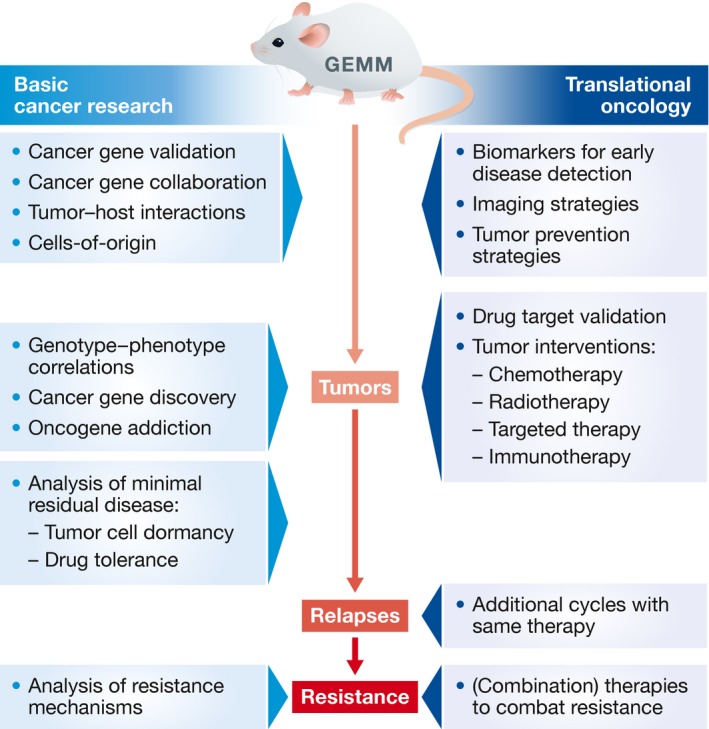
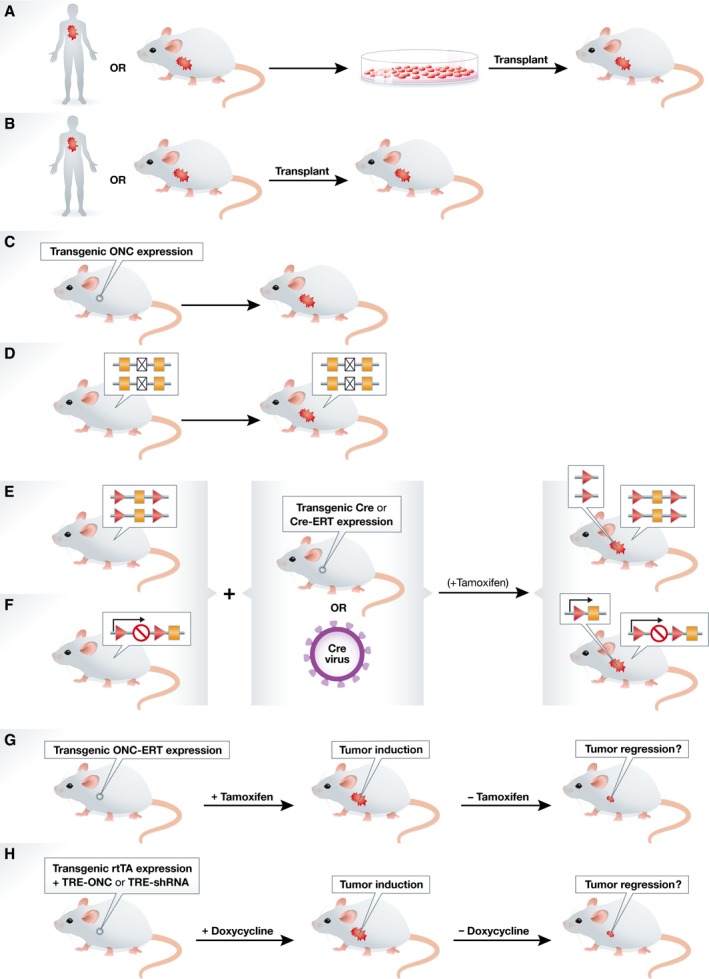
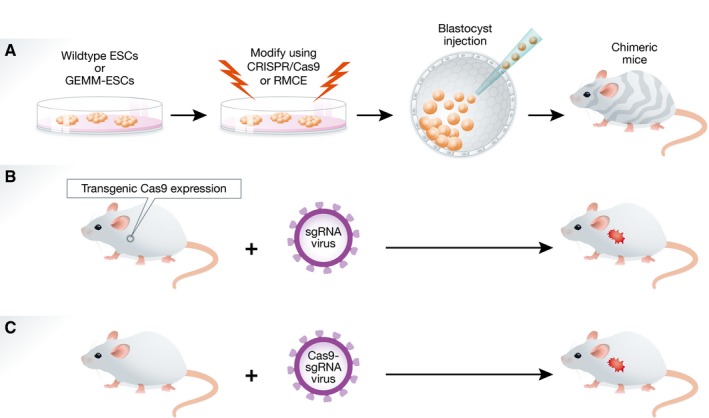
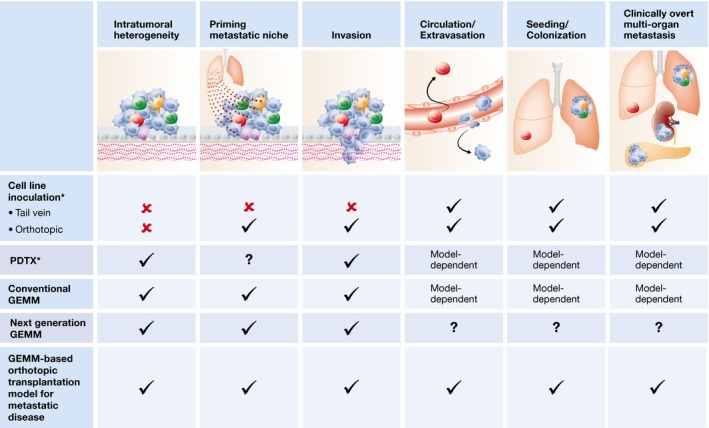
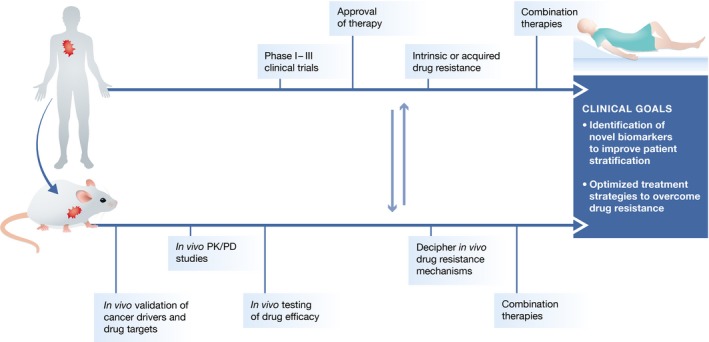
Genetically engineered mouse models (GEMMs) have contributed significantly to the field of cancer research. In contrast to cancer cell inoculation models, GEMMs develop de novo tumors in a natural immune‐proficient microenvironment. Tumors arising in advanced GEMMs closely mimic the histopathological and molecular features of their human counterparts, display genetic heterogeneity, and are able to spontaneously progress toward metastatic disease. As such, GEMMs are generally superior to cancer cell inoculation models, which show no or limited heterogeneity and are often metastatic from the start. Given that GEMMs capture both tumor cell‐intrinsic and cell‐extrinsic factors that drive de novo tumor initiation and progression toward metastatic disease, these models are indispensable for preclinical research. GEMMs have successfully been used to validate candidate cancer genes and drug targets, assess therapy efficacy, dissect the impact of the tumor microenvironment, and evaluate mechanisms of drug resistance. In vivo validation of candidate cancer genes and therapeutic targets is further accelerated by recent advances in genetic engineering that enable fast‐track generation and fine‐tuning of GEMMs to more closely resemble human patients. In addition, aligning preclinical tumor intervention studies in advanced GEMMs with clinical studies in patients is expected to accelerate the development of novel therapeutic strategies and their translation into the clinic.
Overview
The claims and statistics of this paper haven’t been checked yet.
Free: it reads the open-access text and checks the first 5 claims that cite a source we can check. Create a free account to check every claim.
Integrity signals
Registry
Cites
Statistics
Figures
Verification
Claims the paper makes
The claims and statistics of this paper haven’t been checked yet.
Free: it reads the open-access text and checks the first 5 claims that cite a source we can check. Create a free account to check every claim.
Claims other papers make about this one
Each is checked against this paper’s own text: does it say what the citing paper says it does?
The source backs part of the claim, not all of it — or backs it for a different population, condition or comparison.
In the citing paper
“As a tumor will be cultivated in vivo within these animals, it is also able to better mimic the molecular and histopathological features of cancer [40,41].”
From Microfluidic modelling of the tumor microenvironment for anti-cancer drug development (2019) · cites this paper as [40]
Experimental — accuracy not yet measuredIn the citing paper
“GEMMs are powerful tools for studying the pathogenesis of cancer and examining the systemic effects of vitamin C in vivo113.”
From Targeting cancer vulnerabilities with high-dose vitamin C (2019) · cites this paper as [113]
Self-check
Percentages, sums and reported differences re-computed from the paper’s own numbers.
The self-check needs the paper’s full text.
Citations
Cites
PD-1 and PD-L1 Immune Checkpoint Blockade to Treat Breast Cancer
Hartkopf, A. D., Taran, F.-A., Wallwiener, M., Walter, C. B., Krämer, B., Grischke, E.-M., & Brucker, S. Y. (2016) · Breast Care · doi:10.1159/000453569 · Cited by 30,845
Multiplex Genome Engineering Using CRISPR/Cas Systems
Cong, L., Ran, F. A., Cox, D., Lin, S., Barretto, R., Habib, N., Hsu, P. D., Wu, X., Jiang, W., Marraffini, L. A., et al. (2013) · Science · doi:10.1126/science.1231143 · Cited by 15,339 · cited 2×
“These approaches have now been outperformed by the development of CRISPR/Cas9 systems for genome editing (Cong et al , 2013), which have revolutionized biological research over the past 3 years and are considered the biggest game changer since PCR.”
Adverse Renal Effects of Immune Checkpoint Inhibitors: A Narrative Review
Wanchoo, R., Karam, S., Uppal, N. N., Barta, V. S., Deray, G., Devoe, C., Launay-Vacher, V., Jhaveri, K. D., & on behalf of Cancer and Kidney International Network Workgroup on Immune Checkpoint Inhibitors (2017) · American Journal of Nephrology · doi:10.1159/000455014 · Cited by 15,256
Improved Survival with Ipilimumab in Patients with Metastatic Melanoma
Hodi, F. S., O'Day, S. J., McDermott, D. F., Weber, R. W., Sosman, J. A., Haanen, J. B., Gonzalez, R., Robert, C., Schadendorf, D., Hassel, J. C., et al. (2010) · New England Journal of Medicine · doi:10.1056/nejmoa1003466 · Cited by 15,155 · cited 1×
“…in patients with advanced melanoma and lung cancer confirm the remarkable potential of immune checkpoint blockade, including anti-CTLA-4 and anti-PD-1, to enhance effective anti-tumor immunity and to improve survival in a proportion of the patients (Hodi et al , 2010; Topalian et al , 2012, 1).”
Safety, activity, and immune correlates of anti–PD-1 antibody in cancer
Topalian, S. L., Hodi, F. S., Brahmer, J. R., Gettinger, S. N., Smith, D. C., McDermott, D. F., Powderly, J. D., Carvajal, R. D., Sosman, J. A., Atkins, M. B., et al. (2012) · New England Journal of Medicine · doi:10.1056/nejmoa1200690 · Cited by 12,628 · cited 1×
“…in patients with advanced melanoma and lung cancer confirm the remarkable potential of immune checkpoint blockade, including anti-CTLA-4 and anti-PD-1, to enhance effective anti-tumor immunity and to improve survival in a proportion of the patients (Hodi et al , 2010; Topalian et al , 2012, 1).”
Microenvironmental regulation of tumor progression and metastasis
Quail, D. F., & Joyce, J. A. (2013) · Nature Medicine · doi:10.1038/nm.3394 · Cited by 7,994 · cited 1×
“The metastatic cascade is a complex multi-step process managed by a constant crosstalk between cancer cells and their microenvironment (Quail & Joyce, 2013; McAllister & Weinberg, 2014).”
The future of immune checkpoint therapy
Sharma, P., & Allison, J. P. (2015) · Science · doi:10.1126/science.aaa8172 · Cited by 4,878 · cited 1×
“However, even though durable responses are observed in some cases, a large proportion of cancer patients does not show clinical benefit (Sharma & Allison, 2015).”
In Vivo Activation of the p53 Pathway by Small-Molecule Antagonists of MDM2
Vassilev, L. T., Vu, B. T., Graves, B., Carvajal, D., Podlaski, F., Filipovic, Z., Kong, N., Kammlott, U., Lukacs, C., Klein, C., et al. (2004) · Science · doi:10.1126/science.1092472 · Cited by 4,661 · cited 3×
“Genetic studies in GEMMs with reversible inactivation of p53 have shown that restoration of p53 leads to rapid regression of established tumors (Martins et al , 2006; Ventura et al , 2007; Xue et al , 2007), providing strong rationale for designing anti-cancer drugs that restore p53 function by inhibiting MDM2 (Vassil…”
Kalluri, R., & Zeisberg, M. (2006) · Nature Reviews Cancer · doi:10.1038/nrc1877 · Cited by 4,538 · cited 1×
“Moreover, fibroblasts are a source of various soluble mediators including matrix metalloproteinases (MMPs), which enable ECM turnover, reinforcing their crucial role in maintaining ECM homeostasis (Kalluri & Zeisberg, 2006).”
Tumor-Associated Macrophages: From Mechanisms to Therapy
Noy, R., & Pollard, J. W. (2014) · Immunity · doi:10.1016/j.immuni.2014.06.010 · Cited by 4,089 · cited 1×
“Since then the tumor-promoting roles of inflammation-induced tumor-associated macrophages (TAMs) (Lin et al , 2001; Noy & Pollard, 2014) and neutrophils (Jamieson et al , 2012; Bald et al , 2014; Coffelt et al , 2015, 2016; Wculek & Malanchi, 2015) have been described in several studies.”
Cited by
Items 201–300 of 569
Mouse models of endocrine tumors
Gahete, M. D., Jiménez‐Vacas, J. M., Alors‐Pérez, E., Herrero‐Aguayo, V., Fuentes-Fayos, A. C., Pedraza‐Arévalo, S., Castano, J. P., & Luque, R. M. (2018) · Journal of Endocrinology · doi:10.1530/joe-18-0571 · Cited by 18
CRISPR technology: A versatile tool to model, screen, and reverse drug resistance in cancer
Shirani-Bidabadi, S., Tabatabaee, A., Tavazohi, N., Hariri, A., Aref, A. R., Zarrabi, A., Casarcia, N., Bishayee, A., & Mirian, M. (2023) · European Journal of Cell Biology · doi:10.1016/j.ejcb.2023.151299 · Cited by 18
Abdel‐Aziz, A. K., Saadeldin, M. K., D’Amico, P., Orecchioni, S., Bertolini, F., Curigliano, G., & Minucci, S. (2019) · European Journal of Cancer · doi:10.1016/j.ejca.2019.08.013 · Cited by 18
Mouse Models for Deciphering the Impact of Homologous Recombination on Tumorigenesis
Matos-Rodrigues, G. E., Martini, E. M.-D., & López, B. S. (2021) · Cancers · doi:10.3390/cancers13092083 · Cited by 18
The Blood-Brain Barrier: Implications for Experimental Cancer Therapeutics
Straehla, J. P., Reardon, D. A., Wen, P. Y., & Agar, N. Y. R. (2023) · Annual Review of Cancer Biology · doi:10.1146/annurev-cancerbio-061421-040433 · Cited by 17
“Alternatively, genetic alterations can be induced using lineage specific Cre drivers, direct injection of viral or nonviral vectors, or intrauterine electroporation, resulting in spontaneous CNS tumors (Kersten et al. 2017, Robertson et al. 2019, Wei et al. 2021).”
BackgroundGene context drift identifies drug targets to mitigate cancer treatment resistance
Jassim, A., Nimmervoll, B. V., Terranova, S., Nathan, E., Hu, L., Taylor, J., Masih, K. E., Ruff, L., Duarte, M., Cooper, E., et al. (2025) · Cancer Cell · doi:10.1016/j.ccell.2025.06.005 · Cited by 17
Learning the cellular origins across cancers using single-cell chromatin landscapes
Bairakdar, M. D., Lee, W., Giotti, B., Kumar, A., Štancl, P., Wagenblast, E., Hambardzumyan, D., Polak, P. P., Karlić, R., & Tsankov, A. M. (2025) · Nature Communications · doi:10.1038/s41467-025-63957-3 · Cited by 17
NOTCH Activation via gp130/STAT3 Signaling Confers Resistance to Chemoradiotherapy
Koerdel, K., Spitzner, M., Meyer, T., Engels, N., Krause, F., Gaedcke, J., Conradi, L., Haubrock, M., Beißbarth, T., Leha, A., et al. (2021) · Cancers · doi:10.3390/cancers13030455 · Cited by 17
“Noteworthy, the role of tumor-extrinsic factors and the impact of the tumor micromileu on CRT resistance can now be studied by additional interesting model systems that have recently been reported by other labs [40,41].”
ResultPreclinical In Vivo Modeling of Pediatric Sarcoma—Promises and Limitations
Imle, R., Kommoss, F. K. F., & Banito, A. (2021) · Journal of Clinical Medicine · doi:10.3390/jcm10081578 · Cited by 18
“Maybe most importantly, both GEMM and PDX models are regarded highly predictive for clinical therapy response [30,33,38,39].”
BackgroundOrganoids as research models for hepatocellular carcinoma
Yu, J. H., & Ma, S. (2021) · Experimental Cell Research · doi:10.1016/j.yexcr.2021.112987 · Cited by 17
Nguyen, D., Liu, R., Ogando‐Rivas, E., Pepe, A., Pedro, D. I., Qdaisat, S., Nguyen, N. T. Y., Lavrador, J. M., Golde, G. R., Smolchek, R. A., et al. (2023) · Acta Biomaterialia · doi:10.1016/j.actbio.2023.09.042 · Cited by 18
Genetically engineered mouse models of head and neck cancers
Tasoulas, J., Srivastava, S., Xu, X., Tarasova, V. D., Maniakas, A., Karreth, F. A., & Amelio, A. L. (2023) · Oncogene · doi:10.1038/s41388-023-02783-7 · Cited by 16
“Genetically engineered mouse models (GEMMs) in particular, can recapitulate most of the heterogeneous characteristics of various tumors including the tumor microenvironment [52, 53].”
BackgroundBokhout, L., Campeiro, J. D., & Dalm, S. U. (2025) · European Journal of Nuclear Medicine and Molecular Imaging · doi:10.1007/s00259-025-07123-3 · Cited by 17
“Moreover, the tumour formation in GEMMs is representative of human cancers, as it occurs spontaneously after genetic manipulation of one or more genes in mice with a normal physiology and immune system [135].”
Salivary gland cancer in the setting of tumor microenvironment: Translational routes for therapy
Lavareze, L., Scarini, J. F., de Lima‐Souza, R. A., Emerick, C., de Sá, R. S., Aquino, I. G., Fernandes, P. M., Gonçalves, M. T., Helms, M. N., ALTEMANI, A. M. D. A. M., et al. (2022) · Critical Reviews in Oncology/Hematology · doi:10.1016/j.critrevonc.2022.103605 · Cited by 16
Grandin, T., & Deesing, M. J. (2022) · Elsevier eBooks · doi:10.1016/b978-0-323-85752-9.00013-5 · Cited by 16
Hölzen, L., Parigiani, M. A., & Reinheckel, T. (2020) · Biochimica et Biophysica Acta (BBA) - Proteins and Proteomics · doi:10.1016/j.bbapap.2020.140423 · Cited by 16
Ozturk, M. S., Montero, M. G., Wang, L., Chaible, L. M., Jechlinger, M., & Prevedel, R. (2021) · Communications Biology · doi:10.1038/s42003-021-02063-8 · Cited by 15
Clontz, A. D. (2023) · Frontiers in Nutrition · doi:10.3389/fnut.2023.1110291 · Cited by 15
“Researchers should consider using genetically engineered mice that may enhance results that are reproducible in humans (27).”
BackgroundAktar, R., Dietrich, A., Tillner, F., Kotb, S., Löck, S., Willers, H., Baumann, M. A., Krause, M., & Bütof, R. (2018) · British Journal of Radiology · doi:10.1259/bjr.20180539 · Cited by 15
Genetically engineered mouse models of esophageal cancer
Mahmoudian, R. A., Farshchian, M., & Abbaszadegan, M. R. (2021) · Experimental Cell Research · doi:10.1016/j.yexcr.2021.112757 · Cited by 15
Advances in experimental animal models of hepatocellular carcinoma
Li, J., Wang, X., Ren, M., He, S., & Zhao, Y. (2023) · Cancer Medicine · doi:10.1002/cam4.6163 · Cited by 15
Eto, T., Ueda, H. R., Ito, R., Takahashi, T., Watanabe, T., Goto, M., Sotomaru, Y., Tanaka, N., & Takahashi, R. (2021) · Scientific Reports · doi:10.1038/s41598-021-91148-9 · Cited by 14
Wan, X., Liu, Y.-T., Peng, Y., Wang, J., Yan, S., Zhang, L., Wu, W., Zhao, L., Chen, X., Ren, K., et al. (2024) · Advanced Science · doi:10.1002/advs.202403161 · Cited by 14
Clainche, T. L., Abdelhamid, A. G. A., Gutierrez, N. M. C., Jourdain, M.-A., Leo, S., Sancey, L., Hurbin, A., Coll, J., Elena‐Herrmann, B., & Broekgaarden, M. (2025) · European Journal of Pharmaceutical Sciences · doi:10.1016/j.ejps.2025.107221 · Cited by 14
Furbo, S., Urbano, P. C. M., Raskov, H., Troelsen, J. T., Fiehn, A. K., & Gögenür, I. (2022) · Cancers · doi:10.3390/cancers14041069 · Cited by 14
Functional Genomics for Cancer Research: Applications In Vivo and In Vitro
O’Loughlin, T. A., & Gilbert, L. A. (2018) · Annual Review of Cancer Biology · doi:10.1146/annurev-cancerbio-030518-055742 · Cited by 14
“…vivo tumor biology has been modeled with human cancer cell line xenografts in mice, human patient-derived xenografts (PDXs) in mice, or genetically engineered mouse models (GEMMs) of cancer (Dow & Lowe 2012, Hidalgo et al. 2014, Kersten et al. 2017, Sánchez-Rivera & Jacks 2015,Walrath et al. 2010).”
BackgroundMeningioma animal models: a systematic review and meta-analysis
Andersen, M. S., Kofoed, M. S., Paludan‐Müller, A. S., Pedersen, C. B., Mathiesen, T. I., Mawrin, C., Wirenfeldt, M., Kristensen, B. W., Olsen, B. B., Halle, B., et al. (2023) · Journal of Translational Medicine · doi:10.1186/s12967-023-04620-7 · Cited by 13
Michaud, S. A., Pětrošová, H., Sinclair, N. J. T., Kinnear, A. L., Jackson, A., McGuire, J. C., Hardie, D. B., Bhowmick, P., Ganguly, M., Flenniken, A. M., et al. (2024) · Communications Biology · doi:10.1038/s42003-023-05687-0 · Cited by 14
Pasquali, S., Moura, D. S., Danks, M. R., Manasterski, P. J., Zaffaroni, N., Stacchiotti, S., Mondaza-Hernandez, J. L., Kerrison, W. G. J., Martín‐Broto, J., Huang, P. H., et al. (2025) · Critical Reviews in Oncology/Hematology · doi:10.1016/j.critrevonc.2025.104621 · Cited by 13
Nguyen, D. A. H., & Quang, M. T. (2025) · Molecular Biotechnology · doi:10.1007/s12033-025-01533-2 · Cited by 13
Shoghi, K. I., Badea, C. T., Blocker, S. J., Chenevert, T. L., Laforest, R. A., Lewis, M. T., Luker, G. D., Manning, H. C., Marcus, D. S., Mowery, Y. M., et al. (2020) · Tomography · doi:10.18383/j.tom.2020.00023 · Cited by 13
“GEMMs offer several advantages, including autochthonous and gradual disease development in the presence of an intact immune system (44) recapitulating the inter- and intratumor heterogeneity and histopathological features of the human tumor and microenvironment (9, 45).”
BackgroundDevelopment of extrahepatic bile ducts and mechanisms of tumorigenesis: Lessons from mouse models
Tomita, H., & Hara, A. (2022) · Pathology International · doi:10.1111/pin.13287 · Cited by 13
“surrounding microenvironment due to inflammation or chemical exposure, for example, inflammatory cell infiltration, fibrosis, and so on.(18,21) For example, in human diagnostic pathology, papillomatosis, which generates papillary and cystic dilated ducts, was classified as a benign lesion (currently, it is classified…”
BackgroundOrganoids: approaches and utility in cancer research
Zhou, B., Feng, Z., Xu, J., & Xie, J. (2023) · Chinese Medical Journal · doi:10.1097/cm9.0000000000002477 · Cited by 16
Intestinal Organoids: A Model to Study the Role of Microbiota in the Colonic Tumor Microenvironment
Nalluri, H., Subramanian, S., & Staley, C. M. (2020) · Future Microbiology · doi:10.2217/fmb-2019-0345 · Cited by 13
High-Throughput Identification, Modeling, and Analysis of Cancer Driver Genes In Vivo
Tang, Y. J., Shuldiner, E. G., Karmakar, S., & Winslow, M. M. (2023) · Cold Spring Harbor Perspectives in Medicine · doi:10.1101/cshperspect.a041382 · Cited by 14
A disease model resource reveals core principles of tissue-specific cancer evolution
Mueller, S., Krätzig, N. D. A., Tschurtschenthaler, M., Silva, M. G., Thordsen, C., Trozzo, R., Simon, P., Saab, F., Kaltenbacher, T., Żukowska, M., et al. (2026) · Nature · doi:10.1038/s41586-026-10187-2 · Cited by 14
“3b,c and Supplementary Tables 8 and 9), consistent with KRAS MUT increase in gene dosage being under positive selection rather than a neutral event in cancer evolution.”
Emerging drug targets for triple-negative breast cancer: a guided tour of the preclinical landscape
Xie, X., Lee, J., Iwase, T., Kai, M., & Ueno, N. T. (2022) · Expert Opinion on Therapeutic Targets · doi:10.1080/14728222.2022.2077188 · Cited by 12
“preclinical platforms used for experimental therapeutics are xenograft mouse models, based on transplantation of human TNBC cell lines or PDXs into immunodeficient mice, and genetically engineered mouse models [208,209].”
BackgroundMethodStackhouse, C. T., Gillespie, G. Y., & Willey, C. D. (2019) · Current topics in microbiology and immunology · doi:10.1007/82_2019_157 · Cited by 12
“Genetically engineered mouse models (GEMMs) and transgenic mice are versatile and relevant as these models produce analogous murine tumors, allowing for the study of host stromal–tumor interactions and host immunity–cancer interactions recently reviewed (Kersten et al. 2017).”
BackgroundInfluentialMaijaroen, S., Klaynongsruang, S., Reabroi, S., Chairoungdua, A., Roytrakul, S., Daduang, J., Taemaitree, L., & Jangpromma, N. (2022) · European Journal of Pharmacology · doi:10.1016/j.ejphar.2022.174753 · Cited by 12
Rossanese, O. W., Eccles, S. A., Springer, C. J., Swain, A., Raynaud, F. I., Workman, P., & Kirkin, V. (2016) · Drug Discovery Today Disease Models · doi:10.1016/j.ddmod.2017.07.002 · Cited by 13
Neidler, S., Kruspig, B., Hewit, K. D., Monteverde, T., Gyurászová, K., Braun, A., Clark, W. A., James, D. T., Hedley, A., Nieswandt, B., et al. (2019) · Cancers · doi:10.3390/cancers11050600 · Cited by 12
“of a given tissue, to more refined conditional allelic models that allow for sporadic activation/deletion of the target allele in a temporally controlled manner [1,2].”
Cancer animal models in thrombosis research
Palacios-Acedo, A.-L., Mège, D., Crescence, L., Panicot‐Dubois, L., & Dubois, C. (2020) · Thrombosis Research · doi:10.1016/s0049-3848(20)30407-2 · Cited by 12
Nipper, A. J., Warren, E. A. K., Liao, K. S., Liu, H., Michikawa, C., Porter, C. E., Wells, G. A., Villanueva, M., da Costa, F. H. B., Veeramachaneni, R., et al. (2024) · ImmunoHorizons · doi:10.4049/immunohorizons.2400059 · Cited by 11
Synthesis of Novel Suramin Analogs With Anti-Proliferative Activity via FGF1 and FGFRD2 Blockade
Parveen, N., Lin, Y., Chou, R., Sun, C., & Yu, C. (2022) · Frontiers in Chemistry · doi:10.3389/fchem.2021.764200 · Cited by 11
“The results from ex vivo cell line models need to be validated by in vivo animal models, including genetically engineered mouse models (Kersten et al., 2017), mice xenograft models, and patientderived xenograft (PDX) models (Koga, 2019) to better determine their effects on human tumorigenesis and as new agents for ant…”
BackgroundDatta, I., Vassel, T., Linkous, B. K., Odum, T., Drew, C., Taylor, A., & Bangi, E. (2023) · G3 Genes Genomes Genetics · doi:10.1093/g3journal/jkad053 · Cited by 11
“…recurrently altered in human tumors have been well characterized in multiple experimental systems and multigenic cancer models have started to shed light into emergent interactions between concurrent cancer driving genetic alterations (Kersten et al. 2017; Guerin et al. 2020; Sajjad et al. 2021).”
BackgroundRethinking our approach to cancer metabolism to deliver patient benefit
Tardito, S., & MacKay, C. (2023) · British Journal of Cancer · doi:10.1038/s41416-023-02324-9 · Cited by 11
“The use of GEMMs in oncology research are becoming increasingly popular due to the presence of a functional immune system and relevant tumour microenvironments [66].”
Applications and advancements of CRISPR-Cas in the treatment of lung cancer
Pan, L., Ju, Y., Peng, F., & Luo, J. D. (2023) · Frontiers in Cell and Developmental Biology · doi:10.3389/fcell.2023.1295084 · Cited by 11
Applications and advances of CRISPR/Cas9 in animal cancer model
Xu, M., Weng, Q., & Ji, J. (2020) · Briefings in Functional Genomics · doi:10.1093/bfgp/elaa002 · Cited by 11
Chawda, C., McMorrow, R., Gaspar, N., Zambito, G., & Mezzanotte, L. (2021) · Molecular Imaging and Biology · doi:10.1007/s11307-021-01662-5 · Cited by 11
“[30] underlined different subtypes of CRISPR-Cas9 systems developed by multiple groups, discussing the different CRISPR-Cas9 subtypes for inducing gene-specific point mutations, translocations, and insertions.”
BackgroundYu, R., Maswikiti, E. P., Yu, Y., Gao, L., Ma, C., Ma, H., Deng, X., Wang, N., Wang, B., & Chen, H. (2023) · Pharmaceutics · doi:10.3390/pharmaceutics15010197 · Cited by 11
“On the other hand, advanced tumors have very similar histopathological and molecular characteristics to human tumors, exhibit genetic heterogeneity and can spontaneously metastasize [67].”
Interrogating B cell signaling pathways: A quest for novel therapies for mantle cell lymphoma
Ahmed, M., Lorence, E., Wang, J., Jung, D., Zhang, L., Nomie, K. J., & Wang, M. L. (2019) · Science Signaling · doi:10.1126/scisignal.aat4105 · Cited by 11
“Many murine models of lymphoma have been genetically engineered to express the mutations associated with the growth of human lymphomas and hence give rise to spontaneous lymphomas (69, 70).”
BackgroundKaur, R., Sharma, A., & Wijekoon, N. (2025) · EXCLI journal · doi:10.17179/excli2024-7973 · Cited by 10
Yadav, R., Mahajan, S., Singh, H., Mehra, N. K., Madan, J., Doijad, N. S., Singh, P. K., & Guru, S. K. (2024) · Advanced Biology · doi:10.1002/adbi.202300487 · Cited by 12
Genetic Mouse Models as In Vivo Tools for Cholangiocarcinoma Research
Erice, O., Vallejo, A., Ponz‐Sarvisé, M., Saborowski, M., Vogel, A., Calvisi, D. F., Saborowski, A. L., & Vicent, S. (2019) · Cancers · doi:10.3390/cancers11121868 · Cited by 10
“For these reasons, GEM models have been incorporated as in vivo platforms for the rationale testing of standard-of-care chemotherapies and/or novel targeted agents [33].”
BackgroundHuang, Y., Lu, Y., Vadlamudi, M., Zhao, S. T., Felmlee, M. A., Rahimian, R., & Guo, X. (2020) · Journal of Pharmacological and Toxicological Methods · doi:10.1016/j.vascn.2020.106885 · Cited by 10
Xu, H., Cheng, C., & Le, W. (2022) · Electrophoresis · doi:10.1002/elps.202100360 · Cited by 10
Establishment of a ccRCC patient-derived chick chorioallantoic membrane model for drug testing
Charbonneau, M., Harper, K., Brochu‐Gaudreau, K., Perreault, A., McDonald, P. P., Ekindi‐Ndongo, N., Claudio Jeldres, A., & Dubois, C. M. (2022) · Frontiers in Medicine · doi:10.3389/fmed.2022.1003914 · Cited by 10
“GEMMs are immunocompetent models and thus can be used to study response to immunotherapies, but unlike most other models, they fail to fully represent the genetic and pathological phenotypes of human ccRCC (6, 17, 18).”
BackgroundHarnessing microRNAs in lung cancer: The future of diagnosis and precision therapy
Alexandre, D., Baptista, P. V., & Cruz, C. (2026) · Biochimica et Biophysica Acta (BBA) - Reviews on Cancer · doi:10.1016/j.bbcan.2026.189535 · Cited by 9
Preclinical models of breast cancer metastasis: strengths, limitations, and clinical relevance
Aouad, P., Halabi, K., Hayar, B., Sflomos, G., Brisken, C., Metcalfe, C., & Darwiche, N. (2026) · npj Breast Cancer · doi:10.1038/s41523-026-00928-x · Cited by 9
“The development of diverse models, including mutagen-induced models, genetically engineered mouse models (GEMMs) 10 , cell line-based syngeneic and xenograft models, patient-derived xenografts (PDX) 8 , and further animal models like rat 11 and zebra fi sh models 12 , has provided valuable insights…”
CRISPR/Cas9 in cancer: An attempt to the present trends and future prospects
Kaligotla, V. S. A., Jasti, T., & Kandra, P. (2021) · Biotechnology and Applied Biochemistry · doi:10.1002/bab.2200 · Cited by 9
Zhao, H., Collet, C., Peng, D., Sinha, U. K., & Lin, D. (2022) · Computational and Structural Biotechnology Journal · doi:10.1016/j.csbj.2022.09.026 · Cited by 9
“One way to overcome these major obstacles is through the use of genetically engineered mouse models (GEMMs) [4].”
BackgroundPreclinical tumor mouse models for studying esophageal cancer
Mahmoudian, R. A., Farshchian, M., Golyan, F. F., Mahmoudian, P., Alasti, A., Moghimi, V., Maftooh, M., Khazaei, M., Hassanian, S. M., Ferns, G. A., et al. (2023) · Critical Reviews in Oncology/Hematology · doi:10.1016/j.critrevonc.2023.104068 · Cited by 9
Song, W., Zhang, F., Wang, Z., Wang, Z., Wang, B., & Jia, J.-R. (2023) · Translational Cancer Research · doi:10.21037/tcr-23-522 · Cited by 9
“However, tumor development would take a long time using this model, and it would be difficult to investigate metastases due to uncertainties surrounding the site of the primary tumor, which would also reduce the killing of mice (32,33).”
A novel GARP humanized mouse model for efficacy assessment of GARP-targeting therapies
Guo, J., Niu, Z., Lv, R., Yuan, J., Zhang, Z., Guan, X., Li, D., Zhang, H., Zhao, A., Feng, J., et al. (2024) · International Immunopharmacology · doi:10.1016/j.intimp.2024.111782 · Cited by 9
Pavone, A. M., Benfante, V., Giaccone, P., Stefano, A., Torrisi, F., Russo, V., Serafini, D., Richiusa, S., Pometti, M., Scopelliti, F., et al. (2024) · Life · doi:10.3390/life14030409 · Cited by 9
Tracing Quiescent Cancer Cells In Vivo
Kim, M. J. (2024) · Cancers · doi:10.3390/cancers16223822 · Cited by 9
“Notable examples include the MMTV-HER2 breast cancer model, the Kras LSL-G12D ; p53 flox/flox lung and pancreatic cancer model, and the Apc flox/flox ; Kras LSL-G12D ; p53 flox/flox colon cancer model, which have been the focus of major studies [55].”
InfluentialBridging the gap between tumor and disease: Innovating cancer and glioma models
Cirigliano, S. M., & Fine, H. A. (2024) · The Journal of Experimental Medicine · doi:10.1084/jem.20220808 · Cited by 9
“…2021; Tuveson and Clevers, 2019; Simian and Bissell, 2017; Smith and Tabar, 2019; Sajjad et al., 2021; Lai et al., 2017; Sampetrean and Saya, 2018; Kersten et al., 2017; Lenting et al., 2017; Ben-David et al., 2019; Morgan et al., 2016; Breitenbach and Hoffmann, 2018; Ogilvie et al., 2017;…”
Osteosarcoma: A comprehensive review of model systems and experimental therapies
Robbins, G. M., Vue, Y. Y., Rahrmann, E. P., & Moriarity, B. S. (2024) · Medical Research Archives · doi:10.18103/mra.v12i11.6000 · Cited by 9
Nelson, S. R., & Walsh, N. (2020) · Cancers · doi:10.3390/cancers12051233 · Cited by 9
Zebrafish Avatar to Develop Precision Breast Cancer Therapies
Corsinovi, D., Usai, A., Sarlo, M. D., Giannaccini, M., & Ori, M. (2021) · Anti-Cancer Agents in Medicinal Chemistry · doi:10.2174/1871520621666210402111634 · Cited by 9
Geostatistical Modeling and Heterogeneity Analysis of Tumor Molecular Landscape
Hajihosseini, M., Amini, P., Voicu, D., Dinu, I. A., & Pyne, S. (2022) · Cancers · doi:10.3390/cancers14215235 · Cited by 9
“Next-generation genetically engineered mouse models can more accurately mimic human cancers [105], new multiplex immunostaining techniques, digital pathology, and specialized computational platforms are able to provide a more accurate quantitative assessment of ITH.”
BackgroundKobayashi, R., Kawabata‐Iwakawa, R., Sugiyama, M., Oyama, T., Ohtsuka, M., Horii, T., Morita, S., Nishiyama, M., & Hatada, I. (2022) · International Journal of Cancer · doi:10.1002/ijc.34342 · Cited by 9
“Genetically modified mouse models such as knockout or knock-in mice have led to many breakthroughs in medical science.(1) Although these conventional models have undoubtedly contributed to preclinical cancer research, they have limitations.”
BackgroundPreclinical Imaging Studies: Protocols, Preparation, Anesthesia, and Animal Care
Alstrup, A. K. O., Dollerup, M. R., Simonsen, M. I. T., & Vendelbo, M. H. (2023) · Seminars in Nuclear Medicine · doi:10.1053/j.semnuclmed.2023.02.003 · Cited by 9
Waïssi, W., Paix, A., Nicol, A., Noël, G., & Burckel, H. (2020) · Critical Reviews in Oncology/Hematology · doi:10.1016/j.critrevonc.2020.103060 · Cited by 9
Kermanizadeh, A., Jacobsen, N. R., Murphy, F. A., Powell, L. G., Parry, L., Zhang, H., & Möller, P. (2020) · Advanced Therapeutics · doi:10.1002/adtp.202000186 · Cited by 9
“T-lymphocyte tolerance mechanisms, and immune-escape routes for different tumours were all conducted in such models [138].”
BackgroundIn Vivo Oncolytic Virotherapy in Murine Models of Hepatocellular Carcinoma: A Systematic Review
Ailia, M. J., & Yoo, S. Y. (2022) · Vaccines · doi:10.3390/vaccines10091541 · Cited by 9
“Even though xenotransplantation of cell lines is simple and inexpensive, it should be performed in immunocompromised mice to avoid immune rejection, which makes them less ideal for studying due to the involvement of the immune system in tumor formation and therapy response [13].”
BackgroundInfluentialAnti-Tumour Drugs: Planning Preclinical Efficacy and Safety Studies
Si, B., Pankratov, A. A., Nemtsova, E. R., Venediktova, Y. B., Vorontsova, M. S., Енгалычева, Г. Н., & Syubaev, R. D. (2020) · Ведомости Научного центра экспертизы средств медицинского применения · doi:10.30895/1991-2919-2020-10-2-96-110 · Cited by 9
“Существует подход, предполагающий генетическое вмешательство в геном мыши с использованием различных технологий с целью получения генно-инженерных мышей (genetically engineered mice, GEM), у которых в условиях естественного иммунного микроокружения спонтанно развиваются опухоли, имитирующие гистопатологические и молек…”
Dynamic Hydrogels in Breast Tumor Models
Rijal, G., & Park, I.-W. (2025) · Gels · doi:10.3390/gels11110855 · Cited by 8
“Humanized mouse models, which integrate patient-derived tumors with reconstituted human immune systems, provide a promising platform for immuno-oncology studies [38].”
Kaushal, J., Takkar, S., Batra, S. K., & Siddiqui, J. A. (2024) · Cancer Letters · doi:10.1016/j.canlet.2024.216954 · Cited by 8
Navaridas, R., Vidal‐Sabanés, M., Ruiz‐Mitjana, A., Perramon‐Güell, A., Megino‐Luque, C., Llobet‐Navàs, D., Matías‐Guiu, X., Egea, J., Encinas, M., Bardia, L., et al. (2023) · 癌症:英文版 · doi:10.1002/cac2.12409 · Cited by 8
Dual Recombinase–Based Mouse Models Help Decipher Cancer Biology and Targets for Therapy
Šket, T., Falcomatà, C., & Saur, D. (2023) · Cancer Research · doi:10.1158/0008-5472.can-22-2119 · Cited by 8
Sensitive, non-immunogenic in vivo imaging of cancer metastases and immunotherapy response
Merrill, J. R., Inguscio, A., Chung, T., Demestichas, B. R., Garcia, L. A., Habel, J., Lewis, D. Y., Janowitz, T., & Lyons, S. K. (2023) · Cell Stress · doi:10.15698/cst2023.08.288 · Cited by 8
“The best such cancer models recapitulate both genetic and phenotypic features of the human disease [11, 12].”
BackgroundPre-clinical models of small cell lung cancer and the validation of therapeutic targets
Sui, J. S. Y., Martin, P., & Gray, S. G. (2020) · Expert Opinion on Therapeutic Targets · doi:10.1080/14728222.2020.1732353 · Cited by 8
“Until recently, progress in this area was limited, but more recent technological developments have led to advanced mouse models that closely recapitulate the human cancer in terms of genetic composition, interactions with the tumor microenvironment, metastasis, drug response, and drug resistance [70].”
BackgroundEstablishment of CRISPR/Cas9-Mediated Knock-in System for Porcine Cells with High Efficiency
Zhang, J., Zhu, Z., Yue, W., Li, J., Chen, Q., Yuan, Y., Lei, A., & Hua, J. (2019) · Applied Biochemistry and Biotechnology · doi:10.1007/s12010-019-02984-5 · Cited by 8
Glioblastoma Margin as a Diffusion Barrier Revealed by Photoactivation of Plasmonic Nanovesicles
Xiong, H., Wilson, B. A., Ge, X., Gao, X., Cai, Q., Xu, X., Bachoo, R. M., & Qin, Z. (2024) · Nano Letters · doi:10.1021/acs.nanolett.3c04101 · Cited by 8
From lab to life: technological innovations in transforming cancer metastasis detection and therapy
Basu, S., Sasikumar, S., Sur, S., Vaidya, V., Kheur, S. M., Gupta, S., Ranjan, A., Paul, M. K., Nawani, N. N., Bhat, A., et al. (2025) · Discover Oncology · doi:10.1007/s12672-025-02910-8 · Cited by 7
Nonviral CRISPR/Cas9 mutagenesis for streamlined generation of mouse lung cancer models
Lara‐Sáez, I., Mencía, Á., Recuero, E., Li, Y., García, M., Oteo, M., Gallego, M. I., Enguita, A. B., de Prado-Verdún, D., Sigen, A., et al. (2024) · Proceedings of the National Academy of Sciences · doi:10.1073/pnas.2322917121 · Cited by 7
Ford, M. J., & Yamanaka, Y. (2022) · Methods in molecular biology · doi:10.1007/978-1-0716-1979-7_24 · Cited by 7
Advances in glioma models using in vivo electroporation to highjack neurodevelopmental processes
Zhang, L., & Bordey, A. (2023) · Biochimica et Biophysica Acta (BBA) - Reviews on Cancer · doi:10.1016/j.bbcan.2023.188951 · Cited by 7
Cao, C., Lu, X., Guo, X., Zhao, H., & Gao, Y. (2023) · Experimental Cell Research · doi:10.1016/j.yexcr.2023.113538 · Cited by 7
Effectively utilizing publicly available databases for cancer target evaluation
Croft, D. R., Lodhia, P., Lourenco, S. D. S., & MacKay, C. (2023) · NAR Cancer · doi:10.1093/narcan/zcad035 · Cited by 8
“GEMMs are generated by introduction of murine equivalents of human cancer-associated mutations and can be used to study tumour initiation, progression and response to therapy ( 63 ).”
Deng, H., Ge, H., Dubey, C., Losmanová, T., Medová, M., Konstantinidou, G., Mutlu, S. M., Birrer, F., Brodie, T. M., Stroka, D., et al. (2023) · Cancer Immunology Immunotherapy · doi:10.1007/s00262-023-03542-z · Cited by 7
Martynov, I., Dhaka, L., Wilke, B., Hoyer, P., Vahdad, M. R., & Seitz, G. (2024) · Frontiers in Oncology · doi:10.3389/fonc.2024.1333129 · Cited by 6
“The rational choice for autologous models (GEMM) includes the investigation of cancer development from de novo initiation stages to progression with metastatic disease within a natural immune ‐ pro fi cient tumor microenvironment (112).”
BackgroundRole of Gut Microbiota in Predisposition to Colon Cancer: A Narrative Review
Kamath, H. S., Shukla, R. K., Shah, U., Patel, S. D., Das, S., Chordia, A., Poorvikha, S., & Ghosh, D. (2024) · Indian Journal of Microbiology · doi:10.1007/s12088-024-01242-5 · Cited by 6
“CRC was responsible for approximately 9% of all cancer-related deaths globally [2].”
InfluentialCurrent Insights in Murine Models for Breast Cancer: Present, Past and Future
Jain, M., & Goel, A. (2024) · Current Pharmaceutical Design · doi:10.2174/0113816128306053240604074142 · Cited by 6
Upadhyay, V., Das, S., Nehru, A., Swetha, U. S., Vatsa, P. P., Chamoli, A., & Mandoli, A. (2025) · 3 Biotech · doi:10.1007/s13205-025-04472-6 · Cited by 6
“These models offer a cost-effective platform for studying drug responses, cellular signaling, and gene expression (K et al. 2017).”
Turning the tide: harnessing vaccines and viruses to fight cancer
Blee, C., Muthana, M., Wells, G., & Danson, S. J. (2024) · Immunotherapy Advances · doi:10.1093/immadv/ltaf033 · Cited by 6
“There are inherent differences between human and murine immune profiles and responses, and these models are costly and time consuming to develop [90].”
Wang, T., Liu, L., Fang, J., Jin, H., Natarajan, S., Sheppard, H., Lu, M., Turner, G. H., Confer, T., Johnson, M. D., et al. (2024) · Cancer Research · doi:10.1158/0008-5472.can-24-1142 · Cited by 6
Mirzaei, N. M., Kevrekidis, P. G., & Shahriyari, L. (2024) · Royal Society Open Science · doi:10.1098/rsos.240718 · Cited by 6
“Longitudinal in-vivo investigations of the TME are costly and straining, so an alternative is using genetically engineered mouse models [109, 131, 59].”
Henderson, C. J., McLaren, A. W., Kapelyukh, Y., & Wolf, C. R. (2022) · F1000Research · doi:10.12688/f1000research.122987.1 · Cited by 6
Metadata
- Authors
- Kersten, K., de Visser, K. E., van Miltenburg, M. H., & Jonkers, J.
- Affiliations
- The Netherlands Cancer Institute (NL)
- Corresponding author
- Jonkers, Jos
- Venue
- EMBO Molecular Medicine
- Published
- 2016-12-27
- Volume
- 9
- Issue
- 2
- Pages
- 137-153
- ISSN
- 1757-4676 (ISSN-L)
- 1757-4684
- PMC
- PMC5286388
- OpenAlex
- W2563661701
- Semantic Scholar
- 157896602a8b1e213e59d905c681094819be5e34
- Cited by
- 502
- References
- 168
- Citations by year
- 2026: 53 · 2025: 47 · 2024: 52 · 2023: 69 · 2022: 75 · 2021: 61 · 2020: 59 · 2019: 39 · 2018: 32 · 2017: 13 · 2016: 2
- FWCI
- 2.88
- Type
- journal article
- Language
- en
- Open access
- gold
- doi.org
- Licence
- other-oa
- creativecommons.org/licenses/by/4.0/ (tdm)
- creativecommons.org/licenses/by/4.0/ (vor)
- Locations
- EMBO Molecular Medicine (publishedVersion, other-oa)
- PubMed Central (publishedVersion, cc-by)
- PubMed (publishedVersion)
- DOAJ (DOAJ: Directory of Open Access Journals) (submittedVersion)
- Funders
- Dutch Cancer Society (5220, 6532, 7048, 7589, 7835, 7877)
- Nederlandse Organisatie voor Wetenschappelijk Onderzoek (93512009, 91814643, National Roadmap grant for Large‐scale Research Facilities)
- Worldwide Cancer Research (14‐0288)
- European Union Seventh Framework Program (260791, 312325, MCA‐ITN 317445)
- European Research Council (319661, 615300)
- Beug Foundation for Metastasis Research
- EMBO Young Investigator
- Topics
- Health Sciences › Medicine › Oncology › Cancer Cells and Metastasis
- Life Sciences › Biochemistry, Genetics and Molecular Biology › Cancer Research › Cancer Genomics and Diagnostics
- Health Sciences › Medicine › Oncology › Cancer-related Molecular Pathways
- Keywords
- genetically engineered mouse models, cancer research, tumor microenvironment, metastasis, preclinical cancer models, drug target validation, drug resistance, tumor heterogeneity, translational oncology
- MeSH terms
- Animals, Disease Models, Animal, Humans, Medical Oncology, Neoplasms, Animals, Genetically Modified, Mice
About these checks
Registry, retraction, Cites and statistics results are computed, not judged, with one exception: a printed reference that no index lists is read once by a model before it counts as a citation error. Claims are extracted by a model and kept only when their quote appears verbatim in the text; each cited source is then checked, with a model’s help, for whether it says what the claim relies on. Those verdicts can be wrong — read the claim’s quote and the cited source before relying on one.
Statistics and arithmetic are recomputed, not judged.
Confidence bands are shown only for fields calibrated on our annotated test set. None is calibrated yet, so no band is shown.
What counts as a claim ›How we measure confidence ›How we check this ›
Are you an author, or do you see a problem with this page? Request a review
Data sources
Bibliographic data: Semantic Scholar, OpenAlex, Crossref.
Contains information from the Semantic Scholar Academic Graph Datasets, made available under the ODC Attribution License (ODC-BY 1.0).
Semantic Scholar’s data is described in: Kinney, R., et al. (2023). The Semantic Scholar Open Data Platform. arXiv:2301.10140.
