

Genetically engineered mouse models in oncology research and cancer medicine
Open accessThe DOI matches its Crossref record; 167 of the 168 references it cites were found in a registry or an index.
Abstract
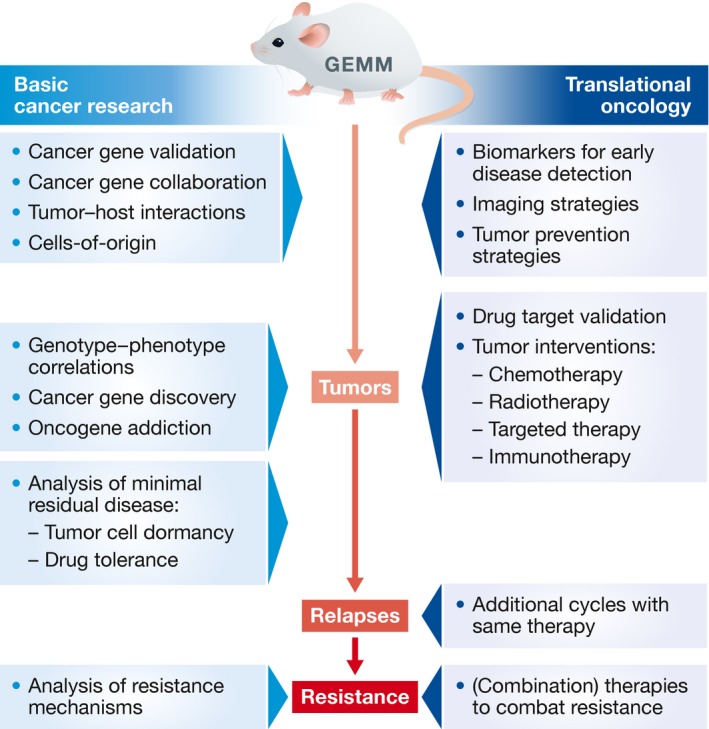
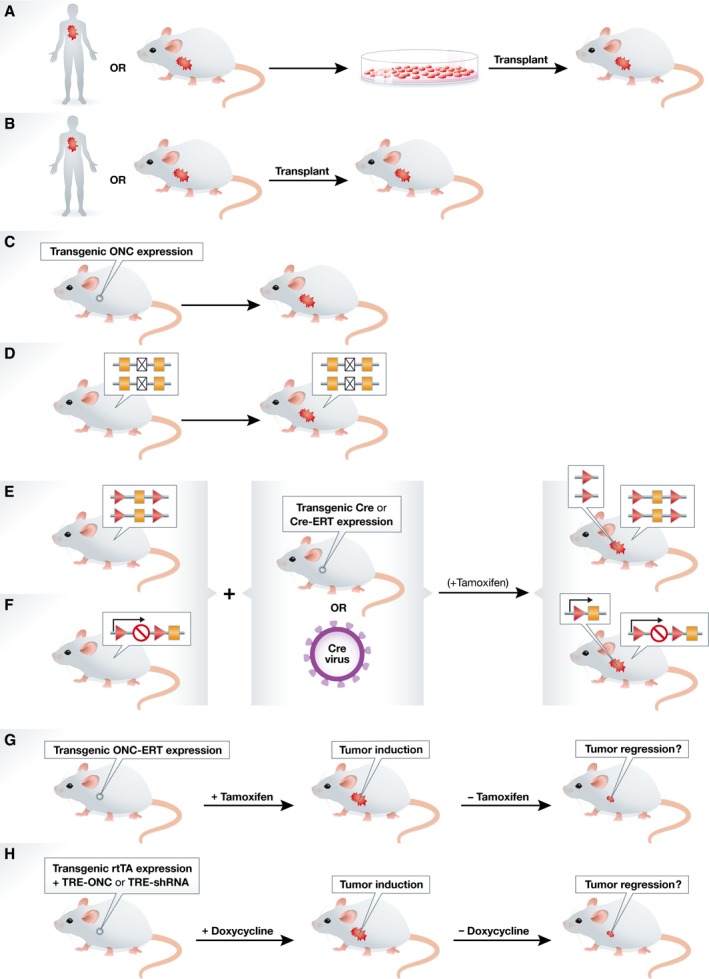
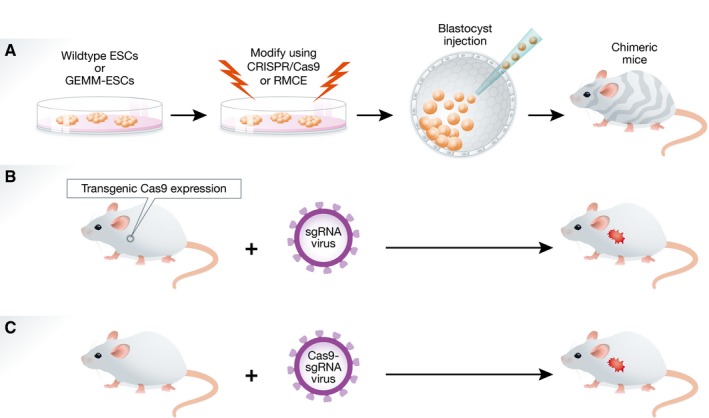
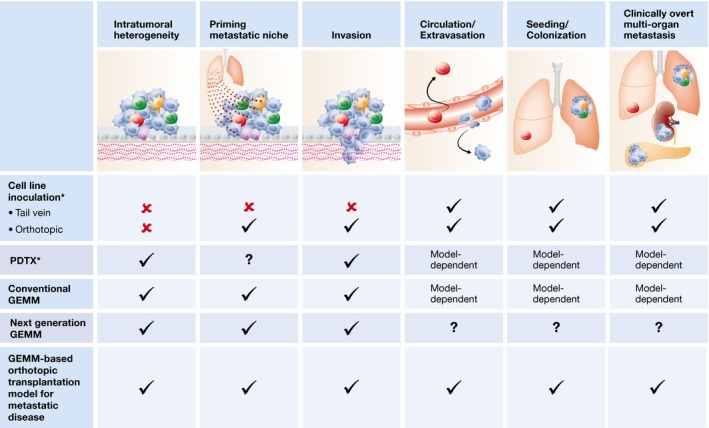
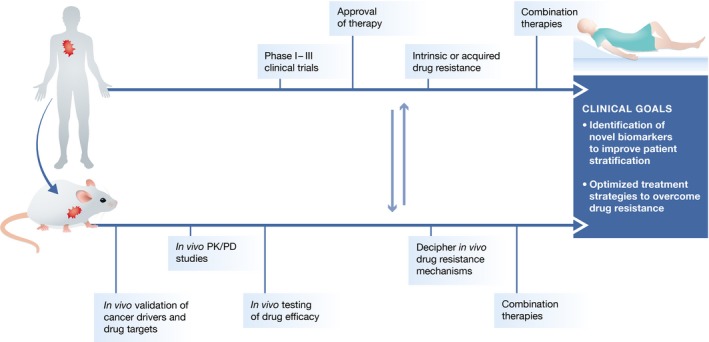
Genetically engineered mouse models (GEMMs) have contributed significantly to the field of cancer research. In contrast to cancer cell inoculation models, GEMMs develop de novo tumors in a natural immune‐proficient microenvironment. Tumors arising in advanced GEMMs closely mimic the histopathological and molecular features of their human counterparts, display genetic heterogeneity, and are able to spontaneously progress toward metastatic disease. As such, GEMMs are generally superior to cancer cell inoculation models, which show no or limited heterogeneity and are often metastatic from the start. Given that GEMMs capture both tumor cell‐intrinsic and cell‐extrinsic factors that drive de novo tumor initiation and progression toward metastatic disease, these models are indispensable for preclinical research. GEMMs have successfully been used to validate candidate cancer genes and drug targets, assess therapy efficacy, dissect the impact of the tumor microenvironment, and evaluate mechanisms of drug resistance. In vivo validation of candidate cancer genes and therapeutic targets is further accelerated by recent advances in genetic engineering that enable fast‐track generation and fine‐tuning of GEMMs to more closely resemble human patients. In addition, aligning preclinical tumor intervention studies in advanced GEMMs with clinical studies in patients is expected to accelerate the development of novel therapeutic strategies and their translation into the clinic.
Overview
The claims and statistics of this paper haven’t been checked yet.
Free: it reads the open-access text and checks the first 5 claims that cite a source we can check. Create a free account to check every claim.
Integrity signals
Registry
Cites
Statistics
Figures
Verification
Claims the paper makes
The claims and statistics of this paper haven’t been checked yet.
Free: it reads the open-access text and checks the first 5 claims that cite a source we can check. Create a free account to check every claim.
Claims other papers make about this one
Each is checked against this paper’s own text: does it say what the citing paper says it does?
The source backs part of the claim, not all of it — or backs it for a different population, condition or comparison.
In the citing paper
“As a tumor will be cultivated in vivo within these animals, it is also able to better mimic the molecular and histopathological features of cancer [40,41].”
From Microfluidic modelling of the tumor microenvironment for anti-cancer drug development (2019) · cites this paper as [40]
Experimental — accuracy not yet measuredIn the citing paper
“GEMMs are powerful tools for studying the pathogenesis of cancer and examining the systemic effects of vitamin C in vivo113.”
From Targeting cancer vulnerabilities with high-dose vitamin C (2019) · cites this paper as [113]
Self-check
Percentages, sums and reported differences re-computed from the paper’s own numbers.
The self-check needs the paper’s full text.
Citations
Cites
PD-1 and PD-L1 Immune Checkpoint Blockade to Treat Breast Cancer
Hartkopf, A. D., Taran, F.-A., Wallwiener, M., Walter, C. B., Krämer, B., Grischke, E.-M., & Brucker, S. Y. (2016) · Breast Care · doi:10.1159/000453569 · Cited by 30,845
Multiplex Genome Engineering Using CRISPR/Cas Systems
Cong, L., Ran, F. A., Cox, D., Lin, S., Barretto, R., Habib, N., Hsu, P. D., Wu, X., Jiang, W., Marraffini, L. A., et al. (2013) · Science · doi:10.1126/science.1231143 · Cited by 15,339 · cited 2×
“These approaches have now been outperformed by the development of CRISPR/Cas9 systems for genome editing (Cong et al , 2013), which have revolutionized biological research over the past 3 years and are considered the biggest game changer since PCR.”
Adverse Renal Effects of Immune Checkpoint Inhibitors: A Narrative Review
Wanchoo, R., Karam, S., Uppal, N. N., Barta, V. S., Deray, G., Devoe, C., Launay-Vacher, V., Jhaveri, K. D., & on behalf of Cancer and Kidney International Network Workgroup on Immune Checkpoint Inhibitors (2017) · American Journal of Nephrology · doi:10.1159/000455014 · Cited by 15,256
Improved Survival with Ipilimumab in Patients with Metastatic Melanoma
Hodi, F. S., O'Day, S. J., McDermott, D. F., Weber, R. W., Sosman, J. A., Haanen, J. B., Gonzalez, R., Robert, C., Schadendorf, D., Hassel, J. C., et al. (2010) · New England Journal of Medicine · doi:10.1056/nejmoa1003466 · Cited by 15,155 · cited 1×
“…in patients with advanced melanoma and lung cancer confirm the remarkable potential of immune checkpoint blockade, including anti-CTLA-4 and anti-PD-1, to enhance effective anti-tumor immunity and to improve survival in a proportion of the patients (Hodi et al , 2010; Topalian et al , 2012, 1).”
Safety, activity, and immune correlates of anti–PD-1 antibody in cancer
Topalian, S. L., Hodi, F. S., Brahmer, J. R., Gettinger, S. N., Smith, D. C., McDermott, D. F., Powderly, J. D., Carvajal, R. D., Sosman, J. A., Atkins, M. B., et al. (2012) · New England Journal of Medicine · doi:10.1056/nejmoa1200690 · Cited by 12,628 · cited 1×
“…in patients with advanced melanoma and lung cancer confirm the remarkable potential of immune checkpoint blockade, including anti-CTLA-4 and anti-PD-1, to enhance effective anti-tumor immunity and to improve survival in a proportion of the patients (Hodi et al , 2010; Topalian et al , 2012, 1).”
Microenvironmental regulation of tumor progression and metastasis
Quail, D. F., & Joyce, J. A. (2013) · Nature Medicine · doi:10.1038/nm.3394 · Cited by 7,994 · cited 1×
“The metastatic cascade is a complex multi-step process managed by a constant crosstalk between cancer cells and their microenvironment (Quail & Joyce, 2013; McAllister & Weinberg, 2014).”
The future of immune checkpoint therapy
Sharma, P., & Allison, J. P. (2015) · Science · doi:10.1126/science.aaa8172 · Cited by 4,878 · cited 1×
“However, even though durable responses are observed in some cases, a large proportion of cancer patients does not show clinical benefit (Sharma & Allison, 2015).”
In Vivo Activation of the p53 Pathway by Small-Molecule Antagonists of MDM2
Vassilev, L. T., Vu, B. T., Graves, B., Carvajal, D., Podlaski, F., Filipovic, Z., Kong, N., Kammlott, U., Lukacs, C., Klein, C., et al. (2004) · Science · doi:10.1126/science.1092472 · Cited by 4,661 · cited 3×
“Genetic studies in GEMMs with reversible inactivation of p53 have shown that restoration of p53 leads to rapid regression of established tumors (Martins et al , 2006; Ventura et al , 2007; Xue et al , 2007), providing strong rationale for designing anti-cancer drugs that restore p53 function by inhibiting MDM2 (Vassil…”
Kalluri, R., & Zeisberg, M. (2006) · Nature Reviews Cancer · doi:10.1038/nrc1877 · Cited by 4,538 · cited 1×
“Moreover, fibroblasts are a source of various soluble mediators including matrix metalloproteinases (MMPs), which enable ECM turnover, reinforcing their crucial role in maintaining ECM homeostasis (Kalluri & Zeisberg, 2006).”
Tumor-Associated Macrophages: From Mechanisms to Therapy
Noy, R., & Pollard, J. W. (2014) · Immunity · doi:10.1016/j.immuni.2014.06.010 · Cited by 4,089 · cited 1×
“Since then the tumor-promoting roles of inflammation-induced tumor-associated macrophages (TAMs) (Lin et al , 2001; Noy & Pollard, 2014) and neutrophils (Jamieson et al , 2012; Bald et al , 2014; Coffelt et al , 2015, 2016; Wculek & Malanchi, 2015) have been described in several studies.”
Cited by
Items 501–569 of 569
Rôle de la Podoplanine dans le développement et la tumorigenèse mammaires
Bresson, L. (2017) · theses.fr (ABES) · doi:10.70675/3f80e995zfcd7z4e55z918fzd26d0a297fd3
Evaluating the landscape of gene cooperativity with RTKs in liver tumorigenesis and its evolution
Bazai, S. K. (2020) · theses.fr (ABES) · doi:10.70675/12cf596bz2e26z4967zb472zcd42376184fc
Modeling Hormone Receptor Positive Breast Cancer in Immunocompetent Mice
Pérez-Lanzón, M. (2021) · theses.fr (ABES) · doi:10.70675/8d0cd788z71c4z4627z898ezbb2b6500fa17
COMPARATIVE ONCOLOGY: CANINE AND HUMAN CANCER INSIGHTS
Khan, M. F., & Naz, R. (2024) · Gomal Journal of Life Sciences · doi:10.66406/gjls0240
Role of P2RY12 inhibitors in digestive cancers : case of pancreatic and colorectal adenocarcinomas
Palacios-Acedo, A.-L. (2022) · theses.fr (ABES) · doi:10.70675/3b0b46cez065cz41b6z85b6zf9d0ec211865
Epigenetic characterization of cellular pliancy in breast cancer
Benhassoun, R. (2024) · theses.fr (ABES) · doi:10.70675/0b1d39b2za3d7z4b26zb4b0zaafa77d5068a
Morel-Ribeiro, P. (2024) · theses.fr (ABES) · doi:10.70675/29d1d766z3c99z46f4z9748ze7de69182005
Molecular imaging for nano-theranostics : Raman spectroscopy approach
Alaouta, C. (2024) · theses.fr (ABES) · doi:10.70675/90173e46zdf1dz4845z97f6z13cbe351311f
Lorenzo, D. (2024) · theses.fr (ABES) · doi:10.70675/ba1107b2ze1c9z4e6ezad24z3a1778a18d7e
Genetically engineered mice models and generating glioblastoma multiforme in the brain
Polat, Y., & Erbaş, O. (2024) · Demiroglu Science University Florence Nightingale Journal of Medicine · doi:10.5606/fng.btd.2024.147
“[4] However, genetic, physiological, and immune system differences between mouse and human models should not be overlooked.”
Castro, L. D., Claude, O., Gad, S., & Guéguen, Y. (2026) · Biochimica et Biophysica Acta (BBA) - Reviews on Cancer · doi:10.1016/j.bbcan.2026.189596
Barrios, A., & Thomas, S. N. (2026) · Expert Review of Proteomics · doi:10.1080/14789450.2026.2665607
“…using cell lines, given that they develop tumors de novo within an intact, immunocompetent microenvironment; recapitulate human tumor heterogeneity, progression, and metastasis; and they have utility in evaluating drug efficacy, resistance mechanisms, and tumor– immune interactions [50,51].”
Emerging Matritherapies in Lung Fibrosis and Cancer
Staab-Weijnitz, C. A., Kandhari, K., Herrera, J., Hansen, K., Redente, E. F., & Roman, J. (2026) · Biology of extracellular matrix · doi:10.1007/978-3-032-22618-1_6
Ethics and the issue of genetically engineering other animals in the twenty-first century
Kasprzycka, E. N. (2026) · cIRcle (University of British Columbia)
Vaishnavi, M., Kumari, M., Pal, S., Kaur, K., Kaity, S., Mandal, C., & Roy, S. (2026) · In vitro models · doi:10.1007/s44164-026-00119-9
Precision animal models of tumors: Advances, challenges and clinical translation
Wang, Z., & Wu, X. (2026) · Tumori Journal · doi:10.1177/03008916261427237
Humanized immune system animal models and their recent applications
Skuli, N., Amin, R. B., Bakayoko, A., Kruidenier, M., Aqui, S., Skuli, S. J., & Gade, M. P. T. (2026) · Animal Models and Experimental Medicine · doi:10.1002/ame2.70212 · Cited by 1
Kopasz, A. G. (2026) · SZTE Repository of Dissertations (University of Szeged) · doi:10.14232/phd.12954
Preclinical PET, PET/CT, and PET/MRI
Schelhaas, S., & Schäfers, M. (2026) · Recent results in cancer research/Recent Results in Cancer Research · doi:10.1007/978-3-032-15314-2_16
Humanized patient-derived xenografts preserve tumour-specific immune microenvironmentsPreprint
Stueckmann, D., Meens, J., Pfeil, J. Q., Sivapatham, S., Chevrier, S., Hui, S., Karamboulas, C., Gill, R., Zhang, X., Martin, L., et al. (2026) · bioRxiv (Cold Spring Harbor Laboratory) · doi:10.64898/2026.05.15.724697
New insights in tumor-on-a-chip models for studying cancer drug resistance
Wang, Y., Shi, L., Li, J., Zhang, X., Ren, J., Jia, Q., Lv, L., Yang, L., Zhang, Z., Yang, J., et al. (2026) · Pathology - Research and Practice · doi:10.1016/j.prp.2026.156562
Immune-driven stromal inflammation in pancreatic cancer within a microfluidic platform
Viso, M. E., Rajkumar, K., Bianchi, A., Suthar, B., Kumar, N., Oliver, D., Collins, M. A., Datta, J., & Agarwal, A. (2026) · Biofabrication · doi:10.1088/1758-5090/ae7b09
“…25], capture many aspects of PDAC pathology, including the immunological response to the tumor, but are limited by complex overlapping signaling pathways that hinder elucidation of the isolated contributions of heterocellular crosstalk (e.g. MDSC– CAF) to tumor progression in real-time [26, 27].”
Generation of a stable mouse endometrial tumor-derived cell line using conditional reprogramming
Zhang, T. A., Zhao, R., Zhang, Y., & Wang, H. (2026) · Biological Research · doi:10.1186/s40659-026-00706-w
“F CNVs heatmap of EC driver genes in the primary tumor and the PSC-01 cell line novel therapeutic agents [19–21].”
Experimental models in immuno-oncology and their translational impact
Amnieh, S. B., Mohammadioun, S., Mahmoudian, S., Saleki, K., & Rezaei, N. (2026) · Discover Oncology · doi:10.1007/s12672-026-05394-2
“However, GEMMs typically require long periods to develop and often display limited heterogeneity, as the engineered alterations usually target only a select set of genes [18].”
Targeting ATM Kinase in Cancer—A Comprehensive Review
Kciuk, M., Machura, G., Wanke, K., Gromek, P., Marciniak, B., & Kontek, R. (2026) · Oncology Research Featuring Preclinical and Clinical Cancer Therapeutics · doi:10.32604/or.2026.082180
“GEMMs, in particular, are essential for accurately evaluating the therapeutic synergy between ATM inhibition and immune checkpoint blockade, as they allow assessment of DDR-driven immune activation, antigen presentation, and tumor–immune co-evolution in an intact microenvironment [208–210].”
Blood cancer: Tumor microenvironment
Kaur, S., Borah, C., Bora, N. S., Bir, D., Goswami, A., & Kakoti, B. B. (2026) · Elsevier eBooks · doi:10.1016/b978-0-443-36783-0.00012-5
Koopmann, I. (2025) · Ros Dok Rostocker Dokumentenserver (Universitätsbibliothek Rostock) · doi:10.18453/rosdok_id00005644
Song, M. G., & Kang, K. W. (2026) · Cells · doi:10.3390/cells15131180
“…(GEMMs) are particularly useful for evaluating albumin-based drug delivery in glioblastoma because they better capture intracranial growth, tumor-brain interactions, vascular constraints, and, in selected cases, genotype-driven tumor evolution than conventional subcutaneous models [34,43,44].”
Organoids in biliary tract cancers: Advances in modeling strategies and translational applications
Yang, X.-H., Liu, D.-Y., Zhao, W., Yang, C.-W., Wang, J.-X., & Yao, H. (2026) · Critical Reviews in Oncology/Hematology · doi:10.1016/j.critrevonc.2026.105468
Preclinical Experimentation in Oncology
Goulet, C. S., Shuhendler, A. J., & Pereira, P. M. R. (2026) · Springer eBooks · doi:10.1007/978-3-032-26476-3_37
RHOA at the intersection of inflammation-driven and sporadic colorectal cancer
Muccioli, S. E., Hidalgo‐Garcia, L., Ngo, P. A., Neurath, M. F., & López-Posadas, R. (2026) · Frontiers in Immunology · doi:10.3389/fimmu.2026.1844372
Decoding and Overcoming Temozolomide Resistance Through CRISPR/Cas Technologies
Marques, B. S., Mendes, M., Alves, J. L., Pais, A. A. C. C., & Vitorino, C. (2026) · Molecular Diagnosis & Therapy · doi:10.1007/s40291-026-00864-3
Shi, A., Zhu, Z., Zhang, S., Guo, W., Li, M., Wu, Q., Sun, L., Hu, J., & Wang, G. (2026) · The Innovation Medicine · doi:10.59717/j.xinn-med.2026.100240
Terlizzi, C., Ferrara, Y., & Sarnella, A. (2026) · Cancers · doi:10.3390/cancers18152469
“GEMM models offer unique opportunities to study tumor onset and https://doi.org/10.3390/cancers18152469 evolution in the presence of an intact immune system, while CDX and PDX models allow for the evaluation of subtype-specific therapeutic strategies and patient-derived biological variability [105].”
InfluentialAge-dependent host-tumour interactions in paediatric solid tumours
Kuster, J. (2026) · UWA Profiles and Research Repository (UWA) · doi:10.26182/a1dw-me67
Goh, D., Ng, K. S., ZHU, Z., Fincham, R. E. A., & YEONG, J. (2026) · Wiley eBooks · doi:10.1002/9781394383054.ch4
Trummer, N., Weyrich, M., Ryan, P., Furth, P. A., Hoffmann, M., & List, M. (2026) · Research Connections · doi:10.1093/rescon/vmag143
McCabe, M., Tang, Q., Douglas, D., Negahdar, A., Godbee, A., Ray, T., Liu, M., Yoshinaga-Sakurai, K., Punkay, A., & Jia, D. (2026) · Medicine · doi:10.1097/md.0000000000050305
“[20,21] Each model organism has distinct advantages and disadvantages, and selecting an appropriate model is an important aspect of any potential investigation.”
Meme Kanserinde PI3 Hedefli Tedaviler: Tümör Mikroçevresi, İmmün Yanıt ve Deneysel Hayvan Modelleri
Sezgin, Y., & Yüksel, R. (2026) · Veteriner Farmakoloji ve Toksikoloji Derneği Bülteni · doi:10.38137/vftd.1909435
Jadhav, A. B., Gadhave, D. G., Ugale, A. R., & Kokare, C. (2026) · Journal of Drug Delivery Science and Technology · doi:10.1016/j.jddst.2026.108846
Surles, J. E. (2026) · The Scholarship East Carolina University's Institutional Repository (East Carolina University)
Sharma, A., Kumar, A., Patel, P., & Kurmi, B. D. (2026) · Advanced Therapeutics · doi:10.1002/adtp.70167
A CIC::DUX4 Sarcoma Model Reveals Oncogene-Driven MHCI-Dependent Immune Evasion
Wilson, E., Jong, F. D., & Peters, L. (2024) · Archive of International Journal of Cancer and Allied Science · doi:10.51847/dedmr1fe39
Therapeutic targets in dedifferentiated liposarcoma
Pasquali, S. (2026) · Open Research Online (The Open University) · doi:10.21954/ou.ro.00111879
Breast Cancer: HER2-Mutant P53 Cooperation and The Cell-Of-Origin Dependent Dynamics
Williams-Villalobo, A. (2024) · Digital Scholarship - Texas Southern University (Texas Southern University)
Lei, X., Song, B., Jin, D., Zhou, J., Guo, T., & Kong, J. (2026) · Frontiers in Physiology · doi:10.3389/fphys.2026.1848297
“Animal models, including transplant models (Guerin et al., 2020), carcinogen-induced models (Sewduth and Georgelou, 2024) and genetically engineered mouse models (GEMMs) (Kersten et al., 2017), remain indispensable for preclinical applications.”
Zhang, Y., Paing, H., & Wang, J. (2026) · Cancers · doi:10.3390/cancers18193099
“Compared with implantation models, GEMMs can better mimic spontaneous tumor development because they preserve the co-evolution of tumor cells, stromal cells, vasculature, and immune populations during cancer progression [110].”
Preclinical studies: Translational research in drug development
Bora, S. J., Chensula, S., Bhattacharyya, A., Sarma, P., & Roy, P. D. (2026) · Elsevier eBooks · doi:10.1016/b978-0-443-38307-6.00008-9
EXTRACELLULAR MATRIX AND TUMOR MICROENVIRONMENT: ROLE OF EXTRACELLULAR VESICLES
Tassinari, S. (n.d.) · Institutional Research Information System University of Turin (University of Turin)
Rodriguez, L. I. L. (2022) · SDL
Giordano, J. (n.d.) · Institutional Research Information System University of Turin (University of Turin)
Avances en Biomedicina. Vol. 13, Nº 2. Julio-diciembre 2024
- (2025) · Avances en Biomédicina
Farazi, P. A. (2026) · Garland Science eBooks · doi:10.1201/9781042002337
Nanjo, G. U., Fu, Z., Smani, S., Lokeshwar, S. D., Warrick, J. I., Kumar, D., Kim, W., Perry, C. J., Tan, W. S., Mu, P., et al. (2026) · Urologic Oncology Seminars and Original Investigations · doi:10.1016/j.urolonc.2026.09.008
The cutaneous vasculature: Development, repair, and disease
Wang, K., Quintana, J., Yang, V., Kawasumi, K., & Kam, C. Y. (2026) · Seminars in Cell and Developmental Biology · doi:10.1016/j.semcdb.2026.103704
Mouse models of gastric preneoplasia and cancer, with a focus on pathology
Ho, R. Y., Zeng, Y., & Mills, J. C. (2026) · Disease Models & Mechanisms · doi:10.1242/dmm.052902
Barry, P. L., Alagiyawanna, D. M., Werder, R. B., Faux, M. C., & Eisenstat, D. D. (2026) · Frontiers in Cell and Developmental Biology · doi:10.3389/fcell.2026.1962790
Fatemi, N., Karimpour, M., Bahrami, H., Zali, M. R., Chaleshi, V., Riccio, A., Nazemalhosseini-Mojarad, E., & Totonchi, M. (2024) · doi:10.3389/fphar.2023.1329244.s001
Parveen, N., Lin, Y.-L., Chou, R.-H., Sun, C.-M., & Yu, C. (2022) · doi:10.3389/fchem.2021.764200.s001
Ju, Y., Lei, P., Peng, F., & Luo, J. (2023) · doi:10.3389/fcell.2023.1295084.s001
Metadata
- Authors
- Kersten, K., de Visser, K. E., van Miltenburg, M. H., & Jonkers, J.
- Affiliations
- The Netherlands Cancer Institute (NL)
- Corresponding author
- Jonkers, Jos
- Venue
- EMBO Molecular Medicine
- Published
- 2016-12-27
- Volume
- 9
- Issue
- 2
- Pages
- 137-153
- ISSN
- 1757-4676 (ISSN-L)
- 1757-4684
- PMC
- PMC5286388
- OpenAlex
- W2563661701
- Semantic Scholar
- 157896602a8b1e213e59d905c681094819be5e34
- Cited by
- 502
- References
- 168
- Citations by year
- 2026: 53 · 2025: 47 · 2024: 52 · 2023: 69 · 2022: 75 · 2021: 61 · 2020: 59 · 2019: 39 · 2018: 32 · 2017: 13 · 2016: 2
- FWCI
- 2.88
- Type
- journal article
- Language
- en
- Open access
- gold
- doi.org
- Licence
- other-oa
- creativecommons.org/licenses/by/4.0/ (tdm)
- creativecommons.org/licenses/by/4.0/ (vor)
- Locations
- EMBO Molecular Medicine (publishedVersion, other-oa)
- PubMed Central (publishedVersion, cc-by)
- PubMed (publishedVersion)
- DOAJ (DOAJ: Directory of Open Access Journals) (submittedVersion)
- Funders
- Dutch Cancer Society (5220, 6532, 7048, 7589, 7835, 7877)
- Nederlandse Organisatie voor Wetenschappelijk Onderzoek (93512009, 91814643, National Roadmap grant for Large‐scale Research Facilities)
- Worldwide Cancer Research (14‐0288)
- European Union Seventh Framework Program (260791, 312325, MCA‐ITN 317445)
- European Research Council (319661, 615300)
- Beug Foundation for Metastasis Research
- EMBO Young Investigator
- Topics
- Health Sciences › Medicine › Oncology › Cancer Cells and Metastasis
- Life Sciences › Biochemistry, Genetics and Molecular Biology › Cancer Research › Cancer Genomics and Diagnostics
- Health Sciences › Medicine › Oncology › Cancer-related Molecular Pathways
- Keywords
- genetically engineered mouse models, cancer research, tumor microenvironment, metastasis, preclinical cancer models, drug target validation, drug resistance, tumor heterogeneity, translational oncology
- MeSH terms
- Animals, Disease Models, Animal, Humans, Medical Oncology, Neoplasms, Animals, Genetically Modified, Mice
About these checks
Registry, retraction, Cites and statistics results are computed, not judged, with one exception: a printed reference that no index lists is read once by a model before it counts as a citation error. Claims are extracted by a model and kept only when their quote appears verbatim in the text; each cited source is then checked, with a model’s help, for whether it says what the claim relies on. Those verdicts can be wrong — read the claim’s quote and the cited source before relying on one.
Statistics and arithmetic are recomputed, not judged.
Confidence bands are shown only for fields calibrated on our annotated test set. None is calibrated yet, so no band is shown.
What counts as a claim ›How we measure confidence ›How we check this ›
Are you an author, or do you see a problem with this page? Request a review
Data sources
Bibliographic data: Semantic Scholar, OpenAlex, Crossref.
Contains information from the Semantic Scholar Academic Graph Datasets, made available under the ODC Attribution License (ODC-BY 1.0).
Semantic Scholar’s data is described in: Kinney, R., et al. (2023). The Semantic Scholar Open Data Platform. arXiv:2301.10140.
