

Genetically engineered mouse models in oncology research and cancer medicine
Open accessThe DOI matches its Crossref record; 167 of the 168 references it cites were found in a registry or an index.
Abstract
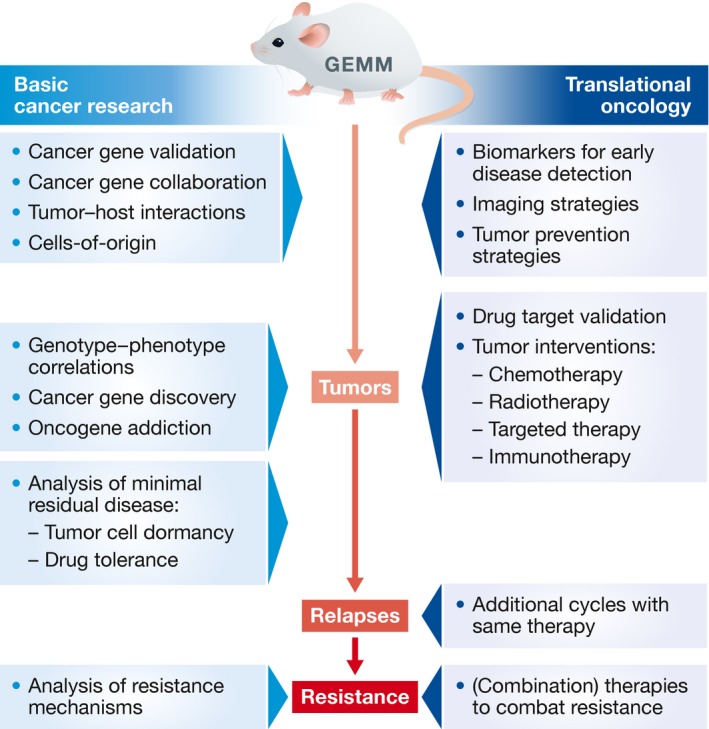
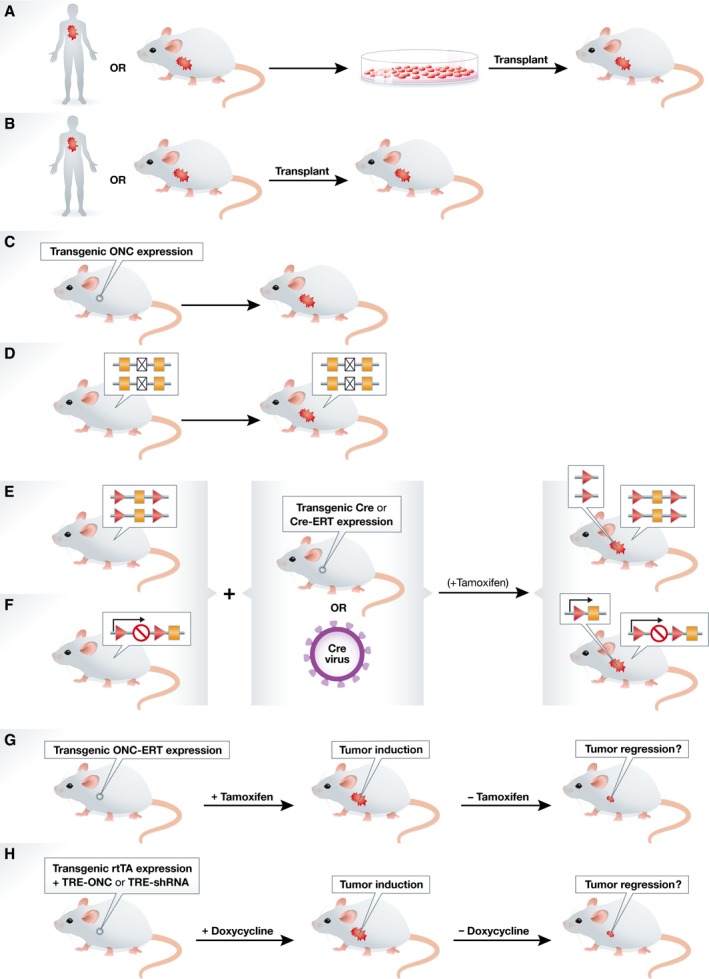
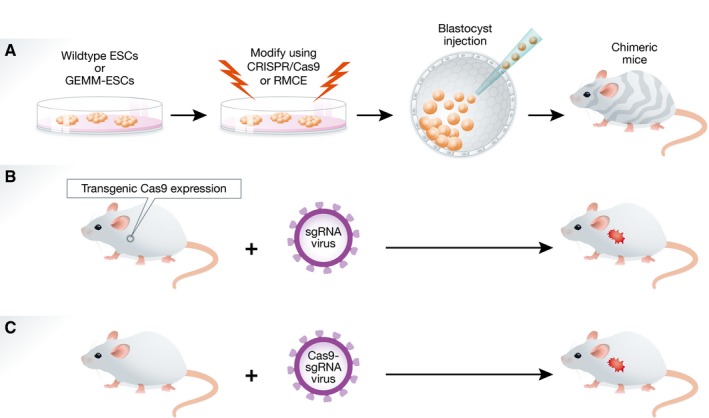
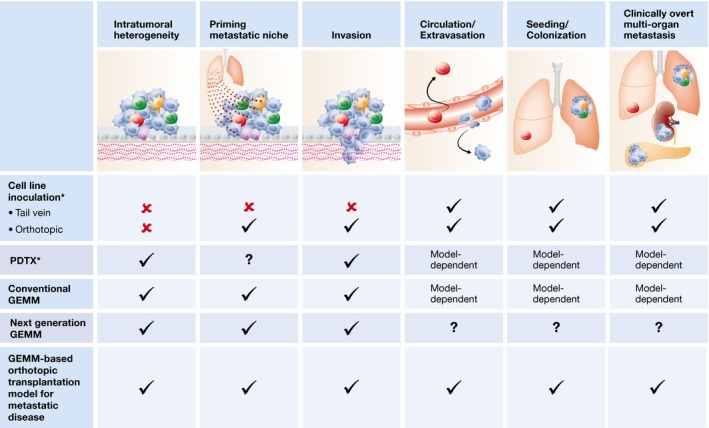
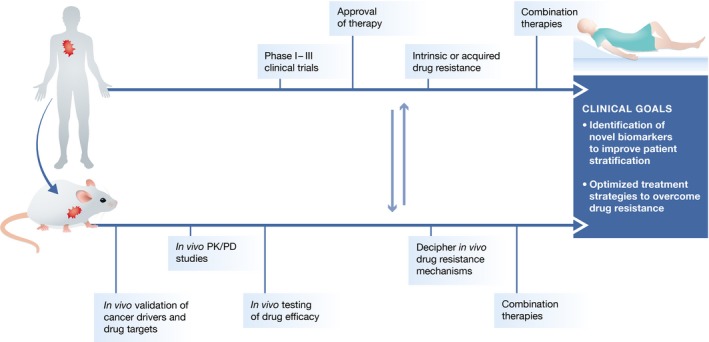
Genetically engineered mouse models (GEMMs) have contributed significantly to the field of cancer research. In contrast to cancer cell inoculation models, GEMMs develop de novo tumors in a natural immune‐proficient microenvironment. Tumors arising in advanced GEMMs closely mimic the histopathological and molecular features of their human counterparts, display genetic heterogeneity, and are able to spontaneously progress toward metastatic disease. As such, GEMMs are generally superior to cancer cell inoculation models, which show no or limited heterogeneity and are often metastatic from the start. Given that GEMMs capture both tumor cell‐intrinsic and cell‐extrinsic factors that drive de novo tumor initiation and progression toward metastatic disease, these models are indispensable for preclinical research. GEMMs have successfully been used to validate candidate cancer genes and drug targets, assess therapy efficacy, dissect the impact of the tumor microenvironment, and evaluate mechanisms of drug resistance. In vivo validation of candidate cancer genes and therapeutic targets is further accelerated by recent advances in genetic engineering that enable fast‐track generation and fine‐tuning of GEMMs to more closely resemble human patients. In addition, aligning preclinical tumor intervention studies in advanced GEMMs with clinical studies in patients is expected to accelerate the development of novel therapeutic strategies and their translation into the clinic.
Overview
The claims and statistics of this paper haven’t been checked yet.
Free: it reads the open-access text and checks the first 5 claims that cite a source we can check. Create a free account to check every claim.
Integrity signals
Registry
Cites
Statistics
Figures
Verification
Claims the paper makes
The claims and statistics of this paper haven’t been checked yet.
Free: it reads the open-access text and checks the first 5 claims that cite a source we can check. Create a free account to check every claim.
Claims other papers make about this one
Each is checked against this paper’s own text: does it say what the citing paper says it does?
The source backs part of the claim, not all of it — or backs it for a different population, condition or comparison.
In the citing paper
“As a tumor will be cultivated in vivo within these animals, it is also able to better mimic the molecular and histopathological features of cancer [40,41].”
From Microfluidic modelling of the tumor microenvironment for anti-cancer drug development (2019) · cites this paper as [40]
Experimental — accuracy not yet measuredIn the citing paper
“GEMMs are powerful tools for studying the pathogenesis of cancer and examining the systemic effects of vitamin C in vivo113.”
From Targeting cancer vulnerabilities with high-dose vitamin C (2019) · cites this paper as [113]
Self-check
Percentages, sums and reported differences re-computed from the paper’s own numbers.
The self-check needs the paper’s full text.
Citations
Cites
PD-1 and PD-L1 Immune Checkpoint Blockade to Treat Breast Cancer
Hartkopf, A. D., Taran, F.-A., Wallwiener, M., Walter, C. B., Krämer, B., Grischke, E.-M., & Brucker, S. Y. (2016) · Breast Care · doi:10.1159/000453569 · Cited by 30,845
Multiplex Genome Engineering Using CRISPR/Cas Systems
Cong, L., Ran, F. A., Cox, D., Lin, S., Barretto, R., Habib, N., Hsu, P. D., Wu, X., Jiang, W., Marraffini, L. A., et al. (2013) · Science · doi:10.1126/science.1231143 · Cited by 15,339 · cited 2×
“These approaches have now been outperformed by the development of CRISPR/Cas9 systems for genome editing (Cong et al , 2013), which have revolutionized biological research over the past 3 years and are considered the biggest game changer since PCR.”
Adverse Renal Effects of Immune Checkpoint Inhibitors: A Narrative Review
Wanchoo, R., Karam, S., Uppal, N. N., Barta, V. S., Deray, G., Devoe, C., Launay-Vacher, V., Jhaveri, K. D., & on behalf of Cancer and Kidney International Network Workgroup on Immune Checkpoint Inhibitors (2017) · American Journal of Nephrology · doi:10.1159/000455014 · Cited by 15,256
Improved Survival with Ipilimumab in Patients with Metastatic Melanoma
Hodi, F. S., O'Day, S. J., McDermott, D. F., Weber, R. W., Sosman, J. A., Haanen, J. B., Gonzalez, R., Robert, C., Schadendorf, D., Hassel, J. C., et al. (2010) · New England Journal of Medicine · doi:10.1056/nejmoa1003466 · Cited by 15,155 · cited 1×
“…in patients with advanced melanoma and lung cancer confirm the remarkable potential of immune checkpoint blockade, including anti-CTLA-4 and anti-PD-1, to enhance effective anti-tumor immunity and to improve survival in a proportion of the patients (Hodi et al , 2010; Topalian et al , 2012, 1).”
Safety, activity, and immune correlates of anti–PD-1 antibody in cancer
Topalian, S. L., Hodi, F. S., Brahmer, J. R., Gettinger, S. N., Smith, D. C., McDermott, D. F., Powderly, J. D., Carvajal, R. D., Sosman, J. A., Atkins, M. B., et al. (2012) · New England Journal of Medicine · doi:10.1056/nejmoa1200690 · Cited by 12,628 · cited 1×
“…in patients with advanced melanoma and lung cancer confirm the remarkable potential of immune checkpoint blockade, including anti-CTLA-4 and anti-PD-1, to enhance effective anti-tumor immunity and to improve survival in a proportion of the patients (Hodi et al , 2010; Topalian et al , 2012, 1).”
Microenvironmental regulation of tumor progression and metastasis
Quail, D. F., & Joyce, J. A. (2013) · Nature Medicine · doi:10.1038/nm.3394 · Cited by 7,994 · cited 1×
“The metastatic cascade is a complex multi-step process managed by a constant crosstalk between cancer cells and their microenvironment (Quail & Joyce, 2013; McAllister & Weinberg, 2014).”
The future of immune checkpoint therapy
Sharma, P., & Allison, J. P. (2015) · Science · doi:10.1126/science.aaa8172 · Cited by 4,878 · cited 1×
“However, even though durable responses are observed in some cases, a large proportion of cancer patients does not show clinical benefit (Sharma & Allison, 2015).”
In Vivo Activation of the p53 Pathway by Small-Molecule Antagonists of MDM2
Vassilev, L. T., Vu, B. T., Graves, B., Carvajal, D., Podlaski, F., Filipovic, Z., Kong, N., Kammlott, U., Lukacs, C., Klein, C., et al. (2004) · Science · doi:10.1126/science.1092472 · Cited by 4,661 · cited 3×
“Genetic studies in GEMMs with reversible inactivation of p53 have shown that restoration of p53 leads to rapid regression of established tumors (Martins et al , 2006; Ventura et al , 2007; Xue et al , 2007), providing strong rationale for designing anti-cancer drugs that restore p53 function by inhibiting MDM2 (Vassil…”
Kalluri, R., & Zeisberg, M. (2006) · Nature Reviews Cancer · doi:10.1038/nrc1877 · Cited by 4,538 · cited 1×
“Moreover, fibroblasts are a source of various soluble mediators including matrix metalloproteinases (MMPs), which enable ECM turnover, reinforcing their crucial role in maintaining ECM homeostasis (Kalluri & Zeisberg, 2006).”
Tumor-Associated Macrophages: From Mechanisms to Therapy
Noy, R., & Pollard, J. W. (2014) · Immunity · doi:10.1016/j.immuni.2014.06.010 · Cited by 4,089 · cited 1×
“Since then the tumor-promoting roles of inflammation-induced tumor-associated macrophages (TAMs) (Lin et al , 2001; Noy & Pollard, 2014) and neutrophils (Jamieson et al , 2012; Bald et al , 2014; Coffelt et al , 2015, 2016; Wculek & Malanchi, 2015) have been described in several studies.”
Cited by
Items 101–200 of 569
Mouse models of uveal melanoma: Strengths, weaknesses, and future directions
Richards, J. R., Yoo, J. H., Shin, D., & Odelberg, S. J. (2019) · Pigment Cell & Melanoma Research · doi:10.1111/pcmr.12853 · Cited by 49
“In particular, the contribution of specific genetic alterations to oncogenic signaling and disease progression can be assessed (Kersten, de Visser, van Miltenburg, & Jonkers, 2017; Zitvogel, Pitt, Daillere, Smyth, & Kroemer, 2016).”
Large Animal Models of Glioma: Current Status and Future Prospects
Hicks, W. H., Bird, C. E., Pernik, M. N., Haider, A. S., Dobariya, A., Abdullah, K. G., Aoun, S. G., Bentley, R. T., Cohen‐Gadol, A., Bachoo, R. M., et al. (2021) · Anticancer Research · doi:10.21873/anticanres.15347 · Cited by 49
Capturing cancer evolution using genetically engineered mouse models (GEMMs)
Hill, W., Caswell, D. R., & Swanton, C. (2021) · Trends in Cell Biology · doi:10.1016/j.tcb.2021.07.003 · Cited by 49
Animal Models to Study Cancer and Its Microenvironment
Mendes, N. M., Carvalho, P. D., Martins, F., Mendonça, S., Malheiro, A. R., Ribeiro, A., Carvalho, J., & Velho, S. (2020) · Advances in experimental medicine and biology · doi:10.1007/978-3-030-34025-4_20 · Cited by 47
Jeong, S., Yang, M. J., Choi, S., Kim, J., & Koh, G. Y. (2021) · Nature Communications · doi:10.1038/s41467-021-24603-w · Cited by 47
Ravi, K., Manoharan, T. J. M., Wang, K.-C., Pockaj, B. A., & Nikkhah, M. (2023) · Biomaterials · doi:10.1016/j.biomaterials.2023.122428 · Cited by 47
In Vivo Modeling of Human Breast Cancer Using Cell Line and Patient-Derived Xenografts
Souto, E. P., Dobrolecki, L. E., Villanueva, H. J., Sikora, A. G., & Lewis, M. T. (2022) · Journal of Mammary Gland Biology and Neoplasia · doi:10.1007/s10911-022-09520-y · Cited by 45
“Genetically engineered mouse models (GEMMs) and mouse-derived immunocompetent allograft models have also contributed significantly to the field of cancer research, and have been elegantly reviewed elsewhere [20, 31].”
BackgroundDoha, Z. O., Wang, X., Calistri, N. L., Eng, J. R., Daniel, C. J., Ternes, L., Kim, E. N., Pelz, C., Munks, M. W., Betts, C. B., et al. (2023) · Nature Communications · doi:10.1038/s41467-023-40841-6 · Cited by 45
“While useful, these existing models include properties not commonly found in human TNBC, including lack of progression to metastatic disease 17 , rare histological features, and non-representative genetic drivers 18 .”
Overcoming Barriers in Cancer Biology Research: Current Limitations and Solutions
(2025) · doi:10.3390/cancers17132102 · Cited by 44
“Genetically engineered mouse models (GEMMs), in which researchers genetically modify mice to develop cancer, are valuable for studying cancer development driven by specific genetic mutations [11,12].”
Karnik, I., Her, Z., Neo, S. H., Liu, W. N., & Chen, Q. (2023) · Pharmaceutics · doi:10.3390/pharmaceutics15061600 · Cited by 42
“For instance, the use of transgenic mice has greatly improved drug screening and reduced drug toxicity, leading to the development of successful drug compounds [11].”
BackgroundCancer Immunotherapies and Humanized Mouse Drug Testing Platforms
Chen, Q., Wang, J., Liu, W. N., & Zhao, Y. (2019) · Translational Oncology · doi:10.1016/j.tranon.2019.04.020 · Cited by 42
Oncogenic context shapes the fitness landscape of tumor suppression
Blair, L. M., Juan, J. M., Sebastian, L., Tran, V. B., Nie, W., Wall, G. D., Gerceker, M., Lai, I. K., Apilado, E. A., Grenot, G., et al. (2023) · Nature Communications · doi:10.1038/s41467-023-42156-y · Cited by 42
“Genetically engineered mouse models are uniquely tractable systems to uncover the phenotypic effects of de fi ned genetic alterations on tumors that develop entirely within their natural in vivo microenvironment 15 .”
Chromobox 4 facilitates tumorigenesis of lung adenocarcinoma through the Wnt/β-catenin pathway
Wang, Z., Fang, Z., Chen, G. B., Liu, B., Xu, J., Li, F., Li, F., Liu, H., Zhang, H., Sun, Y., et al. (2020) · Neoplasia · doi:10.1016/j.neo.2020.12.005 · Cited by 41
OncoLoop: A Network-Based Precision Cancer Medicine Framework
Vasciaveo, A., Arriaga, J. M., de Almeida, F. N., Zou, M., Douglass, E. F., Picech, F., Shibata, M., Rodríguez-Calero, A., de Brot, S., Mitrofanova, A., et al. (2022) · Cancer Discovery · doi:10.1158/2159-8290.cd-22-0342 · Cited by 42
“In principle, genetically-engineered mouse models (GEMMs), which are now widely available for many cancer types (5), can provide valuable resources for studying drug response in the whole organism in the context of the native tumor microenvironment.”
BackgroundVicent, S., Lieshout, R., Saborowski, A. L., Verstegen, M. M. A., Raggi, C., Recalcati, S., Invernizzi, P., van der Laan, L. J. W., Alvaro, D., Calvisi, D. F., et al. (2019) · Liver International · doi:10.1111/liv.14094 · Cited by 41
Patient-derived cancer models: Valuable platforms for anticancer drug testing
Genta, S., Coburn, B. A., Cescon, D. W., & Spreafico, A. (2022) · Frontiers in Oncology · doi:10.3389/fonc.2022.976065 · Cited by 40
“Genetically engineered mouse models (GEMMs) are transgenic mice harbouring alleles which lead to the spontaneous development of malignancies in immunocompetent animals (57).”
BackgroundBest Practices for Preclinical In Vivo Testing of Cancer Nanomedicines
Valcourt, D. M., Kapadia, C. H., Scully, M. A., Dang, M. N., & Day, E. S. (2020) · Advanced Healthcare Materials · doi:10.1002/adhm.202000110 · Cited by 39
The biological essence of synthetic lethality: Bringing new opportunities for cancer therapy
Ge, M., Luo, J., Wu, Y., Shen, G., & Kuang, X. (2024) · MedComm – Oncology · doi:10.1002/mog2.70 · Cited by 39
Mouse Models for Immunotherapy in Hepatocellular Carcinoma
Li, E., Lin, L., Chen, C., & Ou, D. (2019) · Cancers · doi:10.3390/cancers11111800 · Cited by 39
Autophagy and cancer – insights from mouse models
Mainz, L., & Rosenfeldt, M. T. (2017) · FEBS Journal · doi:10.1111/febs.14274 · Cited by 39
Forrest, W. F., Alicke, B., Mayba, O., Osinska, M., Jakubczak, M., Piątkowski, P., Choniawko, L., Starr, A., & Gould, S. E. (2020) · Cancer Research · doi:10.1158/0008-5472.can-20-0342 · Cited by 38
Circadian disruption: from mouse models to molecular mechanisms and cancer therapeutic targets
Wang, Y., Guo, H.-D., & He, F. (2022) · Cancer and Metastasis Reviews · doi:10.1007/s10555-022-10072-0 · Cited by 38
Senescent cancer cell-derived nanovesicle as a personalized therapeutic cancer vaccine
Hong, J., Jung, M., Kim, C., Kang, M., Go, S., Sohn, H. S., Moon, S., Kwon, S., Song, S. Y., & Kim, B. (2023) · Experimental & Molecular Medicine · doi:10.1038/s12276-023-00951-z · Cited by 38
Hulsbergen-Veelken, C. A. R., Bakker, G., Drell, D., & Friedl, P. (2017) · Methods · doi:10.1016/j.ymeth.2017.07.015 · Cited by 37
Gengenbacher, N., Singhal, M., Mogler, C., Hai, L., Milde, L., Pari, A. A. A., Besemfelder, E., Fricke, C., Baumann, D., Gehrs, S., et al. (2021) · Cancer Discovery · doi:10.1158/2159-8290.cd-20-0122 · Cited by 37
Combining preclinical tools and models to unravel tumor complexity: Jump into the next dimension
Miserocchi, G., Bocchini, M., Cortesi, M., Arienti, C., Vita, A. D., Liverani, C., Mercatali, L., Bravaccini, S., Ulivi, P., & Zanoni, M. (2023) · Frontiers in Immunology · doi:10.3389/fimmu.2023.1171141 · Cited by 38
“Genetically engineered mouse models (GEMMs) represent a suitable model to study early neoplastic transformation in vivo allowing the development of tumors de novo in an immuneproficient microenvironment (29).”
BackgroundGolden Syrian Hamster Models for Cancer Research
Wang, Z., & Cormier, R. T. (2022) · Cells · doi:10.3390/cells11152395 · Cited by 36
“Each of the various genetic mouse models brings different limitations [28,30].”
BackgroundToward Modeling Context-Specific EMT Regulatory Networks Using Temporal Single Cell RNA-Seq Data
Ramirez, D., Kohar, V., & Lu, M. (2020) · Frontiers in Molecular Biosciences · doi:10.3389/fmolb.2020.00054 · Cited by 35
“…of cancer (Chung et al., 2016; Bartoschek et al., 2018; Brabletz et al., 2018), with different genetically modified mouse models (Zheng et al., 2015; Kersten et al., 2017; Chen et al., 2018) and a broad spectrum of cancer cell lines (Steinway et al., 2014; Chung et al., 2016; Bartoschek et al.,…”
BackgroundAdvances in Modeling the Immune Microenvironment of Colorectal Cancer
Yoon, P., Piccolo, N. D., Shirure, V. S., Peng, Y., Kirane, A., Canter, R. J., Fields, R. C., George, S. C., & Gholami, S. (2021) · Frontiers in Immunology · doi:10.3389/fimmu.2020.614300 · Cited by 35
“GEMMs are created by activating or deactivating specific genes using genome editing technology (75, 89, 95).”
MethodResultRat Models of Hormone Receptor-Positive Breast Cancer
Nicotra, R., Lutz, C., Messal, H. A., & Jonkers, J. (2024) · Journal of Mammary Gland Biology and Neoplasia · doi:10.1007/s10911-024-09566-0 · Cited by 35
“Above all, the use of genetically engineered models enables precise, tissue-specific edits of (combina - tions of) driver genes of interest, thus ensuring an accurate genetic recapitulation of the human disease [21, 279, 280].”
BackgroundSelf-citationCirculating Tumor Cell Analysis in Preclinical Mouse Models of Metastasis
Kitz, J., Lowes, L. E., Goodale, D. B., & Allan, A. L. (2018) · Diagnostics · doi:10.3390/diagnostics8020030 · Cited by 34
“Transgenic and knockout GEMMs have provided important models for identifying tumor-associated and metastasis-associated genes that can lead to tumor formation and disease progression [67,68].”
BackgroundInfluentialThe In Vivo Selection Method in Breast Cancer Metastasis
Nakayama, J., Han, Y., Kuroiwa, Y., Azuma, K., Yamamoto, Y., & Semba, K. (2021) · International Journal of Molecular Sciences · doi:10.3390/ijms22041886 · Cited by 35
“Genetically engineered mouse models (GEMMs) mimic spontaneous metastasis formation from primary tumor [14,15].”
BackgroundHot or cold: Bioengineering immune contextures into in vitro patient-derived tumor models
Too, N. S. H., Ho, N. C. W., Adine, C., Iyer, N. G., & Fong, E. L. S. (2021) · Advanced Drug Delivery Reviews · doi:10.1016/j.addr.2021.05.001 · Cited by 35
Gross, S. M., Dane, M. A., Smith, R. L., Devlin, K. L., McLean, I. C., Derrick, D. S., Mills, C. E., Subramanian, K., London, A. B., Torre, D., et al. (2022) · Communications Biology · doi:10.1038/s42003-022-03975-9 · Cited by 34
Current methods in translational cancer research
Lee, M. W., Miljanic, M., Triplett, T., Ramírez, C., Aung, K. L., Eckhardt, S., & Capasso, A. (2020) · Cancer and Metastasis Reviews · doi:10.1007/s10555-020-09931-5 · Cited by 33
Novel Mouse Models for Cancer Immunology
Connolly, K. A., Fitzgerald, B., Damo, M., & Joshi, N. S. (2022) · Annual Review of Cancer Biology · doi:10.1146/annurev-cancerbio-070620-105523 · Cited by 34
Lelliott, E. J., Cullinane, C. M., Martin, C. A., Walker, R., Ramsbottom, K. M., Souza-Fonseca-Guimarães, F., AbuHammad, S., Michie, J., Kirby, L., Young, R. J., et al. (2019) · Scientific Reports · doi:10.1038/s41598-018-37883-y · Cited by 33
Computational Approaches in Theranostics: Mining and Predicting Cancer Data
Cova, T. F. G. G., Bento, D. J., & Nunes, S. C. C. (2019) · Pharmaceutics · doi:10.3390/pharmaceutics11030119 · Cited by 32
Tumour invasion and dissemination
Lusby, R., Dunne, P. D., & Tiwari, V. K. (2022) · Biochemical Society Transactions · doi:10.1042/bst20220452 · Cited by 32
Harnessing preclinical models for the interrogation of ovarian cancer
Qin, T., Fan, J., Lu, F., Zhang, L., Liu, C., Xiong, Q., Zhao, Y., Chen, G., & Sun, C. (2022) · Journal of Experimental & Clinical Cancer Research · doi:10.1186/s13046-022-02486-z · Cited by 32
“This way, the crucial tumor properties and modulators, such as immune cells and stromal elements are preserved and tumor cells can therefore co-evolve with the surrounding microenvironment [155].”
BackgroundHou, W., & Ji, Z. (2018) · Experimental & Molecular Medicine · doi:10.1038/s12276-018-0059-4 · Cited by 32
Mouse Models of Peritoneal Carcinomatosis to Develop Clinical Applications
Bella, Á., Trani, C. A. D., Fernández-Sendin, M., Arrizabalaga, L., Cirella, A., Teijeira, Á., Medina‐Echeverz, J., Melero, I., Berraondo, P., & Aranda, F. (2021) · Cancers · doi:10.3390/cancers13050963 · Cited by 32
“GEMM can faithfully recapitulate some human cancers genetically with very similar tumor microenvironment phenotype [77,78].”
BackgroundScientific Validation and Clinical Application of Lung Cancer Organoids
Lee, D., Kim, Y., & Chung, C. (2021) · Cells · doi:10.3390/cells10113012 · Cited by 31
Aggressive and Malignant Prolactinomas
Olarescu, N. C., Perez‐Rivas, L. G., Gatto, F., Cuny, T., Tichomirowa, M. A., Tamagno, G., & Gahete, M. D. (2019) · Neuroendocrinology · doi:10.1159/000497205 · Cited by 31
Aspects and prospects of preclinical theranostic radiopharmaceutical development
Nelson, B. J. B., Krol, V. E., Bansal, A., Andersson, J. D., Wuest, F. R., & Pandey, M. K. (2024) · Theranostics · doi:10.7150/thno.100339 · Cited by 30
“…are used for tumor induction; a syngeneic transplant or allograft model, where homologous tumor cell lines are injected into mice to avoid rejection; or a genetically engineered model, where tumors can closely mimic the heterogeneity and histopathological features of human tumors [145–147].”
Waehle, V., Ungricht, R., Hoppe, P. S., & Betschinger, J. (2021) · Stem Cell Reports · doi:10.1016/j.stemcr.2021.07.023 · Cited by 30
Models of Models: A Translational Route for Cancer Treatment and Drug Development
Ogilvie, L. A., Kovachev, A., Wierling, C., Lange, B. M. H., & Lehrach, H. (2017) · Frontiers in Oncology · doi:10.3389/fonc.2017.00219 · Cited by 30
“In particular, the contribution of mouse models to the understanding of fundamental biological processes, cancer research, and drug development has been significant, albeit with inevitable pitfalls (35, 36).”
BackgroundConte, M., & Cauda, V. (2022) · Advanced Therapeutics · doi:10.1002/adtp.202200079 · Cited by 29
Models of renal cell carcinoma used to investigate molecular mechanisms and develop new therapeutics
Shapiro, D. D., Virumbrales-Muñoz, M., Beebe, D. J., & Abel, E. J. (2022) · Frontiers in Oncology · doi:10.3389/fonc.2022.871252 · Cited by 28
Rao, H., Li, X., Liu, M., Liu, J., Feng, W., Tang, H., Xu, J., Gao, W., & Li, L. (2021) · Cancer Research · doi:10.1158/0008-5472.can-20-3960 · Cited by 30
Leukemia’s Next Top Model? Syngeneic Models to Advance Adoptive Cellular Therapy
Zoine, J. T., Moore, S. E., & Velasquez, M. P. (2022) · Frontiers in Immunology · doi:10.3389/fimmu.2022.867103 · Cited by 28
“Genetically Engineered Mouse Models GEMMS are unique murine models which genetically manipulate the somatic activation of oncogenes or inactivation of tumor suppressors to elicit de novo tumor development (31).”
BackgroundMouse models of Kras activation in gastric cancer
Won, Y., & Choi, E.-Y. K. (2022) · Experimental & Molecular Medicine · doi:10.1038/s12276-022-00882-1 · Cited by 29
The role of glutamine metabolism in castration-resistant prostate cancer
Zhao, B. Q., Wang, J., Chen, L., Wang, H., Liang, C.-Z., Huang, J., & Xu, L. (2023) · Asian Journal of Andrology · doi:10.4103/aja2022105 · Cited by 29
Olmeda, D., Cerezo‐Wallis, D., Castellano‐Sanz, E., García-Silva, S., Peinado, H., & Soengas, M. S. (2021) · Advanced Drug Delivery Reviews · doi:10.1016/j.addr.2021.113833 · Cited by 28
Experimental evolution in an era of molecular manipulation
Ascensao, J. A., & Desai, M. M. (2025) · Nature Reviews Genetics · doi:10.1038/s41576-025-00867-6 · Cited by 27
“Genetically tractable mouse models have emerged as a powerful system to study cancer evolution in vivo 122 .”
Impact of cancer cell-intrinsic features on neutrophil behavior
Duits, D. E. M., & de Visser, K. E. (2021) · Seminars in Immunology · doi:10.1016/j.smim.2021.101546 · Cited by 27
Challenges and Opportunities for Childhood Cancer Drug Development
Houghton, P. J., & Kurmasheva, R. T. (2019) · Pharmacological Reviews · doi:10.1124/pr.118.016972 · Cited by 27
CRISPR somatic genome engineering and cancer modeling in the mouse pancreas and liver
Kaltenbacher, T., Löprich, J., Maresch, R., Weber, J., Müller, S., Oellinger, R., Groß, N., Griger, J., Krätzig, N. D. A., Avramopoulos, P., et al. (2022) · Nature Protocols · doi:10.1038/s41596-021-00677-0 · Cited by 26
Waïssi, W., Nicol, A., Jung, M., Rousseau, M., Jarnet, D., Noël, G., & Burckel, H. (2021) · Cancers · doi:10.3390/cancers13030527 · Cited by 26
“Then, it could be valuable to evaluate tumor microenvironment and the immune response to radiation with DNA damage response inhibitor association, in models such as genetically engineered mouse model (GEMM) [36,37].”
BackgroundPreclinical Models of Neuroendocrine Neoplasia
Sedlack, A. J. H., Saleh-Anaraki, K., Kumar, S., Ear, P. H., Lines, K. E., Roper, N., Pacák, K., Bergsland, E. K., Quelle, D. E., Howe, J. R., et al. (2022) · Cancers · doi:10.3390/cancers14225646 · Cited by 26
Bidola, P., Silva, J. M. D. S. E., Achterhold, K., Munkhbaatar, E., Jost, P. J., Meinhardt, A.-L., Taphorn, K., Zdora, M., Pfeiffer, F., & Herzen, J. (2019) · Scientific Reports · doi:10.1038/s41598-018-37394-w · Cited by 26
Roth, S., Apte, M. V., Balachandran, V. P., Biffi, G., Conroy, T., Cukierman, E., Dotan, E., Esposito, I., Grünwald, B. T., Klauß, M., et al. (2026) · Nature Reviews Disease Primers · doi:10.1038/s41572-026-00699-6 · Cited by 28
Exploring the Impact of the β-Catenin Mutations in Hepatocellular Carcinoma: An In-Depth Review
Idrissi, Y. A., Rajabi, M. R., Beumer, J. H., Monga, S. P., & Saeed, A. (2024) · Cancer Control · doi:10.1177/10732748241293680 · Cited by 25
“165 A notable GEMM study by Galarreta et al. enhanced our understanding of β -catenin mutations in HCC.”
BackgroundGoetze, R. G., Buchholz, S., Patil, S., Petzold, G., Ellenrieder, V., Heßmann, E., & Neeße, A. (2018) · Journal of Visualized Experiments · doi:10.3791/56979-v · Cited by 25
Obesity-Associated Cancers: Evidence from Studies in Mouse Models
Lee, H. (2022) · Cells · doi:10.3390/cells11091472 · Cited by 25
“In addition, researchers have generated various types of genetically engineered mouse models (GEMMs) that spontaneously develop cancers and can therefore be considered surrogate models of human cancers [17,18].”
BackgroundModels in Pancreatic Neuroendocrine Neoplasms: Current Perspectives and Future Directions
Forsythe, S. D., Pu, T., Andrews, S. G., Madigan, J. P., & Sadowski, S. M. (2023) · Cancers · doi:10.3390/cancers15153756 · Cited by 24
Biomarkers and experimental models for cancer immunology investigation
Xu, H., Jia, Z., Liu, F., Li, J., Huang, Y., Jiang, Y., Pu, P., Shang, T., Tang, P., Zhou, Y., et al. (2023) · MedComm · doi:10.1002/mco2.437 · Cited by 24
“333 Moreover, these models can be designed to mimic alterations in genes that impact the TME and, consequently, influence the immunotherapy efficacy.”
BackgroundInfluentialModeling the tumor immune microenvironment for drug discovery using 3D culture
Lee, J. Y., & Chaudhuri, O. (2021) · APL Bioengineering · doi:10.1063/5.0030693 · Cited by 24
Quantitative In Vivo Analyses Reveal a Complex Pharmacogenomic Landscape in Lung Adenocarcinoma
Li, C., Lin, W.-Y., Rizvi, H. A., Cai, H., McFarland, C. D., Rogers, Z. N., Yousefi, M., Winters, I. P., Rudin, C. M., Petrov, D. A., et al. (2021) · Cancer Research · doi:10.1158/0008-5472.can-21-0716 · Cited by 24
“uniquely enable the introduction of defined genomic alterations into adult somatic cells, which 84 leads to the generation of autochthonous tumors(20).”
BackgroundColorectal cancer murine models: Initiation to metastasis
Pothuraju, R., Khan, I., Jain, M., Bouvet, M., Malafa, M. P., Roy, H. K., Kumar, S., & Batra, S. K. (2024) · Cancer Letters · doi:10.1016/j.canlet.2024.216704 · Cited by 24
Grees, M., Sharbi‐Yunger, A., Evangelou, C., Baumann, D., Cafri, G., Tzehoval, E., Eichmüller, S. B., Offringa, R., Utikal, J. S., Eisenbach, L., et al. (2018) · OncoImmunology · doi:10.1080/2162402x.2018.1445457 · Cited by 24
“Importantly, we test our mRNA-based DC vaccine in two different genetically engineered mouse models (GEMM) that develop de novo tumors in a natural immune proficient microenvironment.(12) Advanced tumors in RET-transgenic (RET-tg) and BRAF mutated (BRAF) melanoma models closely mimic the histopathology and clinical de…”
MethodSmall-molecule inducible transcriptional control in mammalian cells
Doshi, A., Sadeghi, F., Varadarajan, N., & Cirino, P. C. (2020) · Critical Reviews in Biotechnology · doi:10.1080/07388551.2020.1808583 · Cited by 23
Evolution of Metastasis Study Models toward Metastasis‐On‐A‐Chip: The Ultimate Model?
Ruiz‐Espigares, J., Nieto, D., Moroni, L., Jiménez, G., & Marchal, J. A. (2021) · Small · doi:10.1002/smll.202006009 · Cited by 23
Affolter, A., Kern, J., Bieback, K., Scherl, C., Rotter, N., & Lammert, A. (2022) · International Journal of Oncology · doi:10.3892/ijo.2022.5378 · Cited by 23
Translational oncotargets for immunotherapy: From pet dogs to humans
Mestrinho, L. A., & Santos, R. R. (2021) · Advanced Drug Delivery Reviews · doi:10.1016/j.addr.2021.02.020 · Cited by 23
Lottini, T., Iorio, J., Lastraioli, E., Carraresi, L., Duranti, C., Sala, C., Armenio, M., Noci, I., Pillozzi, S., & Arcangeli, A. (2021) · Scientific Reports · doi:10.1038/s41598-021-87492-5 · Cited by 23
Clinical Translation of Neutrophil Imaging and Its Role in Cancer
Lau, D., Lechermann, L. M., & Gallagher, F. A. (2021) · Molecular Imaging and Biology · doi:10.1007/s11307-021-01649-2 · Cited by 22
Harary, P. M., Rajaram, S., Chen, M. S., Hori, Y. S., Park, D. J., & Chang, S. D. (2024) · Cell Death Discovery · doi:10.1038/s41420-024-02270-2 · Cited by 22
“The lack of genetic heterogeneity of cell line-derived xenografts, in particular, has been suggested to be a signi fi cant contributor to the low predictive value of these models for human response [148].”
Organoids as Reliable Breast Cancer Study Models: An Update
Octavian, S. A., & Pei, W. Y. (2018) · International Journal of Oncology Research · doi:10.23937/ijor-2017/1710008 · Cited by 23
Preclinical efficacy of oncolytic VSV-IFNβ in treating cancer: A systematic review
Moglan, A. M., Albaradie, O. A., Alsayegh, F. F., Alharbi, H. M., Samman, Y. M., Jalal, M. M., Saeedi, N. H., Mahmoud, A. B., & Alkayyal, A. A. (2023) · Frontiers in Immunology · doi:10.3389/fimmu.2023.1085940 · Cited by 21
“Additionally, when cultured in vitro for a long period, cell lines may acquire additional mutations, deviating from their similarity to human tumor morphology and heterogeneity (34).”
BackgroundPérez-Lanzón, M., Carbonnier, V., Cordier, P., Palma, F. D. E. D., Petrazzuolo, A., Klein, C., Arbaretaz, F., Mangane, K., Stoll, G., Martins, I., et al. (2023) · Journal for ImmunoTherapy of Cancer · doi:10.1136/jitc-2023-007117 · Cited by 21
Efficient and multiplexed somatic genome editing with Cas12a mice
Hebert, J. D., Xu, H., Tang, Y. J., Ruiz, P. A., Detrick, C. R., Wang, J., Hughes, N. W., Donosa, O., Siah, V. P., Andrejka, L., et al. (2025) · Nature Biomedical Engineering · doi:10.1038/s41551-025-01407-7 · Cited by 21
Aging represses oncogenic KRAS-driven lung tumorigenesis and alters tumor suppression
Shuldiner, E. G., Karmakar, S., Tsai, M. K., Hebert, J. D., Tang, Y. J., Andrejka, L., Robertson, M. R., Wang, M., Detrick, C. R., Cai, H., et al. (2025) · Nature Aging · doi:10.1038/s43587-025-00986-z · Cited by 22
“Autochthonous tumors in genetically engineered mouse models of lung cancer grow within their natural setting and recapitulate critical features of human tumors 16,17 .”
Overhauling CAR T Cells to Improve Efficacy, Safety and Cost
Chicaybam, L., Bonamino, M., Invitti, A. L., Rozenchan, P. B., Vieira, I. D. L., & Strauss, B. E. (2020) · Cancers · doi:10.3390/cancers12092360 · Cited by 23
“This kind of model is the most suited to evaluate the contribution of TME cells to the tumor pathophysiology and eventually the role of immune based treatment combined with chemo or radiotherapy, especially for solid tumors [154].”
BackgroundCăruntu, A., Scheau, C., Tampa, M. Ş., Georgescu, S. R., Căruntu, C., & Tănase, C. (2021) · Advances in experimental medicine and biology · doi:10.1007/5584_2021_626 · Cited by 21
Animal models of uveal melanoma
Uner, O. E., Gandrakota, N., Azarcon, C. P., & Grossniklaus, H. E. (2021) · Annals of Eye Science · doi:10.21037/aes-21-30 · Cited by 21
Power in Numbers: Harnessing Combinatorial and Integrated Screens to Advance Nanomedicine
Boehnke, N., & Hammond, P. T. (2021) · JACS Au · doi:10.1021/jacsau.1c00313 · Cited by 22
Cancer Chemoprevention: Preclinical In Vivo Alternate Dosing Strategies to Reduce Drug Toxicities
Mohammed, A., Fox, J. T., & Miller, M. S. (2019) · Toxicological Sciences · doi:10.1093/toxsci/kfz104 · Cited by 21
“tagenesis, lesion development, and their progression to advanced cancer (Heyer et al., 2010; Kersten et al., 2017; Singh and Johnson, 2006; Singh et al., 2012; Walrath et al., 2010).”
BackgroundEstablishment and Characterization of a Brca1−/−, p53−/− Mouse Mammary Tumor Cell Line
Hámori, L., Kudlik, G., Szebényi, K., Kucsma, N., Szeder, B., Póti, Á., Uher, F., Várady, G., Szüts, D., Tóvári, J., et al. (2020) · International Journal of Molecular Sciences · doi:10.3390/ijms21041185 · Cited by 21
“GEMMC have been successfully used for the preclinical evaluation of novel therapeutics, the study of the response of real tumors to therapy, and the identification of resistance mechanisms [31,32].”
MethodTumor mutational landscape is a record of the pre-malignant statePreprint
Kübler, K., Karlić, R., Haradhvala, N. J., Ha, K., Kim, J., Kuzman, M., Jiao, W., Gakkhar, S., Mouw, K. W., Braunstein, L. Z., et al. (2019) · bioRxiv (Cold Spring Harbor Laboratory) · doi:10.1101/517565 · Cited by 21
Of mice and lymphoid aggregates: modeling tertiary lymphoid structures in cancer
Vaccaro, A., van de Walle, T., Ramachandran, M., Essand, M., & Dimberg, A. (2023) · Frontiers in Immunology · doi:10.3389/fimmu.2023.1275378 · Cited by 20
Sharrow, A. C., Ishihara, M., Hu, J., Kim, I. H., & Wu, L. (2020) · Journal of Visualized Experiments · doi:10.3791/60651 · Cited by 20
Experimental Models for Preclinical Research in Hepatocellular Carcinoma
Molina-Sánchez, P., & Lujambio, A. (2019) · Molecular and translational medicine · doi:10.1007/978-3-030-21540-8_16 · Cited by 20
Preclinical Models of Neuroendocrine Prostate Cancer
Cacciatore, A., Albino, D., Catapano, C. V., & Carbone, G. M. (2023) · Current Protocols · doi:10.1002/cpz1.742 · Cited by 19
Current trends and future prospects of drug repositioning in gastrointestinal oncology
Fatemi, N., Karimpour, M., Bahrami, H., Zali, M. R., Chaleshi, V., Riccio, A., Mojarad, E. N., & Totonchi, M. (2024) · Frontiers in Pharmacology · doi:10.3389/fphar.2023.1329244 · Cited by 19
Divergent immune landscapes of primary and syngeneic Kras-driven mouse tumor models
Gutierrez, W. R., Scherer, A., McGivney, G. R., Brockman, Q. R., Knepper-Adrian, V., Laverty, E. A., Roughton, G. A., & Dodd, R. D. (2021) · Scientific Reports · doi:10.1038/s41598-020-80216-1 · Cited by 19
Bishop, S. L., Drikic, M., Wacker, S., Chen, Y. Y., Kozyrskyj, A. L., & Lewis, I. A. (2022) · Mucosal Immunology · doi:10.1038/s41385-022-00553-4 · Cited by 19
Klosowski, M. L., Haines, L. A., Alfino, L., McMellen, A. N., Leibowitz, M. J., & Regan, D. P. (2023) · Frontiers in Oncology · doi:10.3389/fonc.2023.1130215 · Cited by 19
“GEMMs alleviate some of these issues via de novo tumor development in the presence of an intact immune system, subsequent establishment of a microenvironment with tumor-host interactions, and in some models, spontaneous metastasis, but GEMMs can be limited in the number of concurrent mutations, limiting their ability…”
BackgroundWorking with Miraculous Mice: Mus musculus as a Model Organism
Standley, A., Xie, J., Lau, A. W. Y., Grote, L., & Gifford, A. J. (2024) · Current Protocols · doi:10.1002/cpz1.70021 · Cited by 18
“Methods to generate GEM are summarized in Justice et al. (2011), Kersten et al. (2017) and Gurumurthy and Lloyd (2019).”
Mouse models in the era of large human tumour sequencing studies
de Ruiter, J. R., Wessels, L. F. A., & Jonkers, J. (2018) · Open Biology · doi:10.1098/rsob.180080 · Cited by 18
“Genetically engineered mouse models also provide powerful platforms to critically evaluate new candidate drug targets [142] and thereby improve the robustness of preclinical cancer target identification [143].”
BackgroundSelf-citation
Metadata
- Authors
- Kersten, K., de Visser, K. E., van Miltenburg, M. H., & Jonkers, J.
- Affiliations
- The Netherlands Cancer Institute (NL)
- Corresponding author
- Jonkers, Jos
- Venue
- EMBO Molecular Medicine
- Published
- 2016-12-27
- Volume
- 9
- Issue
- 2
- Pages
- 137-153
- ISSN
- 1757-4676 (ISSN-L)
- 1757-4684
- PMC
- PMC5286388
- OpenAlex
- W2563661701
- Semantic Scholar
- 157896602a8b1e213e59d905c681094819be5e34
- Cited by
- 502
- References
- 168
- Citations by year
- 2026: 53 · 2025: 47 · 2024: 52 · 2023: 69 · 2022: 75 · 2021: 61 · 2020: 59 · 2019: 39 · 2018: 32 · 2017: 13 · 2016: 2
- FWCI
- 2.88
- Type
- journal article
- Language
- en
- Open access
- gold
- doi.org
- Licence
- other-oa
- creativecommons.org/licenses/by/4.0/ (tdm)
- creativecommons.org/licenses/by/4.0/ (vor)
- Locations
- EMBO Molecular Medicine (publishedVersion, other-oa)
- PubMed Central (publishedVersion, cc-by)
- PubMed (publishedVersion)
- DOAJ (DOAJ: Directory of Open Access Journals) (submittedVersion)
- Funders
- Dutch Cancer Society (5220, 6532, 7048, 7589, 7835, 7877)
- Nederlandse Organisatie voor Wetenschappelijk Onderzoek (93512009, 91814643, National Roadmap grant for Large‐scale Research Facilities)
- Worldwide Cancer Research (14‐0288)
- European Union Seventh Framework Program (260791, 312325, MCA‐ITN 317445)
- European Research Council (319661, 615300)
- Beug Foundation for Metastasis Research
- EMBO Young Investigator
- Topics
- Health Sciences › Medicine › Oncology › Cancer Cells and Metastasis
- Life Sciences › Biochemistry, Genetics and Molecular Biology › Cancer Research › Cancer Genomics and Diagnostics
- Health Sciences › Medicine › Oncology › Cancer-related Molecular Pathways
- Keywords
- genetically engineered mouse models, cancer research, tumor microenvironment, metastasis, preclinical cancer models, drug target validation, drug resistance, tumor heterogeneity, translational oncology
- MeSH terms
- Animals, Disease Models, Animal, Humans, Medical Oncology, Neoplasms, Animals, Genetically Modified, Mice
About these checks
Registry, retraction, Cites and statistics results are computed, not judged, with one exception: a printed reference that no index lists is read once by a model before it counts as a citation error. Claims are extracted by a model and kept only when their quote appears verbatim in the text; each cited source is then checked, with a model’s help, for whether it says what the claim relies on. Those verdicts can be wrong — read the claim’s quote and the cited source before relying on one.
Statistics and arithmetic are recomputed, not judged.
Confidence bands are shown only for fields calibrated on our annotated test set. None is calibrated yet, so no band is shown.
What counts as a claim ›How we measure confidence ›How we check this ›
Are you an author, or do you see a problem with this page? Request a review
Data sources
Bibliographic data: Semantic Scholar, OpenAlex, Crossref.
Contains information from the Semantic Scholar Academic Graph Datasets, made available under the ODC Attribution License (ODC-BY 1.0).
Semantic Scholar’s data is described in: Kinney, R., et al. (2023). The Semantic Scholar Open Data Platform. arXiv:2301.10140.
