

Genetically engineered mouse models in oncology research and cancer medicine
Open accessThe DOI matches its Crossref record; 167 of the 168 references it cites were found in a registry or an index.
Abstract
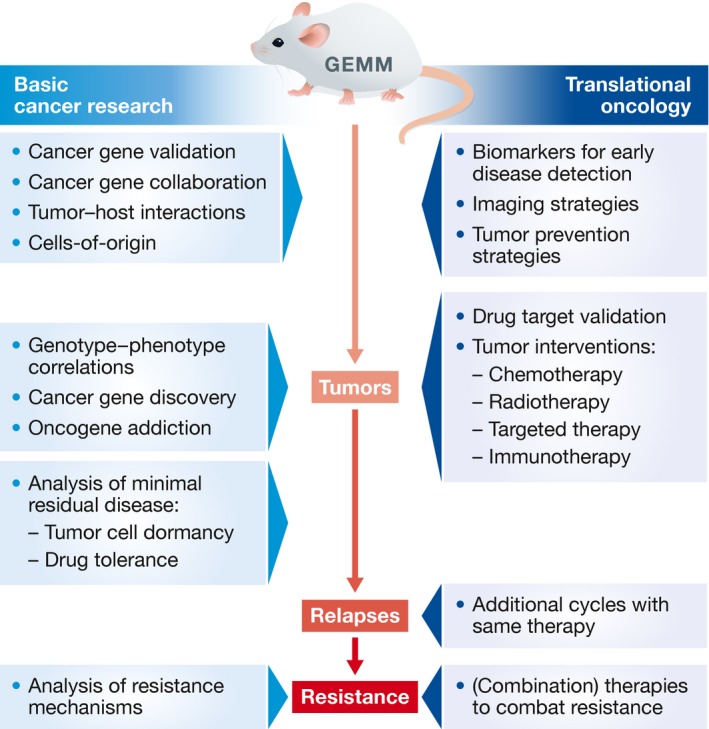
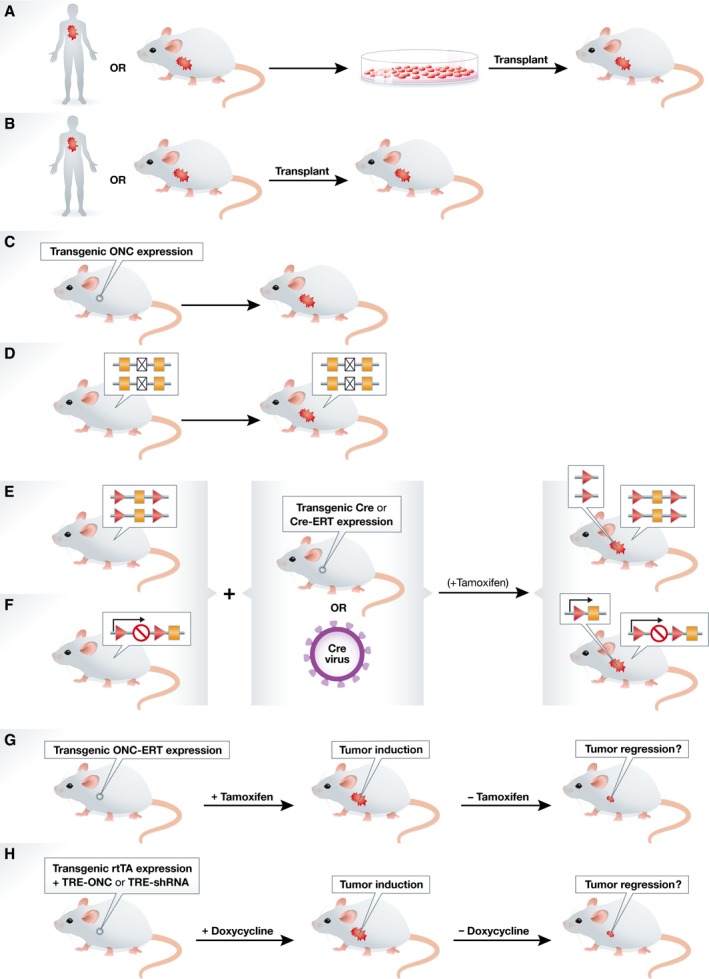
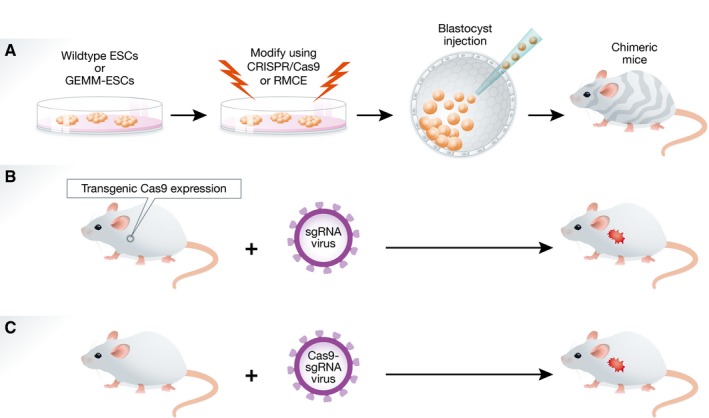
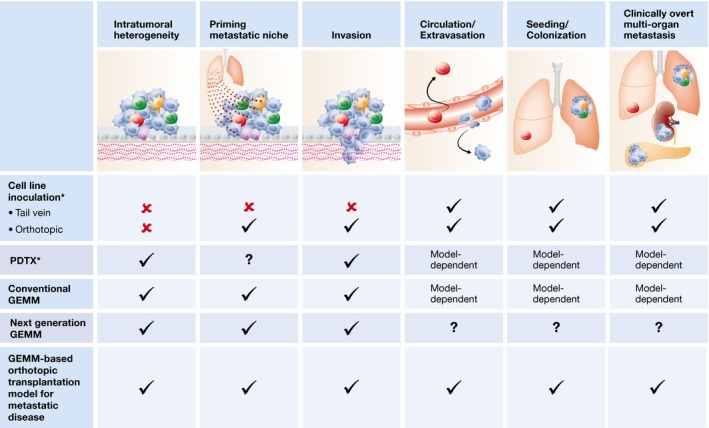
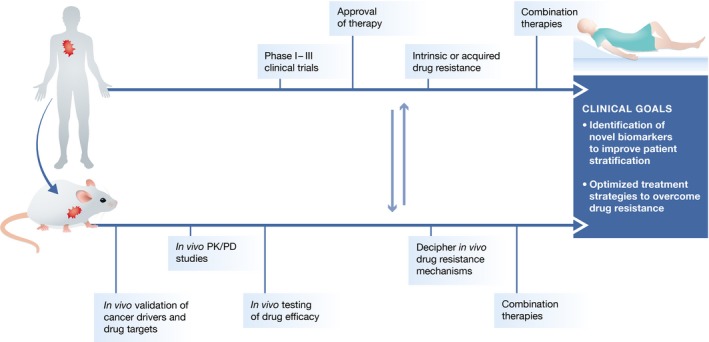
Genetically engineered mouse models (GEMMs) have contributed significantly to the field of cancer research. In contrast to cancer cell inoculation models, GEMMs develop de novo tumors in a natural immune‐proficient microenvironment. Tumors arising in advanced GEMMs closely mimic the histopathological and molecular features of their human counterparts, display genetic heterogeneity, and are able to spontaneously progress toward metastatic disease. As such, GEMMs are generally superior to cancer cell inoculation models, which show no or limited heterogeneity and are often metastatic from the start. Given that GEMMs capture both tumor cell‐intrinsic and cell‐extrinsic factors that drive de novo tumor initiation and progression toward metastatic disease, these models are indispensable for preclinical research. GEMMs have successfully been used to validate candidate cancer genes and drug targets, assess therapy efficacy, dissect the impact of the tumor microenvironment, and evaluate mechanisms of drug resistance. In vivo validation of candidate cancer genes and therapeutic targets is further accelerated by recent advances in genetic engineering that enable fast‐track generation and fine‐tuning of GEMMs to more closely resemble human patients. In addition, aligning preclinical tumor intervention studies in advanced GEMMs with clinical studies in patients is expected to accelerate the development of novel therapeutic strategies and their translation into the clinic.
Overview
The claims and statistics of this paper haven’t been checked yet.
Free: it reads the open-access text and checks the first 5 claims that cite a source we can check. Create a free account to check every claim.
Integrity signals
Registry
Cites
Statistics
Figures
Verification
Claims the paper makes
The claims and statistics of this paper haven’t been checked yet.
Free: it reads the open-access text and checks the first 5 claims that cite a source we can check. Create a free account to check every claim.
Claims other papers make about this one
Each is checked against this paper’s own text: does it say what the citing paper says it does?
The source backs part of the claim, not all of it — or backs it for a different population, condition or comparison.
In the citing paper
“As a tumor will be cultivated in vivo within these animals, it is also able to better mimic the molecular and histopathological features of cancer [40,41].”
From Microfluidic modelling of the tumor microenvironment for anti-cancer drug development (2019) · cites this paper as [40]
Experimental — accuracy not yet measuredIn the citing paper
“GEMMs are powerful tools for studying the pathogenesis of cancer and examining the systemic effects of vitamin C in vivo113.”
From Targeting cancer vulnerabilities with high-dose vitamin C (2019) · cites this paper as [113]
Self-check
Percentages, sums and reported differences re-computed from the paper’s own numbers.
The self-check needs the paper’s full text.
Citations
Cites
PD-1 and PD-L1 Immune Checkpoint Blockade to Treat Breast Cancer
Hartkopf, A. D., Taran, F.-A., Wallwiener, M., Walter, C. B., Krämer, B., Grischke, E.-M., & Brucker, S. Y. (2016) · Breast Care · doi:10.1159/000453569 · Cited by 30,845
Multiplex Genome Engineering Using CRISPR/Cas Systems
Cong, L., Ran, F. A., Cox, D., Lin, S., Barretto, R., Habib, N., Hsu, P. D., Wu, X., Jiang, W., Marraffini, L. A., et al. (2013) · Science · doi:10.1126/science.1231143 · Cited by 15,339 · cited 2×
“These approaches have now been outperformed by the development of CRISPR/Cas9 systems for genome editing (Cong et al , 2013), which have revolutionized biological research over the past 3 years and are considered the biggest game changer since PCR.”
Adverse Renal Effects of Immune Checkpoint Inhibitors: A Narrative Review
Wanchoo, R., Karam, S., Uppal, N. N., Barta, V. S., Deray, G., Devoe, C., Launay-Vacher, V., Jhaveri, K. D., & on behalf of Cancer and Kidney International Network Workgroup on Immune Checkpoint Inhibitors (2017) · American Journal of Nephrology · doi:10.1159/000455014 · Cited by 15,256
Improved Survival with Ipilimumab in Patients with Metastatic Melanoma
Hodi, F. S., O'Day, S. J., McDermott, D. F., Weber, R. W., Sosman, J. A., Haanen, J. B., Gonzalez, R., Robert, C., Schadendorf, D., Hassel, J. C., et al. (2010) · New England Journal of Medicine · doi:10.1056/nejmoa1003466 · Cited by 15,155 · cited 1×
“…in patients with advanced melanoma and lung cancer confirm the remarkable potential of immune checkpoint blockade, including anti-CTLA-4 and anti-PD-1, to enhance effective anti-tumor immunity and to improve survival in a proportion of the patients (Hodi et al , 2010; Topalian et al , 2012, 1).”
Safety, activity, and immune correlates of anti–PD-1 antibody in cancer
Topalian, S. L., Hodi, F. S., Brahmer, J. R., Gettinger, S. N., Smith, D. C., McDermott, D. F., Powderly, J. D., Carvajal, R. D., Sosman, J. A., Atkins, M. B., et al. (2012) · New England Journal of Medicine · doi:10.1056/nejmoa1200690 · Cited by 12,628 · cited 1×
“…in patients with advanced melanoma and lung cancer confirm the remarkable potential of immune checkpoint blockade, including anti-CTLA-4 and anti-PD-1, to enhance effective anti-tumor immunity and to improve survival in a proportion of the patients (Hodi et al , 2010; Topalian et al , 2012, 1).”
Microenvironmental regulation of tumor progression and metastasis
Quail, D. F., & Joyce, J. A. (2013) · Nature Medicine · doi:10.1038/nm.3394 · Cited by 7,994 · cited 1×
“The metastatic cascade is a complex multi-step process managed by a constant crosstalk between cancer cells and their microenvironment (Quail & Joyce, 2013; McAllister & Weinberg, 2014).”
The future of immune checkpoint therapy
Sharma, P., & Allison, J. P. (2015) · Science · doi:10.1126/science.aaa8172 · Cited by 4,878 · cited 1×
“However, even though durable responses are observed in some cases, a large proportion of cancer patients does not show clinical benefit (Sharma & Allison, 2015).”
In Vivo Activation of the p53 Pathway by Small-Molecule Antagonists of MDM2
Vassilev, L. T., Vu, B. T., Graves, B., Carvajal, D., Podlaski, F., Filipovic, Z., Kong, N., Kammlott, U., Lukacs, C., Klein, C., et al. (2004) · Science · doi:10.1126/science.1092472 · Cited by 4,661 · cited 3×
“Genetic studies in GEMMs with reversible inactivation of p53 have shown that restoration of p53 leads to rapid regression of established tumors (Martins et al , 2006; Ventura et al , 2007; Xue et al , 2007), providing strong rationale for designing anti-cancer drugs that restore p53 function by inhibiting MDM2 (Vassil…”
Kalluri, R., & Zeisberg, M. (2006) · Nature Reviews Cancer · doi:10.1038/nrc1877 · Cited by 4,538 · cited 1×
“Moreover, fibroblasts are a source of various soluble mediators including matrix metalloproteinases (MMPs), which enable ECM turnover, reinforcing their crucial role in maintaining ECM homeostasis (Kalluri & Zeisberg, 2006).”
Tumor-Associated Macrophages: From Mechanisms to Therapy
Noy, R., & Pollard, J. W. (2014) · Immunity · doi:10.1016/j.immuni.2014.06.010 · Cited by 4,089 · cited 1×
“Since then the tumor-promoting roles of inflammation-induced tumor-associated macrophages (TAMs) (Lin et al , 2001; Noy & Pollard, 2014) and neutrophils (Jamieson et al , 2012; Bald et al , 2014; Coffelt et al , 2015, 2016; Wculek & Malanchi, 2015) have been described in several studies.”
Cited by
Items 401–500 of 569
Tiwari, R., Ganguli, N., Alam, H., Sahu, I., Vadivel, C. K., Sinha, S., Patel, S., Jamghare, S. N., Bane, S. M., Thorat, R. A., et al. (2021) · Cell Biology International · doi:10.1002/cbin.11611 · Cited by 1
Bignold, L. P. (2019) · Elsevier eBooks · doi:10.1016/b978-0-12-816920-9.00008-0 · Cited by 1
Therapeutic antibody development—Remington chapter
Geist, B. J., Zheng, S., & Xu, Y. (2020) · Elsevier eBooks · doi:10.1016/b978-0-12-820007-0.00024-6 · Cited by 1
Chemoresistance mechanisms in mouse models of glioblastoma
Kinoshita, T., Miyai, M., Iwama, T., Hara, A., & Tomita, H. (2021) · Elsevier eBooks · doi:10.1016/b978-0-12-821567-8.00031-2 · Cited by 1
Humanized Mouse Models for Cancer Immunotherapy: A Focus on Human PBMC and HSPC Reconstitution
Li, Z. Y., Yang, X. J., & Song, X. (2022) · Wiley eBooks · doi:10.1002/9781119535331.ch7 · Cited by 1
Jino Affrald, R., & Narayan, S. (2022) · Handbook of Animal Models and its Uses in Cancer Research · doi:10.1007/978-981-19-1282-5_52-1 · Cited by 1
Harnessing the Tumor Microenvironment for Cancer Immunotherapy
Fru, P. N., Nweke, E. E., & Augustine, T. N. (2022) · Springer eBooks · doi:10.1007/978-3-030-80962-1_183-1 · Cited by 1
Jino Affrald, R., & Narayan, S. (2023) · Handbook of Animal Models and its Uses in Cancer Research · doi:10.1007/978-981-19-3824-5_52 · Cited by 1
Rodents and Their Role in Ecology, Medicine and Agriculture [Working Title]
Shah, M. M. (2023) · IntechOpen eBooks · doi:10.5772/intechopen.105295 · Cited by 1
EACR-MRS conference on Seed and Soil: In Vivo Models of Metastasis
Alves, I. T., Cohen, N., Ersan, P. G., Eyre, R., Godet, I., Holovanchuk, D., Jackstadt, R., Kyjacová, L., Mahal, K., Noguera‐Castells, A., et al. (2017) · Clinical & Experimental Metastasis · doi:10.1007/s10585-018-9886-x · Cited by 1
“Mouse models to study cancer biology and metastatic dissemination have evolved significantly since the first transplantable tumor model in nude mice 50 years ago [20].”
BackgroundBrook, J. D. (2021) · Queen Mary Research Online (Queen Mary University of London) · Cited by 1
Heterochromatin protein HP1BP3 modulates haematopoiesis and leukemogenesis
Almars, A. (2021) · Nottingham ePrints (University of Nottingham) · Cited by 1
Mechanisms of MET-dependent tumour initiation and progression
Sung, Y.-C. (2019) · doi:10.82308/15624 · Cited by 1
Chow, M. (2024) · TSpace (University of Toronto) · Cited by 1
Meier, D. R., Lofgren, K. A., Gurda, G. T., & Kenny, P. A. (2018) · Analytical Biochemistry · doi:10.1016/j.ab.2018.05.007
Prognostic markers and therapeutic targets for metastàtic renal cell carcinoma
Comellas, M. B. (2018) · Dipòsit Digital de la Universitat de Barcelona (Universitat de Barcelona)
Markwell, S. M. (2018) · The Research Repository @ WVU (West Virginia University) · doi:10.33915/etd.3685
“Western blotting was conducted as described (27) and visualized with autoradiography film (E3012, Denville Scientific) or captured by an Amersham Imager 600 (GE Healthcare Bio-Sciences).”
MethodYavorska, O. (2019) · Libraries and Cultural Resources (University of Calgary) · doi:10.11575/prism/36663
Eder, A. (2019) · Queensland University of Technology · doi:10.5204/thesis.eprints.132678
Koh, L. (2019) · DR-NTU (Nanyang Technological University) · doi:10.32657/10356/138683
ELUCIDATING MECHANISMS OF METASTASIS WITH IMPLANTABLE BIOMATERIAL NICHES
Carpenter, R. (2020) · ScholarWorks@UMassAmherst (University of Massachusetts Amherst) · doi:10.7275/qf5s-db46
Mapping the Radiogenome of Human Cancers
Gopal, P., Castrillon, J. A., & Abazeed, M. E. (2020) · Cancer drug discovery and develogment/Cancer drug discovery and development · doi:10.1007/978-3-030-49701-9_3
Newly emerged engineering of in vitro 3D tumor models using biomaterials for chemotherapy
Cai, B., Lv, Q., Wang, Z., & Wang, L. (2020) · Elsevier eBooks · doi:10.1016/b978-0-12-818128-7.00022-8
Studying the origins of primary tumours and residual disease in breast cancer
Alladin, A. (2019) · heiDOK (Heidelberg University) · doi:10.11588/heidok.00027419
A humanized model to investigate targeted therapeutic strategies against cancer bone metastasis
Landgraf, M. (2020) · Queensland University of Technology · doi:10.5204/thesis.eprints.204176
Special Focus Issue on Drug Delivery Strategies for the Treatment of Cancer
Younes, H. M., & DAS, S. K. (2020) · Therapeutic Delivery · doi:10.4155/tde-2020-0121
Deciphering the role of RBM10 in development and cancer using a genetic mouse model
Barragán, M., & Margarita, A. (2021) · Tesis Doctorals en Xarxa (Consorci de Serveis Universitaris de Catalunya)
Three-dimensional Hyaluronan-based Hydrogels Designed for Breast Cancer Spheroid Formation
Baker, A. E. G. (2019) · TSpace (University of Toronto)
Studying normal and cancer stem cells in the kidney using 3D organoids and genetic mouse models
Myszczyszyn, A. (2021) · edoc Publication server (Humboldt University of Berlin) · doi:10.18452/23127
The impact of the progranulin-sortilin axis on breast cancer stem cell activity and patient outcome
Berger, K. (2021) · Gothenburg University Publications Electronic Archive (Gothenburg University)
Dormancy in cancer bone metastasis
Carrera, H. M. A., & Wang, N. (2021) · Elsevier eBooks · doi:10.1016/b978-0-12-821666-8.00064-5
CIRCULATING TUMOR CELLS: WHERE WE LEFT OFF?
Kryvoshlyk, I. (2021) · Biotechnologia Acta · doi:10.15407/biotech14.04.005
An Immune-Related Clinical-Gene-Risk-Score (CGRS) Prognosis Model for Bladder CancerPreprint
Liu, S., Duan, L., Wang, Y., Cui, D., Deng, K., Wei, S., & Dong, Z. (2022) · Research Square · doi:10.21203/rs.3.rs-1397810/v1
Utilizing CRISPR/Cas9 Technologies for in vivo Disease Modeling and Therapy
Badertscher, L., & Porritt, M. J. (2022) · Wiley eBooks · doi:10.1002/9781119671404.ch7
Pasello, G., Felley‐Bosco, E., & Remon, J. (2022) · Frontiers research topics · doi:10.3389/978-2-88974-818-1
An Immune-Related Clinical-Gene-Risk-Score (CGRS) prognosis Model for Bladder CancerPreprint
Liu, S., Duan, L., Wang, Y., Cui, D., Deng, K., Wei, S., & Dong, Z. (2022) · Research Square · doi:10.21203/rs.3.rs-1397810/v2
Therapeutic Molecular Targets of Cancer and Animal Models: Adequacy and Drawbacks
Hriţcu, L., & Cioancă, O. (2022) · Handbook of Animal Models and its Uses in Cancer Research · doi:10.1007/978-981-19-1282-5_42-1
Role of Animal Research to Understand the Prospects for Chemoprevention of Cancer
Adeyanju, A. A., Molehin, O. R., Fakayode, A. E., & Ohunayo, A. S. (2022) · Handbook of Animal Models and its Uses in Cancer Research · doi:10.1007/978-981-19-1282-5_37-1
Modeling Resistance to Immune Checkpoint Blockade
Quigley, M. M., Meyer, M. J., & Katlinski, K. V. (2022) · Wiley eBooks · doi:10.1002/9781119535331.ch4
Genetically Engineered Mouse Models ( GEMMs ) in Cancer Immunotherapy R&D
Chen, Z. (2022) · Wiley eBooks · doi:10.1002/9781119535331.ch2 · Cited by 1
McLaughlin, D. J., Mir, H., Nam, M., & Possemato, R. (2022) · bioRxiv (Cold Spring Harbor Laboratory) · doi:10.1101/2022.09.10.507425
An Immune-Related Clinical-Gene-Risk-Score (CGRS) prognosis Model for Bladder CancerPreprint
Liu, S., Duan, L., Wang, Y., Cui, D., Deng, K., Wei, S., & Dong, Z. (2022) · Research Square · doi:10.21203/rs.3.rs-1397810/v3
Engineering and studying syngeneic animal tumors and Large animal endogenous tumor models
Suganya, K., Babu, S., & Chattopadhyay, I. (2022) · Handbook of Animal Models and its Uses in Cancer Research · doi:10.1007/978-981-19-1282-5_25-1
Therapeutic Molecular Targets of Cancer and Animal Models: Adequacy and Drawbacks
Hriţcu, L., & Cioancă, O. (2023) · Handbook of Animal Models and its Uses in Cancer Research · doi:10.1007/978-981-19-3824-5_42
Engineering and Studying Syngeneic Animal Tumors and Large Animal Endogenous Tumor Models
Suganya, K., Babu, S., & Chattopadhyay, I. (2023) · Handbook of Animal Models and its Uses in Cancer Research · doi:10.1007/978-981-19-3824-5_25
Hong, C., Yu, I., Pai, C., Chen, J., Hsieh, M., Wu, H., Lin, S., & Huang, H. (2023) · doi:10.1158/0008-5472.c.6514205
Li, C., Lin, W.-Y., Rizvi, H. A., Cai, H., McFarland, C. D., Rogers, Z. N., Yousefi, M., Winters, I. P., Rudin, C. M., Petrov, D. A., et al. (2023) · doi:10.1158/0008-5472.c.6513663
Data from A Functional Taxonomy of Tumor Suppression in Oncogenic KRAS–Driven Lung Cancer
Cai, H., Chew, S. K., Li, C., Tsai, M. K., Andrejka, L., Murray, C. W., Hughes, N. W., Shuldiner, E. G., Ashkin, E. L., Tang, R., et al. (2023) · doi:10.1158/2159-8290.c.6549376.v1
Approaches to Study Tumor Metabolism in Mice
Gültekin, Y., Heiden, M. G. V., & Lien, E. C. (2023) · Cold Spring Harbor Perspectives in Medicine · doi:10.1101/cshperspect.a041420
Anticancer Mechanisms in Unconventional Animal Models: An Overview
Zhang, S. K. (2023) · International journal of high school research · doi:10.36838/v5i6.14
Lansdown, A. B. G. (2023) · Wiley eBooks · doi:10.1002/0471125474.tox116
Song, F., & Chen, Z. (2023) · World Chinese Journal of Digestology · doi:10.11569/wcjd.v31.i24.989
Bio-markers of immuno-oncology
Patel, T. D., Gunjan, & Vanteddu, V. G. (2024) · Journal of Pharmaceutical and Biological Sciences · doi:10.18231/j.jpbs.2023.017
Preclinical Experimental Models for Human Glioma
Zhang, D., Li, Y., Wang, Y., Jü, R., & Guo, L. (2023) · Human Brain · doi:10.37819/hb.4.1789
Alonazi, F. N., Hawsawi, Y. M., Alanazi, H. G., Alqarni, A. M., Alghamdi, S. A., & Alanazi, R. J. (2024) · BENTHAM SCIENCE PUBLISHERS eBooks · doi:10.2174/9789815196382124010004
Dynamique des interactions entre cellules immunes lors de régressions tumorales
Guérin, M. V. (2020) · theses.fr (ABES) · doi:10.70675/14fd93bfze334z4242z86f9z1bb7b8755bf0
Suppression of Homologous Recombination by RAD51 Functional Inactivation In Vivo in Mice
Matos-Rodrigues, G. E. (2020) · theses.fr (ABES) · doi:10.70675/6c3cf7f3za3a0z4ed4z97a2zeb1353824f3d
Mahendra, I., Kurniawan, A., Febrian, M. B., Halimah, I., Rizaludin, A., & Syarif, D. G. (2024) · Current Clinical Pharmacology · doi:10.2174/0127724328295592240419064719
Acosta-Plasencia, M., Menauer, P., Marrades, R. M., & Navarro, A. (2024) · Springer eBooks · doi:10.1007/978-3-030-80962-1_387-1
Role of HSPA5 and the unfolded protein Response in Group 3 Medulloblastoma
Mirabal-Ortega, L. (2023) · theses.fr (ABES) · doi:10.70675/6af81463zc0e3z4780z89e8z6de62751b7b0
Old Drugs: Confronting Recent Advancements and Challenges
(2025) · Frontiers research topics · doi:10.3389/978-2-8325-6198-0
Animal Models in Immunotherapy: Potential and Limitations
Si, Q. (2024) · International Journal of Molecular Veterinary Research · doi:10.5376/ijmvr.2024.14.0015
Hu, K., Liu, C.-J., Qin, Z., Udager, A. M., Cieslik, M. P., & Tomlins, S. A. (2025) · Cancer Research Communications · doi:10.1158/2767-9764.crc-25-0279
Shaikh, N., Teasdale, M. D., Walker, L. J., Wilson, L., Howarth, R., Saleem, S., Logsdon, J., Hepburn, A. C., Nelson, R., Lian, Q., et al. (2026) · Cell Reports Methods · doi:10.1016/j.crmeth.2026.101538
Nanotechnology for overcoming acquired drug resistance in GIT cancers
Mandal, S. D., Mandal, S., & Patel, D. J. (2025) · Elsevier eBooks · doi:10.1016/b978-0-443-33343-9.00010-7
From Lipid Signaling to Cancer Therapy: the Expanding Role of Acylglycerol Kinase
Vats, N., Akhtar, S., & Yadav, S. (2025) · Indian Journal of Clinical Biochemistry · doi:10.1007/s12291-025-01367-4
Vaillant, J., Pal, S., Müller, J., Wittmann, A., Yiadom, A. B., Sievers, P., Zimmer, P., Schoof, M., Schelb, F., Hofmann, N., et al. (2025) · Neuro-Oncology Advances · doi:10.1093/noajnl/vdaf251
腫瘍免疫における免疫チェックポイントのメカニズムに関する研究
YOSUKE, S. (2024) · Institutional Repositories DataBase (IRDB) · doi:10.15068/0002013016
Additional file 6 of Evaluating the transcriptional fidelity of cancer models
Peng, D., Gleyzer, R., Tai, W.-H., Kumar, P., Bian, Q., Isaacs, B., da Rocha, E. L., Cai, S., DiNapoli, K. T., Huang, F. W., et al. (2021) · Figshare · doi:10.6084/m9.figshare.14516368
11C-acetate as an imaging biomarker of radioresistance in mouse models of non-small cell lung cancer
Curley, E. (2024) · Enlighten: Theses (The University of Glasgow) · doi:10.5525/gla.thesis.84569
Characterization of CPSF1-mediated alternative polyadenylation in cancer
Li, Y. (2025) · cIRcle (University of British Columbia) · doi:10.14288/1.0448969
Sperlich, A. R., Janssen, K., & München, T. U. (2023)
PUGLIESE, G. M. (2019) · IRIS Research product catalog (Sapienza University of Rome)
A comparative review on the resolution of 3D bioprinting over 2D cell cultures in cancer models
Palanisamy Sadasivam, M., Anthony, J., Kumar, A., & Peramaiyan, R. (2024) · Dialnet (Universidad de la Rioja)
Development and use of novel inducible Cas9 models to study gene function
Krishnamoorthy, V. (2022) · Mspace (University of Manitoba)
Elucidating the role of formate on cancer cell invasion
Delbrouck, C. (2022) · Open Repository and Bibliography (University of Luxembourg)
MODELING ANTI-CANCER DRUG RESISTANCE USING TUMOR SPHEROIDS
Shahi Thakuri, P. (2019) · OhioLink ETD Center (Ohio Library and Information Network)
Serine auxotrofie: een nieuwe metabole kwetsbaarheid van platinum resistente eierstokkankers?
Nyen, T. V. (2022) · Lirias
Huang, Y. (2019) · Scholarly Commons (University of the Pacific)
Triage of High-Risk Cancer Patients Through Imaging, Genetic, and Integrative Approaches
Couetil, J. L. (2024) · IUScholarWorks (Indiana University) · doi:10.7912/aj0b-fq35
Li, L., Wang, Y., Qin, Y., Ge, Z., Zheng, R., Li, J., Zhang, Y., Zhao, H., Xiao, T., & Guo, H. (2025) · Journal of the National Cancer Center · doi:10.1016/j.jncc.2025.08.003 · Cited by 1
Study of the impact of a senescent environment on the tumor immune response in humanized mice
Cruz Barrera, M. L. (2025) · doi:10.71781/29970
Identification and Characterization of Novel Cancer Genetic Dependencies
Chang, L. (2023) · Digital Access to Scholarship at Harvard (DASH) (Harvard University)
Kalathil Raju, T. (2025) · RIUR (Universidad de La Rioja)
Stimulus-secretion coupling in L cells and factors affecting secretion of glucagon-like peptide 1
Cyranka, M. (2023) · Oxford University Research Archive (ORA) (University of Oxford) · doi:10.5287/ora-o5npmpogo
Bracha, S., & Pollack, S. M. (2026) · Springer eBooks · doi:10.1007/978-3-032-04454-9_4
The Role of Experimental Animal Models in Advancing Veterinary and Biomedical Research
Ogaili, R. H., & Almanseekanaa, L. H. (2025) · Academic International Journal of Veterinary Medicine · doi:10.59675/v325
Melo, N. D. O. R. (2023) · LA Referencia (Red Federada de Repositorios Institucionales de Publicaciones Científicas)
Merle, N., Bullwinkel, I., Timofeev, O. N., Elmshäuser, S., & Stiewe, T. (2026) · Nature Protocols · doi:10.1038/s41596-025-01315-9
Breast cancer metastasis research: current approaches and future possibilities
Balaji, P. S., Ragothaman, S., & Maddaly, R. (2026) · Current Science · doi:10.18520/cs/v130/i3/208-219
Insulin Recepto Loss Impairs Mammary Tumourigenesis in Mice
Podmore, L. (2023) · TSpace (University of Toronto)
Fu, Y., Zou, Y. S., Chen, Z., Zheng, C., Liu, D., Duan, T., Huang, J., Zhou, X., Bao, J., Wang, Y., et al. (2026) · Tissue Engineering Part C Methods · doi:10.1177/19373384261431824
“To address the demand for individualized cancer therapy, many ex vivo model systems have been developed, including two-dimensional (2D) primary cell line culture, 10 patient-derived xenograft (PDX), 11 genetically engineered mouse models (GEMMs), 12 and three-dimension (3D) cell culture model.”
Metadata
- Authors
- Kersten, K., de Visser, K. E., van Miltenburg, M. H., & Jonkers, J.
- Affiliations
- The Netherlands Cancer Institute (NL)
- Corresponding author
- Jonkers, Jos
- Venue
- EMBO Molecular Medicine
- Published
- 2016-12-27
- Volume
- 9
- Issue
- 2
- Pages
- 137-153
- ISSN
- 1757-4676 (ISSN-L)
- 1757-4684
- PMC
- PMC5286388
- OpenAlex
- W2563661701
- Semantic Scholar
- 157896602a8b1e213e59d905c681094819be5e34
- Cited by
- 502
- References
- 168
- Citations by year
- 2026: 53 · 2025: 47 · 2024: 52 · 2023: 69 · 2022: 75 · 2021: 61 · 2020: 59 · 2019: 39 · 2018: 32 · 2017: 13 · 2016: 2
- FWCI
- 2.88
- Type
- journal article
- Language
- en
- Open access
- gold
- doi.org
- Licence
- other-oa
- creativecommons.org/licenses/by/4.0/ (tdm)
- creativecommons.org/licenses/by/4.0/ (vor)
- Locations
- EMBO Molecular Medicine (publishedVersion, other-oa)
- PubMed Central (publishedVersion, cc-by)
- PubMed (publishedVersion)
- DOAJ (DOAJ: Directory of Open Access Journals) (submittedVersion)
- Funders
- Dutch Cancer Society (5220, 6532, 7048, 7589, 7835, 7877)
- Nederlandse Organisatie voor Wetenschappelijk Onderzoek (93512009, 91814643, National Roadmap grant for Large‐scale Research Facilities)
- Worldwide Cancer Research (14‐0288)
- European Union Seventh Framework Program (260791, 312325, MCA‐ITN 317445)
- European Research Council (319661, 615300)
- Beug Foundation for Metastasis Research
- EMBO Young Investigator
- Topics
- Health Sciences › Medicine › Oncology › Cancer Cells and Metastasis
- Life Sciences › Biochemistry, Genetics and Molecular Biology › Cancer Research › Cancer Genomics and Diagnostics
- Health Sciences › Medicine › Oncology › Cancer-related Molecular Pathways
- Keywords
- genetically engineered mouse models, cancer research, tumor microenvironment, metastasis, preclinical cancer models, drug target validation, drug resistance, tumor heterogeneity, translational oncology
- MeSH terms
- Animals, Disease Models, Animal, Humans, Medical Oncology, Neoplasms, Animals, Genetically Modified, Mice
About these checks
Registry, retraction, Cites and statistics results are computed, not judged, with one exception: a printed reference that no index lists is read once by a model before it counts as a citation error. Claims are extracted by a model and kept only when their quote appears verbatim in the text; each cited source is then checked, with a model’s help, for whether it says what the claim relies on. Those verdicts can be wrong — read the claim’s quote and the cited source before relying on one.
Statistics and arithmetic are recomputed, not judged.
Confidence bands are shown only for fields calibrated on our annotated test set. None is calibrated yet, so no band is shown.
What counts as a claim ›How we measure confidence ›How we check this ›
Are you an author, or do you see a problem with this page? Request a review
Data sources
Bibliographic data: Semantic Scholar, OpenAlex, Crossref.
Contains information from the Semantic Scholar Academic Graph Datasets, made available under the ODC Attribution License (ODC-BY 1.0).
Semantic Scholar’s data is described in: Kinney, R., et al. (2023). The Semantic Scholar Open Data Platform. arXiv:2301.10140.
